Overview and medical
 management of PPH
        Dr. Suhas Otiv
Consultant, KEM Hospital, Pune
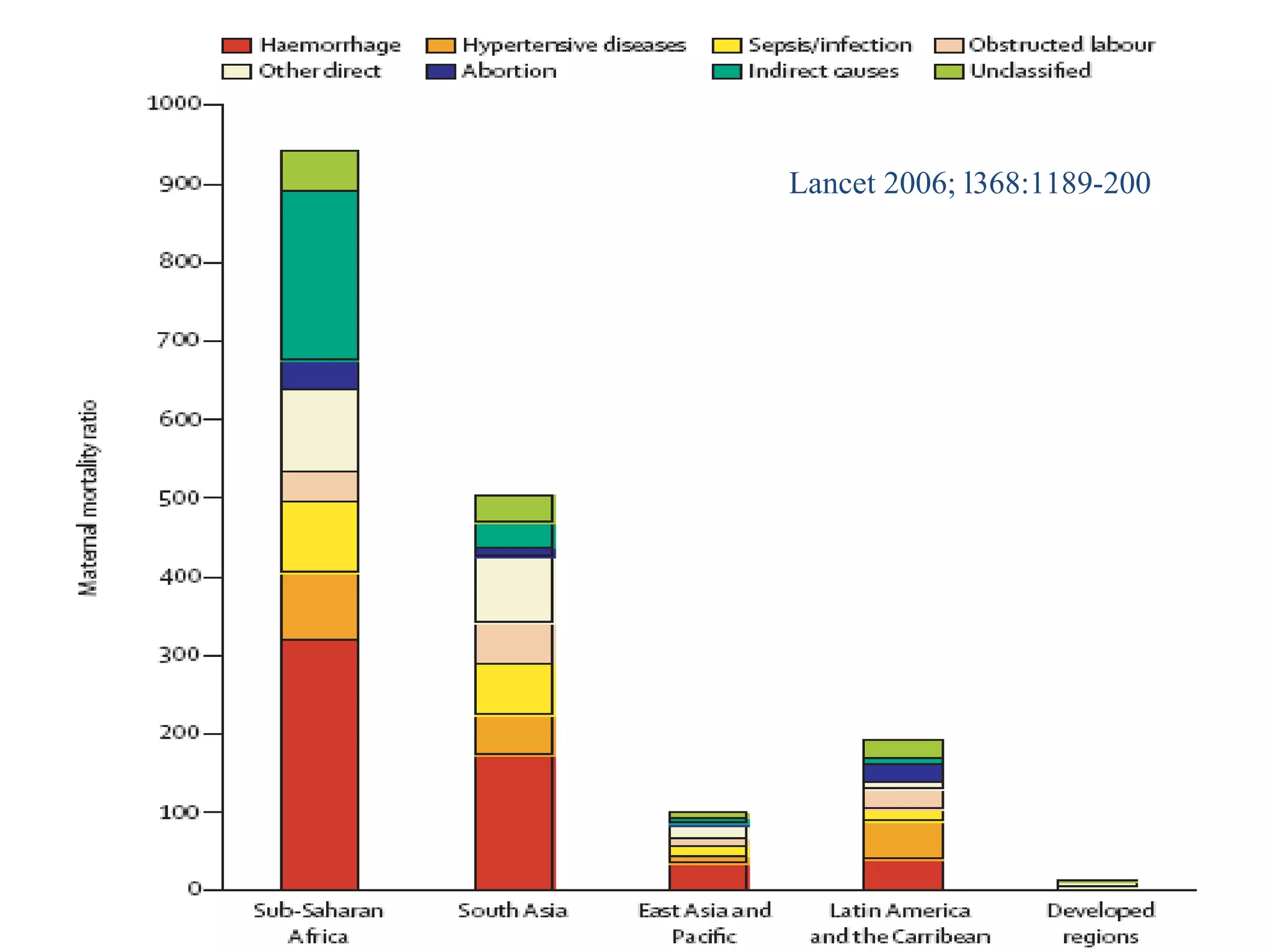
Lancet 2006; l368:1189-200
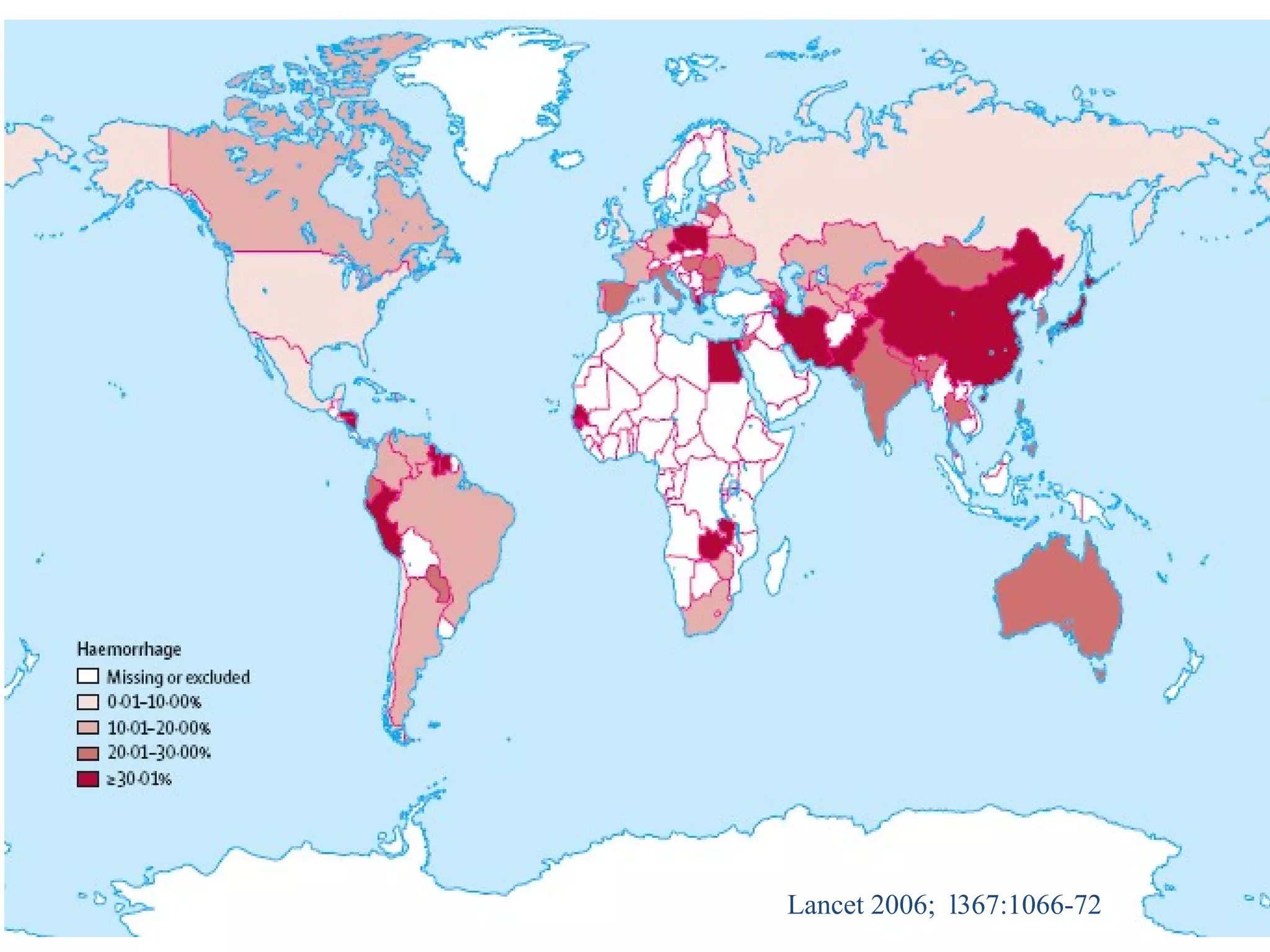
Mortality from PPH
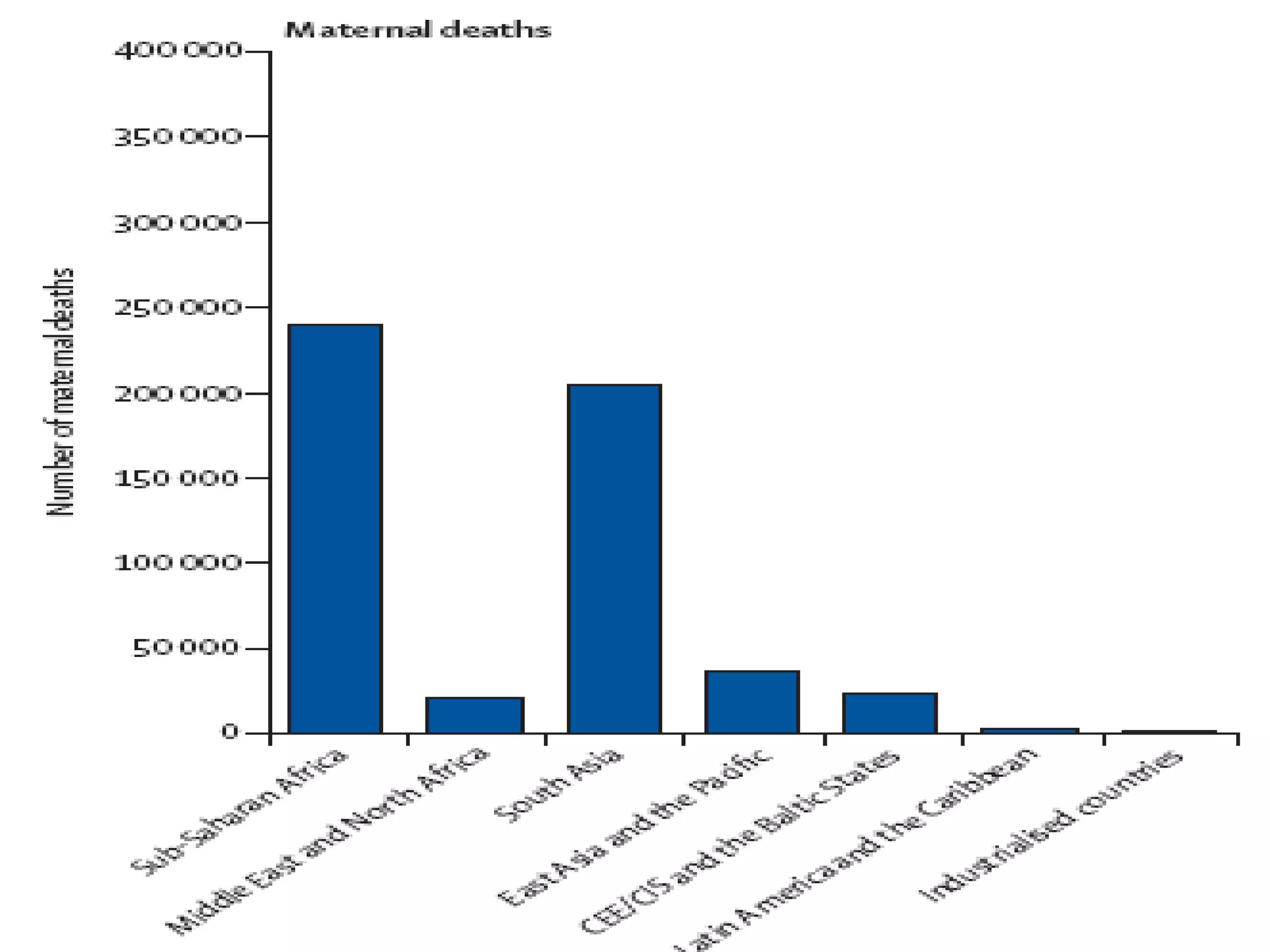
• Half of 500,000 maternal deaths globally

• 28 % of maternal deaths in developing countries

• Risk of death from PPH
      1 in 1000 deliveries - developing countries
      1 in 100,000 deliveries – developed countries
Lancet 2006; l367:1066-72
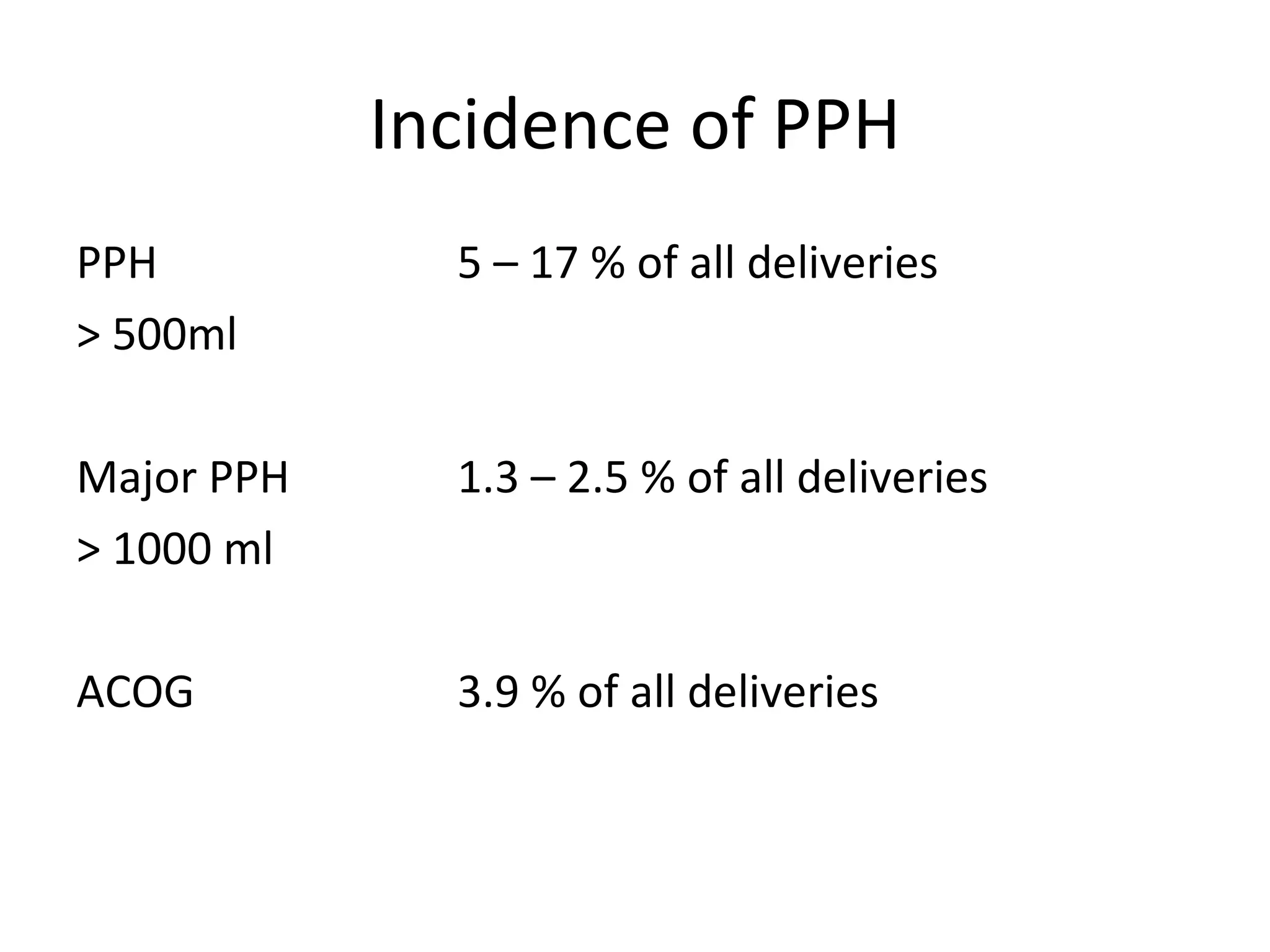
Incidence of PPH
PPH           5 – 17 % of all deliveries
> 500ml

Major PPH     1.3 – 2.5 % of all deliveries
> 1000 ml

ACOG          3.9 % of all deliveries
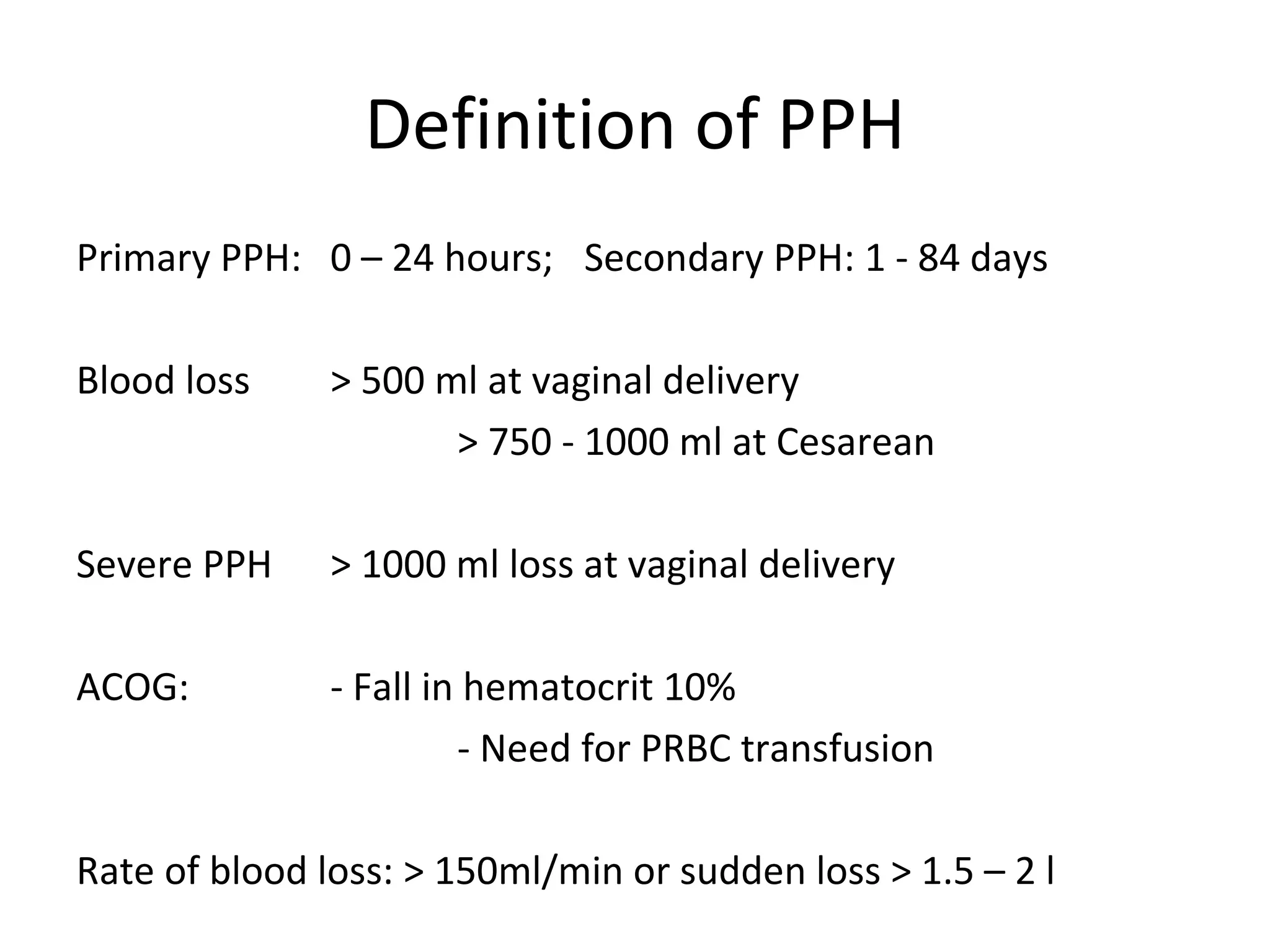
Definition of PPH
Primary PPH: 0 – 24 hours; Secondary PPH: 1 - 84 days

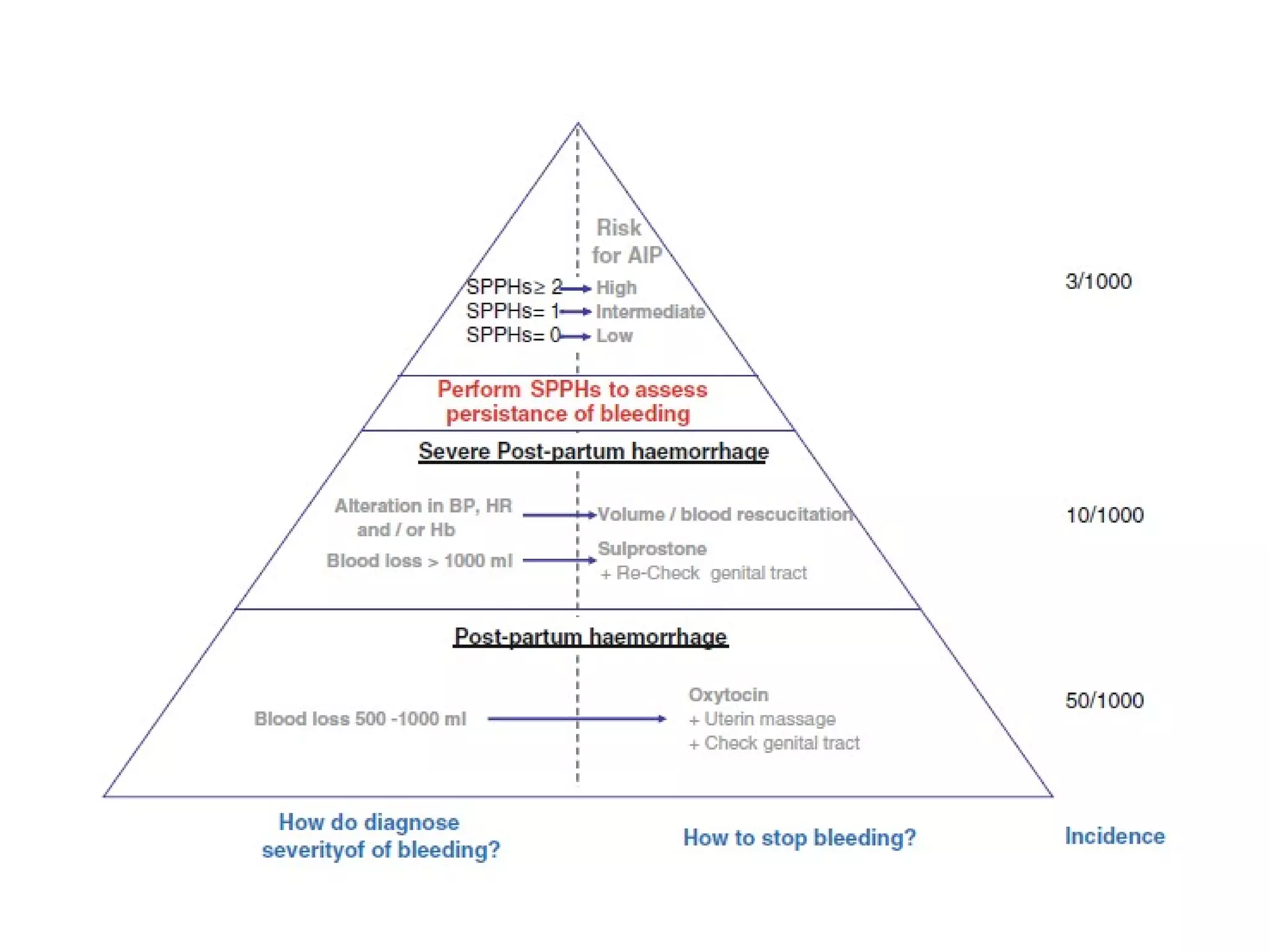
Blood loss     > 500 ml at vaginal delivery
                      > 750 - 1000 ml at Cesarean

Severe PPH     > 1000 ml loss at vaginal delivery

ACOG:          - Fall in hematocrit 10%
                        - Need for PRBC transfusion

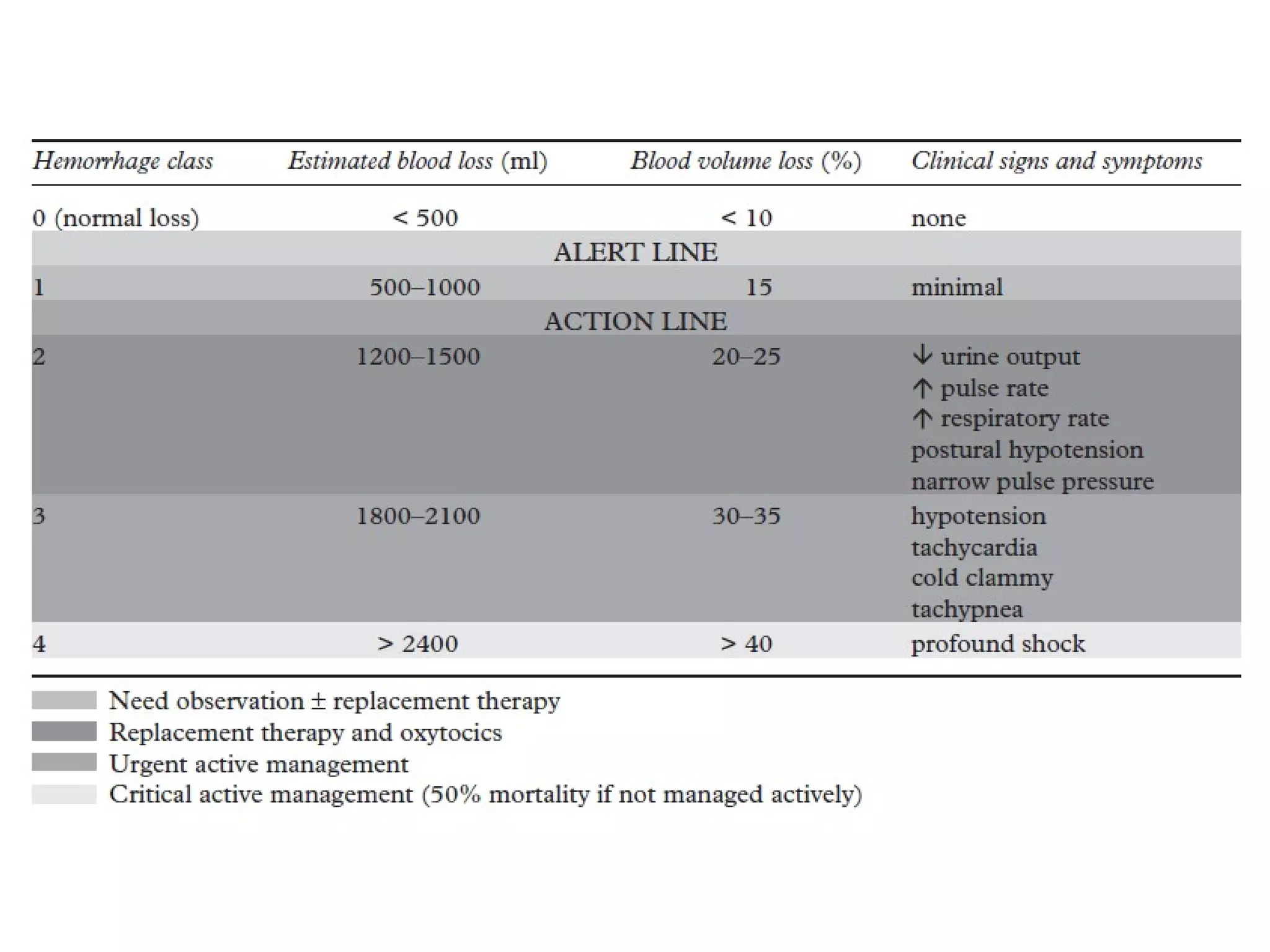
Rate of blood loss: > 150ml/min or sudden loss > 1.5 – 2 l
PPH can occur with minimal
   vaginal bleeding !!!!
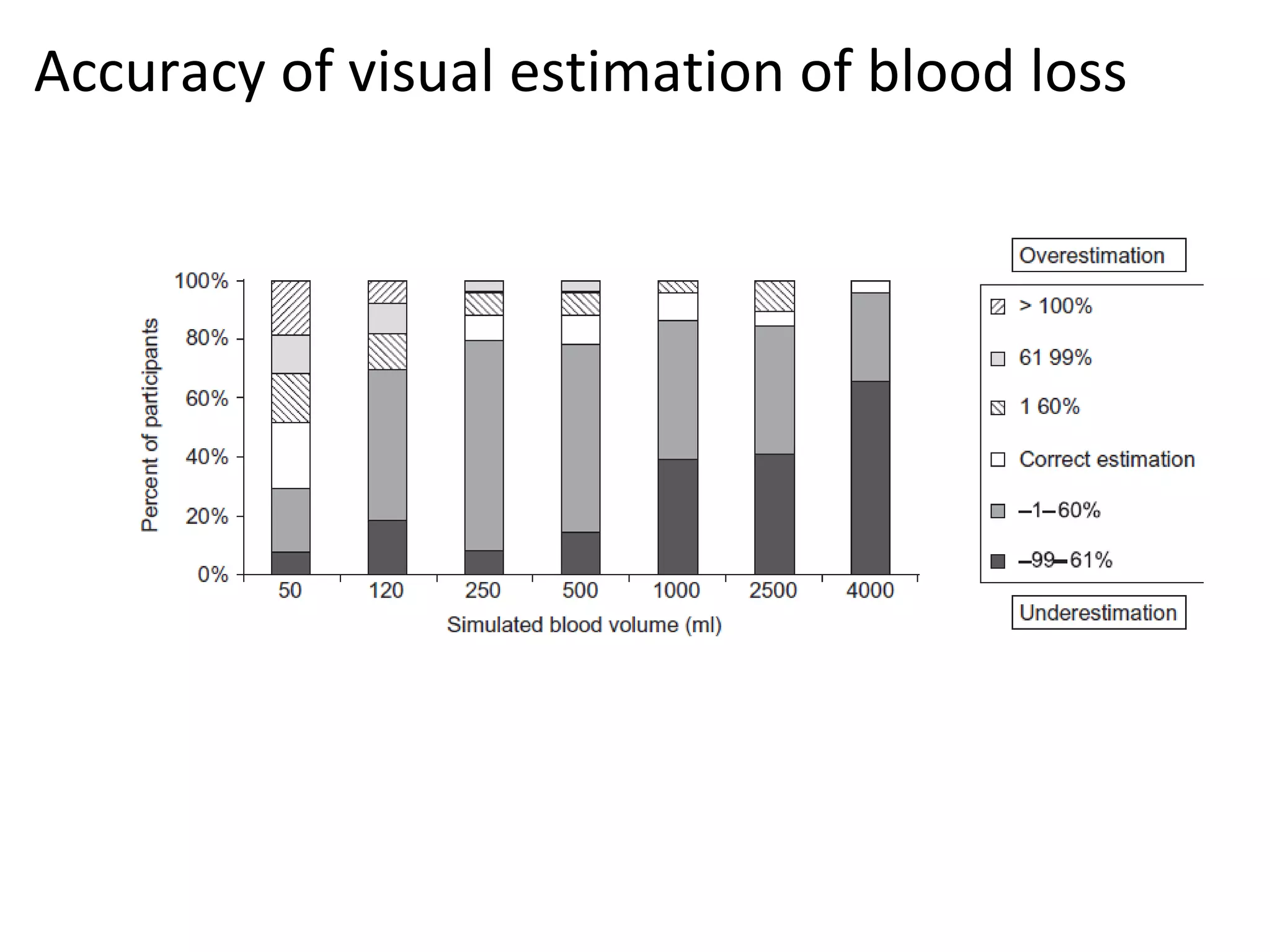
Accuracy of visual estimation of blood loss
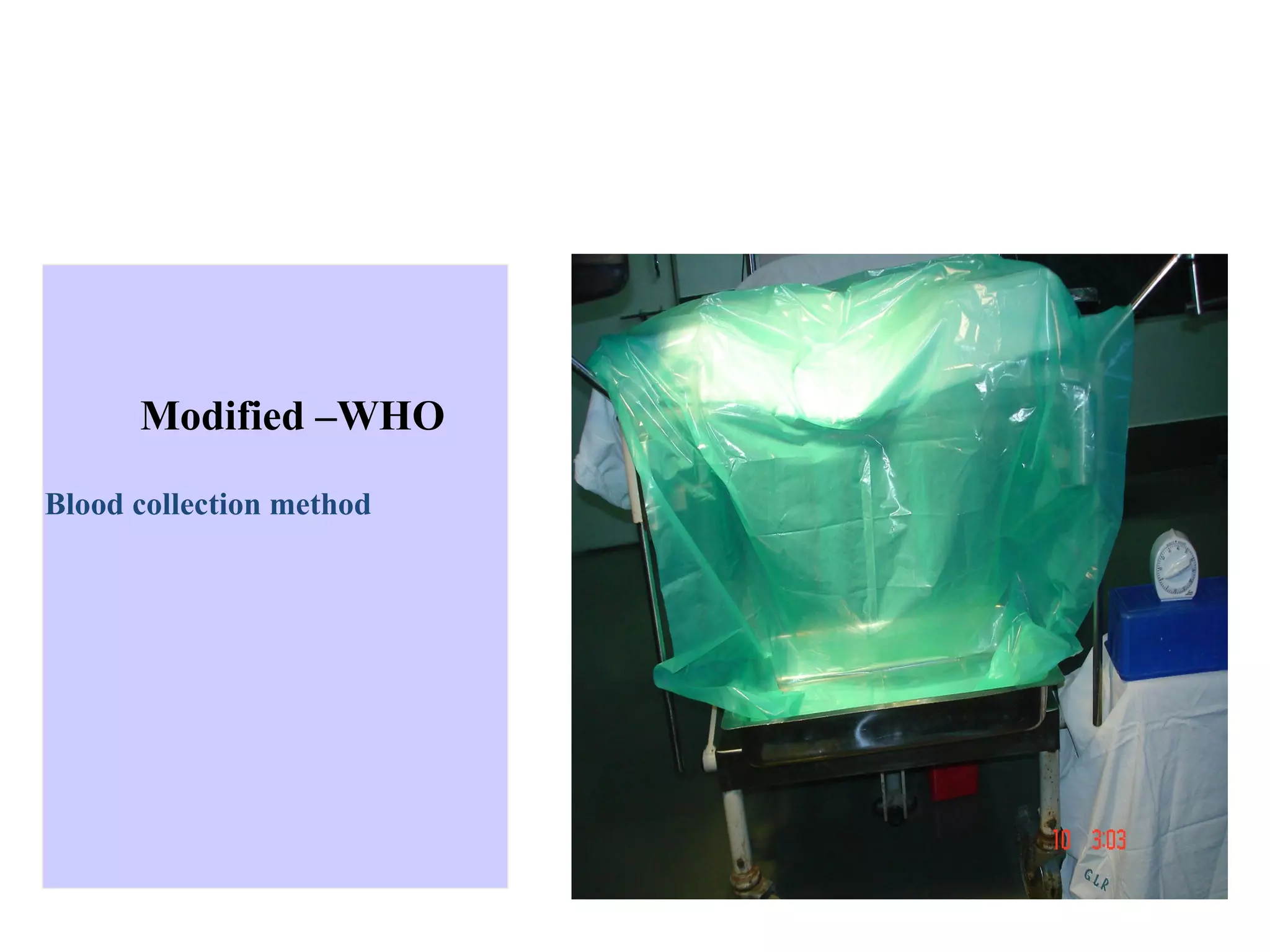
Modified –WHO

Blood collection method
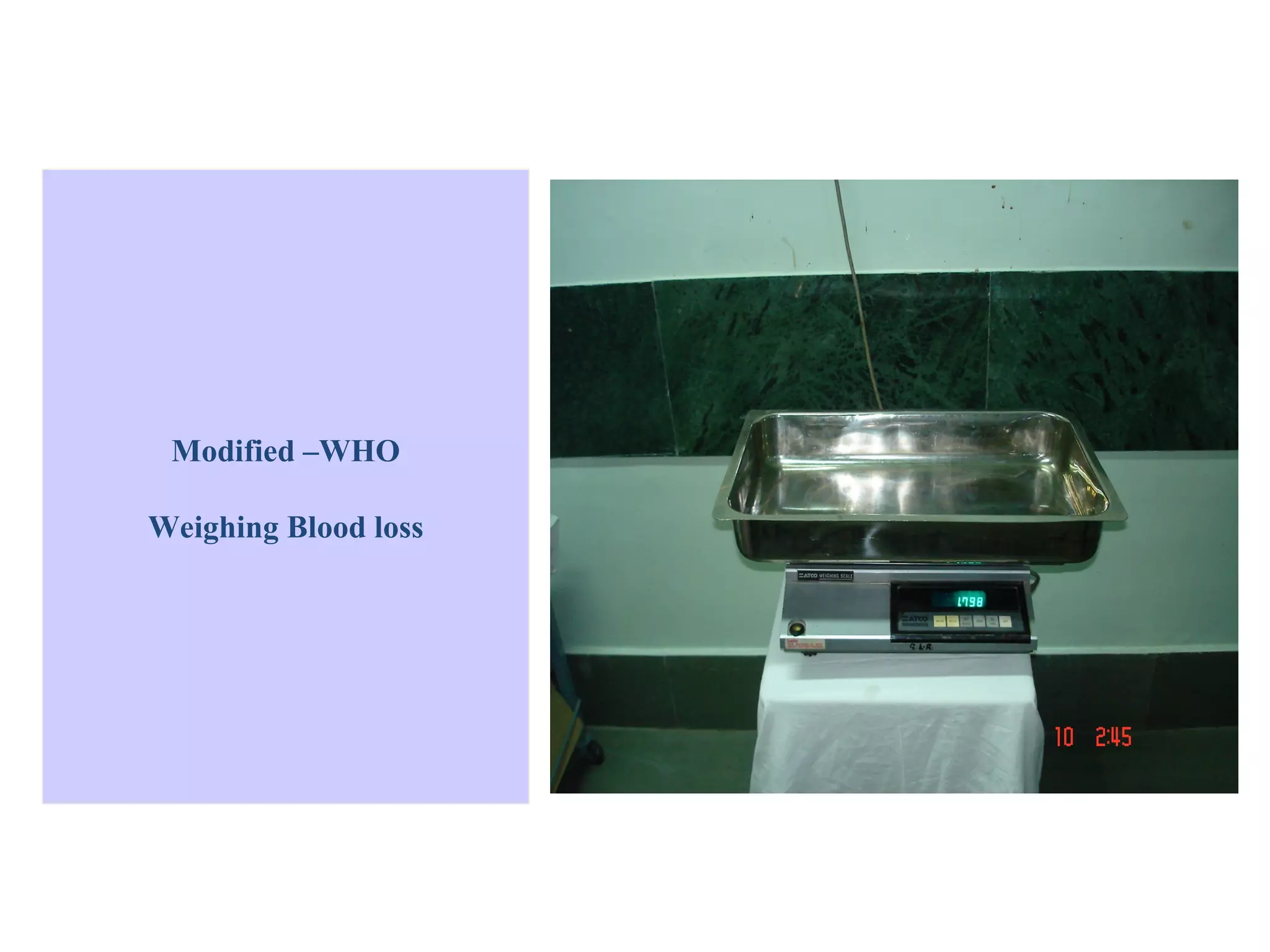
Modified –WHO

Weighing Blood loss
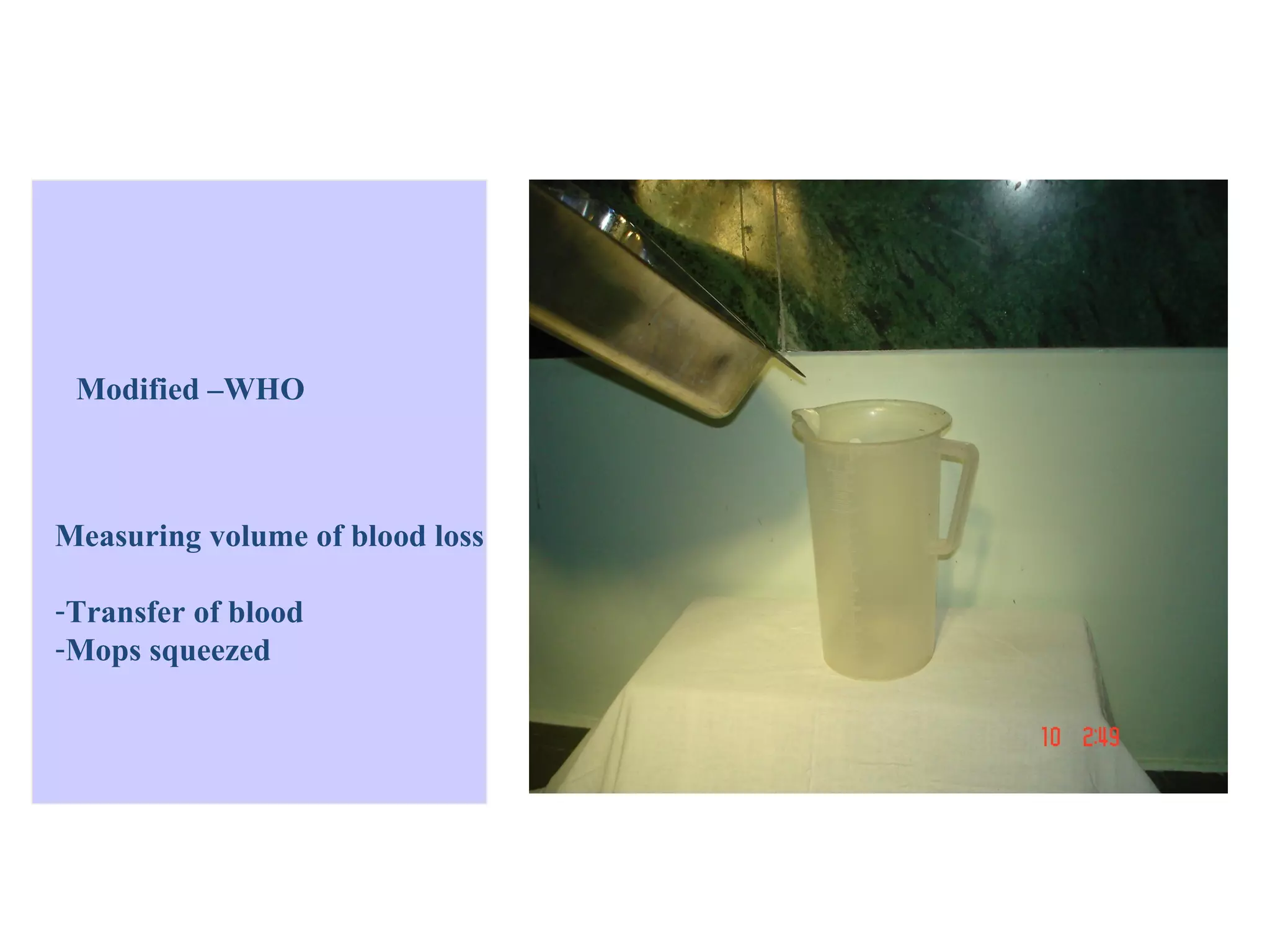
Modified –WHO


Measuring volume of blood loss

-Transfer of blood
-Mops squeezed
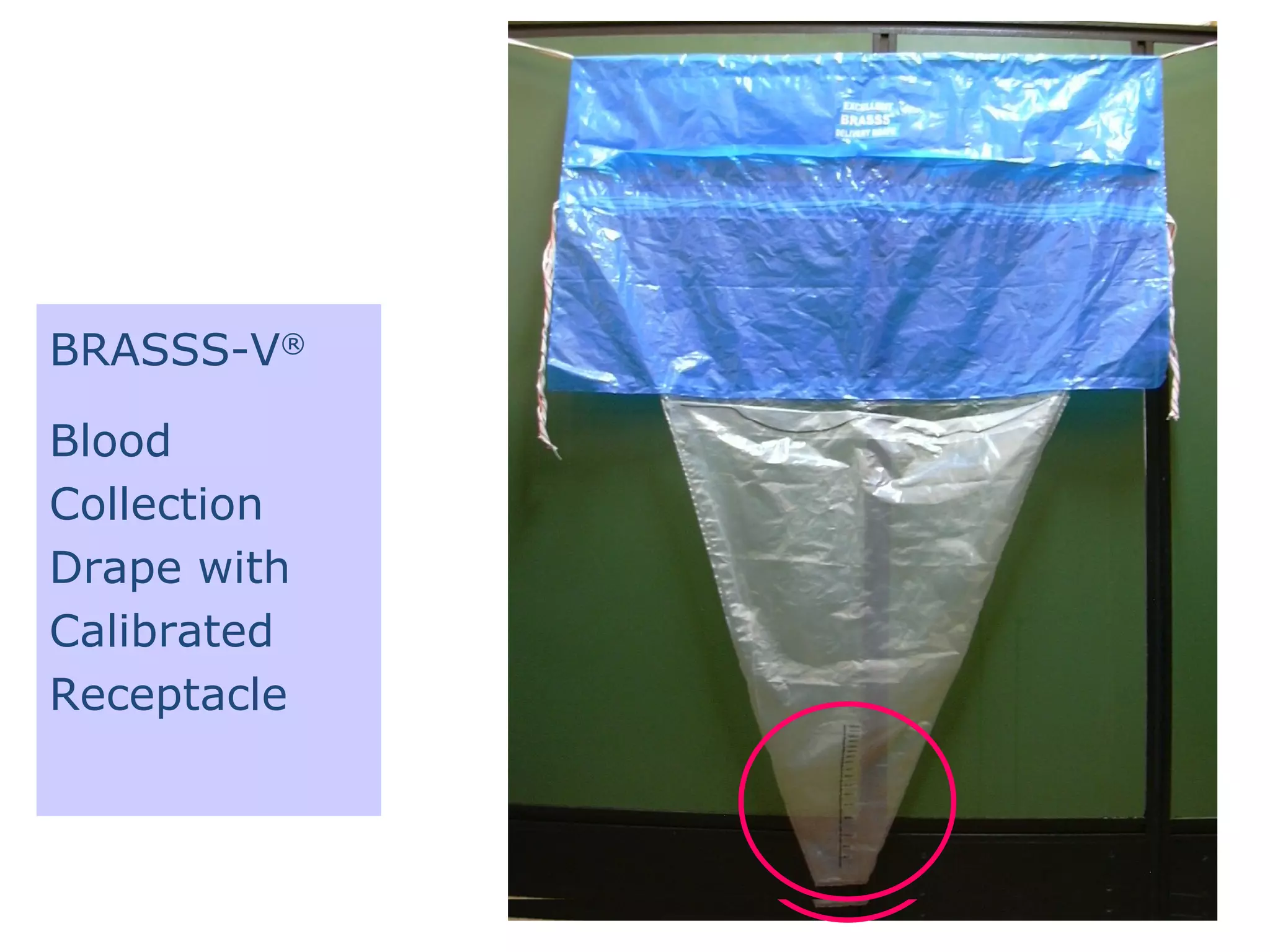
BRASSS-V®

Blood
Collection
Drape with
Calibrated
Receptacle
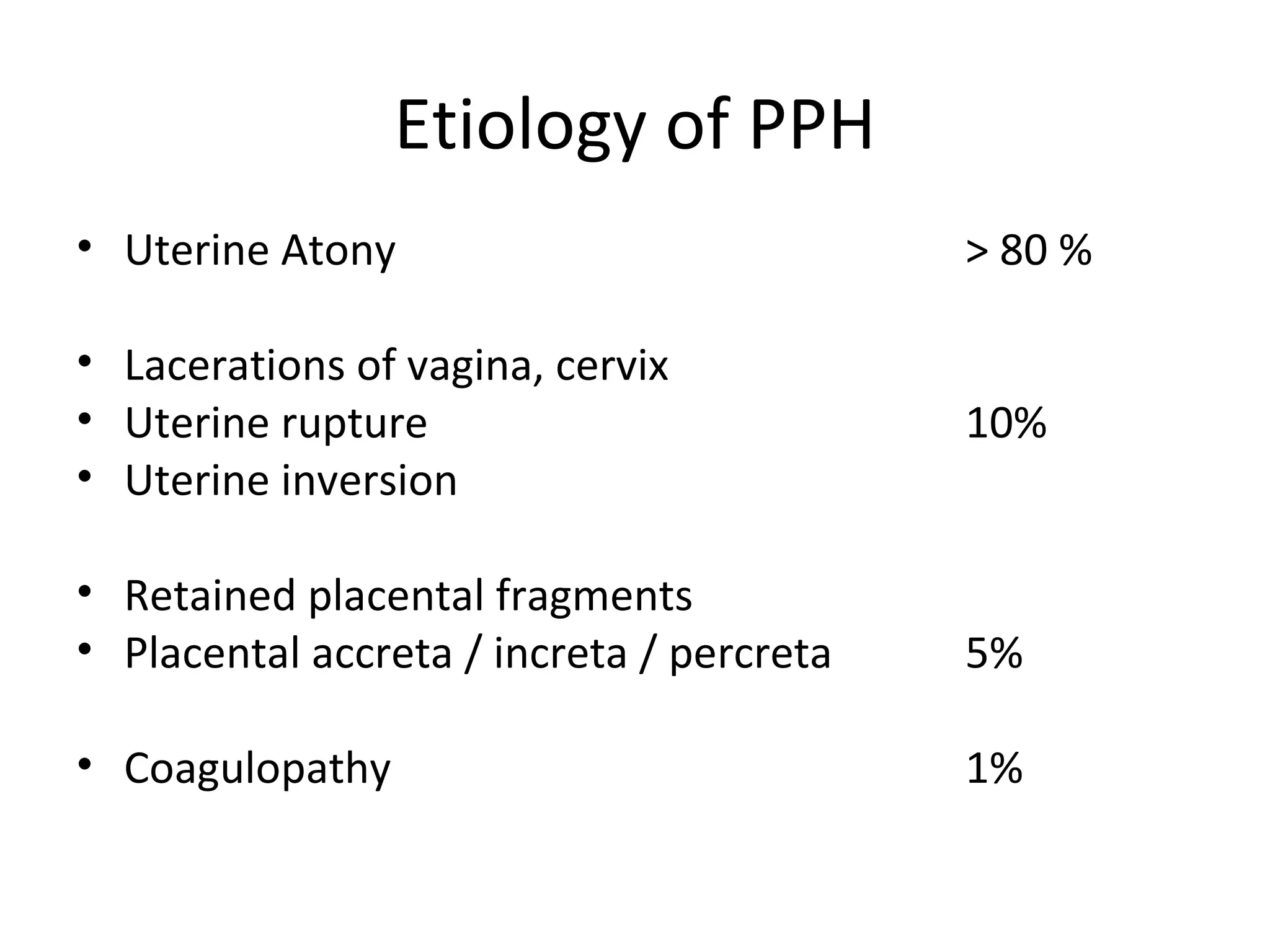
Etiology of PPH
• Uterine Atony                            > 80 %

• Lacerations of vagina, cervix
• Uterine rupture                          10%
• Uterine inversion

• Retained placental fragments
• Placental accreta / increta / percreta   5%

• Coagulopathy                             1%
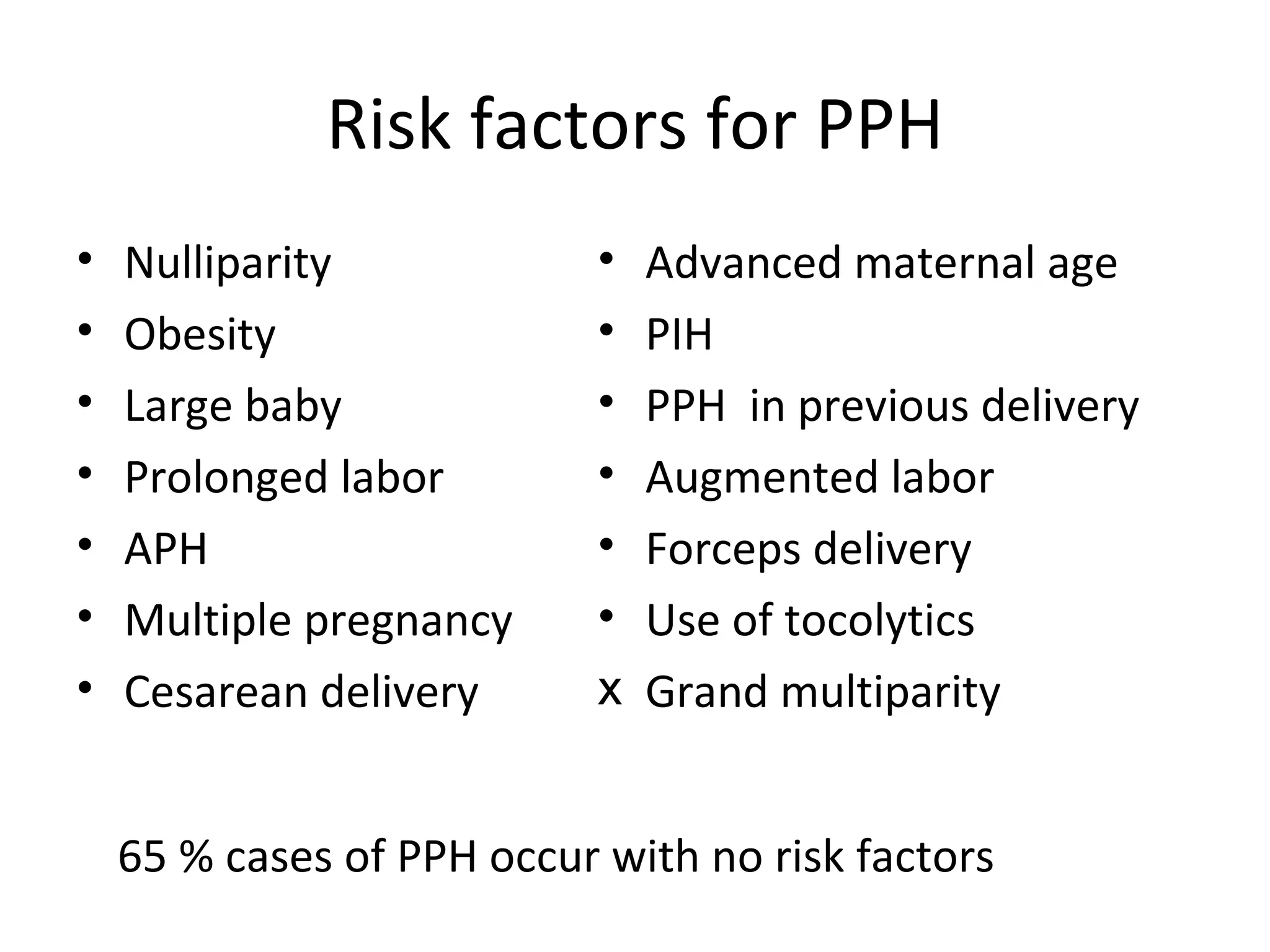
Risk factors for PPH
•   Nulliparity             •   Advanced maternal age
•   Obesity                 •   PIH
•   Large baby              •   PPH in previous delivery
•   Prolonged labor         •   Augmented labor
•   APH                     •   Forceps delivery
•   Multiple pregnancy      •   Use of tocolytics
•   Cesarean delivery       х   Grand multiparity


    65 % cases of PPH occur with no risk factors
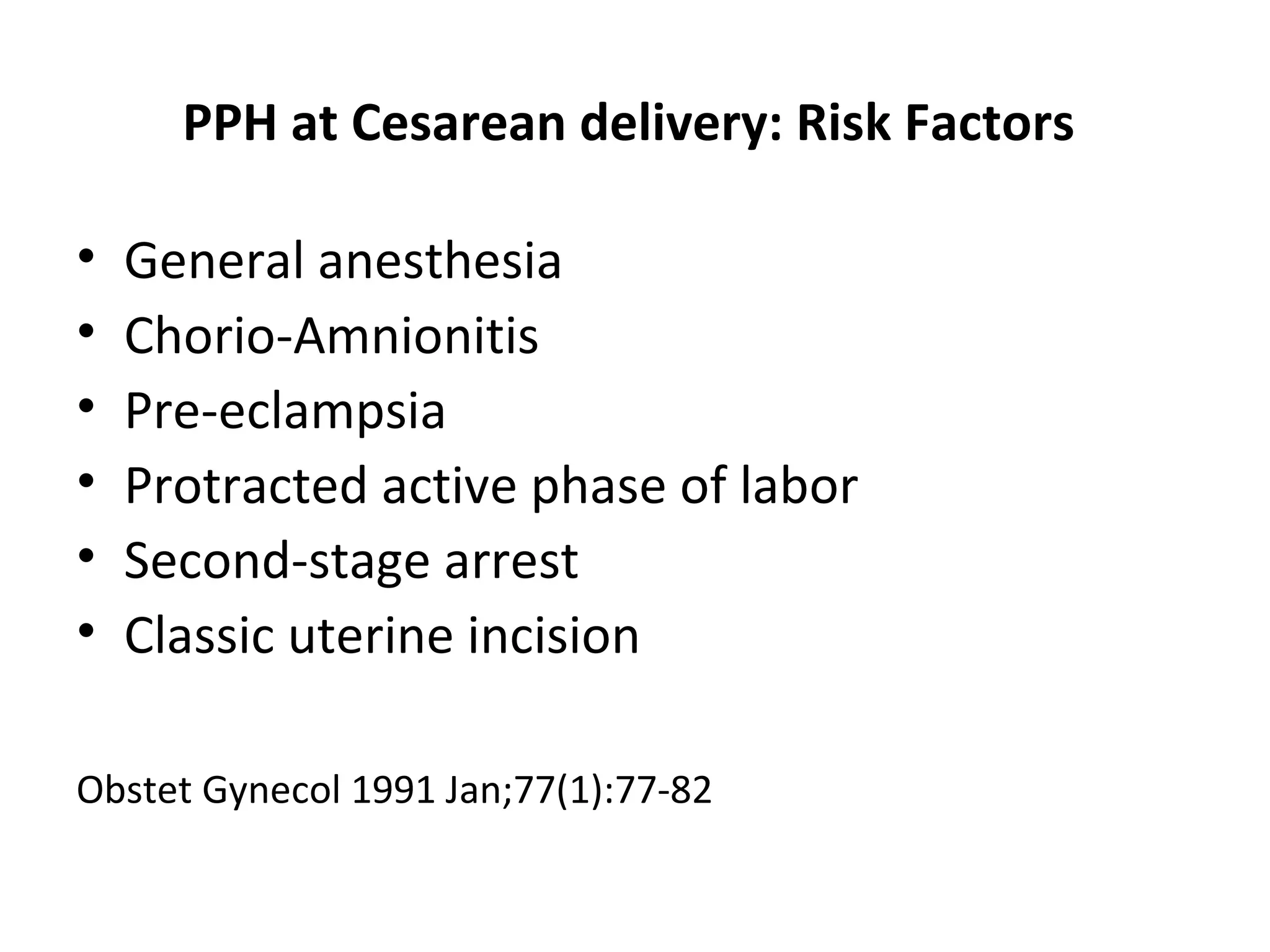
PPH at Cesarean delivery: Risk Factors

•   General anesthesia
•   Chorio-Amnionitis
•   Pre-eclampsia
•   Protracted active phase of labor
•   Second-stage arrest
•   Classic uterine incision

Obstet Gynecol 1991 Jan;77(1):77-82
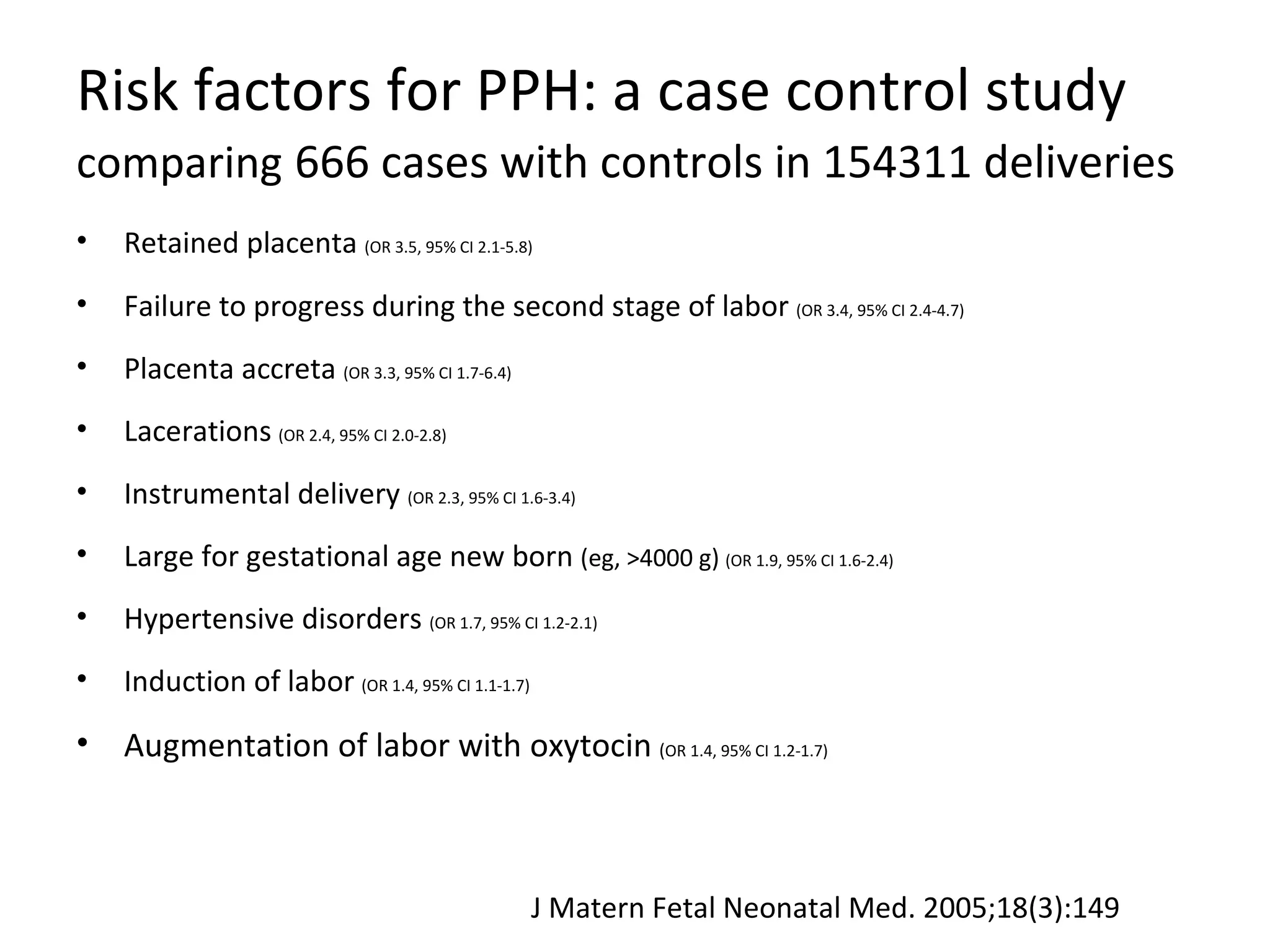
Risk factors for PPH: a case control study
comparing 666 cases with controls in 154311 deliveries
•   Retained placenta (OR 3.5, 95% CI 2.1-5.8)
•   Failure to progress during the second stage of labor (OR 3.4, 95% CI 2.4-4.7)
•   Placenta accreta (OR 3.3, 95% CI 1.7-6.4)
•   Lacerations (OR 2.4, 95% CI 2.0-2.8)
•   Instrumental delivery (OR 2.3, 95% CI 1.6-3.4)
•   Large for gestational age new born (eg, >4000 g) (OR 1.9, 95% CI 1.6-2.4)
•   Hypertensive disorders (OR 1.7, 95% CI 1.2-2.1)
•   Induction of labor (OR 1.4, 95% CI 1.1-1.7)
•   Augmentation of labor with oxytocin (OR 1.4, 95% CI 1.2-1.7)


                                                  J Matern Fetal Neonatal Med. 2005;18(3):149
Management of PPH
• Scenarios – labor room, OR, wards, peripheral hospital

• Effective management
   – Prompt response
   – Organized team work
   – Clear priorities, decisive

• Help:      communication, monitoring,
             assistance, documentation
Being prepared for PPH
• Team: Nursing, doctors, surgical expertise,
  critical care physician / anesthesiologist

• Drugs: Oxytocin, Methergin, Carboprost,
  volume expanders, resuscitation

• Equipment: Monitoring, resuscitation, Blood
  bank, Lab, ICU, OR
Management of PPH at vaginal delivery
First line Management
• Call for help
• Uterine massage
• IV access: X-match, labs
• Infuse NS rapidly,
• BP, Foley catheter, pulse oximeter,
• Prompt Uterotonic drugs
    Carboprost 250 mcg, 2 doses 15 minutes apart
    Oxytocin infusion 40 units / 500 ml in 30 – 60 min
    Methylergometrine 0.2mg i.m. one dose
    Misoprostol 400 - 800mcg
• Rapidly evaluate for vaginal / cervical lacerations
• Warmth, oxygen
Oxytocic drugs


•   Oxytocin
•   Methyl ergometrine
•   Misoprostol
•   Carboprost
Oxytocin
• Storage: Between 2-8 *C, avoid freezing

• Adverse effects: anti-diuretic effect,
  hypotension, arrhythmias

• Incompatible with noradrenaline, warfarin

• 10 – 40 IU / L of infusate
Ergometrine
• Storage: Refrigerate, protect from light, stable for 60-90
  days, discoloration – discard

• Avoid : heart disease, hypertension, peripheral vascular
  disease, hepatic or renal impairment; with antiretroviral
  and macrolide antibiotics

• Adverse : Vomiting, nausea, HT, CVA

• Route: IM preferred, IV dilute in 5 ml NS
Carboprost – PGF2 alpha
• Caution : Asthma, cardiac disease, epilepsy, liver
  disease
• Storage: Refrigerate
• Adverse: Vomiting, diarrhea, flushing,
• Dosage: 250 mcg IM, repeat every 15 - 90
  minutes, maximum 8 doses = 2 mg.
• IV injection - bronchospasm, hypertension,
  vomiting, and anaphylaxis
Misoprostol
• PGE1 analogue
• Adverse effects – vomiting, shivering at higher
  doses. No broncho-constriction.
• Storage: Stable at or below 25*C
• Route: Oral, buccal, rectal, vaginal
• Rapid onset of action lasting 4-6 h
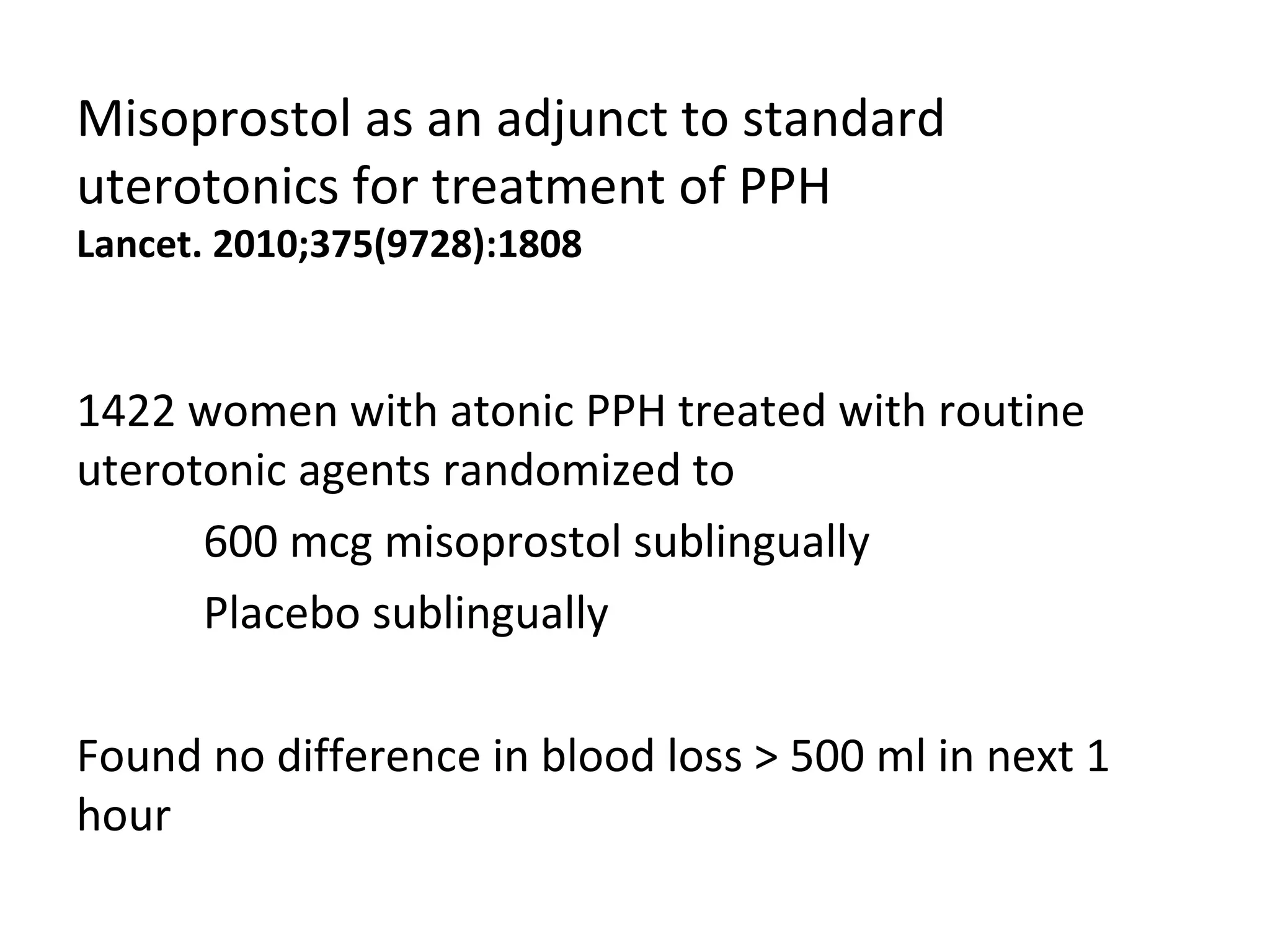
Misoprostol as an adjunct to standard
uterotonics for treatment of PPH
Lancet. 2010;375(9728):1808


1422 women with atonic PPH treated with routine
uterotonic agents randomized to
      600 mcg misoprostol sublingually
      Placebo sublingually

Found no difference in blood loss > 500 ml in next 1
hour
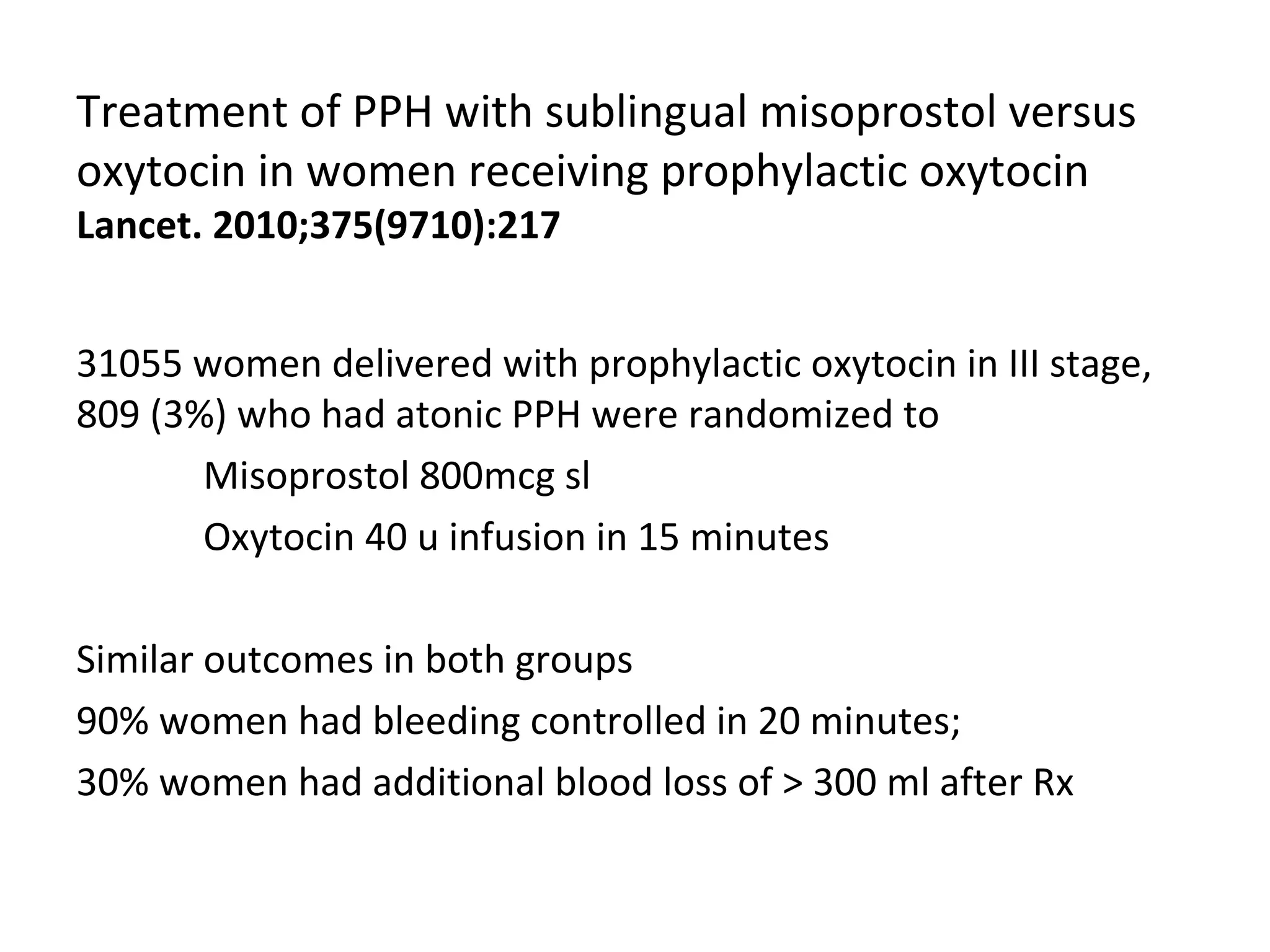
Treatment of PPH with sublingual misoprostol versus
oxytocin in women receiving prophylactic oxytocin
Lancet. 2010;375(9710):217


31055 women delivered with prophylactic oxytocin in III stage,
809 (3%) who had atonic PPH were randomized to
       Misoprostol 800mcg sl
       Oxytocin 40 u infusion in 15 minutes

Similar outcomes in both groups
90% women had bleeding controlled in 20 minutes;
30% women had additional blood loss of > 300 ml after Rx
After initial treatment
• Evaluate for
           retained placental fragment
           uterine inversion
           lacerations
           coagulopathy
• Check urine output,
           response to resuscitation, time
           volume of blood lost
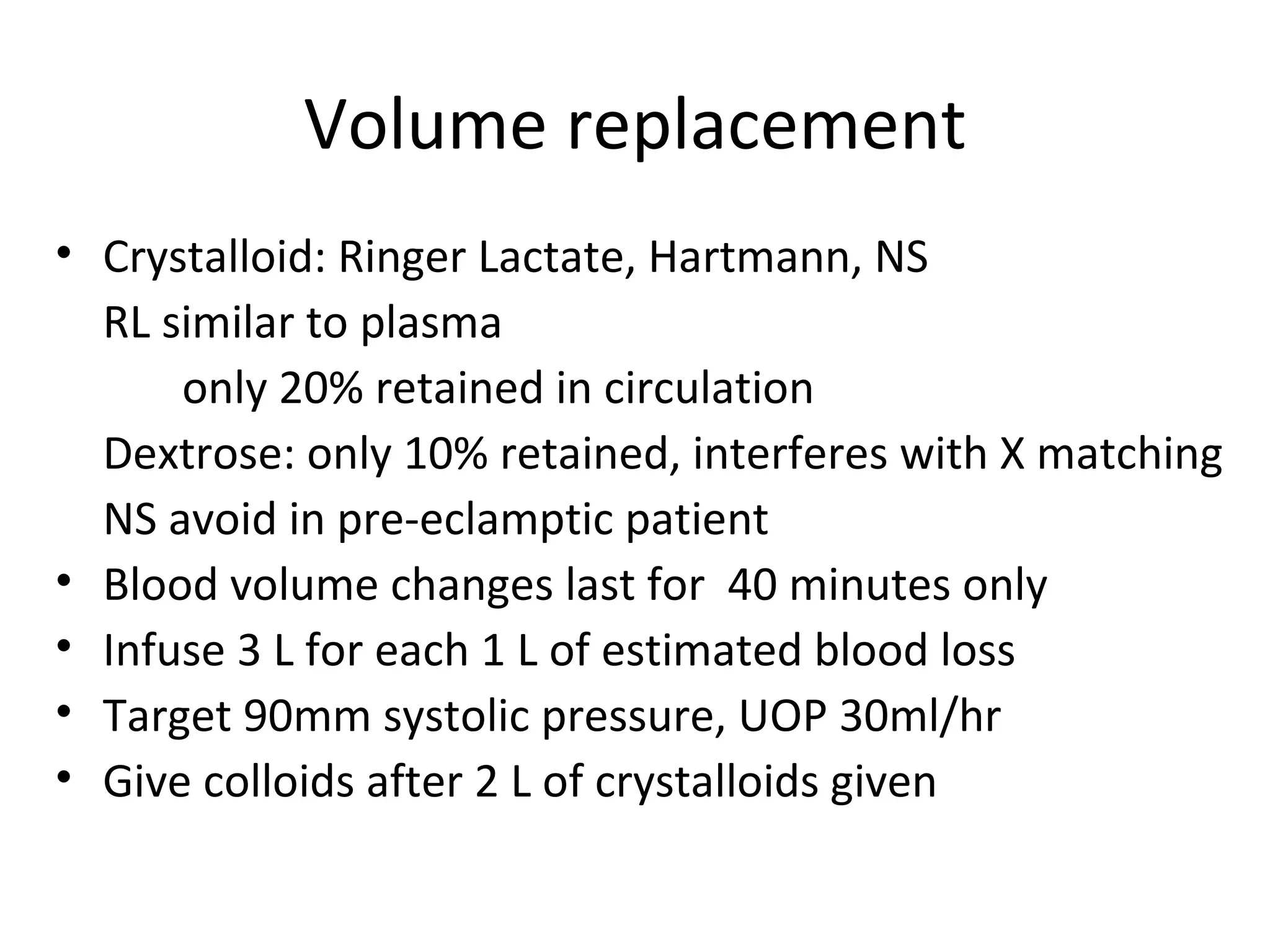
Volume replacement
• Crystalloid: Ringer Lactate, Hartmann, NS
  RL similar to plasma
      only 20% retained in circulation
  Dextrose: only 10% retained, interferes with X matching
  NS avoid in pre-eclamptic patient
• Blood volume changes last for 40 minutes only
• Infuse 3 L for each 1 L of estimated blood loss
• Target 90mm systolic pressure, UOP 30ml/hr
• Give colloids after 2 L of crystalloids given
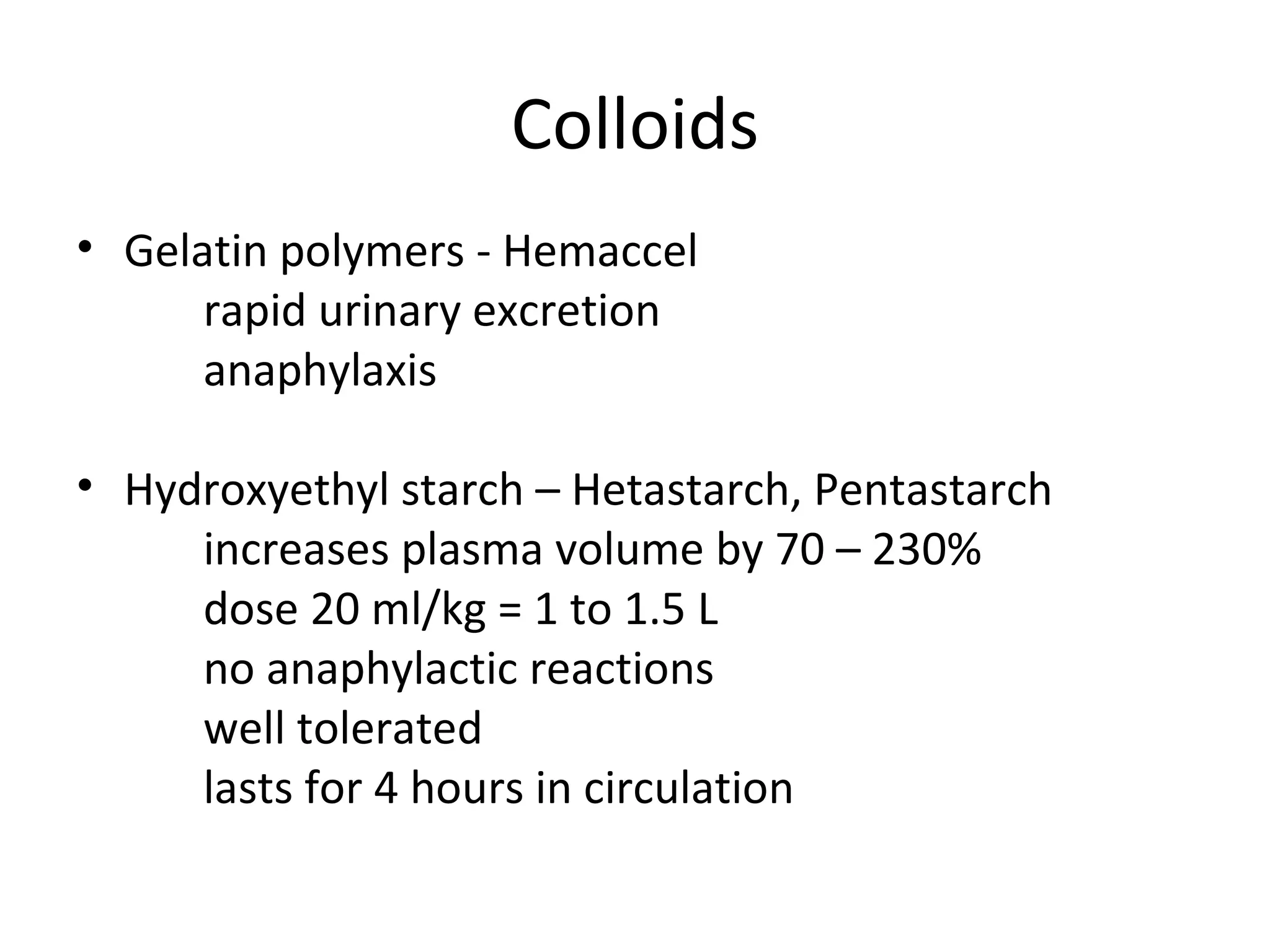
Colloids
• Gelatin polymers - Hemaccel
      rapid urinary excretion
      anaphylaxis

• Hydroxyethyl starch – Hetastarch, Pentastarch
     increases plasma volume by 70 – 230%
     dose 20 ml/kg = 1 to 1.5 L
     no anaphylactic reactions
     well tolerated
     lasts for 4 hours in circulation
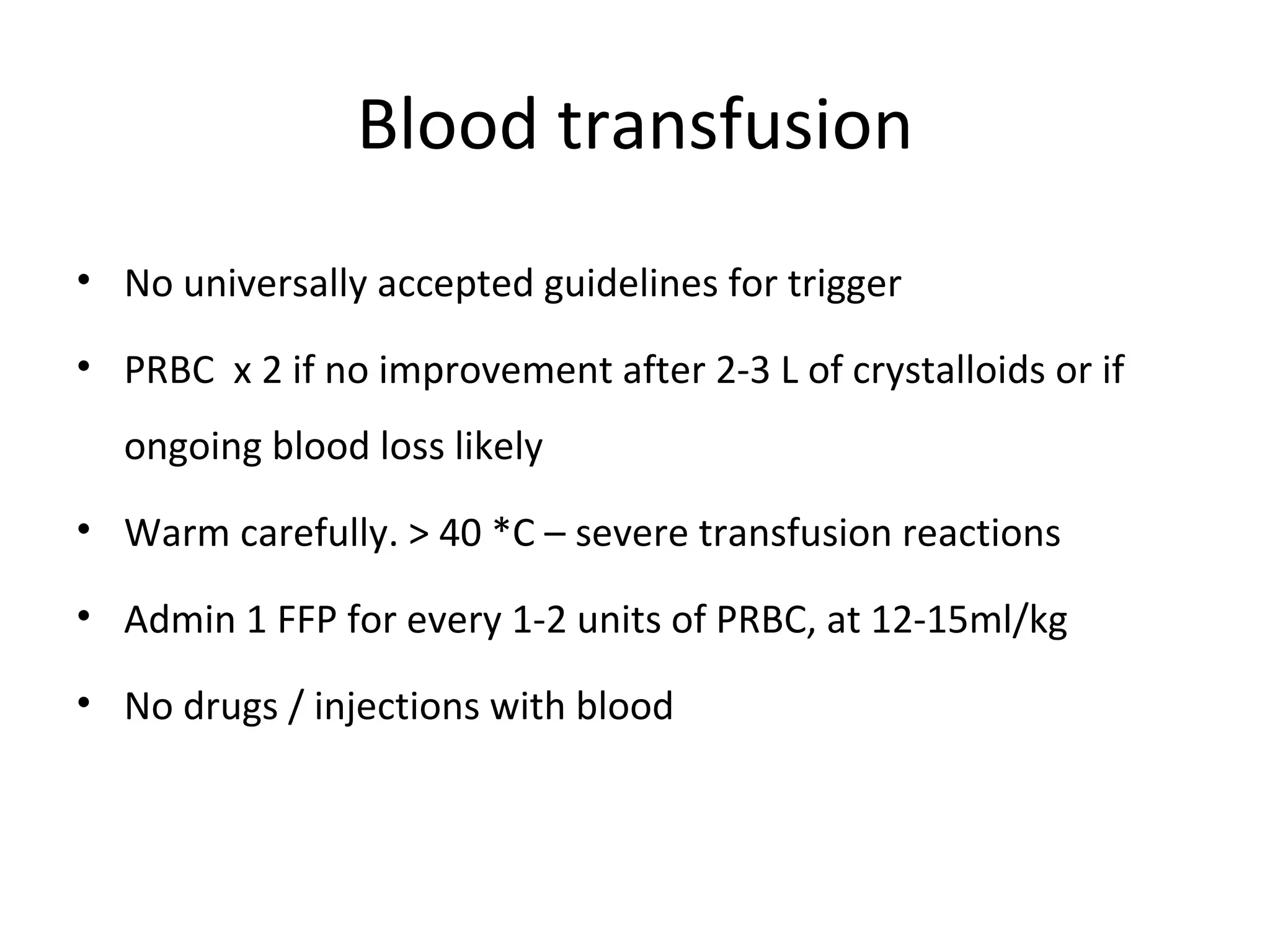
Blood transfusion
• No universally accepted guidelines for trigger

• PRBC x 2 if no improvement after 2-3 L of crystalloids or if
  ongoing blood loss likely
• Warm carefully. > 40 *C – severe transfusion reactions

• Admin 1 FFP for every 1-2 units of PRBC, at 12-15ml/kg

• No drugs / injections with blood
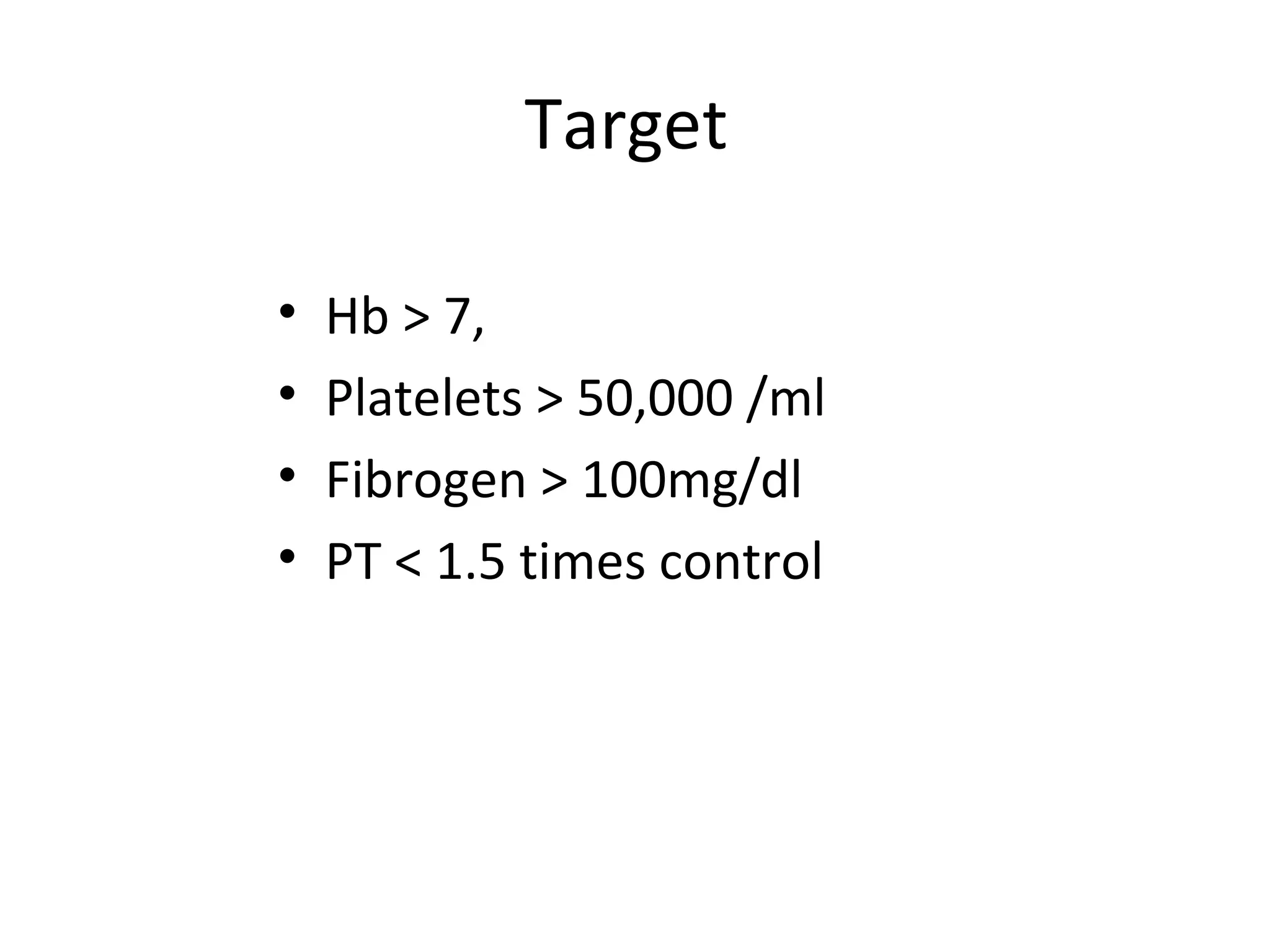
Target

•   Hb > 7,
•   Platelets > 50,000 /ml
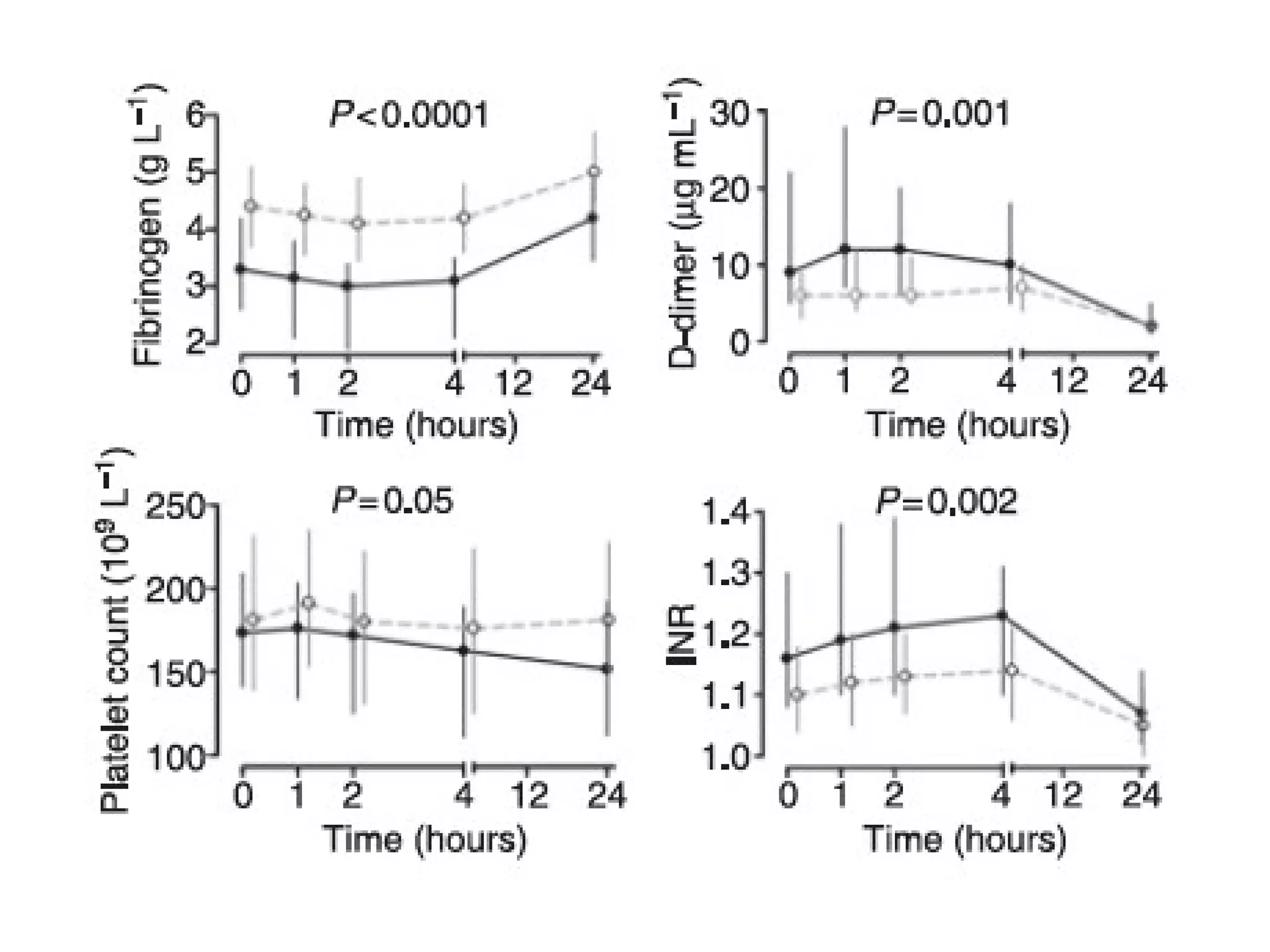
•   Fibrogen > 100mg/dl
•   PT < 1.5 times control
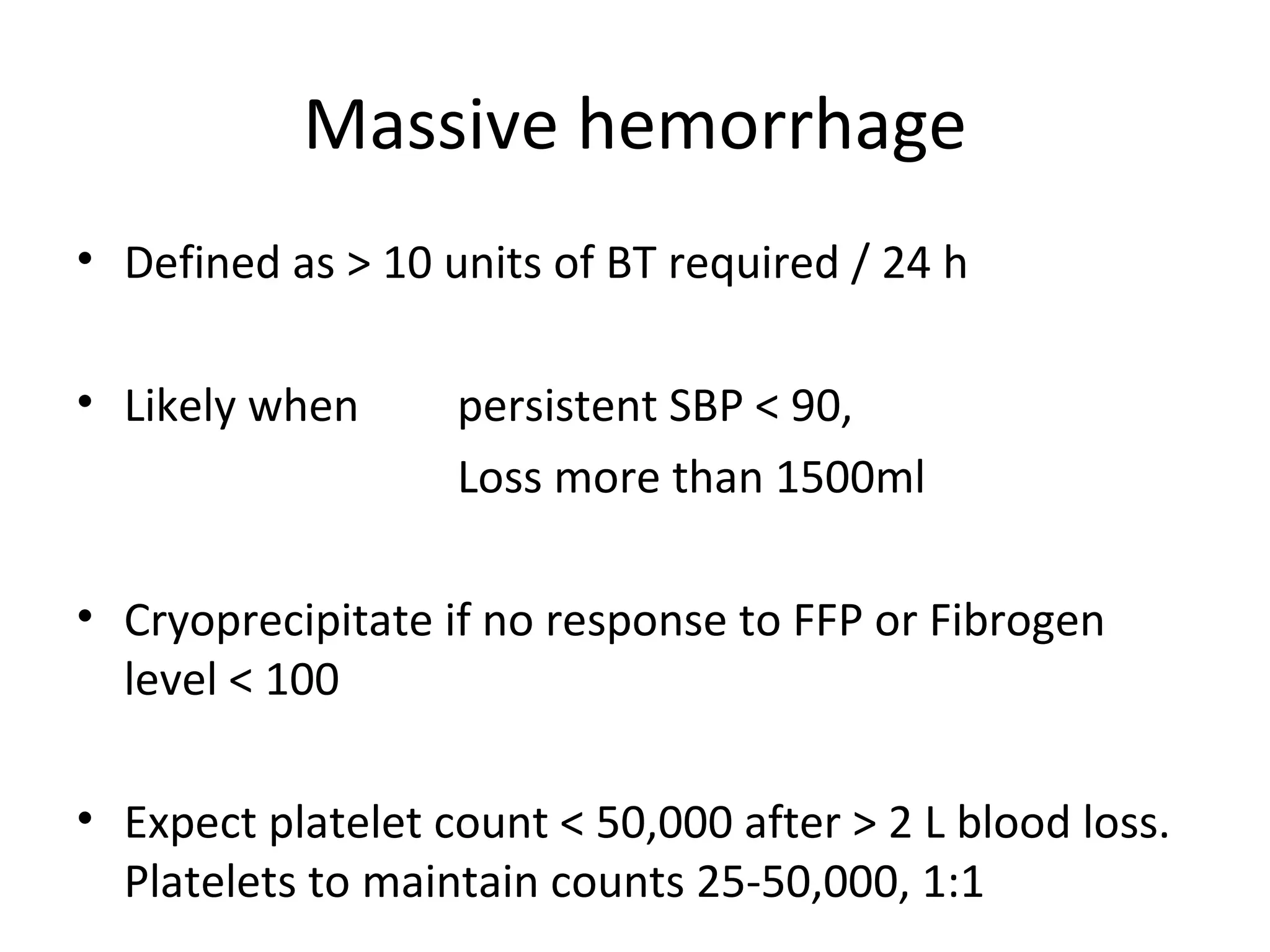
Massive hemorrhage
• Defined as > 10 units of BT required / 24 h

• Likely when      persistent SBP < 90,
                   Loss more than 1500ml

• Cryoprecipitate if no response to FFP or Fibrogen
  level < 100

• Expect platelet count < 50,000 after > 2 L blood loss.
  Platelets to maintain counts 25-50,000, 1:1
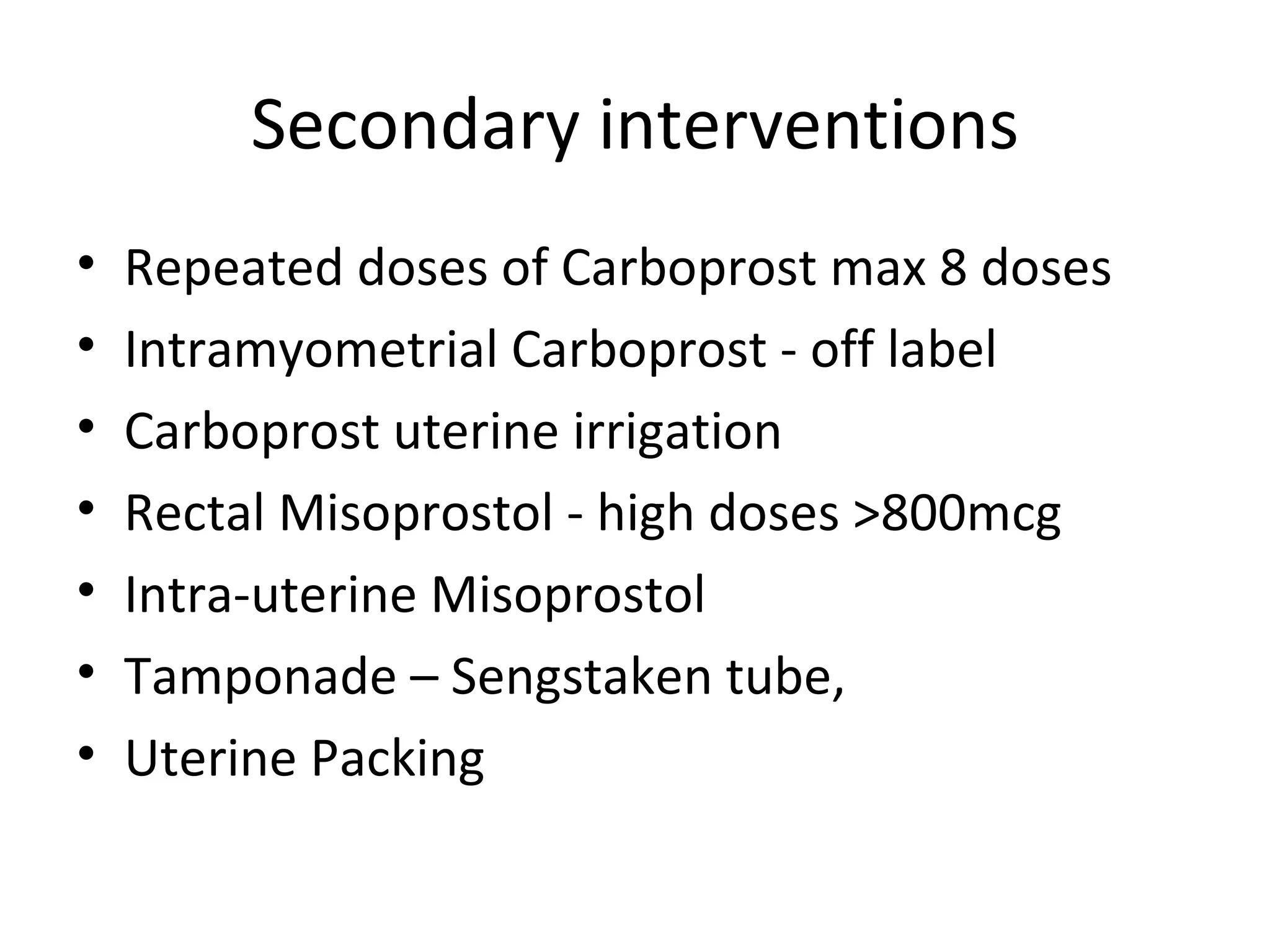
Secondary interventions
•   Repeated doses of Carboprost max 8 doses
•   Intramyometrial Carboprost - off label
•   Carboprost uterine irrigation
•   Rectal Misoprostol - high doses >800mcg
•   Intra-uterine Misoprostol
•   Tamponade – Sengstaken tube,
•   Uterine Packing
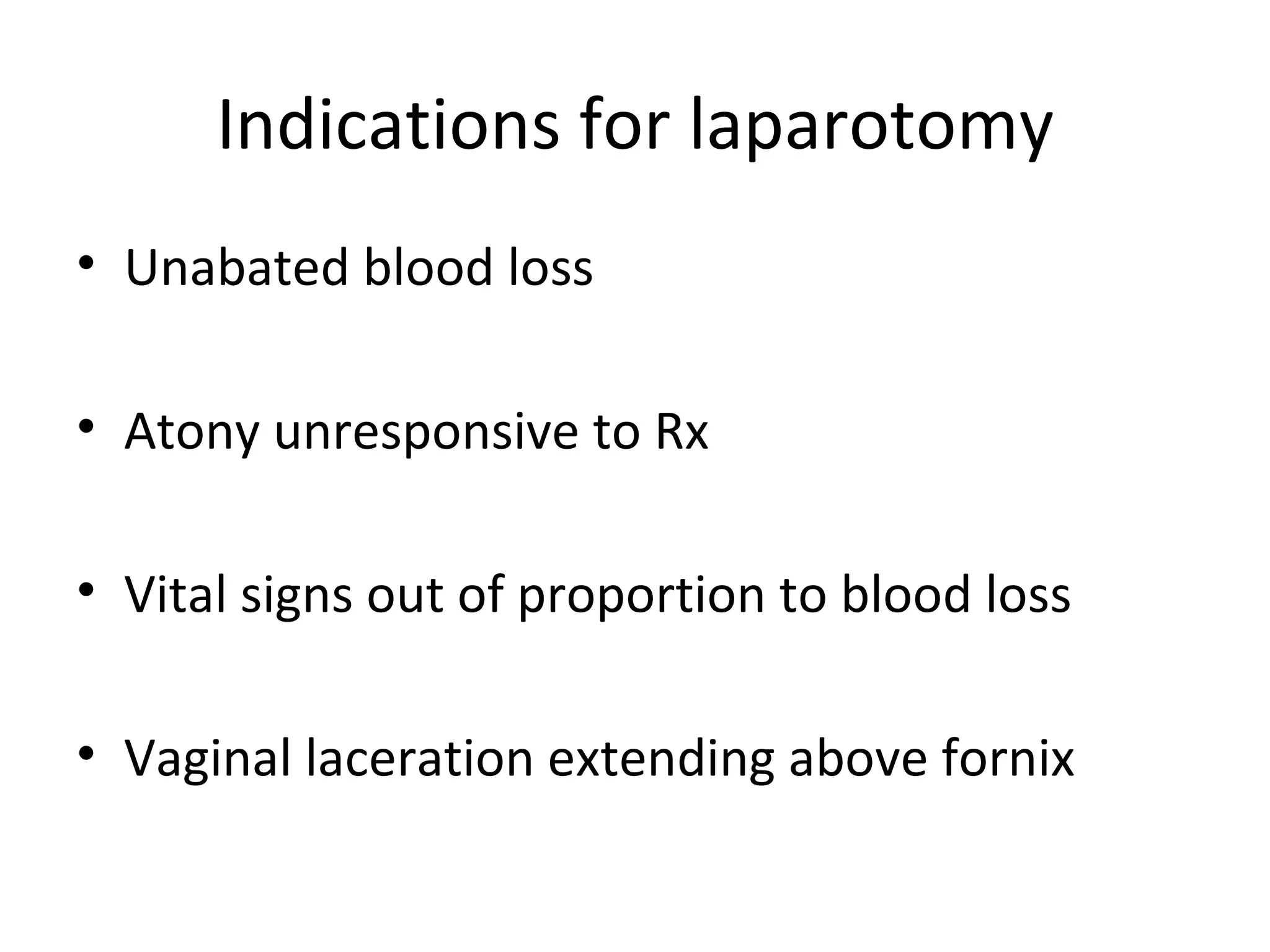
Indications for laparotomy
• Unabated blood loss

• Atony unresponsive to Rx

• Vital signs out of proportion to blood loss

• Vaginal laceration extending above fornix
Summary
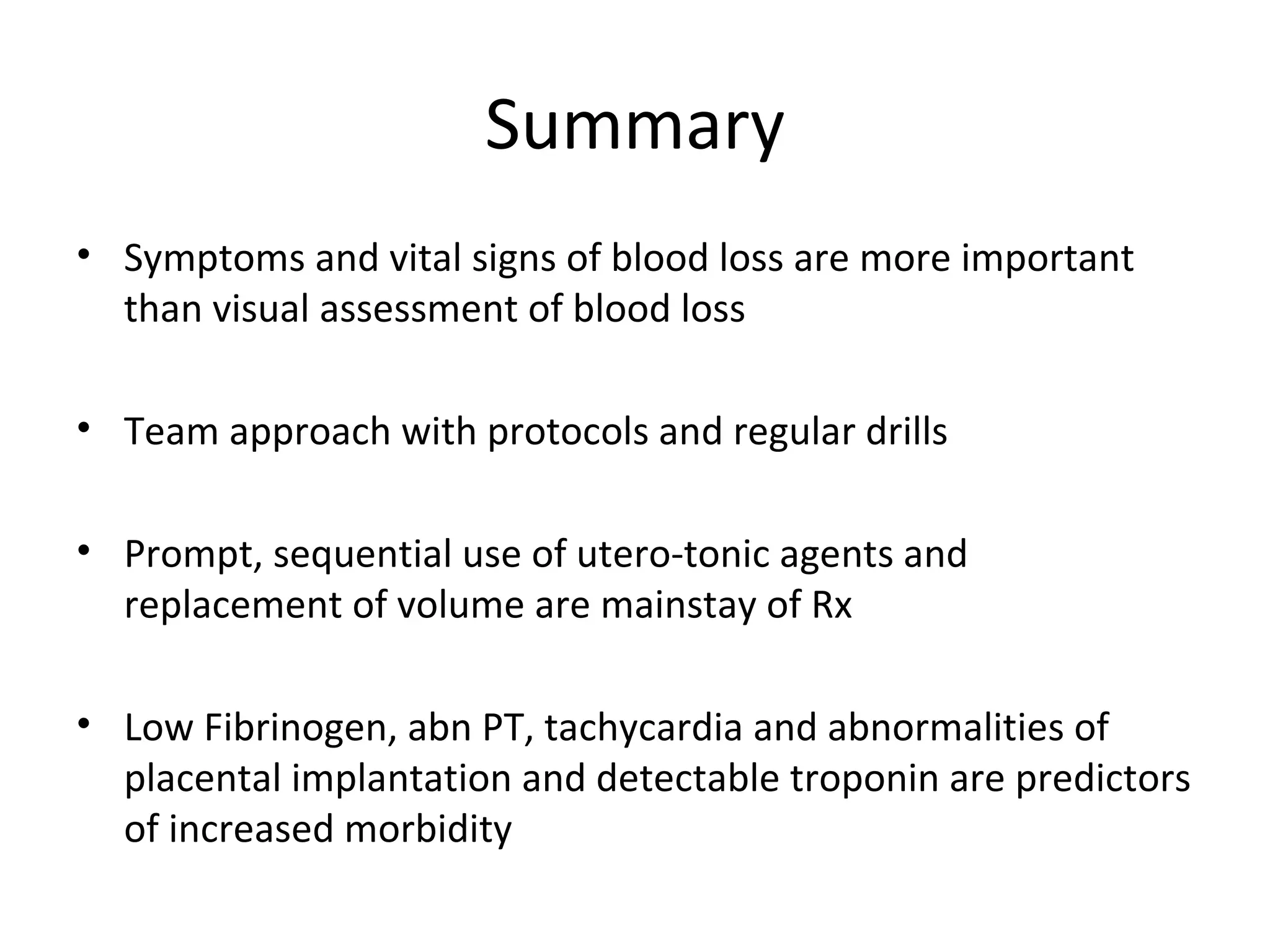
• Symptoms and vital signs of blood loss are more important
  than visual assessment of blood loss

• Team approach with protocols and regular drills

• Prompt, sequential use of utero-tonic agents and
  replacement of volume are mainstay of Rx

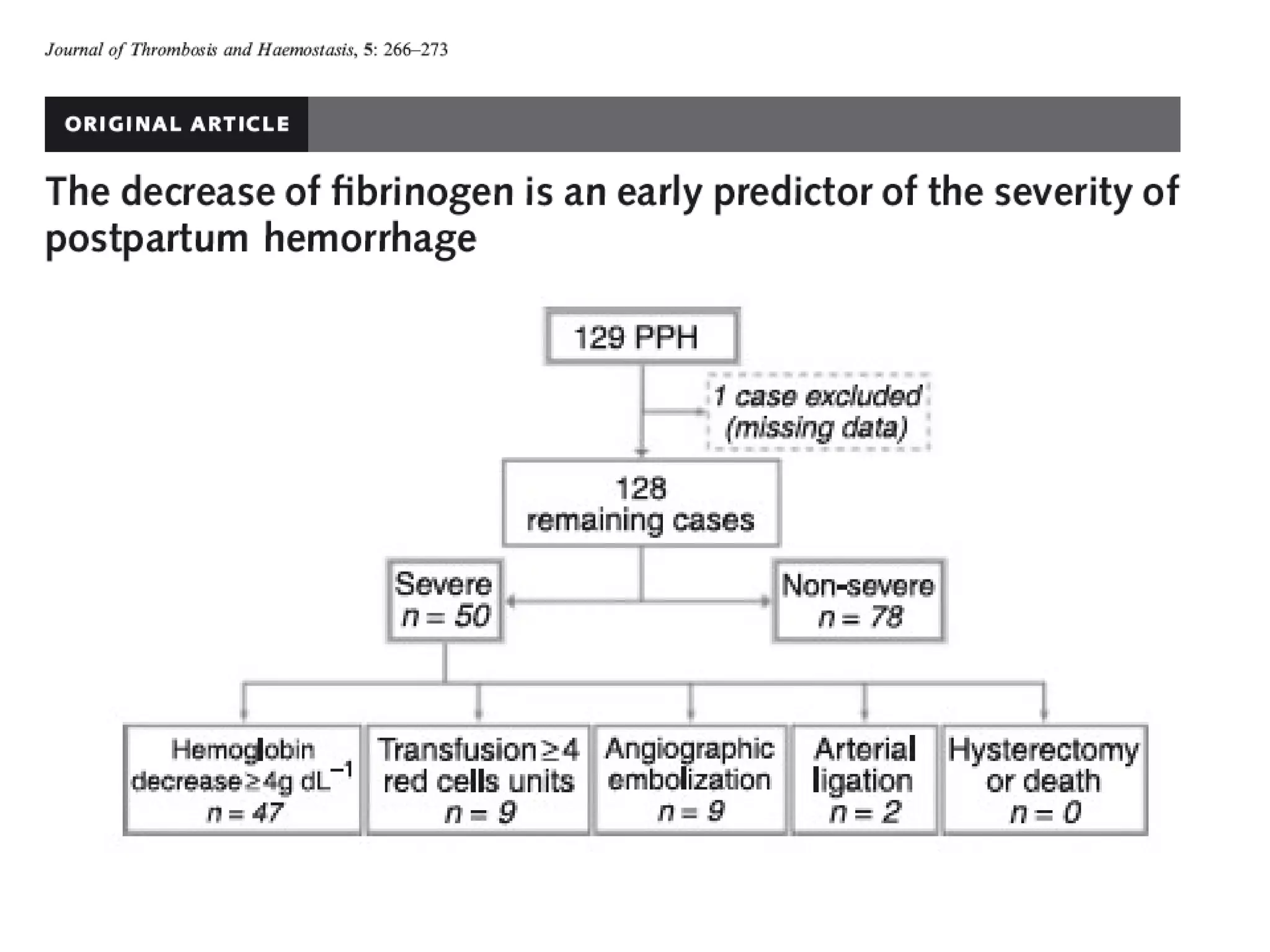
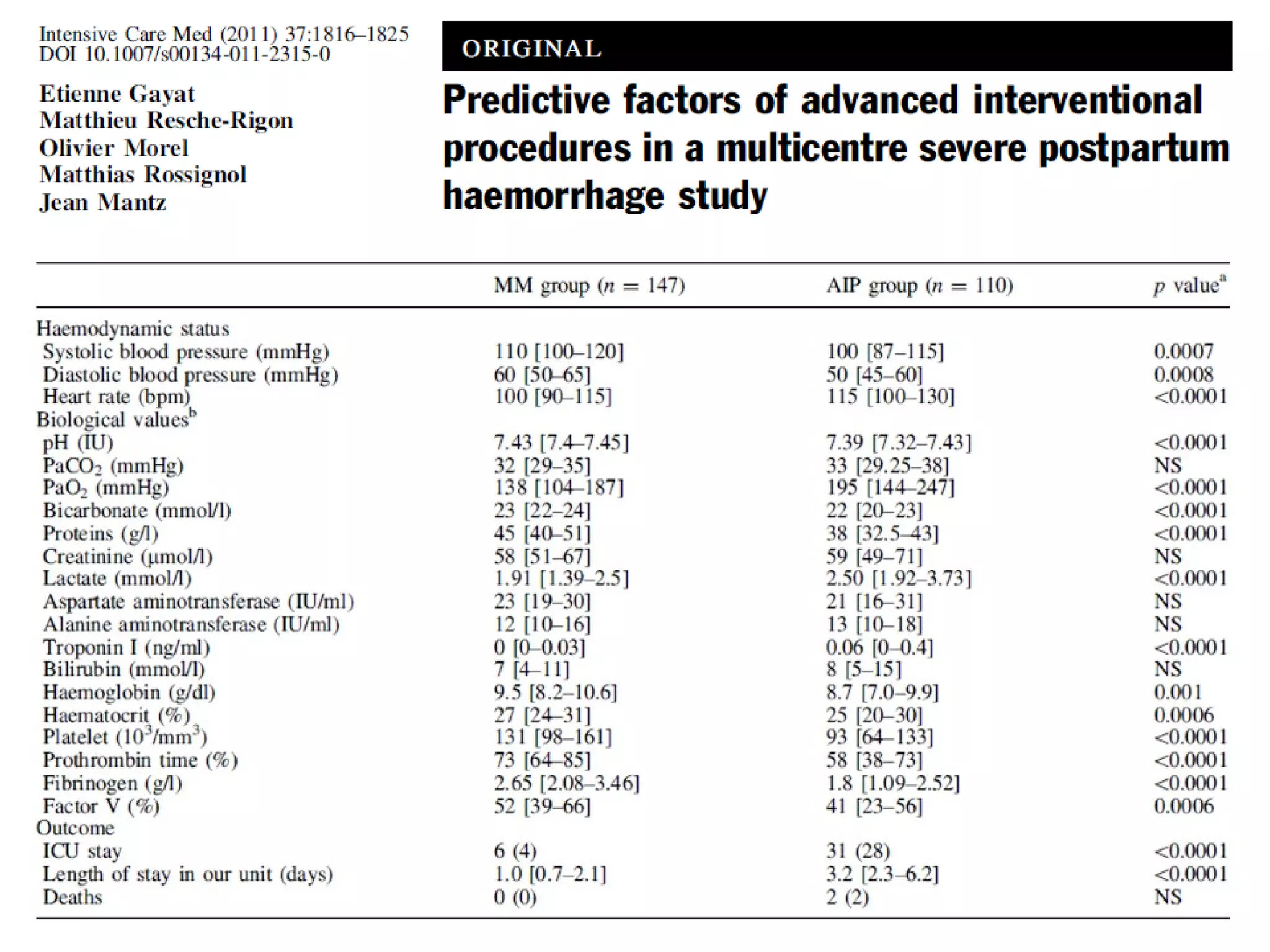
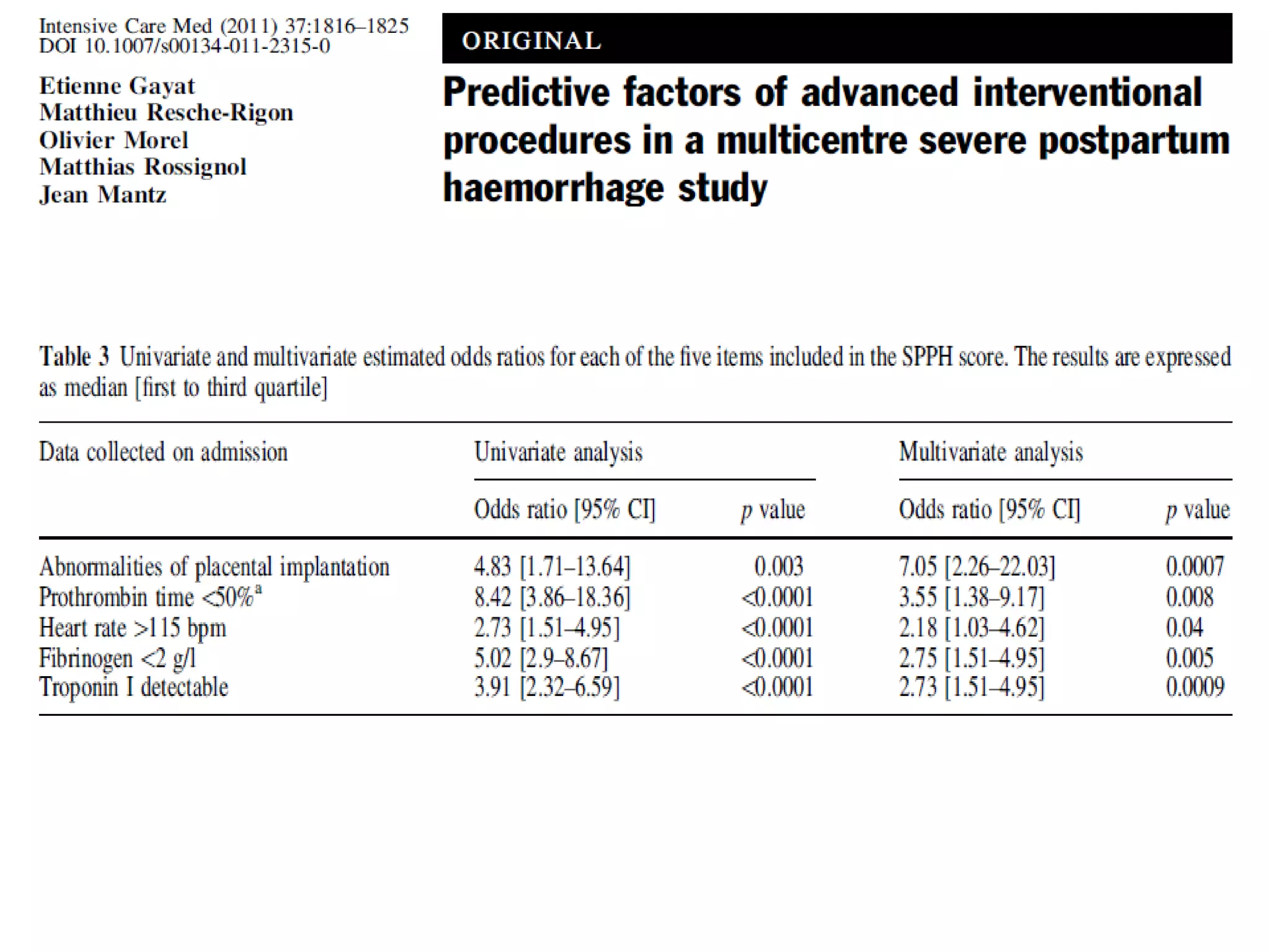
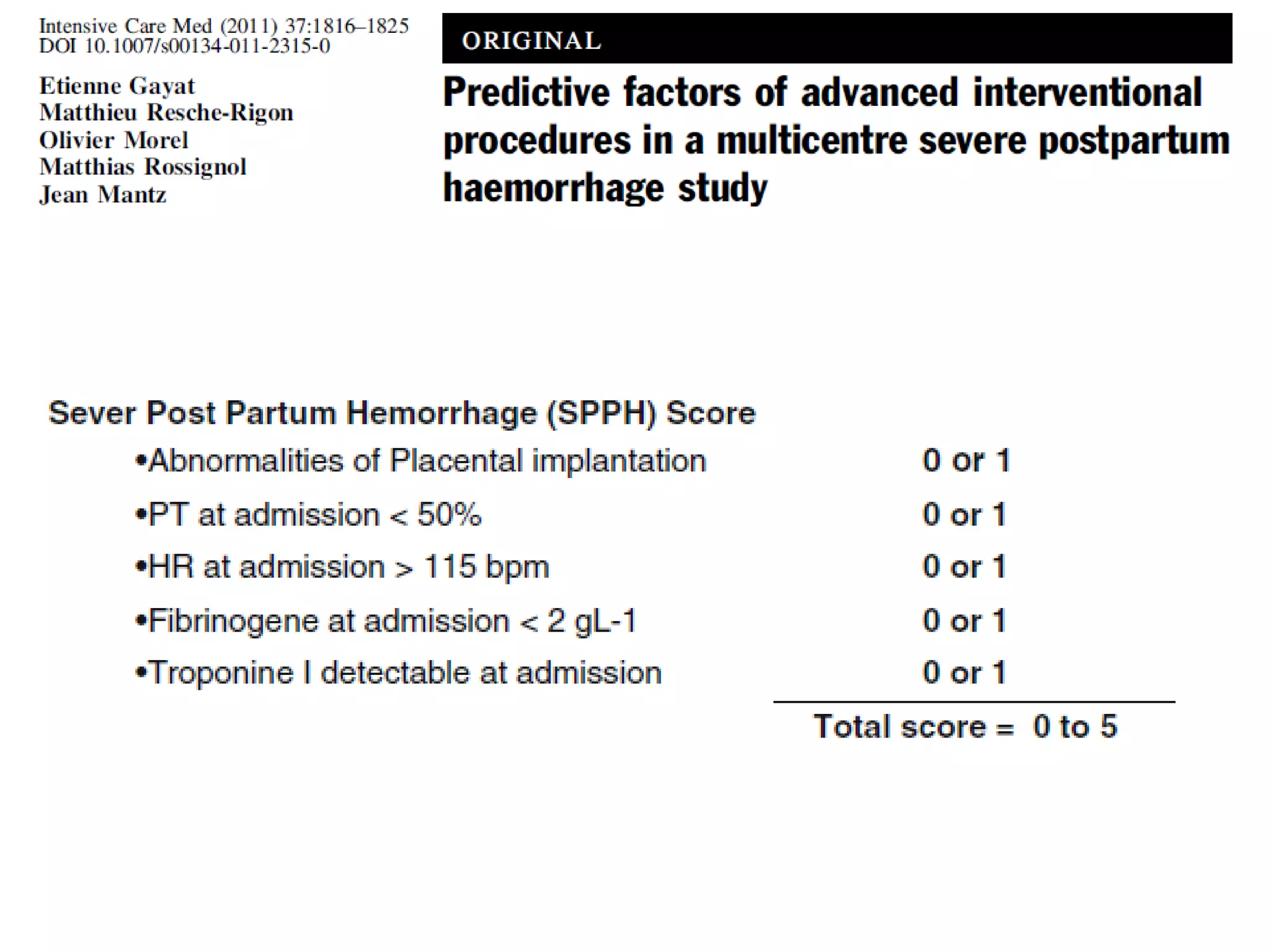
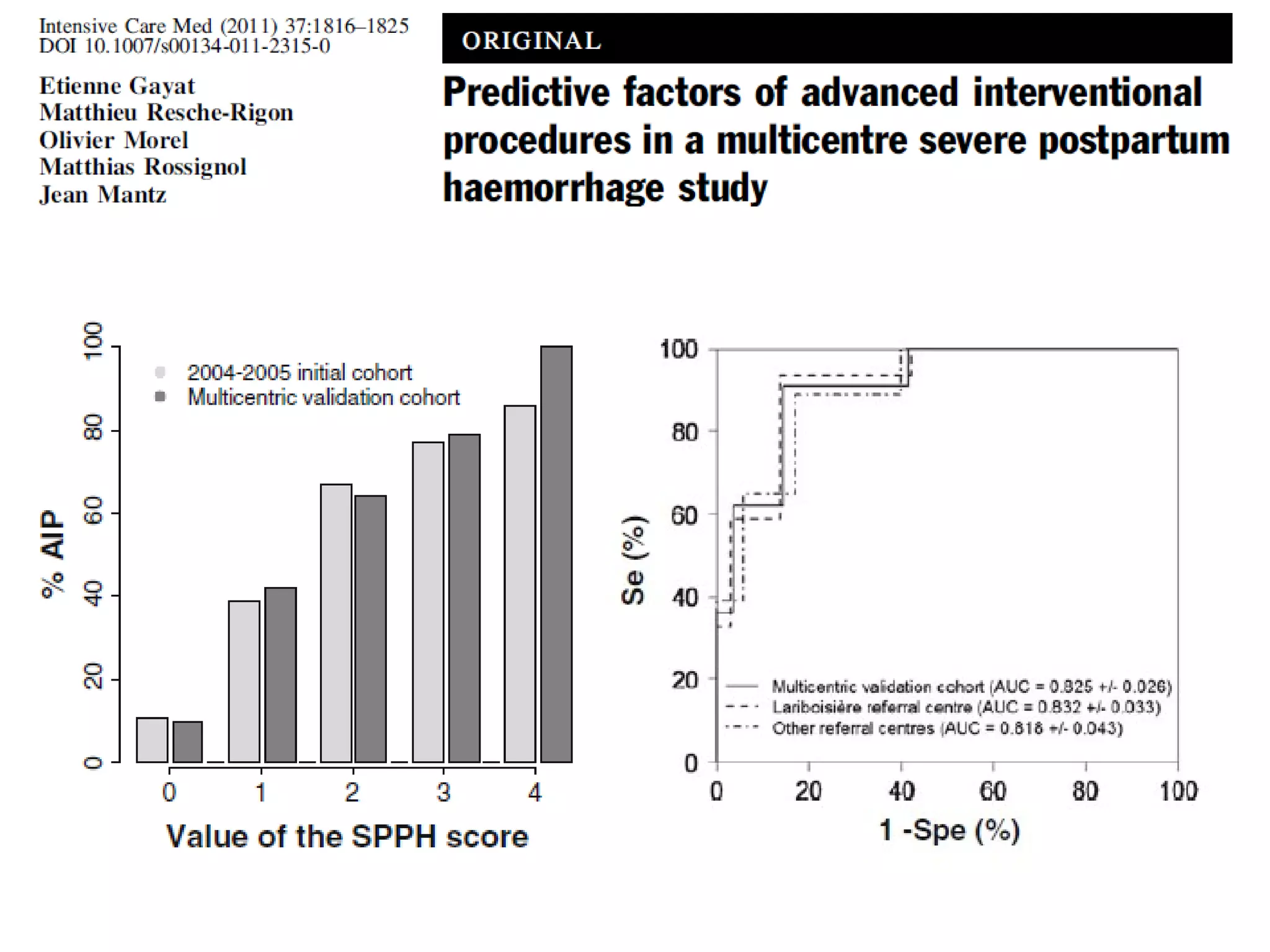
• Low Fibrinogen, abn PT, tachycardia and abnormalities of
  placental implantation and detectable troponin are predictors
  of increased morbidity
Thank you !

Overview and medical management of pph

  • 1.
    Overview and medical management of PPH Dr. Suhas Otiv Consultant, KEM Hospital, Pune
  • 3.
  • 4.
    Mortality from PPH •Half of 500,000 maternal deaths globally • 28 % of maternal deaths in developing countries • Risk of death from PPH 1 in 1000 deliveries - developing countries 1 in 100,000 deliveries – developed countries
  • 5.
  • 6.
    Incidence of PPH PPH 5 – 17 % of all deliveries > 500ml Major PPH 1.3 – 2.5 % of all deliveries > 1000 ml ACOG 3.9 % of all deliveries
  • 7.
    Definition of PPH PrimaryPPH: 0 – 24 hours; Secondary PPH: 1 - 84 days Blood loss > 500 ml at vaginal delivery > 750 - 1000 ml at Cesarean Severe PPH > 1000 ml loss at vaginal delivery ACOG: - Fall in hematocrit 10% - Need for PRBC transfusion Rate of blood loss: > 150ml/min or sudden loss > 1.5 – 2 l
  • 8.
    PPH can occurwith minimal vaginal bleeding !!!!
  • 9.
    Accuracy of visualestimation of blood loss
  • 10.
  • 11.
  • 12.
    Modified –WHO Measuring volumeof blood loss -Transfer of blood -Mops squeezed
  • 13.
  • 15.
    Etiology of PPH •Uterine Atony > 80 % • Lacerations of vagina, cervix • Uterine rupture 10% • Uterine inversion • Retained placental fragments • Placental accreta / increta / percreta 5% • Coagulopathy 1%
  • 16.
    Risk factors forPPH • Nulliparity • Advanced maternal age • Obesity • PIH • Large baby • PPH in previous delivery • Prolonged labor • Augmented labor • APH • Forceps delivery • Multiple pregnancy • Use of tocolytics • Cesarean delivery х Grand multiparity 65 % cases of PPH occur with no risk factors
  • 17.
    PPH at Cesareandelivery: Risk Factors • General anesthesia • Chorio-Amnionitis • Pre-eclampsia • Protracted active phase of labor • Second-stage arrest • Classic uterine incision Obstet Gynecol 1991 Jan;77(1):77-82
  • 18.
    Risk factors forPPH: a case control study comparing 666 cases with controls in 154311 deliveries • Retained placenta (OR 3.5, 95% CI 2.1-5.8) • Failure to progress during the second stage of labor (OR 3.4, 95% CI 2.4-4.7) • Placenta accreta (OR 3.3, 95% CI 1.7-6.4) • Lacerations (OR 2.4, 95% CI 2.0-2.8) • Instrumental delivery (OR 2.3, 95% CI 1.6-3.4) • Large for gestational age new born (eg, >4000 g) (OR 1.9, 95% CI 1.6-2.4) • Hypertensive disorders (OR 1.7, 95% CI 1.2-2.1) • Induction of labor (OR 1.4, 95% CI 1.1-1.7) • Augmentation of labor with oxytocin (OR 1.4, 95% CI 1.2-1.7) J Matern Fetal Neonatal Med. 2005;18(3):149
  • 19.
    Management of PPH •Scenarios – labor room, OR, wards, peripheral hospital • Effective management – Prompt response – Organized team work – Clear priorities, decisive • Help: communication, monitoring, assistance, documentation
  • 20.
    Being prepared forPPH • Team: Nursing, doctors, surgical expertise, critical care physician / anesthesiologist • Drugs: Oxytocin, Methergin, Carboprost, volume expanders, resuscitation • Equipment: Monitoring, resuscitation, Blood bank, Lab, ICU, OR
  • 21.
    Management of PPHat vaginal delivery First line Management • Call for help • Uterine massage • IV access: X-match, labs • Infuse NS rapidly, • BP, Foley catheter, pulse oximeter, • Prompt Uterotonic drugs Carboprost 250 mcg, 2 doses 15 minutes apart Oxytocin infusion 40 units / 500 ml in 30 – 60 min Methylergometrine 0.2mg i.m. one dose Misoprostol 400 - 800mcg • Rapidly evaluate for vaginal / cervical lacerations • Warmth, oxygen
  • 22.
    Oxytocic drugs • Oxytocin • Methyl ergometrine • Misoprostol • Carboprost
  • 23.
    Oxytocin • Storage: Between2-8 *C, avoid freezing • Adverse effects: anti-diuretic effect, hypotension, arrhythmias • Incompatible with noradrenaline, warfarin • 10 – 40 IU / L of infusate
  • 24.
    Ergometrine • Storage: Refrigerate,protect from light, stable for 60-90 days, discoloration – discard • Avoid : heart disease, hypertension, peripheral vascular disease, hepatic or renal impairment; with antiretroviral and macrolide antibiotics • Adverse : Vomiting, nausea, HT, CVA • Route: IM preferred, IV dilute in 5 ml NS
  • 25.
    Carboprost – PGF2alpha • Caution : Asthma, cardiac disease, epilepsy, liver disease • Storage: Refrigerate • Adverse: Vomiting, diarrhea, flushing, • Dosage: 250 mcg IM, repeat every 15 - 90 minutes, maximum 8 doses = 2 mg. • IV injection - bronchospasm, hypertension, vomiting, and anaphylaxis
  • 26.
    Misoprostol • PGE1 analogue •Adverse effects – vomiting, shivering at higher doses. No broncho-constriction. • Storage: Stable at or below 25*C • Route: Oral, buccal, rectal, vaginal • Rapid onset of action lasting 4-6 h
  • 27.
    Misoprostol as anadjunct to standard uterotonics for treatment of PPH Lancet. 2010;375(9728):1808 1422 women with atonic PPH treated with routine uterotonic agents randomized to 600 mcg misoprostol sublingually Placebo sublingually Found no difference in blood loss > 500 ml in next 1 hour
  • 28.
    Treatment of PPHwith sublingual misoprostol versus oxytocin in women receiving prophylactic oxytocin Lancet. 2010;375(9710):217 31055 women delivered with prophylactic oxytocin in III stage, 809 (3%) who had atonic PPH were randomized to Misoprostol 800mcg sl Oxytocin 40 u infusion in 15 minutes Similar outcomes in both groups 90% women had bleeding controlled in 20 minutes; 30% women had additional blood loss of > 300 ml after Rx
  • 29.
    After initial treatment •Evaluate for retained placental fragment uterine inversion lacerations coagulopathy • Check urine output, response to resuscitation, time volume of blood lost
  • 30.
    Volume replacement • Crystalloid:Ringer Lactate, Hartmann, NS RL similar to plasma only 20% retained in circulation Dextrose: only 10% retained, interferes with X matching NS avoid in pre-eclamptic patient • Blood volume changes last for 40 minutes only • Infuse 3 L for each 1 L of estimated blood loss • Target 90mm systolic pressure, UOP 30ml/hr • Give colloids after 2 L of crystalloids given
  • 31.
    Colloids • Gelatin polymers- Hemaccel rapid urinary excretion anaphylaxis • Hydroxyethyl starch – Hetastarch, Pentastarch increases plasma volume by 70 – 230% dose 20 ml/kg = 1 to 1.5 L no anaphylactic reactions well tolerated lasts for 4 hours in circulation
  • 32.
    Blood transfusion • Nouniversally accepted guidelines for trigger • PRBC x 2 if no improvement after 2-3 L of crystalloids or if ongoing blood loss likely • Warm carefully. > 40 *C – severe transfusion reactions • Admin 1 FFP for every 1-2 units of PRBC, at 12-15ml/kg • No drugs / injections with blood
  • 33.
    Target • Hb > 7, • Platelets > 50,000 /ml • Fibrogen > 100mg/dl • PT < 1.5 times control
  • 34.
    Massive hemorrhage • Definedas > 10 units of BT required / 24 h • Likely when persistent SBP < 90, Loss more than 1500ml • Cryoprecipitate if no response to FFP or Fibrogen level < 100 • Expect platelet count < 50,000 after > 2 L blood loss. Platelets to maintain counts 25-50,000, 1:1
  • 35.
    Secondary interventions • Repeated doses of Carboprost max 8 doses • Intramyometrial Carboprost - off label • Carboprost uterine irrigation • Rectal Misoprostol - high doses >800mcg • Intra-uterine Misoprostol • Tamponade – Sengstaken tube, • Uterine Packing
  • 36.
    Indications for laparotomy •Unabated blood loss • Atony unresponsive to Rx • Vital signs out of proportion to blood loss • Vaginal laceration extending above fornix
  • 45.
    Summary • Symptoms andvital signs of blood loss are more important than visual assessment of blood loss • Team approach with protocols and regular drills • Prompt, sequential use of utero-tonic agents and replacement of volume are mainstay of Rx • Low Fibrinogen, abn PT, tachycardia and abnormalities of placental implantation and detectable troponin are predictors of increased morbidity
  • 46.