1Charles Oo
OVERCOMING THE
CHALLENGES IN DRUG
DEVELOPMENT
Charles Oo, PharmD, PhD,
ABCP, FCP
charlesoo@yahoo.com
2Charles Oo
Outlines
 Challenges in drug research and development
 Complex problem requiring “multi-pronged” strategies:
 Complete paradigm shift, and open innovation model
 Marketing strategy: focus on ‘valued’ therapeutic classes and
personalized medicine
 Biological complexity: balancing drug’s toxicity and safety
 Scientific insight: pathophysiology, mechanism of actions, and
physicochemical profiles
 Technology advances and biomarker utilization
 Model-based drug development
 Adaptive design
Bottom-line
Innovation is crucially needed for drug research and development, and
it can be developed with the right strategies
3Charles Oo
Current Realities for Pharmaceutical Developers
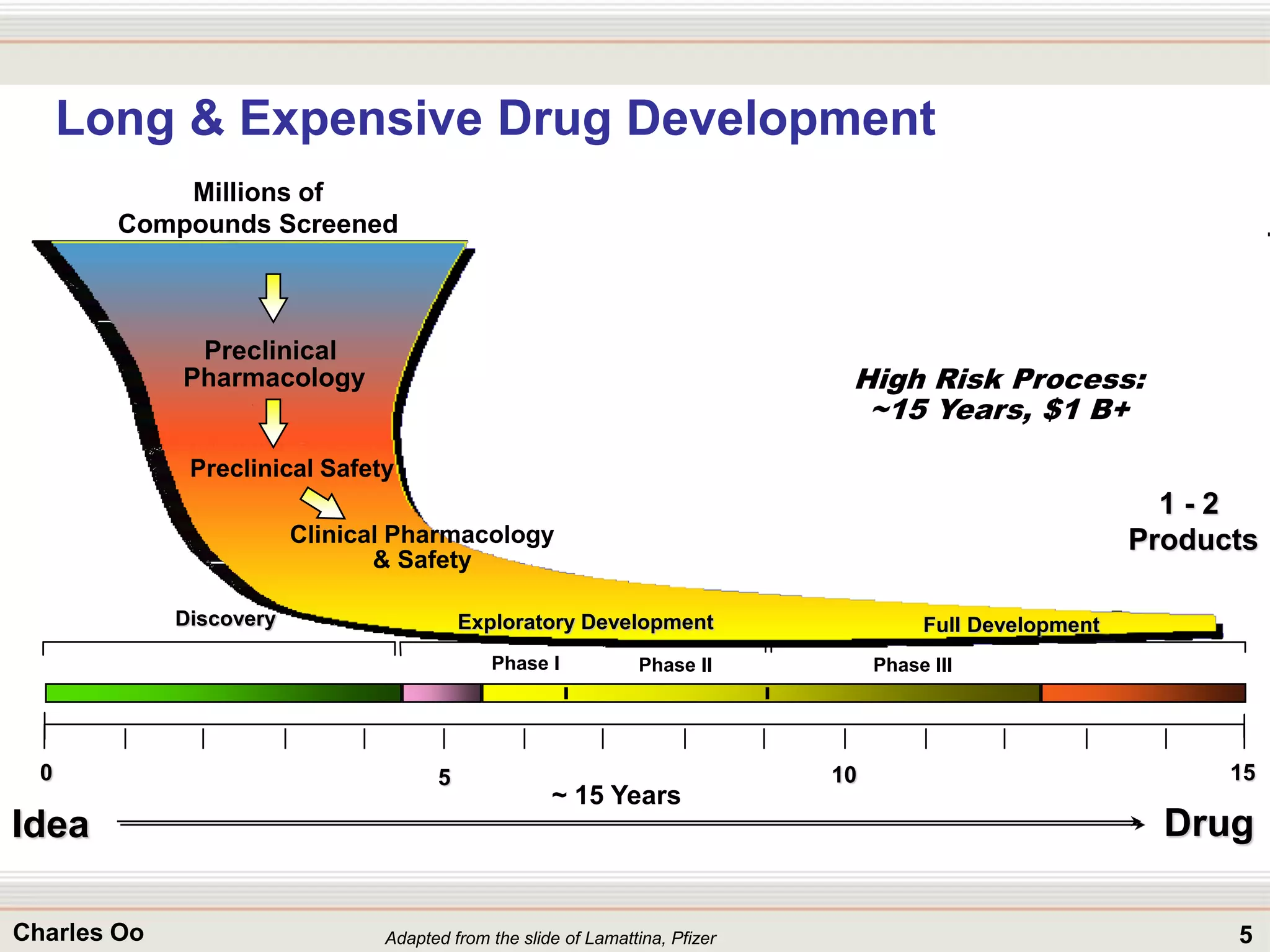
 Recent drug development process is long, risky,
expensive, and increasingly complex, after the low-
hanging fruits have been plucked
 Growing regulatory hurdles and policy demands
stemming from implementation FDAAA and the Health
Care Reform law
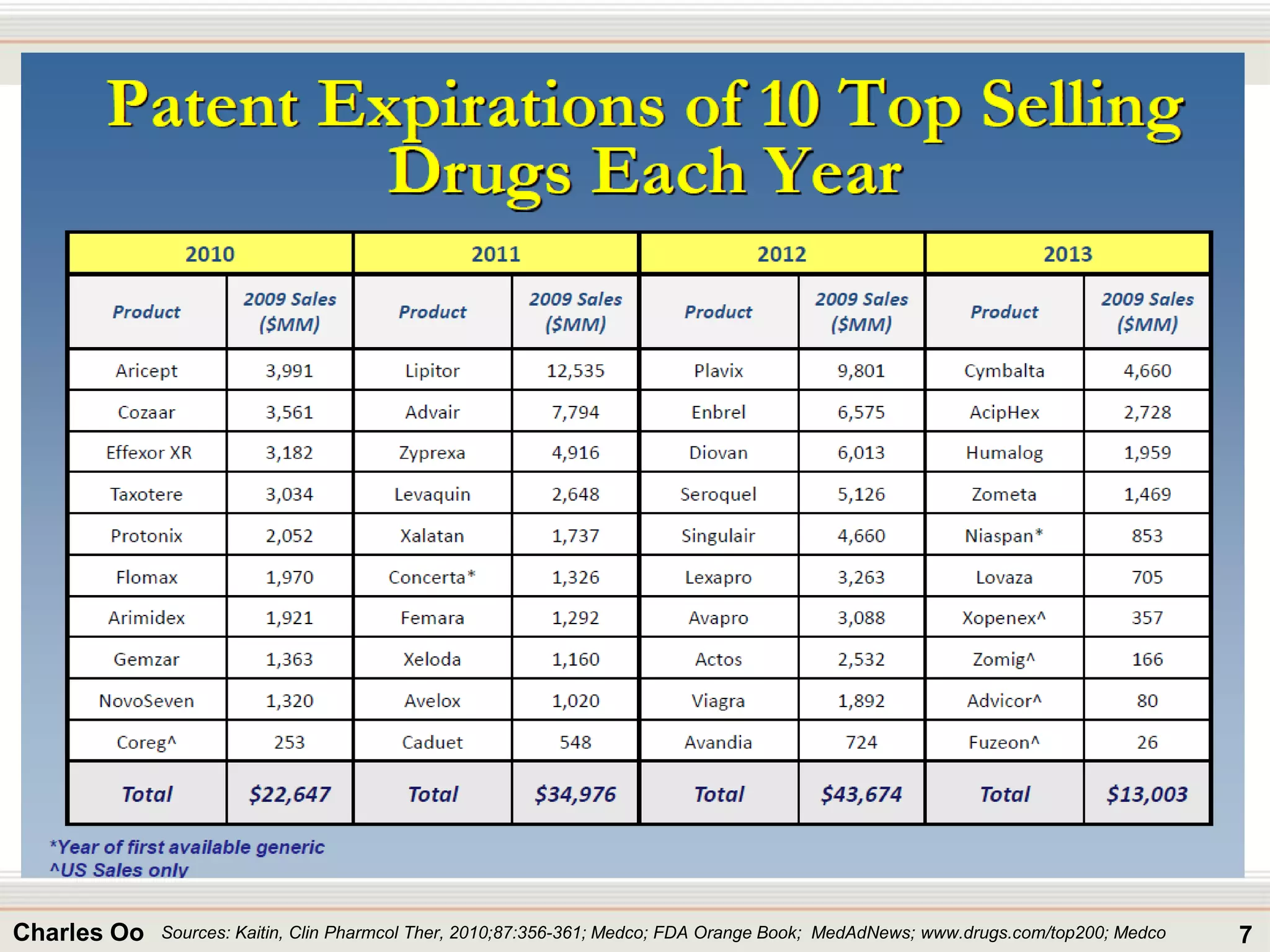
 Drug patents on many high revenue products are
expiring
 Marketplace is highly competitive and reimbursement
environment is increasingly restrictive
 Public support and image remain low.
Kaitin KI, Tufts Center for the Study of Drug Development ,2011: “Pharmaceutical Innovation in the 21st Century”
4Charles Oo
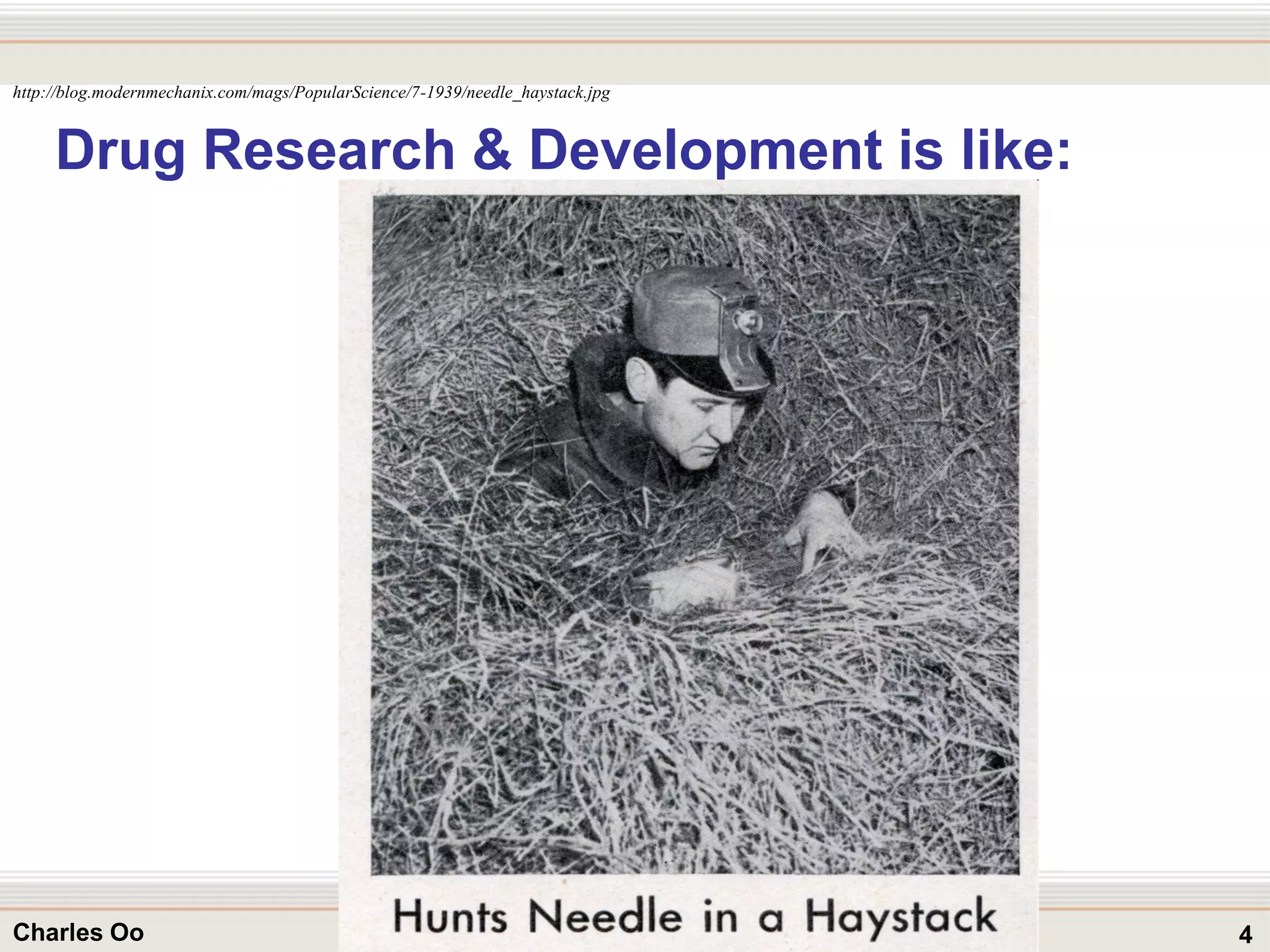
Drug Research & Development is like:
http://blog.modernmechanix.com/mags/PopularScience/7-1939/needle_haystack.jpg
5Charles Oo
Long & Expensive Drug Development
High Risk Process:
~15 Years, $1 B+
Preclinical
Pharmacology
Preclinical Safety
Millions of
Compounds Screened
Idea Drug
~ 15 Years
1 - 2
Products
Discovery Exploratory Development Full Development
Phase I Phase II Phase III
0 155 10
Clinical Pharmacology
& Safety
Adapted from the slide of Lamattina, Pfizer
6Charles Oo
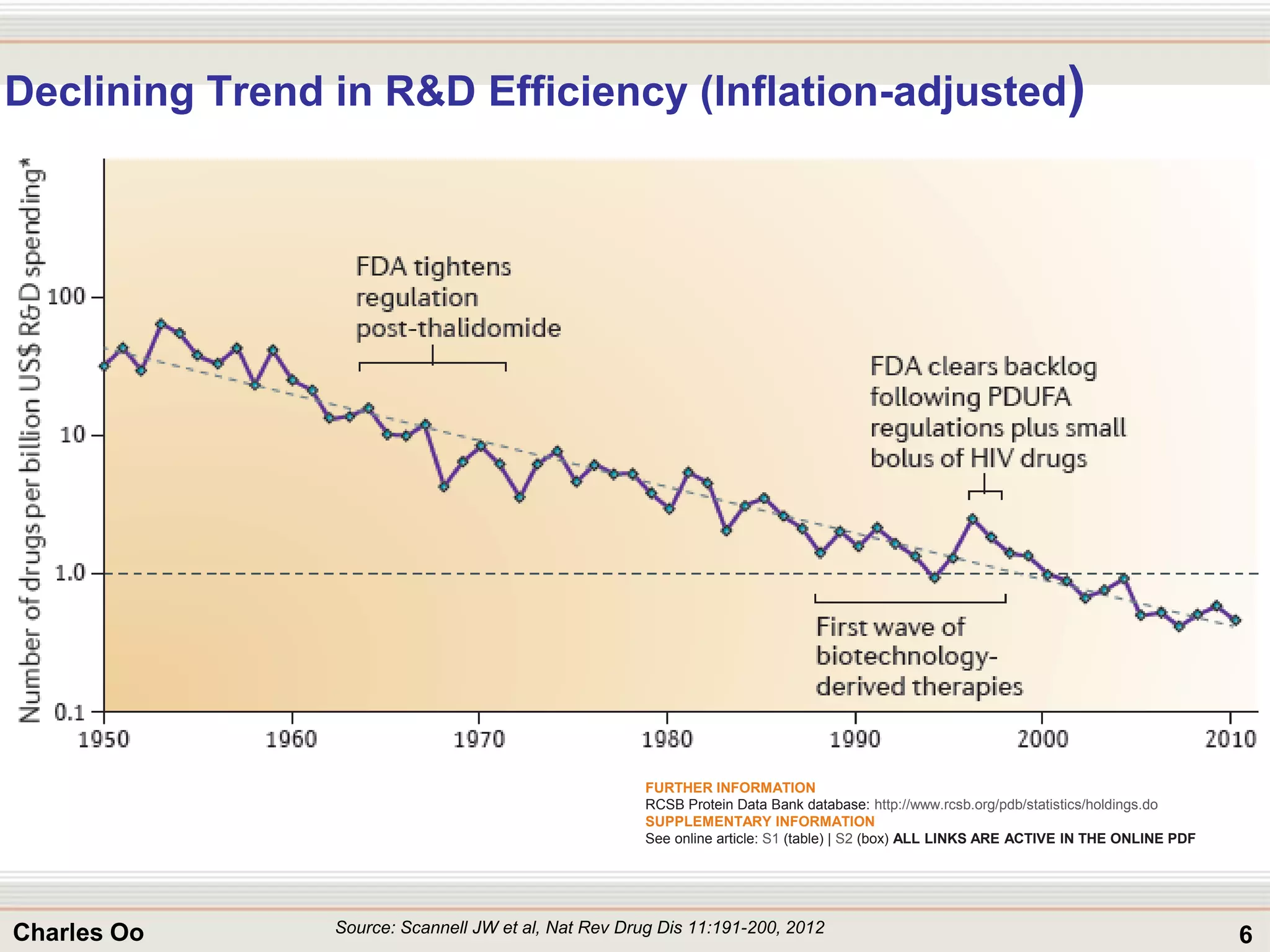
Declining Trend in R&D Efficiency (Inflation-adjusted)
FURTHER INFORMATION
RCSB Protein Data Bank database: http://www.rcsb.org/pdb/statistics/holdings.do
SUPPLEMENTARY INFORMATION
See online article: S1 (table) | S2 (box) ALL LINKS ARE ACTIVE IN THE ONLINE PDF
Source: Scannell JW et al, Nat Rev Drug Dis 11:191-200, 2012
7Charles Oo Sources: Kaitin, Clin Pharmcol Ther, 2010;87:356-361; Medco; FDA Orange Book; MedAdNews; www.drugs.com/top200; Medco
8Charles Oo
Pharma Leads in Drug Discovery but Not in
Innovation
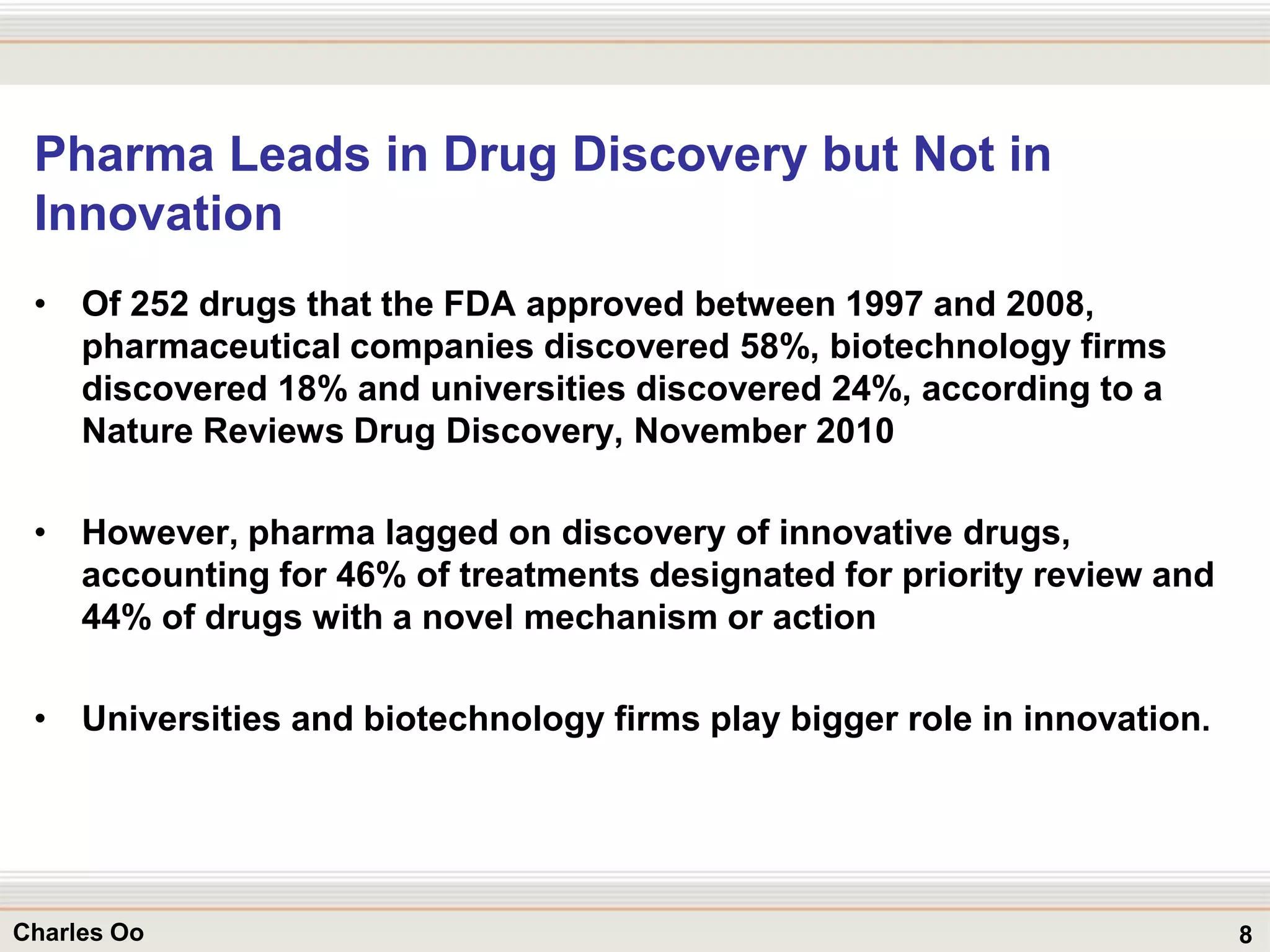
• Of 252 drugs that the FDA approved between 1997 and 2008,
pharmaceutical companies discovered 58%, biotechnology firms
discovered 18% and universities discovered 24%, according to a
Nature Reviews Drug Discovery, November 2010
• However, pharma lagged on discovery of innovative drugs,
accounting for 46% of treatments designated for priority review and
44% of drugs with a novel mechanism or action
• Universities and biotechnology firms play bigger role in innovation.
9Charles Oo
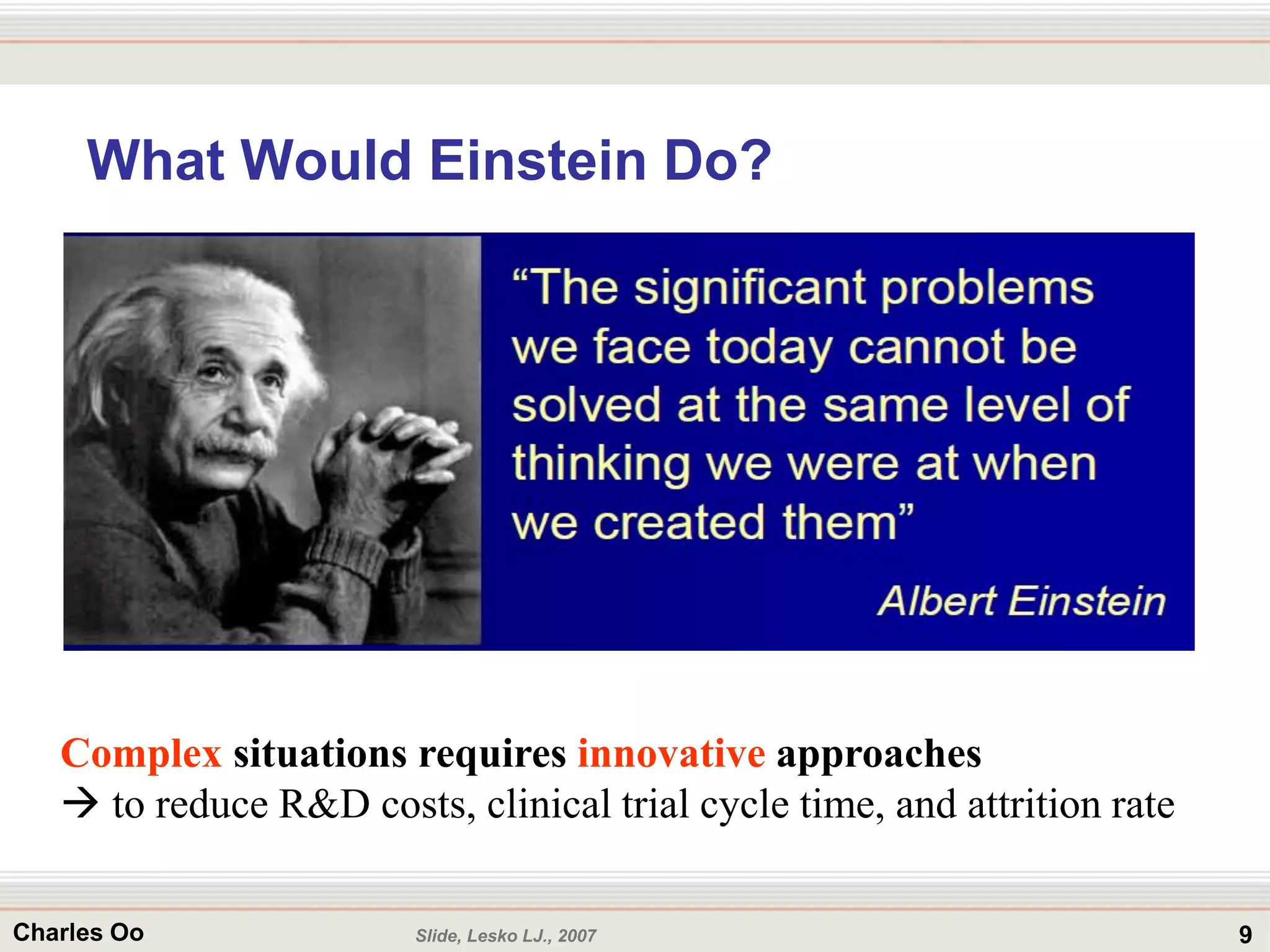
What Would Einstein Do?
Slide, Lesko LJ., 2007
Complex situations requires innovative approaches
 to reduce R&D costs, clinical trial cycle time, and attrition rate
10Charles Oo
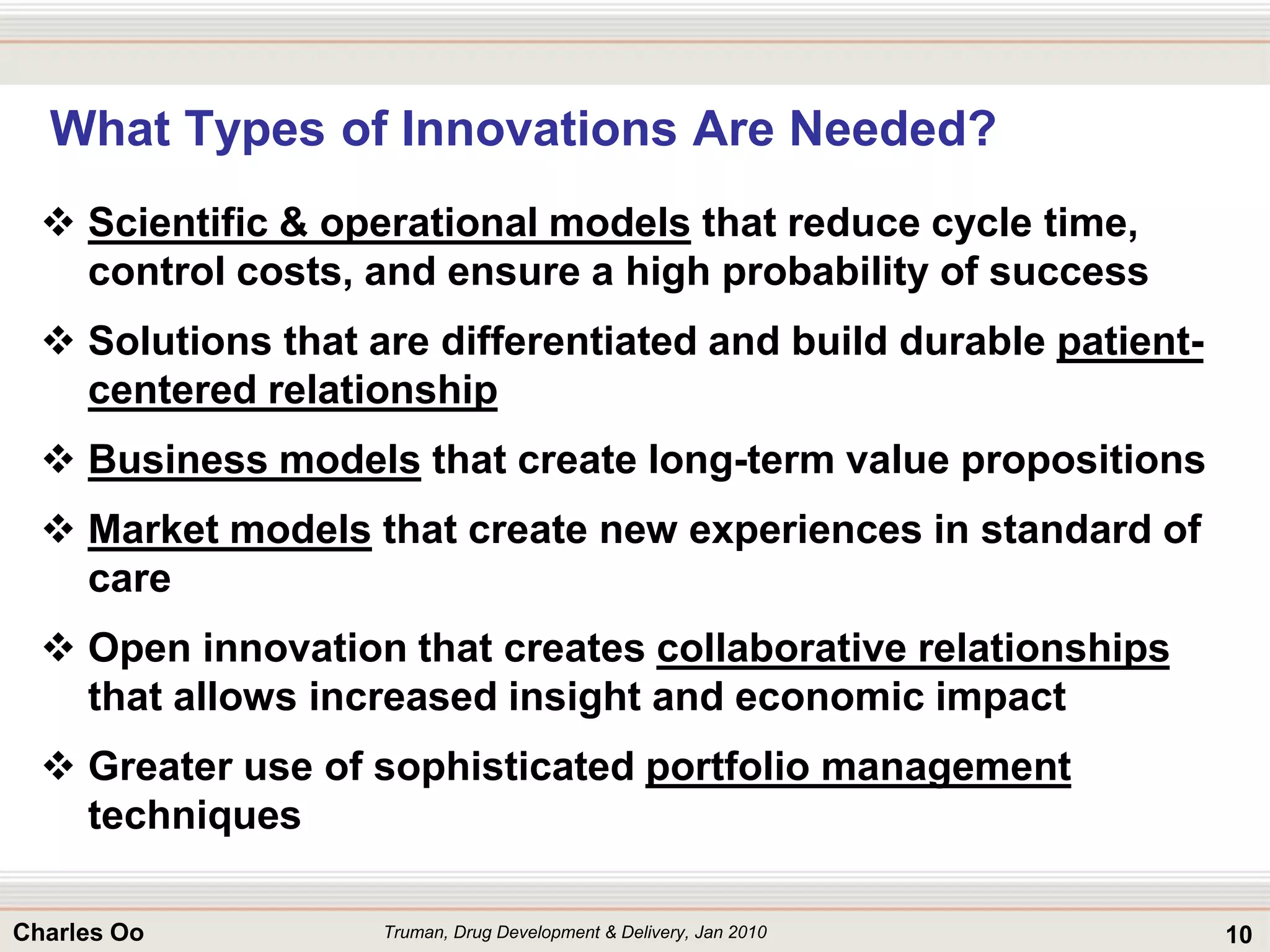
What Types of Innovations Are Needed?
 Scientific & operational models that reduce cycle time,
control costs, and ensure a high probability of success
 Solutions that are differentiated and build durable patient-
centered relationship
 Business models that create long-term value propositions
 Market models that create new experiences in standard of
care
 Open innovation that creates collaborative relationships
that allows increased insight and economic impact
 Greater use of sophisticated portfolio management
techniques
Truman, Drug Development & Delivery, Jan 2010
11Charles Oo
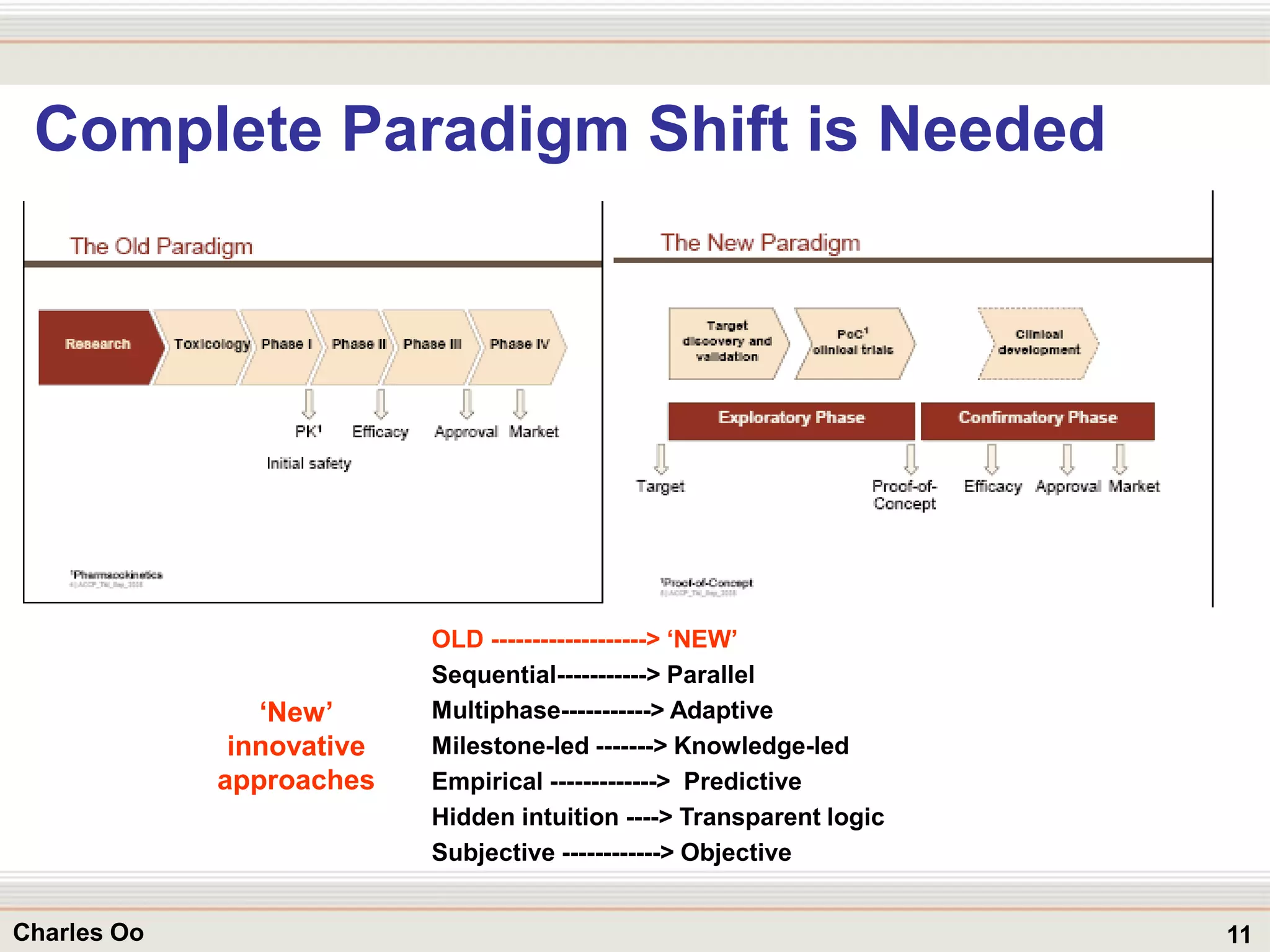
Complete Paradigm Shift is Needed
OLD -------------------> ‘NEW’
Sequential-----------> Parallel
Multiphase-----------> Adaptive
Milestone-led -------> Knowledge-led
Empirical -------------> Predictive
Hidden intuition ----> Transparent logic
Subjective ------------> Objective
‘New’
innovative
approaches
12Charles Oo
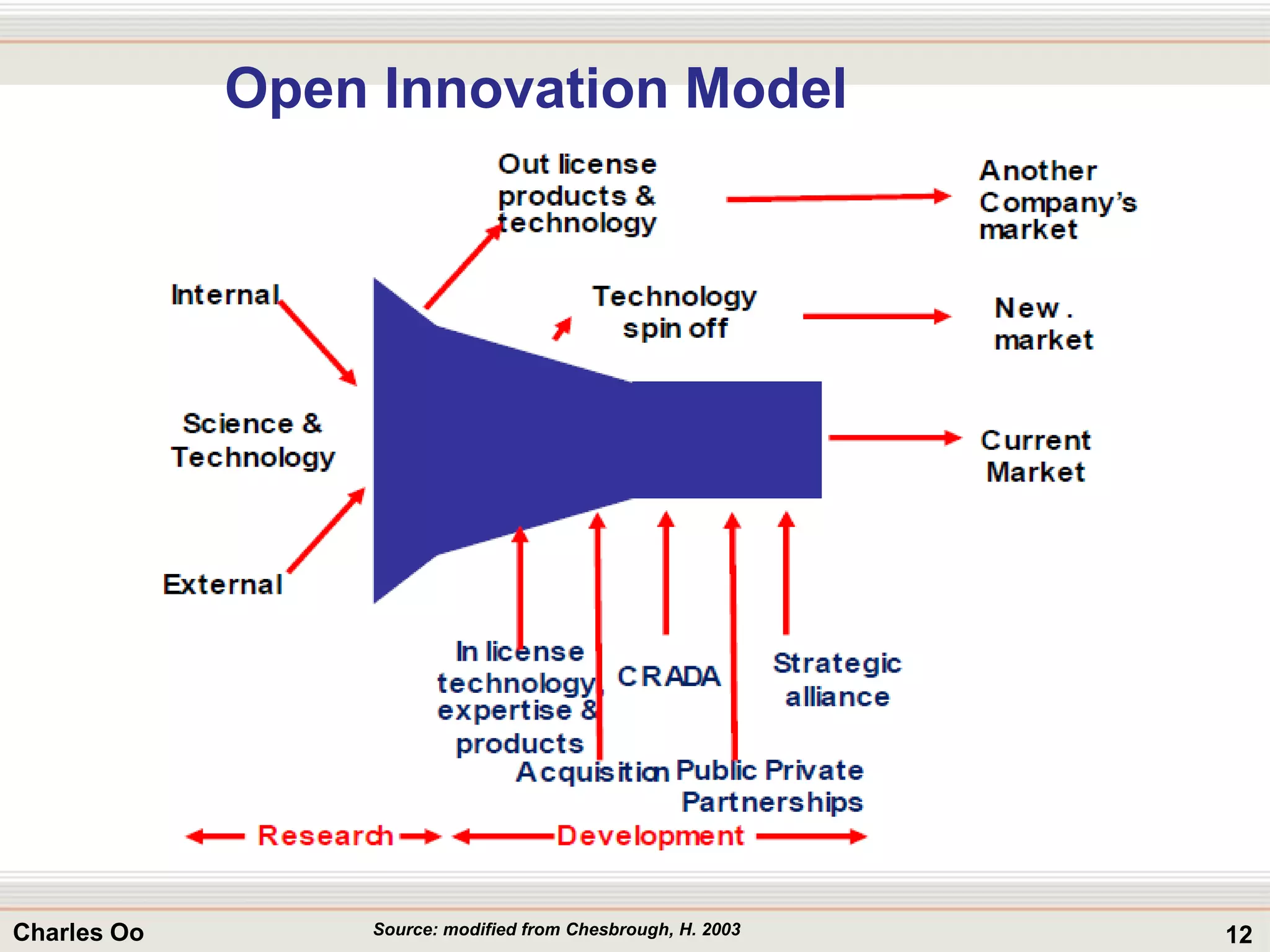
Open Innovation Model
Source: modified from Chesbrough, H. 2003
13Charles Oo
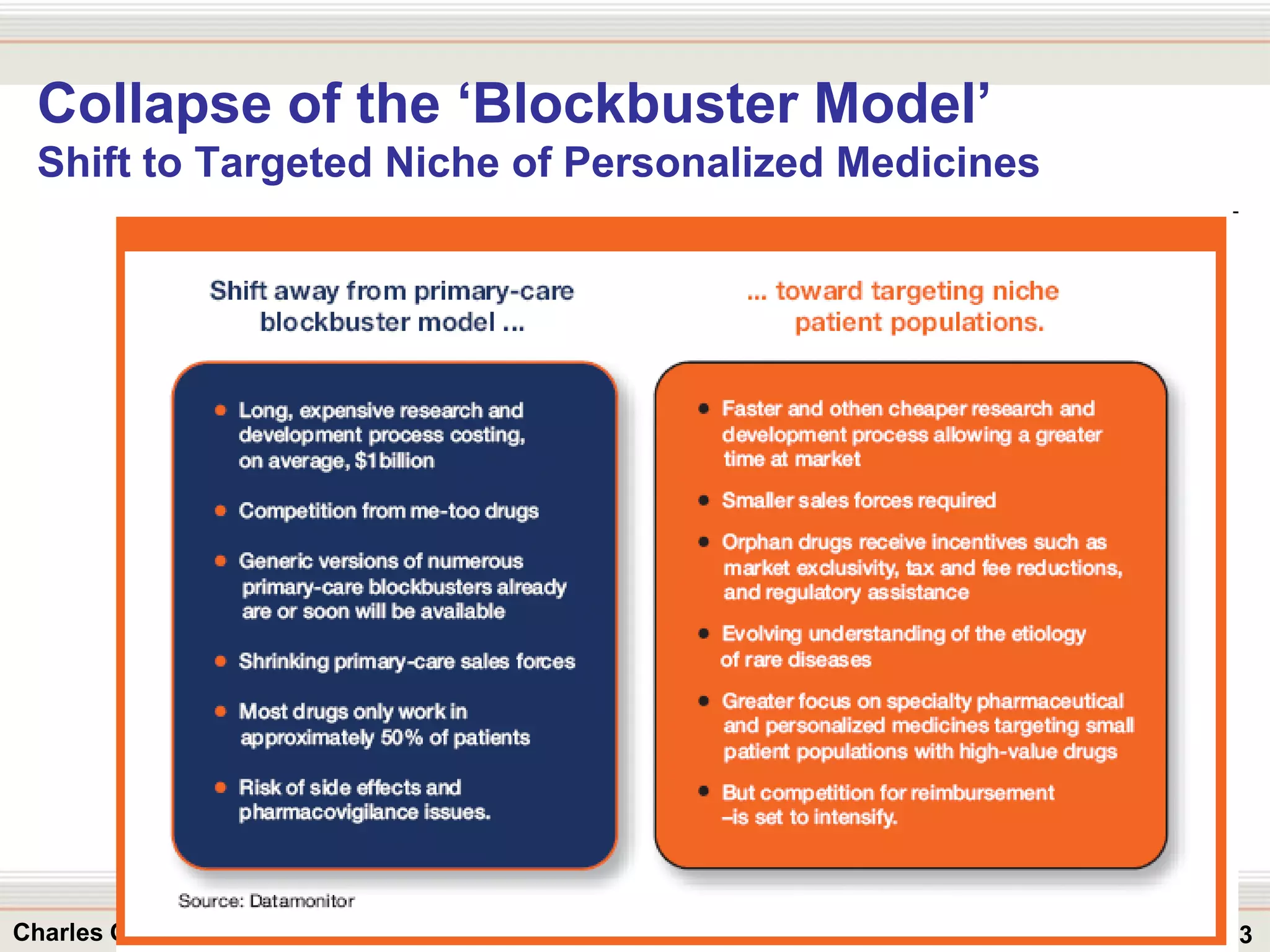
Collapse of the ‘Blockbuster Model’
Shift to Targeted Niche of Personalized Medicines
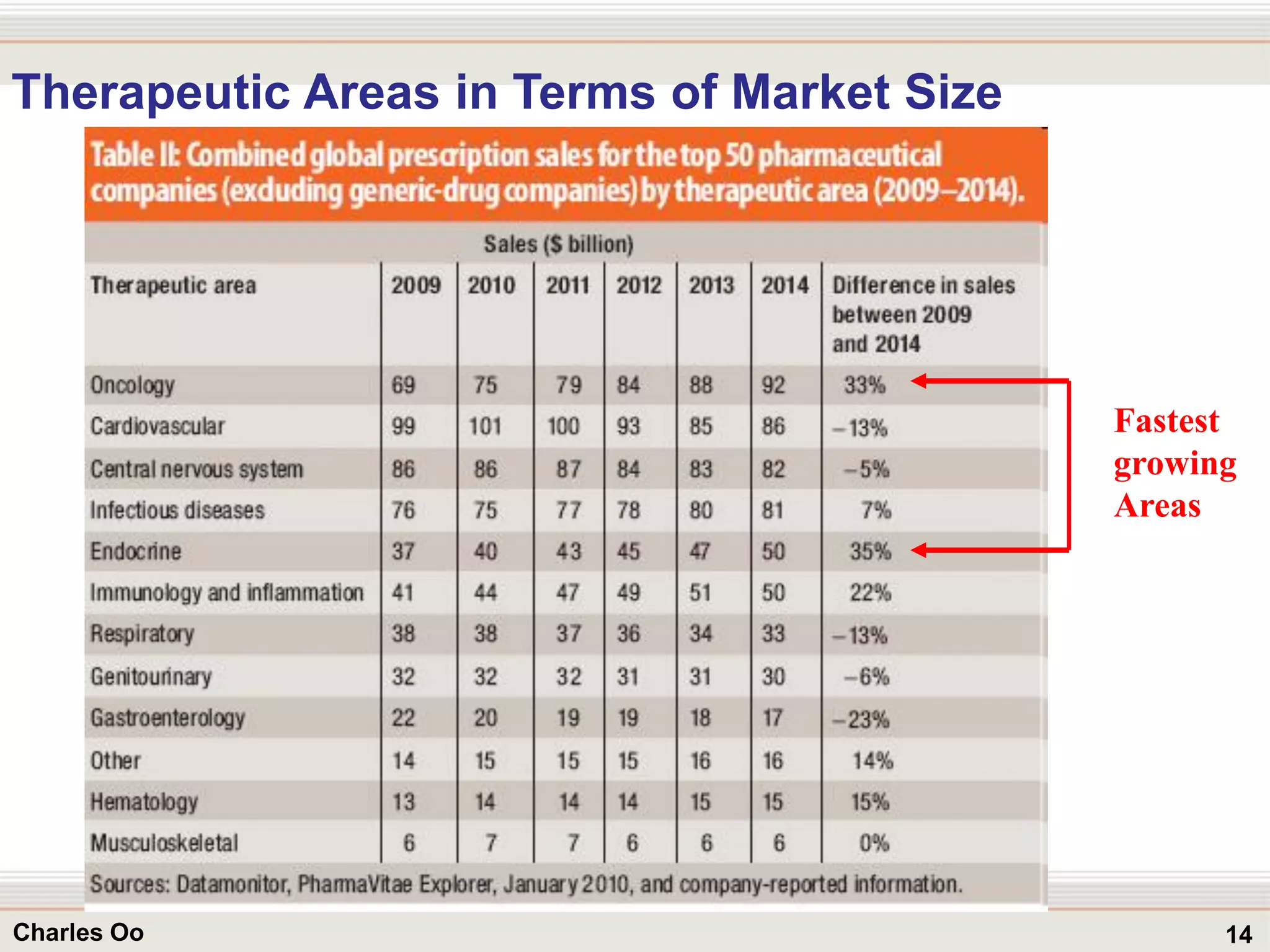
14Charles Oo
Fastest
growing
Areas
Therapeutic Areas in Terms of Market Size
15Charles Oo
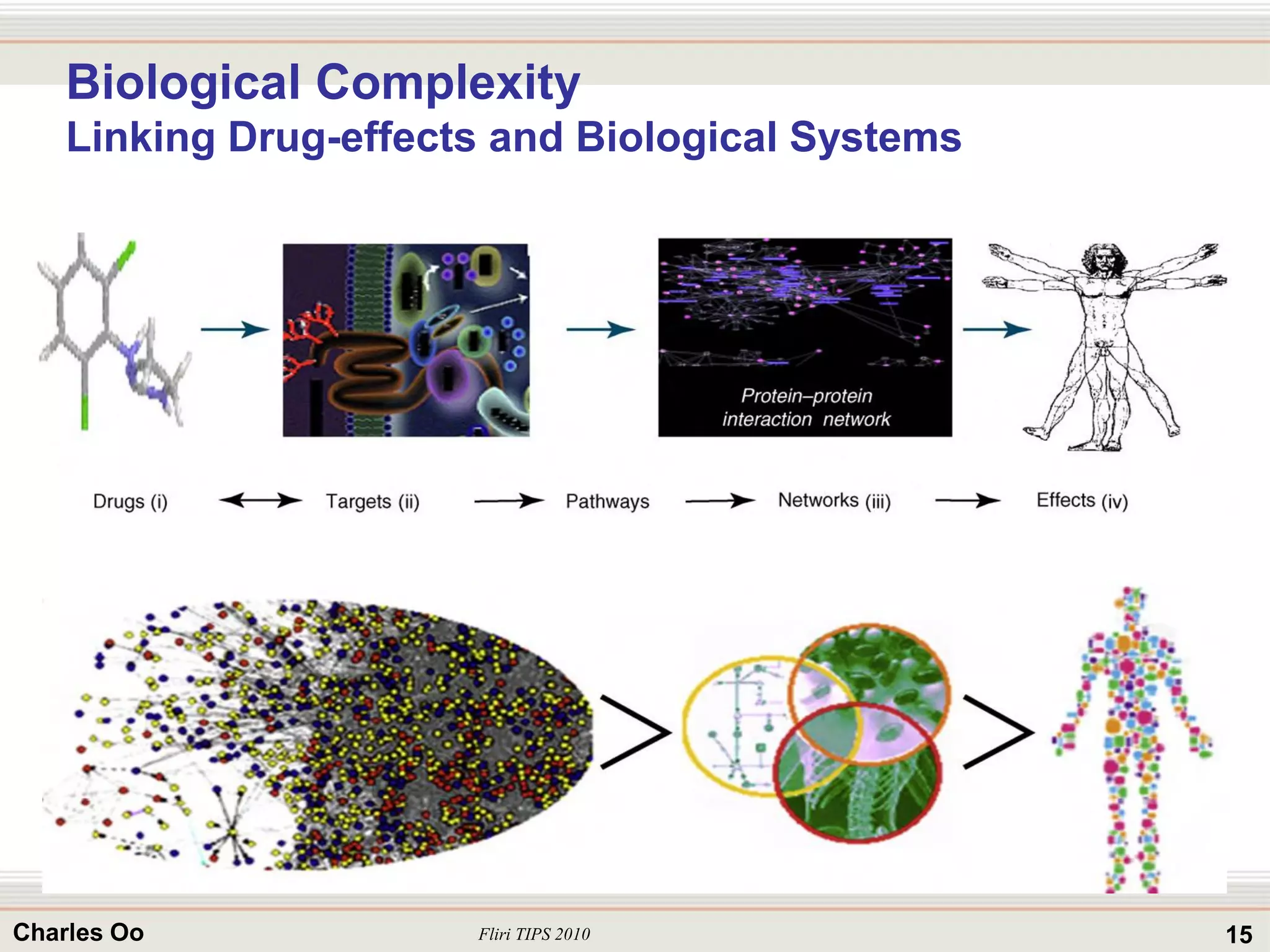
Biological Complexity
Linking Drug-effects and Biological Systems
Fliri TIPS 2010
16Charles Oo
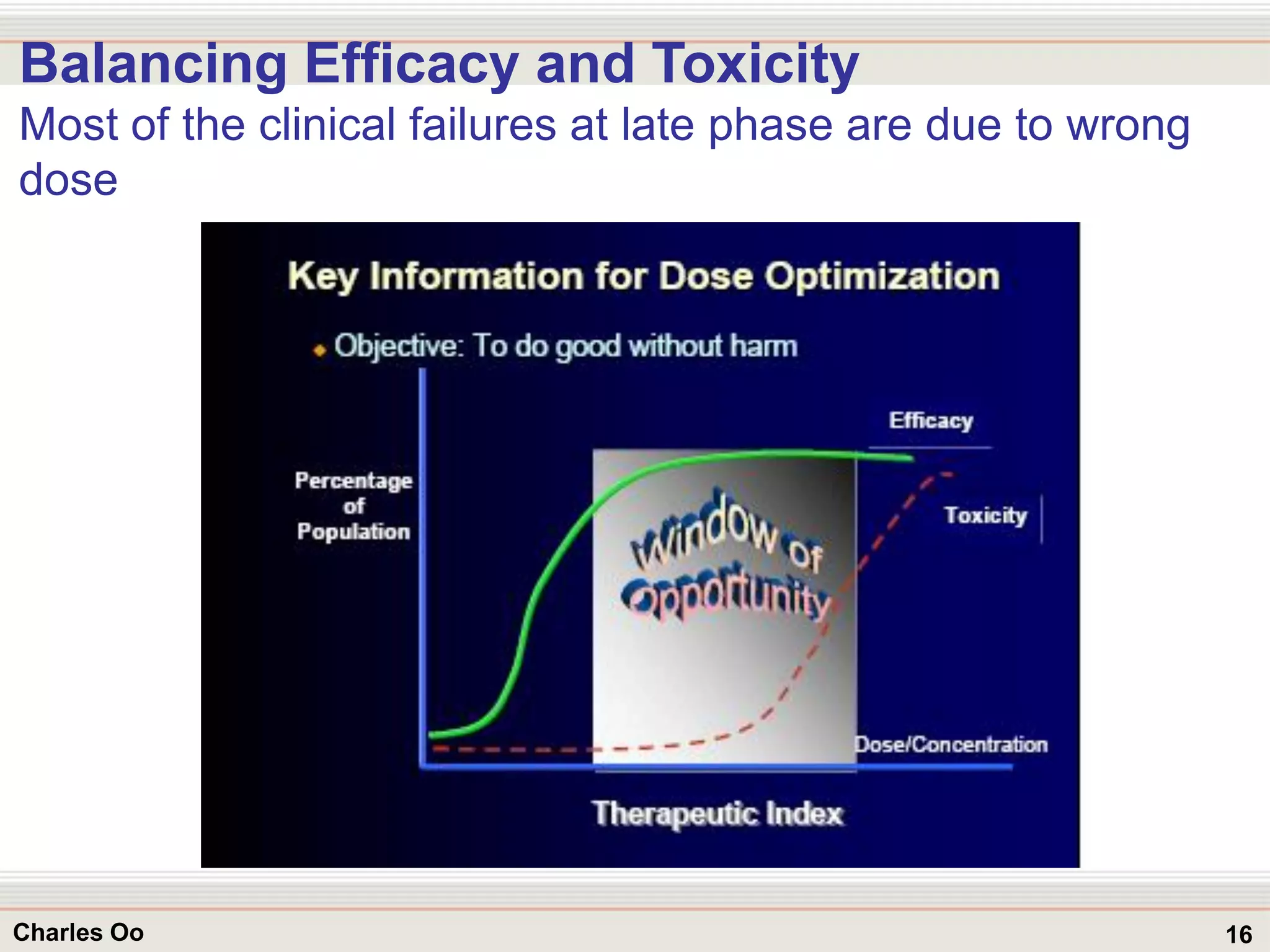
Balancing Efficacy and Toxicity
Most of the clinical failures at late phase are due to wrong
dose
17Charles Oo
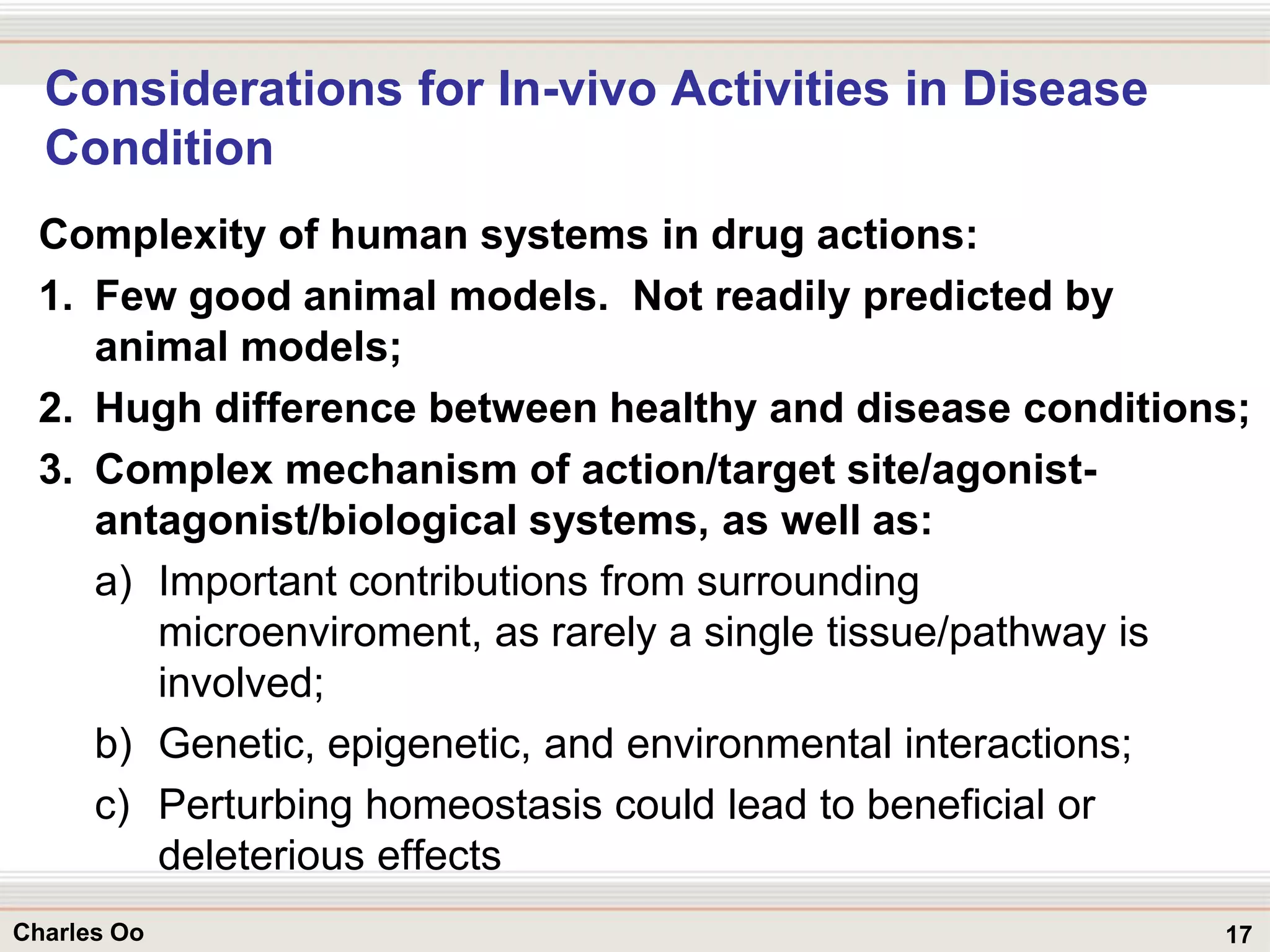
Considerations for In-vivo Activities in Disease
Condition
Complexity of human systems in drug actions:
1. Few good animal models. Not readily predicted by
animal models;
2. Hugh difference between healthy and disease conditions;
3. Complex mechanism of action/target site/agonist-
antagonist/biological systems, as well as:
a) Important contributions from surrounding
microenviroment, as rarely a single tissue/pathway is
involved;
b) Genetic, epigenetic, and environmental interactions;
c) Perturbing homeostasis could lead to beneficial or
deleterious effects
18Charles Oo
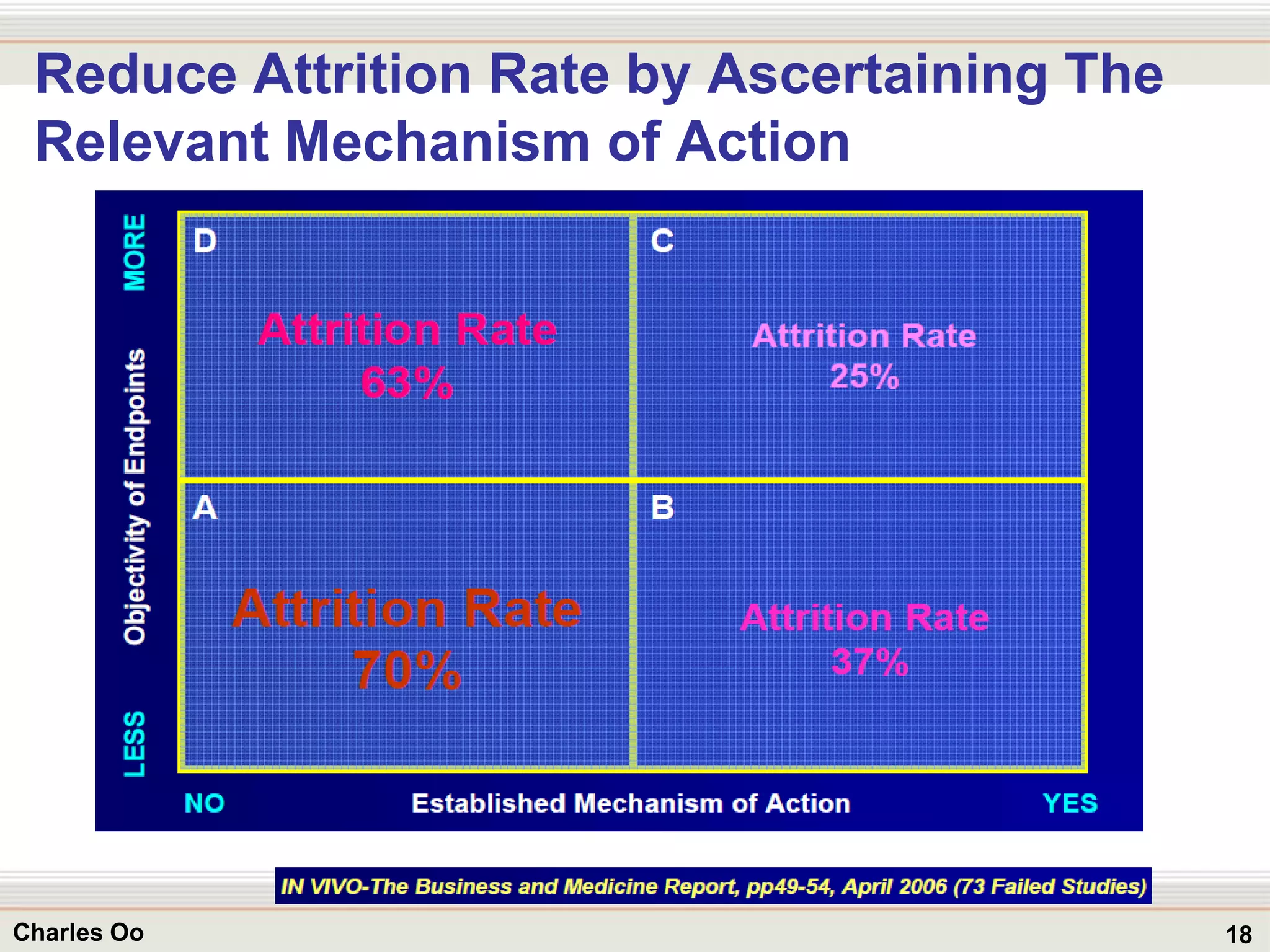
Reduce Attrition Rate by Ascertaining The
Relevant Mechanism of Action
19Charles Oo
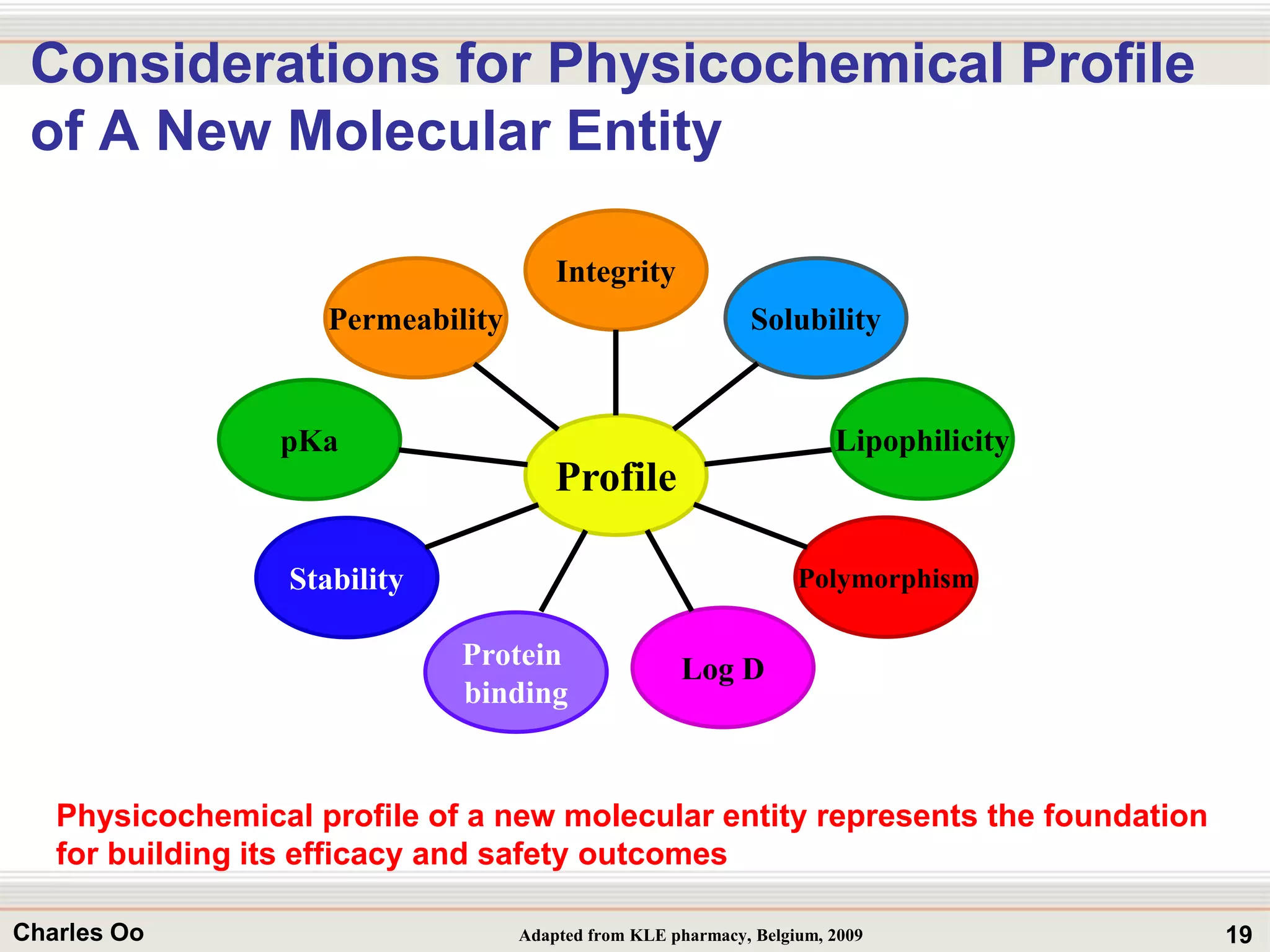
Considerations for Physicochemical Profile
of A New Molecular Entity
Permeability
pKa
Stability
Protein
binding
Log D
Polymorphism
Solubility
Integrity
Profile
Lipophilicity
Adapted from KLE pharmacy, Belgium, 2009
Physicochemical profile of a new molecular entity represents the foundation
for building its efficacy and safety outcomes
20Charles Oo
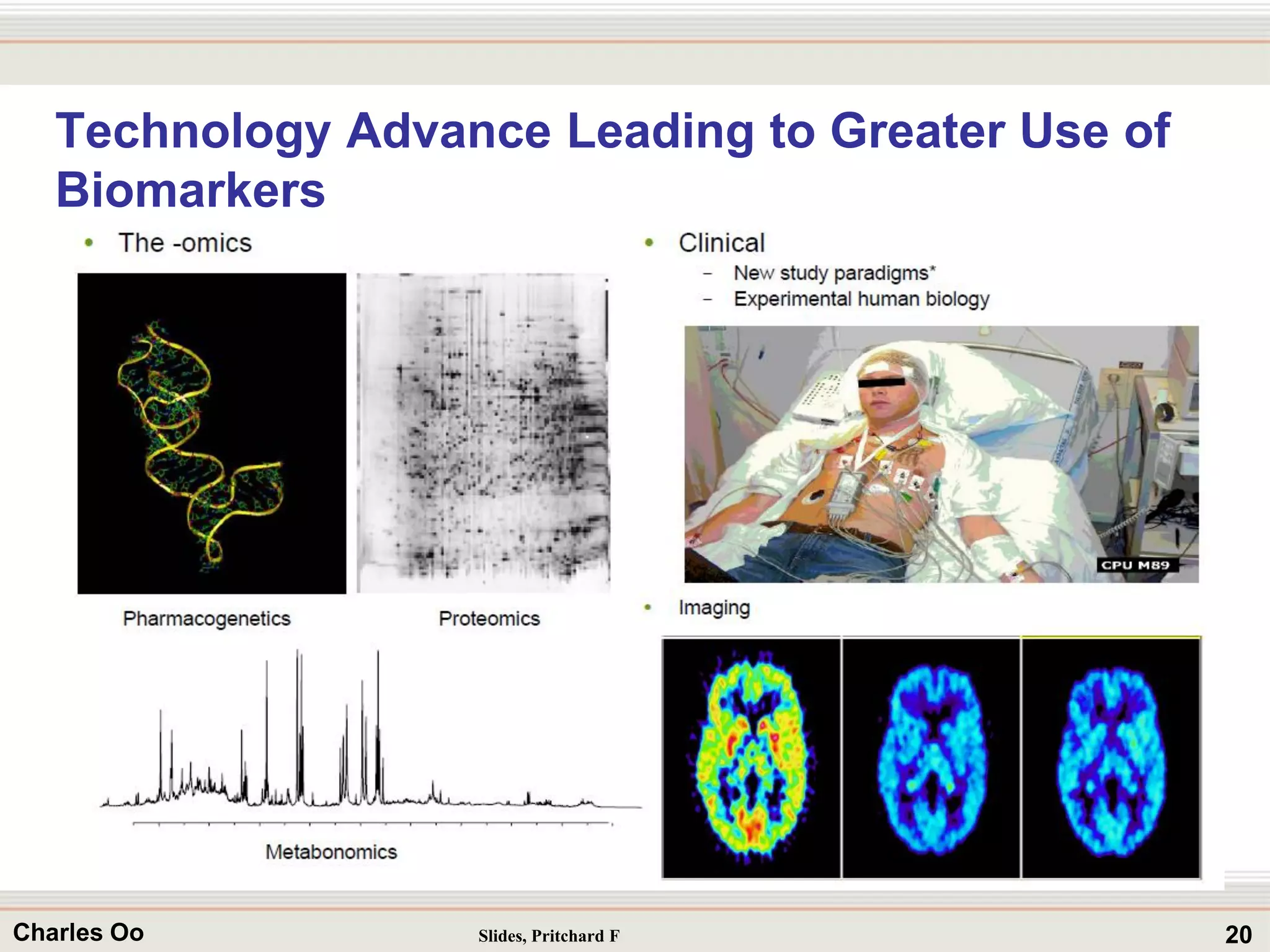
Technology Advance Leading to Greater Use of
Biomarkers
Slides, Pritchard F
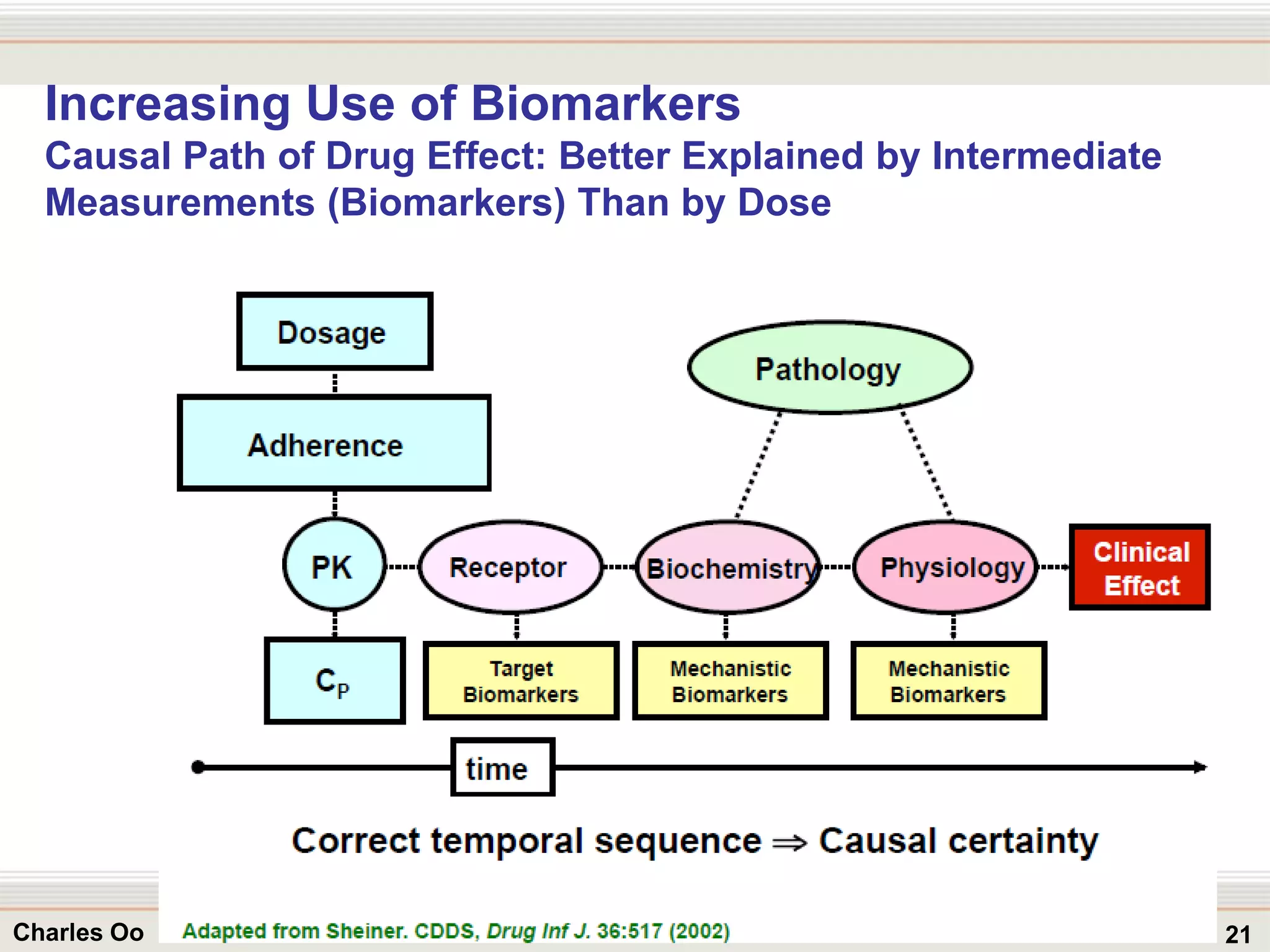
21Charles Oo
Increasing Use of Biomarkers
Causal Path of Drug Effect: Better Explained by Intermediate
Measurements (Biomarkers) Than by Dose
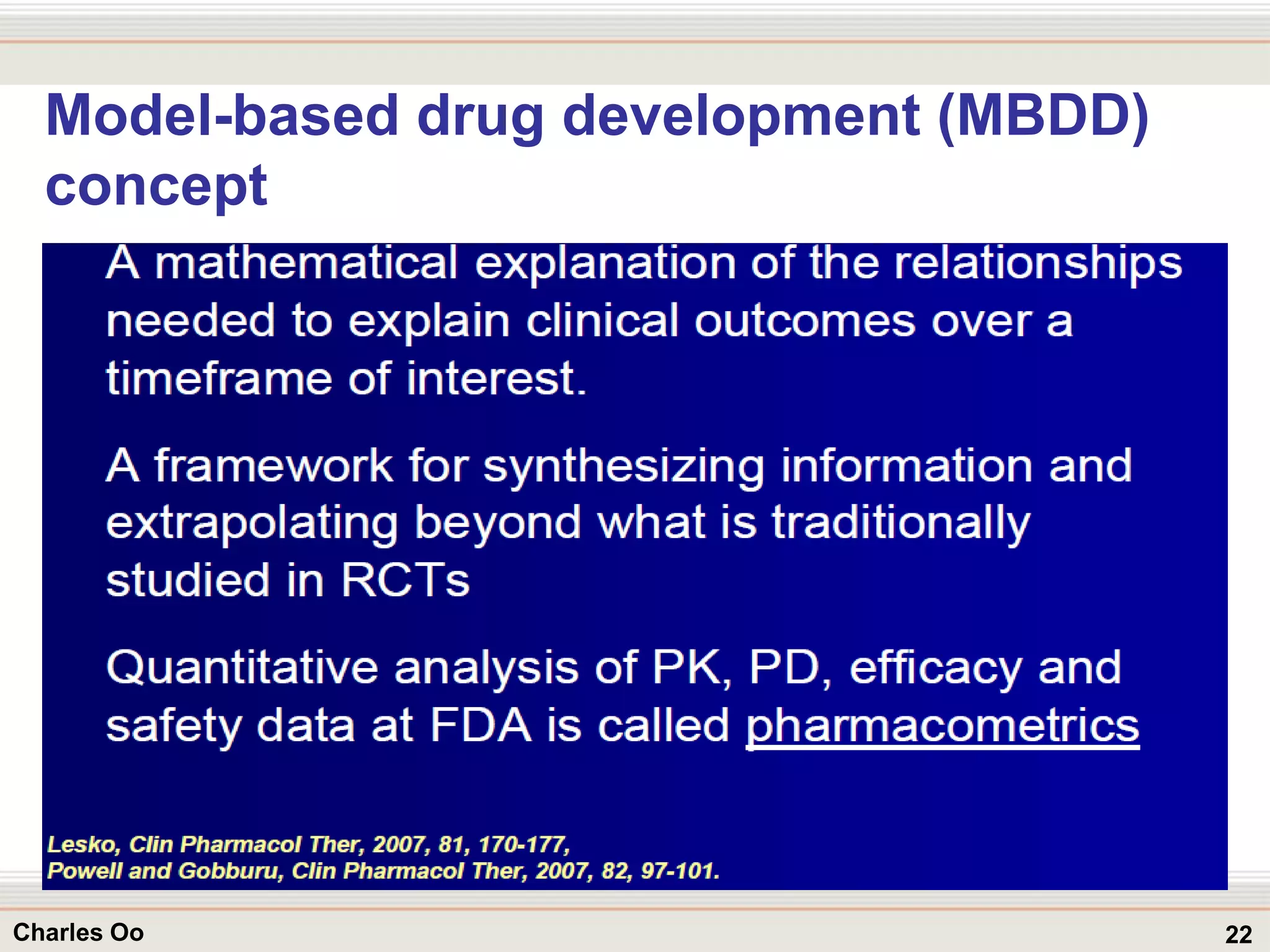
22Charles Oo
Model-based drug development (MBDD)
concept
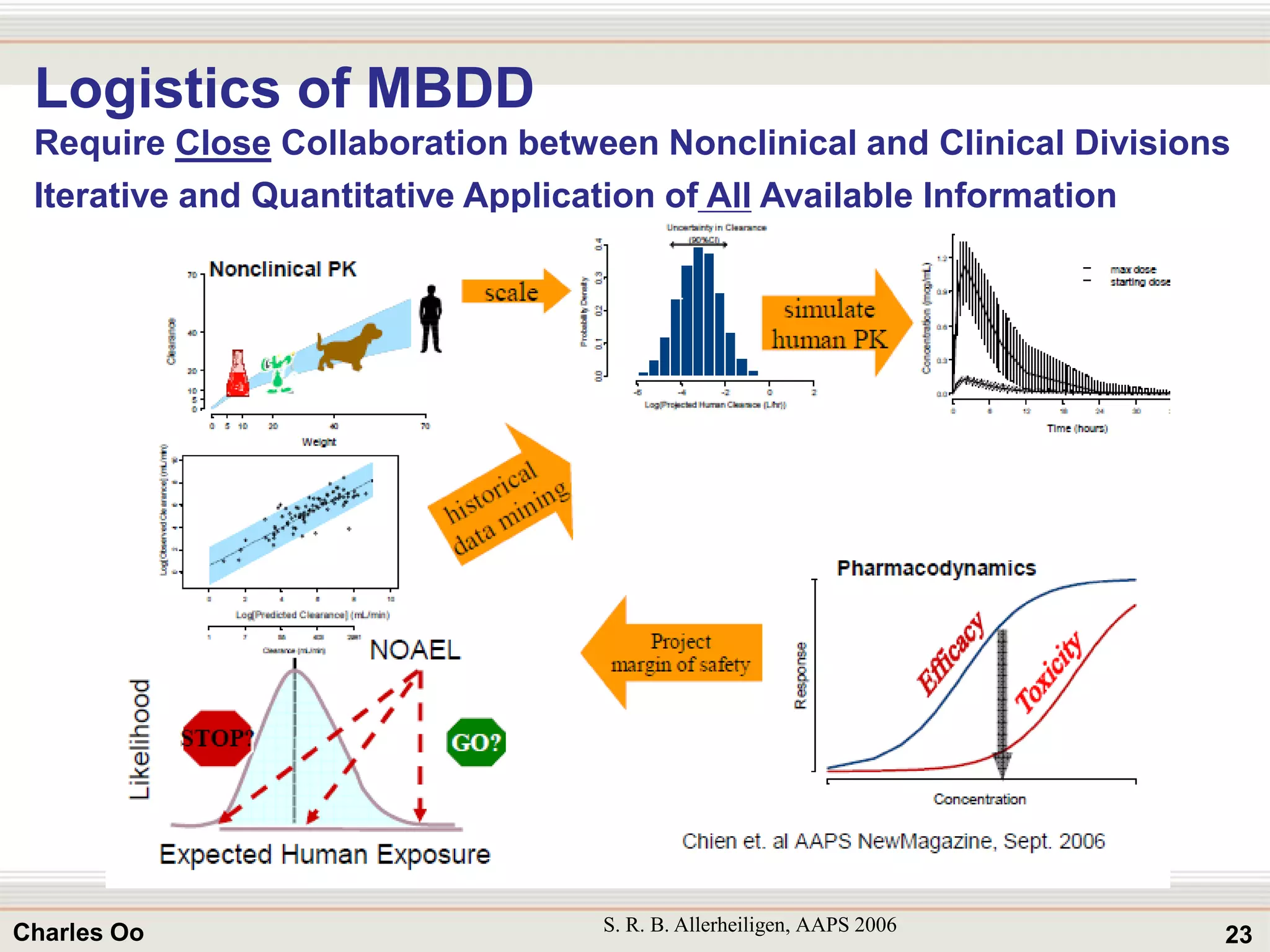
23Charles Oo
Logistics of MBDD
Require Close Collaboration between Nonclinical and Clinical Divisions
Iterative and Quantitative Application of All Available Information
S. R. B. Allerheiligen, AAPS 2006
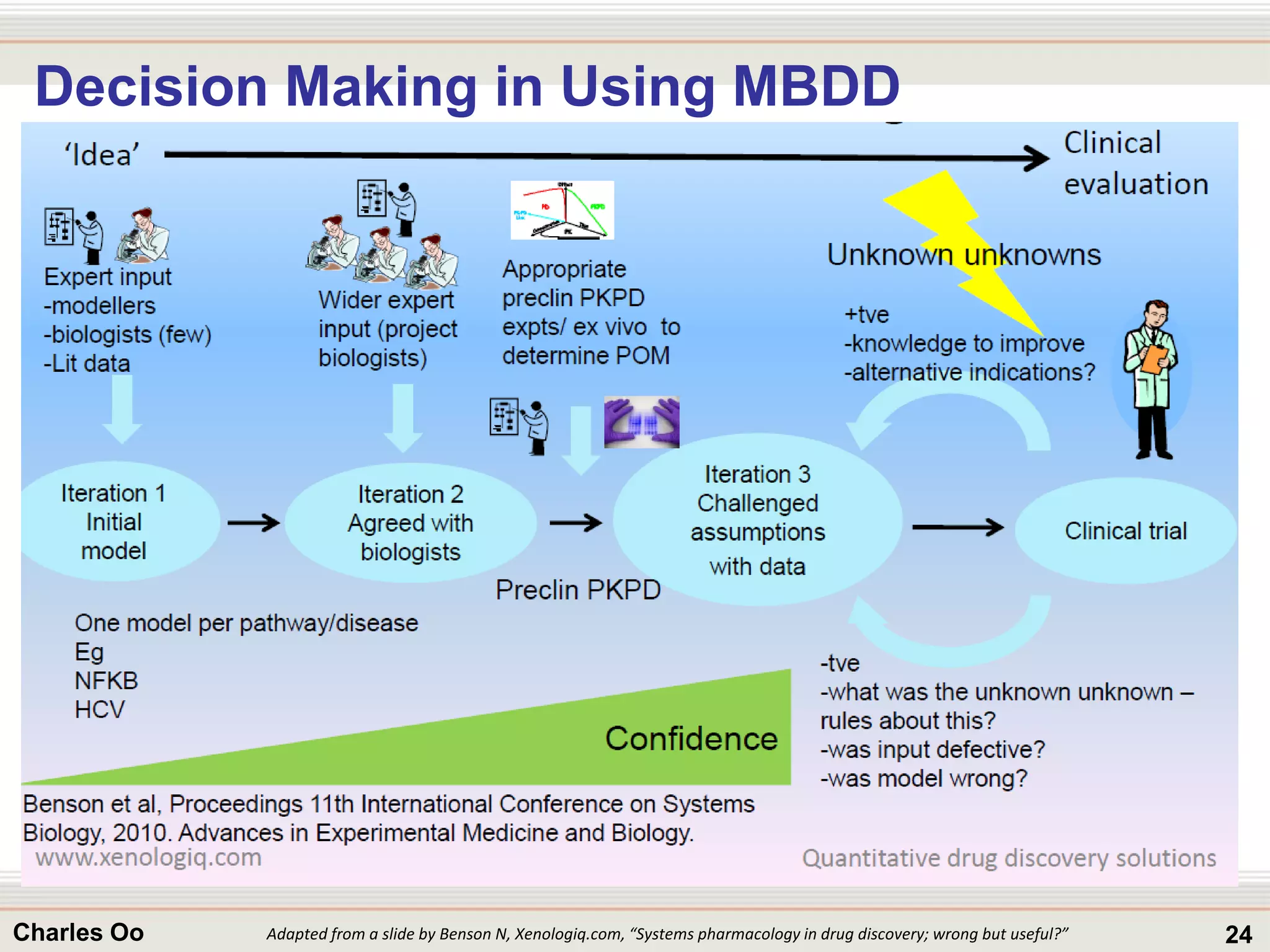
24Charles Oo
Decision Making in Using MBDD
Adapted from a slide by Benson N, Xenologiq.com, “Systems pharmacology in drug discovery; wrong but useful?”
25Charles Oo
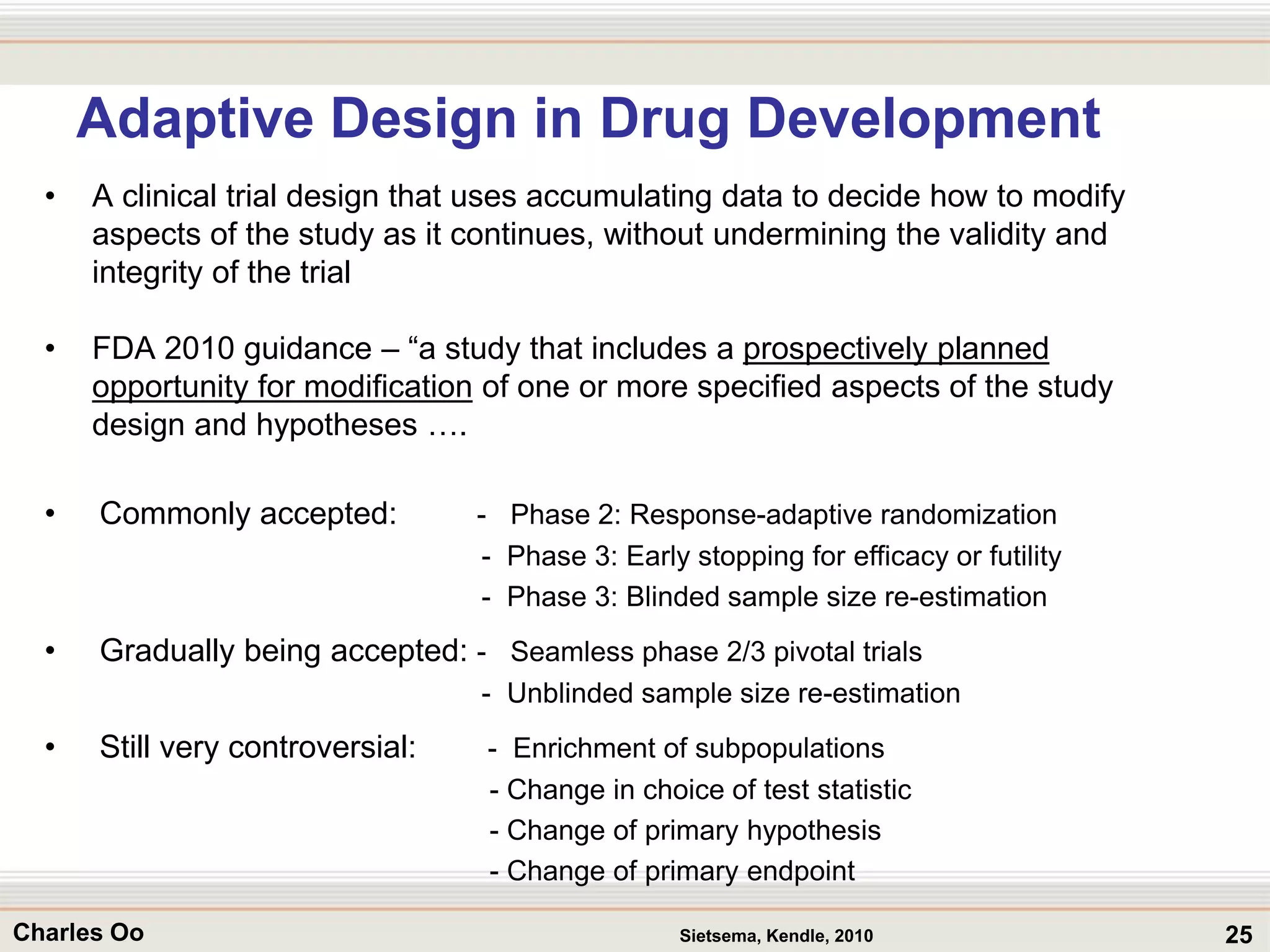
Adaptive Design in Drug Development
• A clinical trial design that uses accumulating data to decide how to modify
aspects of the study as it continues, without undermining the validity and
integrity of the trial
• FDA 2010 guidance – “a study that includes a prospectively planned
opportunity for modification of one or more specified aspects of the study
design and hypotheses ….
• Commonly accepted: - Phase 2: Response-adaptive randomization
- Phase 3: Early stopping for efficacy or futility
- Phase 3: Blinded sample size re-estimation
• Gradually being accepted: - Seamless phase 2/3 pivotal trials
- Unblinded sample size re-estimation
• Still very controversial: - Enrichment of subpopulations
- Change in choice of test statistic
- Change of primary hypothesis
- Change of primary endpoint
Sietsema, Kendle, 2010
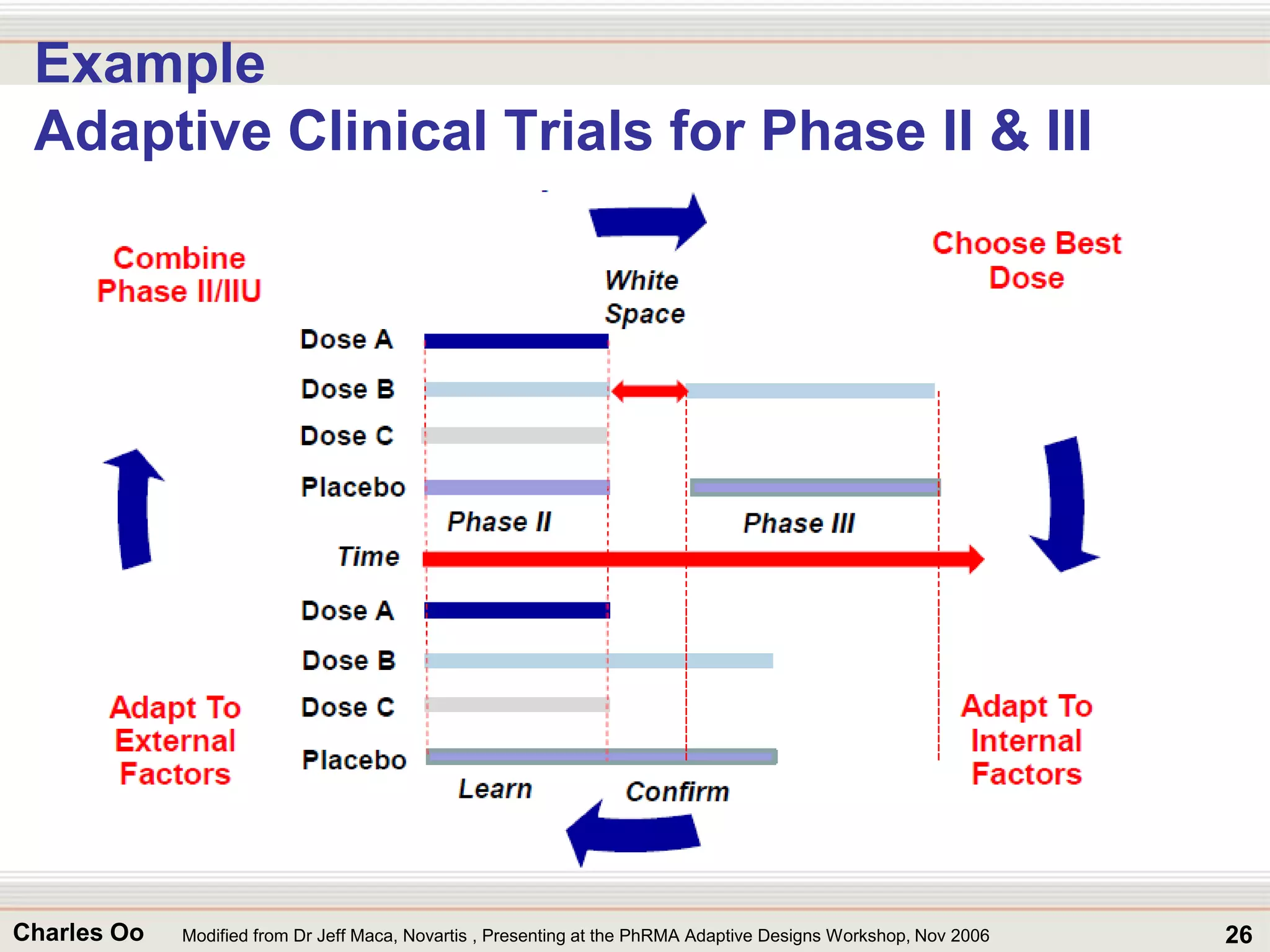
26Charles Oo
Example
Adaptive Clinical Trials for Phase II & III
Modified from Dr Jeff Maca, Novartis , Presenting at the PhRMA Adaptive Designs Workshop, Nov 2006
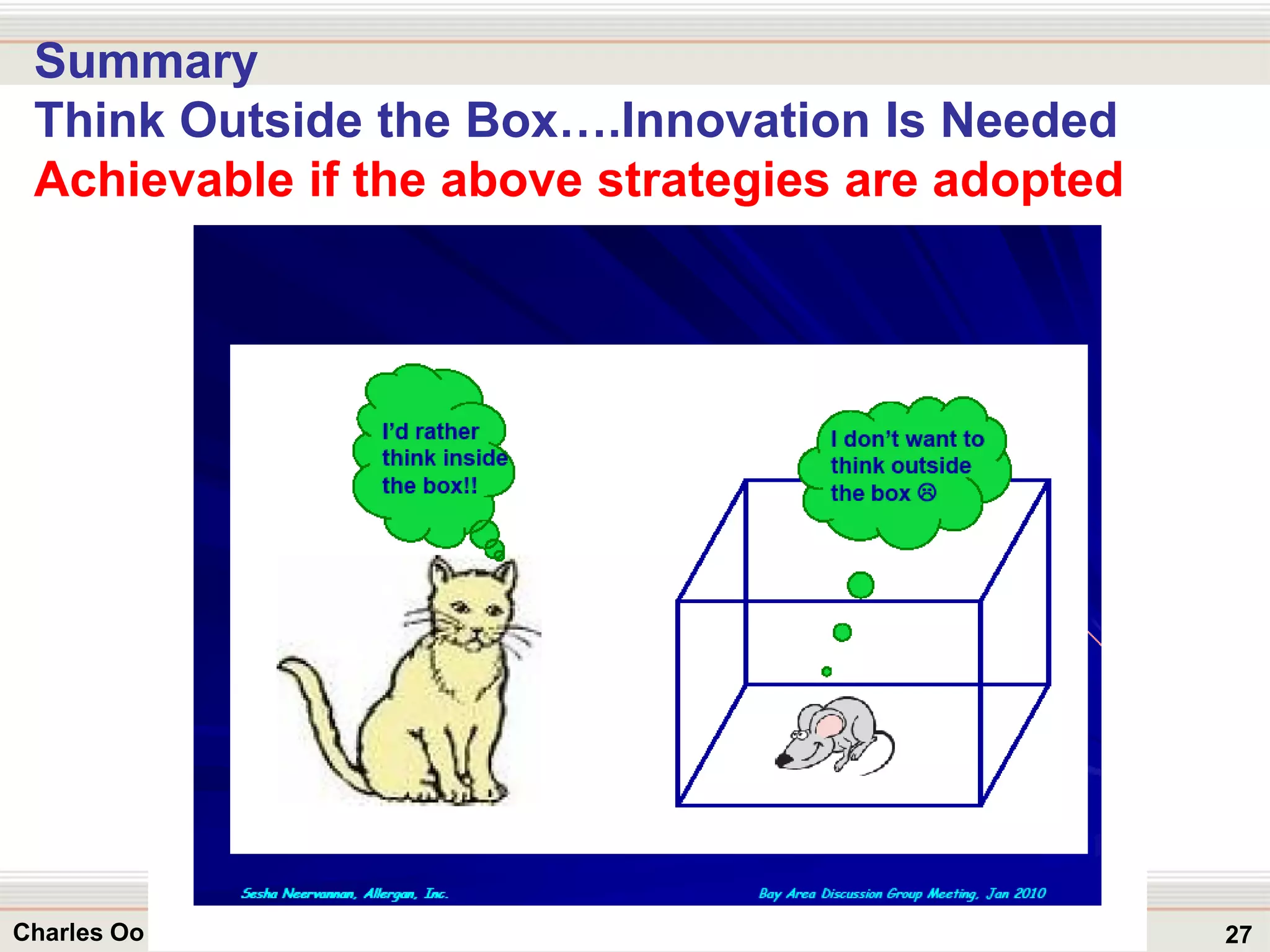
27Charles Oo
Summary
Think Outside the Box….Innovation Is Needed
Achievable if the above strategies are adopted
28Charles Oo
Questions and Comments?
Please forward to:
charlesoo@yahoo.com
THANK YOU!!!

Overcoming challenges in Drug Development

  • 1.
    1Charles Oo OVERCOMING THE CHALLENGESIN DRUG DEVELOPMENT Charles Oo, PharmD, PhD, ABCP, FCP charlesoo@yahoo.com
  • 2.
    2Charles Oo Outlines  Challengesin drug research and development  Complex problem requiring “multi-pronged” strategies:  Complete paradigm shift, and open innovation model  Marketing strategy: focus on ‘valued’ therapeutic classes and personalized medicine  Biological complexity: balancing drug’s toxicity and safety  Scientific insight: pathophysiology, mechanism of actions, and physicochemical profiles  Technology advances and biomarker utilization  Model-based drug development  Adaptive design Bottom-line Innovation is crucially needed for drug research and development, and it can be developed with the right strategies
  • 3.
    3Charles Oo Current Realitiesfor Pharmaceutical Developers  Recent drug development process is long, risky, expensive, and increasingly complex, after the low- hanging fruits have been plucked  Growing regulatory hurdles and policy demands stemming from implementation FDAAA and the Health Care Reform law  Drug patents on many high revenue products are expiring  Marketplace is highly competitive and reimbursement environment is increasingly restrictive  Public support and image remain low. Kaitin KI, Tufts Center for the Study of Drug Development ,2011: “Pharmaceutical Innovation in the 21st Century”
  • 4.
    4Charles Oo Drug Research& Development is like: http://blog.modernmechanix.com/mags/PopularScience/7-1939/needle_haystack.jpg
  • 5.
    5Charles Oo Long &Expensive Drug Development High Risk Process: ~15 Years, $1 B+ Preclinical Pharmacology Preclinical Safety Millions of Compounds Screened Idea Drug ~ 15 Years 1 - 2 Products Discovery Exploratory Development Full Development Phase I Phase II Phase III 0 155 10 Clinical Pharmacology & Safety Adapted from the slide of Lamattina, Pfizer
  • 6.
    6Charles Oo Declining Trendin R&D Efficiency (Inflation-adjusted) FURTHER INFORMATION RCSB Protein Data Bank database: http://www.rcsb.org/pdb/statistics/holdings.do SUPPLEMENTARY INFORMATION See online article: S1 (table) | S2 (box) ALL LINKS ARE ACTIVE IN THE ONLINE PDF Source: Scannell JW et al, Nat Rev Drug Dis 11:191-200, 2012
  • 7.
    7Charles Oo Sources:Kaitin, Clin Pharmcol Ther, 2010;87:356-361; Medco; FDA Orange Book; MedAdNews; www.drugs.com/top200; Medco
  • 8.
    8Charles Oo Pharma Leadsin Drug Discovery but Not in Innovation • Of 252 drugs that the FDA approved between 1997 and 2008, pharmaceutical companies discovered 58%, biotechnology firms discovered 18% and universities discovered 24%, according to a Nature Reviews Drug Discovery, November 2010 • However, pharma lagged on discovery of innovative drugs, accounting for 46% of treatments designated for priority review and 44% of drugs with a novel mechanism or action • Universities and biotechnology firms play bigger role in innovation.
  • 9.
    9Charles Oo What WouldEinstein Do? Slide, Lesko LJ., 2007 Complex situations requires innovative approaches  to reduce R&D costs, clinical trial cycle time, and attrition rate
  • 10.
    10Charles Oo What Typesof Innovations Are Needed?  Scientific & operational models that reduce cycle time, control costs, and ensure a high probability of success  Solutions that are differentiated and build durable patient- centered relationship  Business models that create long-term value propositions  Market models that create new experiences in standard of care  Open innovation that creates collaborative relationships that allows increased insight and economic impact  Greater use of sophisticated portfolio management techniques Truman, Drug Development & Delivery, Jan 2010
  • 11.
    11Charles Oo Complete ParadigmShift is Needed OLD -------------------> ‘NEW’ Sequential-----------> Parallel Multiphase-----------> Adaptive Milestone-led -------> Knowledge-led Empirical -------------> Predictive Hidden intuition ----> Transparent logic Subjective ------------> Objective ‘New’ innovative approaches
  • 12.
    12Charles Oo Open InnovationModel Source: modified from Chesbrough, H. 2003
  • 13.
    13Charles Oo Collapse ofthe ‘Blockbuster Model’ Shift to Targeted Niche of Personalized Medicines
  • 14.
  • 15.
    15Charles Oo Biological Complexity LinkingDrug-effects and Biological Systems Fliri TIPS 2010
  • 16.
    16Charles Oo Balancing Efficacyand Toxicity Most of the clinical failures at late phase are due to wrong dose
  • 17.
    17Charles Oo Considerations forIn-vivo Activities in Disease Condition Complexity of human systems in drug actions: 1. Few good animal models. Not readily predicted by animal models; 2. Hugh difference between healthy and disease conditions; 3. Complex mechanism of action/target site/agonist- antagonist/biological systems, as well as: a) Important contributions from surrounding microenviroment, as rarely a single tissue/pathway is involved; b) Genetic, epigenetic, and environmental interactions; c) Perturbing homeostasis could lead to beneficial or deleterious effects
  • 18.
    18Charles Oo Reduce AttritionRate by Ascertaining The Relevant Mechanism of Action
  • 19.
    19Charles Oo Considerations forPhysicochemical Profile of A New Molecular Entity Permeability pKa Stability Protein binding Log D Polymorphism Solubility Integrity Profile Lipophilicity Adapted from KLE pharmacy, Belgium, 2009 Physicochemical profile of a new molecular entity represents the foundation for building its efficacy and safety outcomes
  • 20.
    20Charles Oo Technology AdvanceLeading to Greater Use of Biomarkers Slides, Pritchard F
  • 21.
    21Charles Oo Increasing Useof Biomarkers Causal Path of Drug Effect: Better Explained by Intermediate Measurements (Biomarkers) Than by Dose
  • 22.
    22Charles Oo Model-based drugdevelopment (MBDD) concept
  • 23.
    23Charles Oo Logistics ofMBDD Require Close Collaboration between Nonclinical and Clinical Divisions Iterative and Quantitative Application of All Available Information S. R. B. Allerheiligen, AAPS 2006
  • 24.
    24Charles Oo Decision Makingin Using MBDD Adapted from a slide by Benson N, Xenologiq.com, “Systems pharmacology in drug discovery; wrong but useful?”
  • 25.
    25Charles Oo Adaptive Designin Drug Development • A clinical trial design that uses accumulating data to decide how to modify aspects of the study as it continues, without undermining the validity and integrity of the trial • FDA 2010 guidance – “a study that includes a prospectively planned opportunity for modification of one or more specified aspects of the study design and hypotheses …. • Commonly accepted: - Phase 2: Response-adaptive randomization - Phase 3: Early stopping for efficacy or futility - Phase 3: Blinded sample size re-estimation • Gradually being accepted: - Seamless phase 2/3 pivotal trials - Unblinded sample size re-estimation • Still very controversial: - Enrichment of subpopulations - Change in choice of test statistic - Change of primary hypothesis - Change of primary endpoint Sietsema, Kendle, 2010
  • 26.
    26Charles Oo Example Adaptive ClinicalTrials for Phase II & III Modified from Dr Jeff Maca, Novartis , Presenting at the PhRMA Adaptive Designs Workshop, Nov 2006
  • 27.
    27Charles Oo Summary Think Outsidethe Box….Innovation Is Needed Achievable if the above strategies are adopted
  • 28.
    28Charles Oo Questions andComments? Please forward to: charlesoo@yahoo.com THANK YOU!!!