Pharmacogenomics
Content
01
02
03
04
05
Introduction
Polymorphism
Predicting prescribing
Advantage of pharmacogenomics
How does genetic factors drug response?
Factors affecting drug response
06
07 Polypharmacy
08 Application
09
10
Methodology
11
Limitation
Personalised medicine
Introduction
Pharmacogenomics
Pharmacogenomics aims to develop rational means to
optimize drug therapy, with respect to the
patients' genotype, to ensure maximum efficiency with
minimal adverse effects
Pharmacogenomics is thestudy of the role of
thegenomein drug response.
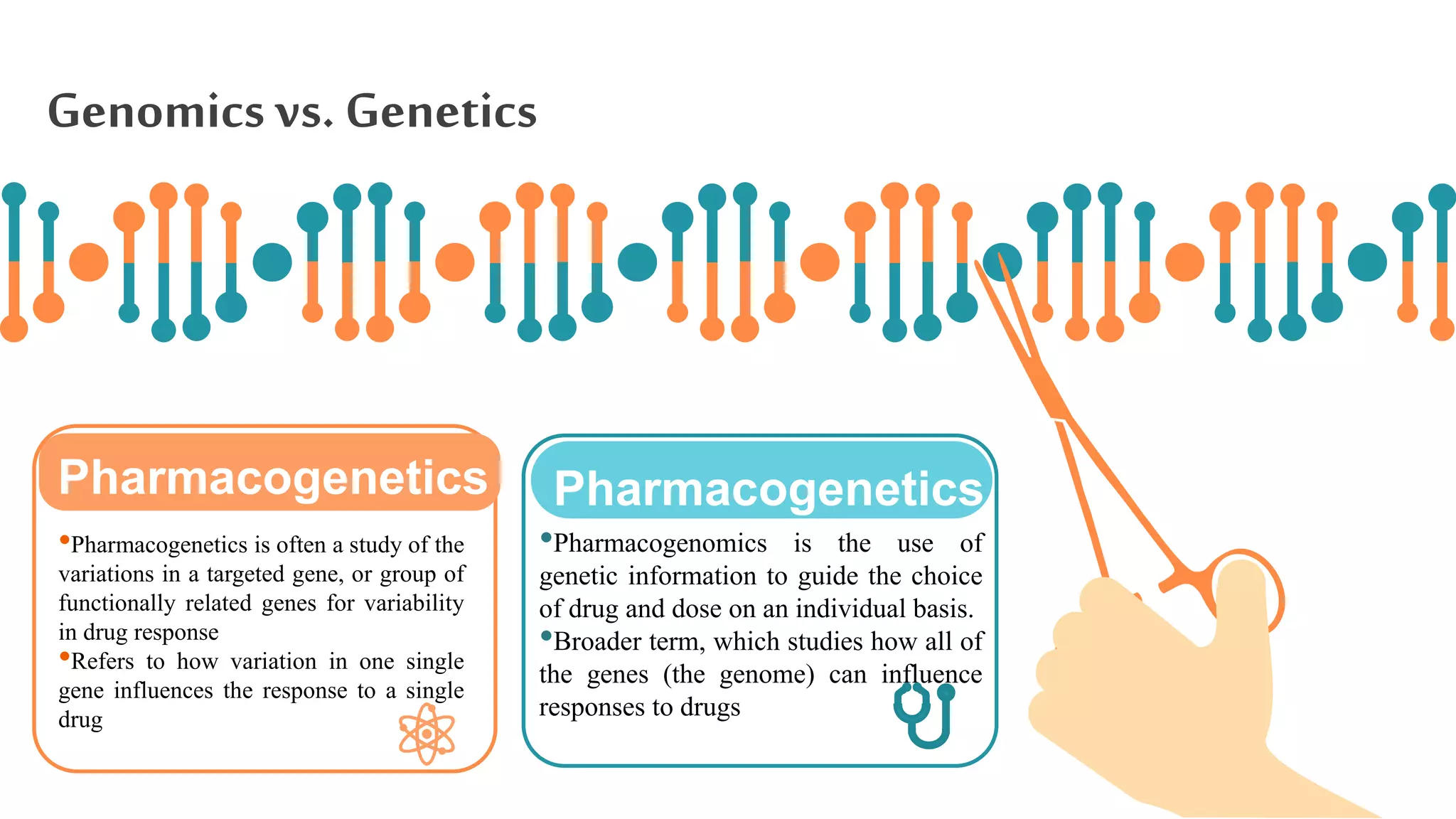
Genomics vs. Genetics
PharmacogeneticsPharmacogenetics
•Pharmacogenomics is the use of
genetic information to guide the choice
of drug and dose on an individual basis.
•Broader term, which studies how all of
the genes (the genome) can influence
responses to drugs
•Pharmacogenetics is often a study of the
variations in a targeted gene, or group of
functionally related genes for variability
in drug response
•Refers to how variation in one single
gene influences the response to a single
drug
Factors
affecting drug
response
It is well recognized that different patients respond in different ways
to the same medication.
20 to
95%
•Genetics can account for 20-95 percent of
variability in drug disposition and effects.
•Mainly due to sequence variants in genes
encoding drug-metabolizing enzymes, drug
transporters, or drug targets
GENETIC
•Age
•Gender
•Ethnicity
•BMI
•Co morbidity
•Family history
•Circadian
rhythm
•Placebo
effect
GENETIC
•Genome
•Transcription
•Proteome
•Metabolome
•Epigenome
•Microbiome
ENVIRONMENTAL
•Nutrition
•Drugs (drug- drug
interactions)
•Chemical exposures
lifestyles
•Circadian rhythm
•Epigenome
•Compliance and
adherence
Indels
SNPs
Polymorphism
>1%
<1%
SNP variation is present to some appreciable
degree within a population
Indels are much less frequent in the genome
and are of low frequency
A polymorphism is a variation in the DNA
sequence that is present at an allele frequency of
1% or greater in a population.
Two major types of sequence variation are:
Single nucleotide polymorphisms (SNPs)
Insertions/deletions (indels).
75%
23%
2%
A single nucleotide polumorphism (SNP), is a variation in a single
nucleotide that occurs at a specific position in the genome
C G T A A A T G A C C G T A C A T G A C
I I I I I I I I I I I I I I I I I I I IPresent drug
Pharmacogenomic drug
Non varient SNP varient
Protein (drug target) Protein (drug target)
Normal gene SNP gene
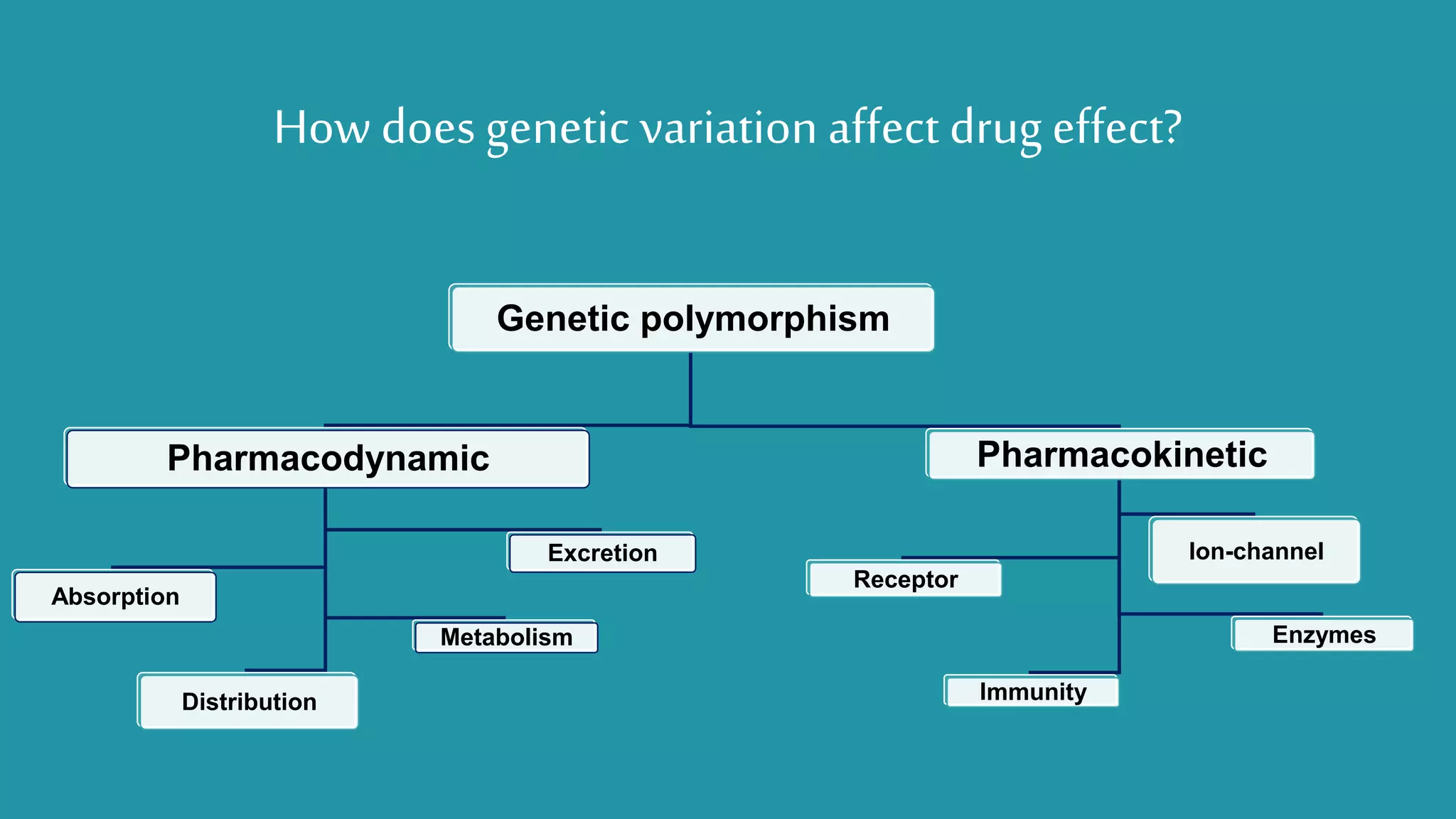
How does genetic variation affect drug effect?
Genetic polymorphism
Pharmacodynamic
Absorption
Distribution
Metabolism
Excretion
Pharmacokinetic
Receptor
Immunity
Ion-channel
Enzymes
Pharmacogenomictesting targets particular biomarkers that pertain to a specific class of medication. In doing so, it is possible
to determine areas in which drugs aremost likely to beeffective.
Step 1
Step 2
Step 3
Step 4When medications are
consumed, their
components are
metabolized by enzymes
But genetic differences
can create subtle
changes that alter how
these pathways work.
For this reason, a
medication that works
for one person may
have radically different
effects on another.
In theory, these pathways
would function in the
same way in all humans,
Most people
metabolize drug
quickly.
Others
metabolize the
drug slowly
No genetic variant
A small portion
metabolize the drug
poorly.
Normal dose
One genetic
variant
Two genetic variants
Doses need to be high
enough to treat them
effectively
Need lower doses to
avoid toxic side
effect of drug
They have higher
chances of serious
side effects
Dose for poor
metabolizer
Predicting
prescribing
Moderate cases
•Extensive metabolizer:
Individuals who have two
normal genes metabolize a
drug normally;
•Intermediate metabolizer:
Patients may have one
active and one non-active
allele for the same gene
and show reduced
metabolic activity
Extreme cases
•Ultra-rapid metabolizer:
These individuals may have
multiple copies of active genes
and have substantially increased
metabolic activity;
•Poor metabolizer:
Patients with two non-functional
genes metabolize a drug very
slowly compared to a normal
individual
Patient genotypes are usually categorized into the following predicted
phenotypes
Drug neither beneficial nor toxic
Drug beneficial buttoxic
Drug beneficial andnot toxic
1 2
3 4
Drug not beneficialand toxic
Patient group
receiving same
drug and
treatment
Rx
Major drugs ineffective for many
Cholesterol drugs
statin
Asthma drugs
Beta 2 agonist
Anti Depressants Hypertension
drugs
Heart failure drugs
10-30%40-70% 20-50%30-70% 15-25%
Advantage of pharmacogenomics
To predict a patients response to drugs
To develop customized prescriptions
To minimize or eliminate adverse events
To improve efficacy and patient compliance
To improve rational drug development
To develop more powerful, safer vaccines
To allow improvements in drug research and development (R&D) and the approval
of new drugs
To improve the accuracy of determining appropriate dosages of drugs
To screen and monitor certain diseases
Polypharmacy
A potential role pharmacogenomics may play would
be toreduce theoccurrence of polypharmacy.
It is theorized that with tailored drug treatments,
patients will not have the need to take several
medications that are intended to treat the same
condition.
A
B
C Minimize the occurrence of ADRs
Improved treatment outcomes,
Save costs by avoiding purchasing extraneous
medications,
52%
Decrease in
hospital
readmission.
42%
Reduction
in ER visits
82%
Decrease in
mortality.
$4,382
Savings
per
patients in
60 days
Applications
In cardiovascular disorders,
the main concern is
response to drugs
including warfarin, clopidogr
el, beta blockers, and statins
Cardiology
Pharmacogenomics tests
are used to identify
which patients are most
likely to respond to
certain cancer drugs.
Oncology
Psychiatry
Pharmacogenomics can be used
to determine the cause of death
in drug-related deaths where no
findings emerge using autopsy
Forensic Pathology
In psychiatry, research has
focused particularly on 5-
HTTLPR and DRD2.
Pain management
Drugs where
pharmacogenomics
testing has clinical
significance
Drug class Individual drug Polymorphism
Anticoagulant Warfarin CYP2C19/VKORC1
Antineoplastic drugs Irinotecan UTG1A1
6-Mercaptopurine TPMT
Thiopurine, Azathioprine TPMT
Tamoxifen CYP2D6
Antidepressants Amitryptyline/nortryptyline CYP2C19/CYP2D6
Nortriptyline CYP2D6
Narcotic analgesic Codeine CYP2D6
Tramadol CYP2D6
Immunosupprassant Tacromilus CYP3A5
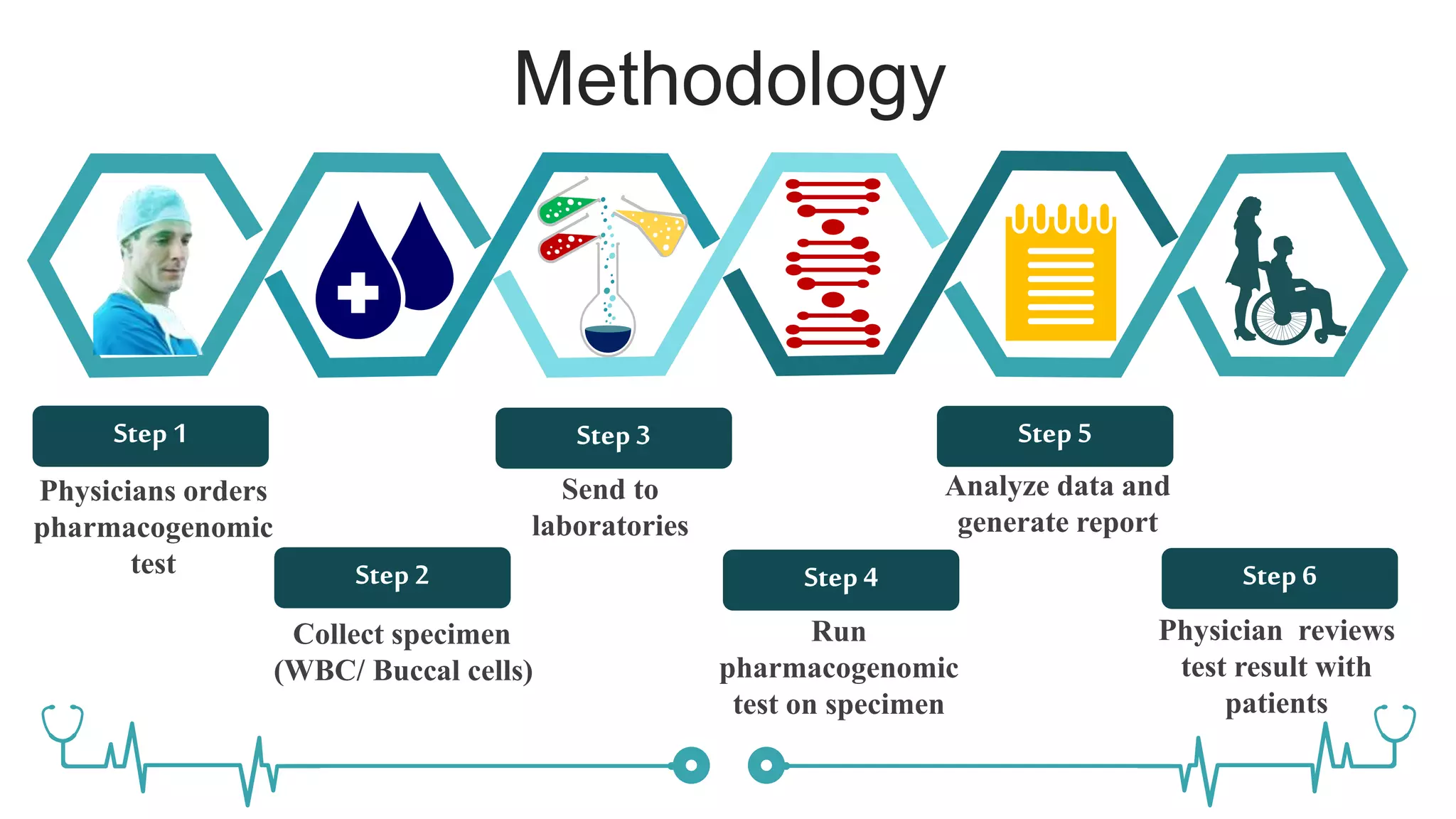
Methodology
Step 1
Physicians orders
pharmacogenomic
test Step 4
Run
pharmacogenomic
test on specimen
Step 2
Collect specimen
(WBC/ Buccal cells)
Step 3
Send to
laboratories
Step 5
Analyze data and
generate report
Step 6
Physician reviews
test result with
patients
Various types of test
1)HLA gene test
a)ABACAVIR & HLAB*5701
b) ANTICONVULSANTS & HLAB*1502
c)CLOZAPINE & HLA-DQ 1*0201.
2) Drugmetabolism related gene test
a)THIOPURINE & TPMT
b) 5-FLUOROURACIL (5-FU) & DPYD
c) TAMOXIFEN & CYP2D6
d)IRINOTECAN & UGT1A1*28
3) Drugtarget related gene test
a)Trastuzumab & HER 2
b)DASATINIB, IMATINIB & BCR-ABL 1
4) Combined (metabolism & target) gene test
a) WARFARIN & CYP2C9 + VKORC 1 GENOTYPING
Determines the genotype of
patient in terms of two CYP 450
enzymes: 2D6 and 2C19.
FDA approved the test on
December 24, 2004. The
amplichip CYP450 test is the
first FDA approved
pharmacogenetic test
Amplichip
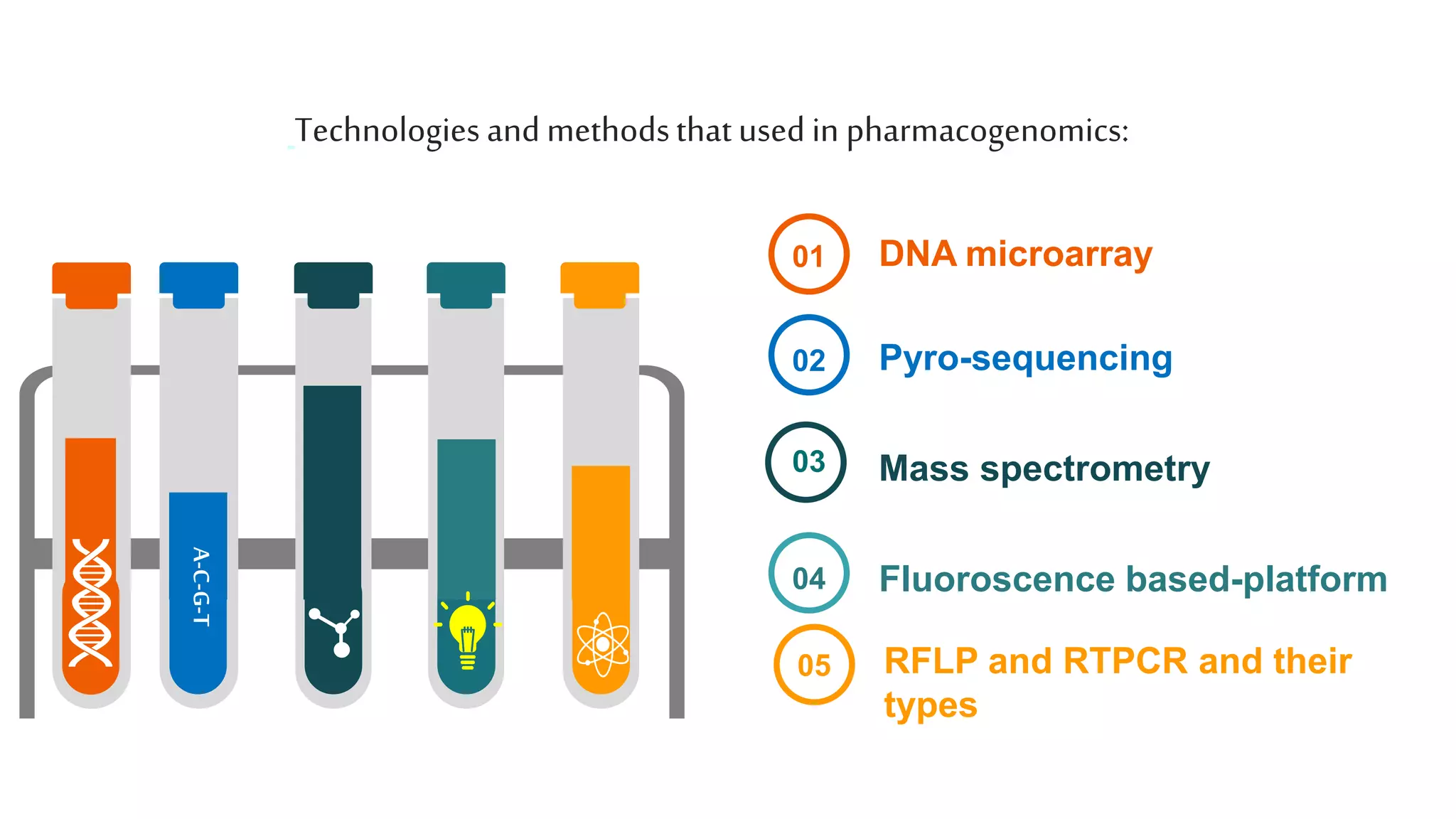
Technologies andmethodsthatused in pharmacogenomics:
01
02
03
04
Pyro-sequencing
DNA microarray
Mass spectrometry
Fluoroscence based-platform
05 RFLP and RTPCR and their
types
A-C-G-T
Role of
pharmacogenomics in
drug development
•Pharmacogenomics may
contribute to a smarter drug
development process
•Allow for the prediction of
efficacy / toxicity during
clinical development
•Make the process more
efficient by decreasing the
number of patients required to
show efficacy in clinical trials
•Decrease cost & time to bring
drug to market
80% ofproductsthat
enterthe development
pipeline FAIL tomake it to
market
.
Necessary action to
advancement of
pharmacogenomics
in the future
Create profiles of diagnostic
markers and laboratory
tests.
Preparing profiles of
the SNP.
Preparing profiles
related to sensitivity of
the pharmaceutical, food
and other external
factors.
The appropriate design of
drugs
Determination of the
location of the cell and
function of proteins and
metabolic pathways in
different cell lines.
Preparing profiles of
ethnic diversity and
racial
Limitations
Insufficient validation of study
results
Identification of small inter-
individual variation in everyone’s
gene is very difficult
Expensive & Ethical issues
Many genes are involved in drug action, making
the drug target is very difficult
Personalised
medicine
Reality of the added
complexity of additional
testing & need for
interpretation of results
to individualized dosing
has been ignored.
04
It refers to approach of clinical
practice where a particular
treatment is not choosen based on
the average patient”. but on
characteristic of an individual
patient .
Pharmacogenomics
is in early stages of
development..
Much of the excitement
regarding the promise of
human genomics hopes on the
“PERSONALIZED MEDICINE OR MAGIC
BULLETS”.
Easy to change
colors, photos and
Text.
Drug response
phenotype.
Pharmacogenomics
Genetic
data.
Education of
professional
Privacy
issues
Personalised
medicines
Environmental
factors.
Health
care costs
Insurance issues
Scope
Prescription made same
for all patients
Prescription made according to
specific genes.
30-60%
Respond to drugs
100%
Respond to drugs
Conclusion
Pharmacogenomics has great
potential to optimize drug therapy
Newer molecular diagnostic
test will have to be develop to
detect polymorphisms
Pharmacotherapeutics decisions
will soon become fundamental for
diagnosing the illness & guiding
the choice & dosage of
medications.
Reference
1.
2.
3.
4.
5.
6.
Thank you

Pharmacogenomics- a step to personalized medicines

  • 1.
  • 2.
    Content 01 02 03 04 05 Introduction Polymorphism Predicting prescribing Advantage ofpharmacogenomics How does genetic factors drug response? Factors affecting drug response 06 07 Polypharmacy 08 Application 09 10 Methodology 11 Limitation Personalised medicine
  • 3.
  • 4.
    Pharmacogenomics Pharmacogenomics aims todevelop rational means to optimize drug therapy, with respect to the patients' genotype, to ensure maximum efficiency with minimal adverse effects Pharmacogenomics is thestudy of the role of thegenomein drug response.
  • 5.
    Genomics vs. Genetics PharmacogeneticsPharmacogenetics •Pharmacogenomicsis the use of genetic information to guide the choice of drug and dose on an individual basis. •Broader term, which studies how all of the genes (the genome) can influence responses to drugs •Pharmacogenetics is often a study of the variations in a targeted gene, or group of functionally related genes for variability in drug response •Refers to how variation in one single gene influences the response to a single drug
  • 6.
  • 7.
    It is wellrecognized that different patients respond in different ways to the same medication. 20 to 95% •Genetics can account for 20-95 percent of variability in drug disposition and effects. •Mainly due to sequence variants in genes encoding drug-metabolizing enzymes, drug transporters, or drug targets GENETIC •Age •Gender •Ethnicity •BMI •Co morbidity •Family history •Circadian rhythm •Placebo effect GENETIC •Genome •Transcription •Proteome •Metabolome •Epigenome •Microbiome ENVIRONMENTAL •Nutrition •Drugs (drug- drug interactions) •Chemical exposures lifestyles •Circadian rhythm •Epigenome •Compliance and adherence
  • 8.
    Indels SNPs Polymorphism >1% <1% SNP variation ispresent to some appreciable degree within a population Indels are much less frequent in the genome and are of low frequency A polymorphism is a variation in the DNA sequence that is present at an allele frequency of 1% or greater in a population. Two major types of sequence variation are: Single nucleotide polymorphisms (SNPs) Insertions/deletions (indels).
  • 9.
    75% 23% 2% A single nucleotidepolumorphism (SNP), is a variation in a single nucleotide that occurs at a specific position in the genome
  • 10.
    C G TA A A T G A C C G T A C A T G A C I I I I I I I I I I I I I I I I I I I IPresent drug Pharmacogenomic drug Non varient SNP varient Protein (drug target) Protein (drug target) Normal gene SNP gene
  • 11.
    How does geneticvariation affect drug effect? Genetic polymorphism Pharmacodynamic Absorption Distribution Metabolism Excretion Pharmacokinetic Receptor Immunity Ion-channel Enzymes
  • 12.
    Pharmacogenomictesting targets particularbiomarkers that pertain to a specific class of medication. In doing so, it is possible to determine areas in which drugs aremost likely to beeffective. Step 1 Step 2 Step 3 Step 4When medications are consumed, their components are metabolized by enzymes But genetic differences can create subtle changes that alter how these pathways work. For this reason, a medication that works for one person may have radically different effects on another. In theory, these pathways would function in the same way in all humans,
  • 13.
    Most people metabolize drug quickly. Others metabolizethe drug slowly No genetic variant A small portion metabolize the drug poorly. Normal dose One genetic variant Two genetic variants Doses need to be high enough to treat them effectively Need lower doses to avoid toxic side effect of drug They have higher chances of serious side effects Dose for poor metabolizer
  • 14.
  • 15.
    Moderate cases •Extensive metabolizer: Individualswho have two normal genes metabolize a drug normally; •Intermediate metabolizer: Patients may have one active and one non-active allele for the same gene and show reduced metabolic activity Extreme cases •Ultra-rapid metabolizer: These individuals may have multiple copies of active genes and have substantially increased metabolic activity; •Poor metabolizer: Patients with two non-functional genes metabolize a drug very slowly compared to a normal individual Patient genotypes are usually categorized into the following predicted phenotypes
  • 16.
    Drug neither beneficialnor toxic Drug beneficial buttoxic Drug beneficial andnot toxic 1 2 3 4 Drug not beneficialand toxic Patient group receiving same drug and treatment Rx
  • 17.
    Major drugs ineffectivefor many Cholesterol drugs statin Asthma drugs Beta 2 agonist Anti Depressants Hypertension drugs Heart failure drugs 10-30%40-70% 20-50%30-70% 15-25%
  • 18.
  • 19.
    To predict apatients response to drugs To develop customized prescriptions To minimize or eliminate adverse events To improve efficacy and patient compliance To improve rational drug development To develop more powerful, safer vaccines To allow improvements in drug research and development (R&D) and the approval of new drugs To improve the accuracy of determining appropriate dosages of drugs To screen and monitor certain diseases
  • 20.
  • 21.
    A potential rolepharmacogenomics may play would be toreduce theoccurrence of polypharmacy. It is theorized that with tailored drug treatments, patients will not have the need to take several medications that are intended to treat the same condition. A B C Minimize the occurrence of ADRs Improved treatment outcomes, Save costs by avoiding purchasing extraneous medications,
  • 22.
    52% Decrease in hospital readmission. 42% Reduction in ERvisits 82% Decrease in mortality. $4,382 Savings per patients in 60 days
  • 23.
  • 24.
    In cardiovascular disorders, themain concern is response to drugs including warfarin, clopidogr el, beta blockers, and statins Cardiology Pharmacogenomics tests are used to identify which patients are most likely to respond to certain cancer drugs. Oncology Psychiatry Pharmacogenomics can be used to determine the cause of death in drug-related deaths where no findings emerge using autopsy Forensic Pathology In psychiatry, research has focused particularly on 5- HTTLPR and DRD2. Pain management
  • 25.
  • 26.
    Drug class Individualdrug Polymorphism Anticoagulant Warfarin CYP2C19/VKORC1 Antineoplastic drugs Irinotecan UTG1A1 6-Mercaptopurine TPMT Thiopurine, Azathioprine TPMT Tamoxifen CYP2D6 Antidepressants Amitryptyline/nortryptyline CYP2C19/CYP2D6 Nortriptyline CYP2D6 Narcotic analgesic Codeine CYP2D6 Tramadol CYP2D6 Immunosupprassant Tacromilus CYP3A5
  • 27.
    Methodology Step 1 Physicians orders pharmacogenomic testStep 4 Run pharmacogenomic test on specimen Step 2 Collect specimen (WBC/ Buccal cells) Step 3 Send to laboratories Step 5 Analyze data and generate report Step 6 Physician reviews test result with patients
  • 28.
  • 29.
    1)HLA gene test a)ABACAVIR& HLAB*5701 b) ANTICONVULSANTS & HLAB*1502 c)CLOZAPINE & HLA-DQ 1*0201. 2) Drugmetabolism related gene test a)THIOPURINE & TPMT b) 5-FLUOROURACIL (5-FU) & DPYD c) TAMOXIFEN & CYP2D6 d)IRINOTECAN & UGT1A1*28
  • 30.
    3) Drugtarget relatedgene test a)Trastuzumab & HER 2 b)DASATINIB, IMATINIB & BCR-ABL 1 4) Combined (metabolism & target) gene test a) WARFARIN & CYP2C9 + VKORC 1 GENOTYPING
  • 31.
    Determines the genotypeof patient in terms of two CYP 450 enzymes: 2D6 and 2C19. FDA approved the test on December 24, 2004. The amplichip CYP450 test is the first FDA approved pharmacogenetic test Amplichip
  • 32.
    Technologies andmethodsthatused inpharmacogenomics: 01 02 03 04 Pyro-sequencing DNA microarray Mass spectrometry Fluoroscence based-platform 05 RFLP and RTPCR and their types A-C-G-T
  • 33.
  • 34.
    •Pharmacogenomics may contribute toa smarter drug development process •Allow for the prediction of efficacy / toxicity during clinical development •Make the process more efficient by decreasing the number of patients required to show efficacy in clinical trials •Decrease cost & time to bring drug to market 80% ofproductsthat enterthe development pipeline FAIL tomake it to market .
  • 35.
    Necessary action to advancementof pharmacogenomics in the future
  • 36.
    Create profiles ofdiagnostic markers and laboratory tests. Preparing profiles of the SNP. Preparing profiles related to sensitivity of the pharmaceutical, food and other external factors. The appropriate design of drugs Determination of the location of the cell and function of proteins and metabolic pathways in different cell lines. Preparing profiles of ethnic diversity and racial
  • 37.
  • 38.
    Insufficient validation ofstudy results Identification of small inter- individual variation in everyone’s gene is very difficult Expensive & Ethical issues Many genes are involved in drug action, making the drug target is very difficult
  • 39.
  • 40.
    Reality of theadded complexity of additional testing & need for interpretation of results to individualized dosing has been ignored. 04 It refers to approach of clinical practice where a particular treatment is not choosen based on the average patient”. but on characteristic of an individual patient . Pharmacogenomics is in early stages of development.. Much of the excitement regarding the promise of human genomics hopes on the “PERSONALIZED MEDICINE OR MAGIC BULLETS”.
  • 41.
    Easy to change colors,photos and Text. Drug response phenotype. Pharmacogenomics Genetic data. Education of professional Privacy issues Personalised medicines Environmental factors. Health care costs Insurance issues
  • 42.
    Scope Prescription made same forall patients Prescription made according to specific genes. 30-60% Respond to drugs 100% Respond to drugs
  • 43.
    Conclusion Pharmacogenomics has great potentialto optimize drug therapy Newer molecular diagnostic test will have to be develop to detect polymorphisms Pharmacotherapeutics decisions will soon become fundamental for diagnosing the illness & guiding the choice & dosage of medications.
  • 44.
  • 45.