



OVERVIEW OF THE RESEARCH
PROCESS
By : Jade V. Villareal
Cited From; Atty. Ma. Braceros-Agbon-instructor
RESEARCH REQUIRMENTS
1. Recognation of problems-
Research was developed out of
man’s determination to solve
the problems that confront him.
2. From researchers through
discussions on current issues.
PROBLEMS FOR RESEARCH ARE
AVAILABLE EVERYWHERE:
1. Historical sources
accumulate with each passing
day or week.
2. Earlier studies need
reinterpretation in the light of
new findings or evidence.
EARLIER STUDIES NEED
REINTERPRETATION
HOW?
 Check on lists of theses or
dissertations of researches
conducted; with the aid of locating
dessolved problems.
THE RESAERCH PROCESS MAY BE
DIVIDED INTO DIFFERENT PARTS:
1. Identification of the research topic
and formulation of the research
problem.
2. Identification of the reseach
methodology.
3. Experimentation and/or collection of
data.
4.Processing of information.
5. Preparation of the report.
1. IDENTIFICATION OF THE RESEARCH
TOPIC AND FORMULATION OF THE
RESEARCH PROBLEM.
It has the following
components.
1. Variables
2. Hypothesis or hypothesis
3. Theoretical framework
4. Operational
definations or indicators.
5. Significance
6. Review of literature.
These are the usual
components of academic
(i.e.
thesis, dessertation, journal,
articles, etc. ) and the
technical reports prepared
for sponsoring or funding
institutions.
CRITERIA FOR
SELECTION OF GOOD
RESEARCH PROBLEM
1. Of great interest to the
researcher
2. Relevant and useful
3. Novelty
4. Well-defined or specified
5. Measurable
6. Time-bounded
7 .Importance of the study
8. Training and special
qualifications
9. Availability of data and
methods
10. Equipment and working
condition
BASIS FOR DETERMINING THAT
PROBLEM OF EXIXTS
1. Absence of information
2. Contradictory results
3. Demand of explanation
2. IDENTIFICATION OF RESEARCH
METHODOLOGY
TYPEPS OF
RESEARCH METHODS
1. Experimental Method
-Studies of experimental nature in
which the systematic study is carried
out in an experiment under controlled
conditions.
- A metod of research that
allows maximum control over
the phenomena under
investagation.
- Through experimentation, it
provides ways of measuring the
factors involved.
2. Descriptive Method
-Sometimes known as Survey or
Normative Approach to the study
- Survey studies furnish valuable
clues as to cause and effect
relationships.
DESCRIPTIVE RESEARCH
 Studies that intends to presents facts
concerning the nature and status of
anything.
A group of persons, no. Of objects, a
set of conditions, a class of events, a
system of thought, or any other kind of
phenomenon which one may wish to
study.
DESCRIBES AND INTERPRETS AN EVENT OR
CONDITION
It is concerned with conditions of
relationships that exist, practices that
prevail, beliefs, processes that are being
felt or trends taht are developing
The process of descriptive reseach goes
beyond mere gathering and tabulation of
data. It involves an element or
interpretyation of meaning described.
Description is often combined
with comparison and contrast
involving
measurements, classifacations
, and evaluations.
DESCRIPTIVE SURVEY
Is the general procedure employed in
that have for their chief purposes the
description of phenomenon in contrast to
ascertaining causes, their value and
significance.
Used in many other of the study or
invistigations other than the
educational, social and behavioral
sciences.
COMPONENTS OF
RESEARCH
It has four (4)
components, namely:
1. Research design
2. Sources of information
3. Techniques of data collection
4. Scheme or tools for analyzing
data.
THESIS OR
DISSERTATION
Thesis
A formal and lengthy
research paper
written, especially , in partial
fulfillment of the
requirements of a degree.
Dissertation
A more sophisticated
research paper, written in
partial fulfillment of the
requirements for a doctorate
degree.
THESIS PROPOSAL
A skeletal framework taht will
aid the student or researcher
in thesis making
It deals with the problem
defining them, identifying the
data or the materials to be
used in resolving the
problem, delineating methods
by which either the materials
will be utilized or the data will
be processed and interpreted.
It is meant to present clearly and
unambigously the problem to be
researched and to discuss the
research efforts of others, who have
worked on collateral or related
problems.
Different institutions or organizations
have their own specific requirements
and formats for writting research
proposals.
FORMAT FOR A THESIS
PROPOSAL
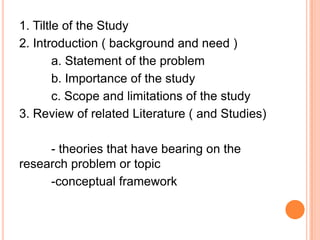
1. Tiltle of the Study
2. Introduction ( background and need )
a. Statement of the problem
b. Importance of the study
c. Scope and limitations of the study
3. Review of related Literature ( and Studies)
- theories that have bearing on the
research problem or topic
-conceptual framework
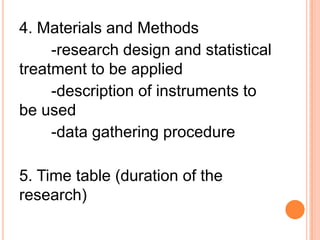
4. Materials and Methods
-research design and statistical
treatment to be applied
-description of instruments to
be used
-data gathering procedure
5. Time table (duration of the
research)
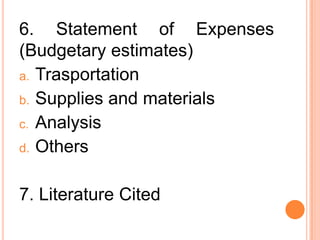
6. Statement of Expenses
(Budgetary estimates)
a. Trasportation
b. Supplies and materials
c. Analysis
d. Others
7. Literature Cited
SOURCES OF
INFORMATION
PRIMARY SOURCES
Are those which provide first
hand data. Its compilatin and
promulgation remain under the
same authority that originally
gathered them.
SECONDARY SOURCES
Are those which provide data that
have been transcribed or compiled
from original sources, authority is
different from that which controlled the
collection of data at first hand.
Are allowed in research only when the
primary source is not available.
THANK
YOU !

Over view of the Research Process

  • 1.
    OVERVIEW OF THERESEARCH PROCESS By : Jade V. Villareal Cited From; Atty. Ma. Braceros-Agbon-instructor
  • 2.
    RESEARCH REQUIRMENTS 1. Recognationof problems- Research was developed out of man’s determination to solve the problems that confront him. 2. From researchers through discussions on current issues.
  • 3.
    PROBLEMS FOR RESEARCHARE AVAILABLE EVERYWHERE: 1. Historical sources accumulate with each passing day or week. 2. Earlier studies need reinterpretation in the light of new findings or evidence.
  • 4.
    EARLIER STUDIES NEED REINTERPRETATION HOW? Check on lists of theses or dissertations of researches conducted; with the aid of locating dessolved problems.
  • 5.
    THE RESAERCH PROCESSMAY BE DIVIDED INTO DIFFERENT PARTS: 1. Identification of the research topic and formulation of the research problem. 2. Identification of the reseach methodology. 3. Experimentation and/or collection of data. 4.Processing of information. 5. Preparation of the report.
  • 6.
    1. IDENTIFICATION OFTHE RESEARCH TOPIC AND FORMULATION OF THE RESEARCH PROBLEM. It has the following components. 1. Variables 2. Hypothesis or hypothesis 3. Theoretical framework
  • 7.
    4. Operational definations orindicators. 5. Significance 6. Review of literature.
  • 8.
    These are theusual components of academic (i.e. thesis, dessertation, journal, articles, etc. ) and the technical reports prepared for sponsoring or funding institutions.
  • 9.
    CRITERIA FOR SELECTION OFGOOD RESEARCH PROBLEM
  • 10.
    1. Of greatinterest to the researcher 2. Relevant and useful 3. Novelty 4. Well-defined or specified 5. Measurable
  • 11.
    6. Time-bounded 7 .Importanceof the study 8. Training and special qualifications 9. Availability of data and methods 10. Equipment and working condition
  • 12.
    BASIS FOR DETERMININGTHAT PROBLEM OF EXIXTS 1. Absence of information 2. Contradictory results 3. Demand of explanation
  • 13.
    2. IDENTIFICATION OFRESEARCH METHODOLOGY TYPEPS OF RESEARCH METHODS
  • 14.
    1. Experimental Method -Studiesof experimental nature in which the systematic study is carried out in an experiment under controlled conditions.
  • 15.
    - A metodof research that allows maximum control over the phenomena under investagation. - Through experimentation, it provides ways of measuring the factors involved.
  • 16.
    2. Descriptive Method -Sometimesknown as Survey or Normative Approach to the study - Survey studies furnish valuable clues as to cause and effect relationships.
  • 17.
    DESCRIPTIVE RESEARCH  Studiesthat intends to presents facts concerning the nature and status of anything. A group of persons, no. Of objects, a set of conditions, a class of events, a system of thought, or any other kind of phenomenon which one may wish to study.
  • 18.
    DESCRIBES AND INTERPRETSAN EVENT OR CONDITION It is concerned with conditions of relationships that exist, practices that prevail, beliefs, processes that are being felt or trends taht are developing The process of descriptive reseach goes beyond mere gathering and tabulation of data. It involves an element or interpretyation of meaning described.
  • 19.
    Description is oftencombined with comparison and contrast involving measurements, classifacations , and evaluations.
  • 20.
    DESCRIPTIVE SURVEY Is thegeneral procedure employed in that have for their chief purposes the description of phenomenon in contrast to ascertaining causes, their value and significance. Used in many other of the study or invistigations other than the educational, social and behavioral sciences.
  • 21.
  • 22.
    It has four(4) components, namely: 1. Research design 2. Sources of information 3. Techniques of data collection 4. Scheme or tools for analyzing data.
  • 23.
  • 24.
    Thesis A formal andlengthy research paper written, especially , in partial fulfillment of the requirements of a degree.
  • 25.
    Dissertation A more sophisticated researchpaper, written in partial fulfillment of the requirements for a doctorate degree.
  • 26.
    THESIS PROPOSAL A skeletalframework taht will aid the student or researcher in thesis making
  • 27.
    It deals withthe problem defining them, identifying the data or the materials to be used in resolving the problem, delineating methods by which either the materials will be utilized or the data will be processed and interpreted.
  • 28.
    It is meantto present clearly and unambigously the problem to be researched and to discuss the research efforts of others, who have worked on collateral or related problems. Different institutions or organizations have their own specific requirements and formats for writting research proposals.
  • 29.
    FORMAT FOR ATHESIS PROPOSAL
  • 30.
    1. Tiltle ofthe Study 2. Introduction ( background and need ) a. Statement of the problem b. Importance of the study c. Scope and limitations of the study 3. Review of related Literature ( and Studies) - theories that have bearing on the research problem or topic -conceptual framework
  • 31.
    4. Materials andMethods -research design and statistical treatment to be applied -description of instruments to be used -data gathering procedure 5. Time table (duration of the research)
  • 32.
    6. Statement ofExpenses (Budgetary estimates) a. Trasportation b. Supplies and materials c. Analysis d. Others 7. Literature Cited
  • 33.
  • 34.
    PRIMARY SOURCES Are thosewhich provide first hand data. Its compilatin and promulgation remain under the same authority that originally gathered them.
  • 35.
    SECONDARY SOURCES Are thosewhich provide data that have been transcribed or compiled from original sources, authority is different from that which controlled the collection of data at first hand. Are allowed in research only when the primary source is not available.
  • 36.