Downloaded 40 times


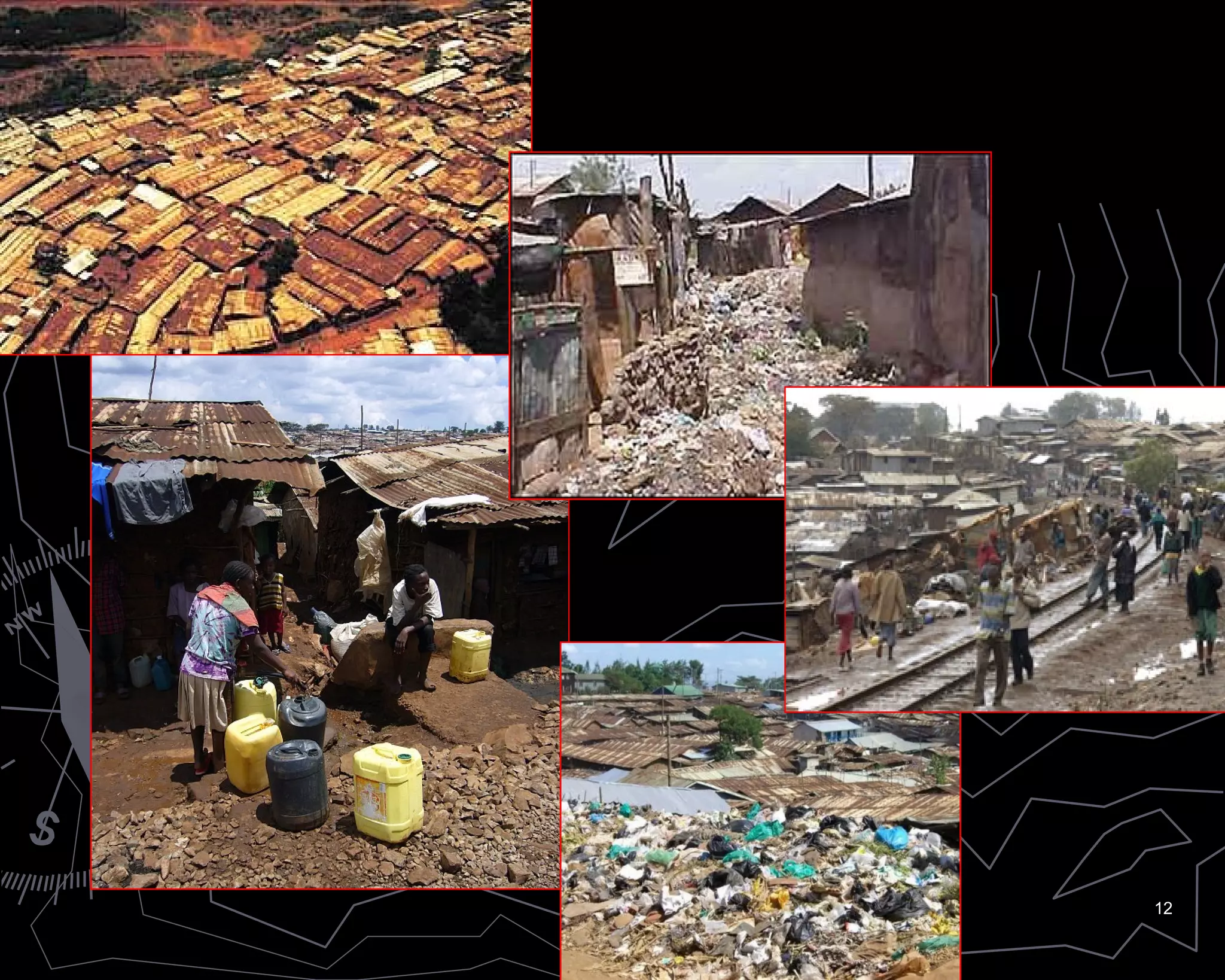
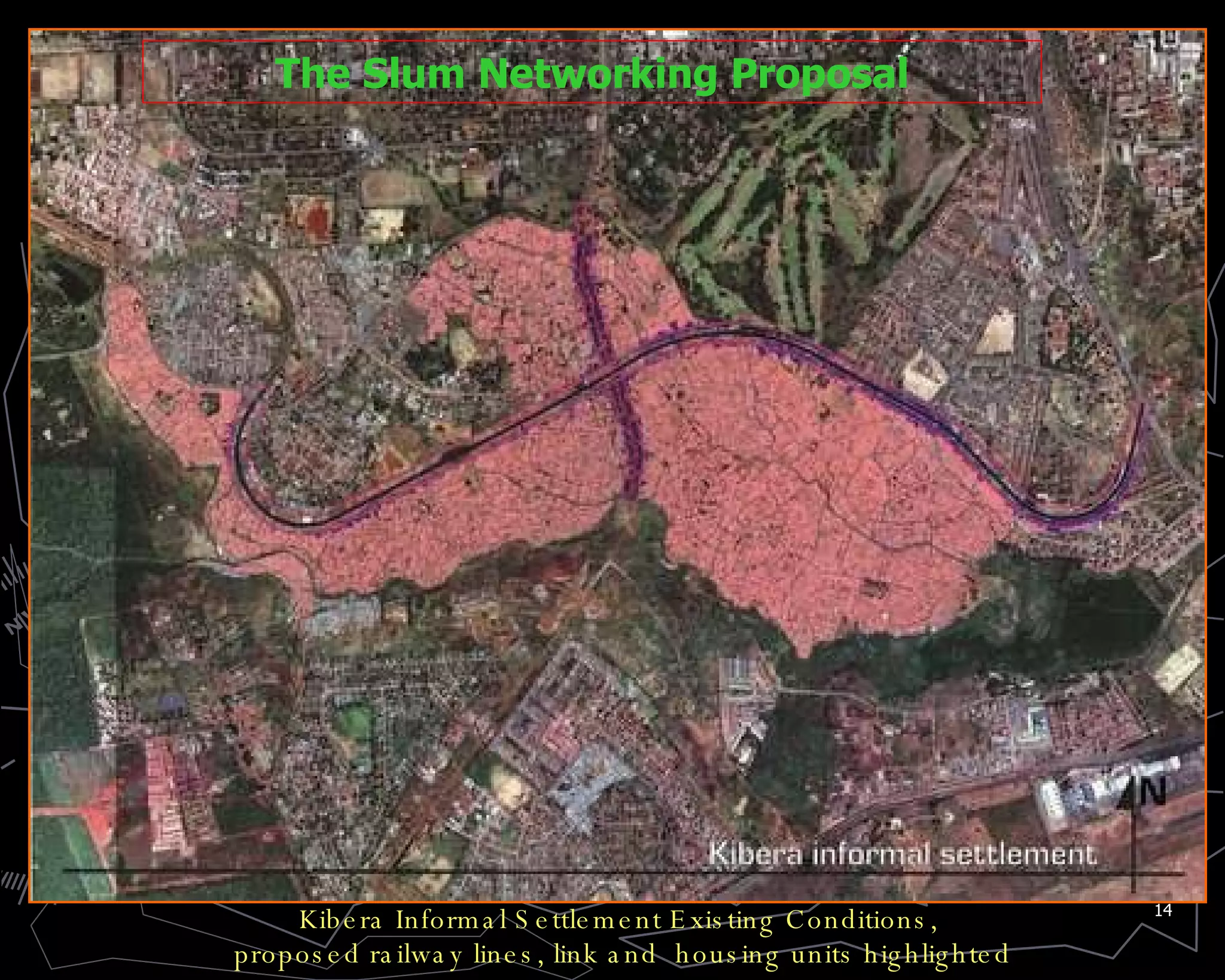
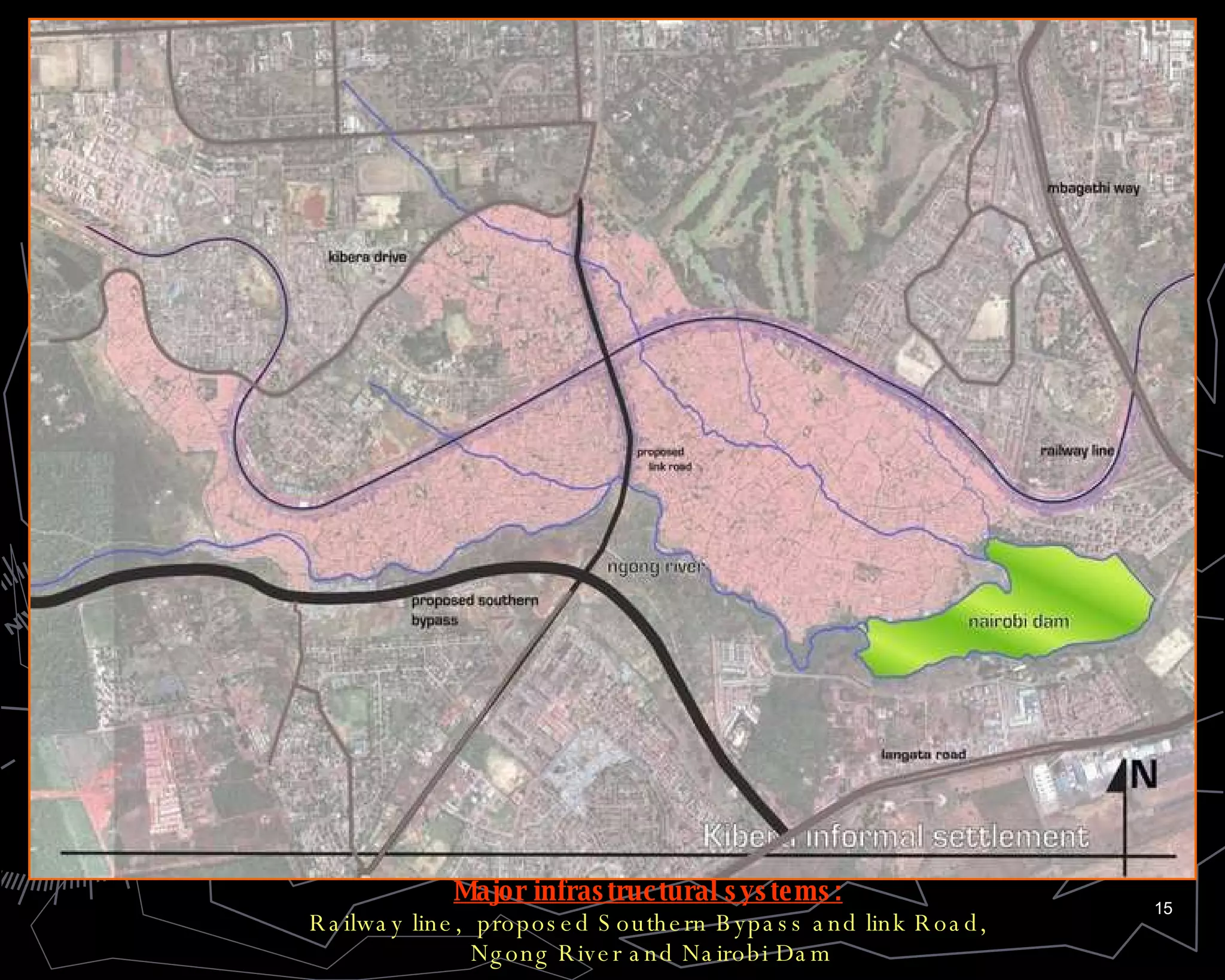
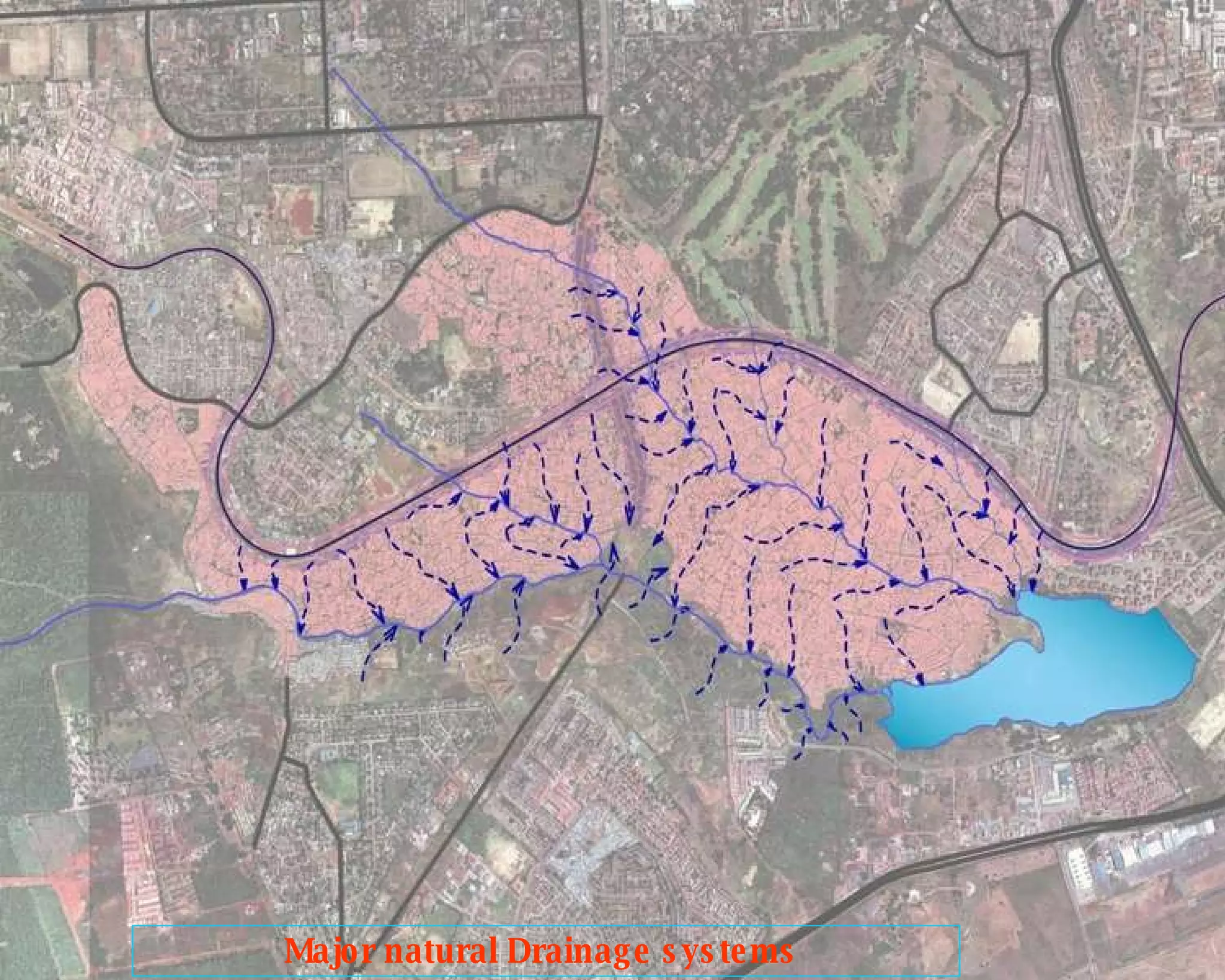
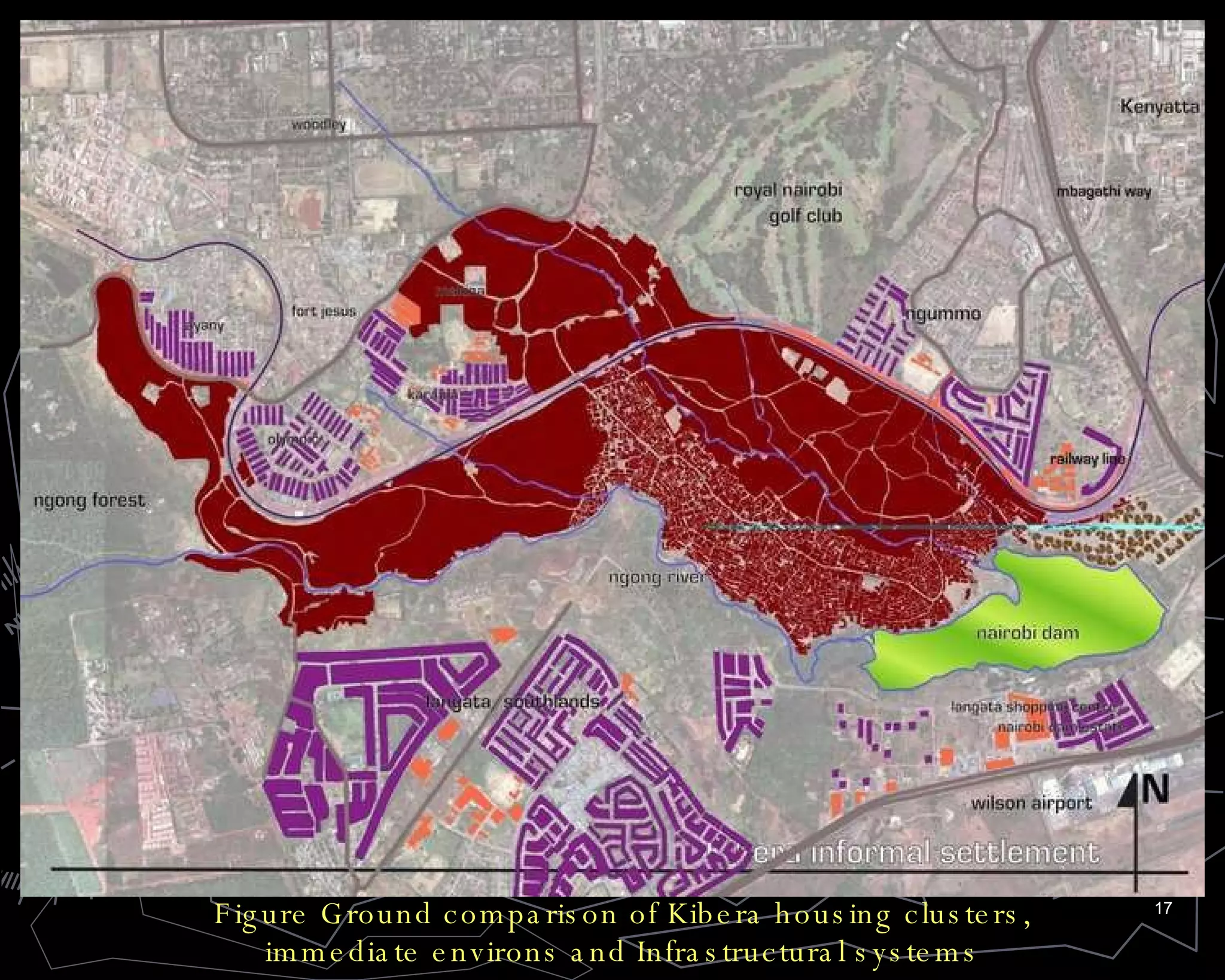
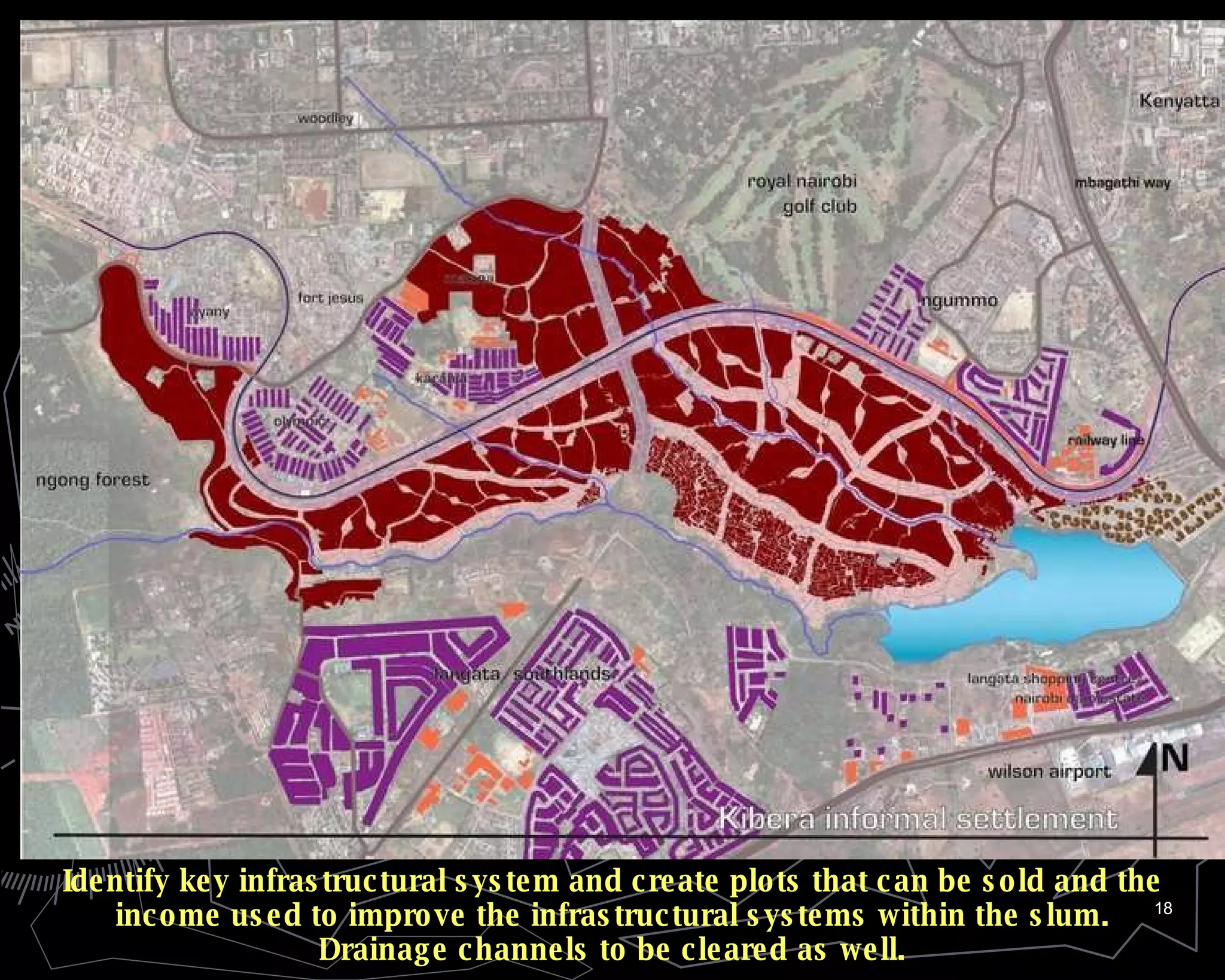







The document proposes a "slum networking" approach to infrastructure development in Kibera, Kenya's largest informal settlement. It involves integrating basic services like water, sewer, drainage and roads by following natural topographical features and drainage paths. This would exploit nature's gradient routes and link slums. The proposal identifies Ngong River, drainage networks and transportation routes in Kibera and divides the area into sectors for phased development, starting with clearing drainage channels, introducing parks and roads, and eventually replacing slum housing with higher density, mixed-use buildings to improve living conditions. Lessons from a similar project in India suggest participatory planning and leveraging natural resources are effective for upgrading slums.


