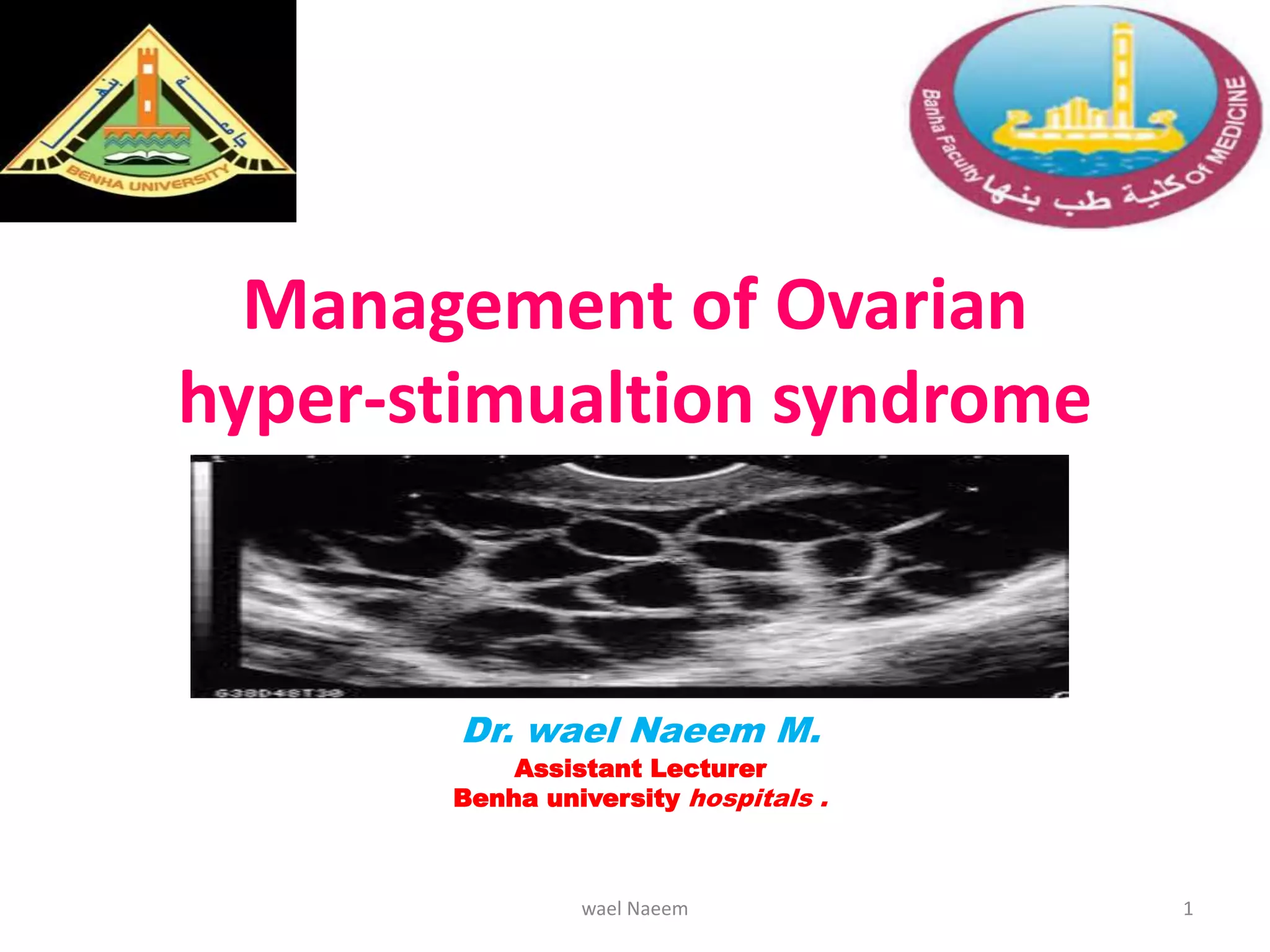
Management of Ovarian
hyper-stimualtion syndrome
Dr. wael Naeem M.
Assistant Lecturer
Benha university hospitals .
1wael Naeem
2wael Naeem
Outline
• Background
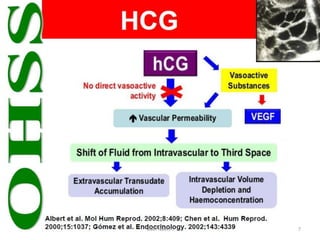
• Pathophysiology
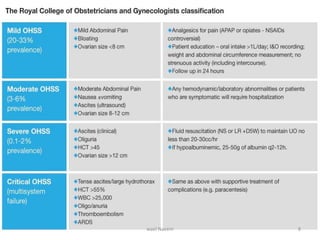
• Clinical presentations
• Complications
• Prevention
• Treatment
3wael Naeem
Back ground
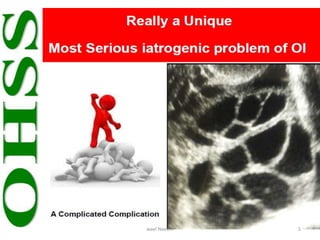
• What is OHSS ??
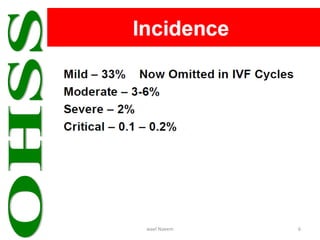
• Incidence
• Mortality rate 1: 300.000
4wael Naeem
5wael Naeem
6wael Naeem
7wael Naeem
8wael Naeem
9wael Naeem
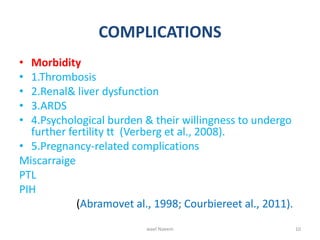
COMPLICATIONS
• Morbidity
• 1.Thrombosis
• 2.Renal& liver dysfunction
• 3.ARDS
• 4.Psychological burden & their willingness to undergo
further fertility tt (Verberg et al., 2008).
• 5.Pregnancy-related complications
Miscarraige
PTL
PIH
(Abramovet al., 1998; Courbiereet al., 2011).
10wael Naeem
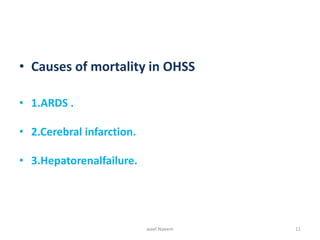
• Causes of mortality in OHSS
• 1.ARDS .
• 2.Cerebral infarction.
• 3.Hepatorenalfailure.
11wael Naeem
wael Naeem 12
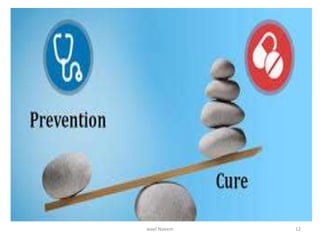
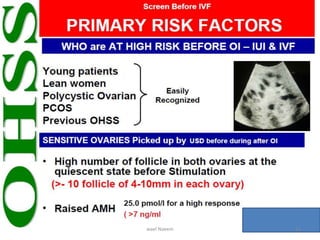
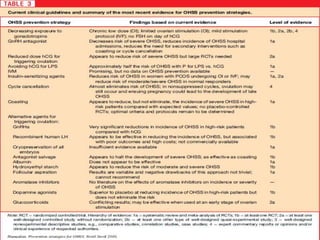
•So how to prevent OHSS
???
wael Naeem 13
14wael Naeem
wael Naeem 15
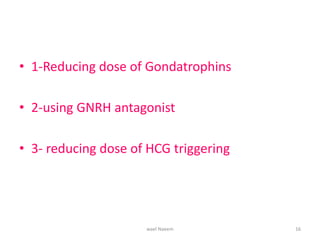
• 1-Reducing dose of Gondatrophins
• 2-using GNRH antagonist
• 3- reducing dose of HCG triggering
wael Naeem 16
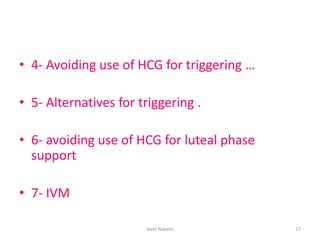
• 4- Avoiding use of HCG for triggering …
• 5- Alternatives for triggering .
• 6- avoiding use of HCG for luteal phase
support
• 7- IVM
wael Naeem 17
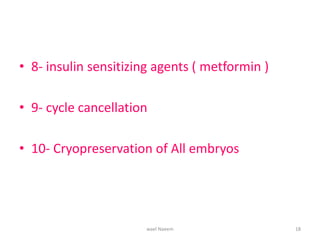
• 8- insulin sensitizing agents ( metformin )
• 9- cycle cancellation
• 10- Cryopreservation of All embryos
wael Naeem 18
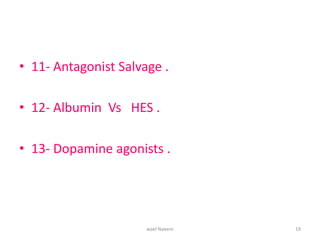
• 11- Antagonist Salvage .
• 12- Albumin Vs HES .
• 13- Dopamine agonists .
wael Naeem 19
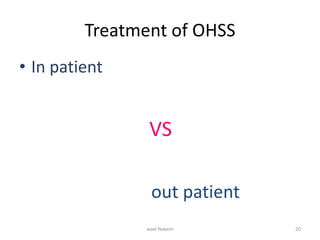
Treatment of OHSS
• In patient
VS
out patient
wael Naeem 20
Outpatient management of OHSS
• Indication:
• 1.Mild or moderate OHSS
• 2.Selected cases with severe OHSS
wael Naeem 21
Treatment:
1- Reassurance:
II-. Instruct the patient .
1. Fluid intake
2. fluid chart
wael Naeem 22
•3. Avoid:
• a. Strenuous exercise
• b. Sexual intercourse {fear of injury or torsion
of hyperstimulatedovaries}.
• c. Complete bed rest {Increase DVT}
wael Naeem 23
• 4. Urgent clinical review:
• a. increasing severity of pain
• b. increasing abdominal distension
• c. shortness of breath
• d. reduced u output
wael Naeem 24
• III. Analgesia:
• Paracetamol or codeine
• NSAID should not be used
wael Naeem 25
• IV. Continue progesterone luteal support
but hCG luteal support is inappropriate.
wael Naeem 26
V. Severe OHSS
• 1. Thromboprophylaxis with LMWH.
The duration individualized, taking into account
risk factors whether or not conception occurs.
• 2. Paracentesis of ascitic fluid
carried out on an outpatient basis by the
abdominal or transvaginalroute under
ultrasound guidance.
wael Naeem 27
VII. Review and monitoring:
• Urgently
if symptoms or signs of worsening
• In the absence of these
every 2–3 days .
• Baseline laboratory investigations
repeated if severity is thought to be worsening.
Hct
useful guide to the degree of intravascular volume
depletion.
wael Naeem 28
S & S of worsening OHSS
• 1.increasing abdominal distension and pain
• 2.shortness of breath
• 3.tachycardia or hypotension
• 4.reduced urine output (≤ 1000 ml/24 h)
• 5.positive fluid balance (≥1000 ml/24 h)
• 6.weight gain and increased abdominal girth
• 7.increasing haematocrit(≥ 0.45).
wael Naeem 29
Inpatient management
Indication
• 1.unable to achieve satisfactory pain control
• 2.unable to maintain adequate fluid intake due
to nausea
• 3.show signs of worsening OHSS despite
outpatient intervention
• 4.unable to attend for regular outpatient follow-
up
• 5.have critical OHSS.
wael Naeem 30
Paracentesis
• when to DO ???
wael Naeem 31
• 1-severe abdominal distension and abdominal
pain secondary to ascites
• 2.shortness of breath and respiratory
compromise secondary to ascites and
increased intra-abdominal pressure
• 3.oliguria despite adequate volume
replacement secondary to increased
abdominal pressure causing reduced renal
perfusion.
wael Naeem 32
• Never to USE
Diuretics
wael Naeem 33
Surgery be cautious
• Indication
• 1.adnexal torsion: Laparoscopic ‘untwisting
• 2.ovarian rupture
• 3.ectopic pregnancy
wael Naeem 34

Ohss

  • 1.
    Management of Ovarian hyper-stimualtionsyndrome Dr. wael Naeem M. Assistant Lecturer Benha university hospitals . 1wael Naeem
  • 2.
  • 3.
    Outline • Background • Pathophysiology •Clinical presentations • Complications • Prevention • Treatment 3wael Naeem
  • 4.
    Back ground • Whatis OHSS ?? • Incidence • Mortality rate 1: 300.000 4wael Naeem
  • 5.
  • 6.
  • 7.
  • 8.
  • 9.
  • 10.
    COMPLICATIONS • Morbidity • 1.Thrombosis •2.Renal& liver dysfunction • 3.ARDS • 4.Psychological burden & their willingness to undergo further fertility tt (Verberg et al., 2008). • 5.Pregnancy-related complications Miscarraige PTL PIH (Abramovet al., 1998; Courbiereet al., 2011). 10wael Naeem
  • 11.
    • Causes ofmortality in OHSS • 1.ARDS . • 2.Cerebral infarction. • 3.Hepatorenalfailure. 11wael Naeem
  • 12.
  • 13.
    •So how toprevent OHSS ??? wael Naeem 13
  • 14.
  • 15.
  • 16.
    • 1-Reducing doseof Gondatrophins • 2-using GNRH antagonist • 3- reducing dose of HCG triggering wael Naeem 16
  • 17.
    • 4- Avoidinguse of HCG for triggering … • 5- Alternatives for triggering . • 6- avoiding use of HCG for luteal phase support • 7- IVM wael Naeem 17
  • 18.
    • 8- insulinsensitizing agents ( metformin ) • 9- cycle cancellation • 10- Cryopreservation of All embryos wael Naeem 18
  • 19.
    • 11- AntagonistSalvage . • 12- Albumin Vs HES . • 13- Dopamine agonists . wael Naeem 19
  • 20.
    Treatment of OHSS •In patient VS out patient wael Naeem 20
  • 21.
    Outpatient management ofOHSS • Indication: • 1.Mild or moderate OHSS • 2.Selected cases with severe OHSS wael Naeem 21
  • 22.
    Treatment: 1- Reassurance: II-. Instructthe patient . 1. Fluid intake 2. fluid chart wael Naeem 22
  • 23.
    •3. Avoid: • a.Strenuous exercise • b. Sexual intercourse {fear of injury or torsion of hyperstimulatedovaries}. • c. Complete bed rest {Increase DVT} wael Naeem 23
  • 24.
    • 4. Urgentclinical review: • a. increasing severity of pain • b. increasing abdominal distension • c. shortness of breath • d. reduced u output wael Naeem 24
  • 25.
    • III. Analgesia: •Paracetamol or codeine • NSAID should not be used wael Naeem 25
  • 26.
    • IV. Continueprogesterone luteal support but hCG luteal support is inappropriate. wael Naeem 26
  • 27.
    V. Severe OHSS •1. Thromboprophylaxis with LMWH. The duration individualized, taking into account risk factors whether or not conception occurs. • 2. Paracentesis of ascitic fluid carried out on an outpatient basis by the abdominal or transvaginalroute under ultrasound guidance. wael Naeem 27
  • 28.
    VII. Review andmonitoring: • Urgently if symptoms or signs of worsening • In the absence of these every 2–3 days . • Baseline laboratory investigations repeated if severity is thought to be worsening. Hct useful guide to the degree of intravascular volume depletion. wael Naeem 28
  • 29.
    S & Sof worsening OHSS • 1.increasing abdominal distension and pain • 2.shortness of breath • 3.tachycardia or hypotension • 4.reduced urine output (≤ 1000 ml/24 h) • 5.positive fluid balance (≥1000 ml/24 h) • 6.weight gain and increased abdominal girth • 7.increasing haematocrit(≥ 0.45). wael Naeem 29
  • 30.
    Inpatient management Indication • 1.unableto achieve satisfactory pain control • 2.unable to maintain adequate fluid intake due to nausea • 3.show signs of worsening OHSS despite outpatient intervention • 4.unable to attend for regular outpatient follow- up • 5.have critical OHSS. wael Naeem 30
  • 31.
    Paracentesis • when toDO ??? wael Naeem 31
  • 32.
    • 1-severe abdominaldistension and abdominal pain secondary to ascites • 2.shortness of breath and respiratory compromise secondary to ascites and increased intra-abdominal pressure • 3.oliguria despite adequate volume replacement secondary to increased abdominal pressure causing reduced renal perfusion. wael Naeem 32
  • 33.
    • Never toUSE Diuretics wael Naeem 33
  • 34.
    Surgery be cautious •Indication • 1.adnexal torsion: Laparoscopic ‘untwisting • 2.ovarian rupture • 3.ectopic pregnancy wael Naeem 34