Age of Exploration
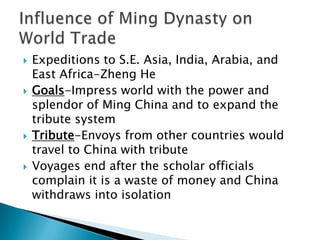
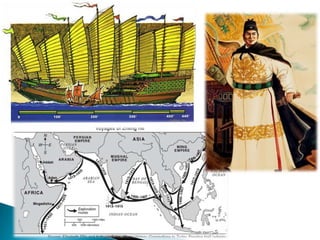
   Expeditions to S.E. Asia, India, Arabia, and
    East Africa-Zheng He
   Goals-Impress world with the power and
    splendor of Ming China and to expand the
    tribute system
   Tribute-Envoys from other countries would
    travel to China with tribute
   Voyages end after the scholar officials
    complain it is a waste of money and China
    withdraws into isolation
   Renaissance ideas
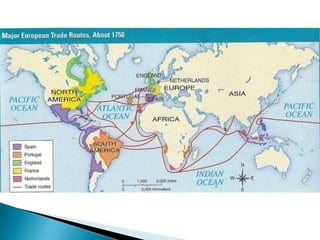
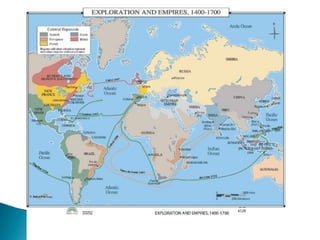
   Desire for trade routes, spices, and profits
   Desire to spread Christianity
   New technologies in ships and sailing
   Increase country’s power
   Absolute monarchs used their power to
    support the Age of Exploration
   Gold, Glory, and God!
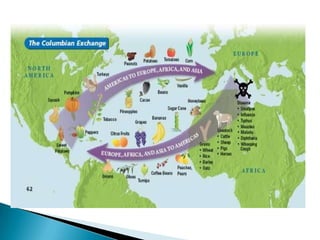
   Exchange of new foods, livestock, and
    diseases between the Old and New Worlds-
    New foods become staples in people’s diets
    in both regions
   Beginnings of colonization of the Americas
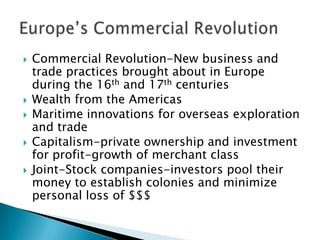
   Commercial Revolution-New business and
    trade practices brought about in Europe
    during the 16th and 17th centuries
   Wealth from the Americas
   Maritime innovations for overseas exploration
    and trade
   Capitalism-private ownership and investment
    for profit-growth of merchant class
   Joint-Stock companies-investors pool their
    money to establish colonies and minimize
    personal loss of $$$
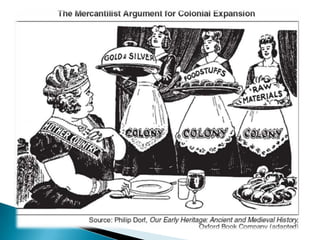
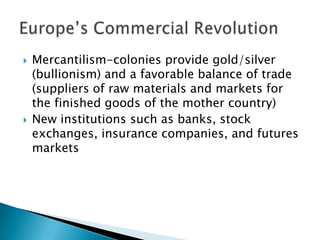
   Mercantilism-colonies provide gold/silver
    (bullionism) and a favorable balance of trade
    (suppliers of raw materials and markets for
    the finished goods of the mother country)
   New institutions such as banks, stock
    exchanges, insurance companies, and futures
    markets
   One the Americas…
    ◦ Horses, cattle, sheep, and pigs
    ◦ Foods from Africa including bananas, black-eyed
      peas, and yams
    ◦ Grains such as rice, barley, wheat, and oats
    ◦ Diseases such as smallpox, measles, and influenza
      that led to the deaths of millions of Native
      Americans
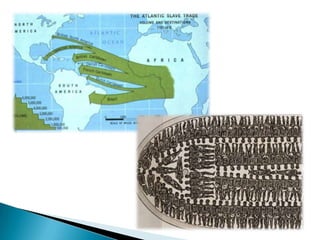
    ◦ Slaves from Africa
   On Europe and Asia
    ◦ New foods and plants including corn, tomatoes,
      chocolate, tobacco, quinine, and potatoes
    ◦ Population boom…especially in China
   On West Africa
    ◦ Political-promoted warfare between African states.
      Africans had access to European weapons (guns)
      and these became a source of power
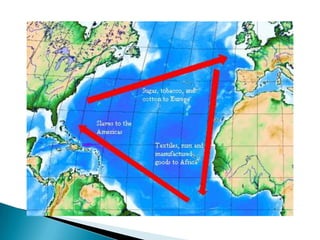
    ◦ Economic-slave trade increased demand for slaves
      and European manufactured goods
    ◦ Cultural-Christianity in W. Africa; African artists
      create products for European market
   On the Americas…
    ◦ Increase in African population-directly related to
      slavery
    ◦ Dependence on slave labor for the production of
      cash crops
    ◦ Knowledge of agriculture including rice spread into
      southern colonies
    ◦ Aspects of African food, music, and art leave a
      lasting influence on American culture
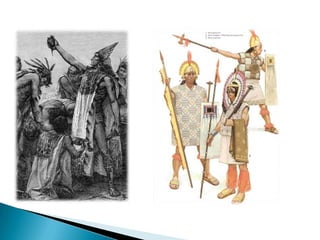
   Aztecs conquered by Cortes-1519
   Inca conquered by Pizarro-1532
   Superior weapons-gunpowder
   Horses
   Disease
   Intermarriage-mestizos
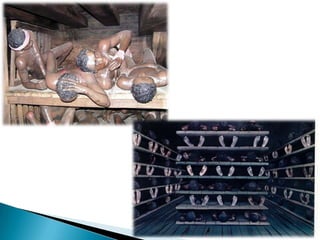
   Enslavement and harsh treatment
   Forced labor (farms, ranches, and mines)
    Encomienda system
   Conversion to Christianity
   Astronomy-calendars
   Elaborate pyramids and temples
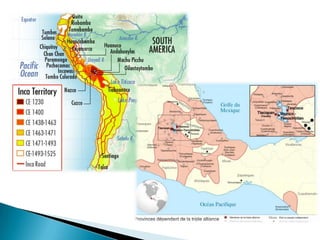
   Aztecs-city on a lake
   Inca-Machu Picchu, road system, counting
    and record-keeping (quipu)
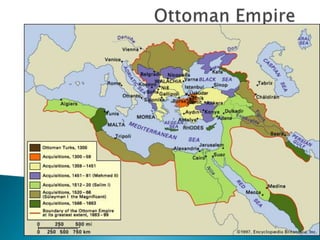
   Capture of Constantinople>Istanbul
   Cultural and political achievements under
    Suleiman
   Capture of Mecca, Medina, and Cairo
   Empire in place until the end of WWI
   Eastern Europe
    ◦ Constantinople conquered and renamed Istanbul-
      1453
    ◦ Suleiman advanced into Hungary and Austria but
      was stopped at the Siege of Vienna in 1529
   Global trade
     Safety for merchants
     Naval trade in spices, wheat, and lumber
      throughout the Mediterranean, Aegean, Black, and
      Red Seas and the Persian Gulf
Other important stuff

Other important stuff

  • 1.
  • 2.
    Expeditions to S.E. Asia, India, Arabia, and East Africa-Zheng He  Goals-Impress world with the power and splendor of Ming China and to expand the tribute system  Tribute-Envoys from other countries would travel to China with tribute  Voyages end after the scholar officials complain it is a waste of money and China withdraws into isolation
  • 4.
    Renaissance ideas  Desire for trade routes, spices, and profits  Desire to spread Christianity  New technologies in ships and sailing  Increase country’s power  Absolute monarchs used their power to support the Age of Exploration  Gold, Glory, and God!
  • 5.
    Exchange of new foods, livestock, and diseases between the Old and New Worlds- New foods become staples in people’s diets in both regions  Beginnings of colonization of the Americas
  • 6.
    Commercial Revolution-New business and trade practices brought about in Europe during the 16th and 17th centuries  Wealth from the Americas  Maritime innovations for overseas exploration and trade  Capitalism-private ownership and investment for profit-growth of merchant class  Joint-Stock companies-investors pool their money to establish colonies and minimize personal loss of $$$
  • 8.
    Mercantilism-colonies provide gold/silver (bullionism) and a favorable balance of trade (suppliers of raw materials and markets for the finished goods of the mother country)  New institutions such as banks, stock exchanges, insurance companies, and futures markets
  • 11.
    One the Americas… ◦ Horses, cattle, sheep, and pigs ◦ Foods from Africa including bananas, black-eyed peas, and yams ◦ Grains such as rice, barley, wheat, and oats ◦ Diseases such as smallpox, measles, and influenza that led to the deaths of millions of Native Americans ◦ Slaves from Africa
  • 12.
    On Europe and Asia ◦ New foods and plants including corn, tomatoes, chocolate, tobacco, quinine, and potatoes ◦ Population boom…especially in China
  • 13.
    On West Africa ◦ Political-promoted warfare between African states. Africans had access to European weapons (guns) and these became a source of power ◦ Economic-slave trade increased demand for slaves and European manufactured goods ◦ Cultural-Christianity in W. Africa; African artists create products for European market
  • 15.
    On the Americas… ◦ Increase in African population-directly related to slavery ◦ Dependence on slave labor for the production of cash crops ◦ Knowledge of agriculture including rice spread into southern colonies ◦ Aspects of African food, music, and art leave a lasting influence on American culture
  • 18.
    Aztecs conquered by Cortes-1519  Inca conquered by Pizarro-1532  Superior weapons-gunpowder  Horses  Disease  Intermarriage-mestizos  Enslavement and harsh treatment  Forced labor (farms, ranches, and mines) Encomienda system  Conversion to Christianity
  • 19.
    Astronomy-calendars  Elaborate pyramids and temples  Aztecs-city on a lake  Inca-Machu Picchu, road system, counting and record-keeping (quipu)
  • 22.
    Capture of Constantinople>Istanbul  Cultural and political achievements under Suleiman  Capture of Mecca, Medina, and Cairo  Empire in place until the end of WWI
  • 24.
    Eastern Europe ◦ Constantinople conquered and renamed Istanbul- 1453 ◦ Suleiman advanced into Hungary and Austria but was stopped at the Siege of Vienna in 1529  Global trade  Safety for merchants  Naval trade in spices, wheat, and lumber throughout the Mediterranean, Aegean, Black, and Red Seas and the Persian Gulf