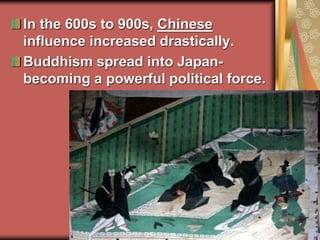
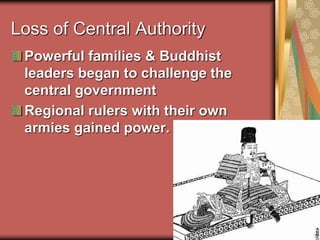
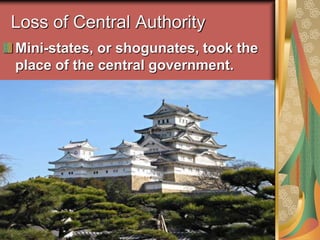
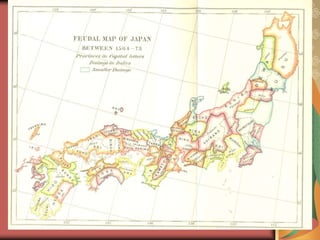
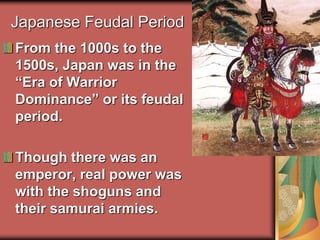
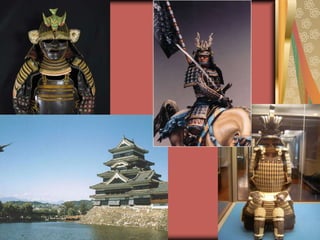
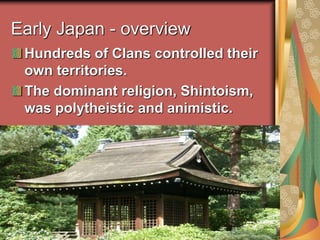
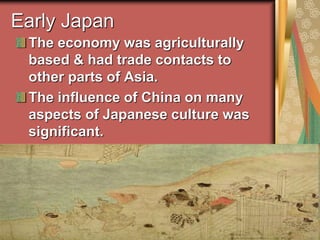
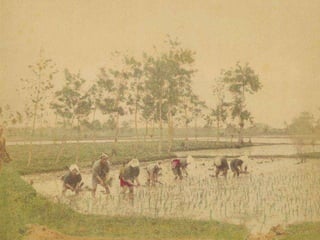
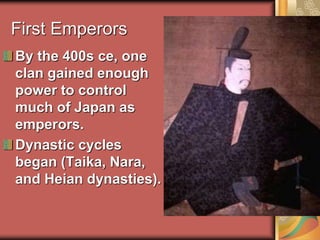
Early Japan was composed of hundreds of clans that controlled their own territories and practiced the native Shinto religion as well as animism. The economy was based on agriculture and trade with other Asian countries. By the 400s CE, one clan gained enough power to control much of Japan as emperors, beginning dynastic cycles. From the 600s to 900s, Chinese influence increased greatly as Buddhism spread and became influential. By the 1000s, powerful families and Buddhist leaders challenged central authority, and regional rulers established their own armies and mini-states, beginning the feudal period where real power was held by shoguns and samurai armies despite the nominal emperor.

![HEIAN PERIOD
“Rarely in human history has
so much energy been focused
on the pursuit of beauty or has
social interaction been so
gracious, well-mannered, [and]
in accordance with strict codes
of polite behavior.”](https://image.slidesharecdn.com/earlyjapanfeudalism-101108151116-phpapp01/85/Early-japan-feudalism-8-320.jpg)