DRUG THERAPY MONITORING AND
PHARMACEUTICAL CARE
By
M. Maneesh Kumar Reddy
Assistant professor
Chalapathi Institute of Pharmaceutical Sciences
Drug Therapy Monitoring
One of the fundamental activity of of the clinical pharmacist
working in hospital.
Individualisation of patient drug therapy
Rational usage of drugs
Appropriate drug
Appropriate patient
Appropriate dose
Appropriate route
Appropriate frequency
Appropriate duration
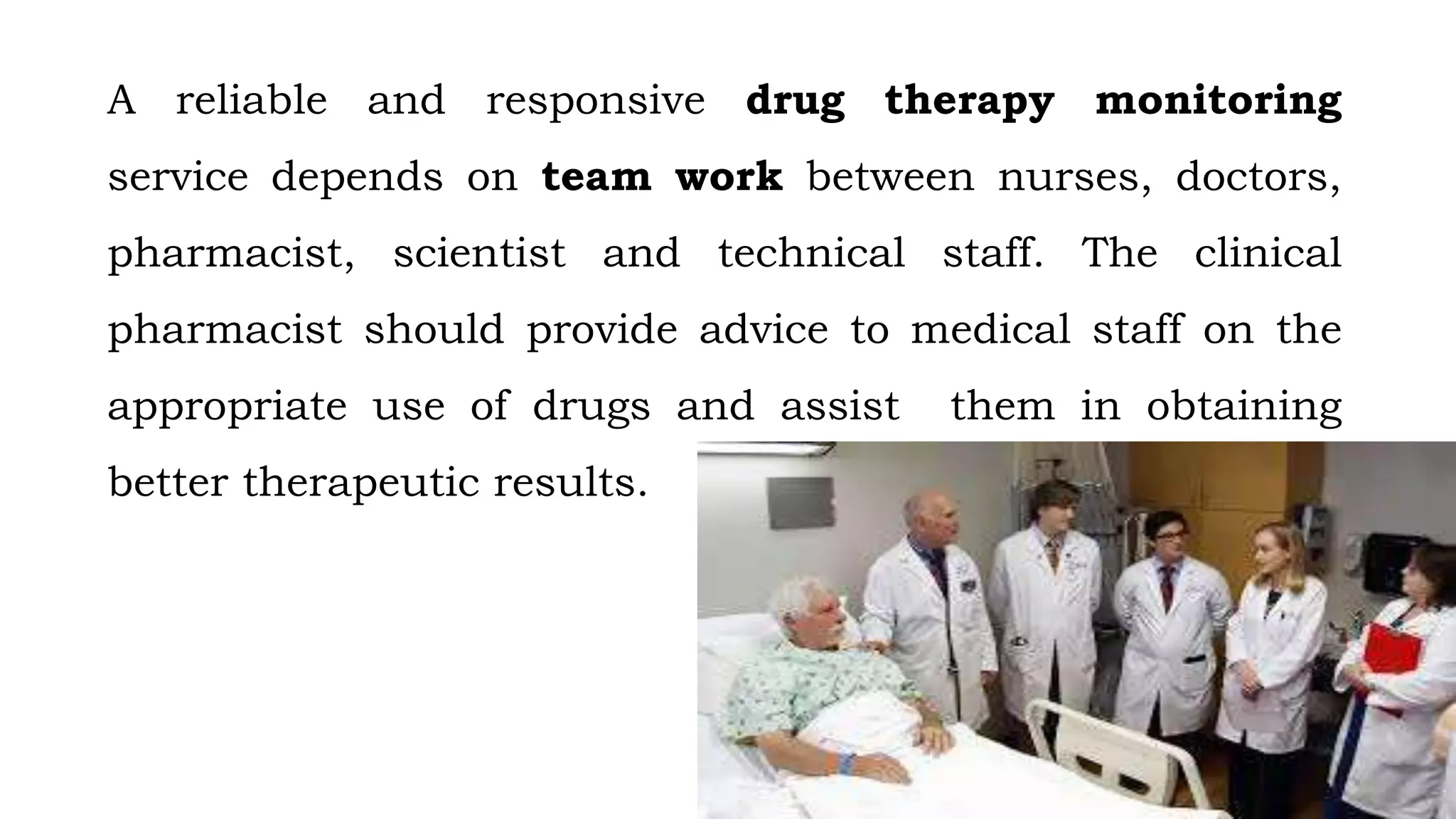
A reliable and responsive drug therapy monitoring
service depends on team work between nurses, doctors,
pharmacist, scientist and technical staff. The clinical
pharmacist should provide advice to medical staff on the
appropriate use of drugs and assist them in obtaining
better therapeutic results.
Goals
To optimise the drug therapy and patient
outcomes by implementing a strategy involving
fallowing components.
 Collation and interpretation of patient specific information.
 Identification of desired therapeutic outcomes.
 Review of drug therapy.
 Formulation and interpretation of monitoring strategy.
 Review of outcomes.
 Modification of patient monitoring if required.
COMPONENTS OF DRUG THERAPY MONITORING
 Medication order review
 Clinical review
 Pharmacist intervention
Medication Order Review
 It is a fundamental responsibility of a pharmacist to ensure the
appropriateness of medication orders.
 It serves as starting point for other clinical pharmacy activities
( medication counselling, TDM, DI, and ADR).
 Organizing information according to medical problems
helps breakdown a complex situation into its individual parts.
Goal
 To optimise the patients drug therapy.
 To prevent or minimise drug related problems/medication
errors
Procedure:
 The patients medical record should be reviewed in
conjugation with the medication administration record.
 Recent consultations, treatment plans and daily progress
should be taken into account when determining the
appropriateness of current medication orders and
planning each patient’s care.
 All current and recent medication orders should be
reviewed.
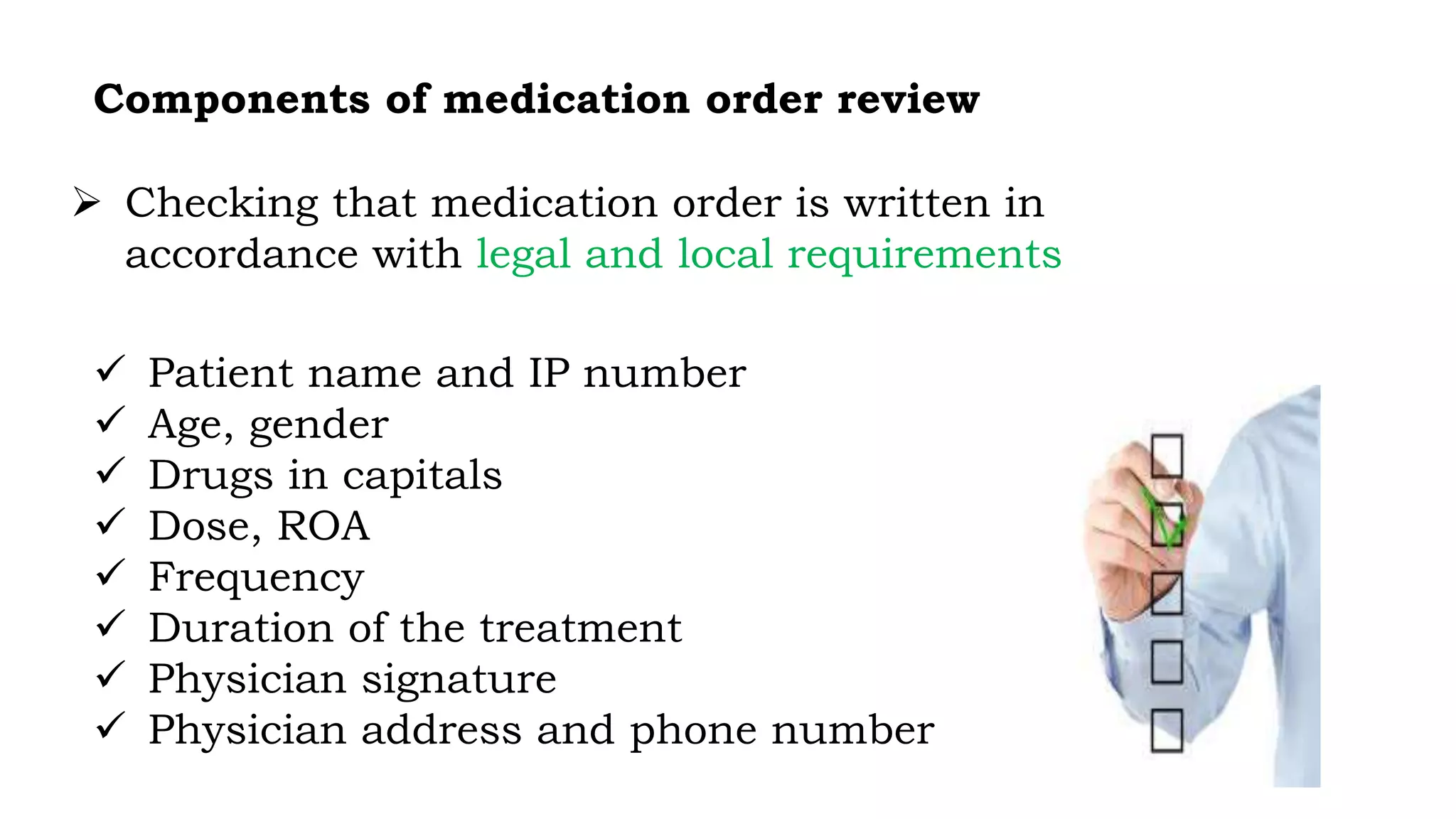
Components of medication order review
 Checking that medication order is written in
accordance with legal and local requirements
 Patient name and IP number
 Age, gender
 Drugs in capitals
 Dose, ROA
 Frequency
 Duration of the treatment
 Physician signature
 Physician address and phone number
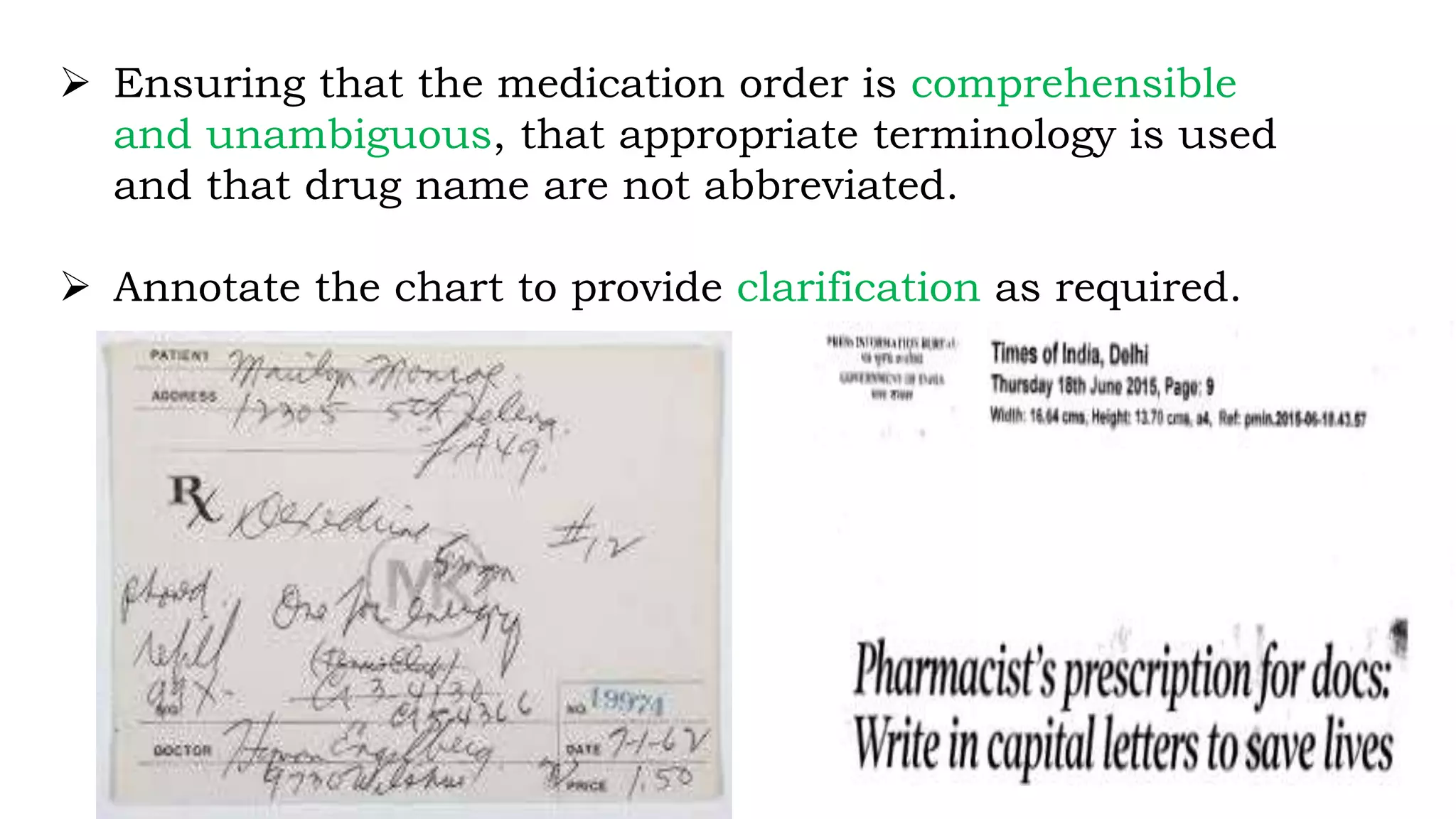
 Ensuring that the medication order is comprehensible
and unambiguous, that appropriate terminology is used
and that drug name are not abbreviated.
 Annotate the chart to provide clarification as required.
 Detecting orders for medication to which the patient may
be hypersensitive/intolerant.
Ensuring that medication order is appropriate with respect to
 The patient’s previous medication order.
 Patient’s specific considerations e.g disease state,
pregnancy.
 Drug dose and dosage schedule, especially with respect to
age, renal function, liver function.
 Route, dosage form and method of administration.
 Checking complete drug profile for medication
duplication, interactions or incompatibilities.
 Ensuring that administration times are appropriate e.g.
with respect to food , other drugs and procedures
 Checking the medication administration record to ensure
that all ordered have been administered.
 Ensuring that the drug administration order clearly
indicates the time at which drug administration is to
commence.
Special considerations should be given especially in short
course therapy as in antibiotics and analgesics.
 Ensuring that the order is cancelled in all sections of
medication administration record when the drug therapy
is intended to cease.
 If appropriate follow up of any non-formulary drug
orders, recommending a formulary equivalent if
required.
 Ensuring appropriate therapy monitoring is implemented.
 Ensuring that all necessary medication is ordered. E.g.
premedication, prophylaxis.
 Reviewing medication for cost effectiveness
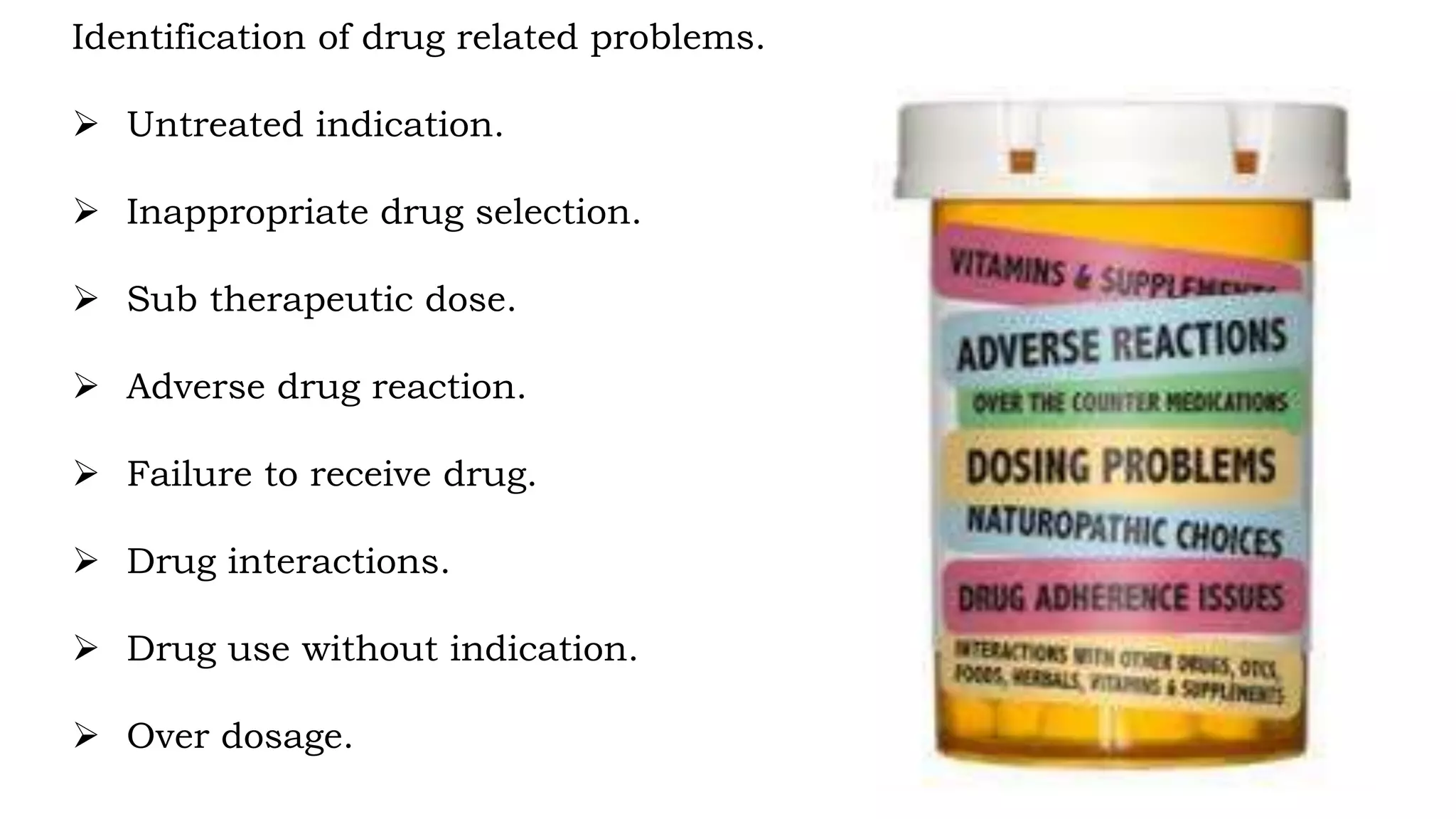
Identification of drug related problems.
 Untreated indication.
 Inappropriate drug selection.
 Sub therapeutic dose.
 Adverse drug reaction.
 Failure to receive drug.
 Drug interactions.
 Drug use without indication.
 Over dosage.
Medication chart Endorsement
 Another important goal of treatment chart review is to
minimise the risk of medication errors that might occur at
the level of prescribing and / or drug administration.
 A medication error is any preventable error that may lead to
inappropriate medication use or patient harm.
 To prevent potential morbidity and mortality associated with
these errors, pharmacists should systematically review the
medication chart and write annotations on the chart where
the medication orders are unclear.
National Inpatient Medication Chart
 The National Inpatient Medication Chart (NIMC) is a suite
of nationally standard medication charts, both paper and
electronic, that present and communicate information
consistently between healthcare professionals providing
care to patients on the intended use of medicines for an
individual patient.
 Reduces the risk of prescribing, dispensing and
administration error by health professionals through
standardised presentation of information on the intended
use of medicines
CLINICAL REVIEW
 Clinical review is one of the integral components of
medication review and should preferably be performed
on a daily basis.
 It is the review of the patients’ progress for the purpose
of assessing the therapeutic outcome. The therapeutic
goal for the specific disease should be clearly identified
before the review.
GOALS:
The primary aims of the clinical review are to:
 Assess the response to drug treatment.
 Evaluate the safety of the treatment regimen.
 Assess the progress of the disease and the need for any
change in therapy.
 Assess the need for monitoring, if any.
 Assess the convenience of therapy(to improve compliance).
Procedure:
 Collection of patient specific data should be undertaken routinely.
 The data collected should be clinically relevant, and documented
in the pharmacy patient profile.
 Results of biochemical, haematological, microbiological,
radiological and other investigations should be reviewed.
 Information elicited from the patient should also be considered.
Information obtained must be interpreted and evaluated with
reference to
 Clinical features
 Pathological condition
 Indication for investigation
 Patient medication history
 Planned outcomes of therapy
Pharmacist intervention
Any action taken by the pharmacist that directly results in a
change in management or therapy.
Intervention by pharmacist to assist prescribing can be
Active --- Use of therapeutic guidelines
Passive --- Drug information service
Reactive --- Seeking amendment of those that are unclear
inadequate or inappropriate
 Interventions can also be classified in accordance with categories
of drug related problems.
 Documentation of each and every intervention is very important
That document should include the fallowing details
Patient details
Date, ward and pharmacist
Drugs involved
Description about the intervention
Details of response to intervention
Factors determining the success of intervention
 Effective Communication skills
 Appropriateness of the intervention
 Way of approach
PHARMACEUTICAL CARE:
The responsible provision of drug therapy for the purpose of
achieving definite therapeutic outcomes that improve the
patients quality of life.
Pharmaceutical care involves the process through which a
pharmacist cooperates with a patient and other professional in
designing , implementation, and monitoring a therapeutic plan
that will produce specific therapeutic outcomes for the patient
Outcomes Of Pharmaceutical Care:
 Cure of a disease
 Elimination or reduction of patients symptomology
 Arresting or slowing of a disease process
 Preventing a disease or symptoms
Major functions of pharmaceutical care
 Identifying potential and actual drug related problems
 Resolving actual drug related problems
 Preventing potential drug related problems
Skills required for the clinical pharmacist for a better
pharmaceutical care
 He must possess knowledge and skill in pharmaceutics and
clinical pharmacology
 He must be able to mobilize the drug distribution system by which
drug use decisions are implemented
 He must be able to develop relationship with the patients and other
health care professionals needed to provide pharmaceutical care
 He must be available in the society /community for patient in time
 He should have commitment to quality improvement and
assessment procedure
Process of pharmaceutical care
 Establish pharmacist‐patient relationship
 Collect data
 Interpret data
 Identify drug related problems
 Determine priority of drug related problems
 Determine desired outcomes(clinical or therapeutic)
 Develop therapeutic plan
 Develop monitoring plan
 Implement and follow up pharmaceutical care plan
Collection of patients data
The pharmacist must collect and generate subjective and
objective information regarding
 The patients general health and activity status
 Past medical history medication history
 Social history
 Diet, exercise
 Education
 History of present illness and
 Economic status
Sources of information may not necessarily the patient
medication records.
Elements of patient information data
 Demographics
 Age, sex, race,
 Height‐weight
 Current problems
 Signs and symptoms
 Past medical history
 Allergies and intolerance
 Pregnancy and lactation status
 Social habits
 Economic conditions
 Relevant lab data
Identification of problems
The data collected can be used to identify actual or potential
drug‐related problems. Since the main focus of pharmaceutical
care is patient.
Since the pharmacist attends the patient, it follows that the a
pharmacist only can tackle , all drug related problems.
Drug related morbidity:
DRM(drug related morbidity) is a phenomenon of therapeutic
malfunction . It is a failure of a therapeutic agents or
agents together to produce intended therapeutic outcome.
The concept of DRM includes both treatment failure
and production of a new medical problem , like ADR or toxic
drug effect. If DRM is not recognized in time it may lead
to drug related mortality which is ultimate disaster
Some examples of drug related problems:
*New or additional drug required
*Wrong drug
*Too little of the right drug
*Too much of the right drug
*Adverse drug reaction
*Drug not taken appropriately
*Medication not indicated
Establishing outcome goals:
Drug therapy can produce a range of positive clinical outcomes
it may also result in negative outcomes resulting in disease
morbidity and even in extreme case mortality. Clearly the
potential clinical outcomes are related to the disease being
treated and the efficacy of the available drug treatments should
be established.
Evaluating treatment alternatives by monitoring and modifying
therapeutic plan
While evaluating treatment alternatives or therapeutic options the
following factors have to be considered such as
Efficacy and safety
Availability
Cost of treatment and
Suitability of the treatment to the patient .
Efficacy and safety must be considered when evaluating the risk benefit
ratio of a particular treatment. The risk –benefit ratio will depend upon
many factors.
Factors Determining Risk Benefit Ratio
Seriousness of disease
Consequences of not treating the disease
The efficacy of the drug.
ADRs associated with the drug therapy
Efficacy of alternative drug or non‐drug therapy
Side effect profile of alternative drugs.
 The pharmacists role especially clinical pharmacists role is
increasingly becoming more evident in evaluating therapeutic
options, modifying and monitoring therapeutic plan.
Individualisation of drug regimen:
Patient factors
 Diagnosis
 Treatment goals
 Physiological and pathological factors
 Past medical history, past medicines received
 Contraindication
 Allergies and adverse effects
 Patient compliance
 Patients cooperation and convenience
 Special consideration
Drug factors
 Efficacy
 Adverse effects
 Prevalence and ability to minimize ADRs
 Ability to monitor for efficacy and avoid ADR
 Drug‐drug interactions
 Pharmacokinetics and pharmacodynamics
 Dosage form
 Route and method of administration
 Cost to the patient
 Government or insurance company payments,
presentation of bills in their formats.
Monitoring outcome:
The pharmacist regularly reviews subjective and objective
monitoring parameters in order to determine if satisfactory
progress is being made toward achieving desired outcomes
as outlined in the drug therapy plan.
The pharmacist reviews ongoing progress in achieving
desired outcomes with the patient and provides a report to
the patient's other healthcare providers as appropriate
The pharmacist updates the patient's medical and/or pharmacy
record with information concerning patient progress, noting the
subjective and objective information which has been considered,
his/her assessment of the patient's current progress, the
patient's assessment of his/her current progress, and any
modifications that are being made to the plan. Communications
with other healthcare providers should also be noted.
Drug Therapy Monitiring

Drug Therapy Monitiring

  • 1.
    DRUG THERAPY MONITORINGAND PHARMACEUTICAL CARE By M. Maneesh Kumar Reddy Assistant professor Chalapathi Institute of Pharmaceutical Sciences
  • 2.
    Drug Therapy Monitoring Oneof the fundamental activity of of the clinical pharmacist working in hospital. Individualisation of patient drug therapy Rational usage of drugs
  • 3.
    Appropriate drug Appropriate patient Appropriatedose Appropriate route Appropriate frequency Appropriate duration
  • 4.
    A reliable andresponsive drug therapy monitoring service depends on team work between nurses, doctors, pharmacist, scientist and technical staff. The clinical pharmacist should provide advice to medical staff on the appropriate use of drugs and assist them in obtaining better therapeutic results.
  • 5.
    Goals To optimise thedrug therapy and patient outcomes by implementing a strategy involving fallowing components.  Collation and interpretation of patient specific information.  Identification of desired therapeutic outcomes.  Review of drug therapy.  Formulation and interpretation of monitoring strategy.  Review of outcomes.  Modification of patient monitoring if required.
  • 6.
    COMPONENTS OF DRUGTHERAPY MONITORING  Medication order review  Clinical review  Pharmacist intervention
  • 7.
    Medication Order Review It is a fundamental responsibility of a pharmacist to ensure the appropriateness of medication orders.  It serves as starting point for other clinical pharmacy activities ( medication counselling, TDM, DI, and ADR).  Organizing information according to medical problems helps breakdown a complex situation into its individual parts.
  • 8.
    Goal  To optimisethe patients drug therapy.  To prevent or minimise drug related problems/medication errors
  • 9.
    Procedure:  The patientsmedical record should be reviewed in conjugation with the medication administration record.  Recent consultations, treatment plans and daily progress should be taken into account when determining the appropriateness of current medication orders and planning each patient’s care.  All current and recent medication orders should be reviewed.
  • 10.
    Components of medicationorder review  Checking that medication order is written in accordance with legal and local requirements  Patient name and IP number  Age, gender  Drugs in capitals  Dose, ROA  Frequency  Duration of the treatment  Physician signature  Physician address and phone number
  • 11.
     Ensuring thatthe medication order is comprehensible and unambiguous, that appropriate terminology is used and that drug name are not abbreviated.  Annotate the chart to provide clarification as required.
  • 12.
     Detecting ordersfor medication to which the patient may be hypersensitive/intolerant.
  • 13.
    Ensuring that medicationorder is appropriate with respect to  The patient’s previous medication order.  Patient’s specific considerations e.g disease state, pregnancy.  Drug dose and dosage schedule, especially with respect to age, renal function, liver function.  Route, dosage form and method of administration.
  • 14.
     Checking completedrug profile for medication duplication, interactions or incompatibilities.  Ensuring that administration times are appropriate e.g. with respect to food , other drugs and procedures  Checking the medication administration record to ensure that all ordered have been administered.  Ensuring that the drug administration order clearly indicates the time at which drug administration is to commence.
  • 15.
    Special considerations shouldbe given especially in short course therapy as in antibiotics and analgesics.
  • 16.
     Ensuring thatthe order is cancelled in all sections of medication administration record when the drug therapy is intended to cease.  If appropriate follow up of any non-formulary drug orders, recommending a formulary equivalent if required.
  • 17.
     Ensuring appropriatetherapy monitoring is implemented.  Ensuring that all necessary medication is ordered. E.g. premedication, prophylaxis.  Reviewing medication for cost effectiveness
  • 18.
    Identification of drugrelated problems.  Untreated indication.  Inappropriate drug selection.  Sub therapeutic dose.  Adverse drug reaction.  Failure to receive drug.  Drug interactions.  Drug use without indication.  Over dosage.
  • 19.
    Medication chart Endorsement Another important goal of treatment chart review is to minimise the risk of medication errors that might occur at the level of prescribing and / or drug administration.  A medication error is any preventable error that may lead to inappropriate medication use or patient harm.  To prevent potential morbidity and mortality associated with these errors, pharmacists should systematically review the medication chart and write annotations on the chart where the medication orders are unclear.
  • 20.
    National Inpatient MedicationChart  The National Inpatient Medication Chart (NIMC) is a suite of nationally standard medication charts, both paper and electronic, that present and communicate information consistently between healthcare professionals providing care to patients on the intended use of medicines for an individual patient.  Reduces the risk of prescribing, dispensing and administration error by health professionals through standardised presentation of information on the intended use of medicines
  • 23.
    CLINICAL REVIEW  Clinicalreview is one of the integral components of medication review and should preferably be performed on a daily basis.  It is the review of the patients’ progress for the purpose of assessing the therapeutic outcome. The therapeutic goal for the specific disease should be clearly identified before the review.
  • 24.
    GOALS: The primary aimsof the clinical review are to:  Assess the response to drug treatment.  Evaluate the safety of the treatment regimen.  Assess the progress of the disease and the need for any change in therapy.  Assess the need for monitoring, if any.  Assess the convenience of therapy(to improve compliance).
  • 25.
    Procedure:  Collection ofpatient specific data should be undertaken routinely.  The data collected should be clinically relevant, and documented in the pharmacy patient profile.  Results of biochemical, haematological, microbiological, radiological and other investigations should be reviewed.  Information elicited from the patient should also be considered.
  • 26.
    Information obtained mustbe interpreted and evaluated with reference to  Clinical features  Pathological condition  Indication for investigation  Patient medication history  Planned outcomes of therapy
  • 27.
    Pharmacist intervention Any actiontaken by the pharmacist that directly results in a change in management or therapy. Intervention by pharmacist to assist prescribing can be Active --- Use of therapeutic guidelines Passive --- Drug information service Reactive --- Seeking amendment of those that are unclear inadequate or inappropriate
  • 28.
     Interventions canalso be classified in accordance with categories of drug related problems.  Documentation of each and every intervention is very important That document should include the fallowing details Patient details Date, ward and pharmacist Drugs involved Description about the intervention Details of response to intervention
  • 29.
    Factors determining thesuccess of intervention  Effective Communication skills  Appropriateness of the intervention  Way of approach
  • 31.
    PHARMACEUTICAL CARE: The responsibleprovision of drug therapy for the purpose of achieving definite therapeutic outcomes that improve the patients quality of life. Pharmaceutical care involves the process through which a pharmacist cooperates with a patient and other professional in designing , implementation, and monitoring a therapeutic plan that will produce specific therapeutic outcomes for the patient
  • 32.
    Outcomes Of PharmaceuticalCare:  Cure of a disease  Elimination or reduction of patients symptomology  Arresting or slowing of a disease process  Preventing a disease or symptoms
  • 33.
    Major functions ofpharmaceutical care  Identifying potential and actual drug related problems  Resolving actual drug related problems  Preventing potential drug related problems
  • 34.
    Skills required forthe clinical pharmacist for a better pharmaceutical care  He must possess knowledge and skill in pharmaceutics and clinical pharmacology  He must be able to mobilize the drug distribution system by which drug use decisions are implemented  He must be able to develop relationship with the patients and other health care professionals needed to provide pharmaceutical care  He must be available in the society /community for patient in time  He should have commitment to quality improvement and assessment procedure
  • 35.
    Process of pharmaceuticalcare  Establish pharmacist‐patient relationship  Collect data  Interpret data  Identify drug related problems  Determine priority of drug related problems  Determine desired outcomes(clinical or therapeutic)  Develop therapeutic plan  Develop monitoring plan  Implement and follow up pharmaceutical care plan
  • 36.
    Collection of patientsdata The pharmacist must collect and generate subjective and objective information regarding  The patients general health and activity status  Past medical history medication history  Social history  Diet, exercise  Education  History of present illness and  Economic status Sources of information may not necessarily the patient medication records.
  • 37.
    Elements of patientinformation data  Demographics  Age, sex, race,  Height‐weight  Current problems  Signs and symptoms  Past medical history  Allergies and intolerance  Pregnancy and lactation status  Social habits  Economic conditions  Relevant lab data
  • 38.
    Identification of problems Thedata collected can be used to identify actual or potential drug‐related problems. Since the main focus of pharmaceutical care is patient. Since the pharmacist attends the patient, it follows that the a pharmacist only can tackle , all drug related problems.
  • 39.
    Drug related morbidity: DRM(drugrelated morbidity) is a phenomenon of therapeutic malfunction . It is a failure of a therapeutic agents or agents together to produce intended therapeutic outcome. The concept of DRM includes both treatment failure and production of a new medical problem , like ADR or toxic drug effect. If DRM is not recognized in time it may lead to drug related mortality which is ultimate disaster
  • 40.
    Some examples ofdrug related problems: *New or additional drug required *Wrong drug *Too little of the right drug *Too much of the right drug *Adverse drug reaction *Drug not taken appropriately *Medication not indicated
  • 41.
    Establishing outcome goals: Drugtherapy can produce a range of positive clinical outcomes it may also result in negative outcomes resulting in disease morbidity and even in extreme case mortality. Clearly the potential clinical outcomes are related to the disease being treated and the efficacy of the available drug treatments should be established.
  • 42.
    Evaluating treatment alternativesby monitoring and modifying therapeutic plan While evaluating treatment alternatives or therapeutic options the following factors have to be considered such as Efficacy and safety Availability Cost of treatment and Suitability of the treatment to the patient . Efficacy and safety must be considered when evaluating the risk benefit ratio of a particular treatment. The risk –benefit ratio will depend upon many factors.
  • 43.
    Factors Determining RiskBenefit Ratio Seriousness of disease Consequences of not treating the disease The efficacy of the drug. ADRs associated with the drug therapy Efficacy of alternative drug or non‐drug therapy Side effect profile of alternative drugs.  The pharmacists role especially clinical pharmacists role is increasingly becoming more evident in evaluating therapeutic options, modifying and monitoring therapeutic plan.
  • 44.
    Individualisation of drugregimen: Patient factors  Diagnosis  Treatment goals  Physiological and pathological factors  Past medical history, past medicines received  Contraindication  Allergies and adverse effects  Patient compliance  Patients cooperation and convenience  Special consideration
  • 45.
    Drug factors  Efficacy Adverse effects  Prevalence and ability to minimize ADRs  Ability to monitor for efficacy and avoid ADR  Drug‐drug interactions  Pharmacokinetics and pharmacodynamics  Dosage form  Route and method of administration  Cost to the patient  Government or insurance company payments, presentation of bills in their formats.
  • 46.
    Monitoring outcome: The pharmacistregularly reviews subjective and objective monitoring parameters in order to determine if satisfactory progress is being made toward achieving desired outcomes as outlined in the drug therapy plan. The pharmacist reviews ongoing progress in achieving desired outcomes with the patient and provides a report to the patient's other healthcare providers as appropriate
  • 47.
    The pharmacist updatesthe patient's medical and/or pharmacy record with information concerning patient progress, noting the subjective and objective information which has been considered, his/her assessment of the patient's current progress, the patient's assessment of his/her current progress, and any modifications that are being made to the plan. Communications with other healthcare providers should also be noted.