POLICY-MAKING 2.0 CONFERENCE
David Osimo
www.crossover-project.eu
#policy20
Policy Making 2.0: a research roadmap
towards actual policy impact
MAIN POINTS
 The problem: The challenges of policy making
 The goals of the roadmap: a platform to strengthen the
community towards shared objectives
 The method: open and recursive
 A vision for a new policy 2.0
 The research challenges to get there
 The critic: is this enough? Between techno-utopianism
and real policy impact
 What’s next? The beginning of a beautiful friendship…
POLICY-MAKING IN A COMPLEX WORLD: THE
CHALLENGES
 Detect and understand problems before they become
unsolvable, ensuring long-term thinking, dealing with
“unknown unknowns”
 Involve open intelligence in policy-making, and extract “good
ideas” from it
 From words to action: ensure implementation and actual
behavioural change
 Reduce uncertainty on the possible systemic impacts of
policies, and reduce time-to-impact evaluation
 All this,dealing with a distributed governance model.
The traditional division of “market” and “state” no
longer fits a reality where public decision and action
is effectively carried out by a plurality of actors.
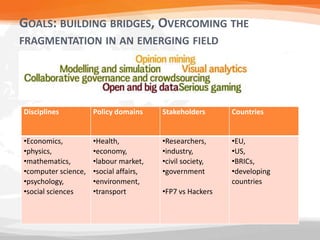
GOALS: BUILDING BRIDGES, OVERCOMING THE
FRAGMENTATION IN AN EMERGING FIELD
Disciplines Policy domains Stakeholders Countries
•Economics,
•physics,
•mathematics,
•computer science,
•psychology,
•social sciences
•Health,
•economy,
•labour market,
•social affairs,
•environment,
•transport
•Researchers,
•industry,
•civil society,
•government
•FP7 vs Hackers
•EU,
•US,
•BRICs,
•developing
countries
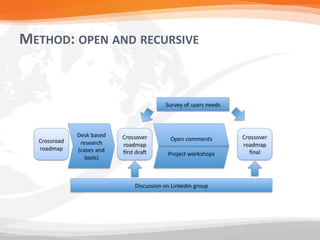
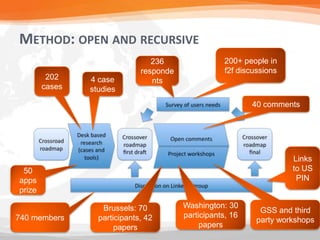
METHOD: OPEN AND RECURSIVE
202
cases
4 case
studies
740 members
236
responde
nts
200+ people in
f2f discussions
Brussels: 70
participants, 42
papers
Washington: 30
participants, 16
papers
40 comments
GSS and third
party workshops
50
apps
prize
Links
to US
PIN
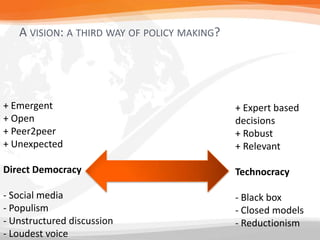
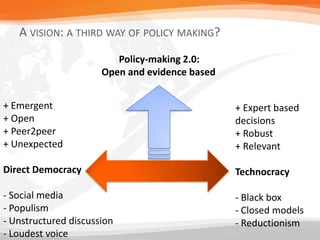
A VISION: A THIRD WAY OF POLICY MAKING?
+ Emergent
+ Open
+ Peer2peer
+ Unexpected
Direct Democracy
- Social media
- Populism
- Unstructured discussion
- Loudest voice
+ Expert based
decisions
+ Robust
+ Relevant
Technocracy
- Black box
- Closed models
- Reductionism
A VISION: A THIRD WAY OF POLICY MAKING?
+ Emergent
+ Open
+ Peer2peer
+ Unexpected
Direct Democracy
- Social media
- Populism
- Unstructured discussion
- Loudest voice
+ Expert based
decisions
+ Robust
+ Relevant
Technocracy
- Black box
- Closed models
- Reductionism
Policy-making 2.0:
Open and evidence based
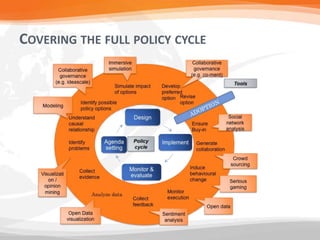
COVERING THE FULL POLICY CYCLE
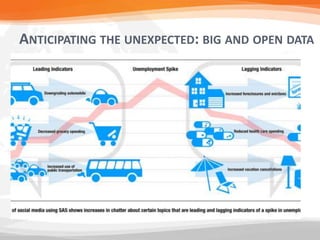
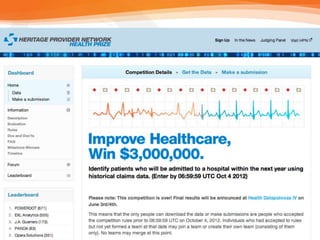
ANTICIPATING THE UNEXPECTED: BIG AND OPEN DATA
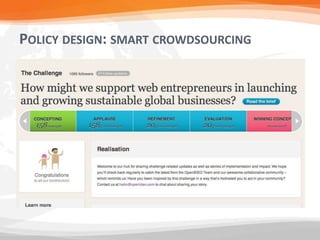
POLICY DESIGN: SMART CROWDSOURCING
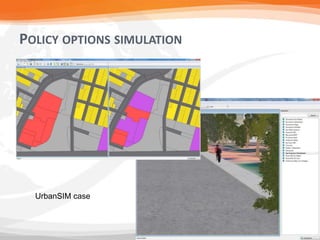
POLICY OPTIONS SIMULATION
UrbanSIM case
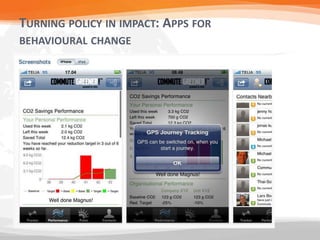
TURNING POLICY IN IMPACT: APPS FOR
BEHAVIOURAL CHANGE
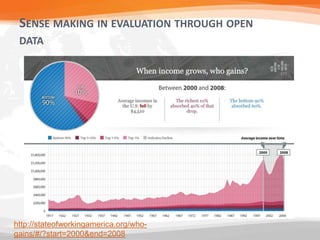
SENSE MAKING IN EVALUATION THROUGH OPEN
DATA
http://stateofworkingamerica.org/who-
gains/#/?start=2000&end=2008
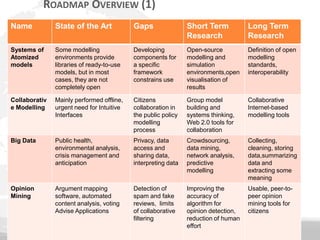
ROADMAP OVERVIEW (1)
Name State of the Art Gaps Short Term
Research
Long Term
Research
Systems of
Atomized
models
Some modelling
environments provide
libraries of ready-to-use
models, but in most
cases, they are not
completely open
Developing
components for
a specific
framework
constrains use
Open-source
modelling and
simulation
environments,open
visualisation of
results
Definition of open
modelling
standards,
interoperability
Collaborativ
e Modelling
Mainly performed offline,
urgent need for Intuitive
Interfaces
Citizens
collaboration in
the public policy
modelling
process
Group model
building and
systems thinking,
Web 2.0 tools for
collaboration
Collaborative
Internet-based
modelling tools
Big Data Public health,
environmental analysis,
crisis management and
anticipation
Privacy, data
access and
sharing data,
interpreting data
Crowdsourcing,
data mining,
network analysis,
predictive
modelling
Collecting,
cleaning, storing
data,summarizing
data and
extracting some
meaning
Opinion
Mining
Argument mapping
software, automated
content analysis, voting
Advise Applications
Detection of
spam and fake
reviews, limits
of collaborative
filtering
Improving the
accuracy of
algorithm for
opinion detection,
reduction of human
effort
Usable, peer-to-
peer opinion
mining tools for
citizens
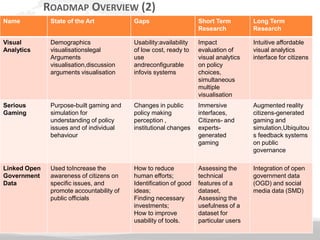
ROADMAP OVERVIEW (2)
Name State of the Art Gaps Short Term
Research
Long Term
Research
Visual
Analytics
Demographics
visualisationslegal
Arguments
visualisation,discussion
arguments visualisation
Usability:availability
of low cost, ready to
use
andreconfigurable
infovis systems
Impact
evaluation of
visual analytics
on policy
choices,
simultaneous
multiple
visualisation
Intuitive affordable
visual analytics
interface for citizens
Serious
Gaming
Purpose-built gaming and
simulation for
understanding of policy
issues and of individual
behaviour
Changes in public
policy making
perception ,
institutional changes
Immersive
interfaces,
Citizens- and
experts-
generated
gaming
Augmented reality
citizens-generated
gaming and
simulation,Ubiquitou
s feedback systems
on public
governance
Linked Open
Government
Data
Used toIncrease the
awareness of citizens on
specific issues, and
promote accountability of
public officials
How to reduce
human efforts;
Identification of good
ideas;
Finding necessary
investments;
How to improve
usability of tools.
Assessing the
technical
features of a
dataset,
Assessing the
usefulness of a
dataset for
particular users
Integration of open
government data
(OGD) and social
media data (SMD)
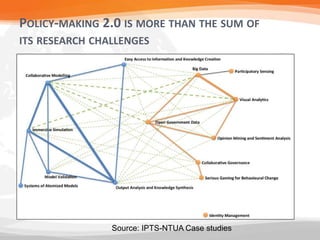
POLICY-MAKING 2.0 IS MORE THAN THE SUM OF
ITS RESEARCH CHALLENGES
Source: IPTS-NTUA Case studies
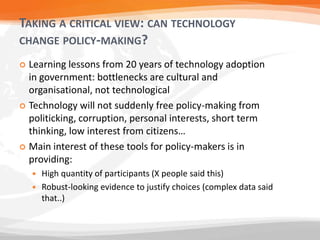
TAKING A CRITICAL VIEW: CAN TECHNOLOGY
CHANGE POLICY-MAKING?
 Learning lessons from 20 years of technology adoption
in government: bottlenecks are cultural and
organisational, not technological
 Technology will not suddenly free policy-making from
politicking, corruption, personal interests, short term
thinking, low interest from citizens…
 Main interest of these tools for policy-makers is in
providing:
 High quantity of participants (X people said this)
 Robust-looking evidence to justify choices (complex data said
that..)
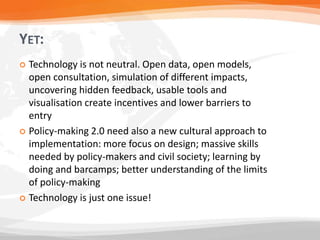
YET:
 Technology is not neutral. Open data, open models,
open consultation, simulation of different impacts,
uncovering hidden feedback, usable tools and
visualisation create incentives and lower barriers to
entry
 Policy-making 2.0 need also a new cultural approach to
implementation: more focus on design; massive skills
needed by policy-makers and civil society; learning by
doing and barcamps; better understanding of the limits
of policy-making
 Technology is just one issue!
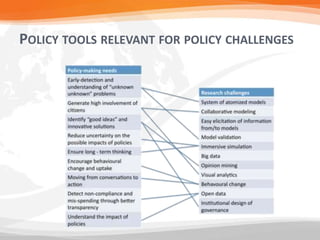
POLICY TOOLS RELEVANT FOR POLICY CHALLENGES
A REALITY CHECK: POLICY-MAKING 2.0 STILL MORE
PROMISING THAN IMPACTFUL
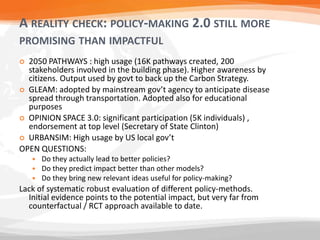
 2050 PATHWAYS : high usage (16K pathways created, 200
stakeholders involved in the building phase). Higher awareness by
citizens. Output used by govt to back up the Carbon Strategy.
 GLEAM: adopted by mainstream gov’t agency to anticipate disease
spread through transportation. Adopted also for educational
purposes
 OPINION SPACE 3.0: significant participation (5K individuals) ,
endorsement at top level (Secretary of State Clinton)
 URBANSIM: High usage by US local gov’t
OPEN QUESTIONS:
 Do they actually lead to better policies?
 Do they predict impact better than other models?
 Do they bring new relevant ideas useful for policy-making?
Lack of systematic robust evaluation of different policy-methods.
Initial evidence points to the potential impact, but very far from
counterfactual / RCT approach available to date.
WHAT’S NEXT?
1. Share experiences on the Policy-Making 2.0 group on
Linkedin
2. Collaborative curation: 200+ inspiring examples in Diigo
Group: http://groups.diigo.com/group/crossoverproject
3. Follow-up with EgovPoliNet - http://www.policy-
community.eu/
4. Meeting in Samos http://samos-summit.blogspot.ie/
At a minimum level, collaboration does not need a dedicated
project
LET’S START MAKING IT HAPPEN TODAY AND TOMORROW!
david.osimo@gmail.com

Osimo crossover-roadmap

  • 1.
    POLICY-MAKING 2.0 CONFERENCE DavidOsimo www.crossover-project.eu #policy20 Policy Making 2.0: a research roadmap towards actual policy impact
  • 2.
    MAIN POINTS  Theproblem: The challenges of policy making  The goals of the roadmap: a platform to strengthen the community towards shared objectives  The method: open and recursive  A vision for a new policy 2.0  The research challenges to get there  The critic: is this enough? Between techno-utopianism and real policy impact  What’s next? The beginning of a beautiful friendship…
  • 3.
    POLICY-MAKING IN ACOMPLEX WORLD: THE CHALLENGES  Detect and understand problems before they become unsolvable, ensuring long-term thinking, dealing with “unknown unknowns”  Involve open intelligence in policy-making, and extract “good ideas” from it  From words to action: ensure implementation and actual behavioural change  Reduce uncertainty on the possible systemic impacts of policies, and reduce time-to-impact evaluation  All this,dealing with a distributed governance model. The traditional division of “market” and “state” no longer fits a reality where public decision and action is effectively carried out by a plurality of actors.
  • 4.
    GOALS: BUILDING BRIDGES,OVERCOMING THE FRAGMENTATION IN AN EMERGING FIELD Disciplines Policy domains Stakeholders Countries •Economics, •physics, •mathematics, •computer science, •psychology, •social sciences •Health, •economy, •labour market, •social affairs, •environment, •transport •Researchers, •industry, •civil society, •government •FP7 vs Hackers •EU, •US, •BRICs, •developing countries
  • 5.
  • 6.
    METHOD: OPEN ANDRECURSIVE 202 cases 4 case studies 740 members 236 responde nts 200+ people in f2f discussions Brussels: 70 participants, 42 papers Washington: 30 participants, 16 papers 40 comments GSS and third party workshops 50 apps prize Links to US PIN
  • 7.
    A VISION: ATHIRD WAY OF POLICY MAKING? + Emergent + Open + Peer2peer + Unexpected Direct Democracy - Social media - Populism - Unstructured discussion - Loudest voice + Expert based decisions + Robust + Relevant Technocracy - Black box - Closed models - Reductionism
  • 8.
    A VISION: ATHIRD WAY OF POLICY MAKING? + Emergent + Open + Peer2peer + Unexpected Direct Democracy - Social media - Populism - Unstructured discussion - Loudest voice + Expert based decisions + Robust + Relevant Technocracy - Black box - Closed models - Reductionism Policy-making 2.0: Open and evidence based
  • 9.
    COVERING THE FULLPOLICY CYCLE
  • 10.
  • 11.
    POLICY DESIGN: SMARTCROWDSOURCING
  • 12.
  • 13.
    TURNING POLICY INIMPACT: APPS FOR BEHAVIOURAL CHANGE
  • 14.
    SENSE MAKING INEVALUATION THROUGH OPEN DATA http://stateofworkingamerica.org/who- gains/#/?start=2000&end=2008
  • 15.
    ROADMAP OVERVIEW (1) NameState of the Art Gaps Short Term Research Long Term Research Systems of Atomized models Some modelling environments provide libraries of ready-to-use models, but in most cases, they are not completely open Developing components for a specific framework constrains use Open-source modelling and simulation environments,open visualisation of results Definition of open modelling standards, interoperability Collaborativ e Modelling Mainly performed offline, urgent need for Intuitive Interfaces Citizens collaboration in the public policy modelling process Group model building and systems thinking, Web 2.0 tools for collaboration Collaborative Internet-based modelling tools Big Data Public health, environmental analysis, crisis management and anticipation Privacy, data access and sharing data, interpreting data Crowdsourcing, data mining, network analysis, predictive modelling Collecting, cleaning, storing data,summarizing data and extracting some meaning Opinion Mining Argument mapping software, automated content analysis, voting Advise Applications Detection of spam and fake reviews, limits of collaborative filtering Improving the accuracy of algorithm for opinion detection, reduction of human effort Usable, peer-to- peer opinion mining tools for citizens
  • 16.
    ROADMAP OVERVIEW (2) NameState of the Art Gaps Short Term Research Long Term Research Visual Analytics Demographics visualisationslegal Arguments visualisation,discussion arguments visualisation Usability:availability of low cost, ready to use andreconfigurable infovis systems Impact evaluation of visual analytics on policy choices, simultaneous multiple visualisation Intuitive affordable visual analytics interface for citizens Serious Gaming Purpose-built gaming and simulation for understanding of policy issues and of individual behaviour Changes in public policy making perception , institutional changes Immersive interfaces, Citizens- and experts- generated gaming Augmented reality citizens-generated gaming and simulation,Ubiquitou s feedback systems on public governance Linked Open Government Data Used toIncrease the awareness of citizens on specific issues, and promote accountability of public officials How to reduce human efforts; Identification of good ideas; Finding necessary investments; How to improve usability of tools. Assessing the technical features of a dataset, Assessing the usefulness of a dataset for particular users Integration of open government data (OGD) and social media data (SMD)
  • 17.
    POLICY-MAKING 2.0 ISMORE THAN THE SUM OF ITS RESEARCH CHALLENGES Source: IPTS-NTUA Case studies
  • 18.
    TAKING A CRITICALVIEW: CAN TECHNOLOGY CHANGE POLICY-MAKING?  Learning lessons from 20 years of technology adoption in government: bottlenecks are cultural and organisational, not technological  Technology will not suddenly free policy-making from politicking, corruption, personal interests, short term thinking, low interest from citizens…  Main interest of these tools for policy-makers is in providing:  High quantity of participants (X people said this)  Robust-looking evidence to justify choices (complex data said that..)
  • 19.
    YET:  Technology isnot neutral. Open data, open models, open consultation, simulation of different impacts, uncovering hidden feedback, usable tools and visualisation create incentives and lower barriers to entry  Policy-making 2.0 need also a new cultural approach to implementation: more focus on design; massive skills needed by policy-makers and civil society; learning by doing and barcamps; better understanding of the limits of policy-making  Technology is just one issue!
  • 20.
    POLICY TOOLS RELEVANTFOR POLICY CHALLENGES
  • 21.
    A REALITY CHECK:POLICY-MAKING 2.0 STILL MORE PROMISING THAN IMPACTFUL  2050 PATHWAYS : high usage (16K pathways created, 200 stakeholders involved in the building phase). Higher awareness by citizens. Output used by govt to back up the Carbon Strategy.  GLEAM: adopted by mainstream gov’t agency to anticipate disease spread through transportation. Adopted also for educational purposes  OPINION SPACE 3.0: significant participation (5K individuals) , endorsement at top level (Secretary of State Clinton)  URBANSIM: High usage by US local gov’t OPEN QUESTIONS:  Do they actually lead to better policies?  Do they predict impact better than other models?  Do they bring new relevant ideas useful for policy-making? Lack of systematic robust evaluation of different policy-methods. Initial evidence points to the potential impact, but very far from counterfactual / RCT approach available to date.
  • 23.
    WHAT’S NEXT? 1. Shareexperiences on the Policy-Making 2.0 group on Linkedin 2. Collaborative curation: 200+ inspiring examples in Diigo Group: http://groups.diigo.com/group/crossoverproject 3. Follow-up with EgovPoliNet - http://www.policy- community.eu/ 4. Meeting in Samos http://samos-summit.blogspot.ie/ At a minimum level, collaboration does not need a dedicated project LET’S START MAKING IT HAPPEN TODAY AND TOMORROW! david.osimo@gmail.com

Editor's Notes

  • #13 More dataVisual simulationIterative process with policy-makers