Policy Making 2.0: why and how


    WORKSHOP
    David Osimo, Tech4i2.com
    www.crossover-eu.net
    #policy20
WHY?
THE KEY CHALLENGES OF POLICY-MAKING


                      Timely


                               Evidence
       Participated
                                based
THE KEY CHALLENGES OF POLICY-MAKING
                                              Financial crisis 2008:
                                              agencies failed to
                                              anticipate and prevents
                                Timely


ACTA 2011: non
trasparent                                            Bush 2003: no doubt
approach backfired                                    that the Iraq regime
                                                      continues to possess
                                         Evidence
                 Participated                         and conceal some of
                                          based       the most lethal
                                                      weapons ever
                                                      devised.
TRADITIONAL SOLUTIONS ARE ZERO-SUM
                                                         Financial crisis 2008:
                                                         agencies failed to
                                    Hyerarchies          anticipate and prevents
                                     Timely


ACTA 2011: non
trasparent                                                       Bush 2003: no doubt
approach backfired                                               that the Iraq regime
                                                                 continues to possess
                                                  Evidence
                 Participated                                    and conceal some of
                                                   based         the most lethal
                     Open                                        weapons ever
                     consultation                  Experts
                                                                 devised.
WHAT IS POLICY-MAKING 2.0
TOOLS                       VALUES
 Open data                  Openness

 Social networks            Many to many

 Crowdsourcing              Serendipity by design

 Visualisation              Intuitiveness and usability

 Simulation and modeling

 Serious gaming
Immersive                              Collaborative
        Collaborative            simulation                             governance
         governance                                                    (e.g. co-ment)
       (e.g. ideascale)                                                                      Tools
                                   Simulate impact       Develop
                                   of options            preferred
                                                         option Revise
                    Identify possible                            option
Modeling
                    policy options
              Understand                      Design                                       Social
              causal                                                   Ensure             network
              relationship                                             Buy-in             analysis

              Identify         Agenda         Policy     Implement        Generate
              problems         setting        cycle                       collaboration
                                                                                             Crowd
                                                                                            sourcing
                                         Monitor &                     Induce
                    Collect
Visualizati                              evaluate                      behavioural
                    evidence
   on /                                                                change              Serious
 opinion                                                                                   gaming
  mining                                                   Monitor
                          Analyze data
                                              Collect      execution
                                              feedback                           Open
                                                                                 data
               Open Data                                 Sentiment
              visualization                               analysis
SOME EXAMPLES
BRAINSTORMING SOLUTIONS: HOW TO GET GOOD
    IDEAS?


http://www.state.gov/opinion
space/


                                         http://www.openideo.com/ope
                                         n/web-start-up/brief.html
POLICY DESIGN: THE MID TERM REVIEW OF THE DAE


                                          Daa.ec.europa.eu
COMMENTING THE EU STRATEGY ON CYBERSECURITY
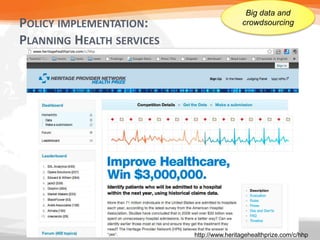
Big data and
POLICY IMPLEMENTATION:                     crowdsourcing

PLANNING HEALTH SERVICES


                           http://www.heritagehealthprize.com/c/hhp
Tool: open data

  POLICY EVALUATION: DAE SCOREBOARD


http://ec.europa.eu/information_society/digital-agenda/scoreboard/graphs/index_en.htm
HOW?
THE THIRD WAY OF POLICY MAKING

Traditional              Policy Making 2.0                Social
government                                                media
consultation
                   Anyone can ask questions
                   Federated on social media
 Relevant                                                   Open
 Coherent          Publishing draft documents               Creative
 Predictable                                                Emergent
 Accountable       Non-filtered discussion, civil           Peer2peer
 Structured        servants take part in the discussion     Innovative
                   Focus on quality of ideas, evidence
                   and inspiring examples
                   Acts as a platform: distributed
                   leadership is welcome
WHAT CITIZENS CAN OFFER
 Software skills (CommentNeelie)
 Technical knowledge (OpenIdeo)

 Experience as user of public services (PatientOpinion)

 Trusted by other citizens (ActiveMobs)

 Geographical coverage (FixmyStreet)

 “Many eyes” (Scoreboard)
IT’S NOT ABOUT “ TOTAL CITIZENSHIP”


              100%                • Producing
                                    attention data


                                  • Commenting,
               10%                  reviewing,
                                    curating


                1%                • Producing
                                    content/services


                      Source: IPTS estimation based on Eurostat, IPSOS-MORI, Forrester
The power law of participation: DAA

                 1% left more than 50 contributions and more than 100 tweets
 Contributions


                                  60% left 1 contributions and made 1 tweet


                                  People
                                                                               18
THE 7 STEPS TO GETTING PARTICIPATION
GAMIFICATION OF POLICY MAKING
 FRIENDS: making discussion open and social. Enable
  peer-to-peer contact between stakeholders
 FEEDBACK: ensure immediate impact and high visibility
  of participant’s input. Report about the use of their
  input
 FUN: Ensure clear, intuitive approach. Use plain
  language, irony, visualisation. Introduce some elements
  of competition.


                                                            20
HOW TO DO IT: INNOVATION WITHOUT PERMISSION
 Attract and build internal competences
 Ask for help in the Open Source community

 Copy and use ready-made tools

 Valorize risk-taking internally

 Not completely bottom-up: a design approach

 Permanent beta, continuous strive for usability


   Start experimenting!


                           See you in the interactive session!
YOUR QUESTIONS?
Further information:
 Visit www.crossover-project.eu
 Answer the survey on http://www.crossover-
  project.eu/UserSurvey.aspx
 Share experiences on the Policy-Making 2.0 group on
  Linkedin
 Look at inspiring examples in Diigo Group:
  http://groups.diigo.com/group/crossoverproject


http://egov20.wordpress.com
@osimod
David.osimo@tech4i2.com
INTERACTIVE SESSION
TOOLS
 GoogleModerator
 Uservoice/GetSatisfaction/Ideascale

 Co-ment

 Ning/Elgg

 OpenIdeo

 Wordle

 ManyEyes

Osimo crossover-montenegro

  • 1.
    Policy Making 2.0:why and how WORKSHOP David Osimo, Tech4i2.com www.crossover-eu.net #policy20
  • 2.
  • 3.
    THE KEY CHALLENGESOF POLICY-MAKING Timely Evidence Participated based
  • 4.
    THE KEY CHALLENGESOF POLICY-MAKING Financial crisis 2008: agencies failed to anticipate and prevents Timely ACTA 2011: non trasparent Bush 2003: no doubt approach backfired that the Iraq regime continues to possess Evidence Participated and conceal some of based the most lethal weapons ever devised.
  • 5.
    TRADITIONAL SOLUTIONS AREZERO-SUM Financial crisis 2008: agencies failed to Hyerarchies anticipate and prevents Timely ACTA 2011: non trasparent Bush 2003: no doubt approach backfired that the Iraq regime continues to possess Evidence Participated and conceal some of based the most lethal Open weapons ever consultation Experts devised.
  • 6.
    WHAT IS POLICY-MAKING2.0 TOOLS VALUES  Open data  Openness  Social networks  Many to many  Crowdsourcing  Serendipity by design  Visualisation  Intuitiveness and usability  Simulation and modeling  Serious gaming
  • 7.
    Immersive Collaborative Collaborative simulation governance governance (e.g. co-ment) (e.g. ideascale) Tools Simulate impact Develop of options preferred option Revise Identify possible option Modeling policy options Understand Design Social causal Ensure network relationship Buy-in analysis Identify Agenda Policy Implement Generate problems setting cycle collaboration Crowd sourcing Monitor & Induce Collect Visualizati evaluate behavioural evidence on / change Serious opinion gaming mining Monitor Analyze data Collect execution feedback Open data Open Data Sentiment visualization analysis
  • 8.
  • 9.
    BRAINSTORMING SOLUTIONS: HOWTO GET GOOD IDEAS? http://www.state.gov/opinion space/ http://www.openideo.com/ope n/web-start-up/brief.html
  • 10.
    POLICY DESIGN: THEMID TERM REVIEW OF THE DAE Daa.ec.europa.eu
  • 11.
    COMMENTING THE EUSTRATEGY ON CYBERSECURITY
  • 12.
    Big data and POLICYIMPLEMENTATION: crowdsourcing PLANNING HEALTH SERVICES http://www.heritagehealthprize.com/c/hhp
  • 13.
    Tool: open data POLICY EVALUATION: DAE SCOREBOARD http://ec.europa.eu/information_society/digital-agenda/scoreboard/graphs/index_en.htm
  • 14.
  • 15.
    THE THIRD WAYOF POLICY MAKING Traditional Policy Making 2.0 Social government media consultation Anyone can ask questions Federated on social media Relevant Open Coherent Publishing draft documents Creative Predictable Emergent Accountable Non-filtered discussion, civil Peer2peer Structured servants take part in the discussion Innovative Focus on quality of ideas, evidence and inspiring examples Acts as a platform: distributed leadership is welcome
  • 16.
    WHAT CITIZENS CANOFFER  Software skills (CommentNeelie)  Technical knowledge (OpenIdeo)  Experience as user of public services (PatientOpinion)  Trusted by other citizens (ActiveMobs)  Geographical coverage (FixmyStreet)  “Many eyes” (Scoreboard)
  • 17.
    IT’S NOT ABOUT“ TOTAL CITIZENSHIP” 100% • Producing attention data • Commenting, 10% reviewing, curating 1% • Producing content/services Source: IPTS estimation based on Eurostat, IPSOS-MORI, Forrester
  • 18.
    The power lawof participation: DAA 1% left more than 50 contributions and more than 100 tweets Contributions 60% left 1 contributions and made 1 tweet People 18
  • 19.
    THE 7 STEPSTO GETTING PARTICIPATION
  • 20.
    GAMIFICATION OF POLICYMAKING  FRIENDS: making discussion open and social. Enable peer-to-peer contact between stakeholders  FEEDBACK: ensure immediate impact and high visibility of participant’s input. Report about the use of their input  FUN: Ensure clear, intuitive approach. Use plain language, irony, visualisation. Introduce some elements of competition. 20
  • 21.
    HOW TO DOIT: INNOVATION WITHOUT PERMISSION  Attract and build internal competences  Ask for help in the Open Source community  Copy and use ready-made tools  Valorize risk-taking internally  Not completely bottom-up: a design approach  Permanent beta, continuous strive for usability  Start experimenting! See you in the interactive session!
  • 22.
    YOUR QUESTIONS? Further information: Visit www.crossover-project.eu  Answer the survey on http://www.crossover- project.eu/UserSurvey.aspx  Share experiences on the Policy-Making 2.0 group on Linkedin  Look at inspiring examples in Diigo Group: http://groups.diigo.com/group/crossoverproject http://egov20.wordpress.com @osimod David.osimo@tech4i2.com
  • 23.
  • 24.
    TOOLS  GoogleModerator  Uservoice/GetSatisfaction/Ideascale Co-ment  Ning/Elgg  OpenIdeo  Wordle  ManyEyes