Policy Making 2.0
How can technology enhance
      policy making?


UNDP WEBINAR, MARCH 22ND 2012
David Osimo, Tech4i2.com
www.crossover-eu.net
#pm20
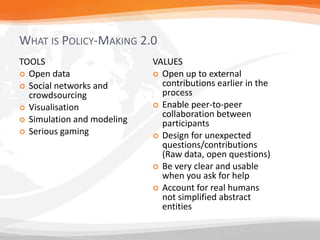
WHAT IS POLICY-MAKING 2.0
TOOLS                       VALUES
 Open data                  Open up to external
 Social networks and         contributions earlier in the
  crowdsourcing               process
 Visualisation              Enable peer-to-peer
                              collaboration between
 Simulation and modeling
                              participants
 Serious gaming
                             Design for unexpected
                              questions/contributions
                              (Raw data, open questions)
                             Be very clear and usable
                              when you ask for help
                             Account for real humans
                              not simplified abstract
                              entities
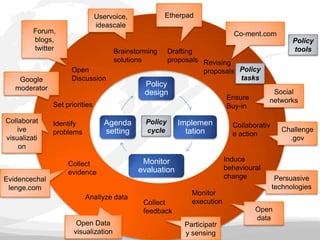
Uservoice,            Etherpad
                                ideascale
         Forum,                                                              Co-ment.com
         blogs,                                                                                  Policy
         twitter                      Brainstorming     Drafting                                 tools
                                      solutions         proposals Revising
                     Open                                         proposals Policy
    Google           Discussion                                             tasks
   moderator
                                               Policy
                                               design                                    Social
                                                                          Ensure        networks
               Set priorities                                             Buy-in

Collaborat     Identify           Agenda       Policy     Implemen          Collaborativ
    ive        problems           setting      cycle        tation                           Challenge
                                                                            e action
visualizati                                                                                    .gov
    on

                                              Monitor                     Induce
                    Collect
                                             evaluation                   behavioural
                    evidence
Evidencechal                                                              change            Persuasive
 lenge.com                                                                                 technologies
                                                              Monitor
                          Anallyze data
                                              Collect         execution
                                              feedback                             Open
                                                                                   data
                       Open Data                            Participatr
                      visualization                         y sensing
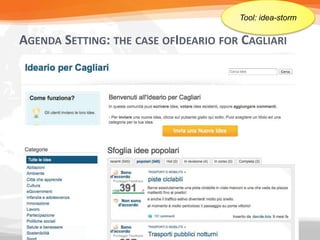
Tool: idea-storm

AGENDA SETTING: THE CASE OFIDEARIO FOR CAGLIARI
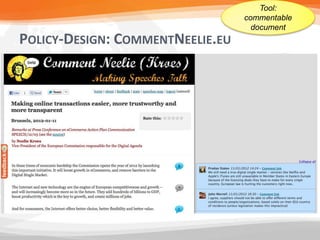
Tool:
                                  commentable
                                    document
POLICY-DESIGN: COMMENTNEELIE.EU
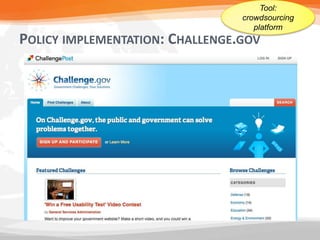
Tool:
                                 crowdsourcing
                                    platform
POLICY IMPLEMENTATION: CHALLENGE.GOV
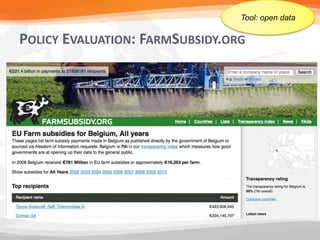
Tool: open data

POLICY EVALUATION: FARMSUBSIDY.ORG
VIEWS FROM THE FIELD
   “There are more smart people outside government than within it”
    (Bill Joy)
   “the coolest thing to do with your data will be thought of by
    someone else” (Rufus Pollock)
   “A problem shared is a problem halved ...and a pressure group
    created” (Paul Hodgkin – PatientOpinion.com)
   “it’s about pressure points, chinks in the armour where
    improvements might be possible, whether with the consent of
    government or not” (Tom Steinberg, Mysociety.org)
   “many participants in the process dilute the effect of bad apples or
    unconstructive participants” (Beth Noveck, Peertopatent.org)


                                                                           8
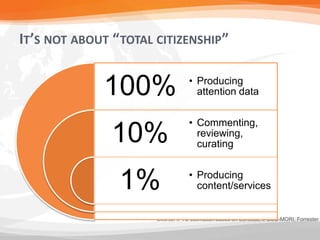
IT’S NOT ABOUT “ TOTAL CITIZENSHIP”


              100%                • Producing
                                    attention data


                                  • Commenting,
               10%                  reviewing,
                                    curating


                1%                • Producing
                                    content/services


                      Source: IPTS estimation based on Eurostat, IPSOS-MORI, Forrester
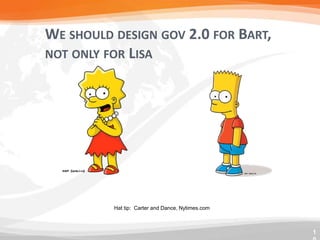
WE SHOULD DESIGN GOV 2.0 FOR BART,
NOT ONLY FOR LISA


          Hat tip: Carter and Dance, Nytimes.com


                                                   1
HOW TO DO IT: INNOVATION WITHOUT PERMISSION
 Attract and build internal competences
 Ask for help in the Open Source community

 Copy and use ready-made tools

 Valorize risk-taking internally

 Not completely bottom-up: a design approach

 Permanent beta, continuous strive for usability


   Start experimenting!
YOUR QUESTIONS?
Further information:
 Visit www.crossover-project.eu

 Post questions/needs on http://crossover.uservoice.com

 Share experiences on the Policy-Making 2.0 group on
  Linkedin


http://egov20.wordpress.com
@osimod
David.osimo@tech4i2.com

Osimo crossover-undp

  • 1.
    Policy Making 2.0 Howcan technology enhance policy making? UNDP WEBINAR, MARCH 22ND 2012 David Osimo, Tech4i2.com www.crossover-eu.net #pm20
  • 2.
    WHAT IS POLICY-MAKING2.0 TOOLS VALUES  Open data  Open up to external  Social networks and contributions earlier in the crowdsourcing process  Visualisation  Enable peer-to-peer collaboration between  Simulation and modeling participants  Serious gaming  Design for unexpected questions/contributions (Raw data, open questions)  Be very clear and usable when you ask for help  Account for real humans not simplified abstract entities
  • 3.
    Uservoice, Etherpad ideascale Forum, Co-ment.com blogs, Policy twitter Brainstorming Drafting tools solutions proposals Revising Open proposals Policy Google Discussion tasks moderator Policy design Social Ensure networks Set priorities Buy-in Collaborat Identify Agenda Policy Implemen Collaborativ ive problems setting cycle tation Challenge e action visualizati .gov on Monitor Induce Collect evaluation behavioural evidence Evidencechal change Persuasive lenge.com technologies Monitor Anallyze data Collect execution feedback Open data Open Data Participatr visualization y sensing
  • 4.
    Tool: idea-storm AGENDA SETTING:THE CASE OFIDEARIO FOR CAGLIARI
  • 5.
    Tool: commentable document POLICY-DESIGN: COMMENTNEELIE.EU
  • 6.
    Tool: crowdsourcing platform POLICY IMPLEMENTATION: CHALLENGE.GOV
  • 7.
    Tool: open data POLICYEVALUATION: FARMSUBSIDY.ORG
  • 8.
    VIEWS FROM THEFIELD  “There are more smart people outside government than within it” (Bill Joy)  “the coolest thing to do with your data will be thought of by someone else” (Rufus Pollock)  “A problem shared is a problem halved ...and a pressure group created” (Paul Hodgkin – PatientOpinion.com)  “it’s about pressure points, chinks in the armour where improvements might be possible, whether with the consent of government or not” (Tom Steinberg, Mysociety.org)  “many participants in the process dilute the effect of bad apples or unconstructive participants” (Beth Noveck, Peertopatent.org) 8
  • 9.
    IT’S NOT ABOUT“ TOTAL CITIZENSHIP” 100% • Producing attention data • Commenting, 10% reviewing, curating 1% • Producing content/services Source: IPTS estimation based on Eurostat, IPSOS-MORI, Forrester
  • 10.
    WE SHOULD DESIGNGOV 2.0 FOR BART, NOT ONLY FOR LISA Hat tip: Carter and Dance, Nytimes.com 1
  • 11.
    HOW TO DOIT: INNOVATION WITHOUT PERMISSION  Attract and build internal competences  Ask for help in the Open Source community  Copy and use ready-made tools  Valorize risk-taking internally  Not completely bottom-up: a design approach  Permanent beta, continuous strive for usability  Start experimenting!
  • 12.
    YOUR QUESTIONS? Further information: Visit www.crossover-project.eu  Post questions/needs on http://crossover.uservoice.com  Share experiences on the Policy-Making 2.0 group on Linkedin http://egov20.wordpress.com @osimod David.osimo@tech4i2.com