SUBJECT-
PERSPECTIVE MANAGEMENT
TOPIC-
ORGANIZING
CLASS-
FYMMS
Presented By-
Taslima Bashir Mujawar
2/26/2017
1
CONTENT
• What is Organizing?
• Nature of Organizing
• Types of Organizing
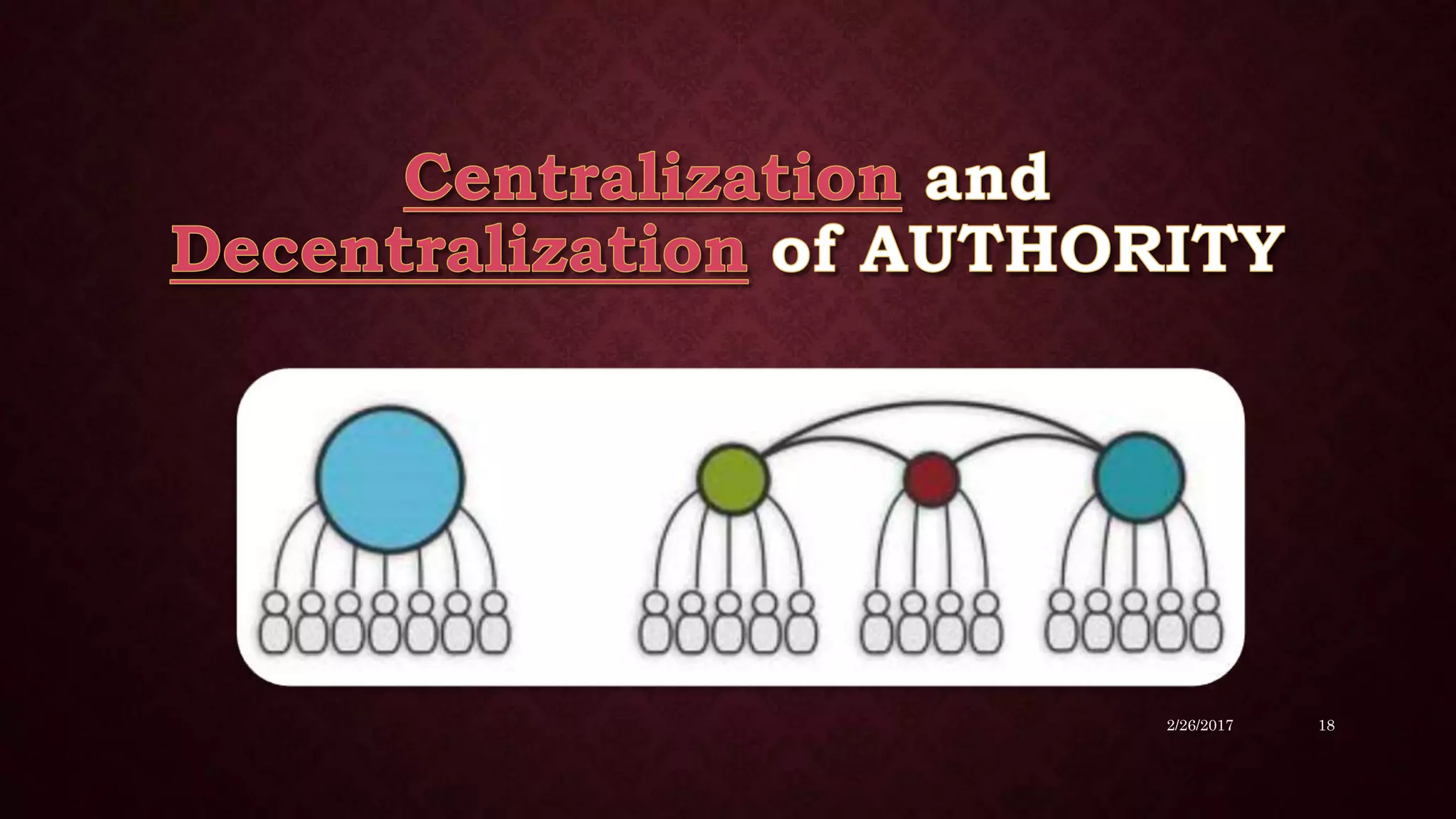
• Centralization and decentralization of Authority
2/26/2017 2
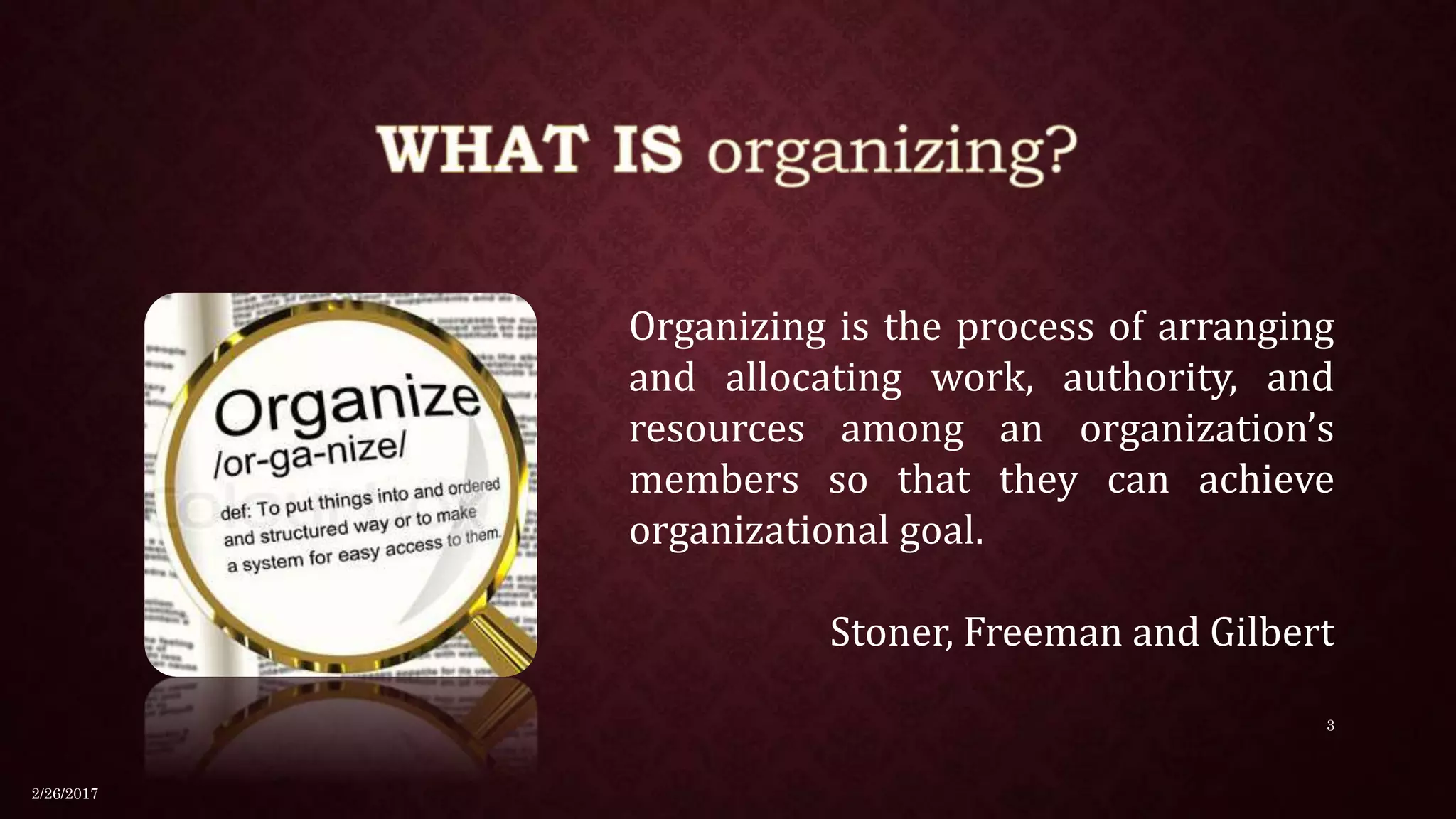
Organizing is the process of arranging
and allocating work, authority, and
resources among an organization’s
members so that they can achieve
organizational goal.
Stoner, Freeman and Gilbert
2/26/2017
3
1. Group of Persons
2. Common Objectives
3. Division of Work
4. Cooperative Efforts 5. Communication
6. Central Authority
7. Rules & Regulations
8. Dynamic Element
2/26/2017
4
2/26/2017
5
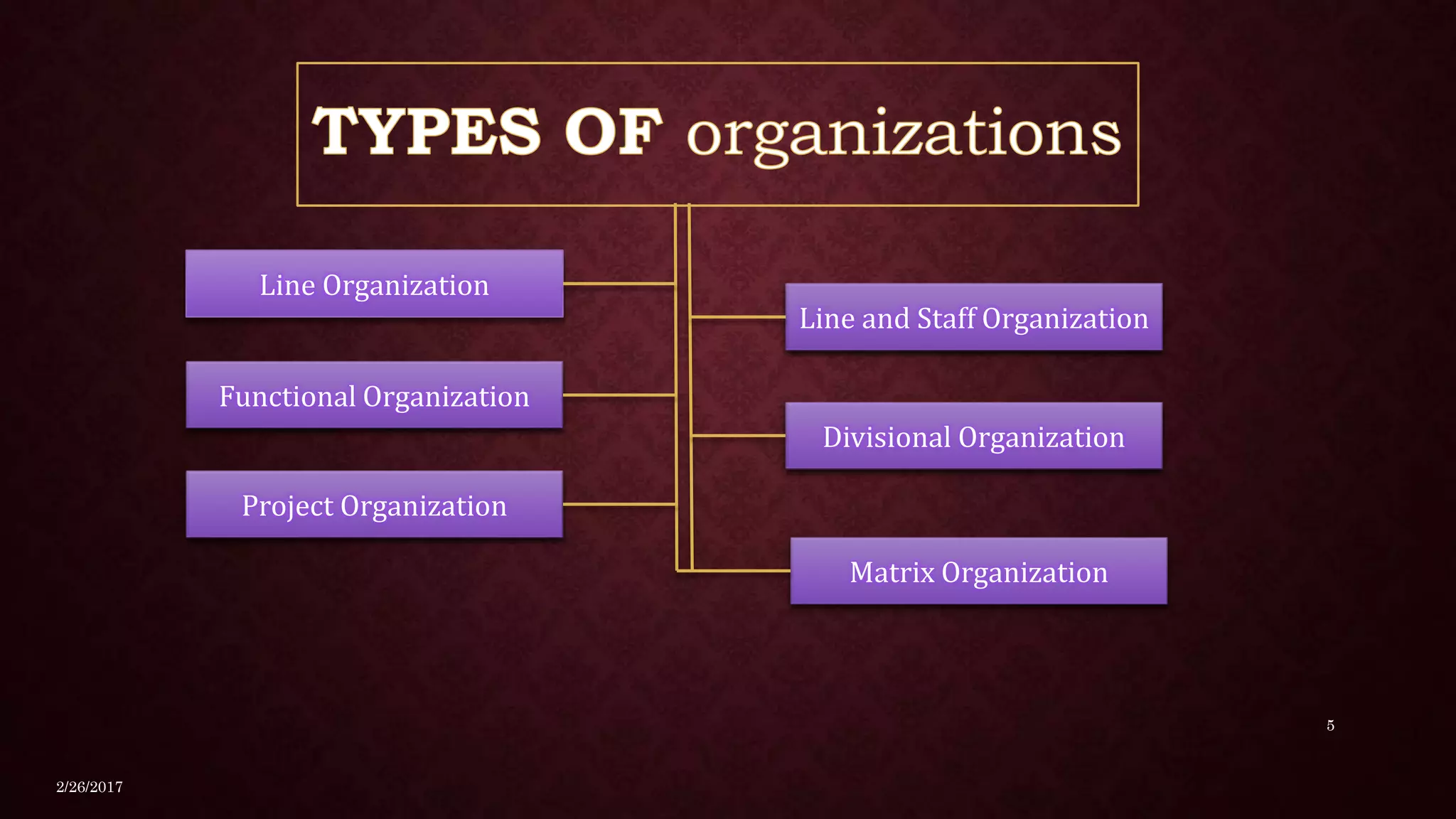
Line Organization
Functional Organization
Project Organization
Line and Staff Organization
Divisional Organization
Matrix Organization
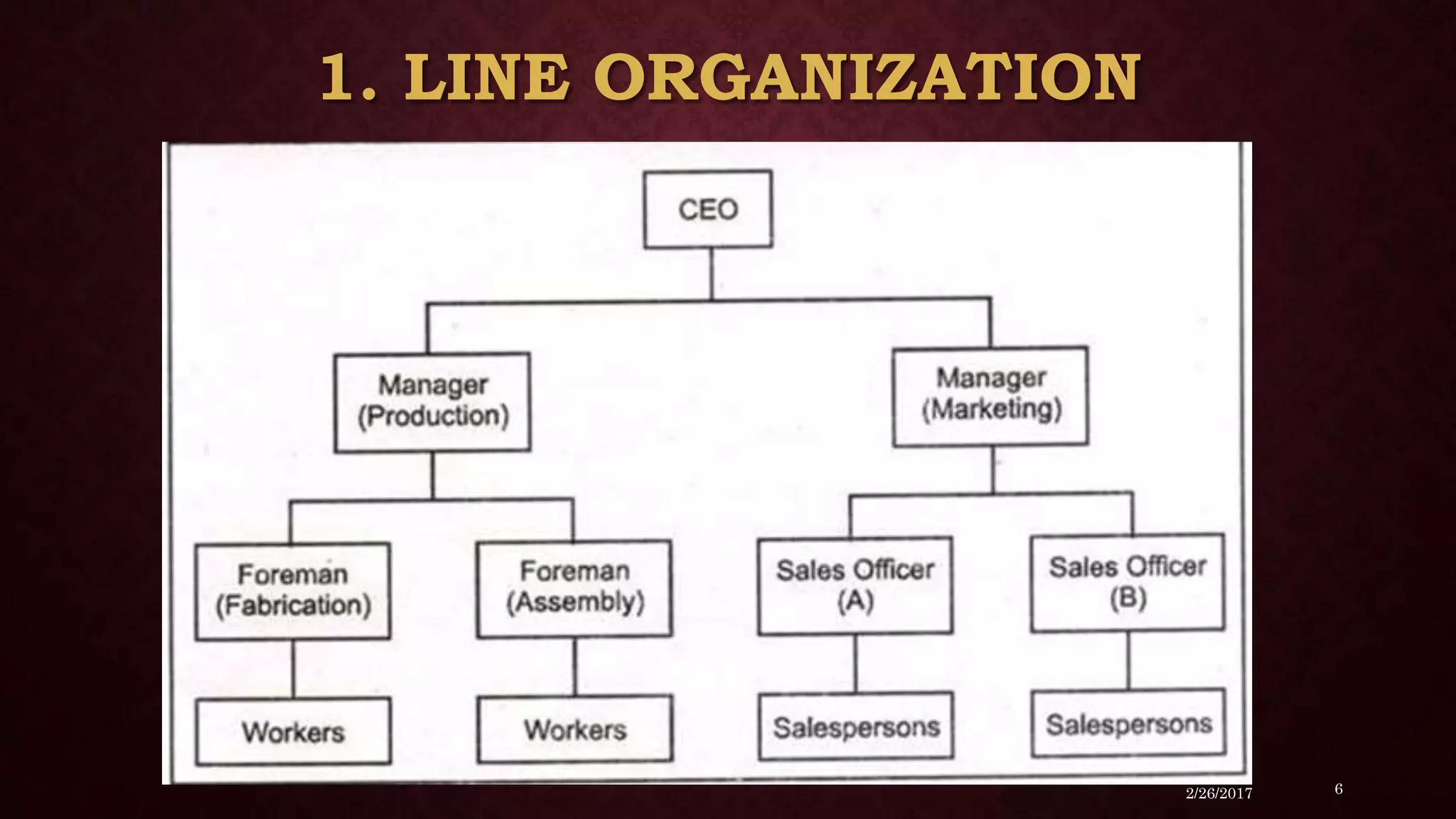
1. LINE ORGANIZATION
2/26/2017 6
Advantages of Line Organization
• It is simple to establish and can be easily understood by the employees.
• It helps in fixing authority and responsibility of each and every person in the organization.
• Easy to operate and less expensive.
• Too much is expected from executives.
• Lack of co-ordination among various departments.
2/26/2017 7
Disadvantages of Line Organization
2/26/2017 8
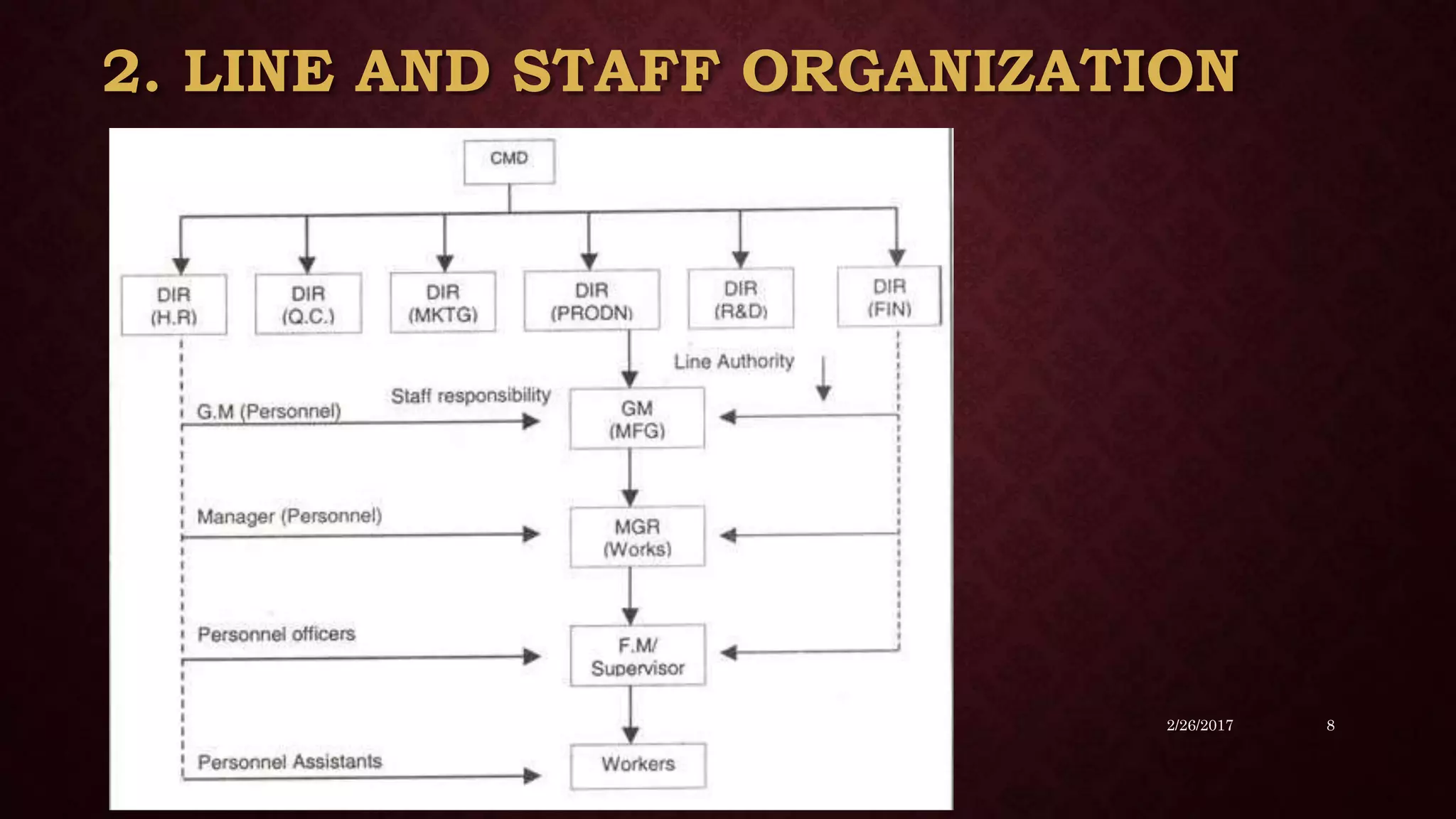
2. LINE AND STAFF ORGANIZATION
• A line and staff structure allows higher flexibility and specialization
• Staff officers may resent their lack of authority.
• Co-ordination between line and staff may become difficult.
• Conflict between line and staff may still arise.
2/26/2017 9
Advantage of Line and Staff Organization
Disadvantages of Line and Staff Organization
2/26/2017 10
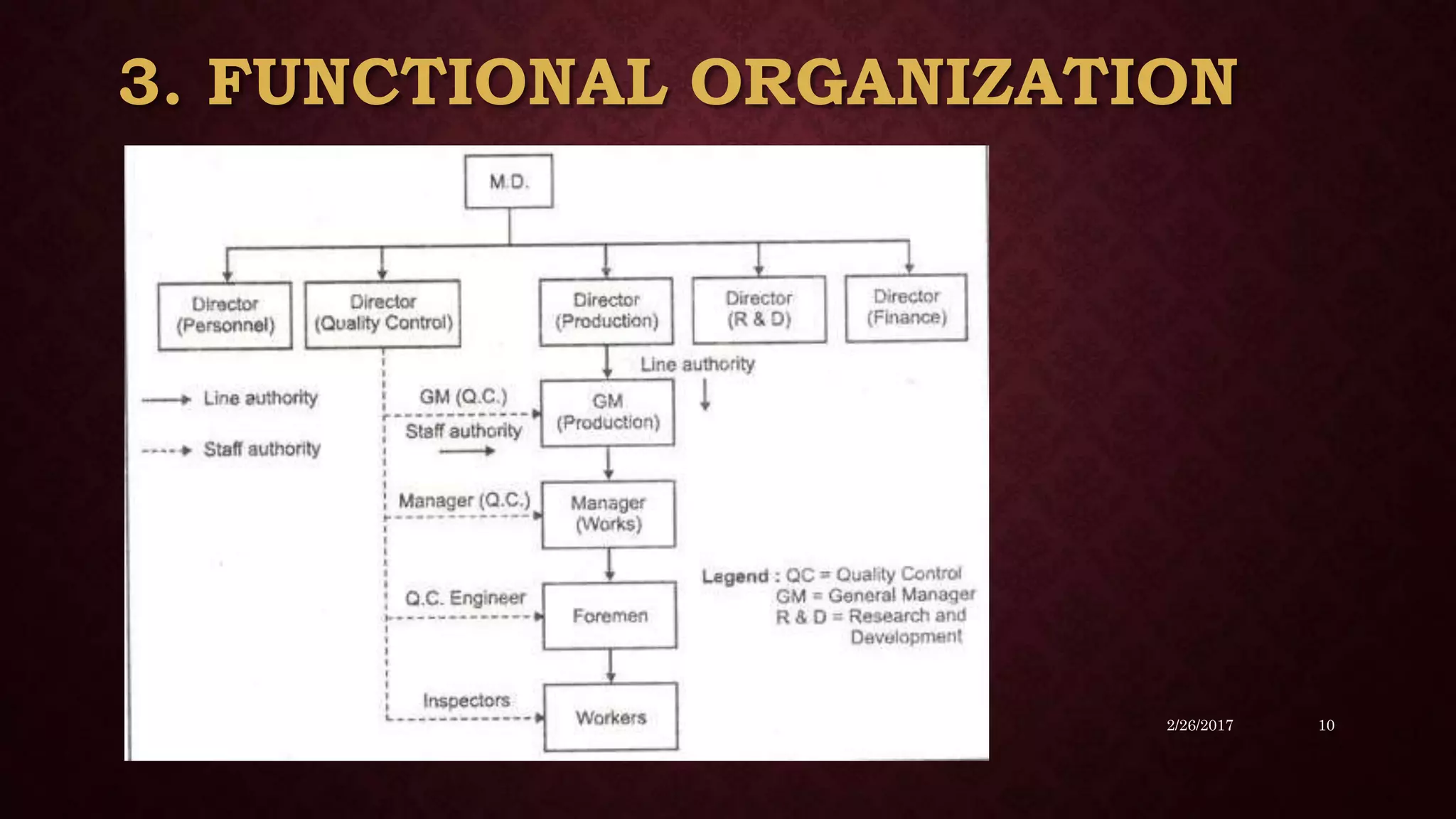
3. FUNCTIONAL ORGANIZATION
• Benefit of having specialists in each area.
• It provides wide scope for growth.
• Top executives are not unnecessarily burdened as happens in line organization.
• The principle of unity of command is violated.
• Involvement of more than one person in decision-making process slows the process down.
• The division of authority creates problem of discipline.
2/26/2017 11
Advantages of Functional Organization
Disadvantages of Functional Organization
2/26/2017 12
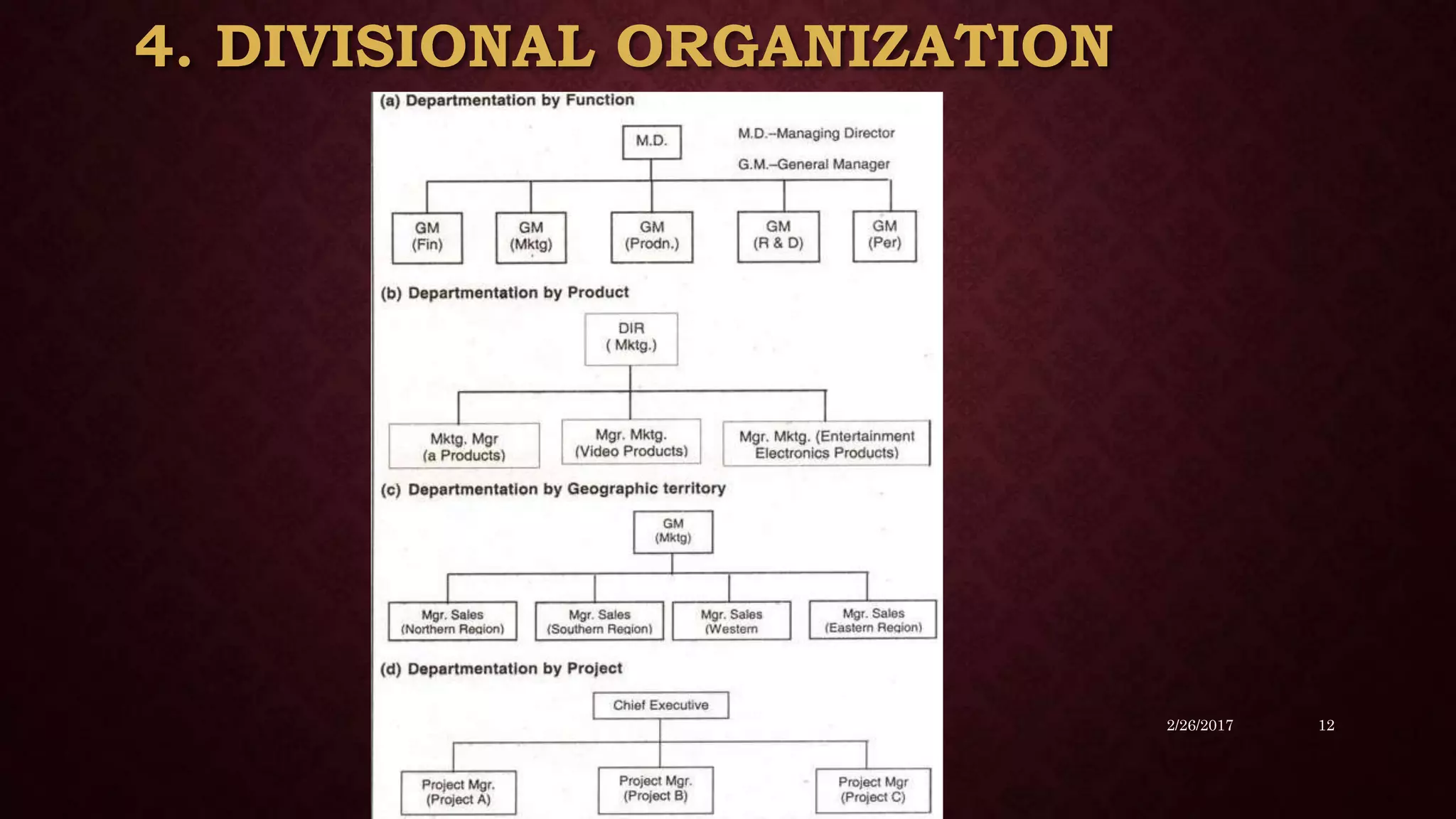
4. DIVISIONAL ORGANIZATION
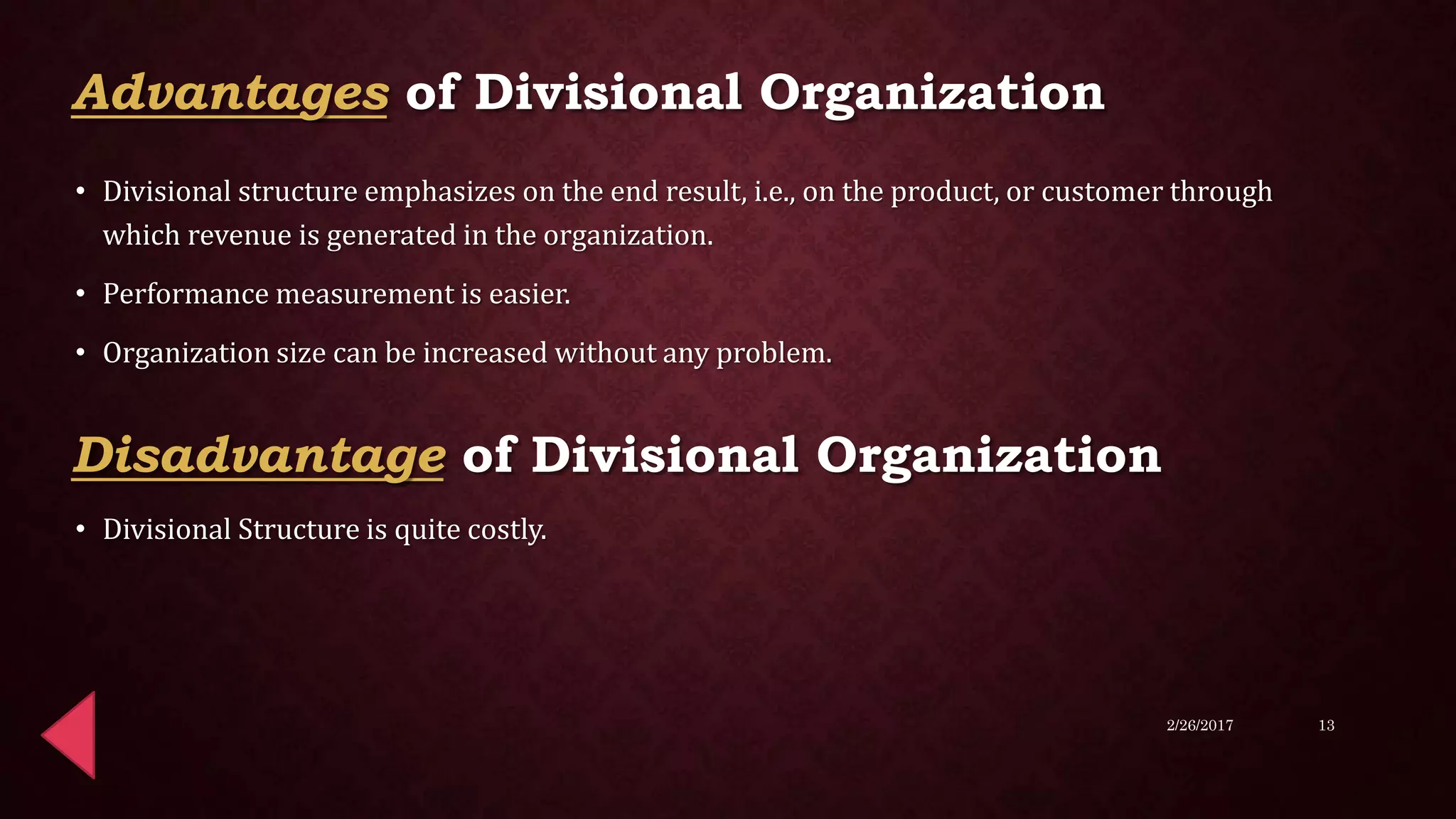
• Divisional structure emphasizes on the end result, i.e., on the product, or customer through
which revenue is generated in the organization.
• Performance measurement is easier.
• Organization size can be increased without any problem.
• Divisional Structure is quite costly.
2/26/2017 13
Advantages of Divisional Organization
Disadvantage of Divisional Organization
2/26/2017 14
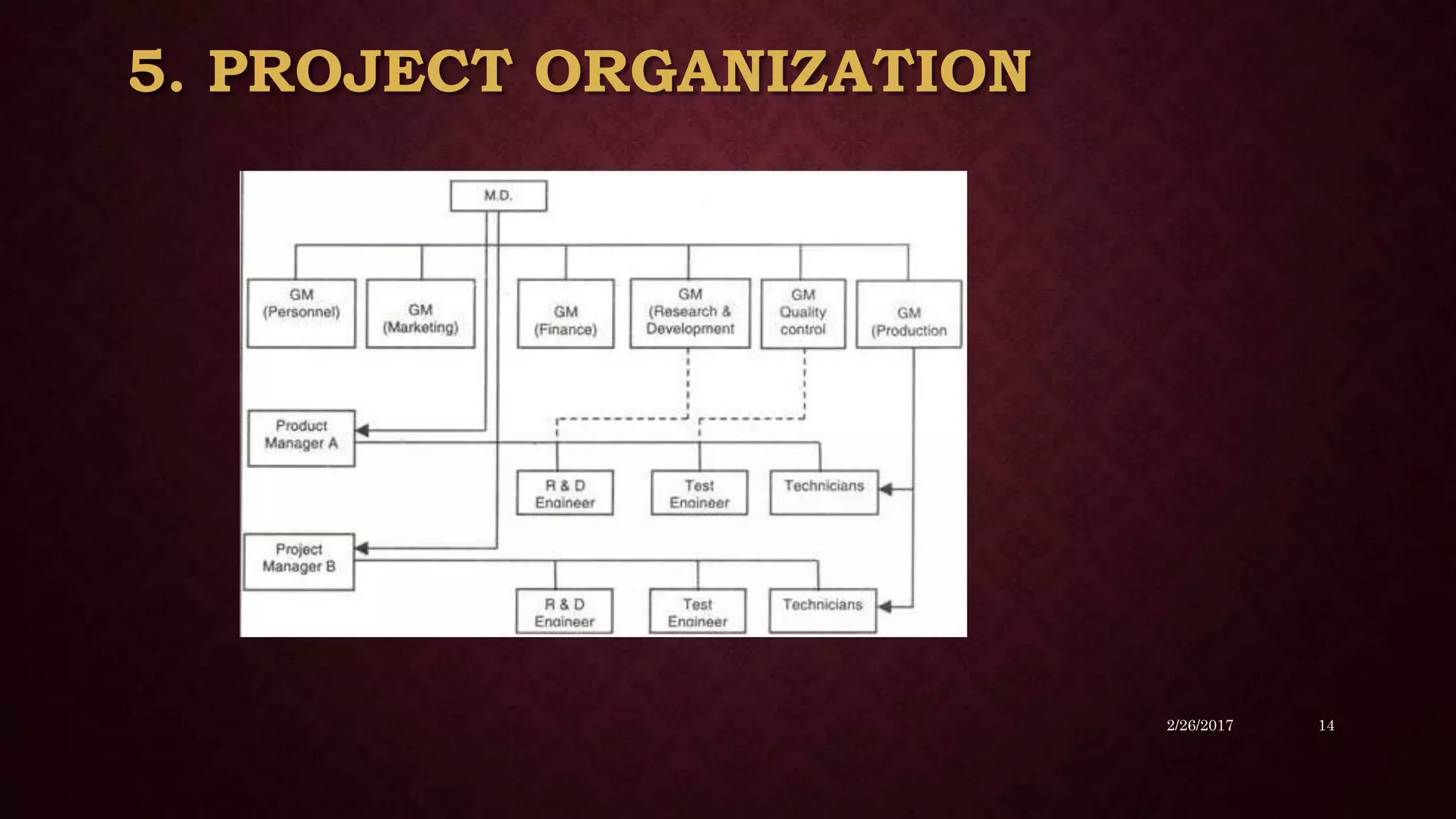
5. PROJECT ORGANIZATION
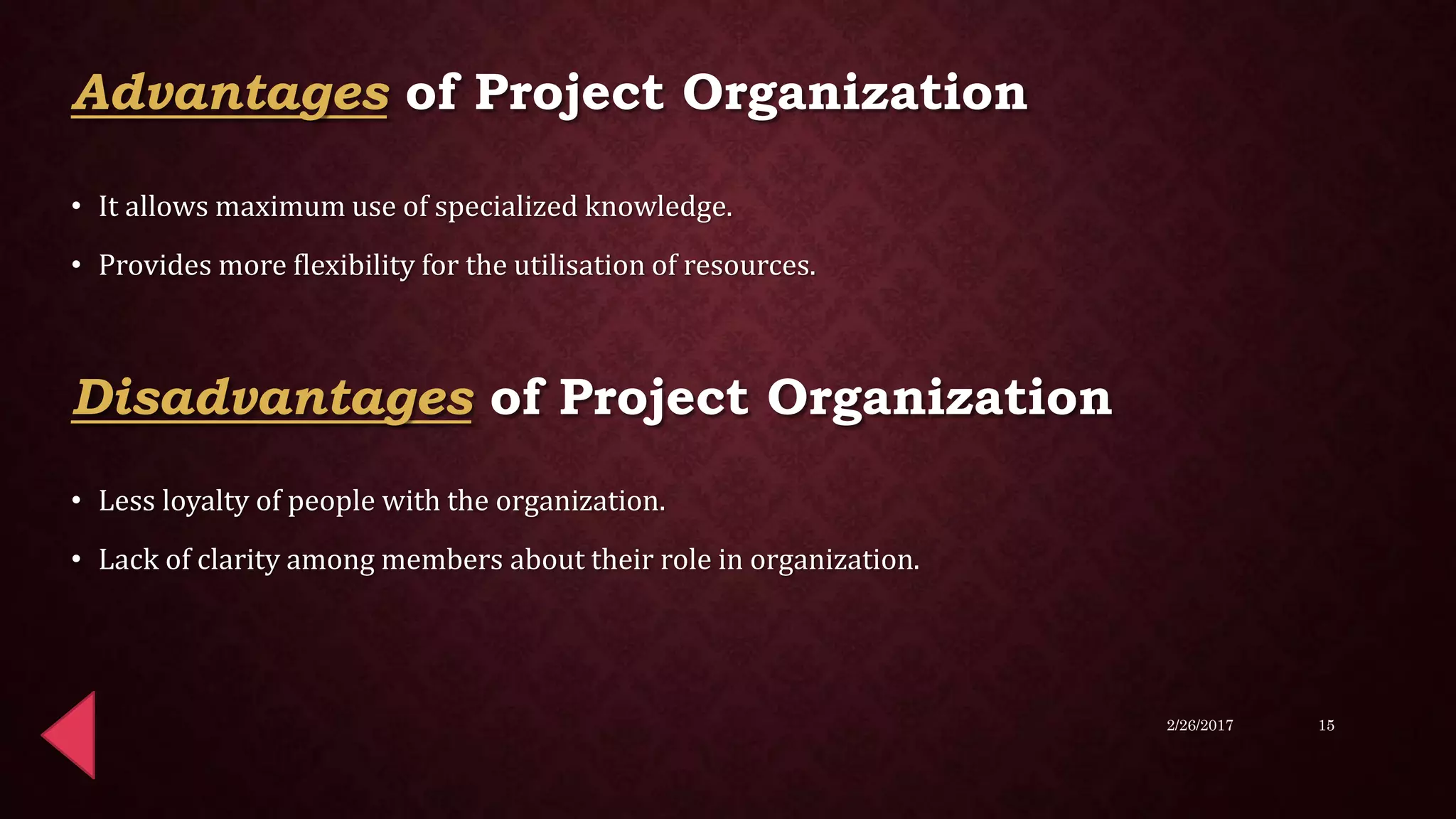
• It allows maximum use of specialized knowledge.
• Provides more flexibility for the utilisation of resources.
• Less loyalty of people with the organization.
• Lack of clarity among members about their role in organization.
2/26/2017 15
Advantages of Project Organization
Disadvantages of Project Organization
2/26/2017 16
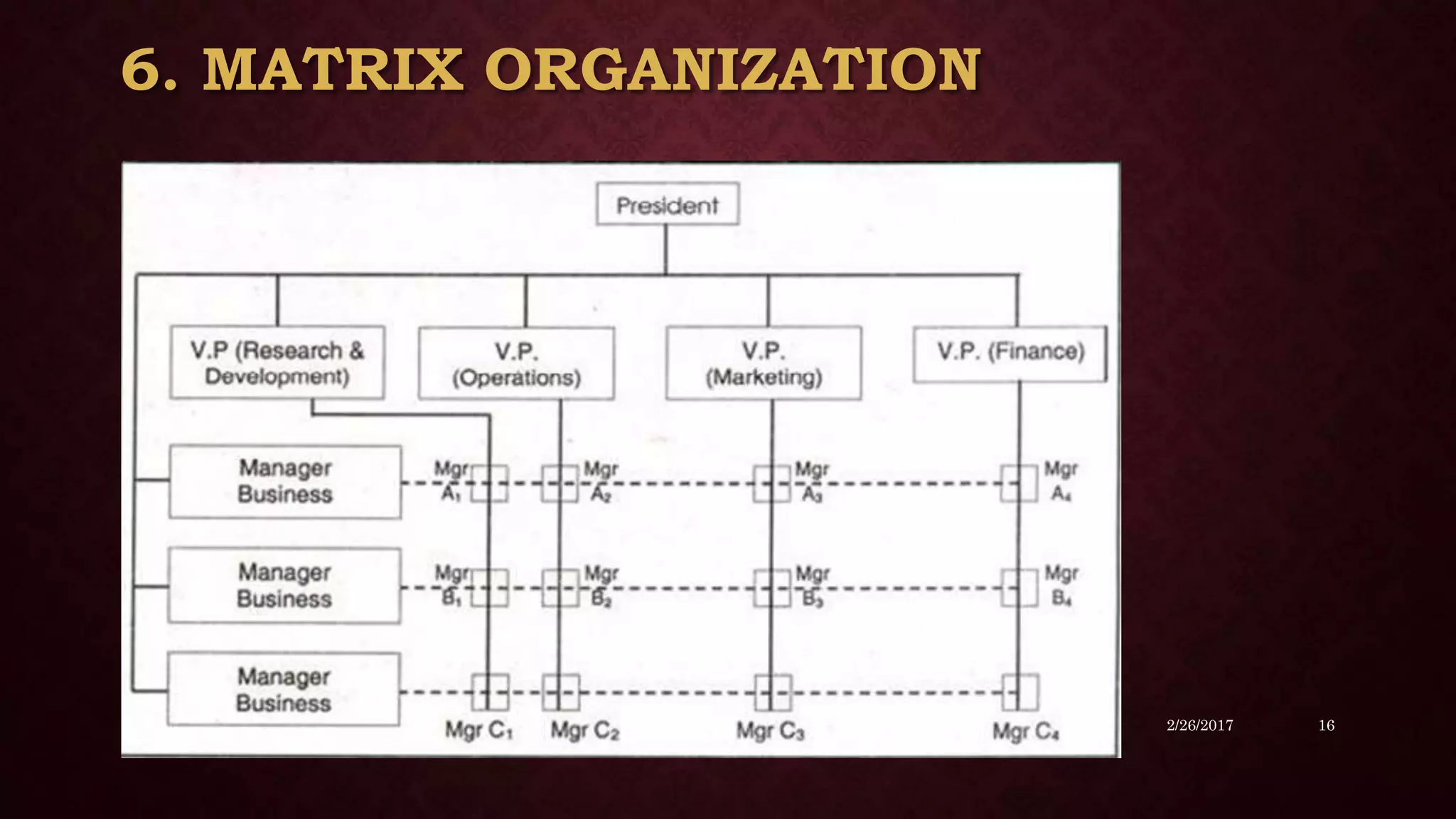
6. MATRIX ORGANIZATION
• Decentralised decision making.
• Strong product/project co-ordination.
• Flexible use of resources.
• Efficient use of support systems.
• High administration cost.
• Potential confusion over authority and responsibility.
• High prospects of conflict.
2/26/2017 17
Advantages of Matrix Organization
Disadvantages of Matrix Organization
2/26/2017 18
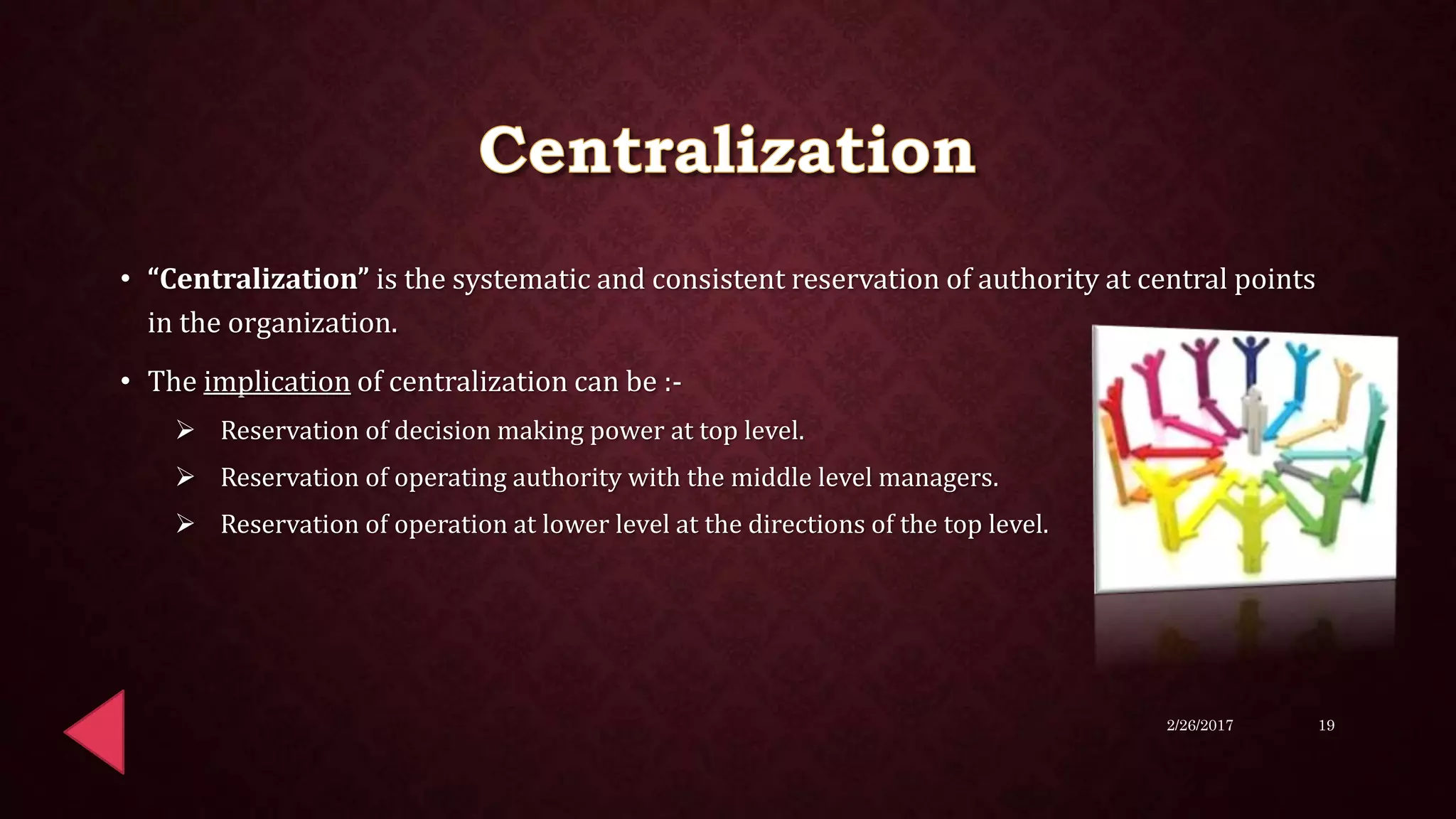
• “Centralization” is the systematic and consistent reservation of authority at central points
in the organization.
• The implication of centralization can be :-
 Reservation of decision making power at top level.
 Reservation of operating authority with the middle level managers.
 Reservation of operation at lower level at the directions of the top level.
2/26/2017 19
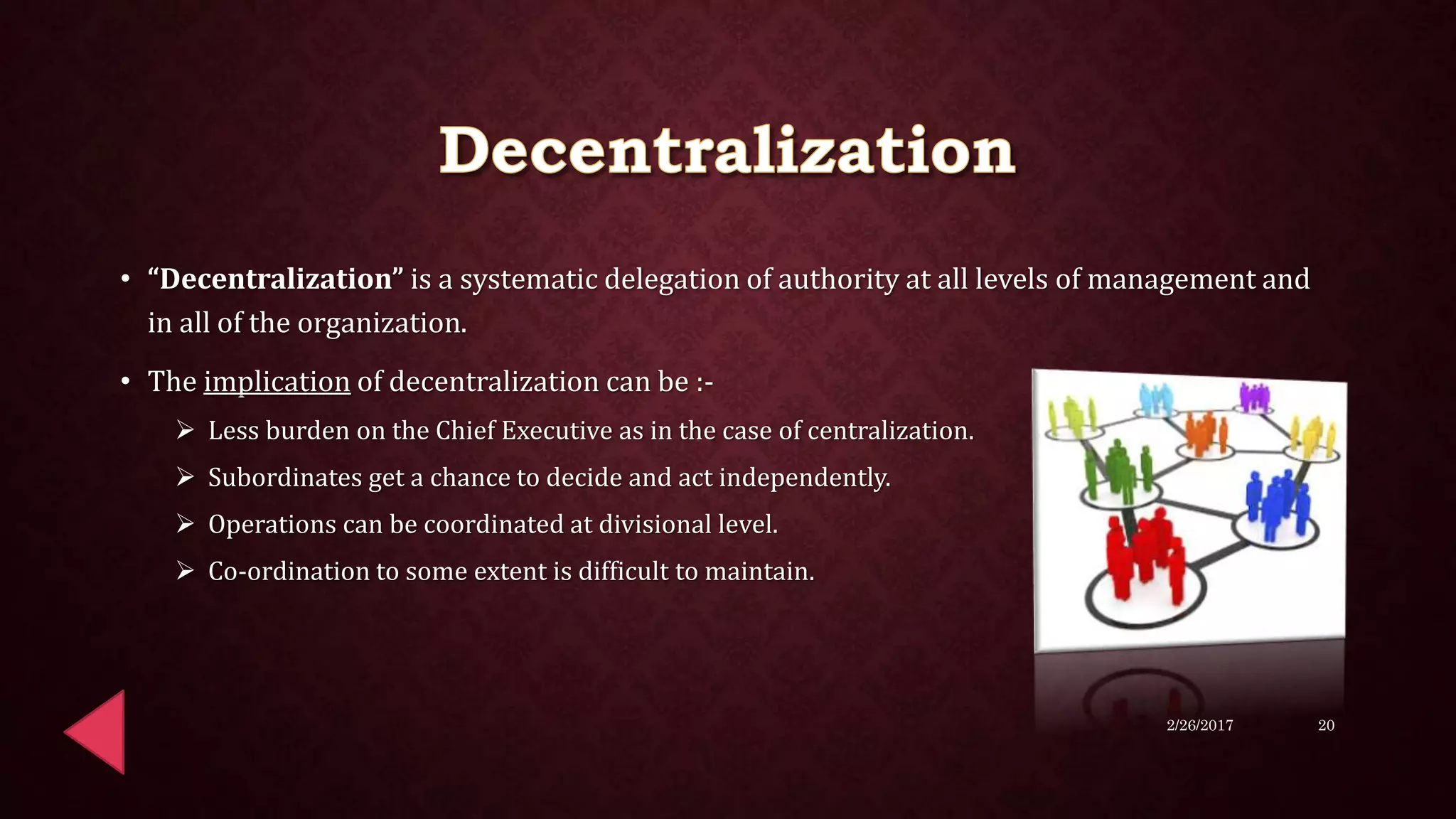
• “Decentralization” is a systematic delegation of authority at all levels of management and
in all of the organization.
• The implication of decentralization can be :-
 Less burden on the Chief Executive as in the case of centralization.
 Subordinates get a chance to decide and act independently.
 Operations can be coordinated at divisional level.
 Co-ordination to some extent is difficult to maintain.
2/26/2017 20
THANKYOU
2/26/2017 21

Organizing Function of Management

  • 1.
  • 2.
    CONTENT • What isOrganizing? • Nature of Organizing • Types of Organizing • Centralization and decentralization of Authority 2/26/2017 2
  • 3.
    Organizing is theprocess of arranging and allocating work, authority, and resources among an organization’s members so that they can achieve organizational goal. Stoner, Freeman and Gilbert 2/26/2017 3
  • 4.
    1. Group ofPersons 2. Common Objectives 3. Division of Work 4. Cooperative Efforts 5. Communication 6. Central Authority 7. Rules & Regulations 8. Dynamic Element 2/26/2017 4
  • 5.
    2/26/2017 5 Line Organization Functional Organization ProjectOrganization Line and Staff Organization Divisional Organization Matrix Organization
  • 6.
  • 7.
    Advantages of LineOrganization • It is simple to establish and can be easily understood by the employees. • It helps in fixing authority and responsibility of each and every person in the organization. • Easy to operate and less expensive. • Too much is expected from executives. • Lack of co-ordination among various departments. 2/26/2017 7 Disadvantages of Line Organization
  • 8.
    2/26/2017 8 2. LINEAND STAFF ORGANIZATION
  • 9.
    • A lineand staff structure allows higher flexibility and specialization • Staff officers may resent their lack of authority. • Co-ordination between line and staff may become difficult. • Conflict between line and staff may still arise. 2/26/2017 9 Advantage of Line and Staff Organization Disadvantages of Line and Staff Organization
  • 10.
  • 11.
    • Benefit ofhaving specialists in each area. • It provides wide scope for growth. • Top executives are not unnecessarily burdened as happens in line organization. • The principle of unity of command is violated. • Involvement of more than one person in decision-making process slows the process down. • The division of authority creates problem of discipline. 2/26/2017 11 Advantages of Functional Organization Disadvantages of Functional Organization
  • 12.
  • 13.
    • Divisional structureemphasizes on the end result, i.e., on the product, or customer through which revenue is generated in the organization. • Performance measurement is easier. • Organization size can be increased without any problem. • Divisional Structure is quite costly. 2/26/2017 13 Advantages of Divisional Organization Disadvantage of Divisional Organization
  • 14.
  • 15.
    • It allowsmaximum use of specialized knowledge. • Provides more flexibility for the utilisation of resources. • Less loyalty of people with the organization. • Lack of clarity among members about their role in organization. 2/26/2017 15 Advantages of Project Organization Disadvantages of Project Organization
  • 16.
  • 17.
    • Decentralised decisionmaking. • Strong product/project co-ordination. • Flexible use of resources. • Efficient use of support systems. • High administration cost. • Potential confusion over authority and responsibility. • High prospects of conflict. 2/26/2017 17 Advantages of Matrix Organization Disadvantages of Matrix Organization
  • 18.
  • 19.
    • “Centralization” isthe systematic and consistent reservation of authority at central points in the organization. • The implication of centralization can be :-  Reservation of decision making power at top level.  Reservation of operating authority with the middle level managers.  Reservation of operation at lower level at the directions of the top level. 2/26/2017 19
  • 20.
    • “Decentralization” isa systematic delegation of authority at all levels of management and in all of the organization. • The implication of decentralization can be :-  Less burden on the Chief Executive as in the case of centralization.  Subordinates get a chance to decide and act independently.  Operations can be coordinated at divisional level.  Co-ordination to some extent is difficult to maintain. 2/26/2017 20
  • 21.