
Chapter Twenty One:
Continuous Change
AMRITA SCHOOL OF BUSINESS, AMRITAPURI
SETHUPARVATHY A V
ROSHAN ELANGO
Learning Objectives
for Chapter Twenty One
 To understand OD interventions that
enable organizations to continuously
change
 To compare and contrast three different
types of OD interventions aimed
developing organizations capable of
continuous change interventions: self
designing organization interventions,
organization learning and knowledge
management interventions, and built to
change organization interventions
Self-Designing Organizations
 Systemic change process altering most features of the
organization
 Process is ongoing, never finished—continuous improvement
and change
 Learning as You Go—on-site innovation
 Need support of multiple stakeholders
 All levels of the organization adopt new strategies and
change behaviors
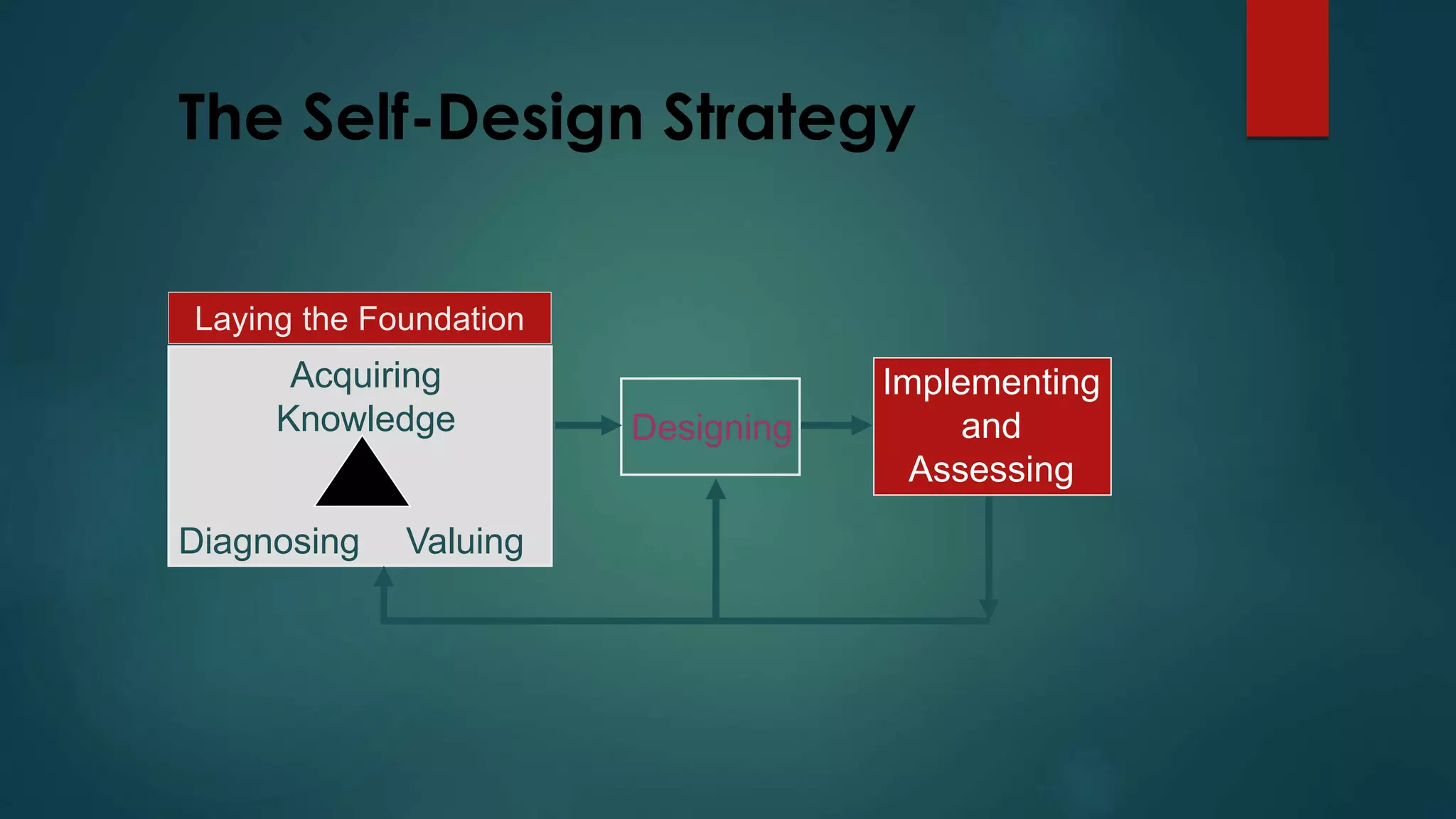
The Self-Design Strategy
Laying the Foundation
Acquiring
Knowledge
Diagnosing
Designing
Implementing
and
Assessing
Valuing
Organization Learning &
Knowledge Management
 Organization Learning interventions emphasize the
structures and social processes that enable employees
and teams to learn and share knowledge
 Knowledge Learning focuses on the tools and techniques
that enable organizations to collect, organize, and
translate information into useful knowledge
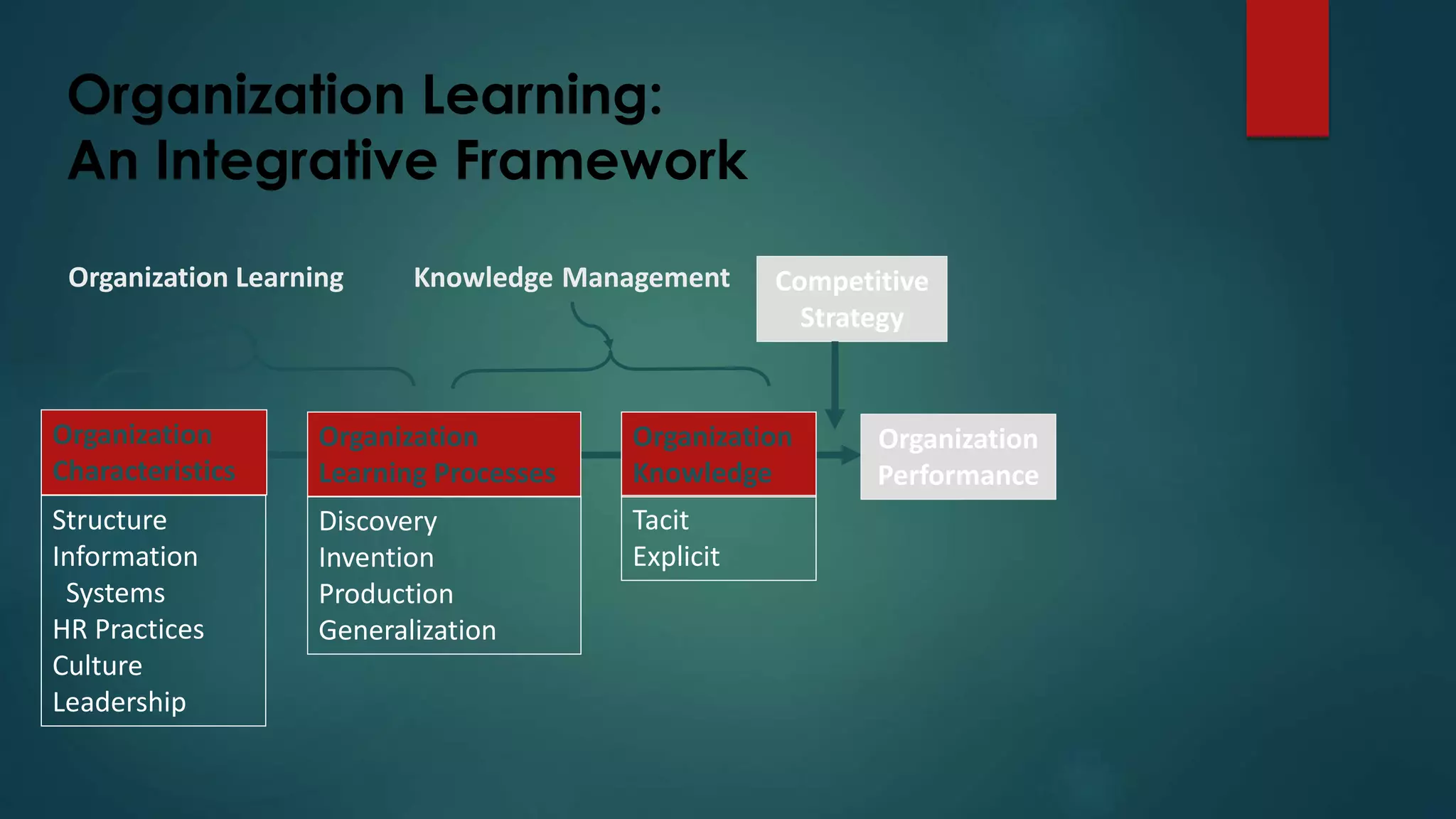
Organization Learning:
An Integrative Framework
Organization
Characteristics
Structure
Information
Systems
HR Practices
Culture
Leadership
Organization
Learning Processes
Discovery
Invention
Production
Generalization
Organization
Knowledge
Tacit
Explicit
Competitive
Strategy
Organization
Performance
Knowledge ManagementOrganization Learning
Characteristics of a Learning
Organization
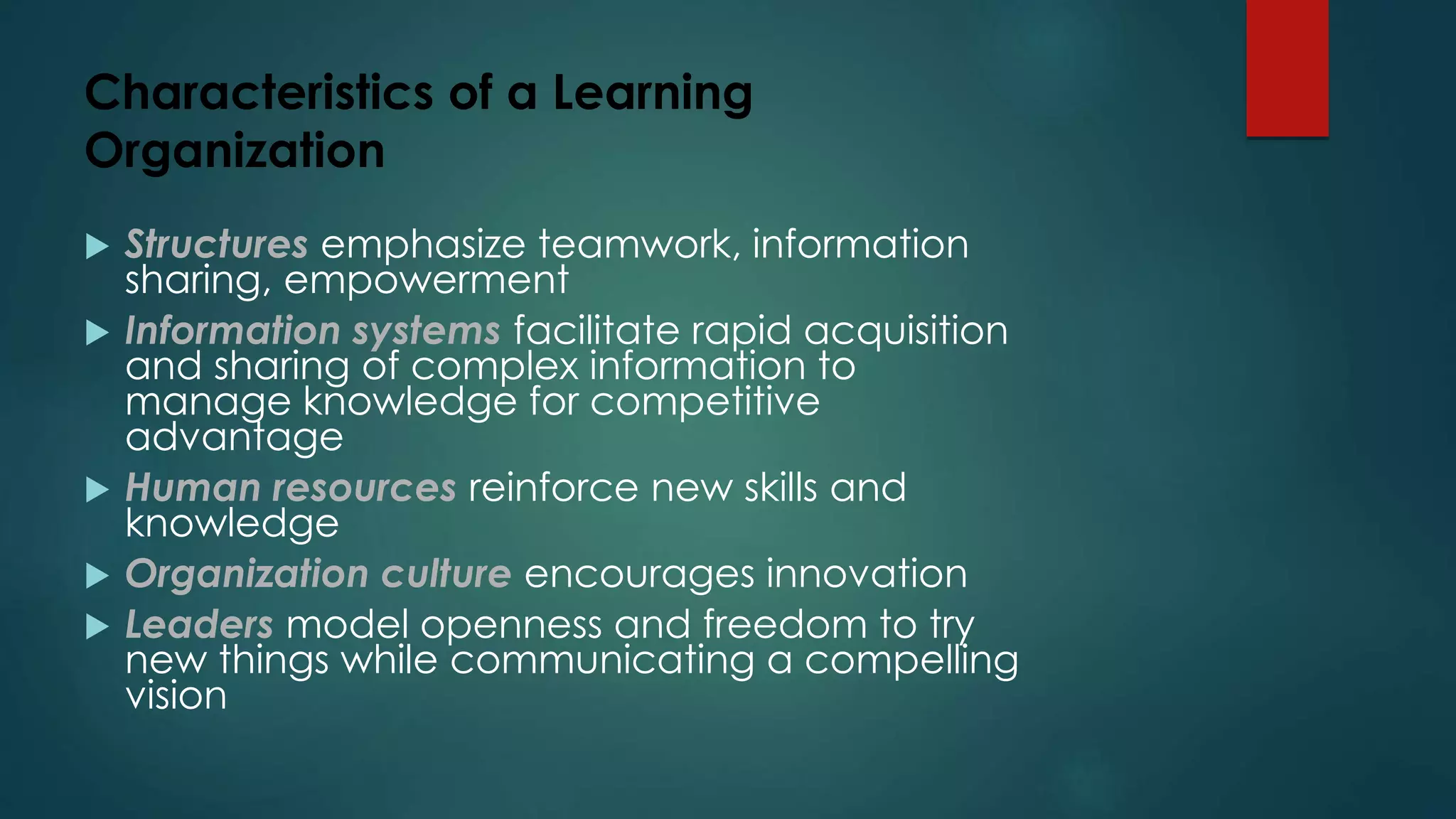
 Structures emphasize teamwork, information
sharing, empowerment
 Information systems facilitate rapid acquisition
and sharing of complex information to
manage knowledge for competitive
advantage
 Human resources reinforce new skills and
knowledge
 Organization culture encourages innovation
 Leaders model openness and freedom to try
new things while communicating a compelling
vision
Organization Learning Processes
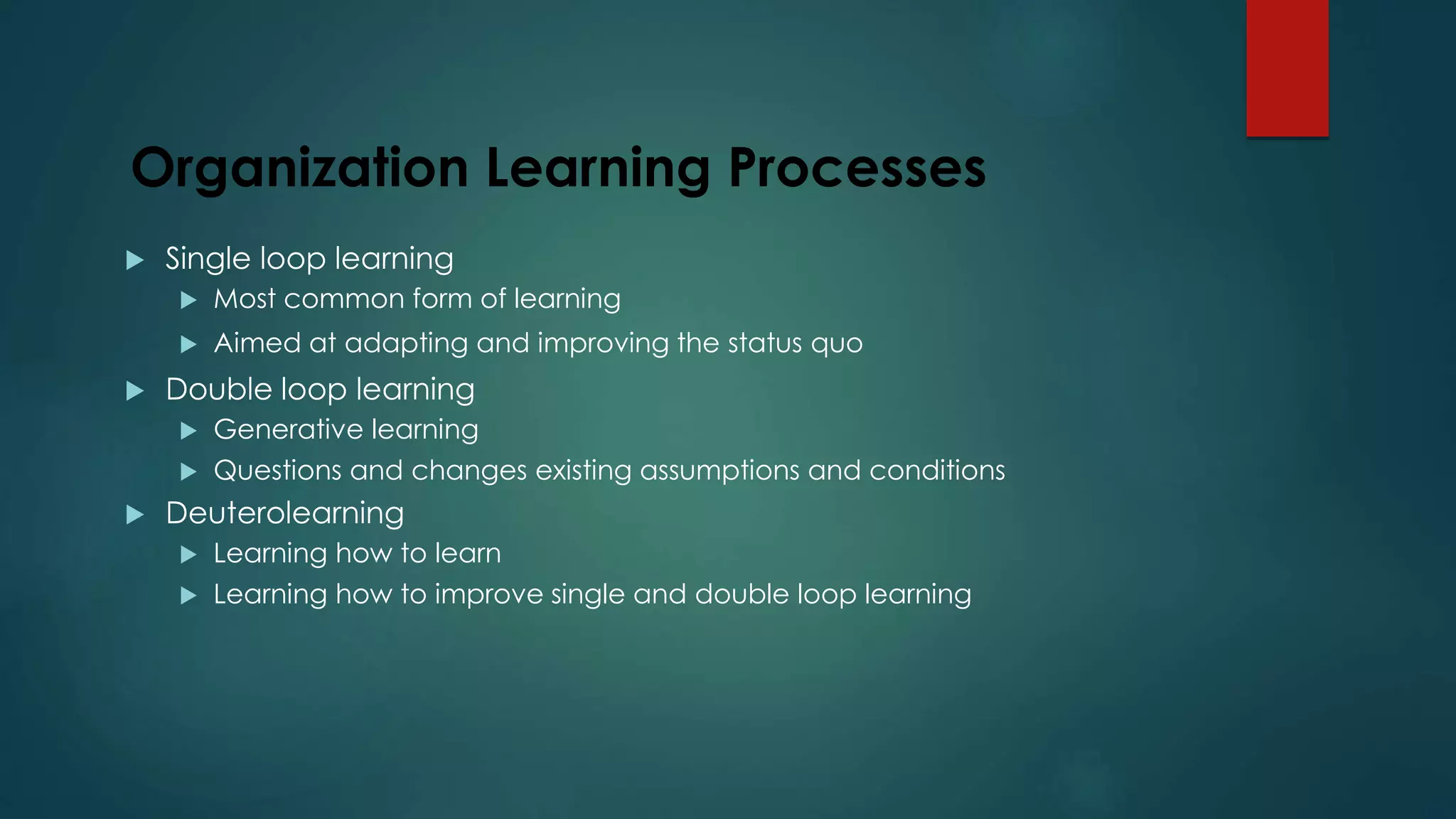
 Single loop learning
 Most common form of learning
 Aimed at adapting and improving the status quo
 Double loop learning
 Generative learning
 Questions and changes existing assumptions and conditions
 Deuterolearning
 Learning how to learn
 Learning how to improve single and double loop learning
Discover Theories in Use
Dialogue
Action Maps
Left-Hand, Right-Hand
Column
The Ladder of
Inference
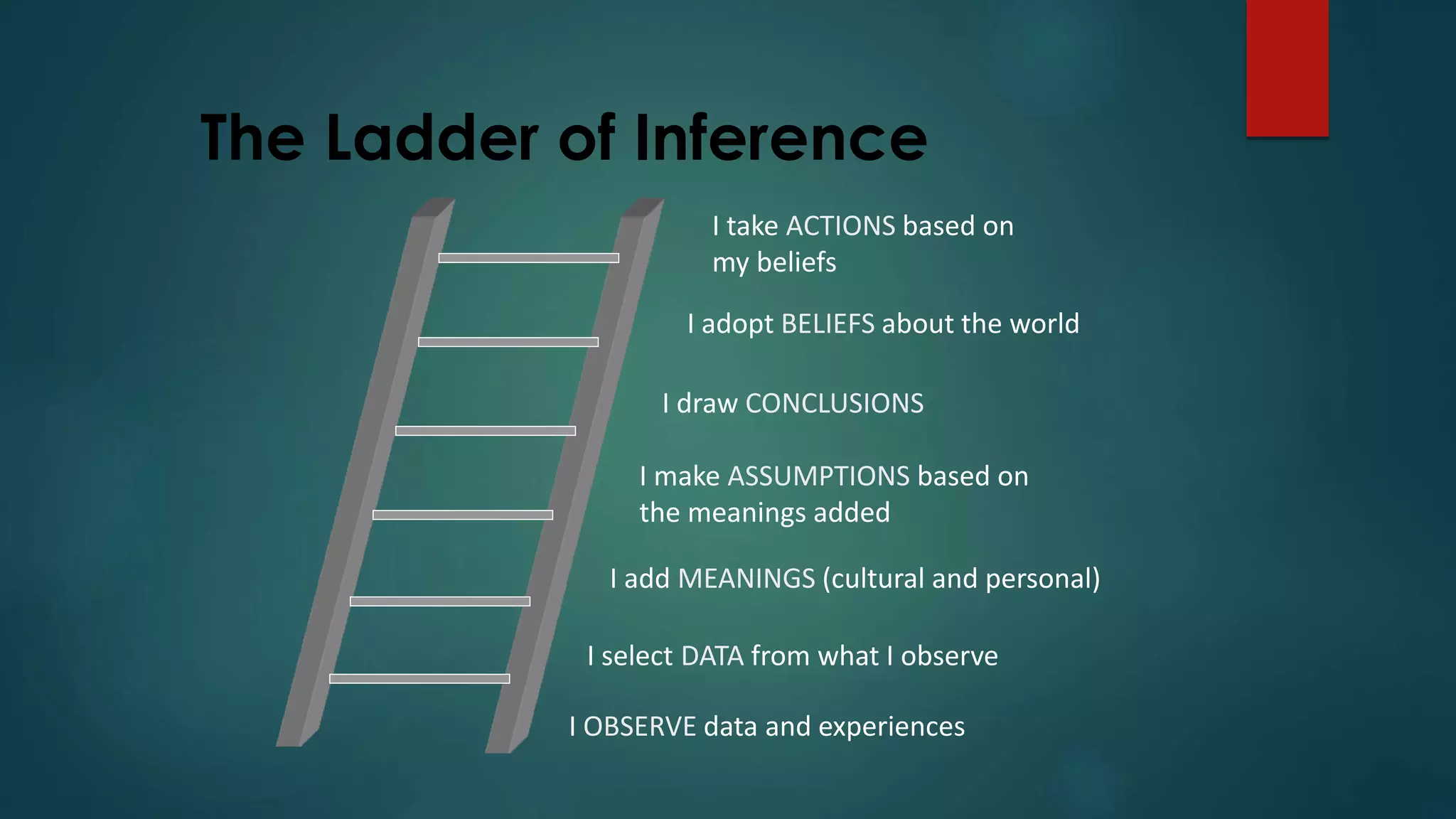
The Ladder of Inference
I take ACTIONS based on
my beliefs
I adopt BELIEFS about the world
I draw CONCLUSIONS
I make ASSUMPTIONS based on
the meanings added
I add MEANINGS (cultural and personal)
I select DATA from what I observe
I OBSERVE data and experiences
Knowledge and Performance
 Organization knowledge must be relevant and applied
effectively to the competitive strategy
 Link organization learning processes to organization
performance
 Growing emphasis on the value of intellectual assets and
services
Knowledge Management
Interventions
 Generating Knowledge
 Identify knowledge for competitive strategy
 Develop ways to acquire or create that knowledge
 Organizing Knowledge
 Put knowledge into a usable form
 Codification and Personalization
 Distributing Knowledge
 Making knowledge easy to access, use & reuse
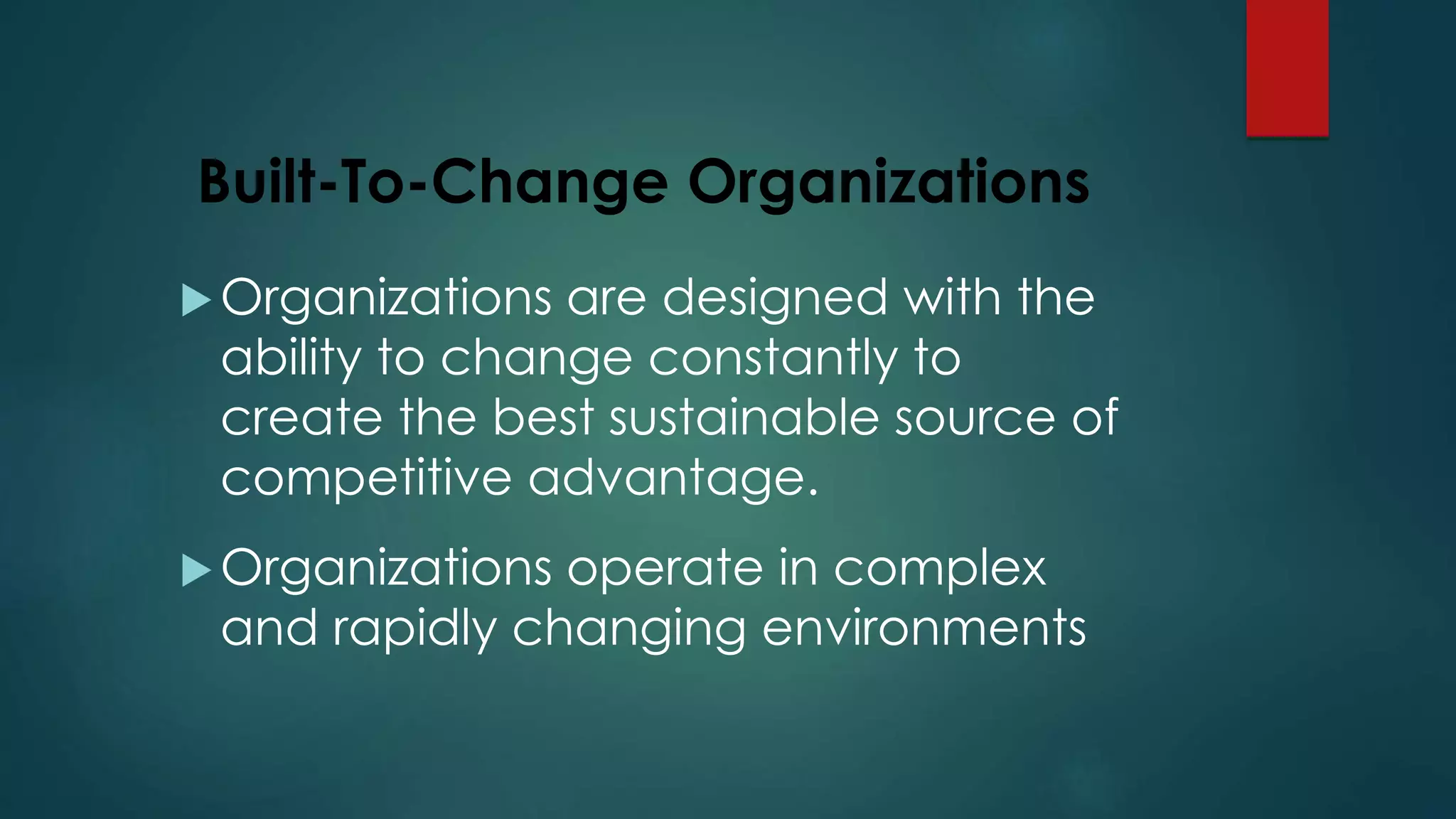
Built-To-Change Organizations
Organizations are designed with the
ability to change constantly to
create the best sustainable source of
competitive advantage.
Organizations operate in complex
and rapidly changing environments
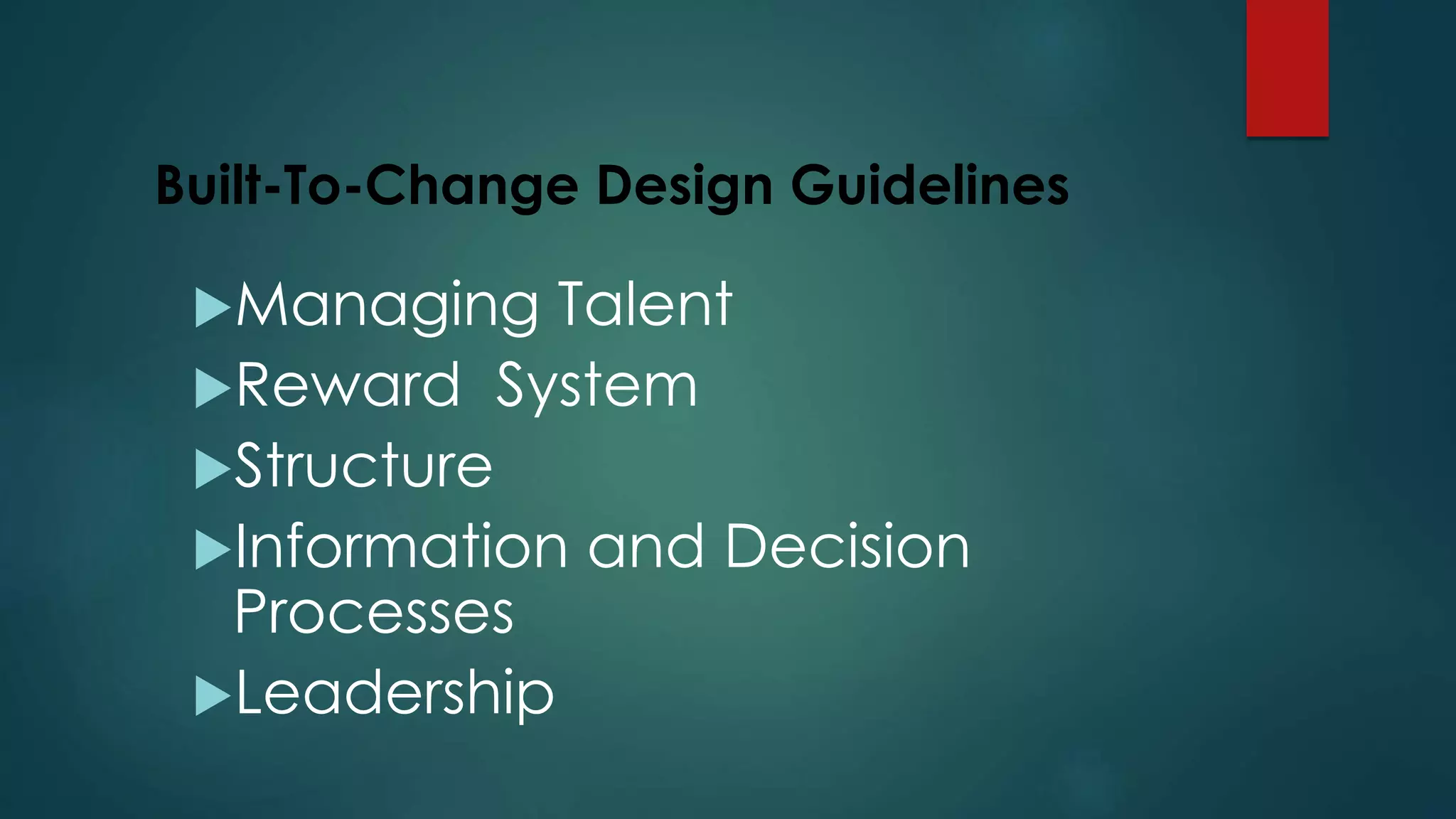
Built-To-Change Design Guidelines
Managing Talent
Reward System
Structure
Information and Decision
Processes
Leadership
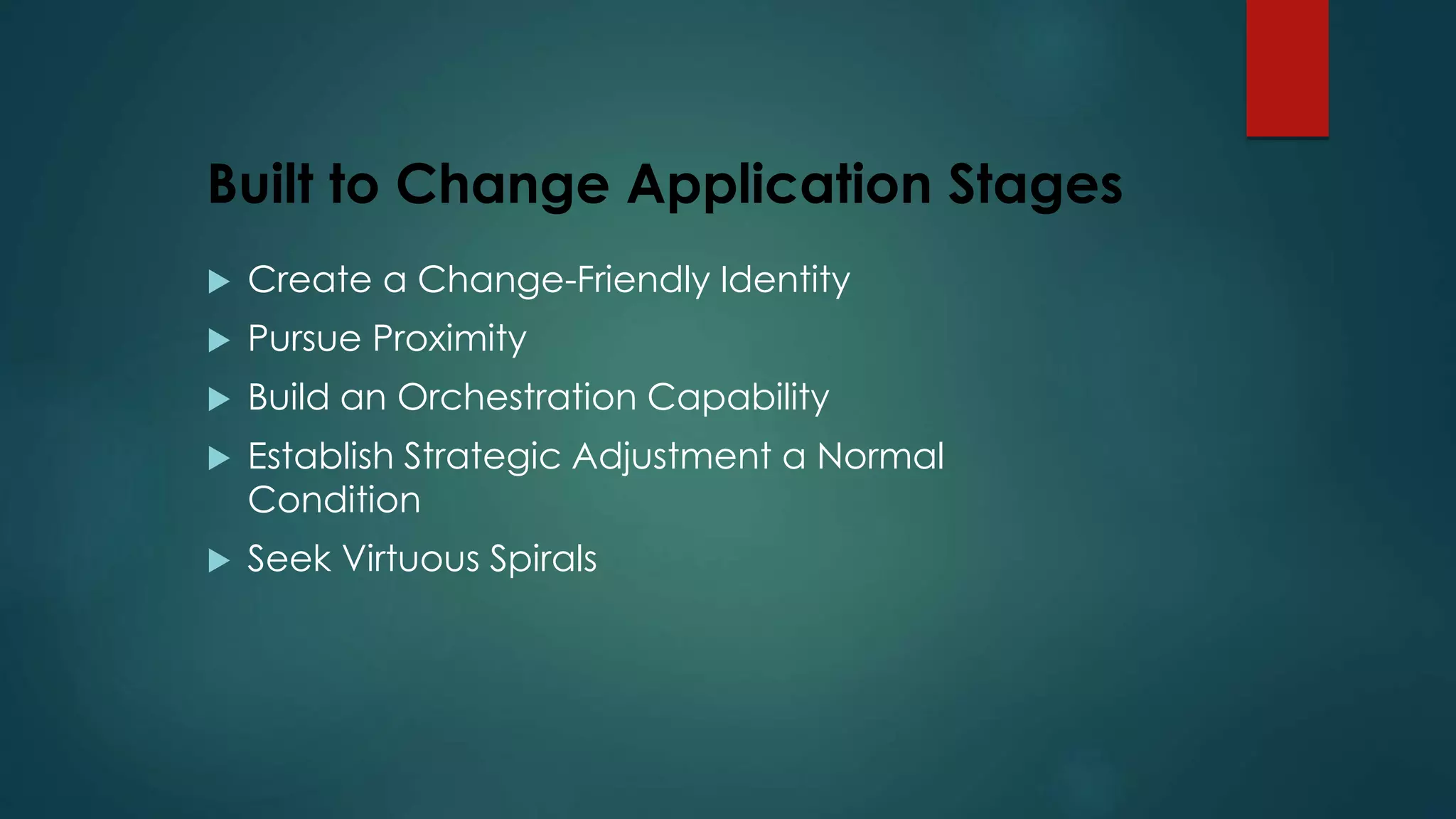
Built to Change Application Stages
 Create a Change-Friendly Identity
 Pursue Proximity
 Build an Orchestration Capability
 Establish Strategic Adjustment a Normal
Condition
 Seek Virtuous Spirals
Organizational developement : Continuous change

Organizational developement : Continuous change

  • 1.
    Chapter Twenty One: ContinuousChange AMRITA SCHOOL OF BUSINESS, AMRITAPURI SETHUPARVATHY A V ROSHAN ELANGO
  • 2.
    Learning Objectives for ChapterTwenty One  To understand OD interventions that enable organizations to continuously change  To compare and contrast three different types of OD interventions aimed developing organizations capable of continuous change interventions: self designing organization interventions, organization learning and knowledge management interventions, and built to change organization interventions
  • 3.
    Self-Designing Organizations  Systemicchange process altering most features of the organization  Process is ongoing, never finished—continuous improvement and change  Learning as You Go—on-site innovation  Need support of multiple stakeholders  All levels of the organization adopt new strategies and change behaviors
  • 4.
    The Self-Design Strategy Layingthe Foundation Acquiring Knowledge Diagnosing Designing Implementing and Assessing Valuing
  • 5.
    Organization Learning & KnowledgeManagement  Organization Learning interventions emphasize the structures and social processes that enable employees and teams to learn and share knowledge  Knowledge Learning focuses on the tools and techniques that enable organizations to collect, organize, and translate information into useful knowledge
  • 6.
    Organization Learning: An IntegrativeFramework Organization Characteristics Structure Information Systems HR Practices Culture Leadership Organization Learning Processes Discovery Invention Production Generalization Organization Knowledge Tacit Explicit Competitive Strategy Organization Performance Knowledge ManagementOrganization Learning
  • 7.
    Characteristics of aLearning Organization  Structures emphasize teamwork, information sharing, empowerment  Information systems facilitate rapid acquisition and sharing of complex information to manage knowledge for competitive advantage  Human resources reinforce new skills and knowledge  Organization culture encourages innovation  Leaders model openness and freedom to try new things while communicating a compelling vision
  • 8.
    Organization Learning Processes Single loop learning  Most common form of learning  Aimed at adapting and improving the status quo  Double loop learning  Generative learning  Questions and changes existing assumptions and conditions  Deuterolearning  Learning how to learn  Learning how to improve single and double loop learning
  • 9.
    Discover Theories inUse Dialogue Action Maps Left-Hand, Right-Hand Column The Ladder of Inference
  • 10.
    The Ladder ofInference I take ACTIONS based on my beliefs I adopt BELIEFS about the world I draw CONCLUSIONS I make ASSUMPTIONS based on the meanings added I add MEANINGS (cultural and personal) I select DATA from what I observe I OBSERVE data and experiences
  • 11.
    Knowledge and Performance Organization knowledge must be relevant and applied effectively to the competitive strategy  Link organization learning processes to organization performance  Growing emphasis on the value of intellectual assets and services
  • 12.
    Knowledge Management Interventions  GeneratingKnowledge  Identify knowledge for competitive strategy  Develop ways to acquire or create that knowledge  Organizing Knowledge  Put knowledge into a usable form  Codification and Personalization  Distributing Knowledge  Making knowledge easy to access, use & reuse
  • 13.
    Built-To-Change Organizations Organizations aredesigned with the ability to change constantly to create the best sustainable source of competitive advantage. Organizations operate in complex and rapidly changing environments
  • 14.
    Built-To-Change Design Guidelines ManagingTalent Reward System Structure Information and Decision Processes Leadership
  • 15.
    Built to ChangeApplication Stages  Create a Change-Friendly Identity  Pursue Proximity  Build an Orchestration Capability  Establish Strategic Adjustment a Normal Condition  Seek Virtuous Spirals