PART 1: DATA FEEDBACK
• “The check on how successful we have been in
transferring our messages as originally intended. It
determines whether understanding has been achieved”
(Robbins & Judge, 2009, p. 387).
• “The degree to which, carrying out the work activities
required by the job, results in the individual obtaining
direct and clear information about the effectiveness of
his / her performance” (Robbins & Judge, 2009, p.
251).
?
?
• ALSO KNOWN AS FEEDING BACK DATA (DIAGNOSTIC
INFORMATION)
• THE RE-PRESENTATION OF FEEDBACK DATA TO THE CLIENT
• DONE BY THE ORGANISATION DEVELOPMENT (OD)
PRACTITIONER
• THE ORGANISATION AND PRESENTATION OF THE DATA
COLLECTED VIA FEEDBACK TO THE CLIENT
• IN ORDER FOR AN ORGANISATION TO SURVIVE IT MUST
ADAPT TO CHANGE AND EMBRACE THE PROCESS OF
CHANGE WITHIN ITSELF.
• IN ORDER FOR THE ORGANISATION TO SEE THE
NECESSITY FOR THIS CHANGE THEY OFTEN REQUIRE
PROOF THAT THIS CHANGE IS NECESSARY
• DATA FEED BACK PROVIDES EMPIRICAL EVIDENCE FOR
THE CASE OF CHANGE
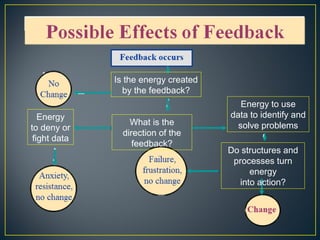
Energy to use
data to identify and
solve problems
Is the energy created
by the feedback?
What is the
direction of the
feedback?
Do structures and
processes turn
energy
into action?
Energy
to deny or
fight data
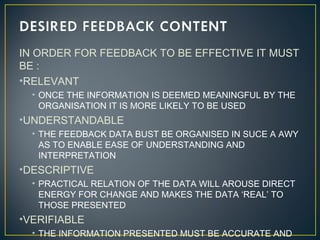
IN ORDER FOR FEEDBACK TO BE EFFECTIVE IT MUST
BE :
•RELEVANT
• ONCE THE INFORMATION IS DEEMED MEANINGFUL BY THE
ORGANISATION IT IS MORE LIKELY TO BE USED
•UNDERSTANDABLE
• THE FEEDBACK DATA BUST BE ORGANISED IN SUCE A AWY
AS TO ENABLE EASE OF UNDERSTANDING AND
INTERPRETATION
•DESCRIPTIVE
• PRACTICAL RELATION OF THE DATA WILL AROUSE DIRECT
ENERGY FOR CHANGE AND MAKES THE DATA ‘REAL’ TO
THOSE PRESENTED
•VERIFIABLE
• THE INFORMATION PRESENTED MUST BE ACCURATE AND
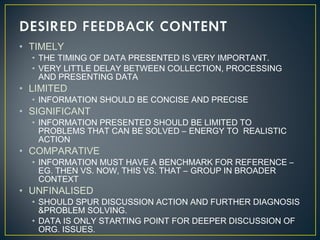
• TIMELY
• THE TIMING OF DATA PRESENTED IS VERY IMPORTANT.
• VERY LITTLE DELAY BETWEEN COLLECTION, PROCESSING
AND PRESENTING DATA
• LIMITED
• INFORMATION SHOULD BE CONCISE AND PRECISE
• SIGNIFICANT
• INFORMATION PRESENTED SHOULD BE LIMITED TO
PROBLEMS THAT CAN BE SOLVED – ENERGY TO REALISTIC
ACTION
• COMPARATIVE
• INFORMATION MUST HAVE A BENCHMARK FOR REFERENCE –
EG. THEN VS. NOW, THIS VS. THAT – GROUP IN BROADER
CONTEXT
• UNFINALISED
• SHOULD SPUR DISCUSSION ACTION AND FURTHER DIAGNOSIS
&PROBLEM SOLVING.
• DATA IS ONLY STARTING POINT FOR DEEPER DISCUSSION OF
ORG. ISSUES.
PART 2:
FEEDBACK PROCESS
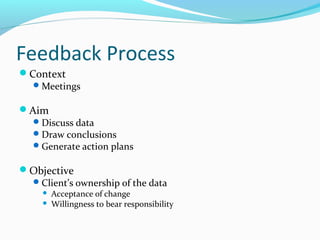
Feedback Process
Context
Meetings
Aim
Discuss data
Draw conclusions
Generate action plans
Objective
Client’s ownership of the data
 Acceptance of change
 Willingness to bear responsibility
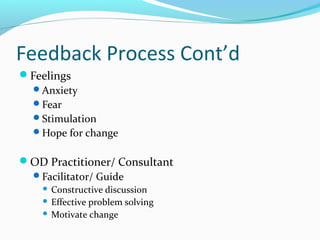
Feedback Process Cont’d
Feelings
Anxiety
Fear
Stimulation
Hope for change
OD Practitioner/ Consultant
Facilitator/ Guide
 Constructive discussion
 Effective problem solving
 Motivate change
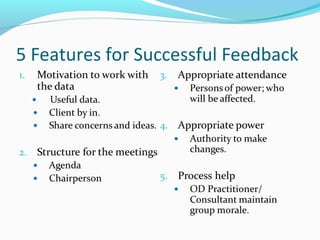
5 Features for Successful Feedback
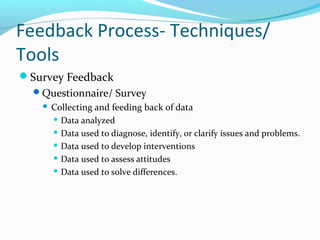
Feedback Process- Techniques/
Tools
Survey Feedback
Questionnaire/ Survey
 Collecting and feeding back of data
 Data analyzed
 Data used to diagnose, identify, or clarify issues and problems.
 Data used to develop interventions
 Data used to assess attitudes
 Data used to solve differences.
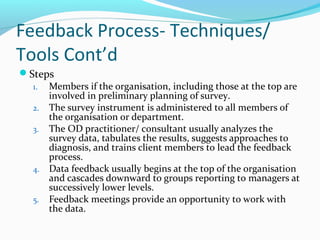
Feedback Process- Techniques/
Tools Cont’d
Steps
1. Members if the organisation, including those at the top are
involved in preliminary planning of survey.
2. The survey instrument is administered to all members of
the organisation or department.
3. The OD practitioner/ consultant usually analyzes the
survey data, tabulates the results, suggests approaches to
diagnosis, and trains client members to lead the feedback
process.
4. Data feedback usually begins at the top of the organisation
and cascades downward to groups reporting to managers at
successively lower levels.
5. Feedback meetings provide an opportunity to work with
the data.
Feedback Process- Techniques/
Tools Cont’d
Feedback Survey Limitations
Ambiguity of purpose
Distrust
Unacceptable topics
Organisational disturbances
END

FEEDING BACK DIAGNOSTIC INFORMATION

  • 1.
    PART 1: DATAFEEDBACK
  • 3.
    • “The checkon how successful we have been in transferring our messages as originally intended. It determines whether understanding has been achieved” (Robbins & Judge, 2009, p. 387). • “The degree to which, carrying out the work activities required by the job, results in the individual obtaining direct and clear information about the effectiveness of his / her performance” (Robbins & Judge, 2009, p. 251).
  • 4.
  • 5.
    • ALSO KNOWNAS FEEDING BACK DATA (DIAGNOSTIC INFORMATION) • THE RE-PRESENTATION OF FEEDBACK DATA TO THE CLIENT • DONE BY THE ORGANISATION DEVELOPMENT (OD) PRACTITIONER • THE ORGANISATION AND PRESENTATION OF THE DATA COLLECTED VIA FEEDBACK TO THE CLIENT
  • 6.
    • IN ORDERFOR AN ORGANISATION TO SURVIVE IT MUST ADAPT TO CHANGE AND EMBRACE THE PROCESS OF CHANGE WITHIN ITSELF. • IN ORDER FOR THE ORGANISATION TO SEE THE NECESSITY FOR THIS CHANGE THEY OFTEN REQUIRE PROOF THAT THIS CHANGE IS NECESSARY • DATA FEED BACK PROVIDES EMPIRICAL EVIDENCE FOR THE CASE OF CHANGE
  • 7.
    Energy to use datato identify and solve problems Is the energy created by the feedback? What is the direction of the feedback? Do structures and processes turn energy into action? Energy to deny or fight data
  • 8.
    IN ORDER FORFEEDBACK TO BE EFFECTIVE IT MUST BE : •RELEVANT • ONCE THE INFORMATION IS DEEMED MEANINGFUL BY THE ORGANISATION IT IS MORE LIKELY TO BE USED •UNDERSTANDABLE • THE FEEDBACK DATA BUST BE ORGANISED IN SUCE A AWY AS TO ENABLE EASE OF UNDERSTANDING AND INTERPRETATION •DESCRIPTIVE • PRACTICAL RELATION OF THE DATA WILL AROUSE DIRECT ENERGY FOR CHANGE AND MAKES THE DATA ‘REAL’ TO THOSE PRESENTED •VERIFIABLE • THE INFORMATION PRESENTED MUST BE ACCURATE AND
  • 9.
    • TIMELY • THETIMING OF DATA PRESENTED IS VERY IMPORTANT. • VERY LITTLE DELAY BETWEEN COLLECTION, PROCESSING AND PRESENTING DATA • LIMITED • INFORMATION SHOULD BE CONCISE AND PRECISE • SIGNIFICANT • INFORMATION PRESENTED SHOULD BE LIMITED TO PROBLEMS THAT CAN BE SOLVED – ENERGY TO REALISTIC ACTION • COMPARATIVE • INFORMATION MUST HAVE A BENCHMARK FOR REFERENCE – EG. THEN VS. NOW, THIS VS. THAT – GROUP IN BROADER CONTEXT • UNFINALISED • SHOULD SPUR DISCUSSION ACTION AND FURTHER DIAGNOSIS &PROBLEM SOLVING. • DATA IS ONLY STARTING POINT FOR DEEPER DISCUSSION OF ORG. ISSUES.
  • 10.
  • 11.
    Feedback Process Context Meetings Aim Discuss data Drawconclusions Generate action plans Objective Client’s ownership of the data  Acceptance of change  Willingness to bear responsibility
  • 12.
    Feedback Process Cont’d Feelings Anxiety Fear Stimulation Hopefor change OD Practitioner/ Consultant Facilitator/ Guide  Constructive discussion  Effective problem solving  Motivate change
  • 13.
    5 Features forSuccessful Feedback
  • 14.
    Feedback Process- Techniques/ Tools SurveyFeedback Questionnaire/ Survey  Collecting and feeding back of data  Data analyzed  Data used to diagnose, identify, or clarify issues and problems.  Data used to develop interventions  Data used to assess attitudes  Data used to solve differences.
  • 15.
    Feedback Process- Techniques/ ToolsCont’d Steps 1. Members if the organisation, including those at the top are involved in preliminary planning of survey. 2. The survey instrument is administered to all members of the organisation or department. 3. The OD practitioner/ consultant usually analyzes the survey data, tabulates the results, suggests approaches to diagnosis, and trains client members to lead the feedback process. 4. Data feedback usually begins at the top of the organisation and cascades downward to groups reporting to managers at successively lower levels. 5. Feedback meetings provide an opportunity to work with the data.
  • 16.
    Feedback Process- Techniques/ ToolsCont’d Feedback Survey Limitations Ambiguity of purpose Distrust Unacceptable topics Organisational disturbances
  • 17.