ORGANISATIONAL BEHAVIOUR
   ORGANISATION DEVELOPMENT
    PRESENTATION


                   ANBARASU.A
                1ST YEAR PGDM
CONTENTS
 ORGANISATIONAL DEVELOPMENT
  MENANING AND DEFINITION
 ORGANISATIONAL DEVELOPMENT
  PROCESS
 CONCLUSION
What is Organizational
     Development
    Organizational development is a system-
     wide application of behavioral science
     knowledge to the planned development
     and reinforcement of organizational
     strategies, structures, and processes for
     improving an organization's effectiveness.
DEFINITION OF ORGANISATIONAL
        DEVELOPMENT
   According to Schmuck &
    Miles,"Organizational development can be
    define as a planned sustained effort to
    apply behavioral science for system
    improvement, using reflexive and self
    analytical methods.
Organizational
Development Process
   The organizational development process
    is complicated and it takes long time to
    complete the process. It takes minimum
    of one year and sometimes continues
    indefinitely. There are different approaches
    to organizational development process
    but the typical process consists of seven
    steps.
PROCESS OF ORGANISATIONAL
      DEVELOPMENT
      Initial Diagnosis
      Data Collection
      Data Feedback and Confrontation
      Selection and Design of Interventions
      Implementation of Intervention
      Action Planning and Problem Solving
      Team Building
      Inter Group Development
Initial Diagnosis
   It is necessary to find out the professional
    and competent people within the
    organization to plan and execute OD
    activities. If Competent people are not
    available within the organization the
    service activities analysis of documents
    and reports for diagnosing the problem.
Data Collection
   Survey method is used to collect the data
    and information for determining
    organizational climate and identifying the
    behavioral problems
Data Feedback and
        Confrontation

   Data collected are analyzed and reviewed
    by various work groups formed from this
    purpose in order to mediate in the areas of
    disagreement or confrontation or ideas or
    opinions and to establish priorities.
Selection and Design of
    Interventions

      The interventions are the planned
  activities that are introduced into the
  system to accomplish desired change and
  improvements. At this stage the suitable
  interventions are to be selected and
  designed.
Implementation of
              Intervention

   The selected intervention should be
    implemented. Intervention may take the
    form of workshops, feedback of data to the
    participants, group discussions, written
    exercises, on the job activities, redesign of
    control system
Action Planning and
 Problem Solving
   Groups prepare recommendations and
    specific action planning to solve the
    specific and identified problems by using
    data collected.
Team Building
   The consultants encourage the employees
    throughout the process to form into
    groups and teams by explaining the
    advantages of the teams in the OD
    process, by arranging joint meetings with
    the managers, subordinated
Inter Group Development
     The consultants encourage the inter
      group meetings, interaction etc, after the
      formation of groups/teams.
Conclusion
   The organization finally has to evaluate
    the OD programs, find out their
    utility, and develop the programs further
    for correcting the deviations and/or
    improved results. the consultants help the
    organization in this respect. All the steps
    in the OD process should be followed by
    the organization is order to derive full
    range of OD benefits
ANY   ?....
Organisation development

Organisation development

  • 1.
    ORGANISATIONAL BEHAVIOUR  ORGANISATION DEVELOPMENT PRESENTATION ANBARASU.A 1ST YEAR PGDM
  • 2.
    CONTENTS  ORGANISATIONAL DEVELOPMENT MENANING AND DEFINITION  ORGANISATIONAL DEVELOPMENT PROCESS  CONCLUSION
  • 3.
    What is Organizational Development  Organizational development is a system- wide application of behavioral science knowledge to the planned development and reinforcement of organizational strategies, structures, and processes for improving an organization's effectiveness.
  • 4.
    DEFINITION OF ORGANISATIONAL DEVELOPMENT  According to Schmuck & Miles,"Organizational development can be define as a planned sustained effort to apply behavioral science for system improvement, using reflexive and self analytical methods.
  • 5.
    Organizational Development Process  The organizational development process is complicated and it takes long time to complete the process. It takes minimum of one year and sometimes continues indefinitely. There are different approaches to organizational development process but the typical process consists of seven steps.
  • 6.
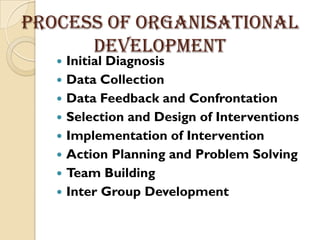
    PROCESS OF ORGANISATIONAL DEVELOPMENT  Initial Diagnosis  Data Collection  Data Feedback and Confrontation  Selection and Design of Interventions  Implementation of Intervention  Action Planning and Problem Solving  Team Building  Inter Group Development
  • 7.
    Initial Diagnosis  It is necessary to find out the professional and competent people within the organization to plan and execute OD activities. If Competent people are not available within the organization the service activities analysis of documents and reports for diagnosing the problem.
  • 8.
    Data Collection  Survey method is used to collect the data and information for determining organizational climate and identifying the behavioral problems
  • 9.
    Data Feedback and Confrontation  Data collected are analyzed and reviewed by various work groups formed from this purpose in order to mediate in the areas of disagreement or confrontation or ideas or opinions and to establish priorities.
  • 10.
    Selection and Designof Interventions The interventions are the planned activities that are introduced into the system to accomplish desired change and improvements. At this stage the suitable interventions are to be selected and designed.
  • 11.
    Implementation of Intervention  The selected intervention should be implemented. Intervention may take the form of workshops, feedback of data to the participants, group discussions, written exercises, on the job activities, redesign of control system
  • 12.
    Action Planning and Problem Solving  Groups prepare recommendations and specific action planning to solve the specific and identified problems by using data collected.
  • 13.
    Team Building  The consultants encourage the employees throughout the process to form into groups and teams by explaining the advantages of the teams in the OD process, by arranging joint meetings with the managers, subordinated
  • 14.
    Inter Group Development  The consultants encourage the inter group meetings, interaction etc, after the formation of groups/teams.
  • 15.
    Conclusion  The organization finally has to evaluate the OD programs, find out their utility, and develop the programs further for correcting the deviations and/or improved results. the consultants help the organization in this respect. All the steps in the OD process should be followed by the organization is order to derive full range of OD benefits
  • 16.
    ANY ?....