ORGANIZATIONAL
 DEVELOPMENT


                 1
Meaning

 OD is a systematic, integrated and planned
 approach to improve the effectiveness of the
 enterprise.
     It is designed to solve the problems that
 adversely affect the operational efficiency at all
 levels.


                                                  2
Characteristics of OD
 OD is a systematic approach to planned change.
         It is a structured cycle of diagnosing organizational problems
    and opportunities and then applying expertise to them.
   OD is grounded in solid research & theory.
         It involves the application of our knowledge of the behavioral
    science to the challenges that the organization face.
   OD recognizes the reciprocal relationship between individuals
    and organization.
         It acknowledges that for organizations to change, individuals
    must change.
   OD is goal oriented.
         It is a process that speaks to improve both individuals and
    organizational well being and effectiveness.
                                                                      3
   OD is designed to solve problems.
Objectives of OD:

 To improve organizational performance as measured by
  profitabi.ity, market share, innovations etc.,
 Make organization better adaptive to its environment.
 Make the members willing face organizational problems
  and contribute creative solution to the organizational
  problems.
 Improve internal behavior patterns such as interpersonal
  relations, intergroup relations, level of trust and support.
 Understand one’s won and others, openness and meaning
  communication and involvement in planning for
  organizational development.                                  4
Assumptions:

 Most of the individuals have drives towards personal growth
    and development.
   Higher productivity can be achieved when the individual goals
    are integrated with organizational goals.
   Cooperation is always more effective than conflict.
   The suppression of feelings adversely affects problem solving,
    personal growth and satisfaction with one’s work.
   The growth of individual members is facilitated by
    relationships that are open, supportive and trusting.
   The difference between commitment and agreement must be
    fully understood.
   OD programmes, if they are to succeed, must be reinforced by
                                                                     5
    the organizational total human resource system.
OD models:

 Kurt Lewin’s Change model:
       Unfreezing  Change  Refreezing
 Greiner’s model:
       Change occurs in terms of certain sequential
  stages.
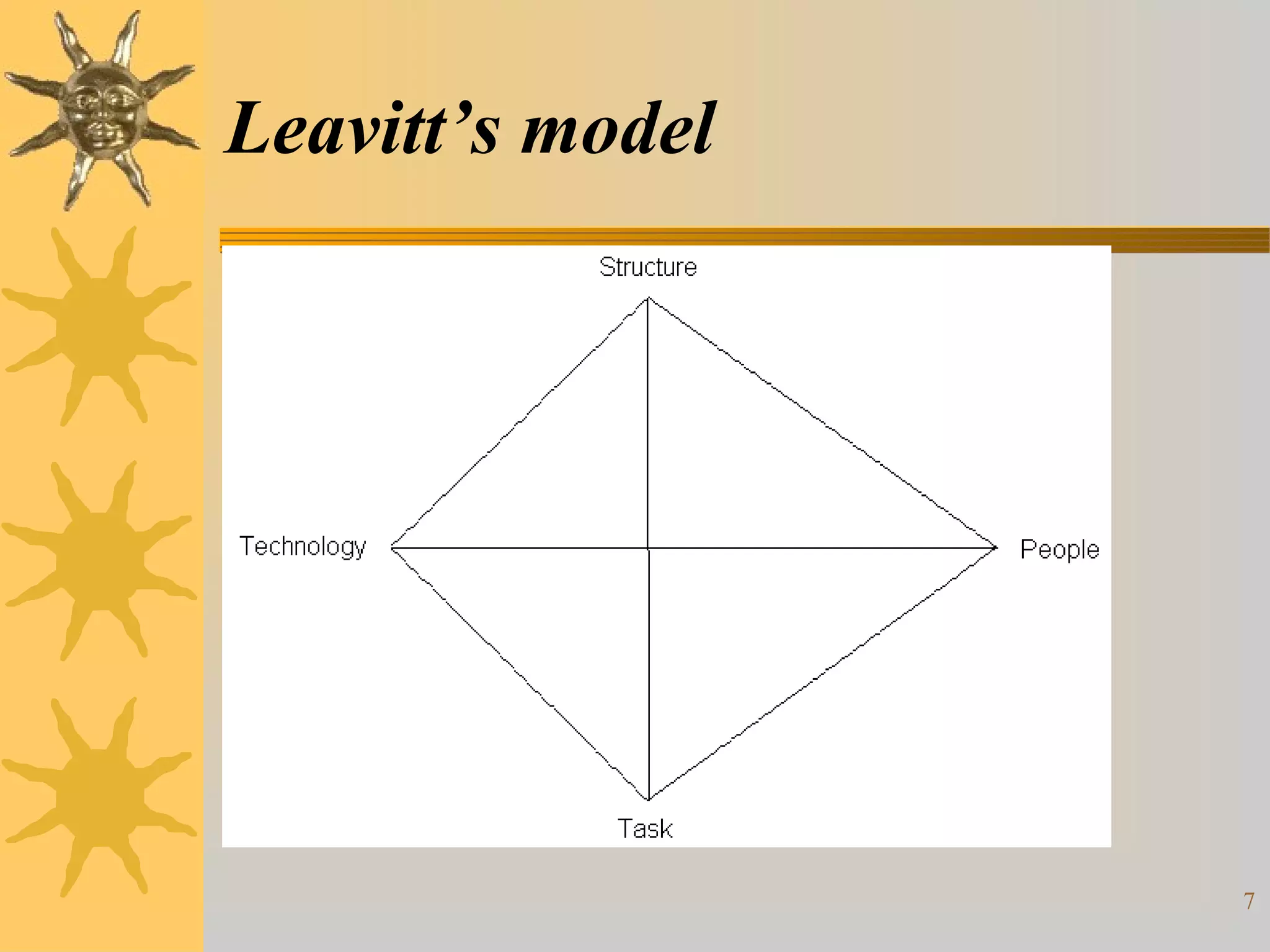
 Leavitt’s model:
       Interactive nature of the various subsystems
  in the change process.

                                                      6
Leavitt’s model


                  7
OD interventions


 Individual focused

 Organization focused


                         8
Individual focused

   Sensitivity training
   Skill training
   Job redesigning
   Role negotiation
   Career planning

                           9
Organization focused

   Survey feedback
   MBO
   QWL
   Team building
   Process consultation
   Grid training
                           10
Factors influencing choice of
     and OD intervention:


 Applicability

 Feasibility

 Acceptability


                                  11
Communication

 Meaning
     Transference of messages or exchange of
 ideas, facts, opinion or feelings by 2 or more
 persons.
     It is an art of making one’s ideas and opinion
 known to others.


                                                 12
Nature of Communication:

 Communication involves 2 parties
 The 2 parties must have the ability to convey as
  well as to listen
 Communication includes sending and also
  receiving the response to the message.
 The message can be conveyed verbally, in
  written, by means of signs, gestures or symbols.
 Communication is a continuous process.

                                                 13
Need for Communication

 Adequate and timely Communication helps
  managers discharge their functions of planning,
  organising, staffing, directing and controlling.
 Ensures willing, cooperation
 A good communication system communicating
  quality information contributes positively to the
  quality of decisions.
 Coordination of activities across the departments
  in the organization.
 Moulds attitude and builds up employee morale. 14
Process of Communication


 Communicator  Encoding  Message 

 medium  Decoding  Receiver  Feed back.


                                             15
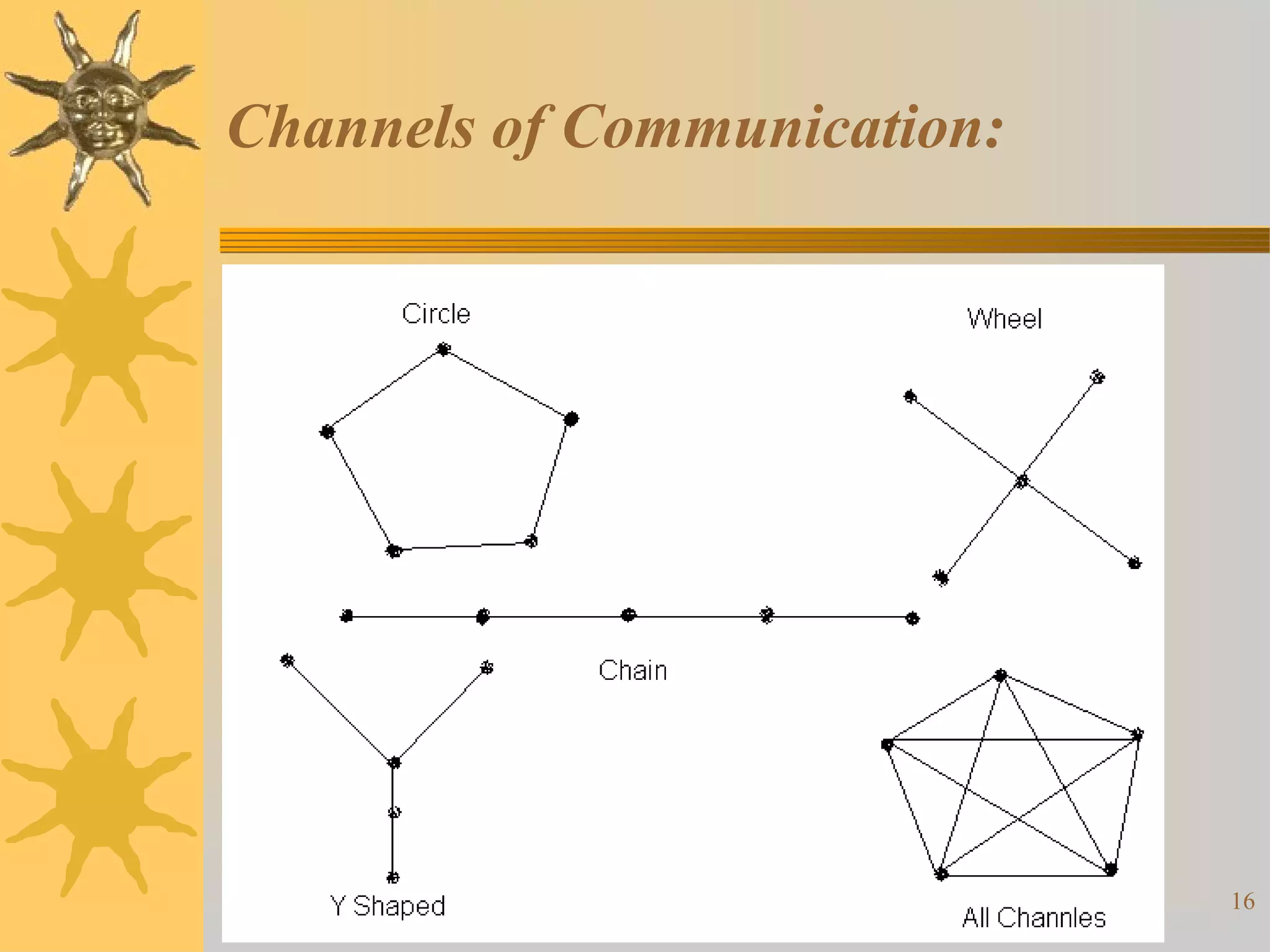
Channels of Communication:


                             16
Barriers to communication

 Filtering Barriers

 Language Barriers

 Physical Barriers

 Status Barriers

 Emotional Barriers


                             17
How to make communication
           effective

 Language

 Regulating the flow

 Feedback

 Listening carefully


                              18

Organisation development

  • 1.
  • 2.
    Meaning  OD isa systematic, integrated and planned approach to improve the effectiveness of the enterprise. It is designed to solve the problems that adversely affect the operational efficiency at all levels. 2
  • 3.
    Characteristics of OD OD is a systematic approach to planned change. It is a structured cycle of diagnosing organizational problems and opportunities and then applying expertise to them.  OD is grounded in solid research & theory. It involves the application of our knowledge of the behavioral science to the challenges that the organization face.  OD recognizes the reciprocal relationship between individuals and organization. It acknowledges that for organizations to change, individuals must change.  OD is goal oriented. It is a process that speaks to improve both individuals and organizational well being and effectiveness. 3  OD is designed to solve problems.
  • 4.
    Objectives of OD: To improve organizational performance as measured by profitabi.ity, market share, innovations etc.,  Make organization better adaptive to its environment.  Make the members willing face organizational problems and contribute creative solution to the organizational problems.  Improve internal behavior patterns such as interpersonal relations, intergroup relations, level of trust and support.  Understand one’s won and others, openness and meaning communication and involvement in planning for organizational development. 4
  • 5.
    Assumptions:  Most ofthe individuals have drives towards personal growth and development.  Higher productivity can be achieved when the individual goals are integrated with organizational goals.  Cooperation is always more effective than conflict.  The suppression of feelings adversely affects problem solving, personal growth and satisfaction with one’s work.  The growth of individual members is facilitated by relationships that are open, supportive and trusting.  The difference between commitment and agreement must be fully understood.  OD programmes, if they are to succeed, must be reinforced by 5 the organizational total human resource system.
  • 6.
    OD models:  KurtLewin’s Change model: Unfreezing  Change  Refreezing  Greiner’s model: Change occurs in terms of certain sequential stages.  Leavitt’s model: Interactive nature of the various subsystems in the change process. 6
  • 7.
  • 8.
    OD interventions  Individualfocused  Organization focused 8
  • 9.
    Individual focused  Sensitivity training  Skill training  Job redesigning  Role negotiation  Career planning 9
  • 10.
    Organization focused  Survey feedback  MBO  QWL  Team building  Process consultation  Grid training 10
  • 11.
    Factors influencing choiceof and OD intervention:  Applicability  Feasibility  Acceptability 11
  • 12.
    Communication  Meaning Transference of messages or exchange of ideas, facts, opinion or feelings by 2 or more persons. It is an art of making one’s ideas and opinion known to others. 12
  • 13.
    Nature of Communication: Communication involves 2 parties  The 2 parties must have the ability to convey as well as to listen  Communication includes sending and also receiving the response to the message.  The message can be conveyed verbally, in written, by means of signs, gestures or symbols.  Communication is a continuous process. 13
  • 14.
    Need for Communication Adequate and timely Communication helps managers discharge their functions of planning, organising, staffing, directing and controlling.  Ensures willing, cooperation  A good communication system communicating quality information contributes positively to the quality of decisions.  Coordination of activities across the departments in the organization.  Moulds attitude and builds up employee morale. 14
  • 15.
    Process of Communication Communicator  Encoding  Message  medium  Decoding  Receiver  Feed back. 15
  • 16.
  • 17.
    Barriers to communication Filtering Barriers  Language Barriers  Physical Barriers  Status Barriers  Emotional Barriers 17
  • 18.
    How to makecommunication effective  Language  Regulating the flow  Feedback  Listening carefully 18