11/20/2015
Food Processing
Possibilities in Organic Processing
& Products
ACORN Conference & Trade Show
November 24, 2015
Presenters:
Ed Charter, BioFoodTech
Nathan Archibald, PEI Berries Ltd.
John Rowe, Island Abbey Foods
Outline
11/20/2015
• Overview of BioFoodTech
• Trends in Food Products
• Processing – Getting more value
• Regulatory Oversight for Organic Processing
• Success Stories:
• PEI Berries Ltd. & Island Abbey Foods
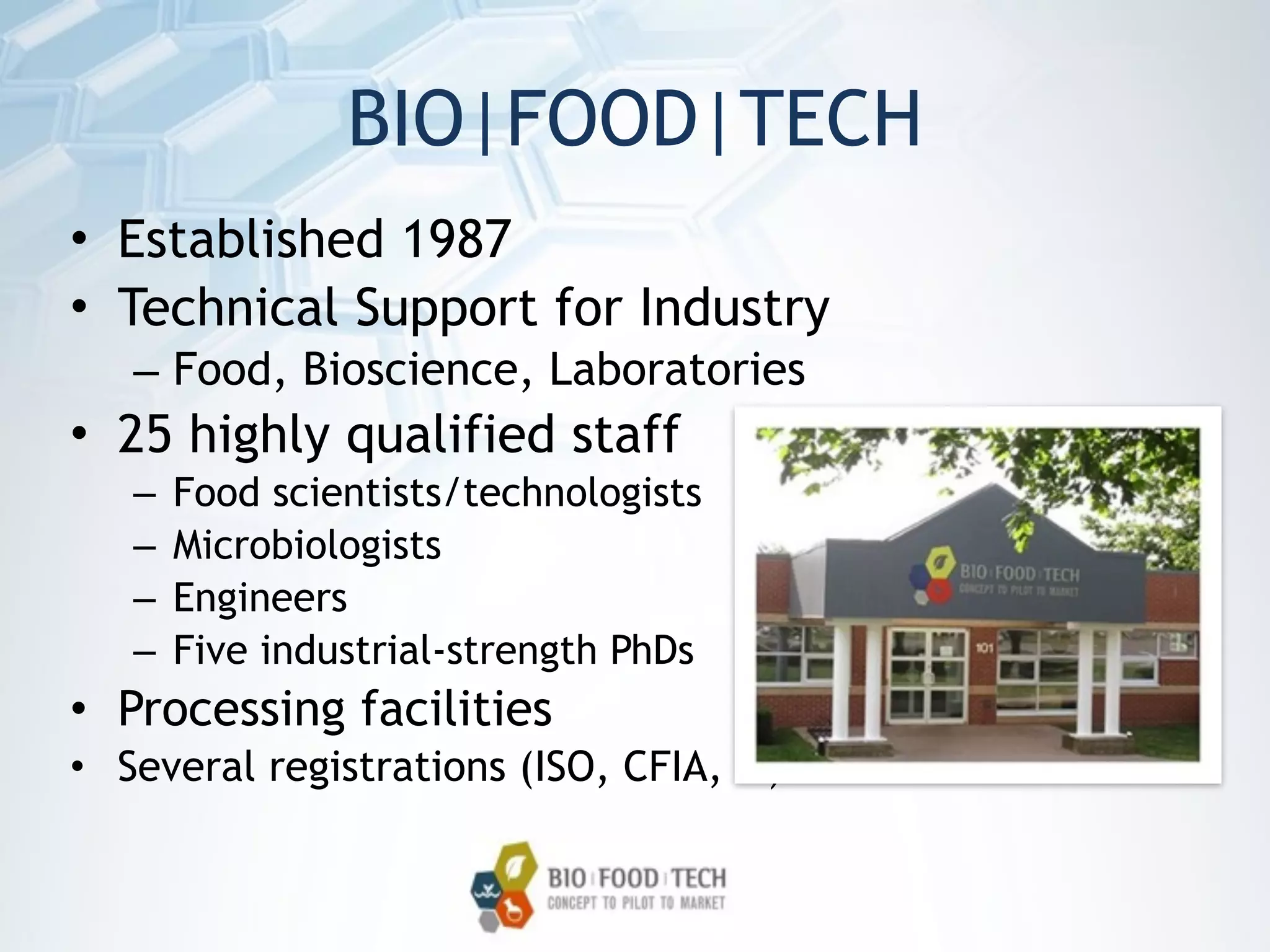
BIO|FOOD|TECH
• Established 1987
• Technical Support for Industry
– Food, Bioscience, Laboratories
• 25 highly qualified staff
– Food scientists/technologists
– Microbiologists
– Engineers
– Five industrial-strength PhDs
• Processing facilities
• Several registrations (ISO, CFIA, …)
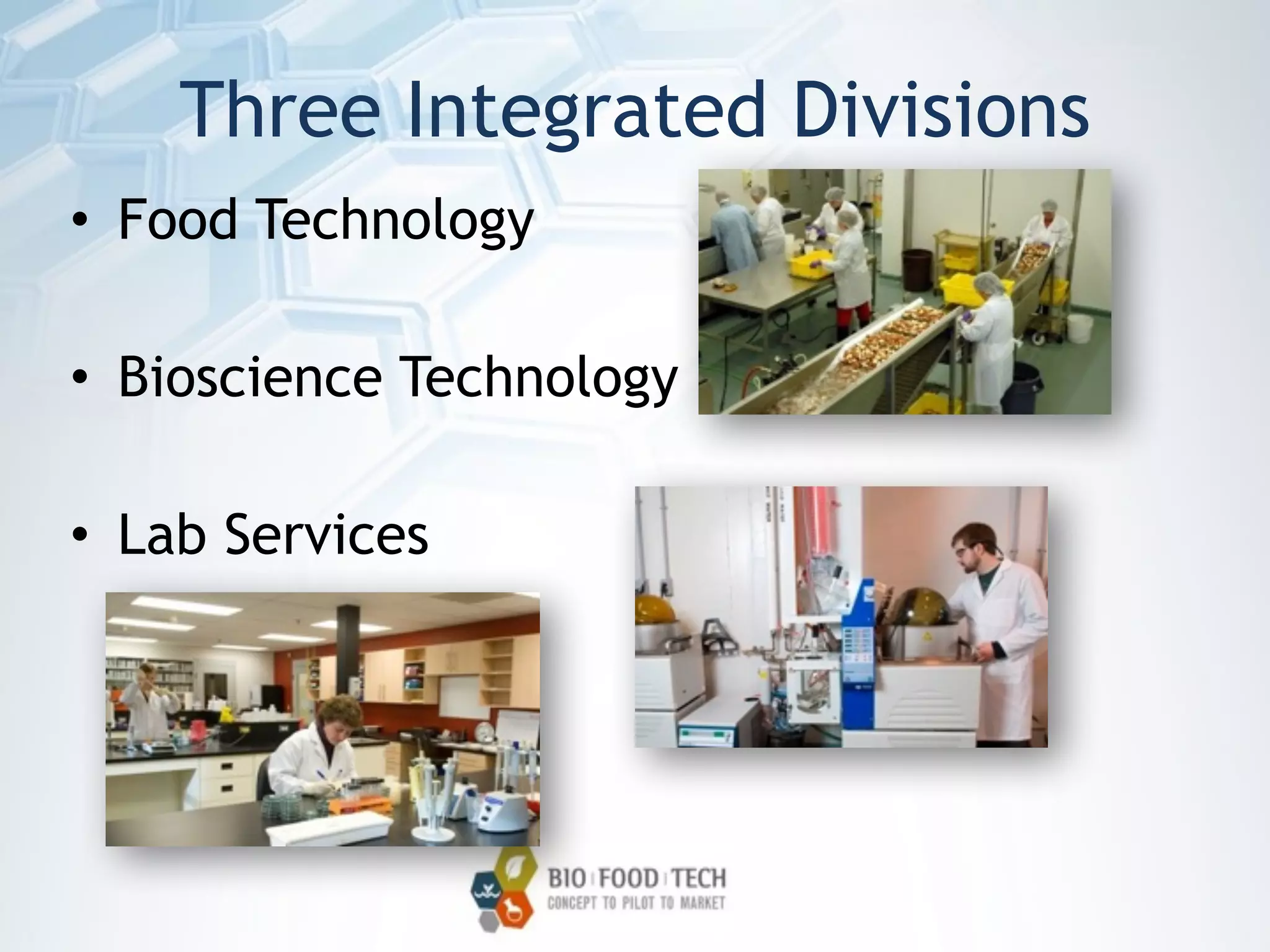
Three Integrated Divisions
• Food Technology
• Bioscience Technology
• Lab Services
Concept to Pilot to Market
• Turn concept ideas into prototypes in
product development lab
• Process scale-up - in pilot plant (small to
large scale equipment)
• Manufacture in pilot plant for market
Natural & Organic Trends in Food
Product Development
• “Fresh” foods (ie,
refrigerated vs. frozen)
• Clean labels (no artificial
colours/flavours; no
“chemicals”, no scientific
sounding ingredients)
• Healthier snacking (more
protein, vegetables)
• Rethinking
“natural” (organic,
non-GMO, local)
• Whole Food Nutrition
• Exclusion Diets
(vegetarian, gluten-
free)
6
Consumer demand for:
Why on earth would you want to
process my food!?!
11/20/2015
thebabyface.wordpress.com
Why Process Foods?
11/20/2015
Consumed within 45 min Consumed within 1 year
Available in season Available 365 days a year
Requiring preparation Ready to eat (or easily prepared)
Frozen, canned Refrigerated
Preserved with chemicals Clean label
To go from:
From Kitchen to Shelf
Benefits of processing
Benefits for the consumer:
• Convenience
• Longer shelf life and food safety
• Variety
• Maintain nutrition and quality
Benefits for the processor
• Distribution to further markets (time and distance)
• Food safety, especially for larger volume suppliers
• Spreading out handling and processing beyond harvest
• Use of good quality culls
• Enhanced/released nutrients (e.g. fermentation)

11/20/2015
Regulatory Oversight

Food Processing
▪ 2 categories:
1. Regulated products that require facility registration (for
export) Examples: Meat, fish/seafood, honey, processed
products with standards, etc.
2. Non-regulated products do not require facility registration.
Examples; baked goods, cereals, beverages, infant foods,
confectionary, etc.
▪ For most smaller processors (not exporting) don’t require
registration, but should follow “General Principles of
Safe Food Production”
▪ Info on regulations, “good manufacturing practices”,
etc., are all on CFIA’s website: www.inspection.gc.ca
11/20/2015
Regulatory Oversight

Organic Products
• CFIA’s Organic Products Regulations & General
Principles and Management Standards apply to organic
certified ‘processed products’
• Accredited bodies certify products (who are certified by
CFIA)
• General Principles covers:
– Section 8.3: Processing and Handling
– Section 8.4: Pest Management
– Section 8.5: Transportation
– Permitted Substances Lists (e.g., for food additives,
processing aids, sanitation materials)
11/20/2015
Section 8.3 Processing & Handling
• Minimally processed: mechanical, physical and
biological
• Allowed substances: processing aids and
additives - must be are consistent with organic
• No co-mingling (products and packaging)
during process, storage and transportation
• Separate non-organic processing areas/
batches
• Use cleaning agents appropriate for organic
foods and storage vessels
11/20/2015
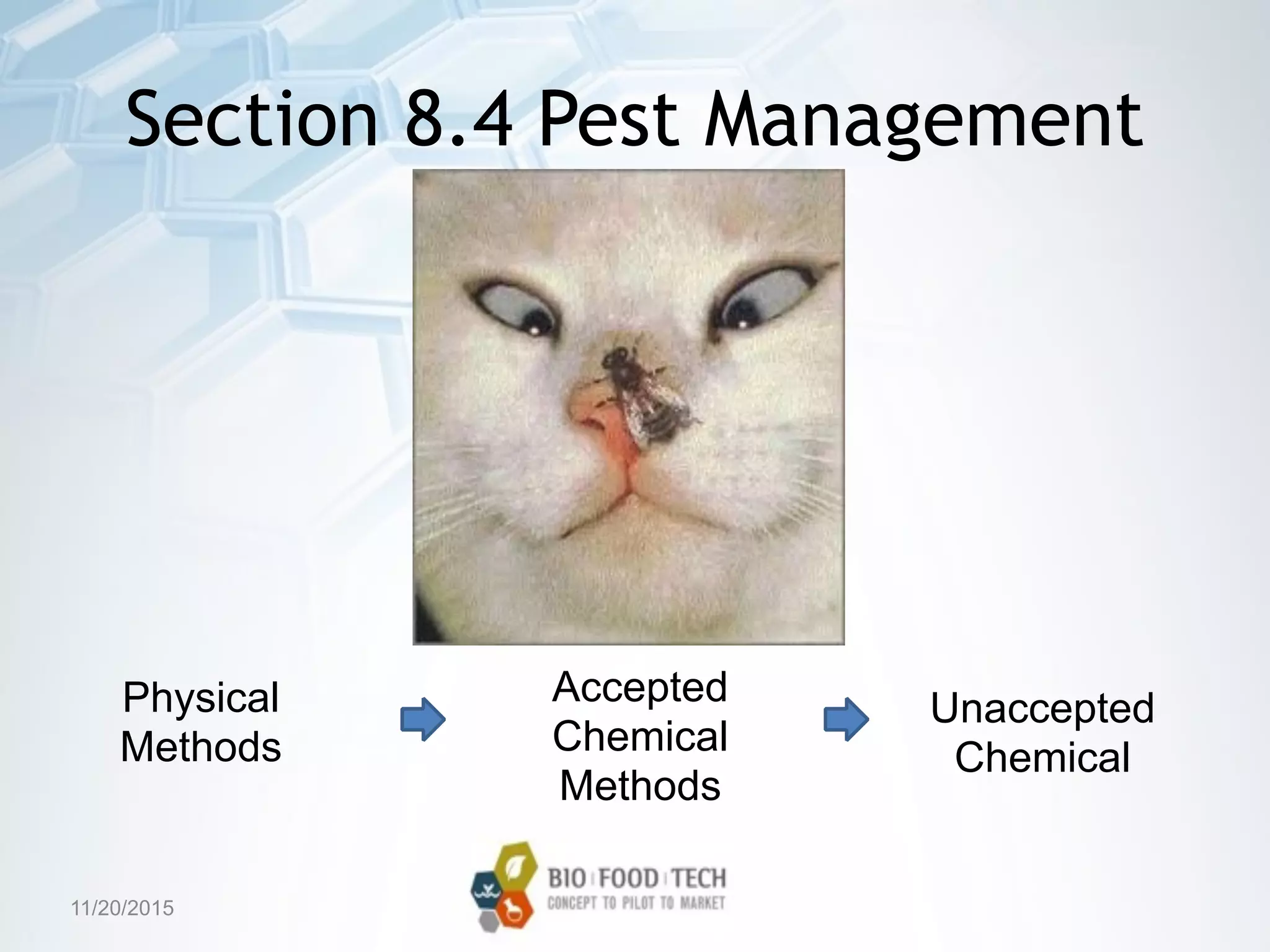
Section 8.4 Pest Management
11/20/2015
Accepted
Chemical
Methods
Physical
Methods
Unaccepted
Chemical
Section 8.5 Transportation
• No co-mingling
• Must ensure through
physical separation
and documentation
(traceability)
11/20/2015
Labeling Requirements
11/20/2015
Labeling Organic Foods
• Foods must be
certified by
accredited body
(list on CFIA
website)
• To state organic,
or use the logo,
>95% of
ingredients must
be certified
organic.
• If 70% to 95%
organic ingredients,
may be labeled
“contains X%
organic
ingredients”
• Multi-ingredient
products with less
than 70% organic
content may only
identify organics in
the ingredient list.
11/20/2015
Additional BIO|FOOD|TECH Support
• Artisan Workshops
– Fermented Foods*
– Cheesemaking*
– Fermented beverages
– Distillation
• Site visits
• Supplier/equipment support
• NRC/IRAP feasibility projects
• Food Product Dev Fund
*upcoming 2016
11/20/2015
Atlantic Region 

Technology Centres
• BioFoodTech, Charlottetown, PE (pilot plant and incubation)
• Perennia, Truro, NS (pilot plant and incubation)
• Coastal Zones Research Institute, Shippagan, NB (pilot
plant)
• Marine Institute, St. John’s, NL (pilot plant)
• University staff/faculty/students engaged in technical
industry support (Dalhousie, Acadia, U of Moncton, etc... )
Because there are many things to
consider in commercializing a food
product, build a solid support team.
11/20/2015

Organic processing

  • 1.
    11/20/2015 Food Processing Possibilities inOrganic Processing & Products ACORN Conference & Trade Show November 24, 2015 Presenters: Ed Charter, BioFoodTech Nathan Archibald, PEI Berries Ltd. John Rowe, Island Abbey Foods
  • 2.
    Outline 11/20/2015 • Overview ofBioFoodTech • Trends in Food Products • Processing – Getting more value • Regulatory Oversight for Organic Processing • Success Stories: • PEI Berries Ltd. & Island Abbey Foods
  • 3.
    BIO|FOOD|TECH • Established 1987 •Technical Support for Industry – Food, Bioscience, Laboratories • 25 highly qualified staff – Food scientists/technologists – Microbiologists – Engineers – Five industrial-strength PhDs • Processing facilities • Several registrations (ISO, CFIA, …)
  • 4.
    Three Integrated Divisions •Food Technology • Bioscience Technology • Lab Services
  • 5.
    Concept to Pilotto Market • Turn concept ideas into prototypes in product development lab • Process scale-up - in pilot plant (small to large scale equipment) • Manufacture in pilot plant for market
  • 6.
    Natural & OrganicTrends in Food Product Development • “Fresh” foods (ie, refrigerated vs. frozen) • Clean labels (no artificial colours/flavours; no “chemicals”, no scientific sounding ingredients) • Healthier snacking (more protein, vegetables) • Rethinking “natural” (organic, non-GMO, local) • Whole Food Nutrition • Exclusion Diets (vegetarian, gluten- free) 6 Consumer demand for:
  • 7.
    Why on earthwould you want to process my food!?! 11/20/2015 thebabyface.wordpress.com
  • 8.
    Why Process Foods? 11/20/2015 Consumedwithin 45 min Consumed within 1 year Available in season Available 365 days a year Requiring preparation Ready to eat (or easily prepared) Frozen, canned Refrigerated Preserved with chemicals Clean label To go from: From Kitchen to Shelf
  • 9.
    Benefits of processing Benefitsfor the consumer: • Convenience • Longer shelf life and food safety • Variety • Maintain nutrition and quality Benefits for the processor • Distribution to further markets (time and distance) • Food safety, especially for larger volume suppliers • Spreading out handling and processing beyond harvest • Use of good quality culls • Enhanced/released nutrients (e.g. fermentation)
 11/20/2015
  • 10.
    Regulatory Oversight
 Food Processing ▪2 categories: 1. Regulated products that require facility registration (for export) Examples: Meat, fish/seafood, honey, processed products with standards, etc. 2. Non-regulated products do not require facility registration. Examples; baked goods, cereals, beverages, infant foods, confectionary, etc. ▪ For most smaller processors (not exporting) don’t require registration, but should follow “General Principles of Safe Food Production” ▪ Info on regulations, “good manufacturing practices”, etc., are all on CFIA’s website: www.inspection.gc.ca 11/20/2015
  • 11.
    Regulatory Oversight
 Organic Products •CFIA’s Organic Products Regulations & General Principles and Management Standards apply to organic certified ‘processed products’ • Accredited bodies certify products (who are certified by CFIA) • General Principles covers: – Section 8.3: Processing and Handling – Section 8.4: Pest Management – Section 8.5: Transportation – Permitted Substances Lists (e.g., for food additives, processing aids, sanitation materials) 11/20/2015
  • 12.
    Section 8.3 Processing& Handling • Minimally processed: mechanical, physical and biological • Allowed substances: processing aids and additives - must be are consistent with organic • No co-mingling (products and packaging) during process, storage and transportation • Separate non-organic processing areas/ batches • Use cleaning agents appropriate for organic foods and storage vessels 11/20/2015
  • 13.
    Section 8.4 PestManagement 11/20/2015 Accepted Chemical Methods Physical Methods Unaccepted Chemical
  • 14.
    Section 8.5 Transportation •No co-mingling • Must ensure through physical separation and documentation (traceability) 11/20/2015
  • 15.
  • 16.
    Labeling Organic Foods •Foods must be certified by accredited body (list on CFIA website) • To state organic, or use the logo, >95% of ingredients must be certified organic. • If 70% to 95% organic ingredients, may be labeled “contains X% organic ingredients” • Multi-ingredient products with less than 70% organic content may only identify organics in the ingredient list. 11/20/2015
  • 17.
    Additional BIO|FOOD|TECH Support •Artisan Workshops – Fermented Foods* – Cheesemaking* – Fermented beverages – Distillation • Site visits • Supplier/equipment support • NRC/IRAP feasibility projects • Food Product Dev Fund *upcoming 2016 11/20/2015
  • 18.
    Atlantic Region 
 TechnologyCentres • BioFoodTech, Charlottetown, PE (pilot plant and incubation) • Perennia, Truro, NS (pilot plant and incubation) • Coastal Zones Research Institute, Shippagan, NB (pilot plant) • Marine Institute, St. John’s, NL (pilot plant) • University staff/faculty/students engaged in technical industry support (Dalhousie, Acadia, U of Moncton, etc... ) Because there are many things to consider in commercializing a food product, build a solid support team. 11/20/2015