DRYING AND
DEHYDRATION
Presented by
Shaswat Tiwari
Ph.D. ( PHP & FE)
Submitted to
Dr. Mohan Singh
Professor and Head
Department of Post Harvest Process and Food
Engineering
College of Agricultural Engineering
Jawahar Lal Nehru Krishi Vishwavidyalaya
Jabalpur MP
Contents
 Introduction
 Moisture Migration During Drying
Process
 Drying Rate Curve
 Difference Between Drying and
Dehydration
 Importance of Drying Process
 Drying Methods
 Mechanical Dryer Methods
 Types of Dryer
Introduction
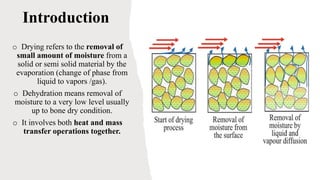
o Drying refers to the removal of
small amount of moisture from a
solid or semi solid material by the
evaporation (change of phase from
liquid to vapors /gas).
o Dehydration means removal of
moisture to a very low level usually
up to bone dry condition.
o It involves both heat and mass
transfer operations together.
Moisture Migration During Drying Process
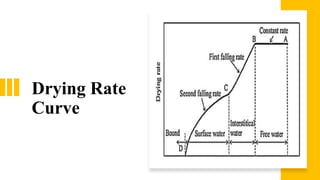
Drying Rate
Curve
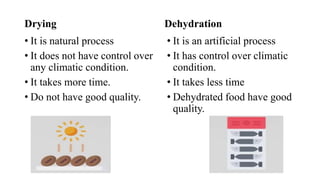
Drying
• It is natural process
• It does not have control over
any climatic condition.
• It takes more time.
• Do not have good quality.
Dehydration
• It is an artificial process
• It has control over climatic
condition.
• It takes less time
• Dehydrated food have good
quality.
Importance of Drying Process
Minimize Microbial
Spoilage
Continuous Supply of
Commodity
Early Harvest
Better Quality
Available During off
Season
Improved Milling
Food Product Development
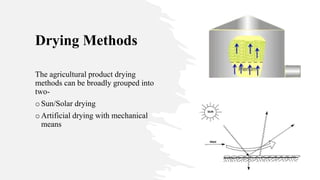
Drying Methods
The agricultural product drying
methods can be broadly grouped into
two-
oSun/Solar drying
oArtificial drying with mechanical
means
Mechanical
Drying Methods
Contact Drying
Convective Drying
Freeze drying
Radiation Drying
Super heated steam drying
Fluidized Bed Drying
Contact Drying
• In this method of drying heat is
supplied to wet products by
conduction.
• The commonly used heating medium
in conduction drying are steam,
organic liquids, metals and other
materials with high value of heat
transfer coefficient.
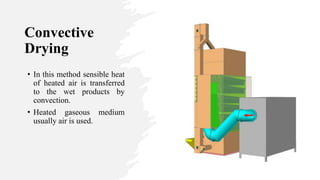
Convective
Drying
• In this method sensible heat
of heated air is transferred
to the wet products by
convection.
• Heated gaseous medium
usually air is used.
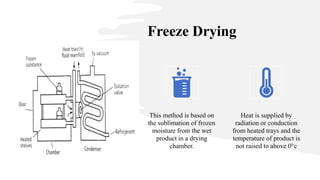
Freeze Drying
This method is based on
the sublimation of frozen
moisture from the wet
product in a drying
chamber.
Heat is supplied by
radiation or conduction
from heated trays and the
temperature of product is
not raised to above 0°c
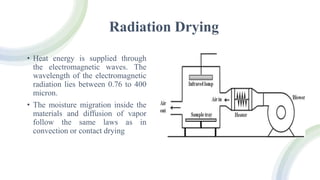
Radiation Drying
• Heat energy is supplied through
the electromagnetic waves. The
wavelength of the electromagnetic
radiation lies between 0.76 to 400
micron.
• The moisture migration inside the
materials and diffusion of vapor
follow the same laws as in
convection or contact drying
Super Heated steam drying
• Superheated steam drying (SSD)
uses steam heated beyond its boiling
point to remove moisture from
materials. This creates a unique drying
environment with several advantages
over traditional hot air drying.
• Advantage
• Faster drying
• Higher quality
• Energy efficiency
• Sanitization
Fluidized Bed drying
In this method of
drying products are
being dried under
fluidized condition in a
dryer.
The materials are
fluidized by drying
air with sufficiently
high velocity to
cause suspension.
Types of
dryer-
Deep bed Dryer
Flat bed Dryer
Recirculating Dryer
LSU Dryer
Rotary Dryer
Tray Dryer
Tunnel Dryer
Spray Dryer
Vacuum Dryer
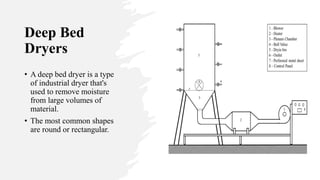
Deep Bed
Dryers
• A deep bed dryer is a type
of industrial dryer that's
used to remove moisture
from large volumes of
material.
• The most common shapes
are round or rectangular.
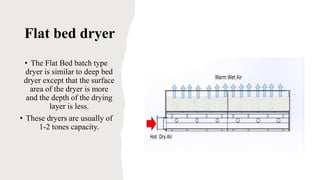
Flat bed dryer
• The Flat Bed batch type
dryer is similar to deep bed
dryer except that the surface
area of the dryer is more
and the depth of the drying
layer is less.
• These dryers are usually of
1-2 tones capacity.
Recirculating Dryer
• In a re-circulating dryer the same quantity
of grain is recycled through the dryer until
final moisture content is reached.
• Recirculatory batch dryer is a continuous
flow non mixing type of grain dryer.
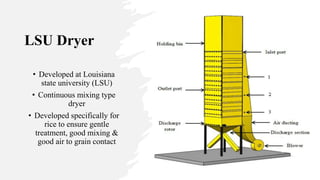
LSU Dryer
• Developed at Louisiana
state university (LSU)
• Continuous mixing type
dryer
• Developed specifically for
rice to ensure gentle
treatment, good mixing &
good air to grain contact
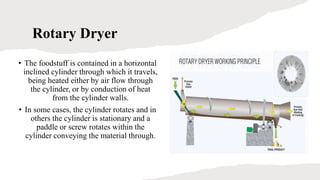
Rotary Dryer
• The foodstuff is contained in a horizontal
inclined cylinder through which it travels,
being heated either by air flow through
the cylinder, or by conduction of heat
from the cylinder walls.
• In some cases, the cylinder rotates and in
others the cylinder is stationary and a
paddle or screw rotates within the
cylinder conveying the material through.
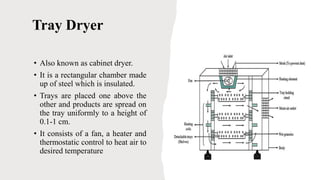
Tray Dryer
• Also known as cabinet dryer.
• It is a rectangular chamber made
up of steel which is insulated.
• Trays are placed one above the
other and products are spread on
the tray uniformly to a height of
0.1-1 cm.
• It consists of a fan, a heater and
thermostatic control to heat air to
desired temperature
Tunnel Dryer
• Tunnel dryers consist of long tunnels
through which trucks carrying stacks of
trays travel with or against a stream of
drying air.
• The material to be dried is evenly spread
on the trays.
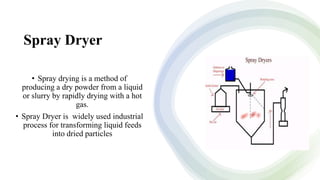
Spray Dryer
• Spray drying is a method of
producing a dry powder from a liquid
or slurry by rapidly drying with a hot
gas.
• Spray Dryer is widely used industrial
process for transforming liquid feeds
into dried particles
Vacuum Dryer
• A Vacuum Dryer is used
dry the materials by the
application of vacuum.
• Hence, water evaporates
faster. The heat transfer
becomes efficient for
example; the rate of drying
enhances substantially
Thank You

Drying and Dehydration.pptx

  • 1.
    DRYING AND DEHYDRATION Presented by ShaswatTiwari Ph.D. ( PHP & FE) Submitted to Dr. Mohan Singh Professor and Head Department of Post Harvest Process and Food Engineering College of Agricultural Engineering Jawahar Lal Nehru Krishi Vishwavidyalaya Jabalpur MP
  • 2.
    Contents  Introduction  MoistureMigration During Drying Process  Drying Rate Curve  Difference Between Drying and Dehydration  Importance of Drying Process  Drying Methods  Mechanical Dryer Methods  Types of Dryer
  • 3.
    Introduction o Drying refersto the removal of small amount of moisture from a solid or semi solid material by the evaporation (change of phase from liquid to vapors /gas). o Dehydration means removal of moisture to a very low level usually up to bone dry condition. o It involves both heat and mass transfer operations together.
  • 4.
  • 5.
  • 6.
    Drying • It isnatural process • It does not have control over any climatic condition. • It takes more time. • Do not have good quality. Dehydration • It is an artificial process • It has control over climatic condition. • It takes less time • Dehydrated food have good quality.
  • 7.
    Importance of DryingProcess Minimize Microbial Spoilage Continuous Supply of Commodity Early Harvest Better Quality Available During off Season Improved Milling Food Product Development
  • 8.
    Drying Methods The agriculturalproduct drying methods can be broadly grouped into two- oSun/Solar drying oArtificial drying with mechanical means
  • 9.
    Mechanical Drying Methods Contact Drying ConvectiveDrying Freeze drying Radiation Drying Super heated steam drying Fluidized Bed Drying
  • 10.
    Contact Drying • Inthis method of drying heat is supplied to wet products by conduction. • The commonly used heating medium in conduction drying are steam, organic liquids, metals and other materials with high value of heat transfer coefficient.
  • 11.
    Convective Drying • In thismethod sensible heat of heated air is transferred to the wet products by convection. • Heated gaseous medium usually air is used.
  • 12.
    Freeze Drying This methodis based on the sublimation of frozen moisture from the wet product in a drying chamber. Heat is supplied by radiation or conduction from heated trays and the temperature of product is not raised to above 0°c
  • 13.
    Radiation Drying • Heatenergy is supplied through the electromagnetic waves. The wavelength of the electromagnetic radiation lies between 0.76 to 400 micron. • The moisture migration inside the materials and diffusion of vapor follow the same laws as in convection or contact drying
  • 14.
    Super Heated steamdrying • Superheated steam drying (SSD) uses steam heated beyond its boiling point to remove moisture from materials. This creates a unique drying environment with several advantages over traditional hot air drying. • Advantage • Faster drying • Higher quality • Energy efficiency • Sanitization
  • 16.
    Fluidized Bed drying Inthis method of drying products are being dried under fluidized condition in a dryer. The materials are fluidized by drying air with sufficiently high velocity to cause suspension.
  • 18.
    Types of dryer- Deep bedDryer Flat bed Dryer Recirculating Dryer LSU Dryer Rotary Dryer Tray Dryer Tunnel Dryer Spray Dryer Vacuum Dryer
  • 19.
    Deep Bed Dryers • Adeep bed dryer is a type of industrial dryer that's used to remove moisture from large volumes of material. • The most common shapes are round or rectangular.
  • 20.
    Flat bed dryer •The Flat Bed batch type dryer is similar to deep bed dryer except that the surface area of the dryer is more and the depth of the drying layer is less. • These dryers are usually of 1-2 tones capacity.
  • 21.
    Recirculating Dryer • Ina re-circulating dryer the same quantity of grain is recycled through the dryer until final moisture content is reached. • Recirculatory batch dryer is a continuous flow non mixing type of grain dryer.
  • 22.
    LSU Dryer • Developedat Louisiana state university (LSU) • Continuous mixing type dryer • Developed specifically for rice to ensure gentle treatment, good mixing & good air to grain contact
  • 23.
    Rotary Dryer • Thefoodstuff is contained in a horizontal inclined cylinder through which it travels, being heated either by air flow through the cylinder, or by conduction of heat from the cylinder walls. • In some cases, the cylinder rotates and in others the cylinder is stationary and a paddle or screw rotates within the cylinder conveying the material through.
  • 24.
    Tray Dryer • Alsoknown as cabinet dryer. • It is a rectangular chamber made up of steel which is insulated. • Trays are placed one above the other and products are spread on the tray uniformly to a height of 0.1-1 cm. • It consists of a fan, a heater and thermostatic control to heat air to desired temperature
  • 25.
    Tunnel Dryer • Tunneldryers consist of long tunnels through which trucks carrying stacks of trays travel with or against a stream of drying air. • The material to be dried is evenly spread on the trays.
  • 26.
    Spray Dryer • Spraydrying is a method of producing a dry powder from a liquid or slurry by rapidly drying with a hot gas. • Spray Dryer is widely used industrial process for transforming liquid feeds into dried particles
  • 27.
    Vacuum Dryer • AVacuum Dryer is used dry the materials by the application of vacuum. • Hence, water evaporates faster. The heat transfer becomes efficient for example; the rate of drying enhances substantially
  • 28.