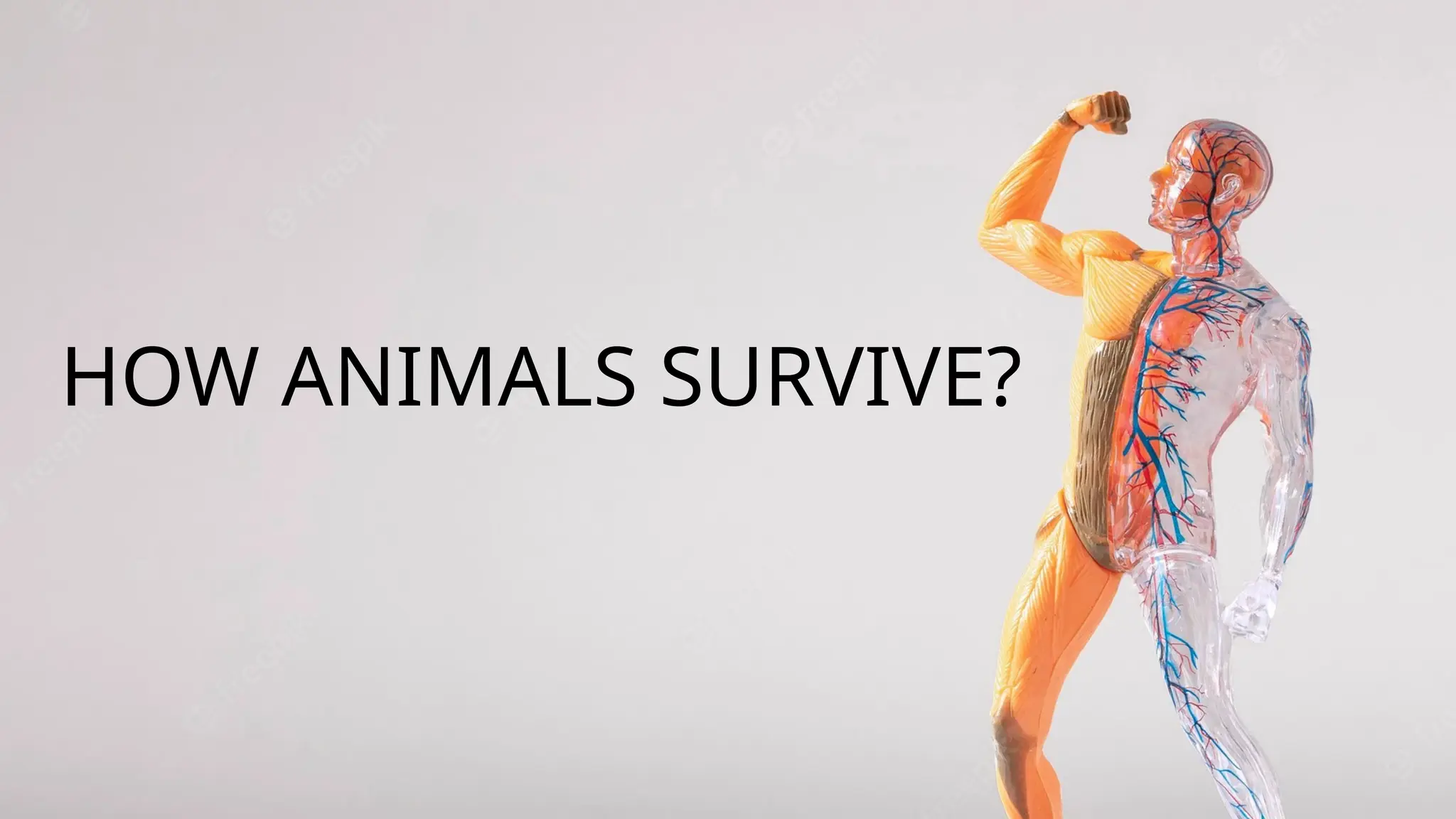
HOW ANIMALS SURVIVE?
An organ system is a group of organs that
work together to perform a certain function in
an organism’s body. Most animals and plants
have organs, which are self-contained groups
of tissues such as the heart that work
together to perform one function.
11 MAJOR ORGAN
SYSTEMS IN THE
HUMAN BODY
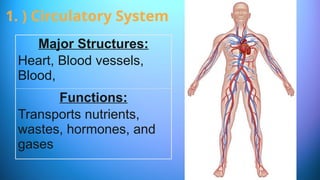
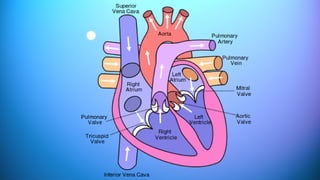
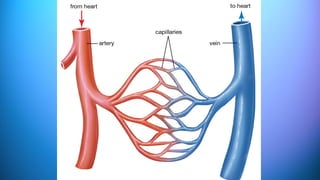
1. ) Circulatory System
Major Structures:
Heart, Blood vessels,
Blood,
Functions:
Transports nutrients,
wastes, hormones, and
gases
Major Structures:
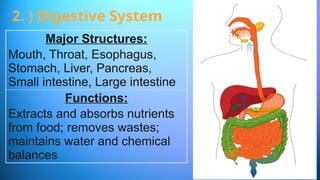
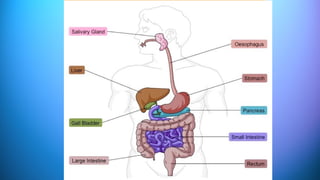
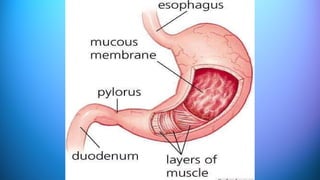
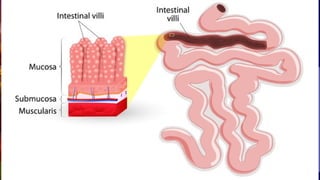
Mouth, Throat, Esophagus,
Stomach, Liver, Pancreas,
Small intestine, Large intestine
Functions:
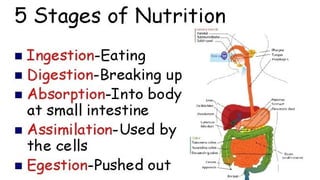
Extracts and absorbs nutrients
from food; removes wastes;
maintains water and chemical
balances
2. ) Digestive System
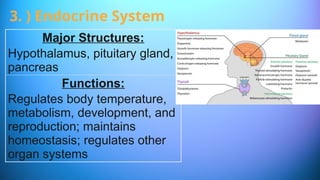
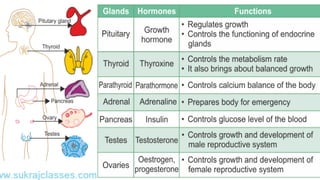
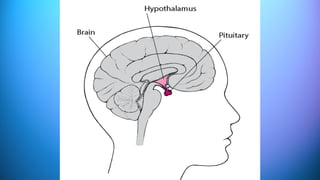
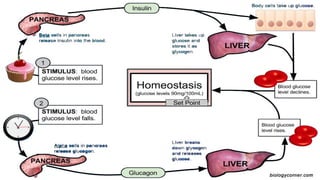
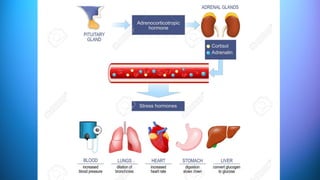
Major Structures:
Hypothalamus, pituitary gland,
pancreas
Functions:
Regulates body temperature,
metabolism, development, and
reproduction; maintains
homeostasis; regulates other
organ systems
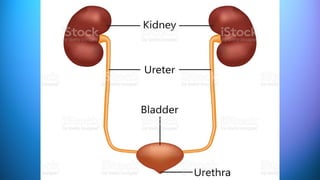
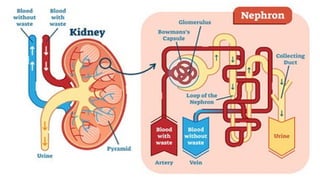
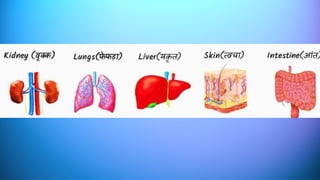
3. ) Endocrine System
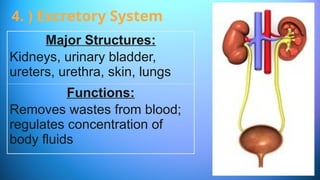
Major Structures:
Kidneys, urinary bladder,
ureters, urethra, skin, lungs
Functions:
Removes wastes from blood;
regulates concentration of
body fluids
4. ) Excretory System
Major Structures:
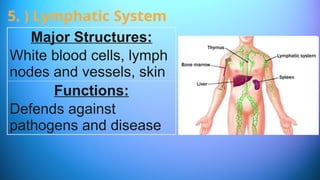
White blood cells, lymph
nodes and vessels, skin
Functions:
Defends against
pathogens and disease
5. ) Lymphatic System
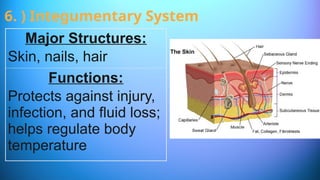
Major Structures:
Skin, nails, hair
Functions:
Protects against injury,
infection, and fluid loss;
helps regulate body
temperature
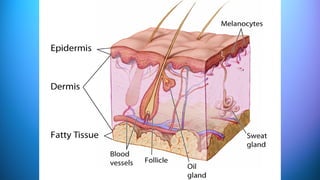
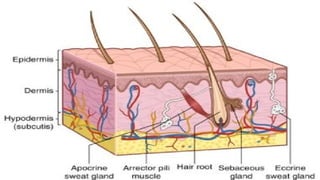
6. ) Integumentary System
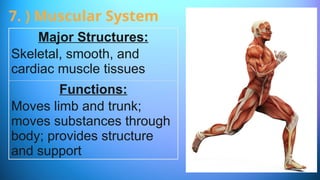
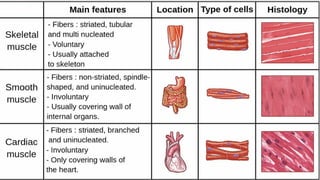
Major Structures:
Skeletal, smooth, and
cardiac muscle tissues
Functions:
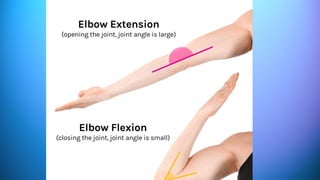
Moves limb and trunk;
moves substances through
body; provides structure
and support
7. ) Muscular System
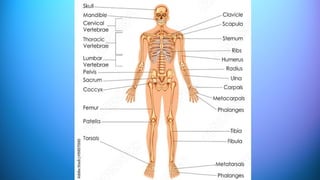
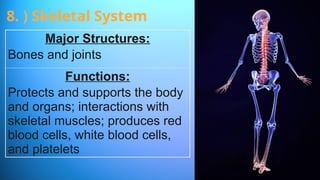
Major Structures:
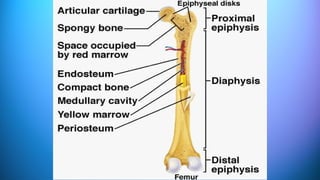
Bones and joints
Functions:
Protects and supports the body
and organs; interactions with
skeletal muscles; produces red
blood cells, white blood cells,
and platelets
8. ) Skeletal System
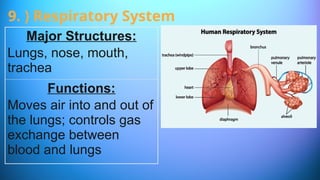
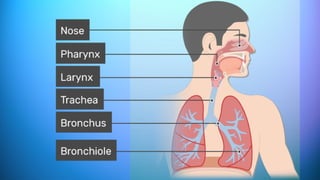
Major Structures:
Lungs, nose, mouth,
trachea
Functions:
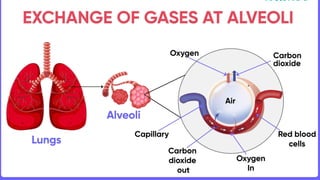
Moves air into and out of
the lungs; controls gas
exchange between
blood and lungs
9. ) Respiratory System
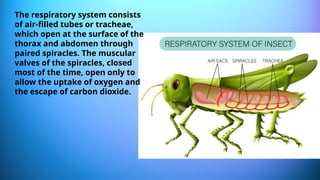
The respiratory system consists
of air-filled tubes or tracheae,
which open at the surface of the
thorax and abdomen through
paired spiracles. The muscular
valves of the spiracles, closed
most of the time, open only to
allow the uptake of oxygen and
the escape of carbon dioxide.
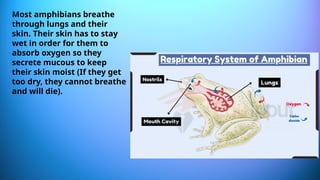
Most amphibians breathe
through lungs and their
skin. Their skin has to stay
wet in order for them to
absorb oxygen so they
secrete mucous to keep
their skin moist (If they get
too dry, they cannot breathe
and will die).
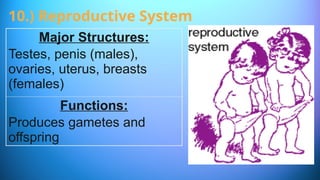
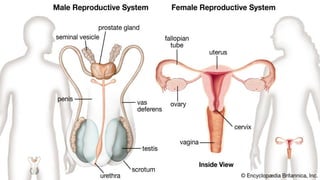
Major Structures:
Testes, penis (males),
ovaries, uterus, breasts
(females)
Functions:
Produces gametes and
offspring
10.) Reproductive System
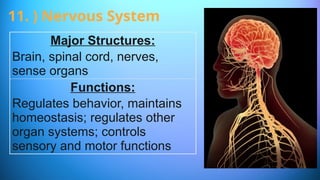
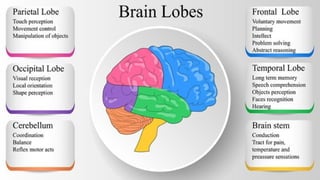
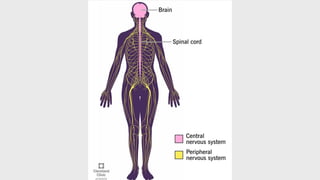
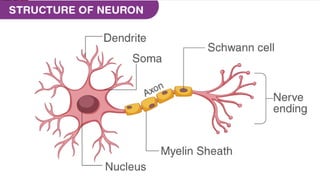
Major Structures:
Brain, spinal cord, nerves,
sense organs
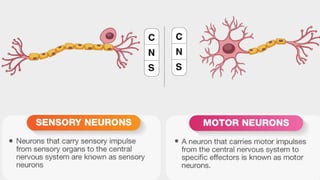
Functions:
Regulates behavior, maintains
homeostasis; regulates other
organ systems; controls
sensory and motor functions
11. ) Nervous System
Organ systems in Representative Animals .pptx

Organ systems in Representative Animals .pptx

  • 1.
  • 2.
    An organ systemis a group of organs that work together to perform a certain function in an organism’s body. Most animals and plants have organs, which are self-contained groups of tissues such as the heart that work together to perform one function.
  • 3.
    11 MAJOR ORGAN SYSTEMSIN THE HUMAN BODY
  • 4.
    1. ) CirculatorySystem Major Structures: Heart, Blood vessels, Blood, Functions: Transports nutrients, wastes, hormones, and gases
  • 10.
    Major Structures: Mouth, Throat,Esophagus, Stomach, Liver, Pancreas, Small intestine, Large intestine Functions: Extracts and absorbs nutrients from food; removes wastes; maintains water and chemical balances 2. ) Digestive System
  • 16.
    Major Structures: Hypothalamus, pituitarygland, pancreas Functions: Regulates body temperature, metabolism, development, and reproduction; maintains homeostasis; regulates other organ systems 3. ) Endocrine System
  • 21.
    Major Structures: Kidneys, urinarybladder, ureters, urethra, skin, lungs Functions: Removes wastes from blood; regulates concentration of body fluids 4. ) Excretory System
  • 26.
    Major Structures: White bloodcells, lymph nodes and vessels, skin Functions: Defends against pathogens and disease 5. ) Lymphatic System
  • 29.
    Major Structures: Skin, nails,hair Functions: Protects against injury, infection, and fluid loss; helps regulate body temperature 6. ) Integumentary System
  • 34.
    Major Structures: Skeletal, smooth,and cardiac muscle tissues Functions: Moves limb and trunk; moves substances through body; provides structure and support 7. ) Muscular System
  • 38.
    Major Structures: Bones andjoints Functions: Protects and supports the body and organs; interactions with skeletal muscles; produces red blood cells, white blood cells, and platelets 8. ) Skeletal System
  • 44.
    Major Structures: Lungs, nose,mouth, trachea Functions: Moves air into and out of the lungs; controls gas exchange between blood and lungs 9. ) Respiratory System
  • 47.
    The respiratory systemconsists of air-filled tubes or tracheae, which open at the surface of the thorax and abdomen through paired spiracles. The muscular valves of the spiracles, closed most of the time, open only to allow the uptake of oxygen and the escape of carbon dioxide.
  • 48.
    Most amphibians breathe throughlungs and their skin. Their skin has to stay wet in order for them to absorb oxygen so they secrete mucous to keep their skin moist (If they get too dry, they cannot breathe and will die).
  • 49.
    Major Structures: Testes, penis(males), ovaries, uterus, breasts (females) Functions: Produces gametes and offspring 10.) Reproductive System
  • 51.
    Major Structures: Brain, spinalcord, nerves, sense organs Functions: Regulates behavior, maintains homeostasis; regulates other organ systems; controls sensory and motor functions 11. ) Nervous System