What is Reflection?
Reflection is the process of
examining or thinking deeply
about our experiences and
perceptions. It is fundamental
to human consciousness and
plays a crucial role in how we
interpret and make sense of
our existence.
What is Reflection?
Through reflection, we develop
our understanding of
ourselves, others, and the
world around us. It helps us
process events, form beliefs,
and create meaning from our
lived experiences.
Primary Reflection: Definition
Primary reflection represents our immediate,
analytical approach to understanding
experiences. It is characterized by:
• Breaking down experiences into separate
components
• Calculating and measuring discrete aspects
• Approaching reality as a set of problems to solve
Primary Reflection: Definition
This mode of thinking treats experiences as
objects that can be separated from the self. It
creates distance between the thinker and what
is thought about, focusing on facts, evidence,
and observable phenomena.
Primary Reflection: Definition
This mode of thinking treats experiences as
objects that can be separated from the self. It
creates distance between the thinker and what
is thought about, focusing on facts, evidence,
and observable phenomena.
Example of Primary Reflection
Car Accident Analysis
Documenting the sequence of events,
measuring skid marks, calculating speeds,
determining which driver violated traffic rules,
and filing an insurance claim.

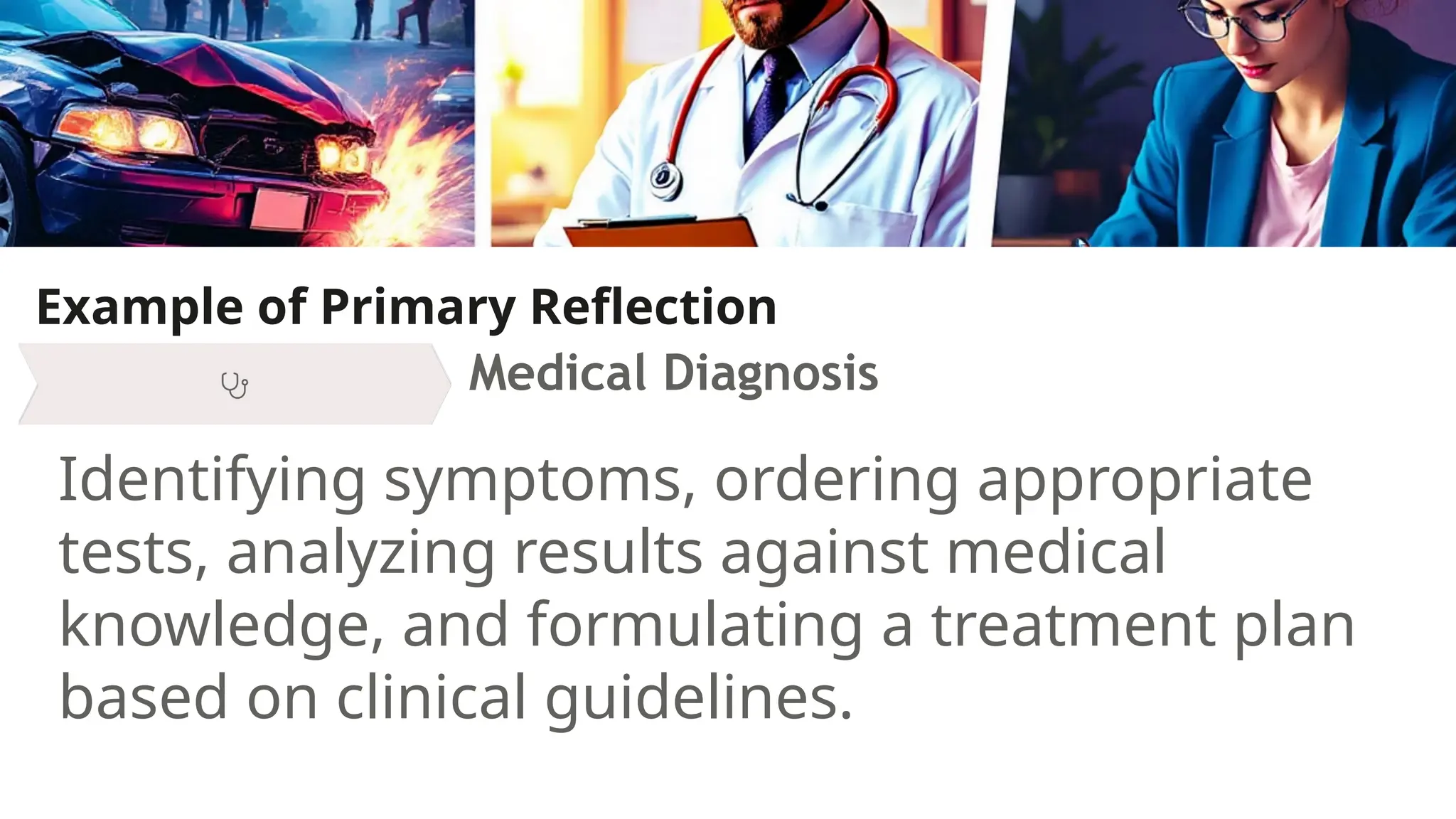
Example of Primary Reflection
Medical Diagnosis
Identifying symptoms, ordering appropriate
tests, analyzing results against medical
knowledge, and formulating a treatment plan
based on clinical guidelines.
Example of Primary Reflection
Academic Assessment
Checking answers against a key, counting
errors, calculating percentage scores, and
assigning grades based on predetermined
criteria.
Secondary Reflection: Definition
Secondary reflection moves beyond the
analytical to embrace a more holistic approach
to understanding. It is characterized by:
• Reintegrating previously divided aspects of
experience
• Recognizing the inseparability of self from
experience
• Considering the meaning and significance of
events
Secondary Reflection: Definition
This deeper form of reflection seeks to recover
the unity of experience that primary reflection
has fragmented. It acknowledges mystery and
embraces the subjective nature of human
existence, exploring how experiences
transform our understanding of ourselves and
our place in the world.
Example of Secondary
Reflection
Car Accident meaning
Contemplating how the
accident reveals your mortality,
questioning priorities in life,
reconsidering relationships with
loved ones, and reflecting on
how the experience has
changed your perspective on
taking risks.
Example of Secondary
Reflection
Holistic Healing
Considering how illness affects
the patient's sense of identity,
exploring ways to preserve
dignity during treatment, and
understanding the emotional
impact on family relationships
and support systems.
Example of Secondary
Reflection
Educational Growth
Reflecting on how assessment
practices affect student
motivation, considering the
ethical dimensions of
evaluation, and exploring how
grades shape students' self-
perception and learning
journey.
Reflection is not exclusive for
philosophy in fact it is employed in
any endeavour, research or
disciplines. In research it is called
methodological approach. Moral
theology employs the STOP sign as
guidepost of moral decision making.
Search out the facts. It is necessary
that all means should be exhausted to
better understand the issue.
Think, reflect and analyse the facts, its
negative or positive effects, advantages
or disadvantages.
How it affects Others. We should
always consider others in every decision
that we make. Every action that we take
has always a social dimension. It affects
ourselves, others and community where
we belong.
Lastly P, stands for Pray.
In order to reflect philosophically we
need to use a framework. A
framework is a conceptual map
consisting of our views and beliefs
which affects the way we view the
world (Abella 2016).
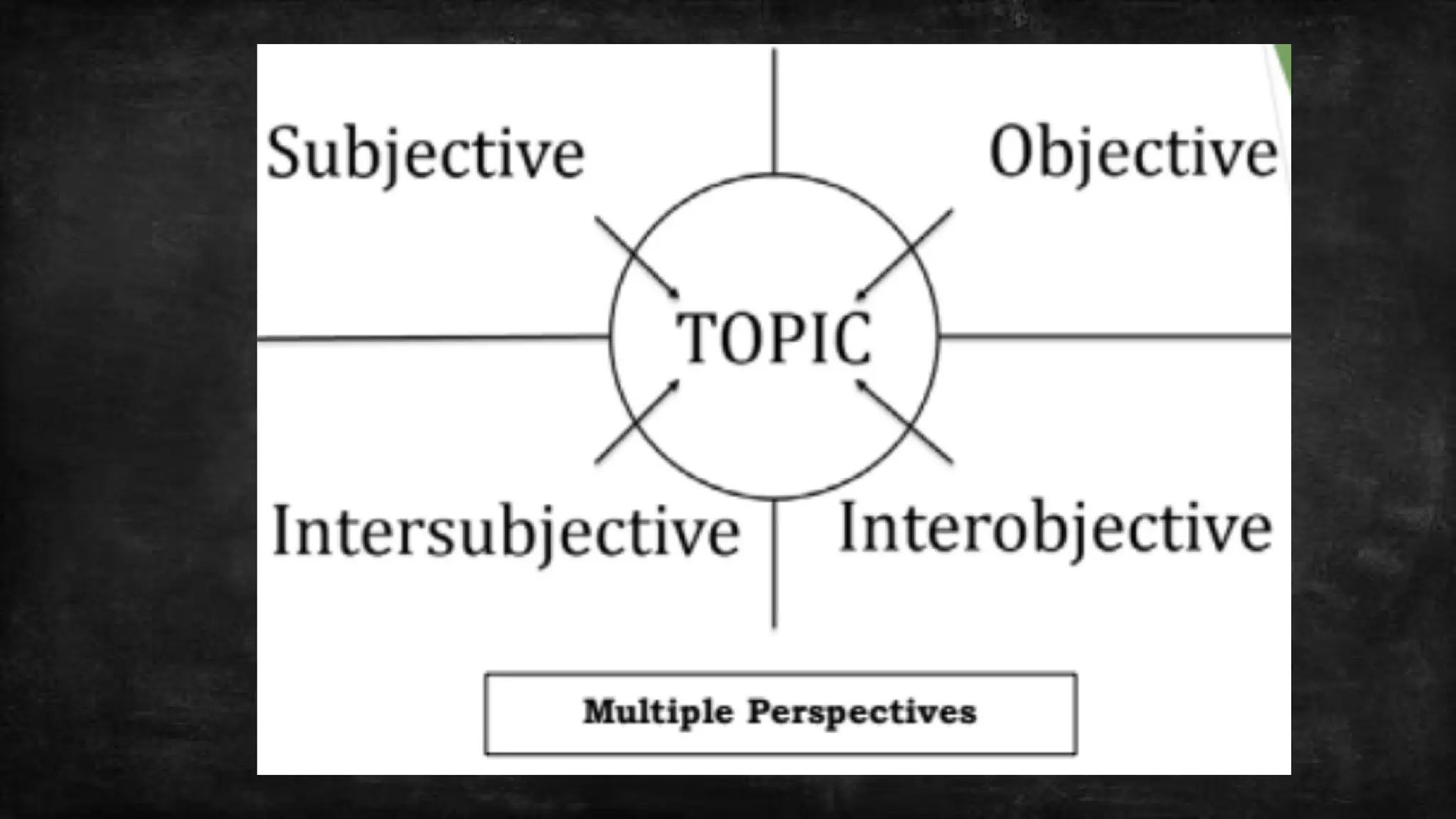
According to Ken Wilber everything
can be analysed using a...
According to Ken Wilber everything
can be analysed using a...
- philosopher/psychologist
- All Quadrants All Levels
(AQAL framework)
- Book: Sex, Ecology,
Spirituality.
According to Ken Wilber everything
can be analysed using a...
According to Ken Wilber everything
can be analysed using a...
According to Ken Wilber everything
can be analysed using a...
interior exterior
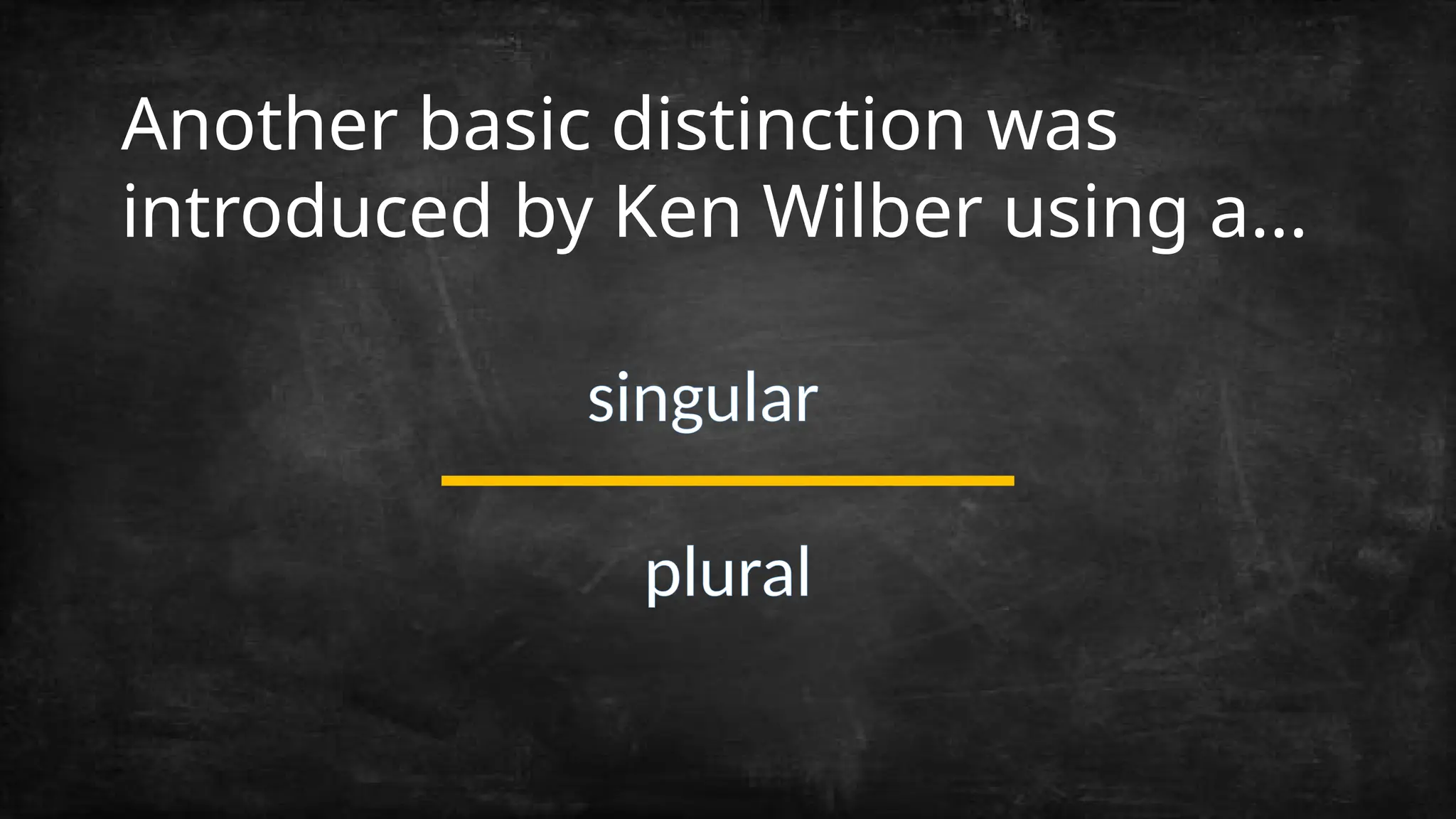
Another basic distinction was
introduced by Ken Wilber using a...
Another basic distinction was
introduced by Ken Wilber using a...
singular
plural
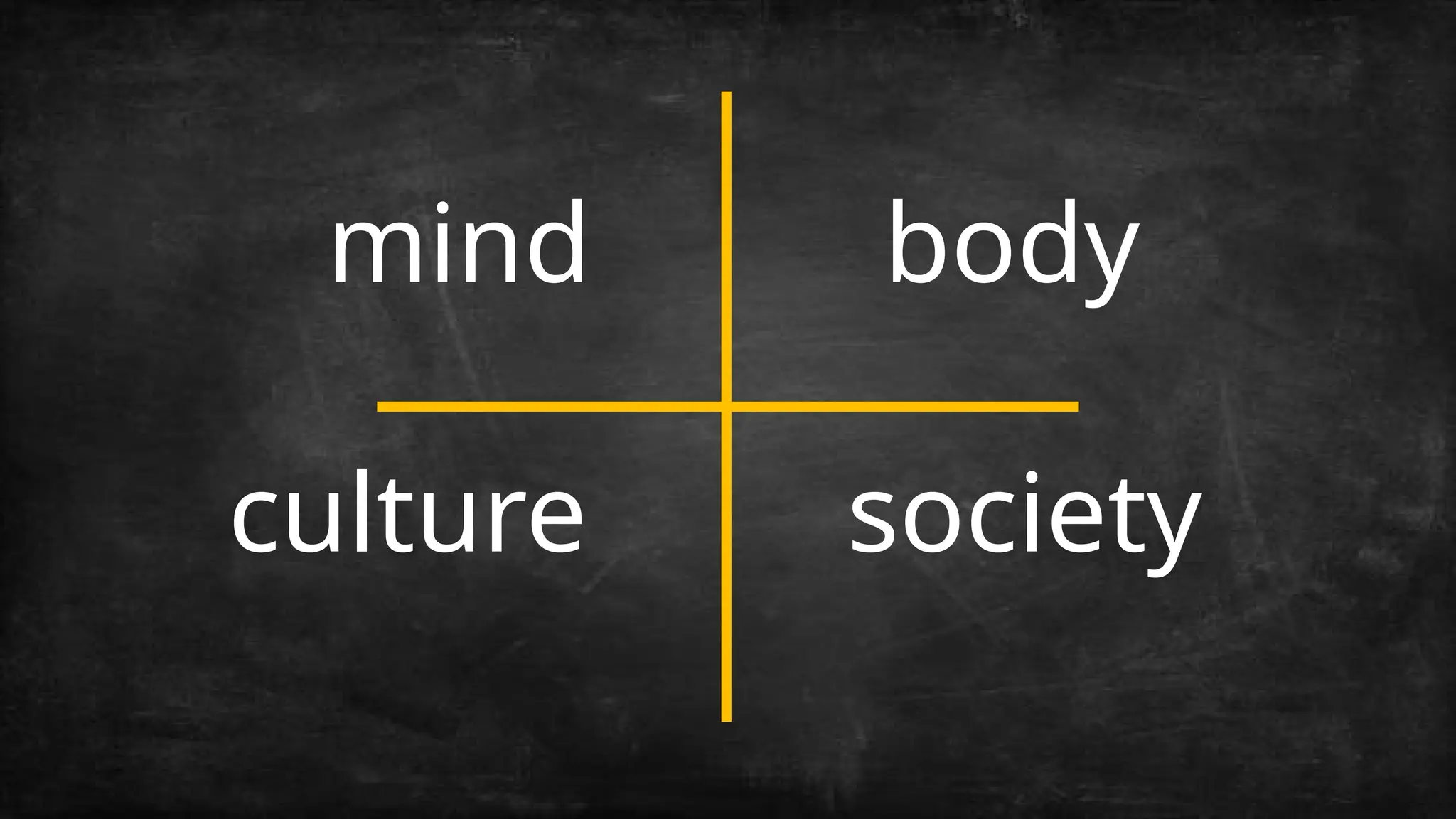
mind body
culture society
Do a quadratic analysis on the importance of
education using the diagram below:
Importanc
e of
Education
Using the picture provided, think of
at least two (2) primary reflections
and two secondary reflections.
Remember: A primary reflection is a
direct and immediate response to the
image, while a secondary reflection is a
more in-depth and analytical
interpretation of the image's meaning
IPHP 2.pptx Philosophical methodology vvv

IPHP 2.pptx Philosophical methodology vvv

  • 9.
    What is Reflection? Reflectionis the process of examining or thinking deeply about our experiences and perceptions. It is fundamental to human consciousness and plays a crucial role in how we interpret and make sense of our existence.
  • 10.
    What is Reflection? Throughreflection, we develop our understanding of ourselves, others, and the world around us. It helps us process events, form beliefs, and create meaning from our lived experiences.
  • 17.
    Primary Reflection: Definition Primaryreflection represents our immediate, analytical approach to understanding experiences. It is characterized by: • Breaking down experiences into separate components • Calculating and measuring discrete aspects • Approaching reality as a set of problems to solve
  • 18.
    Primary Reflection: Definition Thismode of thinking treats experiences as objects that can be separated from the self. It creates distance between the thinker and what is thought about, focusing on facts, evidence, and observable phenomena.
  • 19.
    Primary Reflection: Definition Thismode of thinking treats experiences as objects that can be separated from the self. It creates distance between the thinker and what is thought about, focusing on facts, evidence, and observable phenomena.
  • 21.
    Example of PrimaryReflection Car Accident Analysis Documenting the sequence of events, measuring skid marks, calculating speeds, determining which driver violated traffic rules, and filing an insurance claim.
  • 22.
    Example of PrimaryReflection Medical Diagnosis Identifying symptoms, ordering appropriate tests, analyzing results against medical knowledge, and formulating a treatment plan based on clinical guidelines.
  • 23.
    Example of PrimaryReflection Academic Assessment Checking answers against a key, counting errors, calculating percentage scores, and assigning grades based on predetermined criteria.
  • 24.
    Secondary Reflection: Definition Secondaryreflection moves beyond the analytical to embrace a more holistic approach to understanding. It is characterized by: • Reintegrating previously divided aspects of experience • Recognizing the inseparability of self from experience • Considering the meaning and significance of events
  • 25.
    Secondary Reflection: Definition Thisdeeper form of reflection seeks to recover the unity of experience that primary reflection has fragmented. It acknowledges mystery and embraces the subjective nature of human existence, exploring how experiences transform our understanding of ourselves and our place in the world.
  • 26.
    Example of Secondary Reflection CarAccident meaning Contemplating how the accident reveals your mortality, questioning priorities in life, reconsidering relationships with loved ones, and reflecting on how the experience has changed your perspective on taking risks.
  • 27.
    Example of Secondary Reflection HolisticHealing Considering how illness affects the patient's sense of identity, exploring ways to preserve dignity during treatment, and understanding the emotional impact on family relationships and support systems.
  • 28.
    Example of Secondary Reflection EducationalGrowth Reflecting on how assessment practices affect student motivation, considering the ethical dimensions of evaluation, and exploring how grades shape students' self- perception and learning journey.
  • 30.
    Reflection is notexclusive for philosophy in fact it is employed in any endeavour, research or disciplines. In research it is called methodological approach. Moral theology employs the STOP sign as guidepost of moral decision making.
  • 31.
    Search out thefacts. It is necessary that all means should be exhausted to better understand the issue.
  • 32.
    Think, reflect andanalyse the facts, its negative or positive effects, advantages or disadvantages.
  • 33.
    How it affectsOthers. We should always consider others in every decision that we make. Every action that we take has always a social dimension. It affects ourselves, others and community where we belong.
  • 34.
  • 35.
    In order toreflect philosophically we need to use a framework. A framework is a conceptual map consisting of our views and beliefs which affects the way we view the world (Abella 2016).
  • 36.
    According to KenWilber everything can be analysed using a...
  • 37.
    According to KenWilber everything can be analysed using a... - philosopher/psychologist - All Quadrants All Levels (AQAL framework) - Book: Sex, Ecology, Spirituality.
  • 38.
    According to KenWilber everything can be analysed using a...
  • 39.
    According to KenWilber everything can be analysed using a...
  • 40.
    According to KenWilber everything can be analysed using a... interior exterior
  • 41.
    Another basic distinctionwas introduced by Ken Wilber using a...
  • 42.
    Another basic distinctionwas introduced by Ken Wilber using a... singular plural
  • 43.
  • 54.
    Do a quadraticanalysis on the importance of education using the diagram below: Importanc e of Education
  • 55.
    Using the pictureprovided, think of at least two (2) primary reflections and two secondary reflections. Remember: A primary reflection is a direct and immediate response to the image, while a secondary reflection is a more in-depth and analytical interpretation of the image's meaning

Editor's Notes

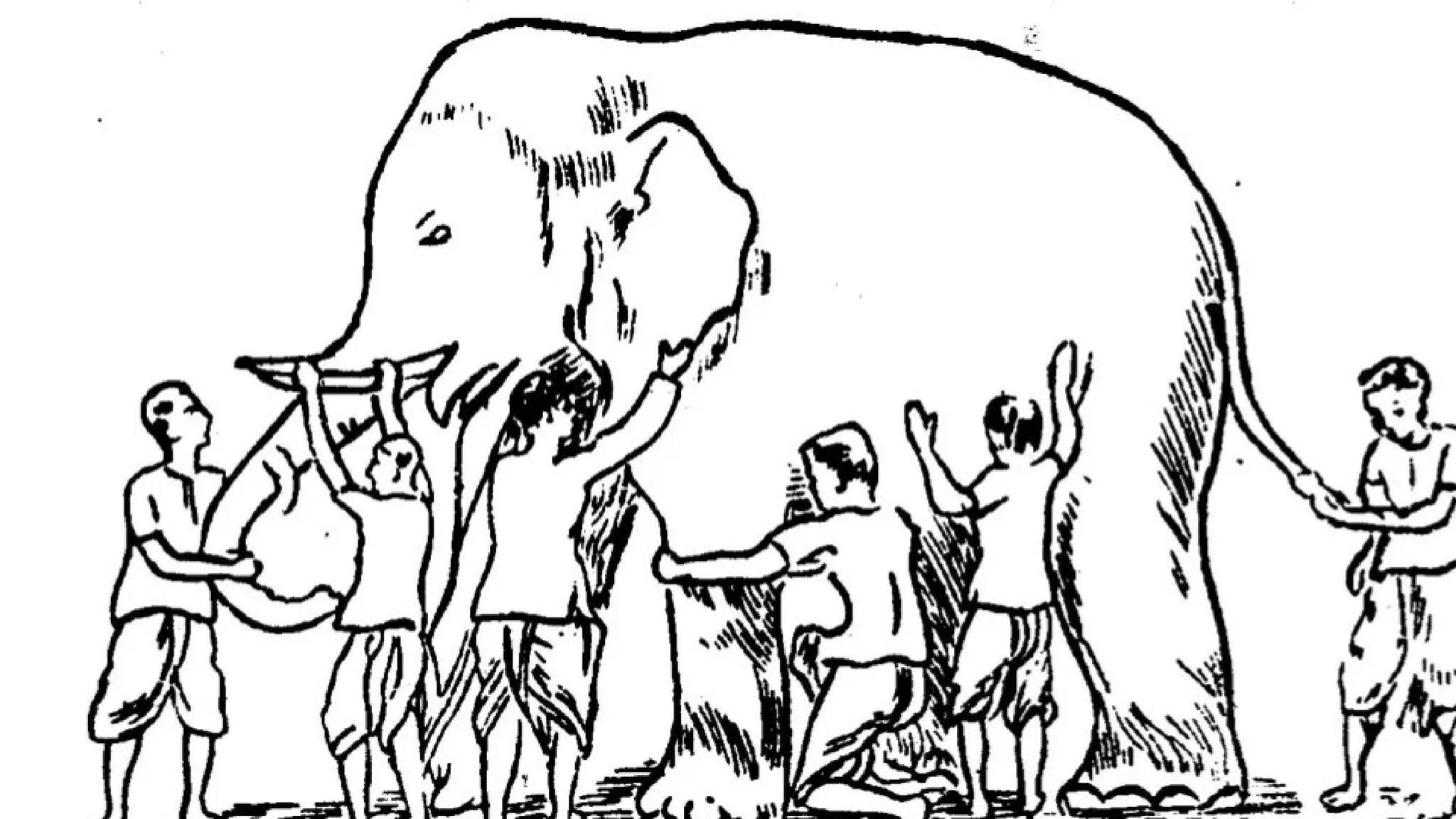
  • #3 This tale illustrates how limited perspectives can lead to misunderstandings and conflict. The blind men, each with a partial view, represent how we often perceive the world through our own experiences without recognizing a more holistic understanding. The elephant, as a whole, symbolizes the truth that requires integration of different perspectives.
  • #4 How can we learn to appreciate different perspectives instead of just insisting our own is right?
  • #62 FILIPINO THINKINGFROM LOCAL TOGLOBAL