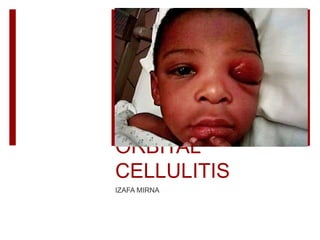
ORBITAL
CELLULITIS
IZAFA MIRNA
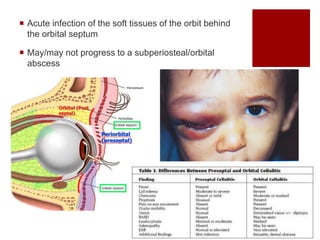
 Acute infection of the soft tissues of the orbit behind
the orbital septum
 May/may not progress to a subperiosteal/orbital
abscess
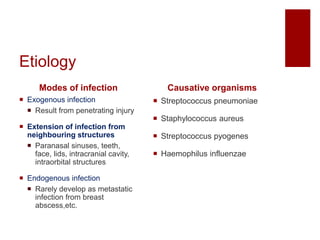
Etiology
Modes of infection
 Exogenous infection
 Result from penetrating injury
 Extension of infection from
neighbouring structures
 Paranasal sinuses, teeth,
face, lids, intracranial cavity,
intraorbital structures
 Endogenous infection
 Rarely develop as metastatic
infection from breast
abscess,etc.
Causative organisms
 Streptococcus pneumoniae
 Staphylococcus aureus
 Streptococcus pyogenes
 Haemophilus influenzae
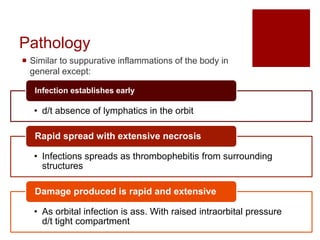
Pathology
 Similar to suppurative inflammations of the body in
general except:
• d/t absence of lymphatics in the orbit
Infection establishes early
• Infections spreads as thrombophebitis from surrounding
structures
Rapid spread with extensive necrosis
• As orbital infection is ass. With raised intraorbital pressure
d/t tight compartment
Damage produced is rapid and extensive
CLINICAL FEATURES
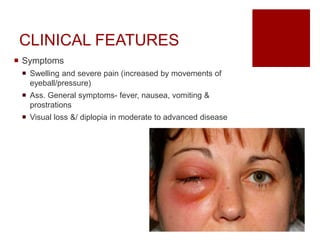
 Symptoms
 Swelling and severe pain (increased by movements of
eyeball/pressure)
 Ass. General symptoms- fever, nausea, vomiting &
prostrations
 Visual loss &/ diplopia in moderate to advanced disease
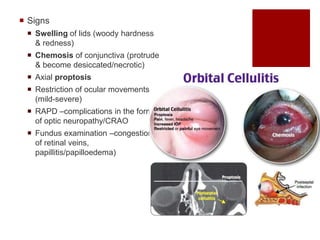
 Signs
 Swelling of lids (woody hardness
& redness)
 Chemosis of conjunctiva (protrude
& become desiccated/necrotic)
 Axial proptosis
 Restriction of ocular movements
(mild-severe)
 RAPD –complications in the form
of optic neuropathy/CRAO
 Fundus examination –congestion
of retinal veins,
papillitis/papilloedema)
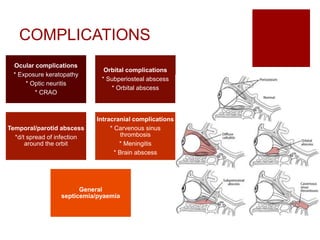
COMPLICATIONS
Ocular complications
* Exposure keratopathy
* Optic neuritis
* CRAO
Orbital complications
* Subperiosteal abscess
* Orbital abscess
Temporal/parotid abscess
*d/t spread of infection
around the orbit
Intracranial complications
* Carvenous sinus
thrombosis
* Meningitis
* Brain abscess
General
septicemia/pyaemia
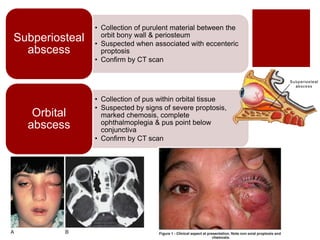
• Collection of purulent material between the
orbit bony wall & periosteum
• Suspected when associated with eccenteric
proptosis
• Confirm by CT scan
Subperiosteal
abscess
• Collection of pus within orbital tissue
• Suspected by signs of severe proptosis,
marked chemosis, complete
ophthalmoplegia & pus point below
conjunctiva
• Confirm by CT scan
Orbital
abscess
INVESTIGATIONS
 Bacterial cultures
 From nasal and conjunctival swabs and blood samples
 Complete haemogram
 May reveal leukocytosis
 X-ray PNS
 Identify associated sinusitis
 Orbital ultrasonography
 Detect intraorbital abscess
 CT scan & MRI
 Differentiating preseptal & postseptal cellulitis
 Detect subperiosteal abscess
 Orbital abscess
 Intracranial extension
 Deciding when & where to drain orbital abscess
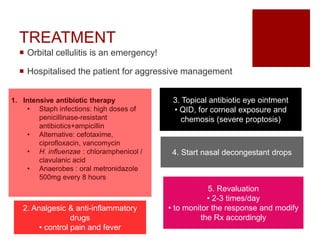
TREATMENT
 Orbital cellulitis is an emergency!
 Hospitalised the patient for aggressive management
1. Intensive antibiotic therapy
• Staph infections: high doses of
penicillinase-resistant
antibiotics+ampicillin
• Alternative: cefotaxime,
ciprofloxacin, vancomycin
• H. influenzae : chloramphenicol /
clavulanic acid
• Anaerobes : oral metronidazole
500mg every 8 hours
2. Analgesic & anti-inflammatory
drugs
• control pain and fever
3. Topical antibiotic eye ointment
• QID, for corneal exposure and
chemosis (severe proptosis)
4. Start nasal decongestant drops
5. Revaluation
• 2-3 times/day
• to monitor the response and modify
the Rx accordingly
Surgical intervention
 Indications:
 Unresponsiveness to antibiotics
 Decrease vision
 Presence of an orbital/subperiosteal abscess
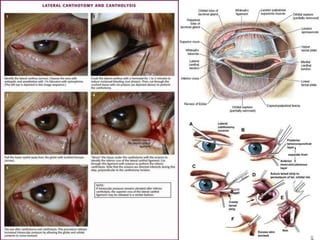
 Immediate canthotomy / cantholysis
 If the orbit is tight, presence of optic neuropathy, IOP severely
elevated.
 Free incision into the abscess
 When presence under skin or conjunctiva.
 Drainage of pus
 For subperiosteal abscess : 2-3 cm curved incision in upper medial
aspect.
 Drain both orbit and infected paranasal sinuses.
orbital cellulitis

orbital cellulitis

  • 1.
  • 2.
     Acute infectionof the soft tissues of the orbit behind the orbital septum  May/may not progress to a subperiosteal/orbital abscess
  • 3.
    Etiology Modes of infection Exogenous infection  Result from penetrating injury  Extension of infection from neighbouring structures  Paranasal sinuses, teeth, face, lids, intracranial cavity, intraorbital structures  Endogenous infection  Rarely develop as metastatic infection from breast abscess,etc. Causative organisms  Streptococcus pneumoniae  Staphylococcus aureus  Streptococcus pyogenes  Haemophilus influenzae
  • 4.
    Pathology  Similar tosuppurative inflammations of the body in general except: • d/t absence of lymphatics in the orbit Infection establishes early • Infections spreads as thrombophebitis from surrounding structures Rapid spread with extensive necrosis • As orbital infection is ass. With raised intraorbital pressure d/t tight compartment Damage produced is rapid and extensive
  • 5.
    CLINICAL FEATURES  Symptoms Swelling and severe pain (increased by movements of eyeball/pressure)  Ass. General symptoms- fever, nausea, vomiting & prostrations  Visual loss &/ diplopia in moderate to advanced disease
  • 6.
     Signs  Swellingof lids (woody hardness & redness)  Chemosis of conjunctiva (protrude & become desiccated/necrotic)  Axial proptosis  Restriction of ocular movements (mild-severe)  RAPD –complications in the form of optic neuropathy/CRAO  Fundus examination –congestion of retinal veins, papillitis/papilloedema)
  • 7.
    COMPLICATIONS Ocular complications * Exposurekeratopathy * Optic neuritis * CRAO Orbital complications * Subperiosteal abscess * Orbital abscess Temporal/parotid abscess *d/t spread of infection around the orbit Intracranial complications * Carvenous sinus thrombosis * Meningitis * Brain abscess General septicemia/pyaemia
  • 8.
    • Collection ofpurulent material between the orbit bony wall & periosteum • Suspected when associated with eccenteric proptosis • Confirm by CT scan Subperiosteal abscess • Collection of pus within orbital tissue • Suspected by signs of severe proptosis, marked chemosis, complete ophthalmoplegia & pus point below conjunctiva • Confirm by CT scan Orbital abscess
  • 9.
    INVESTIGATIONS  Bacterial cultures From nasal and conjunctival swabs and blood samples  Complete haemogram  May reveal leukocytosis  X-ray PNS  Identify associated sinusitis  Orbital ultrasonography  Detect intraorbital abscess  CT scan & MRI  Differentiating preseptal & postseptal cellulitis  Detect subperiosteal abscess  Orbital abscess  Intracranial extension  Deciding when & where to drain orbital abscess
  • 10.
    TREATMENT  Orbital cellulitisis an emergency!  Hospitalised the patient for aggressive management 1. Intensive antibiotic therapy • Staph infections: high doses of penicillinase-resistant antibiotics+ampicillin • Alternative: cefotaxime, ciprofloxacin, vancomycin • H. influenzae : chloramphenicol / clavulanic acid • Anaerobes : oral metronidazole 500mg every 8 hours 2. Analgesic & anti-inflammatory drugs • control pain and fever 3. Topical antibiotic eye ointment • QID, for corneal exposure and chemosis (severe proptosis) 4. Start nasal decongestant drops 5. Revaluation • 2-3 times/day • to monitor the response and modify the Rx accordingly
  • 11.
    Surgical intervention  Indications: Unresponsiveness to antibiotics  Decrease vision  Presence of an orbital/subperiosteal abscess  Immediate canthotomy / cantholysis  If the orbit is tight, presence of optic neuropathy, IOP severely elevated.  Free incision into the abscess  When presence under skin or conjunctiva.  Drainage of pus  For subperiosteal abscess : 2-3 cm curved incision in upper medial aspect.  Drain both orbit and infected paranasal sinuses.