JSS College of Pharmacy - Mysuru
ORAL HYPOGLYCEMICS
SUBMITTED BY
NARASIMHAMURTHY M
1ST M PHARM
DEPARTMENT OF PHARMACOLOGY
JSSCP , MYSURU
JSS College of Pharmacy - Mysuru
DIABETES MELLITUS
 It is a metabolic disorder characterized by
hyperglycaemia, glycosuria, hyperlipaemia,
negative nitrogen balance and sometimes
ketonaemia.
 fasting plasma glucose > 7.0 mmol/l, or plasma
glucose> 11.1 mmol/l 2 hours after a meal
 Lack of insulin affects the metabolism of
carbohydrate, protein and fat.
JSS College of Pharmacy - Mysuru
TYPES OF DIABETES MELLITUS
Type I Insulin-dependent diabetes mellitus
(IDDM), juvenile onset diabetes mellitus: There is β
cell destruction in pancreatic islets; majority of
cases are autoimmune (type 1A) antibodies that
destroy β cells are detectable in blood, but some
are idiopathic (type 1B)—no β cell antibody is
found.
In all type 1 cases circulating insulin levels are low
or very low, and patients are more prone to ketosis.
This type is less common and has a low degree of
genetic predisposition.
JSS College of Pharmacy - Mysuru
TYPES OF DIABETES MELLITUS
Type II Noninsulin-dependent diabetes mellitus (NIDDM),
maturity onset diabetes mellitus: There is no loss or
moderate reduction in β cell mass; insulin in circulation is
low, normal or even high, no anti-β-cell antibody is
demonstrable; has a high degree of genetic predisposition;
generally has a late onset (past middle age). Over 90% cases
are type 2 DM.
The Causes may be:
Abnormality in gluco-receptor of β cells so that they respond
at higher glucose concentration or relative β cell deficiency.
• Reduced sensitivity of peripheral tissues to insulin:
reduction in number of insulin receptors, ‘down regulation’ of
insulin receptors.
JSS College of Pharmacy - Mysuru
SIGNS AND SYMPTOMS
JSS College of Pharmacy - Mysuru
SIGNS AND SYMPTOMS
The classic symptoms of untreated
diabetes are :
 weight loss
 polyuria (increased urination)
 polydipsia (increased thirst) and
 polyphagia (increased hunger).
 Symptoms may develop rapidly
(weeks or months) in type 1 DM,
while they usually develop much
more slowly and may be subtle or
absent in type 2 DM.
JSS College of Pharmacy - Mysuru
SIGNS AND SYMPTOMS
In addition they also include:
 Blurry vision
 Headache
 Fatigue
 Slow healing of cuts and
 Itchy skin.
 Prolonged high blood glucose can cause glucose
absorption in the lens of the eye, which leads to
changes in its shape, resulting in vision changes.
 A number of skin rashes that can occur in diabetes
are collectively known as diabetic dermadromes
JSS College of Pharmacy - Mysuru
PATHOPHYSIOLOGY - GENERAL
 Insulin is the principal hormone that regulates the uptake of
glucose from the blood into cells of the body, especially liver,
adipose tissue and muscle, except smooth muscle, in which
insulin acts via the IGF-1 (Insulin-like growth factor -1).
 Therefore, deficiency of insulin or the insensitivity of its
receptors plays a central role in all forms of diabetes
mellitus.
 The body obtains glucose from three main places:
 The intestinal absorption of food
 The breakdown of glycogen, the storage form of glucose
found in the liver
 Gluconeogenesis, the generation of glucose from non-
carbohydrate substrates in the body.
JSS College of Pharmacy - Mysuru
PATHOPHYSIOLOGY
 Insulin plays a critical role in balancing glucose levels in the body:
 It can inhibit the breakdown of glycogen or the process of
gluconeogenesis.
 It can stimulate the transport of glucose into fat and muscle cells.
 It can stimulate the storage of glucose in the form of glycogen.
 Insulin is released into the blood by beta cells (β-cells), found in
the islets of Langerhans in the pancreas, in response to rising
levels of blood glucose, typically after eating.
 Lower glucose levels result in decreased insulin release from the
beta cells and results in the breakdown of glycogen to glucose.
 This process is mainly controlled by the hormone glucagon,
which acts in the opposite manner to insulin .
JSS College of Pharmacy - Mysuru
PATHOPHYSIOLOGY
If the amount of insulin available is insufficient
If cells respond poorly to the effects of insulin
If the insulin itself is defective
Then glucose will not be absorbed properly by the body cells
The net effect is persistently high levels of blood glucose , poor protein synthesis,
and break down of fat storage
ACIDOSIS
JSS College of Pharmacy - Mysuru
PATHOPHYSIOLOGY
• When the glucose concentration in the blood
remains high over time, the kidneys will reach
a threshold of reabsorption Glycosuria.
• This increases the osmotic pressure of the
urine polyuria increased fluid loss
• Lost blood volume will be replaced
osmotically from water held in body cells and
other body compartments dehydration
polydipsia
JSS College of Pharmacy - Mysuru
PATHOPHYSIOLOGY - TYPE 1
 Type 1 diabetes mellitus is characterized by loss of the insulin-
producing beta cells of the islets of Langerhans in the pancreas,
leading to insulin deficiency.
 This type can be further classified as immune- mediated or
idiopathic.
 The majority of type 1 diabetes is of the immune-mediated nature,
in which a T-cell mediated autoimmune attack leads to the loss of
beta cells and thus insulin.
JSS College of Pharmacy - Mysuru
PATHOPHYSIOLOGY - TYPE 1
 Most affected people are otherwise healthy and of a healthy
weight when onset occurs.
 Sensitivity and responsiveness to insulin are usually normal,
especially in the early stages.
 Type 1 diabetes can affect children or adults, but was traditionally
termed "juvenile diabetes" because a majority of these diabetes
cases were in children.
 Type 1 diabetes is partly inherited, with multiple genes, including
certain HLA genotypes(HLA DR,DQ), known to influence the risk
of diabetes.
 In genetically susceptible people, the onset of diabetes can be
triggered by one or more environmental factors, such as a viral
infection or diet.
 Among dietary factors, gluten may lead to type 1 diabetes, but
the mechanism is not fully understood
JSS College of Pharmacy - Mysuru
PATHOPHYSIOLOGY - TYPE 2
Type 2 DM is characterized by insulin resistance.
The defective responsiveness of body tissues to
insulin is believed to involve the insulin receptor.
 In the early stage of type 2, the predominant
abnormality is reduced insulin sensitivity.
Type 2 DM is due primarily to lifestyle factors and
genetics.
JSS College of Pharmacy - Mysuru
PATHOPHYSIOLOGY - TYPE 2
 A number of lifestyle factors are known to be important to the
development of type 2 DM, including
 Obesity
 lack of physical activity
 poor diet
 Stress
 Dietary factors also influence the risk of developing type 2 DM such as
 sugar-sweetened drinks
 Type of fats in diet
o saturated fats and trans fatty acids increasing the risk
o polyunsaturated and monounsaturated fat decreasing the risk
 Eating lots of white rice also may increase the risk of diabetes.
 A lack of exercise is believed to cause 7% of cases.
JSS College of Pharmacy - Mysuru
DIABETIC KETOACIDOSIS
 Diabetic ketoacidosis (DKA) is a potentially life-threatening
complication in people with diabetes mellitus. It happens
predominantly in those with type 1 diabetes, but it can occur in
those with type 2 diabetes under certain circumstances.
 DKA results from a shortage of insulin; in response the body
switches to burning fatty acids and producing acidic ketone
bodies that cause most of the symptoms and complications.
 DKA is defined as the presence of all three of the following:
(i) Hyperglycemia (glucose >250 mg/dL)
(ii) Ketosis,
(iii)Acidemia (pH <7.3).
JSS College of Pharmacy - Mysuru
ORAL HYPOGLYCAEMIC DRUGS
These drugs lower blood glucose levels and are
effective orally.
Oral agents are useful in the treatment of patients
who have type 2 diabetes that is not controlled
with diet.
Patients who developed diabetes after age 40 and
have had diabetes less than 5 years are most likely
to respond well to oral glucose-lowering agents.
Patients with long-standing disease may require a
combination of oral agents with or without insulin
to control hyperglycemia.
JSS College of Pharmacy - Mysuru
CLASSIFICATION OF 0RAL HYPOGLYCAEMIC DRUGS
1) Insulin secretagogues
A) Sulfonylureas (KATP channel blockers)
First generation Second generation
Tolbutamide Glibenclamide
Chlorpropamide Glipizide, Gliclazide
B) Meglitinides
Repaglinide, nateglinide
C) GLP-1 analogs (subcutaneous)
Exenatide, Liraglutide, albiglutide, dulaglutide
D) DPP-4 inhibitors
Sitagliptin, Vildagliptin, Saxagliptin
JSS College of Pharmacy - Mysuru
CLASSIFICATION OF 0RAL HYPOGLYCAEMIC DRUGS
2) Biguanide
Metformin
3) Thiazolidinediones
Rosiglitazone, Pioglitazone
4) Alpha glucosidase inhibitors
Acarbose, Miglitol, Voglibose
5) Amylin analogs
Pramlintide
6) SGLT-2 inhibitors
Dapagliflozin, Remogliflozin
JSS College of Pharmacy - Mysuru
Sites of action of the most widely used oral
antihyperglycemic agents
JSS College of Pharmacy - Mysuru
ORAL HYPOGLYCAEMIC DRUGS
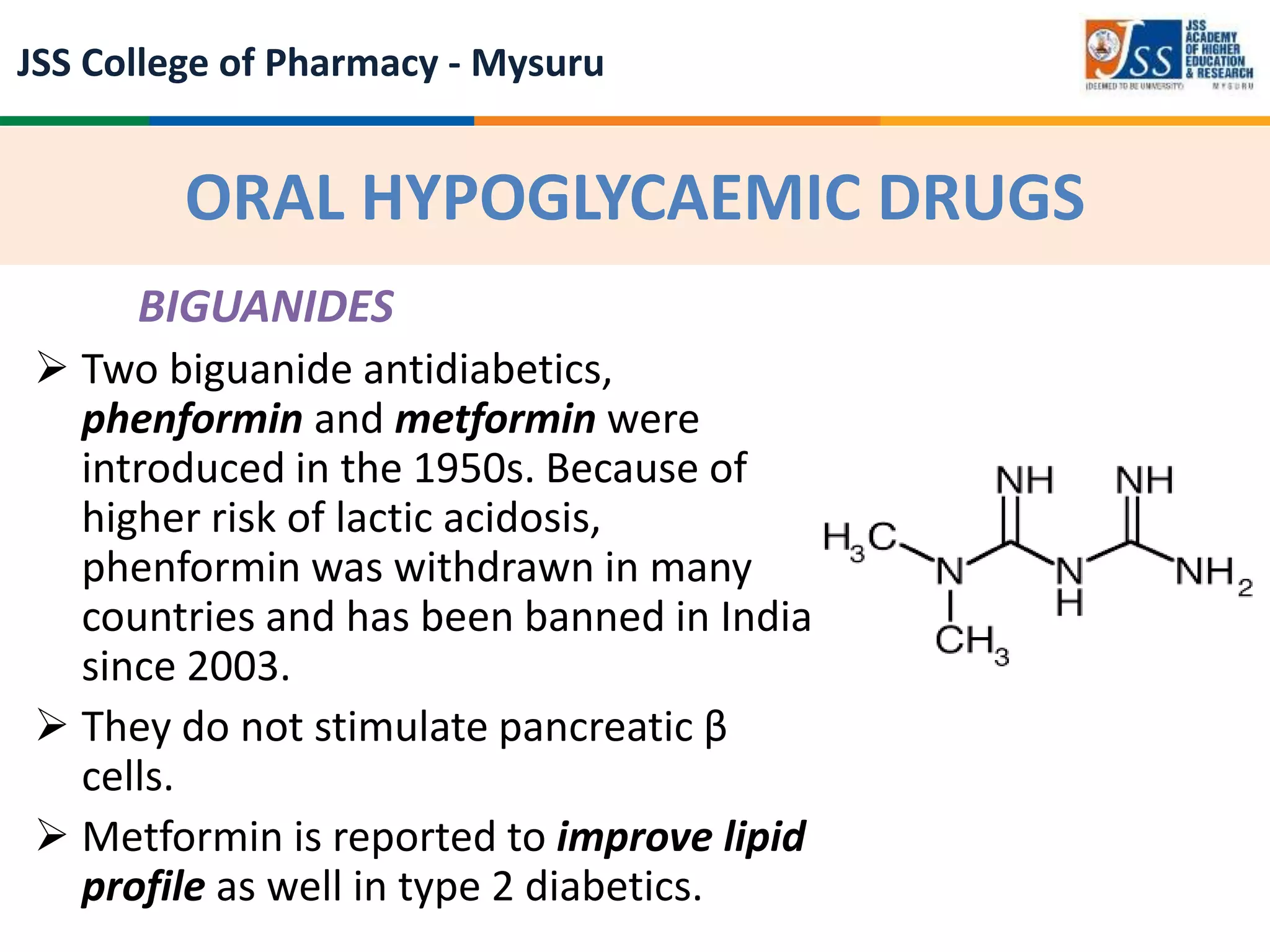
BIGUANIDES
 Two biguanide antidiabetics,
phenformin and metformin were
introduced in the 1950s. Because of
higher risk of lactic acidosis,
phenformin was withdrawn in many
countries and has been banned in India
since 2003.
 They do not stimulate pancreatic β
cells.
 Metformin is reported to improve lipid
profile as well in type 2 diabetics.
JSS College of Pharmacy - Mysuru
MECHANISM OF ACTION
Metformin activates the enzyme AMP dependent protein
kinase (AMPK) .That's results in
1. Decreased hepatic gluconeogenesis ( major action )
2. Increased peripheral utilization of glucose in skeletal
muscle and fat. This leads to increase in glycogen
storage in the skeletal muscle , increased fatty acid
oxidation and decreased lipogenesis
3. Inhibition of alimentary absorption of glucose.
Biguanides do not affect insulin release ; They improve
tissue sensitivity to insulin.
JSS College of Pharmacy - Mysuru
MECHANISM OF ACTION
JSS College of Pharmacy - Mysuru
Pharmacokinetics :
It should be taken orally , Well absorbed through GI tract
half-life 1 – 3 hours and 6- 8 hours duration of action.
Adverse effect :
o Frequent but less severe – Abdominal pain, anorexia,
nausea, metallic taste, tiredness – but no hypoglycemia.
o Lactic acidosis and Vit B12 deficiency
Uses :
o First choice drug in all Type 2 diabetes mellitus either
alone or in combination with other antidiabetic agents.
o It is effective in the treatment of Polycystic ovary
syndrome.
JSS College of Pharmacy - Mysuru
C0NTRAINDICATINS :
• renal dysfunction due to the risk of lactic acidosis.
• It should be discontinued in cases of acute myocardial infarction,
exacerbation of heart failure, sepsis, or other disorders that can
cause acute renal failure
• It should be temporarily discontinued in patients undergoing
procedures requiring IV radiographic contrast
INDICATIONS :
• Administration of metformin is not associated with a rise in
body weight and it may be beneficial for the overweight or
obese patient.
• In addition, as the glucose lowering effect of metformin is
synergistic with that of sulphonylure as the two can be
combined when either alone has proved inadequate. It can
also be given incombination with most other anti-diabetic
medications.
JSS College of Pharmacy - Mysuru
Metformin during pregnancy
 Metformin is safe and effective treatment option for women
with type 2 diabetes in pregnancy with or without add-on
insulin who require pharmacological treatment for glycemic
control .
 Metformin has advantages over insulin such as less maternal
weight gain, no maternal hypoglycemia, being cheap, being
oral therapy, and requiring no vigorous monitoring and
frequent hospital admissions with good compliance and
acceptability.
 Metformin treatment when compared with insulin
treatment showed less maternal hypertensive complications
and less risk of neonatal hypoglycemia with few neonatal
intensive care admissions.
JSS College of Pharmacy - Mysuru
GLYCIPHAGE (500 mg) Tab, DIAFORMIN (500 mg) Tab
DOSE : 500-1000 mg daily, given with food (maximum
dose is 2.5g/day)
JSS College of Pharmacy - Mysuru
THIAZOLIDINEDIONES (TZDs)
 Two thiazolidinedione's
Rosiglitazone and Pioglitazone are
available.
 This novel class of oral antidiabetic
drugs are selective agonists for the
nuclear peroxisome proliferator-
activated receptor γ (PPARγ) which
enhances the transcription of
several insulin responsive genes.
 These are nuclear receptors
present mostly in adipose tissue
and also in muscle, liver and other
tissues.
JSS College of Pharmacy - Mysuru
MECHANISM OF ACTION
JSS College of Pharmacy - Mysuru
Pharmacokinetics :
 Both Rosiglitazone and Pioglitazone are completely absorbed from GI
tract, highly bound to plasma proteins (95%)
 Rosiglitazone metabolised by CYP2C8 and Pioglitazone metabolized by
CYP2C8 and CYP3A4.
 half-life 3-5 hours but duration of action 24 hours
Adverse effects :
 Weight gain can occur because TZDs may increase subcutaneous fat and
cause fluid retention.
 TZDs have been associated with osteopenia and increased fracture risk
 Pioglitazone may also increase the risk of bladder cancer.
 Rosiglitazone is now banned by many countries due to increased risk of
cardiac problems.
Uses :
 As with metformin, the relief of insulin resistance with the TZDs can cause
ovulation to resume in premenopausal women with polycystic ovary
syndrome.
JSS College of Pharmacy - Mysuru
CONTRAINDICATIONS :
o Liver toxicity
o Heart failure
DOSE : PIONORM (15-45 mg) Tab, PIOREST (15-30
mg) Tab once daily
JSS College of Pharmacy - Mysuru
α-GLUCOSIDASE INHIBITORS
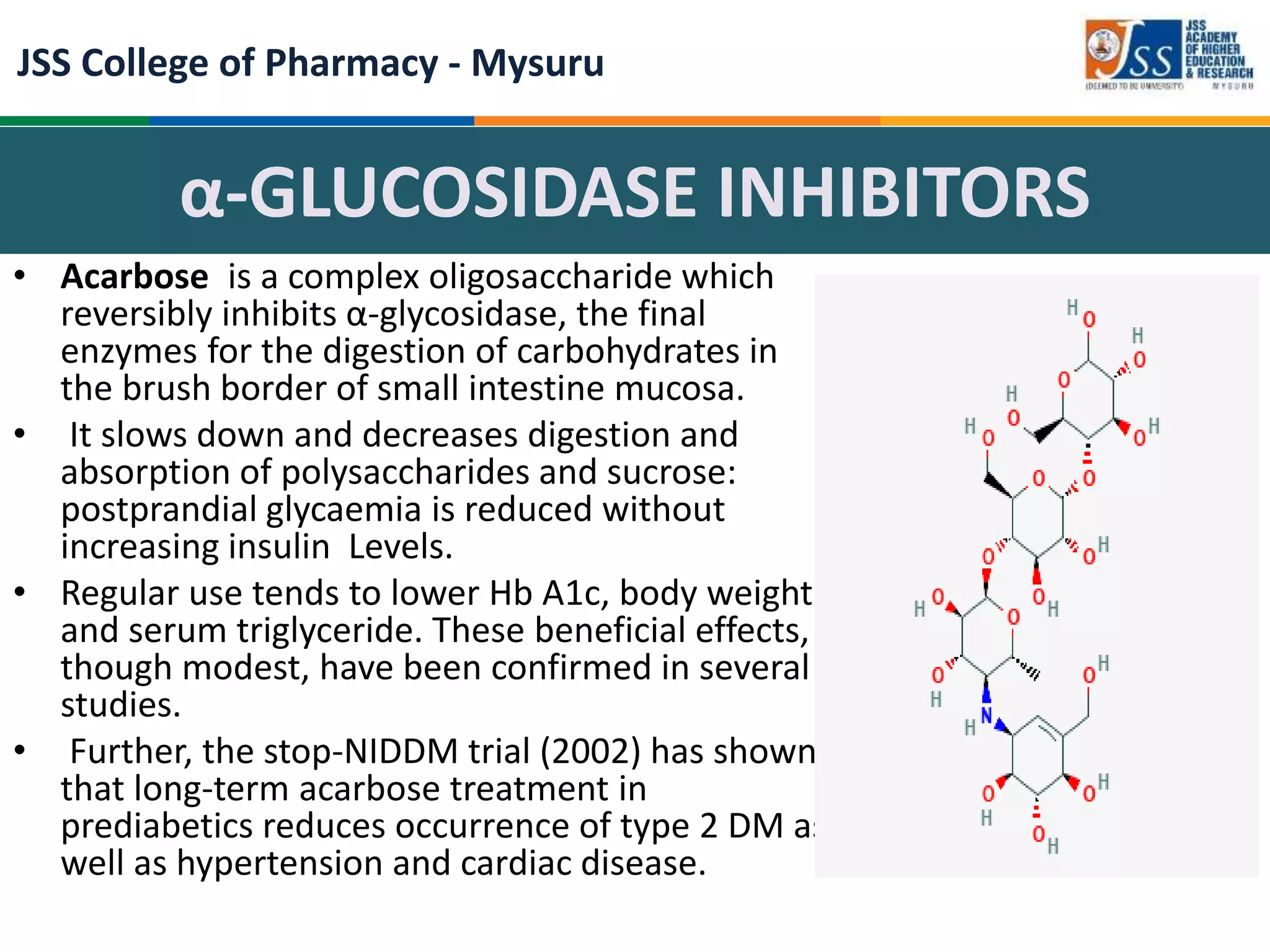
• Acarbose is a complex oligosaccharide which
reversibly inhibits α-glycosidase, the final
enzymes for the digestion of carbohydrates in
the brush border of small intestine mucosa.
• It slows down and decreases digestion and
absorption of polysaccharides and sucrose:
postprandial glycaemia is reduced without
increasing insulin Levels.
• Regular use tends to lower Hb A1c, body weight
and serum triglyceride. These beneficial effects,
though modest, have been confirmed in several
studies.
• Further, the stop-NIDDM trial (2002) has shown
that long-term acarbose treatment in
prediabetics reduces occurrence of type 2 DM as
well as hypertension and cardiac disease.
JSS College of Pharmacy - Mysuru
MECHANISM OF ACTION
Alpha-glucosidase inhibitors work on two different enzymes in the small
intestine:
Intestinal enzymes (acarbose and miglitol)
•Intestinal cells contain an enzyme called alpha-glucosidase that metabolizes
carbohydrates so that they can be absorbed into the bloodstream
•Alpha-glucosidase inhibitors block alpha-glucosidase thereby inhibiting the
metabolism of carbohydrates and slowing their absorption into the
bloodstream
Pancreatic enzymes (acarbose only)
•When a person consumes food, the pancreas secretes enzymes that help
digest the food so that it can be absorbed into the bloodstream
•Alpha-amylase is a pancreatic enzyme that metabolizes carbohydrates
•Acarbose blocks alpha-amylase thereby inhibiting the metabolism of
carbohydrates and slowing their absorption into the bloodstream
JSS College of Pharmacy - Mysuru
Pharmacokinetics :
o Acarbose is poorly absorbed.
o It is metabolized primarily by intestinal bacteria, and some of
the metabolites are absorbed and excreted into the urine.
o Miglitol is very well absorbed but has no systemic effects and it
is excreted unchanged by the kidney.
Adverse effects :
o The main side-effects are flatulence, abdominal bloating and
diarrhoea.
o Patients with inflammatory bowel disease, colonic ulceration, or
intestinal obstruction should not use these drugs.
Uses :
They are mainly used in obese patients with type 2 diabetes militus
JSS College of Pharmacy - Mysuru
CONTRAINDICATIONS :
• Patients with inflammatory bowel disease, colonic ulceration, or intestinal
obstruction should not use these drugs.
• The drug is not recommended in pregnancy and lactation.
DOSE : ACARBOSE (50 mg) b.d. gradually increased to 100 mg t.d.s. just
before food
JSS College of Pharmacy - Mysuru
AMYLIN ANALOGS
Amylin is a polypeptide produced by the
pancreatic beta cells.
It inhibits glucagon secretion, delays gastric
emptying and suppresses appetite.
 Pramlintide , a synthetic analog of amylin, is an
injectable antihyperglycemic agent that modulates
postprandial glucose levels and is approved for
pre-prandial use in persons with type 1 and type 2
diabetes.
JSS College of Pharmacy - Mysuru
MECHANISM OF ACTION
JSS College of Pharmacy - Mysuru
Pharmacokinetics :
Subcutaneous administration in abdomen & Thigh,
injected immediately prior to meal as adjunct therapy
Remains effective for 2-2.5 hours
Metabolized in kidney and and excreted in urine.
Adverse effects :
• Hypoglycemia, Nausea, Vomiting, Anorexia
Uses :
Along with insulin in Type 1 & Type 2 Diabetes Mellitus
to control Blood Glucose level after meal
 May help in weight loss
JSS College of Pharmacy - Mysuru
D0SE : PRAMLINTIDE Initially 15μg gradually
increase to 120μg (Subcutaneously)
JSS College of Pharmacy - Mysuru
SODIUM AND GLUCOSE TRANSPORTER-2
(SGLT-2) INHIBITOR
A large amount of glucose is reabsorbed from the
proximal tubule by sodium-glucose cotransporter-2
(SGLT-2).
Inhibition of SGLT-2 reduces the absorption of
glucose and sodium and causes glycosuria.
Dapagliflozin , remogliflozin, canagliflozin are SGLT-
2 inhibitors found to be useful in patients with
diabetes.
They are particularly useful when the patients also
have hypertension.
JSS College of Pharmacy - Mysuru
MECHANISM OF ACTION
• The sodium–glucose co-transporter 2 (SGLT2) is
responsible for reabsorbing filtered glucose in the
tubular lumen of the kidney.
• By inhibiting SGLT2, these agents decrease
reabsorption of glucose, increase urinary glucose
excretion, and lower blood glucose.
• Inhibition of SGLT2 also decreases reabsorption of
sodium and causes osmotic diuresis.
• Therefore, SGLT2 inhibitors may reduce systolic
blood pressure.
JSS College of Pharmacy - Mysuru
Pharmacokinetics :
o These agents are given once daily in the morning.
o Canagliflozin should be taken before the first meal of the day. Both drugs are
mainly metabolized by glucuronidation to inactive metabolites. While the primary
route of excretion for canagliflozin is via the feces, about one-third of a dose is
renally eliminated.
Adverse effects:
o The most common adverse effects with SGLT2 inhibitors are female genital
mycotic infections (for example, vulvovaginal candidiasis), urinary tract infections,
and urinary frequency.
o Hypotension has also occurred, particularly in the elderly or patients on diuretics.
Thus, volume status should be evaluated prior to starting these agents.
Uses :
o It reduces the HbA1c level in blood.
o It enhances Weight loss
o Reduces the Hypertension.
JSS College of Pharmacy - Mysuru
DOSE : DAPAGLIFLOZIN (5-10 mg) Tab daily,
CANAGLIFLOZIN ( 100-300 mg) daily
JSS College of Pharmacy - Mysuru
TREATMENT OF DIABETES MELITUS
 The aim of treatment is to keep the blood sugar within
normal limits and prevent complications of diabetes.
 For patients with type 1, insulin is the only treatment as
there is insulin deficiency due to destruction of pancreatic
β cells.
 Sulfonylureas need functional β cells for their action and,
therefore are not useful in them.
 Mild type 2 may be controlled by diet, exercise and weight
reduction. When not controlled , an oral hypoglycaemic
should be given. Most patients may require insulin
sometimes later in life.
JSS College of Pharmacy - Mysuru
Treatment guidelines for type 2 diabetes
JSS College of Pharmacy - Mysuru
CASE STUDY
During routine medical check up a 50-year male office
executive with sedentary lifestyle was diagnosed to have
developed type 2 diabetes mellitus. His fasting and post-
meal blood glucose was 130 mg/dl and 190 mg/dl
respectively, HbA1C was 7.8%, BP was 130/82 mm Hg and
body mass index was 27 kg/m2. He was asymptomatic and
investigations revealed no end organ damage. He was
advised suitable diet, exercise and other lifestyle
modifications.
(a)Should he be prescribed an antidiabetic medication as
well? If so, which drug/combination of drugs should be
selected, and why?
JSS College of Pharmacy - Mysuru
 According to the current recommendation of professional
guidelines, the patient should be prescribed metformin therapy
concurrently with dietary and lifestyle measures. This is based on
the finding that metformin can delay progression of diabetes and
prevent microvascular as well as macrovascular (heart attack,
stroke) complications.
 It does not increase circulating insulin, reduces insulin resistance,
is unlikely to induce hypoglycaemia and may have a positive
influence on pancreatic B cell health. Lack of serious toxicity over
several decades of use of metformin is well established. No other
antidiabetic drug has all these favourable features, and
therefore, it is considered the first-choice drug. Metformin is
particularly suitable for this patient who is overweight, because
it can aid weight reduction. A combination of antidiabetic drugs
is not indicated at this stage. Another drug needs to be added
only when the target blood glucose and HbA1c levels are not
attained by metformin alone.
JSS College of Pharmacy - Mysuru
THANK YOU

Oral hypoglycemics or Antidiabetic drugs

  • 1.
    JSS College ofPharmacy - Mysuru ORAL HYPOGLYCEMICS SUBMITTED BY NARASIMHAMURTHY M 1ST M PHARM DEPARTMENT OF PHARMACOLOGY JSSCP , MYSURU
  • 2.
    JSS College ofPharmacy - Mysuru DIABETES MELLITUS  It is a metabolic disorder characterized by hyperglycaemia, glycosuria, hyperlipaemia, negative nitrogen balance and sometimes ketonaemia.  fasting plasma glucose > 7.0 mmol/l, or plasma glucose> 11.1 mmol/l 2 hours after a meal  Lack of insulin affects the metabolism of carbohydrate, protein and fat.
  • 3.
    JSS College ofPharmacy - Mysuru TYPES OF DIABETES MELLITUS Type I Insulin-dependent diabetes mellitus (IDDM), juvenile onset diabetes mellitus: There is β cell destruction in pancreatic islets; majority of cases are autoimmune (type 1A) antibodies that destroy β cells are detectable in blood, but some are idiopathic (type 1B)—no β cell antibody is found. In all type 1 cases circulating insulin levels are low or very low, and patients are more prone to ketosis. This type is less common and has a low degree of genetic predisposition.
  • 4.
    JSS College ofPharmacy - Mysuru
  • 5.
    JSS College ofPharmacy - Mysuru TYPES OF DIABETES MELLITUS Type II Noninsulin-dependent diabetes mellitus (NIDDM), maturity onset diabetes mellitus: There is no loss or moderate reduction in β cell mass; insulin in circulation is low, normal or even high, no anti-β-cell antibody is demonstrable; has a high degree of genetic predisposition; generally has a late onset (past middle age). Over 90% cases are type 2 DM. The Causes may be: Abnormality in gluco-receptor of β cells so that they respond at higher glucose concentration or relative β cell deficiency. • Reduced sensitivity of peripheral tissues to insulin: reduction in number of insulin receptors, ‘down regulation’ of insulin receptors.
  • 6.
    JSS College ofPharmacy - Mysuru
  • 7.
    JSS College ofPharmacy - Mysuru
  • 8.
    JSS College ofPharmacy - Mysuru SIGNS AND SYMPTOMS
  • 9.
    JSS College ofPharmacy - Mysuru SIGNS AND SYMPTOMS The classic symptoms of untreated diabetes are :  weight loss  polyuria (increased urination)  polydipsia (increased thirst) and  polyphagia (increased hunger).  Symptoms may develop rapidly (weeks or months) in type 1 DM, while they usually develop much more slowly and may be subtle or absent in type 2 DM.
  • 10.
    JSS College ofPharmacy - Mysuru SIGNS AND SYMPTOMS In addition they also include:  Blurry vision  Headache  Fatigue  Slow healing of cuts and  Itchy skin.  Prolonged high blood glucose can cause glucose absorption in the lens of the eye, which leads to changes in its shape, resulting in vision changes.  A number of skin rashes that can occur in diabetes are collectively known as diabetic dermadromes
  • 11.
    JSS College ofPharmacy - Mysuru
  • 12.
    JSS College ofPharmacy - Mysuru PATHOPHYSIOLOGY - GENERAL  Insulin is the principal hormone that regulates the uptake of glucose from the blood into cells of the body, especially liver, adipose tissue and muscle, except smooth muscle, in which insulin acts via the IGF-1 (Insulin-like growth factor -1).  Therefore, deficiency of insulin or the insensitivity of its receptors plays a central role in all forms of diabetes mellitus.  The body obtains glucose from three main places:  The intestinal absorption of food  The breakdown of glycogen, the storage form of glucose found in the liver  Gluconeogenesis, the generation of glucose from non- carbohydrate substrates in the body.
  • 13.
    JSS College ofPharmacy - Mysuru PATHOPHYSIOLOGY  Insulin plays a critical role in balancing glucose levels in the body:  It can inhibit the breakdown of glycogen or the process of gluconeogenesis.  It can stimulate the transport of glucose into fat and muscle cells.  It can stimulate the storage of glucose in the form of glycogen.  Insulin is released into the blood by beta cells (β-cells), found in the islets of Langerhans in the pancreas, in response to rising levels of blood glucose, typically after eating.  Lower glucose levels result in decreased insulin release from the beta cells and results in the breakdown of glycogen to glucose.  This process is mainly controlled by the hormone glucagon, which acts in the opposite manner to insulin .
  • 14.
    JSS College ofPharmacy - Mysuru PATHOPHYSIOLOGY If the amount of insulin available is insufficient If cells respond poorly to the effects of insulin If the insulin itself is defective Then glucose will not be absorbed properly by the body cells The net effect is persistently high levels of blood glucose , poor protein synthesis, and break down of fat storage ACIDOSIS
  • 15.
    JSS College ofPharmacy - Mysuru PATHOPHYSIOLOGY • When the glucose concentration in the blood remains high over time, the kidneys will reach a threshold of reabsorption Glycosuria. • This increases the osmotic pressure of the urine polyuria increased fluid loss • Lost blood volume will be replaced osmotically from water held in body cells and other body compartments dehydration polydipsia
  • 16.
    JSS College ofPharmacy - Mysuru PATHOPHYSIOLOGY - TYPE 1  Type 1 diabetes mellitus is characterized by loss of the insulin- producing beta cells of the islets of Langerhans in the pancreas, leading to insulin deficiency.  This type can be further classified as immune- mediated or idiopathic.  The majority of type 1 diabetes is of the immune-mediated nature, in which a T-cell mediated autoimmune attack leads to the loss of beta cells and thus insulin.
  • 17.
    JSS College ofPharmacy - Mysuru PATHOPHYSIOLOGY - TYPE 1  Most affected people are otherwise healthy and of a healthy weight when onset occurs.  Sensitivity and responsiveness to insulin are usually normal, especially in the early stages.  Type 1 diabetes can affect children or adults, but was traditionally termed "juvenile diabetes" because a majority of these diabetes cases were in children.  Type 1 diabetes is partly inherited, with multiple genes, including certain HLA genotypes(HLA DR,DQ), known to influence the risk of diabetes.  In genetically susceptible people, the onset of diabetes can be triggered by one or more environmental factors, such as a viral infection or diet.  Among dietary factors, gluten may lead to type 1 diabetes, but the mechanism is not fully understood
  • 18.
    JSS College ofPharmacy - Mysuru PATHOPHYSIOLOGY - TYPE 2 Type 2 DM is characterized by insulin resistance. The defective responsiveness of body tissues to insulin is believed to involve the insulin receptor.  In the early stage of type 2, the predominant abnormality is reduced insulin sensitivity. Type 2 DM is due primarily to lifestyle factors and genetics.
  • 19.
    JSS College ofPharmacy - Mysuru PATHOPHYSIOLOGY - TYPE 2  A number of lifestyle factors are known to be important to the development of type 2 DM, including  Obesity  lack of physical activity  poor diet  Stress  Dietary factors also influence the risk of developing type 2 DM such as  sugar-sweetened drinks  Type of fats in diet o saturated fats and trans fatty acids increasing the risk o polyunsaturated and monounsaturated fat decreasing the risk  Eating lots of white rice also may increase the risk of diabetes.  A lack of exercise is believed to cause 7% of cases.
  • 20.
    JSS College ofPharmacy - Mysuru DIABETIC KETOACIDOSIS  Diabetic ketoacidosis (DKA) is a potentially life-threatening complication in people with diabetes mellitus. It happens predominantly in those with type 1 diabetes, but it can occur in those with type 2 diabetes under certain circumstances.  DKA results from a shortage of insulin; in response the body switches to burning fatty acids and producing acidic ketone bodies that cause most of the symptoms and complications.  DKA is defined as the presence of all three of the following: (i) Hyperglycemia (glucose >250 mg/dL) (ii) Ketosis, (iii)Acidemia (pH <7.3).
  • 21.
    JSS College ofPharmacy - Mysuru
  • 22.
    JSS College ofPharmacy - Mysuru
  • 23.
    JSS College ofPharmacy - Mysuru ORAL HYPOGLYCAEMIC DRUGS These drugs lower blood glucose levels and are effective orally. Oral agents are useful in the treatment of patients who have type 2 diabetes that is not controlled with diet. Patients who developed diabetes after age 40 and have had diabetes less than 5 years are most likely to respond well to oral glucose-lowering agents. Patients with long-standing disease may require a combination of oral agents with or without insulin to control hyperglycemia.
  • 24.
    JSS College ofPharmacy - Mysuru CLASSIFICATION OF 0RAL HYPOGLYCAEMIC DRUGS 1) Insulin secretagogues A) Sulfonylureas (KATP channel blockers) First generation Second generation Tolbutamide Glibenclamide Chlorpropamide Glipizide, Gliclazide B) Meglitinides Repaglinide, nateglinide C) GLP-1 analogs (subcutaneous) Exenatide, Liraglutide, albiglutide, dulaglutide D) DPP-4 inhibitors Sitagliptin, Vildagliptin, Saxagliptin
  • 25.
    JSS College ofPharmacy - Mysuru CLASSIFICATION OF 0RAL HYPOGLYCAEMIC DRUGS 2) Biguanide Metformin 3) Thiazolidinediones Rosiglitazone, Pioglitazone 4) Alpha glucosidase inhibitors Acarbose, Miglitol, Voglibose 5) Amylin analogs Pramlintide 6) SGLT-2 inhibitors Dapagliflozin, Remogliflozin
  • 26.
    JSS College ofPharmacy - Mysuru Sites of action of the most widely used oral antihyperglycemic agents
  • 27.
    JSS College ofPharmacy - Mysuru ORAL HYPOGLYCAEMIC DRUGS BIGUANIDES  Two biguanide antidiabetics, phenformin and metformin were introduced in the 1950s. Because of higher risk of lactic acidosis, phenformin was withdrawn in many countries and has been banned in India since 2003.  They do not stimulate pancreatic β cells.  Metformin is reported to improve lipid profile as well in type 2 diabetics.
  • 28.
    JSS College ofPharmacy - Mysuru MECHANISM OF ACTION Metformin activates the enzyme AMP dependent protein kinase (AMPK) .That's results in 1. Decreased hepatic gluconeogenesis ( major action ) 2. Increased peripheral utilization of glucose in skeletal muscle and fat. This leads to increase in glycogen storage in the skeletal muscle , increased fatty acid oxidation and decreased lipogenesis 3. Inhibition of alimentary absorption of glucose. Biguanides do not affect insulin release ; They improve tissue sensitivity to insulin.
  • 29.
    JSS College ofPharmacy - Mysuru MECHANISM OF ACTION
  • 30.
    JSS College ofPharmacy - Mysuru Pharmacokinetics : It should be taken orally , Well absorbed through GI tract half-life 1 – 3 hours and 6- 8 hours duration of action. Adverse effect : o Frequent but less severe – Abdominal pain, anorexia, nausea, metallic taste, tiredness – but no hypoglycemia. o Lactic acidosis and Vit B12 deficiency Uses : o First choice drug in all Type 2 diabetes mellitus either alone or in combination with other antidiabetic agents. o It is effective in the treatment of Polycystic ovary syndrome.
  • 31.
    JSS College ofPharmacy - Mysuru C0NTRAINDICATINS : • renal dysfunction due to the risk of lactic acidosis. • It should be discontinued in cases of acute myocardial infarction, exacerbation of heart failure, sepsis, or other disorders that can cause acute renal failure • It should be temporarily discontinued in patients undergoing procedures requiring IV radiographic contrast INDICATIONS : • Administration of metformin is not associated with a rise in body weight and it may be beneficial for the overweight or obese patient. • In addition, as the glucose lowering effect of metformin is synergistic with that of sulphonylure as the two can be combined when either alone has proved inadequate. It can also be given incombination with most other anti-diabetic medications.
  • 32.
    JSS College ofPharmacy - Mysuru Metformin during pregnancy  Metformin is safe and effective treatment option for women with type 2 diabetes in pregnancy with or without add-on insulin who require pharmacological treatment for glycemic control .  Metformin has advantages over insulin such as less maternal weight gain, no maternal hypoglycemia, being cheap, being oral therapy, and requiring no vigorous monitoring and frequent hospital admissions with good compliance and acceptability.  Metformin treatment when compared with insulin treatment showed less maternal hypertensive complications and less risk of neonatal hypoglycemia with few neonatal intensive care admissions.
  • 33.
    JSS College ofPharmacy - Mysuru GLYCIPHAGE (500 mg) Tab, DIAFORMIN (500 mg) Tab DOSE : 500-1000 mg daily, given with food (maximum dose is 2.5g/day)
  • 34.
    JSS College ofPharmacy - Mysuru THIAZOLIDINEDIONES (TZDs)  Two thiazolidinedione's Rosiglitazone and Pioglitazone are available.  This novel class of oral antidiabetic drugs are selective agonists for the nuclear peroxisome proliferator- activated receptor γ (PPARγ) which enhances the transcription of several insulin responsive genes.  These are nuclear receptors present mostly in adipose tissue and also in muscle, liver and other tissues.
  • 35.
    JSS College ofPharmacy - Mysuru MECHANISM OF ACTION
  • 36.
    JSS College ofPharmacy - Mysuru
  • 37.
    JSS College ofPharmacy - Mysuru Pharmacokinetics :  Both Rosiglitazone and Pioglitazone are completely absorbed from GI tract, highly bound to plasma proteins (95%)  Rosiglitazone metabolised by CYP2C8 and Pioglitazone metabolized by CYP2C8 and CYP3A4.  half-life 3-5 hours but duration of action 24 hours Adverse effects :  Weight gain can occur because TZDs may increase subcutaneous fat and cause fluid retention.  TZDs have been associated with osteopenia and increased fracture risk  Pioglitazone may also increase the risk of bladder cancer.  Rosiglitazone is now banned by many countries due to increased risk of cardiac problems. Uses :  As with metformin, the relief of insulin resistance with the TZDs can cause ovulation to resume in premenopausal women with polycystic ovary syndrome.
  • 38.
    JSS College ofPharmacy - Mysuru CONTRAINDICATIONS : o Liver toxicity o Heart failure DOSE : PIONORM (15-45 mg) Tab, PIOREST (15-30 mg) Tab once daily
  • 39.
    JSS College ofPharmacy - Mysuru α-GLUCOSIDASE INHIBITORS • Acarbose is a complex oligosaccharide which reversibly inhibits α-glycosidase, the final enzymes for the digestion of carbohydrates in the brush border of small intestine mucosa. • It slows down and decreases digestion and absorption of polysaccharides and sucrose: postprandial glycaemia is reduced without increasing insulin Levels. • Regular use tends to lower Hb A1c, body weight and serum triglyceride. These beneficial effects, though modest, have been confirmed in several studies. • Further, the stop-NIDDM trial (2002) has shown that long-term acarbose treatment in prediabetics reduces occurrence of type 2 DM as well as hypertension and cardiac disease.
  • 40.
    JSS College ofPharmacy - Mysuru MECHANISM OF ACTION Alpha-glucosidase inhibitors work on two different enzymes in the small intestine: Intestinal enzymes (acarbose and miglitol) •Intestinal cells contain an enzyme called alpha-glucosidase that metabolizes carbohydrates so that they can be absorbed into the bloodstream •Alpha-glucosidase inhibitors block alpha-glucosidase thereby inhibiting the metabolism of carbohydrates and slowing their absorption into the bloodstream Pancreatic enzymes (acarbose only) •When a person consumes food, the pancreas secretes enzymes that help digest the food so that it can be absorbed into the bloodstream •Alpha-amylase is a pancreatic enzyme that metabolizes carbohydrates •Acarbose blocks alpha-amylase thereby inhibiting the metabolism of carbohydrates and slowing their absorption into the bloodstream
  • 41.
    JSS College ofPharmacy - Mysuru
  • 42.
    JSS College ofPharmacy - Mysuru Pharmacokinetics : o Acarbose is poorly absorbed. o It is metabolized primarily by intestinal bacteria, and some of the metabolites are absorbed and excreted into the urine. o Miglitol is very well absorbed but has no systemic effects and it is excreted unchanged by the kidney. Adverse effects : o The main side-effects are flatulence, abdominal bloating and diarrhoea. o Patients with inflammatory bowel disease, colonic ulceration, or intestinal obstruction should not use these drugs. Uses : They are mainly used in obese patients with type 2 diabetes militus
  • 43.
    JSS College ofPharmacy - Mysuru CONTRAINDICATIONS : • Patients with inflammatory bowel disease, colonic ulceration, or intestinal obstruction should not use these drugs. • The drug is not recommended in pregnancy and lactation. DOSE : ACARBOSE (50 mg) b.d. gradually increased to 100 mg t.d.s. just before food
  • 44.
    JSS College ofPharmacy - Mysuru AMYLIN ANALOGS Amylin is a polypeptide produced by the pancreatic beta cells. It inhibits glucagon secretion, delays gastric emptying and suppresses appetite.  Pramlintide , a synthetic analog of amylin, is an injectable antihyperglycemic agent that modulates postprandial glucose levels and is approved for pre-prandial use in persons with type 1 and type 2 diabetes.
  • 45.
    JSS College ofPharmacy - Mysuru MECHANISM OF ACTION
  • 46.
    JSS College ofPharmacy - Mysuru Pharmacokinetics : Subcutaneous administration in abdomen & Thigh, injected immediately prior to meal as adjunct therapy Remains effective for 2-2.5 hours Metabolized in kidney and and excreted in urine. Adverse effects : • Hypoglycemia, Nausea, Vomiting, Anorexia Uses : Along with insulin in Type 1 & Type 2 Diabetes Mellitus to control Blood Glucose level after meal  May help in weight loss
  • 47.
    JSS College ofPharmacy - Mysuru D0SE : PRAMLINTIDE Initially 15μg gradually increase to 120μg (Subcutaneously)
  • 48.
    JSS College ofPharmacy - Mysuru SODIUM AND GLUCOSE TRANSPORTER-2 (SGLT-2) INHIBITOR A large amount of glucose is reabsorbed from the proximal tubule by sodium-glucose cotransporter-2 (SGLT-2). Inhibition of SGLT-2 reduces the absorption of glucose and sodium and causes glycosuria. Dapagliflozin , remogliflozin, canagliflozin are SGLT- 2 inhibitors found to be useful in patients with diabetes. They are particularly useful when the patients also have hypertension.
  • 49.
    JSS College ofPharmacy - Mysuru MECHANISM OF ACTION • The sodium–glucose co-transporter 2 (SGLT2) is responsible for reabsorbing filtered glucose in the tubular lumen of the kidney. • By inhibiting SGLT2, these agents decrease reabsorption of glucose, increase urinary glucose excretion, and lower blood glucose. • Inhibition of SGLT2 also decreases reabsorption of sodium and causes osmotic diuresis. • Therefore, SGLT2 inhibitors may reduce systolic blood pressure.
  • 50.
    JSS College ofPharmacy - Mysuru
  • 51.
    JSS College ofPharmacy - Mysuru Pharmacokinetics : o These agents are given once daily in the morning. o Canagliflozin should be taken before the first meal of the day. Both drugs are mainly metabolized by glucuronidation to inactive metabolites. While the primary route of excretion for canagliflozin is via the feces, about one-third of a dose is renally eliminated. Adverse effects: o The most common adverse effects with SGLT2 inhibitors are female genital mycotic infections (for example, vulvovaginal candidiasis), urinary tract infections, and urinary frequency. o Hypotension has also occurred, particularly in the elderly or patients on diuretics. Thus, volume status should be evaluated prior to starting these agents. Uses : o It reduces the HbA1c level in blood. o It enhances Weight loss o Reduces the Hypertension.
  • 52.
    JSS College ofPharmacy - Mysuru DOSE : DAPAGLIFLOZIN (5-10 mg) Tab daily, CANAGLIFLOZIN ( 100-300 mg) daily
  • 53.
    JSS College ofPharmacy - Mysuru TREATMENT OF DIABETES MELITUS  The aim of treatment is to keep the blood sugar within normal limits and prevent complications of diabetes.  For patients with type 1, insulin is the only treatment as there is insulin deficiency due to destruction of pancreatic β cells.  Sulfonylureas need functional β cells for their action and, therefore are not useful in them.  Mild type 2 may be controlled by diet, exercise and weight reduction. When not controlled , an oral hypoglycaemic should be given. Most patients may require insulin sometimes later in life.
  • 54.
    JSS College ofPharmacy - Mysuru Treatment guidelines for type 2 diabetes
  • 55.
    JSS College ofPharmacy - Mysuru
  • 56.
    JSS College ofPharmacy - Mysuru CASE STUDY During routine medical check up a 50-year male office executive with sedentary lifestyle was diagnosed to have developed type 2 diabetes mellitus. His fasting and post- meal blood glucose was 130 mg/dl and 190 mg/dl respectively, HbA1C was 7.8%, BP was 130/82 mm Hg and body mass index was 27 kg/m2. He was asymptomatic and investigations revealed no end organ damage. He was advised suitable diet, exercise and other lifestyle modifications. (a)Should he be prescribed an antidiabetic medication as well? If so, which drug/combination of drugs should be selected, and why?
  • 57.
    JSS College ofPharmacy - Mysuru  According to the current recommendation of professional guidelines, the patient should be prescribed metformin therapy concurrently with dietary and lifestyle measures. This is based on the finding that metformin can delay progression of diabetes and prevent microvascular as well as macrovascular (heart attack, stroke) complications.  It does not increase circulating insulin, reduces insulin resistance, is unlikely to induce hypoglycaemia and may have a positive influence on pancreatic B cell health. Lack of serious toxicity over several decades of use of metformin is well established. No other antidiabetic drug has all these favourable features, and therefore, it is considered the first-choice drug. Metformin is particularly suitable for this patient who is overweight, because it can aid weight reduction. A combination of antidiabetic drugs is not indicated at this stage. Another drug needs to be added only when the target blood glucose and HbA1c levels are not attained by metformin alone.
  • 58.
    JSS College ofPharmacy - Mysuru THANK YOU

Editor's Notes