Optimizing LTE infrastructure upgrades and CapexBroadband Traffic Management Congress, 16. Nov 2010Dr. Kim Kyllesbech Larsen, Network EconomicsDirk Schöneboom, Network EconomicsTechnology, T-Mobile.
20/01/20112OverviewOptimizing LTE infrastructure upgrades and Capex:            For how long does an effective Traffic Management Architecture allow an operator to defer investing in more capacity?Sweating network assets and using customer data to optimize network planning
Controlling costs of network expansion without compromising customer experience
Modelling future terminal penetration and projecting traffic migration to LTE
Understand why LTE is no short-term saviour for operators addressing the capacity crunch
Traffic migration in spectrum limited operations
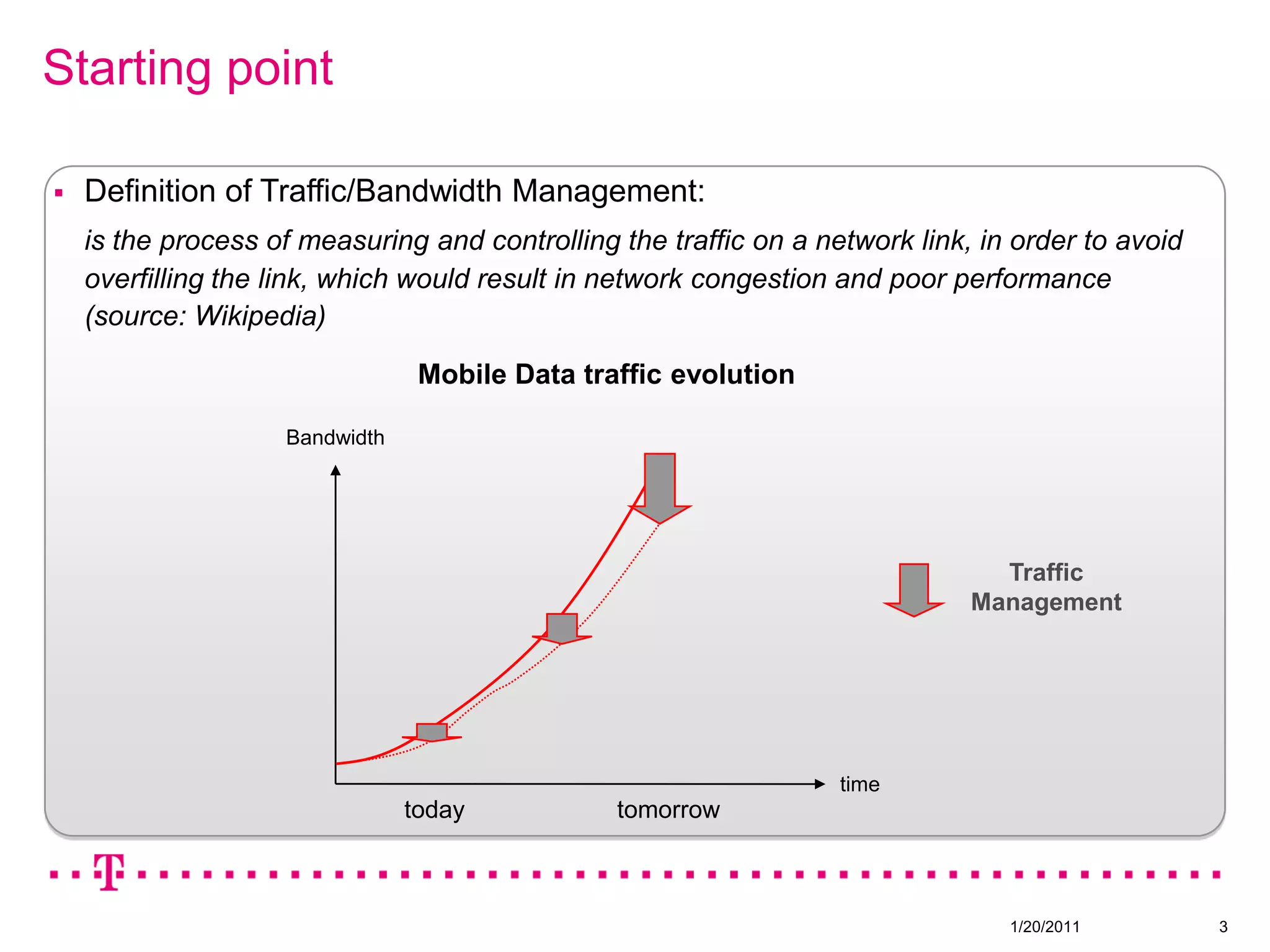
Summary20/01/20113Starting pointMobile Data traffic evolutionBandwidthTraffic ManagementtimetodaytomorrowDefinition of Traffic/Bandwidth Management: is the process of measuring and controlling the traffic on a network link, in order to avoid overfilling the link, which would result in network congestion and poor performance(source: Wikipedia)
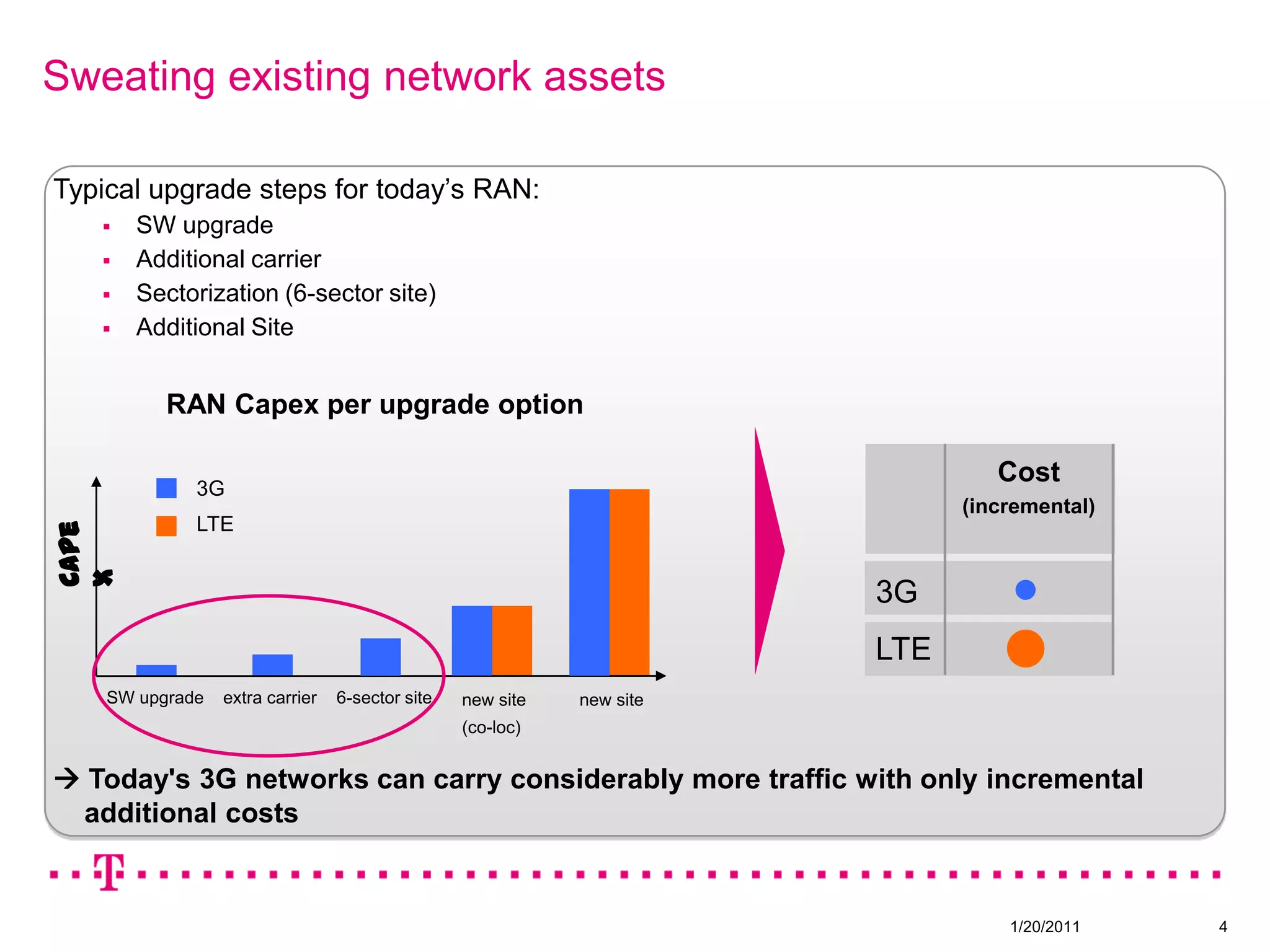
20/01/20114Cost(incremental)3GLTESweating existing network assetsTypical upgrade steps for today’s RAN:SW upgrade
Additional carrier
Sectorization (6-sector site)
Additional Site Today's 3G networks can carry considerably more traffic with only incremental additional costsRAN Capex per upgrade option3GLTECapexSW upgrade    extra carrier    6-sector sitenew site           new site(co-loc)
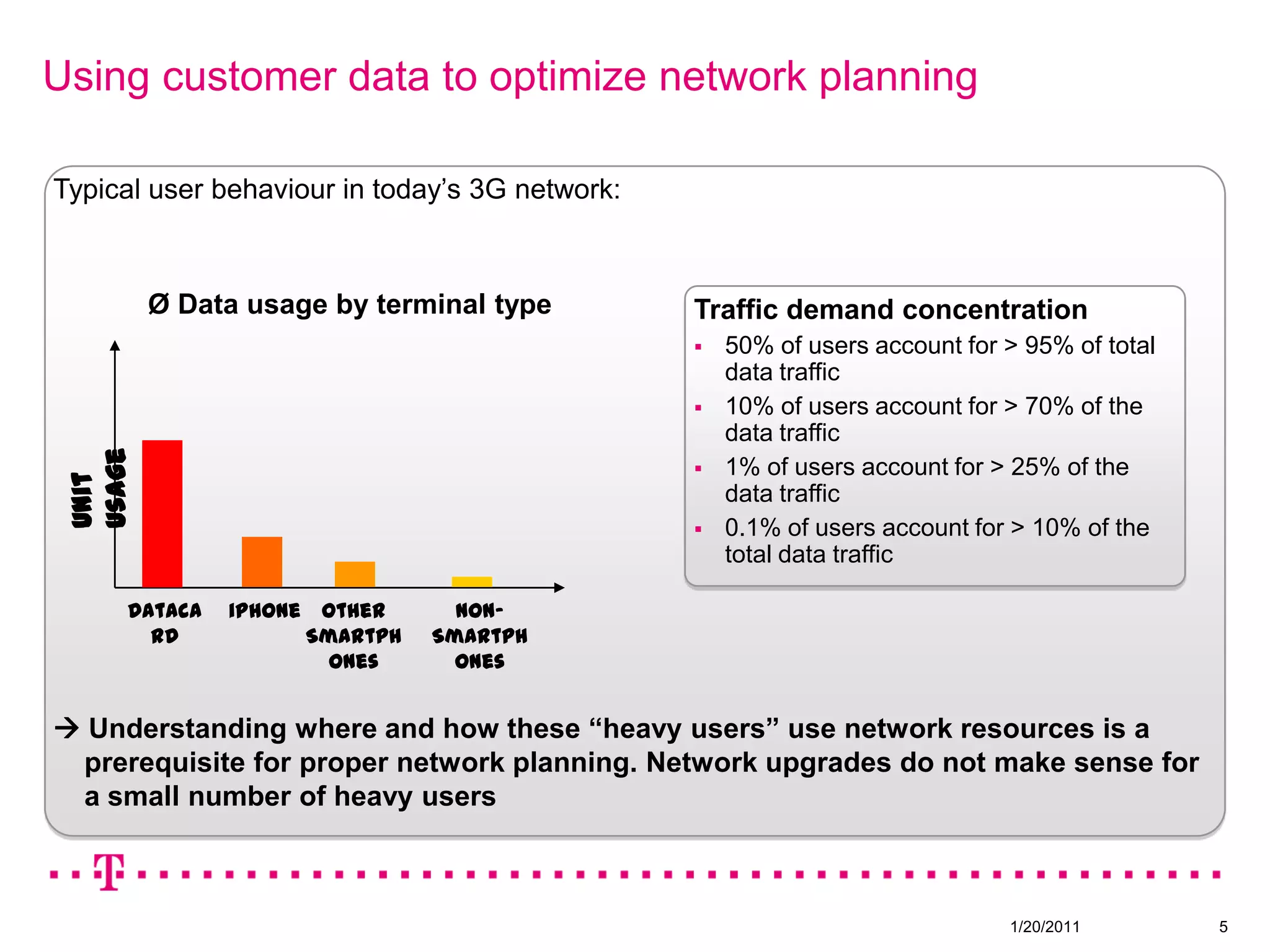
20/01/20115Using customer data to optimize network planningTypical user behaviour in today’s 3G network: Understanding where and how these “heavy users” use network resources is a prerequisite for proper network planning. Network upgrades do not make sense for a small number of heavy usersØ Data usage by terminal typeTraffic demand concentration50% of users account for > 95% of total data traffic
10% of users account for > 70% of the data traffic

Optimizing LTE Infrastructure Upgrades & Capex

  • 1.
    Optimizing LTE infrastructureupgrades and CapexBroadband Traffic Management Congress, 16. Nov 2010Dr. Kim Kyllesbech Larsen, Network EconomicsDirk Schöneboom, Network EconomicsTechnology, T-Mobile.
  • 2.
    20/01/20112OverviewOptimizing LTE infrastructureupgrades and Capex: For how long does an effective Traffic Management Architecture allow an operator to defer investing in more capacity?Sweating network assets and using customer data to optimize network planning
  • 3.
    Controlling costs ofnetwork expansion without compromising customer experience
  • 4.
    Modelling future terminalpenetration and projecting traffic migration to LTE
  • 5.
    Understand why LTEis no short-term saviour for operators addressing the capacity crunch
  • 6.
    Traffic migration inspectrum limited operations
  • 7.
    Summary20/01/20113Starting pointMobile Datatraffic evolutionBandwidthTraffic ManagementtimetodaytomorrowDefinition of Traffic/Bandwidth Management: is the process of measuring and controlling the traffic on a network link, in order to avoid overfilling the link, which would result in network congestion and poor performance(source: Wikipedia)
  • 8.
    20/01/20114Cost(incremental)3GLTESweating existing networkassetsTypical upgrade steps for today’s RAN:SW upgrade
  • 9.
  • 10.
  • 11.
    Additional Site Today's3G networks can carry considerably more traffic with only incremental additional costsRAN Capex per upgrade option3GLTECapexSW upgrade extra carrier 6-sector sitenew site new site(co-loc)
  • 12.
    20/01/20115Using customer datato optimize network planningTypical user behaviour in today’s 3G network: Understanding where and how these “heavy users” use network resources is a prerequisite for proper network planning. Network upgrades do not make sense for a small number of heavy usersØ Data usage by terminal typeTraffic demand concentration50% of users account for > 95% of total data traffic
  • 13.
    10% of usersaccount for > 70% of the data traffic
  • 14.
    1% of usersaccount for > 25% of the data traffic
  • 15.
    0.1% of usersaccount for > 10% of the total data trafficUnit usageDatacardOther SmartphonesiPhoneNon-Smartphones
  • 16.
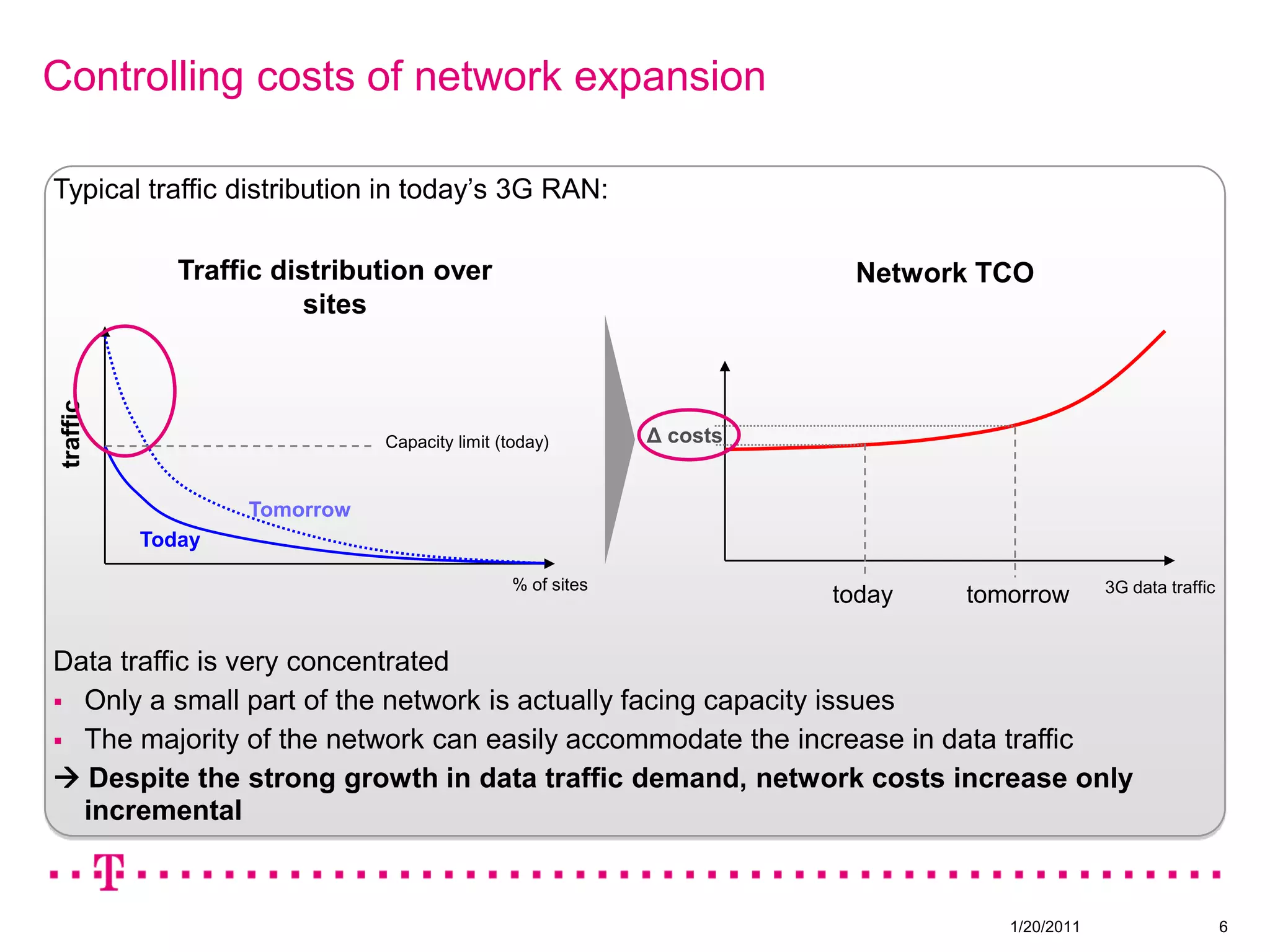
    20/01/20116Network TCOΔ costs3Gdata traffictodaytomorrowControlling costs of network expansionTypical traffic distribution in today’s 3G RAN:Data traffic is very concentratedOnly a small part of the network is actually facing capacity issues
  • 17.
    The majority ofthe network can easily accommodate the increase in data traffic Despite the strong growth in data traffic demand, network costs increase only incrementalTraffic distribution over sitestrafficCapacity limit (today)TomorrowToday% of sites
  • 18.
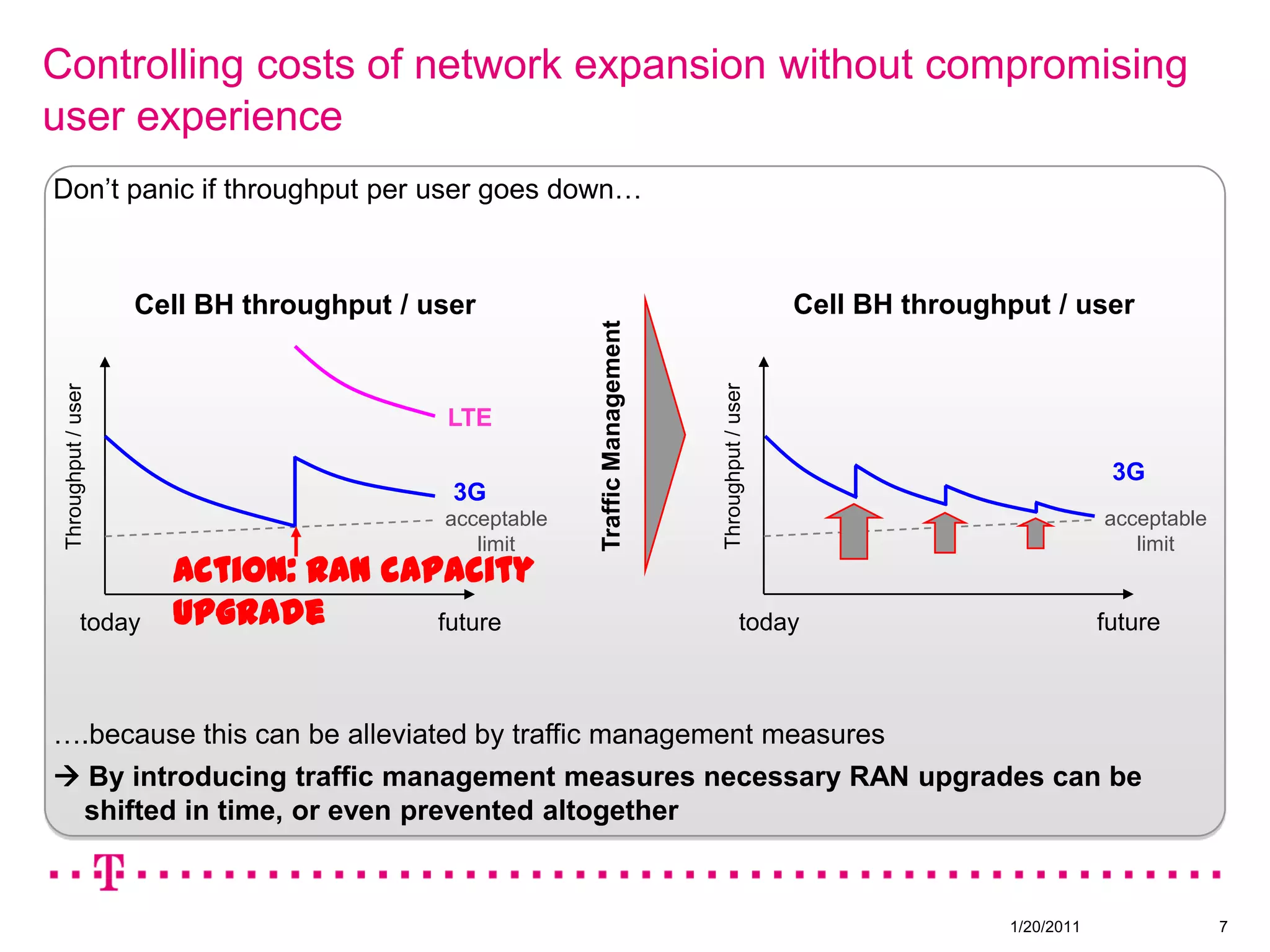
    20/01/20117Cell BH throughput/ userTraffic ManagementThroughput / user3Gacceptable limittodayfutureControlling costs of network expansion without compromising user experienceDon’t panic if throughput per user goes down…….because this can be alleviated by traffic management measures By introducing traffic management measures necessary RAN upgrades can be shifted in time, or even prevented altogetherCell BH throughput / userLTEThroughput / user3Gacceptable limitAction: RAN capacity upgradetodayfuture
  • 19.
  • 20.
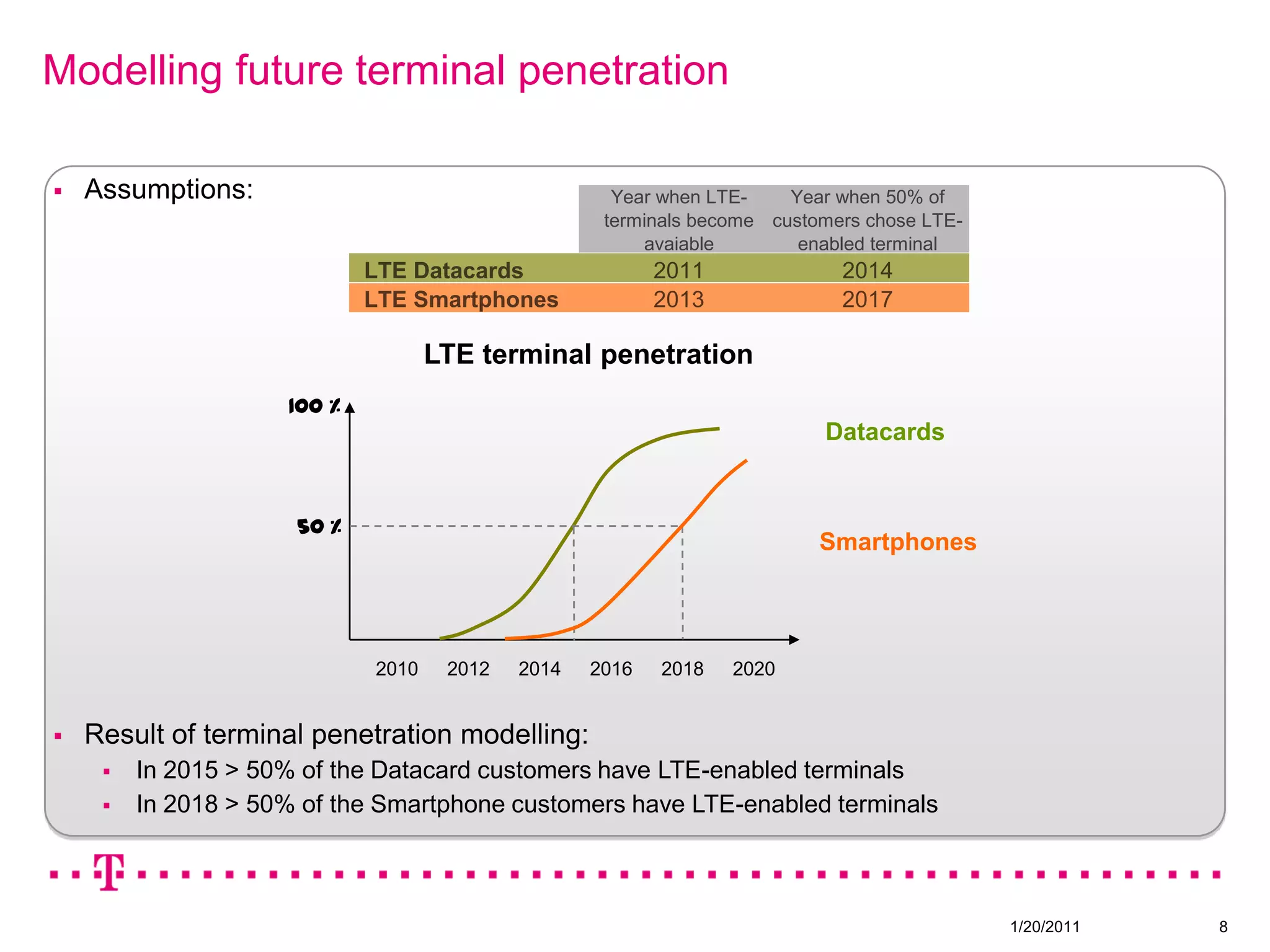
    Result of terminalpenetration modelling:
  • 21.
    In 2015 >50% of the Datacard customers have LTE-enabled terminals
  • 22.
    In 2018 >50% of the Smartphone customers have LTE-enabled terminalsLTE terminal penetration100 %Datacards50 %Smartphones
  • 23.
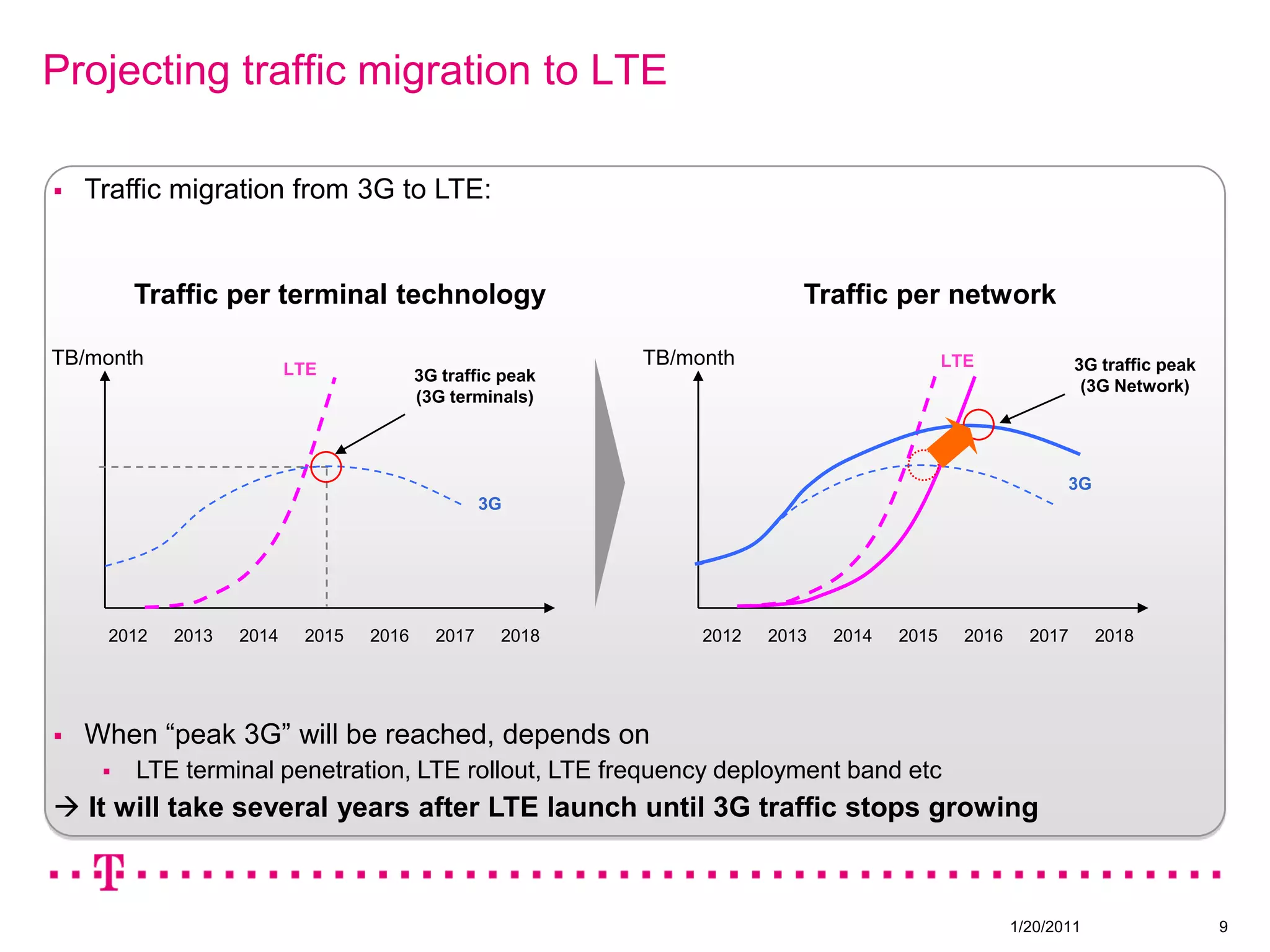
    20/01/201193G traffic peak(3G Network)Projecting traffic migration to LTETraffic migration from 3G to LTE:
  • 24.
    When “peak 3G”will be reached, depends on
  • 25.
    LTE terminal penetration,LTE rollout, LTE frequency deployment band etc It will take several years after LTE launch until 3G traffic stops growingTraffic per terminal technologyTraffic per networkTB/monthTB/monthLTELTE3G traffic peak (3G terminals)3G3G
  • 26.
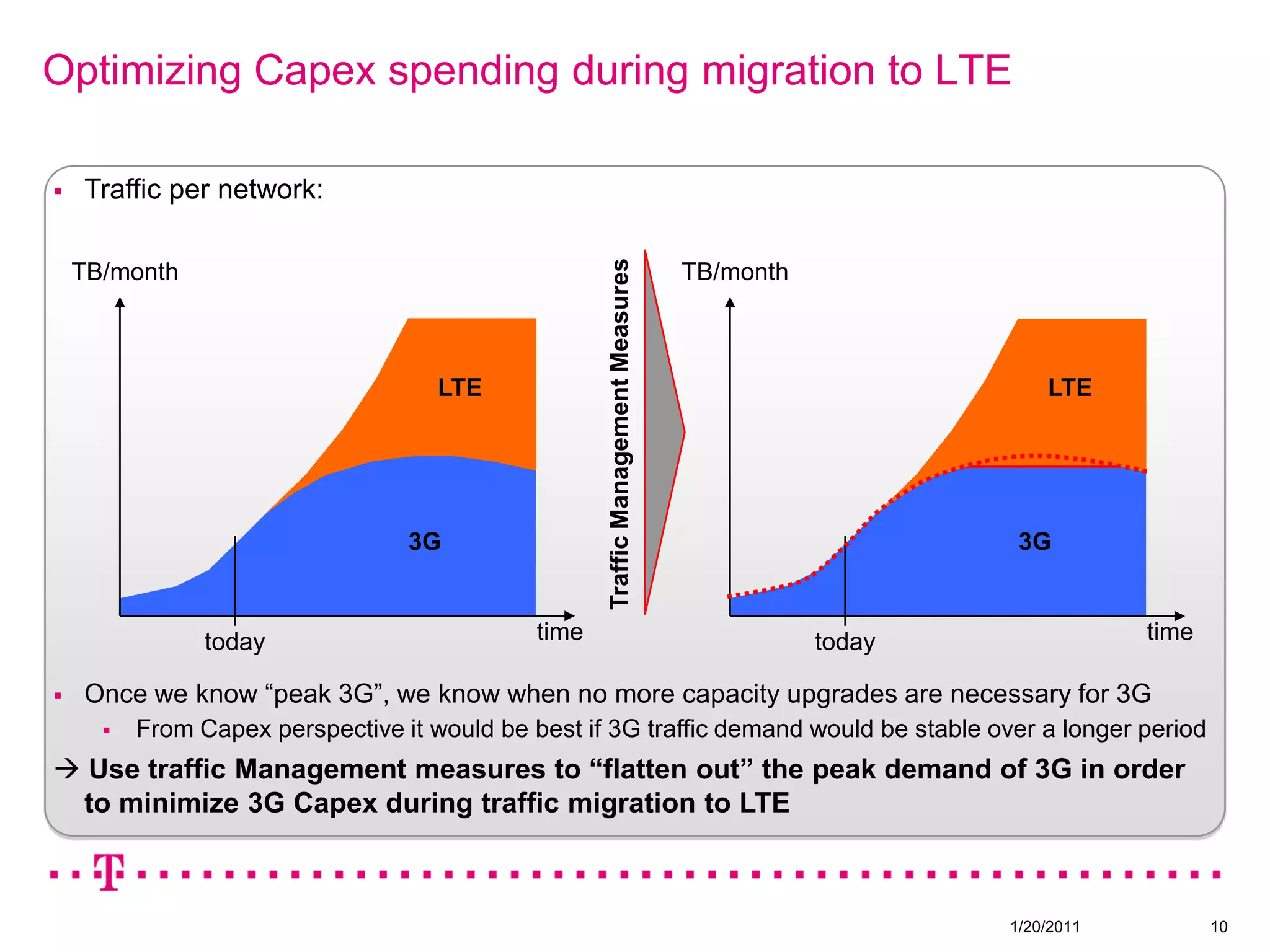
    20/01/201110TB/monthLTETraffic Management Measures3GtimetodayOptimizingCapex spending during migration to LTETraffic per network:
  • 27.
    Once we know“peak 3G”, we know when no more capacity upgrades are necessary for 3G
  • 28.
    From Capex perspectiveit would be best if 3G traffic demand would be stable over a longer period Use traffic Management measures to “flatten out” the peak demand of 3G in order to minimize 3G Capex during traffic migration to LTETB/monthLTE3Gtimetoday
  • 29.
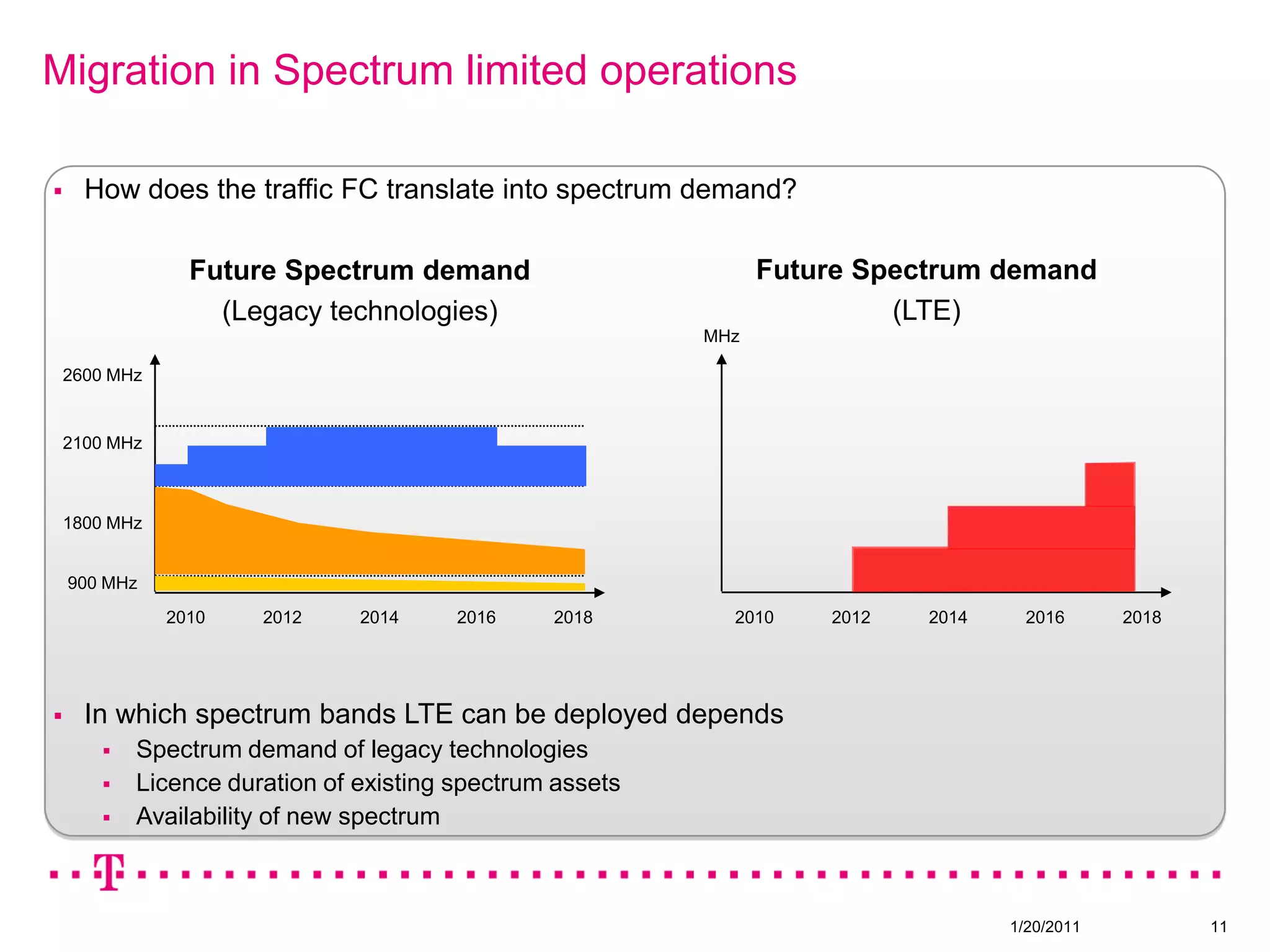
    20/01/201111Migration in Spectrumlimited operationsHow does the traffic FC translate into spectrum demand?
  • 30.
    In which spectrumbands LTE can be deployed depends
  • 31.
    Spectrum demand oflegacy technologies
  • 32.
    Licence duration ofexisting spectrum assets
  • 33.
    Availability of newspectrumFuture Spectrum demand(LTE)Future Spectrum demand(Legacy technologies)MHz2600 MHz2100 MHz1800 MHz900 MHz2010 2012 2014 2016 20182010 2012 2014 2016 2018
  • 34.
  • 35.
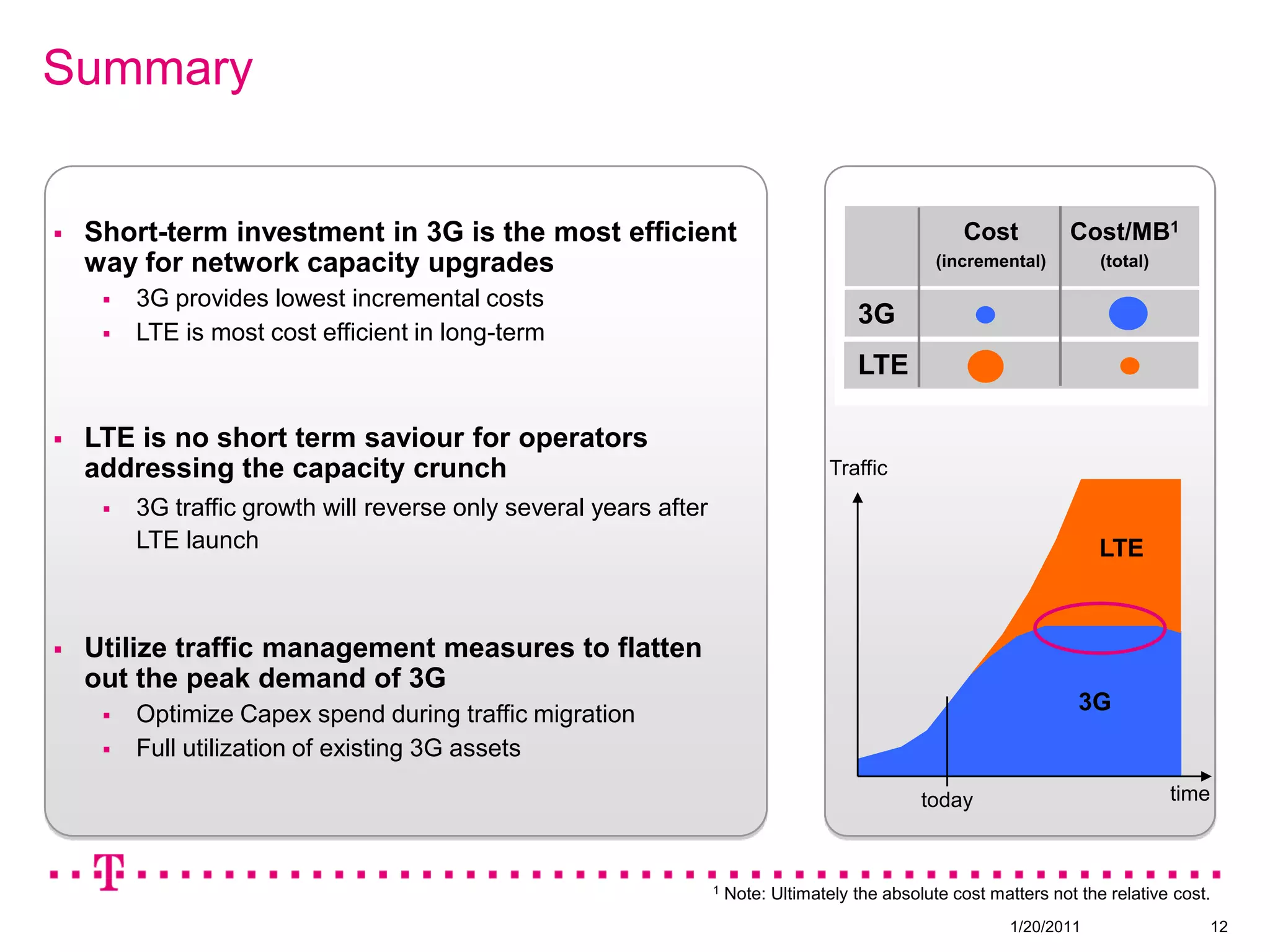
    3G provides lowestincremental costs
  • 36.
    LTE is mostcost efficient in long-term
  • 37.
    LTE is noshort term saviour for operators addressing the capacity crunch
  • 38.
    3G traffic growthwill reverse only several years after LTE launch
  • 39.
    Utilize traffic managementmeasures to flatten out the peak demand of 3G
  • 40.
    Optimize Capex spendduring traffic migration
  • 41.
    Full utilization ofexisting 3G assets1 Note: Ultimately the absolute cost matters not the relative cost.
  • 42.