Optimise your energy use
with Demand Side
Response
John Walsh
Senior Strategic Account Manager
Agenda
1. What is Demand Side Response (DSR), how does it work and why is it important?
2. What is E.ON doing with DSR?
3. The benefits of DSR to participants
4. How can businesses get involved?
5. What can you expect to earn?
6. Next steps for you
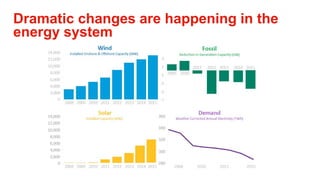
Dramatic changes are happening in the
energy system
What is Demand Side
Response (DSR)?
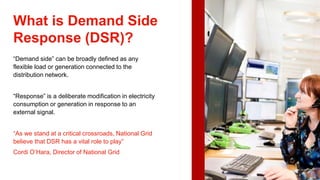
“Demand side” can be broadly defined as any
flexible load or generation connected to the
distribution network.
“Response” is a deliberate modification in electricity
consumption or generation in response to an
external signal.
“As we stand at a critical crossroads, National Grid
believe that DSR has a vital role to play”
Cordi O’Hara, Director of National Grid
07.04.2017 4
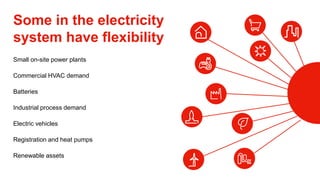
Some in the electricity
system have flexibility
Small on-site power plants
Commercial HVAC demand
Batteries
Industrial process demand
Electric vehicles
Registration and heat pumps
Renewable assets
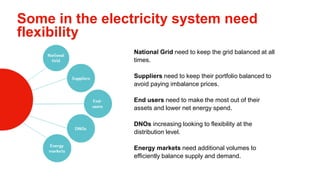
Some in the electricity system need
flexibility
National Grid need to keep the grid balanced at all
times.
Suppliers need to keep their portfolio balanced to
avoid paying imbalance prices.
End users need to make the most out of their
assets and lower net energy spend.
DNOs increasing looking to flexibility at the
distribution level.
Energy markets need additional volumes to
efficiently balance supply and demand.
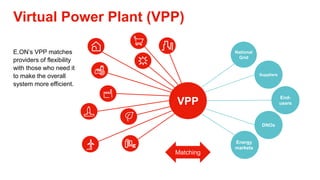
Virtual Power Plant (VPP)
Matching
VPP
National
Grid
Suppliers
End-
users
DNOs
Energy
markets
E.ON’s VPP matches
providers of flexibility
with those who need it
to make the overall
system more efficient.
How does Demand
Side Response
work?
National Grid
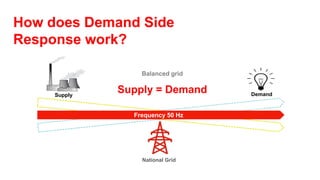
Frequency 50 Hz
Supply Demand
Supply = Demand
Balanced grid
How does Demand Side
Response work?
How does Demand Side
Response work?
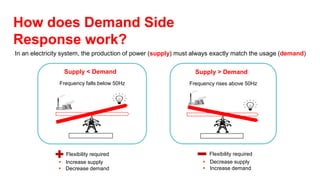
In an electricity system, the production of power (supply) must always exactly match the usage (demand)
Supply < Demand
Frequency falls below 50Hz
Supply > Demand
Frequency rises above 50Hz
Flexibility required
 Increase supply
 Decrease demand
Flexibility required
 Decrease supply
 Increase demand
How can customers deliver
DSR?
For a reliable electricity system, the supply must always match the demand.
Businesses and public sector organisations can change their electricity
demand in three ways:
Turning down the use of electricity
Changing when they use electricity
Turning on or increasing production from on-site generation
Businesses can also increase their electricity demand at certain times, for
example on windy or sunny days when demand is low but renewable output is
high.
Core markets available for a DSR solution
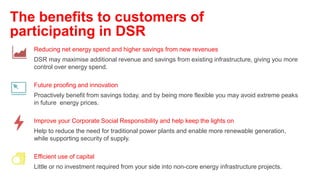
Reducing net energy spend and higher savings from new revenues
DSR may maximise additional revenue and savings from existing infrastructure, giving you more
control over energy spend.
Future proofing and innovation
Proactively benefit from savings today, and by being more flexible you may avoid extreme peaks
in future energy prices.
Improve your Corporate Social Responsibility and help keep the lights on
Help to reduce the need for traditional power plants and enable more renewable generation,
while supporting security of supply.
Efficient use of capital
Little or no investment required from your side into non-core energy infrastructure projects.
The benefits to customers of
participating in DSR
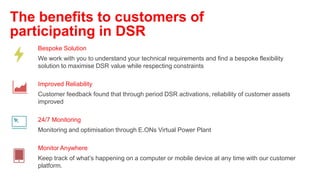
Bespoke Solution
We work with you to understand your technical requirements and find a bespoke flexibility
solution to maximise DSR value while respecting constraints
Improved Reliability
Customer feedback found that through period DSR activations, reliability of customer assets
improved
24/7 Monitoring
Monitoring and optimisation through E.ONs Virtual Power Plant
Monitor Anywhere
Keep track of what’s happening on a computer or mobile device at any time with our customer
platform.
The benefits to customers of
participating in DSR
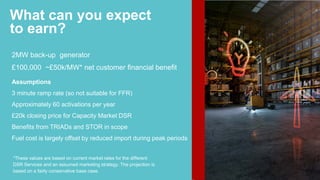
2MW back-up generator
£100,000 ~£50k/MW* net customer financial benefit
Assumptions
3 minute ramp rate (so not suitable for FFR)
Approximately 60 activations per year
£20k closing price for Capacity Market DSR
Benefits from TRIADs and STOR in scope
Fuel cost is largely offset by reduced import during peak periods
*These values are based on current market rates for the different
DSR Services and an assumed marketing strategy. The projection is
based on a fairly conservative base case.
What can you expect
to earn?
What have we helped
our customers save?
So far in 2017, E.ON have helped our customers to generate
additional revenue and savings of around £1.37m
This figure is expected to increase to £4.3m of revenue and
savings for our customers in 2018 and £8.1m in 2019
Would you be a suitable
customer for DSR?
Are you an energy intensive consumer?
Do you have generation on site?
If you answered yes to either of these then you would be
suitable.
Find out more at eonenergy.com/solutions or call 0330 400 1102
or find us on LinkedIn
Thank you

Optimise your Energy Use with Demand Side Response (DSR)

  • 1.
    Optimise your energyuse with Demand Side Response John Walsh Senior Strategic Account Manager
  • 2.
    Agenda 1. What isDemand Side Response (DSR), how does it work and why is it important? 2. What is E.ON doing with DSR? 3. The benefits of DSR to participants 4. How can businesses get involved? 5. What can you expect to earn? 6. Next steps for you
  • 3.
    Dramatic changes arehappening in the energy system
  • 4.
    What is DemandSide Response (DSR)? “Demand side” can be broadly defined as any flexible load or generation connected to the distribution network. “Response” is a deliberate modification in electricity consumption or generation in response to an external signal. “As we stand at a critical crossroads, National Grid believe that DSR has a vital role to play” Cordi O’Hara, Director of National Grid 07.04.2017 4
  • 5.
    Some in theelectricity system have flexibility Small on-site power plants Commercial HVAC demand Batteries Industrial process demand Electric vehicles Registration and heat pumps Renewable assets
  • 6.
    Some in theelectricity system need flexibility National Grid need to keep the grid balanced at all times. Suppliers need to keep their portfolio balanced to avoid paying imbalance prices. End users need to make the most out of their assets and lower net energy spend. DNOs increasing looking to flexibility at the distribution level. Energy markets need additional volumes to efficiently balance supply and demand.
  • 7.
    Virtual Power Plant(VPP) Matching VPP National Grid Suppliers End- users DNOs Energy markets E.ON’s VPP matches providers of flexibility with those who need it to make the overall system more efficient.
  • 8.
    How does Demand SideResponse work?
  • 9.
    National Grid Frequency 50Hz Supply Demand Supply = Demand Balanced grid How does Demand Side Response work?
  • 10.
    How does DemandSide Response work? In an electricity system, the production of power (supply) must always exactly match the usage (demand) Supply < Demand Frequency falls below 50Hz Supply > Demand Frequency rises above 50Hz Flexibility required  Increase supply  Decrease demand Flexibility required  Decrease supply  Increase demand
  • 11.
    How can customersdeliver DSR? For a reliable electricity system, the supply must always match the demand. Businesses and public sector organisations can change their electricity demand in three ways: Turning down the use of electricity Changing when they use electricity Turning on or increasing production from on-site generation Businesses can also increase their electricity demand at certain times, for example on windy or sunny days when demand is low but renewable output is high.
  • 12.
    Core markets availablefor a DSR solution
  • 13.
    Reducing net energyspend and higher savings from new revenues DSR may maximise additional revenue and savings from existing infrastructure, giving you more control over energy spend. Future proofing and innovation Proactively benefit from savings today, and by being more flexible you may avoid extreme peaks in future energy prices. Improve your Corporate Social Responsibility and help keep the lights on Help to reduce the need for traditional power plants and enable more renewable generation, while supporting security of supply. Efficient use of capital Little or no investment required from your side into non-core energy infrastructure projects. The benefits to customers of participating in DSR
  • 14.
    Bespoke Solution We workwith you to understand your technical requirements and find a bespoke flexibility solution to maximise DSR value while respecting constraints Improved Reliability Customer feedback found that through period DSR activations, reliability of customer assets improved 24/7 Monitoring Monitoring and optimisation through E.ONs Virtual Power Plant Monitor Anywhere Keep track of what’s happening on a computer or mobile device at any time with our customer platform. The benefits to customers of participating in DSR
  • 15.
    2MW back-up generator £100,000~£50k/MW* net customer financial benefit Assumptions 3 minute ramp rate (so not suitable for FFR) Approximately 60 activations per year £20k closing price for Capacity Market DSR Benefits from TRIADs and STOR in scope Fuel cost is largely offset by reduced import during peak periods *These values are based on current market rates for the different DSR Services and an assumed marketing strategy. The projection is based on a fairly conservative base case. What can you expect to earn?
  • 16.
    What have wehelped our customers save? So far in 2017, E.ON have helped our customers to generate additional revenue and savings of around £1.37m This figure is expected to increase to £4.3m of revenue and savings for our customers in 2018 and £8.1m in 2019
  • 17.
    Would you bea suitable customer for DSR? Are you an energy intensive consumer? Do you have generation on site? If you answered yes to either of these then you would be suitable.
  • 18.
    Find out moreat eonenergy.com/solutions or call 0330 400 1102 or find us on LinkedIn Thank you