OPPRESSION AND
GENOCIDE
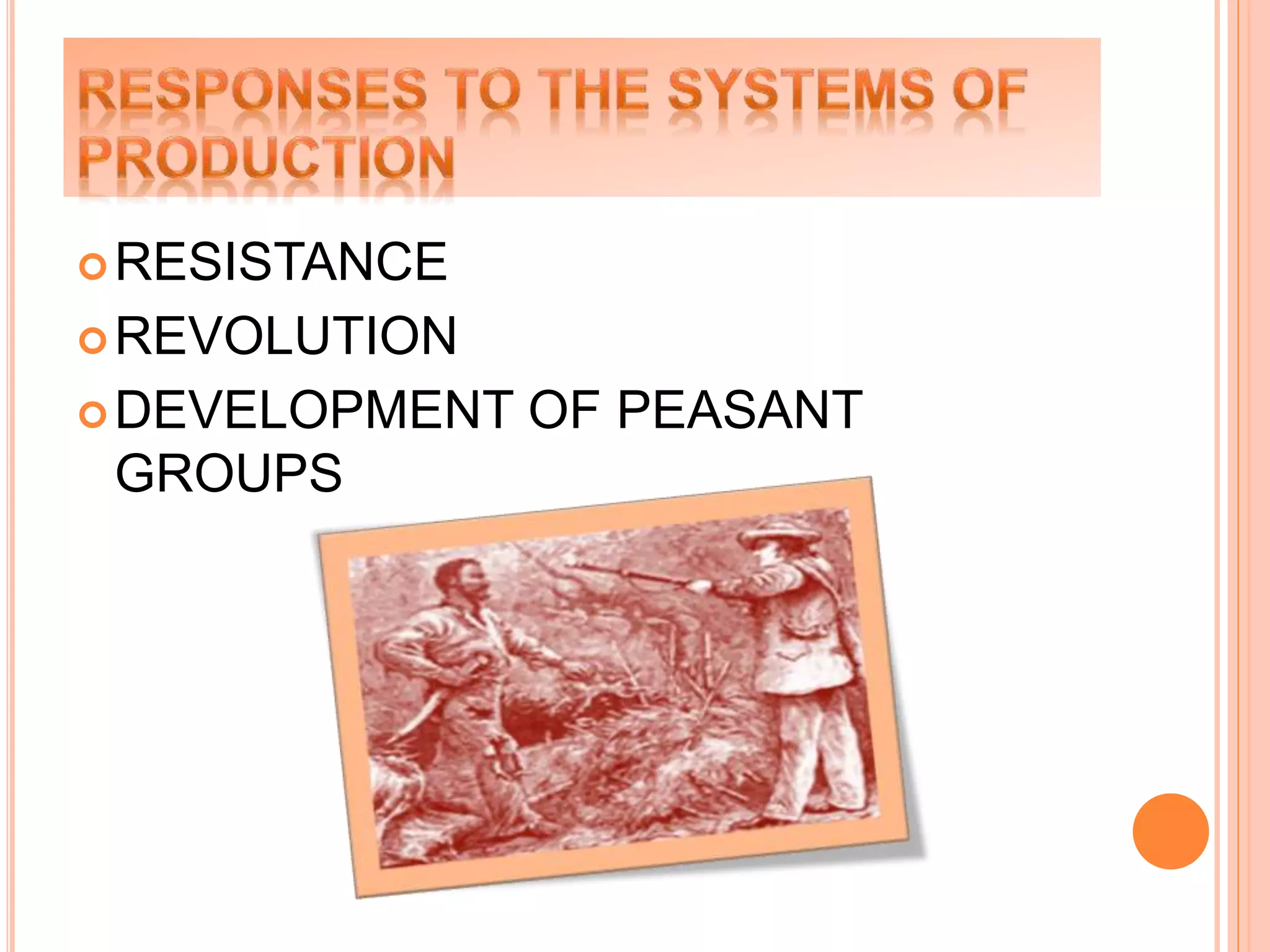
RESISTANCE
REVOLUTION
DEVELOPMENT OF PEASANT
GROUPS
 They killed men that Columbus left in charge of the
Amerindians at La Navidad in Hispaniola in 1943
because of their ill treatment of the native women
 Caciques such as Guarionex (Hispaniola) Hatuey
(Cuba) and Agueybana (Puerto Rico) engaged
Spaniards in warfare
 Running away
 Withdrew themselves from their settlements so that
the encomienda could not be enforced
 Sabotage
 Suicide
 They resided in the mountainous terrain of their
islands so they can engage in guerilla warfare
 They were extremely mobile with the dug-out canoe
allowing them to escape capture and so the
Spaniards left them alone
 There were continuous raids on the settlements
that the British, French and Dutch occupied
however the large influx and the Europeans and
their weapons drove the Caribs to Dominica and
Grenada
o Guerilla warfare
o They retreated into the interior of the island. From
there they engaged in raids and sometimes formed
alliances with one European power against another.
o As Black Caribs, they engaged in warfare with the
British
o Maintain websites to show their past and present
culture
o Re-enact their voyages to the Caribbean
o Collaborate with archaeologist to interpret historical
records
 The Africans resistance and rebellion to enslavement
was a natural reaction to the slave trade. Their
resistance was noted daily by the slave owners. It is
estimated that 10% of all the enslaved took such action
which sometimes involved moving temporarily to
another location or for those in the Caribbean to another
island. Resistance to slavery had a long history
beginning in Africa itself. Resistance occurred despite
systematic efforts to “Break the spirit” of the strong and
intimidate the weak. There were three ways that the
slaves resisted on the plantation:-
 Non-violent
 Violent resistance
 Maroonage
o Refusal to work
o Evasion of work
o Running away to Guyana, Suriname, Jamaica and Hispaniola
o Malingering
o Deliberately losing tools and implements
o Misunderstanding instructions
o Composing songs that mimicked the whites lifestyle
o Induced abortion so as to reduce the amount of slaves
available to work for the slave owners
o They were notoriously lazy and ill and engaged in acts of non-
cooperation, petty theft, sabotage such as damaging tools,
equipment and other property belonging to the planter, acts of
willfully disobeying their owners.
o Vendetta
 This type of resistance was successful. The Europeans
found it difficult to deal with this form of guerilla warfare.
Slaves ran away far from European society
 They would wage wars in the form of attacks, raids and
inspiring rebellion on Estates
 In Jamaica, maroon settlement were successful in
demanding runaway slaves form being recaptured
 This practice was more popular in the larger,
mountainous and inaccessible territories of the
Caribbean such as the Blue Mountain and the Cockpit
Mountain (Jamaica), Las Villas (Suriname) and
Hammerhead Mountains (Cuba)
 The Europeans initiated in Jamaica a peace treaty, in
1739, conceding independence to the Maroons in order
to control the effectiveness of maroonage
 Resistance took a more organised form in that in
Jamaica there was the Tacky Rebellion in 1760 and
the Sam Sharp led “Christmas Rebellion” of 1831
 The only successful slave revolution took place in
Haiti where the larger numbers of Africans made a
strong opposition and the African leaders displayed
extraordinary skills in military leadership. It was said
that this revolution ignited the flame of liberation for
all slaves throughout the Caribbean and the New
World
 In 1803, the despised “rag tag” Haitian took over
the European army and installed an African leader
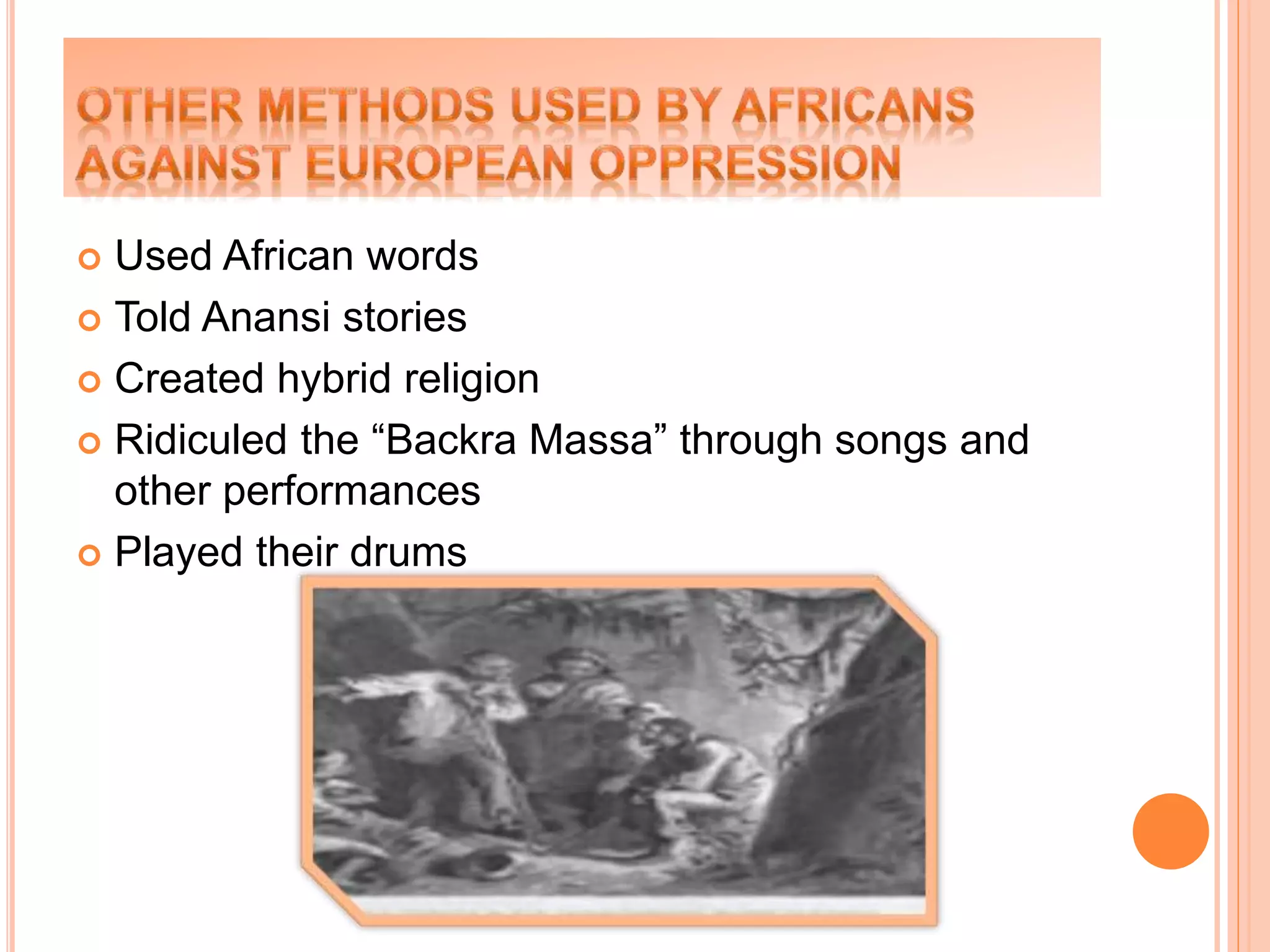
 Used African words
 Told Anansi stories
 Created hybrid religion
 Ridiculed the “Backra Massa” through songs and
other performances
 Played their drums
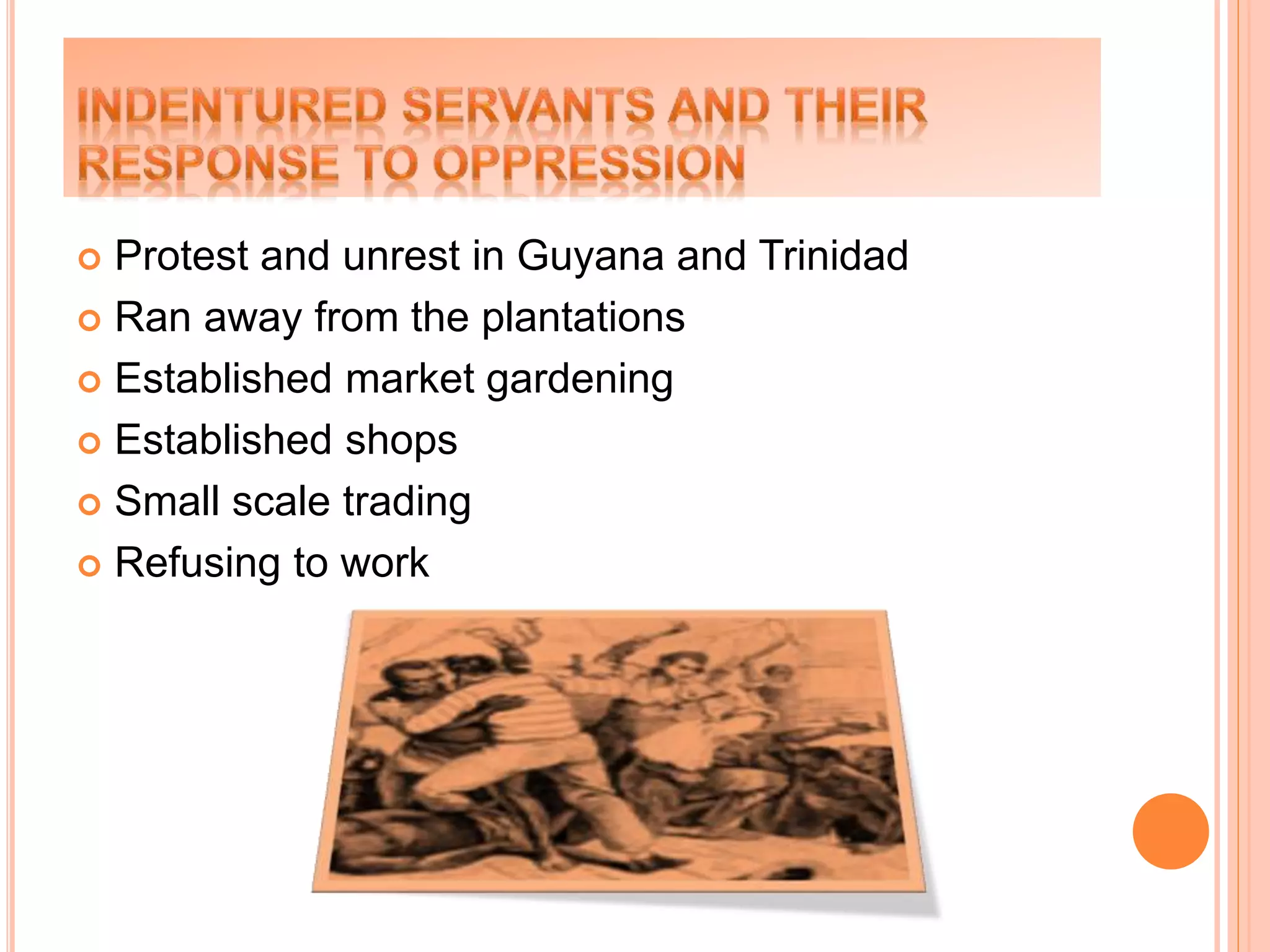
 Protest and unrest in Guyana and Trinidad
 Ran away from the plantations
 Established market gardening
 Established shops
 Small scale trading
 Refusing to work
 Even though full freedom was achieved by Caribbean
slaves, their struggles for social justice was not over
 The British government compensated the slave owners
with twenty million pounds however, the ruling class
continued the oppression of the newly freed slaves by
paying low wages, enacting oppressive laws, denying
access to property ownership, preventing them from
voting and limiting the opportunity for education, health
service and welfare programmes and so Paul Bogle of
Jamaica led a rebellion in Morant Bay, protesting against
the inhumane conditions ex-slaves were subjected to.
 In the twentieth century, there was World War 1 which
led to a fall in exports to Europe, domestic inflation,
lowering of wages and increased job cuts. This led to
poverty and increased resentment for the white ruling
class

Oppression and reisitance

  • 1.
  • 2.
  • 3.
     They killedmen that Columbus left in charge of the Amerindians at La Navidad in Hispaniola in 1943 because of their ill treatment of the native women  Caciques such as Guarionex (Hispaniola) Hatuey (Cuba) and Agueybana (Puerto Rico) engaged Spaniards in warfare  Running away  Withdrew themselves from their settlements so that the encomienda could not be enforced  Sabotage  Suicide
  • 4.
     They residedin the mountainous terrain of their islands so they can engage in guerilla warfare  They were extremely mobile with the dug-out canoe allowing them to escape capture and so the Spaniards left them alone  There were continuous raids on the settlements that the British, French and Dutch occupied however the large influx and the Europeans and their weapons drove the Caribs to Dominica and Grenada
  • 5.
    o Guerilla warfare oThey retreated into the interior of the island. From there they engaged in raids and sometimes formed alliances with one European power against another. o As Black Caribs, they engaged in warfare with the British o Maintain websites to show their past and present culture o Re-enact their voyages to the Caribbean o Collaborate with archaeologist to interpret historical records
  • 6.
     The Africansresistance and rebellion to enslavement was a natural reaction to the slave trade. Their resistance was noted daily by the slave owners. It is estimated that 10% of all the enslaved took such action which sometimes involved moving temporarily to another location or for those in the Caribbean to another island. Resistance to slavery had a long history beginning in Africa itself. Resistance occurred despite systematic efforts to “Break the spirit” of the strong and intimidate the weak. There were three ways that the slaves resisted on the plantation:-  Non-violent  Violent resistance  Maroonage
  • 7.
    o Refusal towork o Evasion of work o Running away to Guyana, Suriname, Jamaica and Hispaniola o Malingering o Deliberately losing tools and implements o Misunderstanding instructions o Composing songs that mimicked the whites lifestyle o Induced abortion so as to reduce the amount of slaves available to work for the slave owners o They were notoriously lazy and ill and engaged in acts of non- cooperation, petty theft, sabotage such as damaging tools, equipment and other property belonging to the planter, acts of willfully disobeying their owners. o Vendetta
  • 9.
     This typeof resistance was successful. The Europeans found it difficult to deal with this form of guerilla warfare. Slaves ran away far from European society  They would wage wars in the form of attacks, raids and inspiring rebellion on Estates  In Jamaica, maroon settlement were successful in demanding runaway slaves form being recaptured  This practice was more popular in the larger, mountainous and inaccessible territories of the Caribbean such as the Blue Mountain and the Cockpit Mountain (Jamaica), Las Villas (Suriname) and Hammerhead Mountains (Cuba)  The Europeans initiated in Jamaica a peace treaty, in 1739, conceding independence to the Maroons in order to control the effectiveness of maroonage
  • 10.
     Resistance tooka more organised form in that in Jamaica there was the Tacky Rebellion in 1760 and the Sam Sharp led “Christmas Rebellion” of 1831  The only successful slave revolution took place in Haiti where the larger numbers of Africans made a strong opposition and the African leaders displayed extraordinary skills in military leadership. It was said that this revolution ignited the flame of liberation for all slaves throughout the Caribbean and the New World  In 1803, the despised “rag tag” Haitian took over the European army and installed an African leader
  • 11.
     Used Africanwords  Told Anansi stories  Created hybrid religion  Ridiculed the “Backra Massa” through songs and other performances  Played their drums
  • 12.
     Protest andunrest in Guyana and Trinidad  Ran away from the plantations  Established market gardening  Established shops  Small scale trading  Refusing to work
  • 13.
     Even thoughfull freedom was achieved by Caribbean slaves, their struggles for social justice was not over  The British government compensated the slave owners with twenty million pounds however, the ruling class continued the oppression of the newly freed slaves by paying low wages, enacting oppressive laws, denying access to property ownership, preventing them from voting and limiting the opportunity for education, health service and welfare programmes and so Paul Bogle of Jamaica led a rebellion in Morant Bay, protesting against the inhumane conditions ex-slaves were subjected to.  In the twentieth century, there was World War 1 which led to a fall in exports to Europe, domestic inflation, lowering of wages and increased job cuts. This led to poverty and increased resentment for the white ruling class