HOW DO THE  CARIBBEAN  PEOPLE RESPOND TO OPPRESSION?
OPPRESSION Oppression is the experience of repeated, widespread, systemic injustice. It need not be extreme and involve the legal system (as in slavery, apartheid, or the lack of right to vote) nor violent (as in tyrannical societies).
What Really happened  Between 1662 and 1807, Britain shipped 3.1 million Africans across the Atlantic ocean in the transatlantic slave trade. Africans were forcibly brought to British owned colonies in the Caribbean and sold as slaves to work on plantations. Those engaged in the trade driven by the huge financial gain to be made both in the Caribbean and at home in Britain.
They constantly rebelled against slavery right up until emancipation in 1834. Most spectacular were the slave revolts during the 18th and 19th centuries, including: Tacky’s rebellion in 1760s Jamaica, the Haitian Revolution (1789), Fedon’s 1790s revolution in Grenada, the 1816 Barbados slave revolt led by Bussa, and the major 1831 slave revolt in Jamaica led by Sam Sharpe. Also voices of dissent began emerging in Britain, highlighting the poor conditions of enslaved people.
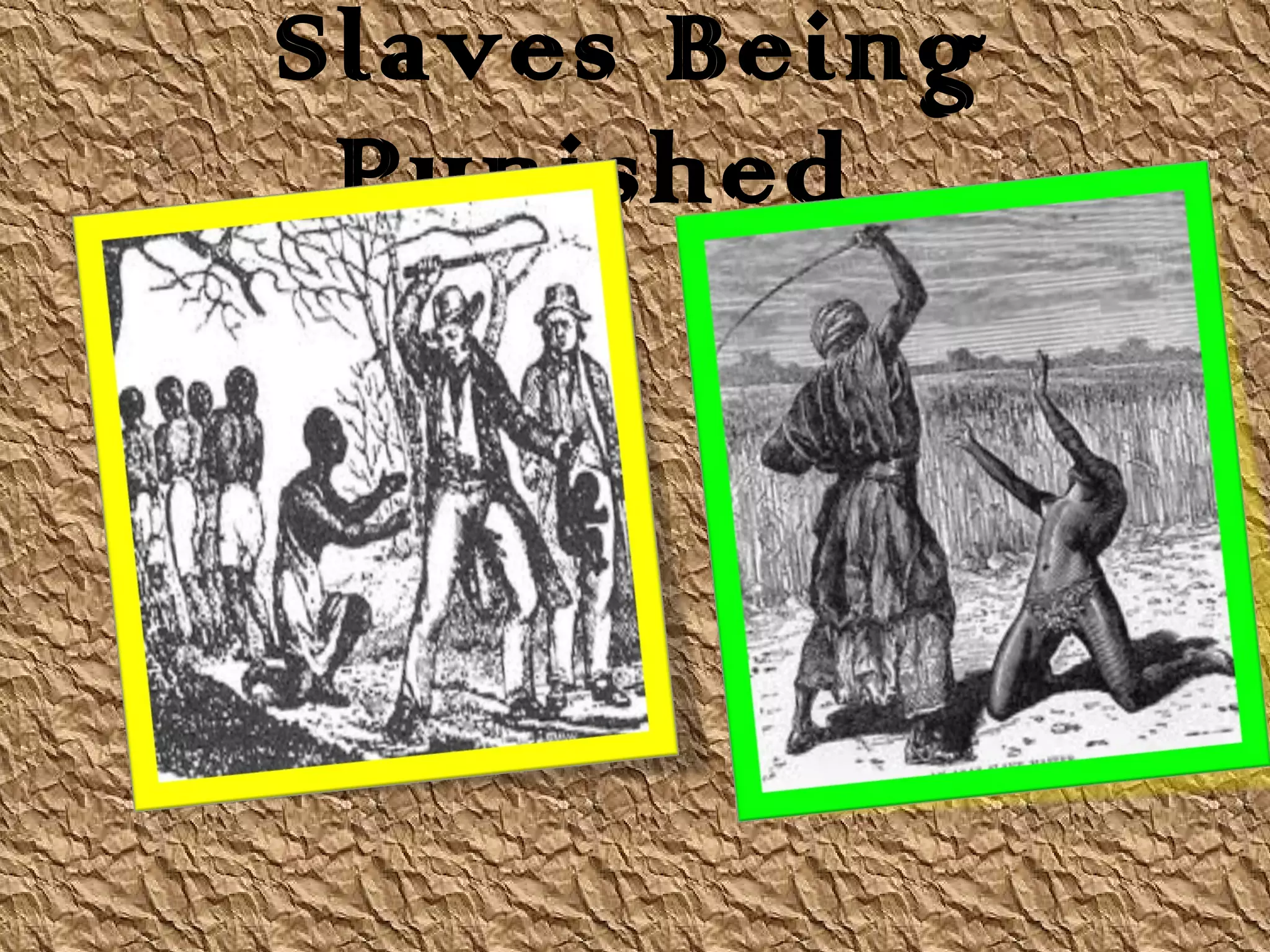
How Were They Oppressed When taken to work on the plantation they lived in huts in the slave villages which were very unsanitary and poor living conditions. 2 Their punishment were cruel and severe, flogging and beating became part of their everyday life. 3 They were given crowded barracks, meagre wages long hours of heavy manual labour.
Slaves Being Punished
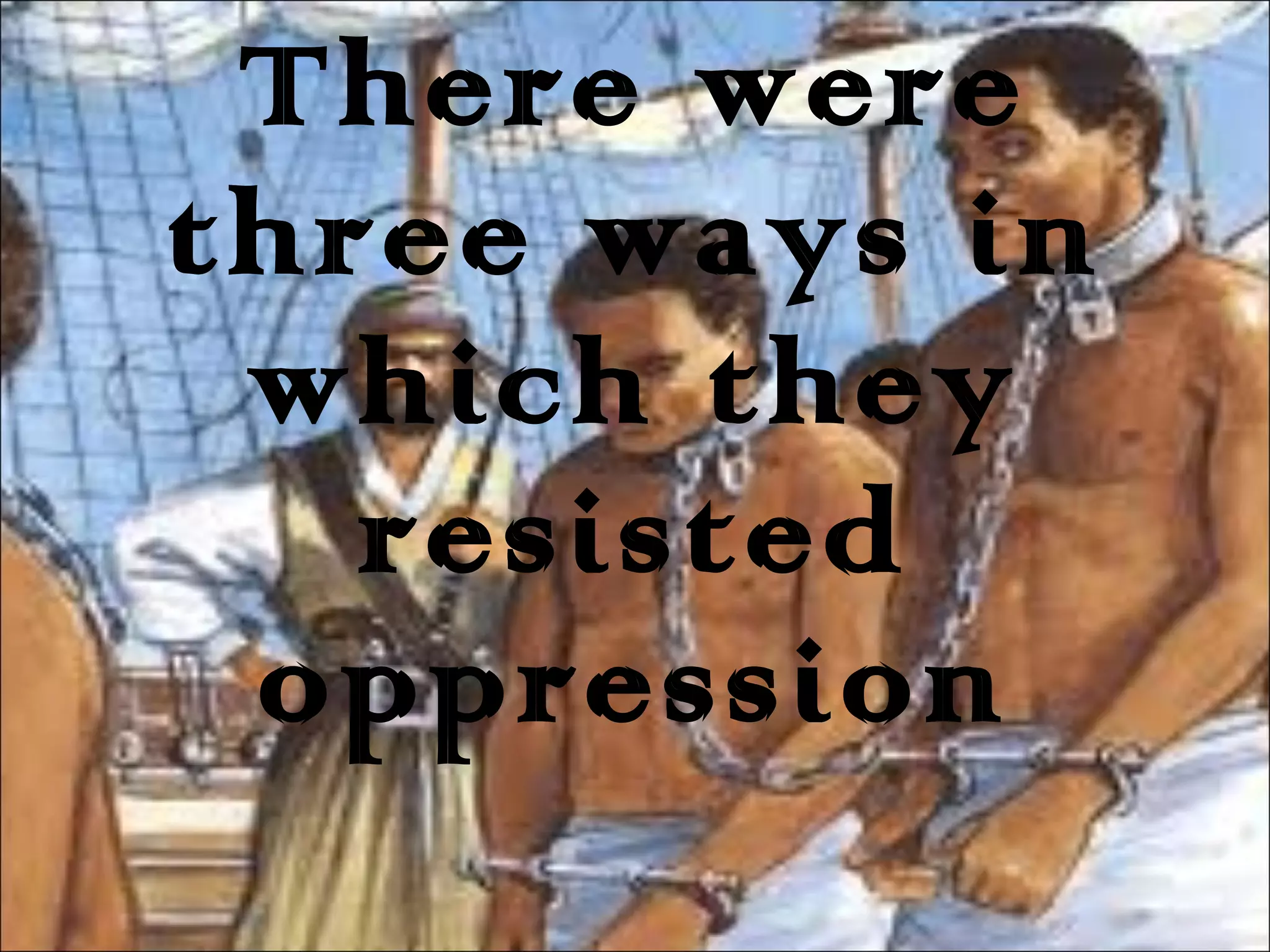
There were three ways in which they resisted oppression
Non-violent Resistance  They refused to work They evade work They deliberately lose their tools  They behaved like they did not understand instructions given to them by their masters They made songs to mimicked the masters lifestyle They committed suicide
Marronage They ran away from the European society They waged war in the form of a attacks, raids and inspiring rebellion on estates
Violent Resistance They acted against the whites in groups  They rebelled against them  The revolution in Haiti mushroomed into war between France and the slaves in 1791 the slaves being victorious. Fedon’s 1790 revolution in Grenada The Barbados slaves revolt lead by Bussa
Now lets look at Jamaica and how they deal with oppression Many of the Jamaican national heroes such as Paul Bogle, George Williams Gordon and Sam Sharpe all spoke out against oppression in Jamaica.
Paul Bogle, Sam Sharpe and  George Gordon
Paul Bogle On Wednesday, October 11, 1865, Paul Bogle and a large group of people from Stony Gut and surrounding districts in the Parish of St. Thomas, Jamaica marched down to Morant Bay. Their purpose was to make a demonstration before the Custos and magistrates who were having their regular meeting in the Morant Bay Court House that day. They wanted the authorities of their parish to know that they were no longer prepared to put up with injustice, with arbitrary arrest and with all the other indignities that sapped their self-respect and prevented them from attaining the full status as free people.
Sam Sharpe Sam Sharpe told the slaves to sit down and do no work until they were paid. He said he never wanted them to fight, many slaves followed Sharpe’s plan. He believed that all slaves should be freed.
George William Gordon George urged the people to protest against and resist the oppressive and unjust conditions under which they were living.
Today Caribbean people today continue to resist oppression through music and song – reggae and similar movements in Jamaica music orientated among the poor and oppressed and so too did the Steel band and Calypso in Trinidad and Tobago.

How do the caribbean people respond to oppression

  • 1.
    HOW DO THE CARIBBEAN PEOPLE RESPOND TO OPPRESSION?
  • 2.
    OPPRESSION Oppression isthe experience of repeated, widespread, systemic injustice. It need not be extreme and involve the legal system (as in slavery, apartheid, or the lack of right to vote) nor violent (as in tyrannical societies).
  • 3.
    What Really happened Between 1662 and 1807, Britain shipped 3.1 million Africans across the Atlantic ocean in the transatlantic slave trade. Africans were forcibly brought to British owned colonies in the Caribbean and sold as slaves to work on plantations. Those engaged in the trade driven by the huge financial gain to be made both in the Caribbean and at home in Britain.
  • 4.
    They constantly rebelledagainst slavery right up until emancipation in 1834. Most spectacular were the slave revolts during the 18th and 19th centuries, including: Tacky’s rebellion in 1760s Jamaica, the Haitian Revolution (1789), Fedon’s 1790s revolution in Grenada, the 1816 Barbados slave revolt led by Bussa, and the major 1831 slave revolt in Jamaica led by Sam Sharpe. Also voices of dissent began emerging in Britain, highlighting the poor conditions of enslaved people.
  • 5.
    How Were TheyOppressed When taken to work on the plantation they lived in huts in the slave villages which were very unsanitary and poor living conditions. 2 Their punishment were cruel and severe, flogging and beating became part of their everyday life. 3 They were given crowded barracks, meagre wages long hours of heavy manual labour.
  • 6.
  • 7.
    There were threeways in which they resisted oppression
  • 8.
    Non-violent Resistance They refused to work They evade work They deliberately lose their tools They behaved like they did not understand instructions given to them by their masters They made songs to mimicked the masters lifestyle They committed suicide
  • 9.
    Marronage They ranaway from the European society They waged war in the form of a attacks, raids and inspiring rebellion on estates
  • 10.
    Violent Resistance Theyacted against the whites in groups They rebelled against them The revolution in Haiti mushroomed into war between France and the slaves in 1791 the slaves being victorious. Fedon’s 1790 revolution in Grenada The Barbados slaves revolt lead by Bussa
  • 11.
    Now lets lookat Jamaica and how they deal with oppression Many of the Jamaican national heroes such as Paul Bogle, George Williams Gordon and Sam Sharpe all spoke out against oppression in Jamaica.
  • 12.
    Paul Bogle, SamSharpe and George Gordon
  • 13.
    Paul Bogle OnWednesday, October 11, 1865, Paul Bogle and a large group of people from Stony Gut and surrounding districts in the Parish of St. Thomas, Jamaica marched down to Morant Bay. Their purpose was to make a demonstration before the Custos and magistrates who were having their regular meeting in the Morant Bay Court House that day. They wanted the authorities of their parish to know that they were no longer prepared to put up with injustice, with arbitrary arrest and with all the other indignities that sapped their self-respect and prevented them from attaining the full status as free people.
  • 14.
    Sam Sharpe SamSharpe told the slaves to sit down and do no work until they were paid. He said he never wanted them to fight, many slaves followed Sharpe’s plan. He believed that all slaves should be freed.
  • 15.
    George William GordonGeorge urged the people to protest against and resist the oppressive and unjust conditions under which they were living.
  • 16.
    Today Caribbean peopletoday continue to resist oppression through music and song – reggae and similar movements in Jamaica music orientated among the poor and oppressed and so too did the Steel band and Calypso in Trinidad and Tobago.