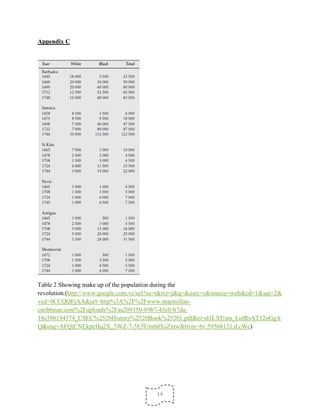
The document discusses the causes and impacts of the Sugar Revolution in the British West Indies between 1645 and 1748. It first examines the causes, including the decline of the tobacco industry, rising demand for sugar in Europe, and expertise provided by the Dutch in sugar production. It then analyzes the revolution's economic, political and social impacts. Economically, it transformed agriculture and increased wealth. Politically, it centralized colonial governance. Socially, it established a slave society and racially stratified population. The Sugar Revolution completely restructured society, agriculture and the economy in the British West Indies.





![Caribbean Islands Week 1[1]](https://cdn.slidesharecdn.com/ss_thumbnails/caribbeanislandsweek11-100302034347-phpapp02-thumbnail.jpg?width=640&height=640&fit=bounds)


