SUBMITTED BY:
RAHUL RANJAN
Service Operations Management
Fundamentally, there are no differences
between service and manufacturing
operations! Both are concerned with:
• Efficiency
• Effectiveness
• Quality
• Cost
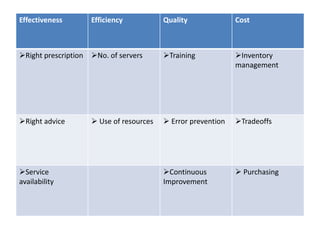
Effectiveness Efficiency Quality Cost
Right prescription No. of servers Training Inventory
management
Right advice  Use of resources  Error prevention Tradeoffs
Service
availability
Continuous
Improvement
 Purchasing
Service Operations Management
Selected Issues
• New service development
• Managing service experiences
• Front-office/Back-office
• Analyzing processes
• Service quality
• Yield management
• Inventory management
• Waiting time management
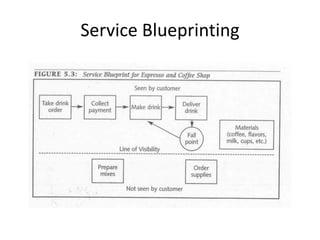
Service Blueprinting
Utility-based Service Design
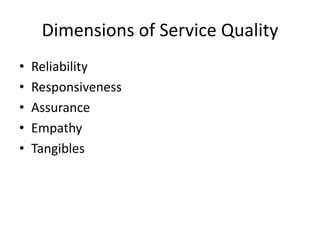
Dimensions of Service Quality
• Reliability
• Responsiveness
• Assurance
• Empathy
• Tangibles
Managing Service Experiences
• Customer Engagement
• Context
• Time
• Service Blueprinting
Focus on moments of truth
Front-office/Back-office
• Front-office work requires customer presence.
• Back-office work does not require customer
presence.
• Decoupling: separating work into high-
contact/low-contact jobs.
Ultimate = outsourcing/offshoring
Analyzing Processes
• Process flow diagrams (flow charts)
– Process communication
– Focusing mgt. attention on customer
– Determining what to work on
– Process Simulation
Service Quality
• Defining service quality is more difficult than
defining manufacturing quality.
– Expectation vs Perception
– Expectation vs Performance
Developing a Culture of
Service Quality
• Hire the right people.
• Educate and train them well.
• Allow them to fix anything.
• Recognize and reward them regularly.
• Tell them everything, every day.
Service Recovery
• Measure the costs
• Listen closely for complaints
• Anticipate needs for recovery
• Act fast
• Train employees
• Empower front line
• Close the loop
Yield Management
Purpose is to sell the right capacity to the right
customer at the right price.
• Overbooking
• Differential pricing
• Capacity allocation
Inventory Management
Service vs Manufacturing
• Setup/Ordering costs high
• Number of products higher
• Limited shelf space
• Lost sales vs backorders
• Product substitution
• Demand variance higher
• Information accuracy (complication of
customers)
Waiting Time Management
• Waiting lines are pervasive in services
• The problem is important
• Lack of management intuition about waiting
lines
15/30 Waiting Time Rule in hospital ER
Thank You

Operations strategy

  • 1.
  • 2.
    Fundamentally, there areno differences between service and manufacturing operations! Both are concerned with: • Efficiency • Effectiveness • Quality • Cost
  • 3.
    Effectiveness Efficiency QualityCost Right prescription No. of servers Training Inventory management Right advice  Use of resources  Error prevention Tradeoffs Service availability Continuous Improvement  Purchasing
  • 4.
    Service Operations Management SelectedIssues • New service development • Managing service experiences • Front-office/Back-office • Analyzing processes • Service quality • Yield management • Inventory management • Waiting time management
  • 5.
  • 6.
  • 7.
    Dimensions of ServiceQuality • Reliability • Responsiveness • Assurance • Empathy • Tangibles
  • 8.
    Managing Service Experiences •Customer Engagement • Context • Time • Service Blueprinting Focus on moments of truth
  • 9.
    Front-office/Back-office • Front-office workrequires customer presence. • Back-office work does not require customer presence. • Decoupling: separating work into high- contact/low-contact jobs. Ultimate = outsourcing/offshoring
  • 10.
    Analyzing Processes • Processflow diagrams (flow charts) – Process communication – Focusing mgt. attention on customer – Determining what to work on – Process Simulation
  • 11.
    Service Quality • Definingservice quality is more difficult than defining manufacturing quality. – Expectation vs Perception – Expectation vs Performance
  • 12.
    Developing a Cultureof Service Quality • Hire the right people. • Educate and train them well. • Allow them to fix anything. • Recognize and reward them regularly. • Tell them everything, every day.
  • 13.
    Service Recovery • Measurethe costs • Listen closely for complaints • Anticipate needs for recovery • Act fast • Train employees • Empower front line • Close the loop
  • 14.
    Yield Management Purpose isto sell the right capacity to the right customer at the right price. • Overbooking • Differential pricing • Capacity allocation
  • 15.
    Inventory Management Service vsManufacturing • Setup/Ordering costs high • Number of products higher • Limited shelf space • Lost sales vs backorders • Product substitution • Demand variance higher • Information accuracy (complication of customers)
  • 16.
    Waiting Time Management •Waiting lines are pervasive in services • The problem is important • Lack of management intuition about waiting lines 15/30 Waiting Time Rule in hospital ER
  • 17.