Open Data Licensing:
Trojan horse or sunken treasure?

    Eoin McCarney & Caleb Derven
                  UCD Library


         UCD Library            Leabharlann UCD
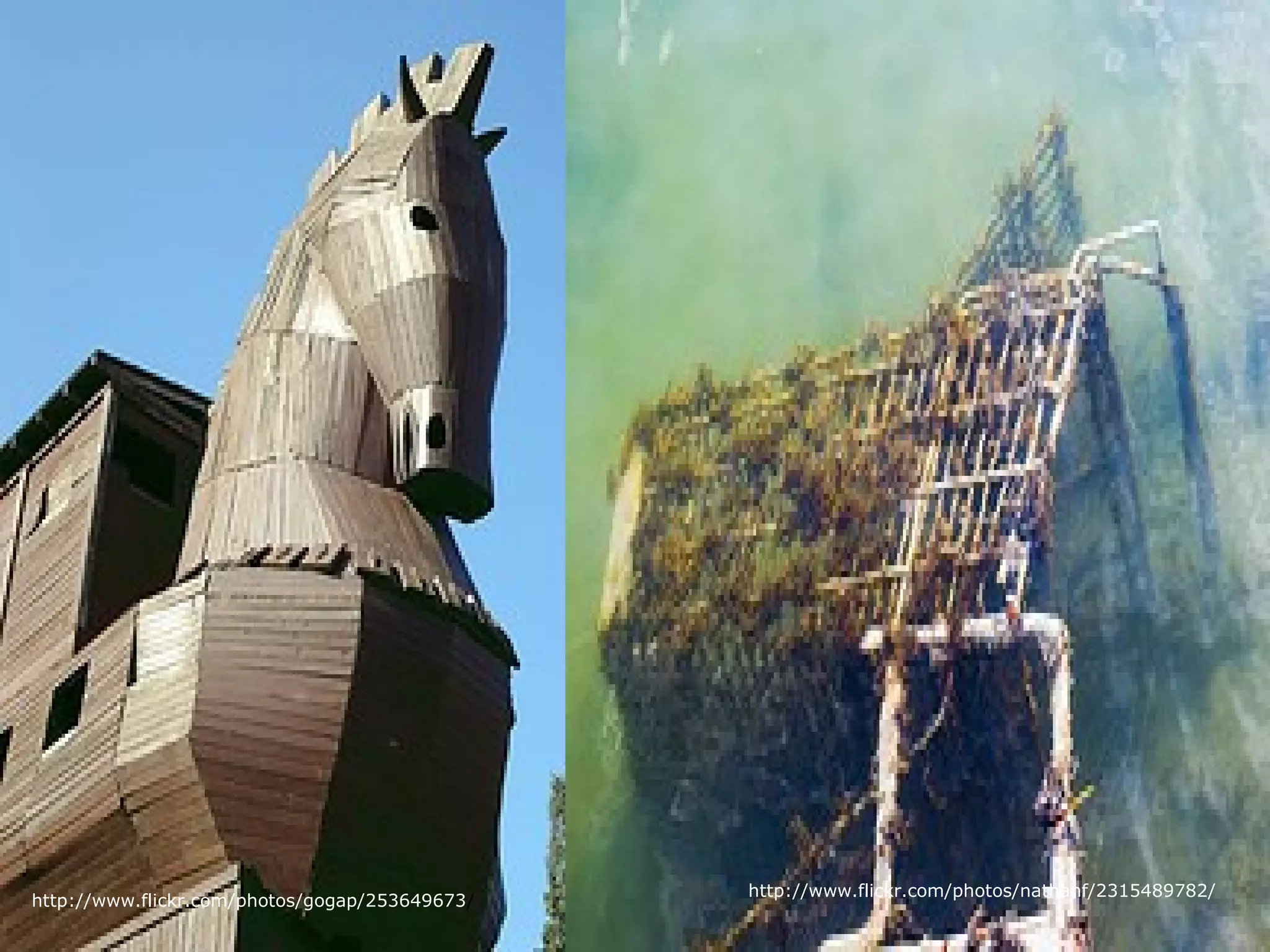
http://www.flickr.com/photos/nathanf/2315489782/
http://www.flickr.com/photos/gogap/253649673/
Overview
• What is open data?
• The Open Data Commons Public Domain
  Dedication & Licence
• What does it cover?
• Who is using the licence?
• What does it mean for library systems?
• Varieties of openness
• Systems context & issues
• Opening other kinds of library data
• Is it worth it?
What is Open Data?


• “A philosophy and practice requiring that certain
  data are freely available to everyone, without
  restrictions from copyright, or other mechanisms
  of control”. http://en.wikipedia.org/wiki/Open_data

• "A piece of knowledge is open if you are free to
  use, reuse, and redistribute it“.
  http://opendefinition.org/
The Licence
• Open Data Commons – Public Domain Dedication &
  Licence


• Created October 2007 by Jordan Hatcher & Dr. Charlotte
  Waelde


• Based on Talis Community License; funded by Talis


• Similar to GNU general public license for open source
  software


• Open Data Commons & Open Knowledge Foundation
  Project
The License


“The Open Data Commons Public Domain Dedication
& Licence is a document intended to allow you to
freely share, modify, and use this work for any
purpose and without any restrictions.
This licence is intended for use on databases or
their contents (”data”), either together or
individually”


 http://www.opendatacommons.org/licenses/pddl/1.0/
What does it cover?


• Copyright & database rights


  - Dedicate rights to the public domain
  or
  - Waive rights
  or
  - License rights
What does it mean for library
systems?

• Library as a producer

• Library as a consumer

• "It won’t allow you to require anyone to do
  anything if they use your data, like attribute it or
  re-distribute it freely. But it will mean that your
  data is forever free, and anybody who wants to
  who gets your data can do whatever they like
  with it, including redistribute it. And that is what
  is needed."

(http://bibwild.wordpress.com/2008/11/24/creative-
commons-is-not-appropriate-for-data/)
http://www.flickr.com/photos/photosan0/2682021566/
Varieties of Openness


• Open source software

• Open standards

• Open access

• Open data
The Systems Context for Open Data


• Libraries expose and ingest data through


  o   Z39.50

  o   Search Retrieval via URL (SRU)

  o   OAI-PMH
Open Data and Systems - The High
Level Issues

• Longevity – data vs. platform


• Software as a service - how do you retrieve your
  data?


• Community-maintained data sets and standards
Open Data and Systems - On-the-
ground Issues

• Flexible infrastructures

• Flexible protocols

• Flexible communication standards
Opening Other Kinds of Library Data


• Anonymised circulation data (Huddersfield)

• Library Stock Usage Data (JISC TILE Project)

• Library Of Congress – Authority & Subject Files
  available via web services.
Open Data - Is it Worth It?

Risks:
• No going back with ODC PDDL
• Systems need to be leveraged
• Greater need for QA
• Information specialist vs. interested amateur
Benefits:
• Makes data available to all
• Formalises collaborative ethos of libraries
• Value for money

Open data licensing : Trojan horse or sunken treasure? Authors: Caleb Derven, Eoin McCarney

  • 1.
    Open Data Licensing: Trojanhorse or sunken treasure? Eoin McCarney & Caleb Derven UCD Library UCD Library Leabharlann UCD
  • 2.
  • 3.
    Overview • What isopen data? • The Open Data Commons Public Domain Dedication & Licence • What does it cover? • Who is using the licence? • What does it mean for library systems? • Varieties of openness • Systems context & issues • Opening other kinds of library data • Is it worth it?
  • 4.
    What is OpenData? • “A philosophy and practice requiring that certain data are freely available to everyone, without restrictions from copyright, or other mechanisms of control”. http://en.wikipedia.org/wiki/Open_data • "A piece of knowledge is open if you are free to use, reuse, and redistribute it“. http://opendefinition.org/
  • 5.
    The Licence • OpenData Commons – Public Domain Dedication & Licence • Created October 2007 by Jordan Hatcher & Dr. Charlotte Waelde • Based on Talis Community License; funded by Talis • Similar to GNU general public license for open source software • Open Data Commons & Open Knowledge Foundation Project
  • 6.
    The License “The OpenData Commons Public Domain Dedication & Licence is a document intended to allow you to freely share, modify, and use this work for any purpose and without any restrictions. This licence is intended for use on databases or their contents (”data”), either together or individually” http://www.opendatacommons.org/licenses/pddl/1.0/
  • 7.
    What does itcover? • Copyright & database rights - Dedicate rights to the public domain or - Waive rights or - License rights
  • 10.
    What does itmean for library systems? • Library as a producer • Library as a consumer • "It won’t allow you to require anyone to do anything if they use your data, like attribute it or re-distribute it freely. But it will mean that your data is forever free, and anybody who wants to who gets your data can do whatever they like with it, including redistribute it. And that is what is needed." (http://bibwild.wordpress.com/2008/11/24/creative- commons-is-not-appropriate-for-data/)
  • 11.
  • 12.
    Varieties of Openness •Open source software • Open standards • Open access • Open data
  • 13.
    The Systems Contextfor Open Data • Libraries expose and ingest data through o Z39.50 o Search Retrieval via URL (SRU) o OAI-PMH
  • 14.
    Open Data andSystems - The High Level Issues • Longevity – data vs. platform • Software as a service - how do you retrieve your data? • Community-maintained data sets and standards
  • 15.
    Open Data andSystems - On-the- ground Issues • Flexible infrastructures • Flexible protocols • Flexible communication standards
  • 16.
    Opening Other Kindsof Library Data • Anonymised circulation data (Huddersfield) • Library Stock Usage Data (JISC TILE Project) • Library Of Congress – Authority & Subject Files available via web services.
  • 17.
    Open Data -Is it Worth It? Risks: • No going back with ODC PDDL • Systems need to be leveraged • Greater need for QA • Information specialist vs. interested amateur Benefits: • Makes data available to all • Formalises collaborative ethos of libraries • Value for money

Editor's Notes

  • #4 What are we identifying as a project? Is it two projects or are we viewing the whole thing as one overarching ‘new media’ project.?