Journal Club Presentation- 3
-Neha Kulkarni
First Year PG
Contents
 Title
 Authors
 Publication
 Abstract
 Introduction
 Case Report
 Discussion
 Merits
 Demerits
 Conclusion
Title
Long-Term Outcome of Nonvital Immature Permanent Teeth Treated
With Apexification and Corono-Radicular Adhesive Restoration: A
Case Series
Authors
 Joao Miguel Santos, DDS, ~ PhD,*†‡
 Patrícia Diogo, DDS, PhD,*†
 Sonia Dias, DDS, *
 Joana A. Marques, DDS,*†
 Paulo J. Palma, DDS, PhD,*†
 Joao Carlos Ramos, DDS, ~ PhD†§
 From the *Institute of Endodontics, Faculty of Medicine,
University of Coimbra, 3000-075 Coimbra, Portugal
Publication
 Journal: Journal Of Endodontics (JOE)
 Volume: Volume 48
 Date: Sept 2022
 Page Number: 1191 - 1199
Abstract
 Introduction:
 This study aimed to evaluate the long-term outcome of 16 permanent maxillary
central incisors with nonvital pulps and open apices treated with apexification and
corono- radicular adhesive restorations, within a follow-up span of 5 to 22 years.
 Methods:
 Fourteen patients providing a total of 16 teeth treated with mineral trioxide
aggregate (n =12), Biodentine (n = 3), or b-tricalcium phosphate (n =1) apical barrier
and corono-radicular restoration, with or without fiberglass post, were included.
 Clinical and radiographic criteria were defined for assessment at recall. Restoration
and periapical tissue status evaluation were performed according to FDI World
Dental Federation’s esthetic, functional, and biological criteria and Ørstavik
Periapical Index (PAI). Outcome was dichotomized as “healed” (PAI 2, asymptomatic
with absence of signs of infection) or “not healed” (PAI 3, presence of clinical signs
and/or symptoms).
 Results:
 Fourteen of 24 patients were available for the present study (recall rate 5 58%).
Within a follow-up of 5 to 22 years, 10 (62.5%) teeth were considered “healed,”
fulfilling both strict clinical and radiographic success criteria. Only 1 tooth was
missing due to root resorption and 1 patient was presenting with clinical signs and
symptoms at recall, resulting in a survival rate of 93.8%.
 Conclusions:
 Adhesive corono -radicular restoration in nonvital permanent immature teeth treated
with apexification allows for favorable long-term outcomes, by ensuring structural
reinforcement and coronal microleakage prevention.
 Teeth sustaining a substantial loss of coronal structure may require post/ core
placement. In the case of failure, this endodontic-restorative combination ensured
teeth survival until growth phase conclusion, thus allowing for proper prosthetic
rehabilitation approaches.
Key Words
 Apexification;
 calcium silicate–based cements;
 corono-radicular adhesive restoration;
 fiberglass post;
 immature permanent teeth;
 necrotic pulp
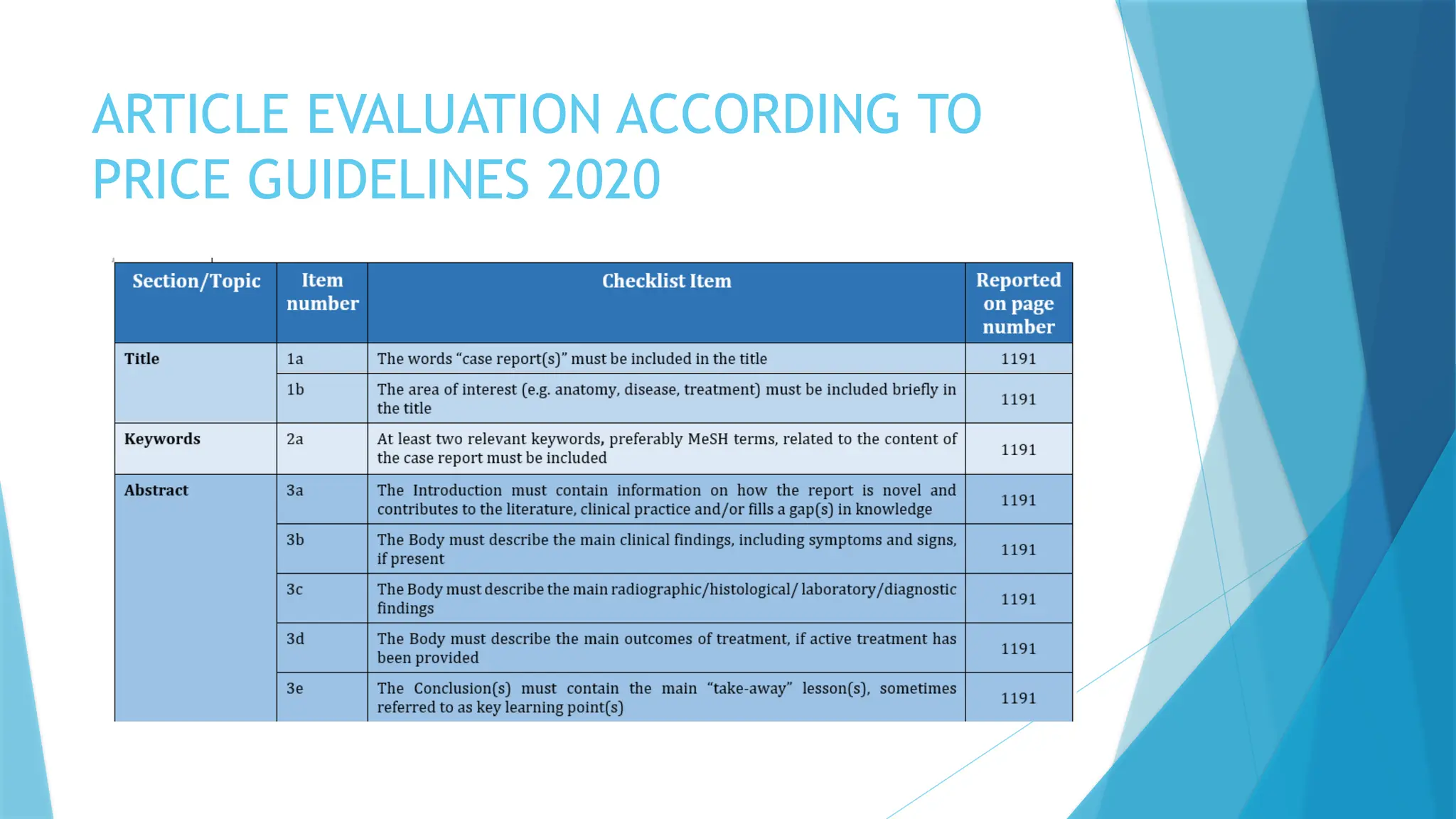
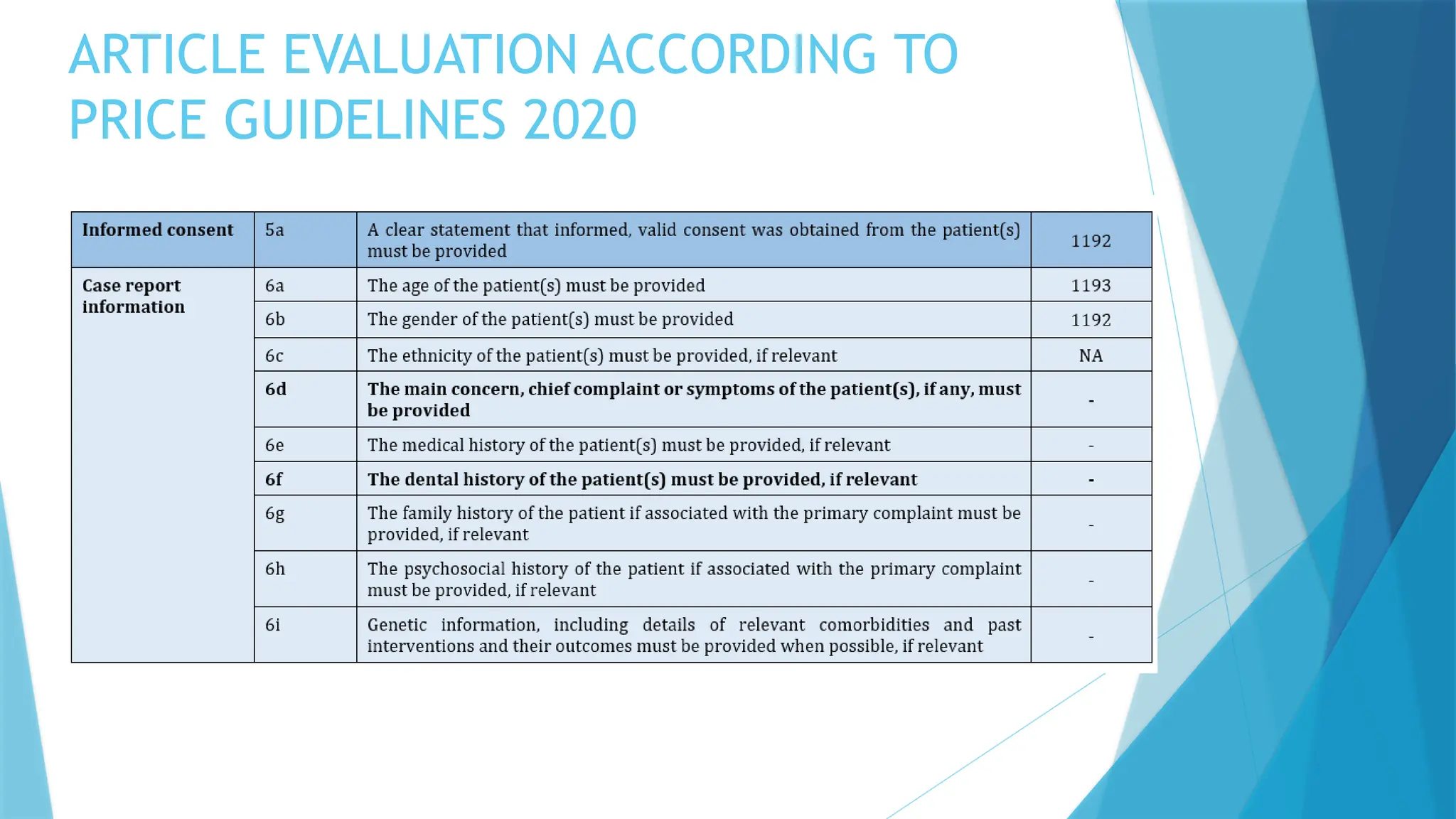
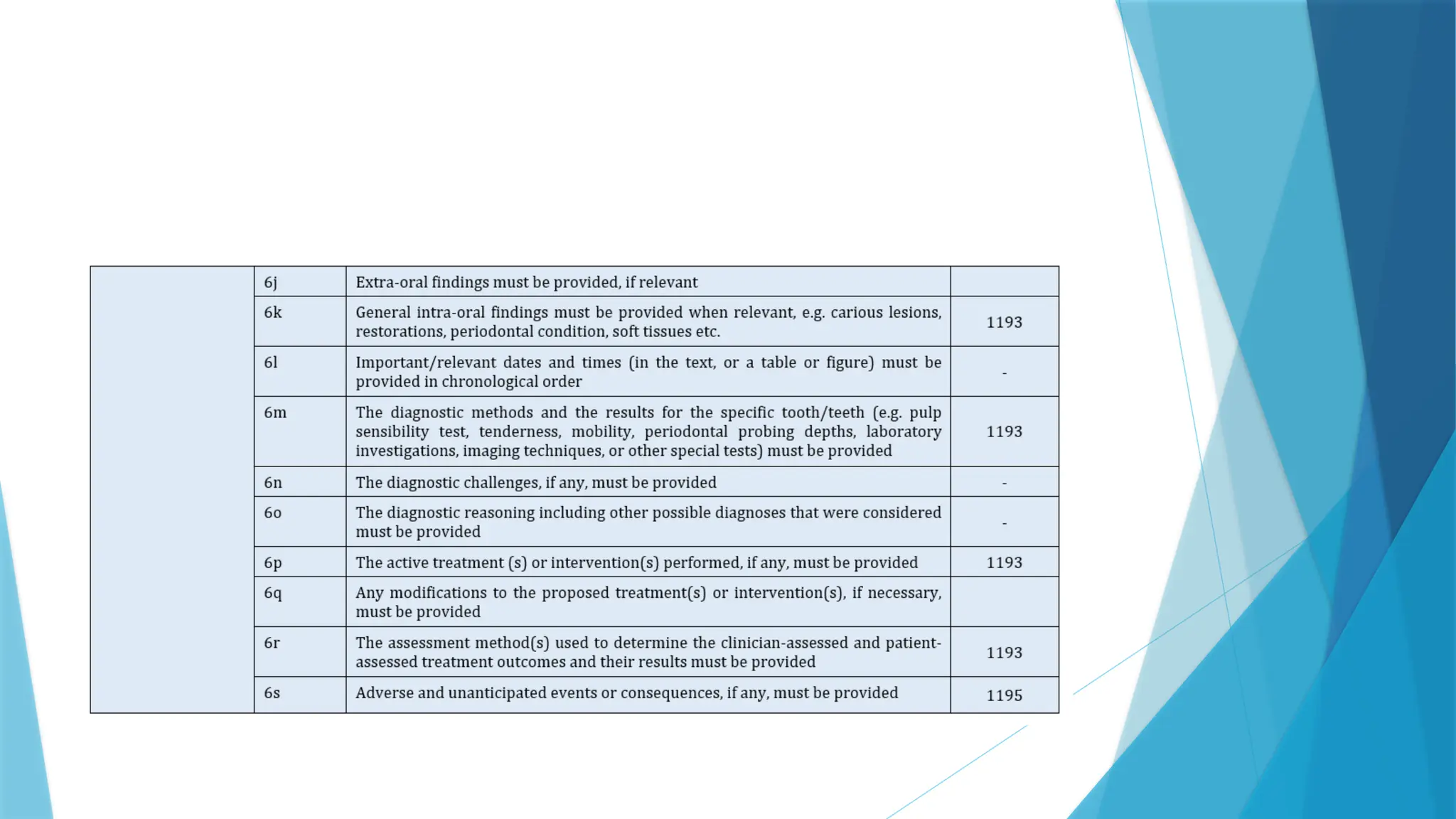
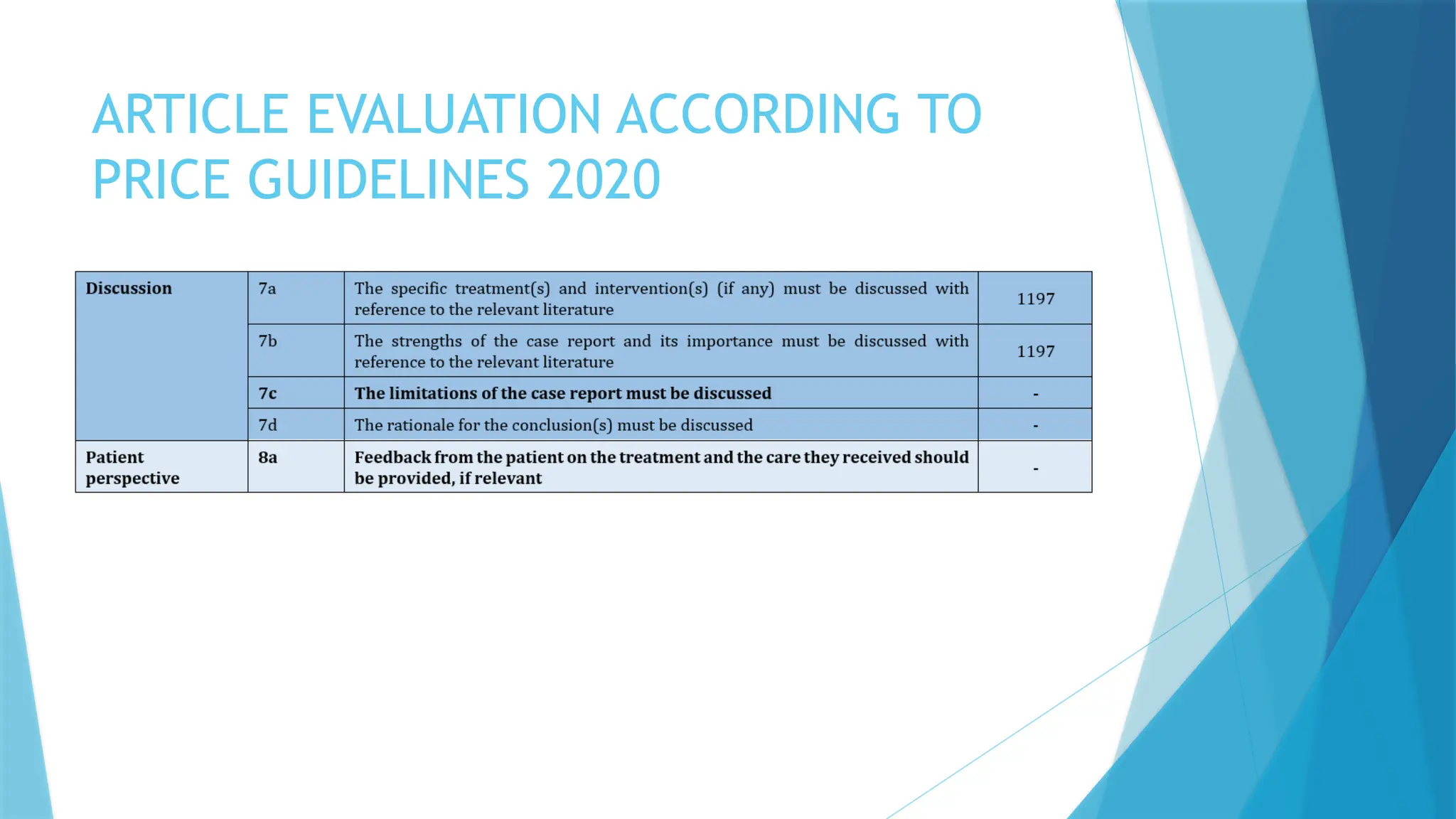
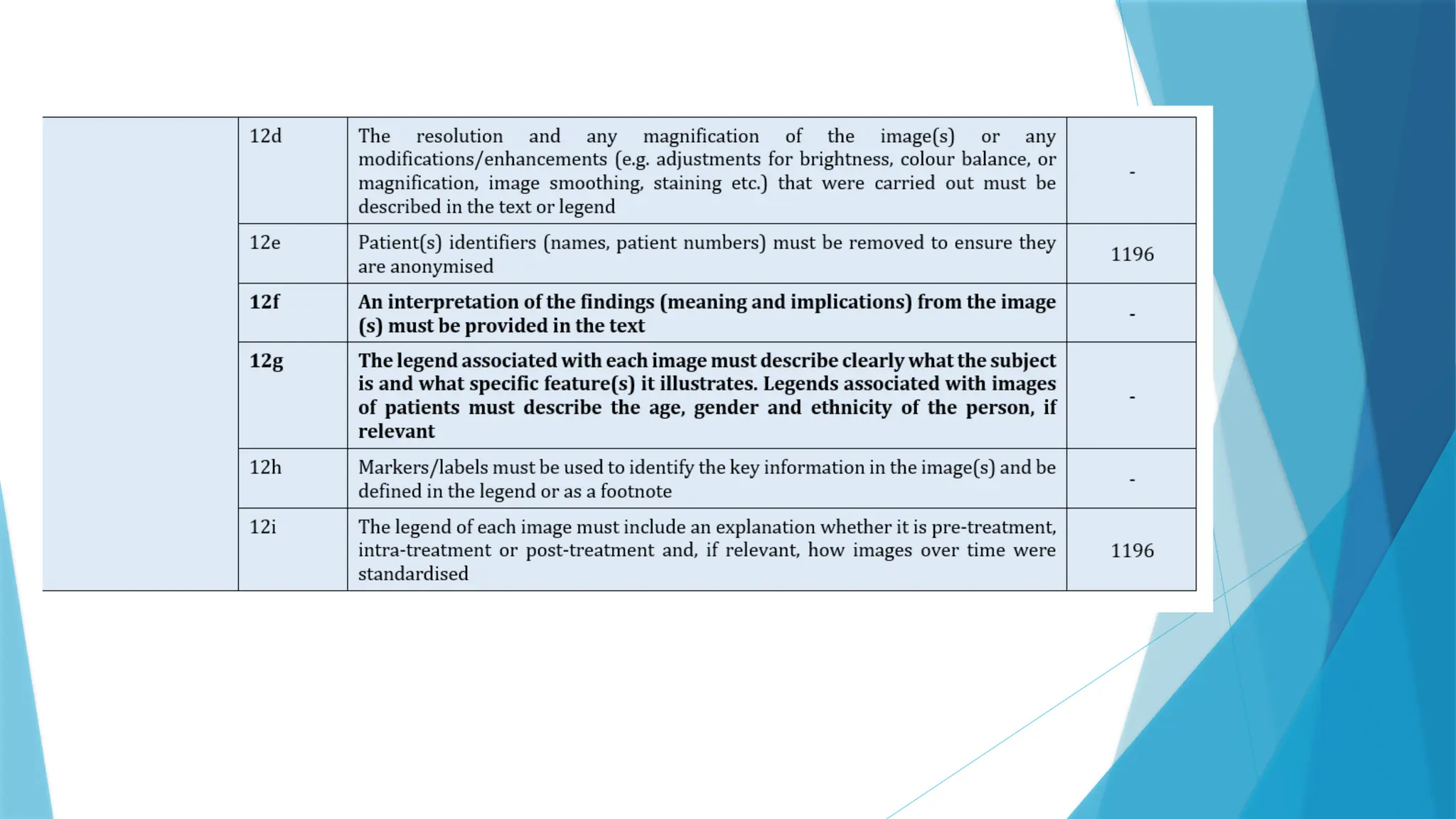
ARTICLE EVALUATION ACCORDING TO
PRICE GUIDELINES 2020
Introduction
 Dental trauma is common in young children and is the most frequent cause of pulpal
non-vitality in immature permanent incisors. The Age group of 8 to 12 years of age and
2 to 4 years of age are prone to dental accidents.
 The 2003 Children’s Dental Health found that 11% of 12 year olds and 13% of 15 year
olds had sustained accidental damage to their permanent teeth.
 Classified the traumatic injuries to teeth given by Andreasen is as follow:
 Enamel Infarction;
 Enamel fracture
 Enamel – dentin fracture (uncomplicated crown fracture)
 Complicated crown fracture
 Uncomplicated crown– root fracture
 Complicated crown- root fracture
 Root fractures
 Luxation injuries
 Several classification systems for the degree of root formation and
maturation have been proposed, although Cvek’s classification offers
didactic radiographic characteristics with valuable clinical
applications.
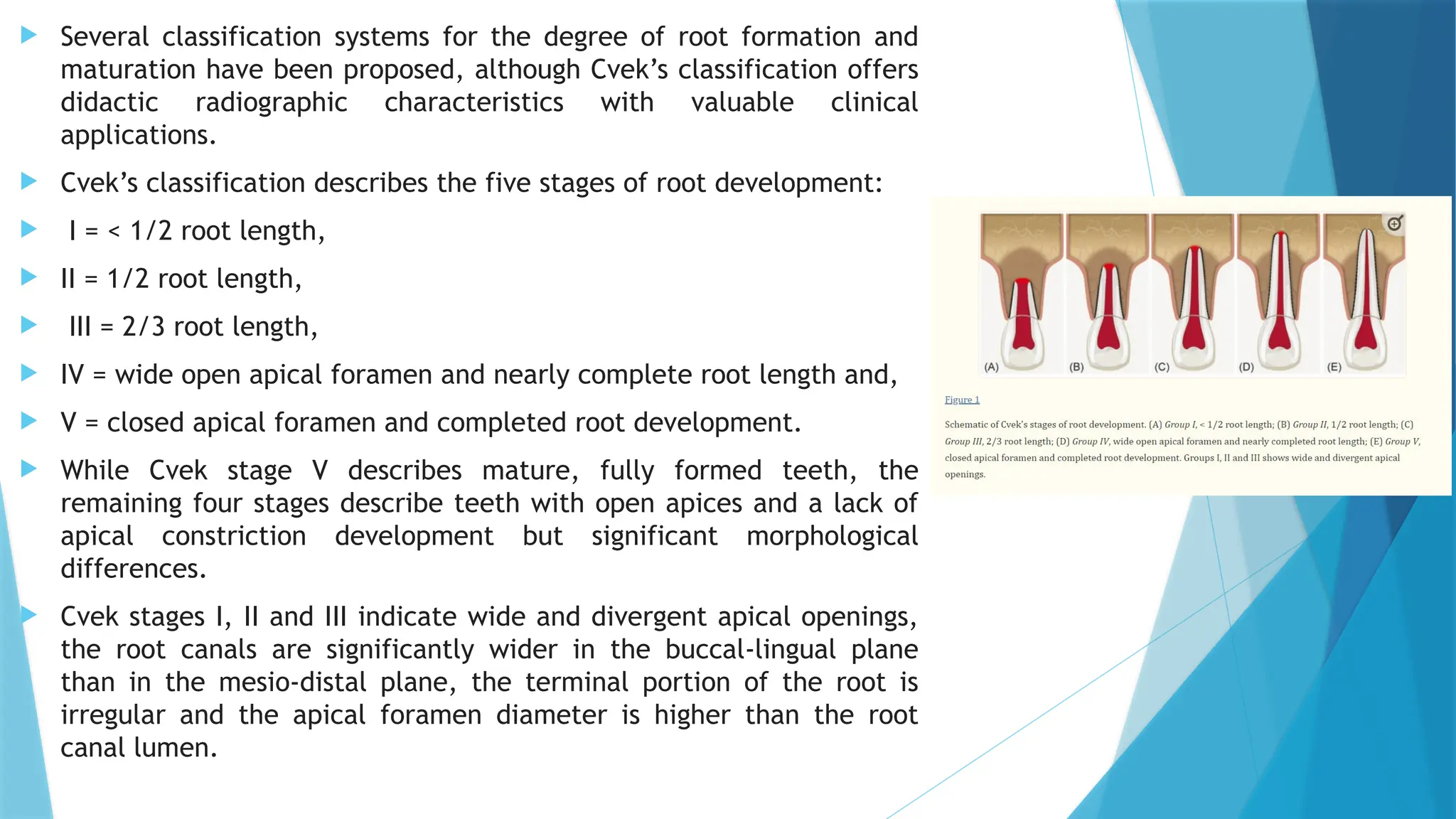
 Cvek’s classification describes the five stages of root development:
 I = < 1/2 root length,
 II = 1/2 root length,
 III = 2/3 root length,
 IV = wide open apical foramen and nearly complete root length and,
 V = closed apical foramen and completed root development.
 While Cvek stage V describes mature, fully formed teeth, the
remaining four stages describe teeth with open apices and a lack of
apical constriction development but significant morphological
differences.
 Cvek stages I, II and III indicate wide and divergent apical openings,
the root canals are significantly wider in the buccal-lingual plane
than in the mesio-distal plane, the terminal portion of the root is
irregular and the apical foramen diameter is higher than the root
canal lumen.
 Clinical management of nonvital definitive immature anterior teeth presents both an
endodontic and restorative challenge.
 Consequent interruption of continuous root development in immature teeth leads to
thin dentin walls, parallel or inverted taper of the root canals, open-apex, and an
unfavorable crown/root ratio
 The absence of an apical closure in immature teeth precludes conventional
endodontic treatment, therefore requiring specific approaches with greater
predictability, safety, and effectiveness.
 Apexification is a nonsurgical technique that allows the creation of an apical barrier
in open-apex teeth.
 Traditionally performed apexification procedure included the sequential application
of calcium hydroxide (Ca[OH]2) in multiple sessions until obtaining an apical hard
tissue barrier5 .
 Although clinical cases treated with Ca(OH)2 evidence high success rates, several
well-known disadvantages include treatment extension5,6 , higher likelihood of
coronal microleakage and recontamination. This is possibly attributed to its
hygroscopic and proteolytic properties, which induces desiccation of dentinal
proteins, thus predisposing the tooth to root fracture.
 The introduction of mineral trioxide aggregate (MTA) opened a new treatment
option for teeth with wide open foramina.
 MTA is a biocompatible and bioactive material that induces the deposition of
mineralized tissue, promoting excellent results when applied as single
session.
 Otherwise, MTA drawbacks are its long setting time, sensibility of the final
product properties related to spatulation and handling time, high cost, and
discoloration potential, which becomes a major inconvenience when anterior
teeth are involved
 More recently, a new calcium silicate–based material exhibiting similar
biocompatibility and advantages over MTA in terms of posttreatment
discoloration, setting time, and handling was introduced: Biodentine
(Septodont, Saint-Maur-des-Foss es Cedex, France)12.
 Apexification by MTA plug or Ca(OH)2 allow root canal obturation to be
performed through generating a physical barrier against which the root filling
can be condensed. However, neither of these methods contributes to any
qualitative or quantitative improvement in root dimensions.
 If any further deposition of dentine or cementum is to be achieved, in order
to provide a qualitative improvement of root structure, then vital tissue has
to be generated. Recently there has been an attempt to re-establish the
blood supply in those teeth, which have already become non-vital and the
technique is commonly known as the Regenerative or Revitalisation
Endodontic Therapy or technique (RET). These techniques have been
suggested to harness the stem cells present at an apical area of immature
incisors, thereby allowing repopulation of the root canal with vital tissue
 In addition to the endodontic procedure, the overall long-term treatment success
of immature teeth with open apices also relies on the type and quality of the
subsequent restorative treatment.
 Besides patients’ preferences, the clinical decision on both restorative material
and technique mainly relies on the quality and quantity of remaining coronal
structure, tooth type, and position and function in the dental arch.
 Several post options (fiberglass/metallic), cementation type (self-adhesive, self-
or dual-cured), and coronal restorative materials (composite resin/ceramic) are
available.
 Among the various possible restorative approaches, adhesive restoration allows
greater reinforcement of the remaining dental structure, either with a post
associated with a resin cement (in cases of severely compromised teeth) or
merely with a composite resin.
 Fiberglass posts were suggested to increase the tooth’s resistance to fracture
because its modulus of elasticity closely resembles that of dentin and consequent
improvement of stress distribution
 Numerous clinical studies with short follow-ups (0.5–2.0 years) of teeth
treated with the apexification technique are currently available within the
literature. However, only few report long follow-up periods.
 Thus, the current study aimed to evaluate the long-term outcome of 16
permanent maxillary central incisors with nonvital pulps and open apices
treated with apexification and corono-radicular adhesive restorations, within
a follow-up span of 5 to 22 years.
ARTICLE EVALUATION ACCORDING TO
PRICE GUIDELINES 2020
Materials And Methods
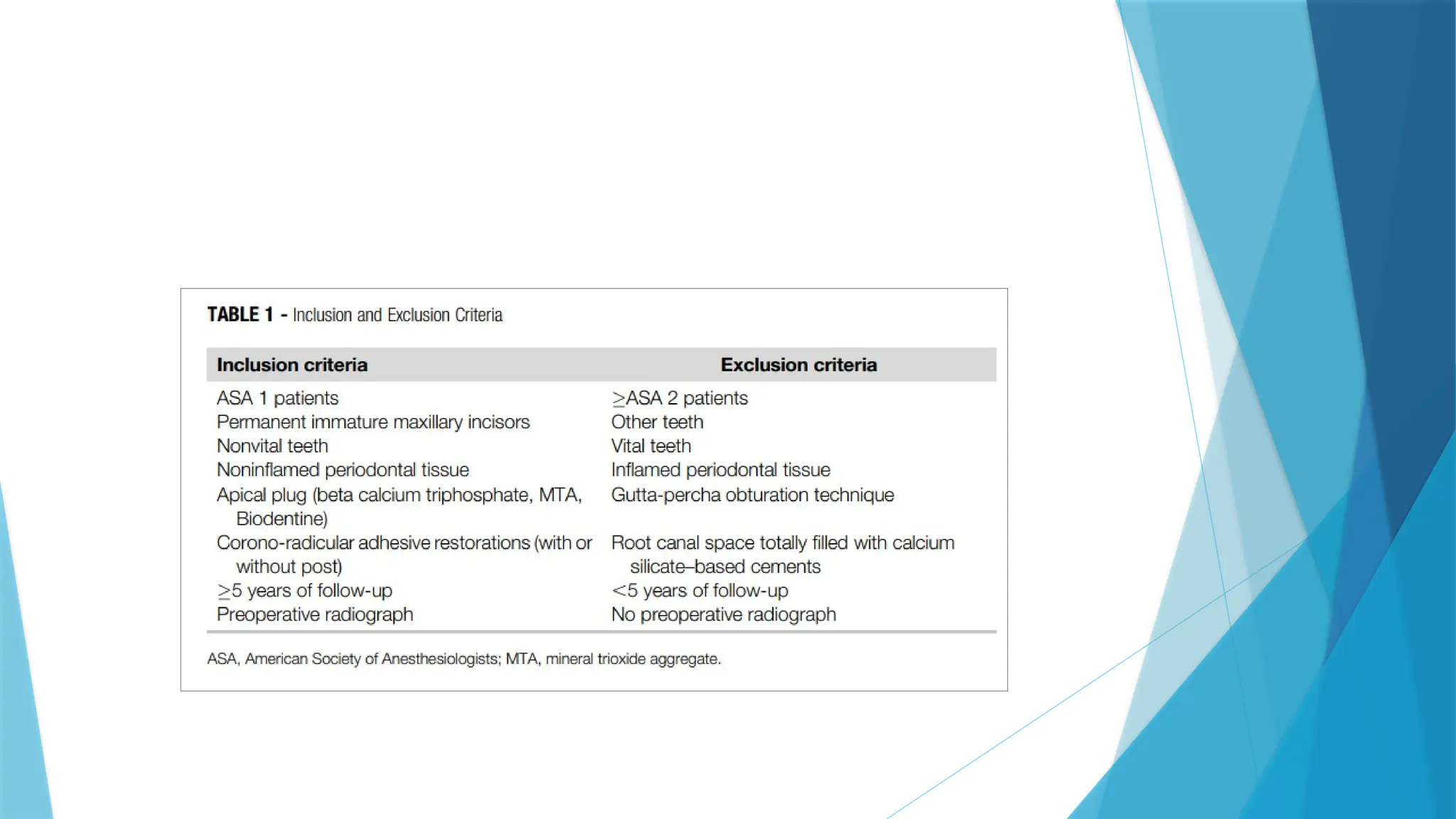
 The study was approved by the Ethics Committee of the Faculty of Medicine
of the University of Coimbra (CE-037/2018). ASA 1 (normal healthy) patients
undergoing apexification treatment and rehabilitated with corono-radicular
adhesive restorations in maxillary necrotic anterior teeth, from 1996 to 2013,
were included according to the established inclusion and exclusion criteria
 14 patients were evaluated and included in the study, gathering a total of 16
treated teeth cases. Informed consent was obtained. Personal data and
clinical history were obtained by one of the authors (S.D.) after consulting the
clinical file of each patient.
Endodontic Procedure
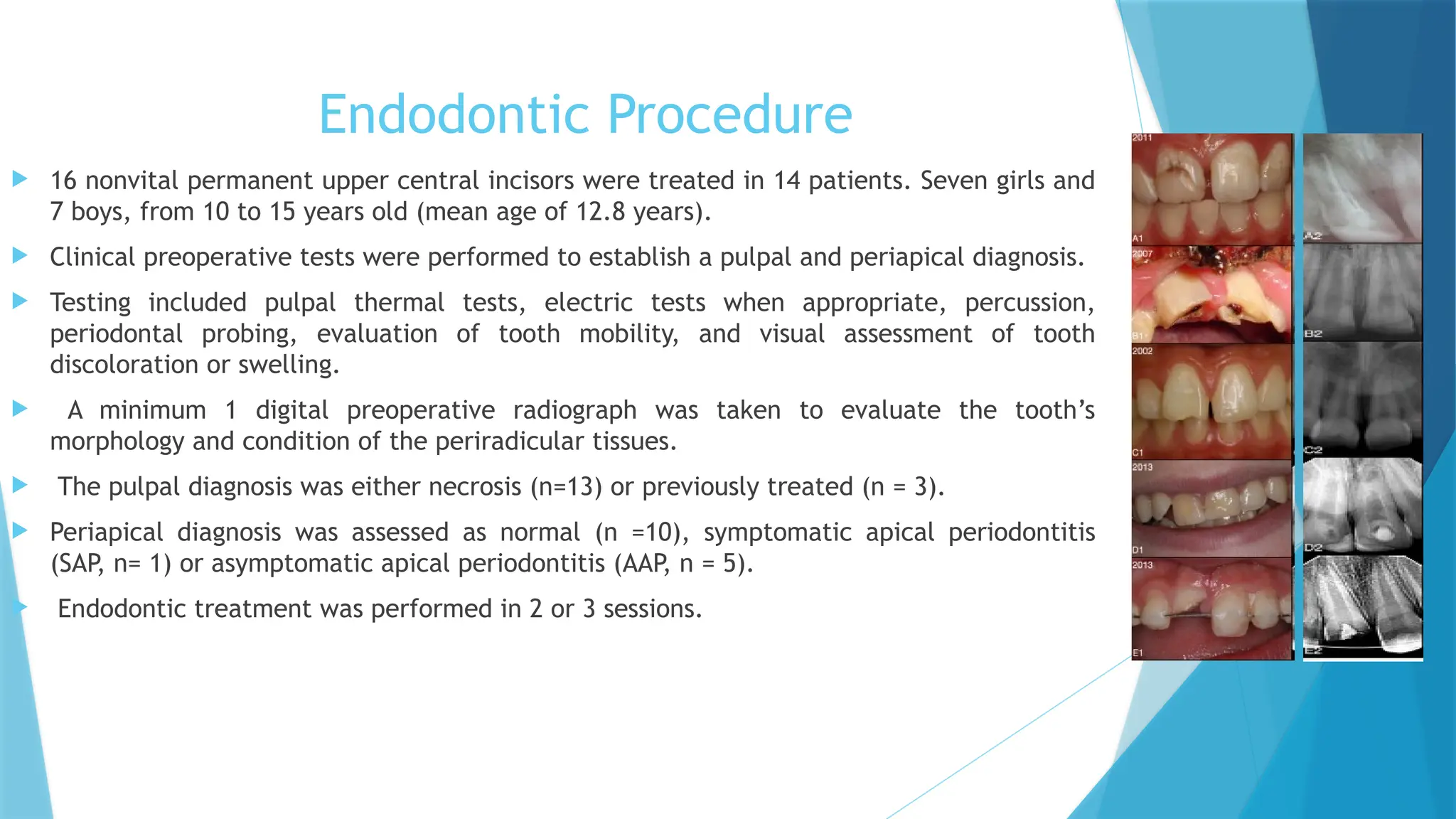
 16 nonvital permanent upper central incisors were treated in 14 patients. Seven girls and
7 boys, from 10 to 15 years old (mean age of 12.8 years).
 Clinical preoperative tests were performed to establish a pulpal and periapical diagnosis.
 Testing included pulpal thermal tests, electric tests when appropriate, percussion,
periodontal probing, evaluation of tooth mobility, and visual assessment of tooth
discoloration or swelling.
 A minimum 1 digital preoperative radiograph was taken to evaluate the tooth’s
morphology and condition of the periradicular tissues.
 The pulpal diagnosis was either necrosis (n=13) or previously treated (n = 3).
 Periapical diagnosis was assessed as normal (n =10), symptomatic apical periodontitis
(SAP, n= 1) or asymptomatic apical periodontitis (AAP
, n = 5).
 Endodontic treatment was performed in 2 or 3 sessions.
First appointment
 Patients were locally anesthetized with 2% lidocaine with 1:100,000 epinephrine.
Rubber dam was placed and disinfected with 2% chlorhexidine solution.
 If present, carious lesions were removed.
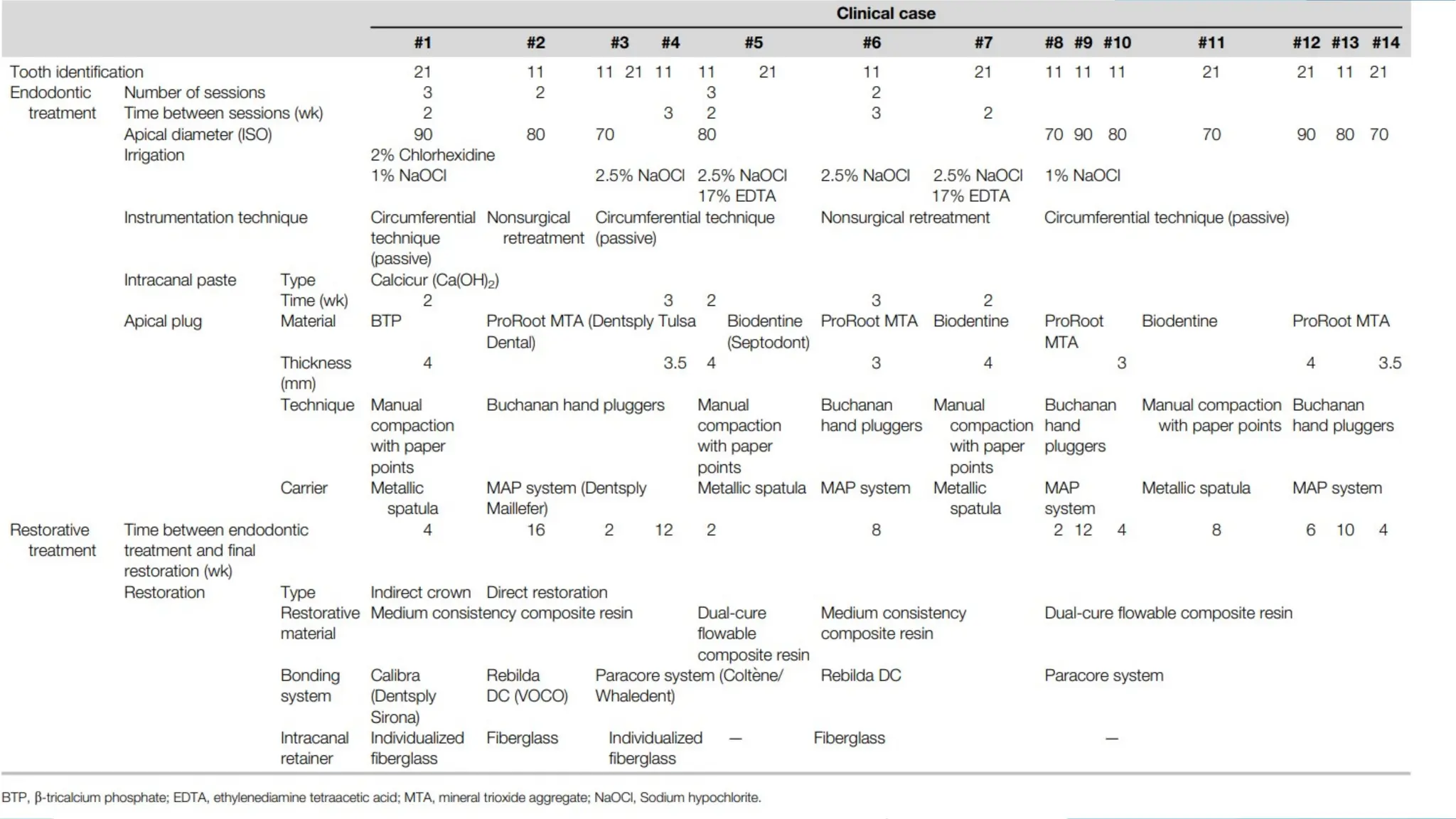
 Coronal access was performed and copious irrigation with 1.0% (n = 9) or 2.5% (n = 7)
sodium hypochlorite (NaOCl) was delivered.
 Minimal instrumentation of root canal walls was performed with manual K-files and
H-files in retreatment cases.
 Root canals were dried with paper points and an interappointment dressing of
calcium hydroxide intracanal paste (Calcicur; VOCO, Cuxhaven, Germany) was
placed.
 Last, a sterile cotton pellet and subsequent temporary filling material-intermediate
restorative material (IRM; Dentsply Maillefer, Ballaigues, Switzerland) or Cavit (3M,
Neuss, Germany) were placed within the access cavity.
 Patients were scheduled for the next treatment session in 2 - 3 weeks.
Second or Third appointment
 At the second (n =13) or third (n = 3) appointment, after local anesthesia
administration, rubber dam was applied.
 After reassessment, root canals were irrigated exclusively with 1.0% (n = 9) or 2.5%
(n = 7) NaOCl or followed by 17% EDTA (n =3).
 Subsequently, the root canals were dried with paper points and the apical plug was
performed using ProRoot MTA (n =12), Biodentine (n = 3), or b-tricalcium phosphate
(n = 1).
 Biodentine and ProRoot MTA (Dentsply Tulsa Dental, Johnson City, TN) were
prepared according to the manufacturer’s instructions
 b-tricalcium phosphate was mixed with saline solution until a slurry consistency
was obtained. All biomaterials were delivered into the root canal’s apical third,
tight in the working length, using MAP system (Dentsply Maillefer, Ballaigues,
Switzerland), and gently compacted with Buchanan hand pluggers and paper
points.
 A final apical plug thickness between 3 and 4 mm was accomplished. The access
cavity was closed by placing a moist cotton pellet and provisional restorative
material.
Restorative treatments
 Teeth were restored by experienced operators (J.M.S., P
.J.P
., and J.C.R.), in a time
interval ranging from 2 to 16 weeks following the endodontic procedures.
 All bonding procedures were performed under rubber dam isolation and restorative
materials were applied according to the manufacturer’s instructions.
 An intracanal fiberglass post was placed (n = 6), 3 of them being individualized.
 In the remaining teeth (n =10), the coronal canal space was restored with a dual-
cure adhesive resin system combined with a dual-cure flowable composite resin.
 Coronal composite resin restoration was either direct (n =15) or indirect (n =1).
Recall Program
 A minimum of 5 years of follow-up was established. The last recall appointment was
carried out by a blind operator (P.D.).
 Clinical examination was performed to assess the presence/absence of clinical signs
and symptoms (pain, tenderness to pressure or percussion, root/tooth fracture, sinus
tract, mobility, and loss of function). Vertical and horizontal percussion, periodontal
probing, photograph, and radiograph of each tooth was obtained
 The Ørstavik Periapical Index (PAI) system was used for radiographic assessment of
periapical tissue status. Outcome was either “healed” (PAI 2, asymptomatic with
absence of signs of infection) or “not healed” (PAI 3, presence of the above
mentioned clinical signs and/or symptoms).
 Ørstavik Periapical Index (PAI) score description:
 1 = Normal
 2 = Small changes in bone structure
 3 = Structural bone changes with mineral loss
 4 =Periodontitis with a well-defined radiolucency
 5 = Severe periodontitis with bone expansion
 Restoration evaluation was accomplished according to FDI World Dental
Federation’s index:
 Following characteristics of the restoration were evaluted
 esthetic((Surface Luster, Staining, Color match and transluency, and esthetic
anatomical form),
 functional(Fracture and retention Marginal adaptation),
 and biological criteria( Secondary caries and periodontal response)
 FDI criteria score description:
 1 = Clinically excellent/very good
 2 = Clinically good (after correction very good)
 3 = Clinically sufficient/satisfactory minor shortcomings with no adverse
effects but not adjustable without damage to the tooth)
 4 = Clinically unsatisfactory (repair for prophylactic reasons)
 5 = Satisfactory poor (replacement necessary)
Results
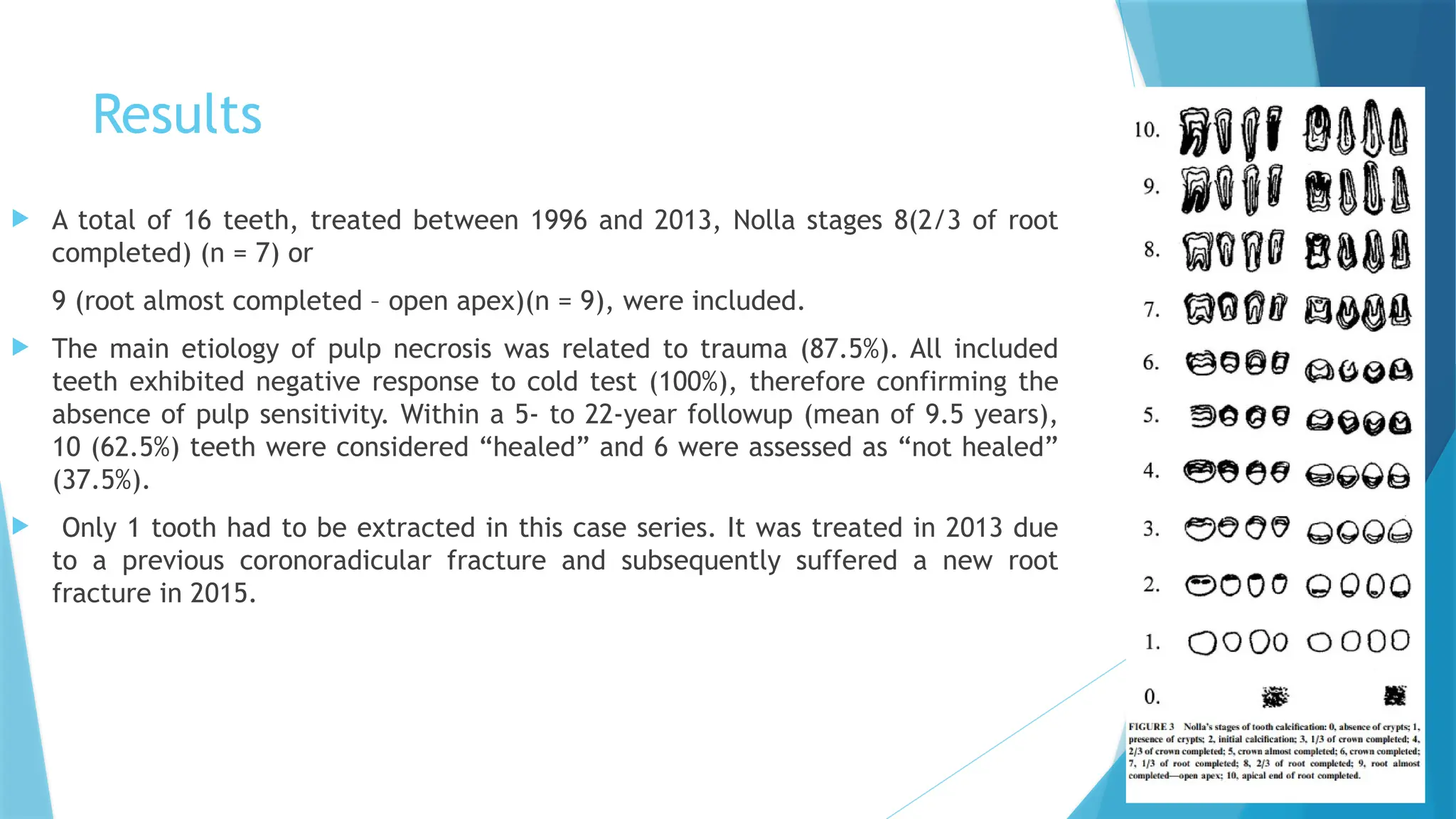
 A total of 16 teeth, treated between 1996 and 2013, Nolla stages 8(2/3 of root
completed) (n = 7) or
9 (root almost completed – open apex)(n = 9), were included.
 The main etiology of pulp necrosis was related to trauma (87.5%). All included
teeth exhibited negative response to cold test (100%), therefore confirming the
absence of pulp sensitivity. Within a 5- to 22-year followup (mean of 9.5 years),
10 (62.5%) teeth were considered “healed” and 6 were assessed as “not healed”
(37.5%).
 Only 1 tooth had to be extracted in this case series. It was treated in 2013 due
to a previous coronoradicular fracture and subsequently suffered a new root
fracture in 2015.
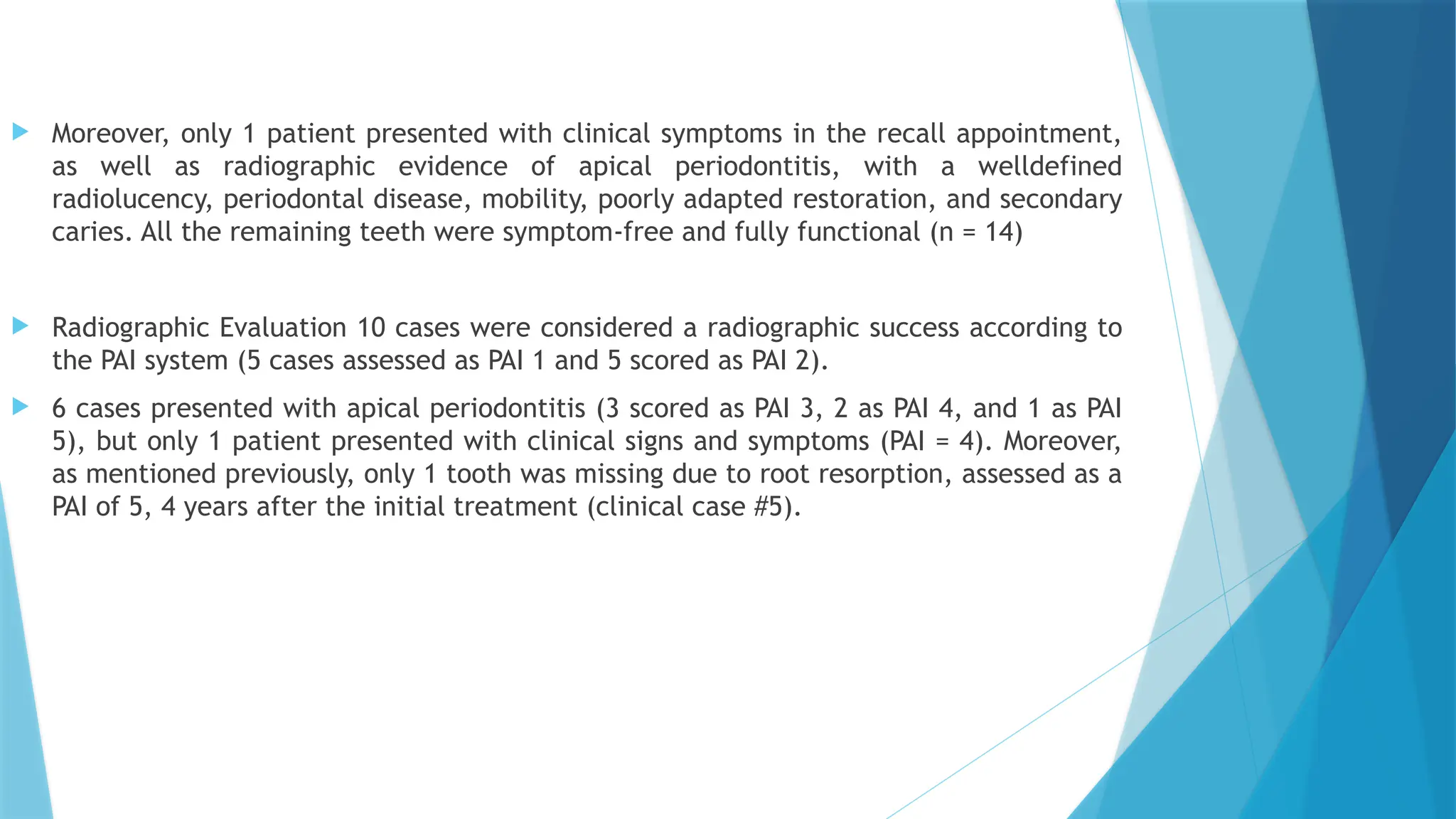
 Moreover, only 1 patient presented with clinical symptoms in the recall appointment,
as well as radiographic evidence of apical periodontitis, with a welldefined
radiolucency, periodontal disease, mobility, poorly adapted restoration, and secondary
caries. All the remaining teeth were symptom-free and fully functional (n = 14)
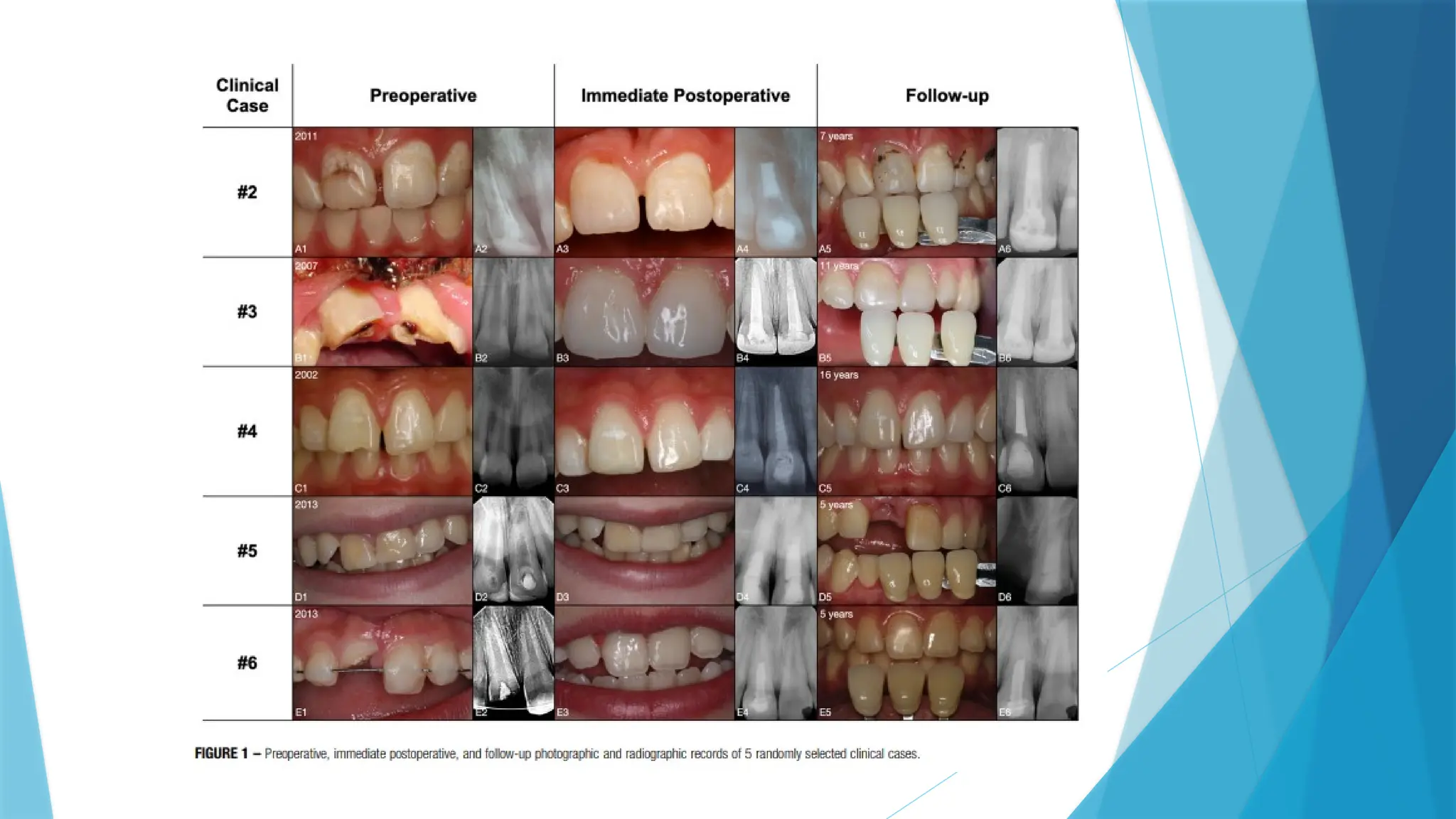
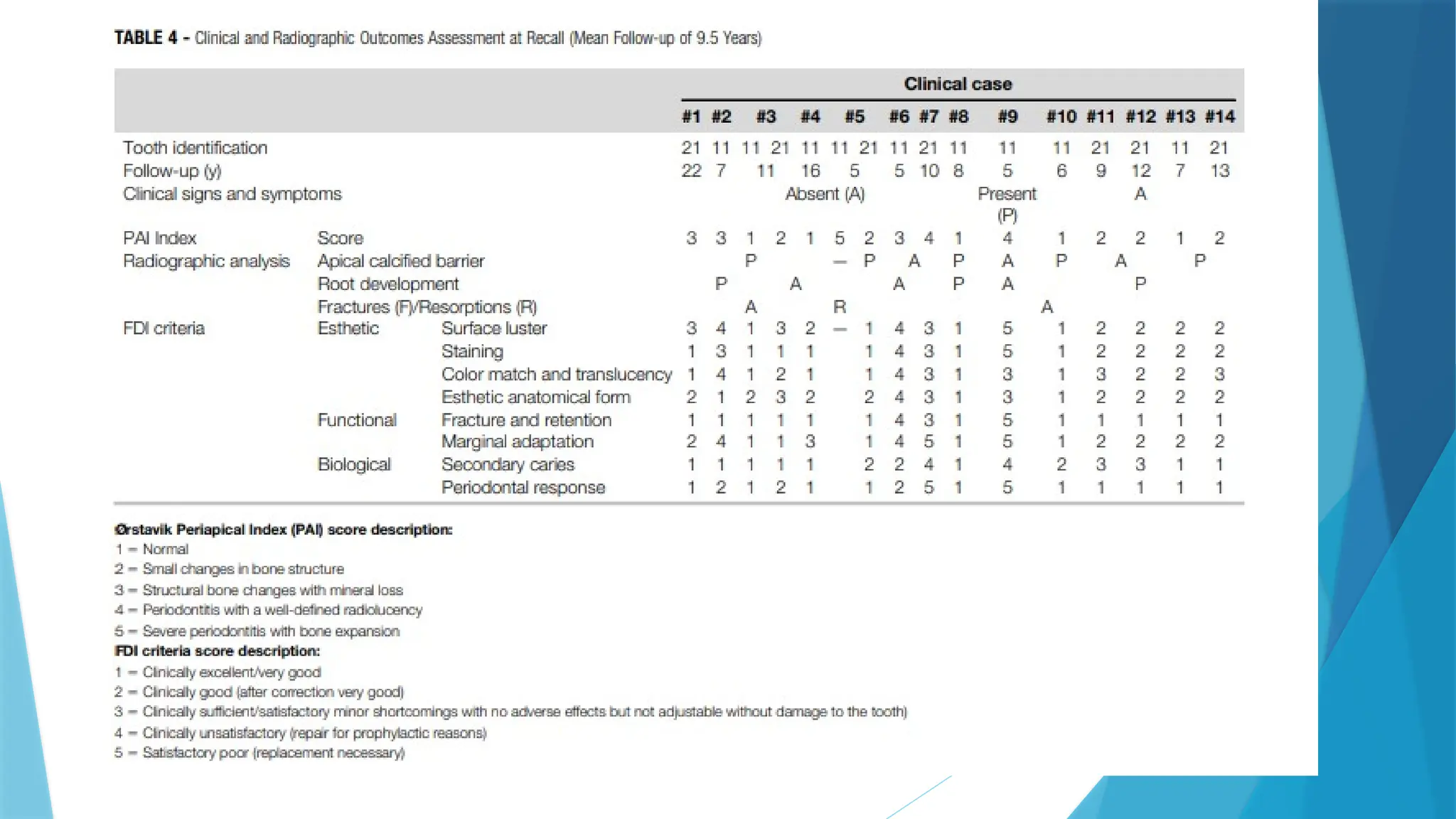
 Radiographic Evaluation 10 cases were considered a radiographic success according to
the PAI system (5 cases assessed as PAI 1 and 5 scored as PAI 2).
 6 cases presented with apical periodontitis (3 scored as PAI 3, 2 as PAI 4, and 1 as PAI
5), but only 1 patient presented with clinical signs and symptoms (PAI = 4). Moreover,
as mentioned previously, only 1 tooth was missing due to root resorption, assessed as a
PAI of 5, 4 years after the initial treatment (clinical case #5).
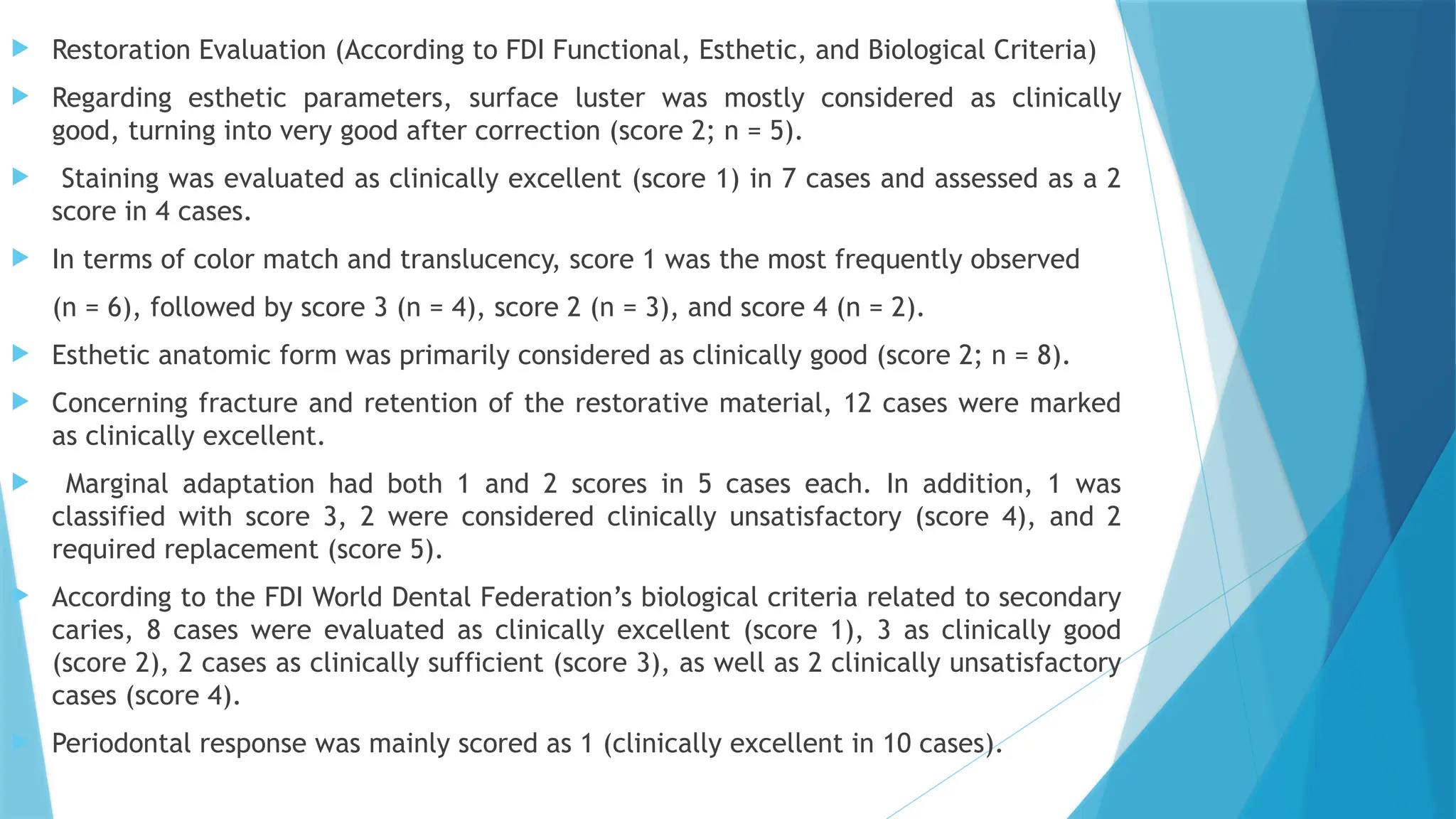
 Restoration Evaluation (According to FDI Functional, Esthetic, and Biological Criteria)
 Regarding esthetic parameters, surface luster was mostly considered as clinically
good, turning into very good after correction (score 2; n = 5).
 Staining was evaluated as clinically excellent (score 1) in 7 cases and assessed as a 2
score in 4 cases.
 In terms of color match and translucency, score 1 was the most frequently observed
(n = 6), followed by score 3 (n = 4), score 2 (n = 3), and score 4 (n = 2).
 Esthetic anatomic form was primarily considered as clinically good (score 2; n = 8).
 Concerning fracture and retention of the restorative material, 12 cases were marked
as clinically excellent.
 Marginal adaptation had both 1 and 2 scores in 5 cases each. In addition, 1 was
classified with score 3, 2 were considered clinically unsatisfactory (score 4), and 2
required replacement (score 5).
 According to the FDI World Dental Federation’s biological criteria related to secondary
caries, 8 cases were evaluated as clinically excellent (score 1), 3 as clinically good
(score 2), 2 cases as clinically sufficient (score 3), as well as 2 clinically unsatisfactory
cases (score 4).
 Periodontal response was mainly scored as 1 (clinically excellent in 10 cases).
ARTICLE EVALUATION ACCORDING TO
PRICE GUIDELINES 2020
Discussion
 Within a follow-up of 5 to 22 years, 10 (62.5%) teeth treated with
apexification and corono-radicular adhesive restoration were considered
“healed,” fulfilling both strict clinical and radiographic success criteria.
 The European Society of Endodontology states a minimum 1-year follow-up
period as desirable. However, whenever there is radiographic evidence of
initial lesion persistence, with a small reduction or no change in size, the
outcome is considered uncertain and an observation period of at least 4 years
or controls until the lesion has resolved are recommended27. Thus, 16 clinical
cases with a minimum follow-up of 5 years were included in the current case
series.
 When treating nonvital immature teeth, the main focus of nonsurgical
endodontic treatment is to preserve the tooth until jaw growth is completed,
which was fully achieved in the present case series. Besides apical barrier
establishment and apical healing, the absence of clinical signs and symptoms
is of utmost importance and, within this parameter, only 1 patient presented
with clinical signs and symptoms at recall.
 Ree and Schwartz reported a 96% healing rate at 5 to 15 years of recall of 69
nonvital immature teeth treated in private endodontic practice with an MTA
apical barrier and adhesive restorations (recall rate = 83%). No teeth were
lost because of root fracture.
 Current literature supports the use of hydraulic calcium silicate–based
cements for apical barrier creation followed by root canal obturation as the
treatment of choice for nonvital traumatized immature permanent anterior
teeth1
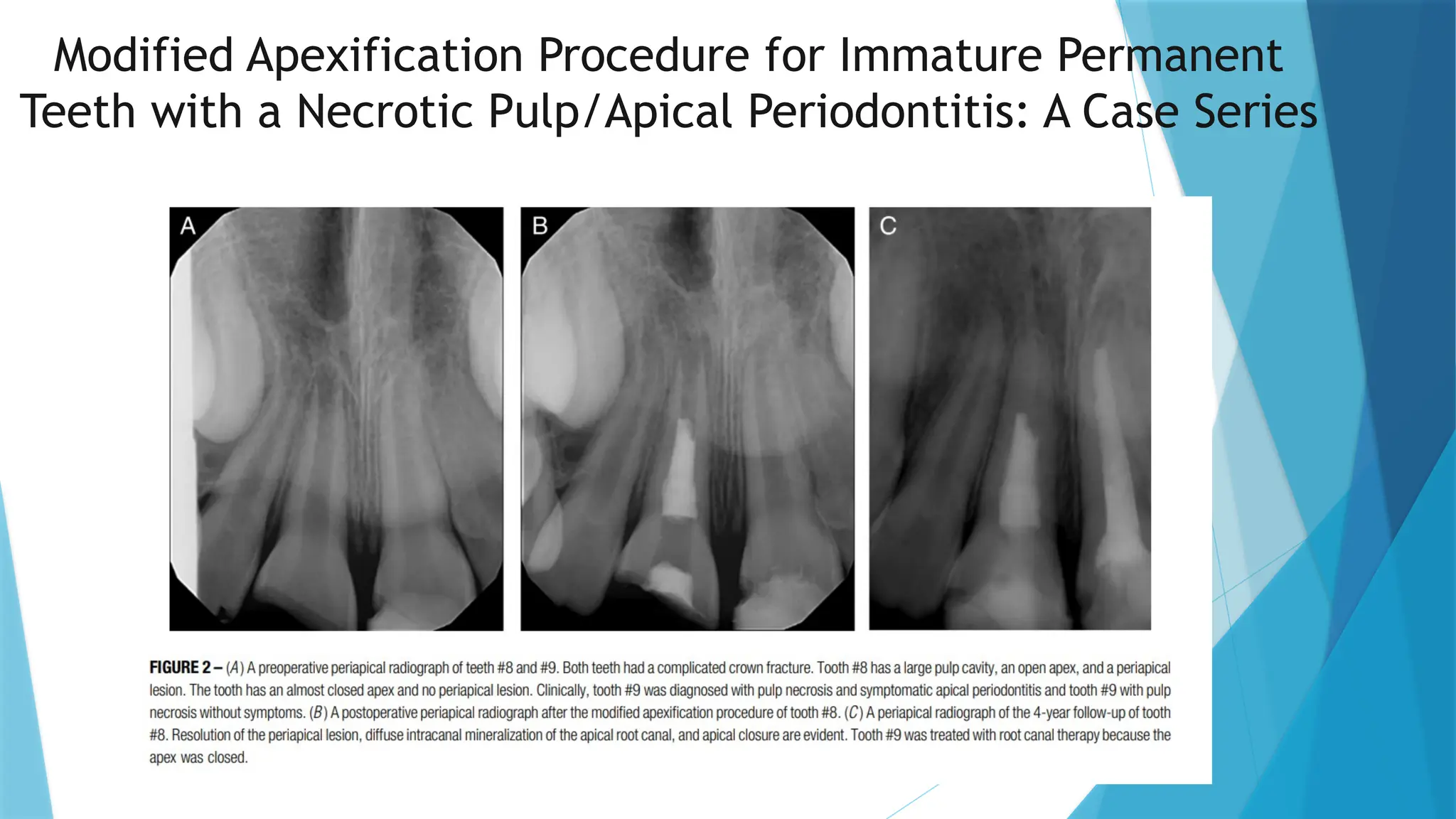
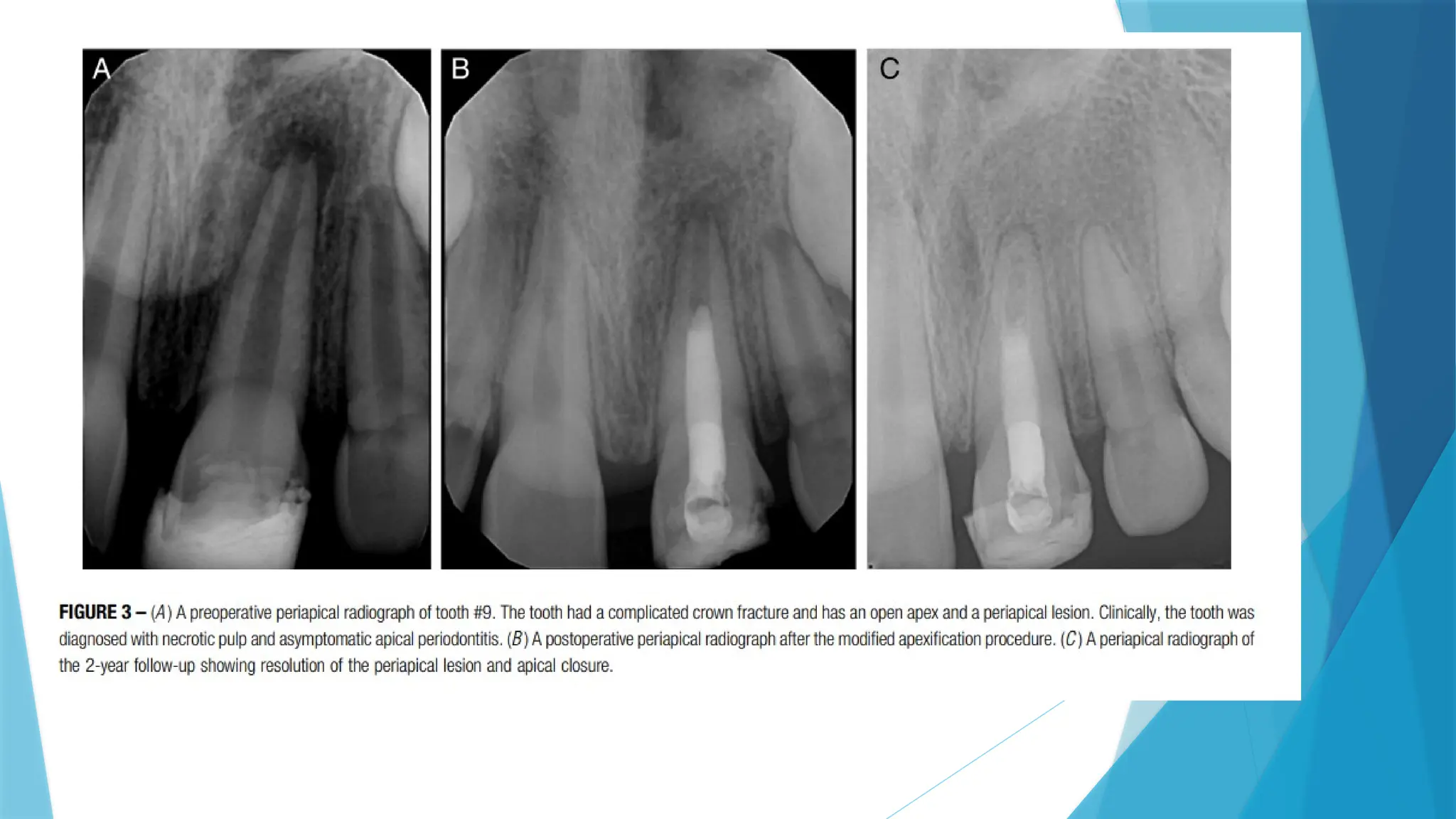
 Moreover, in 2020, Songtrakul et al. proposed a modified apexification
procedure, in which a 3- mm-thick MTA/Biodentine barrier is placed inside
the canal over a collagen matrix, which will be eventually resorbed and leave
an apical canal space unfilled for continued root development. The use of a
resorbable collagen matrix also helps to hold the material during its
application inside the root canal space, which allows for apical deposition of
mineralized tissue.
 Norsat(2020) et al found that clinical and radiographic outcome of MTA
apexification and regenerative endodontic procedures (REPs) shows high
success rates for both treatment modalities However, REPs lack consistency in
promoting root lengthening, widening, and apical closure. Possible reasons
investigated in studies are residual bacteria and instability of the scaffold.
 Recent tissue engineering studies are focused on developing new stable
scaffolds that can sustain a disinfecting feature for an extended period to allow
for more predictable tissue regeneration .
 In the recent study by Duggal( 2017) et al, three techniques were considered;
apexification by single or multiple applications of calcium hydroxide, use of Mineral
Trioxide Aggregate (MTA) for the creation of an apical plug followed by obturation of
the root canal, and finally a Regenerative Endodontic Technique (RET) where blood
clot was used as a scaffolds. For non vital anterior teeth with incomplete root
development e Ca(OH)2 for a short period of time to achieve disinfection. This should
be followed by the application of MTA to create a barrier, obturation of root canal
space with gutta percha and finally the creation of a good coronal seal to prevent re-
infection of the root canal space.
 Clinicians should consider using the RET in cases where the root development is
very incomplete with insufficient amount of dentine, and where it is considered that
the tooth has a hopeless prognosis even with application of MTA.
 The favorable long-term prognosis of endodontically treated teeth also requires an
effective coronal sealing
 Regarding intracanal retention, fiberglass posts were placed in 6 severely compromised
teeth to reduce polymerization shrinkage stress. A recent prospective multicentric
practice-based study highlighted high success and survival rates when endodontically
treated teeth were restored with post restorations, independently of the selected post
material14. Similarly, Schmoldt et al. outlined the combination of a fiber post and
composite core as the preferable option to restore immature teeth with thin dentinal
walls
 Regardless of the restoration type, bonded restorations allow for maximum
reinforcement of the remaining tooth structure. In the present study, all teeth were
adhesively restored after the apical barrier had fully set (mean time of 7 weeks after
apexification completion)36 and 68.8% of clinical cases were restored with a dual-cure
adhesive resin system combined with a dual-cure flowable composite resin.
 Moreover, Linnemann et al. found adhesively cemented posts to have
significantly lower failure rates compared with micromechanically cemented
ones.
 Last, it is noteworthy that the only 2 teeth scored with a PAI of 4 at recall
were also the only cases classified with score 5 according to FDI’s criteria for
restoration evaluation in the present study. These findings highlight the
unquestionable importance of an adequate coronal restoration as a means of
preventing coronal microleakage and thus allow for the maintenance or
recovery of periapical tissue integrity.
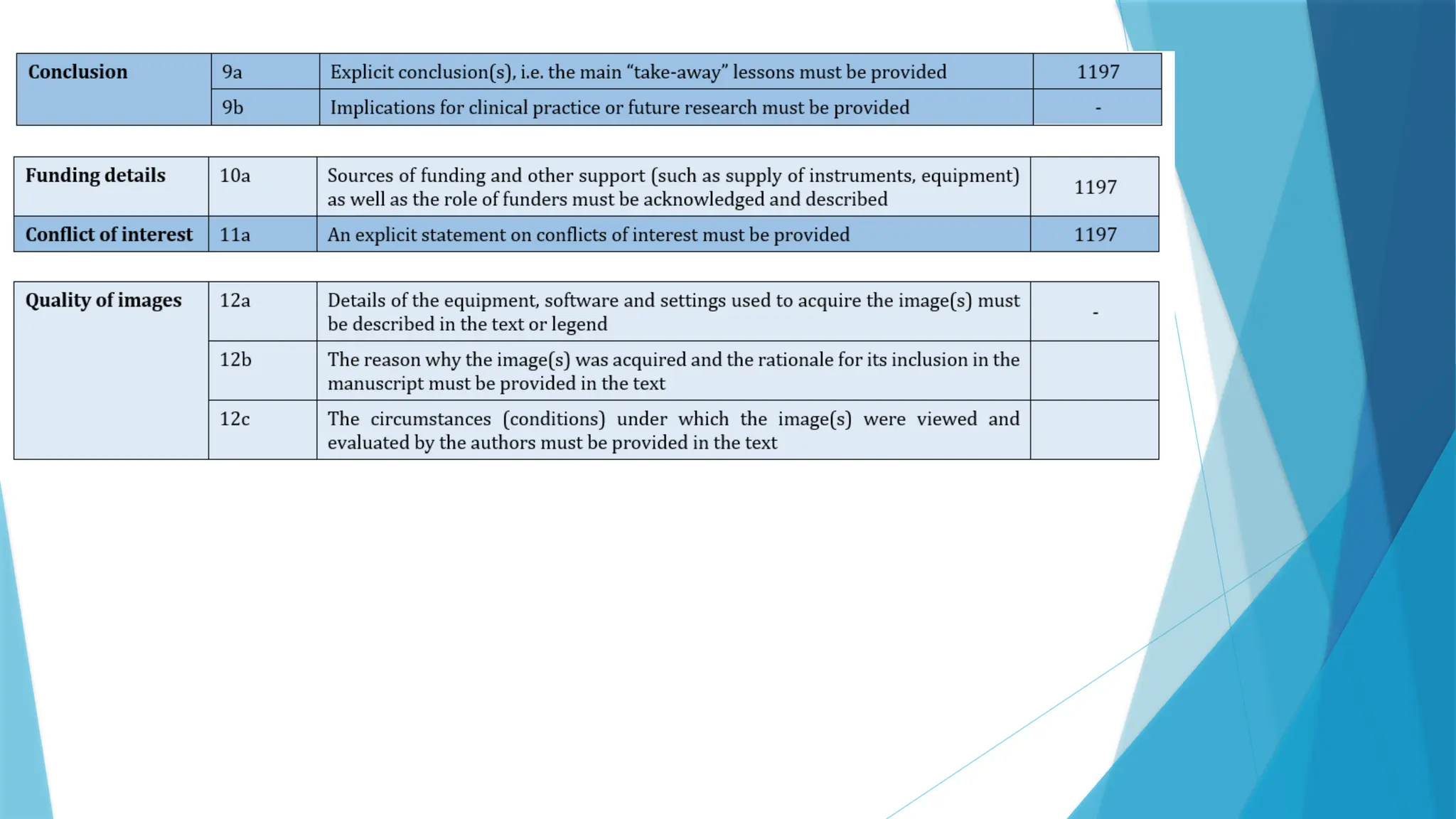
ARTICLE EVALUATION ACCORDING TO
PRICE GUIDELINES 2020
Modified Apexification Procedure for Immature Permanent
Teeth with a Necrotic Pulp/Apical Periodontitis: A Case Series
Merits
 Long-term follow-up was recorded
Demerits
 Operaative photographs were missing.
 Data mentioned insufficiently.
 Follow up was not at regular intervals.
Conclusion
 Definitive adhesive corono-radicular restoration in nonvital permanent immature
teeth treated with apexification allows for favorable long-term (5 to 22 years)
outcomes, by ensuring structural reinforcement and coronal microleakage
prevention.
 Teeth sustaining a substantial loss of coronal structure may require post/core
placement. In the case of failure, this endodontic-restorative combination
ensured teeth survival until growth phase conclusion, thus allowing for proper
prosthetic rehabilitation approaches.
 The existing literature lacks high-quality studies with a direct comparison of
outcomes of Apexification by MTA vs Regenerative Endodontic treatment (RET).
Clinical trials with large sample sizes and long-term follow-ups are needed to
address this issue.
Thank You

IMMATURE APEX TREATED WITH APEXIFICATION PROCESS AND CORONO RADICULAR ADHRENCE RESTORATION

  • 1.
    Journal Club Presentation-3 -Neha Kulkarni First Year PG
  • 2.
    Contents  Title  Authors Publication  Abstract  Introduction  Case Report  Discussion  Merits  Demerits  Conclusion
  • 3.
    Title Long-Term Outcome ofNonvital Immature Permanent Teeth Treated With Apexification and Corono-Radicular Adhesive Restoration: A Case Series
  • 4.
    Authors  Joao MiguelSantos, DDS, ~ PhD,*†‡  Patrícia Diogo, DDS, PhD,*†  Sonia Dias, DDS, *  Joana A. Marques, DDS,*†  Paulo J. Palma, DDS, PhD,*†  Joao Carlos Ramos, DDS, ~ PhD†§  From the *Institute of Endodontics, Faculty of Medicine, University of Coimbra, 3000-075 Coimbra, Portugal
  • 5.
    Publication  Journal: JournalOf Endodontics (JOE)  Volume: Volume 48  Date: Sept 2022  Page Number: 1191 - 1199
  • 6.
    Abstract  Introduction:  Thisstudy aimed to evaluate the long-term outcome of 16 permanent maxillary central incisors with nonvital pulps and open apices treated with apexification and corono- radicular adhesive restorations, within a follow-up span of 5 to 22 years.  Methods:  Fourteen patients providing a total of 16 teeth treated with mineral trioxide aggregate (n =12), Biodentine (n = 3), or b-tricalcium phosphate (n =1) apical barrier and corono-radicular restoration, with or without fiberglass post, were included.  Clinical and radiographic criteria were defined for assessment at recall. Restoration and periapical tissue status evaluation were performed according to FDI World Dental Federation’s esthetic, functional, and biological criteria and Ørstavik Periapical Index (PAI). Outcome was dichotomized as “healed” (PAI 2, asymptomatic with absence of signs of infection) or “not healed” (PAI 3, presence of clinical signs and/or symptoms).
  • 7.
     Results:  Fourteenof 24 patients were available for the present study (recall rate 5 58%). Within a follow-up of 5 to 22 years, 10 (62.5%) teeth were considered “healed,” fulfilling both strict clinical and radiographic success criteria. Only 1 tooth was missing due to root resorption and 1 patient was presenting with clinical signs and symptoms at recall, resulting in a survival rate of 93.8%.  Conclusions:  Adhesive corono -radicular restoration in nonvital permanent immature teeth treated with apexification allows for favorable long-term outcomes, by ensuring structural reinforcement and coronal microleakage prevention.  Teeth sustaining a substantial loss of coronal structure may require post/ core placement. In the case of failure, this endodontic-restorative combination ensured teeth survival until growth phase conclusion, thus allowing for proper prosthetic rehabilitation approaches.
  • 8.
    Key Words  Apexification; calcium silicate–based cements;  corono-radicular adhesive restoration;  fiberglass post;  immature permanent teeth;  necrotic pulp
  • 9.
    ARTICLE EVALUATION ACCORDINGTO PRICE GUIDELINES 2020
  • 10.
    Introduction  Dental traumais common in young children and is the most frequent cause of pulpal non-vitality in immature permanent incisors. The Age group of 8 to 12 years of age and 2 to 4 years of age are prone to dental accidents.  The 2003 Children’s Dental Health found that 11% of 12 year olds and 13% of 15 year olds had sustained accidental damage to their permanent teeth.  Classified the traumatic injuries to teeth given by Andreasen is as follow:  Enamel Infarction;  Enamel fracture  Enamel – dentin fracture (uncomplicated crown fracture)  Complicated crown fracture  Uncomplicated crown– root fracture  Complicated crown- root fracture  Root fractures  Luxation injuries
  • 11.
     Several classificationsystems for the degree of root formation and maturation have been proposed, although Cvek’s classification offers didactic radiographic characteristics with valuable clinical applications.  Cvek’s classification describes the five stages of root development:  I = < 1/2 root length,  II = 1/2 root length,  III = 2/3 root length,  IV = wide open apical foramen and nearly complete root length and,  V = closed apical foramen and completed root development.  While Cvek stage V describes mature, fully formed teeth, the remaining four stages describe teeth with open apices and a lack of apical constriction development but significant morphological differences.  Cvek stages I, II and III indicate wide and divergent apical openings, the root canals are significantly wider in the buccal-lingual plane than in the mesio-distal plane, the terminal portion of the root is irregular and the apical foramen diameter is higher than the root canal lumen.
  • 12.
     Clinical managementof nonvital definitive immature anterior teeth presents both an endodontic and restorative challenge.  Consequent interruption of continuous root development in immature teeth leads to thin dentin walls, parallel or inverted taper of the root canals, open-apex, and an unfavorable crown/root ratio  The absence of an apical closure in immature teeth precludes conventional endodontic treatment, therefore requiring specific approaches with greater predictability, safety, and effectiveness.  Apexification is a nonsurgical technique that allows the creation of an apical barrier in open-apex teeth.  Traditionally performed apexification procedure included the sequential application of calcium hydroxide (Ca[OH]2) in multiple sessions until obtaining an apical hard tissue barrier5 .  Although clinical cases treated with Ca(OH)2 evidence high success rates, several well-known disadvantages include treatment extension5,6 , higher likelihood of coronal microleakage and recontamination. This is possibly attributed to its hygroscopic and proteolytic properties, which induces desiccation of dentinal proteins, thus predisposing the tooth to root fracture.
  • 13.
     The introductionof mineral trioxide aggregate (MTA) opened a new treatment option for teeth with wide open foramina.  MTA is a biocompatible and bioactive material that induces the deposition of mineralized tissue, promoting excellent results when applied as single session.  Otherwise, MTA drawbacks are its long setting time, sensibility of the final product properties related to spatulation and handling time, high cost, and discoloration potential, which becomes a major inconvenience when anterior teeth are involved  More recently, a new calcium silicate–based material exhibiting similar biocompatibility and advantages over MTA in terms of posttreatment discoloration, setting time, and handling was introduced: Biodentine (Septodont, Saint-Maur-des-Foss es Cedex, France)12.
  • 14.
     Apexification byMTA plug or Ca(OH)2 allow root canal obturation to be performed through generating a physical barrier against which the root filling can be condensed. However, neither of these methods contributes to any qualitative or quantitative improvement in root dimensions.  If any further deposition of dentine or cementum is to be achieved, in order to provide a qualitative improvement of root structure, then vital tissue has to be generated. Recently there has been an attempt to re-establish the blood supply in those teeth, which have already become non-vital and the technique is commonly known as the Regenerative or Revitalisation Endodontic Therapy or technique (RET). These techniques have been suggested to harness the stem cells present at an apical area of immature incisors, thereby allowing repopulation of the root canal with vital tissue
  • 15.
     In additionto the endodontic procedure, the overall long-term treatment success of immature teeth with open apices also relies on the type and quality of the subsequent restorative treatment.  Besides patients’ preferences, the clinical decision on both restorative material and technique mainly relies on the quality and quantity of remaining coronal structure, tooth type, and position and function in the dental arch.  Several post options (fiberglass/metallic), cementation type (self-adhesive, self- or dual-cured), and coronal restorative materials (composite resin/ceramic) are available.  Among the various possible restorative approaches, adhesive restoration allows greater reinforcement of the remaining dental structure, either with a post associated with a resin cement (in cases of severely compromised teeth) or merely with a composite resin.  Fiberglass posts were suggested to increase the tooth’s resistance to fracture because its modulus of elasticity closely resembles that of dentin and consequent improvement of stress distribution
  • 16.
     Numerous clinicalstudies with short follow-ups (0.5–2.0 years) of teeth treated with the apexification technique are currently available within the literature. However, only few report long follow-up periods.  Thus, the current study aimed to evaluate the long-term outcome of 16 permanent maxillary central incisors with nonvital pulps and open apices treated with apexification and corono-radicular adhesive restorations, within a follow-up span of 5 to 22 years.
  • 17.
    ARTICLE EVALUATION ACCORDINGTO PRICE GUIDELINES 2020
  • 18.
    Materials And Methods The study was approved by the Ethics Committee of the Faculty of Medicine of the University of Coimbra (CE-037/2018). ASA 1 (normal healthy) patients undergoing apexification treatment and rehabilitated with corono-radicular adhesive restorations in maxillary necrotic anterior teeth, from 1996 to 2013, were included according to the established inclusion and exclusion criteria  14 patients were evaluated and included in the study, gathering a total of 16 treated teeth cases. Informed consent was obtained. Personal data and clinical history were obtained by one of the authors (S.D.) after consulting the clinical file of each patient.
  • 20.
    Endodontic Procedure  16nonvital permanent upper central incisors were treated in 14 patients. Seven girls and 7 boys, from 10 to 15 years old (mean age of 12.8 years).  Clinical preoperative tests were performed to establish a pulpal and periapical diagnosis.  Testing included pulpal thermal tests, electric tests when appropriate, percussion, periodontal probing, evaluation of tooth mobility, and visual assessment of tooth discoloration or swelling.  A minimum 1 digital preoperative radiograph was taken to evaluate the tooth’s morphology and condition of the periradicular tissues.  The pulpal diagnosis was either necrosis (n=13) or previously treated (n = 3).  Periapical diagnosis was assessed as normal (n =10), symptomatic apical periodontitis (SAP, n= 1) or asymptomatic apical periodontitis (AAP , n = 5).  Endodontic treatment was performed in 2 or 3 sessions.
  • 21.
    First appointment  Patientswere locally anesthetized with 2% lidocaine with 1:100,000 epinephrine. Rubber dam was placed and disinfected with 2% chlorhexidine solution.  If present, carious lesions were removed.  Coronal access was performed and copious irrigation with 1.0% (n = 9) or 2.5% (n = 7) sodium hypochlorite (NaOCl) was delivered.  Minimal instrumentation of root canal walls was performed with manual K-files and H-files in retreatment cases.  Root canals were dried with paper points and an interappointment dressing of calcium hydroxide intracanal paste (Calcicur; VOCO, Cuxhaven, Germany) was placed.  Last, a sterile cotton pellet and subsequent temporary filling material-intermediate restorative material (IRM; Dentsply Maillefer, Ballaigues, Switzerland) or Cavit (3M, Neuss, Germany) were placed within the access cavity.  Patients were scheduled for the next treatment session in 2 - 3 weeks.
  • 22.
    Second or Thirdappointment  At the second (n =13) or third (n = 3) appointment, after local anesthesia administration, rubber dam was applied.  After reassessment, root canals were irrigated exclusively with 1.0% (n = 9) or 2.5% (n = 7) NaOCl or followed by 17% EDTA (n =3).  Subsequently, the root canals were dried with paper points and the apical plug was performed using ProRoot MTA (n =12), Biodentine (n = 3), or b-tricalcium phosphate (n = 1).  Biodentine and ProRoot MTA (Dentsply Tulsa Dental, Johnson City, TN) were prepared according to the manufacturer’s instructions  b-tricalcium phosphate was mixed with saline solution until a slurry consistency was obtained. All biomaterials were delivered into the root canal’s apical third, tight in the working length, using MAP system (Dentsply Maillefer, Ballaigues, Switzerland), and gently compacted with Buchanan hand pluggers and paper points.  A final apical plug thickness between 3 and 4 mm was accomplished. The access cavity was closed by placing a moist cotton pellet and provisional restorative material.
  • 25.
    Restorative treatments  Teethwere restored by experienced operators (J.M.S., P .J.P ., and J.C.R.), in a time interval ranging from 2 to 16 weeks following the endodontic procedures.  All bonding procedures were performed under rubber dam isolation and restorative materials were applied according to the manufacturer’s instructions.  An intracanal fiberglass post was placed (n = 6), 3 of them being individualized.  In the remaining teeth (n =10), the coronal canal space was restored with a dual- cure adhesive resin system combined with a dual-cure flowable composite resin.  Coronal composite resin restoration was either direct (n =15) or indirect (n =1).
  • 26.
    Recall Program  Aminimum of 5 years of follow-up was established. The last recall appointment was carried out by a blind operator (P.D.).  Clinical examination was performed to assess the presence/absence of clinical signs and symptoms (pain, tenderness to pressure or percussion, root/tooth fracture, sinus tract, mobility, and loss of function). Vertical and horizontal percussion, periodontal probing, photograph, and radiograph of each tooth was obtained  The Ørstavik Periapical Index (PAI) system was used for radiographic assessment of periapical tissue status. Outcome was either “healed” (PAI 2, asymptomatic with absence of signs of infection) or “not healed” (PAI 3, presence of the above mentioned clinical signs and/or symptoms).  Ørstavik Periapical Index (PAI) score description:  1 = Normal  2 = Small changes in bone structure  3 = Structural bone changes with mineral loss  4 =Periodontitis with a well-defined radiolucency  5 = Severe periodontitis with bone expansion
  • 27.
     Restoration evaluationwas accomplished according to FDI World Dental Federation’s index:  Following characteristics of the restoration were evaluted  esthetic((Surface Luster, Staining, Color match and transluency, and esthetic anatomical form),  functional(Fracture and retention Marginal adaptation),  and biological criteria( Secondary caries and periodontal response)  FDI criteria score description:  1 = Clinically excellent/very good  2 = Clinically good (after correction very good)  3 = Clinically sufficient/satisfactory minor shortcomings with no adverse effects but not adjustable without damage to the tooth)  4 = Clinically unsatisfactory (repair for prophylactic reasons)  5 = Satisfactory poor (replacement necessary)
  • 29.
    Results  A totalof 16 teeth, treated between 1996 and 2013, Nolla stages 8(2/3 of root completed) (n = 7) or 9 (root almost completed – open apex)(n = 9), were included.  The main etiology of pulp necrosis was related to trauma (87.5%). All included teeth exhibited negative response to cold test (100%), therefore confirming the absence of pulp sensitivity. Within a 5- to 22-year followup (mean of 9.5 years), 10 (62.5%) teeth were considered “healed” and 6 were assessed as “not healed” (37.5%).  Only 1 tooth had to be extracted in this case series. It was treated in 2013 due to a previous coronoradicular fracture and subsequently suffered a new root fracture in 2015.
  • 30.
     Moreover, only1 patient presented with clinical symptoms in the recall appointment, as well as radiographic evidence of apical periodontitis, with a welldefined radiolucency, periodontal disease, mobility, poorly adapted restoration, and secondary caries. All the remaining teeth were symptom-free and fully functional (n = 14)  Radiographic Evaluation 10 cases were considered a radiographic success according to the PAI system (5 cases assessed as PAI 1 and 5 scored as PAI 2).  6 cases presented with apical periodontitis (3 scored as PAI 3, 2 as PAI 4, and 1 as PAI 5), but only 1 patient presented with clinical signs and symptoms (PAI = 4). Moreover, as mentioned previously, only 1 tooth was missing due to root resorption, assessed as a PAI of 5, 4 years after the initial treatment (clinical case #5).
  • 31.
     Restoration Evaluation(According to FDI Functional, Esthetic, and Biological Criteria)  Regarding esthetic parameters, surface luster was mostly considered as clinically good, turning into very good after correction (score 2; n = 5).  Staining was evaluated as clinically excellent (score 1) in 7 cases and assessed as a 2 score in 4 cases.  In terms of color match and translucency, score 1 was the most frequently observed (n = 6), followed by score 3 (n = 4), score 2 (n = 3), and score 4 (n = 2).  Esthetic anatomic form was primarily considered as clinically good (score 2; n = 8).  Concerning fracture and retention of the restorative material, 12 cases were marked as clinically excellent.  Marginal adaptation had both 1 and 2 scores in 5 cases each. In addition, 1 was classified with score 3, 2 were considered clinically unsatisfactory (score 4), and 2 required replacement (score 5).  According to the FDI World Dental Federation’s biological criteria related to secondary caries, 8 cases were evaluated as clinically excellent (score 1), 3 as clinically good (score 2), 2 cases as clinically sufficient (score 3), as well as 2 clinically unsatisfactory cases (score 4).  Periodontal response was mainly scored as 1 (clinically excellent in 10 cases).
  • 32.
    ARTICLE EVALUATION ACCORDINGTO PRICE GUIDELINES 2020
  • 34.
    Discussion  Within afollow-up of 5 to 22 years, 10 (62.5%) teeth treated with apexification and corono-radicular adhesive restoration were considered “healed,” fulfilling both strict clinical and radiographic success criteria.  The European Society of Endodontology states a minimum 1-year follow-up period as desirable. However, whenever there is radiographic evidence of initial lesion persistence, with a small reduction or no change in size, the outcome is considered uncertain and an observation period of at least 4 years or controls until the lesion has resolved are recommended27. Thus, 16 clinical cases with a minimum follow-up of 5 years were included in the current case series.  When treating nonvital immature teeth, the main focus of nonsurgical endodontic treatment is to preserve the tooth until jaw growth is completed, which was fully achieved in the present case series. Besides apical barrier establishment and apical healing, the absence of clinical signs and symptoms is of utmost importance and, within this parameter, only 1 patient presented with clinical signs and symptoms at recall.  Ree and Schwartz reported a 96% healing rate at 5 to 15 years of recall of 69 nonvital immature teeth treated in private endodontic practice with an MTA apical barrier and adhesive restorations (recall rate = 83%). No teeth were lost because of root fracture.
  • 35.
     Current literaturesupports the use of hydraulic calcium silicate–based cements for apical barrier creation followed by root canal obturation as the treatment of choice for nonvital traumatized immature permanent anterior teeth1  Moreover, in 2020, Songtrakul et al. proposed a modified apexification procedure, in which a 3- mm-thick MTA/Biodentine barrier is placed inside the canal over a collagen matrix, which will be eventually resorbed and leave an apical canal space unfilled for continued root development. The use of a resorbable collagen matrix also helps to hold the material during its application inside the root canal space, which allows for apical deposition of mineralized tissue.  Norsat(2020) et al found that clinical and radiographic outcome of MTA apexification and regenerative endodontic procedures (REPs) shows high success rates for both treatment modalities However, REPs lack consistency in promoting root lengthening, widening, and apical closure. Possible reasons investigated in studies are residual bacteria and instability of the scaffold.  Recent tissue engineering studies are focused on developing new stable scaffolds that can sustain a disinfecting feature for an extended period to allow for more predictable tissue regeneration .
  • 36.
     In therecent study by Duggal( 2017) et al, three techniques were considered; apexification by single or multiple applications of calcium hydroxide, use of Mineral Trioxide Aggregate (MTA) for the creation of an apical plug followed by obturation of the root canal, and finally a Regenerative Endodontic Technique (RET) where blood clot was used as a scaffolds. For non vital anterior teeth with incomplete root development e Ca(OH)2 for a short period of time to achieve disinfection. This should be followed by the application of MTA to create a barrier, obturation of root canal space with gutta percha and finally the creation of a good coronal seal to prevent re- infection of the root canal space.  Clinicians should consider using the RET in cases where the root development is very incomplete with insufficient amount of dentine, and where it is considered that the tooth has a hopeless prognosis even with application of MTA.
  • 37.
     The favorablelong-term prognosis of endodontically treated teeth also requires an effective coronal sealing  Regarding intracanal retention, fiberglass posts were placed in 6 severely compromised teeth to reduce polymerization shrinkage stress. A recent prospective multicentric practice-based study highlighted high success and survival rates when endodontically treated teeth were restored with post restorations, independently of the selected post material14. Similarly, Schmoldt et al. outlined the combination of a fiber post and composite core as the preferable option to restore immature teeth with thin dentinal walls  Regardless of the restoration type, bonded restorations allow for maximum reinforcement of the remaining tooth structure. In the present study, all teeth were adhesively restored after the apical barrier had fully set (mean time of 7 weeks after apexification completion)36 and 68.8% of clinical cases were restored with a dual-cure adhesive resin system combined with a dual-cure flowable composite resin.
  • 38.
     Moreover, Linnemannet al. found adhesively cemented posts to have significantly lower failure rates compared with micromechanically cemented ones.  Last, it is noteworthy that the only 2 teeth scored with a PAI of 4 at recall were also the only cases classified with score 5 according to FDI’s criteria for restoration evaluation in the present study. These findings highlight the unquestionable importance of an adequate coronal restoration as a means of preventing coronal microleakage and thus allow for the maintenance or recovery of periapical tissue integrity.
  • 39.
    ARTICLE EVALUATION ACCORDINGTO PRICE GUIDELINES 2020
  • 40.
    Modified Apexification Procedurefor Immature Permanent Teeth with a Necrotic Pulp/Apical Periodontitis: A Case Series
  • 42.
  • 43.
    Demerits  Operaative photographswere missing.  Data mentioned insufficiently.  Follow up was not at regular intervals.
  • 44.
    Conclusion  Definitive adhesivecorono-radicular restoration in nonvital permanent immature teeth treated with apexification allows for favorable long-term (5 to 22 years) outcomes, by ensuring structural reinforcement and coronal microleakage prevention.  Teeth sustaining a substantial loss of coronal structure may require post/core placement. In the case of failure, this endodontic-restorative combination ensured teeth survival until growth phase conclusion, thus allowing for proper prosthetic rehabilitation approaches.  The existing literature lacks high-quality studies with a direct comparison of outcomes of Apexification by MTA vs Regenerative Endodontic treatment (RET). Clinical trials with large sample sizes and long-term follow-ups are needed to address this issue.
  • 47.