O n t o l ogies in a nutshell fabien, gandon, inria
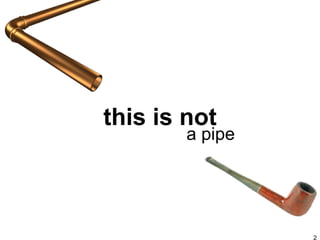
this is not a pipe
do not read the following sign
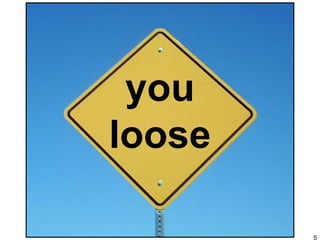
you loose
we interpret machines don't
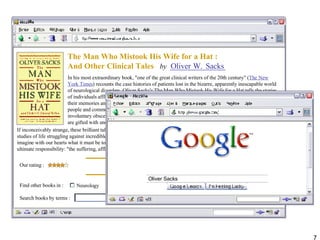
Sacks Oliver Oliver Sacks The Man Who Mistook His Wife for a Hat : And Other Clinical Tales  by  In his most extraordinary book, "one of the great clinical writers of the 20th century" ( The New York Times ) recounts the case histories of patients lost in the bizarre, apparently inescapable world of neurological disorders. Oliver Sacks's The Man Who Mistook His Wife for a Hat tells the stories of individuals afflicted with fantastic perceptual and intellectual aberrations: patients who have lost their memories and with them the greater part of their pasts; who are no longer able to recognize people and common objects; who are stricken with violent tics and grimaces or who shout involuntary obscenities; whose limbs have become alien; who have been dismissed as retarded yet are gifted with uncanny artistic or mathematical talents.  If inconceivably strange, these brilliant tales remain, in Dr. Sacks's splendid and sympathetic telling, deeply human. They are studies of life struggling against incredible adversity, and they enable us to enter the world of the  neurologically  impaired, to imagine with our hearts what it must be to live and feel as they do. A great healer, Sacks never loses sight of medicine's ultimate responsibility: "the suffering, afflicted, fighting human subject."  Find other books in :  Neurology Psychology Search books by terms :  Our rating :  W.
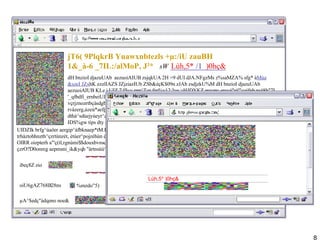
jT6( 9PlqkrB Yuawxnbtezls +µ:/iU zauBH 1&_à-6 _7IL:/alMoP, J²*  sW dH bnzioI djazuUAb  aezuoiAIUB zsjqkUA 2H =9 dUI dJA.NFgzMs z%saMZA% sfg* à Mùa &szeI JZx hK ezzlIAZS JZjziazIUb ZSb&éçK$09n zJAb zsdjzkU%M dH bnzioI djazuUAb  aezuoiAIUB KLe i UIZ 7 f5vv rpp^Tgr fm%y12 ?ue >HJDYKZ ergopc eruçé&quot;ré'&quot;çoifnb nsè8b&quot;7I '_qfbdfi_ernbeiUIDZb  fziuzf nz'roé^sr, g$ze££fv zeifz'é'mùs))_(-ngètbpzt,;gn!j,ptr;et!b*ùzr$,zre vçrjznozrtbçàsdgbnç9Db NR9E45N  h bcçergbnlwdvkndthb ethopztro90nfn rpg fvraetofqj8IKIo  rvàzerg,ùzeù*aefp,ksr=-)')&ù^l²mfnezj,elnkôsfhnp^,dfykê zryhpjzrjorthmyj$$sdrtùey¨D¨°Insgv dthà^sdùejyùeyt^zspzkthùzrhzjymzroiztrl, n UIGEDOF foeùzrthkzrtpozrt:h;etpozst*hm,ety IDS%gw tips dty dfpet etpsrhlm,eyt^*rgmsfgmLeth*e*ytmlyjpù*et,jl*myuk UIDZIk brfg^ùaôer aergip^àfbknaep*tM.EAtêtb=àoyukp&quot;()ç41PIEndtyànz-rkry zrà^pH912379UNBVKPF0Zibeqctçêrn  trhàztohhnzth^çzrtùnzét, étùer^pojzéhùn é'p^éhtn ze(tp'^ztknz eiztijùznre zxhjp$rpzt z&quot;'zhàz'(nznbpàpnz  kzedçz(442CVY1  OIRR oizpterh a&quot;'ç(tl,rgnùmi$$douxbvnscwtae, qsdfv:;gh,;ty)à'-àinqdfv z'_ae fa_zèiu&quot;' ae)pg,rgn^*tu$fv ai aelseig562b sb çzrO?D0onreg aepmsni_ik&yqh &quot;àrtnsùù^$vb;,:;!!< eè-&quot;'è(-nsd zr)(è,d eaànztrgéztth oiU6gAZ768B28ns  %mzdo&quot;5) 16vda&quot;8bzkm µA^$edç&quot;àdqeno noe&  ibeç8Z zio  )0hç& /1 Lùh,5* Lùh,5* )0hç&
some knowledge something is missing
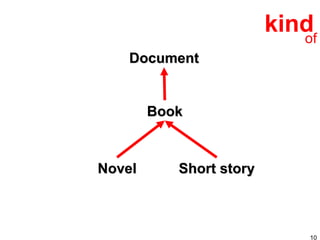
kind of Document Book Novel Short story
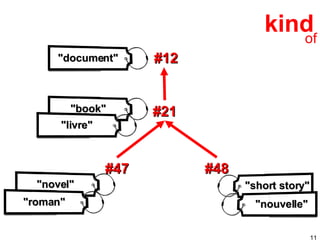
kind of #12 #21 #47 #48 &quot;document&quot; &quot;book&quot; &quot;livre&quot; &quot;novel&quot; &quot;roman&quot; &quot;short story&quot; &quot;nouvelle&quot;
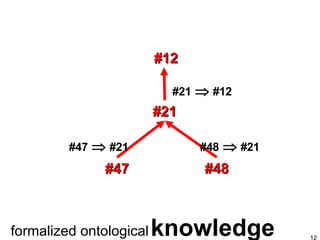
knowledge formalized ontological #21      #12 #48      #21 #47      #21 #12 #21 #47 #48
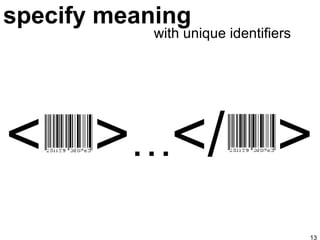
specify meaning with unique identifiers <  > … </  >
Ontology is not a synonym of Taxonomy
Taxonomical knowledge is a kind of ontological knowledge among others
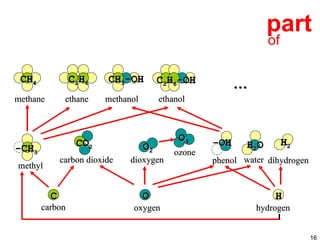
part of C carbon H hydrogen O oxygen CH 4 methane ethane C 2 H 6 C 2 H 6 -OH methanol CH 3 -OH ethanol … H 2 O water H 2 dihydrogen -OH phenol carbon dioxide CO 2 -CH 3 methyl dioxygen O 2 ozone O 3
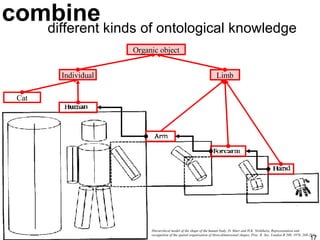
combine different kinds of ontological knowledge Hierarchical model of the shape of the human body. D. Marr and H.K. Nishihara, Representation and recognition of the spatial organization of three-dimensional shapes, Proc. R. Soc. London B 200, 1978, 269-294). Limb Individual Cat Organic object
ntology a logical theory which gives an explicit, partial account of a conceptualization  i.e.  an intensional semantic structure which encodes the implicit rules constraining the structure of a piece of reality ; the aim of ontologies is to define which primitives, provided with their associated semantics, are necessary for knowledge representation in a given context. [Gruber, 1993] [Guarino & Giaretta, 1995] [Bachimont, 2000] O
coverage extent to which the primitives mobilized by the scenarios are covered by the ontology.
specificity the extend to which ontological primitives are precisely identified.
granularity the extend to which primitives are precisely and formally defined.
the extend to which primitives are described in a formal language. formality
spinning tour of some ontologies’ content
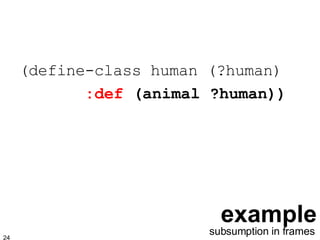
example (define-class human (?human)  :def  (animal ?human)) subsumption in frames
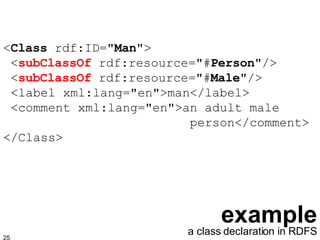
example < Class  rdf:ID=&quot; Man &quot;>  < subClassOf  rdf:resource=&quot;# Person &quot;/>  < subClassOf  rdf:resource=&quot;# Male &quot;/>  <label xml:lang=&quot;en&quot;>man</label>  <comment xml:lang=&quot;en&quot;>an adult male   person</comment> </Class> a class declaration in RDFS
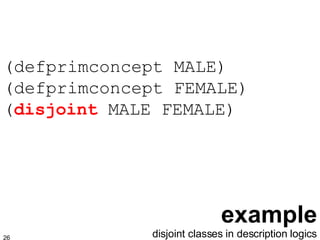
example (defprimconcept MALE) (defprimconcept FEMALE)  ( disjoint  MALE FEMALE) disjoint classes in description logics
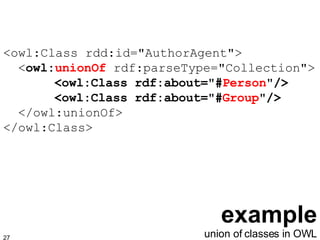
example <owl:Class rdd:id=&quot;AuthorAgent&quot;>   < owl: unionOf  rdf:parseType=&quot;Collection&quot;>   <owl:Class rdf:about=&quot;# Person &quot;/>   <owl:Class rdf:about=&quot;# Group &quot;/>   </owl:unionOf> </owl:Class> union of classes in OWL
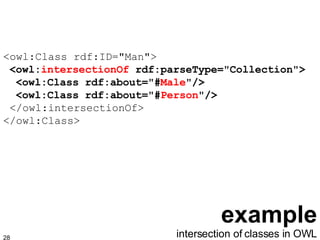
example <owl:Class rdf:ID=&quot;Man&quot;>  <owl: intersectionOf  rdf:parseType=&quot;Collection&quot;>   <owl:Class rdf:about=&quot;# Male &quot;/>   <owl:Class rdf:about=&quot;# Person &quot;/>  </owl:intersectionOf> </owl:Class> intersection of classes in OWL
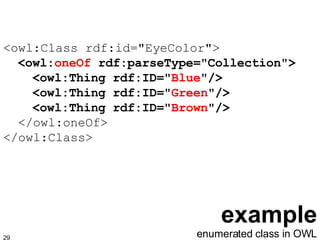
example <owl:Class rdf:id=&quot;EyeColor&quot;>   <owl: oneOf  rdf:parseType=&quot;Collection&quot;>   <owl:Thing rdf:ID=&quot; Blue &quot;/>   <owl:Thing rdf:ID=&quot; Green &quot;/>   <owl:Thing rdf:ID=&quot; Brown &quot;/>   </owl:oneOf> </owl:Class> enumerated class in OWL
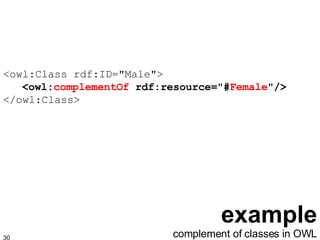
example <owl:Class rdf:ID=&quot;Male&quot;>   <owl: complementOf  rdf:resource=&quot;# Female &quot;/> </owl:Class> complement of classes in OWL
example [Concept:  Director ]->(Def)->  [LambdaExpression:   [Person:   ] ->(Manage) -> [ Group ] ] defined class in conceptual graphs
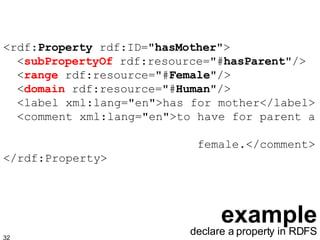
example <rdf: Property  rdf:ID=&quot; hasMother &quot;>   < subPropertyOf  rdf:resource=&quot;# hasParent &quot;/>   < range  rdf:resource=&quot;# Female &quot;/>   < domain  rdf:resource=&quot;# Human &quot;/>   <label xml:lang=&quot;en&quot;>has for mother</label>   <comment xml:lang=&quot;en&quot;>to have for parent a    female.</comment> </rdf:Property> declare a property in RDFS
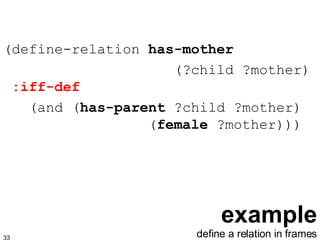
example (define-relation  has-mother (?child ?mother)   :iff-def (and ( has-parent  ?child ?mother)   ( female  ?mother))) define a relation in frames
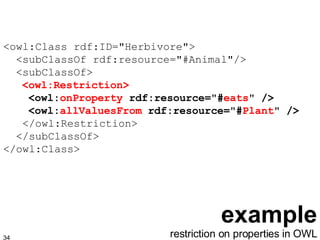
example <owl:Class rdf:ID=&quot;Herbivore&quot;>   <subClassOf rdf:resource=&quot;#Animal&quot;/>   <subClassOf>   <owl:Restriction>   <owl: onProperty  rdf:resource=&quot;# eats &quot; />   <owl: allValuesFrom  rdf:resource=&quot;# Plant &quot; />   </owl:Restriction>   </subClassOf> </owl:Class> restriction on properties in OWL
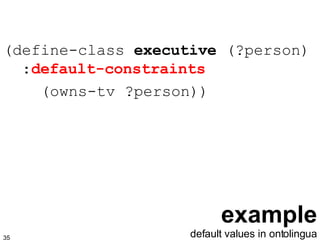
example (define-class  executive  (?person)   : default-constraints (owns-tv ?person)) default values in ontolingua
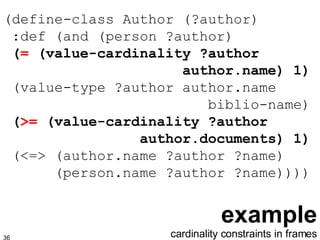
example (define-class Author (?author)  :def (and (person ?author)  ( =  (value-cardinality ?author   author.name) 1)  (value-type ?author author.name   biblio-name)  ( >=  (value-cardinality ?author   author.documents) 1)  (<=> (author.name ?author ?name)   (person.name ?author ?name)))) cardinality constraints in frames
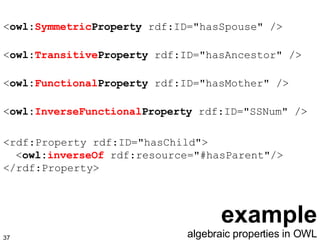
example < owl: Symmetric Property  rdf:ID=&quot;hasSpouse&quot; />   < owl: Transitive Property  rdf:ID=&quot;hasAncestor&quot; /> < owl: Functional Property  rdf:ID=&quot;hasMother&quot; /> < owl: Inverse Functional Property  rdf:ID=&quot;SSNum &quot; /> <rdf:Property rdf:ID=&quot;hasChild&quot;>   < owl: inverseOf   rdf:resource=&quot;#hasParent&quot;/>  </rdf:Property> algebraic properties in OWL
example [Car:   ]->(Has)->[ SteeringWheel ] existential knowledge in conceptual graphs
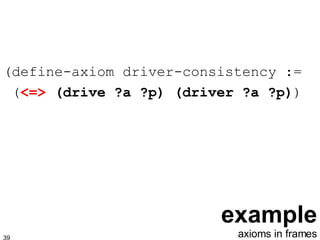
example (define-axiom driver-consistency :=  ( <=>  (drive ?a ?p) (driver ?a ?p) ) axioms in frames
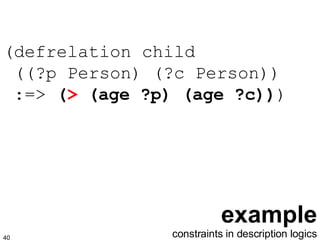
example (defrelation child  ((?p Person) (?c Person))  :=>  ( >  (age ?p) (age ?c)) ) constraints in description logics
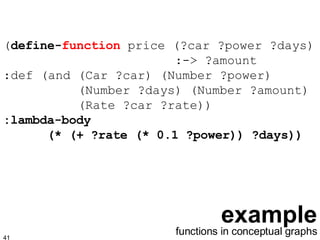
example ( define- function  price (?car ?power ?days)   :-> ?amount :def (and (Car ?car) (Number ?power)   (Number ?days) (Number ?amount)   (Rate ?car ?rate)) :lambda-body   (* (+ ?rate (* 0.1 ?power)) ?days)) functions in conceptual graphs
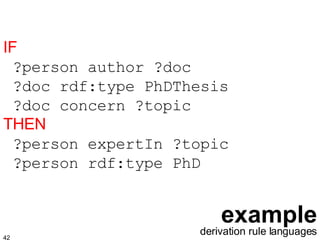
example IF     ?person author ?doc  ?doc rdf:type PhDThesis  ?doc concern ?topic THEN  ?person expertIn ?topic  ?person rdf:type PhD derivation rule languages
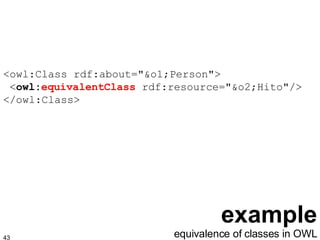
example <owl:Class rdf:about=&quot;&o1;Person&quot;>  < owl: equivalentClass  rdf:resource=&quot;&o2;Hito&quot;/> </owl:Class> equivalence of classes in OWL
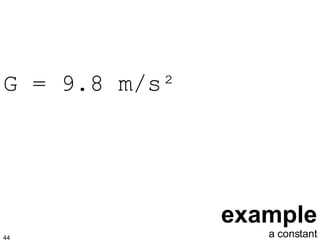
example G = 9.8 m/s² a constant
By 2012, 70% of public Web pages will have some level of semantic markup, but only 20% will use more extensive Semantic Web-based technologies [Finding and Exploiting Value in Semantic Technologies on the Web Gartner Research Report, May 2007]
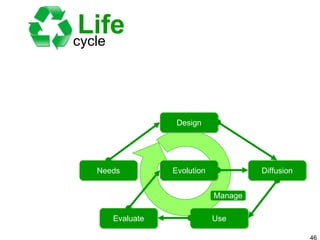
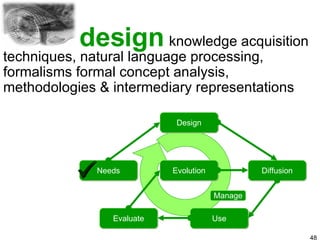
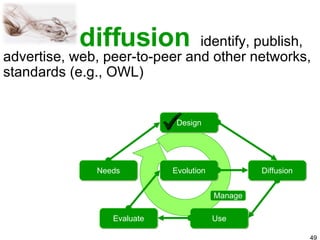
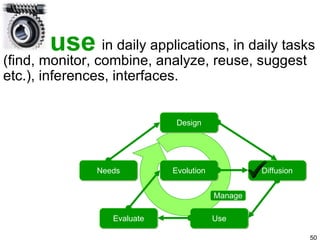
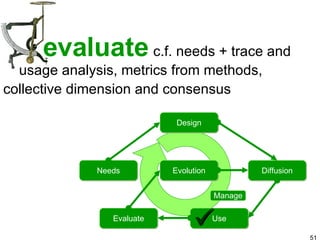
cycle Life Manage Needs Design Diffusion Use Evaluate Evolution
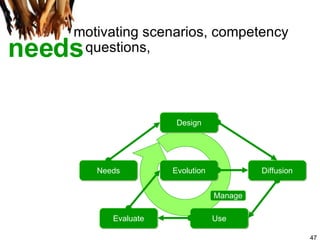
needs motivating scenarios, competency   questions,   Manage Needs Design Diffusion Use Evaluate Evolution
knowledge acquisition techniques, natural language processing, formalisms formal concept analysis, methodologies & intermediary representations design  Manage Needs Design Diffusion Use Evaluate Evolution
identify, publish, advertise, web, peer-to-peer and other networks, standards (e.g., OWL) diffusion  Manage Needs Design Diffusion Use Evaluate Evolution
in daily applications, in daily tasks (find, monitor, combine, analyze, reuse, suggest etc.), inferences, interfaces. use  Manage Needs Design Diffusion Use Evaluate Evolution
evaluate c.f. needs + trace and usage analysis, metrics from methods, collective dimension and consensus  Manage Needs Design Diffusion Use Evaluate Evolution
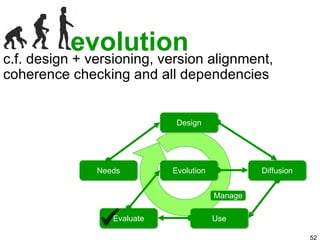
c.f. design + versioning, version alignment, coherence checking and all dependencies  evolution  Manage Needs Design Diffusion Use Evaluate Evolution
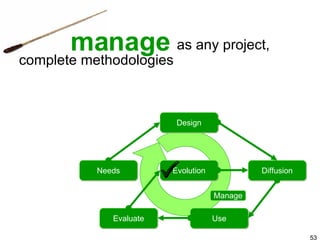
as any project,   complete methodologies manage  Manage Needs Design Diffusion Use Evaluate Evolution
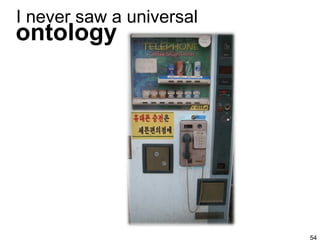
ontology I never saw a universal
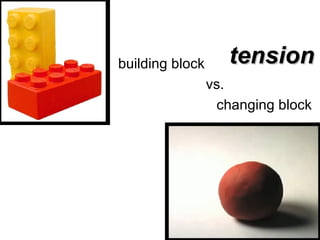
tension building block vs. changing block
bottlenecks acquisition & evolution
fol k s O n o m i es in a nutshell
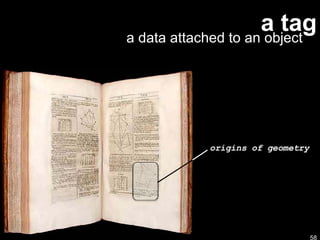
a tag a data attached to an object origins of geometry
tagging is not a new activity mark describe memo comment index group sort etc.
another tag in the web? <a>
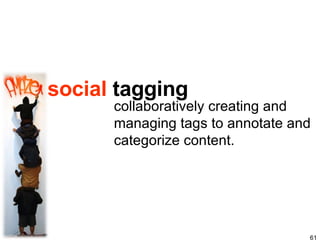
collaboratively creating and managing tags to annotate and categorize content. social  tagging
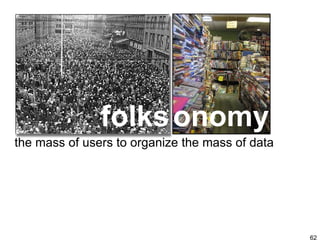
folks the mass of users to organize the mass of data onomy
olksonomy folks~taxonomy, a subject indexing systems created within internet communities. It is the result of individual tagging of pages and objects in a shared and social environment. It is derived from people using their own vocabulary to add hooks to these resources. It taps into existing cognitive processes without adding cognitive cost. [Vander Wal, 2005] [Vander Wal, 2007][Rashmi Sinha, 2005] f
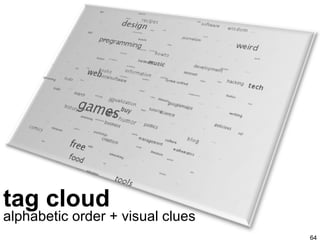
tag cloud alphabetic order + visual clues
folksonomies are not the opposite of ontologies
At first glance, the Semantic Web and semantic hypertext would appear to be at odds with each other. Gartner believes this debate is ultimately counterproductive. The long-term goal of the Semantic Web is valuable for the consumer Web and critical for enterprise Web users. [Finding and Exploiting Value in Semantic Technologies on the Web Gartner Research Report, May 2007]
folksonomies can be seen as a new way to build and maintain ontologies
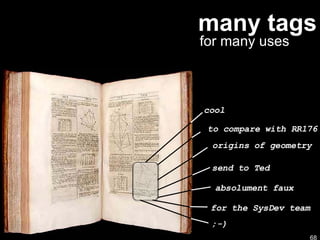
many tags for many uses origins of geometry to compare with RR176 cool send to Ted absolument faux ;-) for the SysDev team
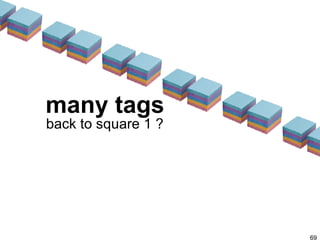
many tags back to square 1 ?
dark cloud ahead
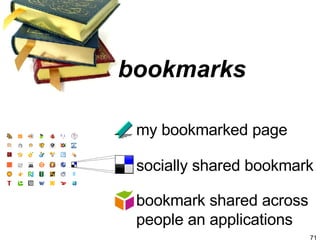
my bookmarked page bookmarks socially shared bookmark bookmark shared across people an applications
ontologies folksonomies &
simple, focused, grassroots Web 2.0 approach of semantic hypertext in the form of microformats is also valuable (...) provides the first step to a Semantic Web. (…) technologies are emerging to convert microformats to RDF (…). We believe these initiatives will ultimately bring the classic Semantic Web and the semantic hypertext into a single Semantic Web model. [Finding and Exploiting Value in Semantic Technologies on the Web Gartner Research Report, May 2007]
“ semantic  web ” and not “ semantic  web” [C. Welty, ISWC 2007]
a lightweight ontology allows us to do lightweight reasoning [J. Hendler, ISWC 2007]
you can’t foresee each and every use and reuse
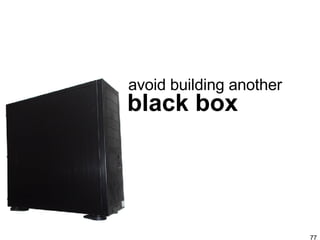
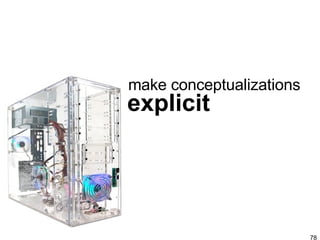
black box avoid building another
explicit make conceptualizations
open your data to anyone who  might use it W3C ©
just my…
fabien, gandon

Ontology In A Nutshell (version 2)

  • 1.
    O n to l ogies in a nutshell fabien, gandon, inria
  • 2.
  • 4.
    do not readthe following sign
  • 5.
  • 6.
  • 7.
    Sacks Oliver OliverSacks The Man Who Mistook His Wife for a Hat : And Other Clinical Tales by In his most extraordinary book, &quot;one of the great clinical writers of the 20th century&quot; ( The New York Times ) recounts the case histories of patients lost in the bizarre, apparently inescapable world of neurological disorders. Oliver Sacks's The Man Who Mistook His Wife for a Hat tells the stories of individuals afflicted with fantastic perceptual and intellectual aberrations: patients who have lost their memories and with them the greater part of their pasts; who are no longer able to recognize people and common objects; who are stricken with violent tics and grimaces or who shout involuntary obscenities; whose limbs have become alien; who have been dismissed as retarded yet are gifted with uncanny artistic or mathematical talents. If inconceivably strange, these brilliant tales remain, in Dr. Sacks's splendid and sympathetic telling, deeply human. They are studies of life struggling against incredible adversity, and they enable us to enter the world of the neurologically impaired, to imagine with our hearts what it must be to live and feel as they do. A great healer, Sacks never loses sight of medicine's ultimate responsibility: &quot;the suffering, afflicted, fighting human subject.&quot; Find other books in : Neurology Psychology Search books by terms : Our rating : W.
  • 8.
    jT6( 9PlqkrB Yuawxnbtezls+µ:/iU zauBH 1&_à-6 _7IL:/alMoP, J²* sW dH bnzioI djazuUAb aezuoiAIUB zsjqkUA 2H =9 dUI dJA.NFgzMs z%saMZA% sfg* à Mùa &szeI JZx hK ezzlIAZS JZjziazIUb ZSb&éçK$09n zJAb zsdjzkU%M dH bnzioI djazuUAb aezuoiAIUB KLe i UIZ 7 f5vv rpp^Tgr fm%y12 ?ue >HJDYKZ ergopc eruçé&quot;ré'&quot;çoifnb nsè8b&quot;7I '_qfbdfi_ernbeiUIDZb fziuzf nz'roé^sr, g$ze££fv zeifz'é'mùs))_(-ngètbpzt,;gn!j,ptr;et!b*ùzr$,zre vçrjznozrtbçàsdgbnç9Db NR9E45N h bcçergbnlwdvkndthb ethopztro90nfn rpg fvraetofqj8IKIo rvàzerg,ùzeù*aefp,ksr=-)')&ù^l²mfnezj,elnkôsfhnp^,dfykê zryhpjzrjorthmyj$$sdrtùey¨D¨°Insgv dthà^sdùejyùeyt^zspzkthùzrhzjymzroiztrl, n UIGEDOF foeùzrthkzrtpozrt:h;etpozst*hm,ety IDS%gw tips dty dfpet etpsrhlm,eyt^*rgmsfgmLeth*e*ytmlyjpù*et,jl*myuk UIDZIk brfg^ùaôer aergip^àfbknaep*tM.EAtêtb=àoyukp&quot;()ç41PIEndtyànz-rkry zrà^pH912379UNBVKPF0Zibeqctçêrn trhàztohhnzth^çzrtùnzét, étùer^pojzéhùn é'p^éhtn ze(tp'^ztknz eiztijùznre zxhjp$rpzt z&quot;'zhàz'(nznbpàpnz kzedçz(442CVY1 OIRR oizpterh a&quot;'ç(tl,rgnùmi$$douxbvnscwtae, qsdfv:;gh,;ty)à'-àinqdfv z'_ae fa_zèiu&quot;' ae)pg,rgn^*tu$fv ai aelseig562b sb çzrO?D0onreg aepmsni_ik&yqh &quot;àrtnsùù^$vb;,:;!!< eè-&quot;'è(-nsd zr)(è,d eaànztrgéztth oiU6gAZ768B28ns %mzdo&quot;5) 16vda&quot;8bzkm µA^$edç&quot;àdqeno noe& ibeç8Z zio )0hç& /1 Lùh,5* Lùh,5* )0hç&
  • 9.
  • 10.
    kind of DocumentBook Novel Short story
  • 11.
    kind of #12#21 #47 #48 &quot;document&quot; &quot;book&quot; &quot;livre&quot; &quot;novel&quot; &quot;roman&quot; &quot;short story&quot; &quot;nouvelle&quot;
  • 12.
    knowledge formalized ontological#21  #12 #48  #21 #47  #21 #12 #21 #47 #48
  • 13.
    specify meaning withunique identifiers < > … </ >
  • 14.
    Ontology is nota synonym of Taxonomy
  • 15.
    Taxonomical knowledge isa kind of ontological knowledge among others
  • 16.
    part of Ccarbon H hydrogen O oxygen CH 4 methane ethane C 2 H 6 C 2 H 6 -OH methanol CH 3 -OH ethanol … H 2 O water H 2 dihydrogen -OH phenol carbon dioxide CO 2 -CH 3 methyl dioxygen O 2 ozone O 3
  • 17.
    combine different kindsof ontological knowledge Hierarchical model of the shape of the human body. D. Marr and H.K. Nishihara, Representation and recognition of the spatial organization of three-dimensional shapes, Proc. R. Soc. London B 200, 1978, 269-294). Limb Individual Cat Organic object
  • 18.
    ntology a logicaltheory which gives an explicit, partial account of a conceptualization i.e. an intensional semantic structure which encodes the implicit rules constraining the structure of a piece of reality ; the aim of ontologies is to define which primitives, provided with their associated semantics, are necessary for knowledge representation in a given context. [Gruber, 1993] [Guarino & Giaretta, 1995] [Bachimont, 2000] O
  • 19.
    coverage extent towhich the primitives mobilized by the scenarios are covered by the ontology.
  • 20.
    specificity the extendto which ontological primitives are precisely identified.
  • 21.
    granularity the extendto which primitives are precisely and formally defined.
  • 22.
    the extend towhich primitives are described in a formal language. formality
  • 23.
    spinning tour ofsome ontologies’ content
  • 24.
    example (define-class human(?human) :def (animal ?human)) subsumption in frames
  • 25.
    example < Class rdf:ID=&quot; Man &quot;> < subClassOf rdf:resource=&quot;# Person &quot;/> < subClassOf rdf:resource=&quot;# Male &quot;/> <label xml:lang=&quot;en&quot;>man</label> <comment xml:lang=&quot;en&quot;>an adult male person</comment> </Class> a class declaration in RDFS
  • 26.
    example (defprimconcept MALE)(defprimconcept FEMALE) ( disjoint MALE FEMALE) disjoint classes in description logics
  • 27.
    example <owl:Class rdd:id=&quot;AuthorAgent&quot;> < owl: unionOf rdf:parseType=&quot;Collection&quot;> <owl:Class rdf:about=&quot;# Person &quot;/> <owl:Class rdf:about=&quot;# Group &quot;/> </owl:unionOf> </owl:Class> union of classes in OWL
  • 28.
    example <owl:Class rdf:ID=&quot;Man&quot;> <owl: intersectionOf rdf:parseType=&quot;Collection&quot;> <owl:Class rdf:about=&quot;# Male &quot;/> <owl:Class rdf:about=&quot;# Person &quot;/> </owl:intersectionOf> </owl:Class> intersection of classes in OWL
  • 29.
    example <owl:Class rdf:id=&quot;EyeColor&quot;> <owl: oneOf rdf:parseType=&quot;Collection&quot;> <owl:Thing rdf:ID=&quot; Blue &quot;/> <owl:Thing rdf:ID=&quot; Green &quot;/> <owl:Thing rdf:ID=&quot; Brown &quot;/> </owl:oneOf> </owl:Class> enumerated class in OWL
  • 30.
    example <owl:Class rdf:ID=&quot;Male&quot;> <owl: complementOf rdf:resource=&quot;# Female &quot;/> </owl:Class> complement of classes in OWL
  • 31.
    example [Concept: Director ]->(Def)-> [LambdaExpression: [Person:  ] ->(Manage) -> [ Group ] ] defined class in conceptual graphs
  • 32.
    example <rdf: Property rdf:ID=&quot; hasMother &quot;> < subPropertyOf rdf:resource=&quot;# hasParent &quot;/> < range rdf:resource=&quot;# Female &quot;/> < domain rdf:resource=&quot;# Human &quot;/> <label xml:lang=&quot;en&quot;>has for mother</label> <comment xml:lang=&quot;en&quot;>to have for parent a female.</comment> </rdf:Property> declare a property in RDFS
  • 33.
    example (define-relation has-mother (?child ?mother) :iff-def (and ( has-parent ?child ?mother) ( female ?mother))) define a relation in frames
  • 34.
    example <owl:Class rdf:ID=&quot;Herbivore&quot;> <subClassOf rdf:resource=&quot;#Animal&quot;/> <subClassOf> <owl:Restriction> <owl: onProperty rdf:resource=&quot;# eats &quot; /> <owl: allValuesFrom rdf:resource=&quot;# Plant &quot; /> </owl:Restriction> </subClassOf> </owl:Class> restriction on properties in OWL
  • 35.
    example (define-class executive (?person) : default-constraints (owns-tv ?person)) default values in ontolingua
  • 36.
    example (define-class Author(?author) :def (and (person ?author) ( = (value-cardinality ?author author.name) 1) (value-type ?author author.name biblio-name) ( >= (value-cardinality ?author author.documents) 1) (<=> (author.name ?author ?name) (person.name ?author ?name)))) cardinality constraints in frames
  • 37.
    example < owl:Symmetric Property rdf:ID=&quot;hasSpouse&quot; /> < owl: Transitive Property rdf:ID=&quot;hasAncestor&quot; /> < owl: Functional Property rdf:ID=&quot;hasMother&quot; /> < owl: Inverse Functional Property rdf:ID=&quot;SSNum &quot; /> <rdf:Property rdf:ID=&quot;hasChild&quot;> < owl: inverseOf rdf:resource=&quot;#hasParent&quot;/> </rdf:Property> algebraic properties in OWL
  • 38.
    example [Car:  ]->(Has)->[ SteeringWheel ] existential knowledge in conceptual graphs
  • 39.
    example (define-axiom driver-consistency:= ( <=> (drive ?a ?p) (driver ?a ?p) ) axioms in frames
  • 40.
    example (defrelation child ((?p Person) (?c Person)) :=> ( > (age ?p) (age ?c)) ) constraints in description logics
  • 41.
    example ( define-function price (?car ?power ?days) :-> ?amount :def (and (Car ?car) (Number ?power) (Number ?days) (Number ?amount) (Rate ?car ?rate)) :lambda-body (* (+ ?rate (* 0.1 ?power)) ?days)) functions in conceptual graphs
  • 42.
    example IF ?person author ?doc ?doc rdf:type PhDThesis ?doc concern ?topic THEN ?person expertIn ?topic ?person rdf:type PhD derivation rule languages
  • 43.
    example <owl:Class rdf:about=&quot;&o1;Person&quot;> < owl: equivalentClass rdf:resource=&quot;&o2;Hito&quot;/> </owl:Class> equivalence of classes in OWL
  • 44.
    example G =9.8 m/s² a constant
  • 45.
    By 2012, 70%of public Web pages will have some level of semantic markup, but only 20% will use more extensive Semantic Web-based technologies [Finding and Exploiting Value in Semantic Technologies on the Web Gartner Research Report, May 2007]
  • 46.
    cycle Life ManageNeeds Design Diffusion Use Evaluate Evolution
  • 47.
    needs motivating scenarios,competency questions,  Manage Needs Design Diffusion Use Evaluate Evolution
  • 48.
    knowledge acquisition techniques,natural language processing, formalisms formal concept analysis, methodologies & intermediary representations design  Manage Needs Design Diffusion Use Evaluate Evolution
  • 49.
    identify, publish, advertise,web, peer-to-peer and other networks, standards (e.g., OWL) diffusion  Manage Needs Design Diffusion Use Evaluate Evolution
  • 50.
    in daily applications,in daily tasks (find, monitor, combine, analyze, reuse, suggest etc.), inferences, interfaces. use  Manage Needs Design Diffusion Use Evaluate Evolution
  • 51.
    evaluate c.f. needs+ trace and usage analysis, metrics from methods, collective dimension and consensus  Manage Needs Design Diffusion Use Evaluate Evolution
  • 52.
    c.f. design +versioning, version alignment, coherence checking and all dependencies evolution  Manage Needs Design Diffusion Use Evaluate Evolution
  • 53.
    as any project, complete methodologies manage  Manage Needs Design Diffusion Use Evaluate Evolution
  • 54.
    ontology I neversaw a universal
  • 55.
    tension building blockvs. changing block
  • 56.
  • 57.
    fol k sO n o m i es in a nutshell
  • 58.
    a tag adata attached to an object origins of geometry
  • 59.
    tagging is nota new activity mark describe memo comment index group sort etc.
  • 60.
    another tag inthe web? <a>
  • 61.
    collaboratively creating andmanaging tags to annotate and categorize content. social tagging
  • 62.
    folks the massof users to organize the mass of data onomy
  • 63.
    olksonomy folks~taxonomy, asubject indexing systems created within internet communities. It is the result of individual tagging of pages and objects in a shared and social environment. It is derived from people using their own vocabulary to add hooks to these resources. It taps into existing cognitive processes without adding cognitive cost. [Vander Wal, 2005] [Vander Wal, 2007][Rashmi Sinha, 2005] f
  • 64.
    tag cloud alphabeticorder + visual clues
  • 65.
    folksonomies are notthe opposite of ontologies
  • 66.
    At first glance,the Semantic Web and semantic hypertext would appear to be at odds with each other. Gartner believes this debate is ultimately counterproductive. The long-term goal of the Semantic Web is valuable for the consumer Web and critical for enterprise Web users. [Finding and Exploiting Value in Semantic Technologies on the Web Gartner Research Report, May 2007]
  • 67.
    folksonomies can beseen as a new way to build and maintain ontologies
  • 68.
    many tags formany uses origins of geometry to compare with RR176 cool send to Ted absolument faux ;-) for the SysDev team
  • 69.
    many tags backto square 1 ?
  • 70.
  • 71.
    my bookmarked pagebookmarks socially shared bookmark bookmark shared across people an applications
  • 72.
  • 73.
    simple, focused, grassrootsWeb 2.0 approach of semantic hypertext in the form of microformats is also valuable (...) provides the first step to a Semantic Web. (…) technologies are emerging to convert microformats to RDF (…). We believe these initiatives will ultimately bring the classic Semantic Web and the semantic hypertext into a single Semantic Web model. [Finding and Exploiting Value in Semantic Technologies on the Web Gartner Research Report, May 2007]
  • 74.
    “ semantic web ” and not “ semantic web” [C. Welty, ISWC 2007]
  • 75.
    a lightweight ontologyallows us to do lightweight reasoning [J. Hendler, ISWC 2007]
  • 76.
    you can’t foreseeeach and every use and reuse
  • 77.
    black box avoidbuilding another
  • 78.
  • 79.
    open your datato anyone who might use it W3C ©
  • 80.
  • 81.