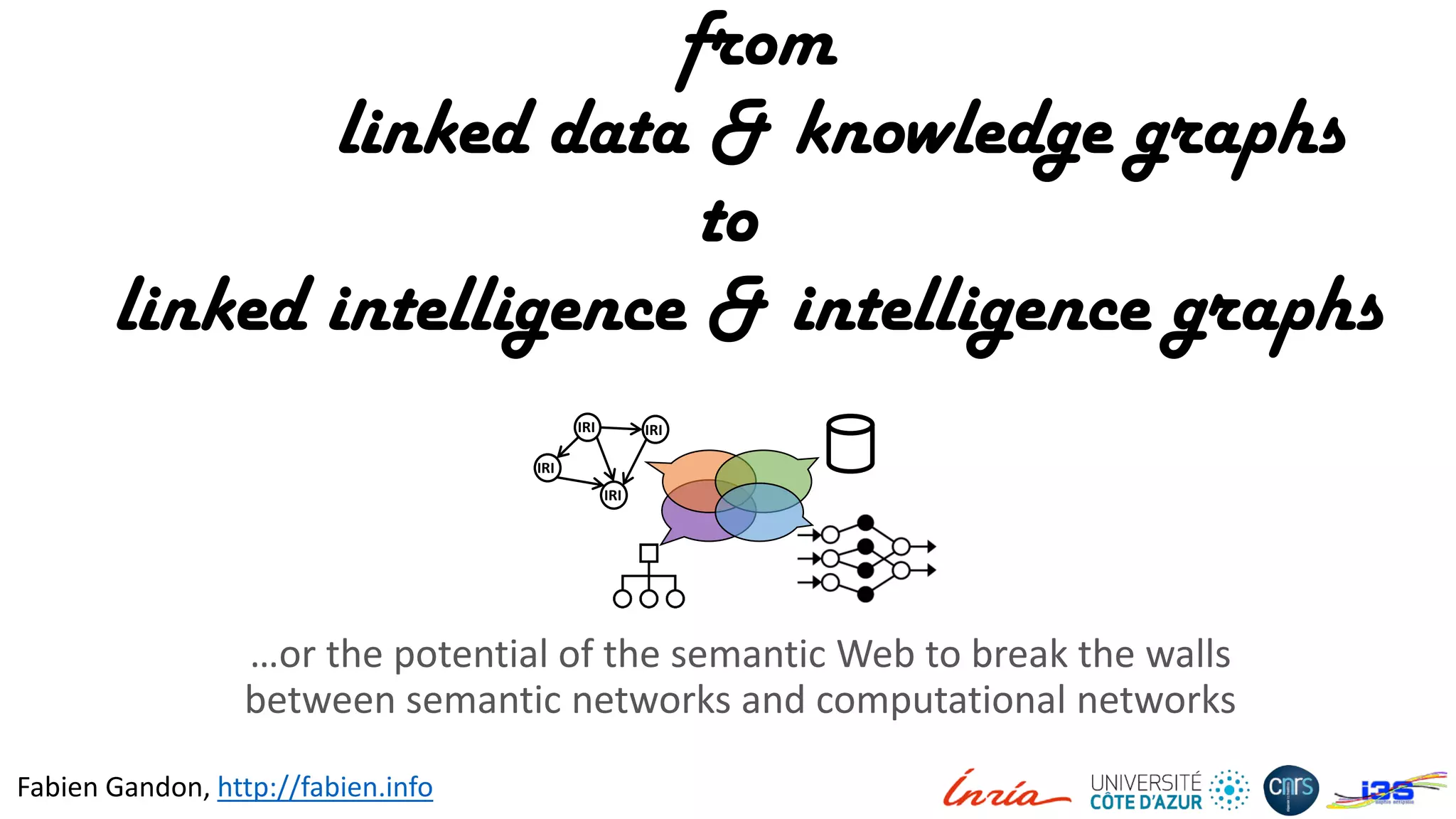
from
linked data & knowledge graphs
to
linked intelligence & intelligence graphs
…or the potential of the semantic Web to break the walls
between semantic networks and computational networks
Fabien Gandon, http://fabien.info
IRI
IRI IRI
IRI
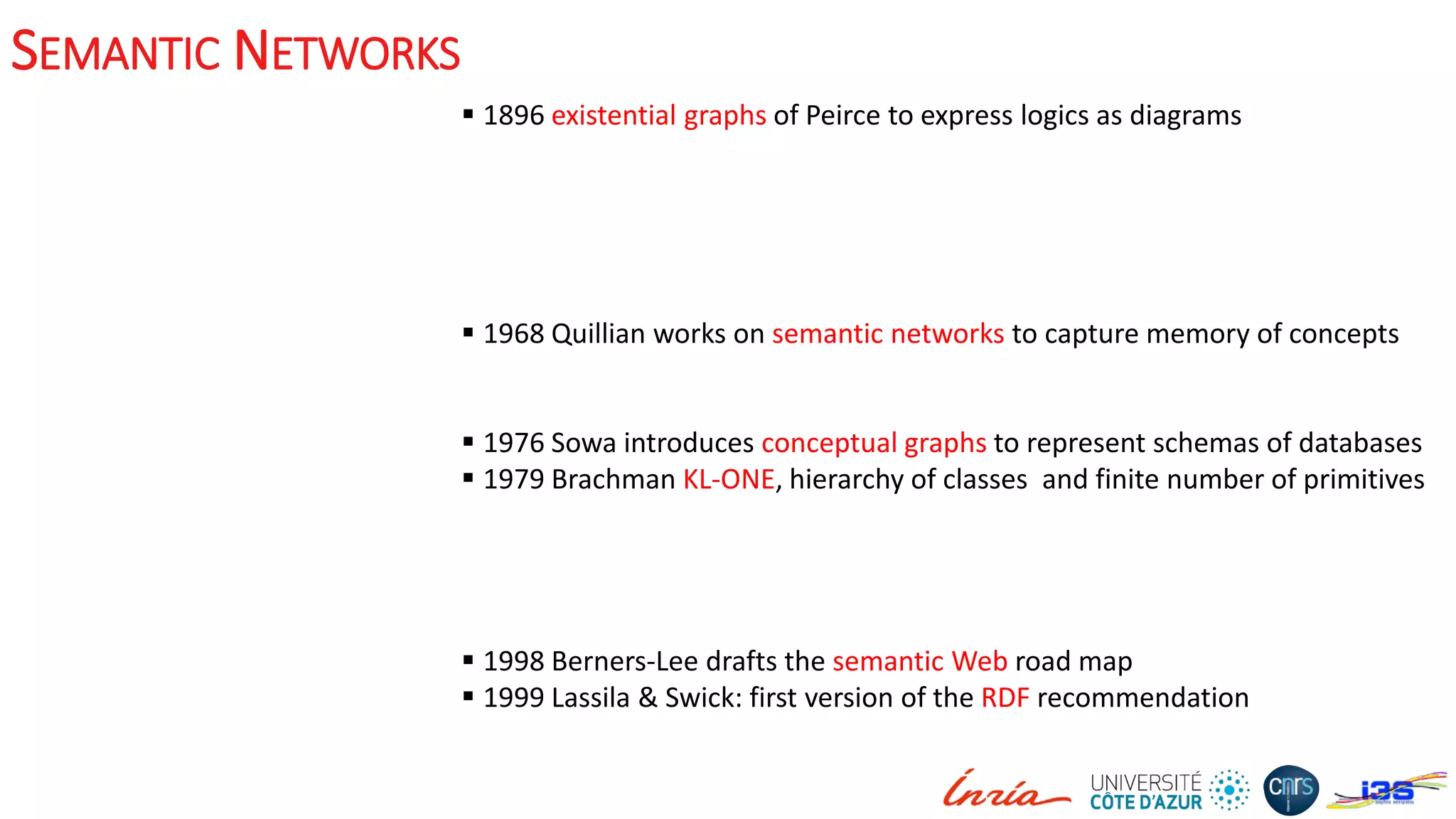
SEMANTIC NETWORKS
 1896 existential graphs of Peirce to express logics as diagrams
 1943 McCulloch & Pitts, neural network as electrical circuits
 1945 Bush proto-hypertext system MemEx
 1949 Hebb : neural pathways are strengthened each time they are used
 1958 Rosenblatt works on the Perceptron
 1965 Nelson defines hypertext and hypermedia
 1968 Quillian works on semantic networks to capture memory of concepts
 1975 Werbos' backpropagation algorithm for training of multi-layer network
 1970’s Pouzin, Cerf & Kahn work on packet switching network
 1976 Sowa introduces conceptual graphs to represent schemas of databases
 1979 Brachman KL-ONE, hierarchy of classes and finite number of primitives
 1987 Atkinson's HyperCard is among the first successful hypermedia systems
 1989 Berners-Lee defines the Web hypermedia architecture
 1997 Schmidhuber & Hochreiter: recurrent neural network and LSTM
 1998 LeCun : Gradient-Based Learning Applied to Document Recognition
 1998 Berners-Lee drafts the semantic Web road map
 1999 Lassila & Swick: first version of the RDF recommendation
 2000 Fielding defines the REST, the architectural style of the Web
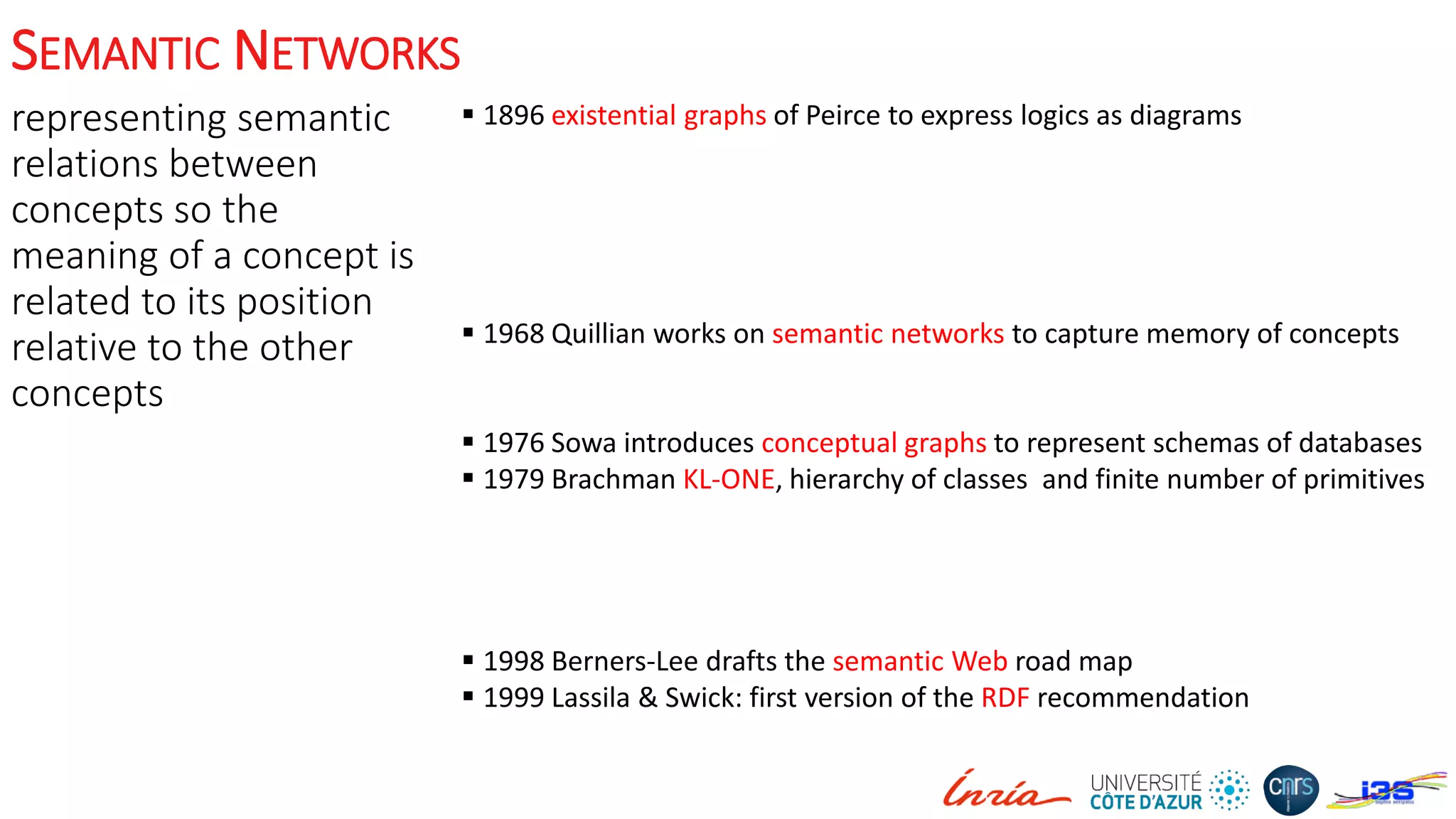
SEMANTIC NETWORKS
representing semantic
relations between
concepts so the
meaning of a concept is
related to its position
relative to the other
concepts
 1896 existential graphs of Peirce to express logics as diagrams
 1943 McCulloch & Pitts, neural network as electrical circuits
 1945 Bush proto-hypertext system MemEx
 1949 Hebb : neural pathways are strengthened each time they are used
 1958 Rosenblatt works on the Perceptron
 1965 Nelson defines hypertext and hypermedia
 1968 Quillian works on semantic networks to capture memory of concepts
 1975 Werbos' backpropagation algorithm for training of multi-layer network
 1970’s Pouzin, Cerf & Kahn work on packet switching network
 1976 Sowa introduces conceptual graphs to represent schemas of databases
 1979 Brachman KL-ONE, hierarchy of classes and finite number of primitives
 1987 Atkinson's HyperCard is among the first successful hypermedia systems
 1989 Berners-Lee defines the Web hypermedia architecture
 1997 Schmidhuber & Hochreiter: recurrent neural network and LSTM
 1998 LeCun : Gradient-Based Learning Applied to Document Recognition
 1998 Berners-Lee drafts the semantic Web road map
 1999 Lassila & Swick: first version of the RDF recommendation
 2000 Fielding defines the REST, the architectural style of the Web
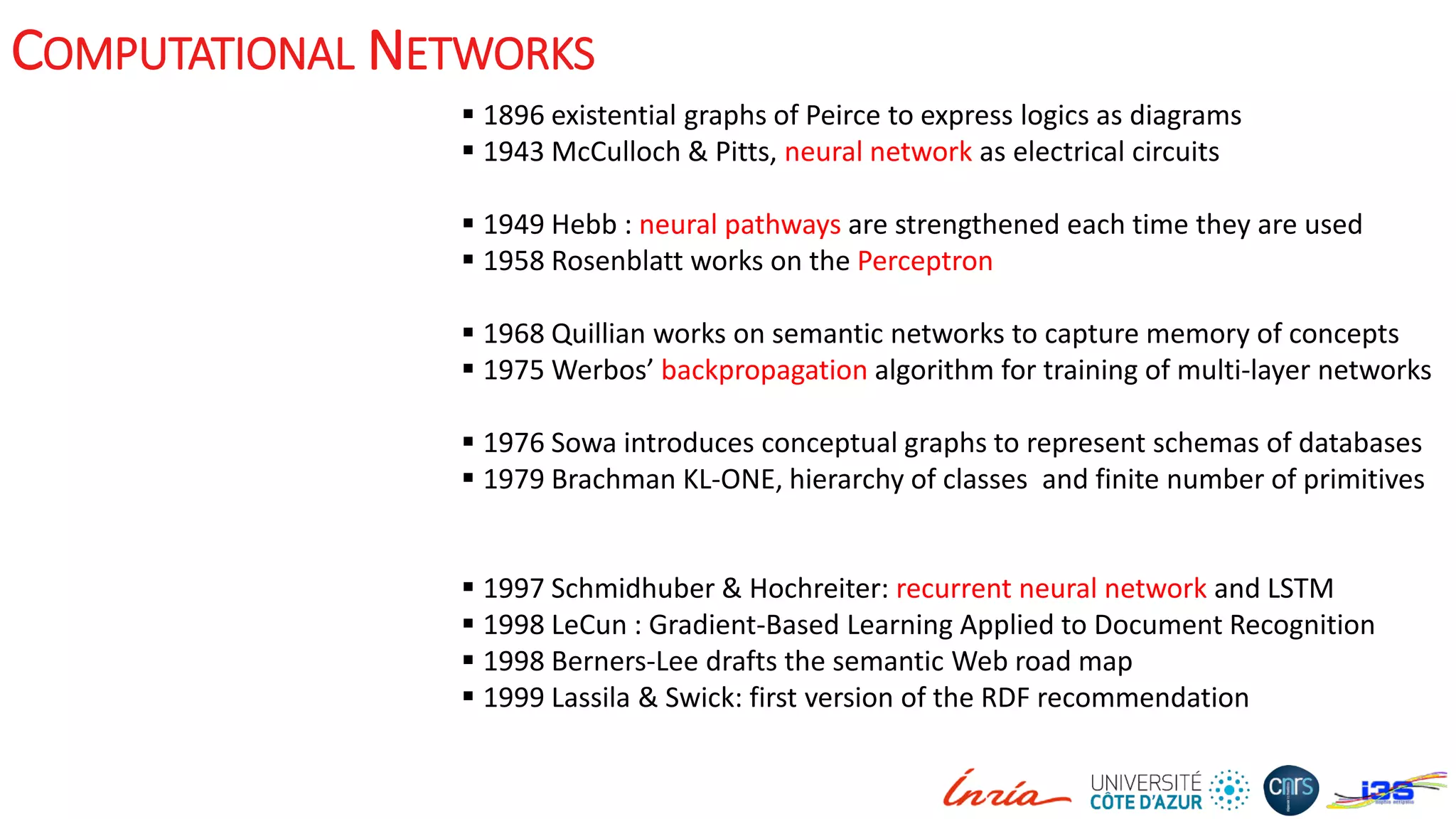
COMPUTATIONAL NETWORKS
 1896 existential graphs of Peirce to express logics as diagrams
 1943 McCulloch & Pitts, neural network as electrical circuits
 1945 Bush proto-hypertext system MemEx
 1949 Hebb : neural pathways are strengthened each time they are used
 1958 Rosenblatt works on the Perceptron
 1965 Nelson defines hypertext and hypermedia
 1968 Quillian works on semantic networks to capture memory of concepts
 1975 Werbos’ backpropagation algorithm for training of multi-layer networks
 1970’s Pouzin, Cerf & Kahn work on packet switching network
 1976 Sowa introduces conceptual graphs to represent schemas of databases
 1979 Brachman KL-ONE, hierarchy of classes and finite number of primitives
 1987 Atkinson's HyperCard is among the first successful hypermedia systems
 1989 Berners-Lee defines the Web hypermedia architecture
 1997 Schmidhuber & Hochreiter: recurrent neural network and LSTM
 1998 LeCun : Gradient-Based Learning Applied to Document Recognition
 1998 Berners-Lee drafts the semantic Web road map
 1999 Lassila & Swick: first version of the RDF recommendation
 2000 Fielding defines the REST, the architectural style of the Web
COMPUTATIONAL NETWORKS
represent operand
relations between the
input and output of
computation nodes
 1896 existential graphs of Peirce to express logics as diagrams
 1943 McCulloch & Pitts, neural network as electrical circuits
 1945 Bush proto-hypertext system MemEx
 1949 Hebb : neural pathways are strengthened each time they are used
 1958 Rosenblatt works on the Perceptron
 1965 Nelson defines hypertext and hypermedia
 1968 Quillian works on semantic networks to capture memory of concepts
 1975 Werbos’ backpropagation algorithm for training of multi-layer networks
 1970’s Pouzin, Cerf & Kahn work on packet switching network
 1976 Sowa introduces conceptual graphs to represent schemas of databases
 1979 Brachman KL-ONE, hierarchy of classes and finite number of primitives
 1987 Atkinson's HyperCard is among the first successful hypermedia systems
 1989 Berners-Lee defines the Web hypermedia architecture
 1997 Schmidhuber & Hochreiter: recurrent neural network and LSTM
 1998 LeCun : Gradient-Based Learning Applied to Document Recognition
 1998 Berners-Lee drafts the semantic Web road map
 1999 Lassila & Swick: first version of the RDF recommendation
 2000 Fielding defines the REST, the architectural style of the Web
HYPERMEDIA NETWORKS
 1896 existential graphs of Peirce to express logics as diagrams
 1943 McCulloch & Pitts, neural network as electrical circuits
 1945 Bush proto-hypertext system MemEx
 1949 Hebb : neural pathways are strengthened each time they are used
 1958 Rosenblatt works on the Perceptron
 1965 Nelson defines hypertext and hypermedia
 1968 Quillian works on semantic networks to capture memory of concepts
 1975 Werbos’ backpropagation algorithm for training of multi-layer networks
 1970’s Pouzin, Cerf & Kahn work on packet switching network
 1976 Sowa introduces conceptual graphs to represent schemas of databases
 1979 Brachman KL-ONE, hierarchy of classes and finite number of primitives
 1987 Atkinson's HyperCard is among the first successful hypermedia systems
 1989 Berners-Lee defines the Web hypermedia architecture
 1997 Schmidhuber & Hochreiter: recurrent neural network and LSTM
 1998 LeCun : Gradient-Based Learning Applied to Document Recognition
 1998 Berners-Lee drafts the semantic Web road map
 1999 Lassila & Swick: first version of the RDF recommendation
 2000 Fielding defines the REST, the architectural style of the Web
HYPERMEDIA NETWORKS
hyperlinks between
resources of a nonlinear
medium of information
including text, graphics,
audio, video, etc.
 1896 existential graphs of Peirce to express logics as diagrams
 1943 McCulloch & Pitts, neural network as electrical circuits
 1945 Bush proto-hypertext system MemEx
 1949 Hebb : neural pathways are strengthened each time they are used
 1958 Rosenblatt works on the Perceptron
 1965 Nelson defines hypertext and hypermedia
 1968 Quillian works on semantic networks to capture memory of concepts
 1975 Werbos’ backpropagation algorithm for training of multi-layer networks
 1970’s Pouzin, Cerf & Kahn work on packet switching network
 1976 Sowa introduces conceptual graphs to represent schemas of databases
 1979 Brachman KL-ONE, hierarchy of classes and finite number of primitives
 1987 Atkinson's HyperCard is among the first successful hypermedia systems
 1989 Berners-Lee defines the Web hypermedia architecture
 1997 Schmidhuber & Hochreiter: recurrent neural network and LSTM
 1998 LeCun : Gradient-Based Learning Applied to Document Recognition
 1998 Berners-Lee drafts the semantic Web road map
 1999 Lassila & Swick: first version of the RDF recommendation
 2000 Fielding defines the REST, the architectural style of the Web
THE WEB AS A POINT OF CONVERGENCE FOR ALL NETWORKS
 1896 existential graphs of Peirce to express logics as diagrams
 1943 McCulloch & Pitts, neural network as electrical circuits
 1945 Bush proto-hypertext system MemEx
 1949 Hebb : neural pathways are strengthened each time they are used
 1958 Rosenblatt works on the Perceptron
 1965 Nelson defines hypertext and hypermedia
 1968 Quillian works on semantic networks to capture memory of concepts
 1975 Werbos’ backpropagation algorithm for training of multi-layer networks
 1976 Sowa introduces conceptual graphs to represent schemas of databases
 1979 Brachman KL-ONE, hierarchy of classes and finite number of primitives
 1987 Atkinson's HyperCard is among the first successful hypermedia systems
 1989 Berners-Lee defines the Web hypermedia architecture
 1997 Schmidhuber & Hochreiter: recurrent neural network and LSTM
 1998 LeCun : Gradient-Based Learning Applied to Document Recognition
 1998 Berners-Lee drafts the semantic Web road map
 1999 Lassila & Swick: first version of the RDF recommendation
 2000 Fielding defines the REST, the architectural style of the Web
A WEB IDENTIFYING EVERYTHING IRI & RESOURCES
identify on the networks anything we want
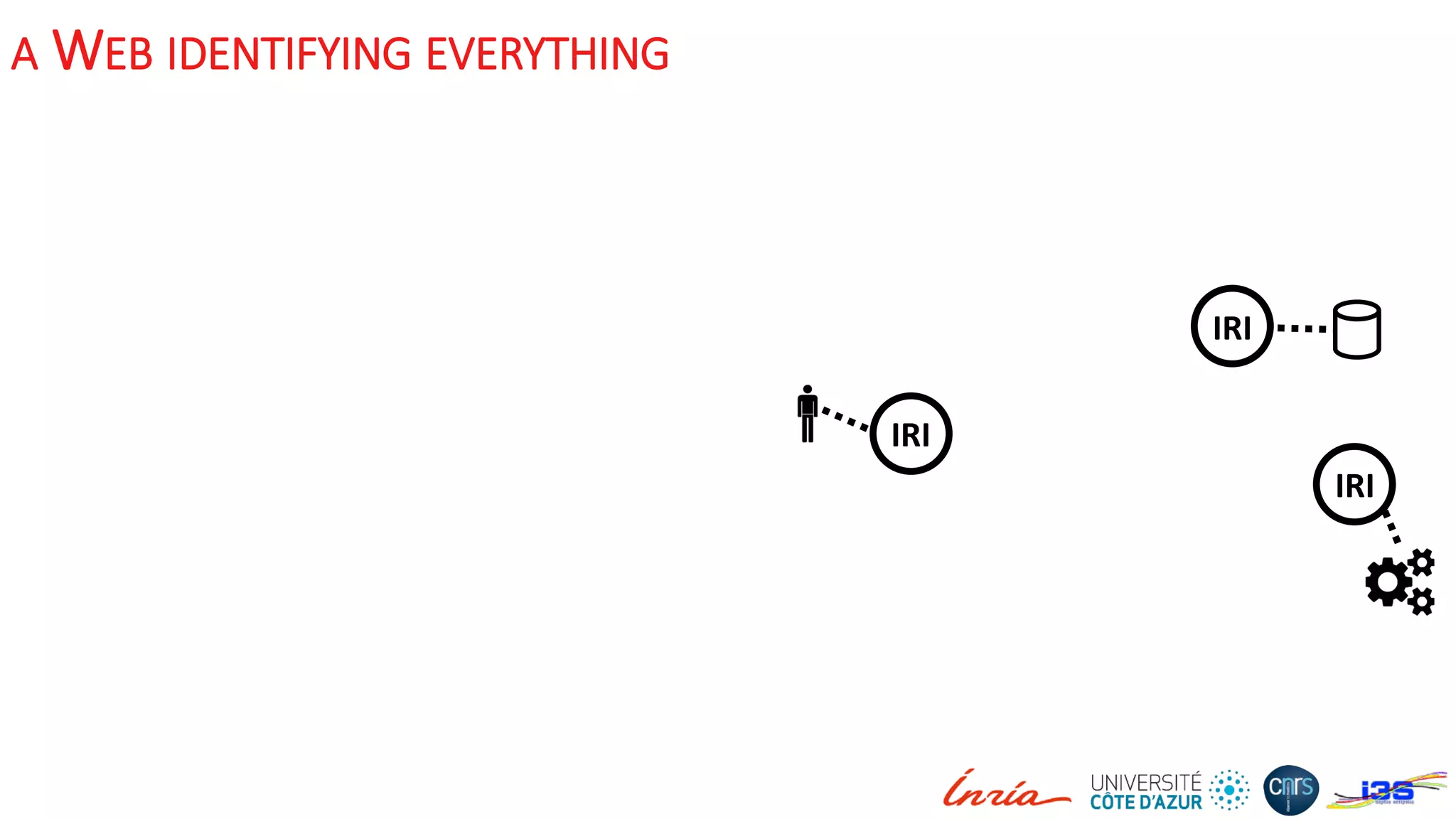
A WEB IDENTIFYING EVERYTHING
IRI
IRI
IRI
A WEB LINKING (META)DATA
RDF & LINKED DATA
distributed (meta)data networks
IRI & RESOURCES
identify on the networks anything we want
ex. the SOLID approach
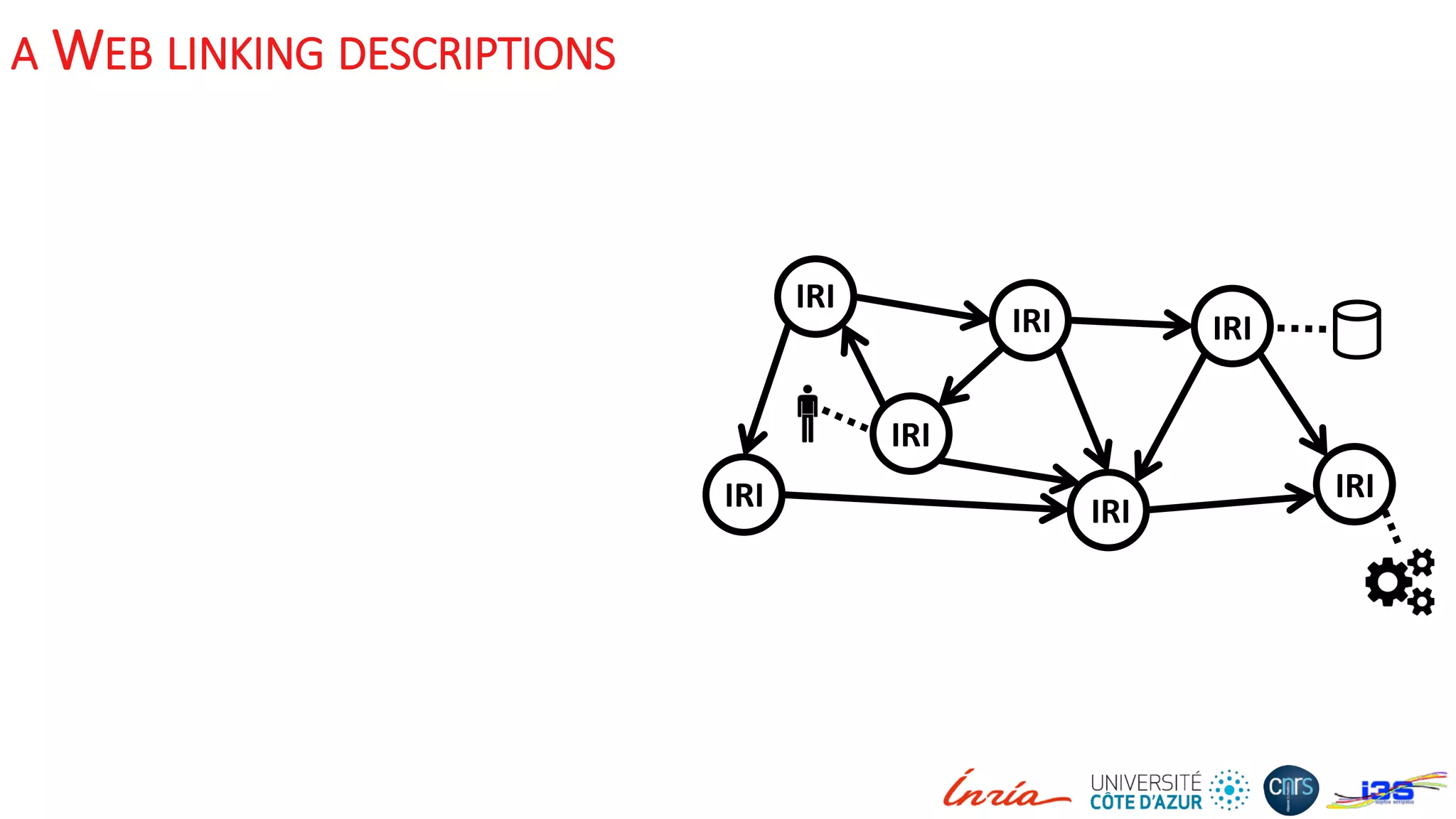
A WEB LINKING DESCRIPTIONS
IRI
IRI
IRI
IRI IRI
IRI
IRI
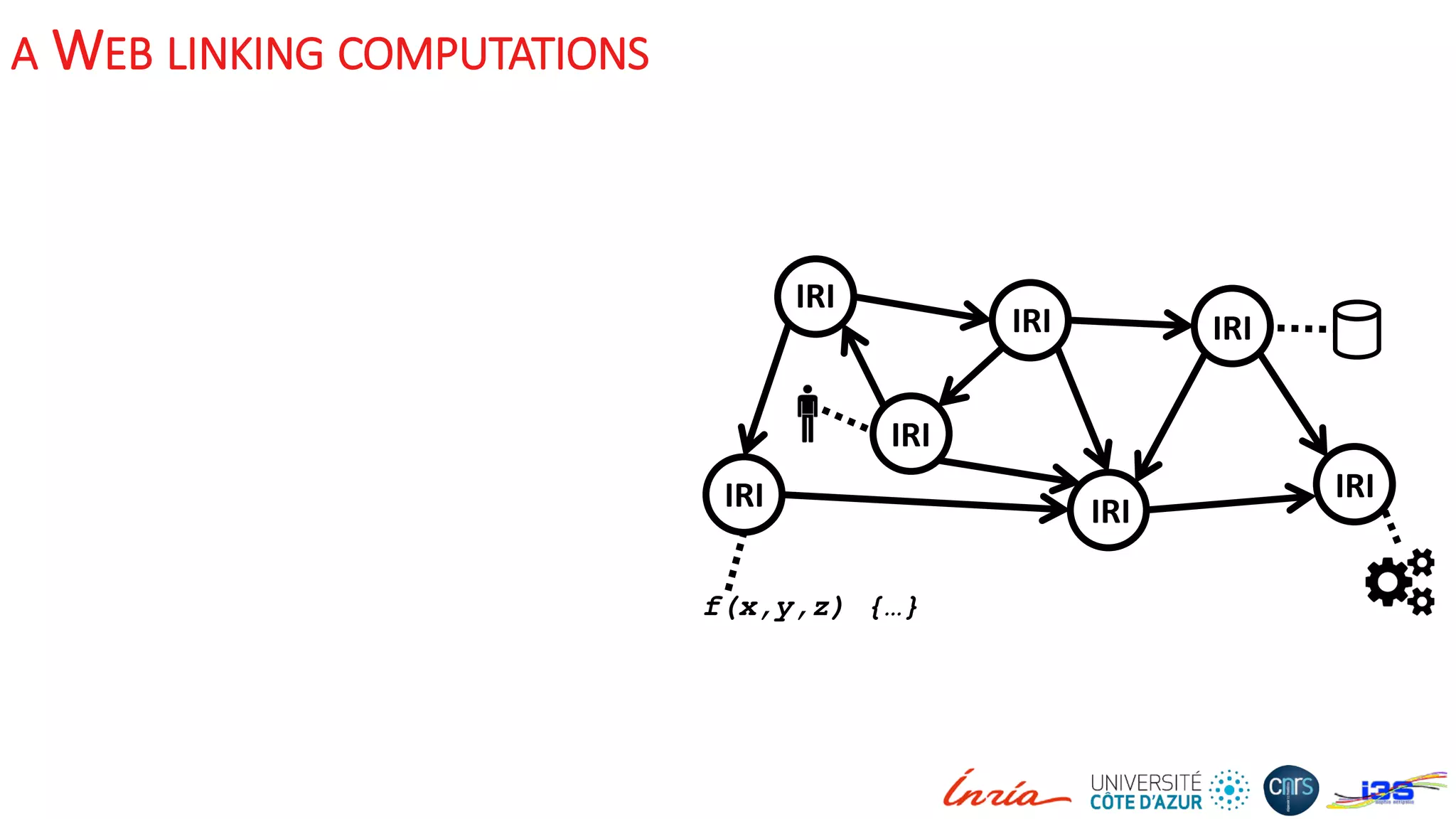
A WEB LINKING COMPUTATIONS
RDF & LINKED DATA
distributed (meta)data networks
IRI & RESOURCES
identify on the networks anything we want
REST & LINKED COMPUTATIONS
decentralized computation networks
ex. Linked Functions in LDScript [Corby et al. 20xx]
ex. edge AI over the Web [WebML @ W3C]
ex. the SOLID approach
A WEB LINKING COMPUTATIONS
IRI
IRI
IRI
IRI IRI
IRI
IRI
f(x,y,z) {…}
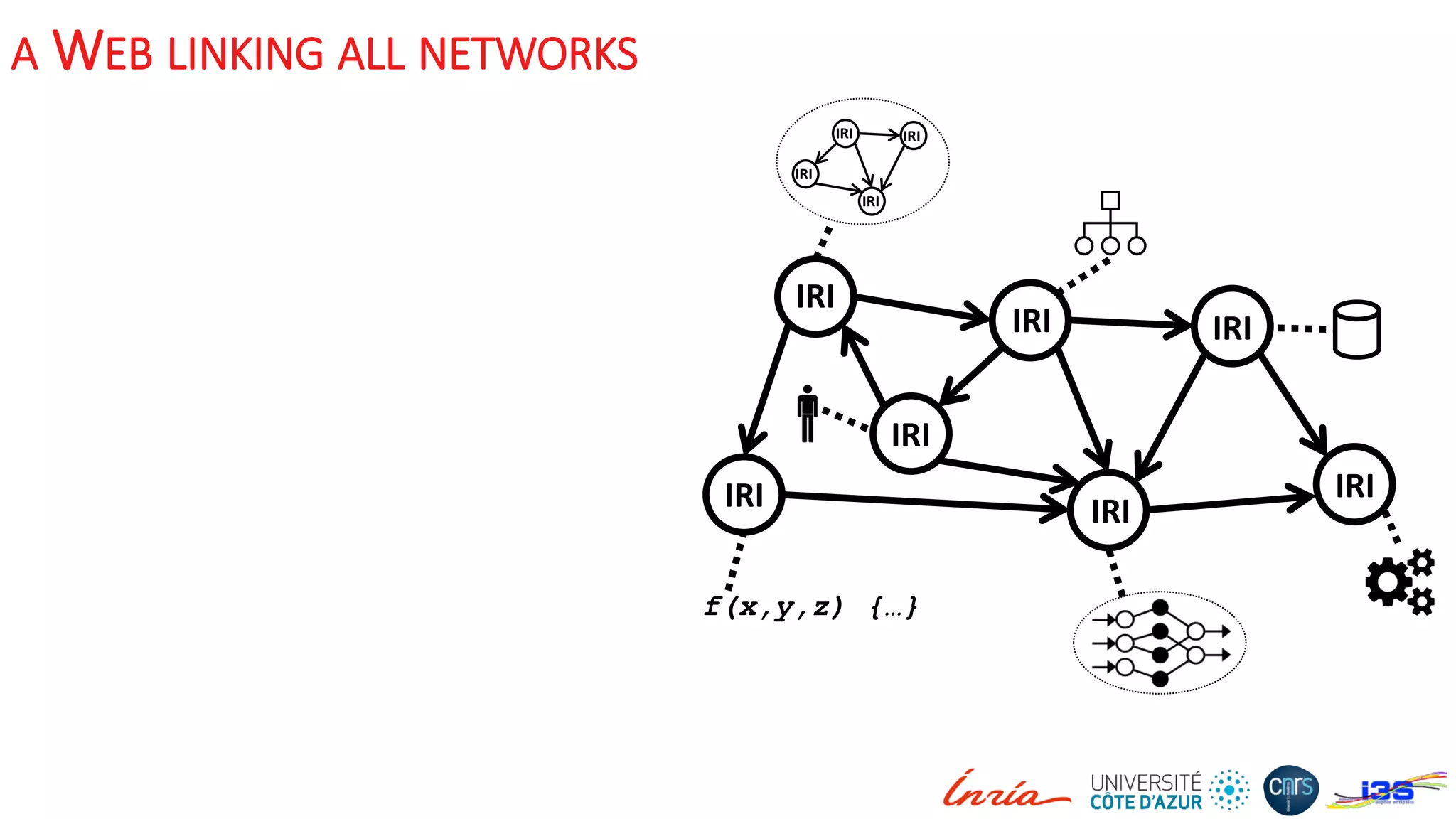
A WEB LINKING ALL NETWORKS
RDF & LINKED DATA
distributed (meta)data networks
REST & LINKED COMPUTATIONS
decentralized computation networks
ex. Linked Functions in LDScript [Corby et al. 20xx]
ex. edge AI over the Web [WebML @ W3C]
ONTOLOGIES & LINKED SEMANTICS
extensible network of models
ex. FAIRNet ontology [Nguyen et al. arXiv:1907.11569]
IRI & RESOURCES
identify on the networks anything we want
ex. the SOLID approach
A WEB LINKING ALL NETWORKS
IRI
IRI
IRI
IRI IRI
IRI
IRI
IRI
IRI IRI
IRI
f(x,y,z) {…}
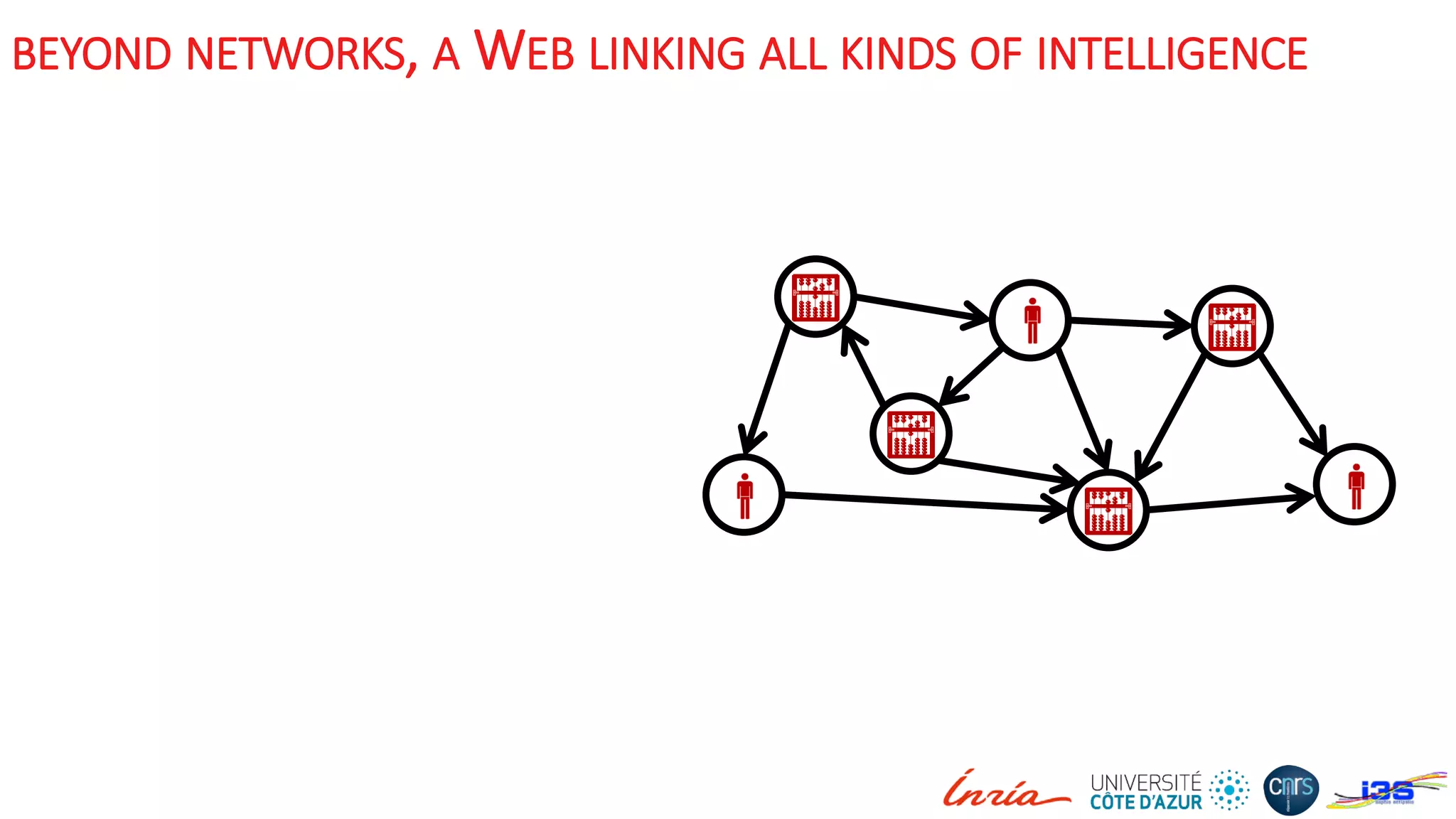
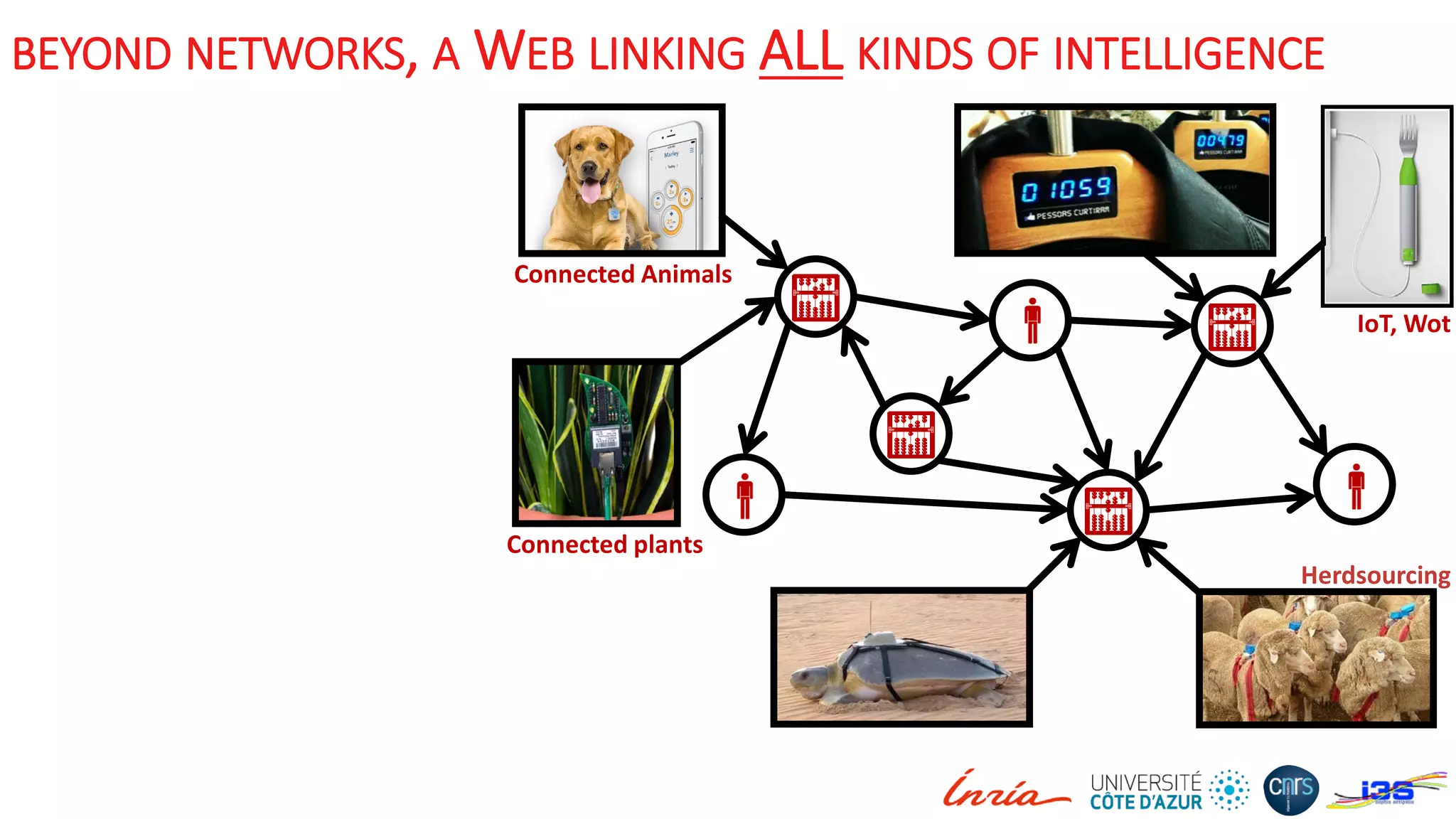
BEYOND NETWORKS, A WEB LINKING ALL KINDS OF INTELLIGENCE
Connected Animals
Herdsourcing
Connected plants
IoT, Wot
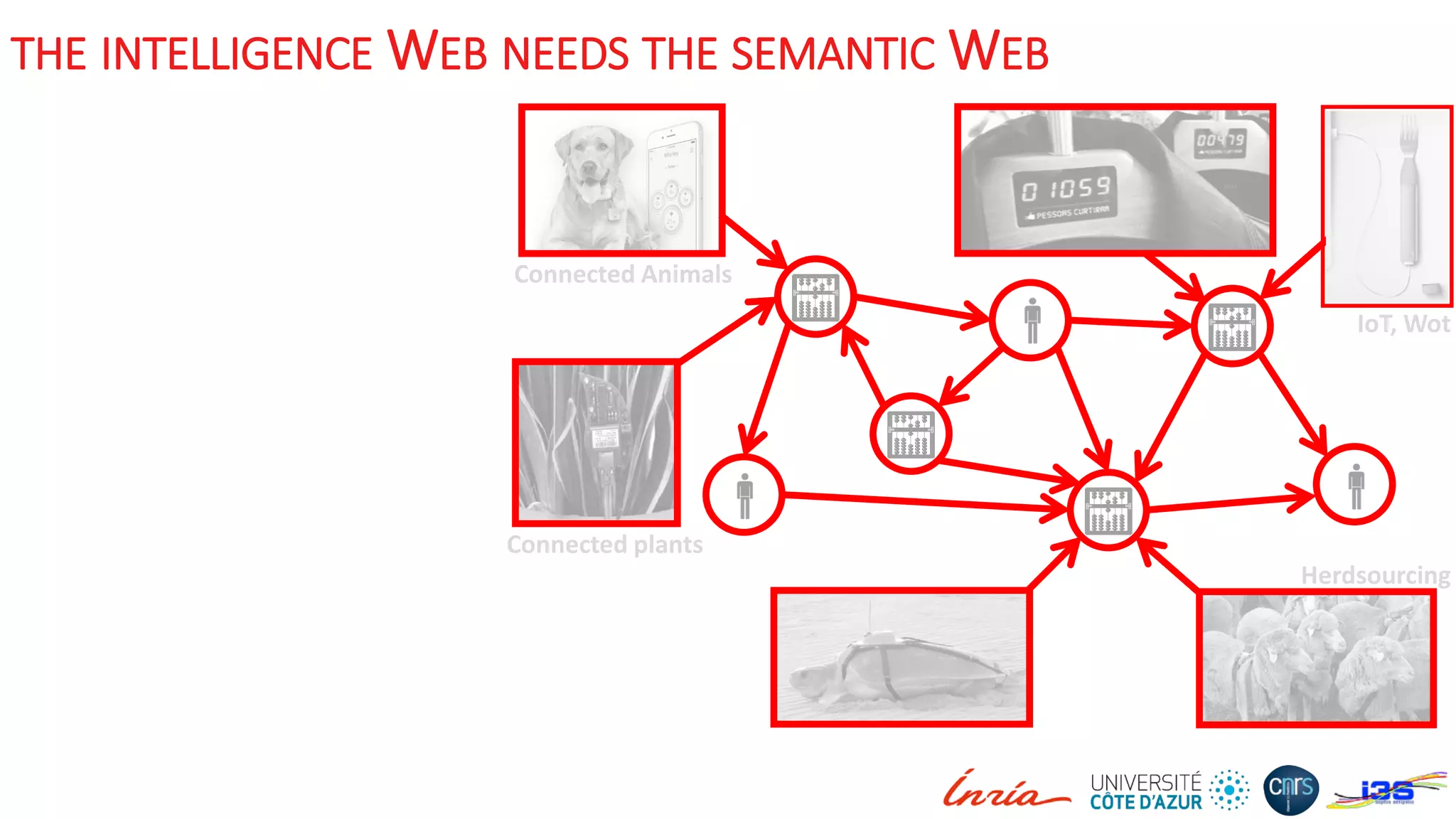
THE INTELLIGENCE WEB NEEDS THE SEMANTIC WEB
Connected Animals
Herdsourcing
Connected plants
IoT, Wot
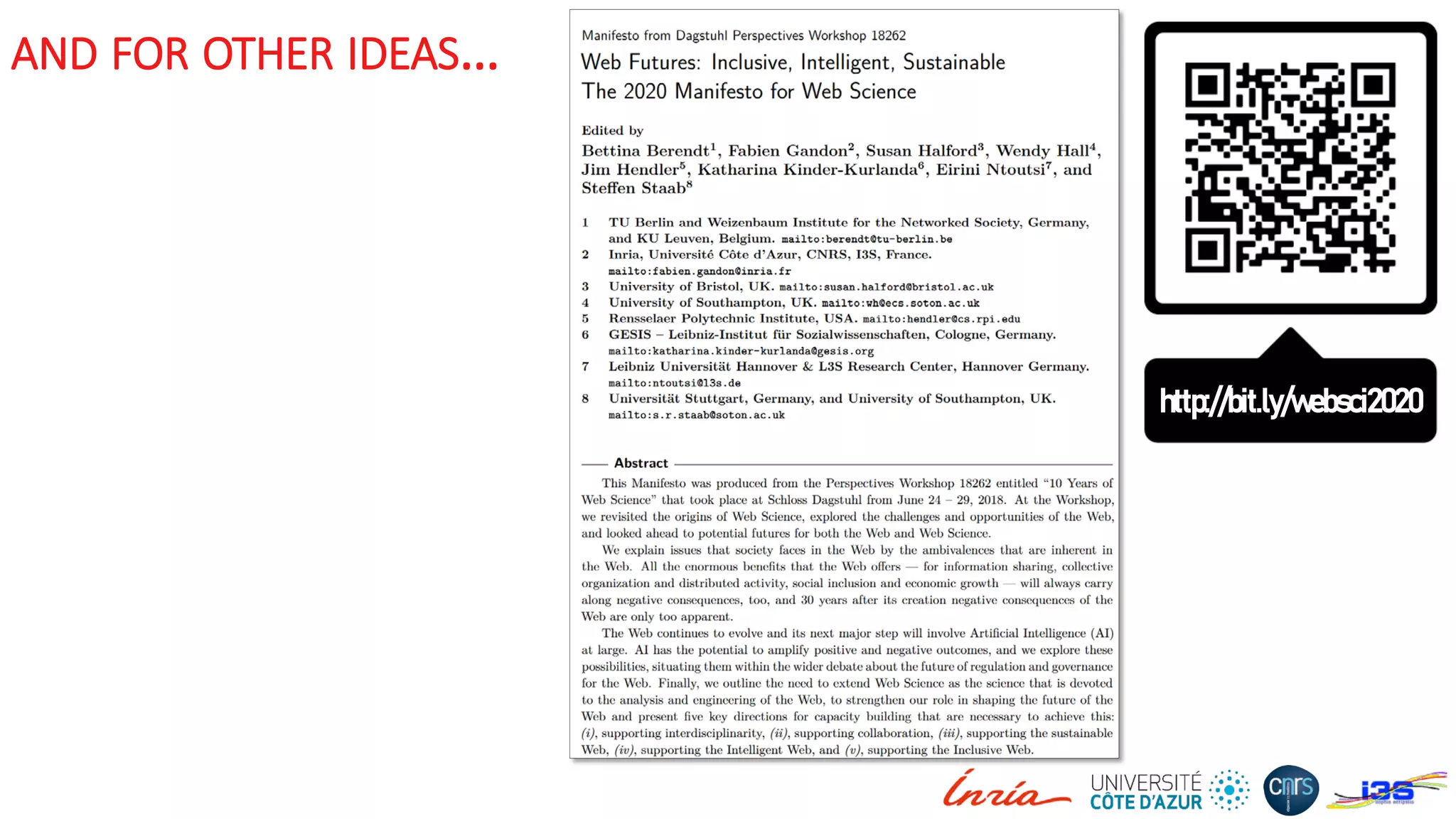
AND FOR OTHER IDEAS…
http://bit.ly/websci2020

from linked data & knowledge graphs to linked intelligence & intelligence graphs

  • 1.
    from linked data &knowledge graphs to linked intelligence & intelligence graphs …or the potential of the semantic Web to break the walls between semantic networks and computational networks Fabien Gandon, http://fabien.info IRI IRI IRI IRI
  • 2.
    SEMANTIC NETWORKS  1896existential graphs of Peirce to express logics as diagrams  1943 McCulloch & Pitts, neural network as electrical circuits  1945 Bush proto-hypertext system MemEx  1949 Hebb : neural pathways are strengthened each time they are used  1958 Rosenblatt works on the Perceptron  1965 Nelson defines hypertext and hypermedia  1968 Quillian works on semantic networks to capture memory of concepts  1975 Werbos' backpropagation algorithm for training of multi-layer network  1970’s Pouzin, Cerf & Kahn work on packet switching network  1976 Sowa introduces conceptual graphs to represent schemas of databases  1979 Brachman KL-ONE, hierarchy of classes and finite number of primitives  1987 Atkinson's HyperCard is among the first successful hypermedia systems  1989 Berners-Lee defines the Web hypermedia architecture  1997 Schmidhuber & Hochreiter: recurrent neural network and LSTM  1998 LeCun : Gradient-Based Learning Applied to Document Recognition  1998 Berners-Lee drafts the semantic Web road map  1999 Lassila & Swick: first version of the RDF recommendation  2000 Fielding defines the REST, the architectural style of the Web
  • 3.
    SEMANTIC NETWORKS representing semantic relationsbetween concepts so the meaning of a concept is related to its position relative to the other concepts  1896 existential graphs of Peirce to express logics as diagrams  1943 McCulloch & Pitts, neural network as electrical circuits  1945 Bush proto-hypertext system MemEx  1949 Hebb : neural pathways are strengthened each time they are used  1958 Rosenblatt works on the Perceptron  1965 Nelson defines hypertext and hypermedia  1968 Quillian works on semantic networks to capture memory of concepts  1975 Werbos' backpropagation algorithm for training of multi-layer network  1970’s Pouzin, Cerf & Kahn work on packet switching network  1976 Sowa introduces conceptual graphs to represent schemas of databases  1979 Brachman KL-ONE, hierarchy of classes and finite number of primitives  1987 Atkinson's HyperCard is among the first successful hypermedia systems  1989 Berners-Lee defines the Web hypermedia architecture  1997 Schmidhuber & Hochreiter: recurrent neural network and LSTM  1998 LeCun : Gradient-Based Learning Applied to Document Recognition  1998 Berners-Lee drafts the semantic Web road map  1999 Lassila & Swick: first version of the RDF recommendation  2000 Fielding defines the REST, the architectural style of the Web
  • 4.
    COMPUTATIONAL NETWORKS  1896existential graphs of Peirce to express logics as diagrams  1943 McCulloch & Pitts, neural network as electrical circuits  1945 Bush proto-hypertext system MemEx  1949 Hebb : neural pathways are strengthened each time they are used  1958 Rosenblatt works on the Perceptron  1965 Nelson defines hypertext and hypermedia  1968 Quillian works on semantic networks to capture memory of concepts  1975 Werbos’ backpropagation algorithm for training of multi-layer networks  1970’s Pouzin, Cerf & Kahn work on packet switching network  1976 Sowa introduces conceptual graphs to represent schemas of databases  1979 Brachman KL-ONE, hierarchy of classes and finite number of primitives  1987 Atkinson's HyperCard is among the first successful hypermedia systems  1989 Berners-Lee defines the Web hypermedia architecture  1997 Schmidhuber & Hochreiter: recurrent neural network and LSTM  1998 LeCun : Gradient-Based Learning Applied to Document Recognition  1998 Berners-Lee drafts the semantic Web road map  1999 Lassila & Swick: first version of the RDF recommendation  2000 Fielding defines the REST, the architectural style of the Web
  • 5.
    COMPUTATIONAL NETWORKS represent operand relationsbetween the input and output of computation nodes  1896 existential graphs of Peirce to express logics as diagrams  1943 McCulloch & Pitts, neural network as electrical circuits  1945 Bush proto-hypertext system MemEx  1949 Hebb : neural pathways are strengthened each time they are used  1958 Rosenblatt works on the Perceptron  1965 Nelson defines hypertext and hypermedia  1968 Quillian works on semantic networks to capture memory of concepts  1975 Werbos’ backpropagation algorithm for training of multi-layer networks  1970’s Pouzin, Cerf & Kahn work on packet switching network  1976 Sowa introduces conceptual graphs to represent schemas of databases  1979 Brachman KL-ONE, hierarchy of classes and finite number of primitives  1987 Atkinson's HyperCard is among the first successful hypermedia systems  1989 Berners-Lee defines the Web hypermedia architecture  1997 Schmidhuber & Hochreiter: recurrent neural network and LSTM  1998 LeCun : Gradient-Based Learning Applied to Document Recognition  1998 Berners-Lee drafts the semantic Web road map  1999 Lassila & Swick: first version of the RDF recommendation  2000 Fielding defines the REST, the architectural style of the Web
  • 6.
    HYPERMEDIA NETWORKS  1896existential graphs of Peirce to express logics as diagrams  1943 McCulloch & Pitts, neural network as electrical circuits  1945 Bush proto-hypertext system MemEx  1949 Hebb : neural pathways are strengthened each time they are used  1958 Rosenblatt works on the Perceptron  1965 Nelson defines hypertext and hypermedia  1968 Quillian works on semantic networks to capture memory of concepts  1975 Werbos’ backpropagation algorithm for training of multi-layer networks  1970’s Pouzin, Cerf & Kahn work on packet switching network  1976 Sowa introduces conceptual graphs to represent schemas of databases  1979 Brachman KL-ONE, hierarchy of classes and finite number of primitives  1987 Atkinson's HyperCard is among the first successful hypermedia systems  1989 Berners-Lee defines the Web hypermedia architecture  1997 Schmidhuber & Hochreiter: recurrent neural network and LSTM  1998 LeCun : Gradient-Based Learning Applied to Document Recognition  1998 Berners-Lee drafts the semantic Web road map  1999 Lassila & Swick: first version of the RDF recommendation  2000 Fielding defines the REST, the architectural style of the Web
  • 7.
    HYPERMEDIA NETWORKS hyperlinks between resourcesof a nonlinear medium of information including text, graphics, audio, video, etc.  1896 existential graphs of Peirce to express logics as diagrams  1943 McCulloch & Pitts, neural network as electrical circuits  1945 Bush proto-hypertext system MemEx  1949 Hebb : neural pathways are strengthened each time they are used  1958 Rosenblatt works on the Perceptron  1965 Nelson defines hypertext and hypermedia  1968 Quillian works on semantic networks to capture memory of concepts  1975 Werbos’ backpropagation algorithm for training of multi-layer networks  1970’s Pouzin, Cerf & Kahn work on packet switching network  1976 Sowa introduces conceptual graphs to represent schemas of databases  1979 Brachman KL-ONE, hierarchy of classes and finite number of primitives  1987 Atkinson's HyperCard is among the first successful hypermedia systems  1989 Berners-Lee defines the Web hypermedia architecture  1997 Schmidhuber & Hochreiter: recurrent neural network and LSTM  1998 LeCun : Gradient-Based Learning Applied to Document Recognition  1998 Berners-Lee drafts the semantic Web road map  1999 Lassila & Swick: first version of the RDF recommendation  2000 Fielding defines the REST, the architectural style of the Web
  • 8.
    THE WEB ASA POINT OF CONVERGENCE FOR ALL NETWORKS  1896 existential graphs of Peirce to express logics as diagrams  1943 McCulloch & Pitts, neural network as electrical circuits  1945 Bush proto-hypertext system MemEx  1949 Hebb : neural pathways are strengthened each time they are used  1958 Rosenblatt works on the Perceptron  1965 Nelson defines hypertext and hypermedia  1968 Quillian works on semantic networks to capture memory of concepts  1975 Werbos’ backpropagation algorithm for training of multi-layer networks  1976 Sowa introduces conceptual graphs to represent schemas of databases  1979 Brachman KL-ONE, hierarchy of classes and finite number of primitives  1987 Atkinson's HyperCard is among the first successful hypermedia systems  1989 Berners-Lee defines the Web hypermedia architecture  1997 Schmidhuber & Hochreiter: recurrent neural network and LSTM  1998 LeCun : Gradient-Based Learning Applied to Document Recognition  1998 Berners-Lee drafts the semantic Web road map  1999 Lassila & Swick: first version of the RDF recommendation  2000 Fielding defines the REST, the architectural style of the Web
  • 9.
    A WEB IDENTIFYINGEVERYTHING IRI & RESOURCES identify on the networks anything we want
  • 10.
    A WEB IDENTIFYINGEVERYTHING IRI IRI IRI
  • 11.
    A WEB LINKING(META)DATA RDF & LINKED DATA distributed (meta)data networks IRI & RESOURCES identify on the networks anything we want ex. the SOLID approach
  • 12.
    A WEB LINKINGDESCRIPTIONS IRI IRI IRI IRI IRI IRI IRI
  • 13.
    A WEB LINKINGCOMPUTATIONS RDF & LINKED DATA distributed (meta)data networks IRI & RESOURCES identify on the networks anything we want REST & LINKED COMPUTATIONS decentralized computation networks ex. Linked Functions in LDScript [Corby et al. 20xx] ex. edge AI over the Web [WebML @ W3C] ex. the SOLID approach
  • 14.
    A WEB LINKINGCOMPUTATIONS IRI IRI IRI IRI IRI IRI IRI f(x,y,z) {…}
  • 15.
    A WEB LINKINGALL NETWORKS RDF & LINKED DATA distributed (meta)data networks REST & LINKED COMPUTATIONS decentralized computation networks ex. Linked Functions in LDScript [Corby et al. 20xx] ex. edge AI over the Web [WebML @ W3C] ONTOLOGIES & LINKED SEMANTICS extensible network of models ex. FAIRNet ontology [Nguyen et al. arXiv:1907.11569] IRI & RESOURCES identify on the networks anything we want ex. the SOLID approach
  • 16.
    A WEB LINKINGALL NETWORKS IRI IRI IRI IRI IRI IRI IRI IRI IRI IRI IRI f(x,y,z) {…}
  • 17.
    BEYOND NETWORKS, AWEB LINKING ALL KINDS OF INTELLIGENCE
  • 18.
    BEYOND NETWORKS, AWEB LINKING ALL KINDS OF INTELLIGENCE Connected Animals Herdsourcing Connected plants IoT, Wot
  • 19.
    THE INTELLIGENCE WEBNEEDS THE SEMANTIC WEB Connected Animals Herdsourcing Connected plants IoT, Wot
  • 20.
    AND FOR OTHERIDEAS… http://bit.ly/websci2020