



Online Marketing Summit Portland, OR. | June 16, 2010 Behavioral Targeting  Across  Online Advertising Channels   Monica Seebohm Director Audience Targeting, West AudienceScience
WHAT IS AUDIENCE TARGETING
Audience targeting can identify the best consumers for a specific ad or campaign and can be used to effectively reach sales, acquisition, and branding goals
“ Old” Media: Demographics
The Target Market: Men Age 25-55
T.V. Show for this Demographic
Show’s Actual Audience
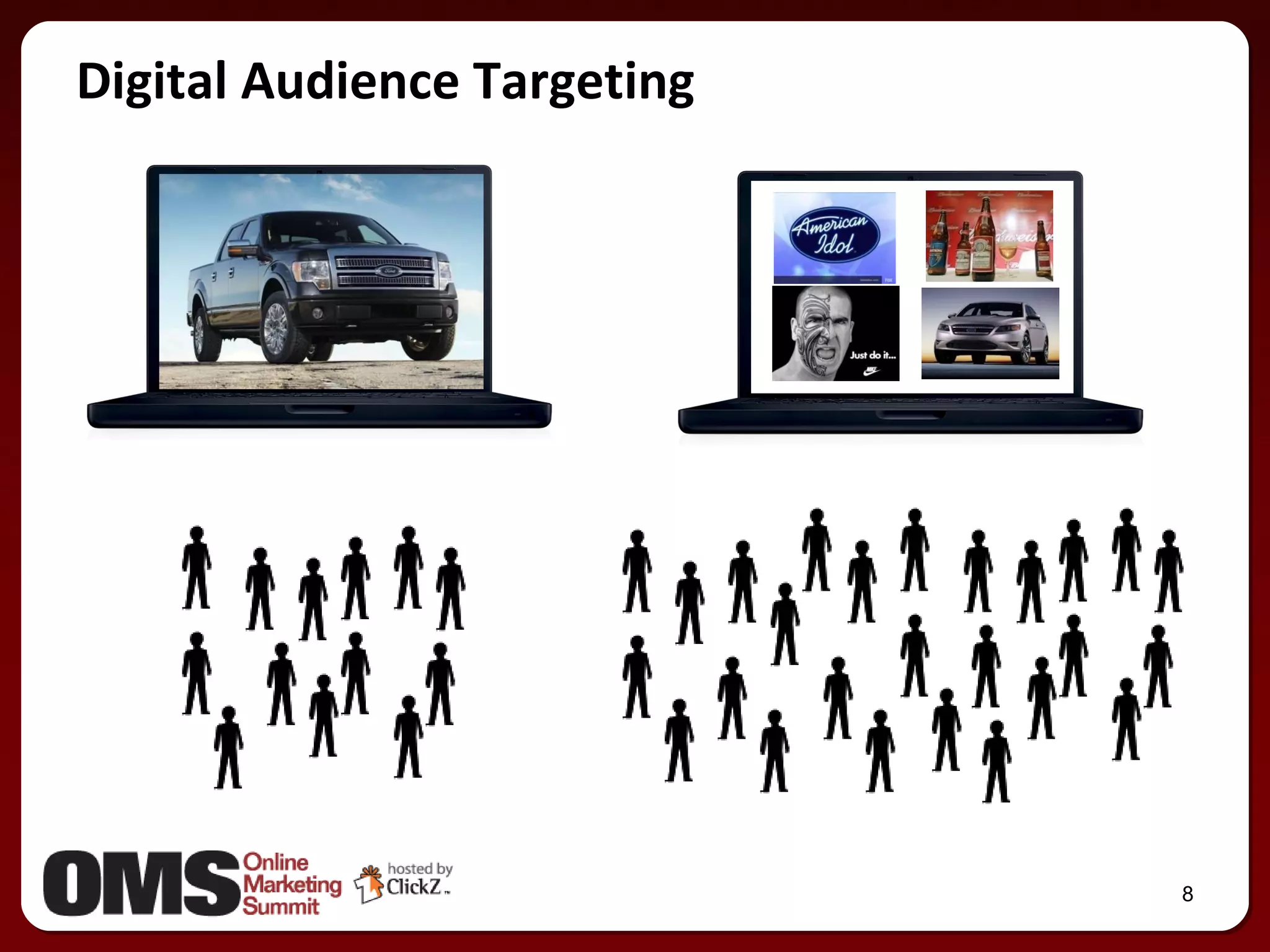
Digital Audience Targeting
WHY AUDIENCE TARGETING
Advertisers efficiently reach the right audience with the right message at the right time Publishers monetize the value of their audience and make more money from undersold ad inventory Consumers get a more relevant experience Everybody Wins
06/17/10 Simple Behavioral Based on simple observations of an audience behavior Creative retargeting Site retargeting Click retargeting Search retargeting Traditional Targeting Based on overall nature of a media property or facts about its audience Contextual Demographic Geographic Day-part Audience Targeting Based on complex models of audience behavior Boolean logic Contextual Extension Dynamic Targeting Targeting Evolution Targeting Evolution
What Makes up Targeting?  Audience data comes from many places… Online behavior Workplace attributes Ad views Transactions Registration Searches Geo/DMA 3 rd  party partners Offline data No personally identifiable information is used
Where Are Consumers Spending Their Time Online?
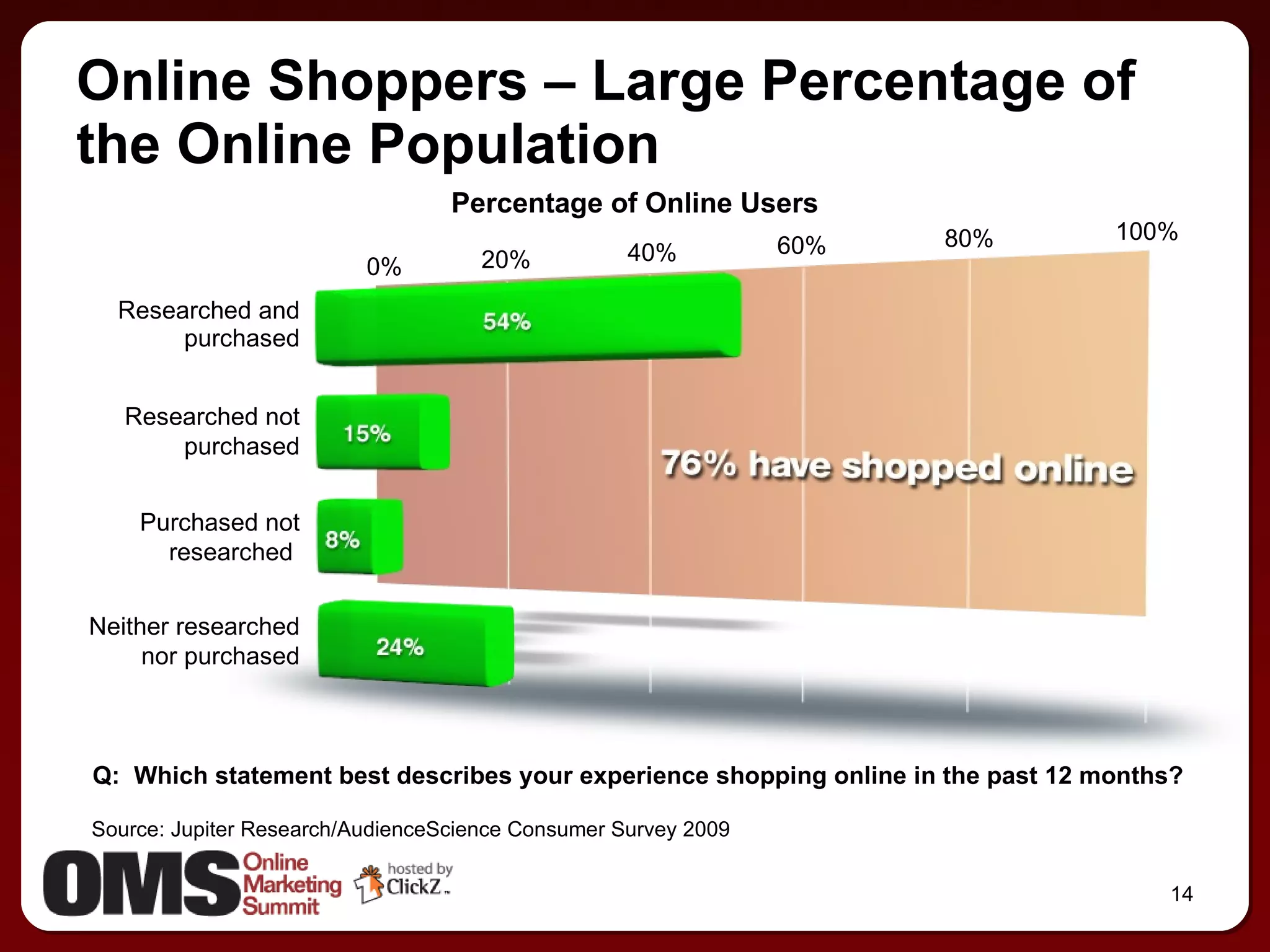
Researched and purchased Online Shoppers – Large Percentage of the Online Population Researched not purchased Purchased not researched  Neither researched nor purchased Q:  Which statement best describes your experience shopping online in the past 12 months? Source: Jupiter Research/AudienceScience Consumer Survey 2009  0% 20% 40% 60% 80% 100% Percentage of Online Users
You Have 3 Opportunities to Connect With Online Users Percentage of Online Researchers 0% 20% 40% 60% 80% 100% Q: How many separate times would you say you connected to the Internet in order to find information  related to your most recent purchase decision? Q:  How many separate times would you say you connected to the Internet in order to find information related to your most recent purchase decision? Source: Jupiter Research/AudienceScience Consumer Survey 2009  Three times 5 times 5+ times Twice Four times Once
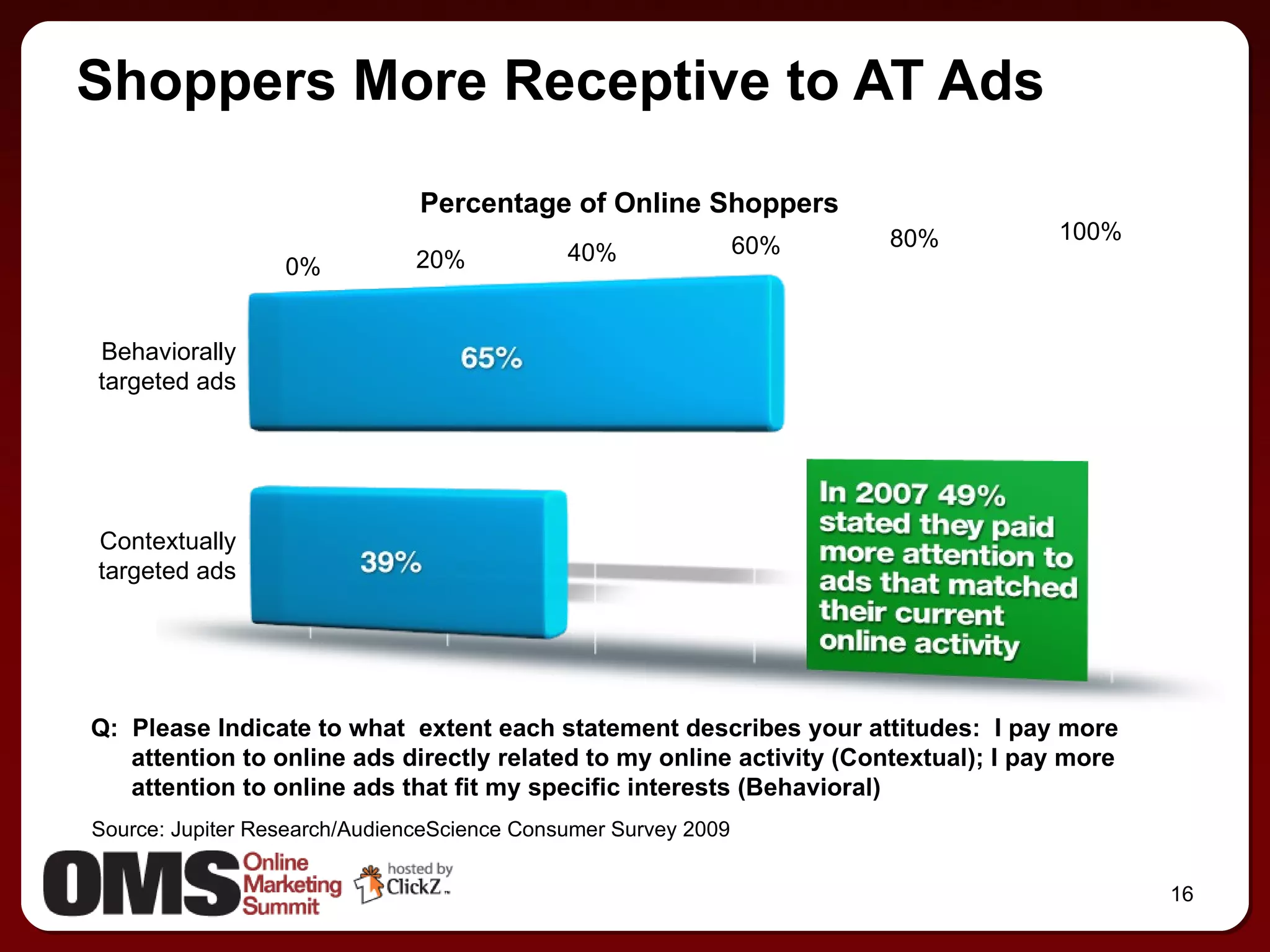
Shoppers More Receptive to AT Ads Q:  Please Indicate to what  extent each statement describes your attitudes:  I pay more attention to online ads directly related to my online activity (Contextual); I pay more  attention to online ads that fit my specific interests (Behavioral) Source: Jupiter Research/AudienceScience Consumer Survey 2009  Percentage of Online Shoppers  0% 20% 40% 60% 80% 100% Contextually targeted ads Behaviorally targeted ads
An online  user sees more than 1,800 online ads per day ,  which is an increase of more than 250% since 2004 Forrester Research 2009 It’s a Cluttered World
CREATING AN AUDIENCE-BASED MEDIA STRATEGY BY LEVERAGING YOUR DATA ASSETS
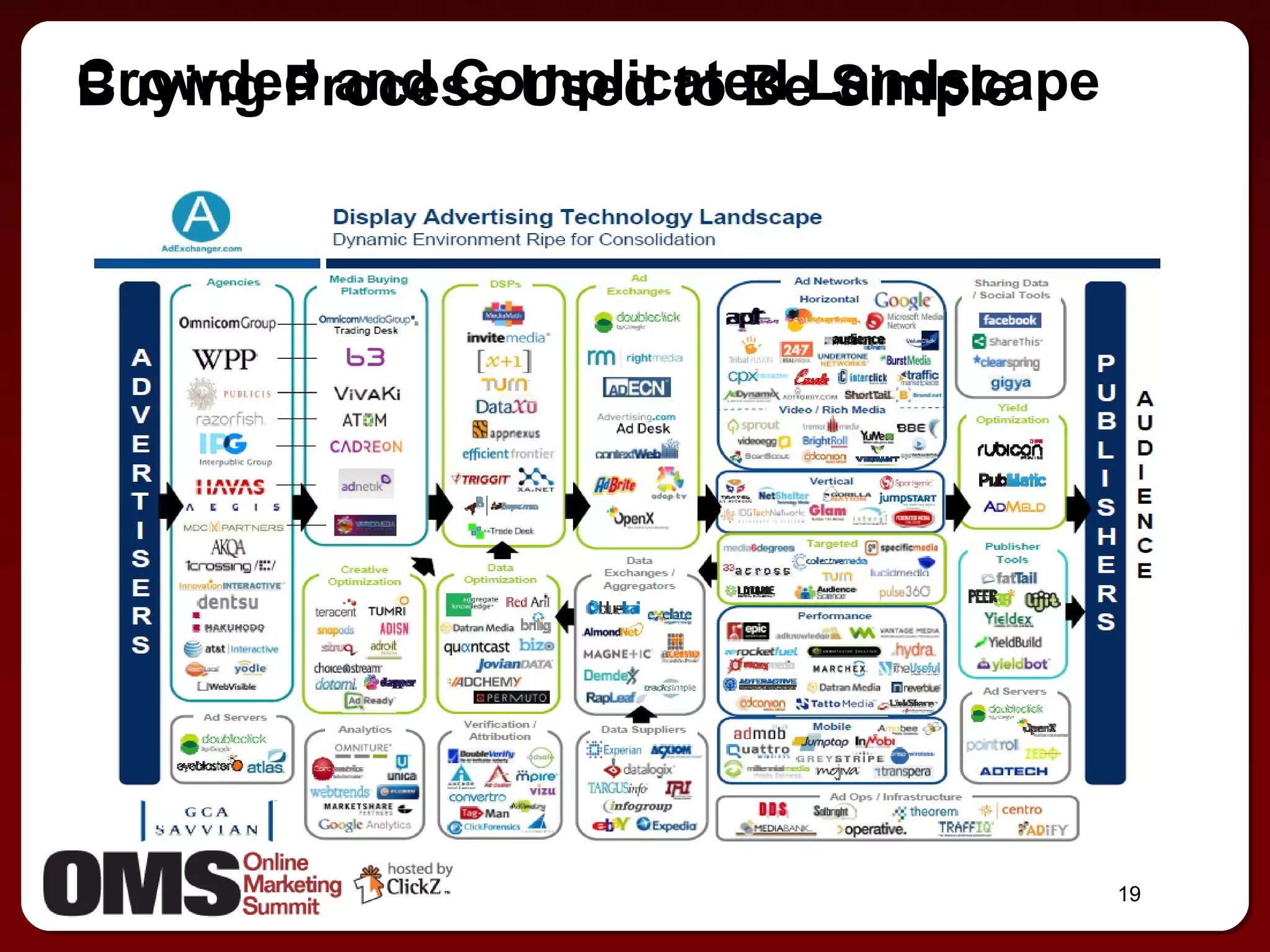
Crowded and Complicated Landscape Buying Process Used to Be Simple Agencies
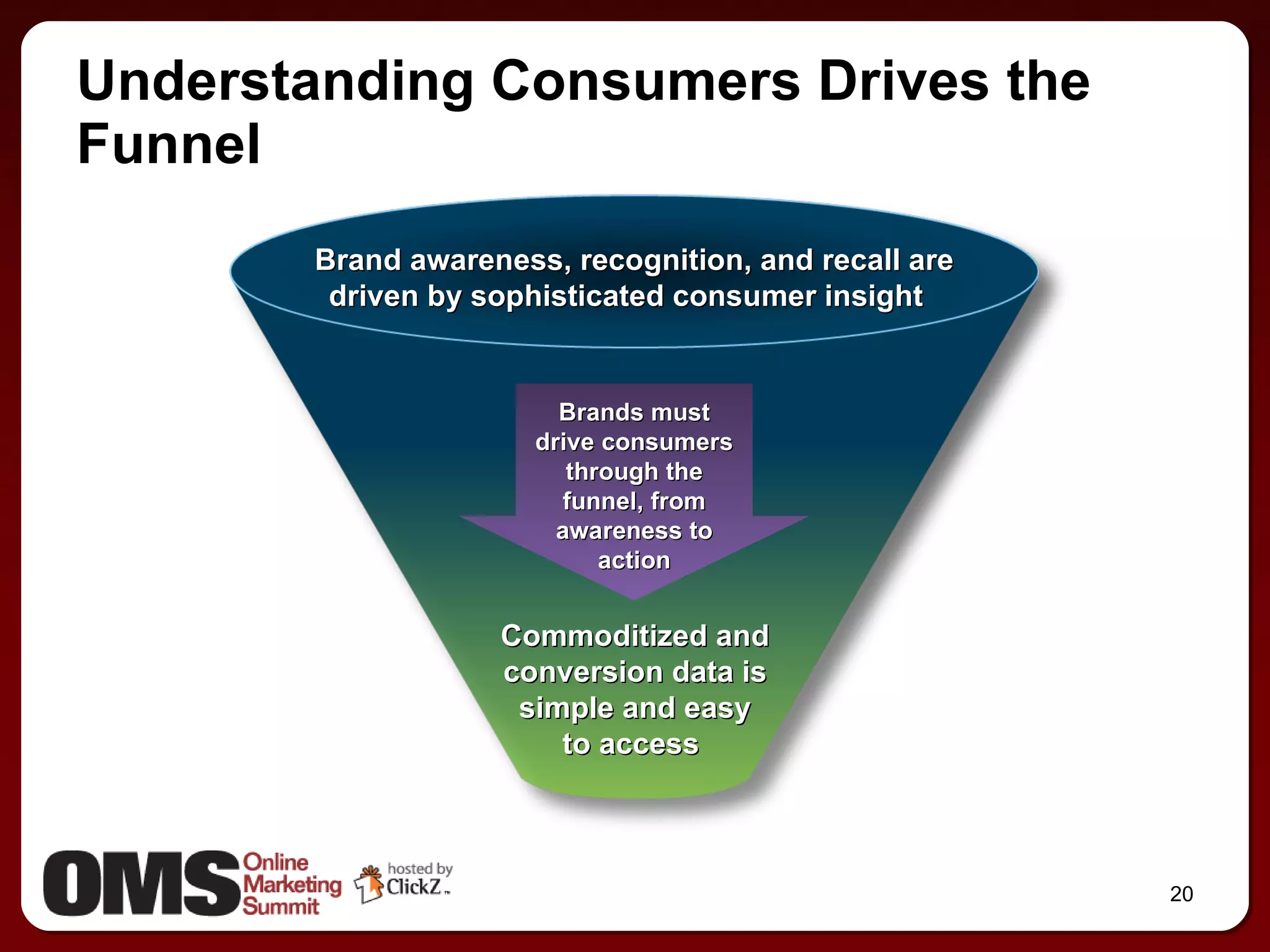
Understanding Consumers Drives the Funnel Commoditized and conversion data is simple and easy to access  Brand awareness, recognition, and recall are driven by sophisticated consumer insight  Brands must drive consumers through the funnel, from awareness to action
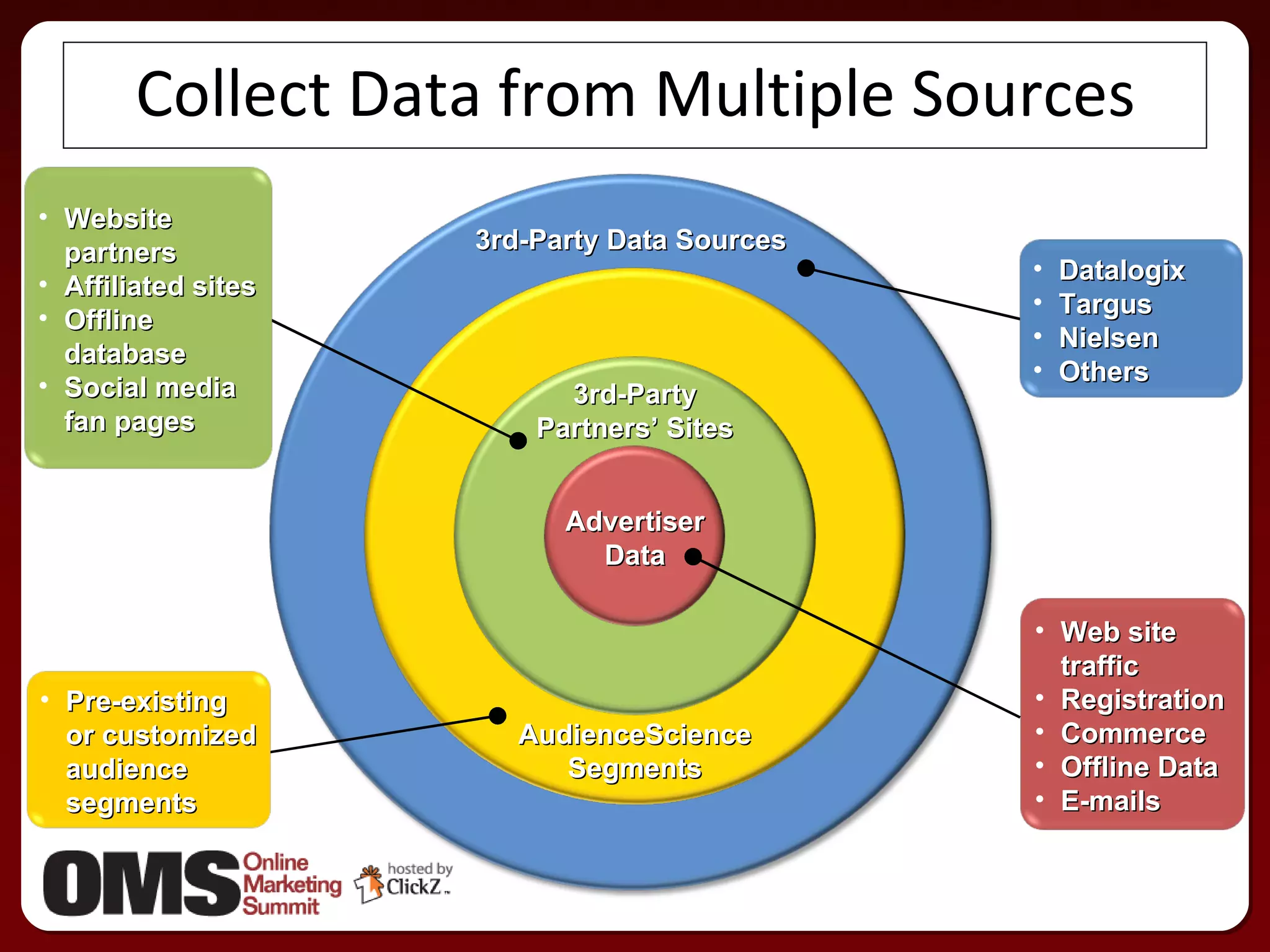
Collect Data from Multiple Sources 3rd-Party Data Sources AudienceScience Segments 3rd-Party Partners’ Sites Advertiser Data Web site traffic Registration Commerce Offline Data E-mails Website partners Affiliated sites Offline database Social media fan pages Datalogix Targus Nielsen Others Pre-existing or customized audience segments
Connecting the Data Dots In one unified system In data silos Impossible to build  advanced audiences Single View of the Consumer Ad Interaction Searches & 3rd-Party Partners Registrations & Transactions Offline Data Geo/ DMA Workplace Attribute Online  Behavior & IP Attributes Ad Interaction Searches & 3rd-Party Partners Registrations & Transactions Offline Data Geo/ DMA Workplace Attribute Online  Behavior & IP Attributes Ad Interaction Online  Behavior & IP Attributes Geo/ DMA Workplace Attribute Offline Data Registrations & Transactions Searches & 3rd-Party Partners Ad Interaction Online  Behavior & IP Attributes Geo/ DMA Workplace Attribute Offline Data Registrations & Transactions Searches & 3rd-Party Partners
An Integrated Audience Platform
HOW AUDIENCE TARGETING CAN WORK FOR YOU
Audience Data The Ingredients What people are looking for Search Interests Content of    articles viewed Where they go Pages, Sections,    Sites What they say about themselves Non-PII: Income    ranges, Gender,    Zip Tools they use  Calculators,   Configurations,   Comparisons Offline data Transactional, Affinity,  Psychographics
Advertisers can use simple data to produce basic audience segments With an integrated audience platform,  a wider variety of data results in larger,  more targeted audiences
Identify Segments of Best Customers
Who Is a Stock Trader?
Audience Insight
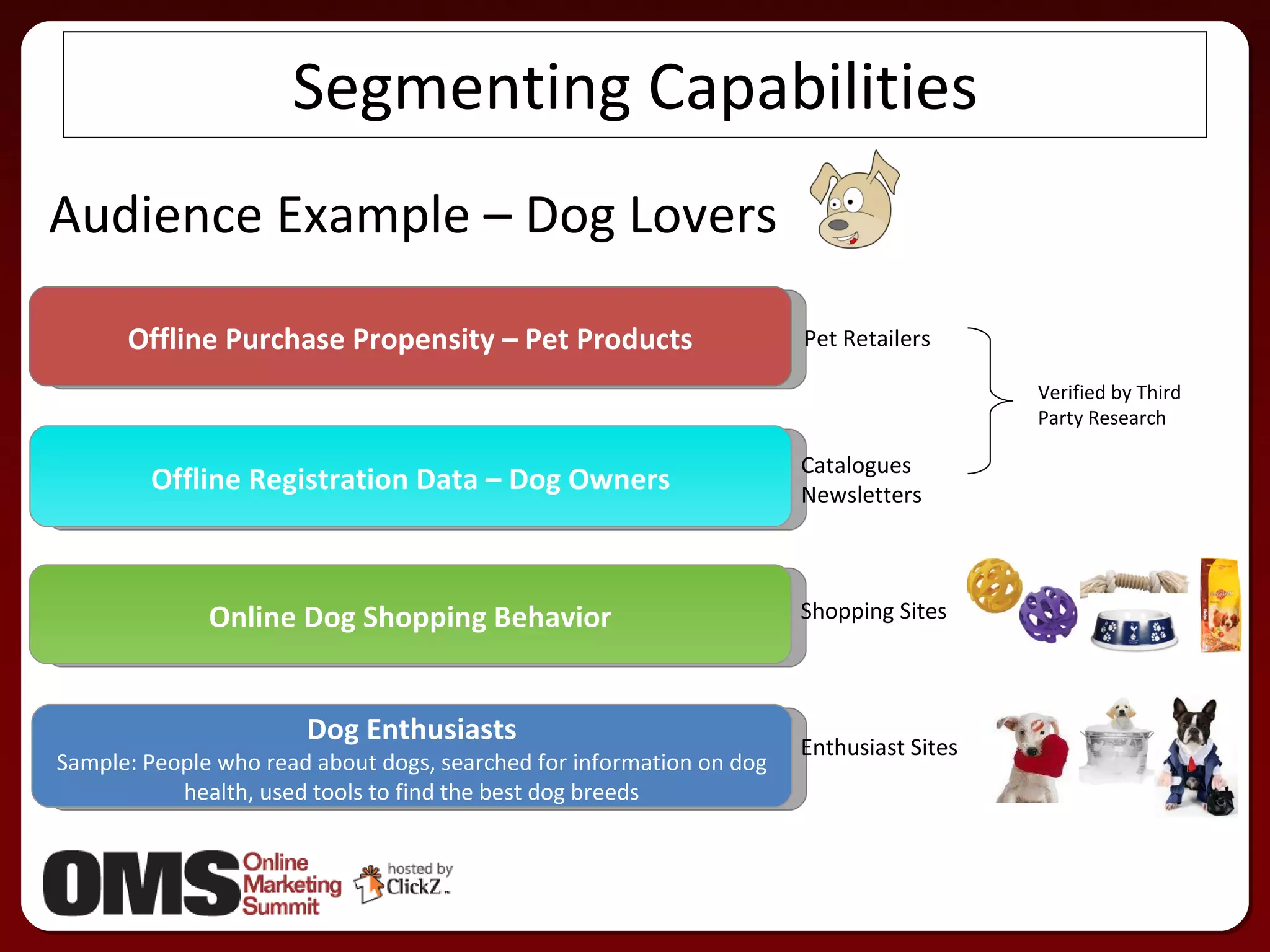
Audience Example – Dog Lovers Offline Registration Data – Dog Owners Online Dog Shopping Behavior Dog Enthusiasts Sample: People who read about dogs, searched for information on dog health, used tools to find the best dog breeds Verified by Third Party Research Shopping Sites Enthusiast Sites Offline Purchase Propensity – Pet Products Catalogues Newsletters Pet Retailers Segmenting Capabilities
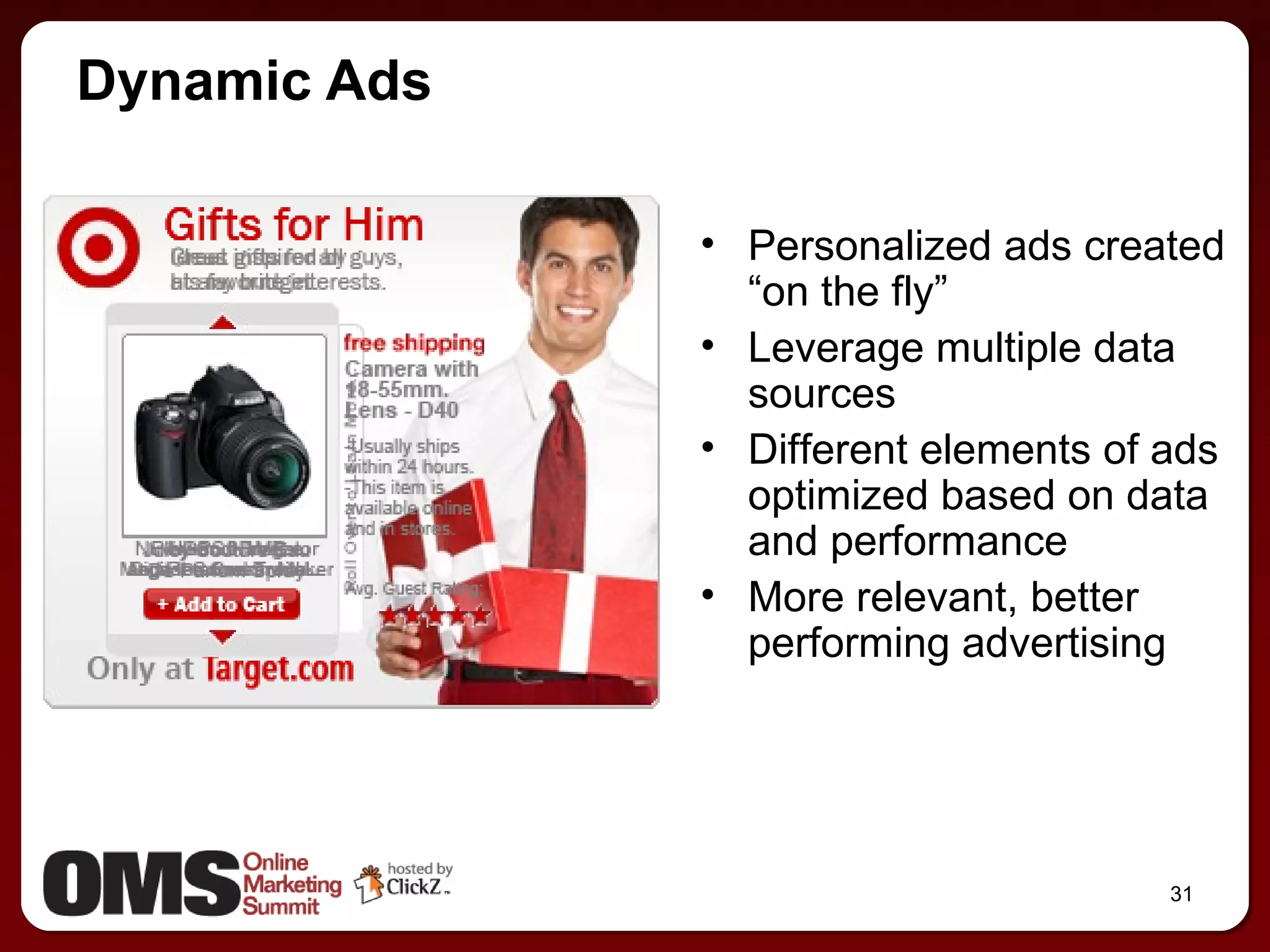
Dynamic Ads Personalized ads created “on the fly”  Leverage multiple data sources  Different elements of ads optimized based on data and performance More relevant, better performing advertising
Success Story – Retail Behavioral and demographic targeting from helped SKECHERS identify qualified prospects on their site, gauge their interest and intent, and then group these users into segments.  Retargeted relevant skechers.com shoe ads were delivered to these consumers  Return on ad spend was 827% over the course of the campaign Brand Metrics (Behavioral targeting over ROS) Analyzed impression volume vs. click-through rate to ensure qualified traffic through the Run of Network impressions, and conversion rate vs. eCPA for retargeted SKECHERS visitors (90% retargeting vs. 10% RON) SKECHERS was able to continually refine its creative for maximum results Maximize return on advertising spend for their retail website Increase sales on skechers.com and return on ad spend Solution Results Goals
Behavioral allows you get a larger reach into your target consumer than running on context alone If you choose a micro target it should be because you have a very specific creative message for them Targeting that costs more than your increased rate of results isn’t worth it In Order to Move Share, You Need Scale
THE MEDIA LANDSCAPE
The Upside Is  Way  Up. . . Media Consumption vs. Ad Spend, 2009  Note: As a percentage of ad spending on the media channels indicated above only: TV, Newspaper, Radio, Magazines and Online Source: Wall Street research, 2010
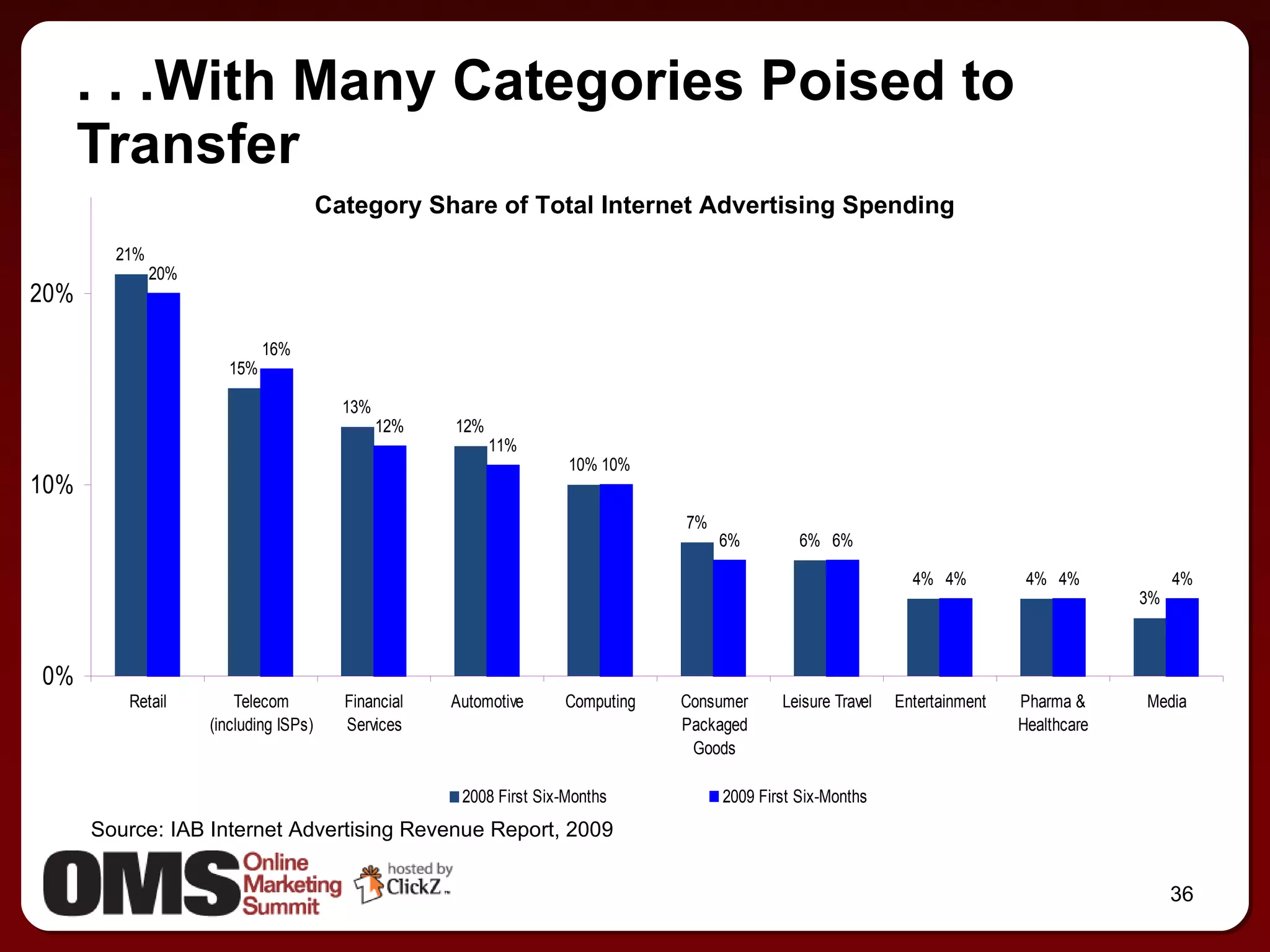
. . .With Many Categories Poised to Transfer Source: IAB Internet Advertising Revenue Report, 2009 Category Share of Total Internet Advertising Spending
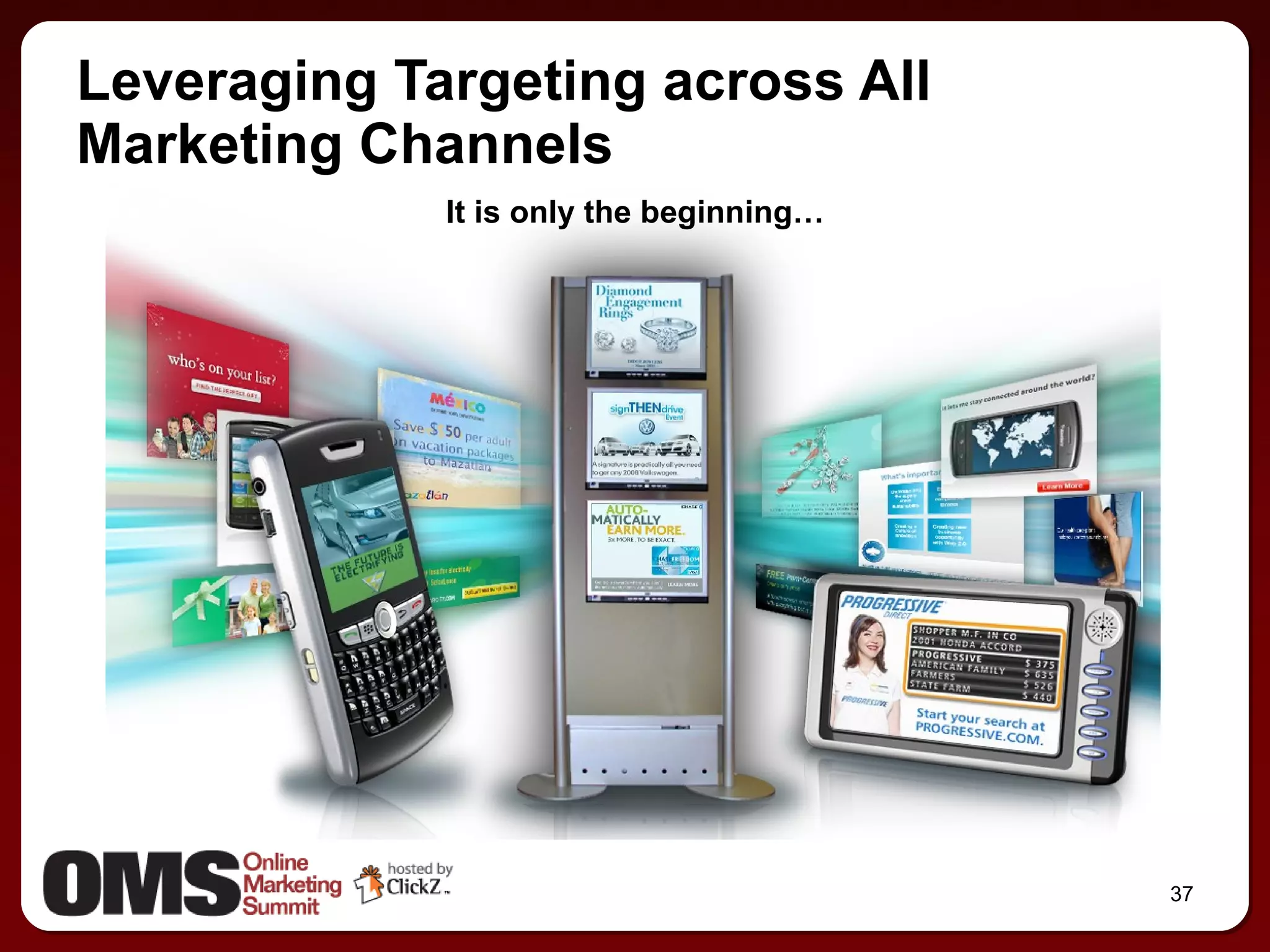
Leveraging Targeting across All  Marketing Channels It is only the beginning…
PRIVACY AND THE NEXT GENERATION OF TARGETING
Navigating the Privacy Waters
 
The “Cookie” Monster Cookies: small files placed by a website on your computer that serve as an identifier Cookies simplify and improve the Internet experience Give the Internet “memory”  Enable shopping carts Remembered login information Cookies aren’t static – sites modify them all the time as you do different things within their domains Allow frequency capping and other targeting, including behavioral They are not scary Easily removable Managed by user Cookies not bad, Cookies GOOD
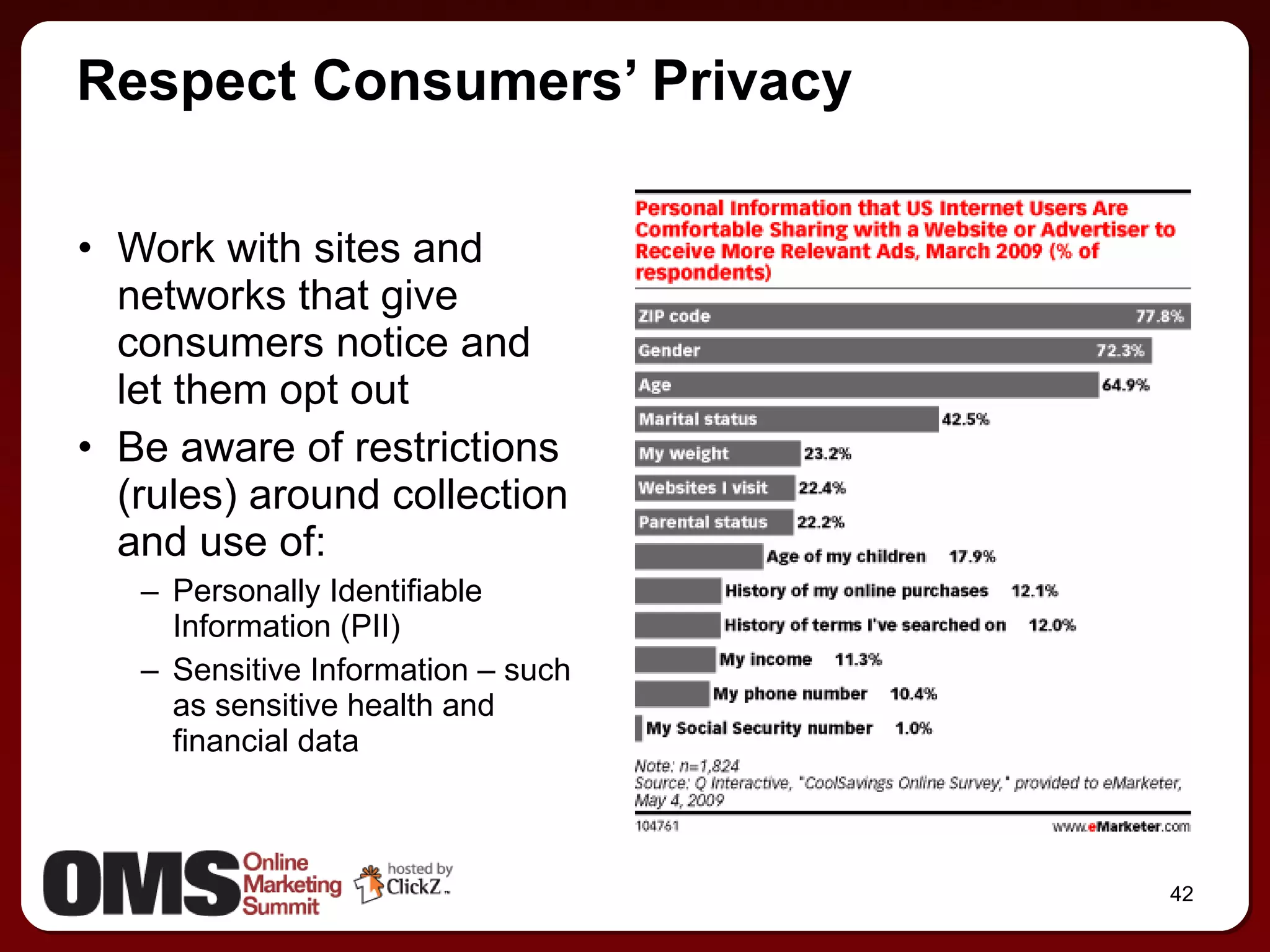
Work with sites and networks that give consumers notice and let them opt out Be aware of restrictions (rules) around collection and use of: Personally Identifiable Information (PII) Sensitive Information – such as sensitive health and financial data Respect Consumers’ Privacy
Industry Support for Privacy Provide consumers with Notice about collection and use of data for behavioral advertising Privacy Policy Notice near targeted ads (enhanced notice) Enable consumers to opt-out (opt-out page) Use only non-personally identifiable information (non-PII) Do not use “sensitive” information (health, financial, etc.) Broad industry support for these initiatives
Enhanced Notice Example More prominent notice to consumers of online behavioral advertising Text/Icon displayed for all OBA ads Clicking on the notice provides consumers with more information about OBA and the ad itself Link to opt out
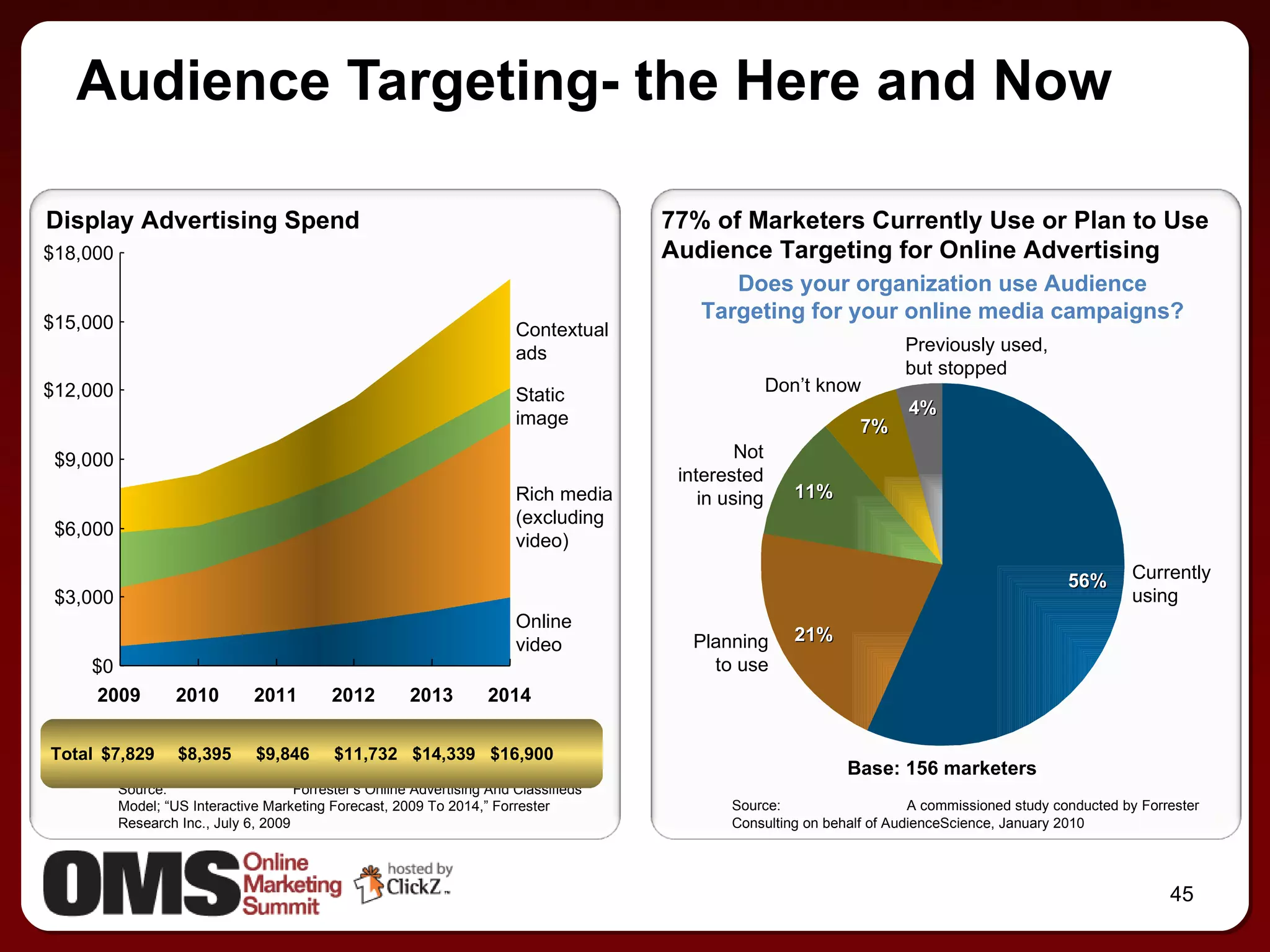
Audience Targeting- the Here and Now Display Advertising Spend 77% of Marketers Currently Use or Plan to Use Audience Targeting for Online Advertising Source: Forrester’s Online Advertising And Classifieds Model; “US Interactive Marketing Forecast, 2009 To 2014,” Forrester Research Inc., July 6, 2009 Total $7,829 $8,395 $9,846 $11,732 $14,339 $16,900 Contextual ads Static image Rich media (excluding video) Online video 2009 2010 2011 2012 2013 2014 Source: A commissioned study conducted by Forrester Consulting on behalf of AudienceScience, January 2010  Does your organization use Audience Targeting for your online media campaigns? Base: 156 marketers $0 $3,000 $6,000 $9,000 $12,000 $15,000 $18,000 Currently using Planning to use Previously used, but stopped Not interested in using Don’t know 11% 56% 4% 21% 7%
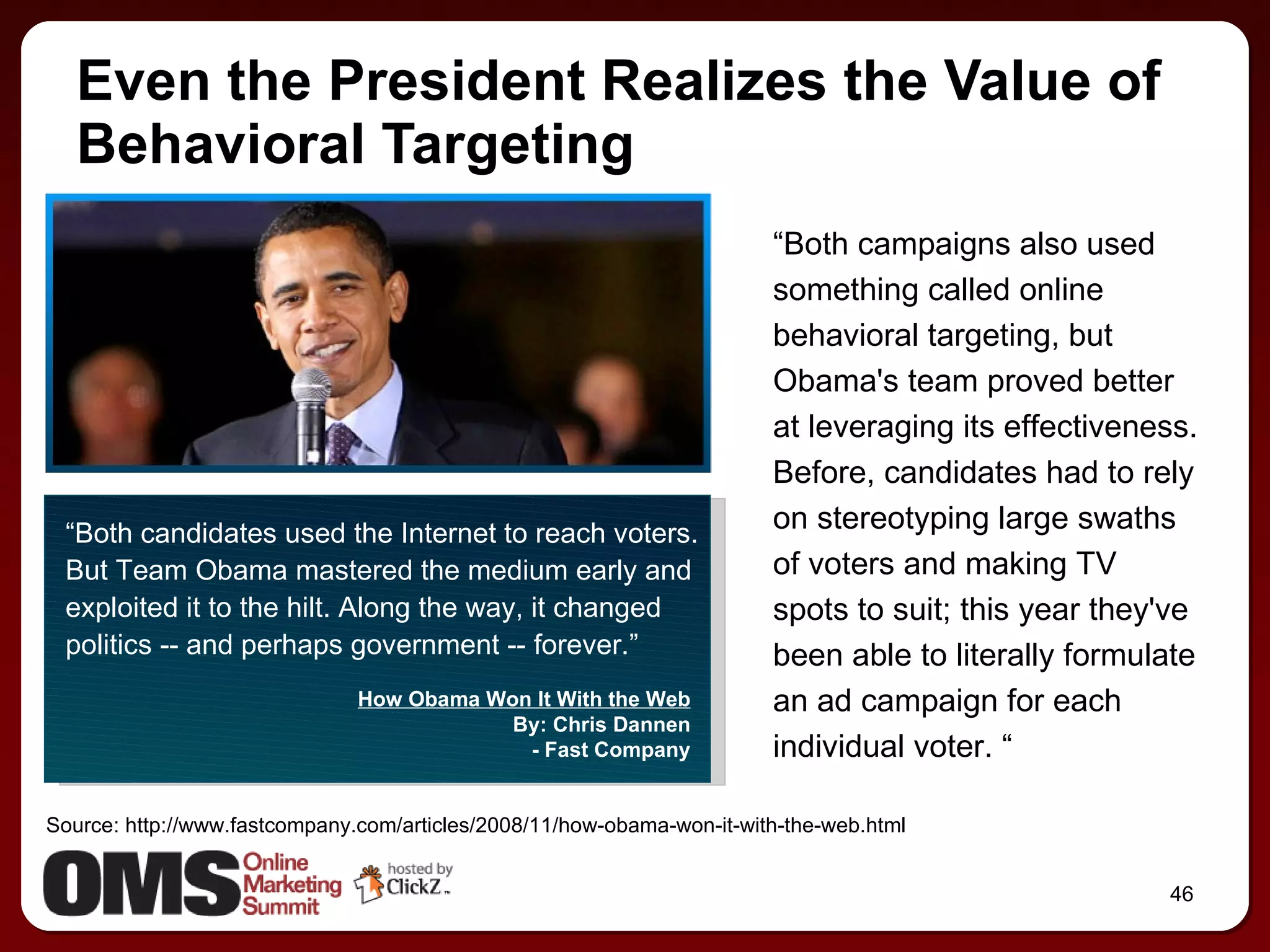
Even the President Realizes the Value of Behavioral Targeting “ Both campaigns also used something called online behavioral targeting, but Obama's team proved better at leveraging its effectiveness. Before, candidates had to rely on stereotyping large swaths of voters and making TV spots to suit; this year they've been able to literally formulate an ad campaign for each individual voter. “ “ Both candidates used the Internet to reach voters. But Team Obama mastered the medium early and exploited it to the hilt. Along the way, it changed politics -- and perhaps government -- forever.” How Obama Won It With the Web By: Chris Dannen - Fast Company Source: http://www.fastcompany.com/articles/2008/11/how-obama-won-it-with-the-web.html
Questions?
Interactive marketing is growing significantly We are experiencing a transformation of media buying across channels This transformation means a shift to more dynamic, data driven audience targeting and media buying Online advertising industry working to protect consumer privacy while delivering relevant services and content Summary
Thank You www.audiencescience.com Twitter: @audiencescience
Thank You Visit www.onlinemarketingsummit.com f or more information Follow us @OMSummit

Online marketing summit 061610 monica seebohm

  • 1.
    Online Marketing SummitPortland, OR. | June 16, 2010 Behavioral Targeting Across Online Advertising Channels   Monica Seebohm Director Audience Targeting, West AudienceScience
  • 2.
  • 3.
    Audience targeting canidentify the best consumers for a specific ad or campaign and can be used to effectively reach sales, acquisition, and branding goals
  • 4.
    “ Old” Media:Demographics
  • 5.
    The Target Market:Men Age 25-55
  • 6.
    T.V. Show forthis Demographic
  • 7.
  • 8.
  • 9.
  • 10.
    Advertisers efficiently reachthe right audience with the right message at the right time Publishers monetize the value of their audience and make more money from undersold ad inventory Consumers get a more relevant experience Everybody Wins
  • 11.
    06/17/10 Simple BehavioralBased on simple observations of an audience behavior Creative retargeting Site retargeting Click retargeting Search retargeting Traditional Targeting Based on overall nature of a media property or facts about its audience Contextual Demographic Geographic Day-part Audience Targeting Based on complex models of audience behavior Boolean logic Contextual Extension Dynamic Targeting Targeting Evolution Targeting Evolution
  • 12.
    What Makes upTargeting? Audience data comes from many places… Online behavior Workplace attributes Ad views Transactions Registration Searches Geo/DMA 3 rd party partners Offline data No personally identifiable information is used
  • 13.
    Where Are ConsumersSpending Their Time Online?
  • 14.
    Researched and purchasedOnline Shoppers – Large Percentage of the Online Population Researched not purchased Purchased not researched Neither researched nor purchased Q: Which statement best describes your experience shopping online in the past 12 months? Source: Jupiter Research/AudienceScience Consumer Survey 2009 0% 20% 40% 60% 80% 100% Percentage of Online Users
  • 15.
    You Have 3Opportunities to Connect With Online Users Percentage of Online Researchers 0% 20% 40% 60% 80% 100% Q: How many separate times would you say you connected to the Internet in order to find information related to your most recent purchase decision? Q: How many separate times would you say you connected to the Internet in order to find information related to your most recent purchase decision? Source: Jupiter Research/AudienceScience Consumer Survey 2009 Three times 5 times 5+ times Twice Four times Once
  • 16.
    Shoppers More Receptiveto AT Ads Q: Please Indicate to what extent each statement describes your attitudes: I pay more attention to online ads directly related to my online activity (Contextual); I pay more attention to online ads that fit my specific interests (Behavioral) Source: Jupiter Research/AudienceScience Consumer Survey 2009 Percentage of Online Shoppers 0% 20% 40% 60% 80% 100% Contextually targeted ads Behaviorally targeted ads
  • 17.
    An online user sees more than 1,800 online ads per day , which is an increase of more than 250% since 2004 Forrester Research 2009 It’s a Cluttered World
  • 18.
    CREATING AN AUDIENCE-BASEDMEDIA STRATEGY BY LEVERAGING YOUR DATA ASSETS
  • 19.
    Crowded and ComplicatedLandscape Buying Process Used to Be Simple Agencies
  • 20.
    Understanding Consumers Drivesthe Funnel Commoditized and conversion data is simple and easy to access Brand awareness, recognition, and recall are driven by sophisticated consumer insight Brands must drive consumers through the funnel, from awareness to action
  • 21.
    Collect Data fromMultiple Sources 3rd-Party Data Sources AudienceScience Segments 3rd-Party Partners’ Sites Advertiser Data Web site traffic Registration Commerce Offline Data E-mails Website partners Affiliated sites Offline database Social media fan pages Datalogix Targus Nielsen Others Pre-existing or customized audience segments
  • 22.
    Connecting the DataDots In one unified system In data silos Impossible to build advanced audiences Single View of the Consumer Ad Interaction Searches & 3rd-Party Partners Registrations & Transactions Offline Data Geo/ DMA Workplace Attribute Online Behavior & IP Attributes Ad Interaction Searches & 3rd-Party Partners Registrations & Transactions Offline Data Geo/ DMA Workplace Attribute Online Behavior & IP Attributes Ad Interaction Online Behavior & IP Attributes Geo/ DMA Workplace Attribute Offline Data Registrations & Transactions Searches & 3rd-Party Partners Ad Interaction Online Behavior & IP Attributes Geo/ DMA Workplace Attribute Offline Data Registrations & Transactions Searches & 3rd-Party Partners
  • 23.
  • 24.
    HOW AUDIENCE TARGETINGCAN WORK FOR YOU
  • 25.
    Audience Data TheIngredients What people are looking for Search Interests Content of articles viewed Where they go Pages, Sections, Sites What they say about themselves Non-PII: Income ranges, Gender, Zip Tools they use Calculators, Configurations, Comparisons Offline data Transactional, Affinity, Psychographics
  • 26.
    Advertisers can usesimple data to produce basic audience segments With an integrated audience platform, a wider variety of data results in larger, more targeted audiences
  • 27.
    Identify Segments ofBest Customers
  • 28.
    Who Is aStock Trader?
  • 29.
  • 30.
    Audience Example –Dog Lovers Offline Registration Data – Dog Owners Online Dog Shopping Behavior Dog Enthusiasts Sample: People who read about dogs, searched for information on dog health, used tools to find the best dog breeds Verified by Third Party Research Shopping Sites Enthusiast Sites Offline Purchase Propensity – Pet Products Catalogues Newsletters Pet Retailers Segmenting Capabilities
  • 31.
    Dynamic Ads Personalizedads created “on the fly” Leverage multiple data sources Different elements of ads optimized based on data and performance More relevant, better performing advertising
  • 32.
    Success Story –Retail Behavioral and demographic targeting from helped SKECHERS identify qualified prospects on their site, gauge their interest and intent, and then group these users into segments. Retargeted relevant skechers.com shoe ads were delivered to these consumers Return on ad spend was 827% over the course of the campaign Brand Metrics (Behavioral targeting over ROS) Analyzed impression volume vs. click-through rate to ensure qualified traffic through the Run of Network impressions, and conversion rate vs. eCPA for retargeted SKECHERS visitors (90% retargeting vs. 10% RON) SKECHERS was able to continually refine its creative for maximum results Maximize return on advertising spend for their retail website Increase sales on skechers.com and return on ad spend Solution Results Goals
  • 33.
    Behavioral allows youget a larger reach into your target consumer than running on context alone If you choose a micro target it should be because you have a very specific creative message for them Targeting that costs more than your increased rate of results isn’t worth it In Order to Move Share, You Need Scale
  • 34.
  • 35.
    The Upside Is Way Up. . . Media Consumption vs. Ad Spend, 2009 Note: As a percentage of ad spending on the media channels indicated above only: TV, Newspaper, Radio, Magazines and Online Source: Wall Street research, 2010
  • 36.
    . . .WithMany Categories Poised to Transfer Source: IAB Internet Advertising Revenue Report, 2009 Category Share of Total Internet Advertising Spending
  • 37.
    Leveraging Targeting acrossAll Marketing Channels It is only the beginning…
  • 38.
    PRIVACY AND THENEXT GENERATION OF TARGETING
  • 39.
  • 40.
  • 41.
    The “Cookie” MonsterCookies: small files placed by a website on your computer that serve as an identifier Cookies simplify and improve the Internet experience Give the Internet “memory” Enable shopping carts Remembered login information Cookies aren’t static – sites modify them all the time as you do different things within their domains Allow frequency capping and other targeting, including behavioral They are not scary Easily removable Managed by user Cookies not bad, Cookies GOOD
  • 42.
    Work with sitesand networks that give consumers notice and let them opt out Be aware of restrictions (rules) around collection and use of: Personally Identifiable Information (PII) Sensitive Information – such as sensitive health and financial data Respect Consumers’ Privacy
  • 43.
    Industry Support forPrivacy Provide consumers with Notice about collection and use of data for behavioral advertising Privacy Policy Notice near targeted ads (enhanced notice) Enable consumers to opt-out (opt-out page) Use only non-personally identifiable information (non-PII) Do not use “sensitive” information (health, financial, etc.) Broad industry support for these initiatives
  • 44.
    Enhanced Notice ExampleMore prominent notice to consumers of online behavioral advertising Text/Icon displayed for all OBA ads Clicking on the notice provides consumers with more information about OBA and the ad itself Link to opt out
  • 45.
    Audience Targeting- theHere and Now Display Advertising Spend 77% of Marketers Currently Use or Plan to Use Audience Targeting for Online Advertising Source: Forrester’s Online Advertising And Classifieds Model; “US Interactive Marketing Forecast, 2009 To 2014,” Forrester Research Inc., July 6, 2009 Total $7,829 $8,395 $9,846 $11,732 $14,339 $16,900 Contextual ads Static image Rich media (excluding video) Online video 2009 2010 2011 2012 2013 2014 Source: A commissioned study conducted by Forrester Consulting on behalf of AudienceScience, January 2010 Does your organization use Audience Targeting for your online media campaigns? Base: 156 marketers $0 $3,000 $6,000 $9,000 $12,000 $15,000 $18,000 Currently using Planning to use Previously used, but stopped Not interested in using Don’t know 11% 56% 4% 21% 7%
  • 46.
    Even the PresidentRealizes the Value of Behavioral Targeting “ Both campaigns also used something called online behavioral targeting, but Obama's team proved better at leveraging its effectiveness. Before, candidates had to rely on stereotyping large swaths of voters and making TV spots to suit; this year they've been able to literally formulate an ad campaign for each individual voter. “ “ Both candidates used the Internet to reach voters. But Team Obama mastered the medium early and exploited it to the hilt. Along the way, it changed politics -- and perhaps government -- forever.” How Obama Won It With the Web By: Chris Dannen - Fast Company Source: http://www.fastcompany.com/articles/2008/11/how-obama-won-it-with-the-web.html
  • 47.
  • 48.
    Interactive marketing isgrowing significantly We are experiencing a transformation of media buying across channels This transformation means a shift to more dynamic, data driven audience targeting and media buying Online advertising industry working to protect consumer privacy while delivering relevant services and content Summary
  • 49.
    Thank You www.audiencescience.comTwitter: @audiencescience
  • 50.
    Thank You Visitwww.onlinemarketingsummit.com f or more information Follow us @OMSummit

Editor's Notes

  • #15 There is white text not visible to the left of bars At the request of AudienceScience, Jupiter Research, a Forrester Research company, conducted an independent unbiased study of online consumers on how online tools and advertising strategies fit into shopping behaviors and preferences with respect to shopping (defined as either research and or purchasing products or services online). In November 2008, JupiterResearch designed and fielded a survey to online consumers selected randomly from the NPD US online consumer panel. A total of 2,151 individuals responded to the survey. Respondents were asked approximately 6 closed-ended questions about their behaviors, attitudes and preferences as they relate to online shopping. Respondents received an e-mail invitation to participate in the survey with an attached URL linked to the Web-based survey form. The samples were carefully balanced by a series of demographic characteristics to ensure that they were representative of the online population. Demographic weighting variables included age, gender, household income, household education, household type, region, market size, race and Hispanic ethnicity. Additionally, JupiterResearch weighed the data by AOL usage, online tenure, and connection speed (broadband versus dial-up), three key determinants of online behavior. Balancing quotas are derived from JupiterResearch's Internet Population Model which relies on US Census Bureau data and a rich foundation of primary consumer survey research to determine the size, demographics and ethnographics of the US online population. The survey data are fully applicable to the US online population within a confidence interval of plus or minus three percent. In this survey effort, JupiterResearch worked with its research partner, NPD, on the technical tasks of survey fielding, sample building, balancing, and data processing. NPD is one of the largest market research companies in the US and maintains a general research panel of 4 million individuals, of which 750,000 are kept "active". The active panel receives surveys while inactive panelists are rested. This rotation in and out of active status helps keep panelists fresh and prevents burnout. Panel-based market research enables researchers to have baseline knowledge of each survey respondent, increase survey participation rates, and permit careful rationing of survey fielding to reduce survey burnout.
  • #24 We need to help marketers evaluate the many technology choices available. Benefits of an integrated audience platforms --Gather data from many channels, both online and offline, and integrate them into a single anonymous view that drives revenue and increases relevance in the consumer experience --Reach to get your messages out via all available channels makes the most of your audience intelligence and ensures consistency in communication across the board. --Advertisers should select data/technology partners who follow industry best practices regarding gathering and anonymity of data
  • #27 Same methodology manufacturers use to create products needs to be applied to how advertisers build audiences. The more thought and analysis advertisers use to create segments, the better their results will be.
  • #47 I look at how television has been bought for so long. Large swaths of demographics, largely determined by the content of the program. Isn’t this an attempt at behavioral targeting? Based on the content you are consuming, assumptions are made about who you are and what you like. With online, we can take this rough approximation and create a granularity and accuracy never before experienced.