Onychomycosis
Oliverio Welsh, MDa,⁎, Lucio Vera-Cabrera, DrSca
, Esperanza Welsh, MDb
a
Department of Dermatology, Dr. Jose Eleuterio Gonzalez University Hospital, Avenida Francisco I. Madero y Avenida
Gonzalitos s/n, Colonia Mitras Centro, Monterrey, Nuevo Leon 64460, Mexico
b
Centro de Especialidades Médicas, Jose Benitez 2704, Colonia Obispado Monterrey, Nuevo Leon 64460, Mexico
Abstract Onychomycosis is a frequent nail disease caused by dermatophytes, yeasts, and
nondermatophyte molds. Trichophyton rubrum, T mentagrophytes, and Epidermophyton floccosum
are the most common etiologic agents worldwide. Candida spp are the most frequent among the
yeasts. Diagnosis is corroborated by direct microscopic examination, culture, and histomycology with
periodic acid-Schiff stain. Other new methods of diagnosis are discussed. Treatment is based on oral
antifungals: terbinafine, itraconazole, and fluconazole, including other emerging triazole drugs.
Therapeutic outcome with ciclopirox and amorolfine lacquers alone and combined with systemic
therapy are also reviewed, as well as the new nail enhancers and physical and chemical removal of the
diseased nails.
© 2010 Elsevier Inc. All rights reserved.
Introduction
Onychomycosis is the most common affection of the nails
(more than 50%). The term indicates infection by dermato-
phytes (tinea unguium), yeasts, and nondermatophyte fungi.
Some of the contributing factors causing this disease are
humidity, occlusive footwear, repeated nail trauma, genetic
predisposition, and concurrent disease, such as diabetes, poor
peripheral circulation, and HIV infection, as well as other
forms of immunosuppression.1-3
The incidence and prevalence of onychomycosis varies
from 2% to 3% in the general population of the United
States of America, reaching up to 13% in Finnish men.4
The incidence increases with age, and nearly 30% of
patients are older than 60 years. Although infrequent, this
infection can affect children5 and is most likely due to the
use of occlusive footwear.
Most onychomycoses are caused by dermatophytes that
belong to three genera: Trichophyton, Microsporum, and
Epidermophyton. Several fungi can be causative agents,
but three species predominate worldwide: T rubrum, T
mentagrophytes, and E floccosum.2,6-10 T rubrum is found
in 60% of cases, T mentagrophytes in 20%, and E
floccosum in 10%. The rest originate from nondermato-
phyte molds such as Scopulariopsis and Scytalidium
hyalinum. T rubrum and T mentagrophytes are the first
and second most frequent etiologic agents worldwide.2,7
Clinical classification of onychomycosis
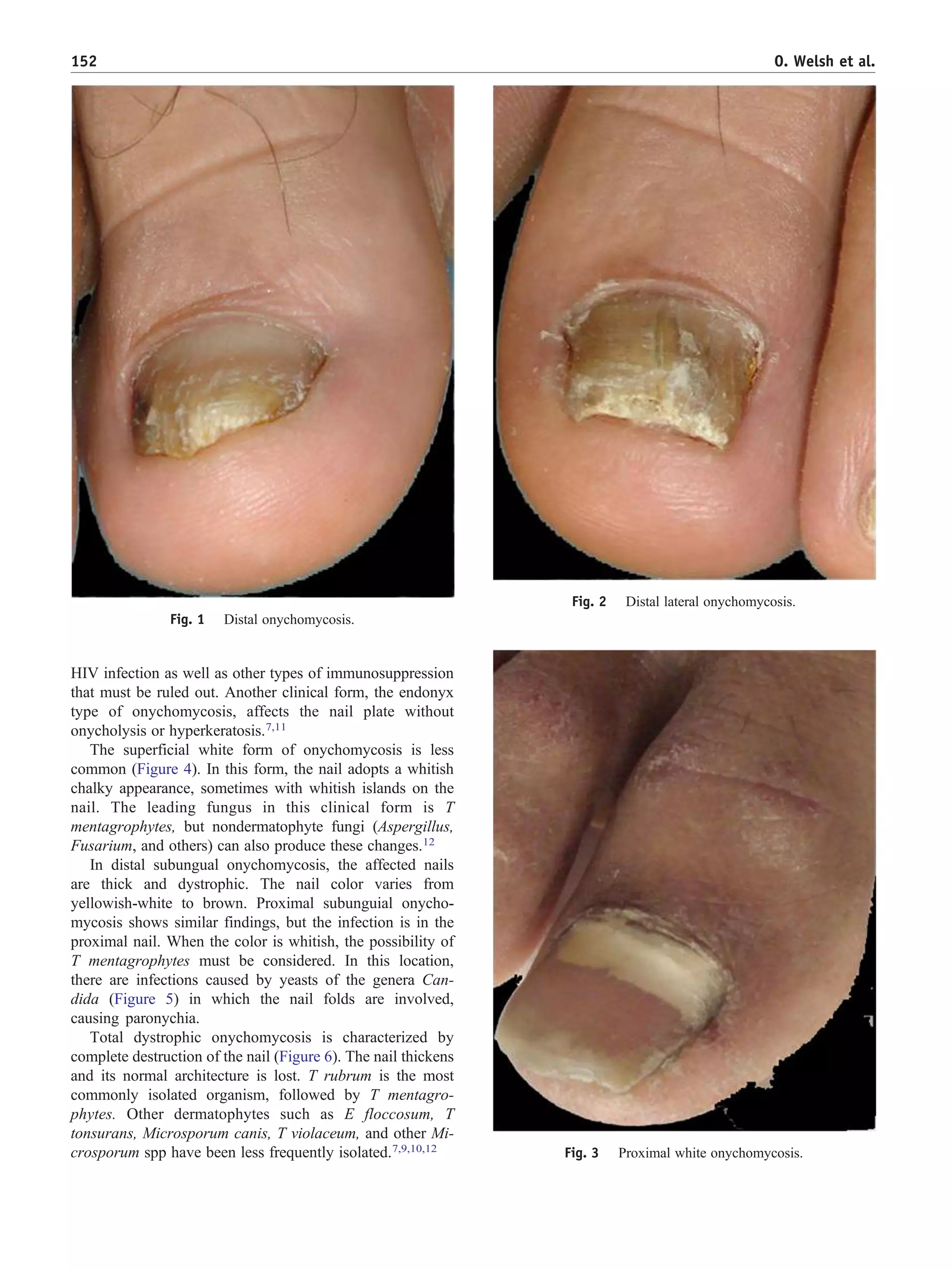
Distal subungual onychomycosis affects the nail bed, nail
plate, and the hyponychium (Figure 1). Infection usually
initiates from tinea pedis from the surrounding skin, the most
common form is distal lateral subungual onychomycosis
(Figure 2). Proximal subunguial onychomycosis is another
form (Figure 3) in which the fungus generally invades
through the proximal nail folds. Clinically, the nail has a
whitish appearance. This form suggests the possibility of
⁎ Corresponding author. University Hospital UANL Madero y Gonza-
litos, Dept. of Dermatology, Col. Mitras Centro, 64460 Monterrey NL,
Mexico. Tel.: +52 81 83 48 03 83; fax: +52 81 83 48 44 07.
E-mail address: owelsh@yahoo.com (O. Welsh).
0738-081X/$ – see front matter © 2010 Elsevier Inc. All rights reserved.
doi:10.1016/j.clindermatol.2009.12.006
Clinics in Dermatology (2010) 28, 151–159
HIV infection as well as other types of immunosuppression
that must be ruled out. Another clinical form, the endonyx
type of onychomycosis, affects the nail plate without
onycholysis or hyperkeratosis.7,11
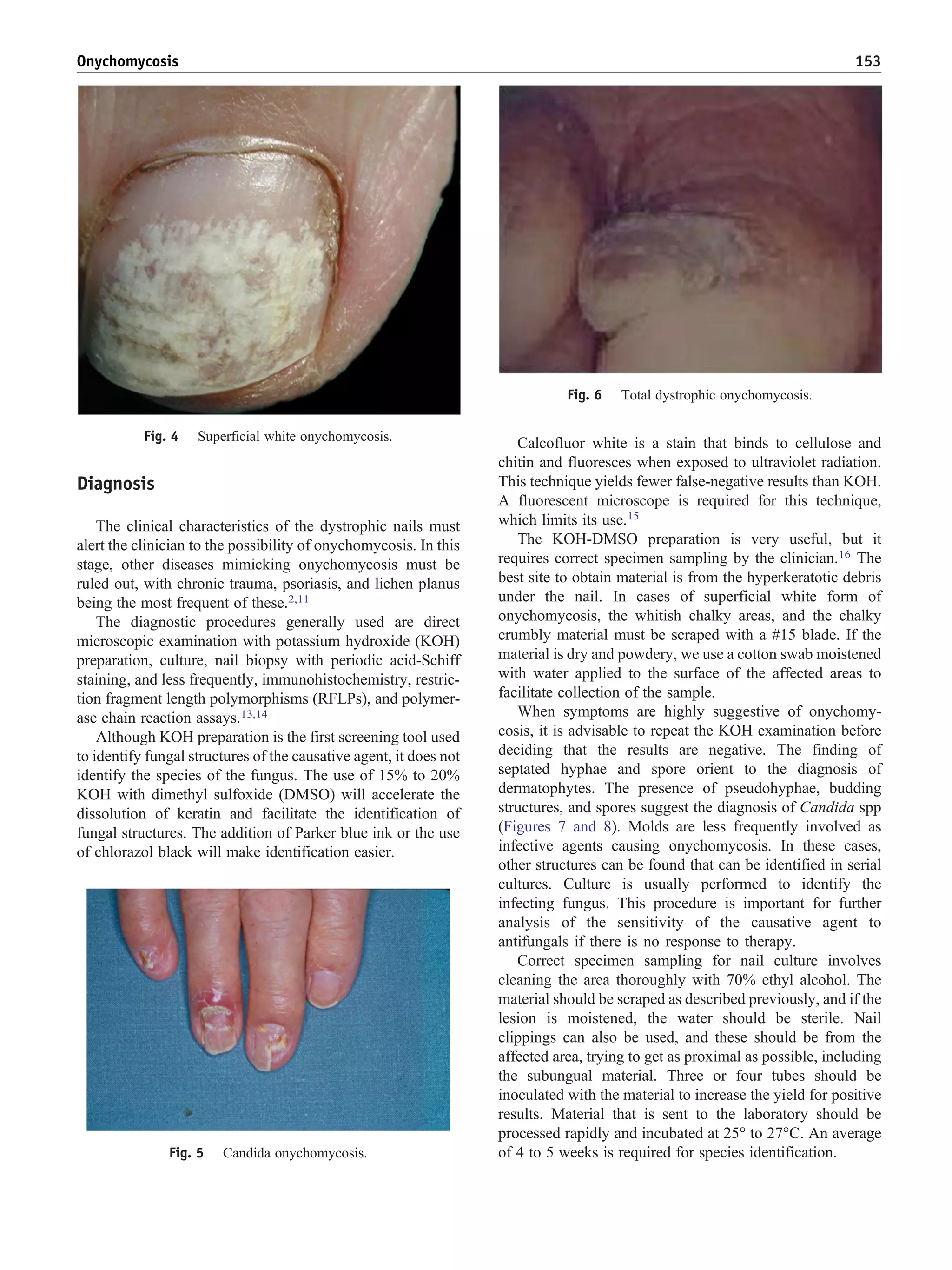
The superficial white form of onychomycosis is less
common (Figure 4). In this form, the nail adopts a whitish
chalky appearance, sometimes with whitish islands on the
nail. The leading fungus in this clinical form is T
mentagrophytes, but nondermatophyte fungi (Aspergillus,
Fusarium, and others) can also produce these changes.12
In distal subungual onychomycosis, the affected nails
are thick and dystrophic. The nail color varies from
yellowish-white to brown. Proximal subunguial onycho-
mycosis shows similar findings, but the infection is in the
proximal nail. When the color is whitish, the possibility of
T mentagrophytes must be considered. In this location,
there are infections caused by yeasts of the genera Can-
dida (Figure 5) in which the nail folds are involved,
causing paronychia.
Total dystrophic onychomycosis is characterized by
complete destruction of the nail (Figure 6). The nail thickens
and its normal architecture is lost. T rubrum is the most
commonly isolated organism, followed by T mentagro-
phytes. Other dermatophytes such as E floccosum, T
tonsurans, Microsporum canis, T violaceum, and other Mi-
crosporum spp have been less frequently isolated.7,9,10,12
Fig. 1 Distal onychomycosis.
Fig. 2 Distal lateral onychomycosis.
Fig. 3 Proximal white onychomycosis.
152 O. Welsh et al.
Diagnosis
The clinical characteristics of the dystrophic nails must
alert the clinician to the possibility of onychomycosis. In this
stage, other diseases mimicking onychomycosis must be
ruled out, with chronic trauma, psoriasis, and lichen planus
being the most frequent of these.2,11
The diagnostic procedures generally used are direct
microscopic examination with potassium hydroxide (KOH)
preparation, culture, nail biopsy with periodic acid-Schiff
staining, and less frequently, immunohistochemistry, restric-
tion fragment length polymorphisms (RFLPs), and polymer-
ase chain reaction assays.13,14
Although KOH preparation is the first screening tool used
to identify fungal structures of the causative agent, it does not
identify the species of the fungus. The use of 15% to 20%
KOH with dimethyl sulfoxide (DMSO) will accelerate the
dissolution of keratin and facilitate the identification of
fungal structures. The addition of Parker blue ink or the use
of chlorazol black will make identification easier.
Calcofluor white is a stain that binds to cellulose and
chitin and fluoresces when exposed to ultraviolet radiation.
This technique yields fewer false-negative results than KOH.
A fluorescent microscope is required for this technique,
which limits its use.15
The KOH-DMSO preparation is very useful, but it
requires correct specimen sampling by the clinician.16 The
best site to obtain material is from the hyperkeratotic debris
under the nail. In cases of superficial white form of
onychomycosis, the whitish chalky areas, and the chalky
crumbly material must be scraped with a #15 blade. If the
material is dry and powdery, we use a cotton swab moistened
with water applied to the surface of the affected areas to
facilitate collection of the sample.
When symptoms are highly suggestive of onychomy-
cosis, it is advisable to repeat the KOH examination before
deciding that the results are negative. The finding of
septated hyphae and spore orient to the diagnosis of
dermatophytes. The presence of pseudohyphae, budding
structures, and spores suggest the diagnosis of Candida spp
(Figures 7 and 8). Molds are less frequently involved as
infective agents causing onychomycosis. In these cases,
other structures can be found that can be identified in serial
cultures. Culture is usually performed to identify the
infecting fungus. This procedure is important for further
analysis of the sensitivity of the causative agent to
antifungals if there is no response to therapy.
Correct specimen sampling for nail culture involves
cleaning the area thoroughly with 70% ethyl alcohol. The
material should be scraped as described previously, and if the
lesion is moistened, the water should be sterile. Nail
clippings can also be used, and these should be from the
affected area, trying to get as proximal as possible, including
the subungual material. Three or four tubes should be
inoculated with the material to increase the yield for positive
results. Material that is sent to the laboratory should be
processed rapidly and incubated at 25° to 27°C. An average
of 4 to 5 weeks is required for species identification.
Fig. 4 Superficial white onychomycosis.
Fig. 5 Candida onychomycosis.
Fig. 6 Total dystrophic onychomycosis.
153Onychomycosis
Adding cycloheximide and antibiotics to the culture
media decreases the possibility of contaminant fungi and
bacteria (Mycosel BBL, Becton Dickinson Microbiological
Systems, Franklin Lakes, NJ; Mycobiotic Agar; Difco
Laboratories, Detroit, MI; dermatophyte test medium). If
the suspected fungus could be a mold, the culture should be
inoculated in a flask free of cycloheximide (Sabouraud
glucose agar with chloramphenicol, Littman medium,
oxgall medium, potato dextrose agar), and the culture
needs to be repeated serially to corroborate that the isolated
mold is causing the onychomycosis.17 When a yeast
species is identified, the specie must be determined by
the API-20E system (Analytab Products, Plainview, NY).
When direct microscopic examination and culture are not
diagnostic, histopathology (histomycology) is required for
the identification of the fungi. This method requires a
histologic examination of different sections of the nail after
staining with periodic acid-Schiff. The fungi are recognized
as thread-like structures, hyphae, and pseudohyphae or dots
(yeasts and arthroconidia). Hystomycology has a high degree
of sensitivity and specificity and can differentiate invading
fungi from contaminant organisms. One limitation of this
procedure, as with KOH studies, is that the species of the
affecting agent is not determined.18
New techniques have been developed in recent years
using molecular genetic tools for diagnosing dermatophytes,
Candida spp, and other fungi. RFLP analysis identifies
fungal ribosomal DNA. This technique is very helpful for
defining if the disease is caused by repeat infection or
another fungal strain when there is a lack of response to
treatment. Other techniques that have been used for the
diagnosis of onychomycosis are flow cytometry, confocal
and scanning electron microscopy, and polymerase chain
reaction. The current lack of implementation of these
techniques is likely due to the cost and technical difficulties
of these procedures.13
The diagnosis of onychomycosis is fundamental before
initiating therapy due to the duration of the therapy, potential
side effects of the medication, and cost of treatment.
Therapy
Several factors must be considered before starting therapy
for onychomycosis: the causative agent, its susceptibility to
antifungal drugs, the patient's comorbidities, the interaction
with other medications or diet, adverse drug effects, the
patient's age and likelihood of compliance, and the cost of
therapy. An evaluation of the extension and severity of the
disease is also important.19,20
Systemic treatment of onychomycosis consists of the
oral administration of antifungal drugs for several months
until a cure is achieved or resistance or adverse effects, or
both, appear. The main systemic drugs approved and widely
used for the treatment of onychomycosis are allylamines
and azoles. Systemic medications can be given continually
or in a pulsed manner. Compliance is important to obtain a
better outcome.2,21,22
Systemic therapies vary according to the causative agent
and the minimal inhibitory concentration (MIC). Candida
spp requires treatment with azoles, with triazoles being the
most effective. New Candida spp such as C glabrata and C
dubliniensis have been reported to be resistant to azoles
such as fluconazole; therefore, itraconazole and other new
triazoles, such as voriconazole, must be used when
resistance appears. Nondermatophyte molds generally do
not respond well to the usual systemic medications, but
removal of the diseased nail, followed by treatment with
topical antifungals or the use of new-generation azoles may
improve therapeutic outcome.23
Topical agents used concomitantly with systemic therapy
yield better clinical and mycologic outcome. Their effec-
tiveness is complementary to that of systemic drugs, and
when these are contraindicated, topical treatment can be used
as monotherapy. Among the different agents are nail lacquers
containing ciclopiroxolamine 8%, amorolfine 5%, or tioco-
nazole 28%, or combinations of these agents.2,7,23-25
Fig. 7 Potassium hydroxide stain shows dermatophytes and
hyphae with arthrospores (original magnification ×40).
Fig. 8 Potassium hydroxide stain shows Candida spores and
pseudohyphae (original magnification ×40).
154 O. Welsh et al.
Chemical and surgical partial avulsion of the affected nail
is recommended when necessary to improve treatment
outcome. Other topical therapies are photodynamic therapy,
iontophoresis for the administration of antifungals, and
chemical enhancers.2,26,27 The current trend for treatment of
onychomycosis is the development of new physical and
chemical enhancers associated with available and new
antifungal drugs.23
Pediatric onychomycosis
Onychomycosis is much less frequent in children than in
adults. A survey in Israel showed a prevalence of 0.8% in
toenails. T rubrum, T mentagrophytes, and Candida spp
were the dominant etiologic agents. The best choice of
systemic treatment in pediatric patients includes terbinafine,
itraconazole, and fluconazole, which are generally well
tolerated, safe, and have few adverse side effects. These
antifungals are superior to griseofulvin in the therapeutic
outcome of onychomycosis. When onychomycosis is caused
by Candida spp, itraconazole or fluconazole are the elective
treatment. Clinicians are advised to monitor liver function in
patients treated with these drugs. Bifonazole-urea, ciclo-
pirox, and amorolfine lacquers can be used topically.
Combination treatment in adults has shown better therapeu-
tic results.5,7,28-34
Itraconazole is administered as pulse treatment (for 1
week a month) at 5 mg/kg daily. The recommended duration
of therapy is two pulses for fingernail involvement and three
pulses for toenails. Fluconazole is recommended at 3 to 6
mg/kg once weekly for 12 to16 weeks for fingernails and for
18 to 26 weeks for toenails. Terbinafine can be given as
continuous therapy for a short duration for the treatment of
onychomycosis, with the following dosing for children:
62.5 mg/d if weight is less than 20 kg, 125 mg/d for weight
20 to 40 kg, and 250 mg/d for weight exceeding 40 kg. The
recommended duration of treatment is 6 weeks for finger-
nails and 12 weeks for toenails.35
Antifungal drugs in onychomycosis
Allylamines and benzylamines
These compounds have a broad fungicidal effect against
dermatophytes, including T rubrum, T mentagrophytes, T
tonsurans, and E floccosum. Allylamines also have fungi-
static activity against Candida spp, Scopulariopsis spp, and
Aspergillus spp. Their mechanism of action is produced by
inhibiting squalene epoxidase, which is essential in the
ergosterol biosynthesis pathway of the fungal cell mem-
brane. These antifungals are selective for their enzymes and
have very little effect on the synthesis of mammalian
cholesterol.2 The two drugs included in this group are
terbinafine and naftifine. Butenafine is the only representa-
tive drug in the benzylamine group, and its mechanism of
action is similar to that of allylamines.
Terbinafine
This allylamine was developed in 1979 and acts by
blocking the biosynthesis of ergosterol, which affects the
integrity of the fungal cell wall. It is currently the only
fungicidal oral antimycotic and is the most potent antifungal
agent in vitro against dermatophytes. It is strongly lipophilic
and is distributed well in the skin, fat, and nails. It penetrates
the nail through the nail matrix and the nail bed. Terbinafine
undergoes extensive hepatic metabolism by the cytochrome
(CY) P450 enzymes, and about 70% is excreted in the feces.
Its clearance is augmented by drugs such as rifampin (a
CYP450 inducer) and decreased by cimetidine (a CYP450
inhibitor). This medication has fewer drug interactions than
the azoles. Among these are the drugs that are metabolized
by CYP450 2D6 enzymes, such as antidepressants, β-
blockers, selective serotonin reuptake inhibitors, and mono-
amine oxidase type B inhibitors. Oral terbinafine is category
B in pregnancy.2
Baseline liver function tests and complete blood count are
recommended, especially in patients with a history of
hepatitis, heavy alcohol consumption, or hematologic
abnormalities. For the treatment of onychomycosis, the
recommended dose is 250 mg daily for 6 weeks for
fingernails and for 12 weeks for toe nails. The patient should
be reevaluated between 3 and 6 months after treatment, and
booster therapy should be given if the disease persists.21,36
Terbinafine is generally well tolerated. The most
common adverse effects are gastrointestinal symptoms,
such as diarrhea, dyspepsia. and abdominal pain; skin
rashes, urticaria, pruritus, and taste disturbances. Liver
function test abnormalities can appear. Hepatic toxicity is
very rare, but it can occur in patients with preexisting liver
disease. Liver function tests should be evaluated before,
during, and after treatment. Other rare complications are
exacerbations of cutaneous and systemic lupus, and severe
erythema multiforme.
Azole antifungal agents
Itraconazole
Itraconazole is a triazole antifungal that was developed in
the late 1980s. This drug has antifungal activity against
dermatophytes, yeasts, and other fungal infections. It acts by
inhibiting the fungal cell CYP450 enzyme, 14-α demethy-
lase, which interferes with the transformation of lanosterol to
ergosterol and affects the synthesis of the fungal cell wall.2,21
Itraconazole is best absorbed with food and an acid pH. It is
highly lipophilic and is metabolized in the liver by the
CYP450 3A4 isoenzyme system. The metabolites are
excreted in the urine and bile.
155Onychomycosis
Itraconazole is administered in a dose of 200 mg daily for
6 weeks for fingernails and for 12 weeks for toenails. It can
also be administered in pulse therapy, 200 mg twice daily for
1 week per month, for a total of two pulses for fingernails and
three pulses for toenails.
Itraconazole is contraindicated with the administration of
oral cisapride, triazolam, midazolam, pimozide, dofetilide
quinidine, and 3-hydroxy-3-methylglutaryl coenzyme A
reductase inhibitors metabolized by CYP3A4 (lovastatin,
simvastatin, and other statins). Gastric acid suppressors
decrease absorption. Itraconazole also increases cyclosporine
and tacrolimus levels, and can cause severe hypoglycemia
when coadministered with some hypoglycemic agents. The
physician needs to review current potential drug interactions
before prescribing it to a patient.
Fluconazole
Fluconazole is a hydrophilic and keratinophilic bis-
triazole. Its mechanism of action is similar to itraconazole,
affecting the synthesis of ergosterol. This antifungal is
dependent on the CYP450 system. It has almost no effect on
human sterol biosynthesis, and absorption is not linked to pH
or food intake. Most of the absorbed drug circulates in free
form. Its long half-life (range, 22-37 hours) allows once-
daily dosing, and complete elimination occurs within 1
week. It is metabolically stable and excreted in urine (91%)
and feces (2%). The dose needs to be adjusted depending on
the creatinine clearance.2,21
Fluconazole has been demonstrated to be effective
against dermatophytes and many Candida spp. It is
currently not approved for the treatment of onychomycosis
in the United States of America. Studies have shown that
when given at 150 mg weekly for an average of 6 to 9
months, the cure rate is as high as 80% to 90%. The adverse
effects reported are minimal at this dose, with the most
frequent being headache. Other side effects are nausea and
gastrointestinal upset.
Because it is metabolized by the CYP450 enzyme system,
its drug interactions are important. It should not be
coadministered with oral hypoglycemic agents, phenytoin,
cyclosporine, rifampin, theophylline, or terfenadine.
Voriconazole
Voriconazole (VFEND, Pfizer, New York, NY) is another
triazole that is structurally similar to fluconazole. It was
approved by the Food and Drug Administration in May
2002. It is available for intravenous infusion and as tablets
(50 and 200 mg) and suspension (40 mg/mL) for oral
administration. The most common adverse events are visual
disturbances, fever, rash, vomiting, nausea, diarrhea, head-
ache, sepsis, peripheral edema, abdominal pain, and
respiratory disorder. Most of these have been described in
patients with systemic fungal infections. Hepatic reactions
have also been rarely found, mainly in patients with serious
underlying medical conditions. Liver function and serum
creatinine tests should be performed before, during, and after
treatment. Liver dysfunction is usually reversible with
discontinuation of the drug.37
Voriconazole has been reported to be effective against
Scopulariopsis brevicaulis, Fusarium spp, and Scytalidium
dimidiatum. It might prove useful in resistant cases of
onychomycosis. It has not been formally studied in
controlled clinical trials of nail fungal infections.38
Posaconazole
As with all azole antifungal agents, posaconazole
(Noxafil, Schering-Plough, Kenilworth, NJ) inhibits
CYP450 14-α demethylase, which interrupts the synthesis
of ergosterol. It has been shown that posaconazole inhibits
this enzyme more strongly than itraconazole, especially in
Aspergillus infections. It is available as an oral suspension
(40 mg/mL), has a broader spectrum of action, is more active
than fluconazole, and is effective against Zygomycetes,
Candida spp, and molds. A phase II investigator-blinded
clinical trial comparing 100-, 200-, and 400-mg doses with
placebo and terbinafine for the treatment of onychomycosis
was completed but results have not been reported.23
Posaconazole is well tolerated. As with other azoles,
headache is the most common adverse effect, but skin rash,
dry skin, nausea, taste disturbance, dizziness, flushing, and
abdominal pain have been reported. Liver function tests
need to be done, as with other azoles, before therapy is
started and need to be monitored during and after treatment
is completed.20
Ravuconazole
Ravuconazole, which is structurally related to fluconazole
and voriconazole, blocks the synthesis of ergosterol by
inhibition of the 14-α demethylase enzyme. It has a long
half-life, and potency is similar to itraconazole. It is active
against Candida spp, Cryptococcus neoformans, A fumiga-
tus, dermatophytes, and dematiaceous fungi. Some Candida
yeasts are susceptible in vitro, such as C tropicalis, C
glabrata, and C krusei.39 This antifungal was evaluated in a
phase I/II clinical trial of patients with distal onychomycosis.
This study in 151 patients revealed a 95% clinical response
to treatment with an effective cure in 56% and a mycologic
cure in 59% at 200 mg/d for 12 weeks. Adverse events were
infrequent, with headache being the most common.40
Other new azoles
Several new azoles, such as isavuconazole, have shown
similar activity to terbinafine. Further studies are needed
to assess their effectiveness and place in the treatment
of onychomycosis.38
Pramiconazole has a long half-life, and its posology
indicates a once-daily dose. Phase II clinical trials for the
treatment of onychomycosis are currently ongoing.41
Finally, albaconzaole is a new triazole with a broad spectrum
of antifungal activity and excellent oral bioavailability. Phase
II clinical trials are ongoing for the treatment of distal lateral
subungual onychomycosis.37,38
156 O. Welsh et al.
New systemic azoles could be used in cases of
onychomycosis caused by Candida spp that are resistant to
fluconazole and itraconazole and in infections where
onychomycosis is caused by nondermatophyte molds.
Azoles are the elective treatment when the etiologic agent
of onychomycosis is Candida spp.
Combined systemic and topical treatment
Itraconazole, 200 mg daily for 6 weeks, together with
amorolfine 5% lacquer applied once weekly for 6 months
revealed an 84% mycologic and clinical cure rate. This result
reached 94% when itraconazole was given for 12 weeks
together with amorolfine lacquer for 6 months. When
itraconazole was given alone, the clinical and mycologic
cure rate was 69%.42
Some small studies have shown the effectiveness of
combining fluconazole, 150 mg once weekly, with amorolfine
5% lacquer once weekly, with cure rates of 75% to 86%.43
Another study of 157 patients treated with amorolfine
lacquer once weekly for 12 months together with an oral
antifungal of the investigator's choice that included terbina-
fine once daily for 3 months, itraconazole pulse therapy for
3 months, and fluconazole once weekly for 6 months,
showed similar cure rates in the three groups that averaged
71% to 73%.25
Combined pulse therapy with itraconazole and terbinafine
was compared with terbinafine pulse alone in a study with
190 patients for 72 weeks. Itraconazole pulse (400 mg daily
for 1 week each month for 2 months), followed by one or two
additional pulses of terbinafine (500 mg daily for 1 week per
month) was compared with three to four pulses of terbinafine
alone. Pulsed sequential therapy yielded clinical (56.0% vs
38.9%) and mycologic (72.0% vs 48.9%) cure rates superior
to those obtained by the use of terbinafine alone.44 These
results could indicate that the combination of topical and
systemic therapy elicit a better therapeutic outcome.
Topical antifungal therapies
Amorolfine
Amorolfine, introduced in 1981, is a morpholine-derived
antifungal agent with a broad spectrum of activity,
including dermatophytes, various filamentous and dema-
tiaceous fungi, yeasts, and dimorphic fungi. Its activity is
fungicidal for most species. It blocks delta 14 reduction and
delta 7-8 isomerization, resulting in the depletion of
ergosterol and the accumulation of ignosterol in the fungal
cytoplasmic membrane. The cell wall becomes thicker and
chitin deposits are formed inside and outside the fungal cell
wall.45 The nail is filed with a disposable nail file, and
amorolfine lacquer is applied once a week. The film, a
water-insoluble film-forming polymer, seals the medication,
which remains on the nail until the next application.
Applications are done weekly until the affected nail tissue
has grown out, which is approximately 9 to 12 months in
toenails and 6 months in fingernails.
Ciclopirox 8% lacquer
Ciclopirox (Penlac, Sanofi-Aventis, Bridgewater, NJ) is a
member of the hydroxypyridine family. Is believed to work
by inhibiting metal-dependent enzymes by chelating the
polyvalent cations (Fe3+ or Al3+). This affects intracellular
energy production and toxic peroxide degradation. It also
inhibits fungal nutrient uptake, resulting in decreased
nucleotides and a reduction in protein synthesis.
The solution is applied daily covering the entire nail plate
and approximately 5 mm of surrounding skin for 12 months.
Periungual erythema has been reported as a side effect.
Combined results from clinical studies indicate a 29% to
36% mycologic cure rate.46
Topical emerging therapies
Other emerging therapies are based on the use of physical
and chemical enhancers that facilitate the penetration and
persistence of the antifungal drug in the diseased nail.
Physical enhancer iontophoresis could be more potent than
chemical enhancers. This method consists of the application
of an electric current (0.5 mA/cm2) to enhance delivery of
terbinafine in loaded nails. The amount of drug release in
vitro was greater than two orders of magnitude above the
MIC. These experimental results in vitro indicate that
iontophoresis enhances the delivery of terbinafine into and
through the nail plate and suggests that this type of treatment
may be safe and effective. A clinical trial of iontophoretic
application of terbinafine gel is underway.24
Physical enhancers such as laser therapy of the nail create
partial microholes in the nail plate that allow better
penetration of terbinafine by applying a lacquer solution
containing the antifungal every day. This therapy is currently
being evaluated in Europe.
Other emerging topical therapies include the use of an
office-based microwave device for eliminating onychomy-
cosis and topical nitric oxide (S-291-ND), a highly reactive
molecule that is also being investigated in the United
Kingdom.23 Another topical agent, AN-2690, which is an
oxarbazole antifungal with fungicidal activity and topical
penetration to the nail, is being investigated in phase II and
III trials for efficacy and safety in onychomycosis. It acts on
the enzyme leucyl-RNA synthetase, which is essential for
fungal protein synthesis.47
Nail removal
In onycholysis caused by fungal infection, mechanical
removal of the diseased nails can be easily and rapidly done
in the office using a nail clipper (Figure 9). When several
nails are involved and there is a lot of thickening, it is
better to have the collaboration of an experienced podiatrist
157Onychomycosis
to perform this task. These procedures must be performed
with special care in diabetic patients with onychomycosis to
avoid injuries that can lead to skin infections, osteomyelitis,
and amputation.
Chemical avulsion of the nail is performed using 40%
urea, which is placed on the affected nail under occlusion
for 7 to 14 days. After the removal of the treated nail, which
is bland and more easily removed, a topical antimycotic
agent, such as bifonazole is applied for 4 weeks and can be
repeated if needed.34 Other topical agents, such as
tioconazole 28%, amorolfine, ciclopirox 8% lacquer, or
terbinafine gel (the latter under investigation), could be
applied for 6 to 12 months or more until a clinical and
mycologic cure is obtained.
Photodynamic therapy
A new alternative for the treatment of onychomycosis
could be photodynamic therapy, which was reported in two
patients with a contraindication for systemic therapy.28 After
the nail was removed with the application of occlusive urea,
a 20% solution of 5-aminolevulinic acid methyl ester in
aqueous cream was applied, followed by radiation of the nail
with excimer laser 630 nm at 100 J/cm2 for six to seven
treatments until complete cure.26
Photodynamic therapy was also successfully used in
another patient with onychomycosis caused by T rubrum
that was unresponsive to previous treatment. The nail plate
was softened with 40% urea under occlusion for 7 days. The
keratotic debris was removed, and 5-aminolevulinic acid
(Metvix Cream, 160 mg/g, Photocure, Oslo, Norway) was
applied under occlusion for 3 hours. Broadband red light at a
wavelength of 630 nm was applied at 37 J/cm2 at a distance
of 5 to 8 cm for 7 minutes 24 seconds, achieving the
disappearance of dermatophytes, which was confirmed by
direct mycologic examination and culture. The treatment was
repeated twice with an interval of 2 weeks (for three
treatments). No adverse effects were reported. Removal of
the affected nail and hyperkeratotic material before photo-
dynamic therapy was essential for optimal results.27 To
validate this method of treatment, a well-structured prospec-
tive controlled study should be performed.
Different authors define the resolution of onychomy-
cosis in different ways; however, to reach a unifying
criteria, one proposed the definition of onychomycosis
cure is the absence of clinical signs or the presence of
negative culture or microscopy results, or both, together
with at least one the following minor clinical signs: (1)
minimal distal subungual hyperkeratosis and (2) nail plate
thickening. The presence of white/yellow or orange/brown
streaks or patches are clinical signs that indicate the
persistence of onychomycosis.
Among the factors that indicate a poor prognosis are an
area of nail involvement exceeding 50%, significant lateral
disease, subungual hyperkeratosis exceeding 2 mm, the
presence of white/yellow or orange/brown streaks in the nail
(dermatophytoma), total dystrophy of the nail with matrix
involvement, molds as causative agents, immunosuppres-
sion, and peripheral circulatory problems.48 We could add
the presence of comorbidities and concomitant drugs that
interfere with the use of systemic antifungal therapy.
Conclusions
Suggestions for a better therapeutic outcome in the
treatment of onychomycosis include:
1. Confirm the diagnosis and causative agent of
onychomycosis.
2. Take into account comorbidities and potential drug
interactions.
3. Remember that patient compliance is essential for
good therapeutic results.
4. The emergence of fungal resistant strains must be
evaluated.
5. If necessary, review the patient's immune and
metabolic status.
6. Select the best oral antifungal drug and treatment
scheme according to the patient's history and clinical
picture.
7. Mechanical or chemical removal of the diseased nail
should be considered.
8. Topical therapy is a useful adjuvant to systemic
therapy for obtaining better therapeutic cure rates.
9. In select cases where systemic therapies are contra-
indicated, other emerging therapies, such as photody-
namic therapy or topical enhancers, can be used.
On the therapeutic horizon, there are new triazoles and
emerging topical therapies. The best treatment for onycho-
mycosis should include all of the factors mentioned.
Combined therapy seems to be the best alternative for a
higher cure rate.
Fig. 9 Nail clippers.
158 O. Welsh et al.
References
1. Elewski B, Charif M. Prevalence of onychomycosis in patients
attending a dermatology clinic in northeastern Ohio for other
conditions. Arch Dermatol 1997;133:1172-3.
2. Elewski B. Onychomycosis: pathogenesis, diagnosis, and management.
Clin Microbiol Rev 1998;11:415-29.
3. Faergemann J, Correia O, Nowicki R, Ro BI. Genetic predisposition—
understanding underlying mechanisms of onychomycosis. J Eur Acad
Dermatol Venereol 2005;19(Suppl 1):17-9.
4. Heikkilä H, Stubb S. The prevalence of onychomycosis in Finland. Br J
Dermatol 1995;133:699-703.
5. Lateur N, Mortaki A, André J. Two hundred ninety-six cases of
onychomycosis in children and teenagers: a 10-year laboratory survey.
Pediatr Dermatol 2003;20:385-8.
6. Effendy I, Lecha M, Feuilhade de Chauvin M, Di Chiacchio N, Baran
R. European Onychomycosis Observatory. Epidemiology and clinical
classification of onychomycosis. J Eur Acad Dermatol Venereol 2005;
19(Suppl 1):8-12.
7. Hay R. Literature review. Onychomycosis. J Eur Acad Dermatol
Venereol 2005;19(Suppl 1):1-7.
8. Welsh O, Welsh E, Ocampo-Candiani J, Gomez M, Vera-Cabrera L.
Dermatophytoses in Monterrey, México. Mycoses 2006;49:119-23.
9. Seebacher C, Bouchara JP, Mignon B. Updates on the epidemiology of
dermatophyte infections. Mycopathologia 2008 2008;166:335-52.
10. Kaur R, Kashyap B, Bhalla P. Onychomycosis—epidemiology,
diagnosis and management. Indian J Med Microbiol 2008;26:108-16.
11. Gupta AK, Ryder JE, Summerbell RC. Onychomycosis: classification
and diagnosis. J Drugs Dermatol 2004;3:51-6.
12. Tosti A, Piraccini BM, Lorenzi S. Onychomycosis caused by
nondermatophytic molds: clinical features and response to treatment
of 59 cases. J Am Acad Dermatol 2000;42:217-24.
13. Gupta AK, Ricci MJ. Diagnosing onychomycosis. Dermatol Clin 2006;
24:365-9.
14. Arca E, Saracli MA, Akar A, Yildiran ST, Kurumlu Z, Gur AR.
Polymerase chain reaction in the diagnosis of onychomycosis. Eur J
Dermatol 2004;14:52-5.
15. Weinberg JM, Koestenblatt EK, Tutrone WD, Tishler HR, Najarian L.
Comparison of diagnostic methods in the evaluation of onychomycosis.
J Am Acad Dermatol 2003;49:193-7.
16. Shemer A, Davidovici B, Grunwald MH, Trau H, Amichai B.
Comparative study of nail sampling techniques in onychomycosis. J
Dermatolog Treat 2009;36:410-4.
17. Shemer A, Davidovici B, Grunwald MH, Trau H, Amichai B. New
criteria for the laboratory diagnosis of nondermatophyte moulds in
onychomycosis. Br J Dermatol 2008-2009;160:37-9.
18. Piérard GE, Quatresooz P, Arrese JE. Spotlight on nail histomycology.
Dermatol Clin 2006;24:371-4.
19. Szepietowski JC, Reich A, Garlowska E, Kulig M, Baran E.
Onychomycosis Epidemiology Study Group. Factors influencing
coexistence of toenail onychomycosis with tinea pedis and other
dermatomycoses: a survey of 2761 patients. Arch Dermatol 2006;142:
1279-84.
20. Cathcart S, Cantrell W, Elewski B. Onychomycosis and diabetes. J Eur
Acad Dermatol Venereol 2009;23:1119-22.
21. Baran R, Hay RJ, Garduno J. Review of antifungal therapy and the
severity index for assessing onychomycosis: part I. J Dermatolog Treat
2008;19:72-81.
22. Baran R, Hay RJ, Garduno J. Review of antifungal therapy, part II:
treatment rationale, including specific patient populations. J Dermato-
log Treat 2008;19:168-75.
23. Kumar S, Kimball AB. New antifungal therapies for the treatment of
onychomycosis. Expert Opin Investig Drugs 2009;18:727-34.
24. Nair AB, Kim HD, Chakraborty B, et al. Ungual and trans-ungual
iontophoretic delivery of terbinafine for the treatment of onychomy-
cosis. J Pharm Sci 2009;98:4130-40.
25. Baran R, Kaoukhov A. Topical antifungal drugs for the treatment of
onychomycosis: an overview of current strategies for monotherapy
and combination therapy. J Eur Acad Dermatol Venereol 2005;19:
21-9.
26. Watanabe D, Kawamura C, Masuda Y, Akita Y, Tamada Y, Matsumoto
Y. Successful treatment of toenail onychomycosis with photodynamic
therapy. Arch Dermatol 2008;144:19-21.
27. Piraccini BM, Rech G, Tosti A. Photodynamic therapy of onycho-
mycosis caused by Trichophyton rubrum. J Am Acad Dermatol 2008;
59(5 Suppl):S75-76.
28. Huang PH, Paller AS. Itraconazole pulse therapy for dermatophyte
onychomycosis in children. Arch Pediatr Adolesc Med 2000;154:
614-8.
29. Gupta AK, Cooper EA, Montero-Gei F. The use of fluconazole to treat
superficial fungal infections in children. Dermatol Clin 2003;21:
537-42.
30. Sethi A, Antaya R. Systemic antifungal therapy for cutaneous infections
in children. Pediatr Infect Dis J 2006;25:643-4.
31. Gupta AK, Cooper EA. Update in antifungal therapy of dermatophy-
tosis. Mycopathologia 2008;166:353-67.
32. Gupta AK, Cooper EA, Ginter G. Efficacy and safety of itraconazole
use in children. Dermatol Clin 2003;21:521-35.
33. Tosti A, Piraccini BM, Lorizzo M. Management of onychomycosis in
children. Dermatol Clin 2003;21:507-9 [vii].
34. Bonifaz A, Ibarra G. Onychomycosis in children: treatment with
bifonazole-urea. Pediatr Dermatol 2000;17:310-4.
35. Suarez S, Friedlander SF. Antifungal therapy in children: an update.
Pediatr Ann 1998;27:177-84.
36. Gupta AK, Ryder JE, Lynch LE, Tavakkol A. The use of terbinafine in
the treatment of onychomycosis in adults and special populations: a
review of the evidence. J Drugs Dermatol 2005:302-8.
37. Pasqualotto AC, Denning DW. New and emerging treatments for
fungal infections. J Antimicrob Chemother 2008;61(Suppl 1):
i19-i30.
38. Girmenia C. New generation azole antifungals in clinical investigation.
Expert Opin Investig Drugs 2009;18:1279-95.
39. Gonzalez GM, Elizondo M, Ayala J. Trends in species distribution
and susceptibility of bloodstream isolates of Candida collected in
Monterrey, Mexico, to seven antifungal agents: results of a 3-year
(2004 to 2007) surveillance study. J Clin Microbiol 2008;46:
2902-5.
40. Gupta AK, Leonardi C, Stoltz RR, Pierce PF, Conetta B. A phase I/II
randomized, double-blind, placebo-controlled, dose-ranging study
evaluating the efficacy, safety and pharmacokinetics of ravuconazole
in the treatment of onychomycosis. J Eur Acad Dermatol Venereol
2005;19:437-43.
41. Geria AN, Scheinfeld NS. Pramiconazole, a triazole compound for the
treatment of fungal infections. IDrugs 2008;11:661-70.
42. Lecha M. Amorolfine and itraconazole combination for severe toenail
onychomycosis; results of an open randomized trial in Spain. Br J
Dermatol 2001;145(Suppl 60):21-6.
43. Sergeev Y, Sergeev A. Pulsed combination therapy: a new option for
onychomycosis. Mycoses 2001;44(Suppl 1):68-9.
44. Gupta AK, Lynde CW, Konnikov N. Single-blind, randomized,
prospective study of sequential itraconazole and terbinafine pulse
compared with terbinafine pulse for the treatment of toenail
onychomycosis. J Am Acad Dermatol 2001;44:485-91.
45. Polak A. Preclinical data and mode of action of amorolfine.
Dermatology 1992;184(Suppl 1):3-7.
46. Gupta AK, Schouten JR, Lynch LE. Ciclopirox nail lacquer 8% for the
treatment of onychomycosis: a Canadian perspective. Skin Therapy Lett
2005;10:1-3.
47. Barak O, Loo DS. A novel antifungal for the topical treatment of
onychomycosis. Curr Opin Investig Drugs 2007;8:662-8.
48. Scher RK, Tavakkol A, Sigurgeirsson B, et al. Onychomycosis:
diagnosis and definition of cure. J Am Acad Dermatol 2007;56:
939-44.
159Onychomycosis

Onicomicosis

  • 1.
    Onychomycosis Oliverio Welsh, MDa,⁎,Lucio Vera-Cabrera, DrSca , Esperanza Welsh, MDb a Department of Dermatology, Dr. Jose Eleuterio Gonzalez University Hospital, Avenida Francisco I. Madero y Avenida Gonzalitos s/n, Colonia Mitras Centro, Monterrey, Nuevo Leon 64460, Mexico b Centro de Especialidades Médicas, Jose Benitez 2704, Colonia Obispado Monterrey, Nuevo Leon 64460, Mexico Abstract Onychomycosis is a frequent nail disease caused by dermatophytes, yeasts, and nondermatophyte molds. Trichophyton rubrum, T mentagrophytes, and Epidermophyton floccosum are the most common etiologic agents worldwide. Candida spp are the most frequent among the yeasts. Diagnosis is corroborated by direct microscopic examination, culture, and histomycology with periodic acid-Schiff stain. Other new methods of diagnosis are discussed. Treatment is based on oral antifungals: terbinafine, itraconazole, and fluconazole, including other emerging triazole drugs. Therapeutic outcome with ciclopirox and amorolfine lacquers alone and combined with systemic therapy are also reviewed, as well as the new nail enhancers and physical and chemical removal of the diseased nails. © 2010 Elsevier Inc. All rights reserved. Introduction Onychomycosis is the most common affection of the nails (more than 50%). The term indicates infection by dermato- phytes (tinea unguium), yeasts, and nondermatophyte fungi. Some of the contributing factors causing this disease are humidity, occlusive footwear, repeated nail trauma, genetic predisposition, and concurrent disease, such as diabetes, poor peripheral circulation, and HIV infection, as well as other forms of immunosuppression.1-3 The incidence and prevalence of onychomycosis varies from 2% to 3% in the general population of the United States of America, reaching up to 13% in Finnish men.4 The incidence increases with age, and nearly 30% of patients are older than 60 years. Although infrequent, this infection can affect children5 and is most likely due to the use of occlusive footwear. Most onychomycoses are caused by dermatophytes that belong to three genera: Trichophyton, Microsporum, and Epidermophyton. Several fungi can be causative agents, but three species predominate worldwide: T rubrum, T mentagrophytes, and E floccosum.2,6-10 T rubrum is found in 60% of cases, T mentagrophytes in 20%, and E floccosum in 10%. The rest originate from nondermato- phyte molds such as Scopulariopsis and Scytalidium hyalinum. T rubrum and T mentagrophytes are the first and second most frequent etiologic agents worldwide.2,7 Clinical classification of onychomycosis Distal subungual onychomycosis affects the nail bed, nail plate, and the hyponychium (Figure 1). Infection usually initiates from tinea pedis from the surrounding skin, the most common form is distal lateral subungual onychomycosis (Figure 2). Proximal subunguial onychomycosis is another form (Figure 3) in which the fungus generally invades through the proximal nail folds. Clinically, the nail has a whitish appearance. This form suggests the possibility of ⁎ Corresponding author. University Hospital UANL Madero y Gonza- litos, Dept. of Dermatology, Col. Mitras Centro, 64460 Monterrey NL, Mexico. Tel.: +52 81 83 48 03 83; fax: +52 81 83 48 44 07. E-mail address: owelsh@yahoo.com (O. Welsh). 0738-081X/$ – see front matter © 2010 Elsevier Inc. All rights reserved. doi:10.1016/j.clindermatol.2009.12.006 Clinics in Dermatology (2010) 28, 151–159
  • 2.
    HIV infection aswell as other types of immunosuppression that must be ruled out. Another clinical form, the endonyx type of onychomycosis, affects the nail plate without onycholysis or hyperkeratosis.7,11 The superficial white form of onychomycosis is less common (Figure 4). In this form, the nail adopts a whitish chalky appearance, sometimes with whitish islands on the nail. The leading fungus in this clinical form is T mentagrophytes, but nondermatophyte fungi (Aspergillus, Fusarium, and others) can also produce these changes.12 In distal subungual onychomycosis, the affected nails are thick and dystrophic. The nail color varies from yellowish-white to brown. Proximal subunguial onycho- mycosis shows similar findings, but the infection is in the proximal nail. When the color is whitish, the possibility of T mentagrophytes must be considered. In this location, there are infections caused by yeasts of the genera Can- dida (Figure 5) in which the nail folds are involved, causing paronychia. Total dystrophic onychomycosis is characterized by complete destruction of the nail (Figure 6). The nail thickens and its normal architecture is lost. T rubrum is the most commonly isolated organism, followed by T mentagro- phytes. Other dermatophytes such as E floccosum, T tonsurans, Microsporum canis, T violaceum, and other Mi- crosporum spp have been less frequently isolated.7,9,10,12 Fig. 1 Distal onychomycosis. Fig. 2 Distal lateral onychomycosis. Fig. 3 Proximal white onychomycosis. 152 O. Welsh et al.
  • 3.
    Diagnosis The clinical characteristicsof the dystrophic nails must alert the clinician to the possibility of onychomycosis. In this stage, other diseases mimicking onychomycosis must be ruled out, with chronic trauma, psoriasis, and lichen planus being the most frequent of these.2,11 The diagnostic procedures generally used are direct microscopic examination with potassium hydroxide (KOH) preparation, culture, nail biopsy with periodic acid-Schiff staining, and less frequently, immunohistochemistry, restric- tion fragment length polymorphisms (RFLPs), and polymer- ase chain reaction assays.13,14 Although KOH preparation is the first screening tool used to identify fungal structures of the causative agent, it does not identify the species of the fungus. The use of 15% to 20% KOH with dimethyl sulfoxide (DMSO) will accelerate the dissolution of keratin and facilitate the identification of fungal structures. The addition of Parker blue ink or the use of chlorazol black will make identification easier. Calcofluor white is a stain that binds to cellulose and chitin and fluoresces when exposed to ultraviolet radiation. This technique yields fewer false-negative results than KOH. A fluorescent microscope is required for this technique, which limits its use.15 The KOH-DMSO preparation is very useful, but it requires correct specimen sampling by the clinician.16 The best site to obtain material is from the hyperkeratotic debris under the nail. In cases of superficial white form of onychomycosis, the whitish chalky areas, and the chalky crumbly material must be scraped with a #15 blade. If the material is dry and powdery, we use a cotton swab moistened with water applied to the surface of the affected areas to facilitate collection of the sample. When symptoms are highly suggestive of onychomy- cosis, it is advisable to repeat the KOH examination before deciding that the results are negative. The finding of septated hyphae and spore orient to the diagnosis of dermatophytes. The presence of pseudohyphae, budding structures, and spores suggest the diagnosis of Candida spp (Figures 7 and 8). Molds are less frequently involved as infective agents causing onychomycosis. In these cases, other structures can be found that can be identified in serial cultures. Culture is usually performed to identify the infecting fungus. This procedure is important for further analysis of the sensitivity of the causative agent to antifungals if there is no response to therapy. Correct specimen sampling for nail culture involves cleaning the area thoroughly with 70% ethyl alcohol. The material should be scraped as described previously, and if the lesion is moistened, the water should be sterile. Nail clippings can also be used, and these should be from the affected area, trying to get as proximal as possible, including the subungual material. Three or four tubes should be inoculated with the material to increase the yield for positive results. Material that is sent to the laboratory should be processed rapidly and incubated at 25° to 27°C. An average of 4 to 5 weeks is required for species identification. Fig. 4 Superficial white onychomycosis. Fig. 5 Candida onychomycosis. Fig. 6 Total dystrophic onychomycosis. 153Onychomycosis
  • 4.
    Adding cycloheximide andantibiotics to the culture media decreases the possibility of contaminant fungi and bacteria (Mycosel BBL, Becton Dickinson Microbiological Systems, Franklin Lakes, NJ; Mycobiotic Agar; Difco Laboratories, Detroit, MI; dermatophyte test medium). If the suspected fungus could be a mold, the culture should be inoculated in a flask free of cycloheximide (Sabouraud glucose agar with chloramphenicol, Littman medium, oxgall medium, potato dextrose agar), and the culture needs to be repeated serially to corroborate that the isolated mold is causing the onychomycosis.17 When a yeast species is identified, the specie must be determined by the API-20E system (Analytab Products, Plainview, NY). When direct microscopic examination and culture are not diagnostic, histopathology (histomycology) is required for the identification of the fungi. This method requires a histologic examination of different sections of the nail after staining with periodic acid-Schiff. The fungi are recognized as thread-like structures, hyphae, and pseudohyphae or dots (yeasts and arthroconidia). Hystomycology has a high degree of sensitivity and specificity and can differentiate invading fungi from contaminant organisms. One limitation of this procedure, as with KOH studies, is that the species of the affecting agent is not determined.18 New techniques have been developed in recent years using molecular genetic tools for diagnosing dermatophytes, Candida spp, and other fungi. RFLP analysis identifies fungal ribosomal DNA. This technique is very helpful for defining if the disease is caused by repeat infection or another fungal strain when there is a lack of response to treatment. Other techniques that have been used for the diagnosis of onychomycosis are flow cytometry, confocal and scanning electron microscopy, and polymerase chain reaction. The current lack of implementation of these techniques is likely due to the cost and technical difficulties of these procedures.13 The diagnosis of onychomycosis is fundamental before initiating therapy due to the duration of the therapy, potential side effects of the medication, and cost of treatment. Therapy Several factors must be considered before starting therapy for onychomycosis: the causative agent, its susceptibility to antifungal drugs, the patient's comorbidities, the interaction with other medications or diet, adverse drug effects, the patient's age and likelihood of compliance, and the cost of therapy. An evaluation of the extension and severity of the disease is also important.19,20 Systemic treatment of onychomycosis consists of the oral administration of antifungal drugs for several months until a cure is achieved or resistance or adverse effects, or both, appear. The main systemic drugs approved and widely used for the treatment of onychomycosis are allylamines and azoles. Systemic medications can be given continually or in a pulsed manner. Compliance is important to obtain a better outcome.2,21,22 Systemic therapies vary according to the causative agent and the minimal inhibitory concentration (MIC). Candida spp requires treatment with azoles, with triazoles being the most effective. New Candida spp such as C glabrata and C dubliniensis have been reported to be resistant to azoles such as fluconazole; therefore, itraconazole and other new triazoles, such as voriconazole, must be used when resistance appears. Nondermatophyte molds generally do not respond well to the usual systemic medications, but removal of the diseased nail, followed by treatment with topical antifungals or the use of new-generation azoles may improve therapeutic outcome.23 Topical agents used concomitantly with systemic therapy yield better clinical and mycologic outcome. Their effec- tiveness is complementary to that of systemic drugs, and when these are contraindicated, topical treatment can be used as monotherapy. Among the different agents are nail lacquers containing ciclopiroxolamine 8%, amorolfine 5%, or tioco- nazole 28%, or combinations of these agents.2,7,23-25 Fig. 7 Potassium hydroxide stain shows dermatophytes and hyphae with arthrospores (original magnification ×40). Fig. 8 Potassium hydroxide stain shows Candida spores and pseudohyphae (original magnification ×40). 154 O. Welsh et al.
  • 5.
    Chemical and surgicalpartial avulsion of the affected nail is recommended when necessary to improve treatment outcome. Other topical therapies are photodynamic therapy, iontophoresis for the administration of antifungals, and chemical enhancers.2,26,27 The current trend for treatment of onychomycosis is the development of new physical and chemical enhancers associated with available and new antifungal drugs.23 Pediatric onychomycosis Onychomycosis is much less frequent in children than in adults. A survey in Israel showed a prevalence of 0.8% in toenails. T rubrum, T mentagrophytes, and Candida spp were the dominant etiologic agents. The best choice of systemic treatment in pediatric patients includes terbinafine, itraconazole, and fluconazole, which are generally well tolerated, safe, and have few adverse side effects. These antifungals are superior to griseofulvin in the therapeutic outcome of onychomycosis. When onychomycosis is caused by Candida spp, itraconazole or fluconazole are the elective treatment. Clinicians are advised to monitor liver function in patients treated with these drugs. Bifonazole-urea, ciclo- pirox, and amorolfine lacquers can be used topically. Combination treatment in adults has shown better therapeu- tic results.5,7,28-34 Itraconazole is administered as pulse treatment (for 1 week a month) at 5 mg/kg daily. The recommended duration of therapy is two pulses for fingernail involvement and three pulses for toenails. Fluconazole is recommended at 3 to 6 mg/kg once weekly for 12 to16 weeks for fingernails and for 18 to 26 weeks for toenails. Terbinafine can be given as continuous therapy for a short duration for the treatment of onychomycosis, with the following dosing for children: 62.5 mg/d if weight is less than 20 kg, 125 mg/d for weight 20 to 40 kg, and 250 mg/d for weight exceeding 40 kg. The recommended duration of treatment is 6 weeks for finger- nails and 12 weeks for toenails.35 Antifungal drugs in onychomycosis Allylamines and benzylamines These compounds have a broad fungicidal effect against dermatophytes, including T rubrum, T mentagrophytes, T tonsurans, and E floccosum. Allylamines also have fungi- static activity against Candida spp, Scopulariopsis spp, and Aspergillus spp. Their mechanism of action is produced by inhibiting squalene epoxidase, which is essential in the ergosterol biosynthesis pathway of the fungal cell mem- brane. These antifungals are selective for their enzymes and have very little effect on the synthesis of mammalian cholesterol.2 The two drugs included in this group are terbinafine and naftifine. Butenafine is the only representa- tive drug in the benzylamine group, and its mechanism of action is similar to that of allylamines. Terbinafine This allylamine was developed in 1979 and acts by blocking the biosynthesis of ergosterol, which affects the integrity of the fungal cell wall. It is currently the only fungicidal oral antimycotic and is the most potent antifungal agent in vitro against dermatophytes. It is strongly lipophilic and is distributed well in the skin, fat, and nails. It penetrates the nail through the nail matrix and the nail bed. Terbinafine undergoes extensive hepatic metabolism by the cytochrome (CY) P450 enzymes, and about 70% is excreted in the feces. Its clearance is augmented by drugs such as rifampin (a CYP450 inducer) and decreased by cimetidine (a CYP450 inhibitor). This medication has fewer drug interactions than the azoles. Among these are the drugs that are metabolized by CYP450 2D6 enzymes, such as antidepressants, β- blockers, selective serotonin reuptake inhibitors, and mono- amine oxidase type B inhibitors. Oral terbinafine is category B in pregnancy.2 Baseline liver function tests and complete blood count are recommended, especially in patients with a history of hepatitis, heavy alcohol consumption, or hematologic abnormalities. For the treatment of onychomycosis, the recommended dose is 250 mg daily for 6 weeks for fingernails and for 12 weeks for toe nails. The patient should be reevaluated between 3 and 6 months after treatment, and booster therapy should be given if the disease persists.21,36 Terbinafine is generally well tolerated. The most common adverse effects are gastrointestinal symptoms, such as diarrhea, dyspepsia. and abdominal pain; skin rashes, urticaria, pruritus, and taste disturbances. Liver function test abnormalities can appear. Hepatic toxicity is very rare, but it can occur in patients with preexisting liver disease. Liver function tests should be evaluated before, during, and after treatment. Other rare complications are exacerbations of cutaneous and systemic lupus, and severe erythema multiforme. Azole antifungal agents Itraconazole Itraconazole is a triazole antifungal that was developed in the late 1980s. This drug has antifungal activity against dermatophytes, yeasts, and other fungal infections. It acts by inhibiting the fungal cell CYP450 enzyme, 14-α demethy- lase, which interferes with the transformation of lanosterol to ergosterol and affects the synthesis of the fungal cell wall.2,21 Itraconazole is best absorbed with food and an acid pH. It is highly lipophilic and is metabolized in the liver by the CYP450 3A4 isoenzyme system. The metabolites are excreted in the urine and bile. 155Onychomycosis
  • 6.
    Itraconazole is administeredin a dose of 200 mg daily for 6 weeks for fingernails and for 12 weeks for toenails. It can also be administered in pulse therapy, 200 mg twice daily for 1 week per month, for a total of two pulses for fingernails and three pulses for toenails. Itraconazole is contraindicated with the administration of oral cisapride, triazolam, midazolam, pimozide, dofetilide quinidine, and 3-hydroxy-3-methylglutaryl coenzyme A reductase inhibitors metabolized by CYP3A4 (lovastatin, simvastatin, and other statins). Gastric acid suppressors decrease absorption. Itraconazole also increases cyclosporine and tacrolimus levels, and can cause severe hypoglycemia when coadministered with some hypoglycemic agents. The physician needs to review current potential drug interactions before prescribing it to a patient. Fluconazole Fluconazole is a hydrophilic and keratinophilic bis- triazole. Its mechanism of action is similar to itraconazole, affecting the synthesis of ergosterol. This antifungal is dependent on the CYP450 system. It has almost no effect on human sterol biosynthesis, and absorption is not linked to pH or food intake. Most of the absorbed drug circulates in free form. Its long half-life (range, 22-37 hours) allows once- daily dosing, and complete elimination occurs within 1 week. It is metabolically stable and excreted in urine (91%) and feces (2%). The dose needs to be adjusted depending on the creatinine clearance.2,21 Fluconazole has been demonstrated to be effective against dermatophytes and many Candida spp. It is currently not approved for the treatment of onychomycosis in the United States of America. Studies have shown that when given at 150 mg weekly for an average of 6 to 9 months, the cure rate is as high as 80% to 90%. The adverse effects reported are minimal at this dose, with the most frequent being headache. Other side effects are nausea and gastrointestinal upset. Because it is metabolized by the CYP450 enzyme system, its drug interactions are important. It should not be coadministered with oral hypoglycemic agents, phenytoin, cyclosporine, rifampin, theophylline, or terfenadine. Voriconazole Voriconazole (VFEND, Pfizer, New York, NY) is another triazole that is structurally similar to fluconazole. It was approved by the Food and Drug Administration in May 2002. It is available for intravenous infusion and as tablets (50 and 200 mg) and suspension (40 mg/mL) for oral administration. The most common adverse events are visual disturbances, fever, rash, vomiting, nausea, diarrhea, head- ache, sepsis, peripheral edema, abdominal pain, and respiratory disorder. Most of these have been described in patients with systemic fungal infections. Hepatic reactions have also been rarely found, mainly in patients with serious underlying medical conditions. Liver function and serum creatinine tests should be performed before, during, and after treatment. Liver dysfunction is usually reversible with discontinuation of the drug.37 Voriconazole has been reported to be effective against Scopulariopsis brevicaulis, Fusarium spp, and Scytalidium dimidiatum. It might prove useful in resistant cases of onychomycosis. It has not been formally studied in controlled clinical trials of nail fungal infections.38 Posaconazole As with all azole antifungal agents, posaconazole (Noxafil, Schering-Plough, Kenilworth, NJ) inhibits CYP450 14-α demethylase, which interrupts the synthesis of ergosterol. It has been shown that posaconazole inhibits this enzyme more strongly than itraconazole, especially in Aspergillus infections. It is available as an oral suspension (40 mg/mL), has a broader spectrum of action, is more active than fluconazole, and is effective against Zygomycetes, Candida spp, and molds. A phase II investigator-blinded clinical trial comparing 100-, 200-, and 400-mg doses with placebo and terbinafine for the treatment of onychomycosis was completed but results have not been reported.23 Posaconazole is well tolerated. As with other azoles, headache is the most common adverse effect, but skin rash, dry skin, nausea, taste disturbance, dizziness, flushing, and abdominal pain have been reported. Liver function tests need to be done, as with other azoles, before therapy is started and need to be monitored during and after treatment is completed.20 Ravuconazole Ravuconazole, which is structurally related to fluconazole and voriconazole, blocks the synthesis of ergosterol by inhibition of the 14-α demethylase enzyme. It has a long half-life, and potency is similar to itraconazole. It is active against Candida spp, Cryptococcus neoformans, A fumiga- tus, dermatophytes, and dematiaceous fungi. Some Candida yeasts are susceptible in vitro, such as C tropicalis, C glabrata, and C krusei.39 This antifungal was evaluated in a phase I/II clinical trial of patients with distal onychomycosis. This study in 151 patients revealed a 95% clinical response to treatment with an effective cure in 56% and a mycologic cure in 59% at 200 mg/d for 12 weeks. Adverse events were infrequent, with headache being the most common.40 Other new azoles Several new azoles, such as isavuconazole, have shown similar activity to terbinafine. Further studies are needed to assess their effectiveness and place in the treatment of onychomycosis.38 Pramiconazole has a long half-life, and its posology indicates a once-daily dose. Phase II clinical trials for the treatment of onychomycosis are currently ongoing.41 Finally, albaconzaole is a new triazole with a broad spectrum of antifungal activity and excellent oral bioavailability. Phase II clinical trials are ongoing for the treatment of distal lateral subungual onychomycosis.37,38 156 O. Welsh et al.
  • 7.
    New systemic azolescould be used in cases of onychomycosis caused by Candida spp that are resistant to fluconazole and itraconazole and in infections where onychomycosis is caused by nondermatophyte molds. Azoles are the elective treatment when the etiologic agent of onychomycosis is Candida spp. Combined systemic and topical treatment Itraconazole, 200 mg daily for 6 weeks, together with amorolfine 5% lacquer applied once weekly for 6 months revealed an 84% mycologic and clinical cure rate. This result reached 94% when itraconazole was given for 12 weeks together with amorolfine lacquer for 6 months. When itraconazole was given alone, the clinical and mycologic cure rate was 69%.42 Some small studies have shown the effectiveness of combining fluconazole, 150 mg once weekly, with amorolfine 5% lacquer once weekly, with cure rates of 75% to 86%.43 Another study of 157 patients treated with amorolfine lacquer once weekly for 12 months together with an oral antifungal of the investigator's choice that included terbina- fine once daily for 3 months, itraconazole pulse therapy for 3 months, and fluconazole once weekly for 6 months, showed similar cure rates in the three groups that averaged 71% to 73%.25 Combined pulse therapy with itraconazole and terbinafine was compared with terbinafine pulse alone in a study with 190 patients for 72 weeks. Itraconazole pulse (400 mg daily for 1 week each month for 2 months), followed by one or two additional pulses of terbinafine (500 mg daily for 1 week per month) was compared with three to four pulses of terbinafine alone. Pulsed sequential therapy yielded clinical (56.0% vs 38.9%) and mycologic (72.0% vs 48.9%) cure rates superior to those obtained by the use of terbinafine alone.44 These results could indicate that the combination of topical and systemic therapy elicit a better therapeutic outcome. Topical antifungal therapies Amorolfine Amorolfine, introduced in 1981, is a morpholine-derived antifungal agent with a broad spectrum of activity, including dermatophytes, various filamentous and dema- tiaceous fungi, yeasts, and dimorphic fungi. Its activity is fungicidal for most species. It blocks delta 14 reduction and delta 7-8 isomerization, resulting in the depletion of ergosterol and the accumulation of ignosterol in the fungal cytoplasmic membrane. The cell wall becomes thicker and chitin deposits are formed inside and outside the fungal cell wall.45 The nail is filed with a disposable nail file, and amorolfine lacquer is applied once a week. The film, a water-insoluble film-forming polymer, seals the medication, which remains on the nail until the next application. Applications are done weekly until the affected nail tissue has grown out, which is approximately 9 to 12 months in toenails and 6 months in fingernails. Ciclopirox 8% lacquer Ciclopirox (Penlac, Sanofi-Aventis, Bridgewater, NJ) is a member of the hydroxypyridine family. Is believed to work by inhibiting metal-dependent enzymes by chelating the polyvalent cations (Fe3+ or Al3+). This affects intracellular energy production and toxic peroxide degradation. It also inhibits fungal nutrient uptake, resulting in decreased nucleotides and a reduction in protein synthesis. The solution is applied daily covering the entire nail plate and approximately 5 mm of surrounding skin for 12 months. Periungual erythema has been reported as a side effect. Combined results from clinical studies indicate a 29% to 36% mycologic cure rate.46 Topical emerging therapies Other emerging therapies are based on the use of physical and chemical enhancers that facilitate the penetration and persistence of the antifungal drug in the diseased nail. Physical enhancer iontophoresis could be more potent than chemical enhancers. This method consists of the application of an electric current (0.5 mA/cm2) to enhance delivery of terbinafine in loaded nails. The amount of drug release in vitro was greater than two orders of magnitude above the MIC. These experimental results in vitro indicate that iontophoresis enhances the delivery of terbinafine into and through the nail plate and suggests that this type of treatment may be safe and effective. A clinical trial of iontophoretic application of terbinafine gel is underway.24 Physical enhancers such as laser therapy of the nail create partial microholes in the nail plate that allow better penetration of terbinafine by applying a lacquer solution containing the antifungal every day. This therapy is currently being evaluated in Europe. Other emerging topical therapies include the use of an office-based microwave device for eliminating onychomy- cosis and topical nitric oxide (S-291-ND), a highly reactive molecule that is also being investigated in the United Kingdom.23 Another topical agent, AN-2690, which is an oxarbazole antifungal with fungicidal activity and topical penetration to the nail, is being investigated in phase II and III trials for efficacy and safety in onychomycosis. It acts on the enzyme leucyl-RNA synthetase, which is essential for fungal protein synthesis.47 Nail removal In onycholysis caused by fungal infection, mechanical removal of the diseased nails can be easily and rapidly done in the office using a nail clipper (Figure 9). When several nails are involved and there is a lot of thickening, it is better to have the collaboration of an experienced podiatrist 157Onychomycosis
  • 8.
    to perform thistask. These procedures must be performed with special care in diabetic patients with onychomycosis to avoid injuries that can lead to skin infections, osteomyelitis, and amputation. Chemical avulsion of the nail is performed using 40% urea, which is placed on the affected nail under occlusion for 7 to 14 days. After the removal of the treated nail, which is bland and more easily removed, a topical antimycotic agent, such as bifonazole is applied for 4 weeks and can be repeated if needed.34 Other topical agents, such as tioconazole 28%, amorolfine, ciclopirox 8% lacquer, or terbinafine gel (the latter under investigation), could be applied for 6 to 12 months or more until a clinical and mycologic cure is obtained. Photodynamic therapy A new alternative for the treatment of onychomycosis could be photodynamic therapy, which was reported in two patients with a contraindication for systemic therapy.28 After the nail was removed with the application of occlusive urea, a 20% solution of 5-aminolevulinic acid methyl ester in aqueous cream was applied, followed by radiation of the nail with excimer laser 630 nm at 100 J/cm2 for six to seven treatments until complete cure.26 Photodynamic therapy was also successfully used in another patient with onychomycosis caused by T rubrum that was unresponsive to previous treatment. The nail plate was softened with 40% urea under occlusion for 7 days. The keratotic debris was removed, and 5-aminolevulinic acid (Metvix Cream, 160 mg/g, Photocure, Oslo, Norway) was applied under occlusion for 3 hours. Broadband red light at a wavelength of 630 nm was applied at 37 J/cm2 at a distance of 5 to 8 cm for 7 minutes 24 seconds, achieving the disappearance of dermatophytes, which was confirmed by direct mycologic examination and culture. The treatment was repeated twice with an interval of 2 weeks (for three treatments). No adverse effects were reported. Removal of the affected nail and hyperkeratotic material before photo- dynamic therapy was essential for optimal results.27 To validate this method of treatment, a well-structured prospec- tive controlled study should be performed. Different authors define the resolution of onychomy- cosis in different ways; however, to reach a unifying criteria, one proposed the definition of onychomycosis cure is the absence of clinical signs or the presence of negative culture or microscopy results, or both, together with at least one the following minor clinical signs: (1) minimal distal subungual hyperkeratosis and (2) nail plate thickening. The presence of white/yellow or orange/brown streaks or patches are clinical signs that indicate the persistence of onychomycosis. Among the factors that indicate a poor prognosis are an area of nail involvement exceeding 50%, significant lateral disease, subungual hyperkeratosis exceeding 2 mm, the presence of white/yellow or orange/brown streaks in the nail (dermatophytoma), total dystrophy of the nail with matrix involvement, molds as causative agents, immunosuppres- sion, and peripheral circulatory problems.48 We could add the presence of comorbidities and concomitant drugs that interfere with the use of systemic antifungal therapy. Conclusions Suggestions for a better therapeutic outcome in the treatment of onychomycosis include: 1. Confirm the diagnosis and causative agent of onychomycosis. 2. Take into account comorbidities and potential drug interactions. 3. Remember that patient compliance is essential for good therapeutic results. 4. The emergence of fungal resistant strains must be evaluated. 5. If necessary, review the patient's immune and metabolic status. 6. Select the best oral antifungal drug and treatment scheme according to the patient's history and clinical picture. 7. Mechanical or chemical removal of the diseased nail should be considered. 8. Topical therapy is a useful adjuvant to systemic therapy for obtaining better therapeutic cure rates. 9. In select cases where systemic therapies are contra- indicated, other emerging therapies, such as photody- namic therapy or topical enhancers, can be used. On the therapeutic horizon, there are new triazoles and emerging topical therapies. The best treatment for onycho- mycosis should include all of the factors mentioned. Combined therapy seems to be the best alternative for a higher cure rate. Fig. 9 Nail clippers. 158 O. Welsh et al.
  • 9.
    References 1. Elewski B,Charif M. Prevalence of onychomycosis in patients attending a dermatology clinic in northeastern Ohio for other conditions. Arch Dermatol 1997;133:1172-3. 2. Elewski B. Onychomycosis: pathogenesis, diagnosis, and management. Clin Microbiol Rev 1998;11:415-29. 3. Faergemann J, Correia O, Nowicki R, Ro BI. Genetic predisposition— understanding underlying mechanisms of onychomycosis. J Eur Acad Dermatol Venereol 2005;19(Suppl 1):17-9. 4. Heikkilä H, Stubb S. The prevalence of onychomycosis in Finland. Br J Dermatol 1995;133:699-703. 5. Lateur N, Mortaki A, André J. Two hundred ninety-six cases of onychomycosis in children and teenagers: a 10-year laboratory survey. Pediatr Dermatol 2003;20:385-8. 6. Effendy I, Lecha M, Feuilhade de Chauvin M, Di Chiacchio N, Baran R. European Onychomycosis Observatory. Epidemiology and clinical classification of onychomycosis. J Eur Acad Dermatol Venereol 2005; 19(Suppl 1):8-12. 7. Hay R. Literature review. Onychomycosis. J Eur Acad Dermatol Venereol 2005;19(Suppl 1):1-7. 8. Welsh O, Welsh E, Ocampo-Candiani J, Gomez M, Vera-Cabrera L. Dermatophytoses in Monterrey, México. Mycoses 2006;49:119-23. 9. Seebacher C, Bouchara JP, Mignon B. Updates on the epidemiology of dermatophyte infections. Mycopathologia 2008 2008;166:335-52. 10. Kaur R, Kashyap B, Bhalla P. Onychomycosis—epidemiology, diagnosis and management. Indian J Med Microbiol 2008;26:108-16. 11. Gupta AK, Ryder JE, Summerbell RC. Onychomycosis: classification and diagnosis. J Drugs Dermatol 2004;3:51-6. 12. Tosti A, Piraccini BM, Lorenzi S. Onychomycosis caused by nondermatophytic molds: clinical features and response to treatment of 59 cases. J Am Acad Dermatol 2000;42:217-24. 13. Gupta AK, Ricci MJ. Diagnosing onychomycosis. Dermatol Clin 2006; 24:365-9. 14. Arca E, Saracli MA, Akar A, Yildiran ST, Kurumlu Z, Gur AR. Polymerase chain reaction in the diagnosis of onychomycosis. Eur J Dermatol 2004;14:52-5. 15. Weinberg JM, Koestenblatt EK, Tutrone WD, Tishler HR, Najarian L. Comparison of diagnostic methods in the evaluation of onychomycosis. J Am Acad Dermatol 2003;49:193-7. 16. Shemer A, Davidovici B, Grunwald MH, Trau H, Amichai B. Comparative study of nail sampling techniques in onychomycosis. J Dermatolog Treat 2009;36:410-4. 17. Shemer A, Davidovici B, Grunwald MH, Trau H, Amichai B. New criteria for the laboratory diagnosis of nondermatophyte moulds in onychomycosis. Br J Dermatol 2008-2009;160:37-9. 18. Piérard GE, Quatresooz P, Arrese JE. Spotlight on nail histomycology. Dermatol Clin 2006;24:371-4. 19. Szepietowski JC, Reich A, Garlowska E, Kulig M, Baran E. Onychomycosis Epidemiology Study Group. Factors influencing coexistence of toenail onychomycosis with tinea pedis and other dermatomycoses: a survey of 2761 patients. Arch Dermatol 2006;142: 1279-84. 20. Cathcart S, Cantrell W, Elewski B. Onychomycosis and diabetes. J Eur Acad Dermatol Venereol 2009;23:1119-22. 21. Baran R, Hay RJ, Garduno J. Review of antifungal therapy and the severity index for assessing onychomycosis: part I. J Dermatolog Treat 2008;19:72-81. 22. Baran R, Hay RJ, Garduno J. Review of antifungal therapy, part II: treatment rationale, including specific patient populations. J Dermato- log Treat 2008;19:168-75. 23. Kumar S, Kimball AB. New antifungal therapies for the treatment of onychomycosis. Expert Opin Investig Drugs 2009;18:727-34. 24. Nair AB, Kim HD, Chakraborty B, et al. Ungual and trans-ungual iontophoretic delivery of terbinafine for the treatment of onychomy- cosis. J Pharm Sci 2009;98:4130-40. 25. Baran R, Kaoukhov A. Topical antifungal drugs for the treatment of onychomycosis: an overview of current strategies for monotherapy and combination therapy. J Eur Acad Dermatol Venereol 2005;19: 21-9. 26. Watanabe D, Kawamura C, Masuda Y, Akita Y, Tamada Y, Matsumoto Y. Successful treatment of toenail onychomycosis with photodynamic therapy. Arch Dermatol 2008;144:19-21. 27. Piraccini BM, Rech G, Tosti A. Photodynamic therapy of onycho- mycosis caused by Trichophyton rubrum. J Am Acad Dermatol 2008; 59(5 Suppl):S75-76. 28. Huang PH, Paller AS. Itraconazole pulse therapy for dermatophyte onychomycosis in children. Arch Pediatr Adolesc Med 2000;154: 614-8. 29. Gupta AK, Cooper EA, Montero-Gei F. The use of fluconazole to treat superficial fungal infections in children. Dermatol Clin 2003;21: 537-42. 30. Sethi A, Antaya R. Systemic antifungal therapy for cutaneous infections in children. Pediatr Infect Dis J 2006;25:643-4. 31. Gupta AK, Cooper EA. Update in antifungal therapy of dermatophy- tosis. Mycopathologia 2008;166:353-67. 32. Gupta AK, Cooper EA, Ginter G. Efficacy and safety of itraconazole use in children. Dermatol Clin 2003;21:521-35. 33. Tosti A, Piraccini BM, Lorizzo M. Management of onychomycosis in children. Dermatol Clin 2003;21:507-9 [vii]. 34. Bonifaz A, Ibarra G. Onychomycosis in children: treatment with bifonazole-urea. Pediatr Dermatol 2000;17:310-4. 35. Suarez S, Friedlander SF. Antifungal therapy in children: an update. Pediatr Ann 1998;27:177-84. 36. Gupta AK, Ryder JE, Lynch LE, Tavakkol A. The use of terbinafine in the treatment of onychomycosis in adults and special populations: a review of the evidence. J Drugs Dermatol 2005:302-8. 37. Pasqualotto AC, Denning DW. New and emerging treatments for fungal infections. J Antimicrob Chemother 2008;61(Suppl 1): i19-i30. 38. Girmenia C. New generation azole antifungals in clinical investigation. Expert Opin Investig Drugs 2009;18:1279-95. 39. Gonzalez GM, Elizondo M, Ayala J. Trends in species distribution and susceptibility of bloodstream isolates of Candida collected in Monterrey, Mexico, to seven antifungal agents: results of a 3-year (2004 to 2007) surveillance study. J Clin Microbiol 2008;46: 2902-5. 40. Gupta AK, Leonardi C, Stoltz RR, Pierce PF, Conetta B. A phase I/II randomized, double-blind, placebo-controlled, dose-ranging study evaluating the efficacy, safety and pharmacokinetics of ravuconazole in the treatment of onychomycosis. J Eur Acad Dermatol Venereol 2005;19:437-43. 41. Geria AN, Scheinfeld NS. Pramiconazole, a triazole compound for the treatment of fungal infections. IDrugs 2008;11:661-70. 42. Lecha M. Amorolfine and itraconazole combination for severe toenail onychomycosis; results of an open randomized trial in Spain. Br J Dermatol 2001;145(Suppl 60):21-6. 43. Sergeev Y, Sergeev A. Pulsed combination therapy: a new option for onychomycosis. Mycoses 2001;44(Suppl 1):68-9. 44. Gupta AK, Lynde CW, Konnikov N. Single-blind, randomized, prospective study of sequential itraconazole and terbinafine pulse compared with terbinafine pulse for the treatment of toenail onychomycosis. J Am Acad Dermatol 2001;44:485-91. 45. Polak A. Preclinical data and mode of action of amorolfine. Dermatology 1992;184(Suppl 1):3-7. 46. Gupta AK, Schouten JR, Lynch LE. Ciclopirox nail lacquer 8% for the treatment of onychomycosis: a Canadian perspective. Skin Therapy Lett 2005;10:1-3. 47. Barak O, Loo DS. A novel antifungal for the topical treatment of onychomycosis. Curr Opin Investig Drugs 2007;8:662-8. 48. Scher RK, Tavakkol A, Sigurgeirsson B, et al. Onychomycosis: diagnosis and definition of cure. J Am Acad Dermatol 2007;56: 939-44. 159Onychomycosis