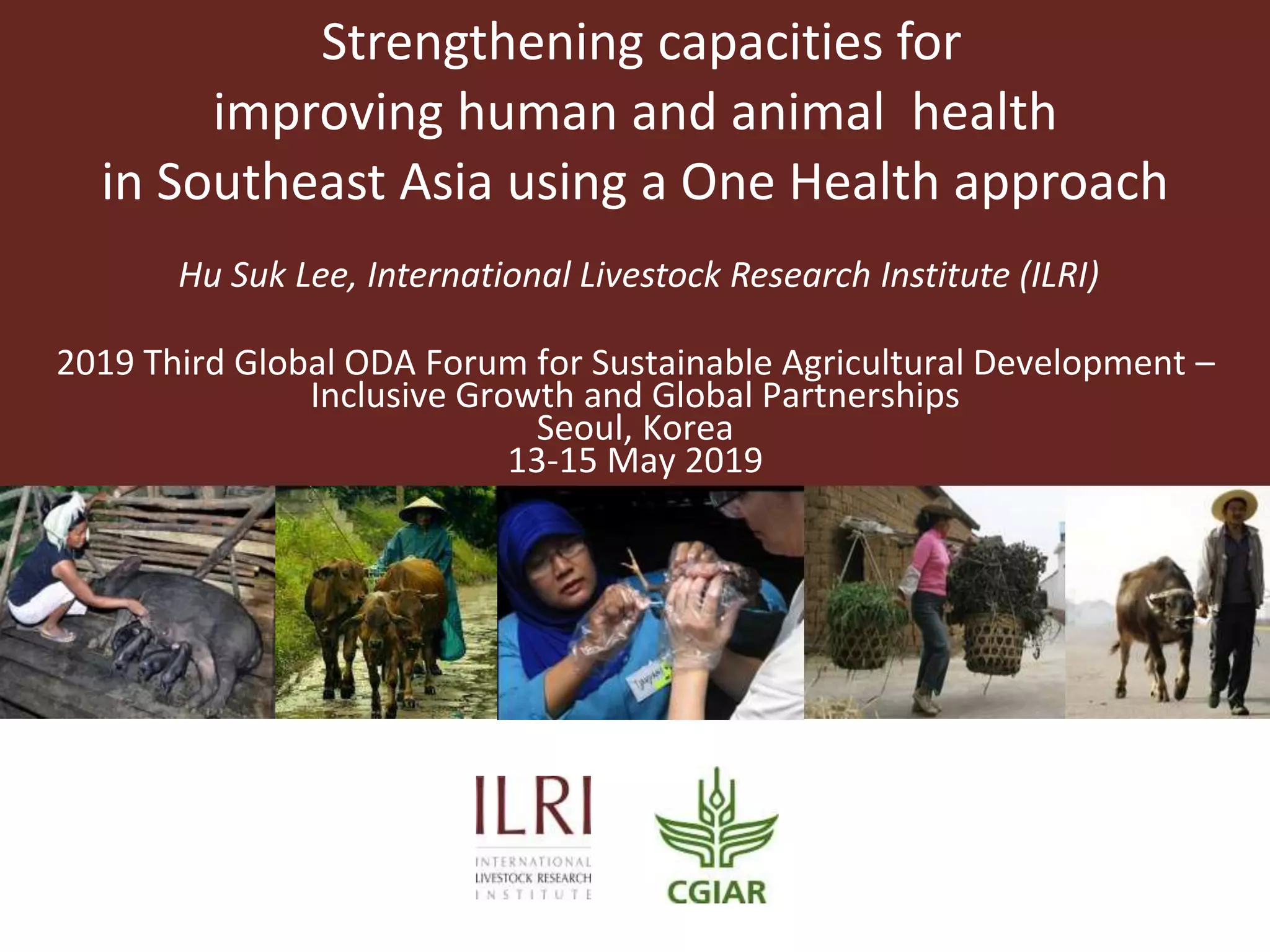
Strengthening capacities for
improving human and animal health
in Southeast Asia using a One Health approach
Hu Suk Lee, International Livestock Research Institute (ILRI)
2019 Third Global ODA Forum for Sustainable Agricultural Development –
Inclusive Growth and Global Partnerships
Seoul, Korea
13-15 May 2019
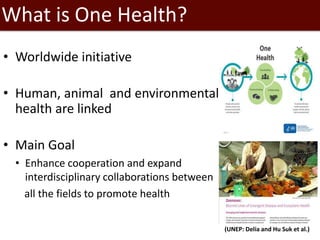
What is One Health?
(UNEP: Delia and Hu Suk et al.)
• Worldwide initiative
• Human, animal and environmental
health are linked
• Main Goal
• Enhance cooperation and expand
interdisciplinary collaborations between
all the fields to promote health
Rationale and Relevance
• Livestock sector plays a key role in SEA
• In SEA, hotspot for Transboundary and emerging
diseases (TEDs) (e.g. bird flu, H5N1)
• mainly, due to illegal movement and Climate Change
(e.g. Vietnam-> World bank report)
• However, there is limited reliable information
• Lack of access to reliable human/livestock health
services (especially, women and children)
• Need to strengthen One Health interventions at
the government/community level
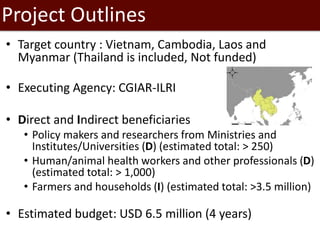
Project Outlines
• Target country : Vietnam, Cambodia, Laos and
Myanmar (Thailand is included, Not funded)
• Executing Agency: CGIAR-ILRI
• Direct and Indirect beneficiaries
• Policy makers and researchers from Ministries and
Institutes/Universities (D) (estimated total: > 250)
• Human/animal health workers and other professionals (D)
(estimated total: > 1,000)
• Farmers and households (I) (estimated total: >3.5 million)
• Estimated budget: USD 6.5 million (4 years)
Project Objectives
• To strengthen the capacity of the government and
community to prevent and control risks to human
and animal health (SDGs 1-5, 13, 15 and 17)
• TED prioritization using a One Health Approach
• To establish a regional One Health partnership in
response to TEDs in Southeast Asia
• To develop and transfer tools, methods and
approaches for better managing and communication
• To support strategies for equal benefits/right for
women through gender intervention programs
• To build capacities of functional research and policy
making groups – sustainable development
Expected Outputs
• To produce evidence that can inform TED priorities
• Engagement of project stakeholders in actionable
decisions and programs using a One Health approach
• To develop tools that help stakeholders understand,
manage and communicate about TEDs
• To improve equal benefit/right of agriculture,
veterinary service for women through interventions
• Capacity development of national partners in field
investigation, risk assessment and diagnosis etc.
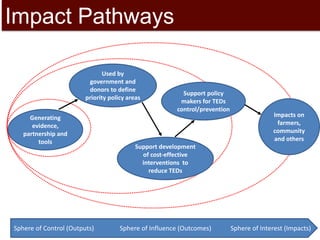
Impact Pathways
Generating
evidence,
partnership and
tools
Used by
government and
donors to define
priority policy areas
Support policy
makers for TEDs
control/prevention
Support development
of cost-effective
interventions to
reduce TEDs
Sphere of Control (Outputs) Sphere of Influence (Outcomes) Sphere of Interest (Impacts)
Impacts on
farmers,
community
and others
This presentation is licensed for use under the Creative Commons Attribution 4.0 International Licence.
better lives through livestock
ilri.org
ILRI thanks all donors and organizations who globally supported its work through their contributions
to the CGIAR Trust Fund.

Strengthening capacities for improving human and animal health in Southeast Asia using a One Health approach

  • 1.
    Strengthening capacities for improvinghuman and animal health in Southeast Asia using a One Health approach Hu Suk Lee, International Livestock Research Institute (ILRI) 2019 Third Global ODA Forum for Sustainable Agricultural Development – Inclusive Growth and Global Partnerships Seoul, Korea 13-15 May 2019
  • 2.
    What is OneHealth? (UNEP: Delia and Hu Suk et al.) • Worldwide initiative • Human, animal and environmental health are linked • Main Goal • Enhance cooperation and expand interdisciplinary collaborations between all the fields to promote health
  • 3.
    Rationale and Relevance •Livestock sector plays a key role in SEA • In SEA, hotspot for Transboundary and emerging diseases (TEDs) (e.g. bird flu, H5N1) • mainly, due to illegal movement and Climate Change (e.g. Vietnam-> World bank report) • However, there is limited reliable information • Lack of access to reliable human/livestock health services (especially, women and children) • Need to strengthen One Health interventions at the government/community level
  • 4.
    Project Outlines • Targetcountry : Vietnam, Cambodia, Laos and Myanmar (Thailand is included, Not funded) • Executing Agency: CGIAR-ILRI • Direct and Indirect beneficiaries • Policy makers and researchers from Ministries and Institutes/Universities (D) (estimated total: > 250) • Human/animal health workers and other professionals (D) (estimated total: > 1,000) • Farmers and households (I) (estimated total: >3.5 million) • Estimated budget: USD 6.5 million (4 years)
  • 5.
    Project Objectives • Tostrengthen the capacity of the government and community to prevent and control risks to human and animal health (SDGs 1-5, 13, 15 and 17) • TED prioritization using a One Health Approach • To establish a regional One Health partnership in response to TEDs in Southeast Asia • To develop and transfer tools, methods and approaches for better managing and communication • To support strategies for equal benefits/right for women through gender intervention programs • To build capacities of functional research and policy making groups – sustainable development
  • 6.
    Expected Outputs • Toproduce evidence that can inform TED priorities • Engagement of project stakeholders in actionable decisions and programs using a One Health approach • To develop tools that help stakeholders understand, manage and communicate about TEDs • To improve equal benefit/right of agriculture, veterinary service for women through interventions • Capacity development of national partners in field investigation, risk assessment and diagnosis etc.
  • 7.
    Impact Pathways Generating evidence, partnership and tools Usedby government and donors to define priority policy areas Support policy makers for TEDs control/prevention Support development of cost-effective interventions to reduce TEDs Sphere of Control (Outputs) Sphere of Influence (Outcomes) Sphere of Interest (Impacts) Impacts on farmers, community and others
  • 8.
    This presentation islicensed for use under the Creative Commons Attribution 4.0 International Licence. better lives through livestock ilri.org ILRI thanks all donors and organizations who globally supported its work through their contributions to the CGIAR Trust Fund.