Creating Community Health:
Keys to Success
Jennifer D. Seymour, PhD
Centers for Disease Control and Prevention
SOAR Strategy Summit 2015
May 11, 2015
National Center for Chronic Disease Prevention and Health Promotion
Division of Nutrition, Physical Activity, and Obesity
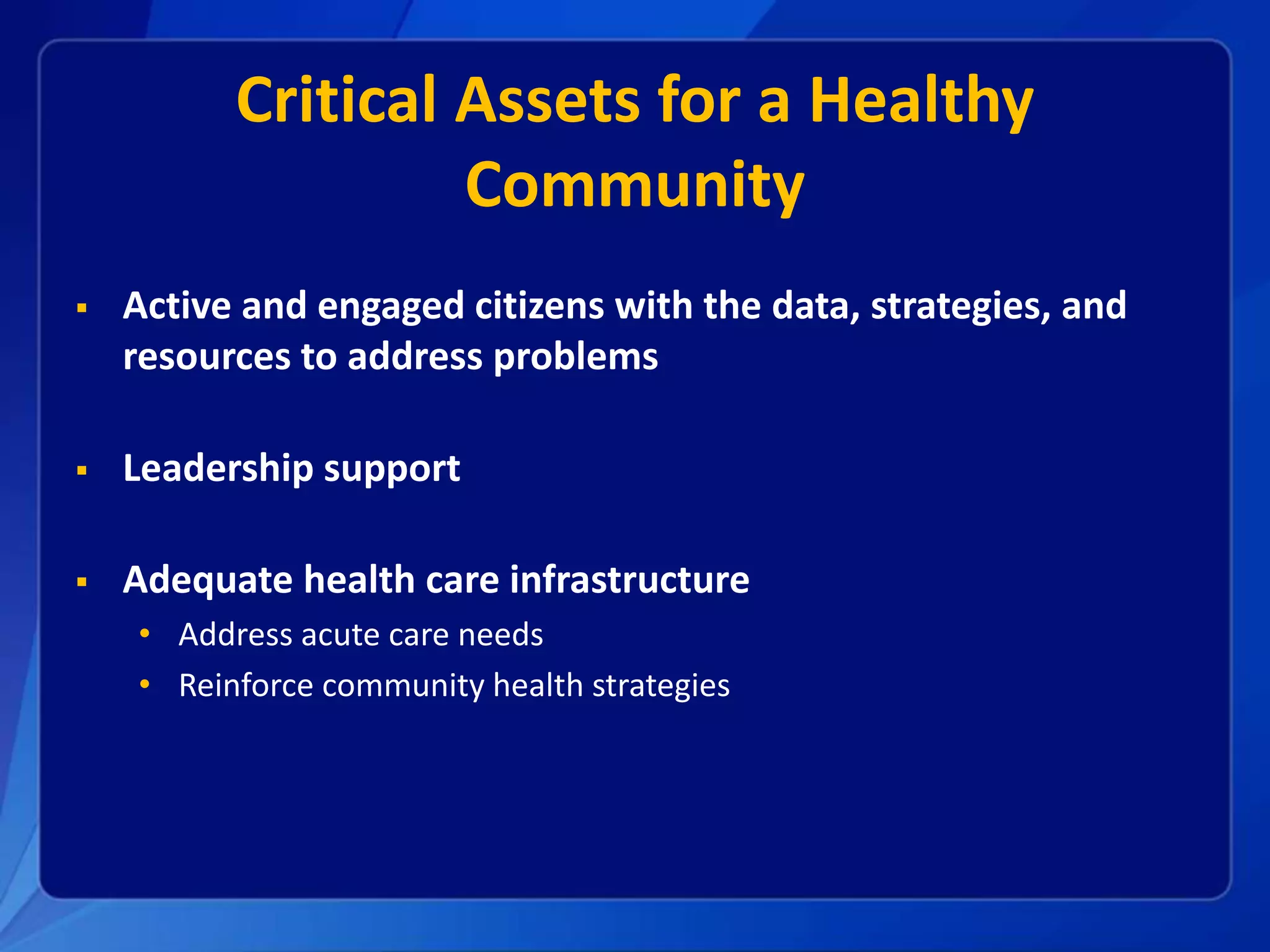
Critical Assets for a Healthy
Community
 Active and engaged citizens with the data, strategies, and
resources to address problems
 Leadership support
 Adequate health care infrastructure
• Address acute care needs
• Reinforce community health strategies
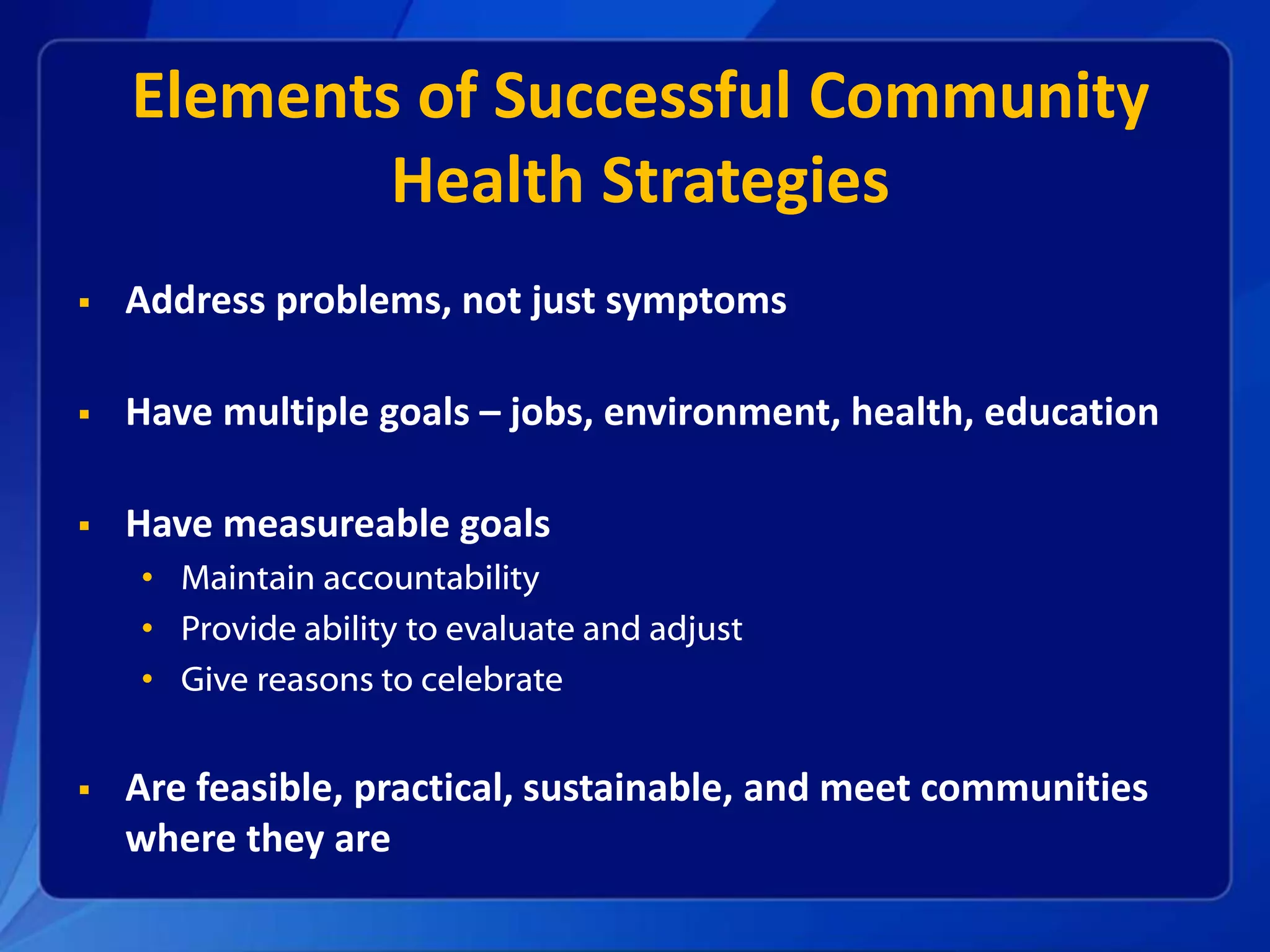
Elements of Successful Community
Health Strategies
 Address problems, not just symptoms
 Have multiple goals – jobs, environment, health, education
 Have measureable goals
• Maintain accountability
• Provide ability to evaluate and adjust
• Give reasons to celebrate
 Are feasible, practical, sustainable, and meet communities
where they are
How CDC Helps Communities
 Supports states
 Provides technical assistance
 Provides grants
• Coalition building
• Technical support
• Strategy implementation
 Connects communities across the country
 Documents progress and what works
 Coordinates with other federal and state agencies
 Helps communities develop sustainable programs
For more information please contact Centers for Disease Control and Prevention
1600 Clifton Road NE, Atlanta, GA 30333
Telephone: 1-800-CDC-INFO (232-4636)/TTY: 1-888-232-6348
Visit: www.cdc.gov | Contact CDC at: 1-800-CDC-INFO or www.cdc.gov/info
The findings and conclusions in this report are those of the authors and do not necessarily represent the official position of the
Centers for Disease Control and Prevention.
National Center for Chronic Disease Prevention and Health Promotion
Division of Nutrition, Physical Activity, and Obesity

Creating Community Health: Keys to Success

  • 1.
    Creating Community Health: Keysto Success Jennifer D. Seymour, PhD Centers for Disease Control and Prevention SOAR Strategy Summit 2015 May 11, 2015 National Center for Chronic Disease Prevention and Health Promotion Division of Nutrition, Physical Activity, and Obesity
  • 3.
    Critical Assets fora Healthy Community  Active and engaged citizens with the data, strategies, and resources to address problems  Leadership support  Adequate health care infrastructure • Address acute care needs • Reinforce community health strategies
  • 4.
    Elements of SuccessfulCommunity Health Strategies  Address problems, not just symptoms  Have multiple goals – jobs, environment, health, education  Have measureable goals • Maintain accountability • Provide ability to evaluate and adjust • Give reasons to celebrate  Are feasible, practical, sustainable, and meet communities where they are
  • 8.
    How CDC HelpsCommunities  Supports states  Provides technical assistance  Provides grants • Coalition building • Technical support • Strategy implementation  Connects communities across the country  Documents progress and what works  Coordinates with other federal and state agencies  Helps communities develop sustainable programs
  • 10.
    For more informationplease contact Centers for Disease Control and Prevention 1600 Clifton Road NE, Atlanta, GA 30333 Telephone: 1-800-CDC-INFO (232-4636)/TTY: 1-888-232-6348 Visit: www.cdc.gov | Contact CDC at: 1-800-CDC-INFO or www.cdc.gov/info The findings and conclusions in this report are those of the authors and do not necessarily represent the official position of the Centers for Disease Control and Prevention. National Center for Chronic Disease Prevention and Health Promotion Division of Nutrition, Physical Activity, and Obesity