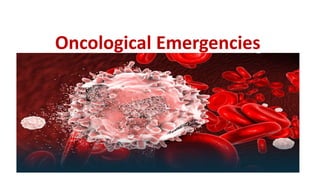

Oncological Emergencies
•Oncological emergencies are complications
resulting from cancer and cancer treatment.
•It is a life threatening condition.
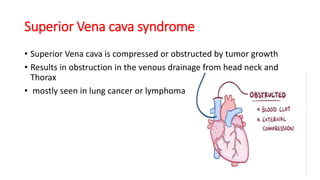
Superior Vena cava syndrome
• Superior Vena cava is compressed or obstructed by tumor growth
• Results in obstruction in the venous drainage from head neck and
Thorax
• mostly seen in lung cancer or lymphoma
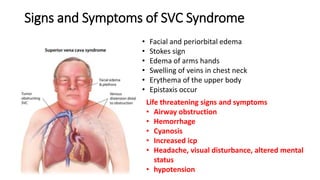
Signs and Symptoms of SVC Syndrome
• Facial and periorbital edema
• Stokes sign
• Edema of arms hands
• Swelling of veins in chest neck
• Erythema of the upper body
• Epistaxis occur
Life threatening signs and symptoms
• Airway obstruction
• Hemorrhage
• Cyanosis
• Increased icp
• Headache, visual disturbance, altered mental
status
• hypotension
Intervention
• Assess for early signs and symptoms of SVC syndrome
• semi Fowler position
• administer corticosteroids diuretics
• high dose Radiation therapy & chemotherapy
• vena cava bypass surgery
• thrombolytic therapy
• give breathing support
• monitor Fluid volume level
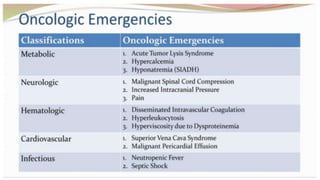
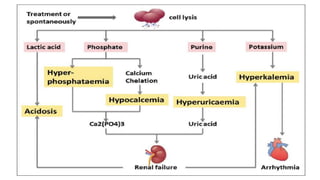
Tumor lysis syndrome
• When large quantities of tumor cells are destroyed rapidly
and intracellular components is released Into the
bloodstream faster than the body can eliminate them this
can cause electrolyte Imbalances
• Leading to tetrad of abnormalities
Hyperkalemia
Hyperuricemia
Hypocalcemia
Hyperphosphatemia
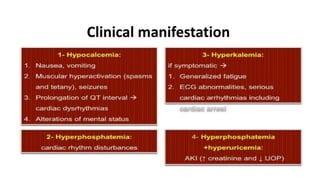
Clinical manifestation
Intervention
• Ensure good hydration
• Add Sodium Bicarbonate
• Diuretic therapy with carbonic anhydrase inhibitor or
acetazolamide
• Administered sodium polystyrene sulphonate
• Administer hypertonic dextrose with saline
• Administer aluminium hydroxide
• Hemodialysis
• Assess urine PH
• Administer allopurinol
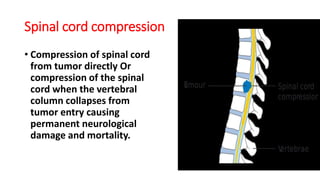
Spinal cord compression
• Compression of spinal cord
from tumor directly Or
compression of the spinal
cord when the vertebral
column collapses from
tumor entry causing
permanent neurological
damage and mortality.
Intervention
• Early recognition for back pain and neurological deficit
• radiation and chemotherapy
• corticosteroid therapy
• surgery
Signs and symptoms
• Back pain
• Neurological deficit
• Bowel bladder dysfunction
• Weakness
Hypercalcaemia
• Life threatening condition
• It is a last manifestation of extensive malignancy
• Release of calcium more than in amount which can be eliminated by
the kidney Because of bone destruction and demineralization.
Signs and symptoms
• Early signs include
1. fatigue
2. anorexia
3. nausea vomiting
4. constipation
5. polyuria
• serious signs and symptoms include
1. Severe muscle weakness
2. Diminished deep tendon reflex
3. paralytic ileus
4. dehydration
5. Change in electrocardiogram
Intervention
• Monitor serum calcium level and ECG
• administer fluid
• use laxatives and stool softeners
• promote mobility
• administer medication to lower calcium level
• prepare the client for dialysis
Syndrome of inappropriate antidiuretic
hormone (SIADH)
• Tumors can produce, secrete, stimulate substances that mimics
antidiuretic hormone.
Signs and symptoms
• MI symptoms include
1. weakness
2. muscle cramps
3. loss of appetite
4. fatigue
5. serum sodium level range from 115 to 120 mEq/L
• serious sign and symptoms related to water intoxication And include
1. weight gain
2. personality changes
3. confusion
4. extreme muscle weakness
• as the serum sodium level approaches 110 mEq/L seizures coma and eventually death will occur unless
condition is treated rapidly
Intervention
• Initiate fluid restriction
• increase sodium intake
• Administer antagonist to diuretic hormone
• Monitor Serum sodium level
• Treat the underlying cause with chemotherapy and radiation
Sepsis and Disseminated intravascular
coagulation (DIC)
• Increased risk for infection specially gram-negative organisms in
bloodstream (sepsis or septicemia) and DIC a life threatening problem
frequently associated with sepsis.
Intervention
• Early identification
• strict aseptic technique
• signs of bleeding and infection
• administer antibiotic intravenously
• administer anticoagulants in early phase of d i c
• Administer cryoprecipitated clotting factors
Thank You

Oncological emergencies

  • 1.
  • 2.
    •Oncological emergencies arecomplications resulting from cancer and cancer treatment. •It is a life threatening condition.
  • 4.
    Superior Vena cavasyndrome • Superior Vena cava is compressed or obstructed by tumor growth • Results in obstruction in the venous drainage from head neck and Thorax • mostly seen in lung cancer or lymphoma
  • 5.
    Signs and Symptomsof SVC Syndrome • Facial and periorbital edema • Stokes sign • Edema of arms hands • Swelling of veins in chest neck • Erythema of the upper body • Epistaxis occur Life threatening signs and symptoms • Airway obstruction • Hemorrhage • Cyanosis • Increased icp • Headache, visual disturbance, altered mental status • hypotension
  • 6.
    Intervention • Assess forearly signs and symptoms of SVC syndrome • semi Fowler position • administer corticosteroids diuretics • high dose Radiation therapy & chemotherapy • vena cava bypass surgery • thrombolytic therapy • give breathing support • monitor Fluid volume level
  • 7.
    Tumor lysis syndrome •When large quantities of tumor cells are destroyed rapidly and intracellular components is released Into the bloodstream faster than the body can eliminate them this can cause electrolyte Imbalances • Leading to tetrad of abnormalities Hyperkalemia Hyperuricemia Hypocalcemia Hyperphosphatemia
  • 9.
  • 10.
    Intervention • Ensure goodhydration • Add Sodium Bicarbonate • Diuretic therapy with carbonic anhydrase inhibitor or acetazolamide • Administered sodium polystyrene sulphonate • Administer hypertonic dextrose with saline • Administer aluminium hydroxide • Hemodialysis • Assess urine PH • Administer allopurinol
  • 11.
    Spinal cord compression •Compression of spinal cord from tumor directly Or compression of the spinal cord when the vertebral column collapses from tumor entry causing permanent neurological damage and mortality.
  • 12.
    Intervention • Early recognitionfor back pain and neurological deficit • radiation and chemotherapy • corticosteroid therapy • surgery
  • 13.
    Signs and symptoms •Back pain • Neurological deficit • Bowel bladder dysfunction • Weakness
  • 14.
    Hypercalcaemia • Life threateningcondition • It is a last manifestation of extensive malignancy • Release of calcium more than in amount which can be eliminated by the kidney Because of bone destruction and demineralization.
  • 15.
    Signs and symptoms •Early signs include 1. fatigue 2. anorexia 3. nausea vomiting 4. constipation 5. polyuria • serious signs and symptoms include 1. Severe muscle weakness 2. Diminished deep tendon reflex 3. paralytic ileus 4. dehydration 5. Change in electrocardiogram
  • 16.
    Intervention • Monitor serumcalcium level and ECG • administer fluid • use laxatives and stool softeners • promote mobility • administer medication to lower calcium level • prepare the client for dialysis
  • 17.
    Syndrome of inappropriateantidiuretic hormone (SIADH) • Tumors can produce, secrete, stimulate substances that mimics antidiuretic hormone.
  • 18.
    Signs and symptoms •MI symptoms include 1. weakness 2. muscle cramps 3. loss of appetite 4. fatigue 5. serum sodium level range from 115 to 120 mEq/L • serious sign and symptoms related to water intoxication And include 1. weight gain 2. personality changes 3. confusion 4. extreme muscle weakness • as the serum sodium level approaches 110 mEq/L seizures coma and eventually death will occur unless condition is treated rapidly
  • 19.
    Intervention • Initiate fluidrestriction • increase sodium intake • Administer antagonist to diuretic hormone • Monitor Serum sodium level • Treat the underlying cause with chemotherapy and radiation
  • 20.
    Sepsis and Disseminatedintravascular coagulation (DIC) • Increased risk for infection specially gram-negative organisms in bloodstream (sepsis or septicemia) and DIC a life threatening problem frequently associated with sepsis.
  • 21.
    Intervention • Early identification •strict aseptic technique • signs of bleeding and infection • administer antibiotic intravenously • administer anticoagulants in early phase of d i c • Administer cryoprecipitated clotting factors
  • 22.