ONCOLOGICAL EMERGENCIES
Mrs. Ritoo Rana ,
M. Sc. Nursing ,
College of Nursing
K.G.M.U., Lucknow
August 25, 2023
Oncological Emergencies
Any acute possible morbid or life threading events in
patients with cancer either because of the malignancy
or because of their treatment. These events may occur
at any time during malignancy, from symptoms present
to end stage of office.
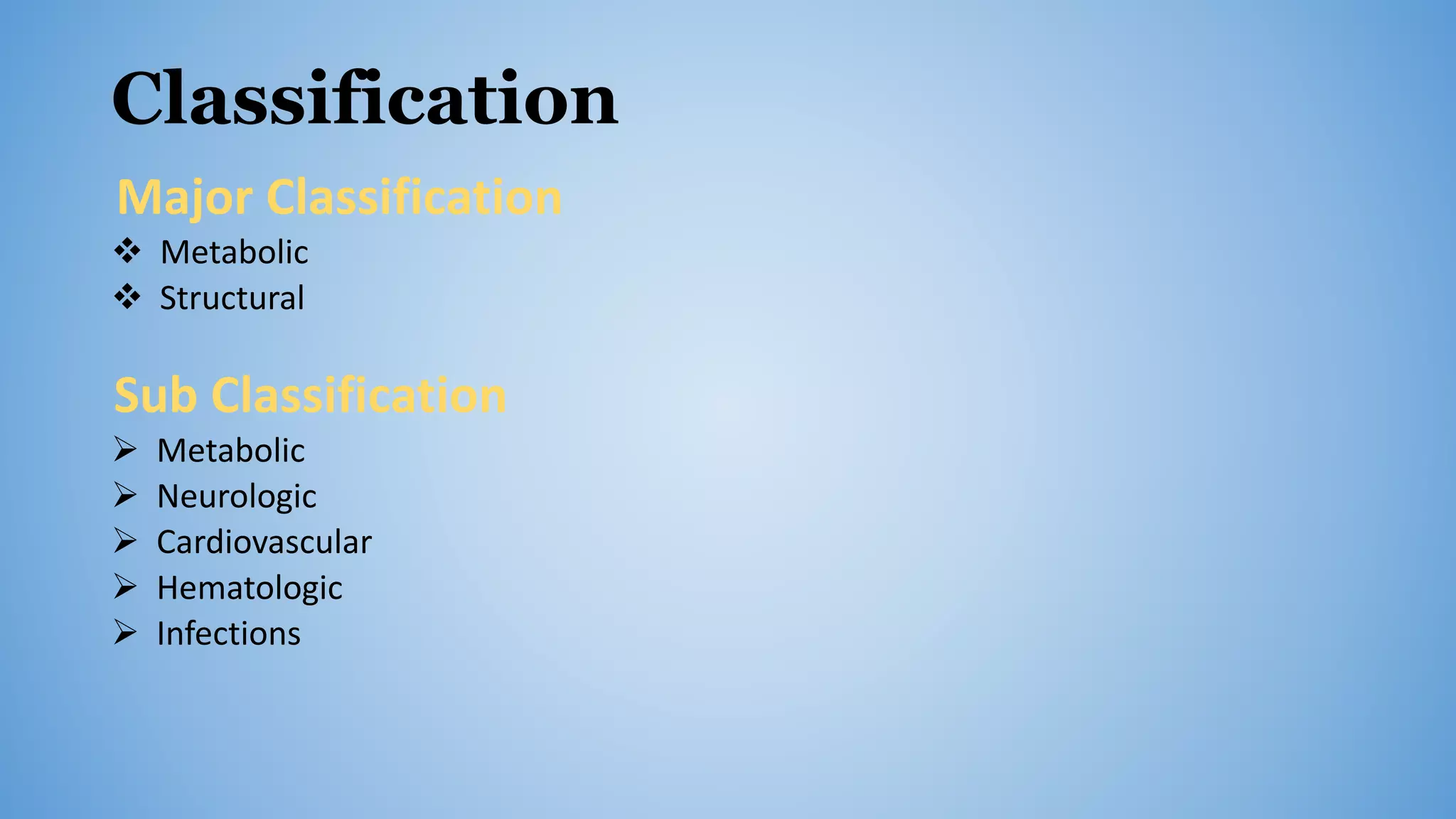
Classification
Major Classification
 Metabolic
 Structural
Sub Classification
 Metabolic
 Neurologic
 Cardiovascular
 Hematologic
 Infections
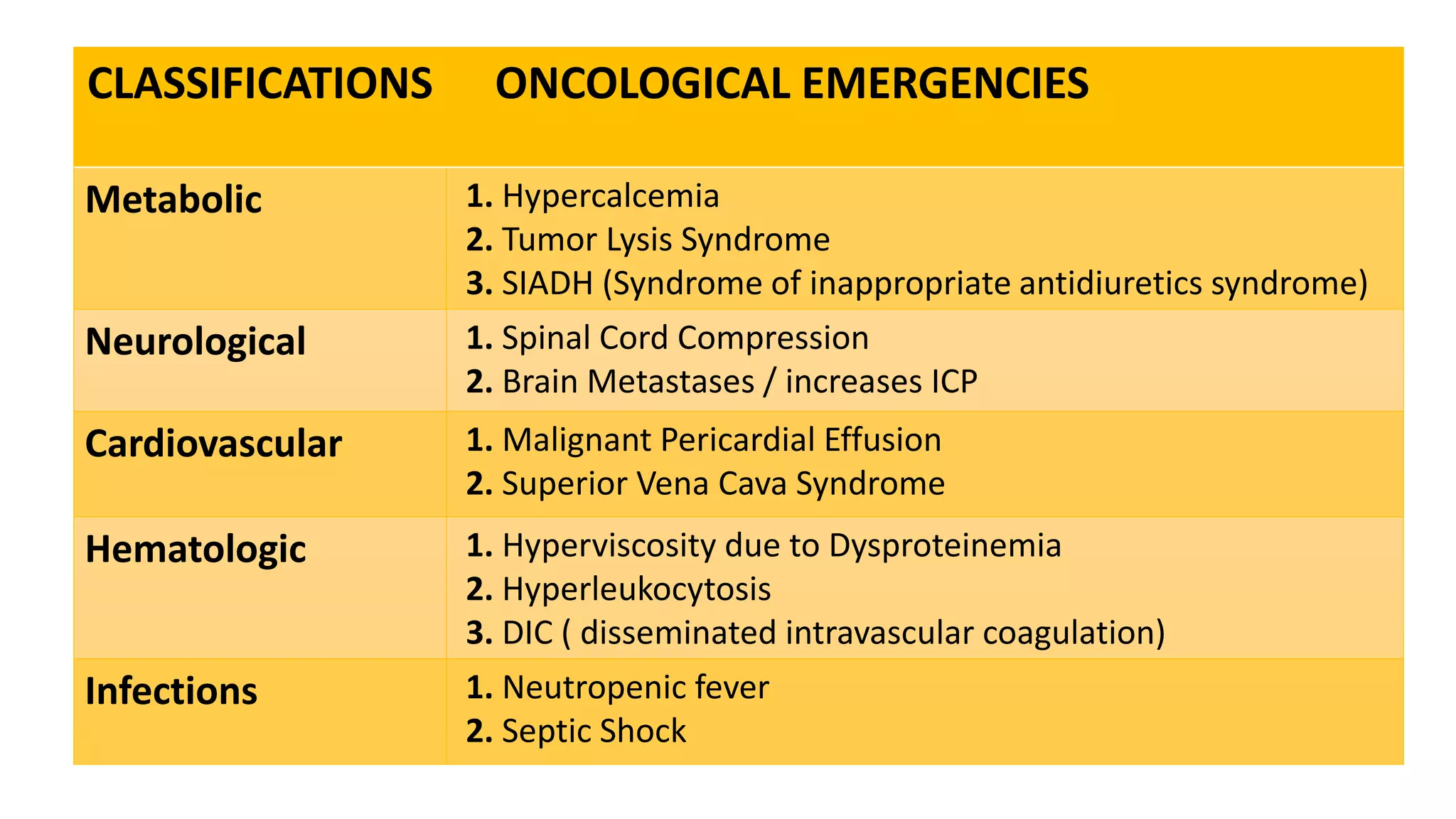
CLASSIFICATIONS ONCOLOGICAL EMERGENCIES
Metabolic 1. Hypercalcemia
2. Tumor Lysis Syndrome
3. SIADH (Syndrome of inappropriate antidiuretics syndrome)
Neurological 1. Spinal Cord Compression
2. Brain Metastases / increases ICP
Cardiovascular 1. Malignant Pericardial Effusion
2. Superior Vena Cava Syndrome
Hematologic 1. Hyperviscosity due to Dysproteinemia
2. Hyperleukocytosis
3. DIC ( disseminated intravascular coagulation)
Infections 1. Neutropenic fever
2. Septic Shock
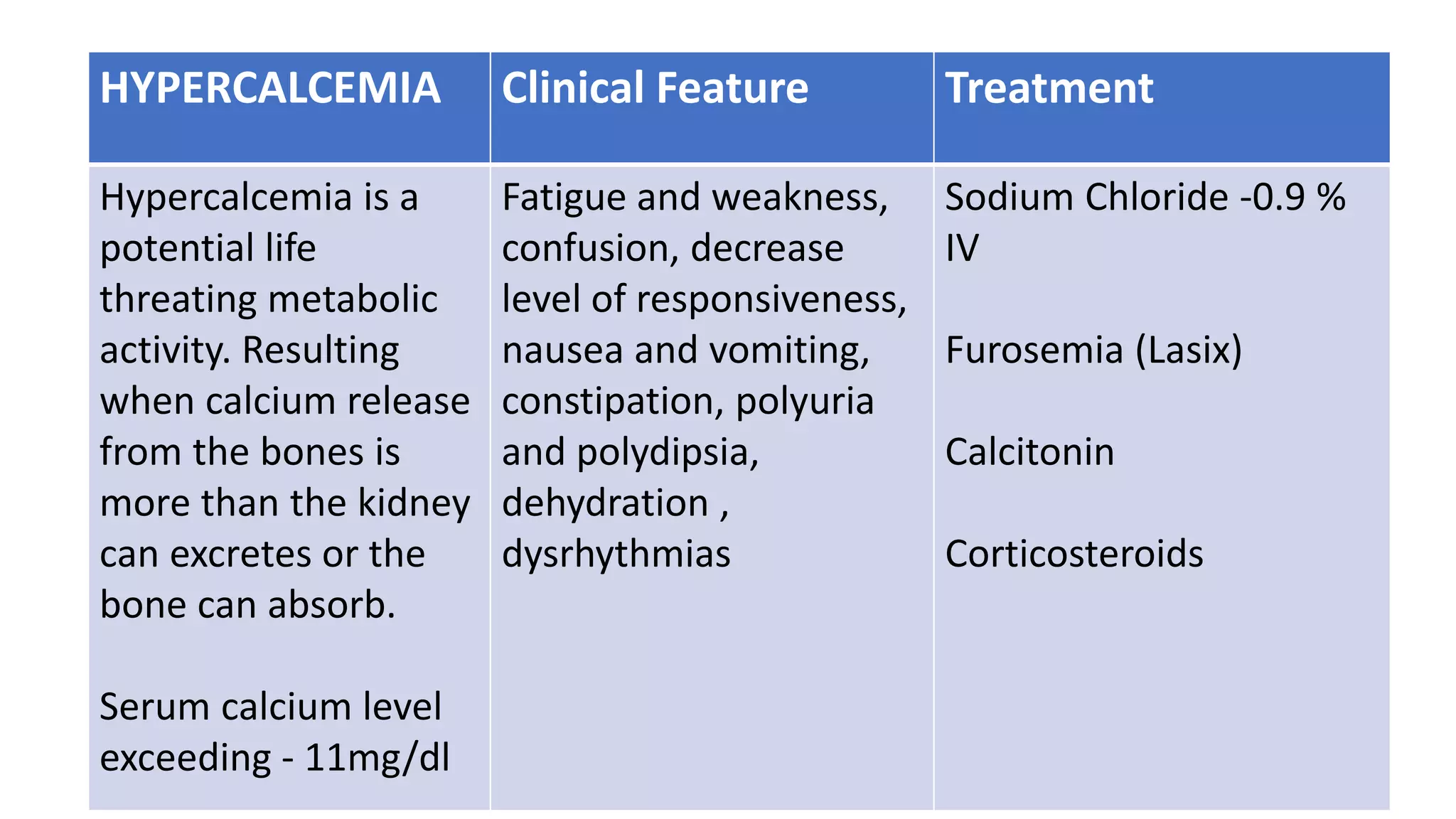
HYPERCALCEMIA Clinical Feature Treatment
Hypercalcemia is a
potential life
threating metabolic
activity. Resulting
when calcium release
from the bones is
more than the kidney
can excretes or the
bone can absorb.
Serum calcium level
exceeding - 11mg/dl
Fatigue and weakness,
confusion, decrease
level of responsiveness,
nausea and vomiting,
constipation, polyuria
and polydipsia,
dehydration ,
dysrhythmias
Sodium Chloride -0.9 %
IV
Furosemia (Lasix)
Calcitonin
Corticosteroids
Nursing Management of Hyperglycemia
•Identify patient at risk or hyperglycemia an assess for sign and symptoms of
hyperglycemia.
•Educate patient and family, prevention and family detection can prevent fatality.
•Teach at risk patients to recognize and report sign and symptoms of hyperglycemia.
•Encourage patient to consume 2 to 3 liter of fluid daily unless clinical investigation while
existing renal or cardiac disease.
•Colonic investigation such as stool softness and laxatives for constipation.
•Advice patients to maintain nutritional intake without restricting normal calcium intake.
•Discuss anti-emetic therapy if nausea and vomiting occur.
•Promote mobility by emphasizing is important in in preventing mineralization and
breakdown of bones.
TUMOR LYSIS SYNDROME Clinical Feature Treatment
Tumor Lysis Syndrome is a
potentially fatal metabolic
emergencies that can develop as a
tumor respond to treatment.
Electrolyte imbalance and acute
renal failure usually began 1 to 2
days after treatment start and
within a week following the
completion the therapy.
*Hyperuricemia &
hyperphosphatemia
produce nausea &
acute renal failure.
*Hypercalcemia causes
muscle cramps, cardiac
arrhythmia & tetany.
*Hyperkalemia results
in cardiac arrhythmia &
flaccid paralysis.
*Hyperphosphatemia
cause arrhythmia and
ARF.
*IV fluid, normal or half
normal saline around
3000ml per day.
*Oral Allopurinol is
given 300-600 mg in
divided doses.
*Correction of
electrolyte and acid
base abnormality & IV
sodium bicarbonate to
maintain an alkaline
urine pH.
*IV calcium gluconate is
given for hypocalcemia.
Pathophysiology of Tumor Lysis Syndrome
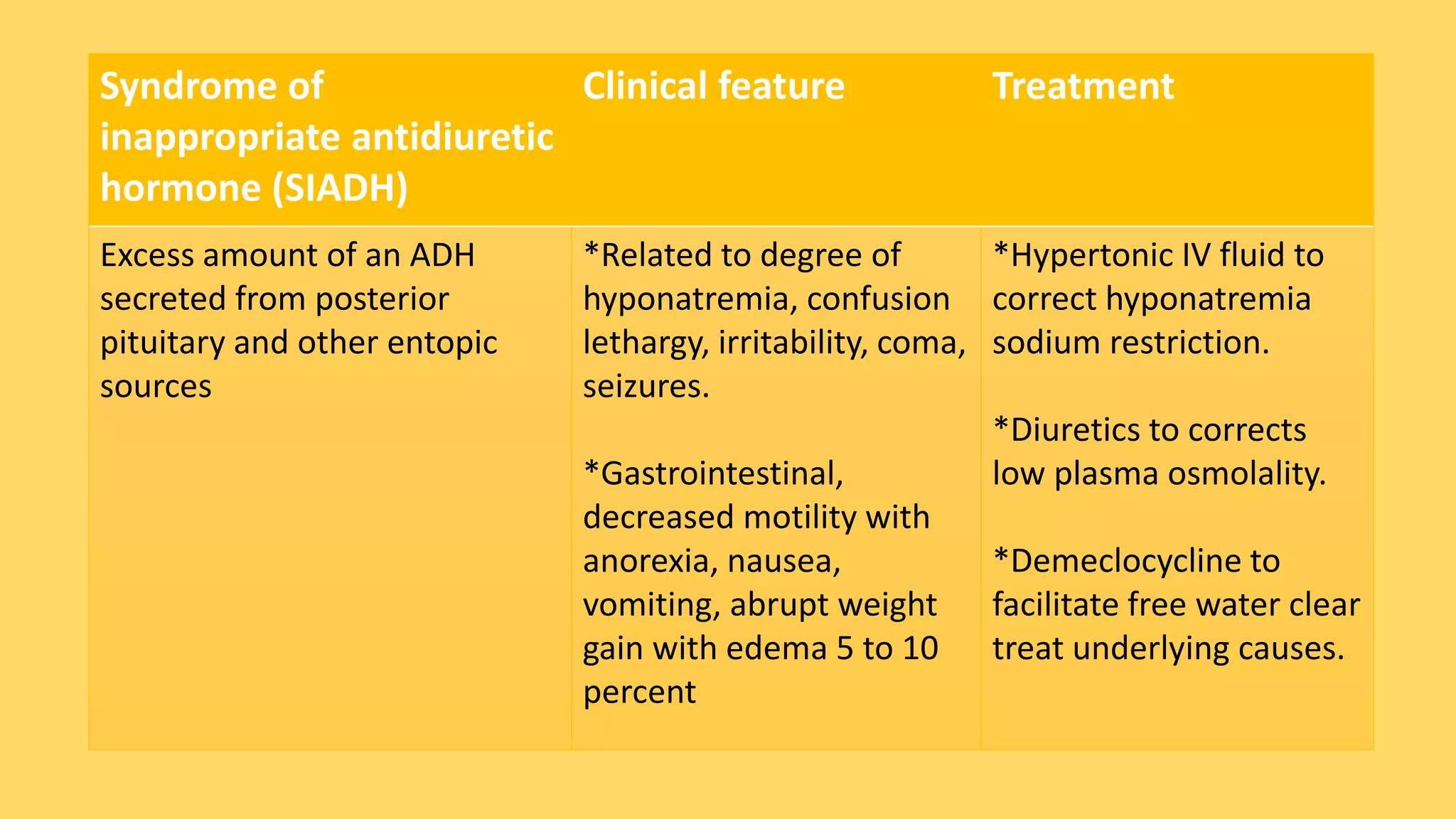
Syndrome of
inappropriate antidiuretic
hormone (SIADH)
Clinical feature Treatment
Excess amount of an ADH
secreted from posterior
pituitary and other entopic
sources
*Related to degree of
hyponatremia, confusion
lethargy, irritability, coma,
seizures.
*Gastrointestinal,
decreased motility with
anorexia, nausea,
vomiting, abrupt weight
gain with edema 5 to 10
percent
*Hypertonic IV fluid to
correct hyponatremia
sodium restriction.
*Diuretics to corrects
low plasma osmolality.
*Demeclocycline to
facilitate free water clear
treat underlying causes.
Nursing Management
• Know which client on risk.
• Monitor appropriate urine and serum laboratory test.
• Assess for manifestation of hyponatremia by evaluations
neurological status.
• Observe for changes in concurrent disorder.
• Administer demeclocycline as ordered to interfere with
action monitor possible nephrotoxicity.
• Monitor for hyponatremia with fluid over correction.
• Client and family teaching.
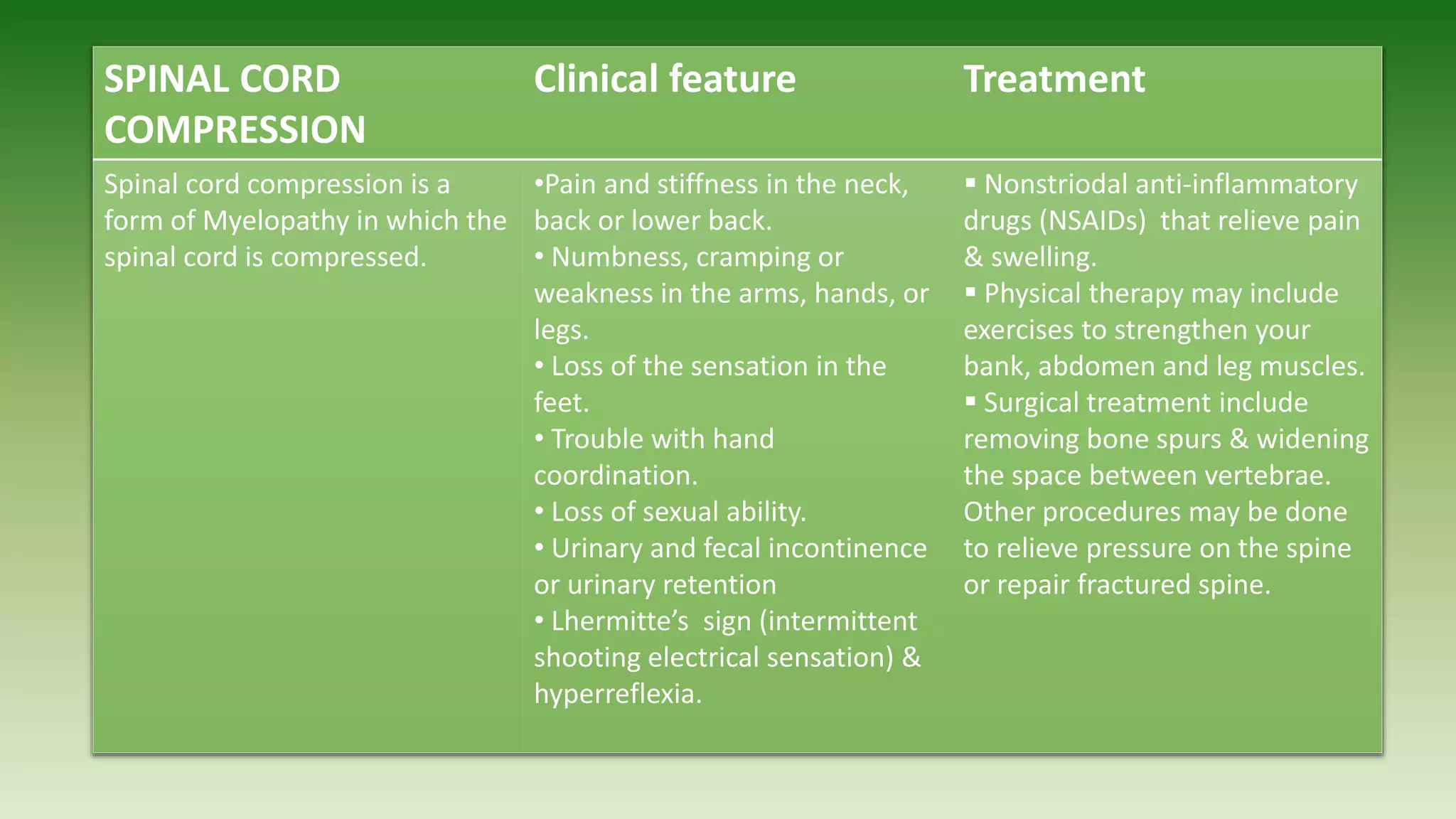
SPINAL CORD
COMPRESSION
Clinical feature Treatment
Spinal cord compression is a
form of Myelopathy in which the
spinal cord is compressed.
•Pain and stiffness in the neck,
back or lower back.
• Numbness, cramping or
weakness in the arms, hands, or
legs.
• Loss of the sensation in the
feet.
• Trouble with hand
coordination.
• Loss of sexual ability.
• Urinary and fecal incontinence
or urinary retention
• Lhermitte’s sign (intermittent
shooting electrical sensation) &
hyperreflexia.
 Nonstriodal anti-inflammatory
drugs (NSAIDs) that relieve pain
& swelling.
 Physical therapy may include
exercises to strengthen your
bank, abdomen and leg muscles.
 Surgical treatment include
removing bone spurs & widening
the space between vertebrae.
Other procedures may be done
to relieve pressure on the spine
or repair fractured spine.
Nursing Management
On going assessment neurological function to identify existing &
progressing the dysfunction.
Control pain with pharmalogic and non- pharmalogical measures.
Prevent immobility resulting from pain and decrease function.
Prevent immobility resulting from pain & decrease function.
Maintain muscle tone by assisting ROM exercise in collaboration with
physical & occupational therapies.
Intermittent cauterization & bowel training program for patient with
bladder or bowel dysfunction
Provide encouragement & support patient & family coping with pain
& altered functioning, lifestyle, roles & independence.
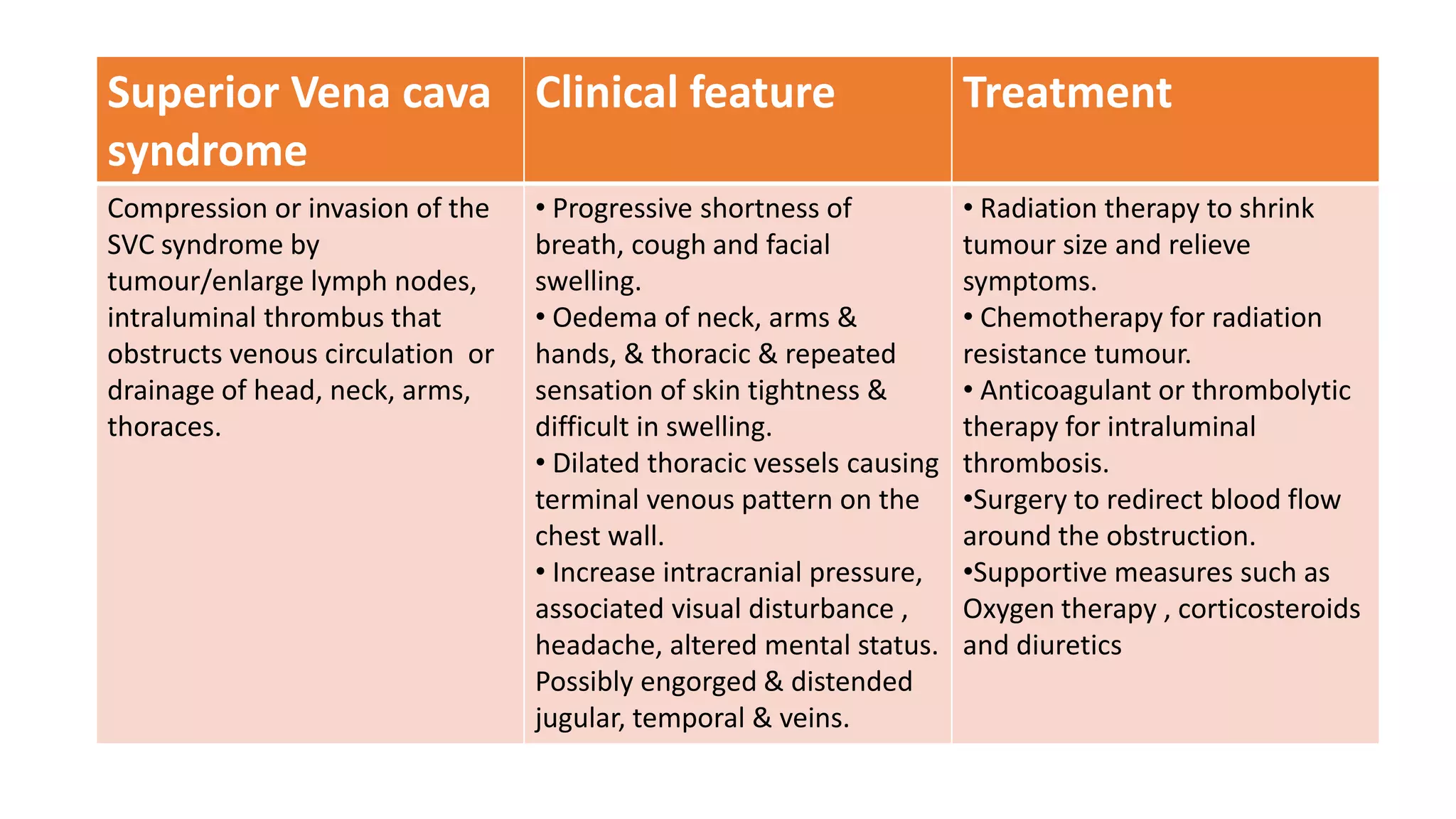
Superior Vena cava
syndrome
Clinical feature Treatment
Compression or invasion of the
SVC syndrome by
tumour/enlarge lymph nodes,
intraluminal thrombus that
obstructs venous circulation or
drainage of head, neck, arms,
thoraces.
• Progressive shortness of
breath, cough and facial
swelling.
• Oedema of neck, arms &
hands, & thoracic & repeated
sensation of skin tightness &
difficult in swelling.
• Dilated thoracic vessels causing
terminal venous pattern on the
chest wall.
• Increase intracranial pressure,
associated visual disturbance ,
headache, altered mental status.
Possibly engorged & distended
jugular, temporal & veins.
• Radiation therapy to shrink
tumour size and relieve
symptoms.
• Chemotherapy for radiation
resistance tumour.
• Anticoagulant or thrombolytic
therapy for intraluminal
thrombosis.
•Surgery to redirect blood flow
around the obstruction.
•Supportive measures such as
Oxygen therapy , corticosteroids
and diuretics
Superior Vena Cava Syndrome
Nursing Management
Identify patient at risk of SVC.
Monitor and report clinical management of SVC.
Monitor cardiopulmonary and neurological status.
Facilitate breathing by positioning the patient.
Promote energy conservation.
Monitor client fluid volume status and administer fluids cautiously to
minimize oedema.
Assess the thoracic radiation related problem such as dysphasia,
esophagitis.
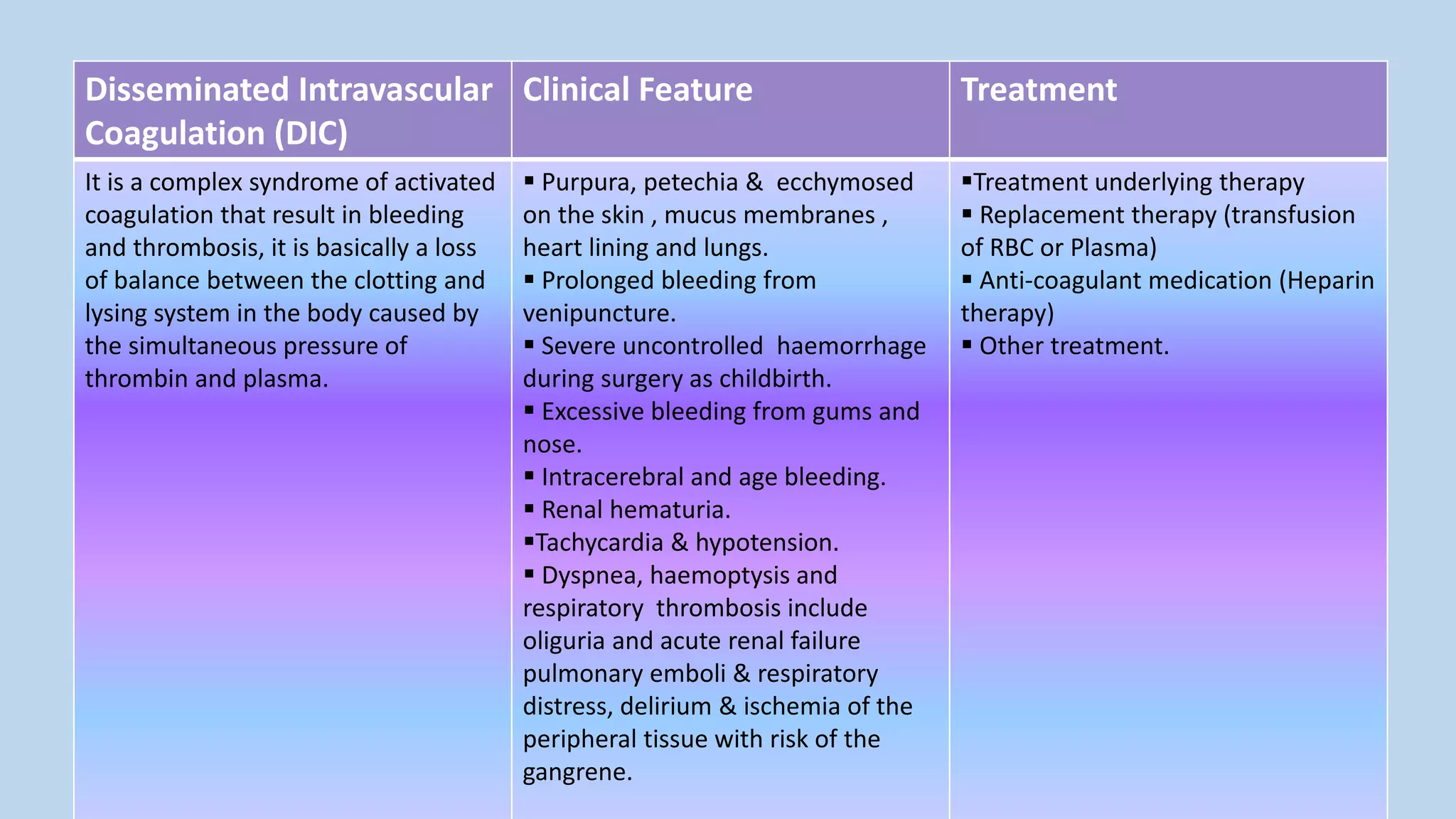
Disseminated Intravascular
Coagulation (DIC)
Clinical Feature Treatment
It is a complex syndrome of activated
coagulation that result in bleeding
and thrombosis, it is basically a loss
of balance between the clotting and
lysing system in the body caused by
the simultaneous pressure of
thrombin and plasma.
 Purpura, petechia & ecchymosed
on the skin , mucus membranes ,
heart lining and lungs.
 Prolonged bleeding from
venipuncture.
 Severe uncontrolled haemorrhage
during surgery as childbirth.
 Excessive bleeding from gums and
nose.
 Intracerebral and age bleeding.
 Renal hematuria.
Tachycardia & hypotension.
 Dyspnea, haemoptysis and
respiratory thrombosis include
oliguria and acute renal failure
pulmonary emboli & respiratory
distress, delirium & ischemia of the
peripheral tissue with risk of the
gangrene.
Treatment underlying therapy
 Replacement therapy (transfusion
of RBC or Plasma)
 Anti-coagulant medication (Heparin
therapy)
 Other treatment.
Nursing Management
• Integumentary bleeding or oozing of blood from vein puncture sites
or mucosal surface and wounds pallor, petechia ecchymosed &
hematoma.
• Respiratory tachypanea, haemoptysis, orthopnea & basilar riles.
• Cardiovascular tachycardia and hypotension.
• GI abdominal distension and guaiacum positive stools or gastric
contents.
• Genitourinary Hematuria & oliguria.
• Neurological vision changes, dizziness, headache changes in mental
status & irritability.
Thank
You

Oncological Emergencies.pptx

  • 1.
    ONCOLOGICAL EMERGENCIES Mrs. RitooRana , M. Sc. Nursing , College of Nursing K.G.M.U., Lucknow August 25, 2023
  • 2.
    Oncological Emergencies Any acutepossible morbid or life threading events in patients with cancer either because of the malignancy or because of their treatment. These events may occur at any time during malignancy, from symptoms present to end stage of office.
  • 3.
    Classification Major Classification  Metabolic Structural Sub Classification  Metabolic  Neurologic  Cardiovascular  Hematologic  Infections
  • 4.
    CLASSIFICATIONS ONCOLOGICAL EMERGENCIES Metabolic1. Hypercalcemia 2. Tumor Lysis Syndrome 3. SIADH (Syndrome of inappropriate antidiuretics syndrome) Neurological 1. Spinal Cord Compression 2. Brain Metastases / increases ICP Cardiovascular 1. Malignant Pericardial Effusion 2. Superior Vena Cava Syndrome Hematologic 1. Hyperviscosity due to Dysproteinemia 2. Hyperleukocytosis 3. DIC ( disseminated intravascular coagulation) Infections 1. Neutropenic fever 2. Septic Shock
  • 5.
    HYPERCALCEMIA Clinical FeatureTreatment Hypercalcemia is a potential life threating metabolic activity. Resulting when calcium release from the bones is more than the kidney can excretes or the bone can absorb. Serum calcium level exceeding - 11mg/dl Fatigue and weakness, confusion, decrease level of responsiveness, nausea and vomiting, constipation, polyuria and polydipsia, dehydration , dysrhythmias Sodium Chloride -0.9 % IV Furosemia (Lasix) Calcitonin Corticosteroids
  • 6.
    Nursing Management ofHyperglycemia •Identify patient at risk or hyperglycemia an assess for sign and symptoms of hyperglycemia. •Educate patient and family, prevention and family detection can prevent fatality. •Teach at risk patients to recognize and report sign and symptoms of hyperglycemia. •Encourage patient to consume 2 to 3 liter of fluid daily unless clinical investigation while existing renal or cardiac disease. •Colonic investigation such as stool softness and laxatives for constipation. •Advice patients to maintain nutritional intake without restricting normal calcium intake. •Discuss anti-emetic therapy if nausea and vomiting occur. •Promote mobility by emphasizing is important in in preventing mineralization and breakdown of bones.
  • 7.
    TUMOR LYSIS SYNDROMEClinical Feature Treatment Tumor Lysis Syndrome is a potentially fatal metabolic emergencies that can develop as a tumor respond to treatment. Electrolyte imbalance and acute renal failure usually began 1 to 2 days after treatment start and within a week following the completion the therapy. *Hyperuricemia & hyperphosphatemia produce nausea & acute renal failure. *Hypercalcemia causes muscle cramps, cardiac arrhythmia & tetany. *Hyperkalemia results in cardiac arrhythmia & flaccid paralysis. *Hyperphosphatemia cause arrhythmia and ARF. *IV fluid, normal or half normal saline around 3000ml per day. *Oral Allopurinol is given 300-600 mg in divided doses. *Correction of electrolyte and acid base abnormality & IV sodium bicarbonate to maintain an alkaline urine pH. *IV calcium gluconate is given for hypocalcemia.
  • 8.
  • 9.
    Syndrome of inappropriate antidiuretic hormone(SIADH) Clinical feature Treatment Excess amount of an ADH secreted from posterior pituitary and other entopic sources *Related to degree of hyponatremia, confusion lethargy, irritability, coma, seizures. *Gastrointestinal, decreased motility with anorexia, nausea, vomiting, abrupt weight gain with edema 5 to 10 percent *Hypertonic IV fluid to correct hyponatremia sodium restriction. *Diuretics to corrects low plasma osmolality. *Demeclocycline to facilitate free water clear treat underlying causes.
  • 10.
    Nursing Management • Knowwhich client on risk. • Monitor appropriate urine and serum laboratory test. • Assess for manifestation of hyponatremia by evaluations neurological status. • Observe for changes in concurrent disorder. • Administer demeclocycline as ordered to interfere with action monitor possible nephrotoxicity. • Monitor for hyponatremia with fluid over correction. • Client and family teaching.
  • 11.
    SPINAL CORD COMPRESSION Clinical featureTreatment Spinal cord compression is a form of Myelopathy in which the spinal cord is compressed. •Pain and stiffness in the neck, back or lower back. • Numbness, cramping or weakness in the arms, hands, or legs. • Loss of the sensation in the feet. • Trouble with hand coordination. • Loss of sexual ability. • Urinary and fecal incontinence or urinary retention • Lhermitte’s sign (intermittent shooting electrical sensation) & hyperreflexia.  Nonstriodal anti-inflammatory drugs (NSAIDs) that relieve pain & swelling.  Physical therapy may include exercises to strengthen your bank, abdomen and leg muscles.  Surgical treatment include removing bone spurs & widening the space between vertebrae. Other procedures may be done to relieve pressure on the spine or repair fractured spine.
  • 12.
    Nursing Management On goingassessment neurological function to identify existing & progressing the dysfunction. Control pain with pharmalogic and non- pharmalogical measures. Prevent immobility resulting from pain and decrease function. Prevent immobility resulting from pain & decrease function. Maintain muscle tone by assisting ROM exercise in collaboration with physical & occupational therapies. Intermittent cauterization & bowel training program for patient with bladder or bowel dysfunction Provide encouragement & support patient & family coping with pain & altered functioning, lifestyle, roles & independence.
  • 13.
    Superior Vena cava syndrome Clinicalfeature Treatment Compression or invasion of the SVC syndrome by tumour/enlarge lymph nodes, intraluminal thrombus that obstructs venous circulation or drainage of head, neck, arms, thoraces. • Progressive shortness of breath, cough and facial swelling. • Oedema of neck, arms & hands, & thoracic & repeated sensation of skin tightness & difficult in swelling. • Dilated thoracic vessels causing terminal venous pattern on the chest wall. • Increase intracranial pressure, associated visual disturbance , headache, altered mental status. Possibly engorged & distended jugular, temporal & veins. • Radiation therapy to shrink tumour size and relieve symptoms. • Chemotherapy for radiation resistance tumour. • Anticoagulant or thrombolytic therapy for intraluminal thrombosis. •Surgery to redirect blood flow around the obstruction. •Supportive measures such as Oxygen therapy , corticosteroids and diuretics
  • 14.
  • 15.
    Nursing Management Identify patientat risk of SVC. Monitor and report clinical management of SVC. Monitor cardiopulmonary and neurological status. Facilitate breathing by positioning the patient. Promote energy conservation. Monitor client fluid volume status and administer fluids cautiously to minimize oedema. Assess the thoracic radiation related problem such as dysphasia, esophagitis.
  • 16.
    Disseminated Intravascular Coagulation (DIC) ClinicalFeature Treatment It is a complex syndrome of activated coagulation that result in bleeding and thrombosis, it is basically a loss of balance between the clotting and lysing system in the body caused by the simultaneous pressure of thrombin and plasma.  Purpura, petechia & ecchymosed on the skin , mucus membranes , heart lining and lungs.  Prolonged bleeding from venipuncture.  Severe uncontrolled haemorrhage during surgery as childbirth.  Excessive bleeding from gums and nose.  Intracerebral and age bleeding.  Renal hematuria. Tachycardia & hypotension.  Dyspnea, haemoptysis and respiratory thrombosis include oliguria and acute renal failure pulmonary emboli & respiratory distress, delirium & ischemia of the peripheral tissue with risk of the gangrene. Treatment underlying therapy  Replacement therapy (transfusion of RBC or Plasma)  Anti-coagulant medication (Heparin therapy)  Other treatment.
  • 17.
    Nursing Management • Integumentarybleeding or oozing of blood from vein puncture sites or mucosal surface and wounds pallor, petechia ecchymosed & hematoma. • Respiratory tachypanea, haemoptysis, orthopnea & basilar riles. • Cardiovascular tachycardia and hypotension. • GI abdominal distension and guaiacum positive stools or gastric contents. • Genitourinary Hematuria & oliguria. • Neurological vision changes, dizziness, headache changes in mental status & irritability.
  • 18.