
G6PD DEFICIENCY
FAVISM
FOR CLINICL PHARMACY STUDENTS
BY PROF DR HUSSEIN ABDELDAYEM
PROFESSOR OF PEDIATRICS
ALEX UNIVERSITY, EGYPT
A ?? year-old boy with pallor
(anemia) and red urine
(hemoglobinuria)
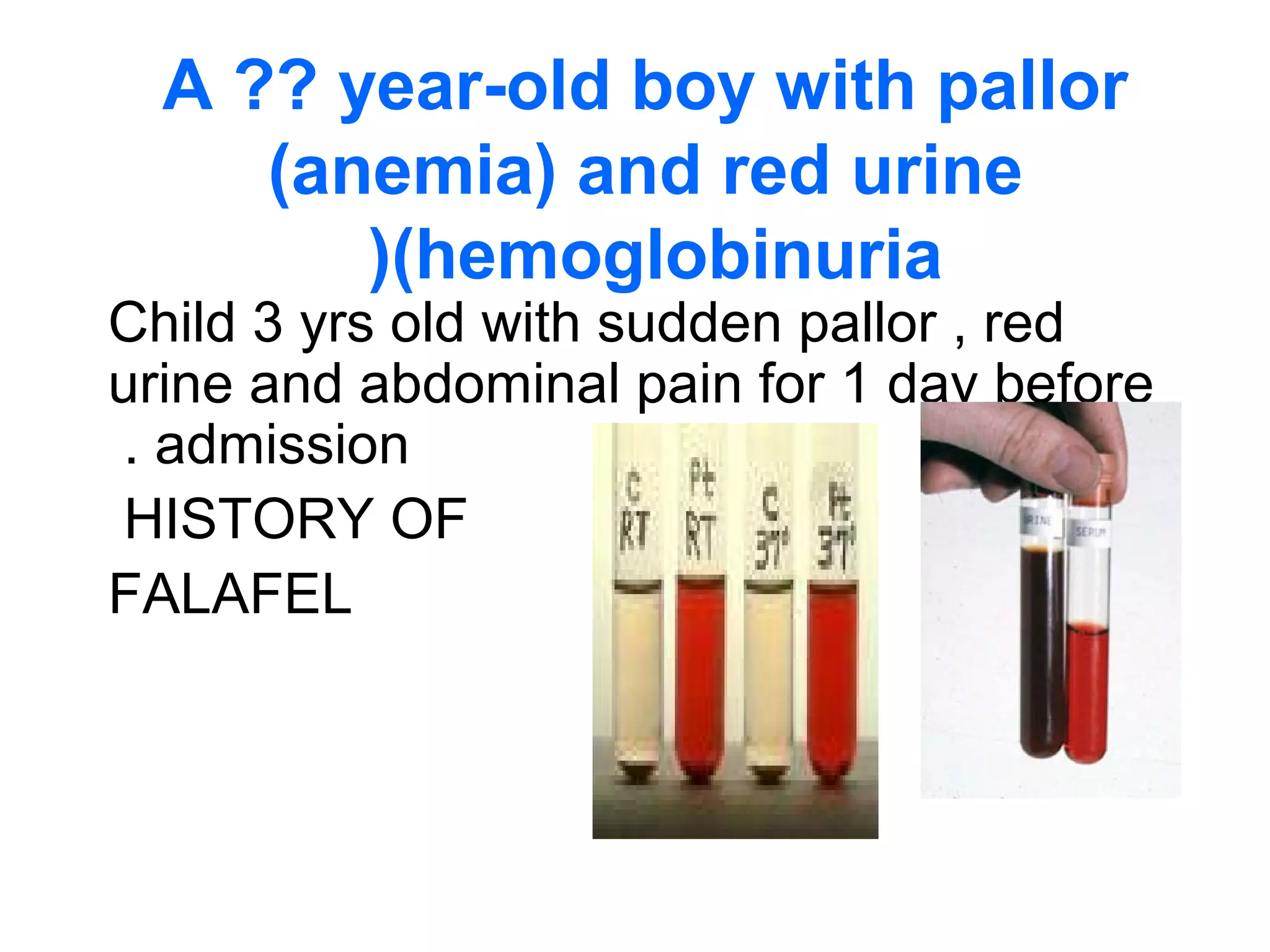
Child 3 yrs old with sudden pallor , red
urine and abdominal pain for 1 day before
admission.
HISTORY OF
FALAFEL
• What are characteristics of hemolytic
anemia?
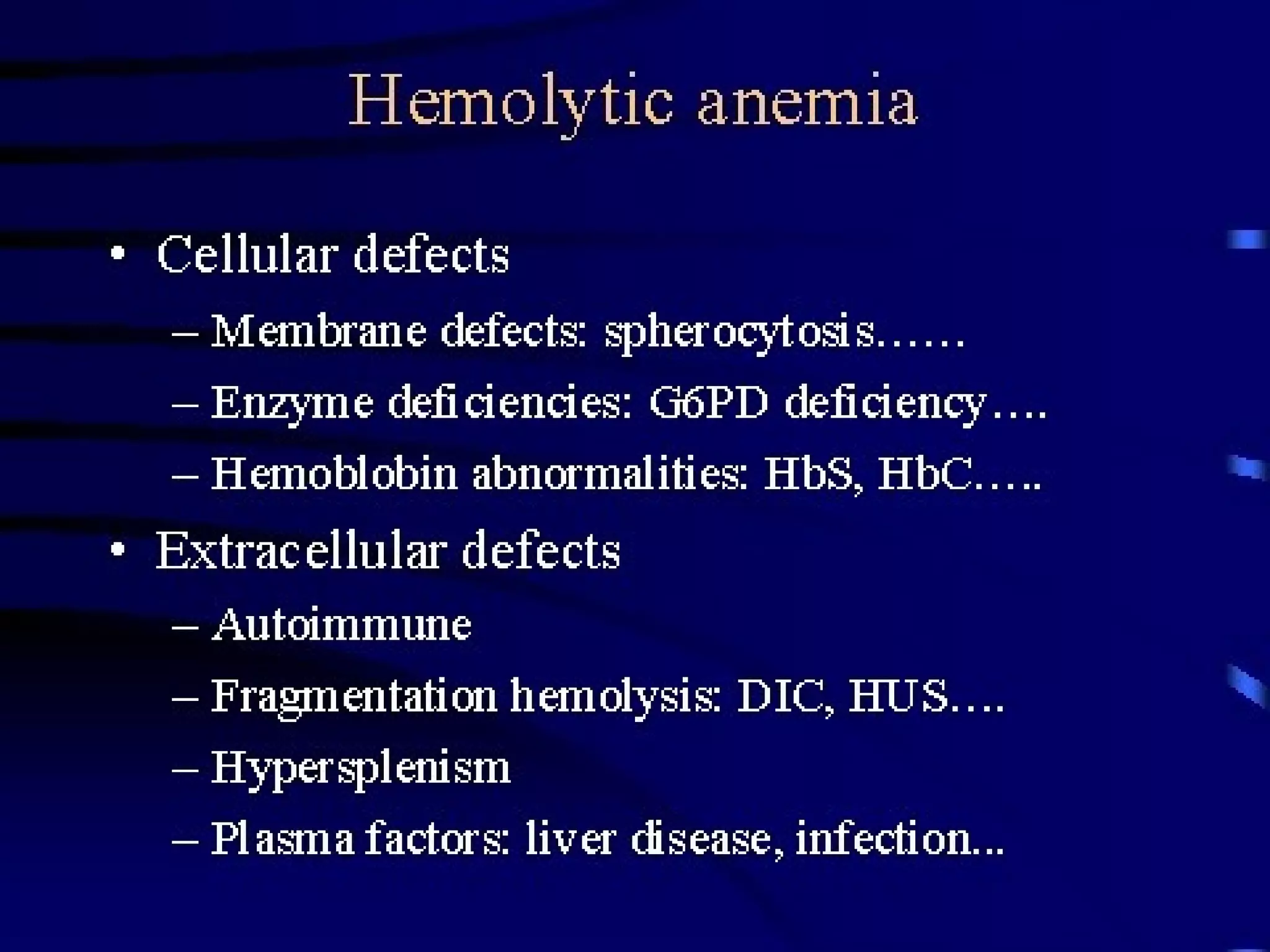
Hemolytic anemia is a state of decreased
red blood cells survival. Patients with
hemolytic anemia present with pallor,
increased reticulocyte count which reflects
bone marrow response and indirect
hyperbilirubinemia which resulls from a
breakdown of red blood cells.
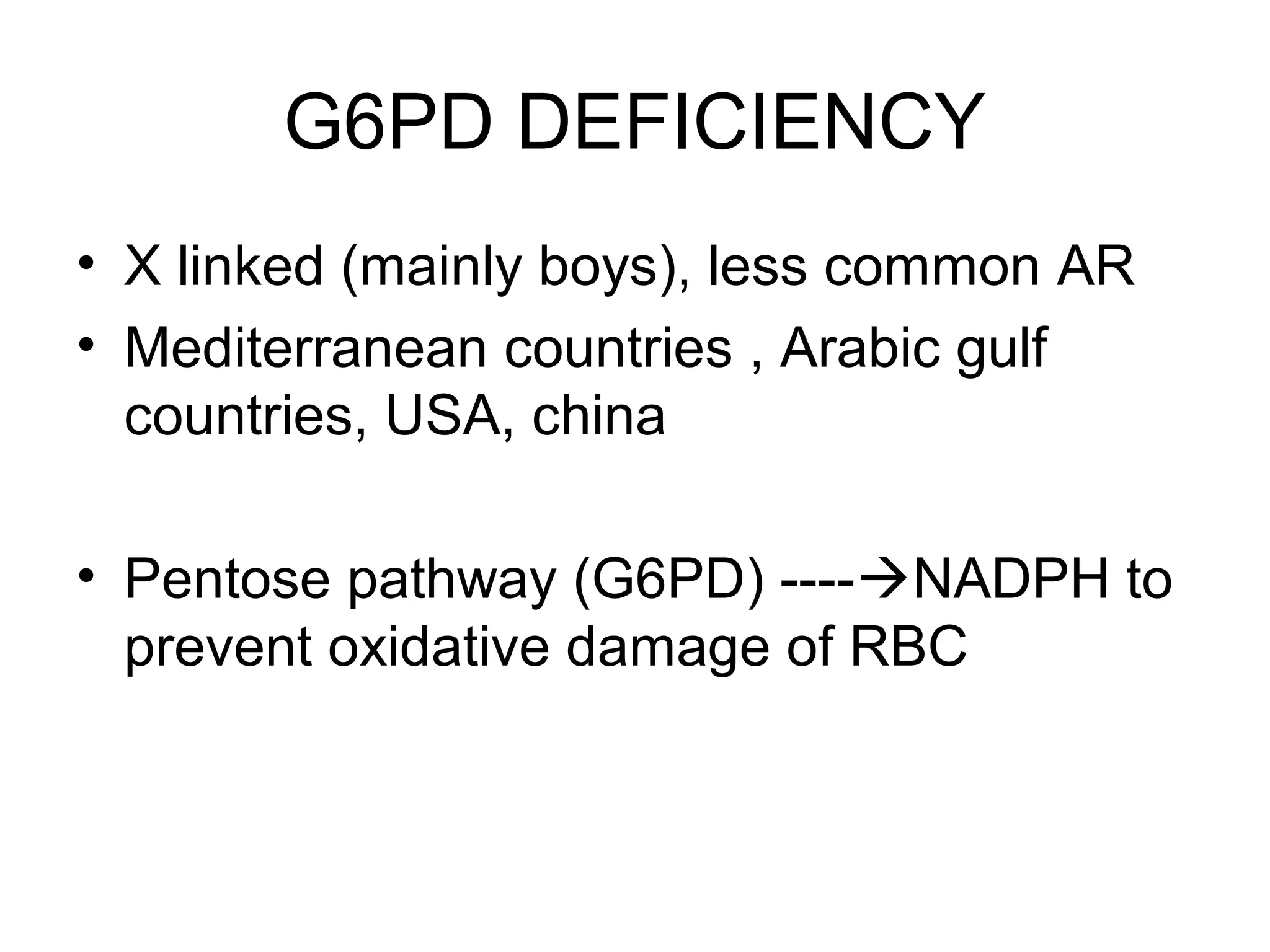
G6PD DEFICIENCY
• X linked (mainly boys), less common AR
• Mediterranean countries , Arabic gulf
countries, USA, china
• Pentose pathway (G6PD) ----NADPH to
prevent oxidative damage of RBC
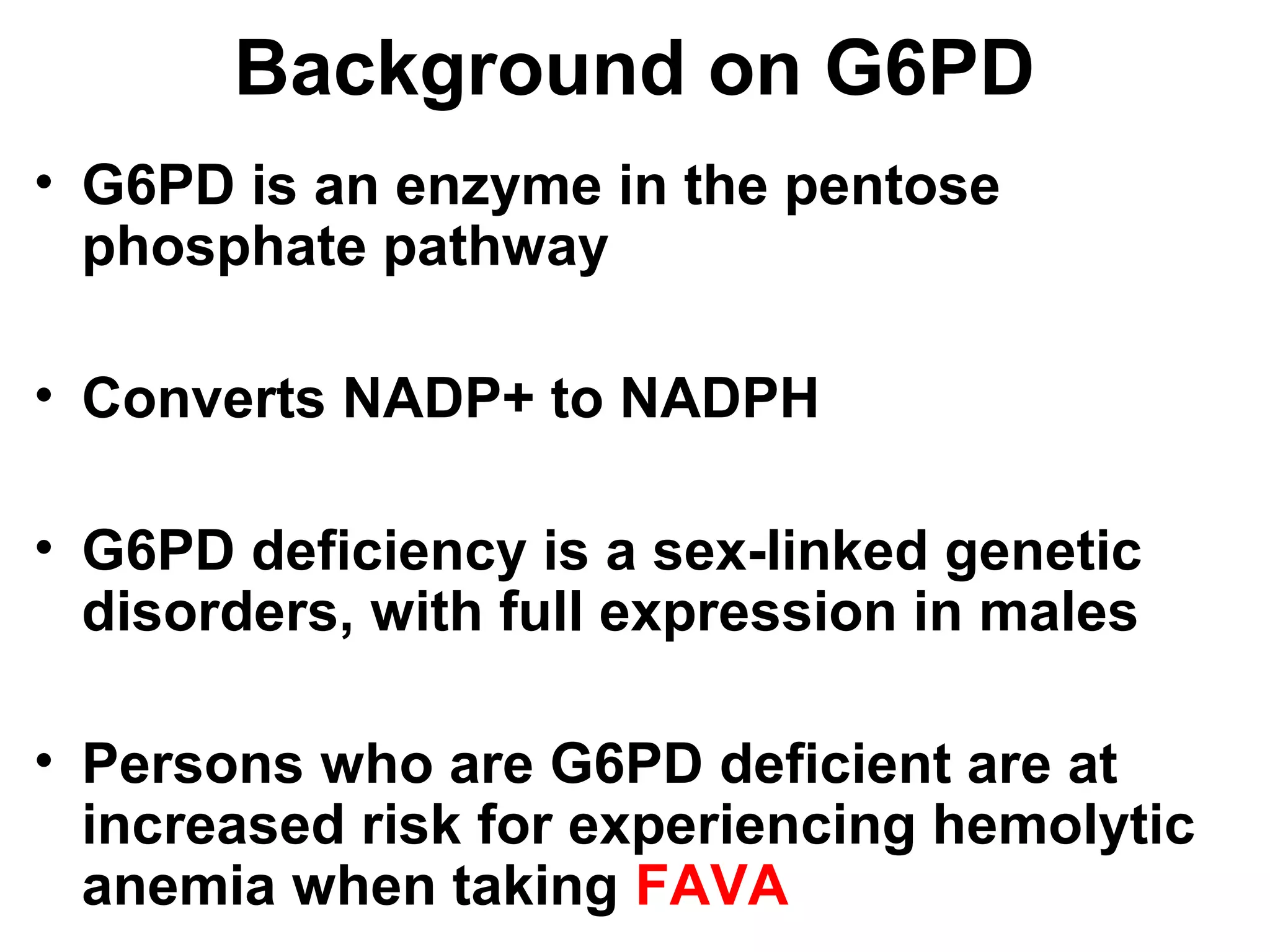
Background on G6PD
• G6PD is an enzyme in the pentose
phosphate pathway
• Converts NADP+ to NADPH
• G6PD deficiency is a sex-linked genetic
disorders, with full expression in males
• Persons who are G6PD deficient are at
increased risk for experiencing hemolytic
anemia when taking FAVA
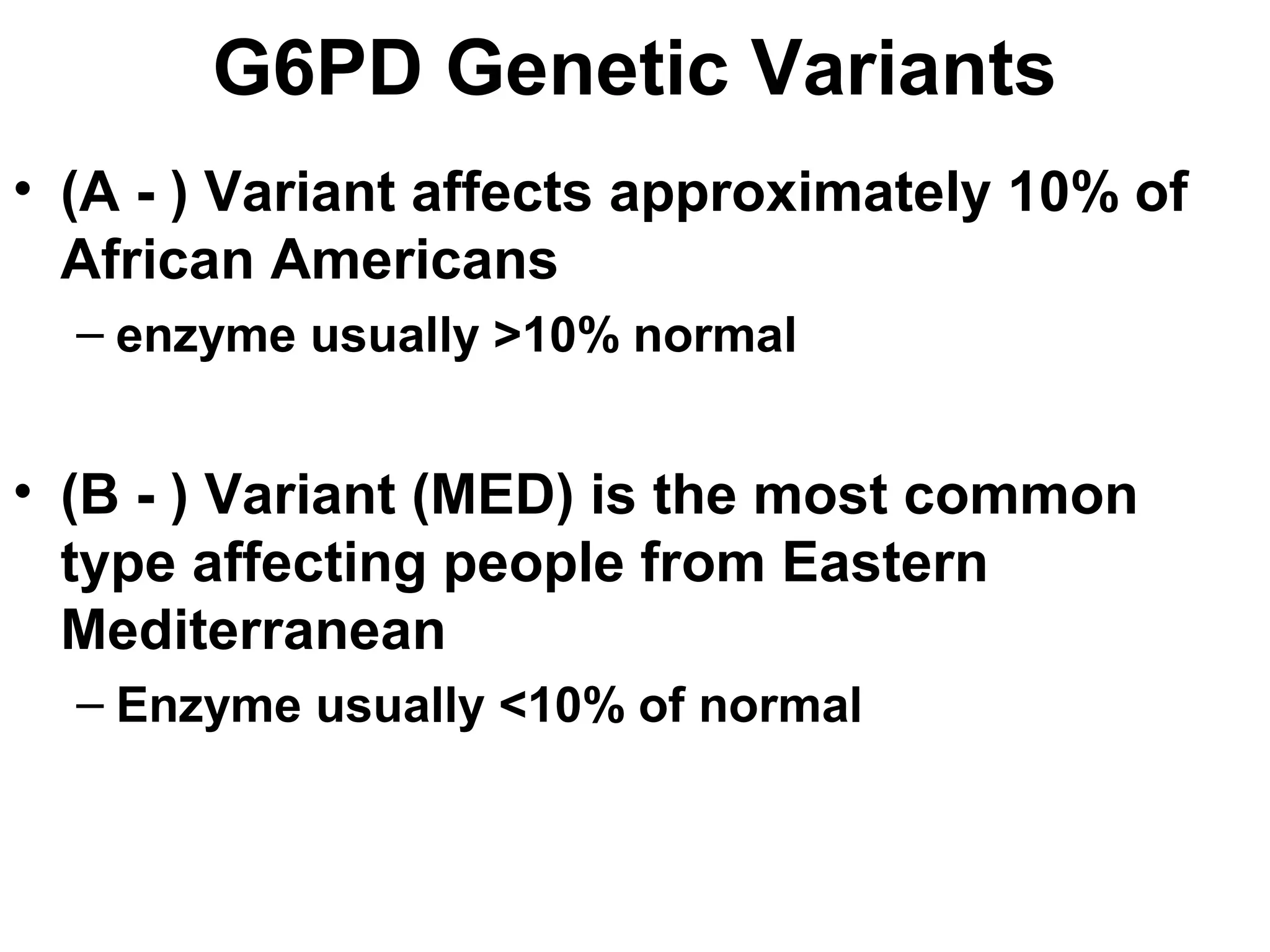
G6PD Genetic Variants
• (A - ) Variant affects approximately 10% of
African Americans
– enzyme usually >10% normal
• (B - ) Variant (MED) is the most common
type affecting people from Eastern
Mediterranean
– Enzyme usually <10% of normal
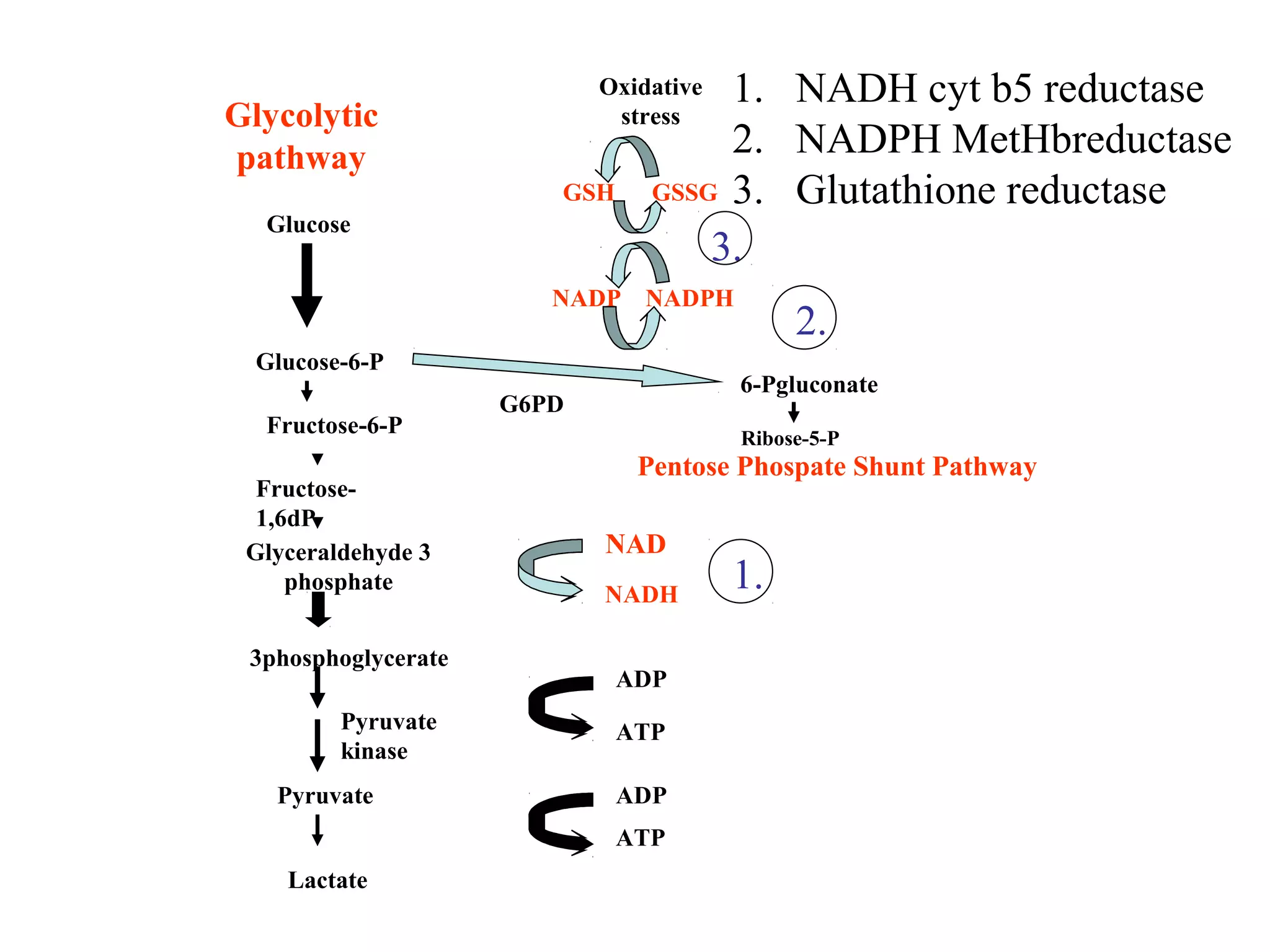
1. NADH cyt b5 reductase
2. NADPH MetHbreductase
3. Glutathione reductase
1.
2.
3.
Oxidative
stressGlycolytic
pathway
Glyceraldehyde 3
phosphate
3phosphoglycerate
Glucose
Glucose-6-P
Fructose-6-P
Fructose-
1,6dP
Pyruvate
Lactate
Pyruvate
kinase
G6PD
6-Pgluconate
Ribose-5-P
Pentose Phospate Shunt Pathway
NAD
NADH
ADP
ATP
ADP
ATP
NADP NADPH
GSH GSSG
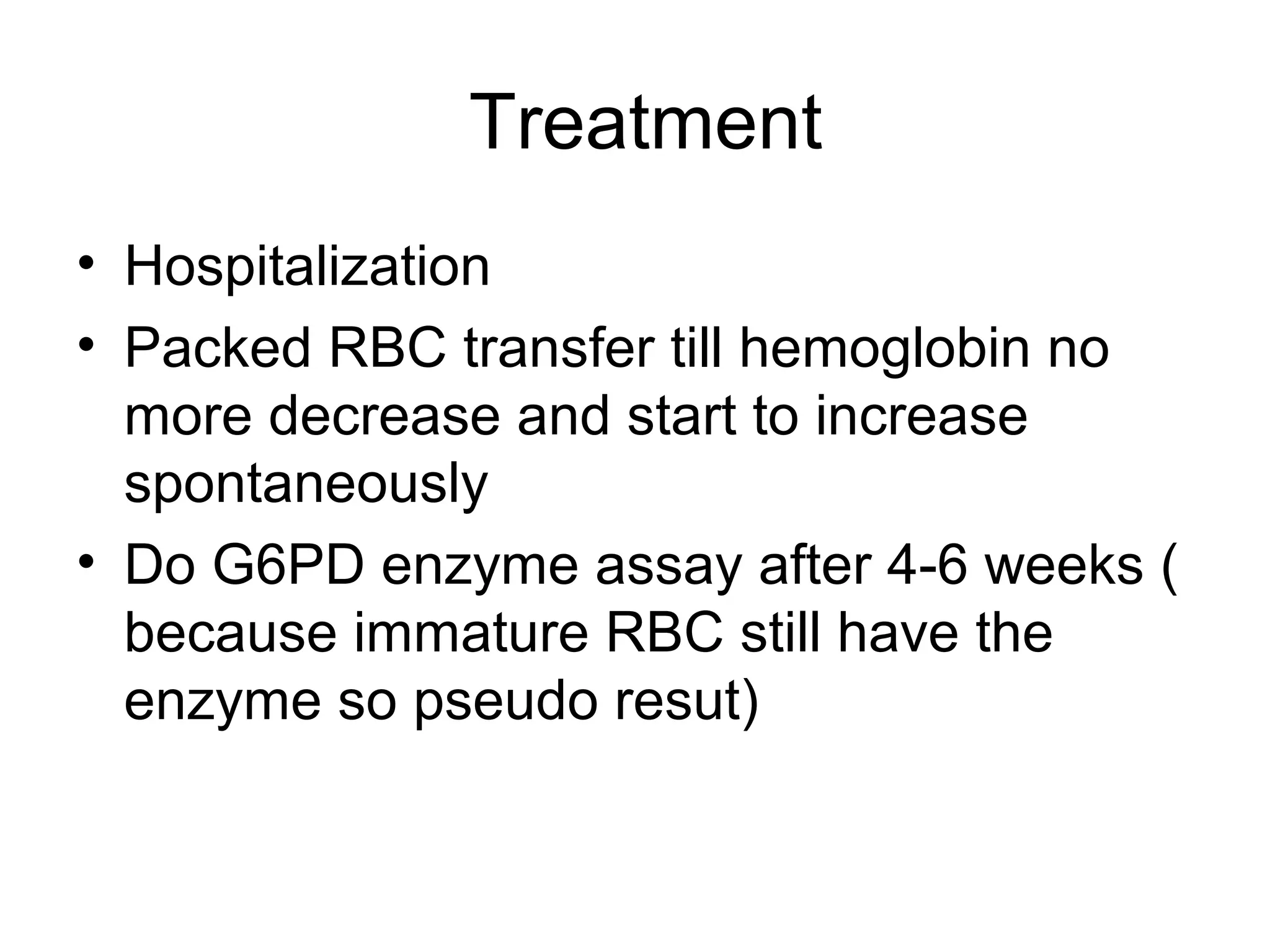
Treatment
• Hospitalization
• Packed RBC transfer till hemoglobin no
more decrease and start to increase
spontaneously
• Do G6PD enzyme assay after 4-6 weeks (
because immature RBC still have the
enzyme so pseudo resut)
FOOD, Drugs and Chemicals That Should
Be Avoided by Persons With G6PD
Deficiency
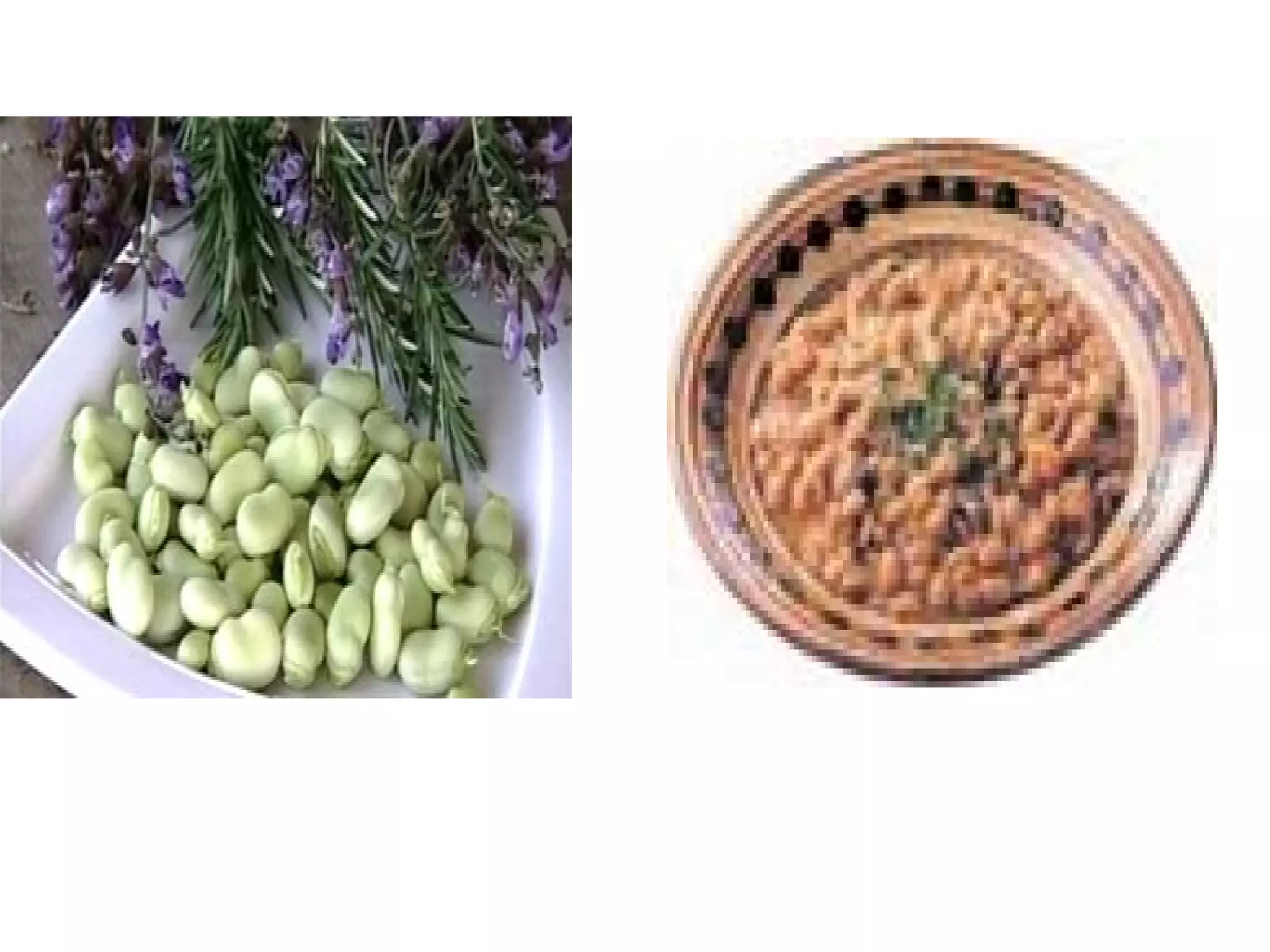
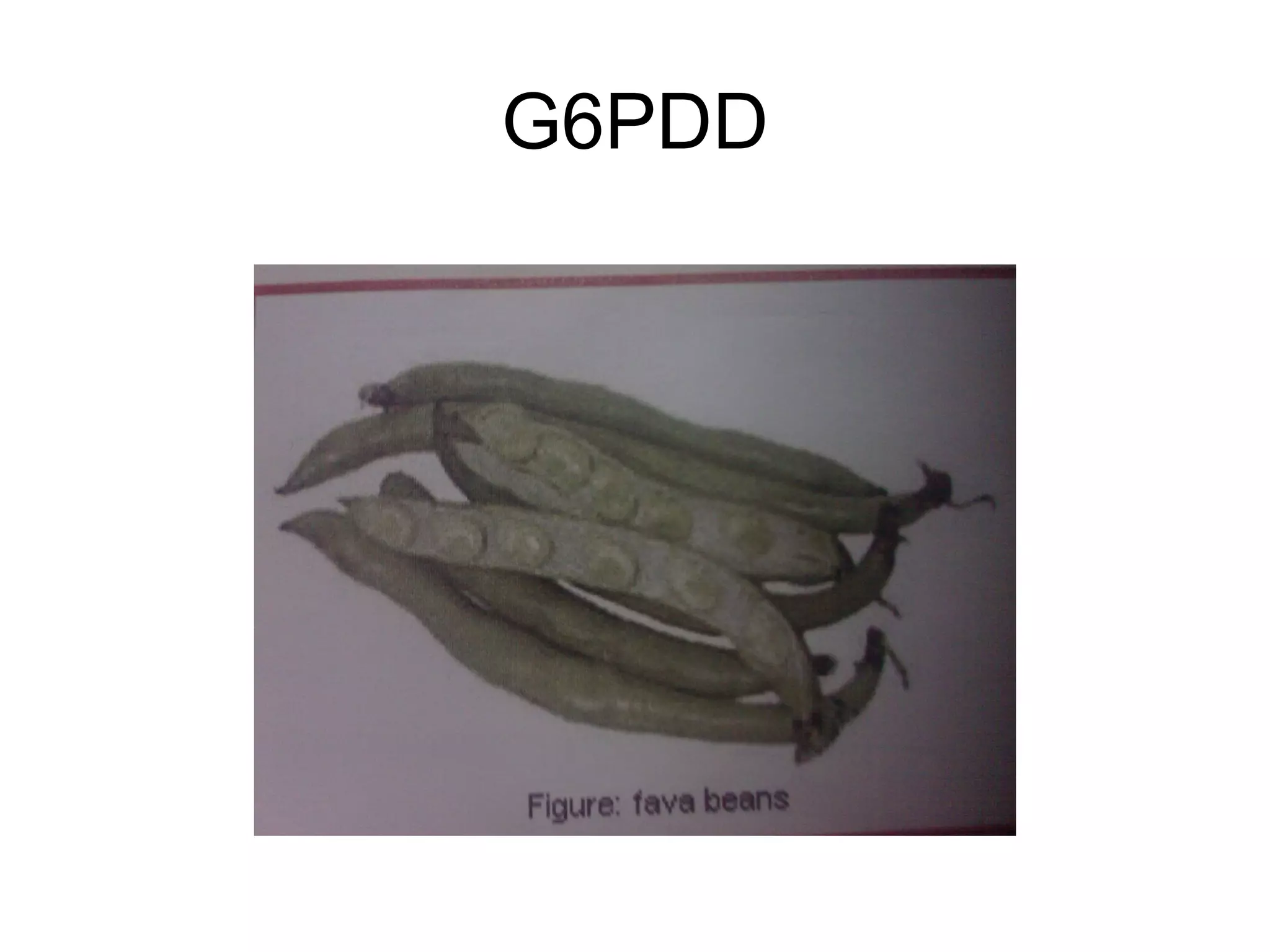
• 1- fava beans (alfoole)
)
G6PDD
FOOD, Drugs and Chemicals That Should
Be Avoided by Persons With G6PD
Deficiency
•2- drugs:
•Antipyretics: except paracetamol
•Sulfa drugs
•Antimalarias
•Nitrofurans
•Antibiotics: chloramphenical
•Synthetic Vit K
•Infections : viral diseases as hepatitis,
•Diabetic ketoacidosis : DKA
•Chemicals : Methylene blue, naphthalene, benzene

practical points for G6PD Deficiency , Favism

  • 1.
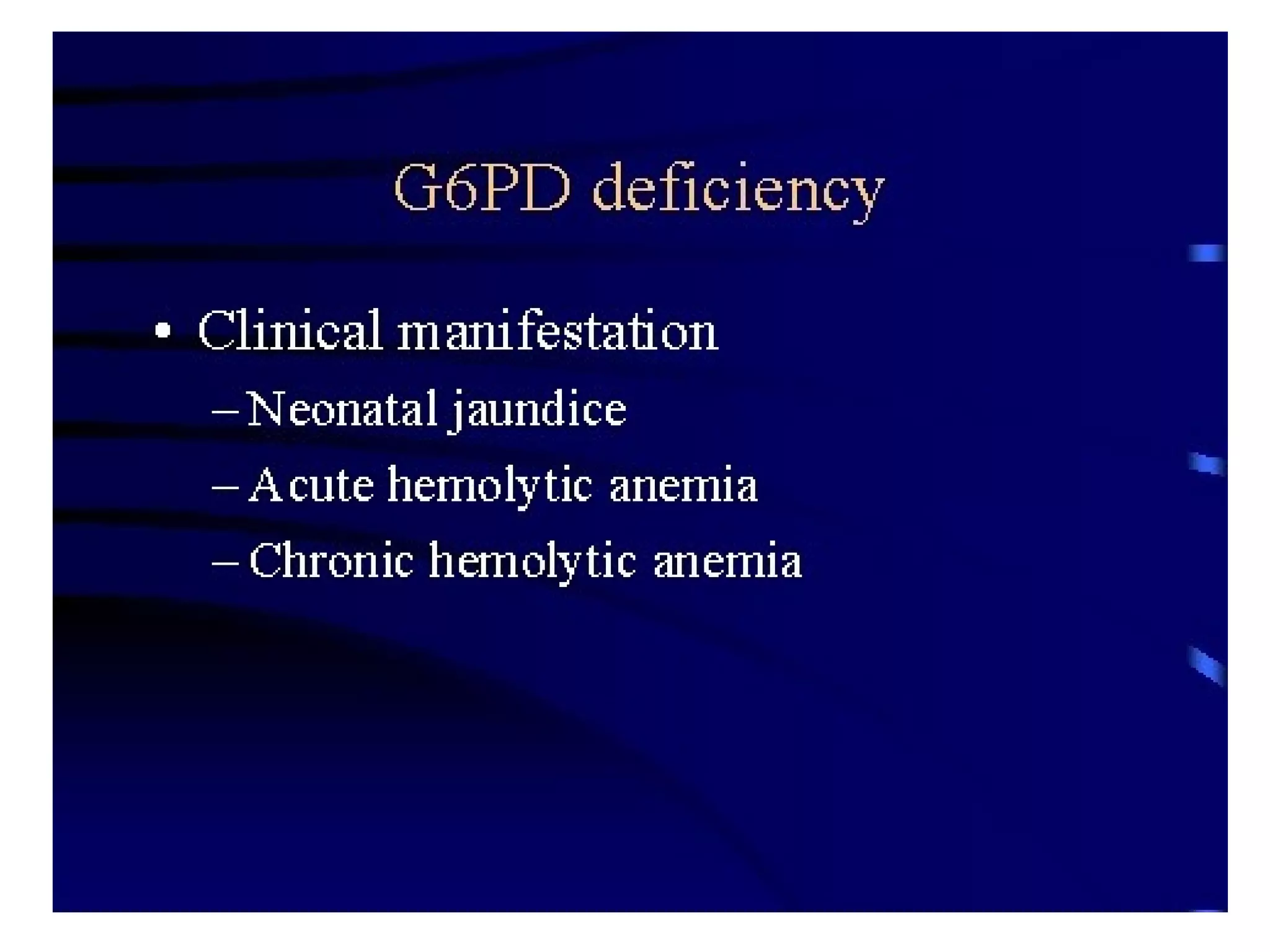
    G6PD DEFICIENCY FAVISM FOR CLINICLPHARMACY STUDENTS BY PROF DR HUSSEIN ABDELDAYEM PROFESSOR OF PEDIATRICS ALEX UNIVERSITY, EGYPT
  • 2.
    A ?? year-oldboy with pallor (anemia) and red urine (hemoglobinuria) Child 3 yrs old with sudden pallor , red urine and abdominal pain for 1 day before admission. HISTORY OF FALAFEL
  • 3.
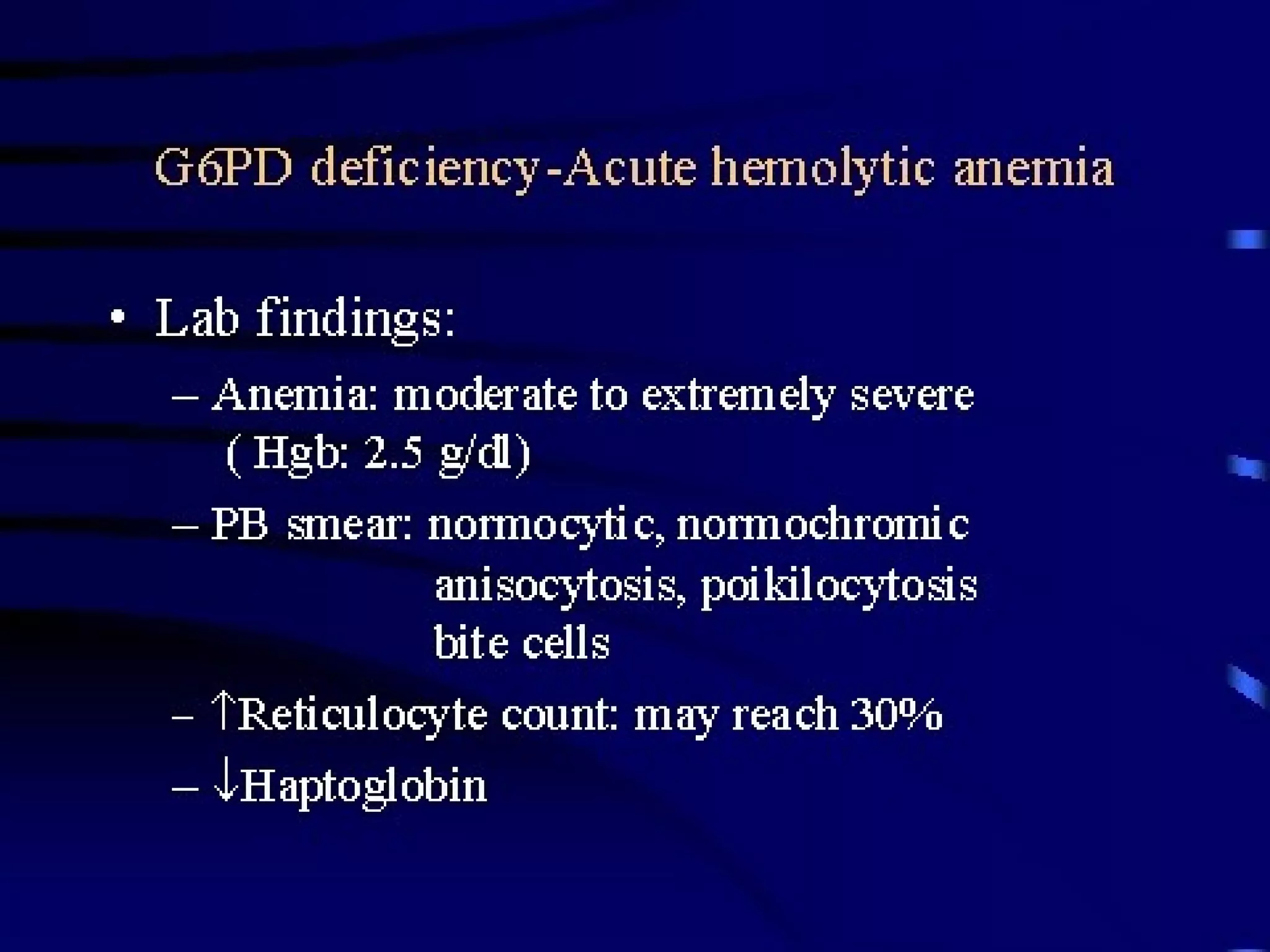
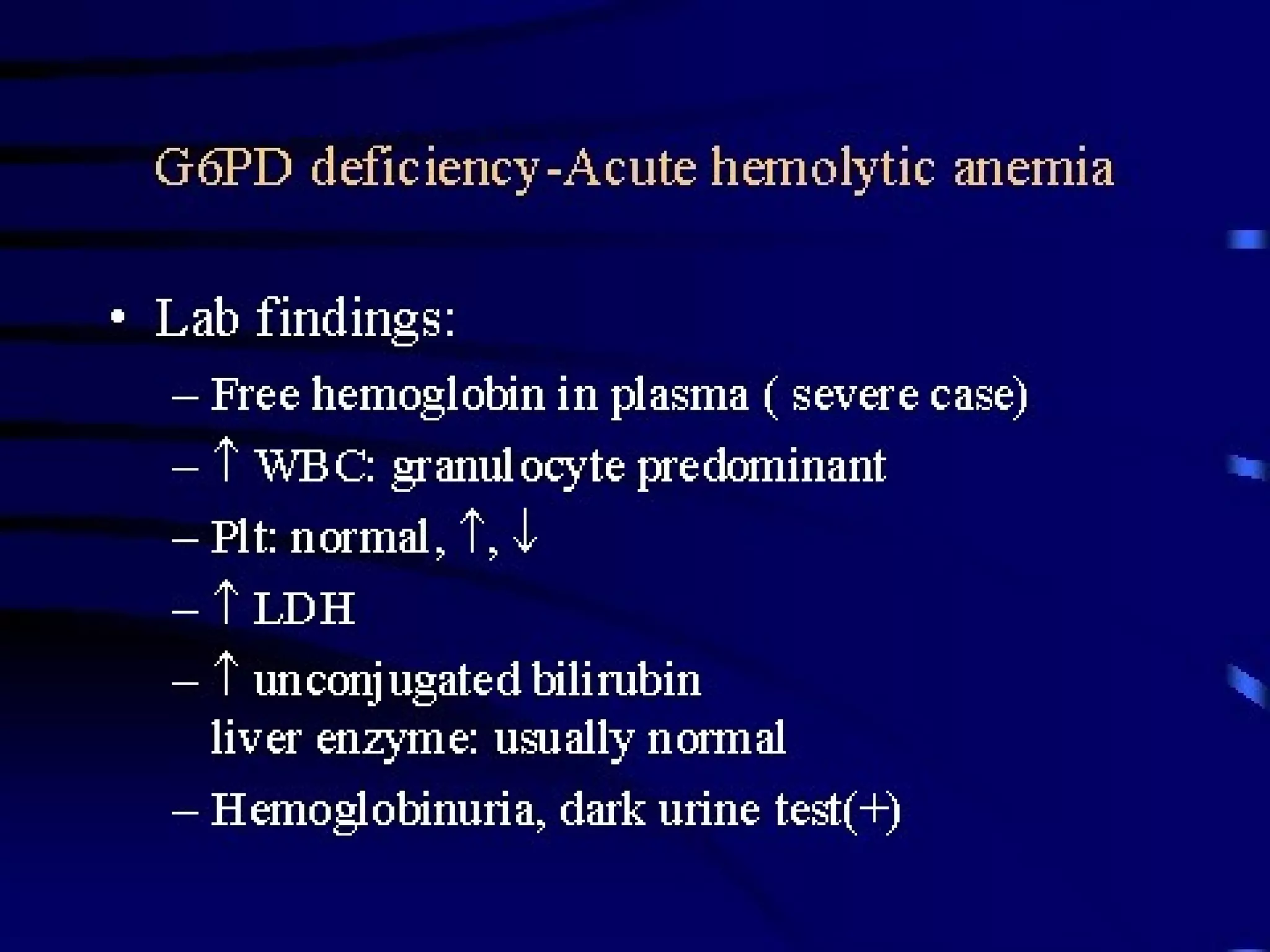
    • What arecharacteristics of hemolytic anemia? Hemolytic anemia is a state of decreased red blood cells survival. Patients with hemolytic anemia present with pallor, increased reticulocyte count which reflects bone marrow response and indirect hyperbilirubinemia which resulls from a breakdown of red blood cells.
  • 5.
    G6PD DEFICIENCY • Xlinked (mainly boys), less common AR • Mediterranean countries , Arabic gulf countries, USA, china • Pentose pathway (G6PD) ----NADPH to prevent oxidative damage of RBC
  • 6.
    Background on G6PD •G6PD is an enzyme in the pentose phosphate pathway • Converts NADP+ to NADPH • G6PD deficiency is a sex-linked genetic disorders, with full expression in males • Persons who are G6PD deficient are at increased risk for experiencing hemolytic anemia when taking FAVA
  • 7.
    G6PD Genetic Variants •(A - ) Variant affects approximately 10% of African Americans – enzyme usually >10% normal • (B - ) Variant (MED) is the most common type affecting people from Eastern Mediterranean – Enzyme usually <10% of normal
  • 8.
    1. NADH cytb5 reductase 2. NADPH MetHbreductase 3. Glutathione reductase 1. 2. 3. Oxidative stressGlycolytic pathway Glyceraldehyde 3 phosphate 3phosphoglycerate Glucose Glucose-6-P Fructose-6-P Fructose- 1,6dP Pyruvate Lactate Pyruvate kinase G6PD 6-Pgluconate Ribose-5-P Pentose Phospate Shunt Pathway NAD NADH ADP ATP ADP ATP NADP NADPH GSH GSSG
  • 12.
    Treatment • Hospitalization • PackedRBC transfer till hemoglobin no more decrease and start to increase spontaneously • Do G6PD enzyme assay after 4-6 weeks ( because immature RBC still have the enzyme so pseudo resut)
  • 13.
    FOOD, Drugs andChemicals That Should Be Avoided by Persons With G6PD Deficiency • 1- fava beans (alfoole) )
  • 15.
  • 17.
    FOOD, Drugs andChemicals That Should Be Avoided by Persons With G6PD Deficiency •2- drugs: •Antipyretics: except paracetamol •Sulfa drugs •Antimalarias •Nitrofurans •Antibiotics: chloramphenical •Synthetic Vit K •Infections : viral diseases as hepatitis, •Diabetic ketoacidosis : DKA •Chemicals : Methylene blue, naphthalene, benzene

Editor's Notes

  • #7 G6PD is an enzyme which is part of the biochemical pathway that produces hydrogen molecules for reduction equivalents in biosynthesis. G6PD is a gene that falls on the X chromosome and thus is sex linked with full expression in males. G6PD gene has been extensively selected over the past 10,000 years apparently for its survival advantage during malaria infection. The practical problem for people with a deficiency in G6PD is that they can have hemolytic anemia when exposed to a variety of drugs. The exact mechanism with oxidizing agents is clear, but that is not true with primaquine which also initiates hemolytic anemia in G6PD persons.
  • #8 -There are many G6PD variants which have been studied genetically. Two groups are of importance for this discussion A minus is the most common form of G6PD deficiency and is primarily found in persons of African descent. It is a relatively mild deficiency with most persons having &amp;gt;10% activity of the normal enzyme. B minus gene is primarily found in people of Mediterranean descent such as Greeks, Italians, Turks, Libyans, Moroccans etc. It is a more severe deficiency with a much higher likelihood of severe hemolysis if exposed to an initiating agent.