Presented by Group 2:
Zuha Handoo
Suhail Qadir
Foziya
Mariya Qurat-Ul-Ain
Aqib Hussain
Mujeeb
Salman Farooq Dar
Pure
(perfect)
competition
Monopolistic
competition
Oligopoly Monopoly
In decreasing order of level of competition
Oligopoly :
 Derived from the Greek word, “oligo’(few) “polo”(to
sell).
 Market dominated by a few large firms, i.e.;
Competition amongst the few.
• Yes• Same-
Different
• Competitors• Difficult
Ease of
entry
Competition
Control over
price
Products
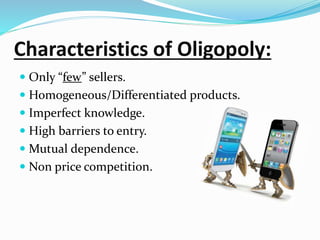
Characteristics of Oligopoly:
 Only “few” sellers.
 Homogeneous/Differentiated products.
 Imperfect knowledge.
 High barriers to entry.
 Mutual dependence.
 Non price competition.
Types of Oligopoly:
1. Pure or Perfect Oligopoly:
If the firms produce homogeneous products,
then it is called pure or perfect oligopoly.
Though, it is rare to find pure oligopoly
situation, yet, cement, steel, aluminum and
chemicals producing industries approach pure
oligopoly.
2. Imperfect or Differentiated Oligopoly:
If the firms produce differentiated products, then it
is called differentiated or imperfect oligopoly.For
example, passenger cars, cigarettes or soft drinks.
The goods produced by different firms have their
own distinguishing characteristics, yet all of them
are close substitutes of each other.
3. Collusive Oligopoly:
If the firms cooperate with each other in
determining price or output or both, it is
called collusive oligopoly or cooperative
oligopoly.In other words, the firms in a
collusive oligopoly combines to avoid the
competition among themselves regarding the
price and output of the industry. For example,
OPEC(Organization for petroleum exporting
countries) serves the example for collusive
oligopolies.
4. Non-collusive Oligopoly:
If firms in an oligopoly market compete with
each other, it is called a non-collusive or non-
cooperative oligopoly.The firms in non-
collusive oligopoly tries to gain maximum
share of the market by developing policies and
strategies to outperform or beat their rivals.
5.Open oligopoly:
An open oligopoly provides full freedom to
new firms to enter into industry.In the
situation of open oligopoly there is no
restriction of any kind for the desiring firm to
enter into the market.
6.Closed oligopoly:
A closed oligopoly refers to that market
structure where only few firms control the
market and new firms are not allowed to enter
industry. Barriers are set to prevent the entry
of new firms into the industry. For example,
patents,licences,requirement of large
capital,control over crucial raw materials are
some of the reasons which prevent new firms
from entering into industry.
Barriers to entry:
1. Access to suppliers & distributors
2. Cost of entering a market
3. Legal requirements
4. Legal restriction
5. Fear of retaliation
Examples of oligopoly:
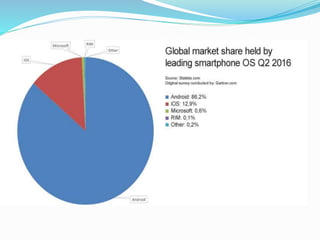
1. Smart Phone Operating Systems:
The smart phone market is similarly
dominated by a handful of companies, the
most powerful two being Google Android
and Apple IOS. Those companies have deep
relationships with the handset providers and
are able to have their system pre – installed
on each phone.
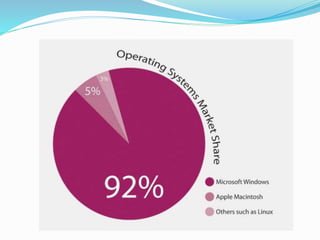
2.Computer Operating Systems:
New high tech markets can become
oligopolies when the companies provide
unique products that are supported by an
ecosystem of supporting technology.
Computer operating systems are dominated
by Microsoft’s Windows, Apple’s Mac OS and
the open source Linux operating systems.
These three systems capture close to 100 % of
the computer operating system market due
to their established positions. According to
the StatOwl website.
3.Music Industry:
The music entertainment industry is
dominated by four music companies that
control 80% of the market and these are
universal Music Group, Sony Music
entertainment, Warner Music Group.
35.10%
22.80%
21.10%
21%
universal
sony
warner
others
4.Auto industry:
Auto industry is another example of an oligopoly,
which is dominated by few firms and these firms
are Hero Motor Corp., TVS and Honda.
HERO: 40% Market Share
Honda: 25% Market Share
TVS: 14% Market Share
40%
14%
25%
21%
HERO
TVS
HONDA
OTHERS
5.Oligopoly in soft drink industry:
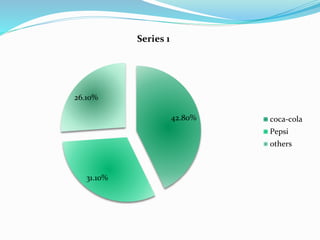
Two firms control 74 % of soft drink sales:
o 42.8% coca-cola’s 25 brands and 139 varieties.
o 31.1% Pepsi’s 18 brands and 163 varieties.
Coca-cola and Pepsi are in an oligopoly market.
They are mutually and strategically
interdependent, as a decision made by one firm
invariably affects the other. They are selling the
homogeneous product so they can control over
price.
42.80%
31.10%
26.10%
Series 1
coca-cola
Pepsi
others
Some other common examples:
Airlines
Supermarkets
Steel Industry
Health Insurance, etc………
Models of oligopoly:
Although there are many models which explain
oligopolistic market structure, but we will be
discussing two over here.
These are:
1: Kinked model
2: Price Leadership model

Oligopoly presentation

  • 2.
    Presented by Group2: Zuha Handoo Suhail Qadir Foziya Mariya Qurat-Ul-Ain Aqib Hussain Mujeeb Salman Farooq Dar
  • 3.
  • 4.
    Oligopoly :  Derivedfrom the Greek word, “oligo’(few) “polo”(to sell).  Market dominated by a few large firms, i.e.; Competition amongst the few. • Yes• Same- Different • Competitors• Difficult Ease of entry Competition Control over price Products
  • 5.
    Characteristics of Oligopoly: Only “few” sellers.  Homogeneous/Differentiated products.  Imperfect knowledge.  High barriers to entry.  Mutual dependence.  Non price competition.
  • 6.
    Types of Oligopoly: 1.Pure or Perfect Oligopoly: If the firms produce homogeneous products, then it is called pure or perfect oligopoly. Though, it is rare to find pure oligopoly situation, yet, cement, steel, aluminum and chemicals producing industries approach pure oligopoly.
  • 7.
    2. Imperfect orDifferentiated Oligopoly: If the firms produce differentiated products, then it is called differentiated or imperfect oligopoly.For example, passenger cars, cigarettes or soft drinks. The goods produced by different firms have their own distinguishing characteristics, yet all of them are close substitutes of each other.
  • 8.
    3. Collusive Oligopoly: Ifthe firms cooperate with each other in determining price or output or both, it is called collusive oligopoly or cooperative oligopoly.In other words, the firms in a collusive oligopoly combines to avoid the competition among themselves regarding the price and output of the industry. For example, OPEC(Organization for petroleum exporting countries) serves the example for collusive oligopolies.
  • 9.
    4. Non-collusive Oligopoly: Iffirms in an oligopoly market compete with each other, it is called a non-collusive or non- cooperative oligopoly.The firms in non- collusive oligopoly tries to gain maximum share of the market by developing policies and strategies to outperform or beat their rivals.
  • 10.
    5.Open oligopoly: An openoligopoly provides full freedom to new firms to enter into industry.In the situation of open oligopoly there is no restriction of any kind for the desiring firm to enter into the market.
  • 11.
    6.Closed oligopoly: A closedoligopoly refers to that market structure where only few firms control the market and new firms are not allowed to enter industry. Barriers are set to prevent the entry of new firms into the industry. For example, patents,licences,requirement of large capital,control over crucial raw materials are some of the reasons which prevent new firms from entering into industry.
  • 12.
    Barriers to entry: 1.Access to suppliers & distributors 2. Cost of entering a market 3. Legal requirements 4. Legal restriction 5. Fear of retaliation
  • 13.
    Examples of oligopoly: 1.Smart Phone Operating Systems: The smart phone market is similarly dominated by a handful of companies, the most powerful two being Google Android and Apple IOS. Those companies have deep relationships with the handset providers and are able to have their system pre – installed on each phone.
  • 15.
    2.Computer Operating Systems: Newhigh tech markets can become oligopolies when the companies provide unique products that are supported by an ecosystem of supporting technology. Computer operating systems are dominated by Microsoft’s Windows, Apple’s Mac OS and the open source Linux operating systems. These three systems capture close to 100 % of the computer operating system market due to their established positions. According to the StatOwl website.
  • 17.
    3.Music Industry: The musicentertainment industry is dominated by four music companies that control 80% of the market and these are universal Music Group, Sony Music entertainment, Warner Music Group.
  • 18.
  • 19.
    4.Auto industry: Auto industryis another example of an oligopoly, which is dominated by few firms and these firms are Hero Motor Corp., TVS and Honda. HERO: 40% Market Share Honda: 25% Market Share TVS: 14% Market Share
  • 20.
  • 21.
    5.Oligopoly in softdrink industry: Two firms control 74 % of soft drink sales: o 42.8% coca-cola’s 25 brands and 139 varieties. o 31.1% Pepsi’s 18 brands and 163 varieties. Coca-cola and Pepsi are in an oligopoly market. They are mutually and strategically interdependent, as a decision made by one firm invariably affects the other. They are selling the homogeneous product so they can control over price.
  • 22.
  • 23.
    Some other commonexamples: Airlines Supermarkets Steel Industry Health Insurance, etc………
  • 24.
    Models of oligopoly: Althoughthere are many models which explain oligopolistic market structure, but we will be discussing two over here. These are: 1: Kinked model 2: Price Leadership model