Market Structures
Market Power
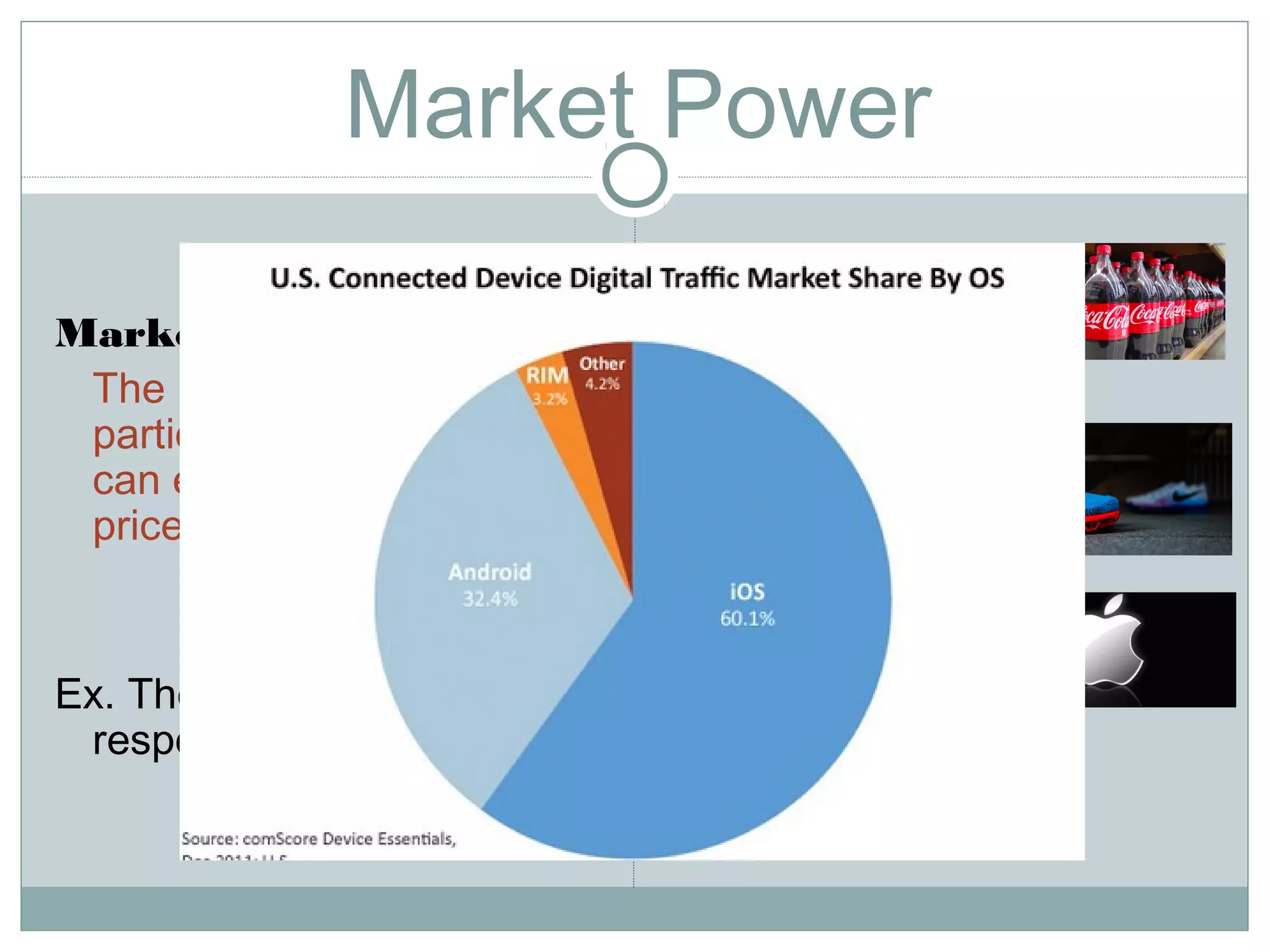
Market power:
The influence that any
particular buyer or seller
can exercise over the
price of the product.
Ex. These dominate in their
respective markets.
Apple 60%
Coca Cola 44%
Nike 35%
Perfect Competition
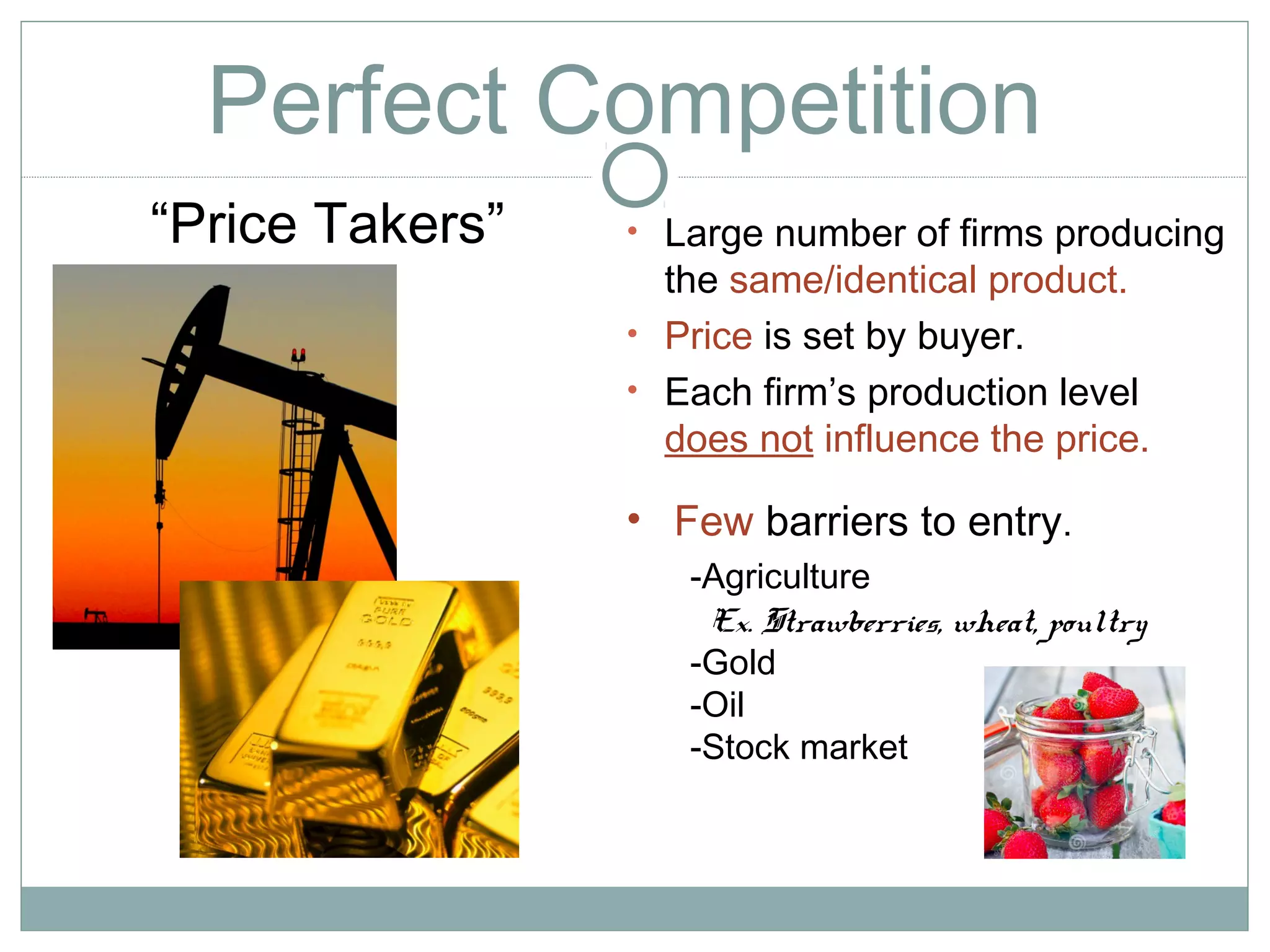
• Large number of firms producing
the same/identical product.
• Price is set by buyer.
• Each firm’s production level
does not influence the price.
“Price Takers”
-Agriculture
Ex. Strawberries, wheat, poultry
-Gold
-Oil
-Stock market
• Few barriers to entry.
Monopolistic Competition
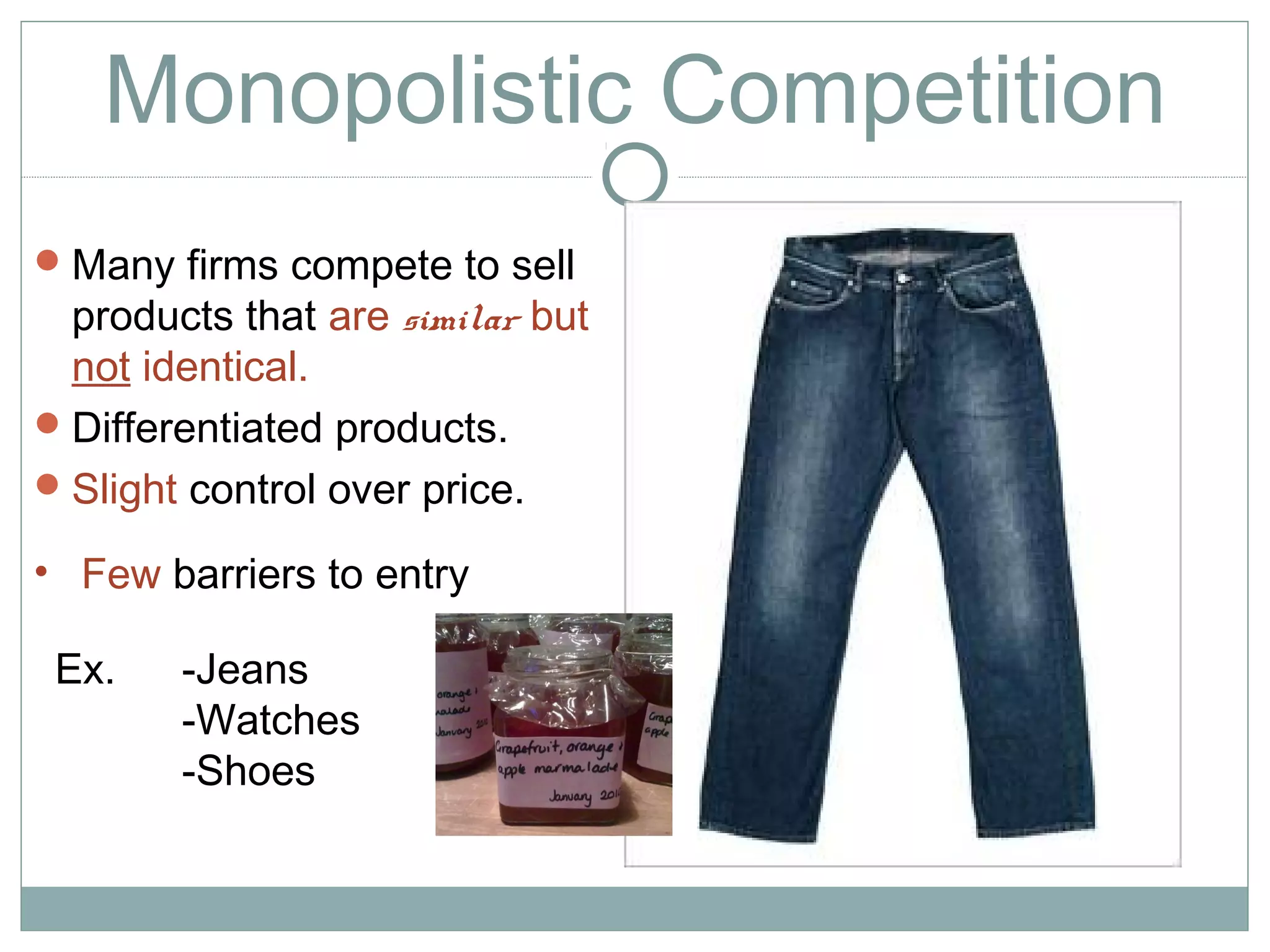
Many firms compete to sell
products that are similar but
not identical.
Differentiated products.
Slight control over price.
• Few barriers to entry
Ex. -Jeans
-Watches
-Shoes
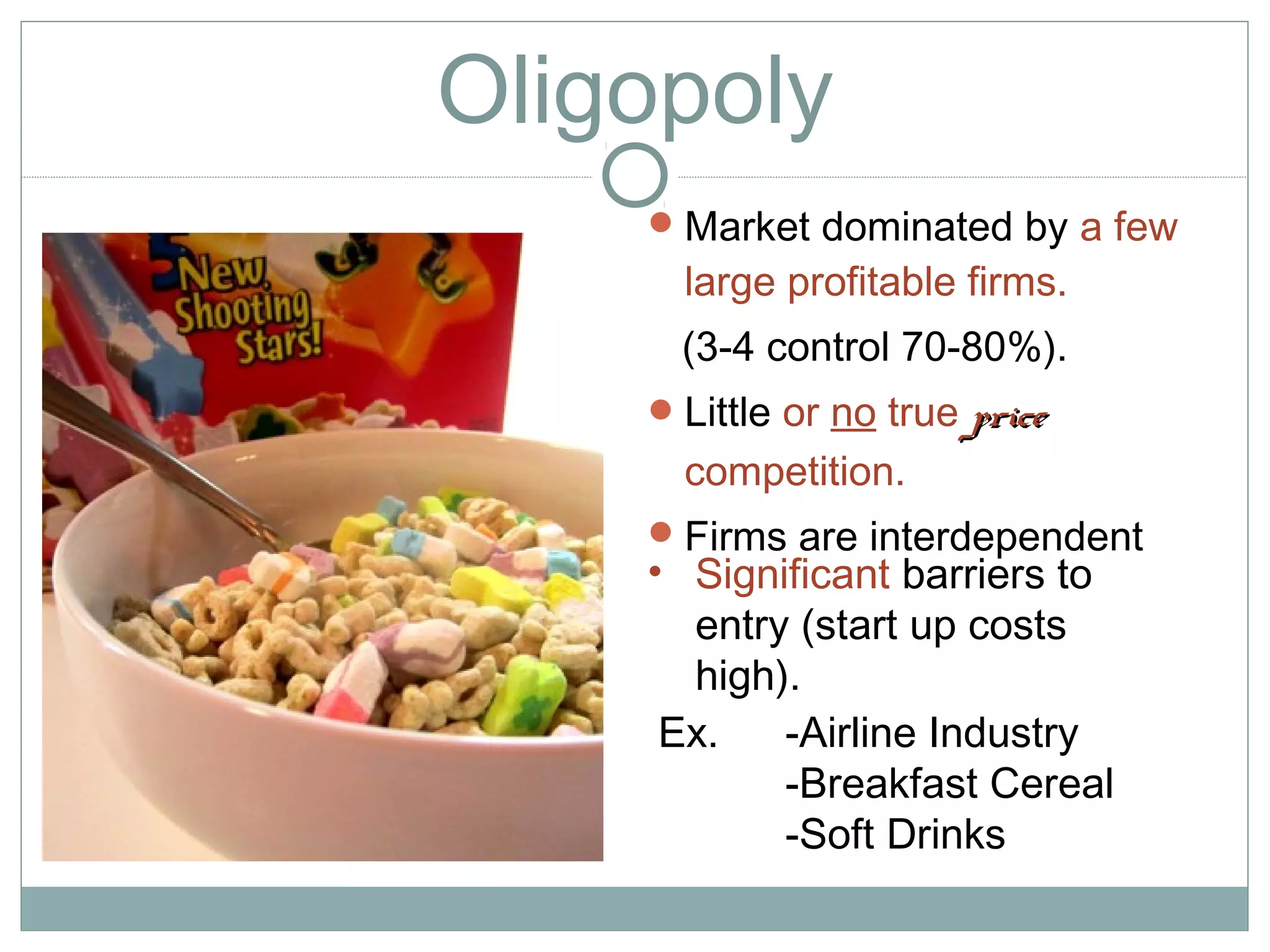
Oligopoly
Market dominated by a few
large profitable firms.
(3-4 control 70-80%).
Little or no true priceprice
competition.
Firms are interdependent
Ex. -Airline Industry
-Breakfast Cereal
-Soft Drinks
• Significant barriers to
entry (start up costs
high).
How do firms in an oligopoly control their
respective industries?
Predatory Pricing- selling a product below cost to
drive competitors out of the market.
Illegal
Collusion- an agreement among firms to set
prices. Illegal
Time for a Simulation….
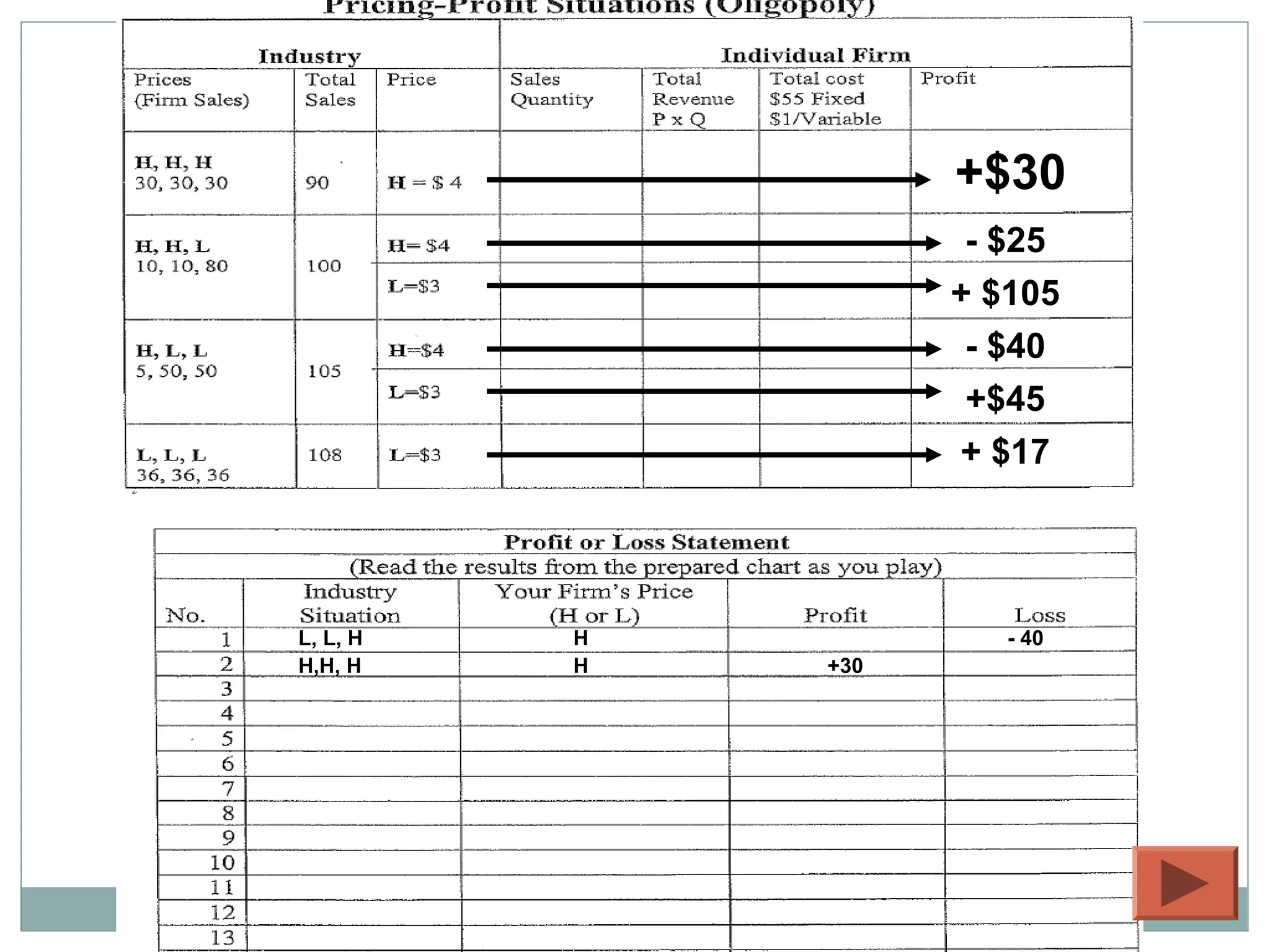
+$30
- $25
+ $105
- $40
+$45
+ $17
L, L, H H - 40
H,H, H H +30
Pricing-Profit Situation (Follow Up)
1. What was you strategy at the start of the
game? How did you change your strategy as
the game progressed?
2. As a consumer which strategy would you like
to see firms follow?
3. Do you think collusion is fair? Why/Why not.
Chart
They buy other businesses!
Conglomerate- a business combination
merging more than three businesses that
make unrelated products.
How do oligopolies continue to grow
legally without becoming a monopoly?
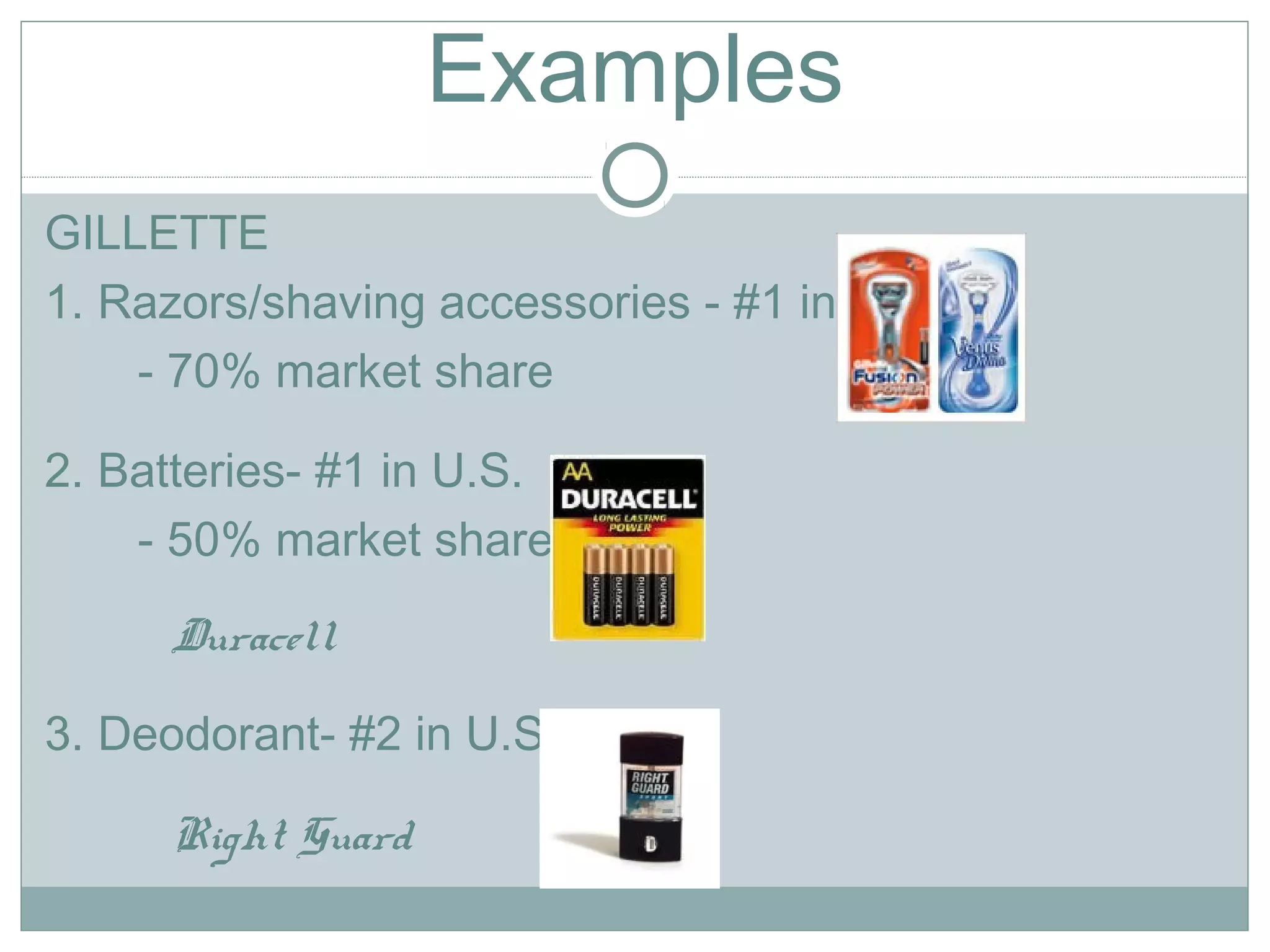
Examples
GILLETTE
1. Razors/shaving accessories - #1 in U.S.
- 70% market share
2. Batteries- #1 in U.S.
- 50% market share
Duracell
3. Deodorant- #2 in U.S.
Right Guard
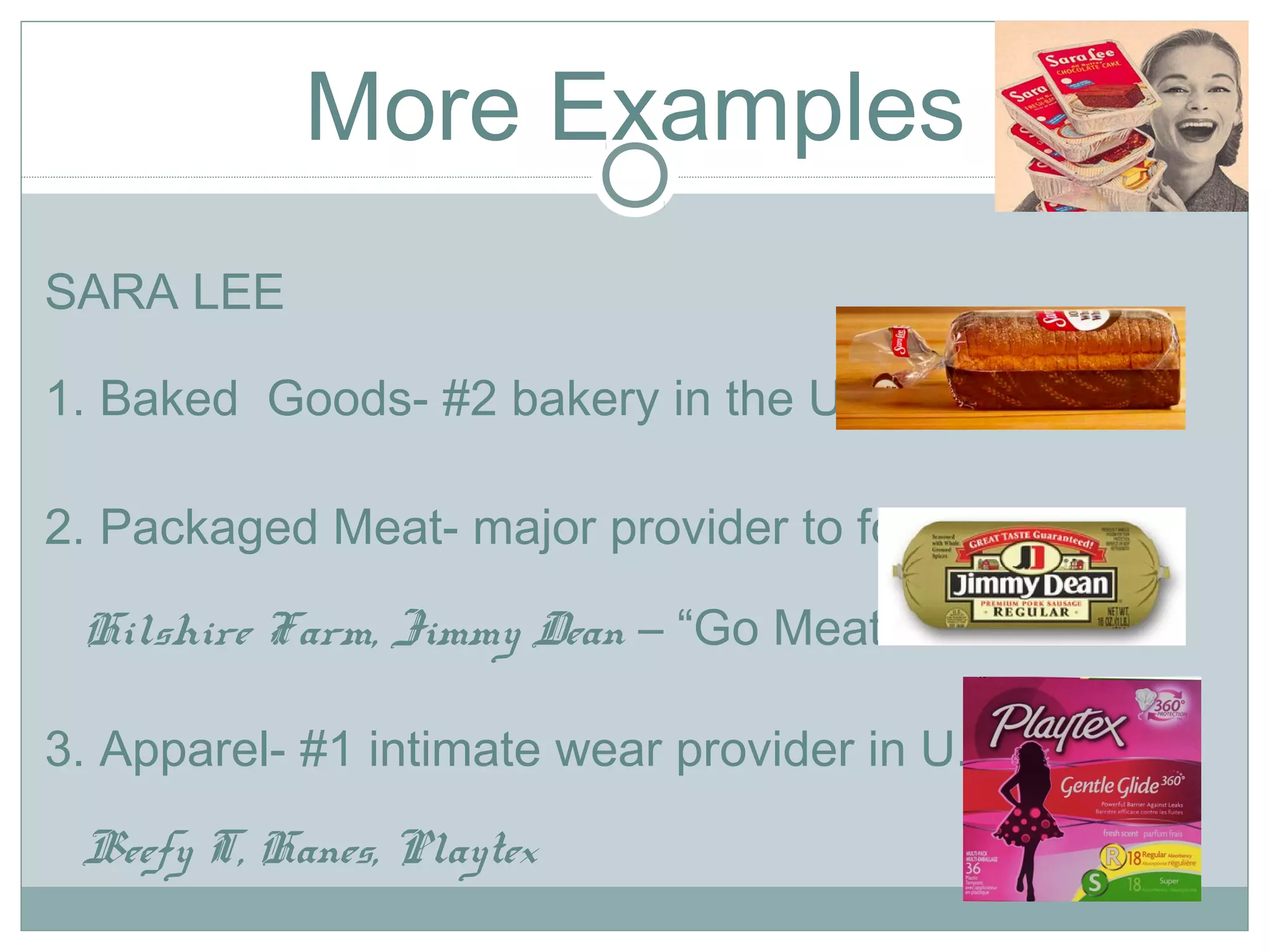
More Examples
SARA LEE
1. Baked Goods- #2 bakery in the U.S.
2. Packaged Meat- major provider to food service
Hilshire Farm, Jimmy Dean – “Go Meat!”
3. Apparel- #1 intimate wear provider in U.S.
Beefy T, Hanes, Playtex
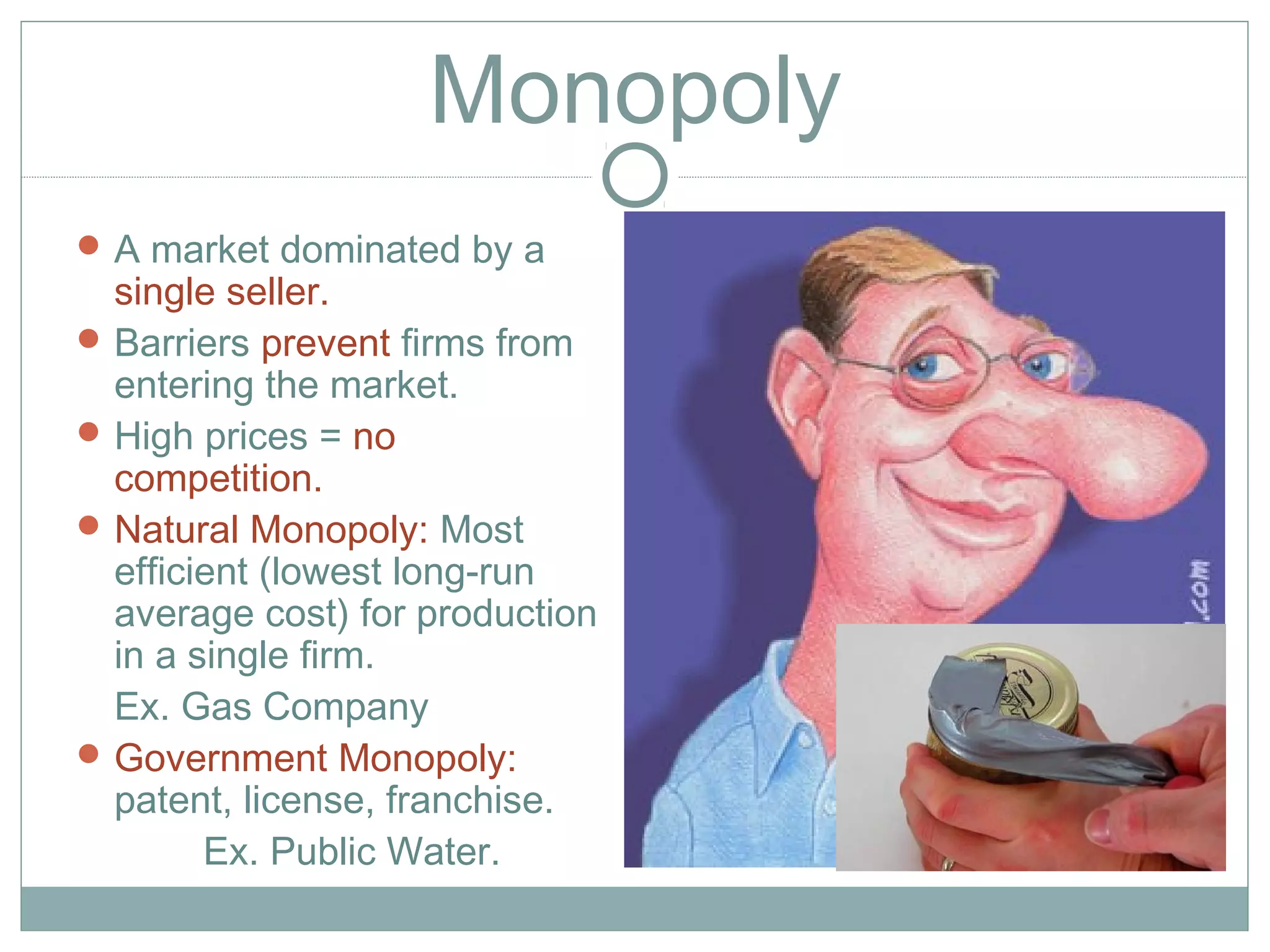
Monopoly
A market dominated by a
single seller.
Barriers prevent firms from
entering the market.
High prices = no
competition.
Natural Monopoly: Most
efficient (lowest long-run
average cost) for production
in a single firm.
Ex. Gas Company
Government Monopoly:
patent, license, franchise.
Ex. Public Water.
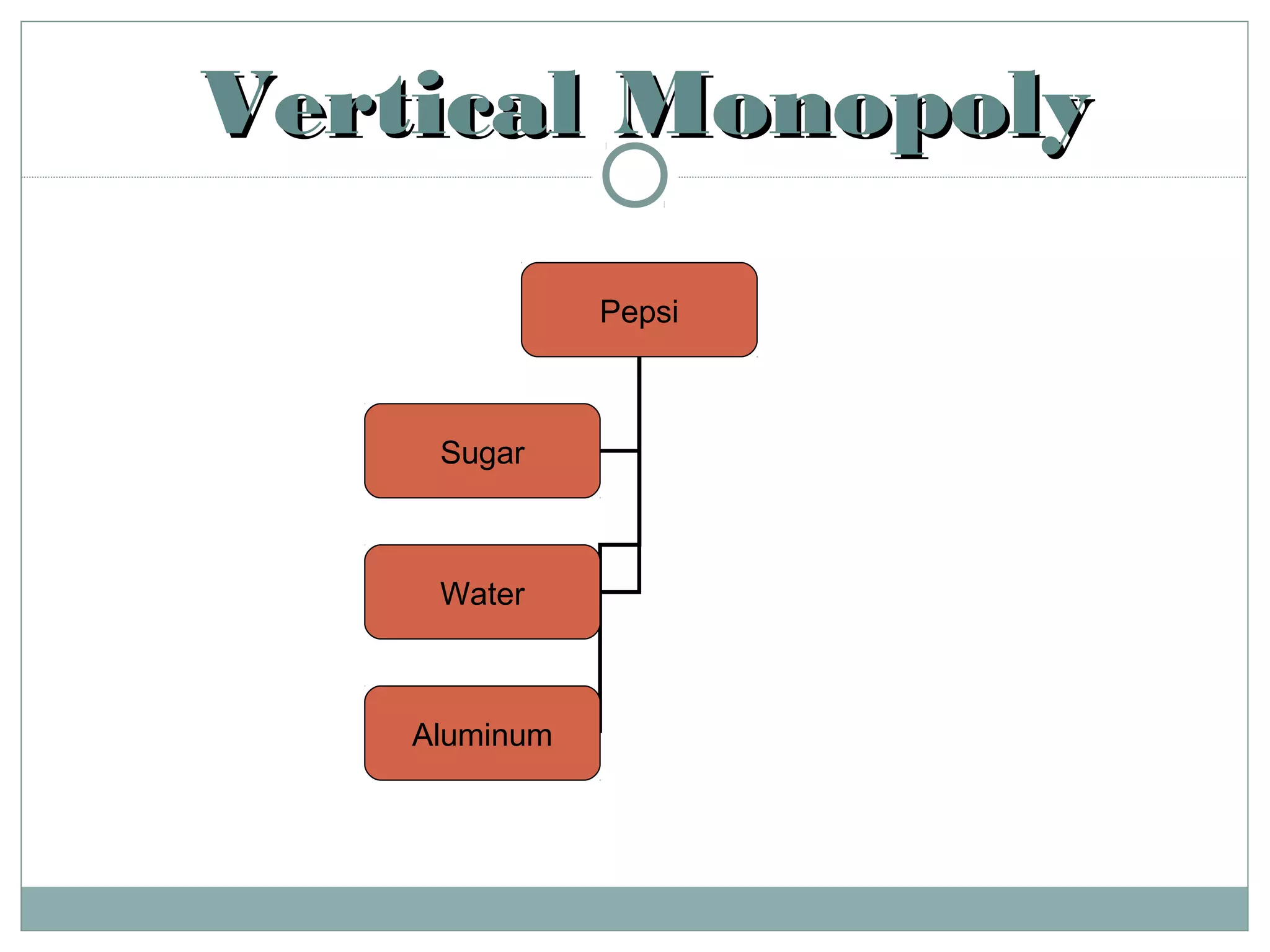
Vertical MonopolyVertical Monopoly
Pepsi
Sugar
Water
Aluminum
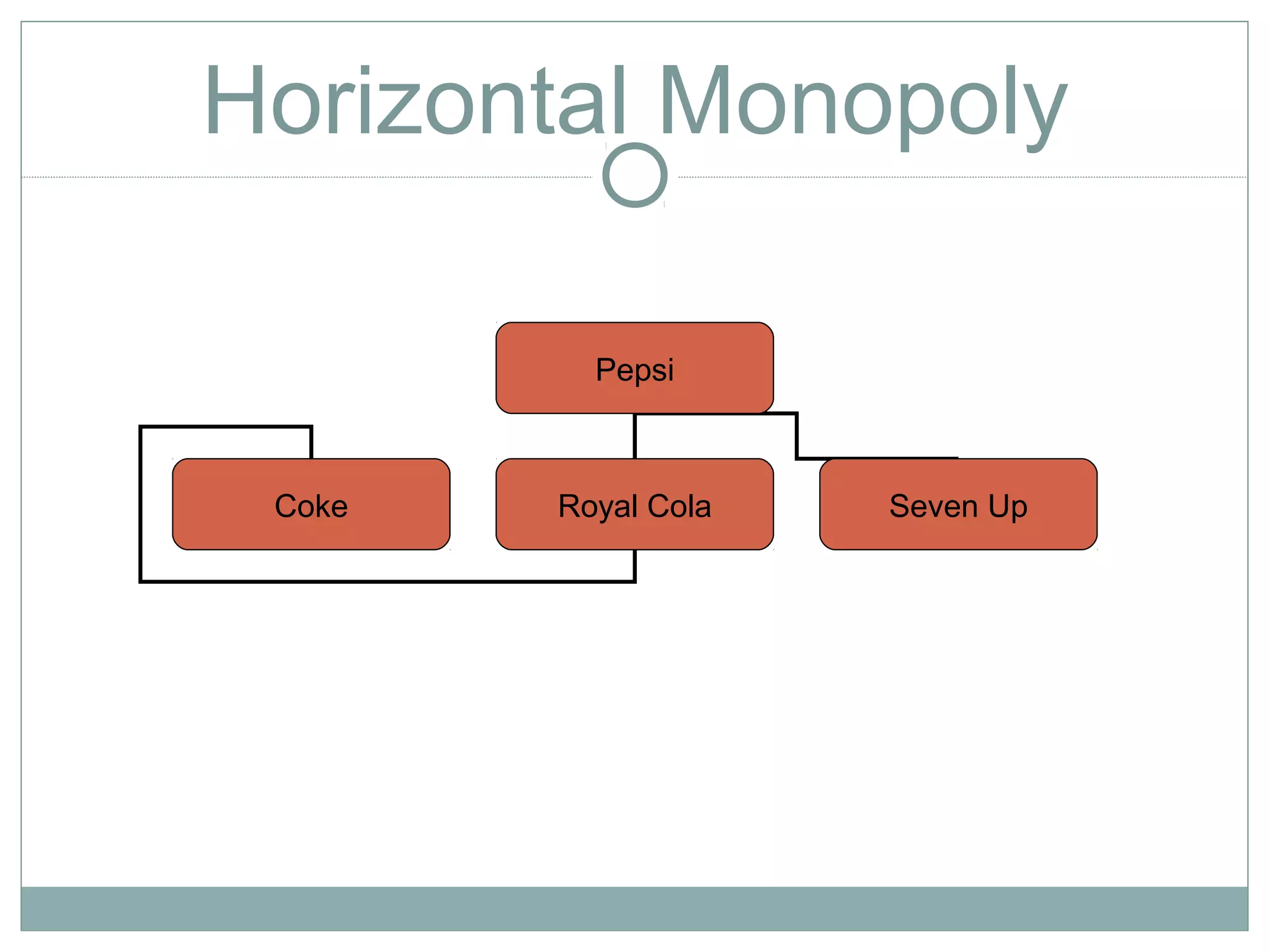
Horizontal Monopoly
Pepsi
Coke Royal Cola Seven Up
Monopolies and You
Antitrust Laws: Laws that restrict formation of cartels, mergers that
lessen competition, and monopolies.
Quick Write:
 
Using the concept of supply
and demand, how would
consumers react to an
economy based solely on a
monopolistic market
structure?
TUCKER
Sadly Tucker died…
You are going to write a eulogy where you honor
Tucker’s ingenuity and brilliance.
The eulogy should contain the following words:
-Entrepreneur
-Innovation
-Oligopoly
-Collusion
-Competition
Time for our second DBQ!!!
Just kidding…
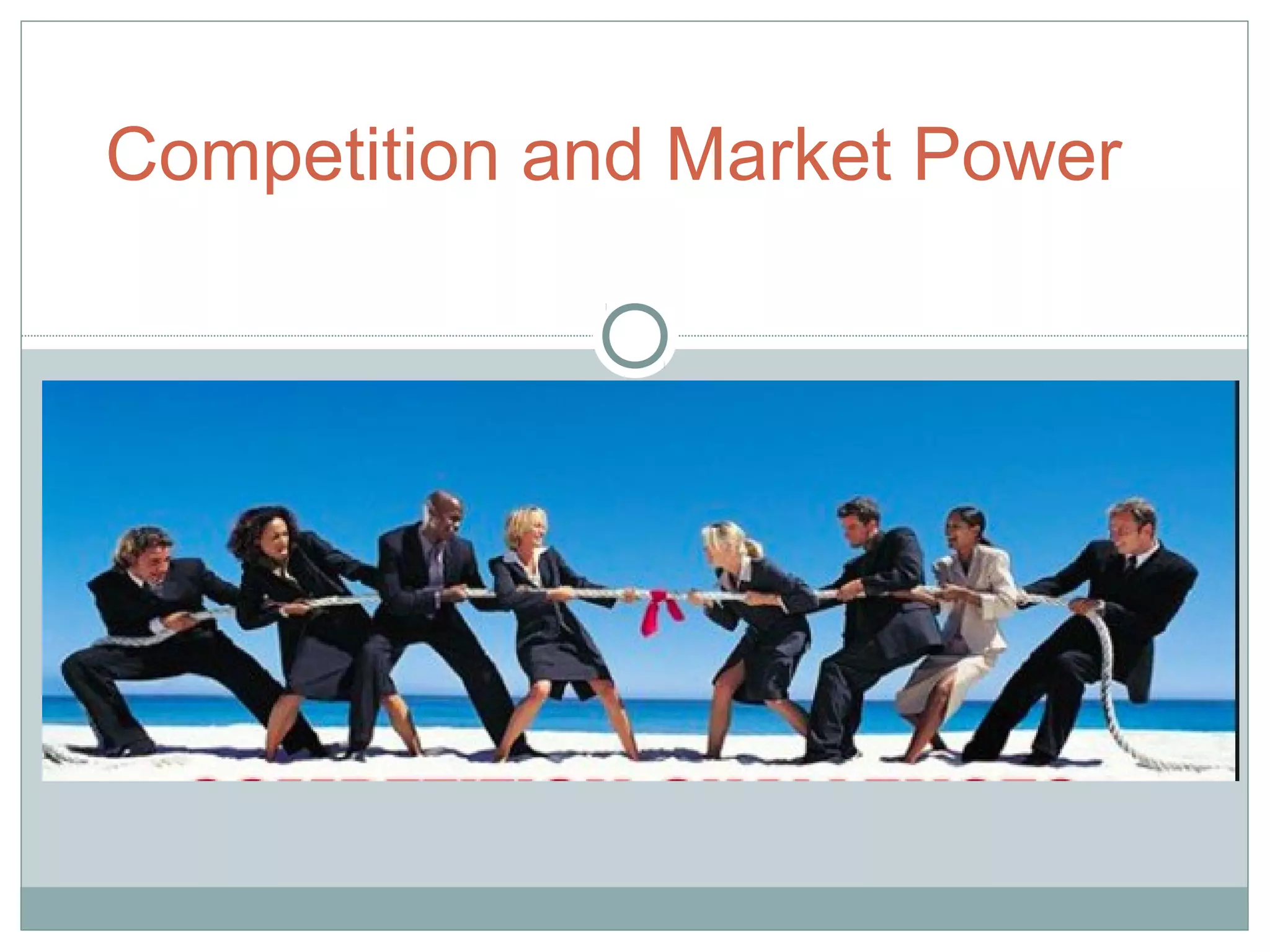
Competition and Market Power
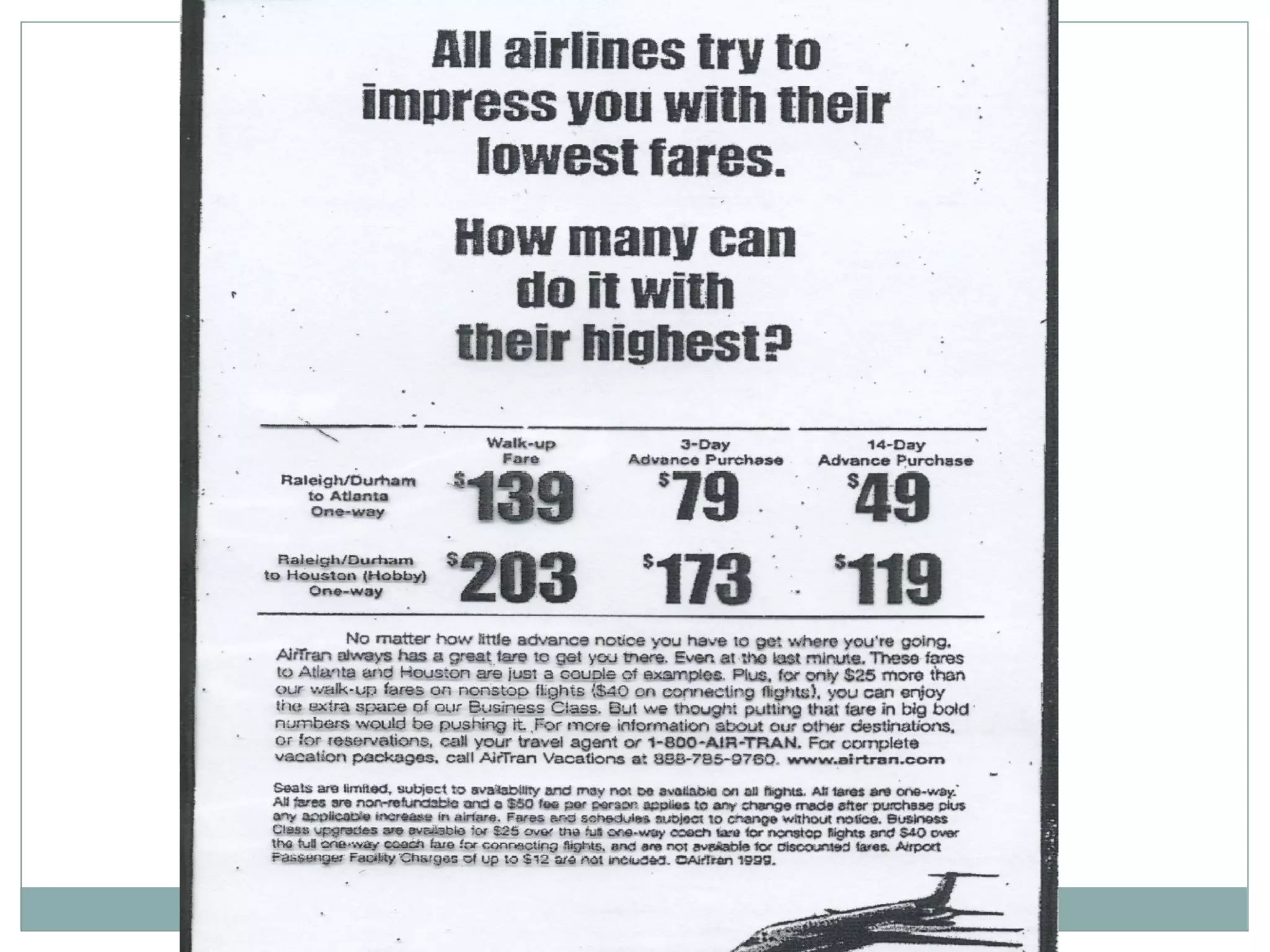
Price Discrimination
Price Discrimination: Dividing consumers into two or
more groups and charging a different price to each
groups.
-Everyone has his or her own maximum price.
-Monopolists can attract more consumers and
maximize profits because they are capturing each
consumers maximum price
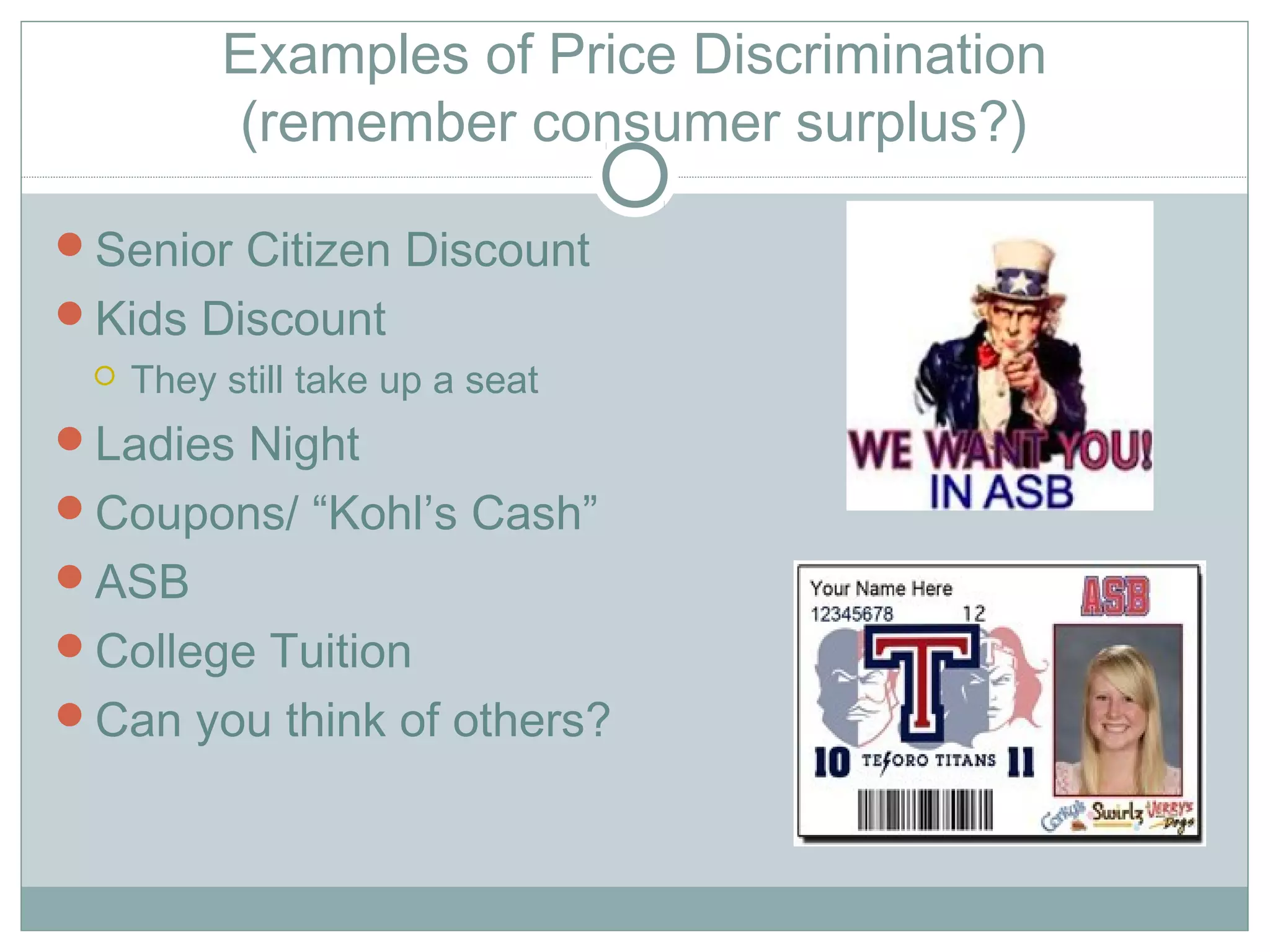
Examples of Price Discrimination
(remember consumer surplus?)
Senior Citizen Discount
Kids Discount
 They still take up a seat
Ladies Night
Coupons/ “Kohl’s Cash”
ASB
College Tuition
Can you think of others?
How to Make the Most Through Price
Discrimination
Your cereal manufacturer knows that some of its customers
pay lots of attention to prices, while others don't.  If it were
to cut its price, then only the price-sensitive customers
would respond by buying more.  The price cut would be
wasted (from the firm's point of view) on those shoppers
who don't pay attention to prices.   
Coupons are a clever way of giving a break just to the
price-sensitive shoppers. By creating all of the hassles you
described, manufacturers see to it that only very price-
sensitive customers are going to end up using their
coupons.  This targets the price cut on just those people
who will be most responsive to it.  

Lesson plan 1 market structures - power point - duke

  • 1.
  • 2.
    Market Power Market power: Theinfluence that any particular buyer or seller can exercise over the price of the product. Ex. These dominate in their respective markets. Apple 60% Coca Cola 44% Nike 35%
  • 3.
    Perfect Competition • Largenumber of firms producing the same/identical product. • Price is set by buyer. • Each firm’s production level does not influence the price. “Price Takers” -Agriculture Ex. Strawberries, wheat, poultry -Gold -Oil -Stock market • Few barriers to entry.
  • 4.
    Monopolistic Competition Many firmscompete to sell products that are similar but not identical. Differentiated products. Slight control over price. • Few barriers to entry Ex. -Jeans -Watches -Shoes
  • 5.
    Oligopoly Market dominated bya few large profitable firms. (3-4 control 70-80%). Little or no true priceprice competition. Firms are interdependent Ex. -Airline Industry -Breakfast Cereal -Soft Drinks • Significant barriers to entry (start up costs high).
  • 6.
    How do firmsin an oligopoly control their respective industries? Predatory Pricing- selling a product below cost to drive competitors out of the market. Illegal Collusion- an agreement among firms to set prices. Illegal
  • 7.
    Time for aSimulation….
  • 8.
    +$30 - $25 + $105 -$40 +$45 + $17 L, L, H H - 40 H,H, H H +30
  • 9.
    Pricing-Profit Situation (FollowUp) 1. What was you strategy at the start of the game? How did you change your strategy as the game progressed? 2. As a consumer which strategy would you like to see firms follow? 3. Do you think collusion is fair? Why/Why not. Chart
  • 10.
    They buy otherbusinesses! Conglomerate- a business combination merging more than three businesses that make unrelated products. How do oligopolies continue to grow legally without becoming a monopoly?
  • 11.
    Examples GILLETTE 1. Razors/shaving accessories- #1 in U.S. - 70% market share 2. Batteries- #1 in U.S. - 50% market share Duracell 3. Deodorant- #2 in U.S. Right Guard
  • 12.
    More Examples SARA LEE 1.Baked Goods- #2 bakery in the U.S. 2. Packaged Meat- major provider to food service Hilshire Farm, Jimmy Dean – “Go Meat!” 3. Apparel- #1 intimate wear provider in U.S. Beefy T, Hanes, Playtex
  • 13.
    Monopoly A market dominatedby a single seller. Barriers prevent firms from entering the market. High prices = no competition. Natural Monopoly: Most efficient (lowest long-run average cost) for production in a single firm. Ex. Gas Company Government Monopoly: patent, license, franchise. Ex. Public Water.
  • 14.
  • 15.
  • 16.
    Monopolies and You AntitrustLaws: Laws that restrict formation of cartels, mergers that lessen competition, and monopolies.
  • 17.
    Quick Write:   Using theconcept of supply and demand, how would consumers react to an economy based solely on a monopolistic market structure?
  • 18.
    TUCKER Sadly Tucker died… Youare going to write a eulogy where you honor Tucker’s ingenuity and brilliance. The eulogy should contain the following words: -Entrepreneur -Innovation -Oligopoly -Collusion -Competition
  • 19.
    Time for oursecond DBQ!!! Just kidding…
  • 20.
  • 22.
    Price Discrimination Price Discrimination:Dividing consumers into two or more groups and charging a different price to each groups. -Everyone has his or her own maximum price. -Monopolists can attract more consumers and maximize profits because they are capturing each consumers maximum price
  • 23.
    Examples of PriceDiscrimination (remember consumer surplus?) Senior Citizen Discount Kids Discount  They still take up a seat Ladies Night Coupons/ “Kohl’s Cash” ASB College Tuition Can you think of others?
  • 24.
    How to Makethe Most Through Price Discrimination Your cereal manufacturer knows that some of its customers pay lots of attention to prices, while others don't.  If it were to cut its price, then only the price-sensitive customers would respond by buying more.  The price cut would be wasted (from the firm's point of view) on those shoppers who don't pay attention to prices.    Coupons are a clever way of giving a break just to the price-sensitive shoppers. By creating all of the hassles you described, manufacturers see to it that only very price- sensitive customers are going to end up using their coupons.  This targets the price cut on just those people who will be most responsive to it.  

Editor's Notes

  • #14 2:22 Bears & Balls