A View From Both Worlds
Reflections as Both a College Dean and Corporate CEO
Dr. Mac AdkinsGo to Menti.com 89 48 31
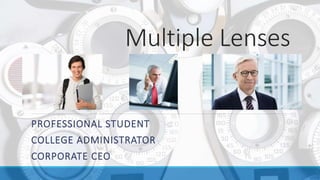
Multiple Lenses
PROFESSIONAL STUDENT
COLLEGE ADMINISTRATOR
CORPORATE CEO
There are things to be learned
on both sides of the fence.
Three words that you associate with …
Go to Menti.com 89 48 31
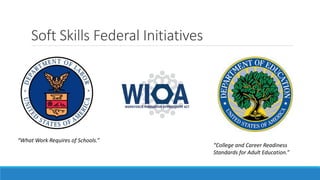
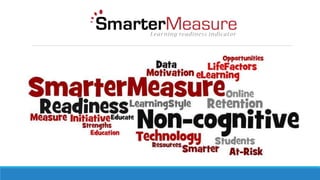
Soft Skills Federal Initiatives
“What Work Requires of Schools.”
“College and Career Readiness
Standards for Adult Education.”
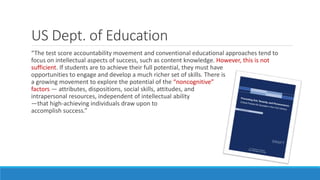
US Dept. of Education
“The test score accountability movement and conventional educational approaches tend to
focus on intellectual aspects of success, such as content knowledge. However, this is not
sufficient. If students are to achieve their full potential, they must have
opportunities to engage and develop a much richer set of skills. There is
a growing movement to explore the potential of the “noncognitive”
factors — attributes, dispositions, social skills, attitudes, and
intrapersonal resources, independent of intellectual ability
—that high-achieving individuals draw upon to
accomplish success.”
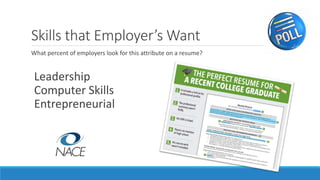
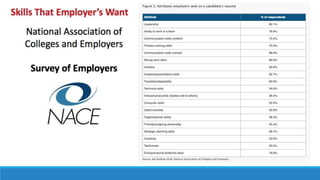
Skills that Employer’s Want
What percent of employers look for this attribute on a resume?
Leadership
Computer Skills
Entrepreneurial
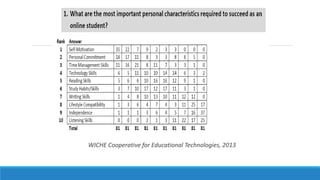
WICHE Cooperative for Educational Technologies, 2013
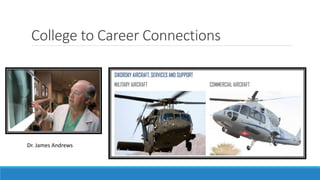
College to Career Connections
Dr. James Andrews
College to Career Connections
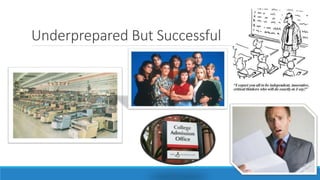
Underprepared But Successful
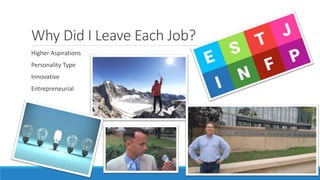
Why Did I Leave Each Job?
Higher Aspirations
Personality Type
Innovative
Entrepreneurial
Employability is no longer about what you know.
Knowledge about anything is a Google search
away. Employability is about your abilities to
utilize that knowledge within a community.
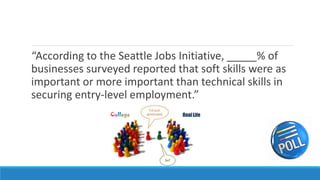
“According to the Seattle Jobs Initiative, _____% of
businesses surveyed reported that soft skills were as
important or more important than technical skills in
securing entry-level employment.”
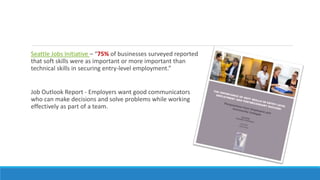
Seattle Jobs Initiative – “75% of businesses surveyed reported
that soft skills were as important or more important than
technical skills in securing entry-level employment.”
Job Outlook Report - Employers want good communicators
who can make decisions and solve problems while working
effectively as part of a team.
Integrating Soft Skills Into Your
Programs/Courses
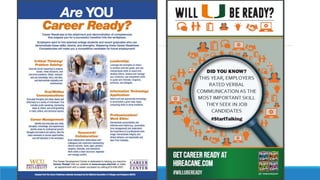
Seven Core Competencies That
Form Career Readiness
Critical Thinking/Problem Solving
Oral/Written Communications
Teamwork/Collaboration
Information Technology Application
Leadership
Professionalism/Work Ethic
Career Management
Critical Thinking
Includes skills such as organizing, categorizing, predicting, interpreting, analyzing and evaluating,
summarizing and decision making.
1. Teachers can model organizational skills by starting each class with an agenda on the board or
in an online course each unit with a plan.
2. In the course syllabus provide guidance on how students can organize the content and plan
for the assignments in the course.
3. Use video scenarios in an online course and then have the students to interpret, analyze and
summarize the content as an assignment.
4. Integrate video-based situational judgment question types into assessments.
Oral Communication
This is one of the soft skills that is most commonly cited by employers.
1. Have students discuss an issue in pairs before opening the discussion to the class as a whole
2. Require oral presentations, even in online courses.
3. In online courses this can be done with tools
such as FaceTime, Skype, etc. Students could also
submit videos via a discussion board. Some LMSs
have tools for this.
Written Communication
1. Give students opportunities to write in different genres, such as e-mails, letters, paragraphs,
and summaries.
2. Encourage peer revision whenever possible in writing.
3. Foster correct writing even in less formal communications such as email or discussion board.
4. Convey that at work cross-office dialogue and social media tools are increasing the need to
communicate effectively.
5. Set the expectation (modeling) for proper email and
other written etiquette.
Teamwork / Collaboration
1. Distinguish between “Cooperation” and “Collaboration.”
2. Provide access to digital platforms such as Google Docs and Google Hangouts.
3. Emphasize to students that it is important on their resumes to convey that they have
experience working in groups.
4. Establish guidelines that outline student expectations, netiquette, procedures to deal absent
group member(s), assessment methods, examples of collaborative exchanges between students,
team roles, etc.
Information Technology Application
1. Explore how that information technology is not only changing education but almost every
other industry as well.
2. Model technology integration in the instructional design, delivery and student tasking in your
courses.
3. Have students identify how the use of data is critical in the field with they are studying.
Leadership
1. Define it – Foster a discussion on matters like what distinguishes leadership from management.
2. Have students include on their resumes descriptions of instances in which they demonstrated
leadership, even if it was not in a context where they were managing other people.
3. Have students write their definition of leadership such as, “Leadership skills prove that you learn
from your experiences, take the time to develop your personal approach to work, lead others to be
the best they can be, act with integrity and uphold professional standards at all times.”
Rod Adams, U.S. recruiting leader at PricewaterhouseCoopers
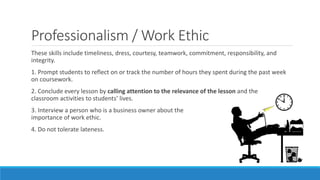
Professionalism / Work Ethic
These skills include timeliness, dress, courtesy, teamwork, commitment, responsibility, and
integrity.
1. Prompt students to reflect on or track the number of hours they spent during the past week
on coursework.
2. Conclude every lesson by calling attention to the relevance of the lesson and the
classroom activities to students’ lives.
3. Interview a person who is a business owner about the
importance of work ethic.
4. Do not tolerate lateness.
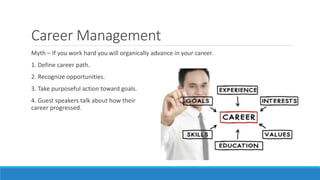
Career Management
Myth – If you work hard you will organically advance in your career.
1. Define career path.
2. Recognize opportunities.
3. Take purposeful action toward goals.
4. Guest speakers talk about how their
career progressed.
Which TWO competencies do you do the best job of
reinforcing in your courses?
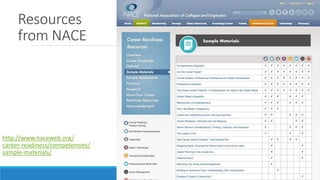
Resources
from NACE
http://www.naceweb.org/
career-readiness/competencies/
sample-materials/
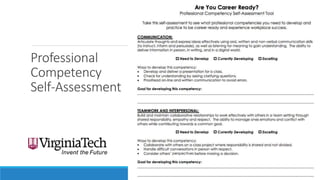
Professional
Competency
Self-Assessment
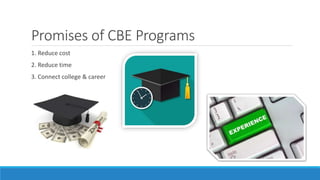
Promises of CBE Programs
1. Reduce cost
2. Reduce time
3. Connect college & career
A View From Both
Worlds
REFLECTIONS AS BOTH A COLLEGE DEAN AND CORPORATE CEO
DR. MAC ADKINS

OLC View from Both Worlds

  • 1.
    A View FromBoth Worlds Reflections as Both a College Dean and Corporate CEO Dr. Mac AdkinsGo to Menti.com 89 48 31
  • 2.
  • 3.
    There are thingsto be learned on both sides of the fence.
  • 4.
    Three words thatyou associate with … Go to Menti.com 89 48 31
  • 5.
    Soft Skills FederalInitiatives “What Work Requires of Schools.” “College and Career Readiness Standards for Adult Education.”
  • 6.
    US Dept. ofEducation “The test score accountability movement and conventional educational approaches tend to focus on intellectual aspects of success, such as content knowledge. However, this is not sufficient. If students are to achieve their full potential, they must have opportunities to engage and develop a much richer set of skills. There is a growing movement to explore the potential of the “noncognitive” factors — attributes, dispositions, social skills, attitudes, and intrapersonal resources, independent of intellectual ability —that high-achieving individuals draw upon to accomplish success.”
  • 7.
    Skills that Employer’sWant What percent of employers look for this attribute on a resume? Leadership Computer Skills Entrepreneurial
  • 9.
    WICHE Cooperative forEducational Technologies, 2013
  • 11.
    College to CareerConnections Dr. James Andrews
  • 12.
    College to CareerConnections
  • 13.
  • 14.
    Why Did ILeave Each Job? Higher Aspirations Personality Type Innovative Entrepreneurial
  • 15.
    Employability is nolonger about what you know. Knowledge about anything is a Google search away. Employability is about your abilities to utilize that knowledge within a community.
  • 16.
    “According to theSeattle Jobs Initiative, _____% of businesses surveyed reported that soft skills were as important or more important than technical skills in securing entry-level employment.”
  • 17.
    Seattle Jobs Initiative– “75% of businesses surveyed reported that soft skills were as important or more important than technical skills in securing entry-level employment.” Job Outlook Report - Employers want good communicators who can make decisions and solve problems while working effectively as part of a team.
  • 18.
    Integrating Soft SkillsInto Your Programs/Courses
  • 19.
    Seven Core CompetenciesThat Form Career Readiness Critical Thinking/Problem Solving Oral/Written Communications Teamwork/Collaboration Information Technology Application Leadership Professionalism/Work Ethic Career Management
  • 20.
    Critical Thinking Includes skillssuch as organizing, categorizing, predicting, interpreting, analyzing and evaluating, summarizing and decision making. 1. Teachers can model organizational skills by starting each class with an agenda on the board or in an online course each unit with a plan. 2. In the course syllabus provide guidance on how students can organize the content and plan for the assignments in the course. 3. Use video scenarios in an online course and then have the students to interpret, analyze and summarize the content as an assignment. 4. Integrate video-based situational judgment question types into assessments.
  • 21.
    Oral Communication This isone of the soft skills that is most commonly cited by employers. 1. Have students discuss an issue in pairs before opening the discussion to the class as a whole 2. Require oral presentations, even in online courses. 3. In online courses this can be done with tools such as FaceTime, Skype, etc. Students could also submit videos via a discussion board. Some LMSs have tools for this.
  • 22.
    Written Communication 1. Givestudents opportunities to write in different genres, such as e-mails, letters, paragraphs, and summaries. 2. Encourage peer revision whenever possible in writing. 3. Foster correct writing even in less formal communications such as email or discussion board. 4. Convey that at work cross-office dialogue and social media tools are increasing the need to communicate effectively. 5. Set the expectation (modeling) for proper email and other written etiquette.
  • 23.
    Teamwork / Collaboration 1.Distinguish between “Cooperation” and “Collaboration.” 2. Provide access to digital platforms such as Google Docs and Google Hangouts. 3. Emphasize to students that it is important on their resumes to convey that they have experience working in groups. 4. Establish guidelines that outline student expectations, netiquette, procedures to deal absent group member(s), assessment methods, examples of collaborative exchanges between students, team roles, etc.
  • 24.
    Information Technology Application 1.Explore how that information technology is not only changing education but almost every other industry as well. 2. Model technology integration in the instructional design, delivery and student tasking in your courses. 3. Have students identify how the use of data is critical in the field with they are studying.
  • 25.
    Leadership 1. Define it– Foster a discussion on matters like what distinguishes leadership from management. 2. Have students include on their resumes descriptions of instances in which they demonstrated leadership, even if it was not in a context where they were managing other people. 3. Have students write their definition of leadership such as, “Leadership skills prove that you learn from your experiences, take the time to develop your personal approach to work, lead others to be the best they can be, act with integrity and uphold professional standards at all times.” Rod Adams, U.S. recruiting leader at PricewaterhouseCoopers
  • 26.
    Professionalism / WorkEthic These skills include timeliness, dress, courtesy, teamwork, commitment, responsibility, and integrity. 1. Prompt students to reflect on or track the number of hours they spent during the past week on coursework. 2. Conclude every lesson by calling attention to the relevance of the lesson and the classroom activities to students’ lives. 3. Interview a person who is a business owner about the importance of work ethic. 4. Do not tolerate lateness.
  • 27.
    Career Management Myth –If you work hard you will organically advance in your career. 1. Define career path. 2. Recognize opportunities. 3. Take purposeful action toward goals. 4. Guest speakers talk about how their career progressed.
  • 28.
    Which TWO competenciesdo you do the best job of reinforcing in your courses?
  • 29.
  • 31.
  • 32.
    Promises of CBEPrograms 1. Reduce cost 2. Reduce time 3. Connect college & career
  • 34.
    A View FromBoth Worlds REFLECTIONS AS BOTH A COLLEGE DEAN AND CORPORATE CEO DR. MAC ADKINS

Editor's Notes

  • #6 US Department of Labor – Secretary’s Commission on Achieving Necessary Skills (SCANS) Published “"What Work Requires of Schools.” Workforce Innovation and Opportunity Act - Landmark legislation that is designed to strengthen and improve our nation's public workforce system and help get Americans, including youth and those with significant barriers to employment, into high-quality jobs and careers and help employers hire and retain skilled workers. US Department of Education – College and Career Readiness Standards for Adult Education Framework for 21st Century Learning - Developed with input from teachers, education experts, and business leaders to define and illustrate the skills and knowledge students need to succeed in work, life and citizenship, as well as the support systems necessary for 21st century learning outcomes.