OilSim – An overview of the Oil and Gas Upstream value chain
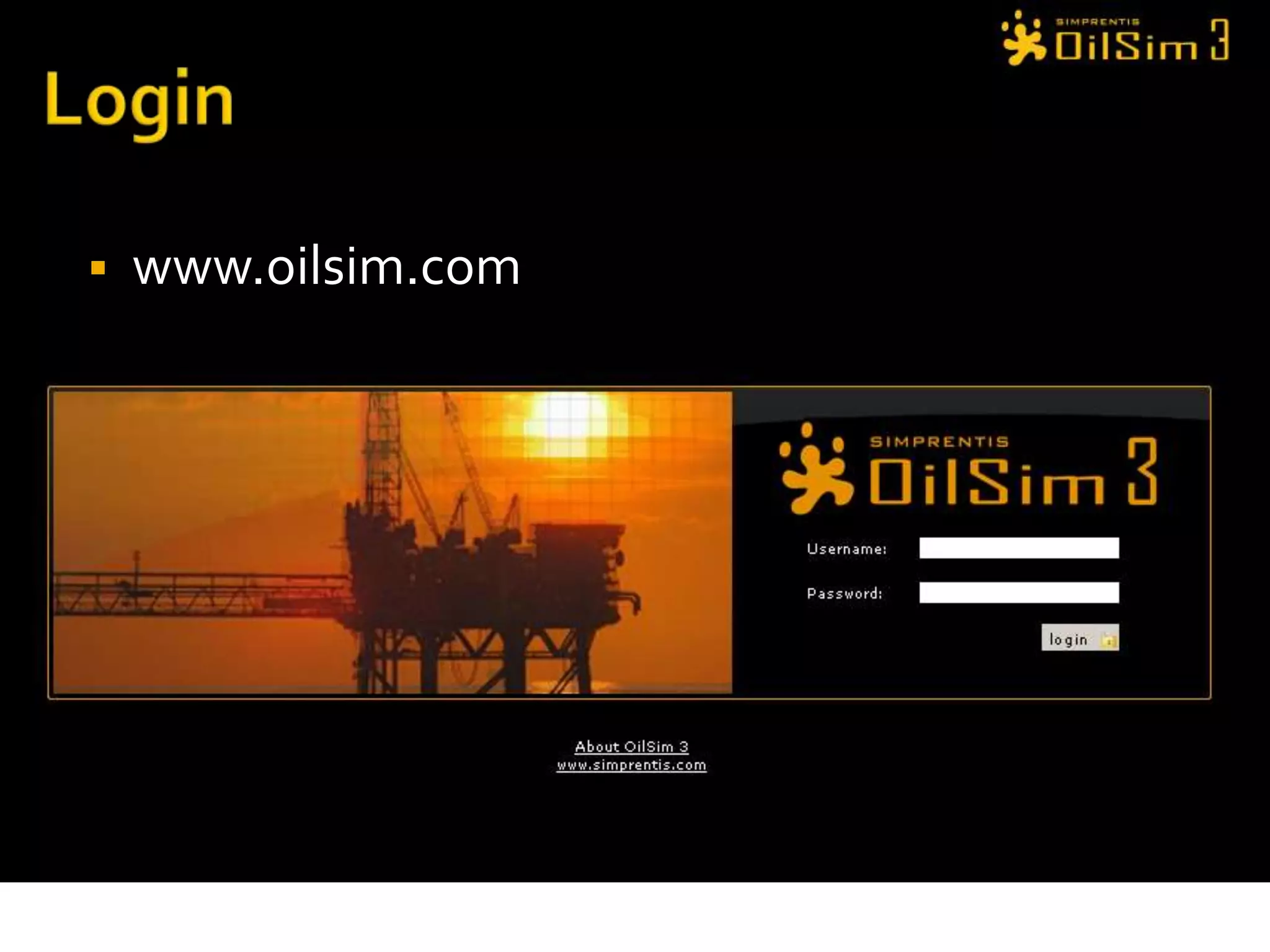
Loginwww.oilsim.com
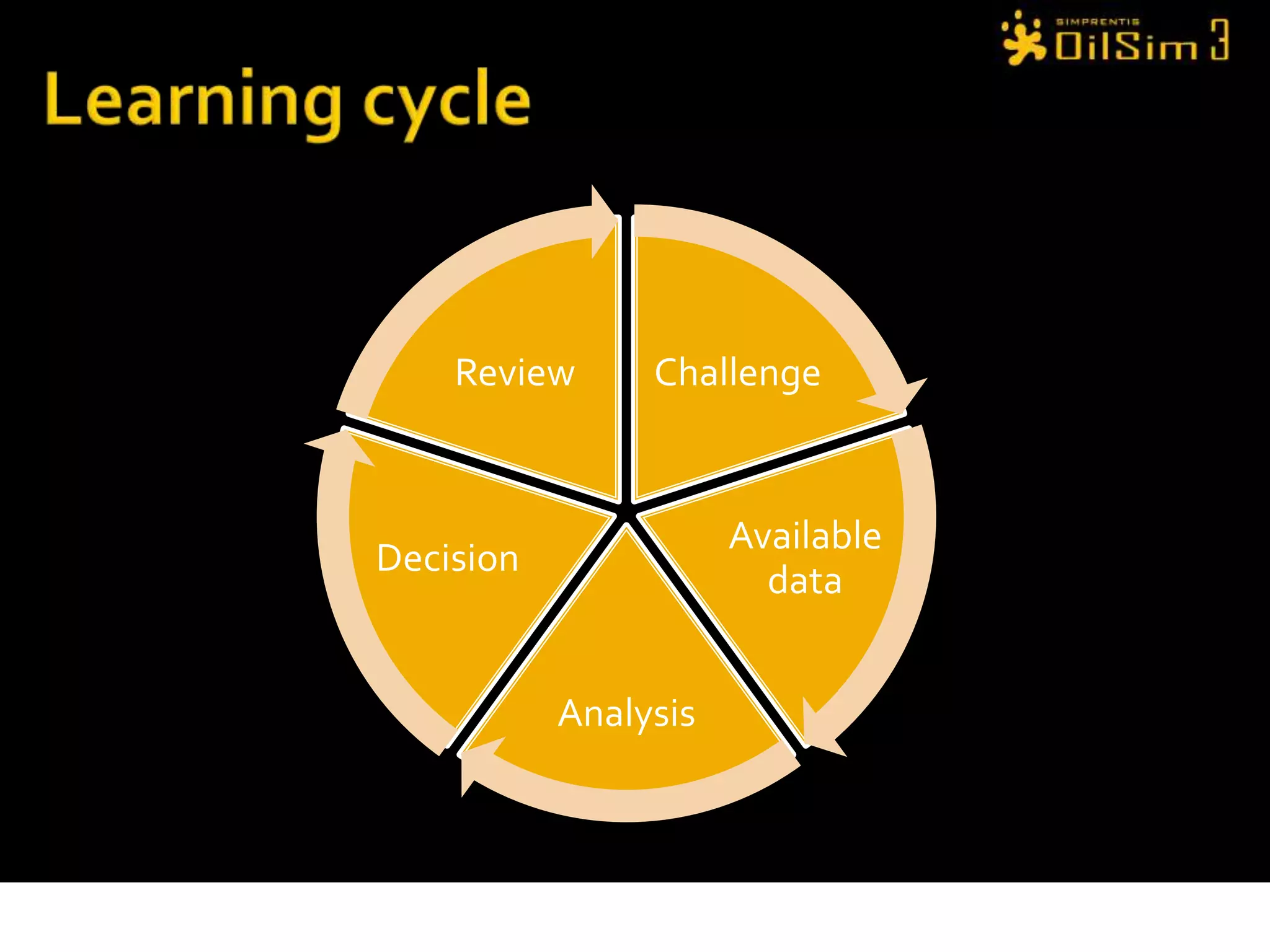
Learning cycle
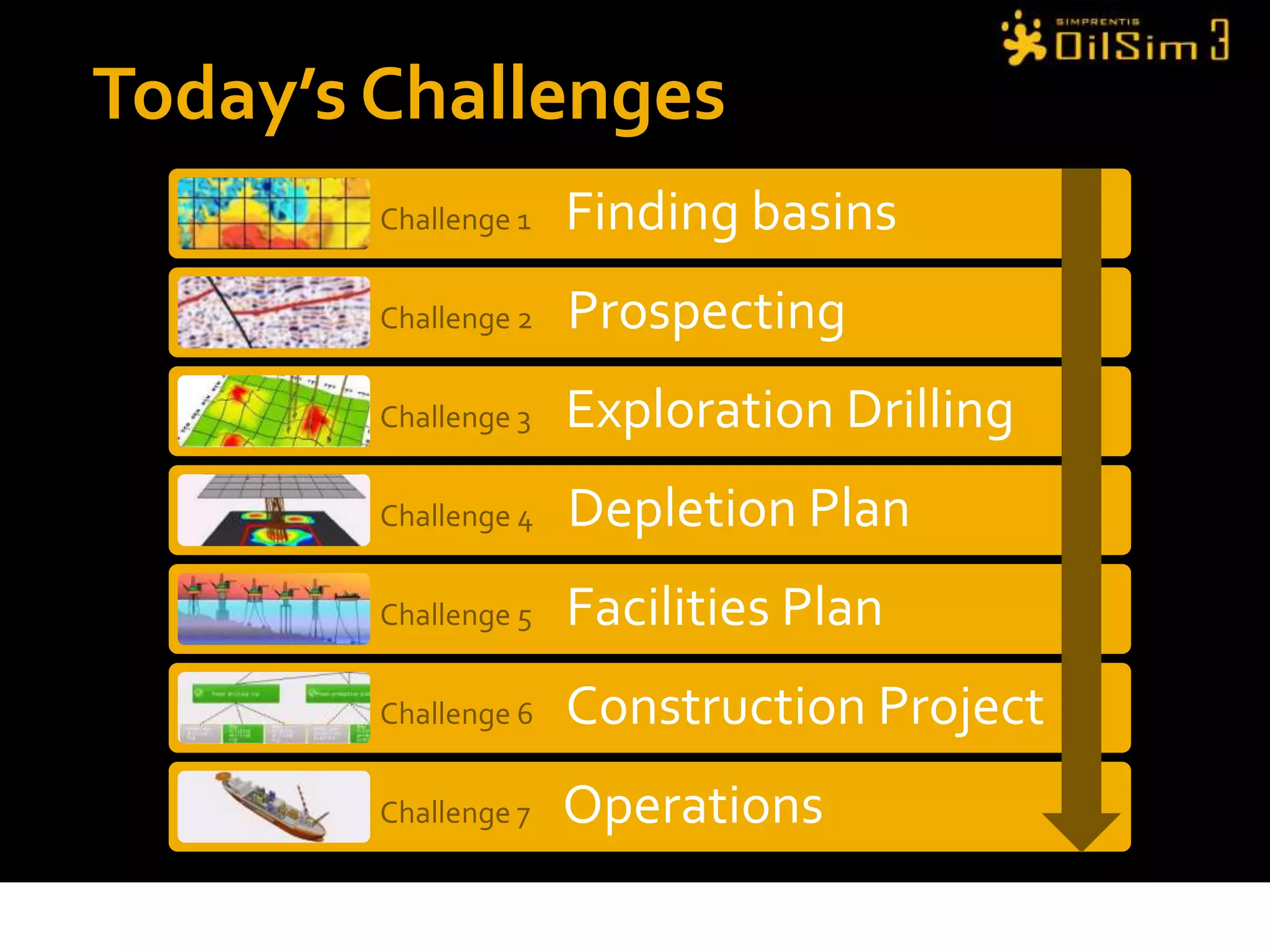
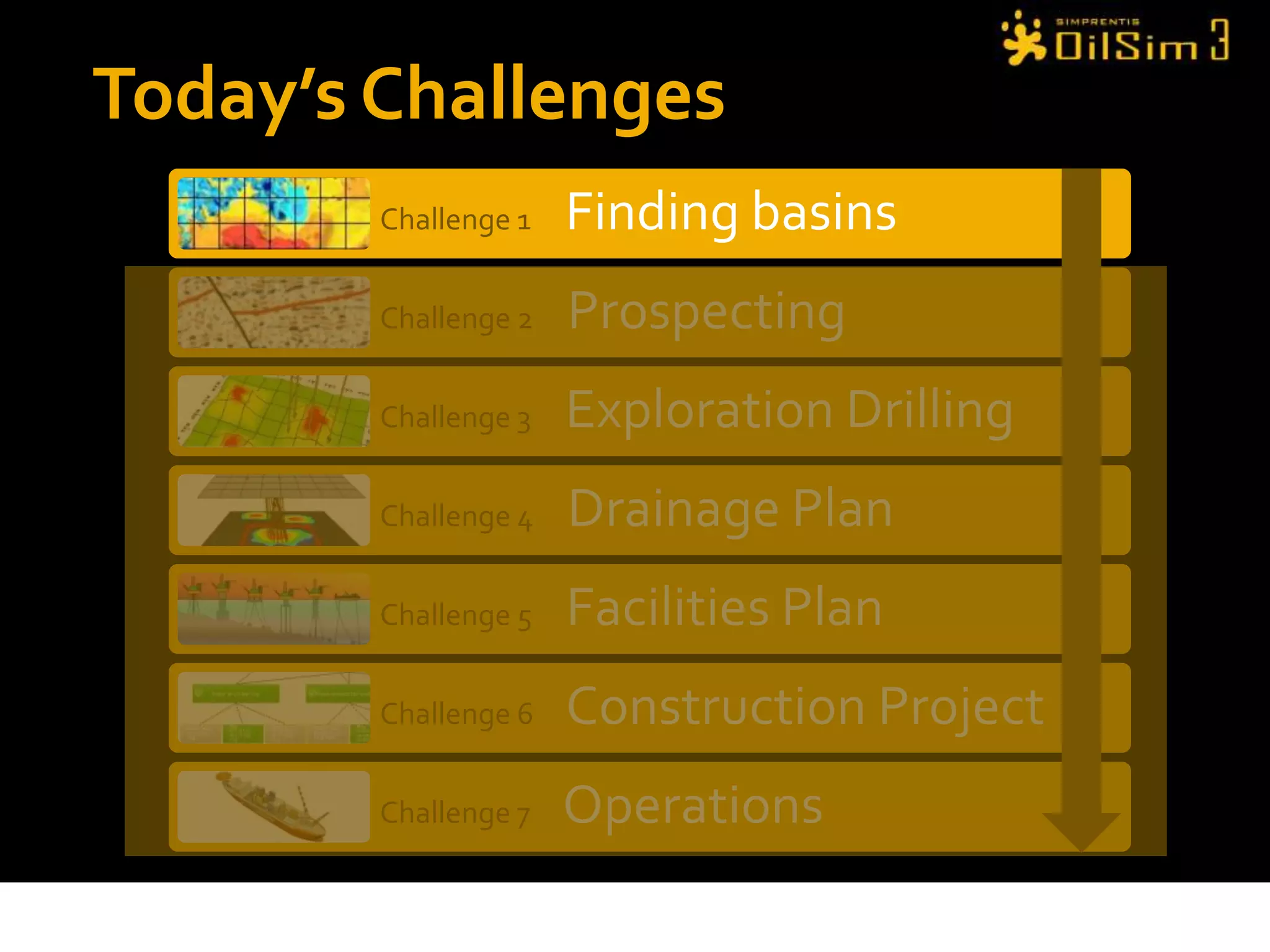
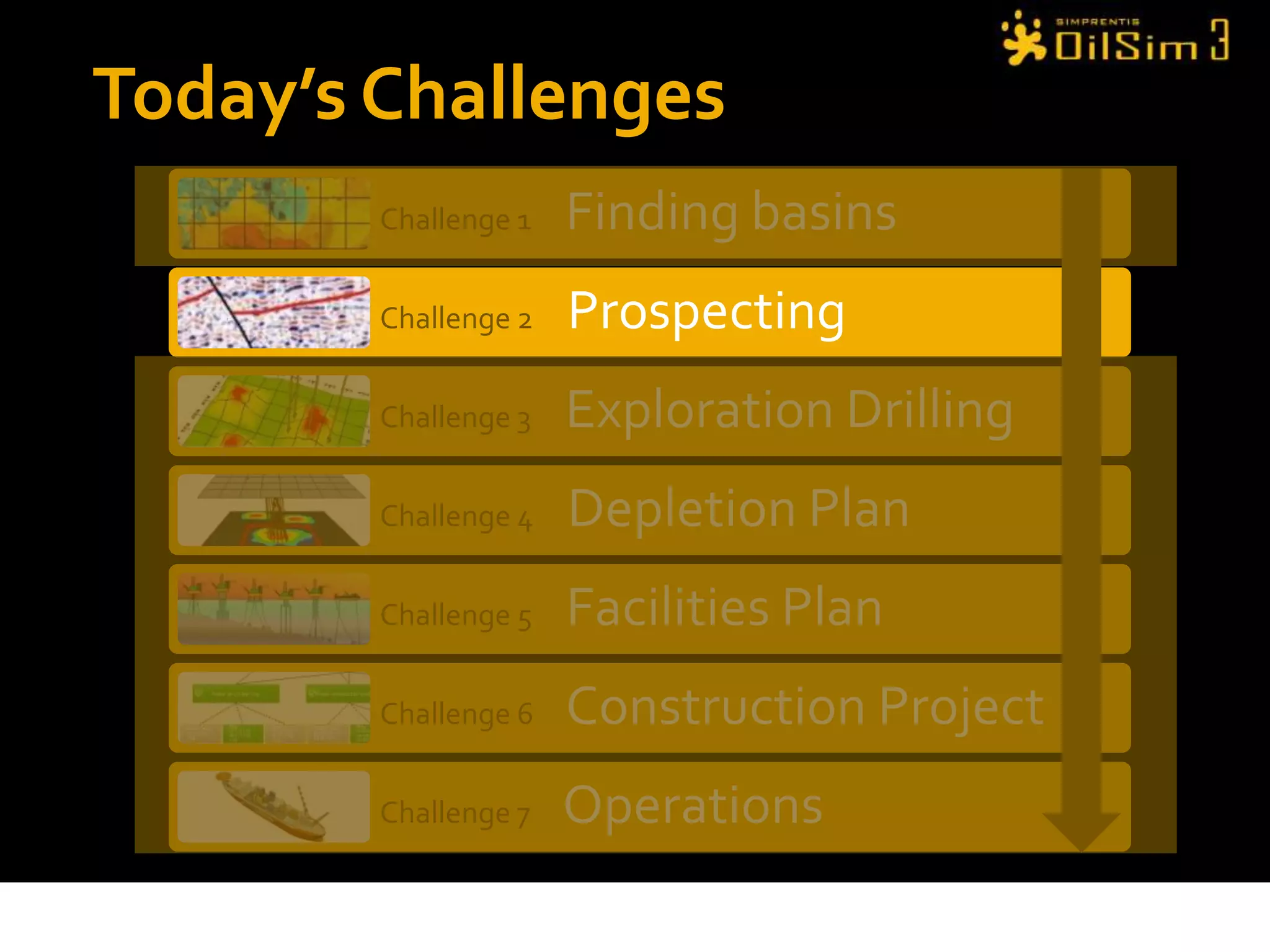
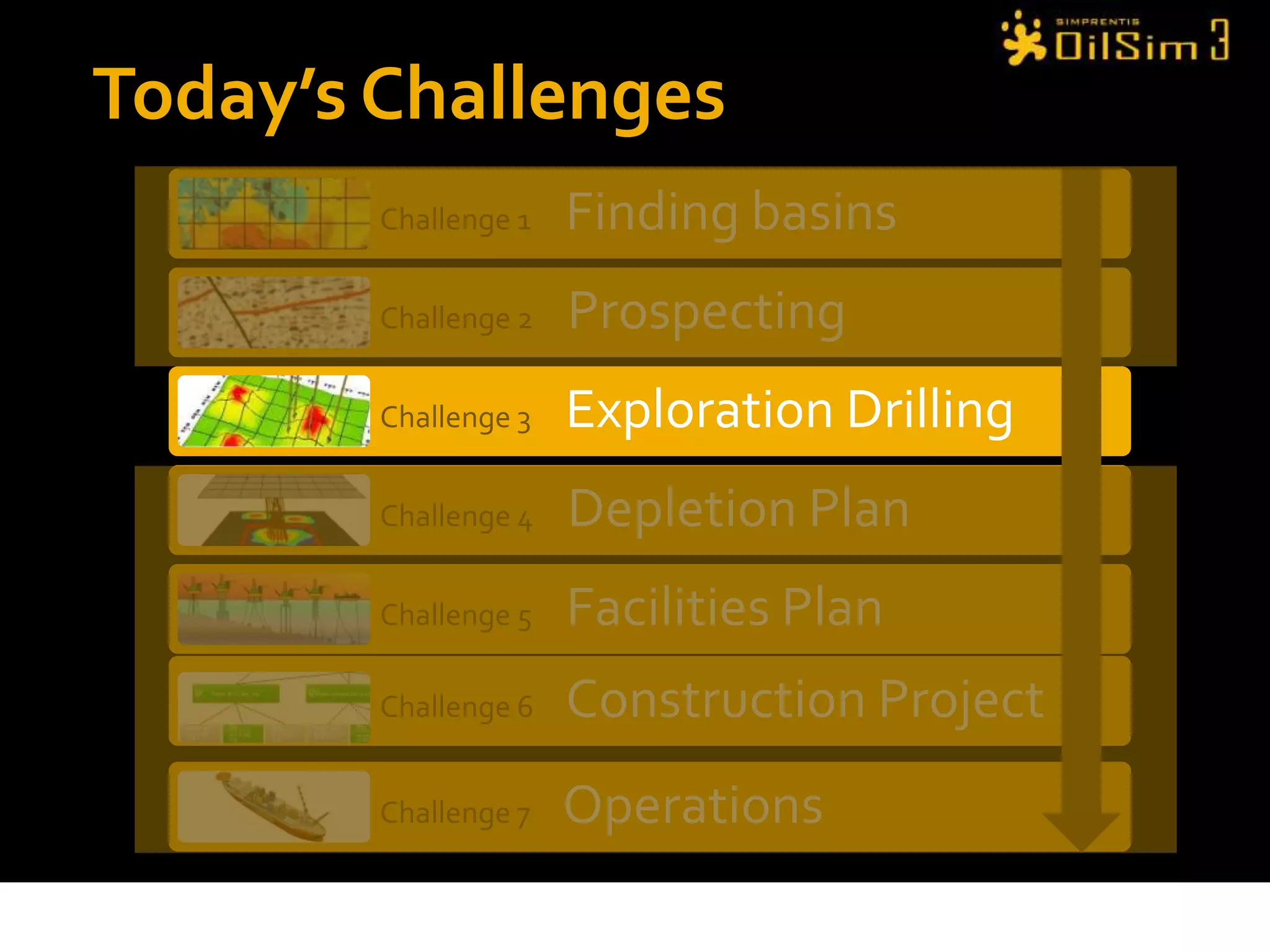
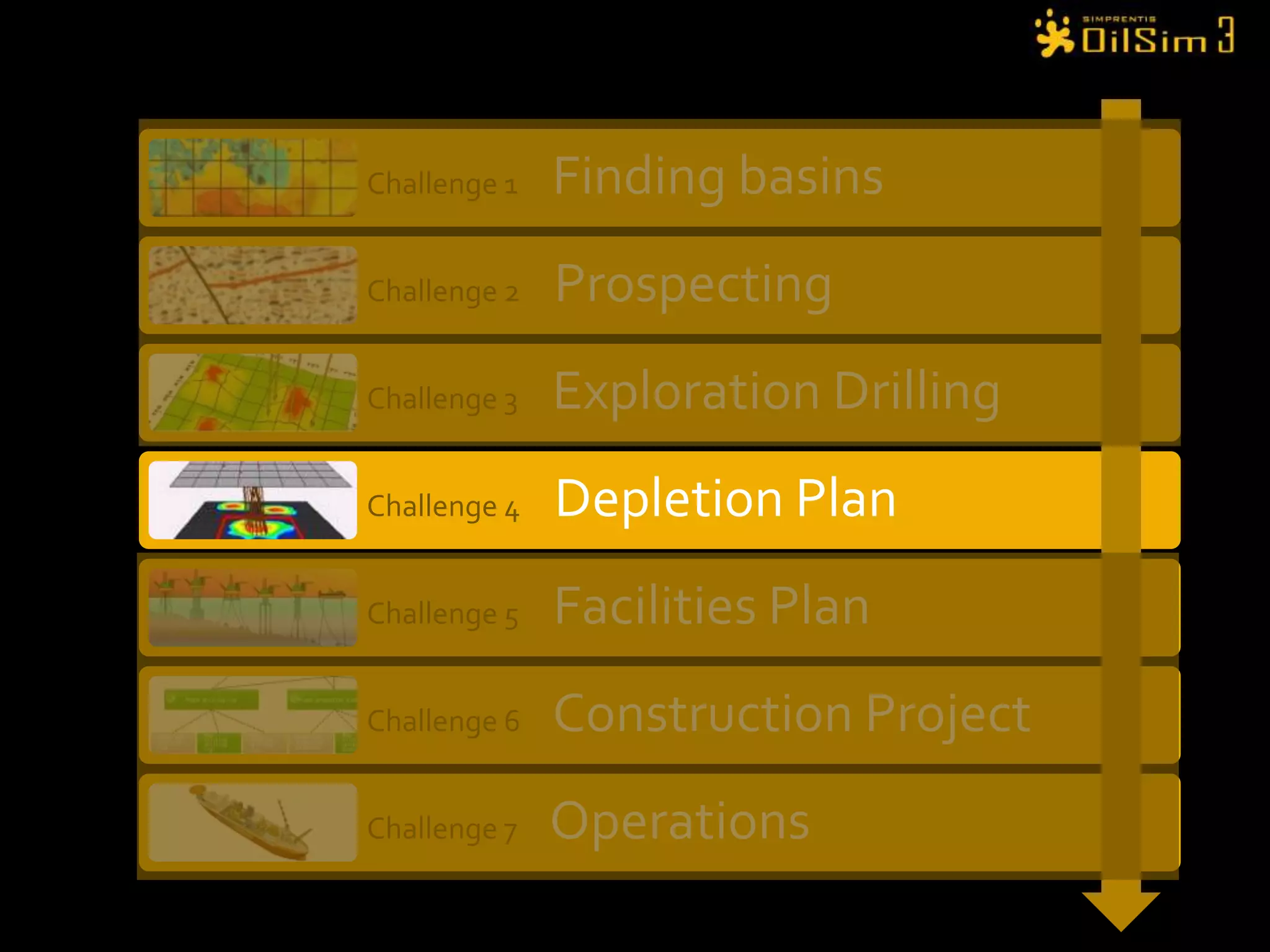
Today’s Challenges
Additional knowledge/skillsEnvironmental issuesTeam work and negotiation Critical decision making, analytical skills, multi-taskingLearn through experienceEconomically viable volumes- reducing uncertaintyReturn on InvestmentFunction appreciation
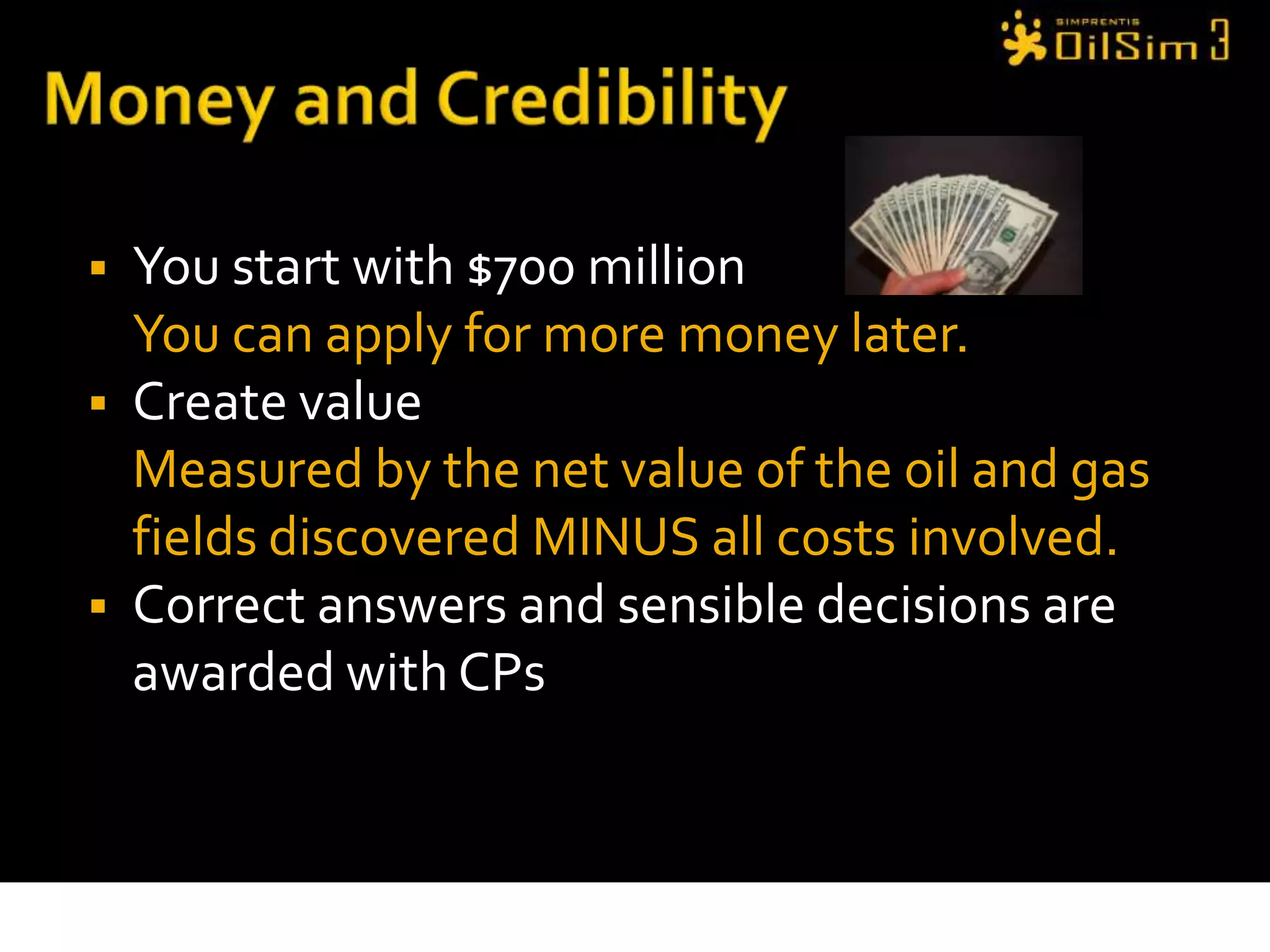
Money and CredibilityYou start with $700 millionYou can apply for more money later.Create valueMeasured by the net value of the oil and gas fields discovered MINUS all costs involved.Correct answers and sensible decisions are awarded with CPs
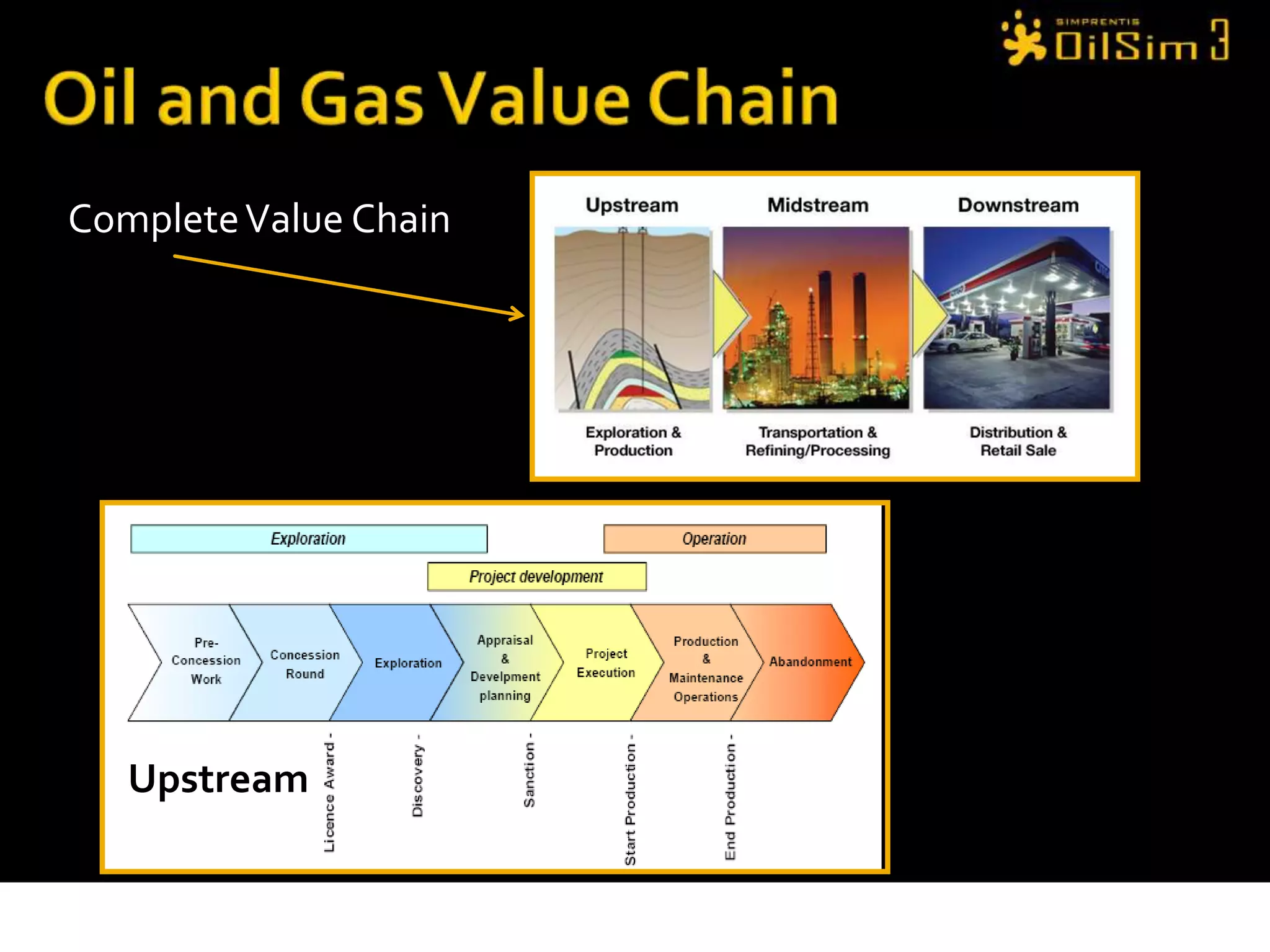
Oil and Gas Value ChainComplete Value ChainUpstream
Today’s Challenges
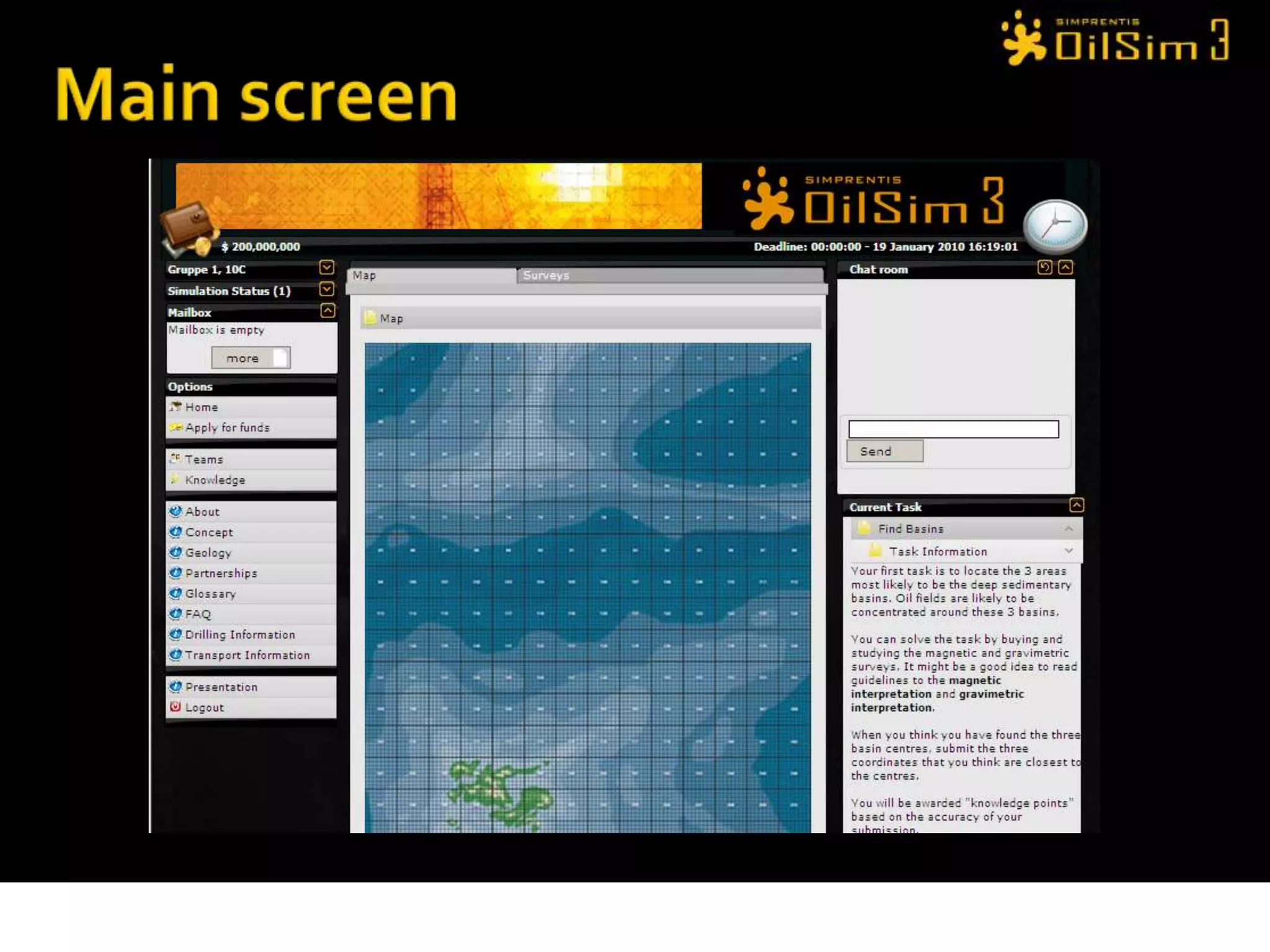
Main screen
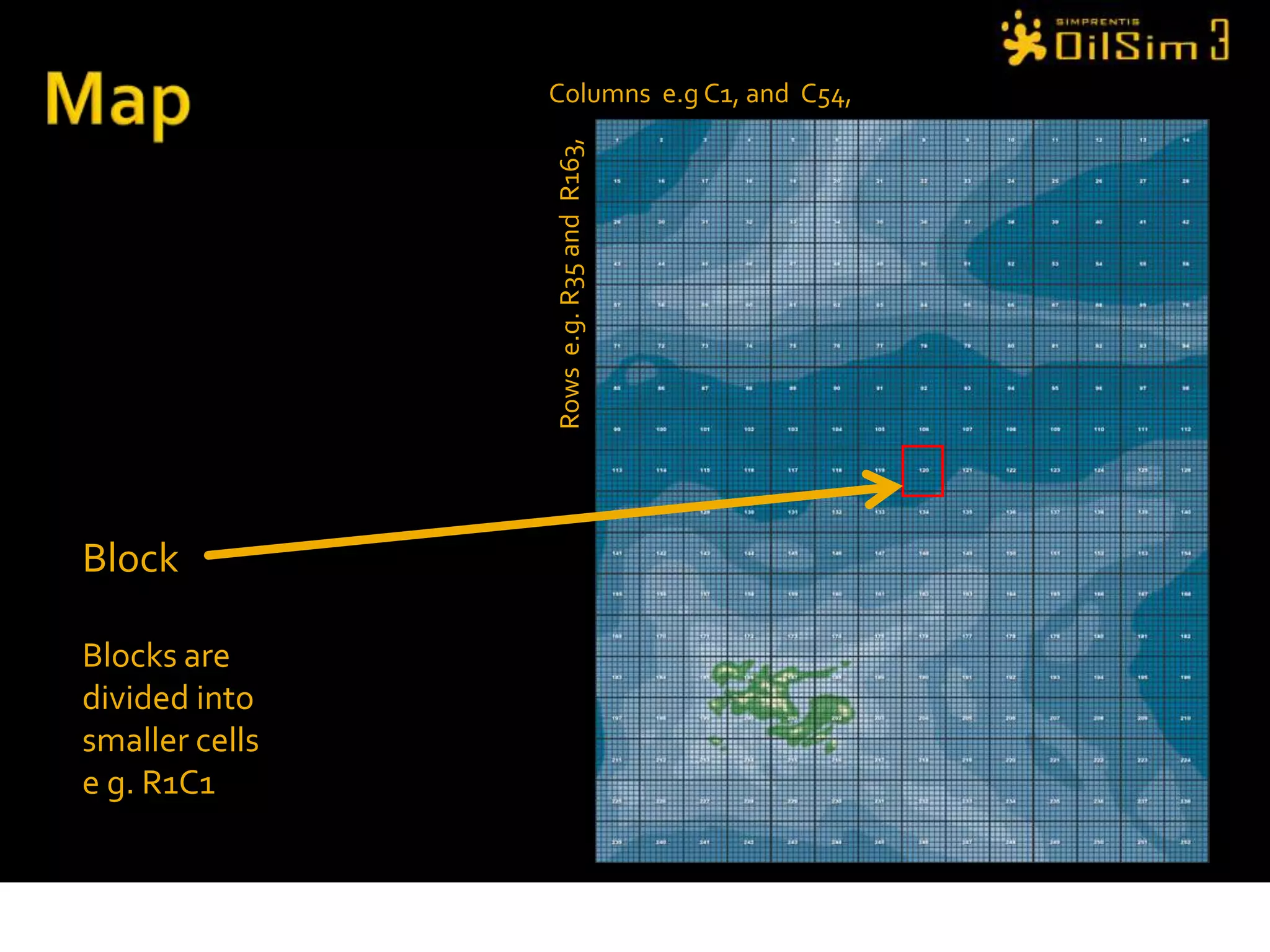
MapColumns  e.g C1, and  C54, Rows  e.g. R35 and  R163,BlockBlocks are divided into smaller cellse g. R1C1
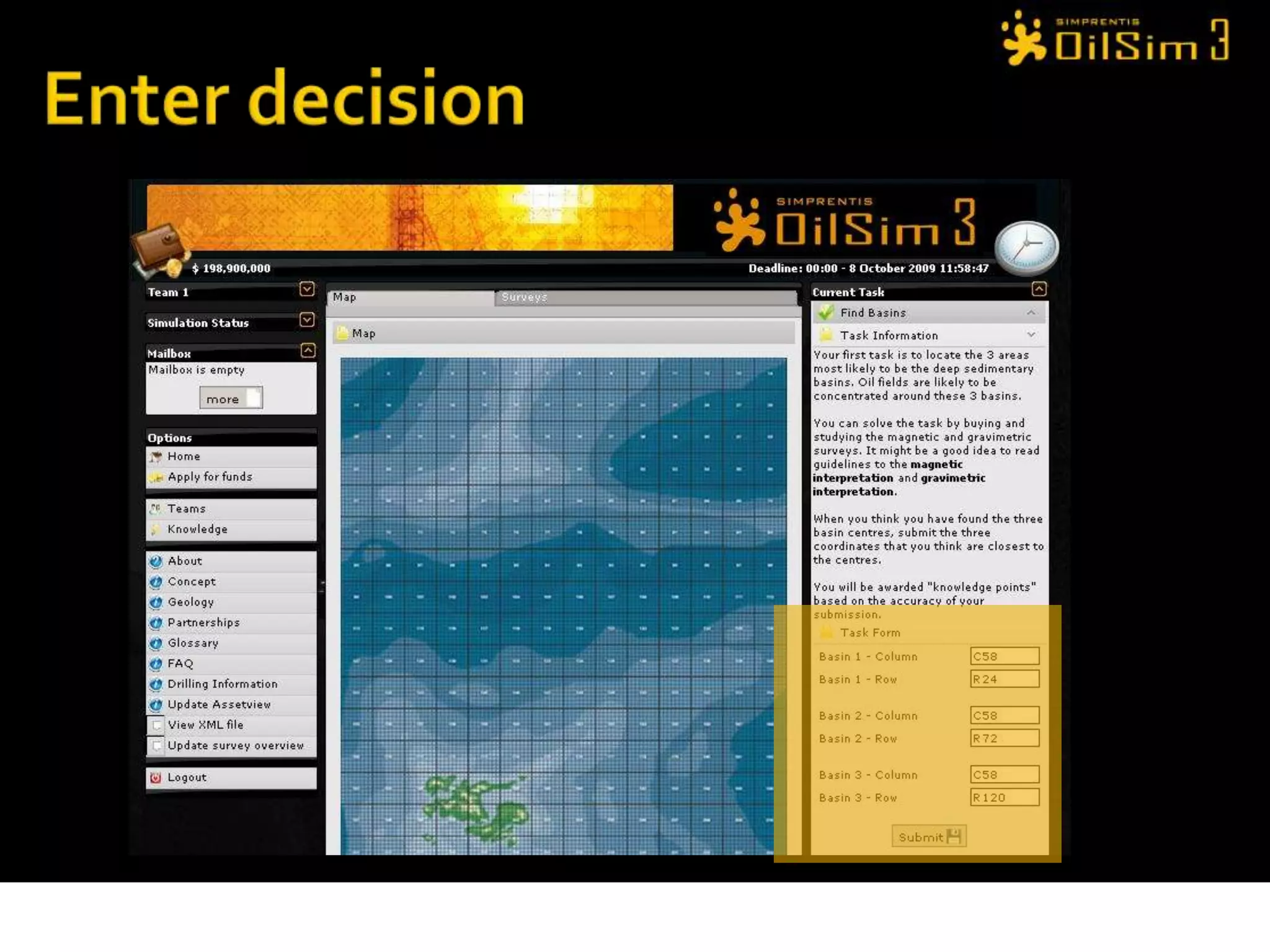
First taskChallenge: Find three sedimentary basins in the area. Basins are sedimentary rocks in the deep subsurface where oil and gas has been generated.Procedure: Buy and study magnetic and gravimetric surveys; and to submit the coordinates, column and row number for each basin centre.
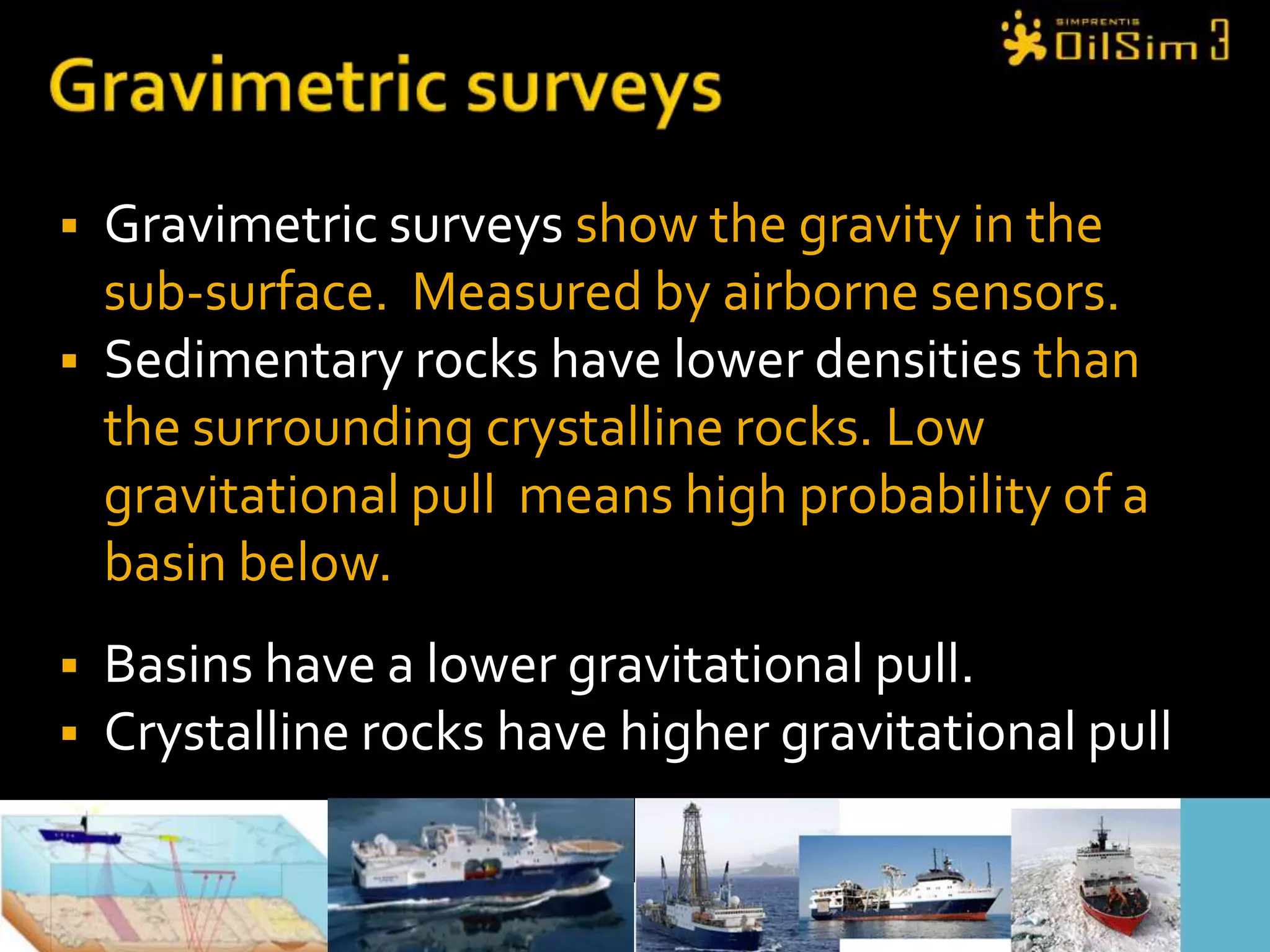
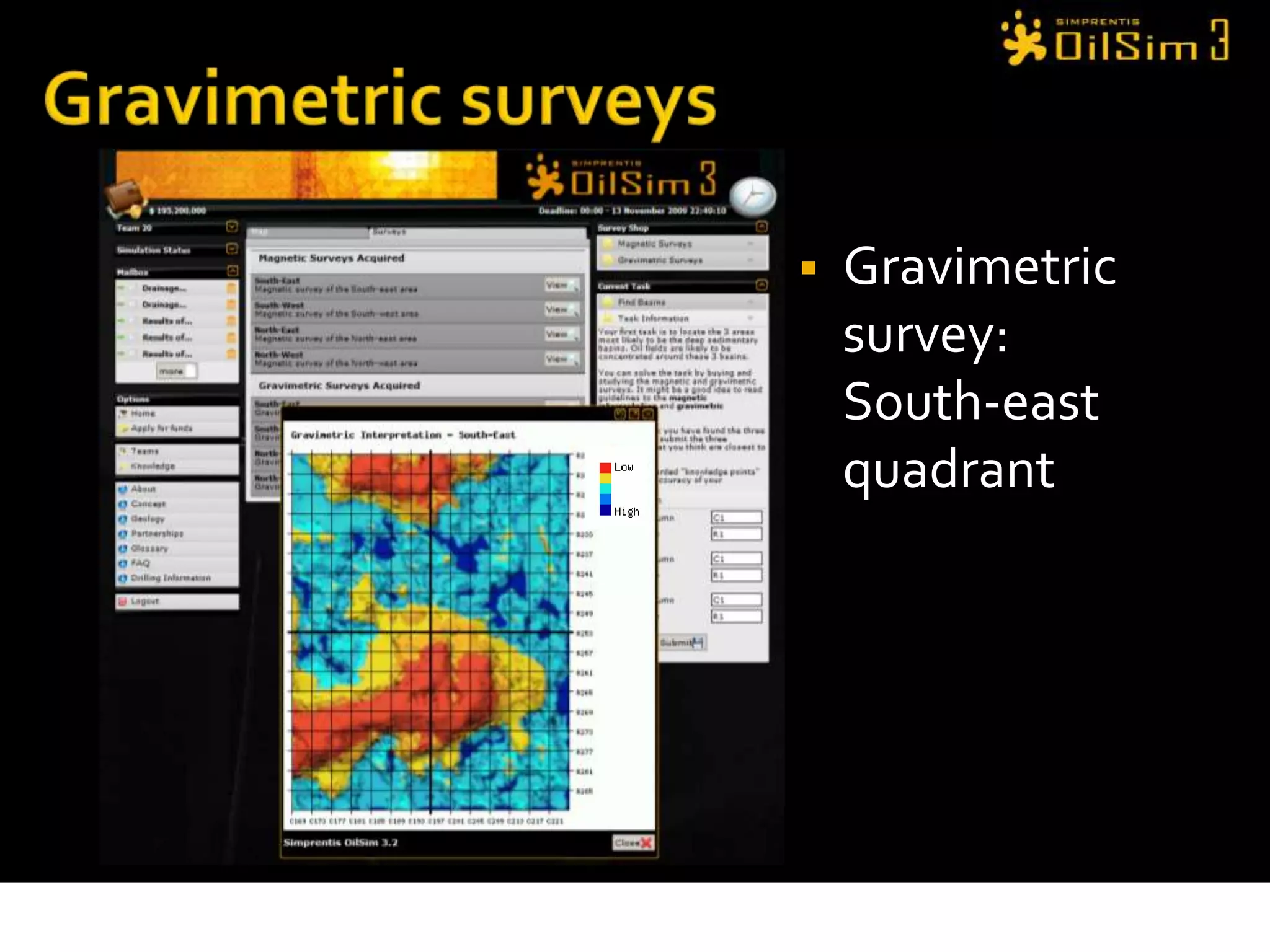
Gravimetric surveysGravimetric surveys show the gravity in the sub-surface.  Measured by airborne sensors.Sedimentary rocks have lower densities than the surrounding crystalline rocks. Low gravitational pull  means high probability of a basin below.Basins have a lower gravitational pull. Crystalline rocks have higher gravitational pull
Gravimetric surveysGravimetric survey:South-east quadrant
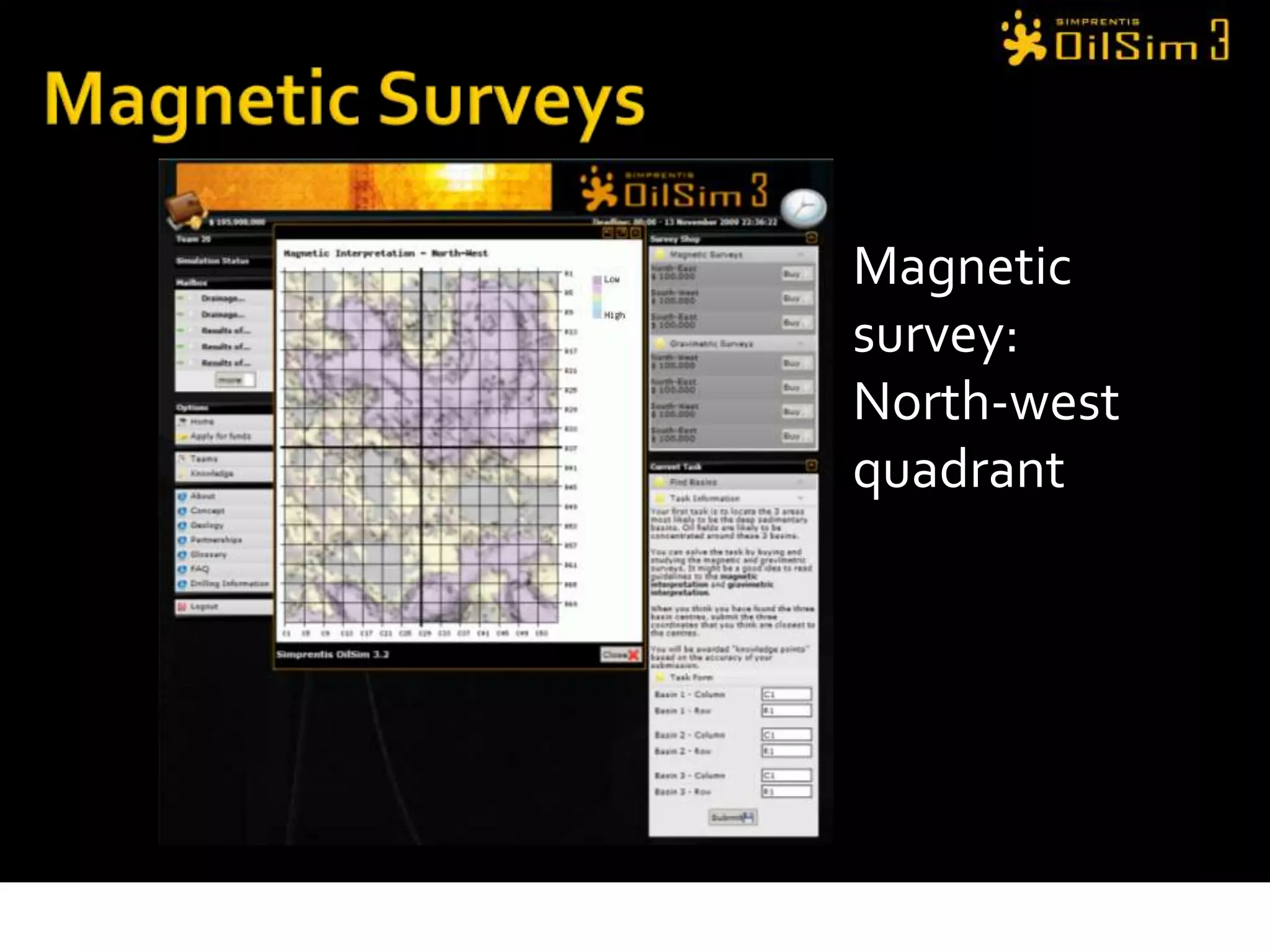
Magnetic surveysMagnetic surveys show similar information as gravimetric surveys. The sedimentary rocks in the basins have a lower concentration of magnetic materials than the surrounding crystalline rocks.Sedimentary basins are the areas with the lowest magnetic field.Basins have low magnetic fieldNon-basins have high magnetic fields.
Magnetic SurveysMagnetic survey:North-west quadrant
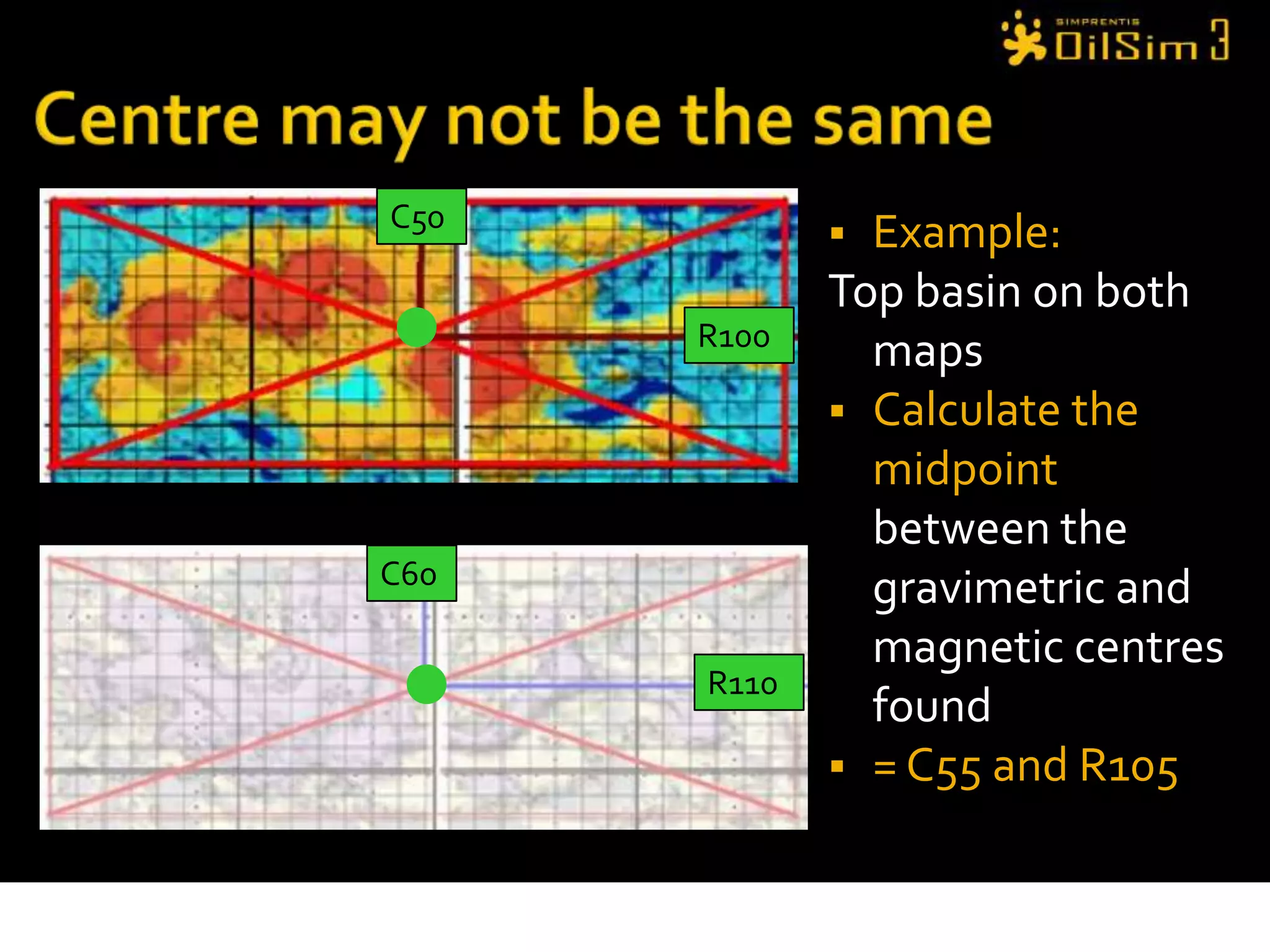
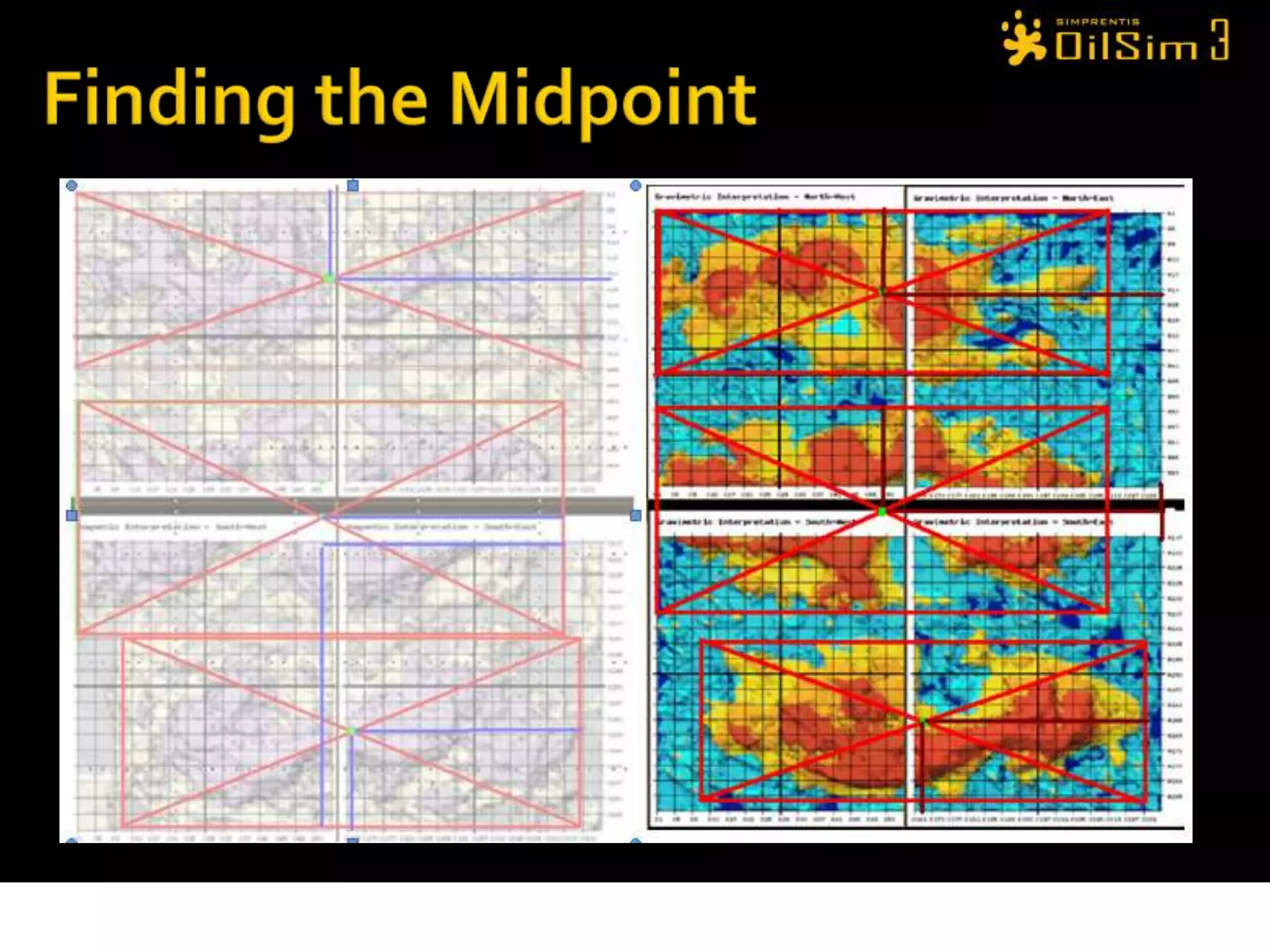
Centre may not be the sameExample:Top basin on both maps Calculate the midpoint between the gravimetric and magnetic centres found= C55 and R105C50R100C60R110
Finding the Midpoint
Enter decision
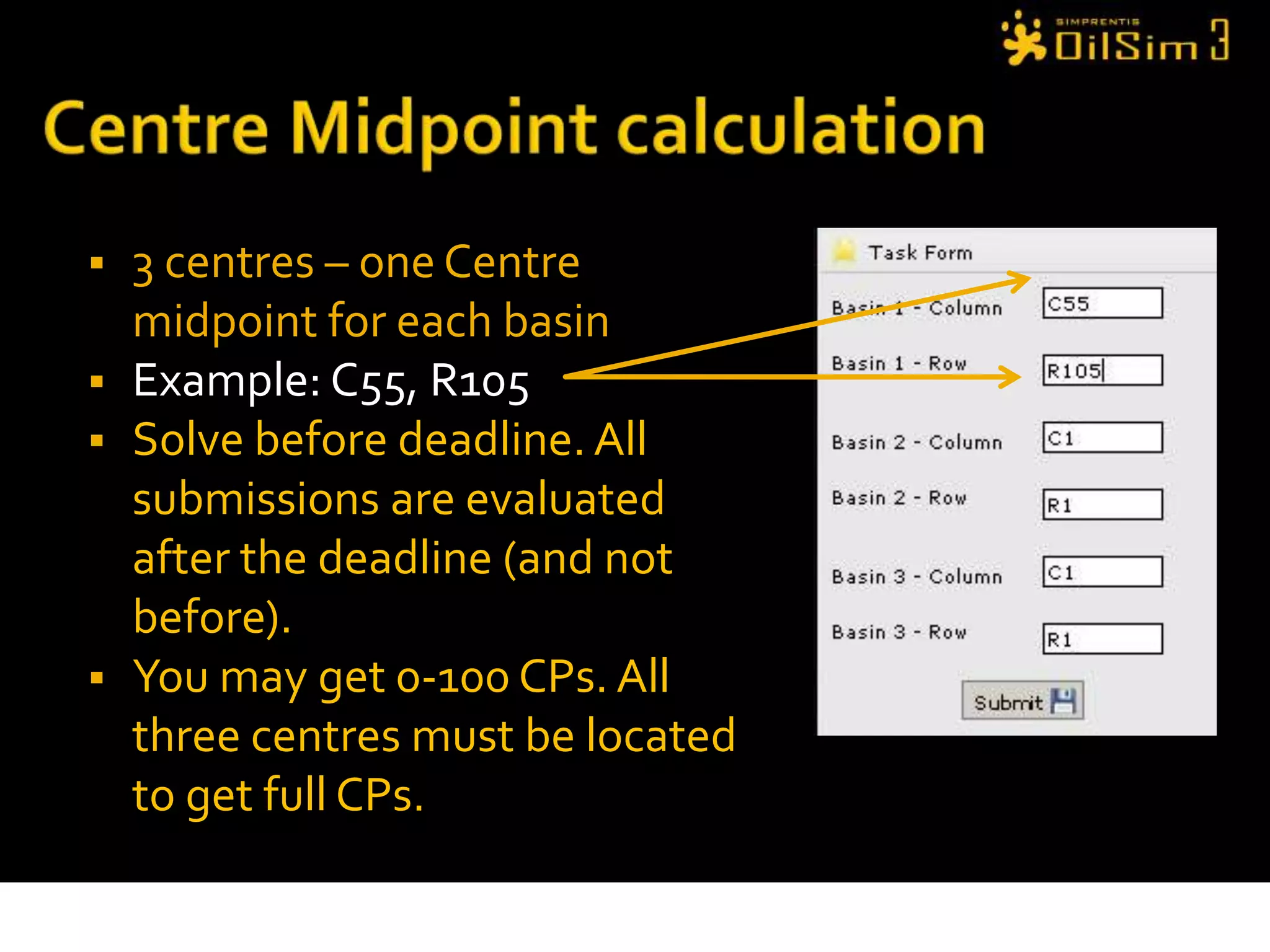
Centre Midpoint calculation3 centres – one Centre midpoint for each basinExample: C55, R105Solve before deadline. All submissions are evaluated after the deadline (and not before).You may get 0-100 CPs. All three centres must be located to get full CPs.
Today’s Challenges
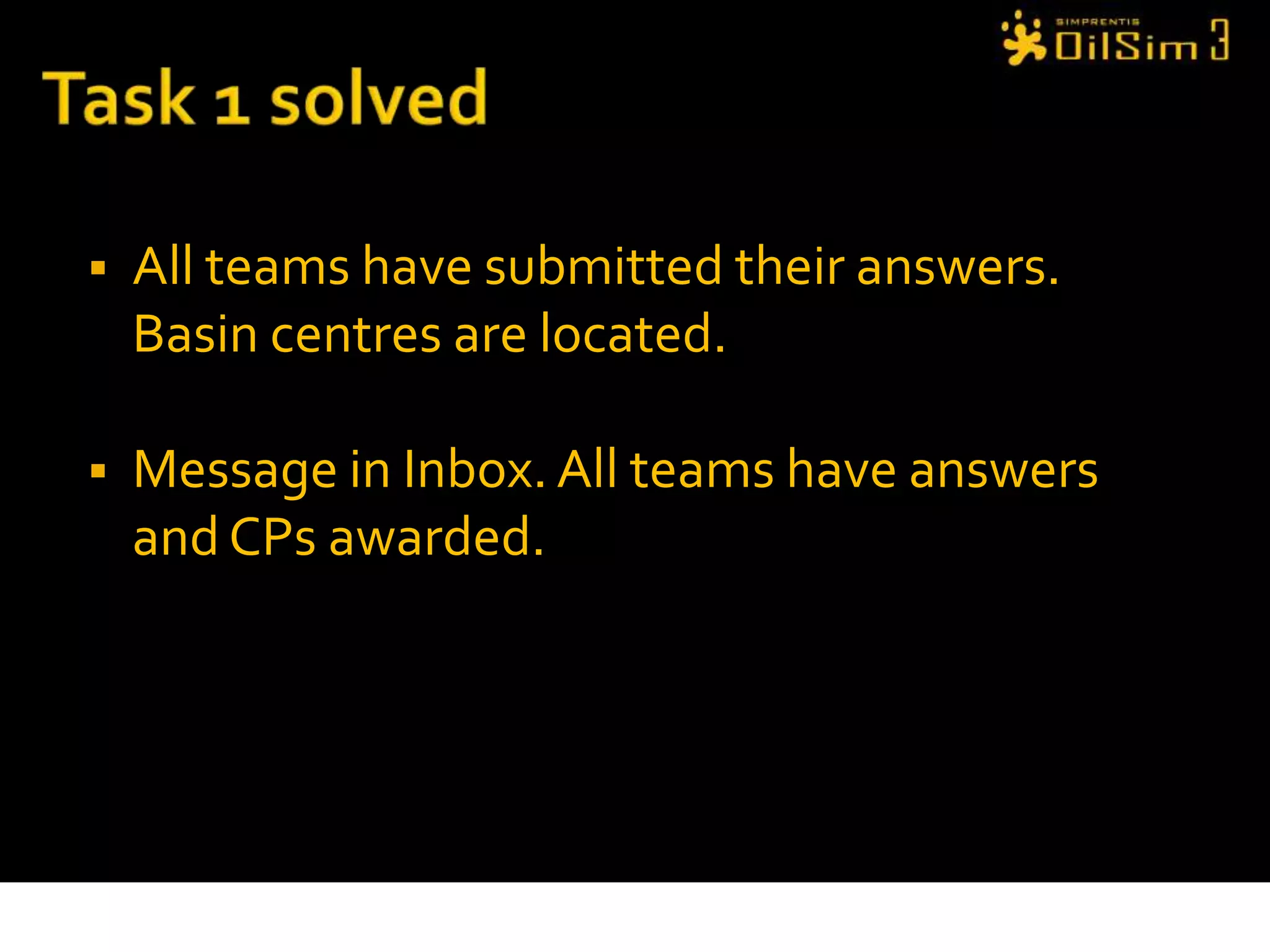
Task 1 solvedAll teams have submitted their answers. Basin centres are located.Message in Inbox. All teams have answers and CPs awarded.
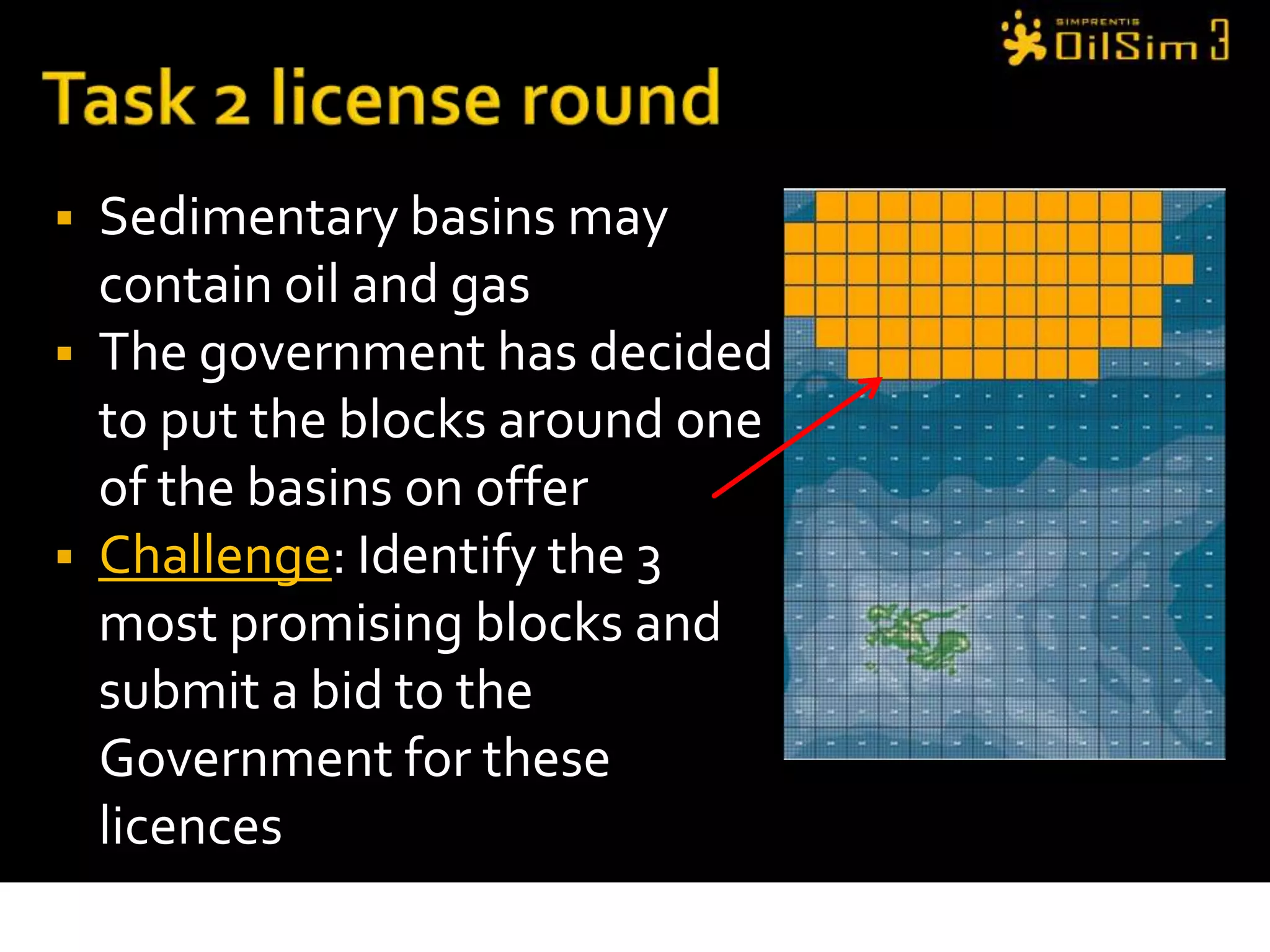
Task 2 license roundSedimentary basins may contain oil and gasThe government has decided to put the blocks around one of the basins on offerChallenge: Identify the 3 most promising blocks and submit a bid to the Government for these licences
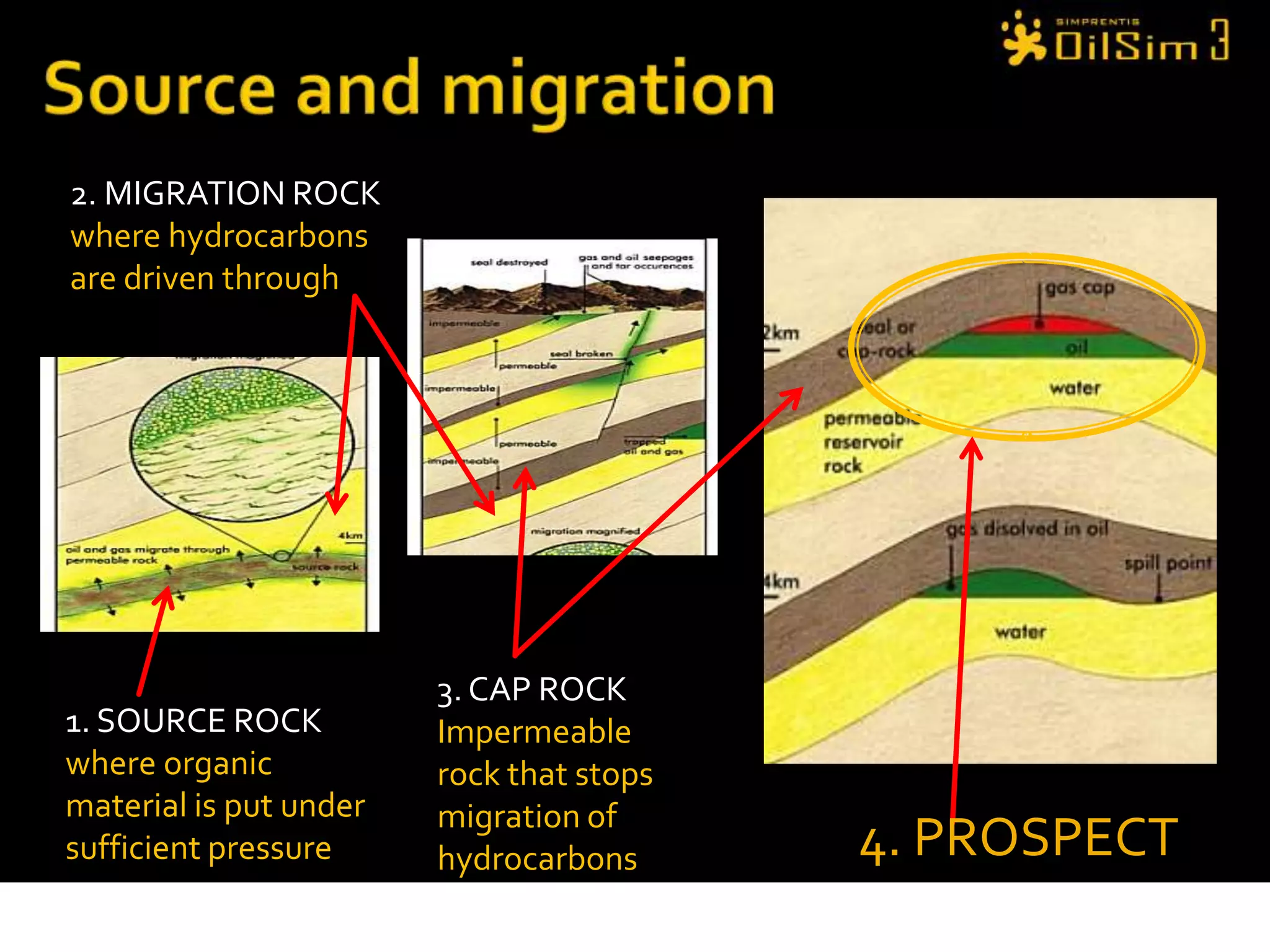
Source and migration2. MIGRATION ROCKwhere hydrocarbons are driven through3. CAP ROCKImpermeable rock that stops migration of hydrocarbons1. SOURCE ROCKwhere organic material is put under sufficient pressure4. PROSPECT
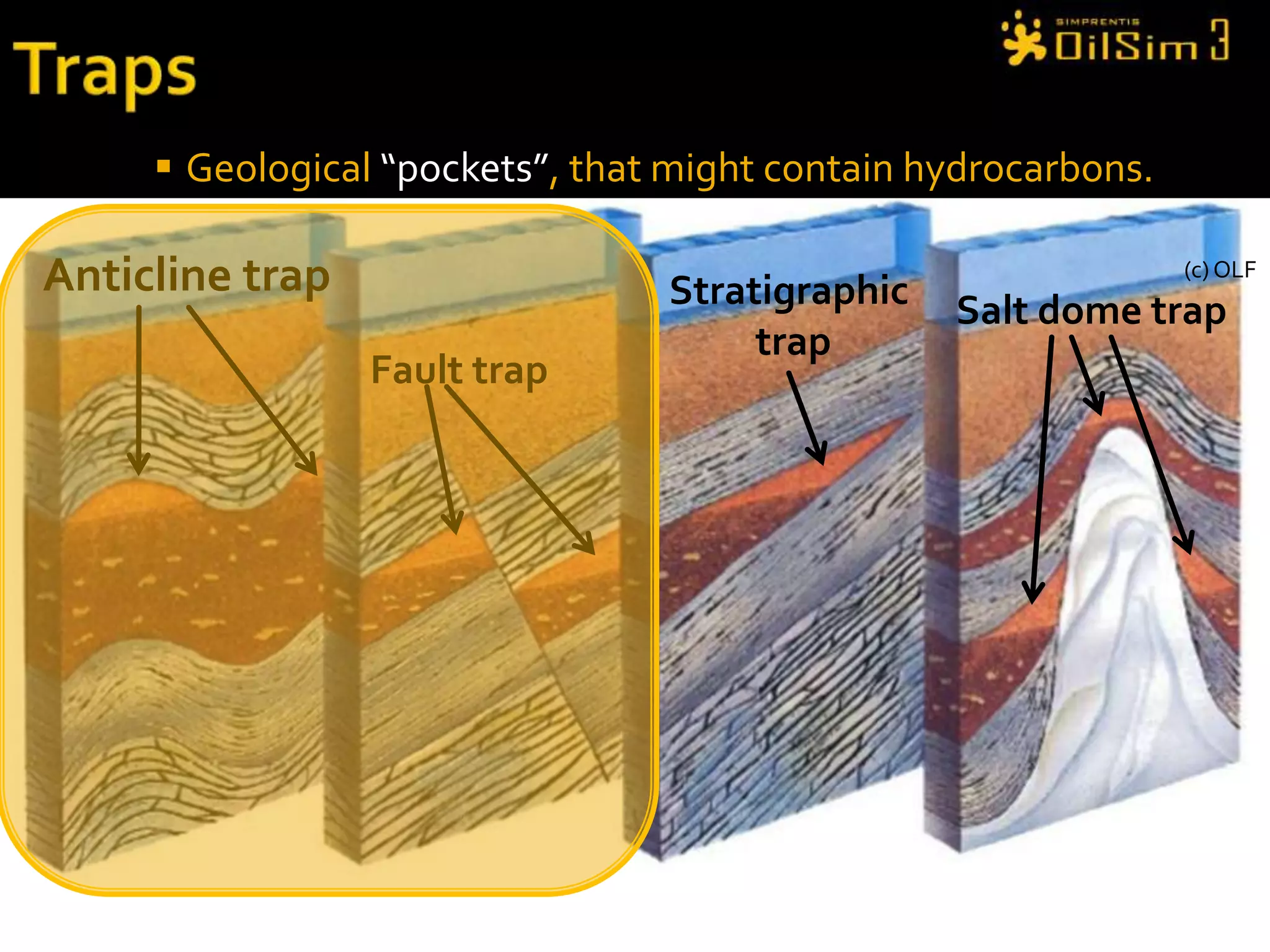
TrapsGeological “pockets”, that might contain hydrocarbons.Anticline trap(c) OLFStratigraphic trapSalt dome trapFault trap
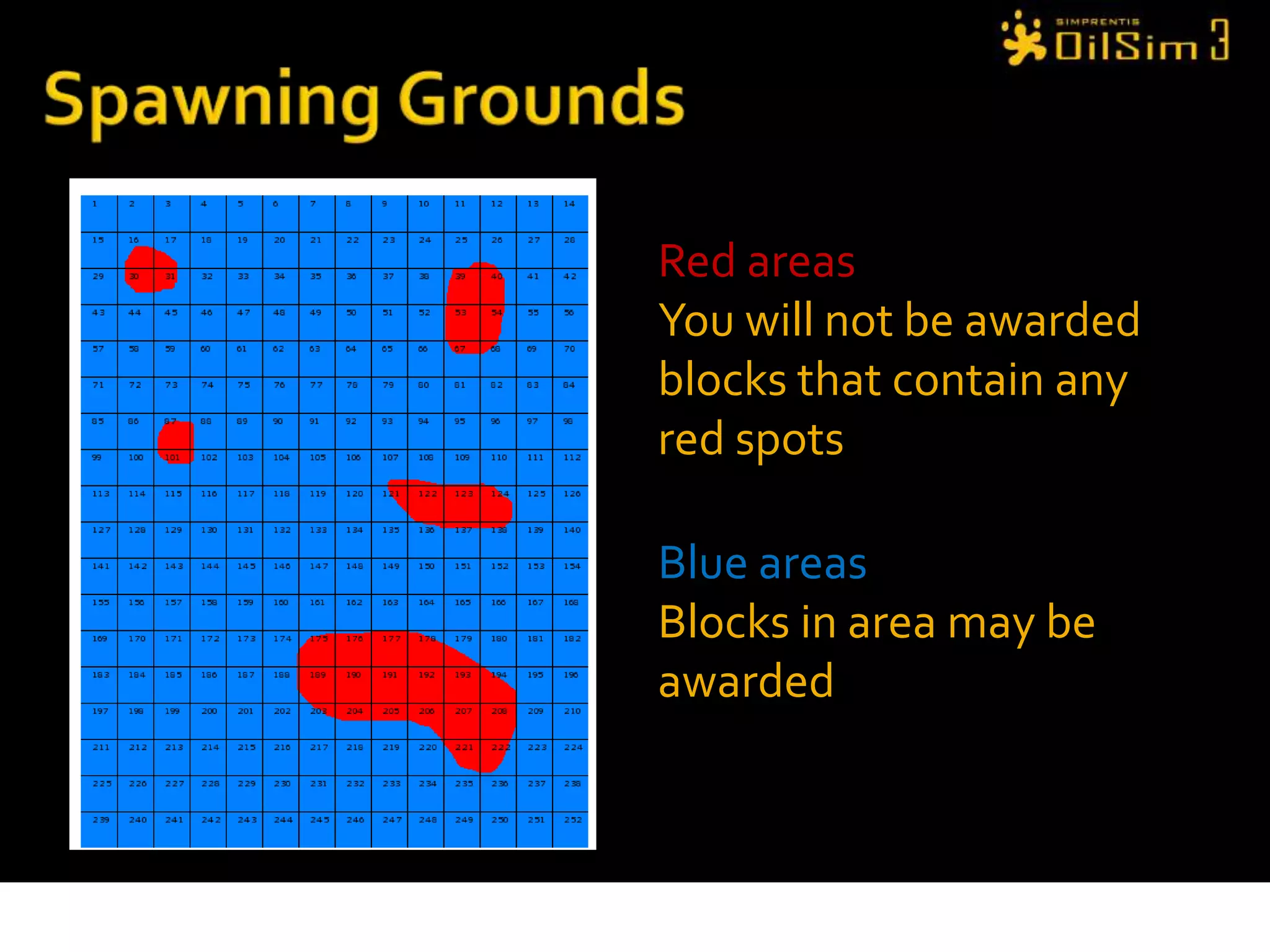
Red areasYou will not be awarded blocks that contain any red spotsBlue areasBlocks in area may be awardedSpawning Grounds
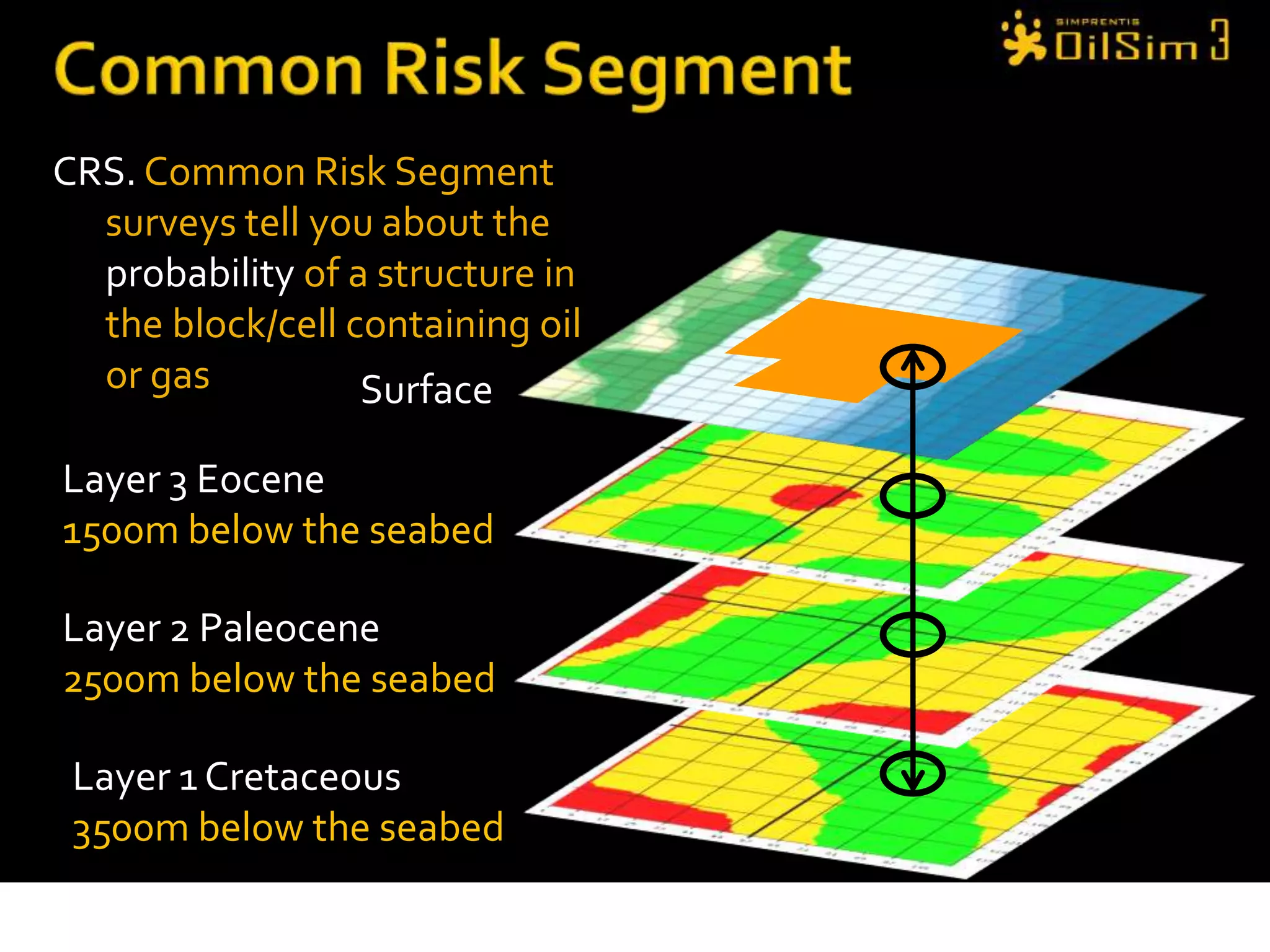
Common Risk SegmentCRS. Common Risk Segment surveys tell you about the probability of a structure in the block/cell containing oil or gasSurfaceLayer 3 Eocene1500m below the seabedLayer 2 Paleocene2500m below the seabedLayer 1 Cretaceous3500m below the seabed
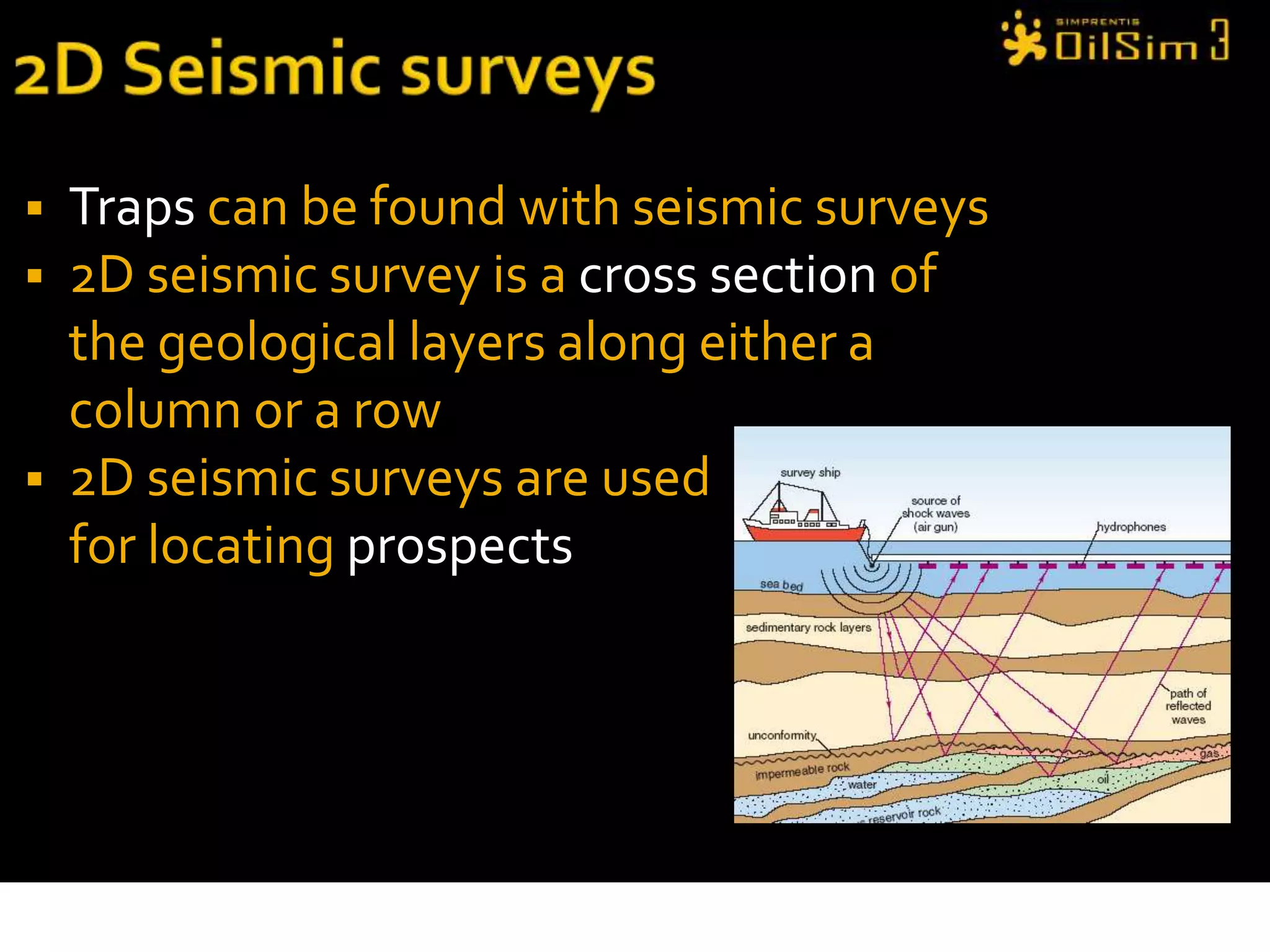
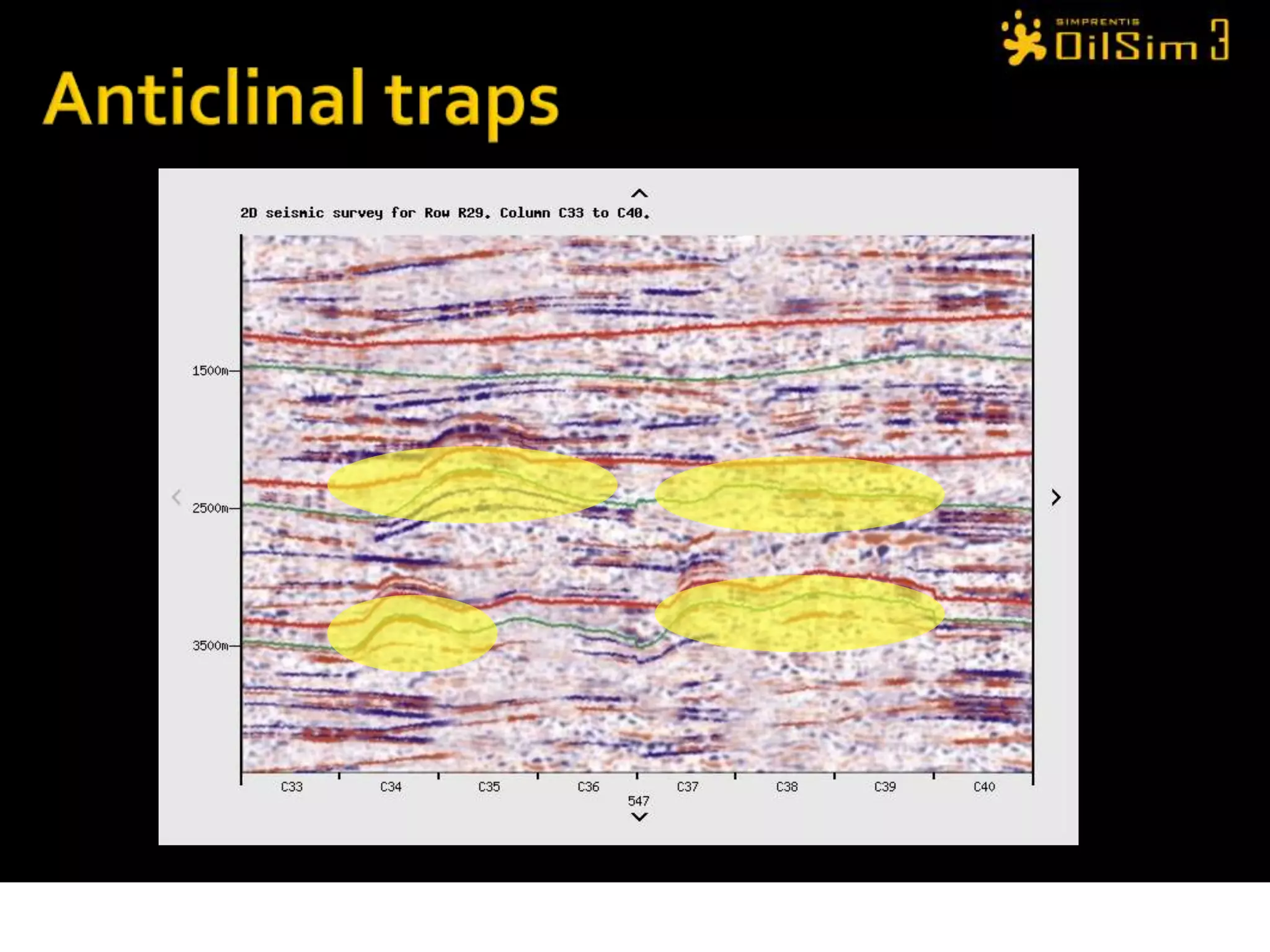
2D Seismic surveysTraps can be found with seismic surveys2D seismic survey is a cross section of the geological layers along either a column or a row2D seismic surveys are used    for locating prospects
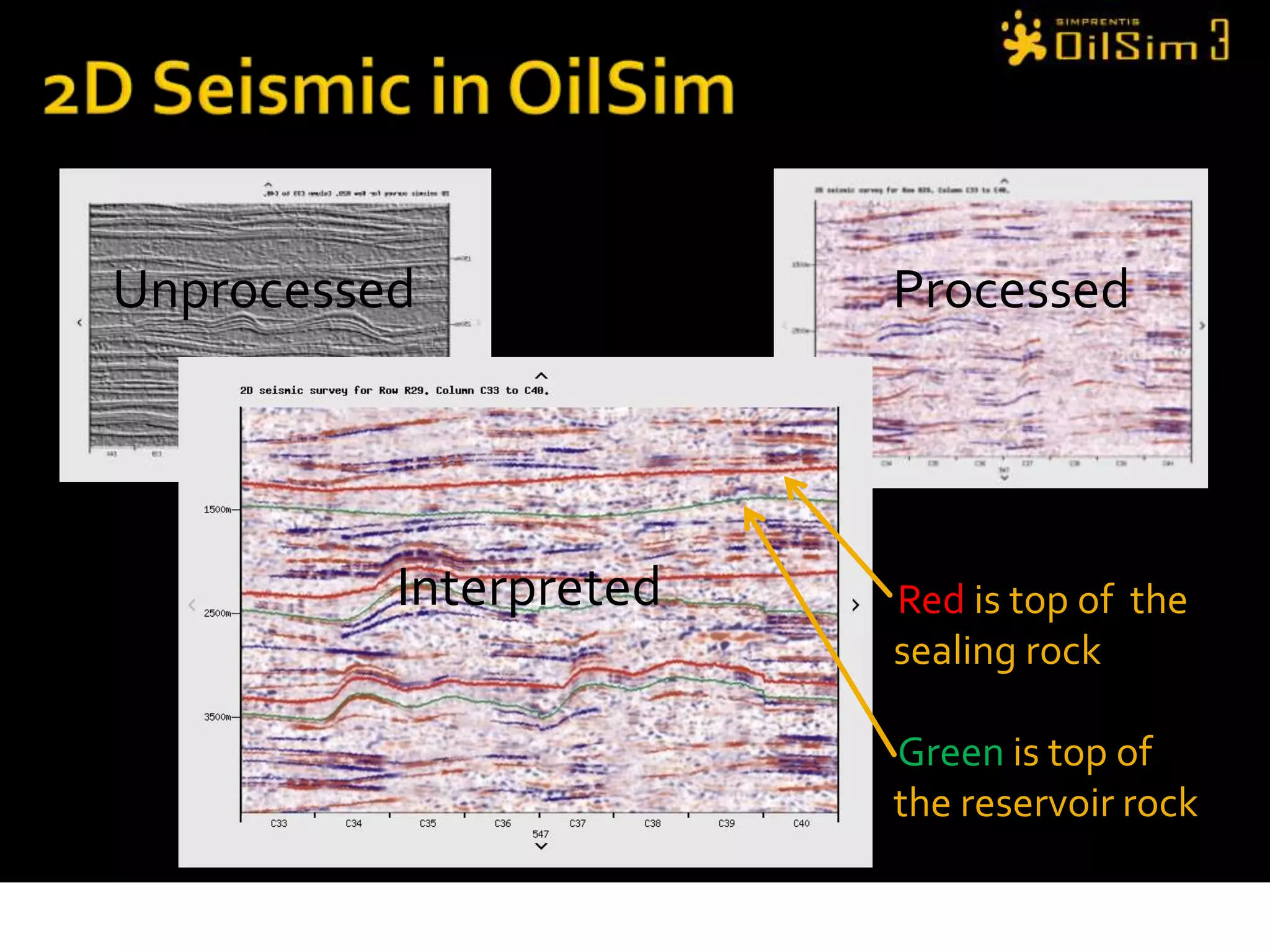
2D Seismic in OilSim UnprocessedProcessedRed is top of  the sealing rockGreen is top of  the reservoir rockInterpreted
Anticlinal traps
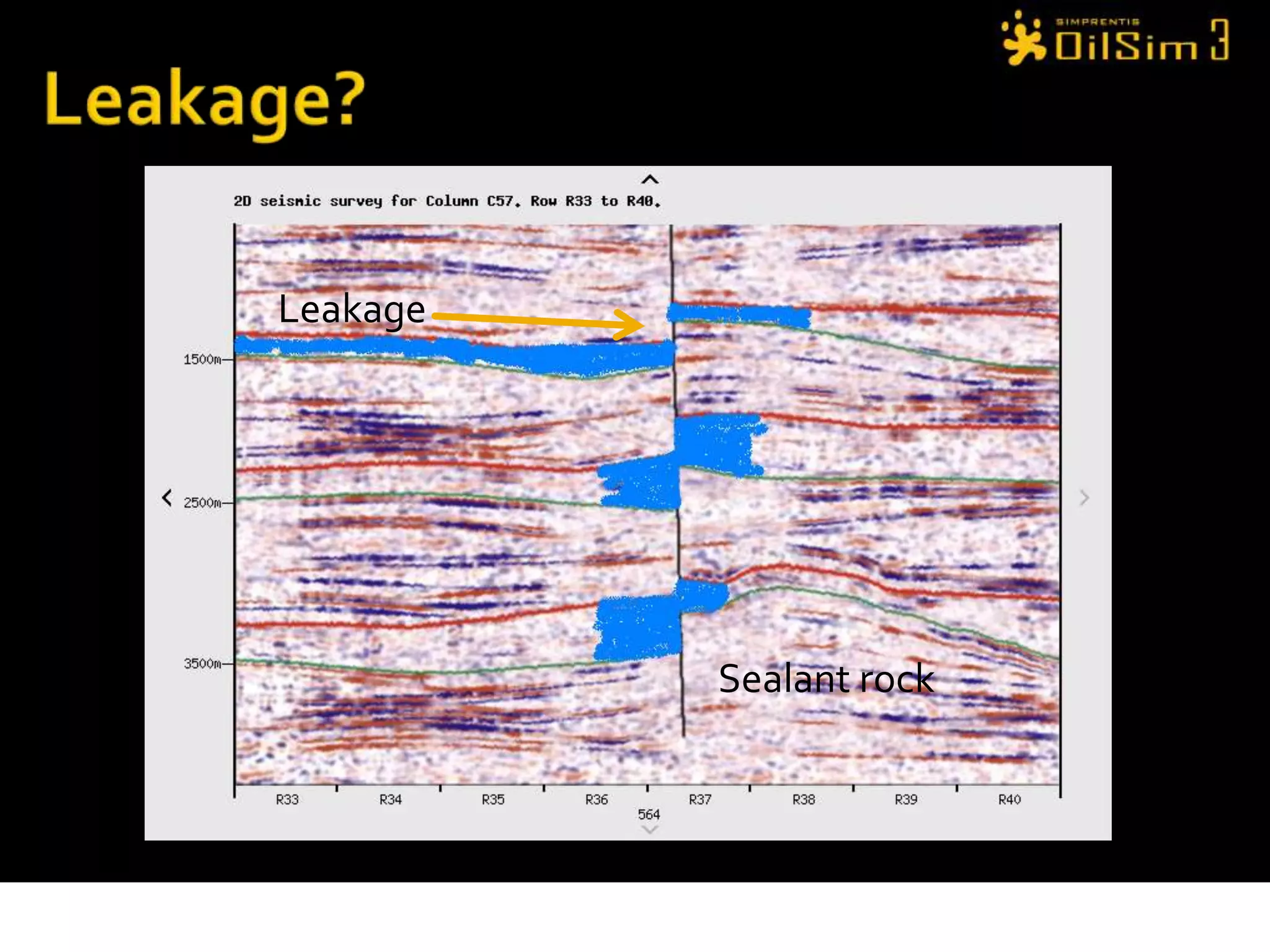
Leakage?LeakageSealant rock
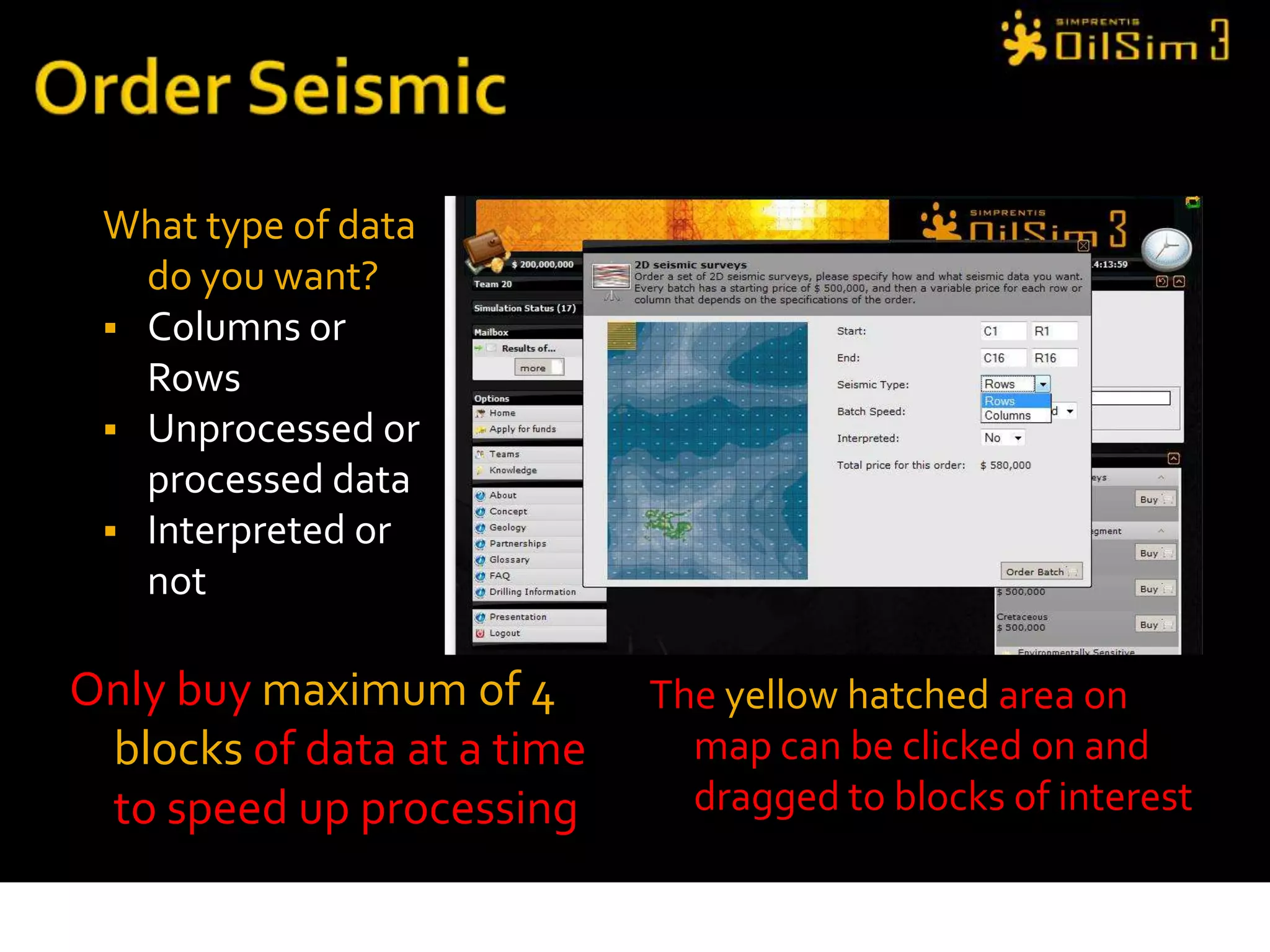
Order SeismicWhat type of data do you want?Columns or Rows
Unprocessed or processed data
Interpreted or notOnly buy maximum of 4 blocks of data at a time to speed up processingThe yellow hatched area on map can be clicked on and dragged to blocks of interest
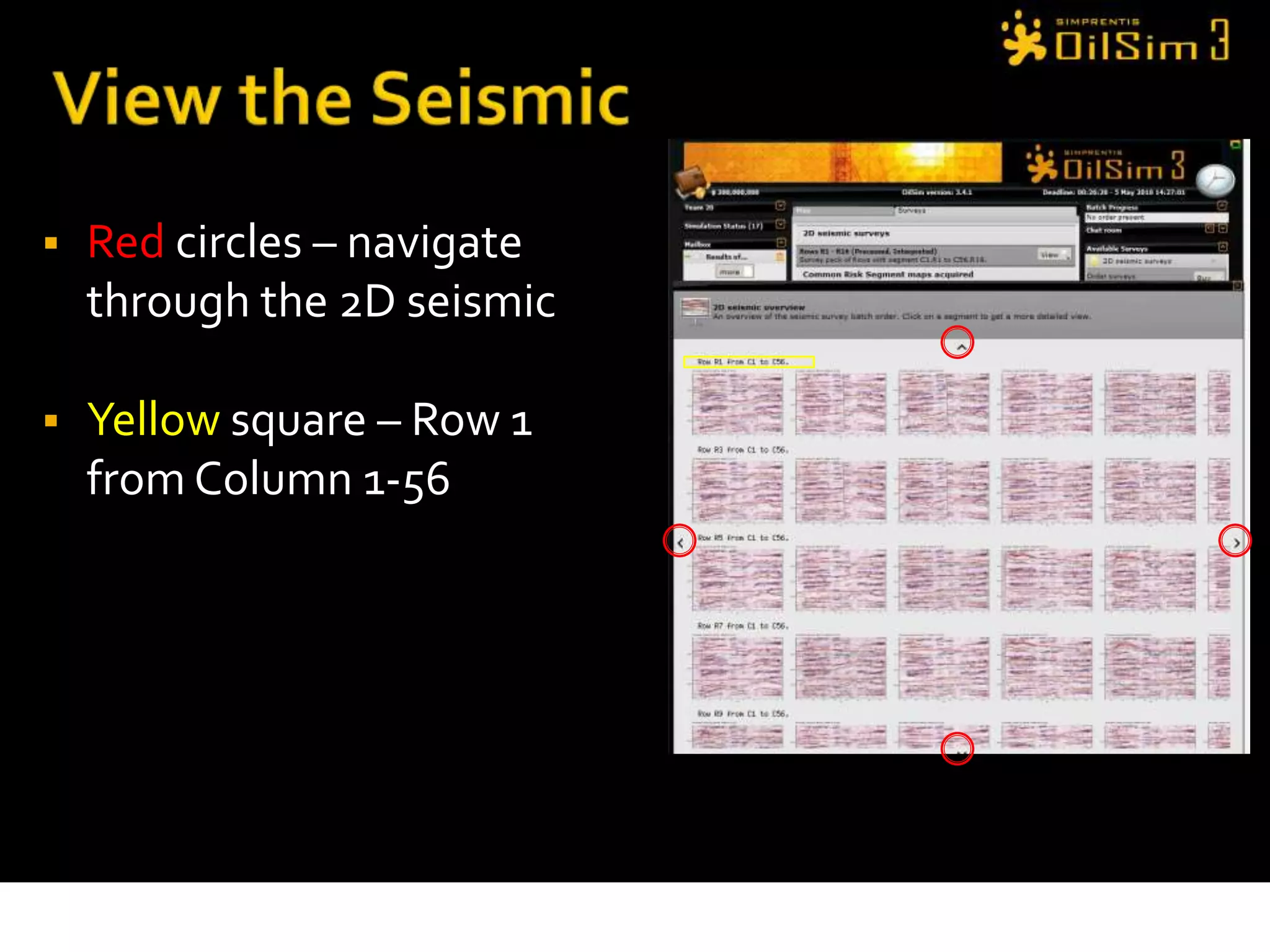
View the SeismicRed circles – navigate through the 2D seismic
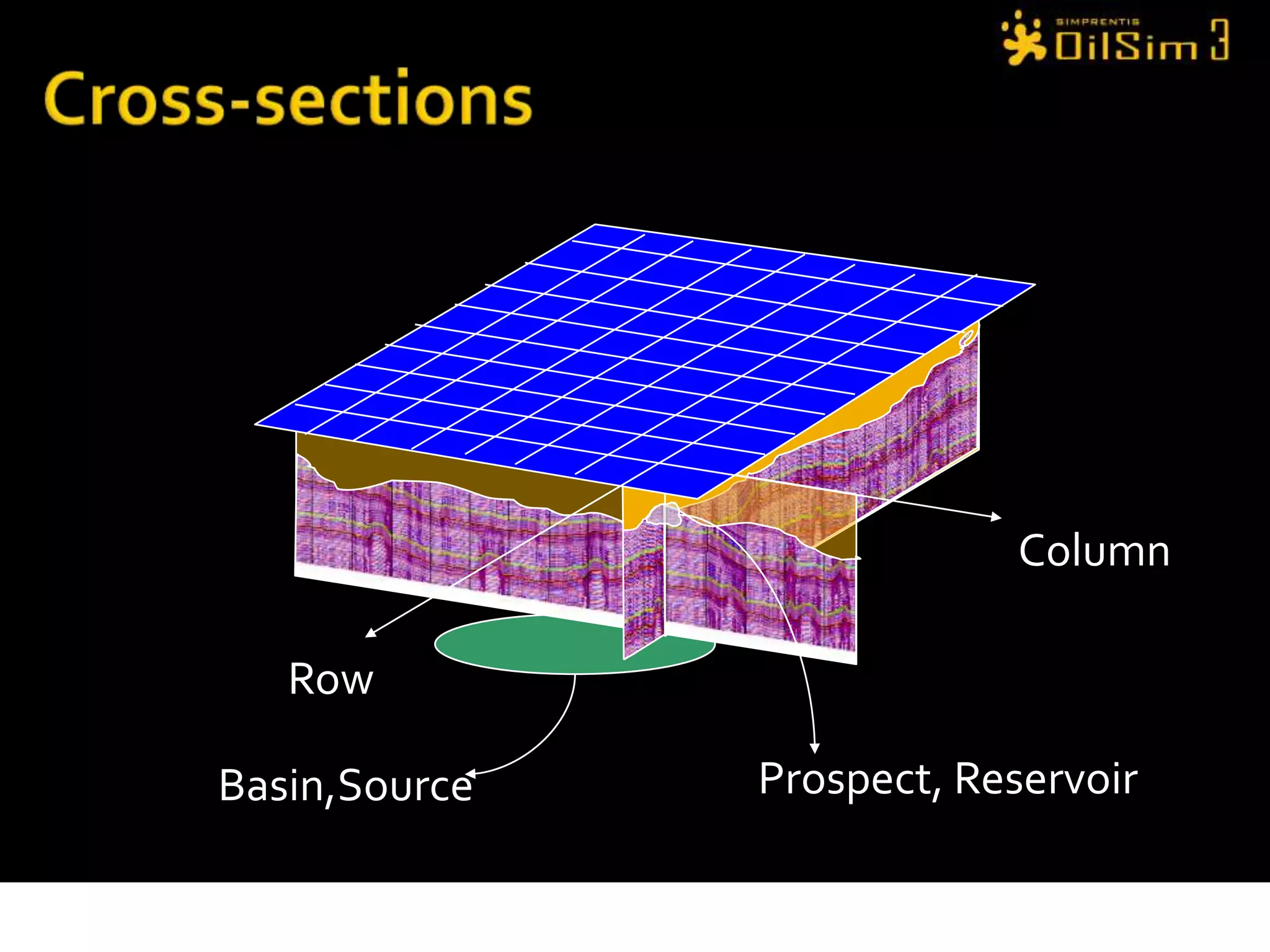
Yellowsquare – Row 1 from Column 1-56Cross-sectionsColumnRowProspect, ReservoirBasin,Source
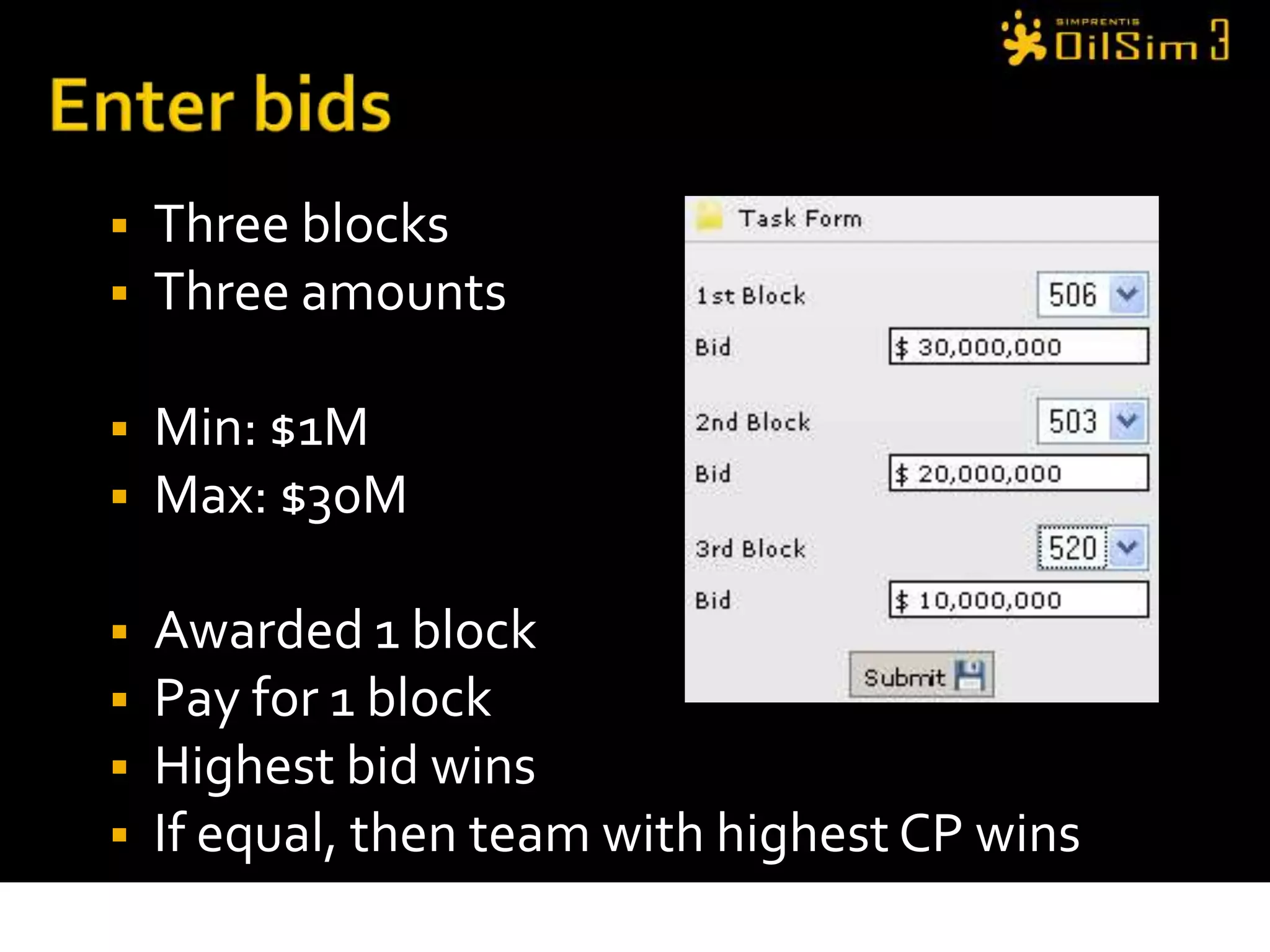
Enter bidsThree blocks
Three amounts
Min: $1M
Max: $30M
Awarded 1 block
Pay for 1 block
Highest bid wins
If equal, then team with highest CP winsRecap on Task 2Environmental Sensitive Areas map to see which blocks to avoidCommon Risk Segment surveys to see which blocks to examine closer2D surveys seismic to identify which ones have the most (big) structuresCheck water depth, and go for shallow water blocks if possibleRemember to submit 3 bids
Today’s Challenges
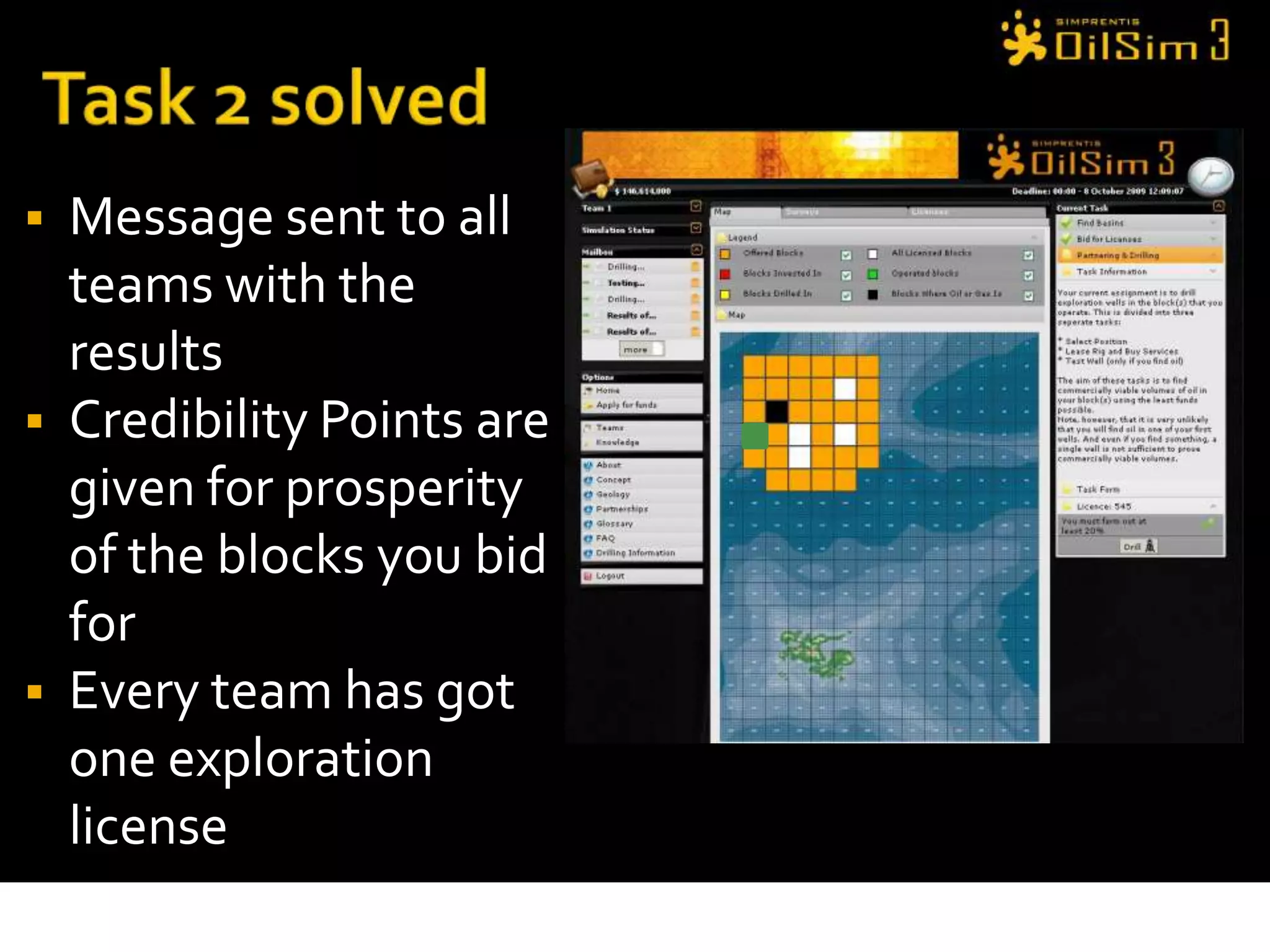
Task 2 solvedMessage sent to all teams with the resultsCredibility Points are given for prosperity of the blocks you bid forEvery team has got one exploration license
Task 3 Exploration DrillingHQ is happy with the license awarded.Challenge: Farm-out minimum 20% from your license – and farm-in as much as you can in other good licenses.Acquire 3D Seismic interpretations for the block you operate, and study the results from the licensing roundGet others to invest 20% or more in your license – you can show/send 3D seismic
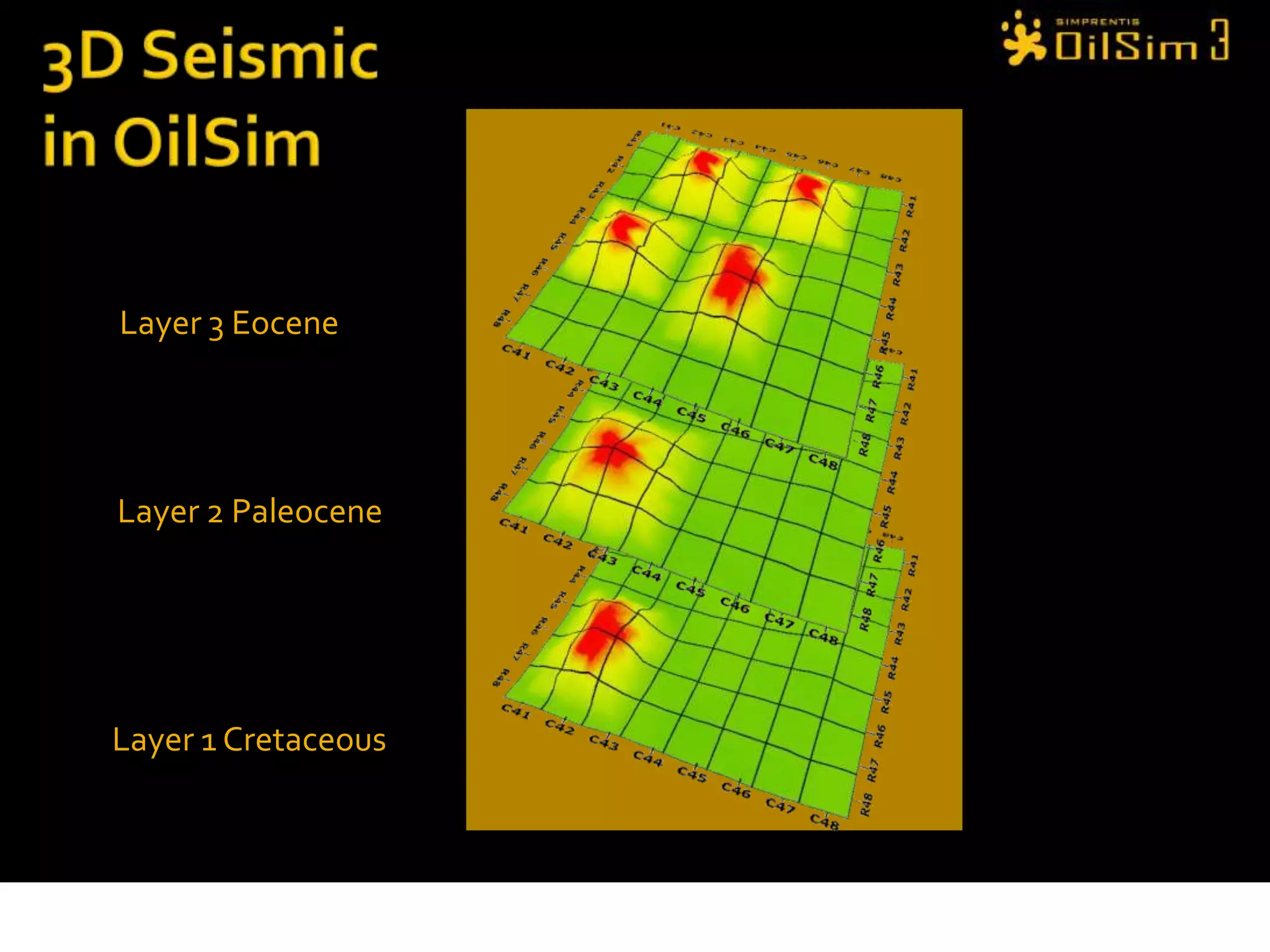
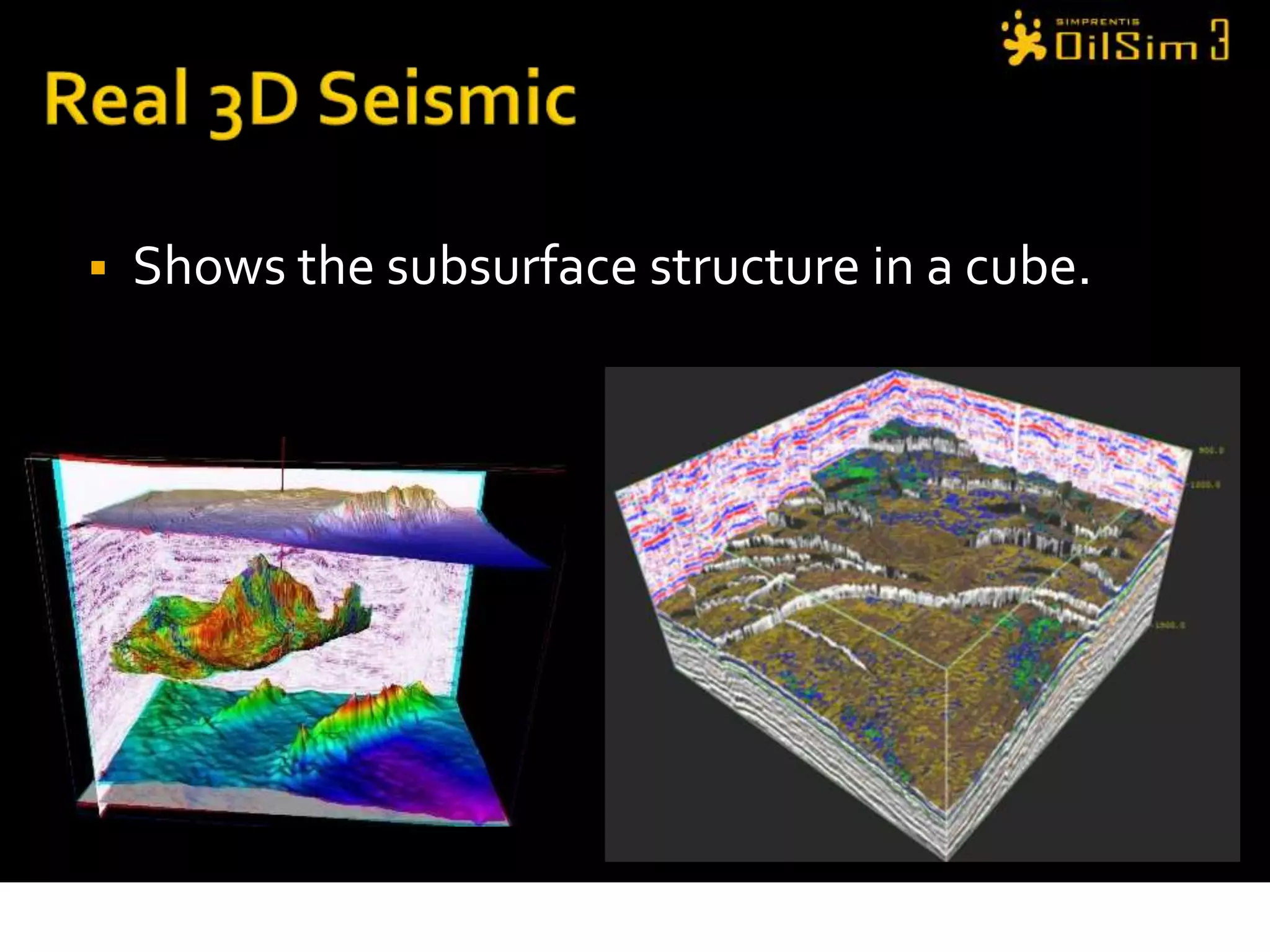
Real 3D SeismicShows the subsurface structure in a cube.
3D Seismicin OilSimLayer 3 EoceneLayer 2 PaleoceneLayer 1 Cretaceous
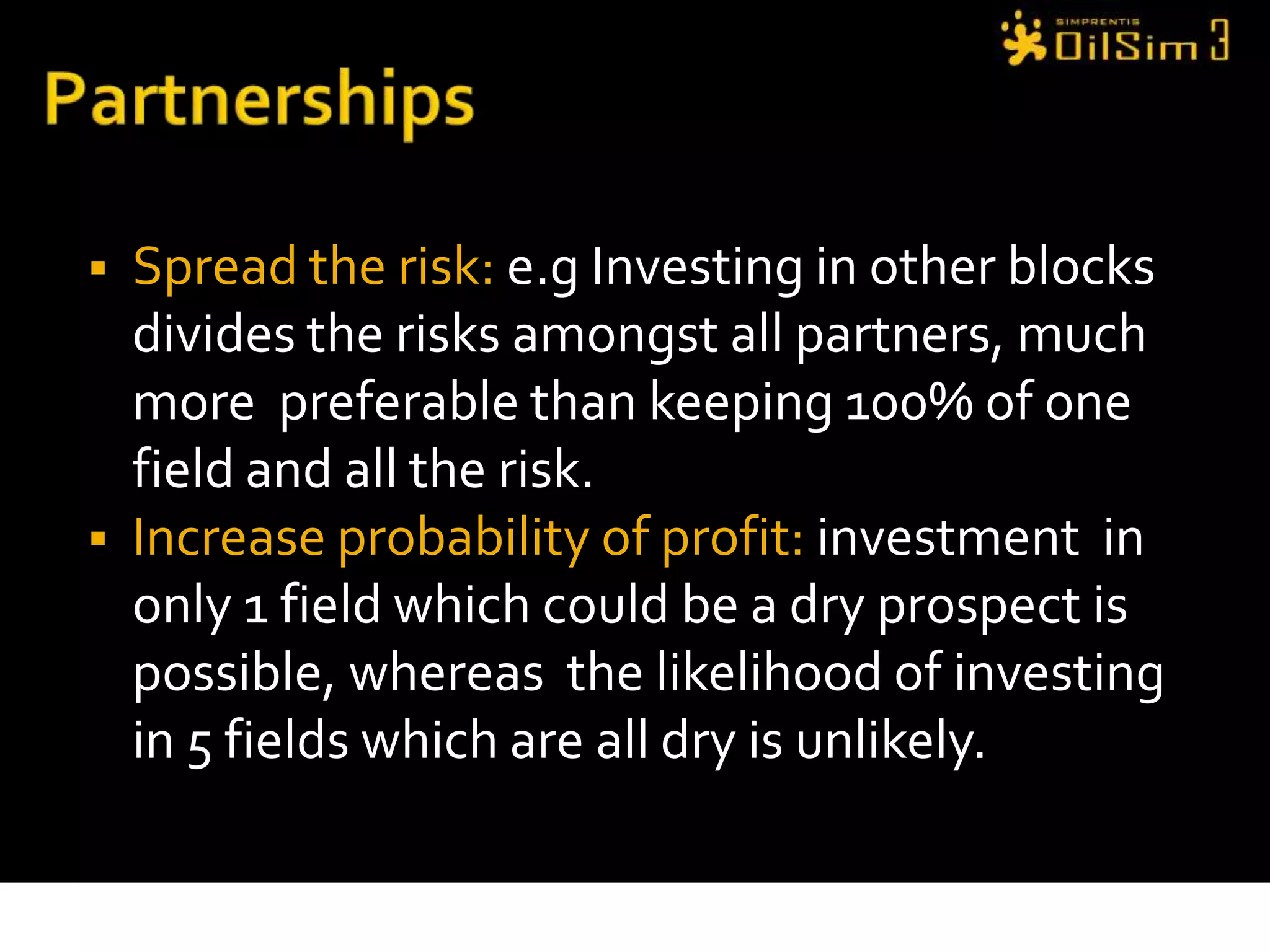
PartnershipsSpread the risk: e.g Investing in other blocks divides the risks amongst all partners, much more  preferable than keeping 100% of one field and all the risk.Increase probability of profit: investment  in only 1 field which could be a dry prospect is possible, whereas  the likelihood of investing in 5 fields which are all dry is unlikely.
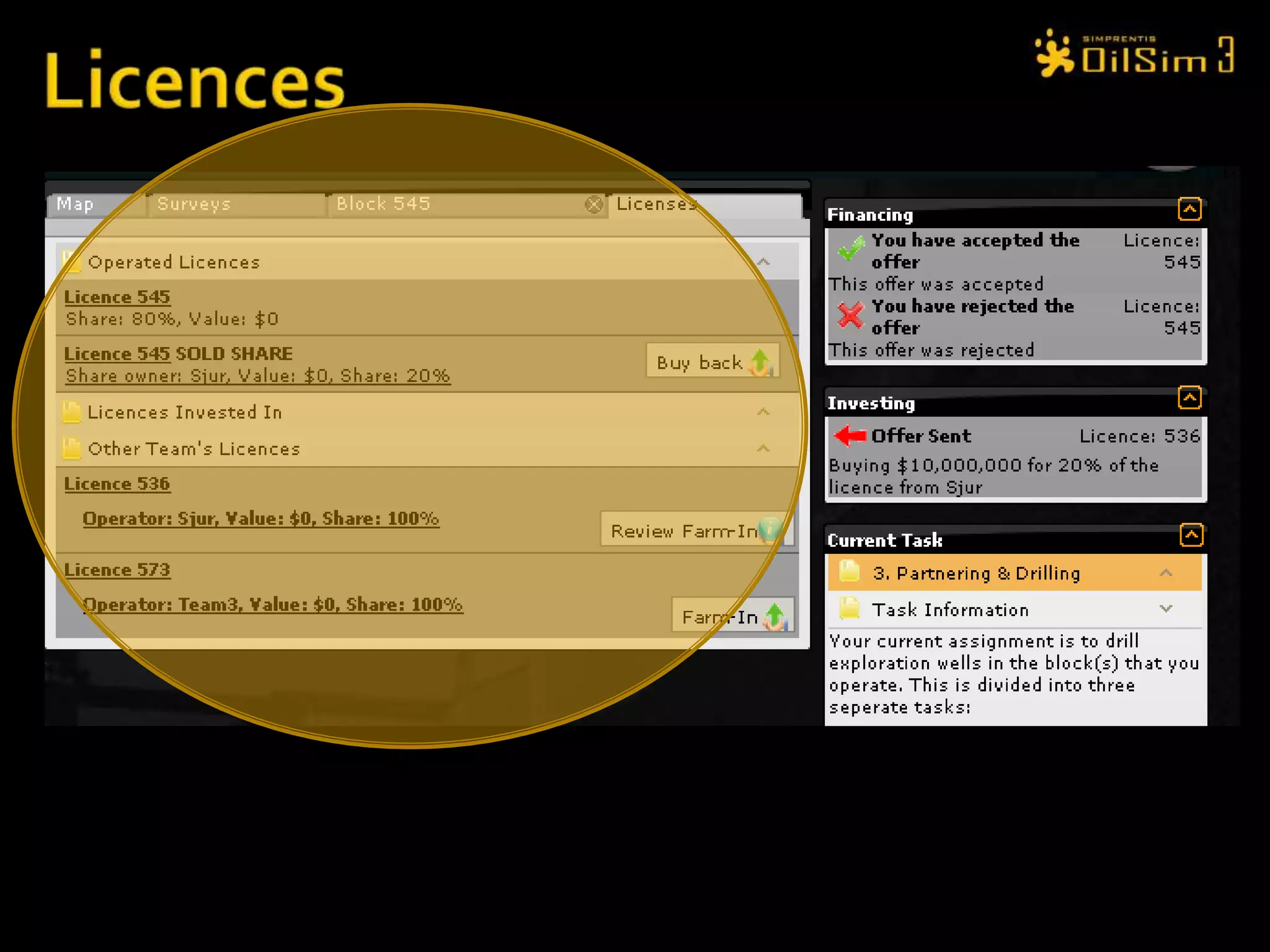
Licences
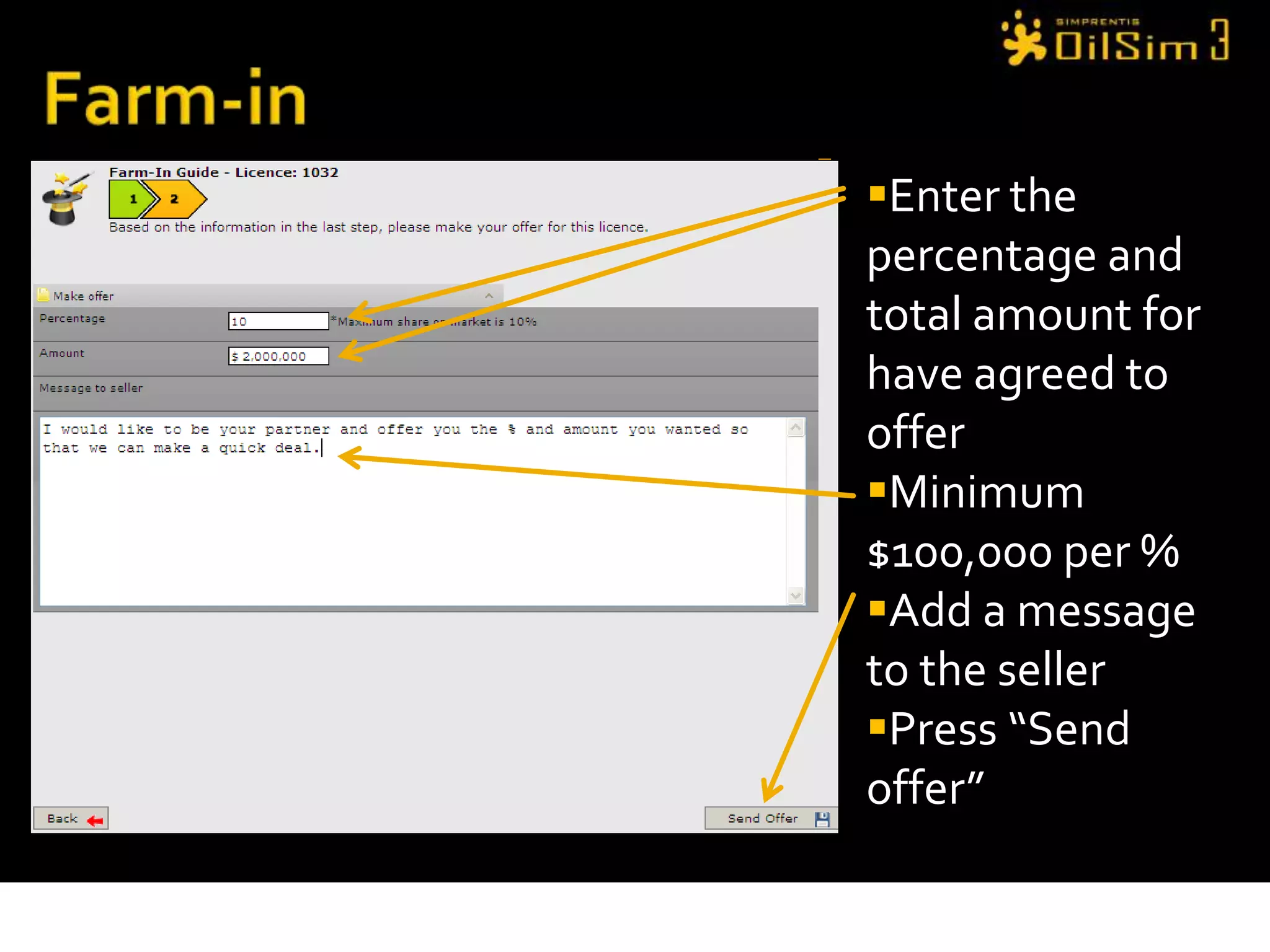
Farm-inEnter the percentage and total amount for have agreed to offer
Minimum $100,000 per %
Add a message to the seller
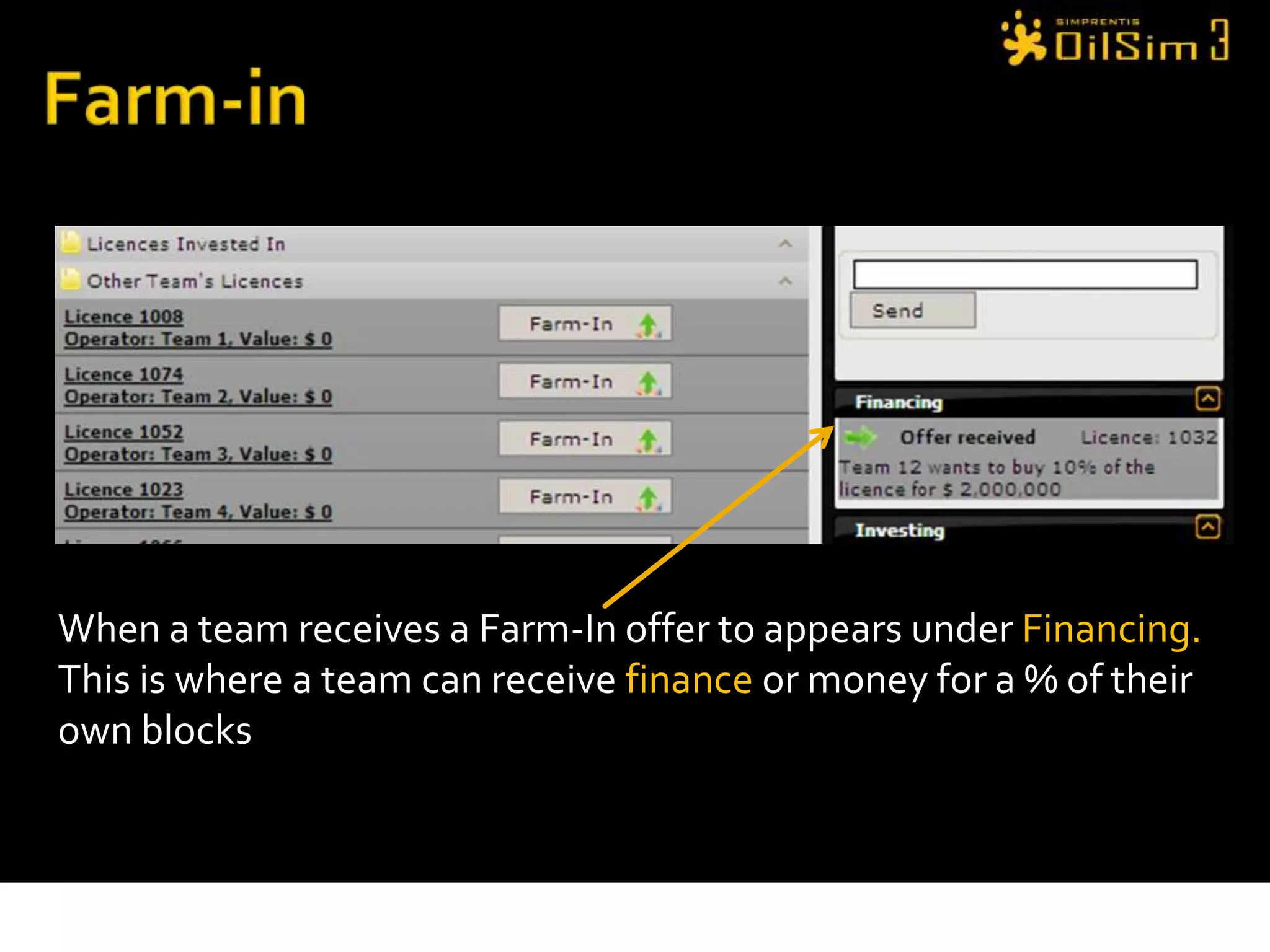
Press “Send offer”Farm-inWhen a team receives a Farm-In offer to appears under Financing.  This is where a team can receive finance or money for a % of their own blocks
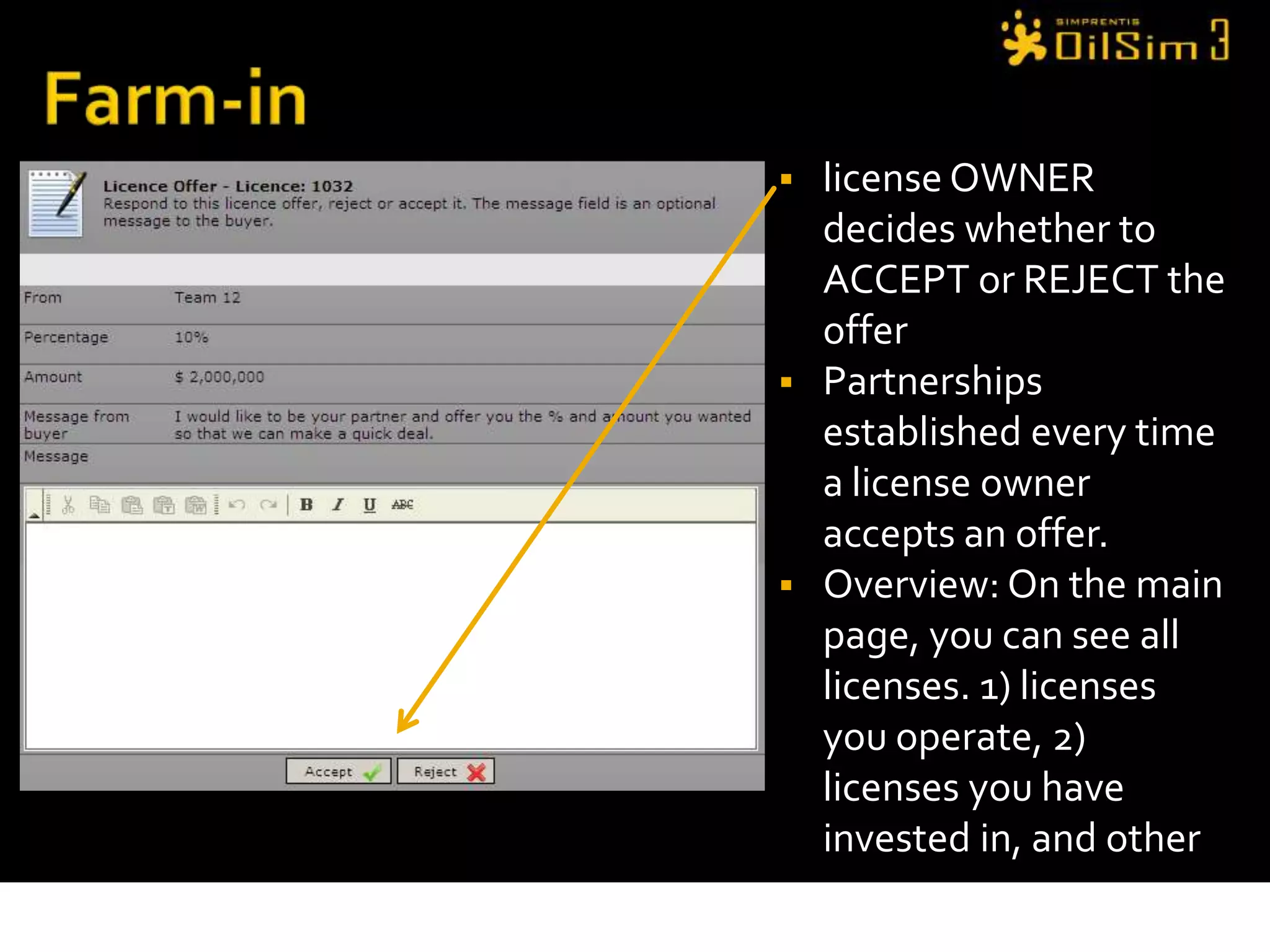
Farm-inlicense OWNER decides whether to ACCEPT or REJECT the offerPartnerships established every time a license owner accepts an offer.Overview: On the main page, you can see all licenses. 1) licenses you operate, 2) licenses you have invested in, and other licenses.
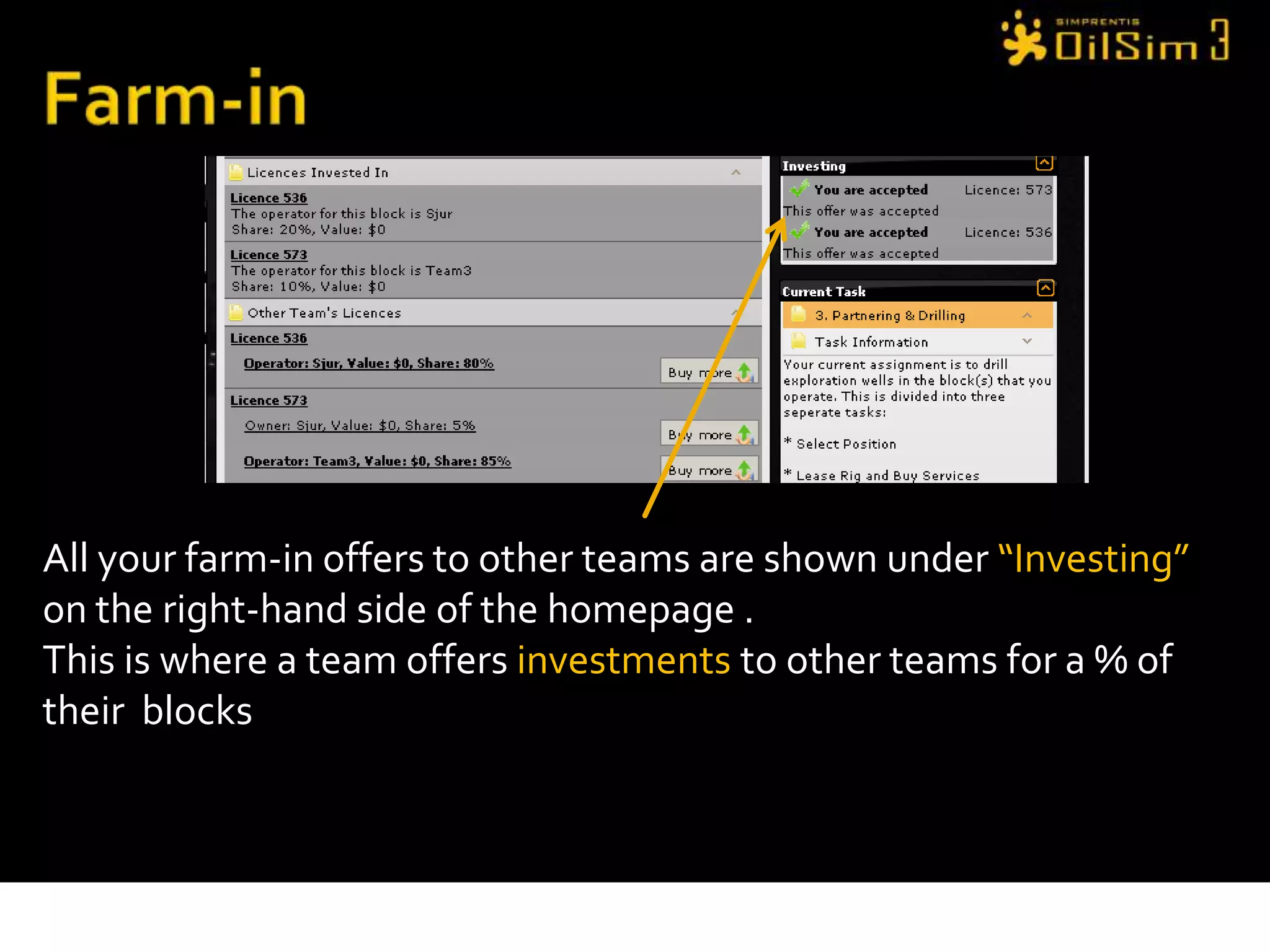
Farm-inAll your farm-in offers to other teams are shown under “Investing” on the right-hand side of the homepage . This is where a team offers investments to other teams for a % of  their  blocks
PartnershipsPartners pay a proportional share of all future costsPartners receive a proportional share of the net proceeds from oil and gasThe operator team makes all decisions regarding drillingTeams can farm-out up to 70% of licenceOperators must keep 30% of licence
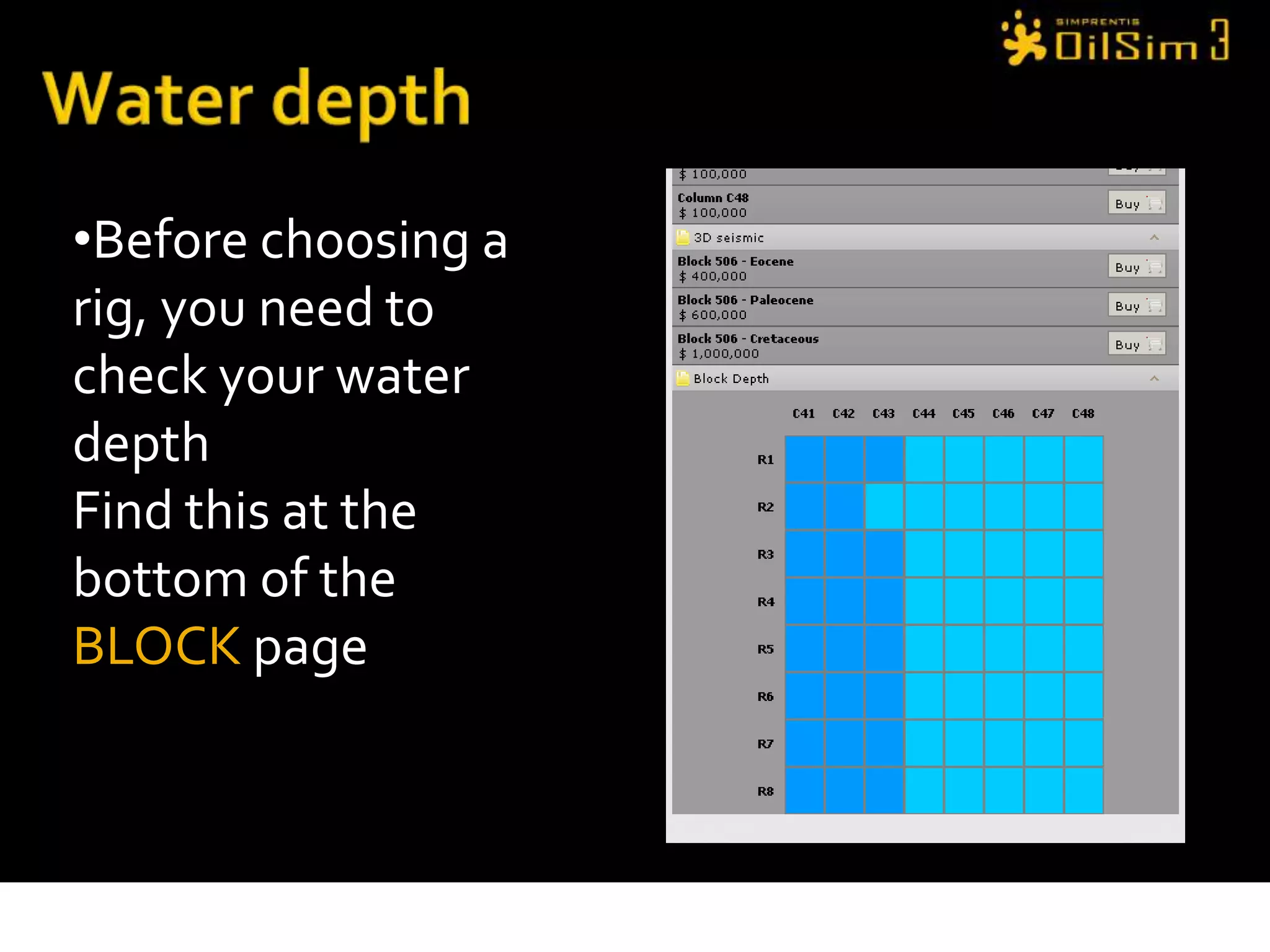
Water depthBefore choosing a rig, you need to check your water depth Find this at the bottom of the BLOCK page
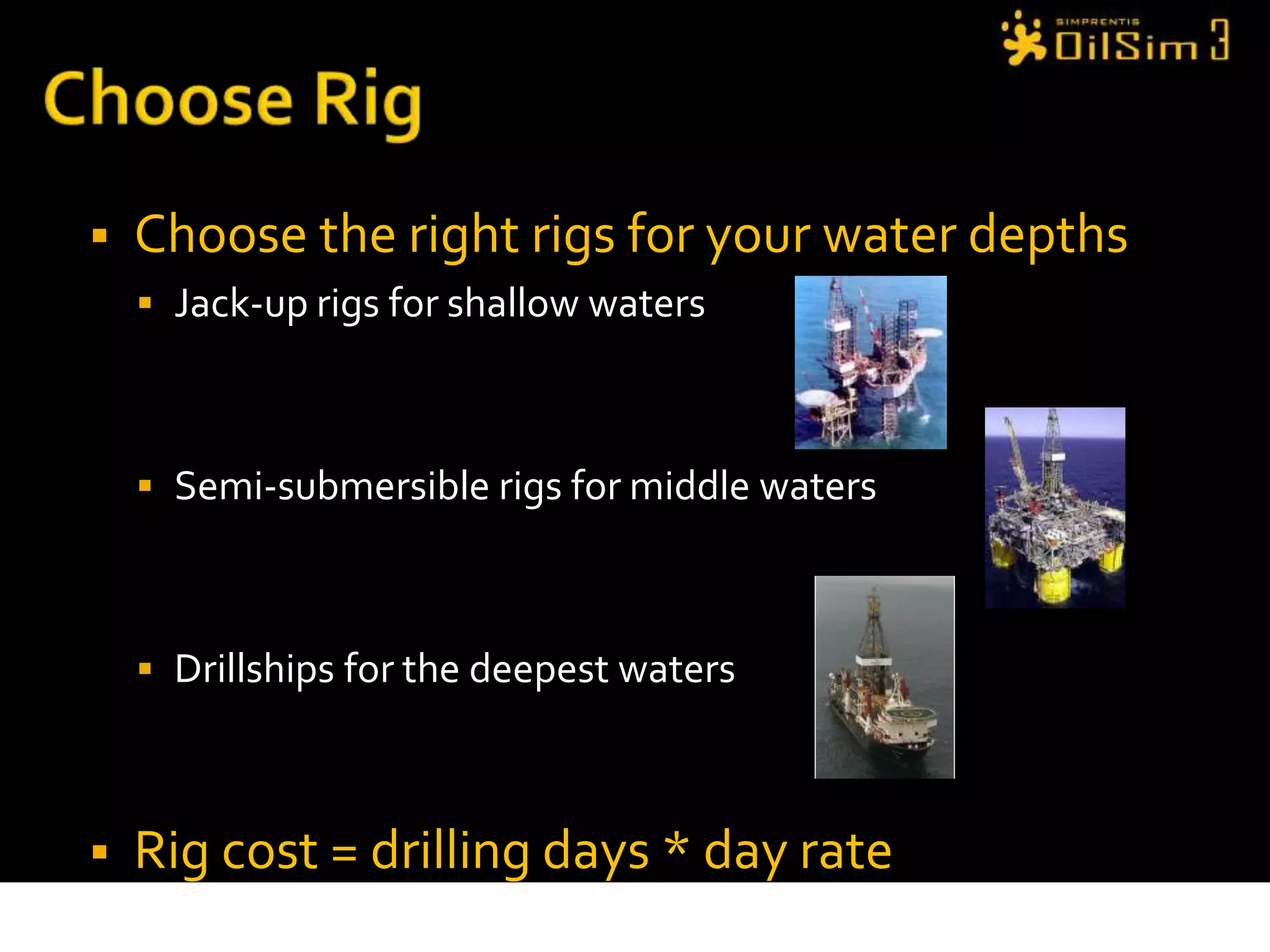
Choose RigChoose the right rigs for your water depthsJack-up rigs for shallow watersSemi-submersible rigs for middle watersDrillships for the deepest waters Rig cost = drilling days * day rate
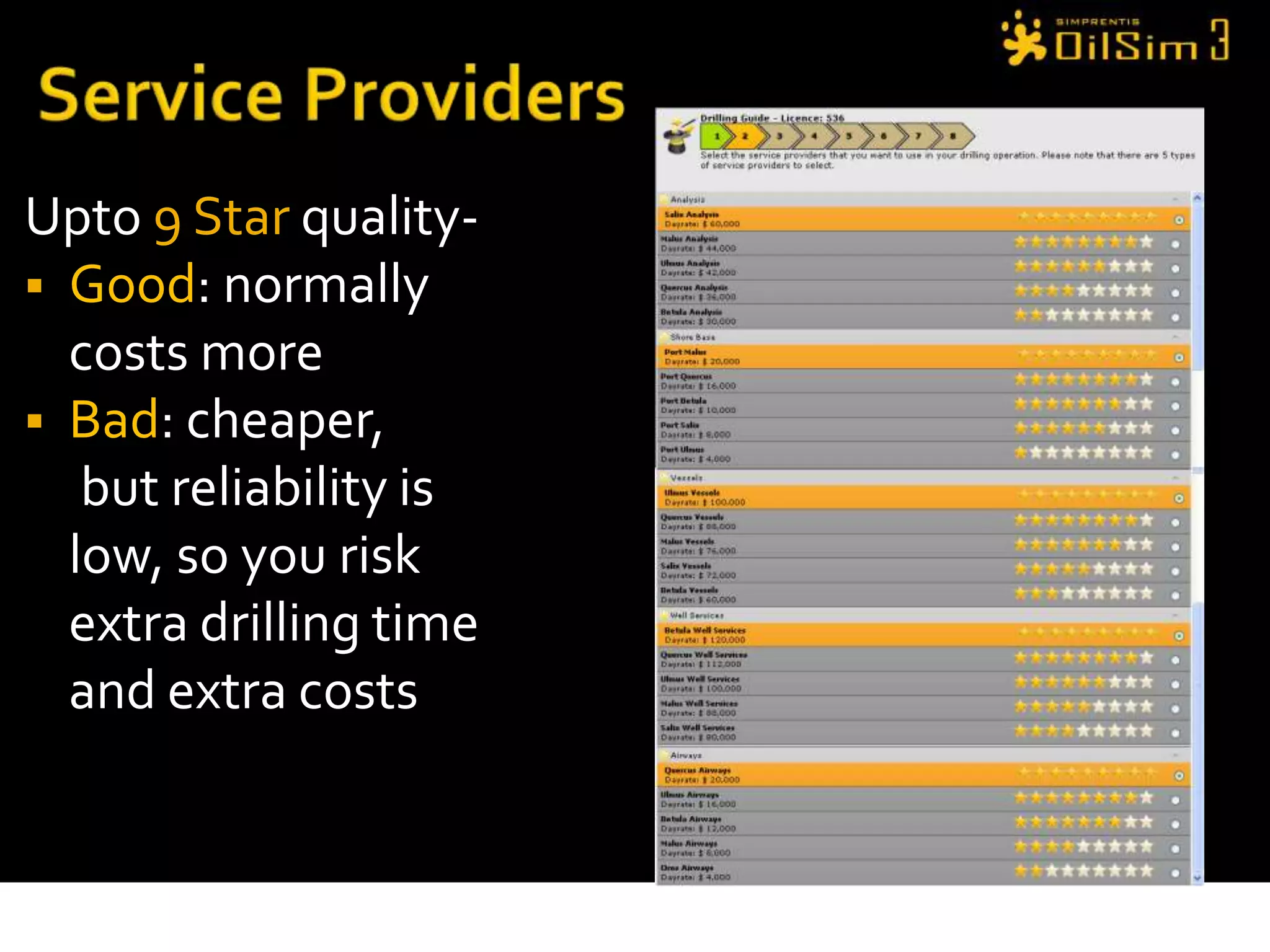
Service ProvidersUpto 9 Star quality-Good: normally costs moreBad: cheaper,      but reliability is low, so you risk extra drilling time and extra costs
Environmental Impact AssessmentEIA survey: more knowledge about the area.Less probability for drilling problems.Less severe consequences if you run into problems.= Which drilling locations to avoid.
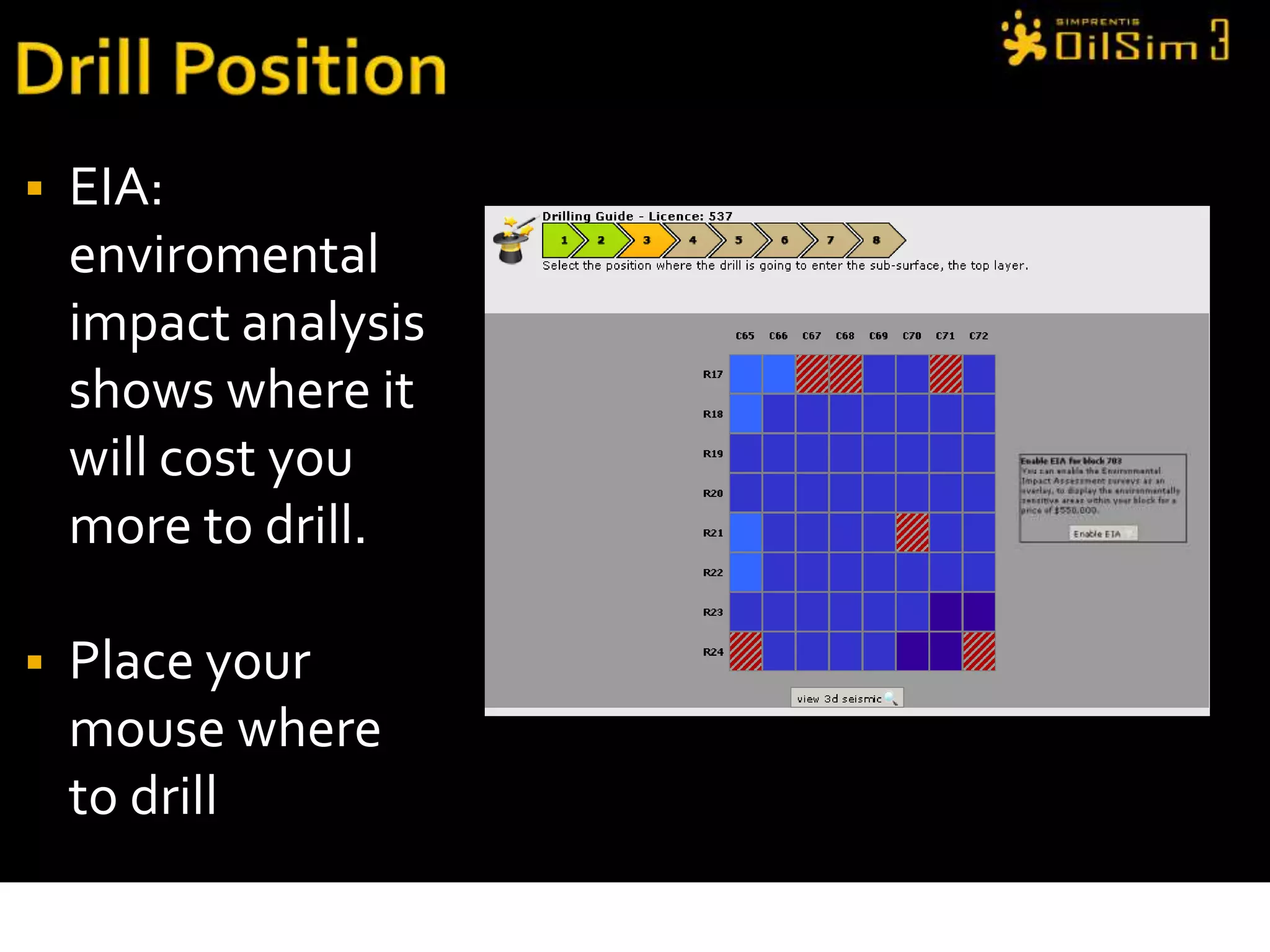
Drill PositionEIA: enviromental impact analysis shows where it will cost you more to drill.Place your mouse where to drill
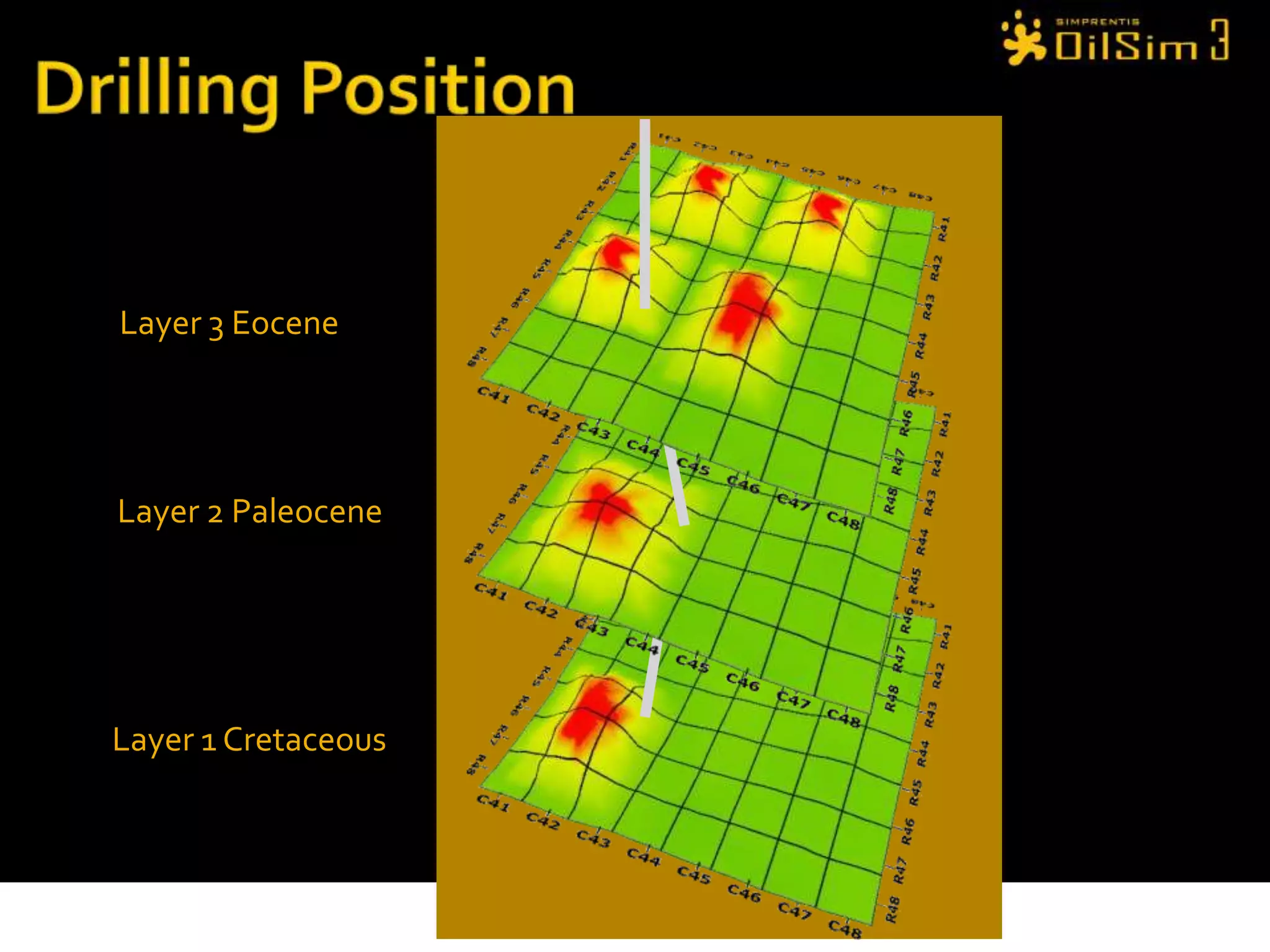
Drilling PositionLayer 3 EoceneLayer 2 PaleoceneLayer 1 Cretaceous
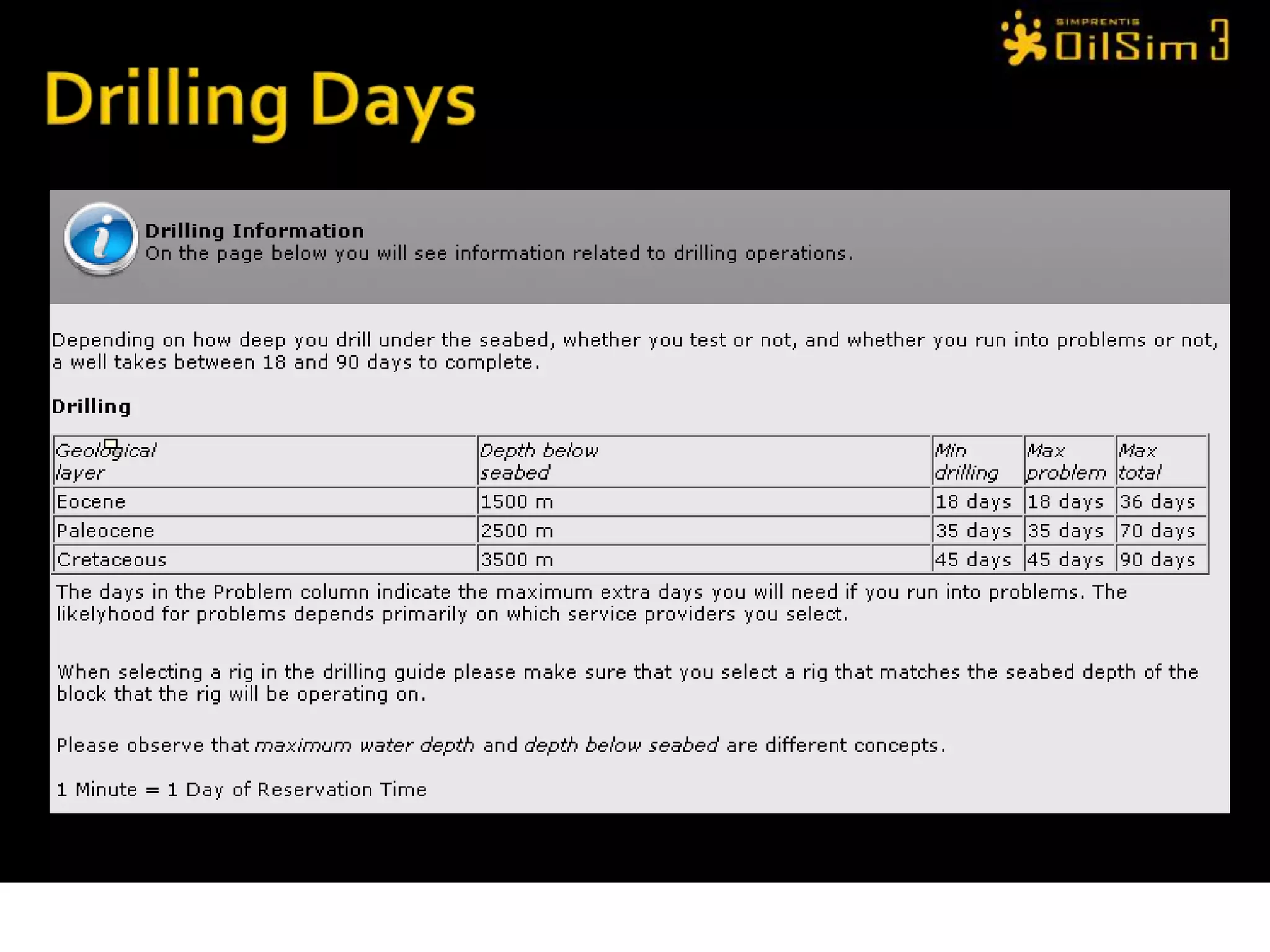
Drilling Days
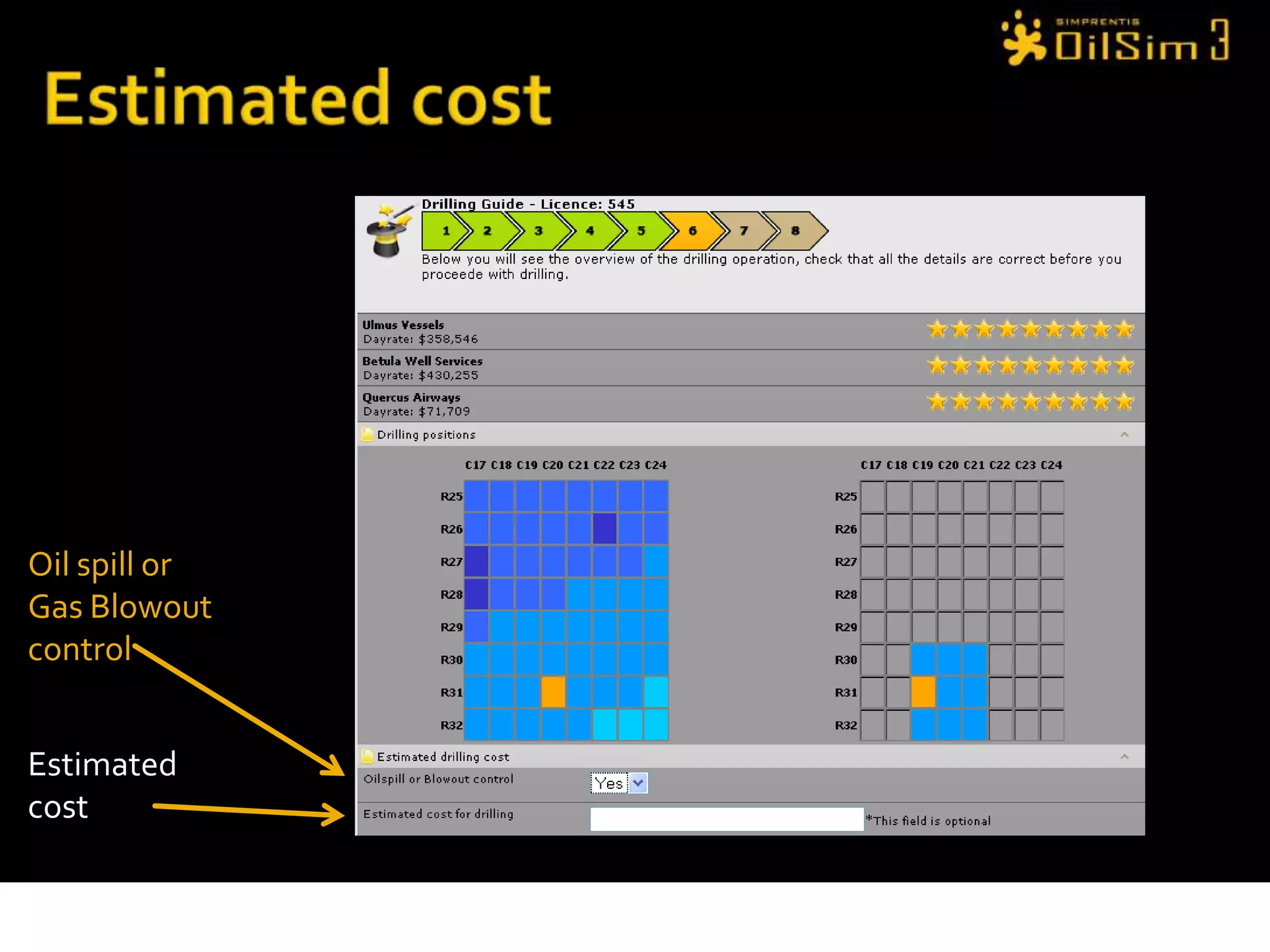
Estimated costOil spill or Gas Blowout controlEstimated cost
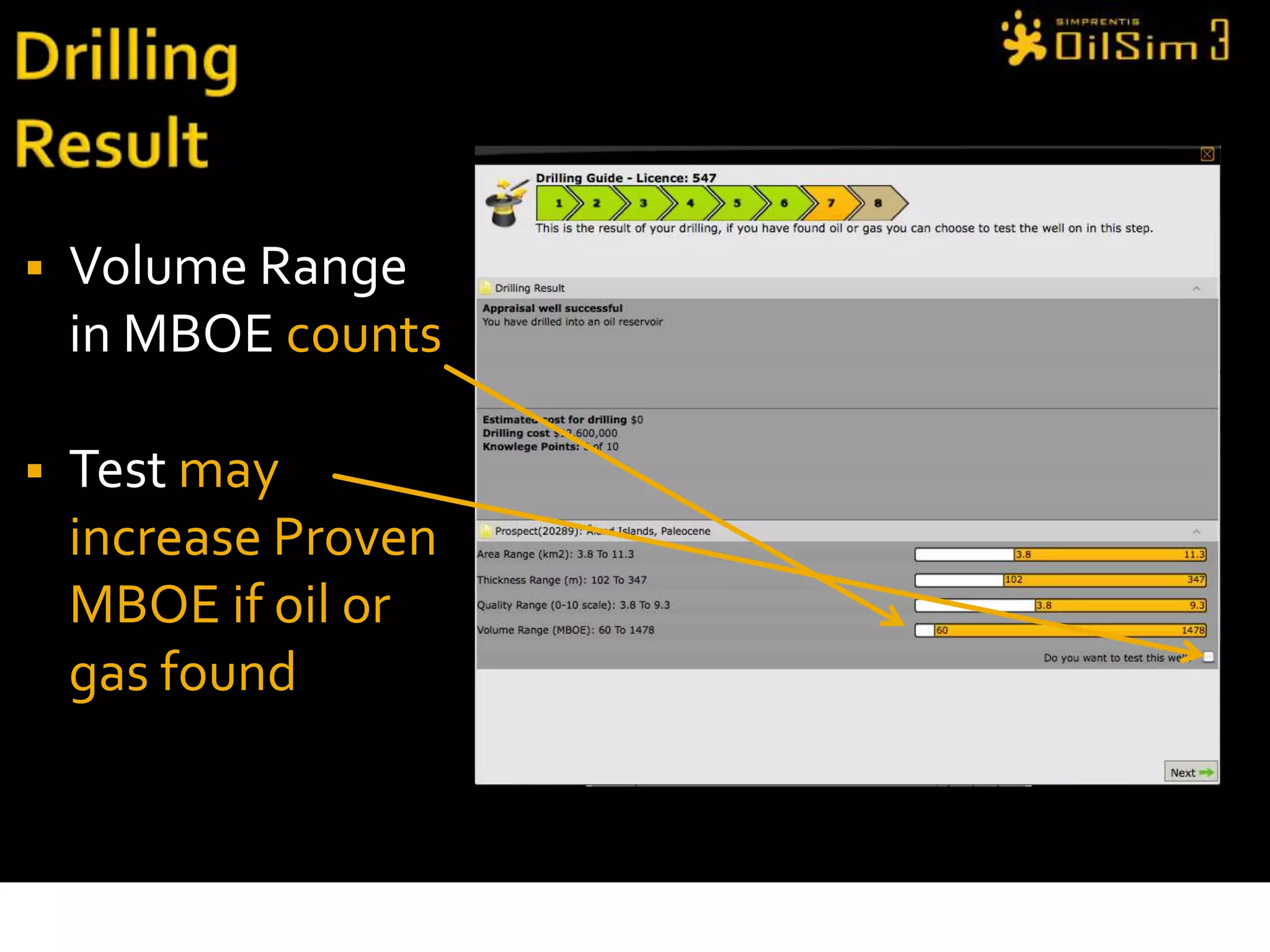
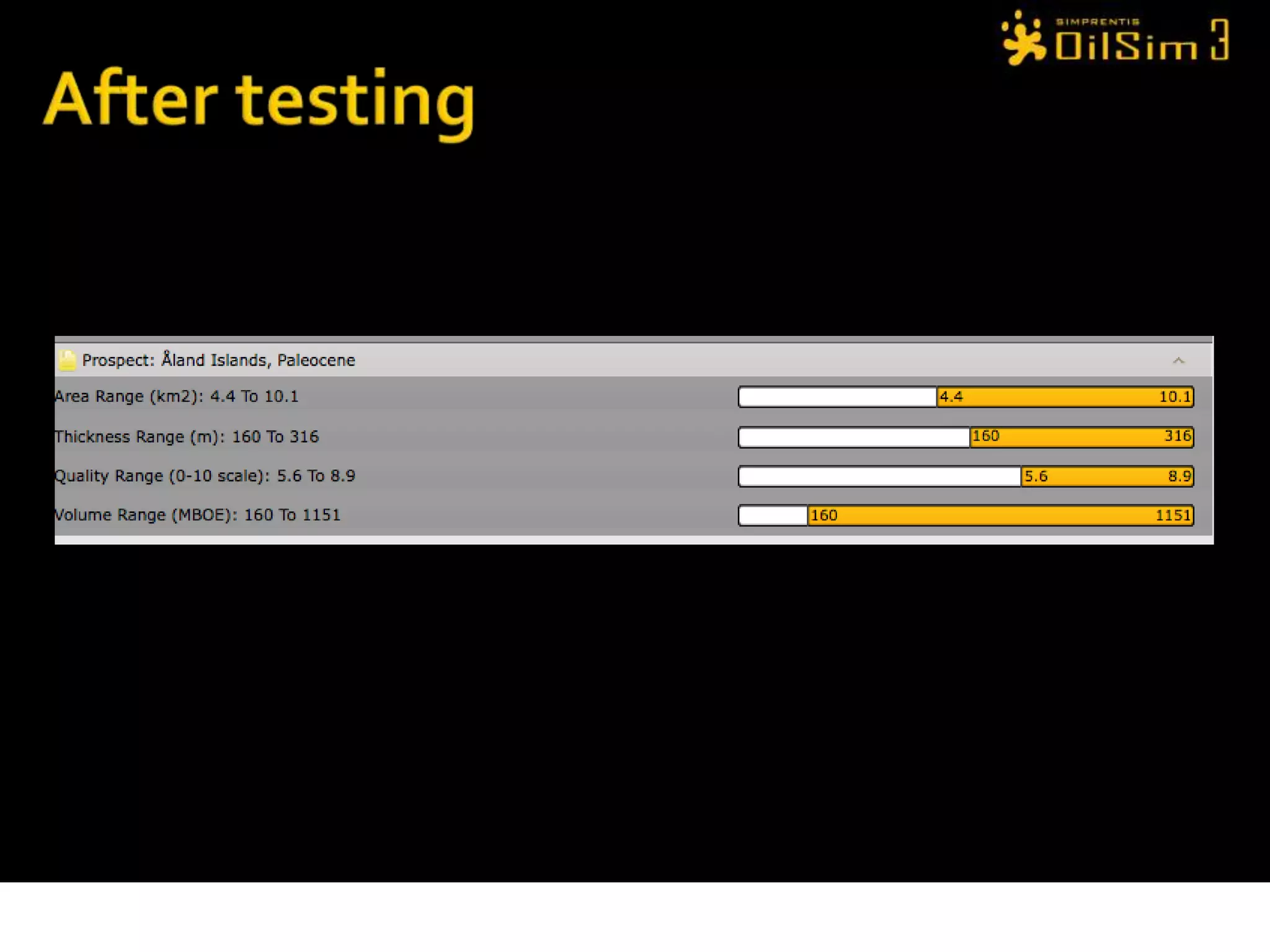
DrillingResultVolume Range in MBOE countsTest may increase Proven MBOE if oil or gas found
After testing
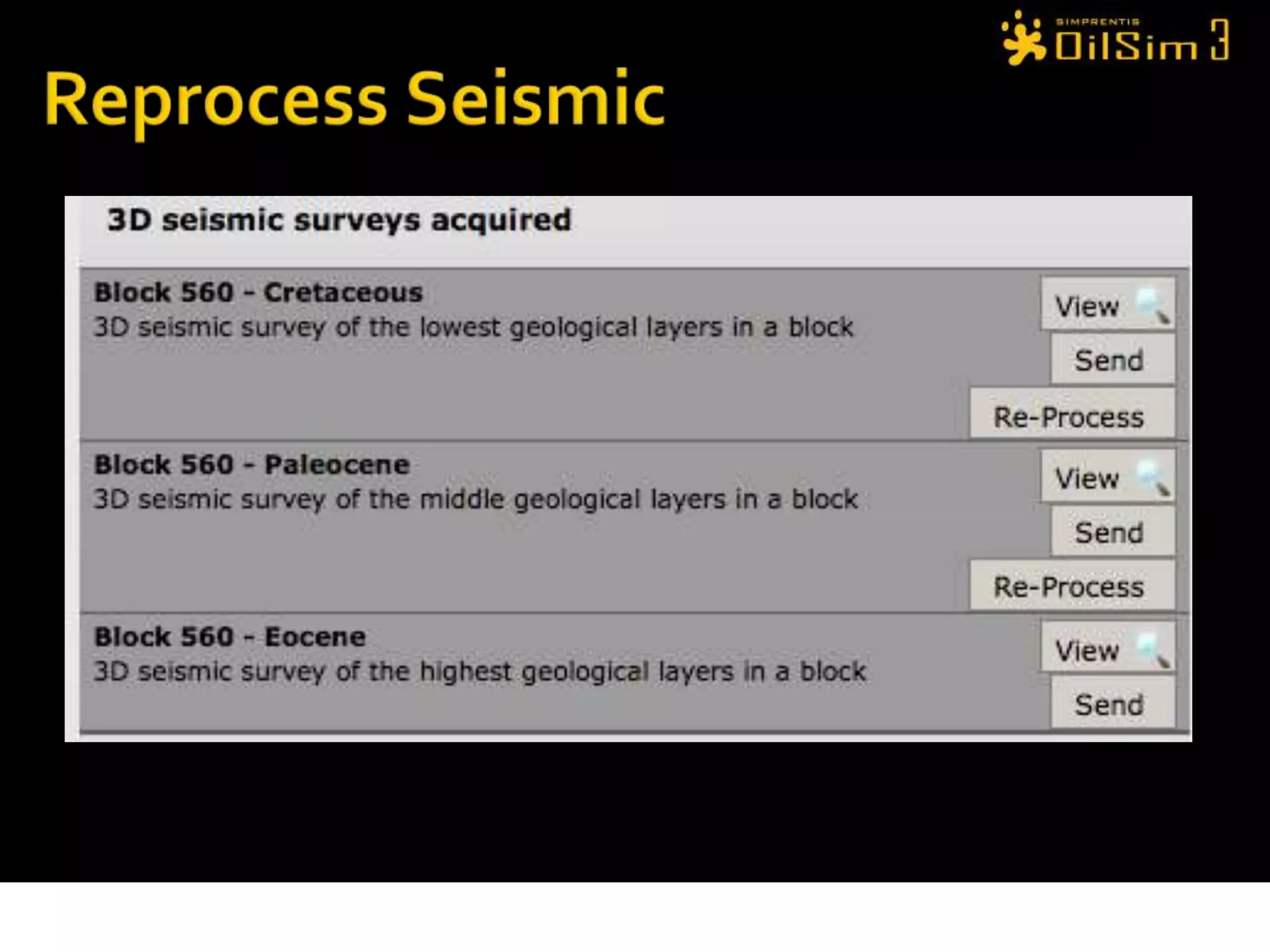
Reprocess Seismic
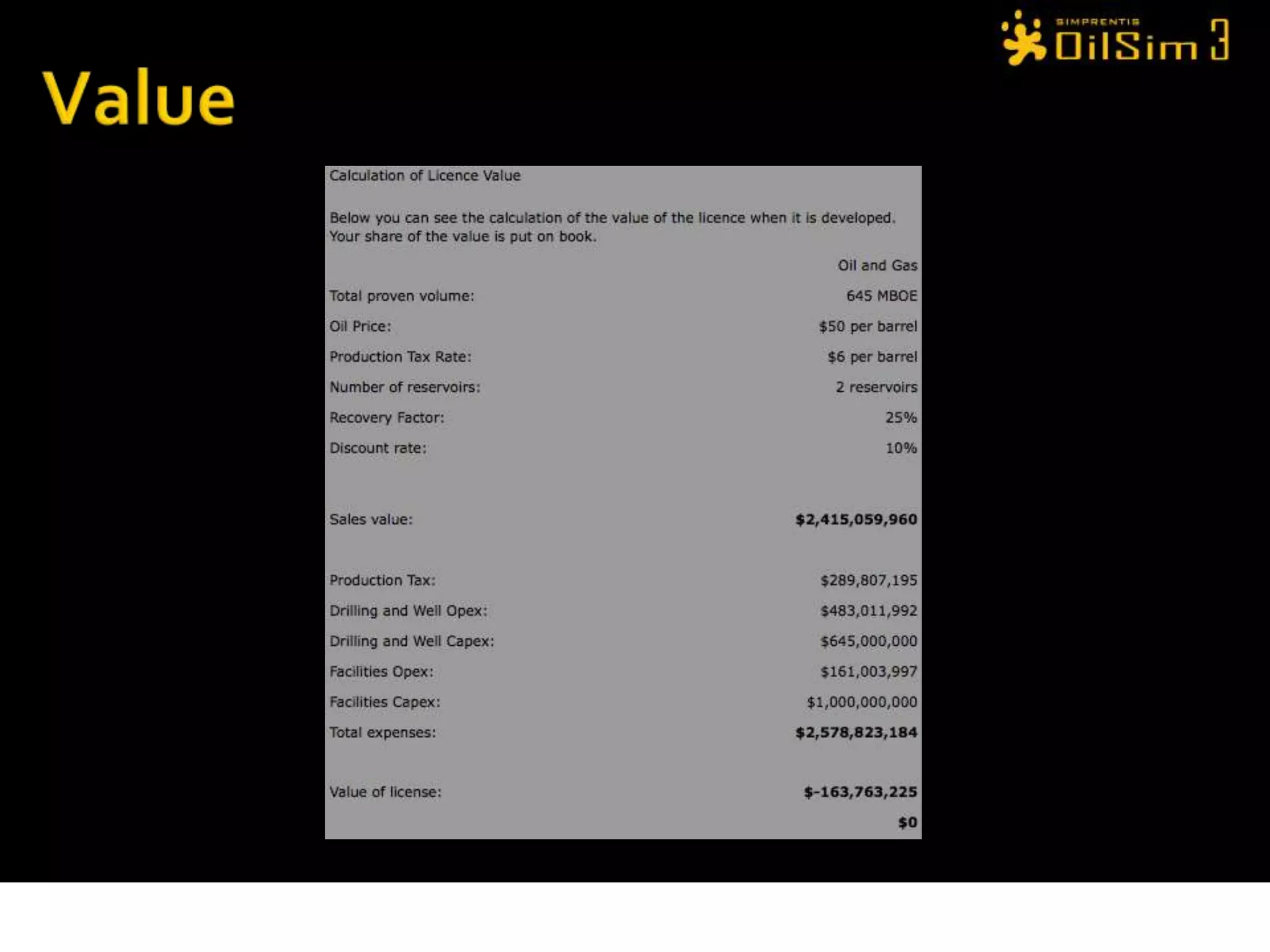
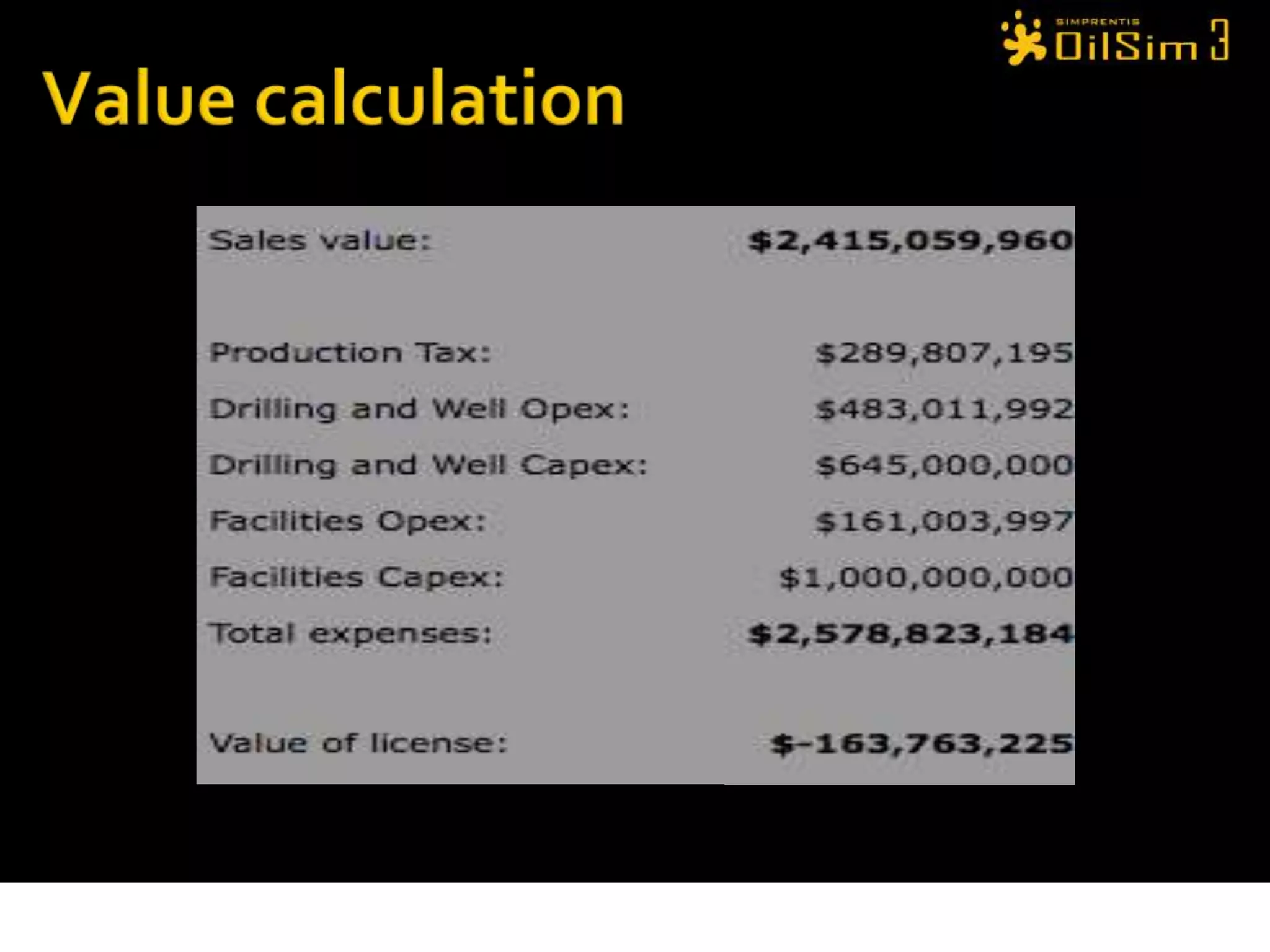
Value
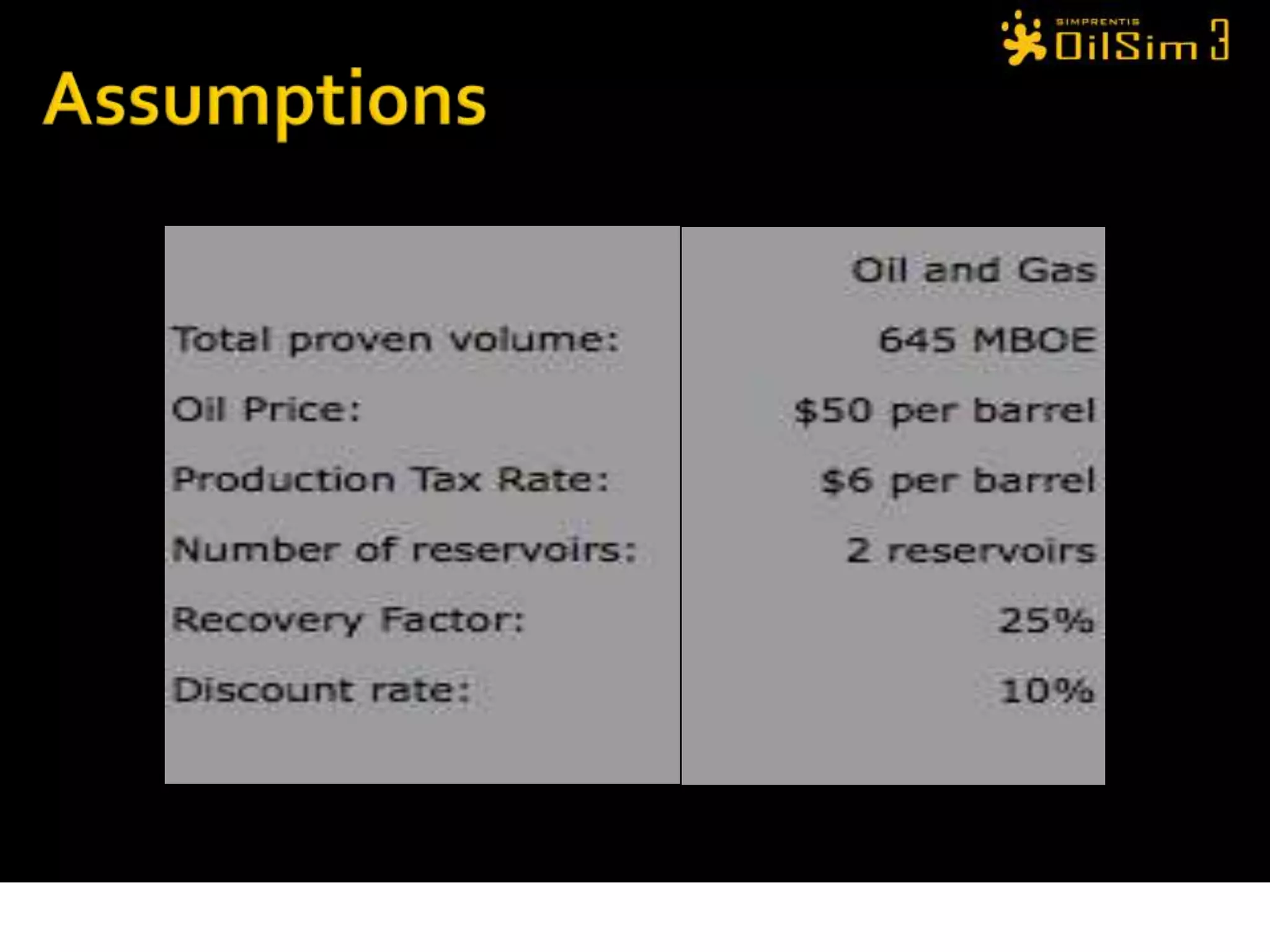
Assumptions
Value calculation
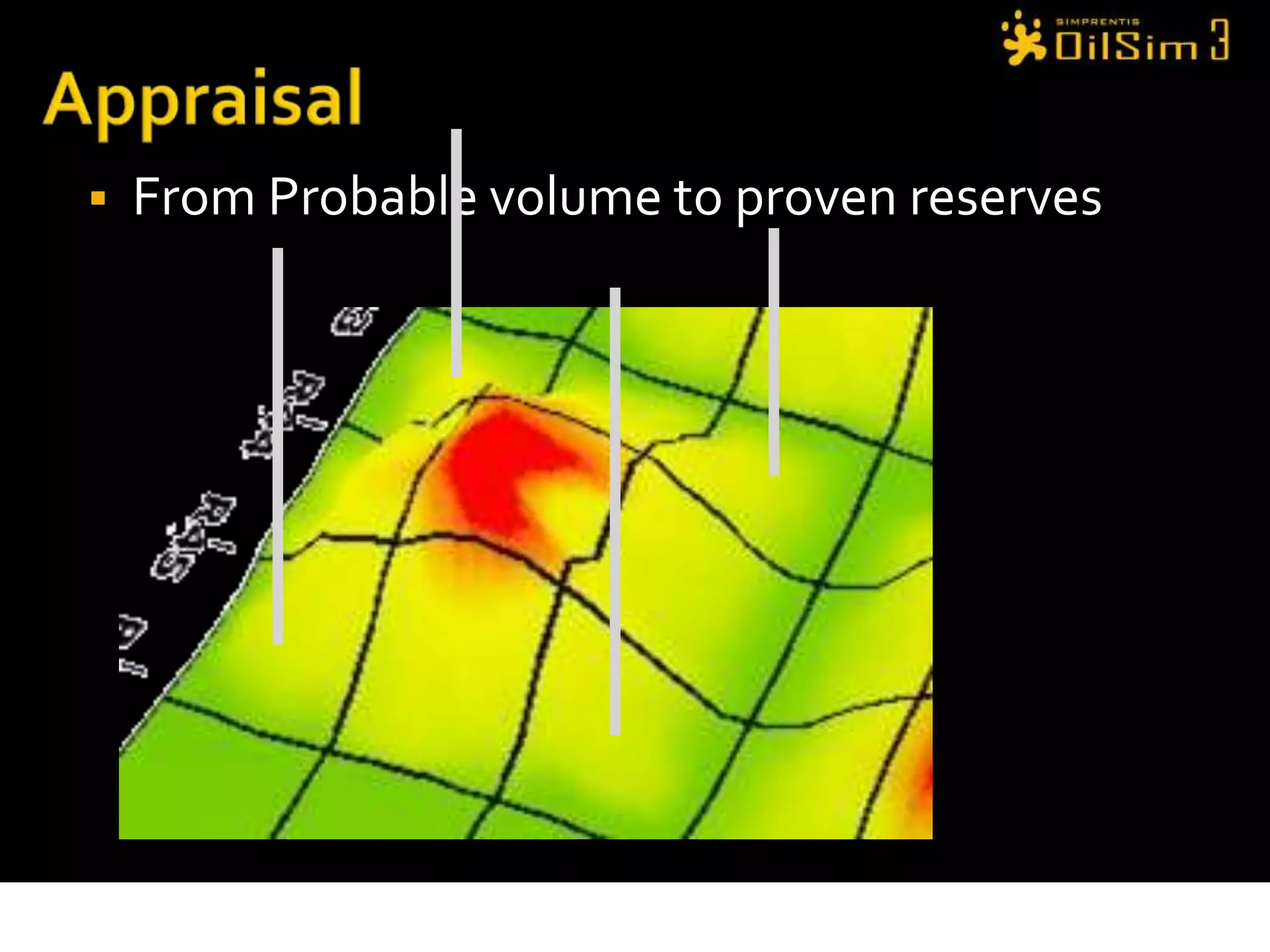
AppraisalFrom Probable volume to proven reserves
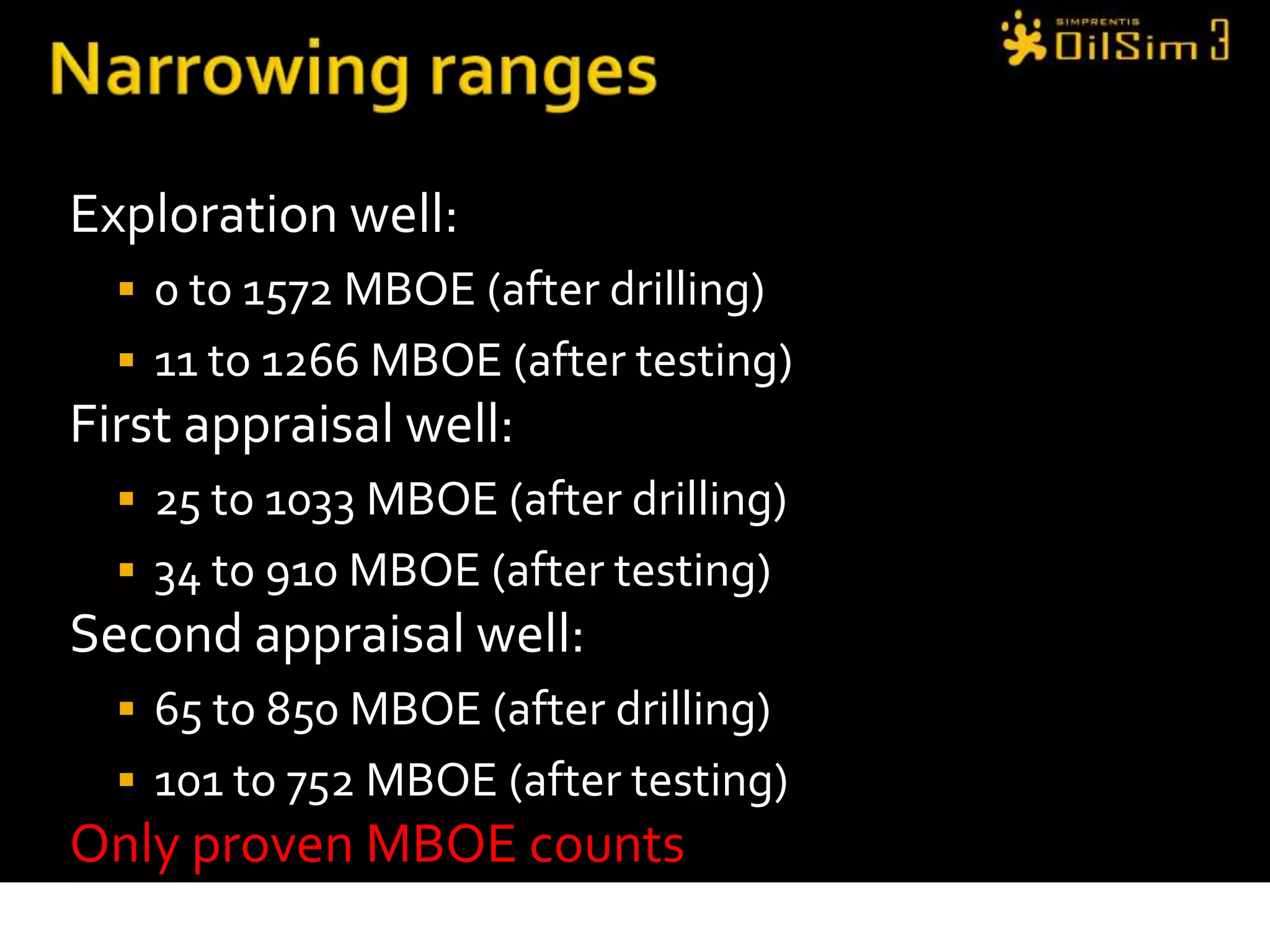
Narrowing rangesExploration well:0 to 1572 MBOE (after drilling)11 to 1266 MBOE (after testing)First appraisal well:25 to 1033 MBOE (after drilling)34 to 910 MBOE (after testing)Second appraisal well:65 to 850 MBOE (after drilling)101 to 752 MBOE (after testing)Only proven MBOE counts
Drilling SummaryAfter your first drill in each well, reprocess seismicDecide which discoveries to drill how many appraisal wells intoUltimately, you should either:Get a positive net present value,Or a conclusion that additional appraisal wells will not result in a net present value
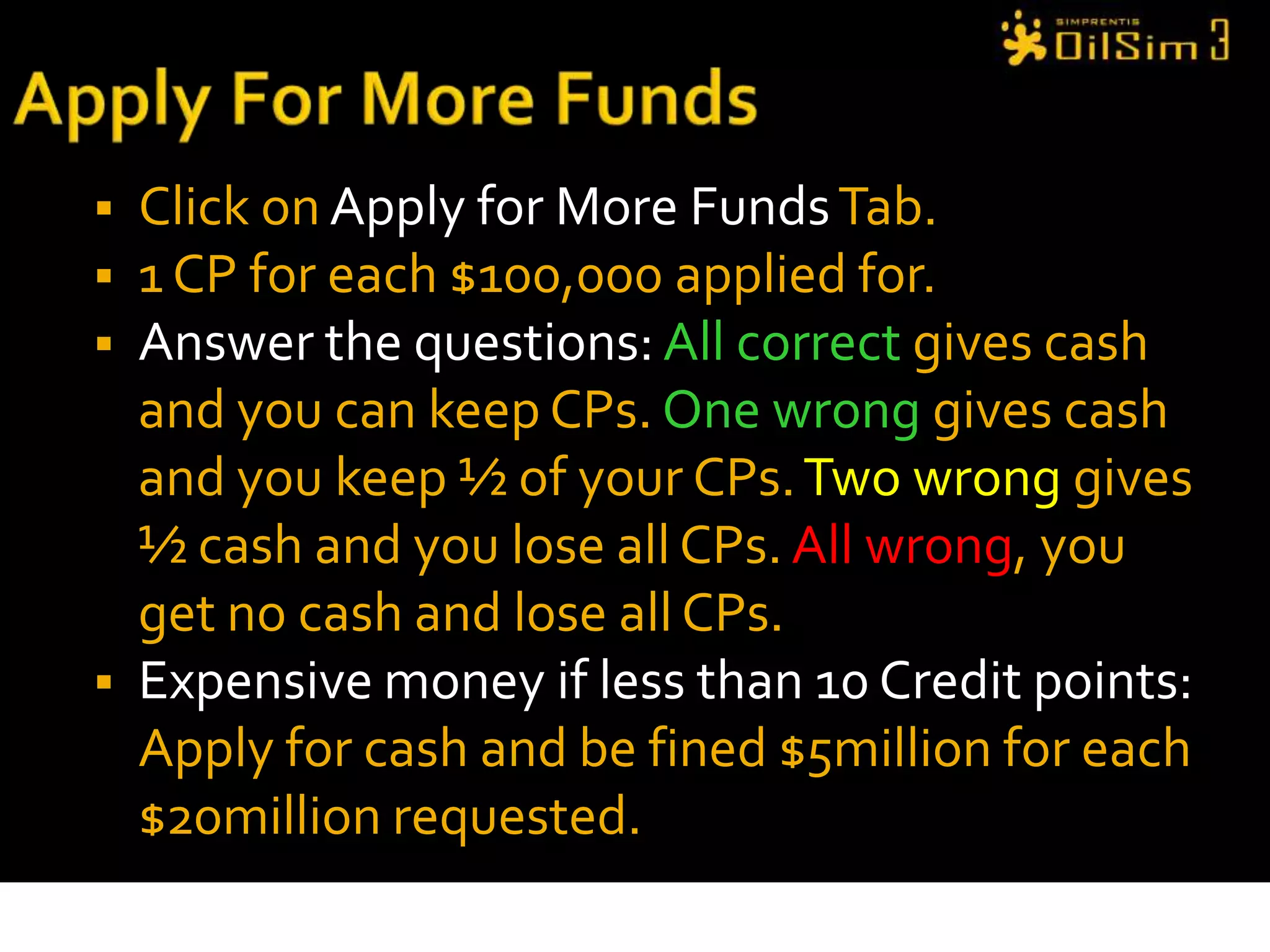
Apply For More FundsClick on Apply for More Funds Tab. 1 CP for each $100,000 applied for.Answer the questions: All correct gives cash and you can keep CPs. One wrong gives cash and you keep ½ of your CPs. Two wrong gives ½ cash and you lose all CPs. All wrong, you get no cash and lose all CPs.Expensive money if less than 10 Credit points: Apply for cash and be fined $5million for each $20million requested.
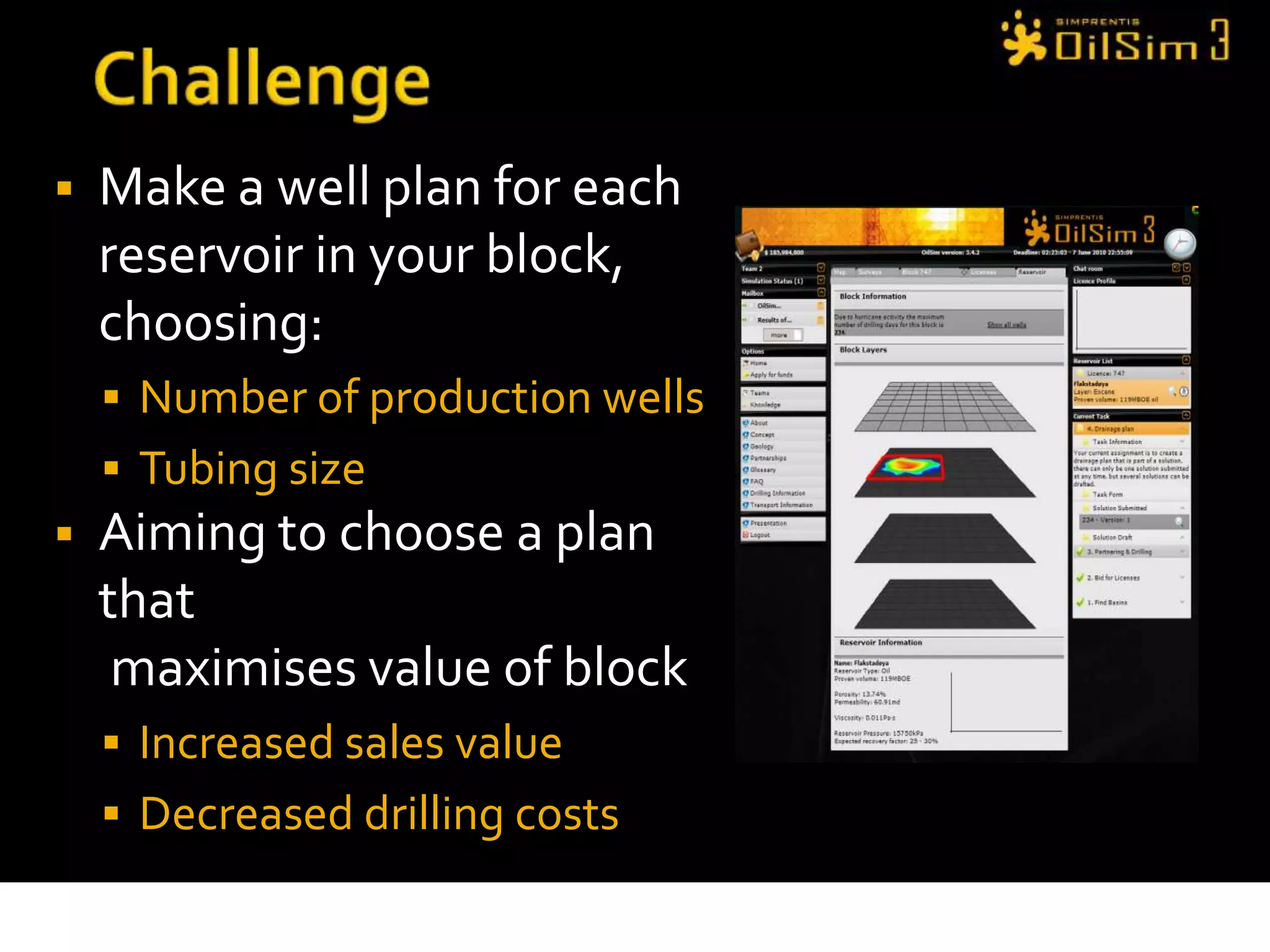
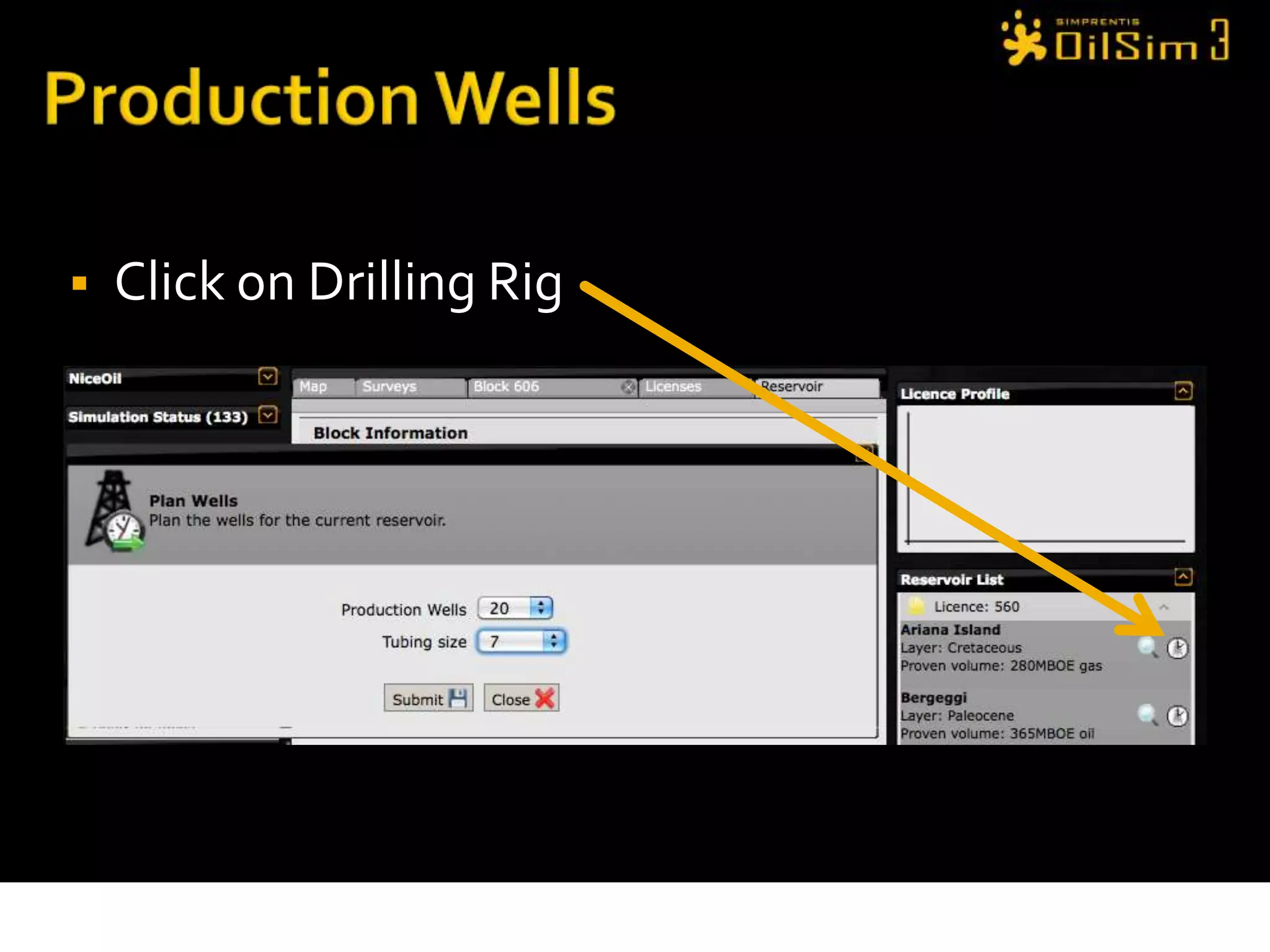
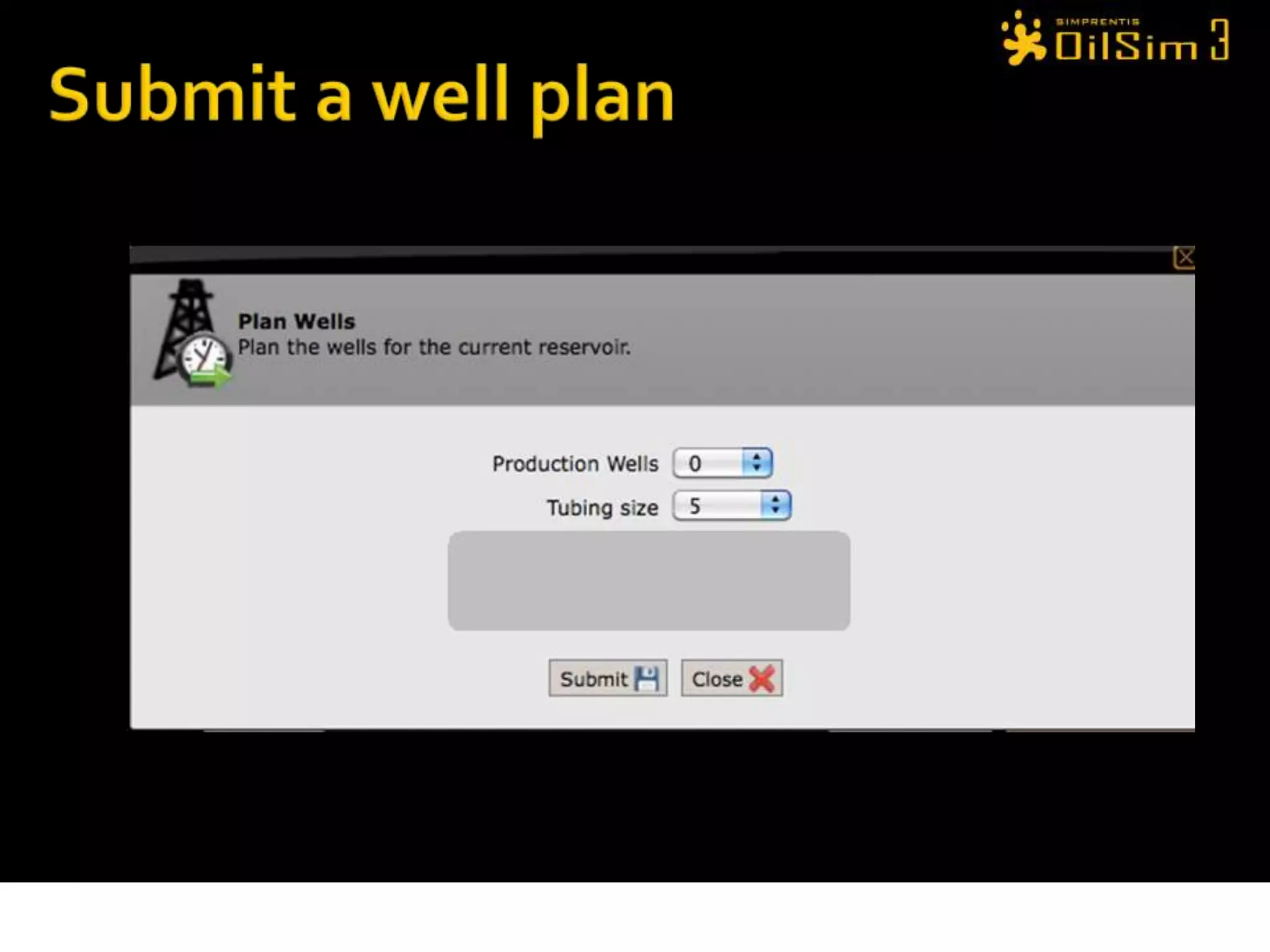
ChallengeMake a well plan for each reservoir in your block, choosing:Number of production wellsTubing sizeAiming to choose a plan that      maximises value of blockIncreased sales valueDecreased drilling costs
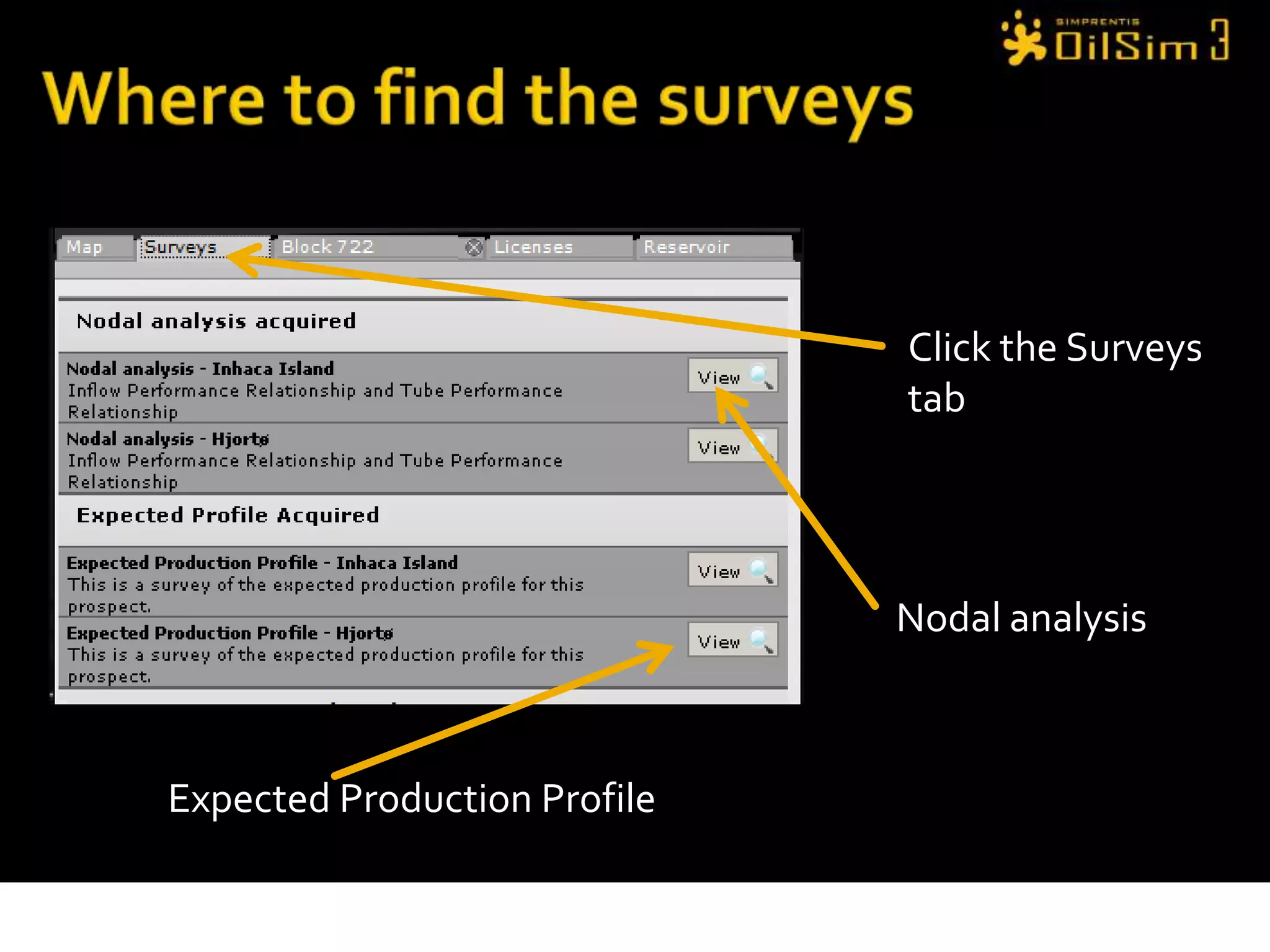
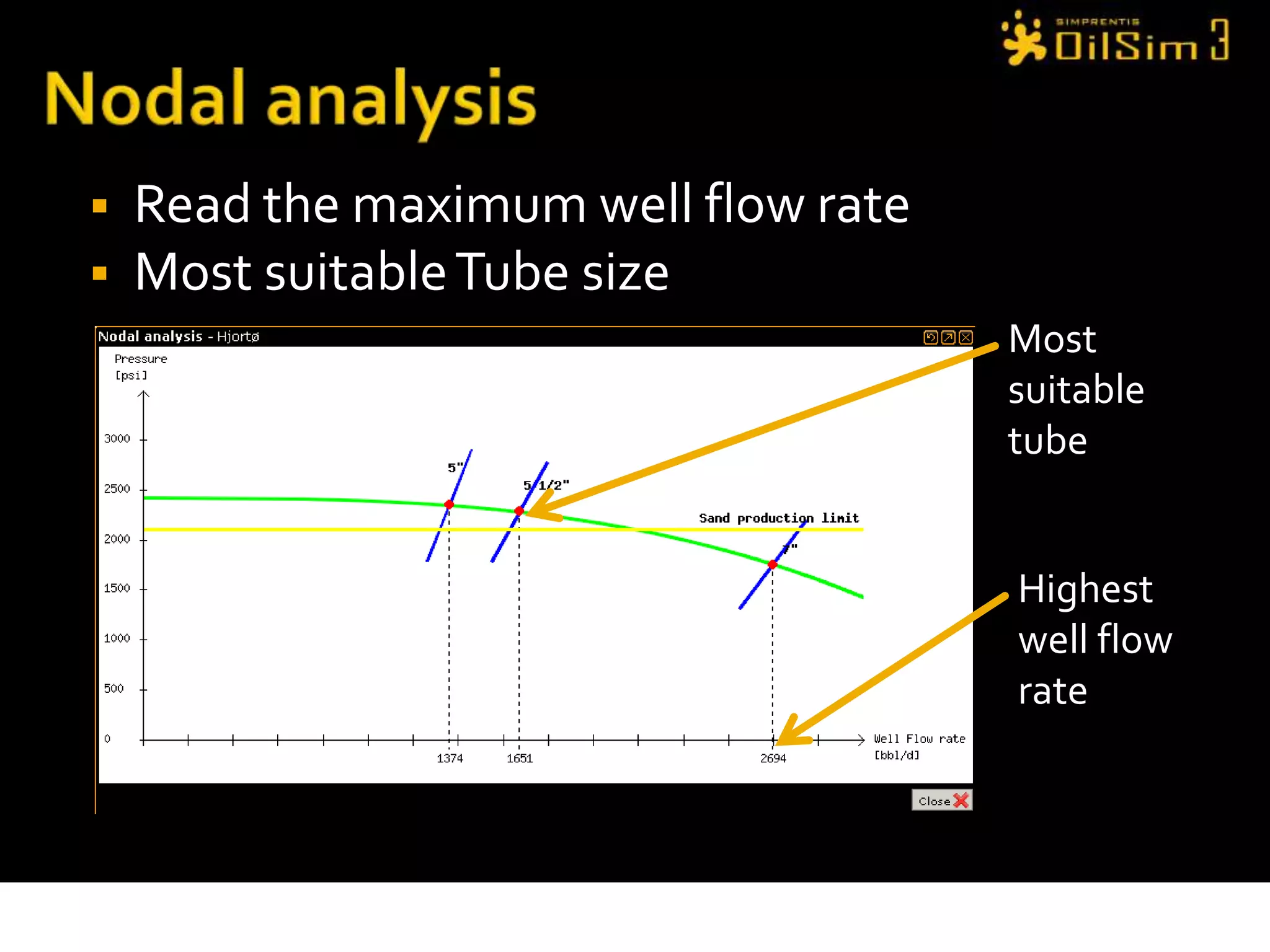
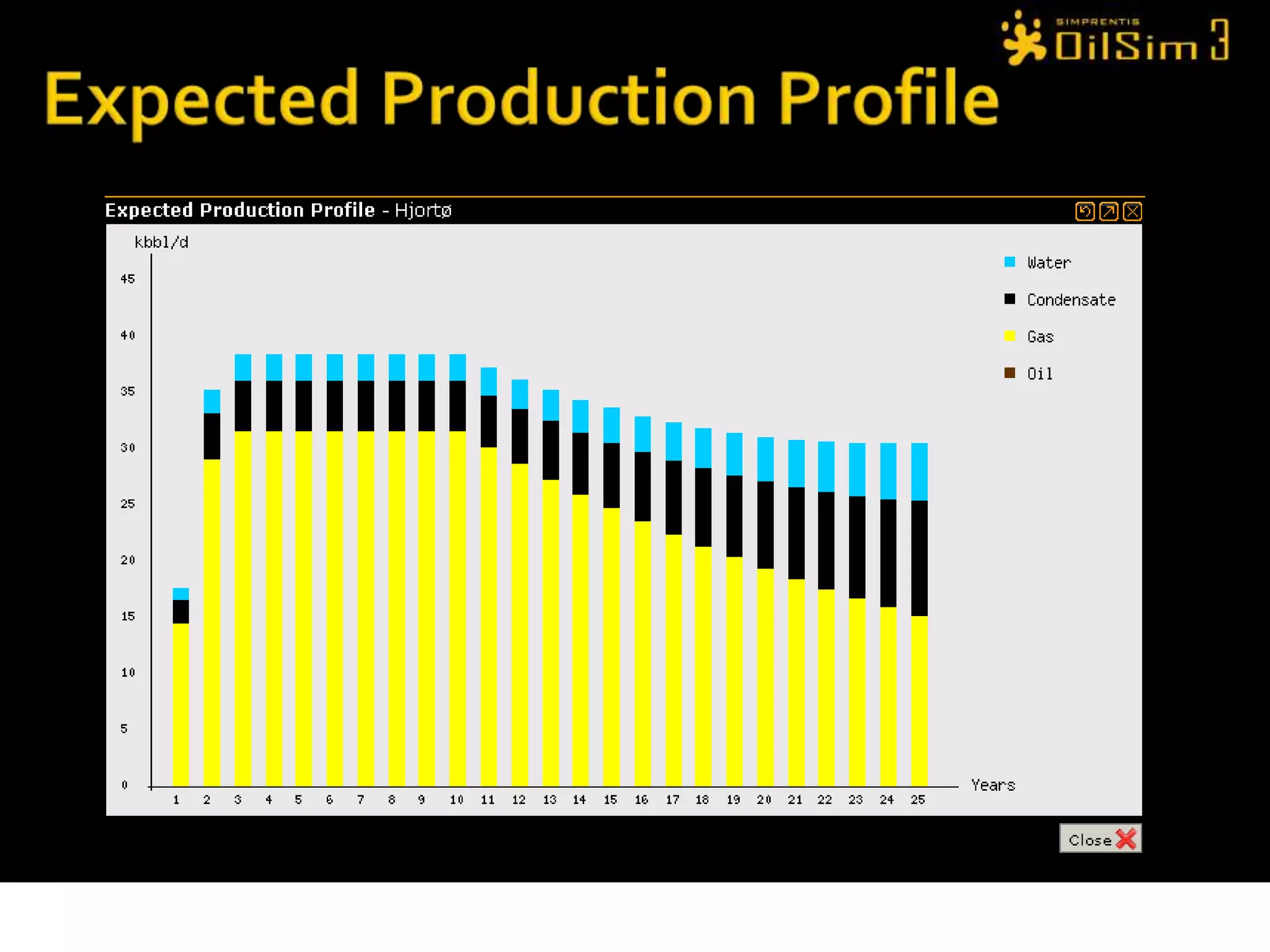
Where to find the surveysClick the Surveys tabNodal analysisExpected Production Profile
Nodal analysisRead the maximum well flow rate
Most suitable Tube sizeMost suitable tubeHighest well flow rate
Expected Production Profile
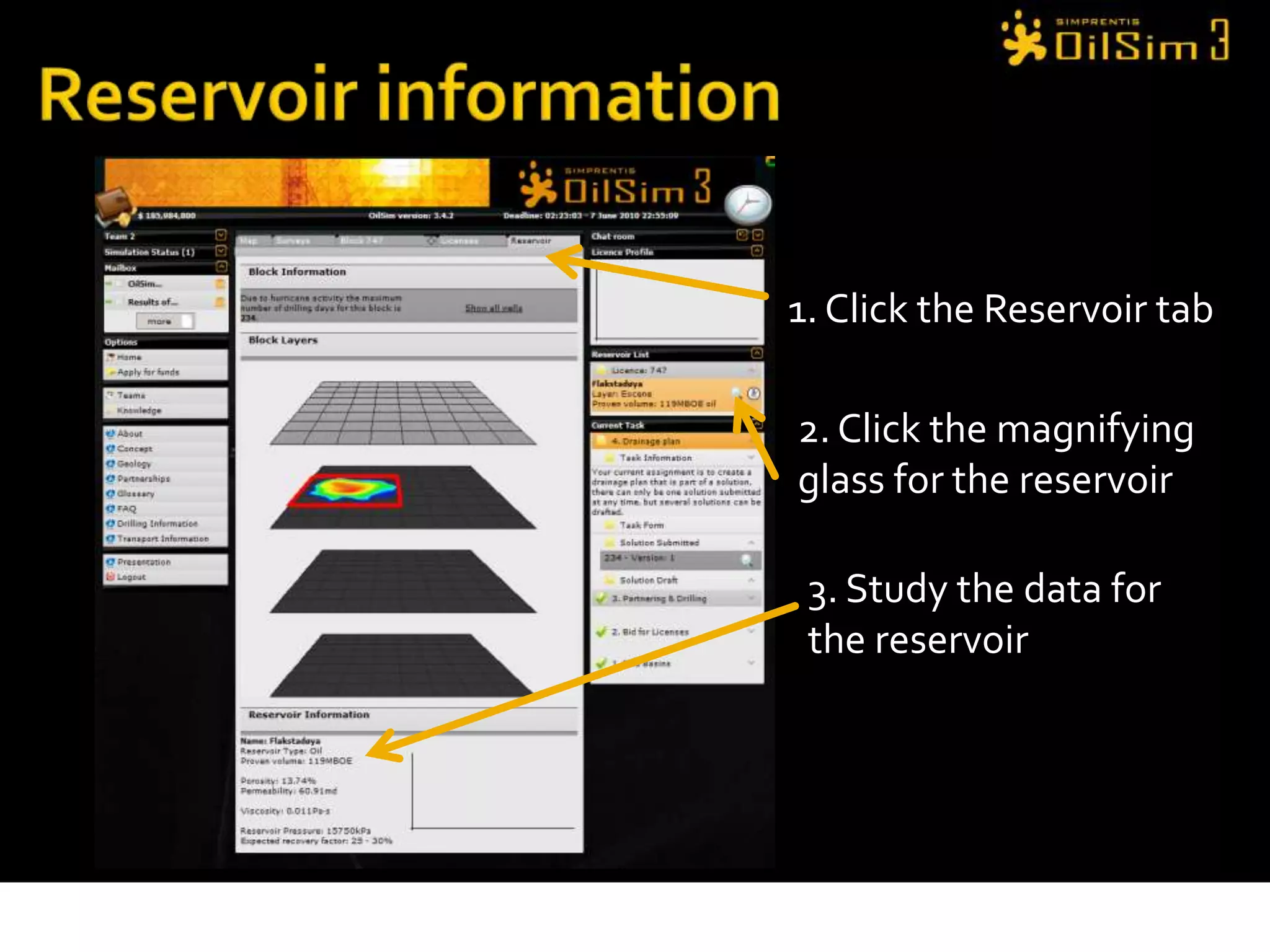
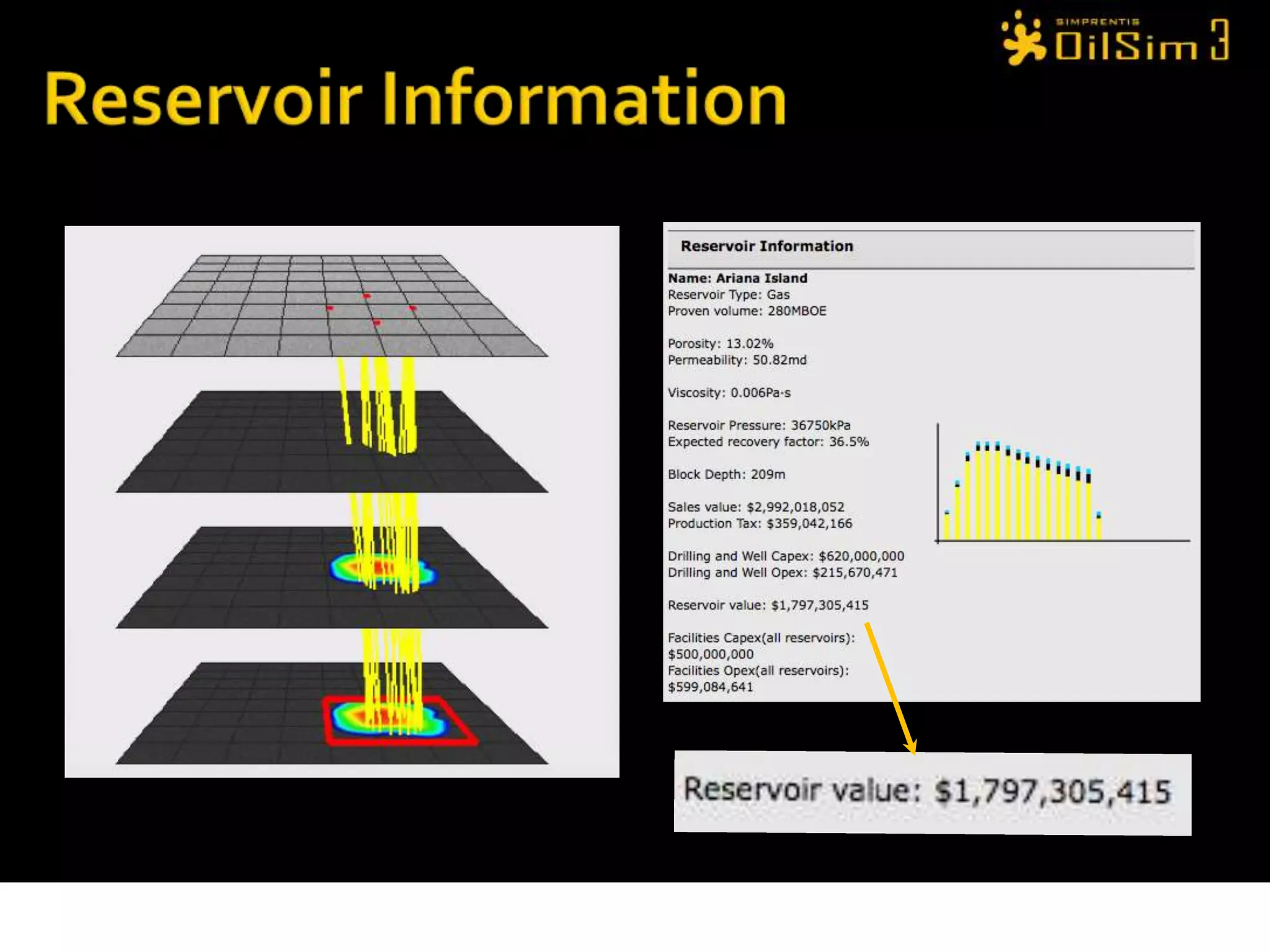
Reservoir information1. Click the Reservoir tab2. Click the magnifyingglass for the reservoir3. Study the data forthe reservoir
Production WellsClick on Drilling RigReservoir Information
Submit a well plan
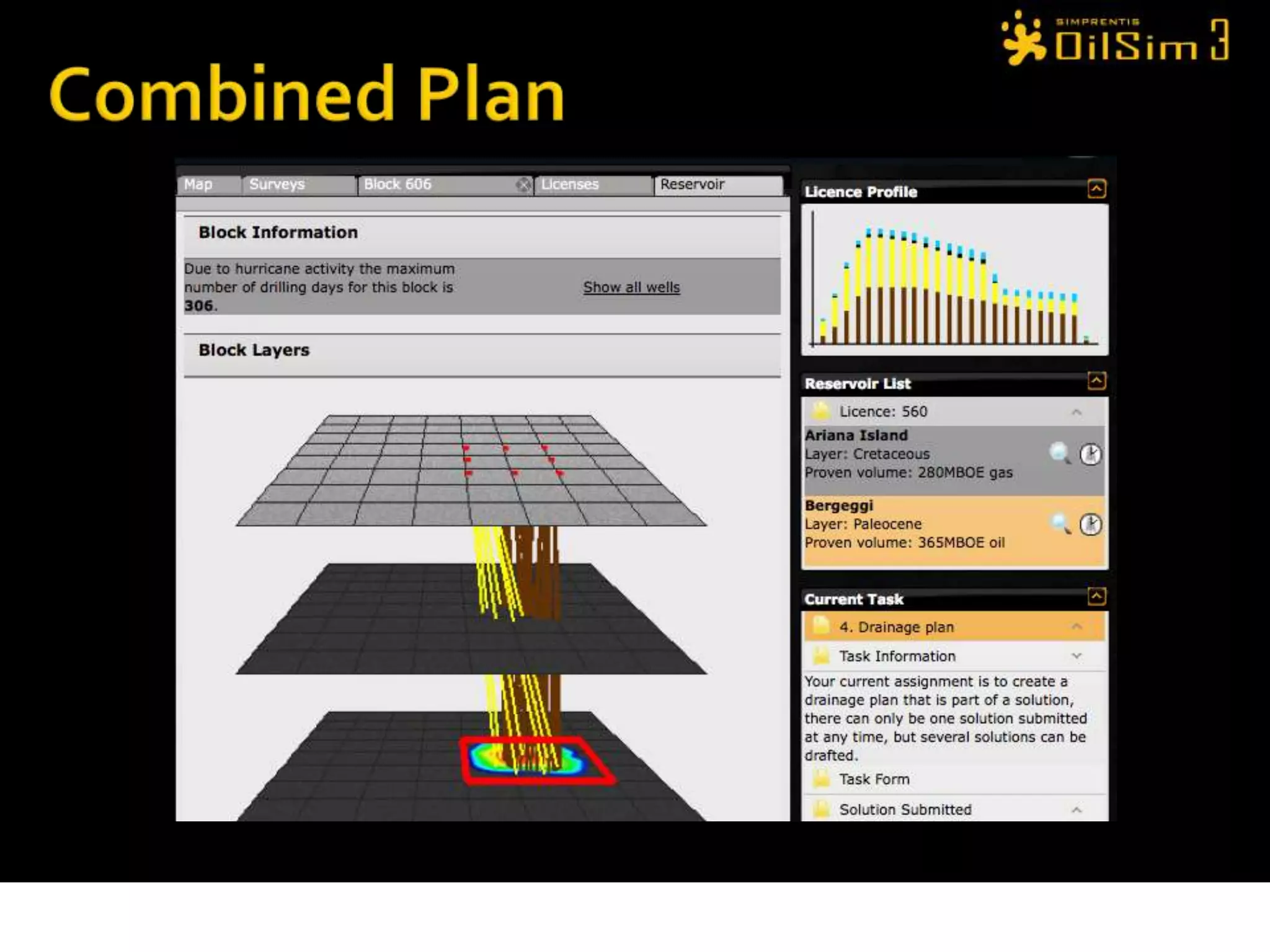
Combined Plan
Improve value – revise well planSubmit plans with different number of wells and tubing sizesReview Reservoir information after each revised plan Aiming to maximize sales value and minimize drilling costs, whilst increasing Recovery FactorYou can amend your well plans until the deadlineCredibility points – upto 100 kp if plans are optimal for all your reservoirsAfter deadline – Value of Licence will be adjusted based on final Well Plan submitted
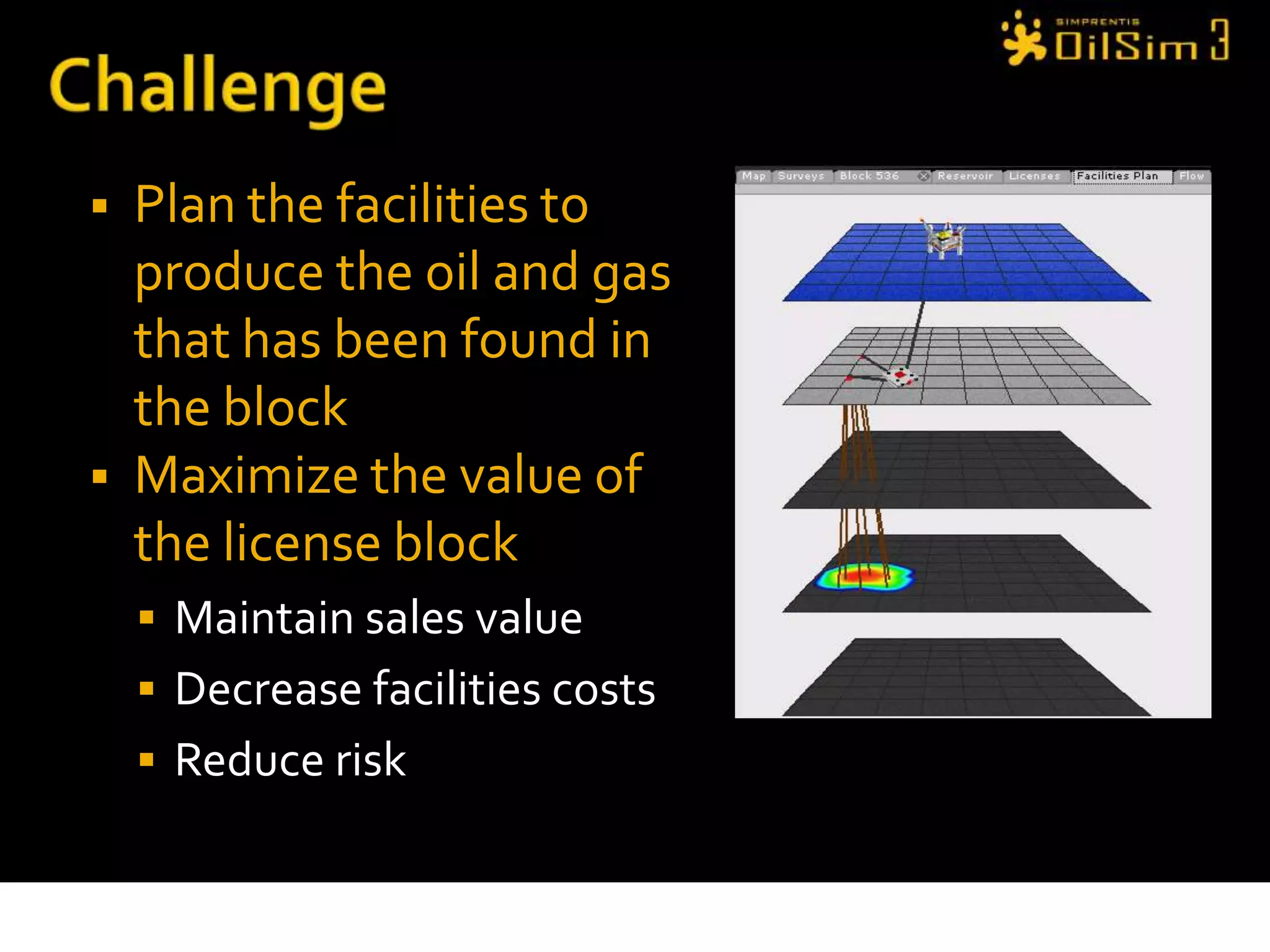
ChallengePlan the facilities to produce the oil and gas that has been found in the blockMaximize the value of the license blockMaintain sales valueDecrease facilities costsReduce risk
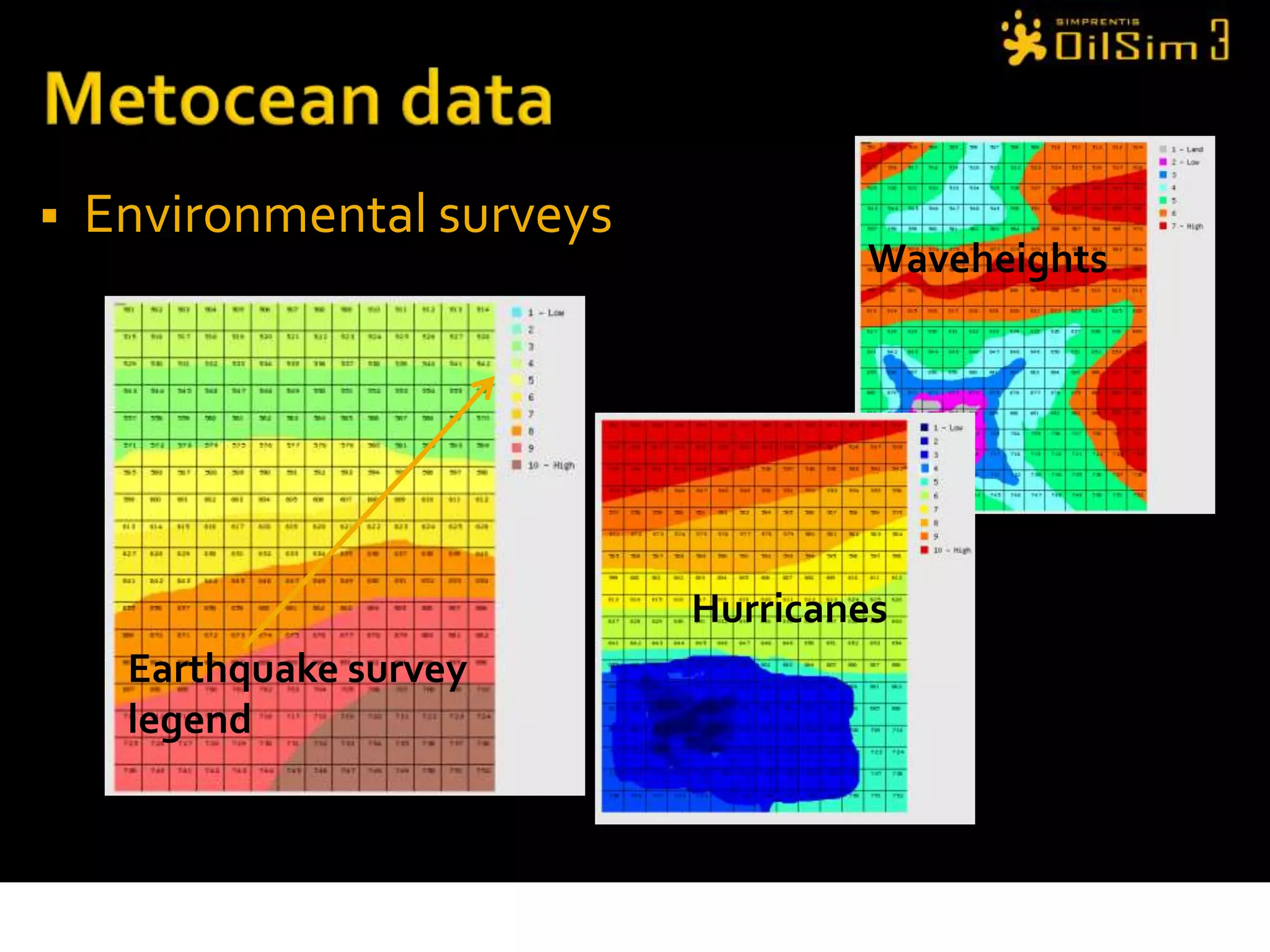
Metocean dataEnvironmental surveysWaveheightsHurricanesEarthquake survey legend
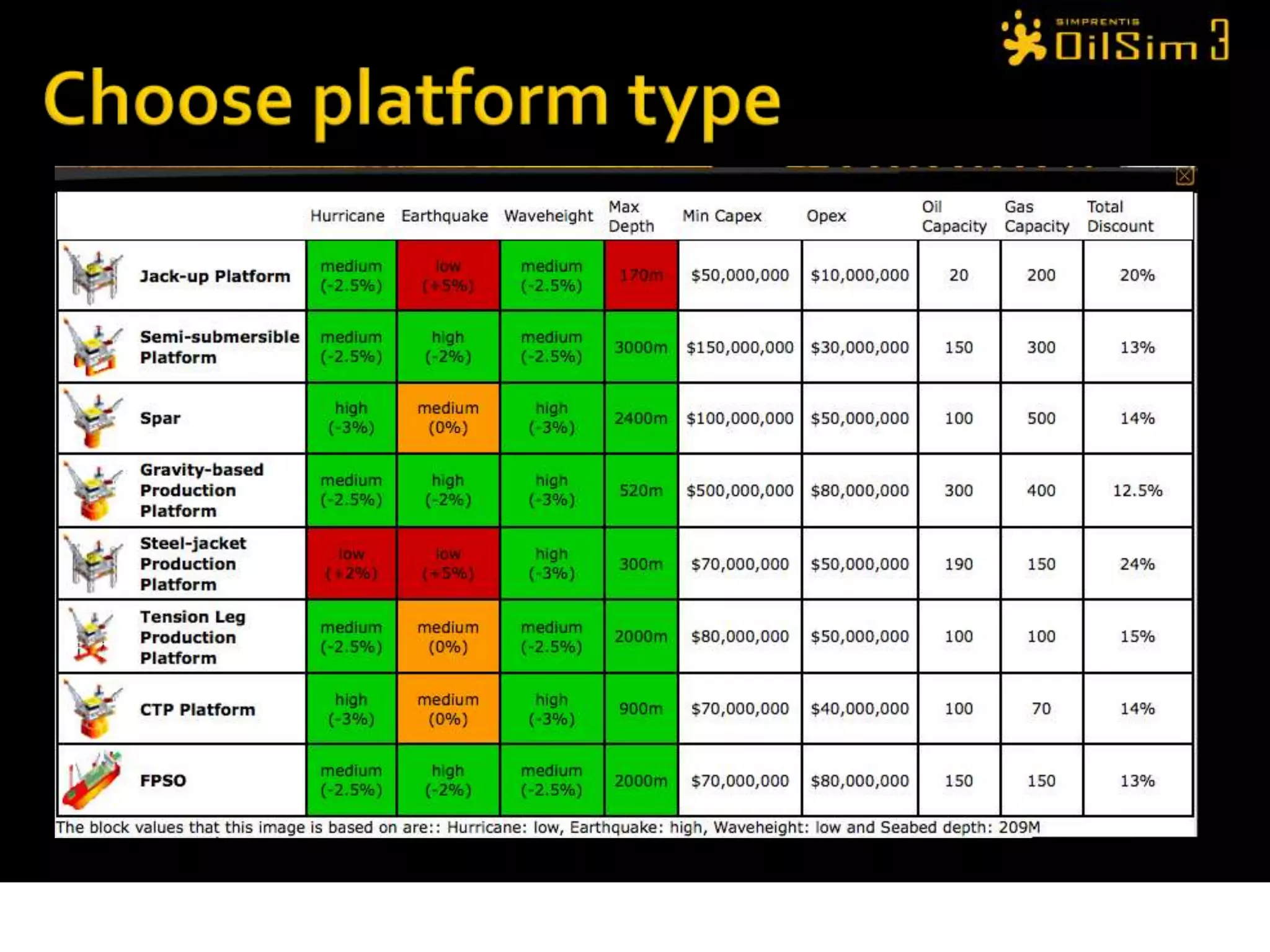
Choose platform type
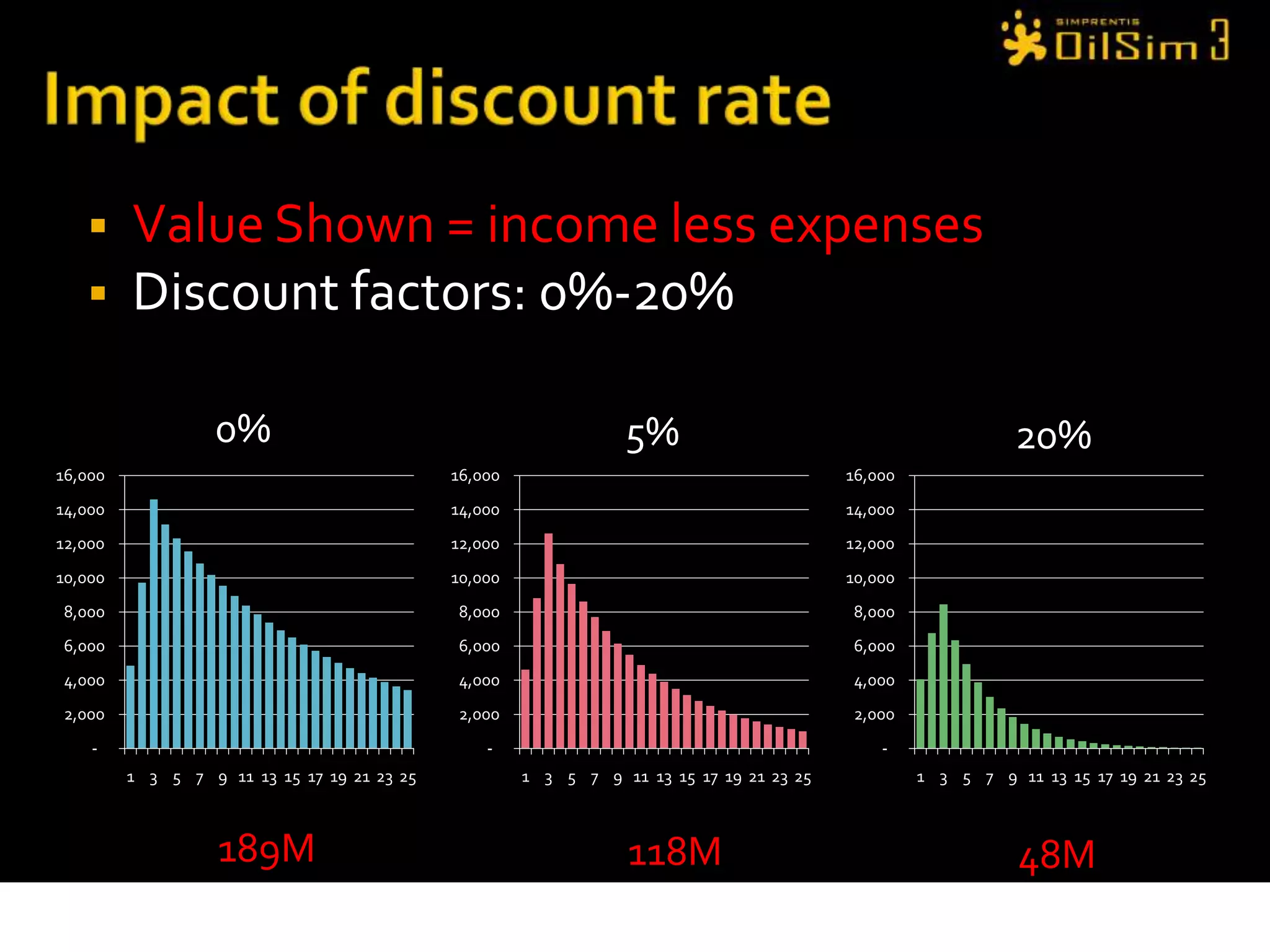
Impact of discount rateValue Shown = income less expensesDiscount factors: 0%-20%0%5%20%189M118M48M
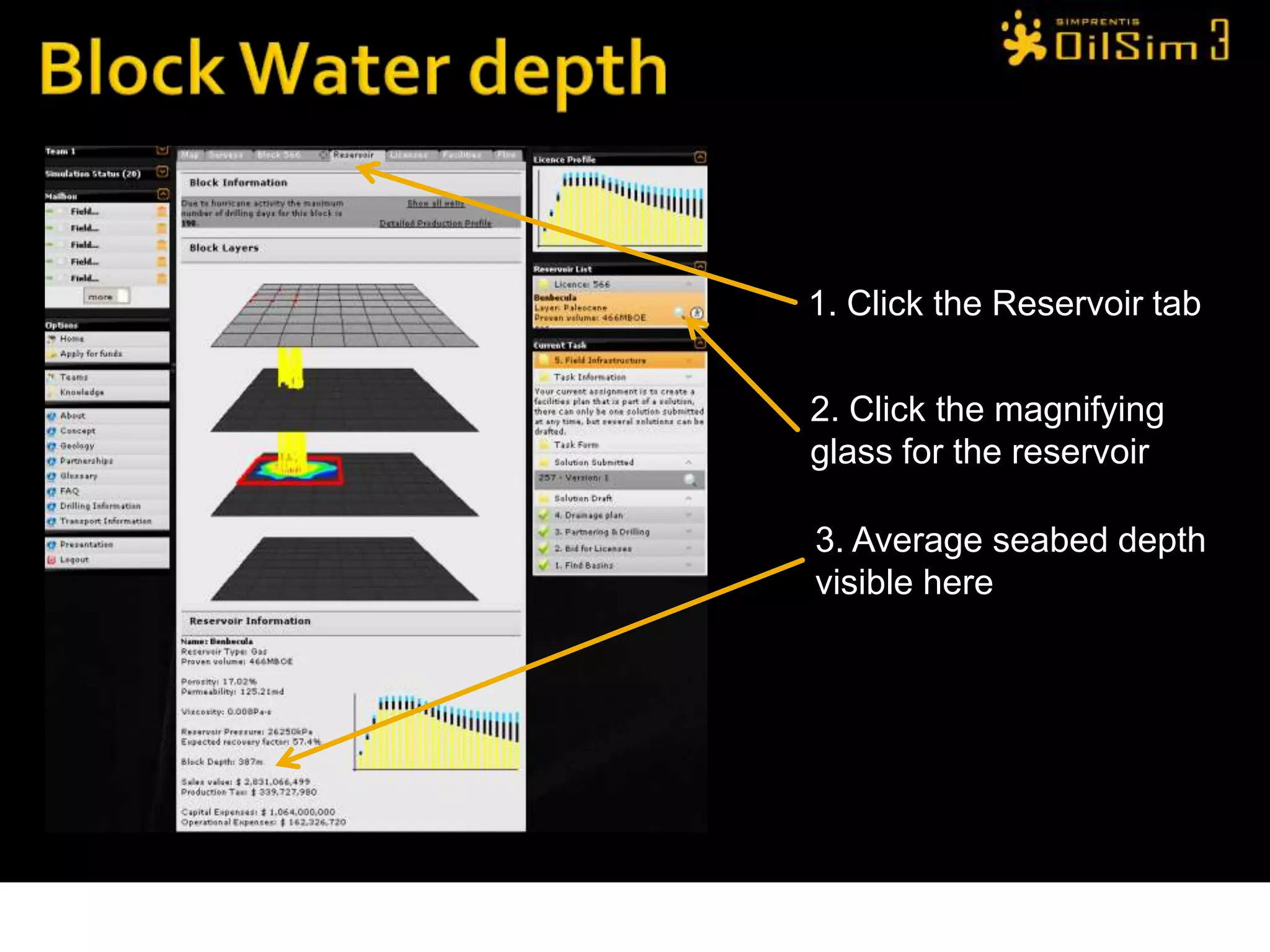
Block Water depth1. Click the Reservoir tab2. Click the magnifyingglass for the reservoir3. Average seabed depthvisible here
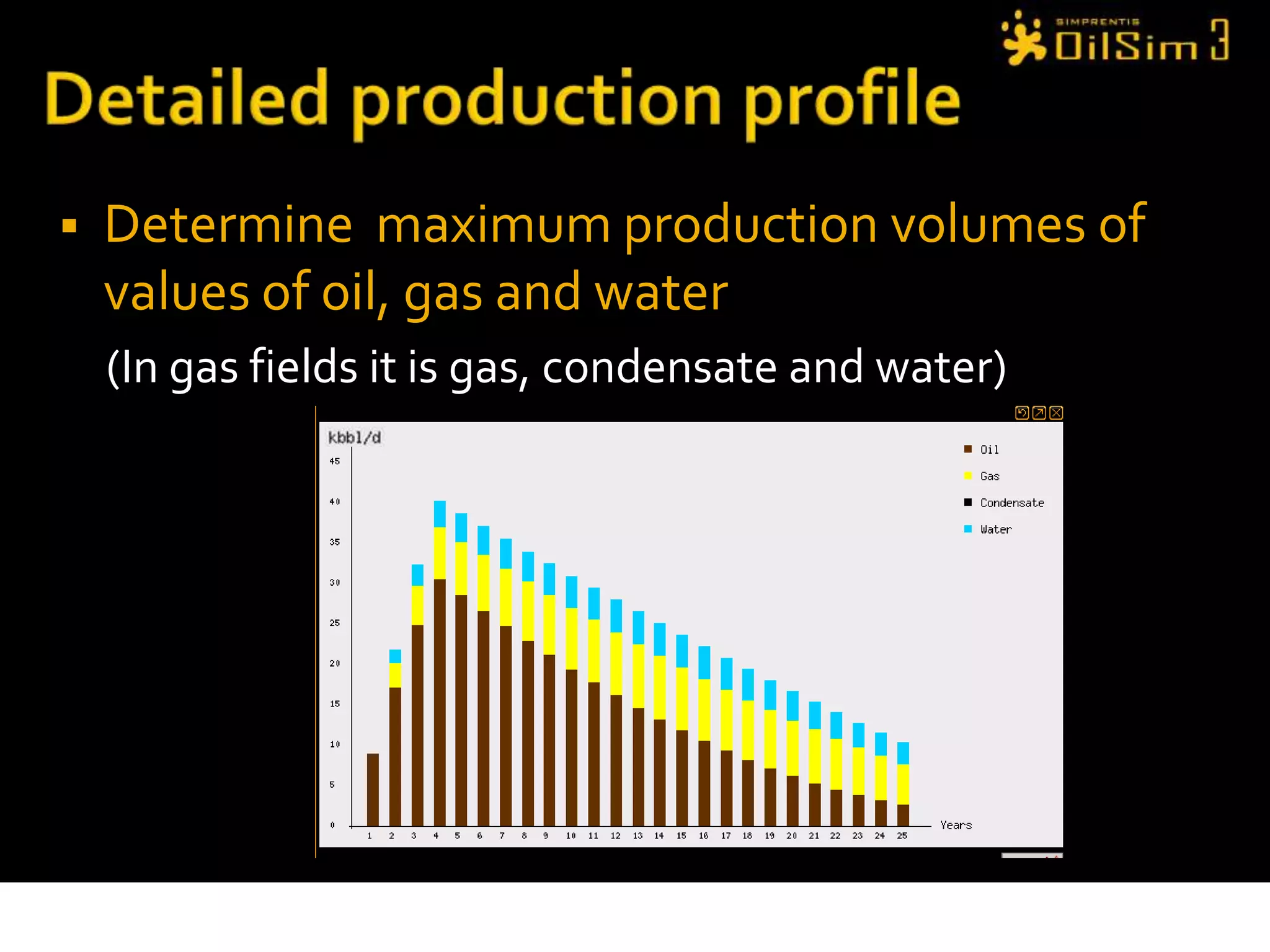
Detailed production profileDetermine  maximum production volumes of values of oil, gas and water(In gas fields it is gas, condensate and water)
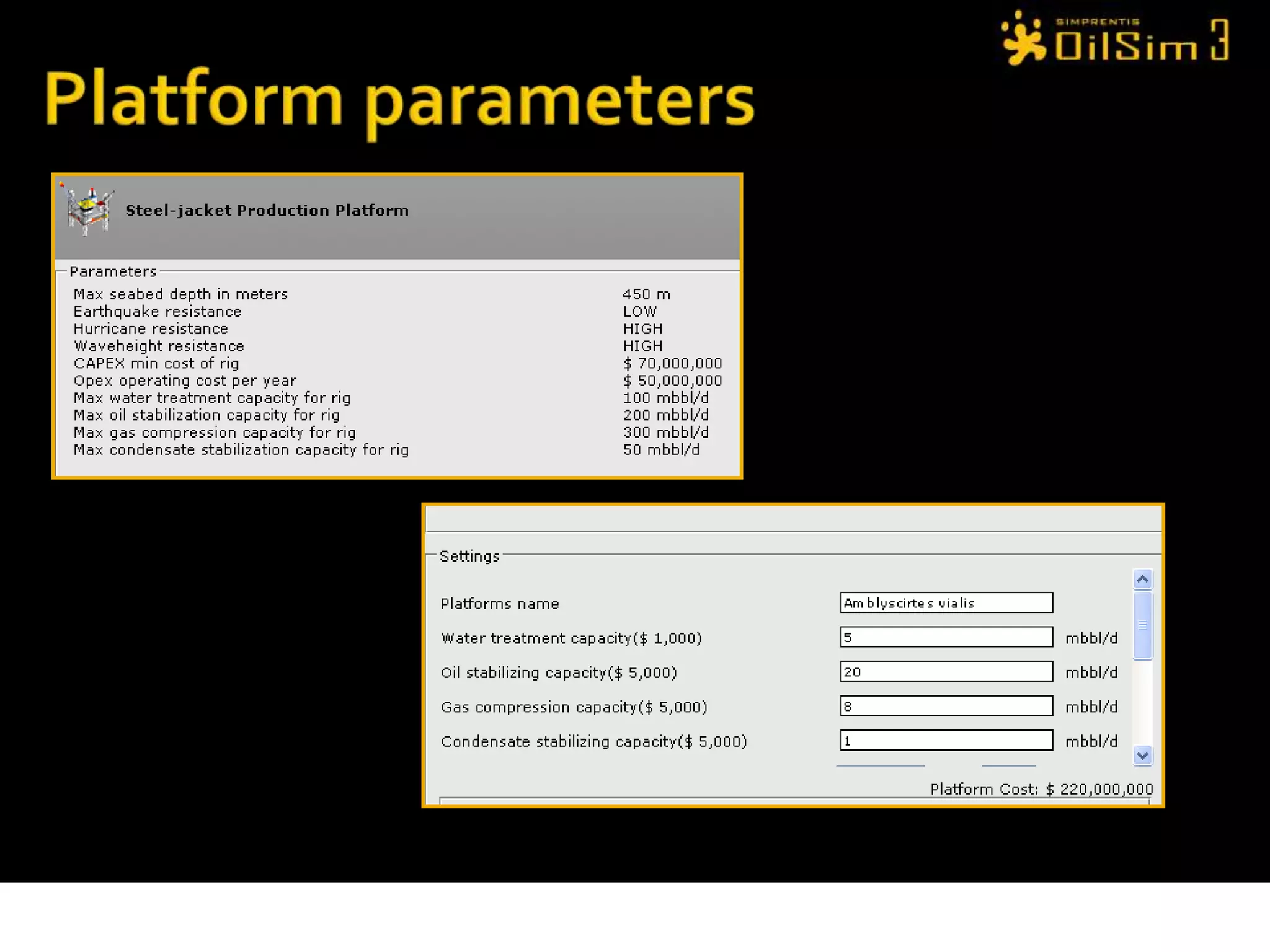
Platform parameters
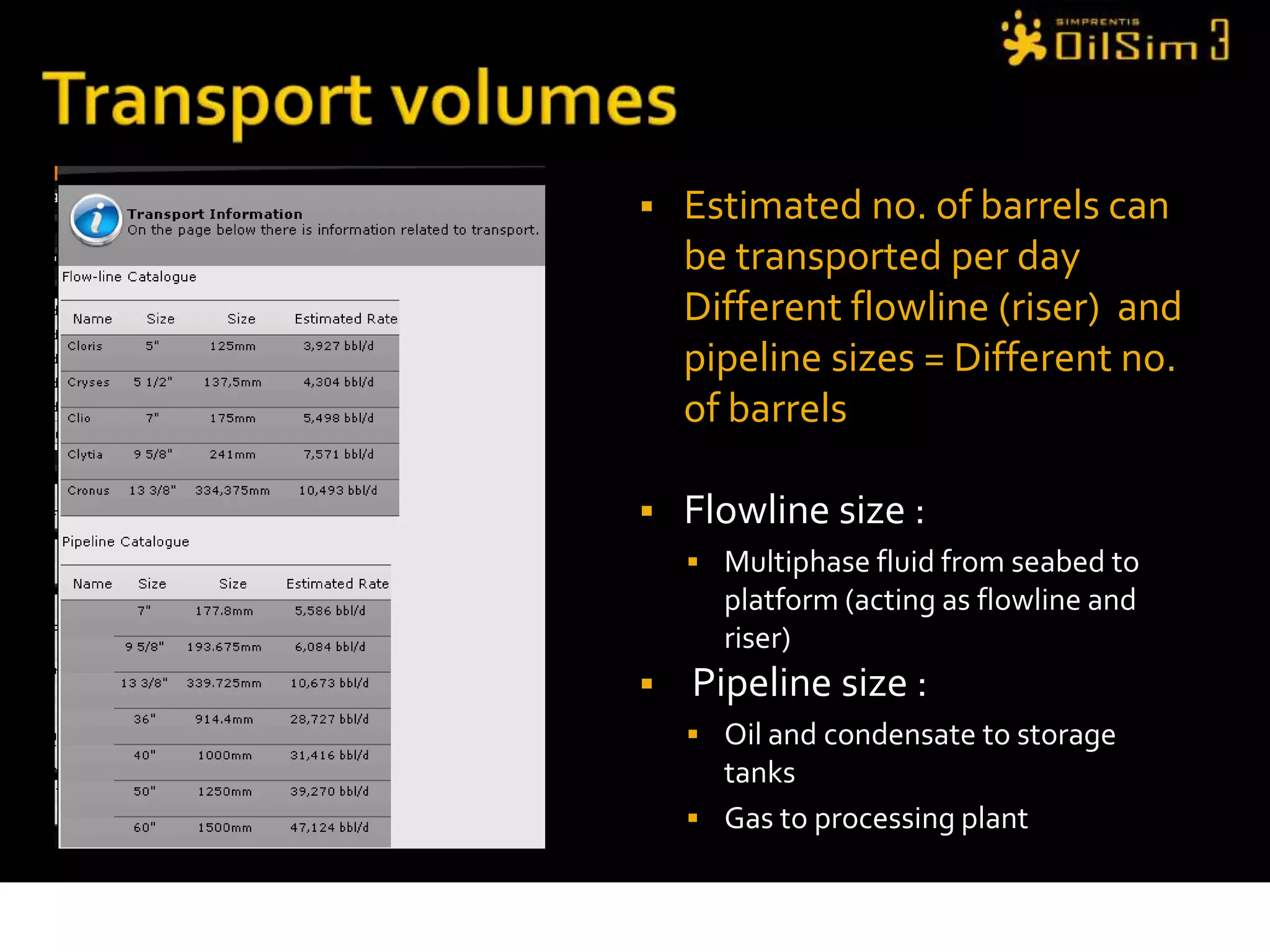
Transport volumesEstimated no. of barrels can be transported per day Different flowline (riser)  and pipeline sizes = Different no. of barrelsFlowline size :Multiphase fluid from seabed to platform (acting as flowline and riser)  Pipeline size :Oil and condensate to storage tanksGas to processing plant
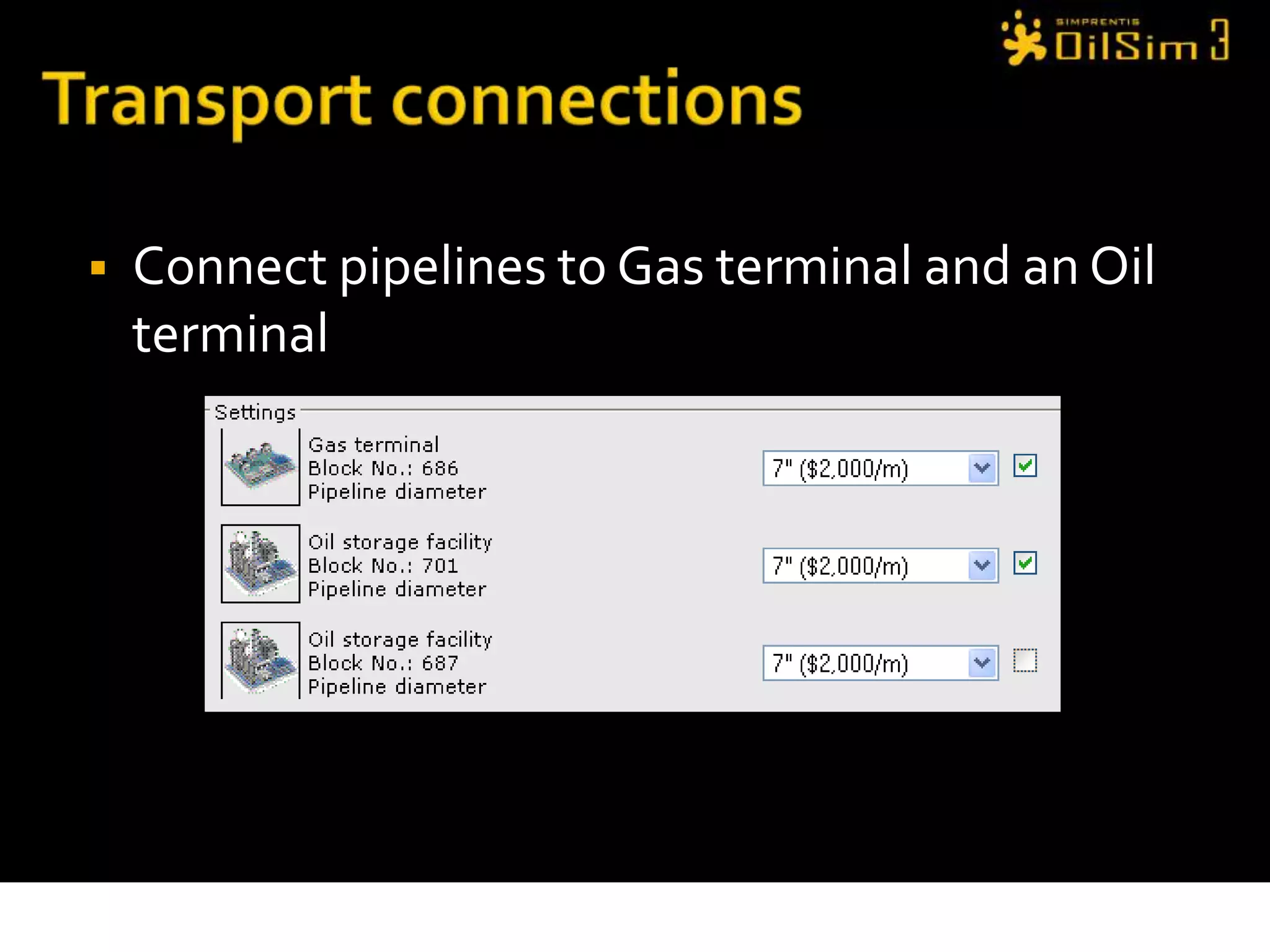
Transport connectionsConnect pipelines to Gas terminal and an Oil terminal
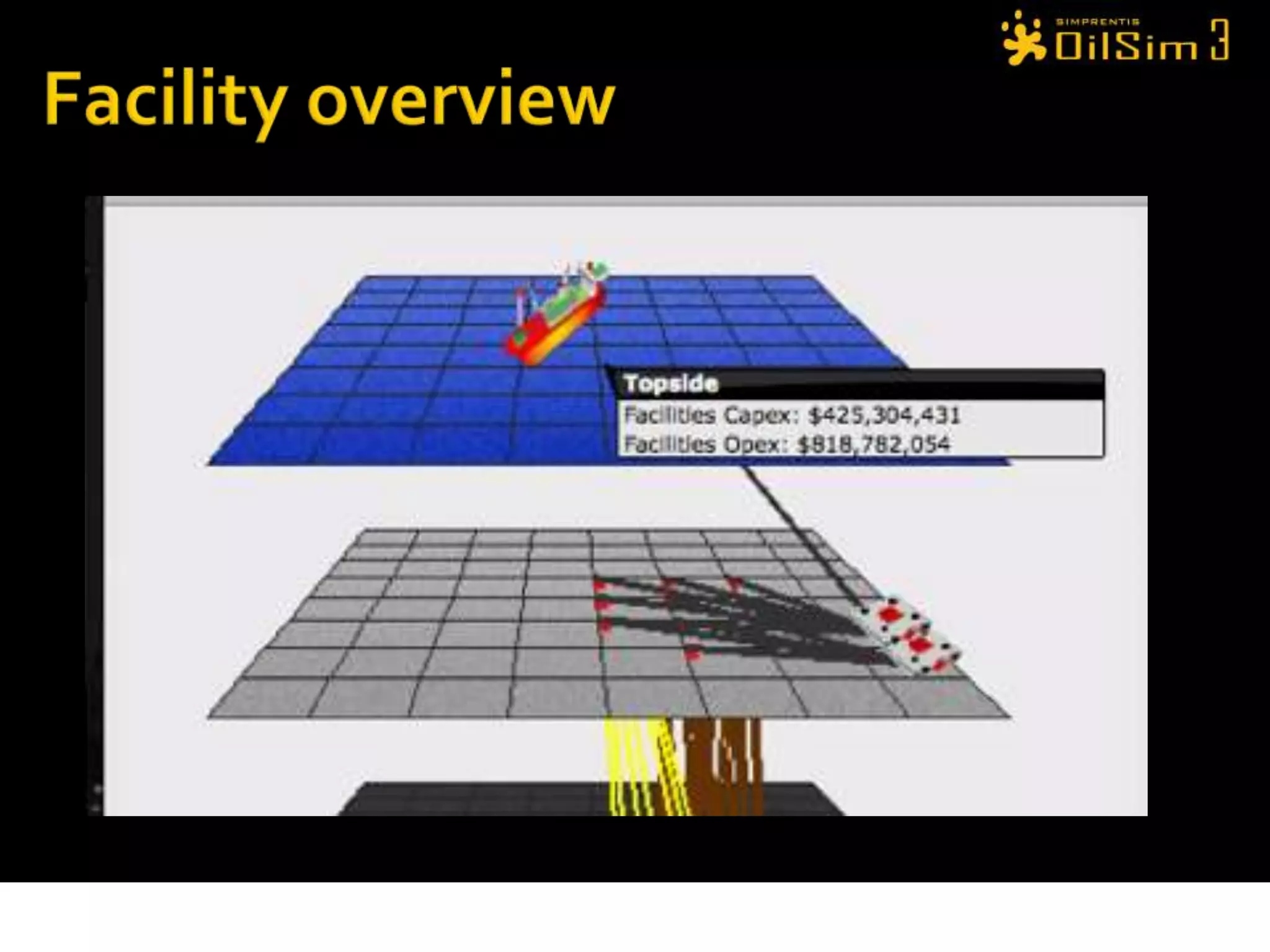
Facility overview
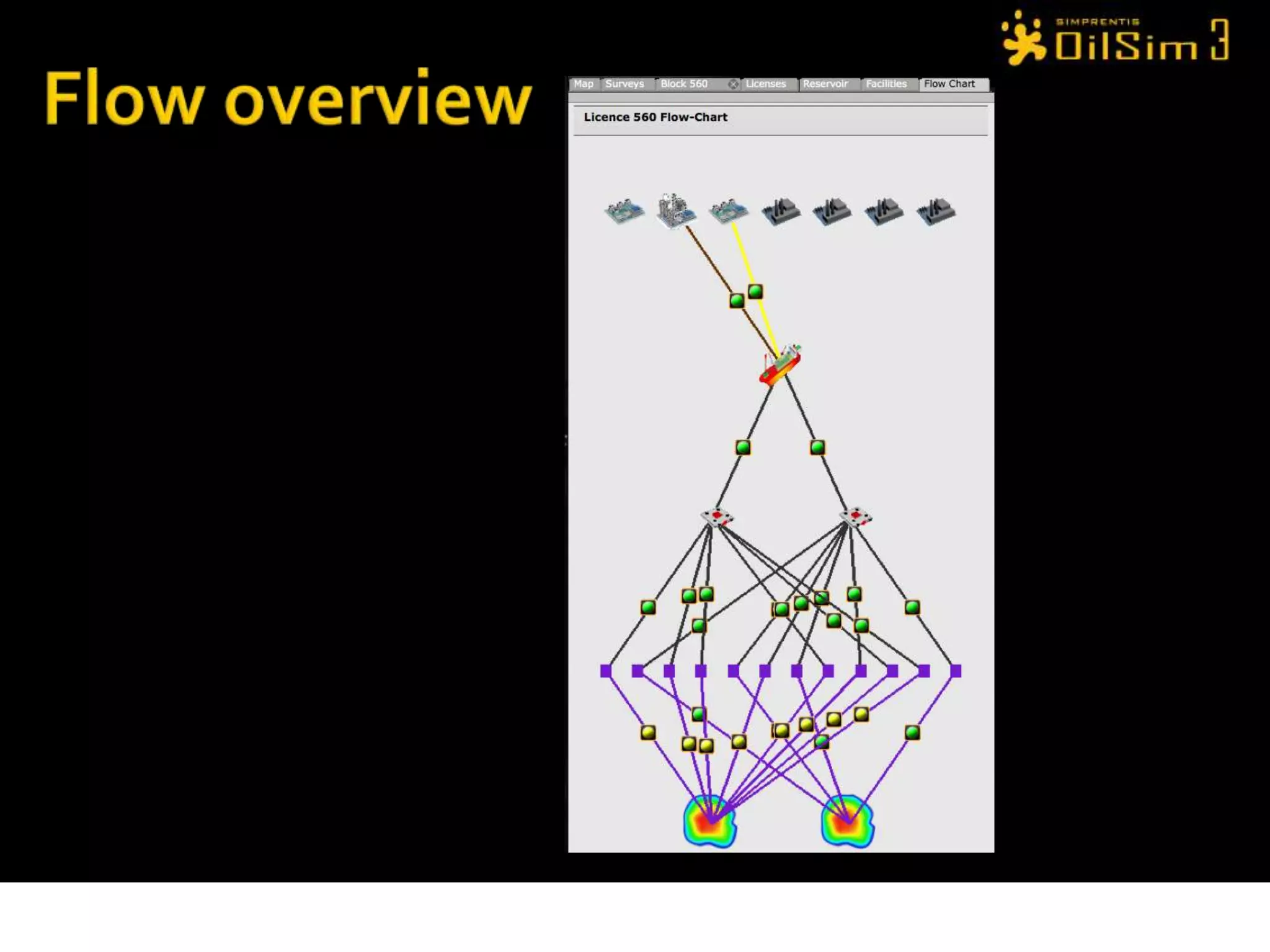
Flow overview
ChallengePlan the construction of facilities required to operate your platformSubmit a financial summary of the plan Execute construction planMinimize capital expensesAmend construction plan as issues occurGet to FIRST oil!
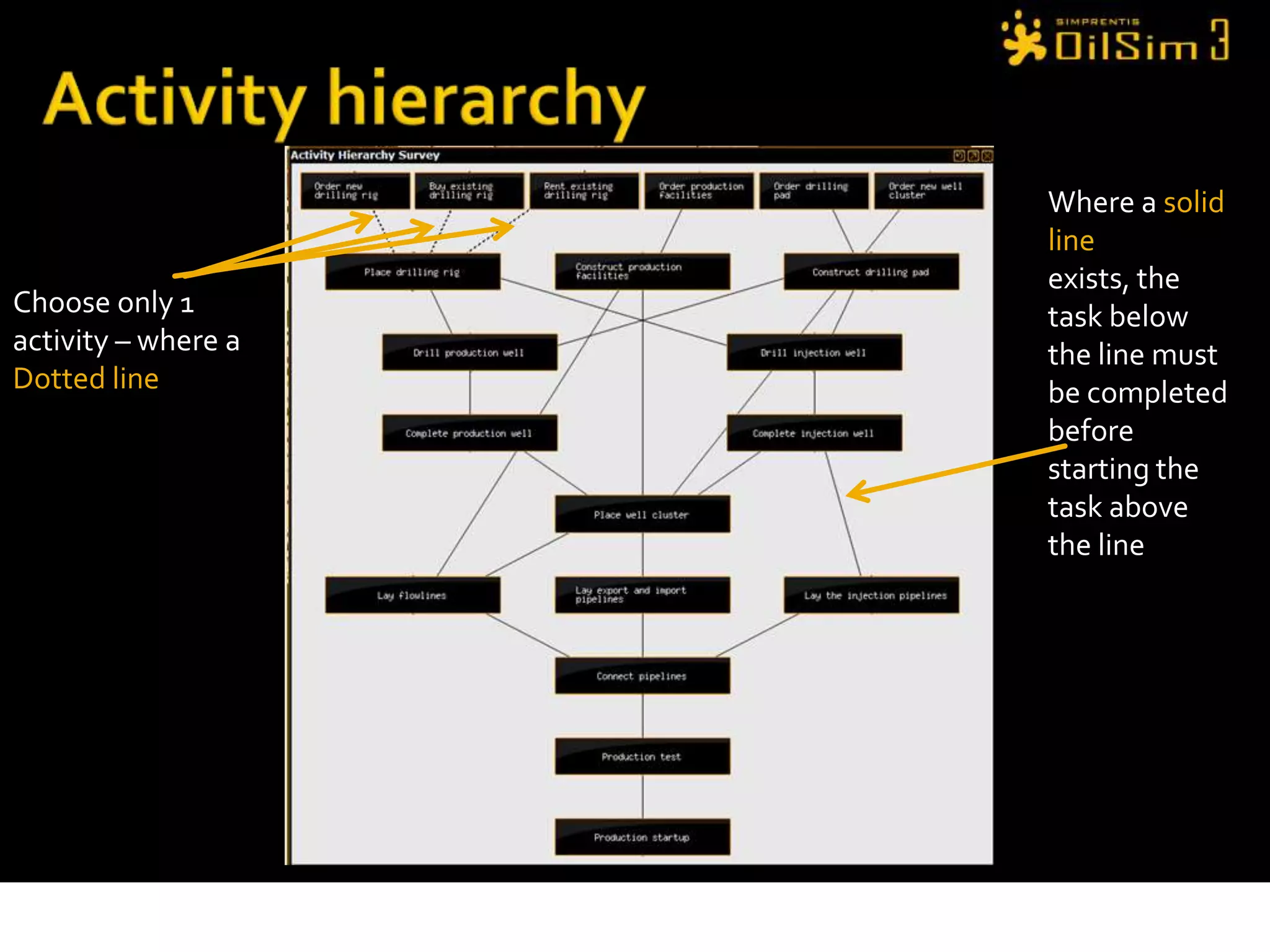
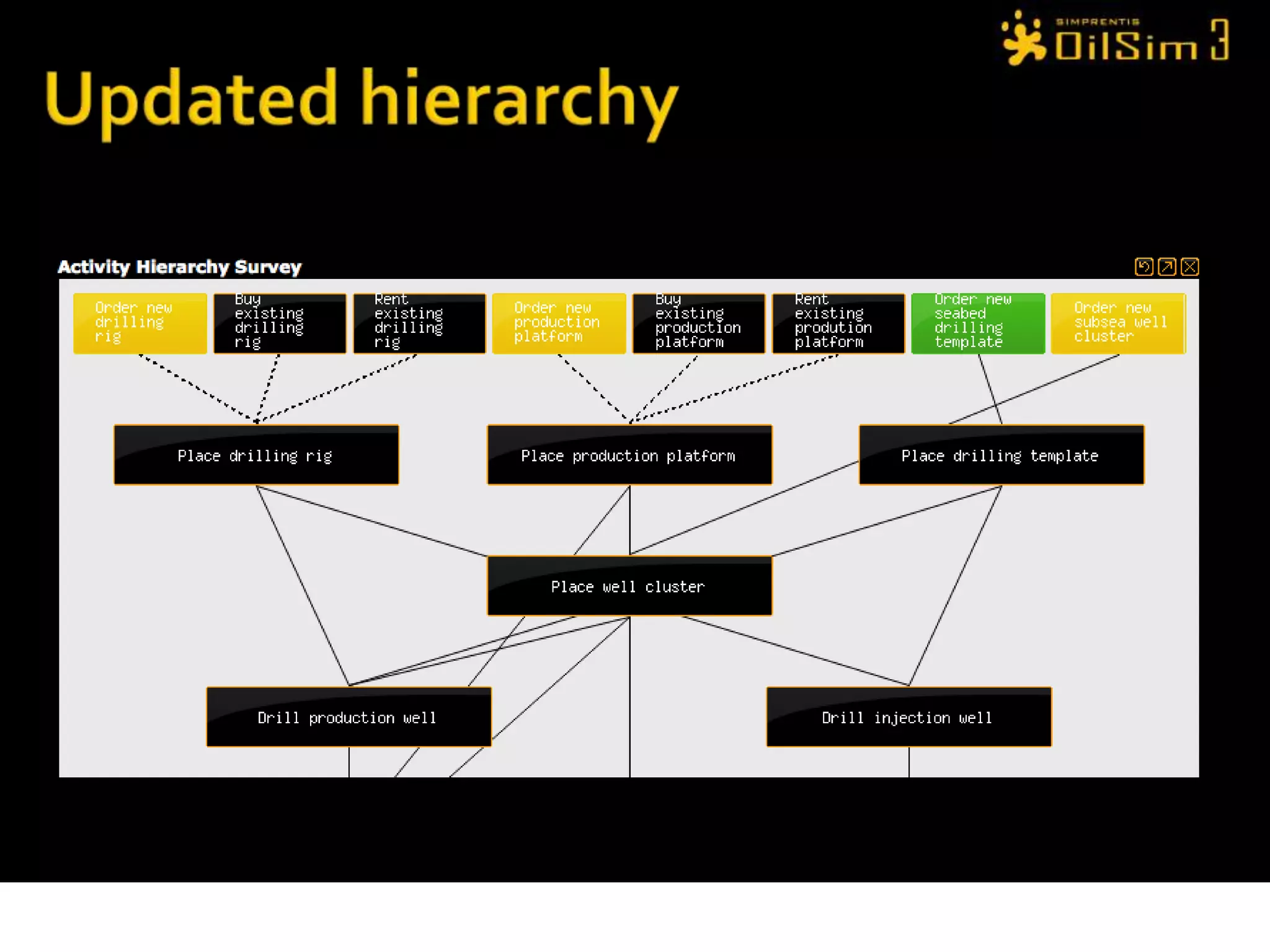
Activity hierarchyWhere a solid line exists, the task below the line must be completed before starting the  task above the lineChoose only 1 activity – where a Dotted line
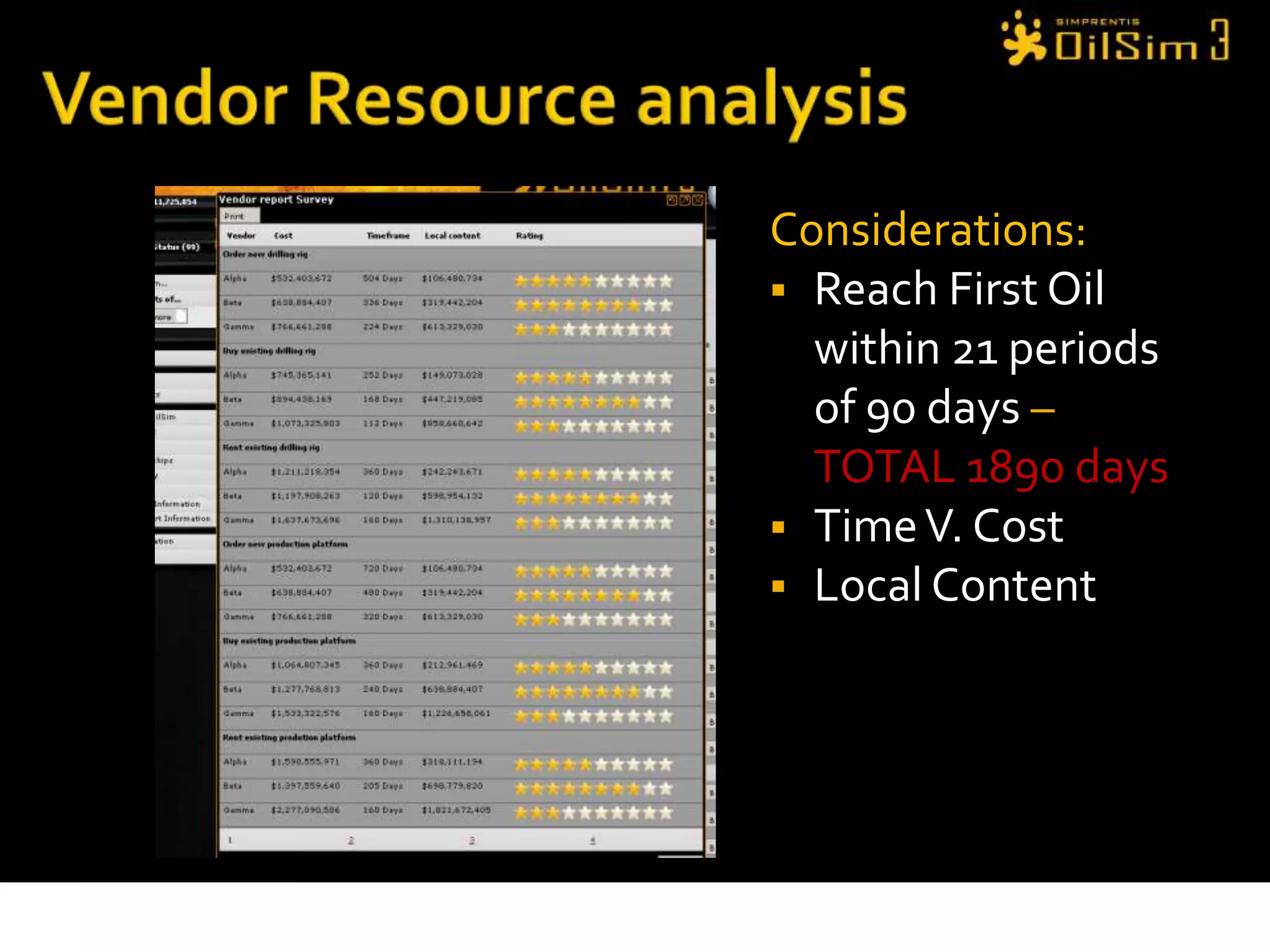
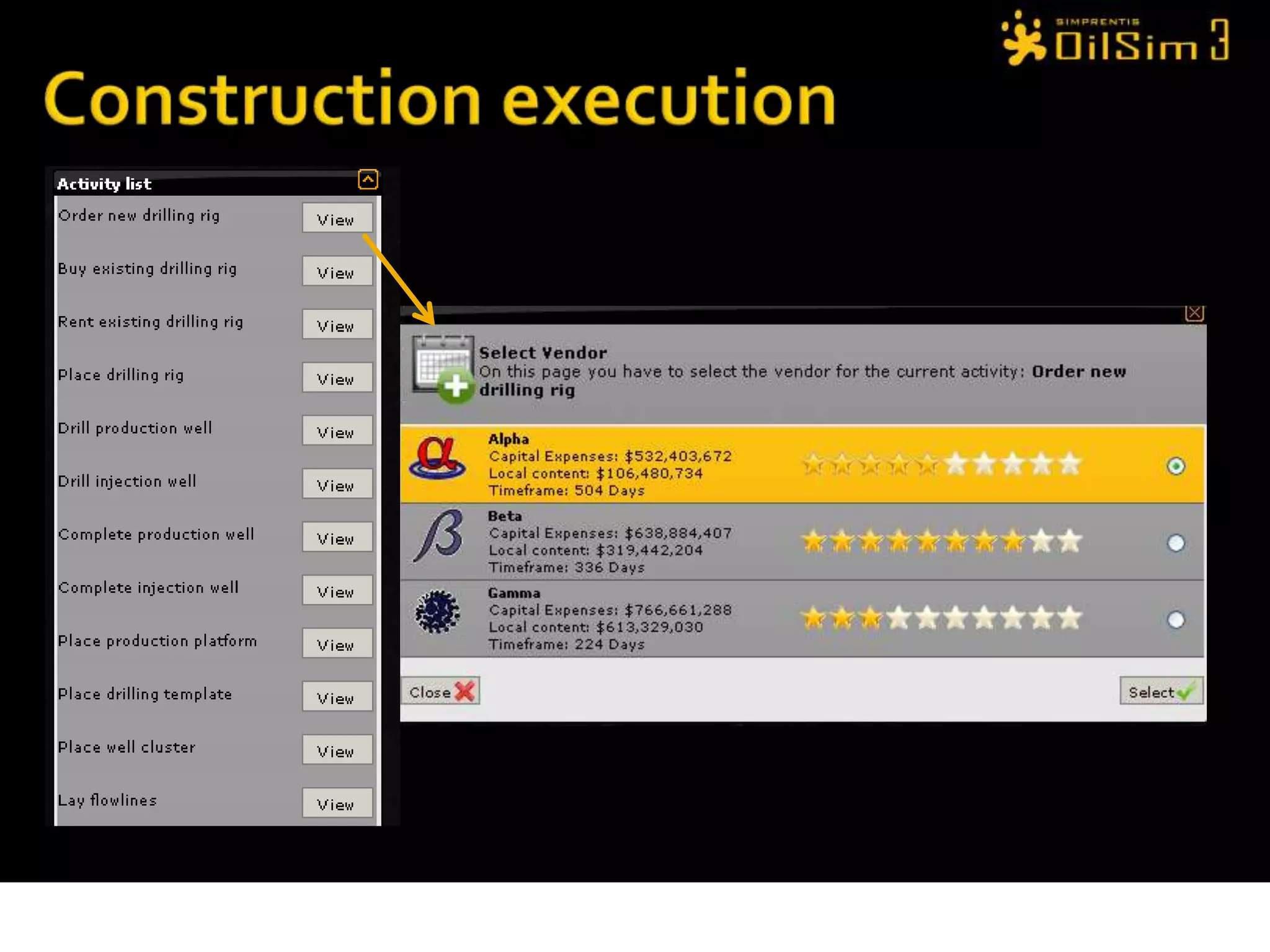
Vendor Resource analysisConsiderations:Reach First Oil within 21 periods of 90 days – TOTAL 1890 daysTime V. CostLocal Content
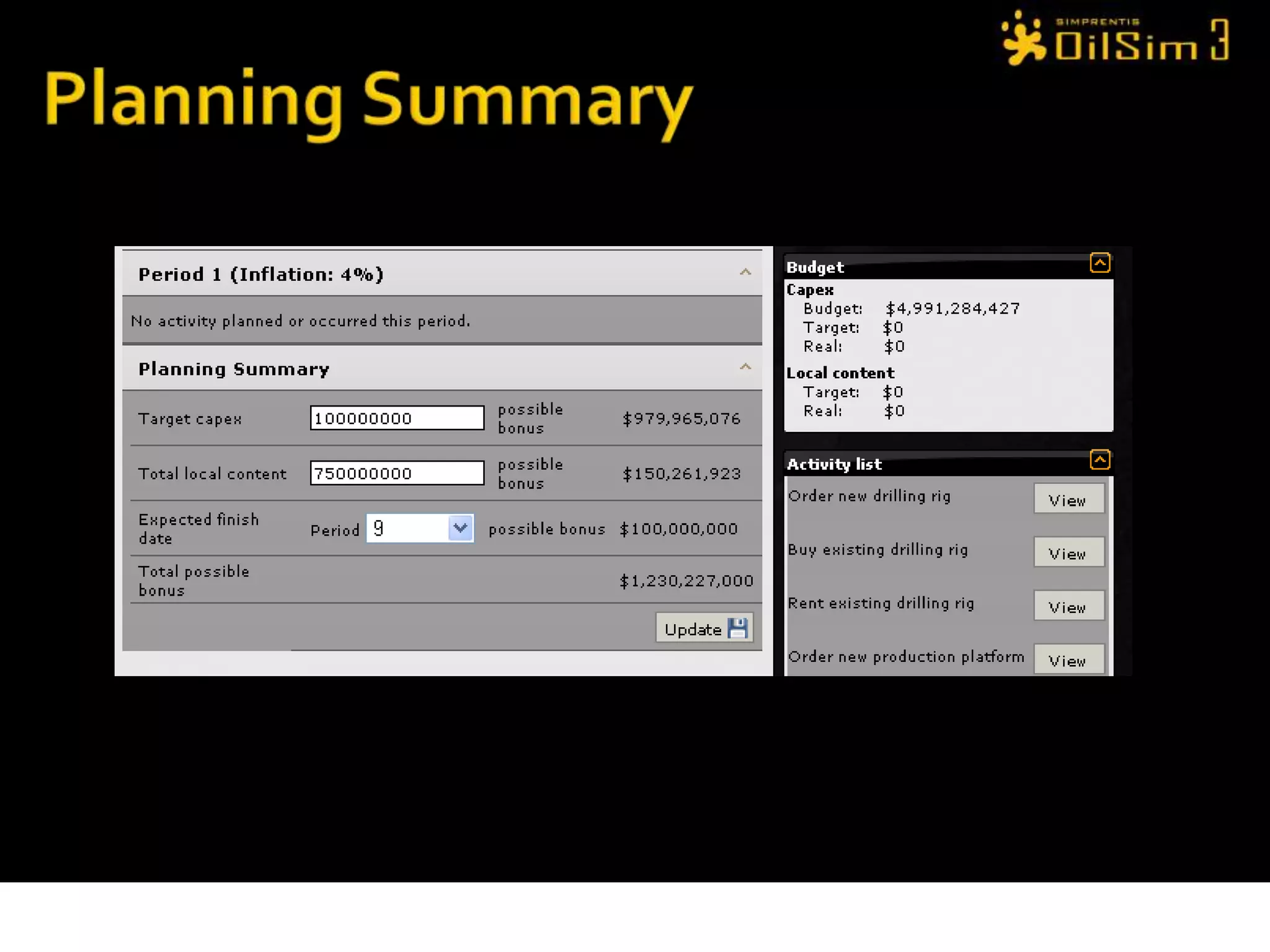
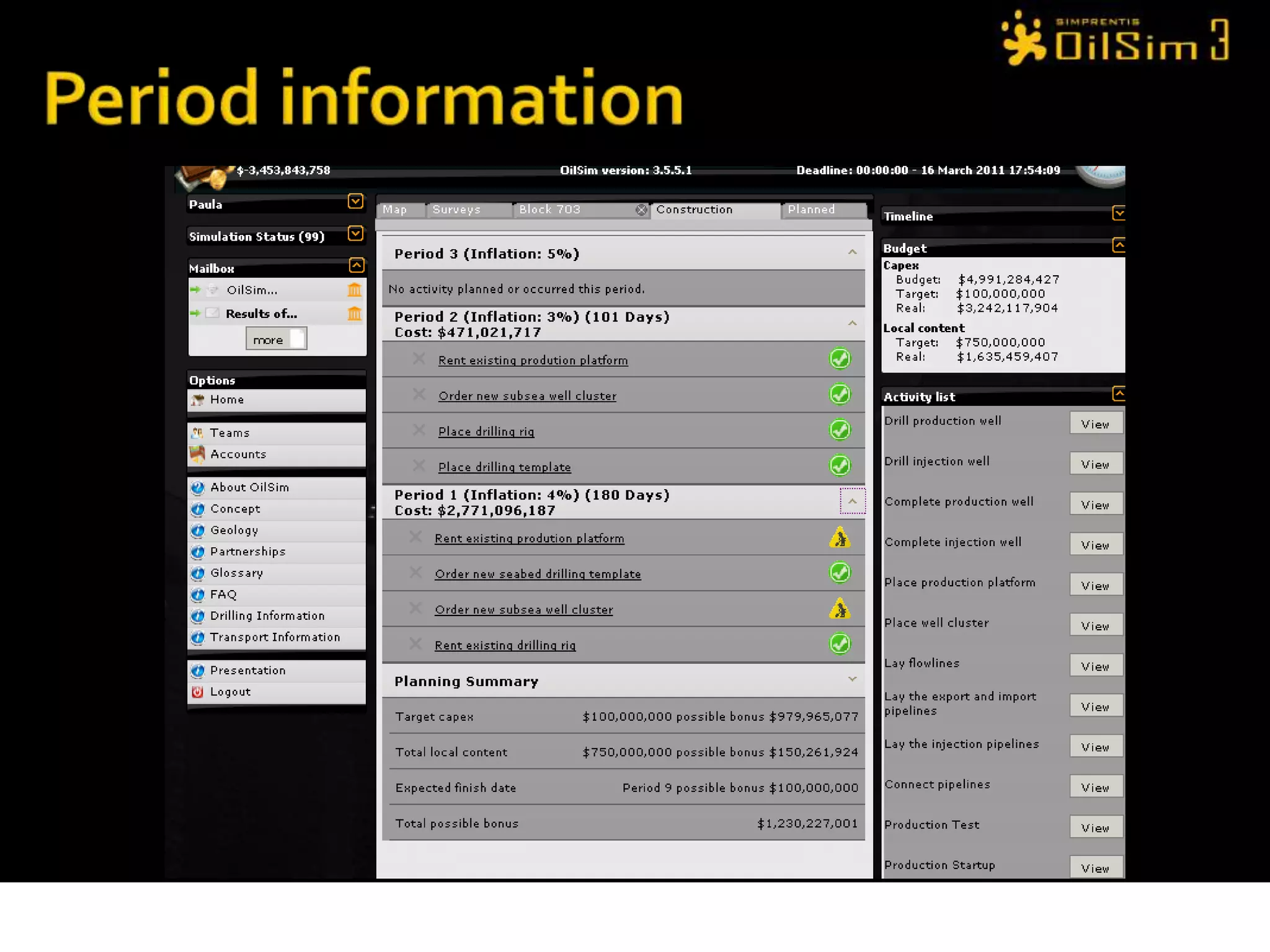
Planning Summary
Construction execution
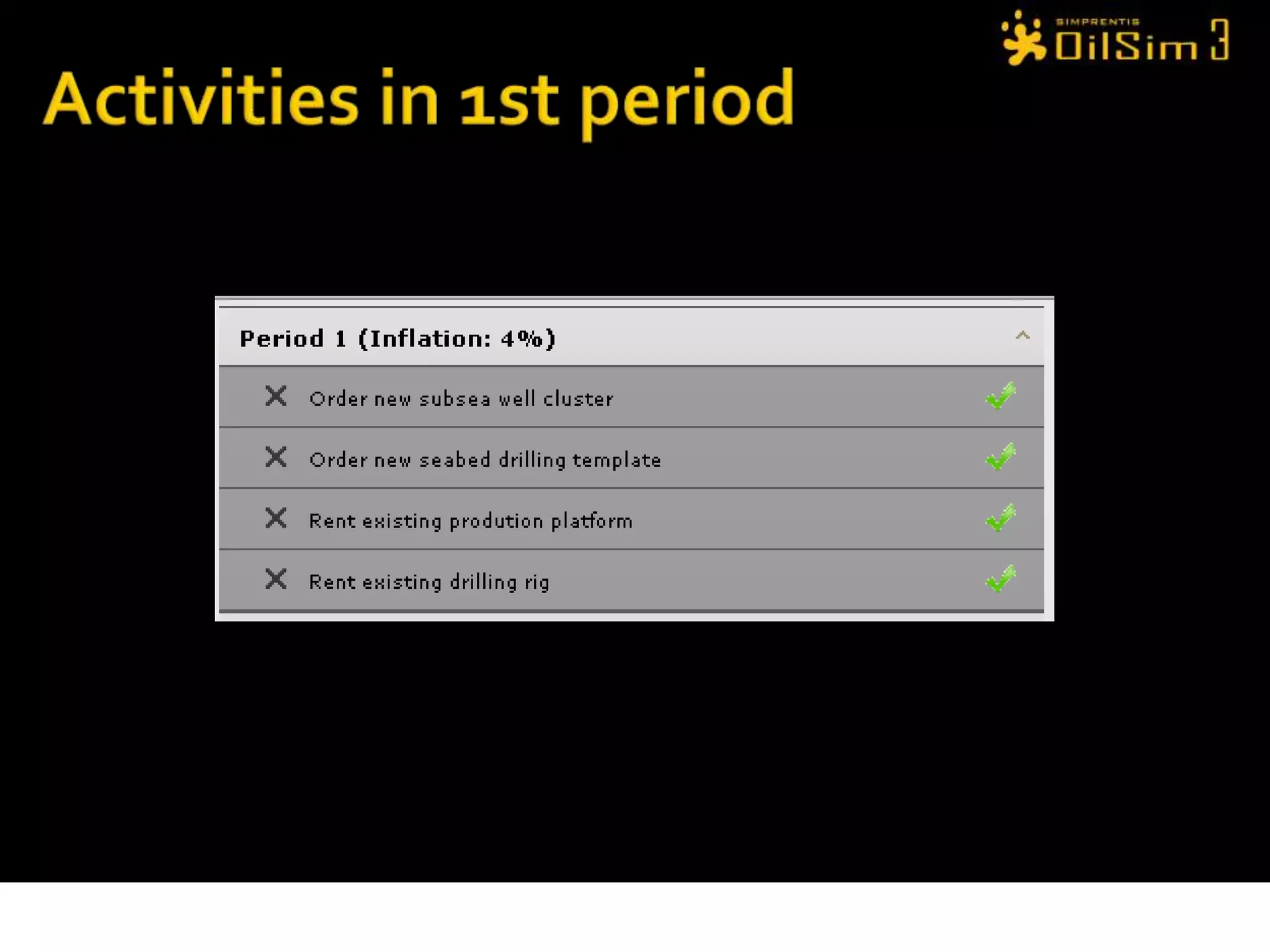
Activities in 1st period

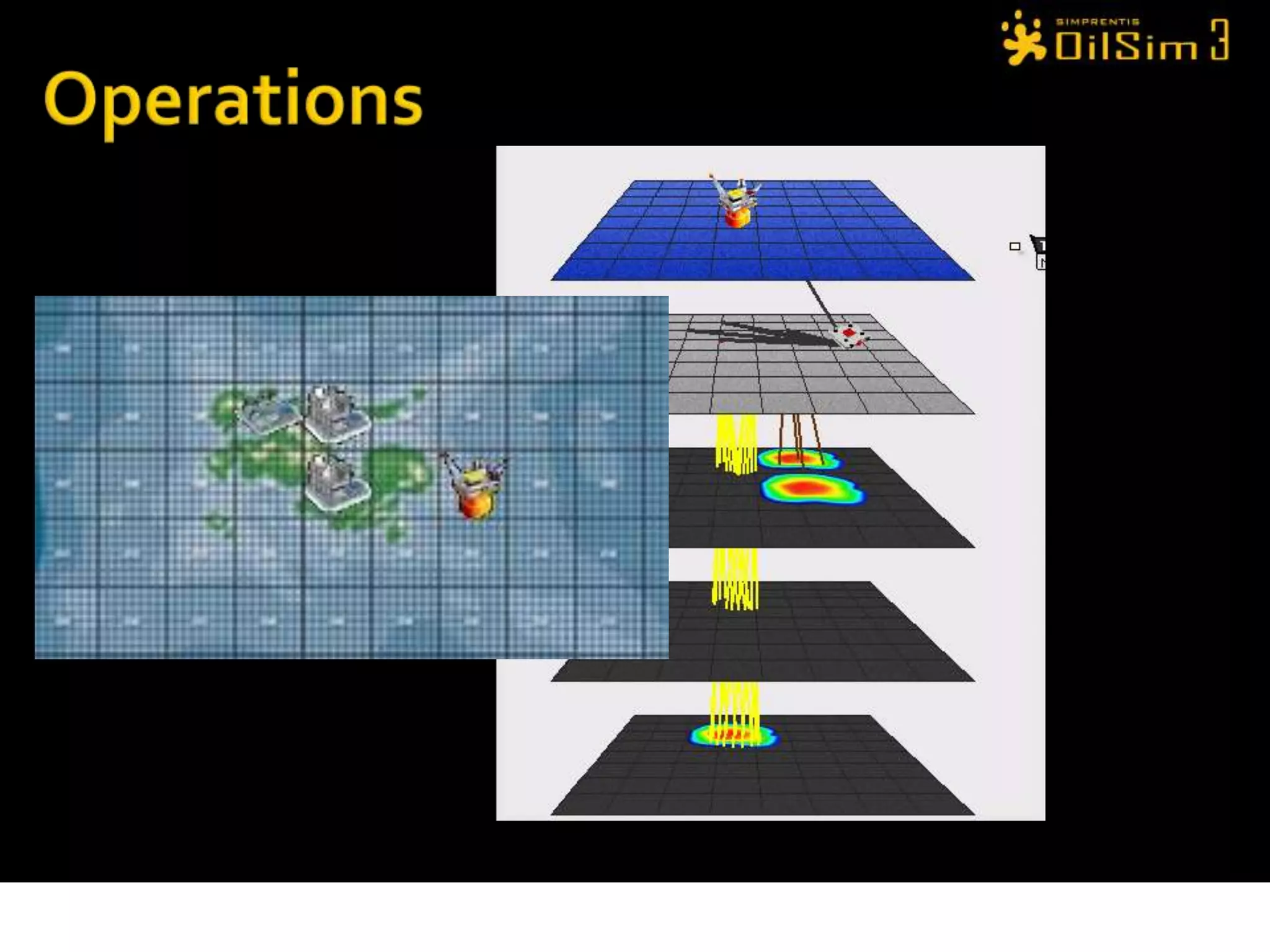
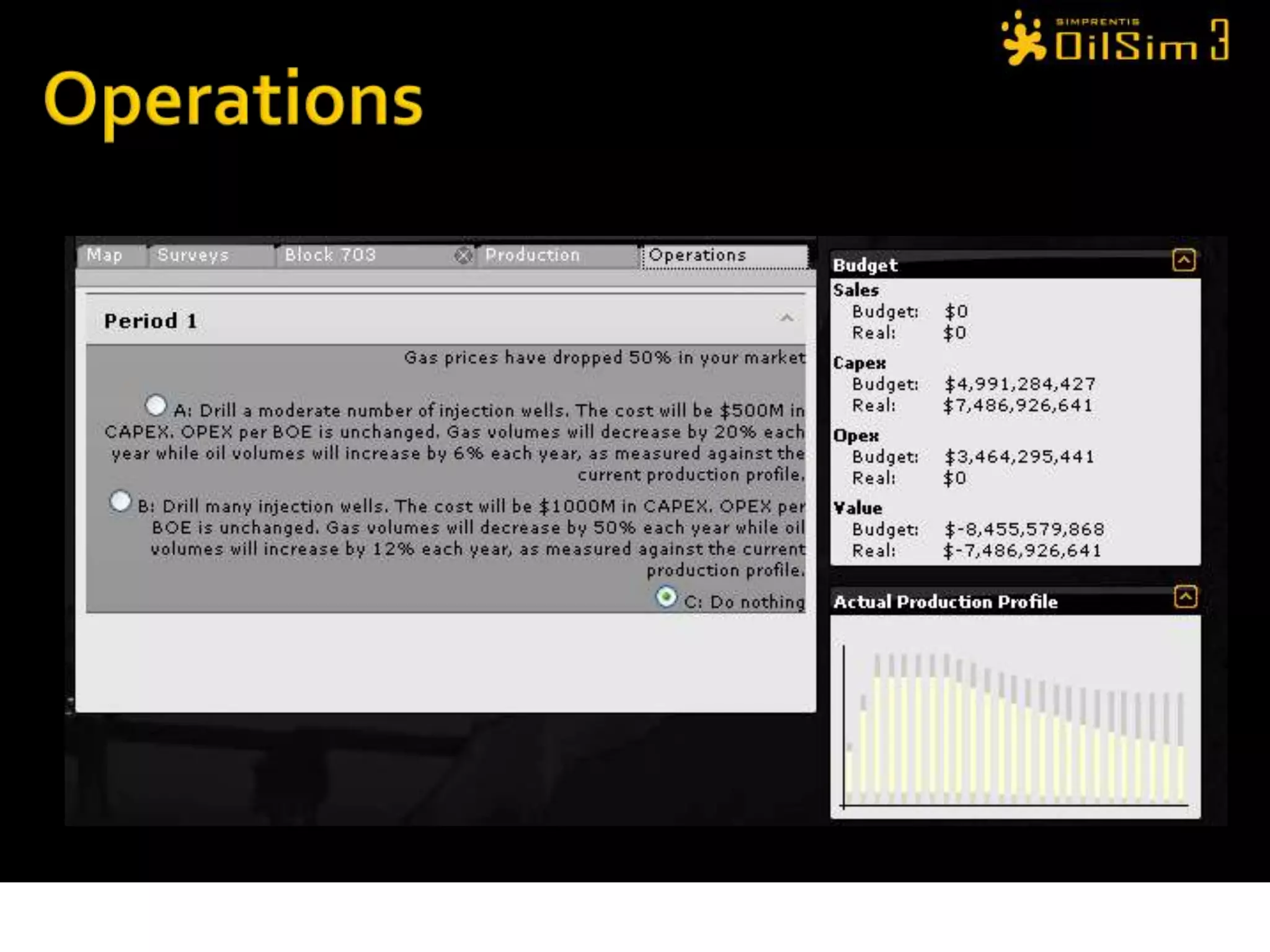
Offshore ppt e&p

  • 1.
    OilSim – Anoverview of the Oil and Gas Upstream value chain
  • 2.
  • 3.
  • 4.
  • 5.
    Additional knowledge/skillsEnvironmental issuesTeamwork and negotiation Critical decision making, analytical skills, multi-taskingLearn through experienceEconomically viable volumes- reducing uncertaintyReturn on InvestmentFunction appreciation
  • 6.
    Money and CredibilityYoustart with $700 millionYou can apply for more money later.Create valueMeasured by the net value of the oil and gas fields discovered MINUS all costs involved.Correct answers and sensible decisions are awarded with CPs
  • 7.
    Oil and GasValue ChainComplete Value ChainUpstream
  • 8.
  • 9.
  • 10.
    MapColumns e.gC1, and C54, Rows e.g. R35 and R163,BlockBlocks are divided into smaller cellse g. R1C1
  • 11.
    First taskChallenge: Findthree sedimentary basins in the area. Basins are sedimentary rocks in the deep subsurface where oil and gas has been generated.Procedure: Buy and study magnetic and gravimetric surveys; and to submit the coordinates, column and row number for each basin centre.
  • 12.
    Gravimetric surveysGravimetric surveysshow the gravity in the sub-surface. Measured by airborne sensors.Sedimentary rocks have lower densities than the surrounding crystalline rocks. Low gravitational pull means high probability of a basin below.Basins have a lower gravitational pull. Crystalline rocks have higher gravitational pull
  • 13.
  • 14.
    Magnetic surveysMagnetic surveysshow similar information as gravimetric surveys. The sedimentary rocks in the basins have a lower concentration of magnetic materials than the surrounding crystalline rocks.Sedimentary basins are the areas with the lowest magnetic field.Basins have low magnetic fieldNon-basins have high magnetic fields.
  • 15.
  • 16.
    Centre may notbe the sameExample:Top basin on both maps Calculate the midpoint between the gravimetric and magnetic centres found= C55 and R105C50R100C60R110
  • 17.
  • 18.
  • 19.
    Centre Midpoint calculation3centres – one Centre midpoint for each basinExample: C55, R105Solve before deadline. All submissions are evaluated after the deadline (and not before).You may get 0-100 CPs. All three centres must be located to get full CPs.
  • 20.
  • 21.
    Task 1 solvedAllteams have submitted their answers. Basin centres are located.Message in Inbox. All teams have answers and CPs awarded.
  • 22.
    Task 2 licenseroundSedimentary basins may contain oil and gasThe government has decided to put the blocks around one of the basins on offerChallenge: Identify the 3 most promising blocks and submit a bid to the Government for these licences
  • 23.
    Source and migration2.MIGRATION ROCKwhere hydrocarbons are driven through3. CAP ROCKImpermeable rock that stops migration of hydrocarbons1. SOURCE ROCKwhere organic material is put under sufficient pressure4. PROSPECT
  • 24.
    TrapsGeological “pockets”, thatmight contain hydrocarbons.Anticline trap(c) OLFStratigraphic trapSalt dome trapFault trap
  • 25.
    Red areasYou willnot be awarded blocks that contain any red spotsBlue areasBlocks in area may be awardedSpawning Grounds
  • 26.
    Common Risk SegmentCRS.Common Risk Segment surveys tell you about the probability of a structure in the block/cell containing oil or gasSurfaceLayer 3 Eocene1500m below the seabedLayer 2 Paleocene2500m below the seabedLayer 1 Cretaceous3500m below the seabed
  • 27.
    2D Seismic surveysTrapscan be found with seismic surveys2D seismic survey is a cross section of the geological layers along either a column or a row2D seismic surveys are used for locating prospects
  • 28.
    2D Seismic inOilSim UnprocessedProcessedRed is top of the sealing rockGreen is top of the reservoir rockInterpreted
  • 29.
  • 30.
  • 31.
    Order SeismicWhat typeof data do you want?Columns or Rows
  • 32.
  • 33.
    Interpreted or notOnlybuy maximum of 4 blocks of data at a time to speed up processingThe yellow hatched area on map can be clicked on and dragged to blocks of interest
  • 34.
    View the SeismicRedcircles – navigate through the 2D seismic
  • 35.
    Yellowsquare – Row1 from Column 1-56Cross-sectionsColumnRowProspect, ReservoirBasin,Source
  • 36.
  • 37.
  • 38.
  • 39.
  • 40.
  • 41.
  • 42.
  • 43.
    If equal, thenteam with highest CP winsRecap on Task 2Environmental Sensitive Areas map to see which blocks to avoidCommon Risk Segment surveys to see which blocks to examine closer2D surveys seismic to identify which ones have the most (big) structuresCheck water depth, and go for shallow water blocks if possibleRemember to submit 3 bids
  • 44.
  • 45.
    Task 2 solvedMessagesent to all teams with the resultsCredibility Points are given for prosperity of the blocks you bid forEvery team has got one exploration license
  • 46.
    Task 3 ExplorationDrillingHQ is happy with the license awarded.Challenge: Farm-out minimum 20% from your license – and farm-in as much as you can in other good licenses.Acquire 3D Seismic interpretations for the block you operate, and study the results from the licensing roundGet others to invest 20% or more in your license – you can show/send 3D seismic
  • 47.
    Real 3D SeismicShowsthe subsurface structure in a cube.
  • 48.
    3D Seismicin OilSimLayer3 EoceneLayer 2 PaleoceneLayer 1 Cretaceous
  • 49.
    PartnershipsSpread the risk:e.g Investing in other blocks divides the risks amongst all partners, much more preferable than keeping 100% of one field and all the risk.Increase probability of profit: investment in only 1 field which could be a dry prospect is possible, whereas the likelihood of investing in 5 fields which are all dry is unlikely.
  • 50.
  • 51.
    Farm-inEnter the percentageand total amount for have agreed to offer
  • 52.
  • 53.
    Add a messageto the seller
  • 54.
    Press “Send offer”Farm-inWhena team receives a Farm-In offer to appears under Financing. This is where a team can receive finance or money for a % of their own blocks
  • 55.
    Farm-inlicense OWNER decideswhether to ACCEPT or REJECT the offerPartnerships established every time a license owner accepts an offer.Overview: On the main page, you can see all licenses. 1) licenses you operate, 2) licenses you have invested in, and other licenses.
  • 56.
    Farm-inAll your farm-inoffers to other teams are shown under “Investing” on the right-hand side of the homepage . This is where a team offers investments to other teams for a % of their blocks
  • 57.
    PartnershipsPartners pay aproportional share of all future costsPartners receive a proportional share of the net proceeds from oil and gasThe operator team makes all decisions regarding drillingTeams can farm-out up to 70% of licenceOperators must keep 30% of licence
  • 58.
    Water depthBefore choosinga rig, you need to check your water depth Find this at the bottom of the BLOCK page
  • 59.
    Choose RigChoose theright rigs for your water depthsJack-up rigs for shallow watersSemi-submersible rigs for middle watersDrillships for the deepest waters Rig cost = drilling days * day rate
  • 60.
    Service ProvidersUpto 9Star quality-Good: normally costs moreBad: cheaper, but reliability is low, so you risk extra drilling time and extra costs
  • 61.
    Environmental Impact AssessmentEIAsurvey: more knowledge about the area.Less probability for drilling problems.Less severe consequences if you run into problems.= Which drilling locations to avoid.
  • 62.
    Drill PositionEIA: enviromentalimpact analysis shows where it will cost you more to drill.Place your mouse where to drill
  • 63.
    Drilling PositionLayer 3EoceneLayer 2 PaleoceneLayer 1 Cretaceous
  • 64.
  • 65.
    Estimated costOil spillor Gas Blowout controlEstimated cost
  • 66.
    DrillingResultVolume Range inMBOE countsTest may increase Proven MBOE if oil or gas found
  • 67.
  • 68.
  • 69.
  • 70.
  • 71.
  • 72.
  • 73.
    Narrowing rangesExploration well:0to 1572 MBOE (after drilling)11 to 1266 MBOE (after testing)First appraisal well:25 to 1033 MBOE (after drilling)34 to 910 MBOE (after testing)Second appraisal well:65 to 850 MBOE (after drilling)101 to 752 MBOE (after testing)Only proven MBOE counts
  • 74.
    Drilling SummaryAfter yourfirst drill in each well, reprocess seismicDecide which discoveries to drill how many appraisal wells intoUltimately, you should either:Get a positive net present value,Or a conclusion that additional appraisal wells will not result in a net present value
  • 75.
    Apply For MoreFundsClick on Apply for More Funds Tab. 1 CP for each $100,000 applied for.Answer the questions: All correct gives cash and you can keep CPs. One wrong gives cash and you keep ½ of your CPs. Two wrong gives ½ cash and you lose all CPs. All wrong, you get no cash and lose all CPs.Expensive money if less than 10 Credit points: Apply for cash and be fined $5million for each $20million requested.
  • 77.
    ChallengeMake a wellplan for each reservoir in your block, choosing:Number of production wellsTubing sizeAiming to choose a plan that maximises value of blockIncreased sales valueDecreased drilling costs
  • 78.
    Where to findthe surveysClick the Surveys tabNodal analysisExpected Production Profile
  • 79.
    Nodal analysisRead themaximum well flow rate
  • 80.
    Most suitable TubesizeMost suitable tubeHighest well flow rate
  • 81.
  • 82.
    Reservoir information1. Clickthe Reservoir tab2. Click the magnifyingglass for the reservoir3. Study the data forthe reservoir
  • 83.
    Production WellsClick onDrilling RigReservoir Information
  • 84.
  • 85.
  • 86.
    Improve value –revise well planSubmit plans with different number of wells and tubing sizesReview Reservoir information after each revised plan Aiming to maximize sales value and minimize drilling costs, whilst increasing Recovery FactorYou can amend your well plans until the deadlineCredibility points – upto 100 kp if plans are optimal for all your reservoirsAfter deadline – Value of Licence will be adjusted based on final Well Plan submitted
  • 88.
    ChallengePlan the facilitiesto produce the oil and gas that has been found in the blockMaximize the value of the license blockMaintain sales valueDecrease facilities costsReduce risk
  • 89.
  • 90.
  • 91.
    Impact of discountrateValue Shown = income less expensesDiscount factors: 0%-20%0%5%20%189M118M48M
  • 92.
    Block Water depth1.Click the Reservoir tab2. Click the magnifyingglass for the reservoir3. Average seabed depthvisible here
  • 93.
    Detailed production profileDetermine maximum production volumes of values of oil, gas and water(In gas fields it is gas, condensate and water)
  • 94.
  • 95.
    Transport volumesEstimated no.of barrels can be transported per day Different flowline (riser) and pipeline sizes = Different no. of barrelsFlowline size :Multiphase fluid from seabed to platform (acting as flowline and riser) Pipeline size :Oil and condensate to storage tanksGas to processing plant
  • 96.
    Transport connectionsConnect pipelinesto Gas terminal and an Oil terminal
  • 97.
  • 98.
  • 100.
    ChallengePlan the constructionof facilities required to operate your platformSubmit a financial summary of the plan Execute construction planMinimize capital expensesAmend construction plan as issues occurGet to FIRST oil!
  • 101.
    Activity hierarchyWhere asolid line exists, the task below the line must be completed before starting the task above the lineChoose only 1 activity – where a Dotted line
  • 102.
    Vendor Resource analysisConsiderations:ReachFirst Oil within 21 periods of 90 days – TOTAL 1890 daysTime V. CostLocal Content
  • 103.
  • 104.
  • 105.
  • 106.
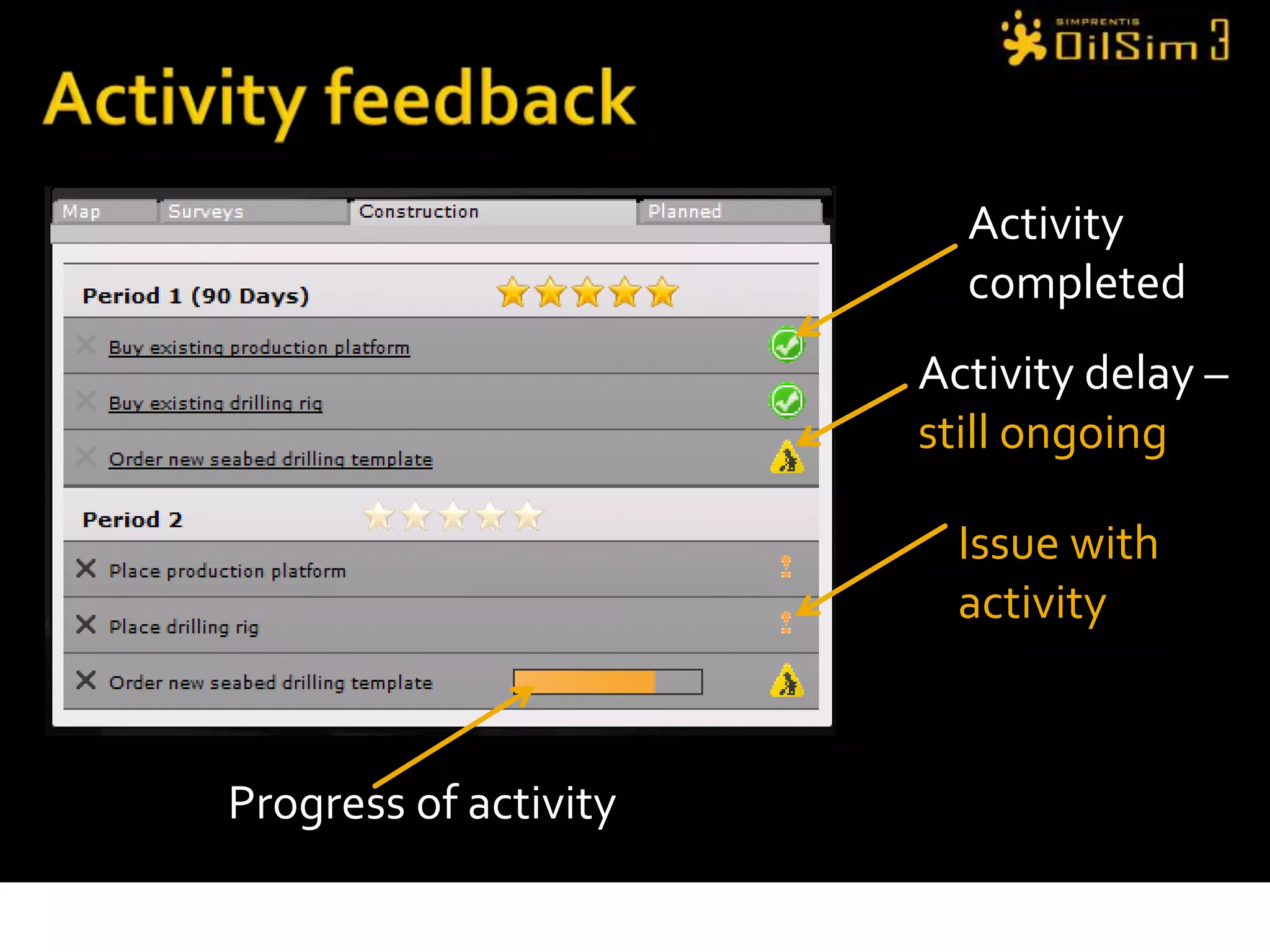
    Activity feedbackActivity completedActivitydelay – still ongoingIssue with activity Progress of activity
  • 107.
  • 108.
  • 109.
  • 110.
  • 111.
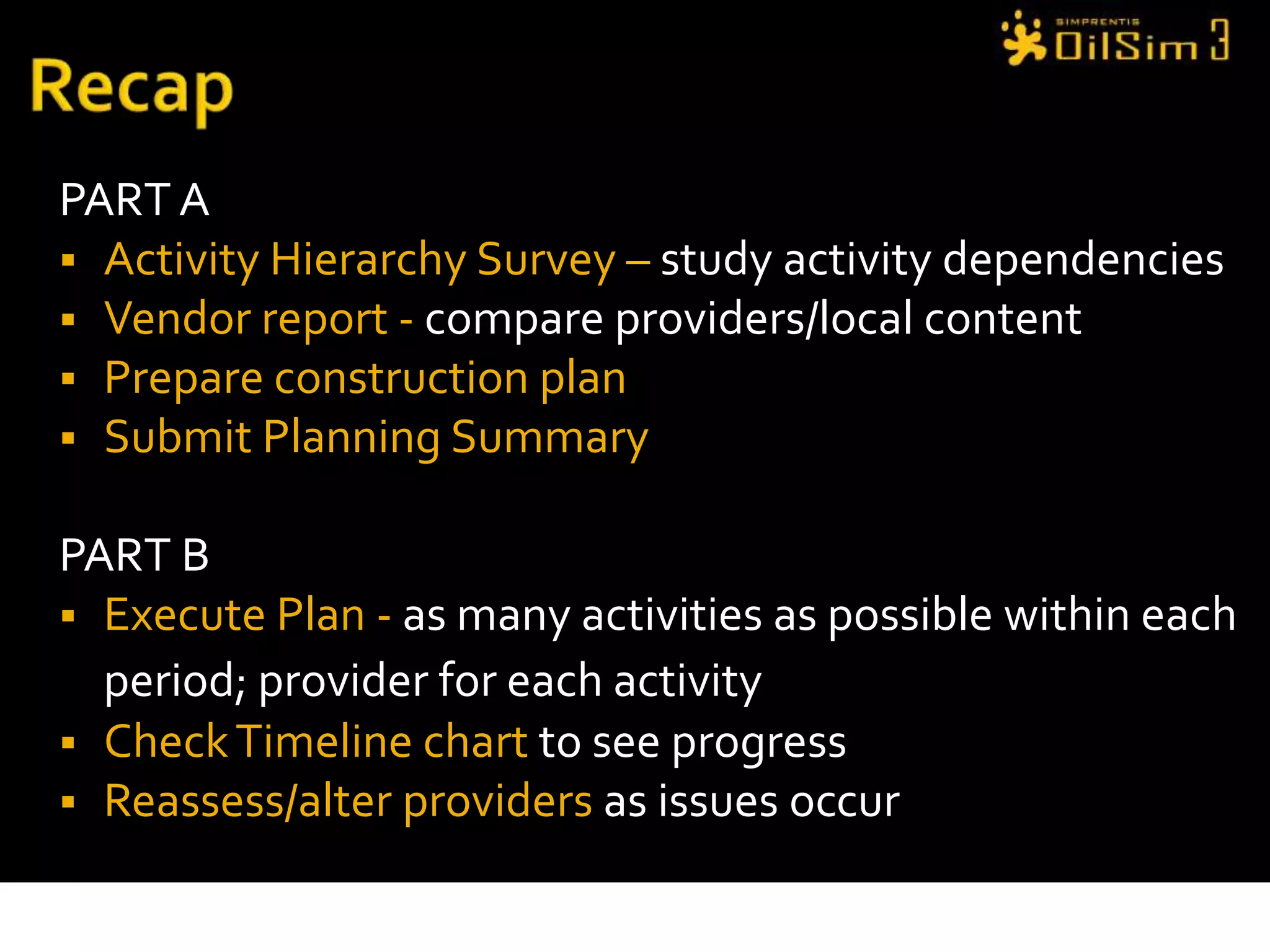
    RecapPART AActivity HierarchySurvey – study activity dependenciesVendor report - compare providers/local contentPrepare construction planSubmit Planning SummaryPART BExecute Plan - as many activities as possible within each period; provider for each activityCheckTimeline chart to see progressReassess/alter providers as issues occur
  • 113.
  • 114.
  • 115.
    Strategy discussionsFinancial consequencesof your decision?Other major drivers of decisionDid country strategy play a role?Above-ground risks?Changeable market conditions?Impact on commercial contracts?Operating agreements affected?Other information to consider?

Editor's Notes

  • #5 Hydrocarbons – surveys to help find them Licensing roundsFarm-in and PartnershipsDrilling rigs and Sub-contractorsWell planning – transportation capacitiesFacilities – Platforms, flowlines and pipelinesConstruction – activities and timelineOperations – Issues, maintenance and OPEX
  • #8 The long and bumpy road for oil from the underground to your tank, is called the oil and gas industry value chain.The value chain is divided further into these parts:Upstream is about getting the hydrocarbons up from the ground, and comprises of activities related to exploration, field development, construction, production and abandonment. By its nature, the exploration phase is common for both oil and gas, but soon afterwards, the oil and gas value chain will segregate into two parallel value chains.Midstream is about transportation and storage, as well as oil refining and gas processing.Downstream is about distribution and retail sales of gas, fuels and lubricants, plastics and other hydrocarbon derivatives to industrial and consumer markets.OilSim Exploration is all about the exploration part of the oil and gas industry. Exploration is about finding the hydrocarbons and proving that they are in sufficient quantities to start producing. OilSim Production is about actually taking the oil or gas out of the subsurface.
  • #27 Since the CRS show the probabilities of prospects in only one particular horizon or layer, it is necessary to purchase the CRS for all 3 layers so that you can determine which area within the licensing area contains the highest probability of containing oil and gas. So on the CRS maps shown here the area circled in black on the OilSim map and each of the CRS shows that the area in question is within the licensing area and is green on all three CRS layers, indicating high probability of oil and gas on all 3 layers within the same area or blocks. Potentially an area that requires further investigation for individual prospects.
  • #31 Hear the area between the reservoir and the sealant rock has been shaded in to show you whether you still have a seal at the fault or a gap where leakage could occur.
  • #44 When reviewing a farm-out offer you can either accept the amount or % the license owner requests, or amend the amounts to your own offer. Add a message to the seller explaining why they should choose your team and press “Send offer”
  • #45 Financing – Is where a team is able to accept offers, and therefore receive money or “finance” for a % of their own blocks When a team receives a Farm-In offer it appears under financing on the right hand side of the homepage
  • #47 All your farm-in offers to other teams are shown under “Investing” on the right-hand side of the homepage . This is where a team offers investments to other teams for a % of their blocksRemember you must have farmed-out 20% of your own block before you can drill.
  • #49 Before you begin to drill you need to know the water depth so that you choose the right type of rig. You can find this information by clicking on your block and scrolling to the bottom of the screen where a map of the whole block’s water depths are shown. By scrolling over each cell you can see the water depth for each particular cell.
  • #50 The next task is to choose which rig to use to drill the exploration well, but you will need to know how deep the water is in the area you wish to drill, so check out the water depths under your block information.There are three types of rigs: jack-up rigs for shallow waters, semi-submersible rigs for middle waters and drillships for the deepest waters. The rigs have different costs per day, and the drilling days depend on how deep you drill into the subsurface and which service providers you chooseFew: limited number of rigs available.If you get one: start using it within 20 minutes.If you don’t: wait in a queue, if another team is using the rig.Price can change: rig day rates are dynamic.
  • #52 Before you choose where to drill you should buy an Environmental Impact Assessment (EIA) survey to get more knowledge about the area. The benefit of an EIA survey is that you will be prepared for any environmental challenges you might encounter when drilling. With an EIA survey you will have lesser probability for drilling problems, and the extra costs will be less. Also, in the EIA survey you can see which drilling locations you should avoid. Some areas in your block are challenging to drill in. This can be because of strong currents, adverse conditions on the seabed or other local conditions. When you drill in those locations your costs go up 20%. You can see these locations in the EIA survey. You only have to buy one EIA survey for each license that you operate. You can find the EIA surveys under Surveys.
  • #54 As this figure illustrates, you can drill through all three horizons in one well.You can even drill a deviated well, so that the position is not exactly the same in all horizons.The deviation can be 1 cell for each horizon.
  • #55 To determine how long it will probably take to complete drilling, check out the “drilling Information” tab.
  • #56 Inputting estimated cost of drilling gives you credibility points. You need to add all the costs of the rig and the service providers together and multiply this by the number of days you think it will take you to drill. The oil spill control is voluntary but costs 5% of the drilling amount per day but will earn you more knowledge points and cost you less to clear an oil spill if it happens.The oil spill control acts as a gas blow-out preventer too.
  • #59 Cost $100000
  • #63 When you have drilled the first well, you only have a small sample of the new-found oil or gas field. This is evident by the wide ranges of the area, thickness, quality, and volume variables. These wide ranges tell you that you actually do not know much about the field.After drilling and testing, your next step therefore is to drill another well – and test it. This is called an appraisal well.Normally it takes at least three or four wells into a field before the license block becomes economically viable.Sometimes it takes much more, and therefore you should not give up if the first wells into a field do not give any license value.However, you should give up if the upper boundaries of the field become so low that there is no chance that it becomes economically viable. This is often the case in deep-water blocks, where the CAPEX are very high.
  • #71 Maximum amount of multiphase fluid in one year
  • #75 Submit a plan for each reservoir.
  • #76 Adding more wells to the reservoir will decrease the average flow rate per wellBecause any additional well will be in a less favourable location than the previous oneshave a drainage area that overlaps with a previous wellIn OilSim, the reduction is 2% for each additional well
  • #79 Your task is to maximize the value compared to the money you receive from the parent company This measurement is also known as ROI, or Return On Investment.Reservoirs are so close so we treat them as one big field. You are a field development team in charge of a license blockYou have been asked to plan the facilities to produce the oil and gas that has been found in the blockYou have a number of surveys to guide youin OilSim relate to both the flowlines which transports the fluids to the seabed and the risers which then transport it to the Platform.
  • #80 Metocean surveys- Can be bought under the Survey tab.For each survey there is a legend showing the probability of the environmental hazard occurring in a particular block. On the Earthquake survey, a turquoise blue indicates 1- a low probability and a reddish brown colour indicates 10 – a high probability of one occurring.So if you own block 606 – you can see on the Earthquake map that the likelihood of earthquakes is MEDIUM risk.You need to look at each survey and determine the risks of each type of hazard for your block. So that you can then select a platform that can cope with these hazards.
  • #82 For exampleCompare the applied discount factors in these scenarios. If you think that your projected cashflow is spot on with a project you could have a discount factor of 0% with an expected value of licence of 189M in total over 35 year periodIf you thought there were some unknown factors that you had to consider, applying a discount factor annually of 5% to the expected production would lead to a reduced value of 118M.And if you felt that there was still a large number of unknowns to be considered, then the compounding of the annual discount factor of 20% each year, would greatly reduce the value of the licence to 48M.
  • #83 Next, find the average water depth of your block by clicking on the Reservoir tab,Clicking the magnifying glass for the reservoir Then under the reservoir information the Block water depth is shown. Again, you need to know this to determine which platform would be suitable within your block.
  • #84 Need to consider what capacities your platform, flowlines and pipelines are going to deal with, so you will need to determine the maximum amount of oil (or condensate), gas and water that could be produced. Examine the detailed production profileOil, Gas, Condensate, WaterLooking for maximum amount of production per dayIn an oil field- you will have Oil, gas and waterIn a gas field-you will have gas, condensate and water
  • #85 Click on Facilities TabChoose your platformScroll down to Settings-update platform requirements for your reservoirAmend number and size of flowlineSelect both a pipeline for the Oil storage tanks and Gas Processing PlantUpdate diameters for each pipelineEnter number of platforms required – this number might be more than 1- if the maximum capacities are lower than that needed to transport your oil or gas.
  • #86 Estimated rate – bbl/dFlowline (acts as the flowline and riser size for the total multiphase fluid (all oil/gas/condensate and water).So you need to add the maximum amounts to be produced together to work out which flowline to use. Water – either goes out to sea after cleaning or used for injection into the well.In our scenario, we have a subsea template that collects all multiphase to travel to production facility. Then the pipelines are used for the oil, condensate and gas, so you need to consider the oil types and gas separately to work out which size should be used to take oil and condensate to the storage tanks and the gas to the Flowline: Metal pipe that connects the top of the wellbore to the mud surface-treating equipment that connects the wellhead to a manifold or to production facilities, such as heater-treaters and separators.Riser: A pipe that extends from the drilling platform down to the seafloor. Drilling mud and cuttings from the borehole are returned to the surface through the riser.
  • #87 Choose whether you need oil terminal and gas storage Might be more than one available to choose from, so check out costs and distance to the facilities.
  • #89 Red dots indicate that the fluids cannot flow through flowlines and pipelines which current planYellow dots indicate that there is flow but that there are some constraints in the existing planGreen dots indicate that the current plan will allow the fluid to flow freely – might not be optimal plan though
  • #92 This chart shows the activities, tasks, processes that need to occur in order to reach first oil.Starting at the bottom of the chart, a number of activities need to take place before you can move onto the next activity.For those activities with a dotted line attaching them to another activity – you have a choice-choose one out of the 3 optional activities available.Where there is a full straight line, then the activity has to be completed before moving on to the next step/activity.Scrolling over a possible activity will show you the estimated time it takes to complete a task, the capital and operational expenses in completing each task.
  • #93 Once you have chosen the activity you need to complete, you have to decide on which provider, taking into account the CAPEX and OPEX involved as this will affect your value. Also, consider the timeframe, bearing in mind, you are trying to reach First Oil within 21 periods of 90 days i.e.. 1890 days.Consider time v. costConsider the inclusion of local contentResource analysis and try and reach First oil or gas within 5 years (20 quarters)
  • #94 After reviewing the activity hierarchy and the possible resources. Submit a financial summary of your construction plan with:The anticipated capexThe expected amount of contentWhich period you think you will reach first oilAnd press submit/updateUse your printed materials to help you plan the project
  • #95 For each period select a provider for each step that it is possible to complete in one period, bearing in mind that some activities cannot start until others are completed.Only pick those that can be started in this period.
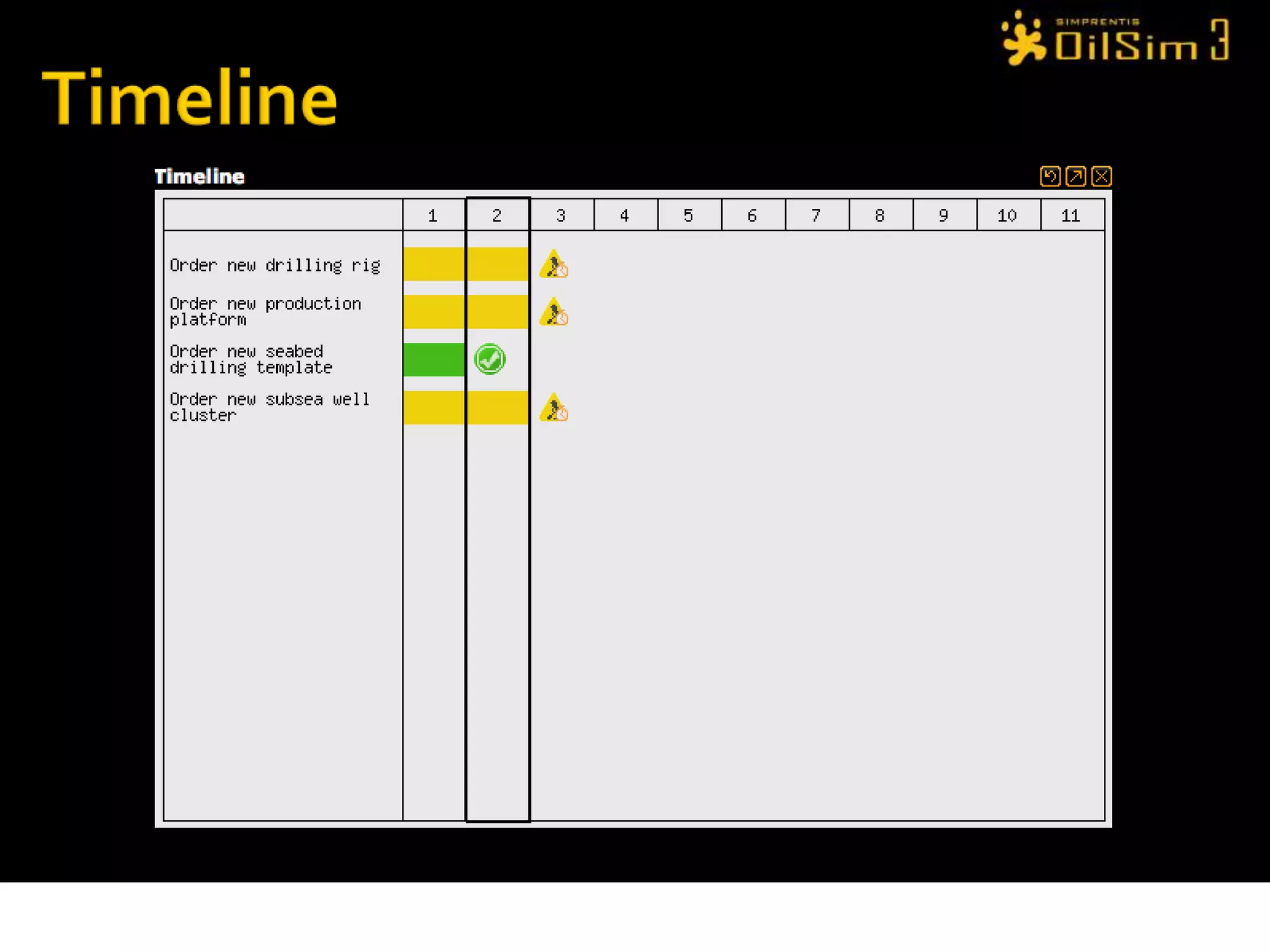
  • #97 After each period passes, there is an activity update under the Construction tab
  • #99 On the right-hand side you can see the timeline for the project and whether you are on track for reaching First Oil before the end of the 21 periods.Each period of time is 90days and after each period of time there is an update to your activities to advise what has been accomplished, remains outstanding
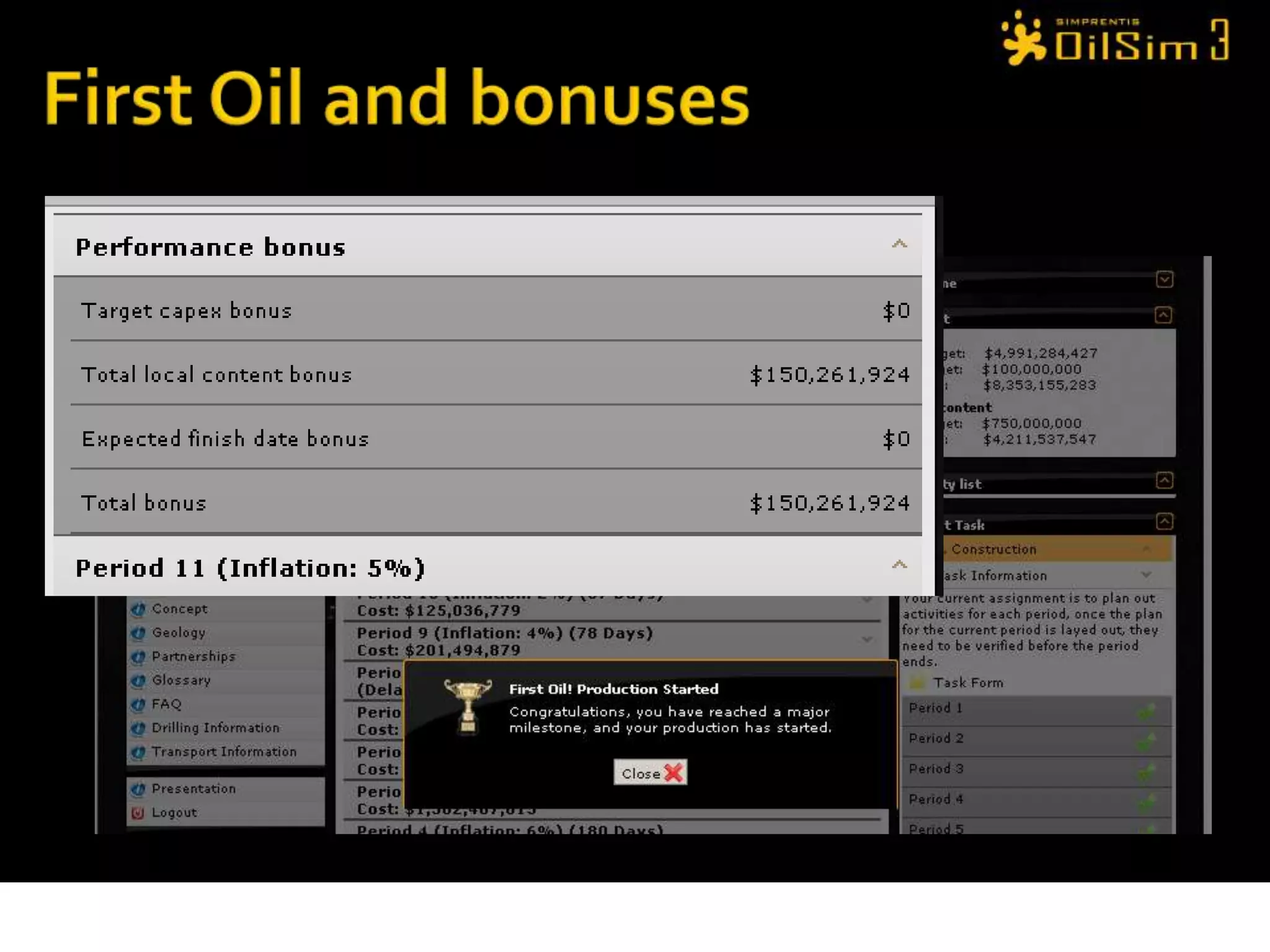
  • #101 At the end of all the 10 periods you will be advised if you have succeeded in achieving first oil and whether or not your company has attracted performance bonuses for your target CAPEX, local content amount and finishing on time.
  • #102 We will give an Activity Hierarchy survey to teams that have purchased the survey
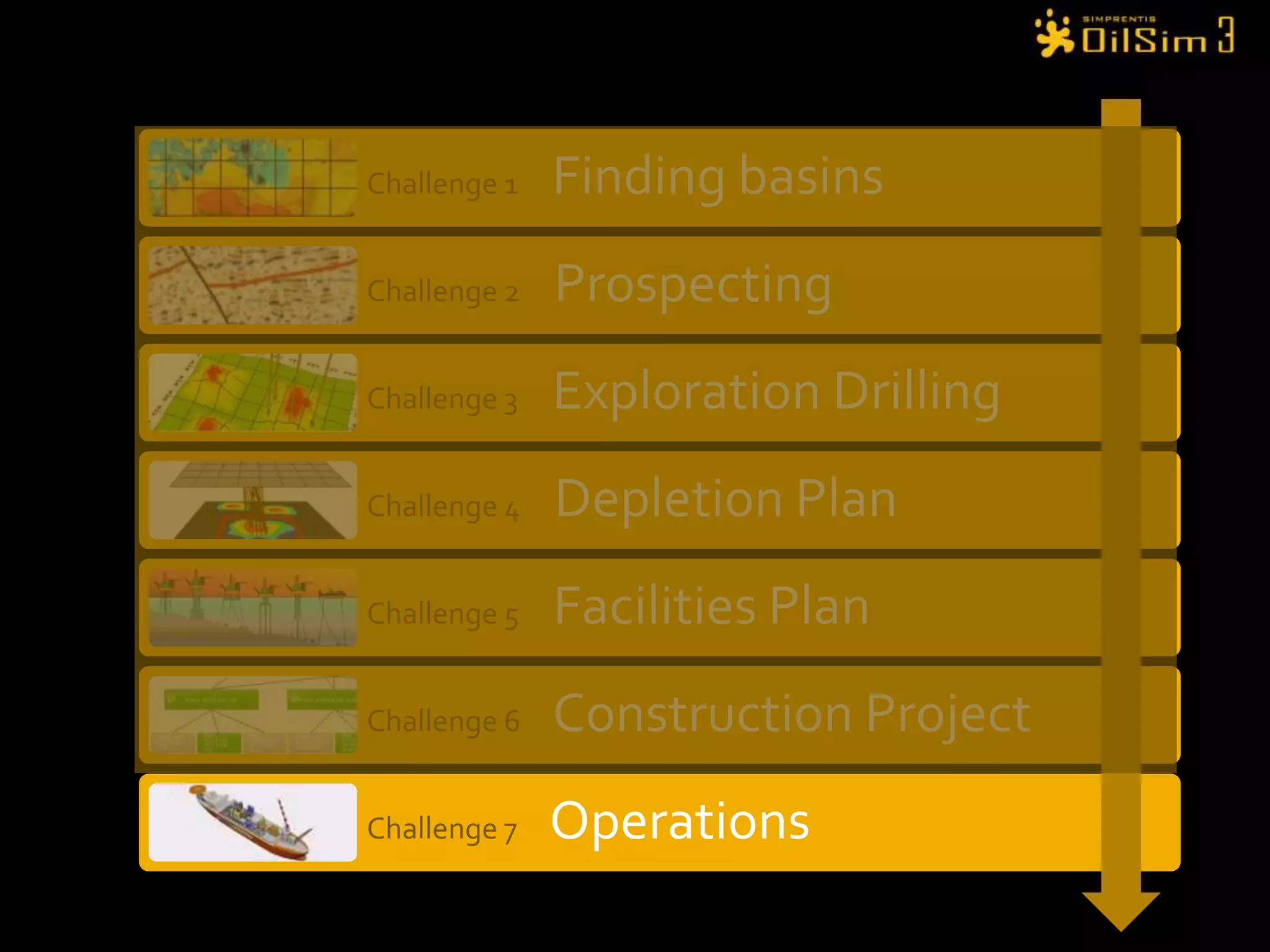
  • #104 In this task you are producing your oil and gas and have to consider 3 scenarios that will affect your company’s strategy during the lifetime of your asset.
  • #105 In each of these scenarios during the lifetime of your asset, you need to consider your company’s strategy and the market conditions presented in each scenario and decide which option would optimise your sales value.