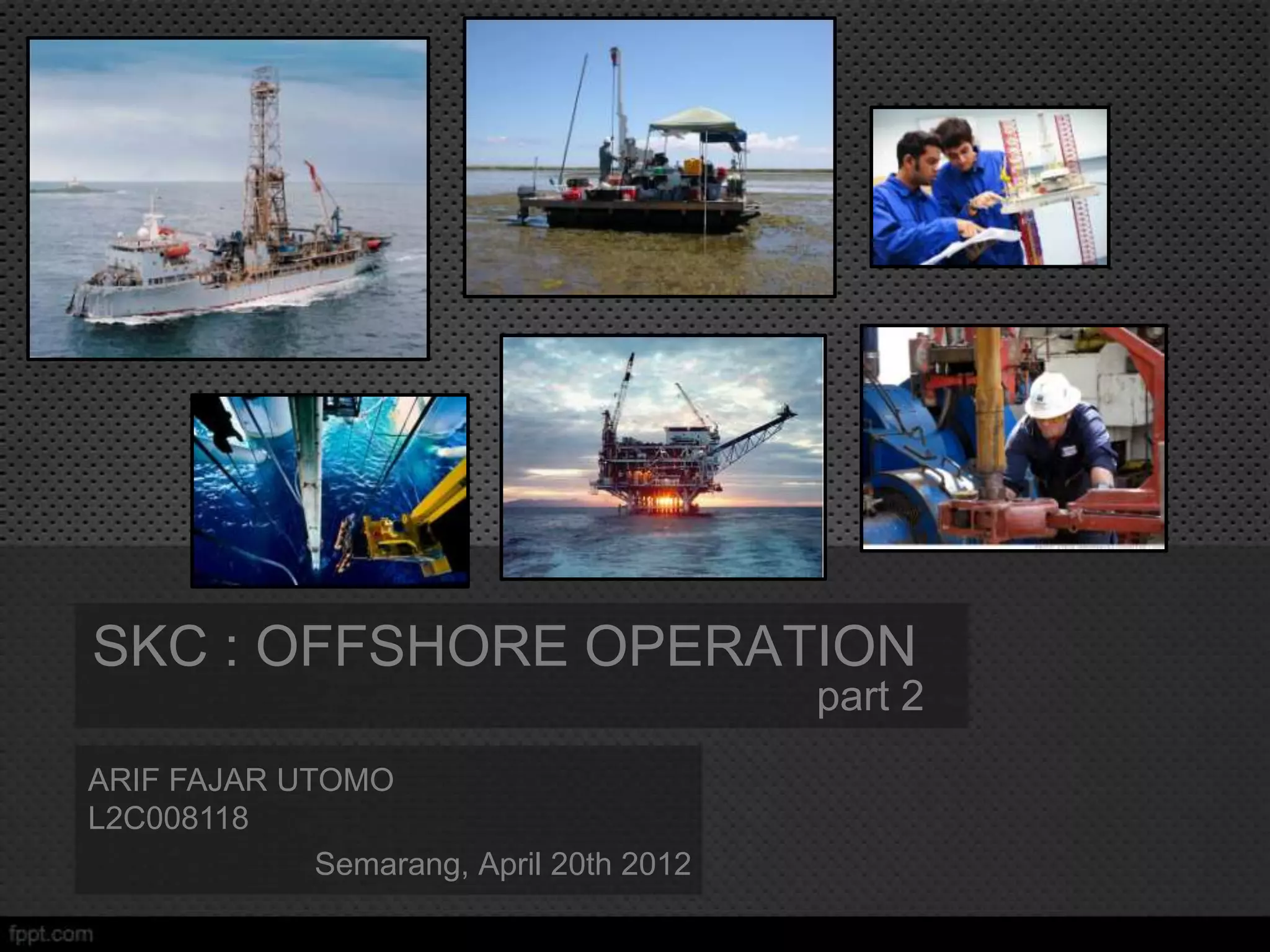
SKC : OFFSHORE OPERATION
                                         part 2
ARIF FAJAR UTOMO
L2C008118
             Semarang, April 20th 2012
Presentation including :
• Mobile drilling platforms.
• Offshore production platforms.
• About Offshore Engineers.

       Challenge
       accepted
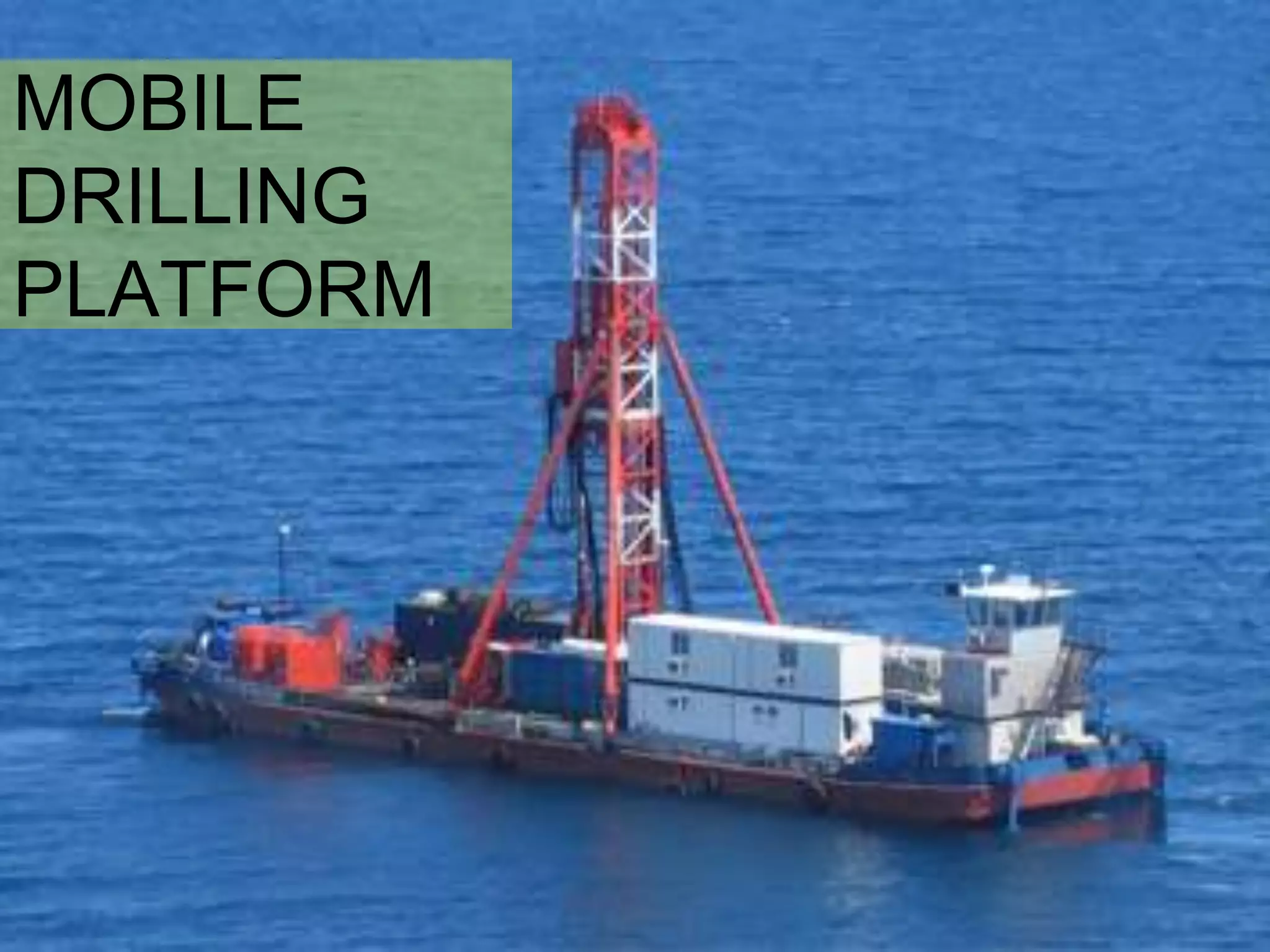
MOBILE
DRILLING
PLATFORM
Mobile Drilling Platform

Mobile drilling platform is being used in the exploratory drilling, to drill
and to find out if there’s oil and then move on to the next site. Mostly,
the oil company didn’t have the mobile drilling platforms. Since it is
more cost effective to hire expertise and equipment needed than to keep
it under their roof.

The expertise in here refers to the drilling contractor and the service
company like Transocean, Schlumberger, Pride, Frontier, and Sea-Drill.

There are 5 varieties of mobile drilling platforms: drilling barge, jack up,
semi-submersible rig, submersible rig, and drill ships.
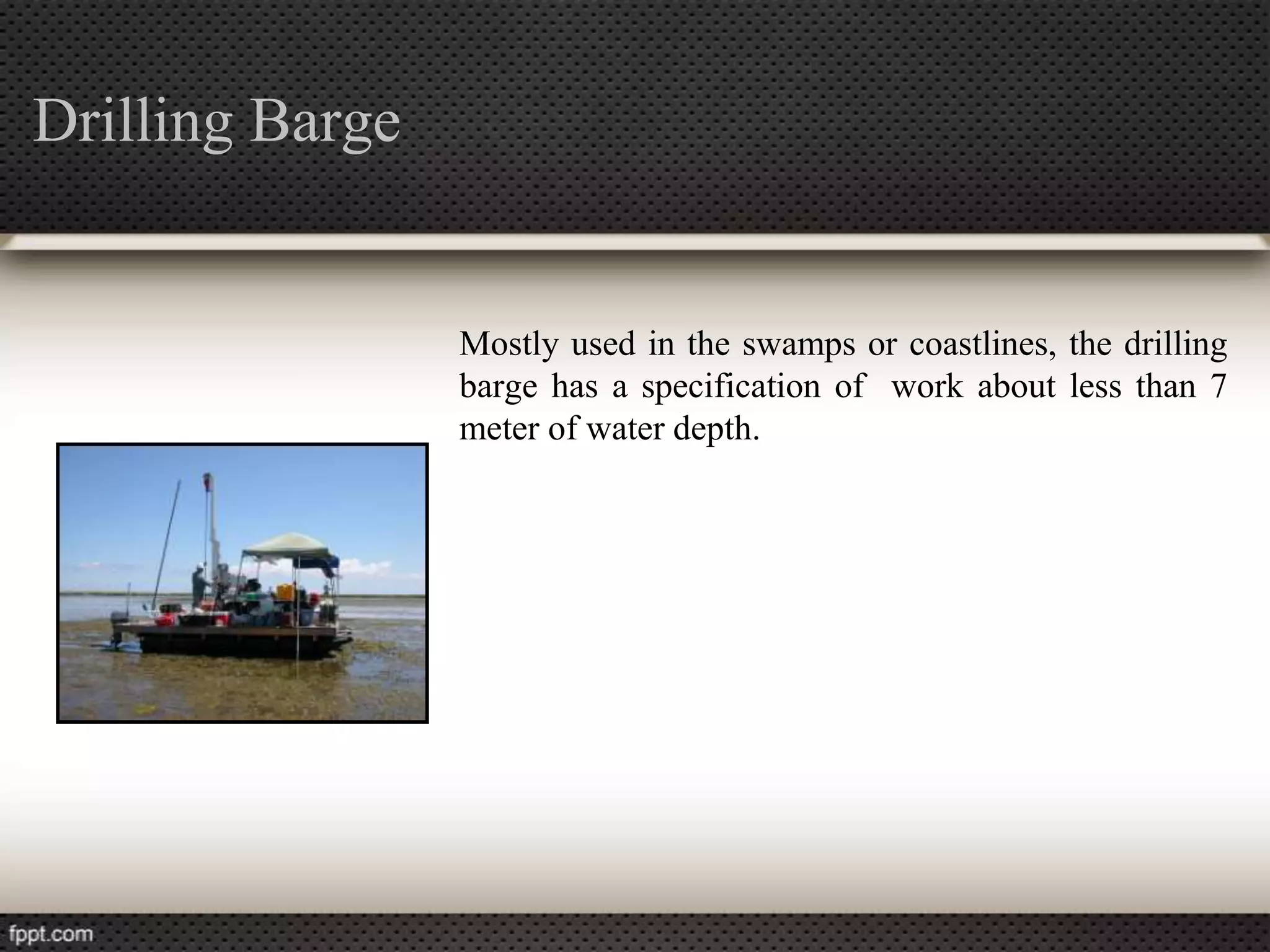
Drilling Barge


                 Mostly used in the swamps or coastlines, the drilling
                 barge has a specification of work about less than 7
                 meter of water depth.
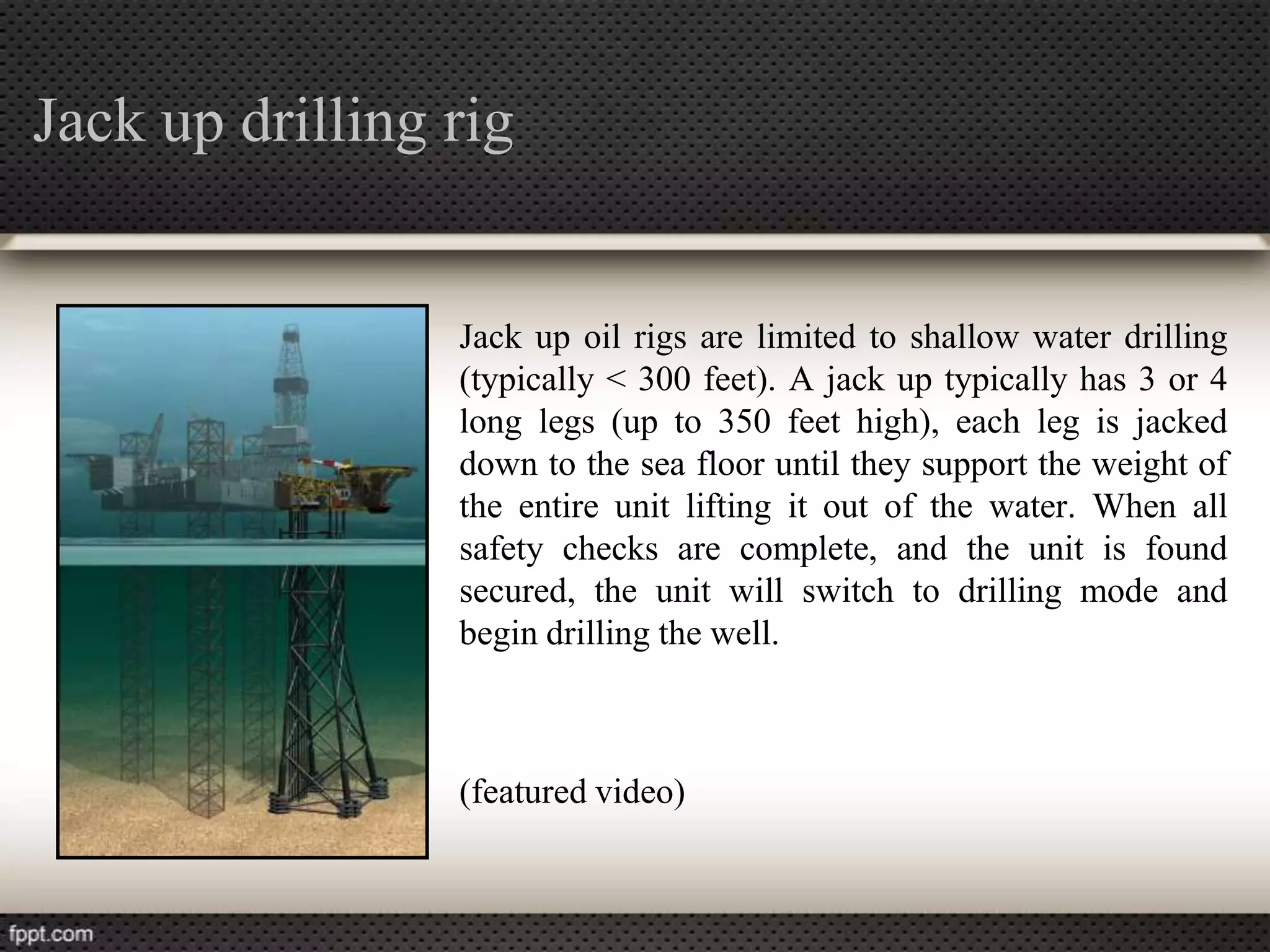
Jack up drilling rig


                 Jack up oil rigs are limited to shallow water drilling
                 (typically < 300 feet). A jack up typically has 3 or 4
                 long legs (up to 350 feet high), each leg is jacked
                 down to the sea floor until they support the weight of
                 the entire unit lifting it out of the water. When all
                 safety checks are complete, and the unit is found
                 secured, the unit will switch to drilling mode and
                 begin drilling the well.


                 (featured video)
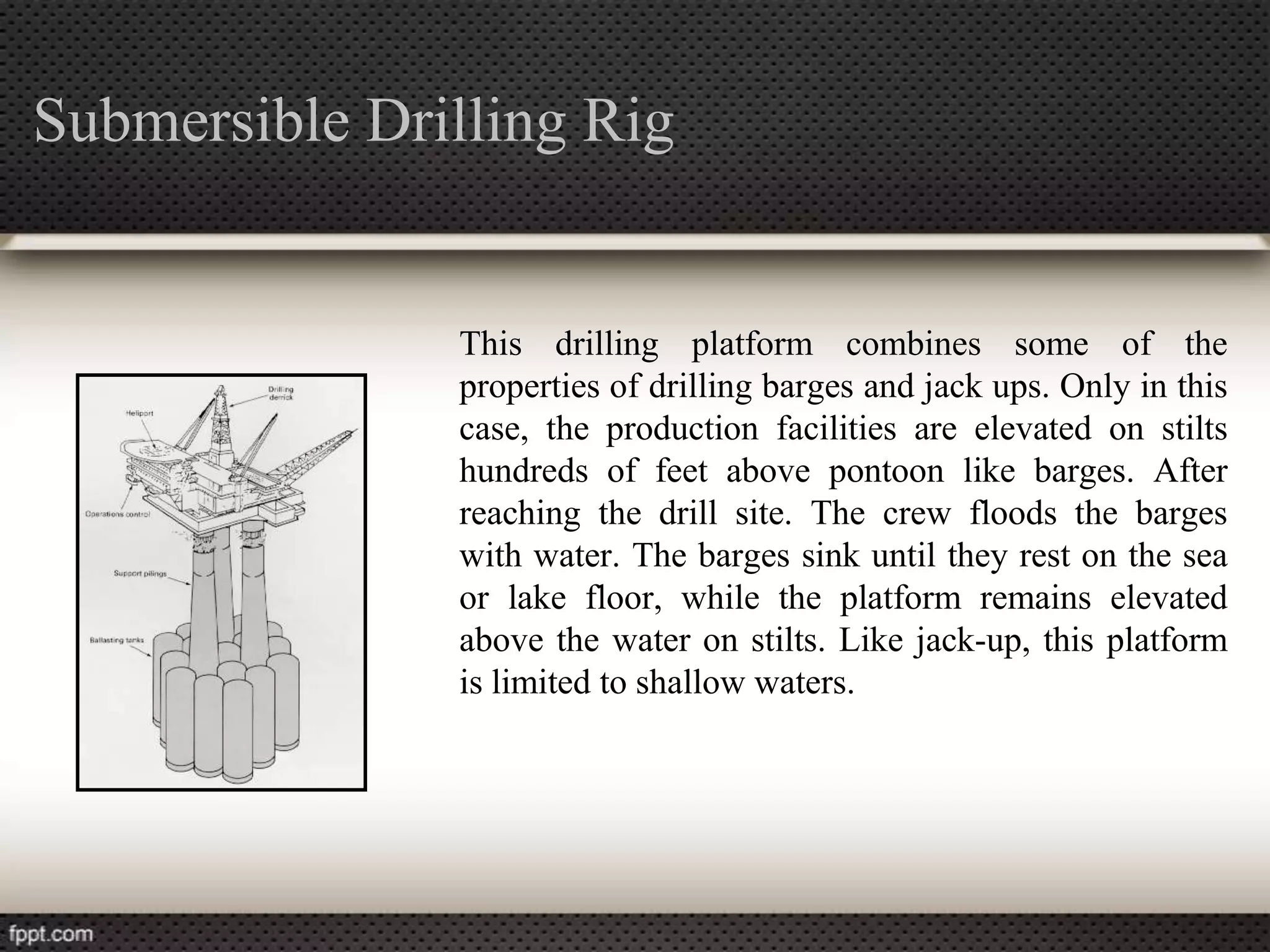
Submersible Drilling Rig


               This drilling platform combines some of the
               properties of drilling barges and jack ups. Only in this
               case, the production facilities are elevated on stilts
               hundreds of feet above pontoon like barges. After
               reaching the drill site. The crew floods the barges
               with water. The barges sink until they rest on the sea
               or lake floor, while the platform remains elevated
               above the water on stilts. Like jack-up, this platform
               is limited to shallow waters.
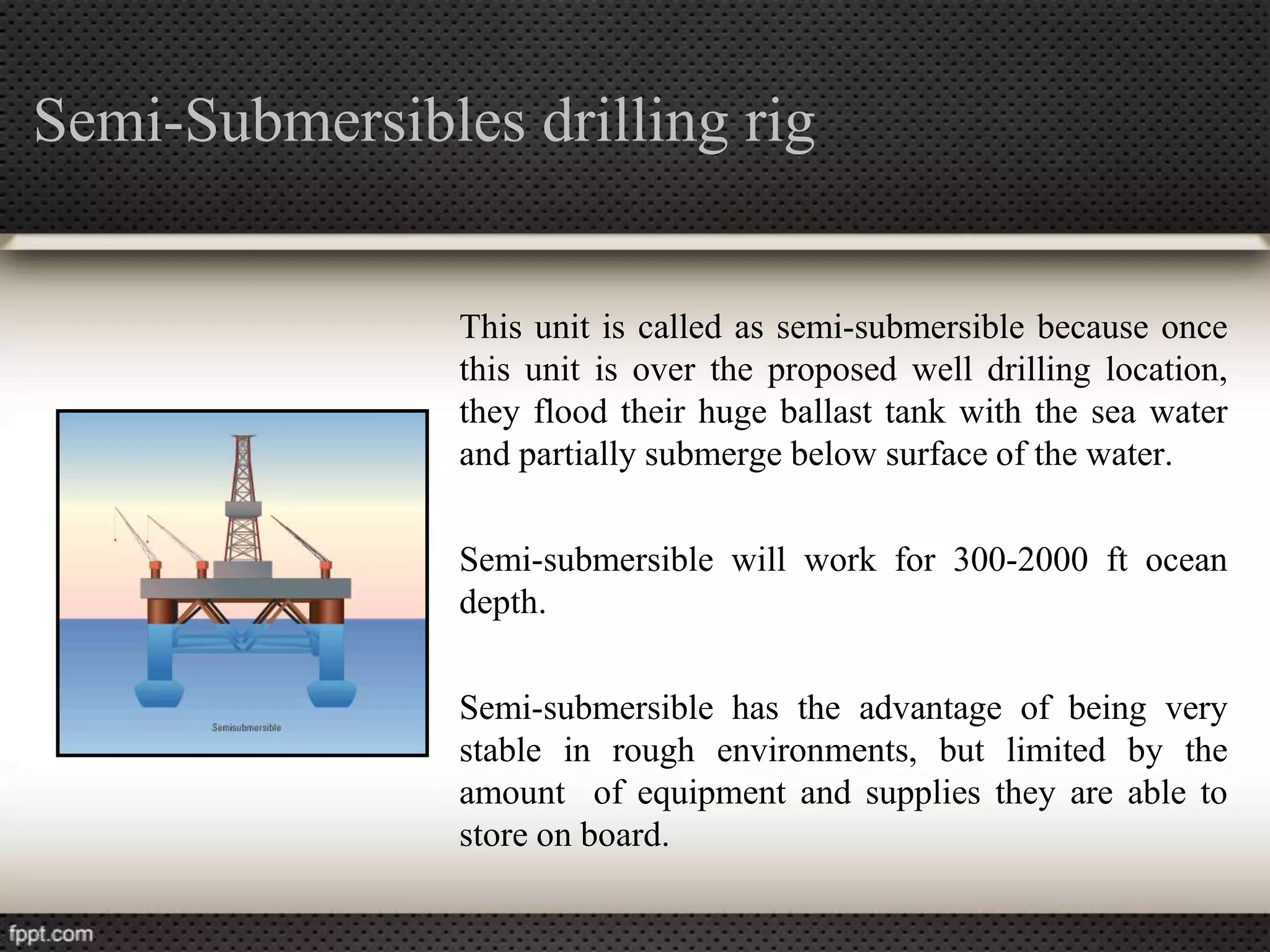
Semi-Submersibles drilling rig


                This unit is called as semi-submersible because once
                this unit is over the proposed well drilling location,
                they flood their huge ballast tank with the sea water
                and partially submerge below surface of the water.

                Semi-submersible will work for 300-2000 ft ocean
                depth.

                Semi-submersible has the advantage of being very
                stable in rough environments, but limited by the
                amount of equipment and supplies they are able to
                store on board.
more with Semi-Submersibles

There are 2 ways on how semi-submersible able maintain its position
over a proposed well, using the anchors and the dynamic positioning
system (DP system).
Anchor method

Anchor method is considered as a traditional method of keeping a semi-
submersible on location. Up to 12 anchors are run out away from the unit
and set on ocean floor. The tension in the anchor chain or cable is
increased by using a large winch.
Dynamic Positioning System

With a DP system, the semi-submersible uses position information from
GPS system and radio beacons on the ocean floor to constantly monitor
its position. If the DP computer detects that the oil rig is drifting off
location (either caused by the wind, waves, or current), huge thrusters
underneath the rig will apply thrust to push it back over the well.
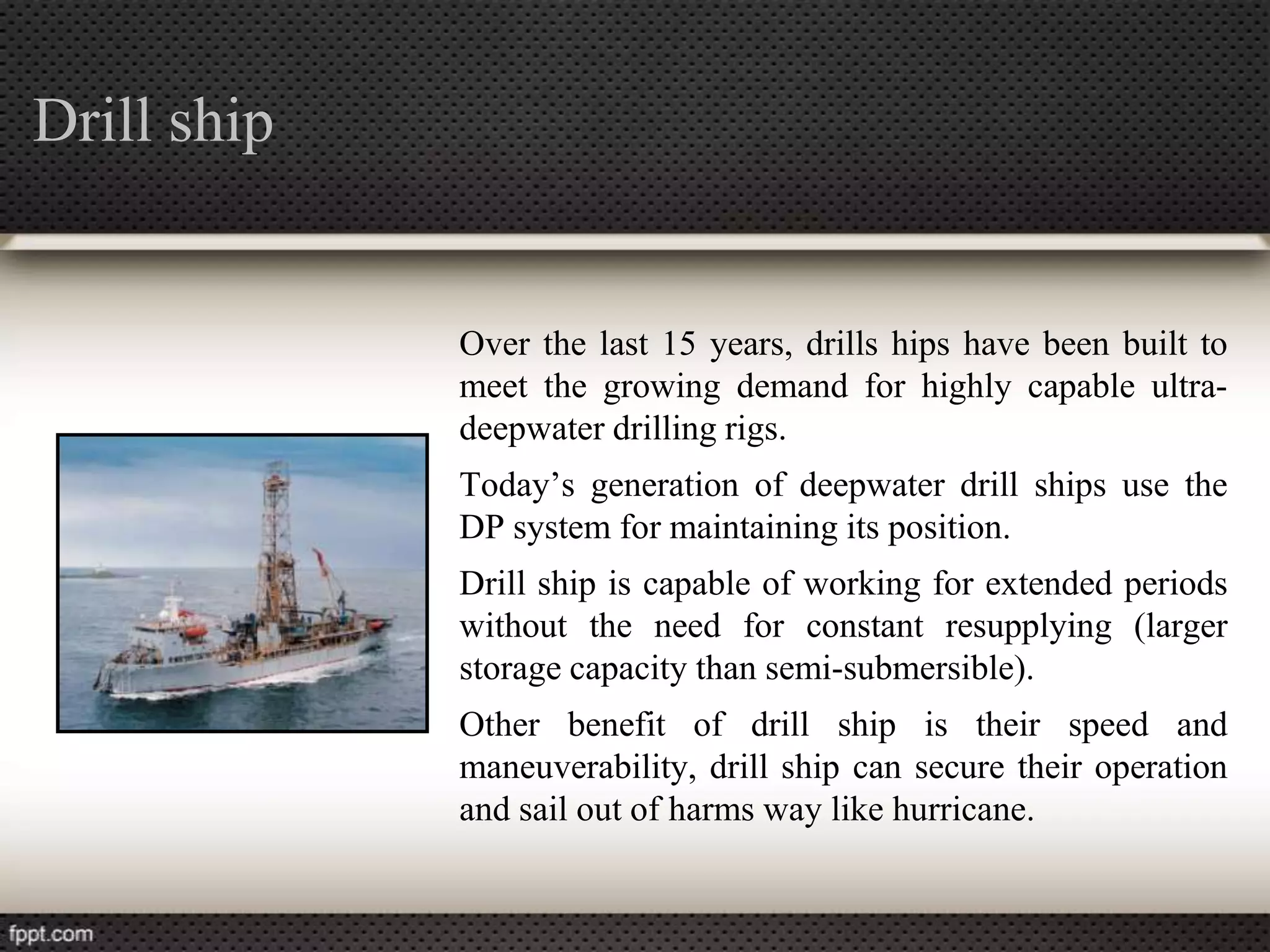
Drill ship


             Over the last 15 years, drills hips have been built to
             meet the growing demand for highly capable ultra-
             deepwater drilling rigs.
             Today’s generation of deepwater drill ships use the
             DP system for maintaining its position.
             Drill ship is capable of working for extended periods
             without the need for constant resupplying (larger
             storage capacity than semi-submersible).
             Other benefit of drill ship is their speed and
             maneuverability, drill ship can secure their operation
             and sail out of harms way like hurricane.
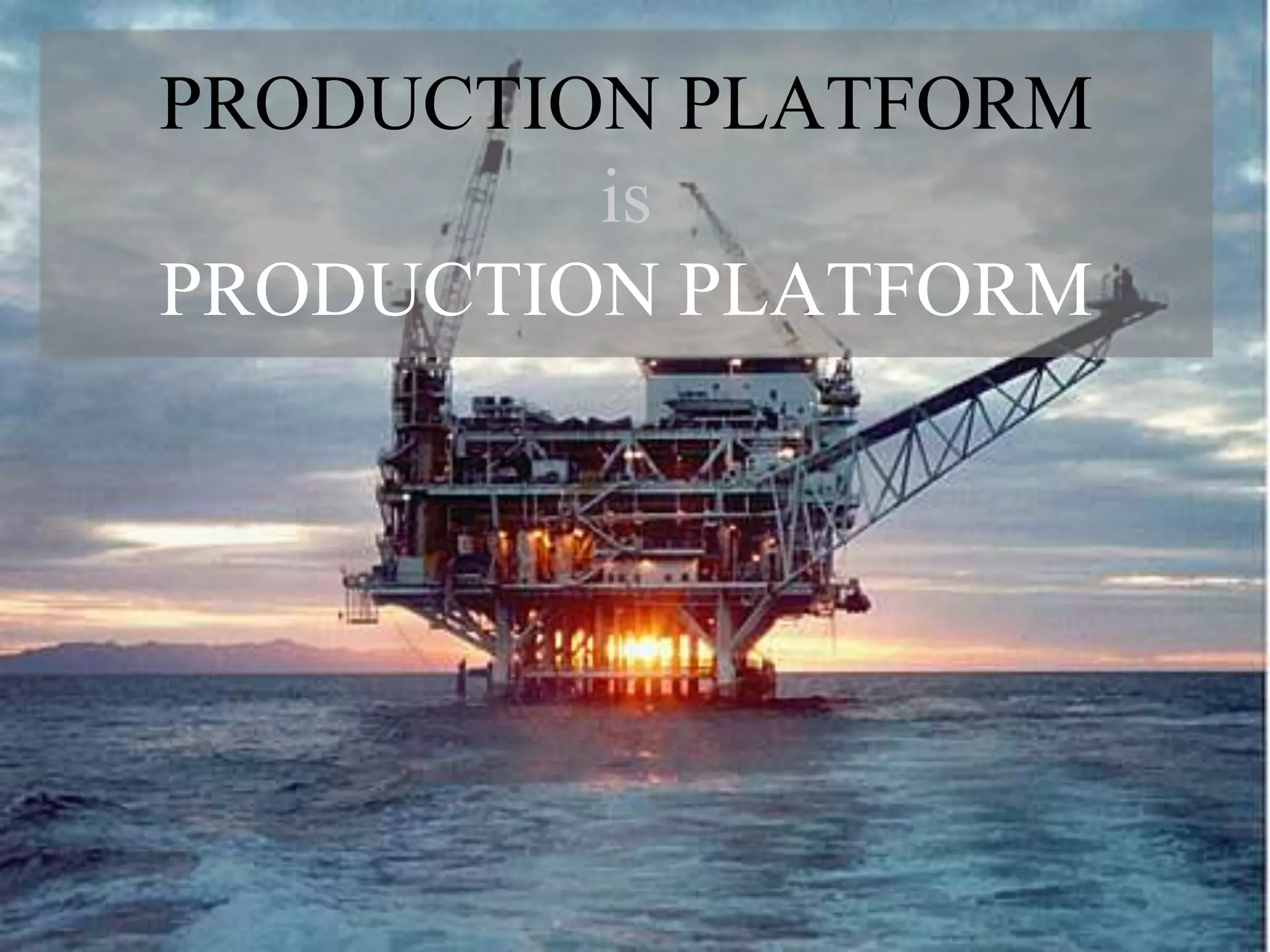
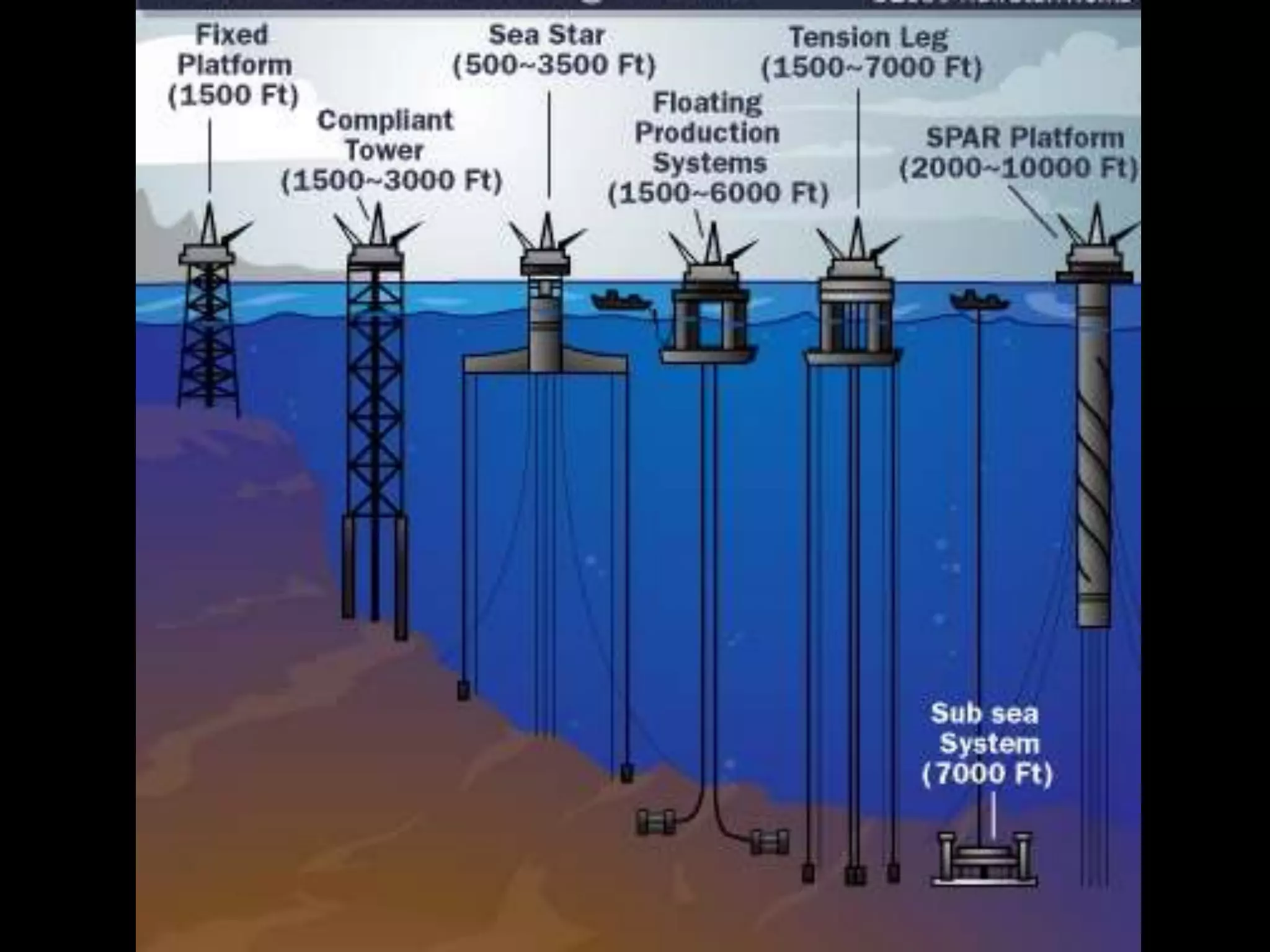
PRODUCTION PLATFORM
         is
PRODUCTION PLATFORM
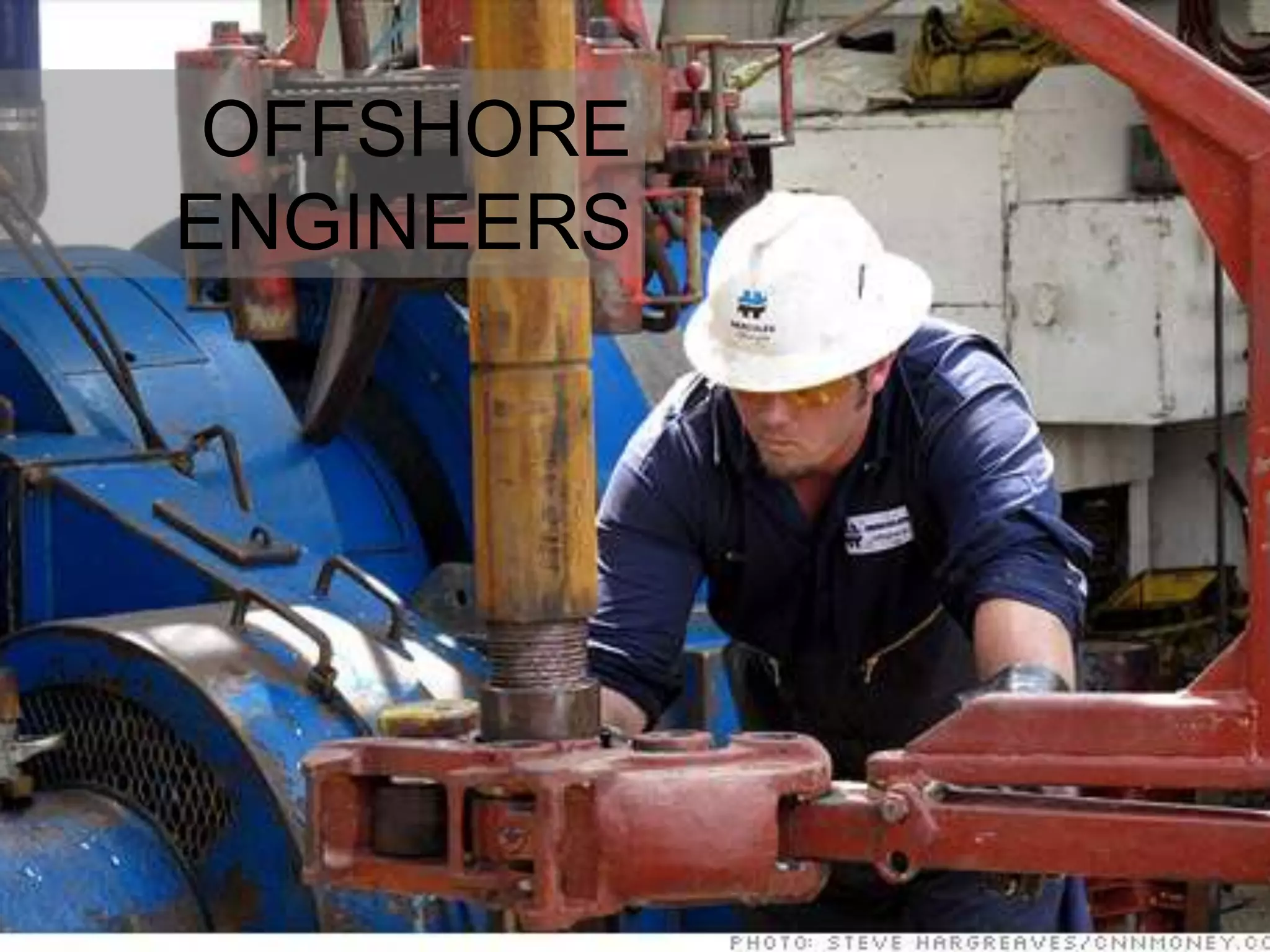
OFFSHORE
ENGINEERS
About Offshore Engineers

Offshore oil and gas engineers play a critical role in all facets of offshore operations.
Their skills are used in designing and constructing platform and subsea structures,
drilling equipment, well head operations, subsea pipelines, production and
transportation operations.

Offshore engineers can branch out into many specialties including: drilling and
completions, robotics, marine corrosion, consulting and project management, pipelines,
process control and systems, intervention and tooling, quality control and inspection,
flow assurance, and subsea processes.

Chemical engineering degrees are typically required in process engineers or corrosion
engineers.
The working conditions


Offshore oil and gas engineers work in both onshore and offshore locations. While
onshore, they perform their work in an office setting. Trips by helicopter to offshore
platforms and or vessels can occur frequently, so be prepared by it. Accommodation
and meals are provided, workers maybe exposed to inclement weather and potentially
hazardous conditions; however safety protocols are strictly adhered to in order to avoid
any risk. Periods of stay out at sea will vary depending on the project assignment.
Some criteria needed in becoming an
 offshore engineer

It takes a very unique person set to be able to survive and thrive in the offshore world,
this are some criteria mentioned in careersinoilandgas.com
• Good at math, sciences, and technology
• Consider yourself at a great team-player, able to easily build personal and
  professional relationships.
• Have the stamina and enthusiasm to work on ships, platforms, and other unique
  offshore work environments.
• Can handle traveling for long periods.
• Comfortable working 24/7 in a relatively isolated environment, with harsh weather
  conditions.
• Think a career as an offshore engineer is exciting.
SKC : OFFSHORE OPERATION
                                         part 2
ARIF FAJAR UTOMO
L2C008118
             Semarang, April 20th 2012

Offshore part 2

  • 1.
    SKC : OFFSHOREOPERATION part 2 ARIF FAJAR UTOMO L2C008118 Semarang, April 20th 2012
  • 2.
    Presentation including : •Mobile drilling platforms. • Offshore production platforms. • About Offshore Engineers. Challenge accepted
  • 3.
  • 4.
    Mobile Drilling Platform Mobiledrilling platform is being used in the exploratory drilling, to drill and to find out if there’s oil and then move on to the next site. Mostly, the oil company didn’t have the mobile drilling platforms. Since it is more cost effective to hire expertise and equipment needed than to keep it under their roof. The expertise in here refers to the drilling contractor and the service company like Transocean, Schlumberger, Pride, Frontier, and Sea-Drill. There are 5 varieties of mobile drilling platforms: drilling barge, jack up, semi-submersible rig, submersible rig, and drill ships.
  • 5.
    Drilling Barge Mostly used in the swamps or coastlines, the drilling barge has a specification of work about less than 7 meter of water depth.
  • 6.
    Jack up drillingrig Jack up oil rigs are limited to shallow water drilling (typically < 300 feet). A jack up typically has 3 or 4 long legs (up to 350 feet high), each leg is jacked down to the sea floor until they support the weight of the entire unit lifting it out of the water. When all safety checks are complete, and the unit is found secured, the unit will switch to drilling mode and begin drilling the well. (featured video)
  • 7.
    Submersible Drilling Rig This drilling platform combines some of the properties of drilling barges and jack ups. Only in this case, the production facilities are elevated on stilts hundreds of feet above pontoon like barges. After reaching the drill site. The crew floods the barges with water. The barges sink until they rest on the sea or lake floor, while the platform remains elevated above the water on stilts. Like jack-up, this platform is limited to shallow waters.
  • 8.
    Semi-Submersibles drilling rig This unit is called as semi-submersible because once this unit is over the proposed well drilling location, they flood their huge ballast tank with the sea water and partially submerge below surface of the water. Semi-submersible will work for 300-2000 ft ocean depth. Semi-submersible has the advantage of being very stable in rough environments, but limited by the amount of equipment and supplies they are able to store on board.
  • 9.
    more with Semi-Submersibles Thereare 2 ways on how semi-submersible able maintain its position over a proposed well, using the anchors and the dynamic positioning system (DP system).
  • 10.
    Anchor method Anchor methodis considered as a traditional method of keeping a semi- submersible on location. Up to 12 anchors are run out away from the unit and set on ocean floor. The tension in the anchor chain or cable is increased by using a large winch.
  • 11.
    Dynamic Positioning System Witha DP system, the semi-submersible uses position information from GPS system and radio beacons on the ocean floor to constantly monitor its position. If the DP computer detects that the oil rig is drifting off location (either caused by the wind, waves, or current), huge thrusters underneath the rig will apply thrust to push it back over the well.
  • 12.
    Drill ship Over the last 15 years, drills hips have been built to meet the growing demand for highly capable ultra- deepwater drilling rigs. Today’s generation of deepwater drill ships use the DP system for maintaining its position. Drill ship is capable of working for extended periods without the need for constant resupplying (larger storage capacity than semi-submersible). Other benefit of drill ship is their speed and maneuverability, drill ship can secure their operation and sail out of harms way like hurricane.
  • 13.
    PRODUCTION PLATFORM is PRODUCTION PLATFORM
  • 15.
  • 16.
    About Offshore Engineers Offshoreoil and gas engineers play a critical role in all facets of offshore operations. Their skills are used in designing and constructing platform and subsea structures, drilling equipment, well head operations, subsea pipelines, production and transportation operations. Offshore engineers can branch out into many specialties including: drilling and completions, robotics, marine corrosion, consulting and project management, pipelines, process control and systems, intervention and tooling, quality control and inspection, flow assurance, and subsea processes. Chemical engineering degrees are typically required in process engineers or corrosion engineers.
  • 17.
    The working conditions Offshoreoil and gas engineers work in both onshore and offshore locations. While onshore, they perform their work in an office setting. Trips by helicopter to offshore platforms and or vessels can occur frequently, so be prepared by it. Accommodation and meals are provided, workers maybe exposed to inclement weather and potentially hazardous conditions; however safety protocols are strictly adhered to in order to avoid any risk. Periods of stay out at sea will vary depending on the project assignment.
  • 18.
    Some criteria neededin becoming an offshore engineer It takes a very unique person set to be able to survive and thrive in the offshore world, this are some criteria mentioned in careersinoilandgas.com • Good at math, sciences, and technology • Consider yourself at a great team-player, able to easily build personal and professional relationships. • Have the stamina and enthusiasm to work on ships, platforms, and other unique offshore work environments. • Can handle traveling for long periods. • Comfortable working 24/7 in a relatively isolated environment, with harsh weather conditions. • Think a career as an offshore engineer is exciting.
  • 19.
    SKC : OFFSHOREOPERATION part 2 ARIF FAJAR UTOMO L2C008118 Semarang, April 20th 2012