




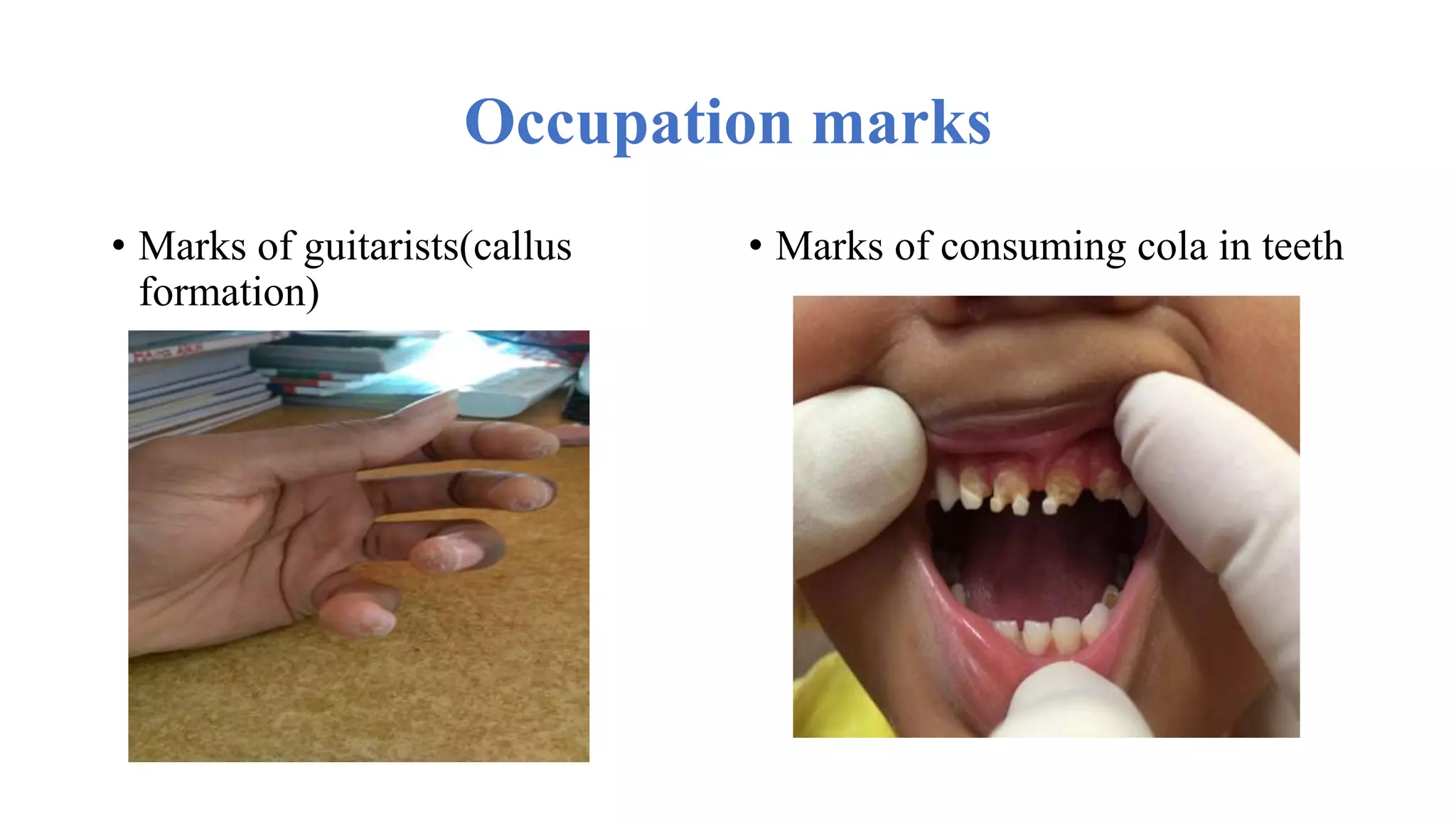


This document discusses occupational marks and their forensic significance in personal identification. It defines occupational marks as physical marks produced on a person's body from the type of work they do. Temporary marks include paint or chemical residues, while permanent marks include thickened skin or calluses. Occupational marks can indicate a person's profession and help identify unknown victims, especially when other identifying features are damaged or missing. They provide clues to narrow the search for a victim's identity in disasters. While useful for forensics, workplace health surveillance collecting such data is still limited in India compared to other countries.


