OBSESSIVE-COMPULSIVE
DISORDER (OCD)

JIM BOYCE
ALEJANDRO OLGUIN
BRYANNA HUTCHINS
COURTNEY OHMAN
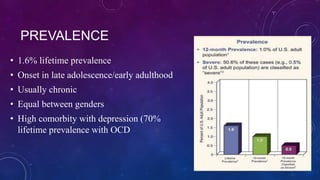
PREVALENCE
• 1.6% lifetime prevalence
• Onset in late adolescence/early adulthood
• Usually chronic
• Equal between genders
• High comorbity with depression (70%
lifetime prevalence with OCD
PATHOLOGY
• Increased metabolic activity in the basal ganglia
• PET scans have strongly implicated involvement of the orbito-frontal
cortex, the caudate nucleus, and the thalamus
• Primitive cleaning and checking behaviors are “hard-wired” in the
thalamus
• Most OCD cases represent an abnormality of serotonergic functioning
in the fronto-striatal-thalamo-cortical circuit
PATHOLOGY (CONTINUED)
• Increased activity in the head of the caudate nucleus inhibits
Globus pallidus fibers that ordinarily dampen thalamic activity

• This resulting increase in the thalamic activity produces increased
activity in the orbitofrontal cortex
• This completes the circuit, via the cingulate gryus, the caudate and
produces increased activity in the head of the caudate
SIGNS & SYMPTOMS
People with OCD may experience;
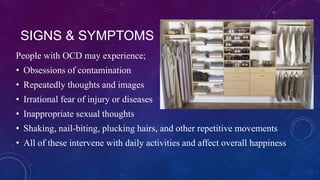
• Obsessions of contamination

• Repeatedly thoughts and images
• Irrational fear of injury or diseases
• Inappropriate sexual thoughts

• Shaking, nail-biting, plucking hairs, and other repetitive movements
• All of these intervene with daily activities and affect overall happiness
NEUROPSYCHOLOGICAL DEFICITS
These deficits affect the frontal-striatal functioning, especially
in the orbitofrontal-striatal circuitry causing;
• Impairment of executive functioning.
• Visual memory and motor speed.
• Poor organization skills and poor non-verbal skills.
• Lack of proper performance in set-shifting, alternation, and
response inhibition.
TREATMENTS
• Cognitive Behavioral Therapy (CBT)
• CBT is a psychological treatment based on one’s symptoms, treatment
procedures, and a specified outcome
• Helps construct cognitive abilities
• Helps reduce the level of anxiety which lead to acts of obsession.

• Pharmacotherapy
• Treatment using drugs, especially SSRI’s that inhibit the uptake of serotonin
after released in the synapses

• Messages are being transmitted between two nerve cells from a chemical
synapse which creates a small gap. The presynaptic cell sends information
releasing into the neurotransmitters. Serotonin is filled by these gaps.
• SSRI Drugs used include Clomipramine, Fluoxetine, Sertraline, & Fluvoxamine
TREATMENTS (CONTINUED)
• Psychosurgery
• Used only in severe cases

• Used if patients fail to respond to
medication and therapy
• Surgical techniques are singulotomy
and leucotomy
• 25-30% of patients benefit from surgery
Obsessive compulsive disorder power point (ocd)

Obsessive compulsive disorder power point (ocd)

  • 1.
    OBSESSIVE-COMPULSIVE DISORDER (OCD) JIM BOYCE ALEJANDROOLGUIN BRYANNA HUTCHINS COURTNEY OHMAN
  • 2.
    PREVALENCE • 1.6% lifetimeprevalence • Onset in late adolescence/early adulthood • Usually chronic • Equal between genders • High comorbity with depression (70% lifetime prevalence with OCD
  • 3.
    PATHOLOGY • Increased metabolicactivity in the basal ganglia • PET scans have strongly implicated involvement of the orbito-frontal cortex, the caudate nucleus, and the thalamus • Primitive cleaning and checking behaviors are “hard-wired” in the thalamus • Most OCD cases represent an abnormality of serotonergic functioning in the fronto-striatal-thalamo-cortical circuit
  • 4.
    PATHOLOGY (CONTINUED) • Increasedactivity in the head of the caudate nucleus inhibits Globus pallidus fibers that ordinarily dampen thalamic activity • This resulting increase in the thalamic activity produces increased activity in the orbitofrontal cortex • This completes the circuit, via the cingulate gryus, the caudate and produces increased activity in the head of the caudate
  • 5.
    SIGNS & SYMPTOMS Peoplewith OCD may experience; • Obsessions of contamination • Repeatedly thoughts and images • Irrational fear of injury or diseases • Inappropriate sexual thoughts • Shaking, nail-biting, plucking hairs, and other repetitive movements • All of these intervene with daily activities and affect overall happiness
  • 6.
    NEUROPSYCHOLOGICAL DEFICITS These deficitsaffect the frontal-striatal functioning, especially in the orbitofrontal-striatal circuitry causing; • Impairment of executive functioning. • Visual memory and motor speed. • Poor organization skills and poor non-verbal skills. • Lack of proper performance in set-shifting, alternation, and response inhibition.
  • 7.
    TREATMENTS • Cognitive BehavioralTherapy (CBT) • CBT is a psychological treatment based on one’s symptoms, treatment procedures, and a specified outcome • Helps construct cognitive abilities • Helps reduce the level of anxiety which lead to acts of obsession. • Pharmacotherapy • Treatment using drugs, especially SSRI’s that inhibit the uptake of serotonin after released in the synapses • Messages are being transmitted between two nerve cells from a chemical synapse which creates a small gap. The presynaptic cell sends information releasing into the neurotransmitters. Serotonin is filled by these gaps. • SSRI Drugs used include Clomipramine, Fluoxetine, Sertraline, & Fluvoxamine
  • 8.
    TREATMENTS (CONTINUED) • Psychosurgery •Used only in severe cases • Used if patients fail to respond to medication and therapy • Surgical techniques are singulotomy and leucotomy • 25-30% of patients benefit from surgery