D R . R A YA A L H A R T H I
F M R 4
INSOMNIA
โ€ข Outline :
โ€ข Definition
โ€ข Type
โ€ข Assessment
โ€ข Nonpaharmacological Rx
โ€ข Pharmacological Rx
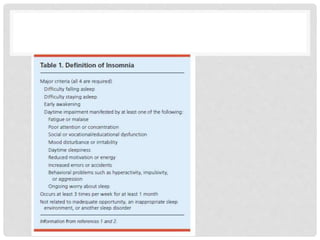
insomnia :
difficulty falling asleep, staying asleep, or early awakening despite
the opportunity for sleep that is associated with impaired daytime
functioning and occurs at least 3/wk for at least one month.
โ€ข Insomnia can be:
๏‚ง acute (lasting up to 3 month )
๏‚ง chronic (lasting >3 month )
๏ถInsomnia (without comorbidity)
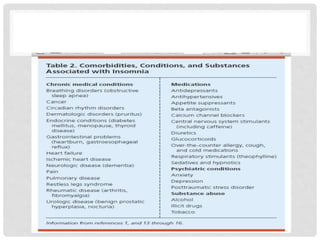
๏ถ Insomnia with comorbidity:
โ€ข o Medical disorders
โ€ข o Psychiatric disorders
๏ถInsomnia with another primary sleep disorder
โ€ข Chronic insomnia consequences :
๏‚ง cognitive difficulties (e.g., problems with memory, attention, and
concentration; confusion),
๏‚ง anxiety and depression,
๏‚ง poor quality of life,
๏‚ง risk of suicide,
๏‚ง substance use relapse,
๏‚ง possible immune dysfunction,
๏‚ง increased risk of CVD (e.g., HTN, MI, or DM ) and all-cause
mortality.
โ€ข Excessive daytime sleepiness caused by insomnia can
lead:
๏‚ง to diminished work performance,
๏‚ง increased absenteeism,
๏‚ง MVC , accidents at work, fewer promotions,
๏‚ง increased accidents and falls in older persons,
ASSESSMENT
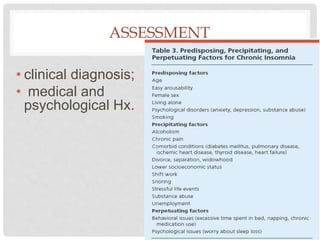
โ€ข clinical diagnosis;
โ€ข medical and
psychological Hx.
ASSESSMENT
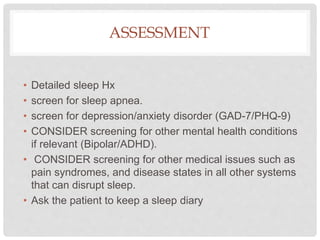
โ€ข Detailed sleep Hx
โ€ข screen for sleep apnea.
โ€ข screen for depression/anxiety disorder (GAD-7/PHQ-9)
โ€ข CONSIDER screening for other mental health conditions
if relevant (Bipolar/ADHD).
โ€ข CONSIDER screening for other medical issues such as
pain syndromes, and disease states in all other systems
that can disrupt sleep.
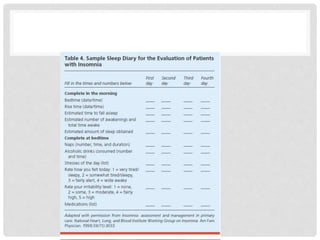
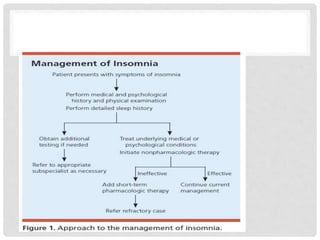
โ€ข Ask the patient to keep a sleep diary
MANAGEMENT
โ€ข The ultimate treatment goals:
โ€ข qualitatively and quantitatively improve sleep
โ€ข decrease related distress.
โ€ข improve daytime functioning
NON- PHARMACOLOGICAL RX
โ€ข Behavioral interventions are effective and recommended
as an initial approach to the treatment of chronic
insomnia based on RCT .
โ€ข Sleep hygiene
โ€ข Stimulus control therapy
โ€ข Sleep restriction therapy
โ€ข CBT
SLEEP HYGIENE
โ€ข exercise regularly (not within 4hrs of bedtime);
โ€ข avoid large meals and limit fluid intake in the evenings;
โ€ข limit caffeine, tobacco, and alcohol intake 4-6 hrs before
before bedtime.
โ€ข use the bedroom for sleep .
โ€ข maintain a regular sleep-wake cycle without daytime
napping.
โ€ข avoid negative stimuli at bedtime:
โ€ข loud noises,
โ€ข bright lights.
โ€ข extreme temperature variations.
STIMULUS CONTROL THERAPY
โ€ข Lie down to sleep only when feeling sleepy
โ€ข Avoid wakeful activities at bedtime (e.g., watching
television, talking on the phone, eating)
โ€ข Leave the bed if unable to fall asleep within 20 minutes
and return when sleepy
โ€ข Maintain a consistent sleep-wake cycle(temporal control
therapy ) :
set the alarm for the same time each morning regardless of how
much sleep occurs during the night.
SLEEP RESTRICTION THERAPY
โ€ข Limit time in bed to the number of hours actually spent
sleeping (not less than five hours); sleep time gradually
increases as sleep efficiency improves.
โ€ข There is a risk of excessive daytime sleepiness with this
approach.
CBT
โ€ข CBT-I significantly improves chronic insomnia
and daytime functioning for 2 years.
โ€ข is a combination of cognitive therapy,stimulus control
therapy, and sleep restriction therapy with or without the
incorporation of relaxation therapy.
HYPNOTICS
โ€ข There is good evidence for the efficacy of hypnotic drugs
in short-term insomnia but they do not treat any
underlying cause.
โ€ข adverse effects, :
โ€ข daytime sedation
โ€ข poor motor concentration
โ€ข cognitive impairment.
โ€ข In older people, in particular, the magnitude of the
beneficial effect of hypnotics may not justify the
increased risk of adverse effects (ie, falls and cognitive
impairment).
โ€ข Hypnotics should be prescribed at the lowest effective
dose for as short a period as possible.
โ€ข In transient insomnia:1-2doses of a short-
acting hypnotic
โ€ข Short term insomnia :intermittent dosing of a
short acting hypnotic given for no more than 3 weeks.
โ€ข Chronic insomnia :
โ€ข rarely benefits from the routine use of hypnotics
โ€ข should where possible be avoided.
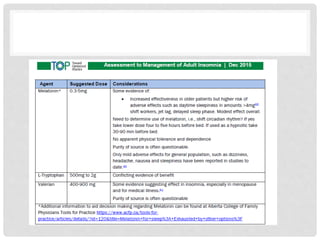
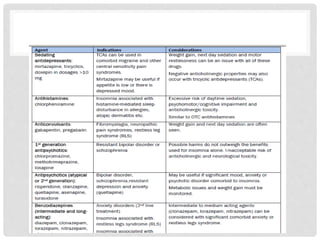
โ€ข licensed hypnotic drugs :
โ€ข benzodiazepines (temazepam) .
โ€ข Z-drugs (zopiclone, zolpidem and zaleplon).
โ€ข NICE recommends that switching hypnotics should only
occur if there are documented adverse effects from a
particular agent.
BENZODIAZEPINES
โ€ข Effective
โ€ข many people develop tolerance ,
โ€ข Less therapeutic benefit from chronic use,
โ€ข dependence after 2-4 weeks of regular use.
โ€ข A withdrawal symptoms
โ€ข Rebound insomnia which is worse than the
original symptoms.
โ€ข Risk of misuse,
โ€ข only for severe, disabling insomnia
โ€ข The lowest dose for <4wks
THE โ€˜Z DRUGSโ€™
โ€ข Zaleplon, zolpidem and zopiclone (the Z-drugs) are
nonbenzodiazepine hypnotics.
โ€ข Although the Z-drugs differ structurally from the
benzodiazepines, they are also agonists of the GABA
receptor complex and therefore enhanceGABA-mediated
neuronal inhibition.
โ€ข developed with the aim of overcoming some of the
disadvantages of benzodiazepines
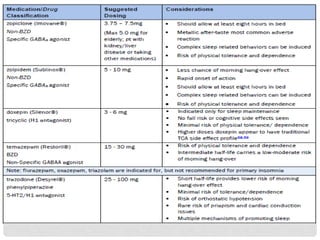
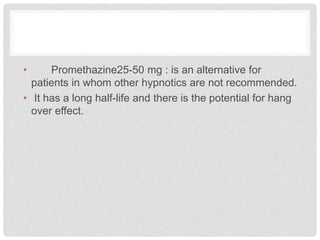
โ€ข Promethazine25-50 mg : is an alternative for
patients in whom other hypnotics are not recommended.
โ€ข It has a long half-life and there is the potential for hang
over effect.
TAKE HOME
โ€ข CBT-I is the cornerstone of treatment for insomnia.
When CBT-I is combined with medication it may produce
faster improvements in sleep than CBT-I alone. If
combining CBT-I and medication, after the initial phase,
it is best to continue CBT-I while tapering/discontinuing
medication.
ACUTE INSOMNIA
โ€ข Treat acute insomnia only if there is a substantial
negative impact on daytime performance.
โ€ข Intervene early and suggest behavioral therapy .
โ€ข Consider using short term (e.g., two weeks)
pharmacotherapy with close follow-up based on the
severity and urgency of the presentation.
โ€ข Start medication at same time as CBT-I.
โ€ข Follow-up to monitor progress in two to four weeks.
โ€ข Refferances :
โ€ข Aafp
โ€ข NICE guideline 2015/2016.
โ€ขThank you

Insomnia

  • 1.
    D R .R A YA A L H A R T H I F M R 4 INSOMNIA
  • 2.
    โ€ข Outline : โ€ขDefinition โ€ข Type โ€ข Assessment โ€ข Nonpaharmacological Rx โ€ข Pharmacological Rx
  • 3.
    insomnia : difficulty fallingasleep, staying asleep, or early awakening despite the opportunity for sleep that is associated with impaired daytime functioning and occurs at least 3/wk for at least one month.
  • 4.
    โ€ข Insomnia canbe: ๏‚ง acute (lasting up to 3 month ) ๏‚ง chronic (lasting >3 month ) ๏ถInsomnia (without comorbidity) ๏ถ Insomnia with comorbidity: โ€ข o Medical disorders โ€ข o Psychiatric disorders ๏ถInsomnia with another primary sleep disorder
  • 6.
    โ€ข Chronic insomniaconsequences : ๏‚ง cognitive difficulties (e.g., problems with memory, attention, and concentration; confusion), ๏‚ง anxiety and depression, ๏‚ง poor quality of life, ๏‚ง risk of suicide, ๏‚ง substance use relapse, ๏‚ง possible immune dysfunction, ๏‚ง increased risk of CVD (e.g., HTN, MI, or DM ) and all-cause mortality.
  • 7.
    โ€ข Excessive daytimesleepiness caused by insomnia can lead: ๏‚ง to diminished work performance, ๏‚ง increased absenteeism, ๏‚ง MVC , accidents at work, fewer promotions, ๏‚ง increased accidents and falls in older persons,
  • 9.
  • 10.
    ASSESSMENT โ€ข Detailed sleepHx โ€ข screen for sleep apnea. โ€ข screen for depression/anxiety disorder (GAD-7/PHQ-9) โ€ข CONSIDER screening for other mental health conditions if relevant (Bipolar/ADHD). โ€ข CONSIDER screening for other medical issues such as pain syndromes, and disease states in all other systems that can disrupt sleep. โ€ข Ask the patient to keep a sleep diary
  • 12.
    MANAGEMENT โ€ข The ultimatetreatment goals: โ€ข qualitatively and quantitatively improve sleep โ€ข decrease related distress. โ€ข improve daytime functioning
  • 13.
    NON- PHARMACOLOGICAL RX โ€ขBehavioral interventions are effective and recommended as an initial approach to the treatment of chronic insomnia based on RCT . โ€ข Sleep hygiene โ€ข Stimulus control therapy โ€ข Sleep restriction therapy โ€ข CBT
  • 14.
    SLEEP HYGIENE โ€ข exerciseregularly (not within 4hrs of bedtime); โ€ข avoid large meals and limit fluid intake in the evenings; โ€ข limit caffeine, tobacco, and alcohol intake 4-6 hrs before before bedtime. โ€ข use the bedroom for sleep . โ€ข maintain a regular sleep-wake cycle without daytime napping. โ€ข avoid negative stimuli at bedtime: โ€ข loud noises, โ€ข bright lights. โ€ข extreme temperature variations.
  • 15.
    STIMULUS CONTROL THERAPY โ€ขLie down to sleep only when feeling sleepy โ€ข Avoid wakeful activities at bedtime (e.g., watching television, talking on the phone, eating) โ€ข Leave the bed if unable to fall asleep within 20 minutes and return when sleepy โ€ข Maintain a consistent sleep-wake cycle(temporal control therapy ) : set the alarm for the same time each morning regardless of how much sleep occurs during the night.
  • 16.
    SLEEP RESTRICTION THERAPY โ€ขLimit time in bed to the number of hours actually spent sleeping (not less than five hours); sleep time gradually increases as sleep efficiency improves. โ€ข There is a risk of excessive daytime sleepiness with this approach.
  • 17.
    CBT โ€ข CBT-I significantlyimproves chronic insomnia and daytime functioning for 2 years. โ€ข is a combination of cognitive therapy,stimulus control therapy, and sleep restriction therapy with or without the incorporation of relaxation therapy.
  • 18.
    HYPNOTICS โ€ข There isgood evidence for the efficacy of hypnotic drugs in short-term insomnia but they do not treat any underlying cause. โ€ข adverse effects, : โ€ข daytime sedation โ€ข poor motor concentration โ€ข cognitive impairment. โ€ข In older people, in particular, the magnitude of the beneficial effect of hypnotics may not justify the increased risk of adverse effects (ie, falls and cognitive impairment).
  • 19.
    โ€ข Hypnotics shouldbe prescribed at the lowest effective dose for as short a period as possible. โ€ข In transient insomnia:1-2doses of a short- acting hypnotic โ€ข Short term insomnia :intermittent dosing of a short acting hypnotic given for no more than 3 weeks. โ€ข Chronic insomnia : โ€ข rarely benefits from the routine use of hypnotics โ€ข should where possible be avoided.
  • 20.
    โ€ข licensed hypnoticdrugs : โ€ข benzodiazepines (temazepam) . โ€ข Z-drugs (zopiclone, zolpidem and zaleplon). โ€ข NICE recommends that switching hypnotics should only occur if there are documented adverse effects from a particular agent.
  • 21.
    BENZODIAZEPINES โ€ข Effective โ€ข manypeople develop tolerance , โ€ข Less therapeutic benefit from chronic use, โ€ข dependence after 2-4 weeks of regular use. โ€ข A withdrawal symptoms โ€ข Rebound insomnia which is worse than the original symptoms. โ€ข Risk of misuse, โ€ข only for severe, disabling insomnia โ€ข The lowest dose for <4wks
  • 22.
    THE โ€˜Z DRUGSโ€™ โ€ขZaleplon, zolpidem and zopiclone (the Z-drugs) are nonbenzodiazepine hypnotics. โ€ข Although the Z-drugs differ structurally from the benzodiazepines, they are also agonists of the GABA receptor complex and therefore enhanceGABA-mediated neuronal inhibition. โ€ข developed with the aim of overcoming some of the disadvantages of benzodiazepines
  • 26.
    โ€ข Promethazine25-50 mg: is an alternative for patients in whom other hypnotics are not recommended. โ€ข It has a long half-life and there is the potential for hang over effect.
  • 28.
    TAKE HOME โ€ข CBT-Iis the cornerstone of treatment for insomnia. When CBT-I is combined with medication it may produce faster improvements in sleep than CBT-I alone. If combining CBT-I and medication, after the initial phase, it is best to continue CBT-I while tapering/discontinuing medication.
  • 29.
    ACUTE INSOMNIA โ€ข Treatacute insomnia only if there is a substantial negative impact on daytime performance. โ€ข Intervene early and suggest behavioral therapy . โ€ข Consider using short term (e.g., two weeks) pharmacotherapy with close follow-up based on the severity and urgency of the presentation. โ€ข Start medication at same time as CBT-I. โ€ข Follow-up to monitor progress in two to four weeks.

  • 30.
    โ€ข Refferances : โ€ขAafp โ€ข NICE guideline 2015/2016.
  • 31.