UNIVERSIDAD DE COLIMA BACH. 13 INGLÉS "FUTURE TENSE" “BY JOSE PABLO DIAZ MONROY“ DIAZMONROY_JOSE@HOTMAIL.COM GO I NG TO
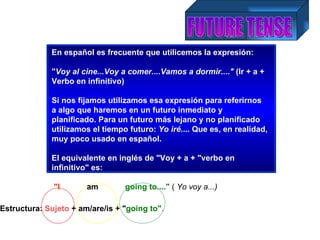
En español es frecuente que utilicemos la expresión: " Voy al cine...Voy a comer....Vamos a dormir...."  (Ir + a + Verbo en infinitivo) Si nos fijamos utilizamos esa expresión para referirnos a algo que haremos en un futuro inmediato y planificado. Para un futuro más lejano y no planificado utilizamos el tiempo futuro:  Yo iré. ... Que es, en realidad, muy poco usado en español. El equivalente en inglés de "Voy + a + "verbo en infinitivo" es:  "I   am  going to...."   (  Yo voy a...)   Estructura:  Sujeto  + am/are/is + " going to" .   FUTURE TENSE
Ejemplo 1:  I am (I'm) going to work [aimgoing tuguork].  Yo voy a trabajar. Ejemplo 2:  She is (She's) going to study [shiIsgoingtustadi].  Ella va a estudiar. Ejemplo 3.  It is (It's) going to rain. (Itsgoingturein].  Va a llover. Ejemplo 4:  They are (They're) going to look [deiargoingtuluk].  Ellos/Ellas van a mirar.
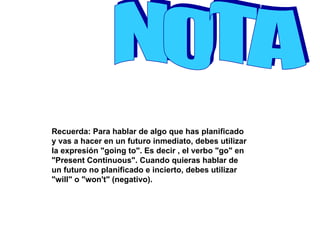
Recuerda: Para hablar de algo que has planificado y vas a hacer en un futuro inmediato, debes utilizar la expresión "going to". Es decir , el verbo "go" en "Present Continuous". Cuando quieras hablar de un futuro no planificado e incierto, debes utilizar "will" o "won't" (negativo).   NOTA
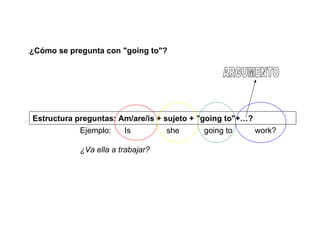
¿Cómo se pregunta con "going to"? Ejemplo:  Is  she  going to  work?  ¿Va ella a trabajar? ARGUMENTO Estructura preguntas: Am/are/is + sujeto + "going to"+…?
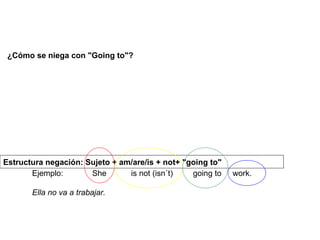
¿Cómo se niega con "Going to"? Ejemplo:  She  is not (isn´t)  going to  work.  Ella no va a trabajar. Estructura negación: Sujeto + am/are/is + not+ "going to"
 
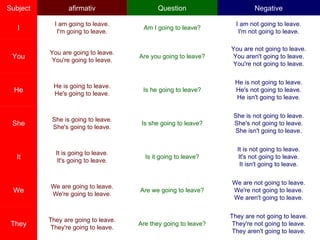
Subject afirmativ Question Negative I I am going to leave. I'm going to leave. Am I going to leave? I am not going to leave. I'm not going to leave. You You are going to leave. You're going to leave. Are you going to leave? You are not going to leave. You aren't going to leave. You're not going to leave. He He is going to leave. He's going to leave. Is he going to leave? He is not going to leave. He's not going to leave. He isn't going to leave. She She is going to leave. She's going to leave. Is she going to leave? She is not going to leave. She's not going to leave. She isn't going to leave. It It is going to leave. It's going to leave. Is it going to leave? It is not going to leave. It's not going to leave. It isn't going to leave. We We are going to leave. We're going to leave. Are we going to leave? We are not going to leave. We're not going to leave. We aren't going to leave. They They are going to leave. They're going to leave. Are they going to leave? They are not going to leave. They're not going to leave. They aren't going to leave.
EJERCICIOS

Going To

  • 1.
    UNIVERSIDAD DE COLIMABACH. 13 INGLÉS "FUTURE TENSE" “BY JOSE PABLO DIAZ MONROY“ DIAZMONROY_JOSE@HOTMAIL.COM GO I NG TO
  • 2.
    En español esfrecuente que utilicemos la expresión: " Voy al cine...Voy a comer....Vamos a dormir...." (Ir + a + Verbo en infinitivo) Si nos fijamos utilizamos esa expresión para referirnos a algo que haremos en un futuro inmediato y planificado. Para un futuro más lejano y no planificado utilizamos el tiempo futuro: Yo iré. ... Que es, en realidad, muy poco usado en español. El equivalente en inglés de "Voy + a + "verbo en infinitivo" es: "I am going to...." ( Yo voy a...) Estructura: Sujeto + am/are/is + " going to" . FUTURE TENSE
  • 3.
    Ejemplo 1: I am (I'm) going to work [aimgoing tuguork]. Yo voy a trabajar. Ejemplo 2: She is (She's) going to study [shiIsgoingtustadi]. Ella va a estudiar. Ejemplo 3. It is (It's) going to rain. (Itsgoingturein]. Va a llover. Ejemplo 4: They are (They're) going to look [deiargoingtuluk]. Ellos/Ellas van a mirar.
  • 4.
    Recuerda: Para hablarde algo que has planificado y vas a hacer en un futuro inmediato, debes utilizar la expresión "going to". Es decir , el verbo "go" en "Present Continuous". Cuando quieras hablar de un futuro no planificado e incierto, debes utilizar "will" o "won't" (negativo). NOTA
  • 5.
    ¿Cómo se preguntacon "going to"? Ejemplo: Is she going to work? ¿Va ella a trabajar? ARGUMENTO Estructura preguntas: Am/are/is + sujeto + "going to"+…?
  • 6.
    ¿Cómo se niegacon "Going to"? Ejemplo: She is not (isn´t) going to work. Ella no va a trabajar. Estructura negación: Sujeto + am/are/is + not+ "going to"
  • 7.
  • 8.
    Subject afirmativ QuestionNegative I I am going to leave. I'm going to leave. Am I going to leave? I am not going to leave. I'm not going to leave. You You are going to leave. You're going to leave. Are you going to leave? You are not going to leave. You aren't going to leave. You're not going to leave. He He is going to leave. He's going to leave. Is he going to leave? He is not going to leave. He's not going to leave. He isn't going to leave. She She is going to leave. She's going to leave. Is she going to leave? She is not going to leave. She's not going to leave. She isn't going to leave. It It is going to leave. It's going to leave. Is it going to leave? It is not going to leave. It's not going to leave. It isn't going to leave. We We are going to leave. We're going to leave. Are we going to leave? We are not going to leave. We're not going to leave. We aren't going to leave. They They are going to leave. They're going to leave. Are they going to leave? They are not going to leave. They're not going to leave. They aren't going to leave.
  • 9.