Downloaded 190 times

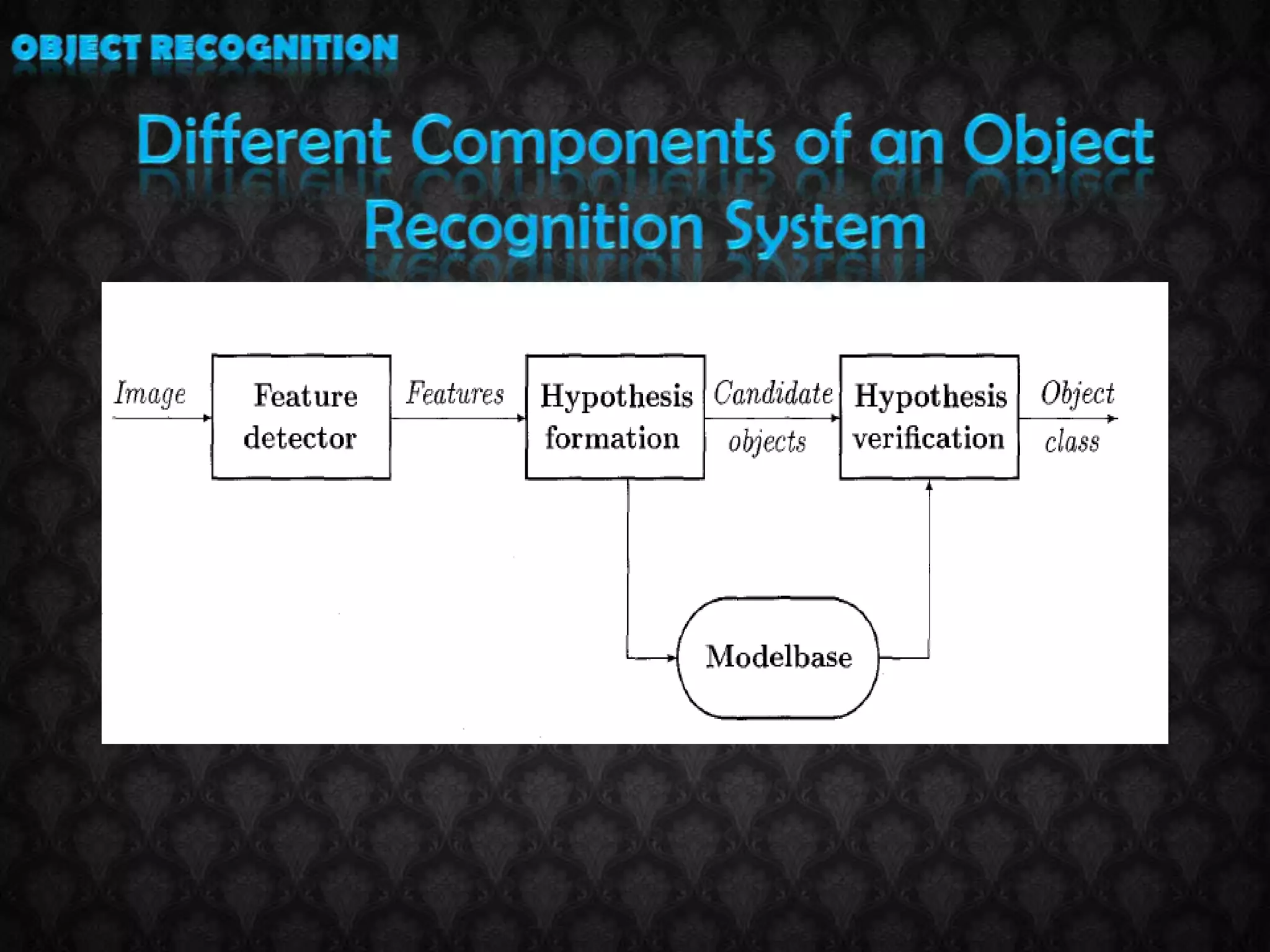
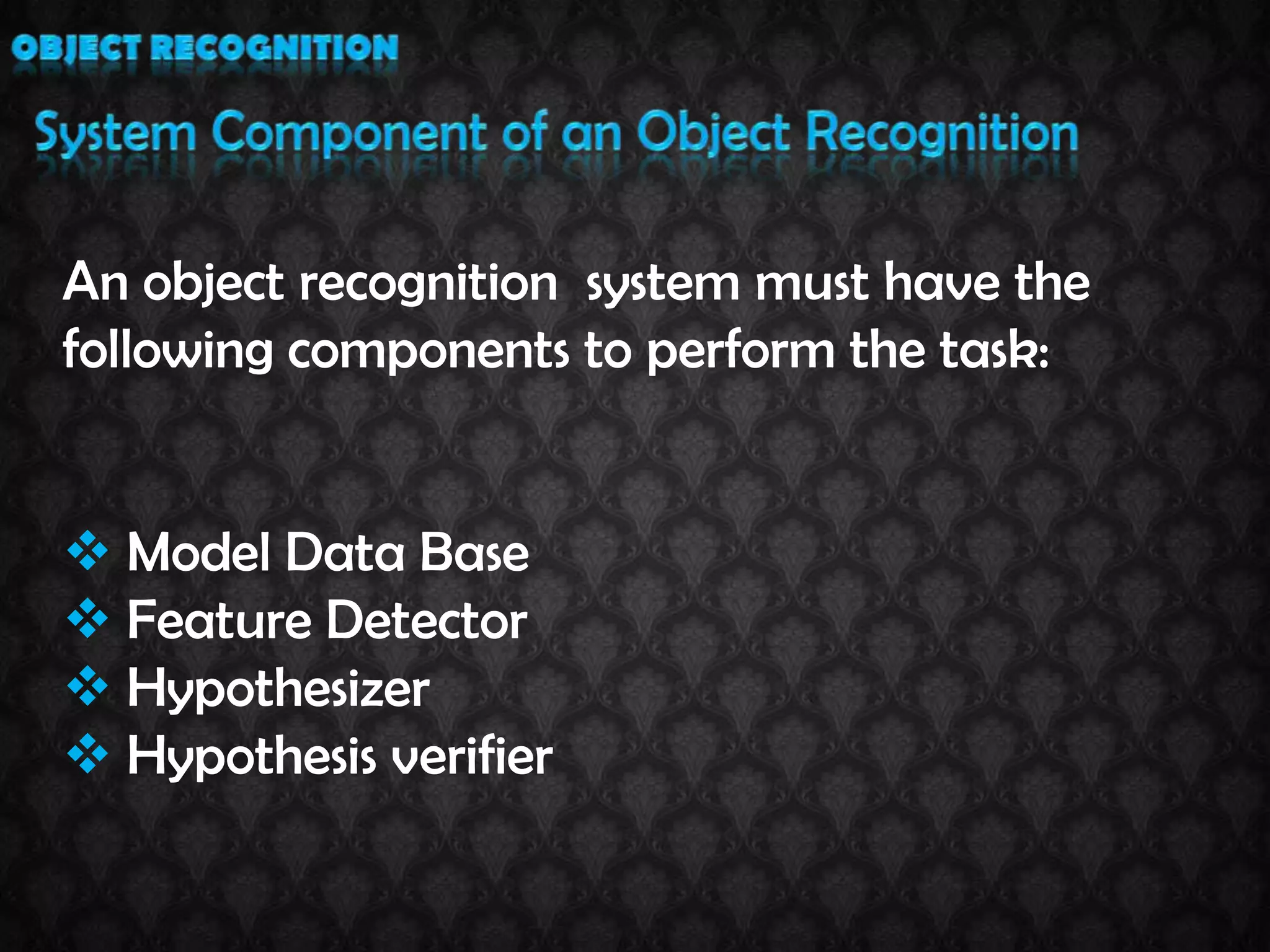
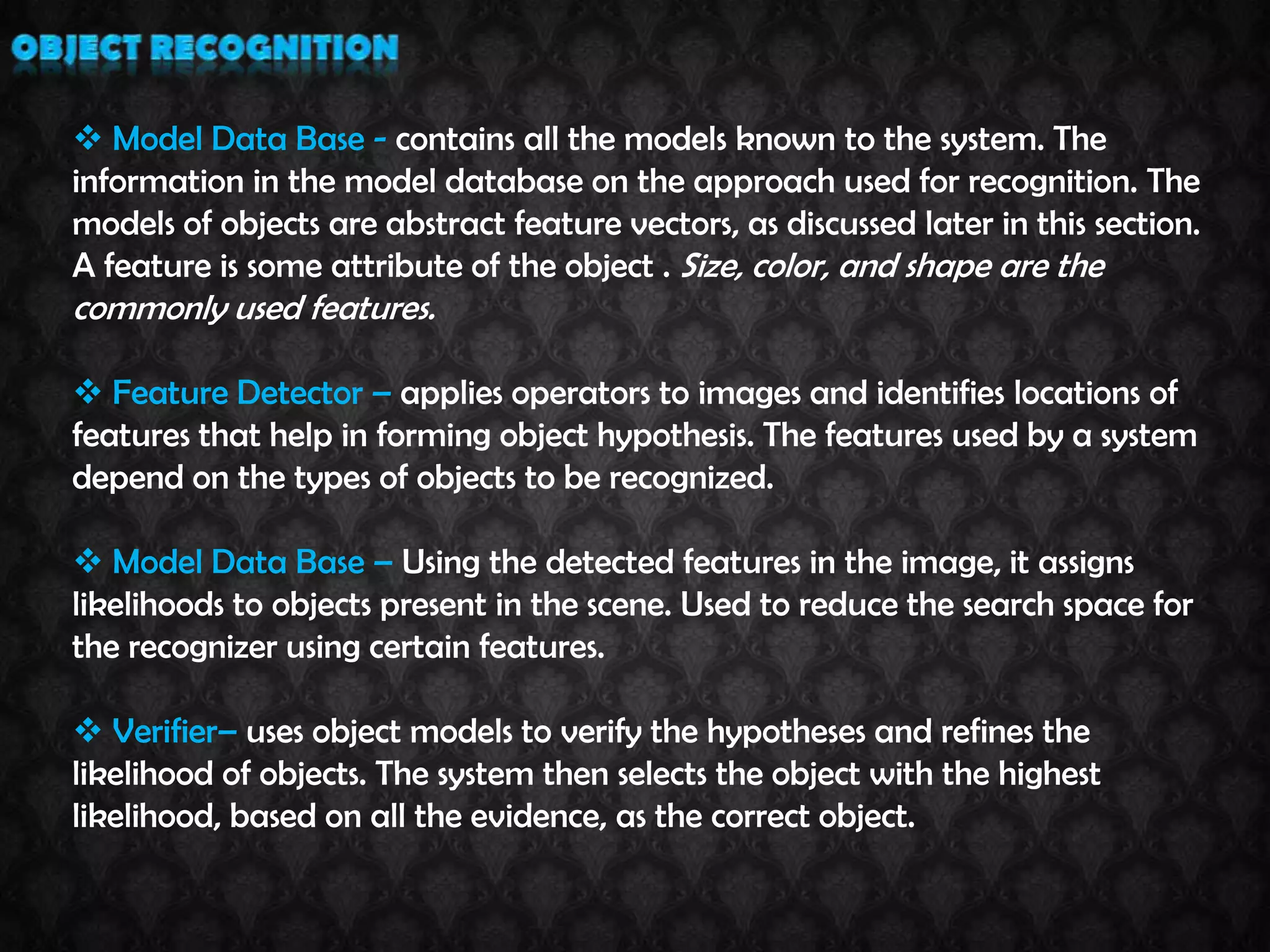
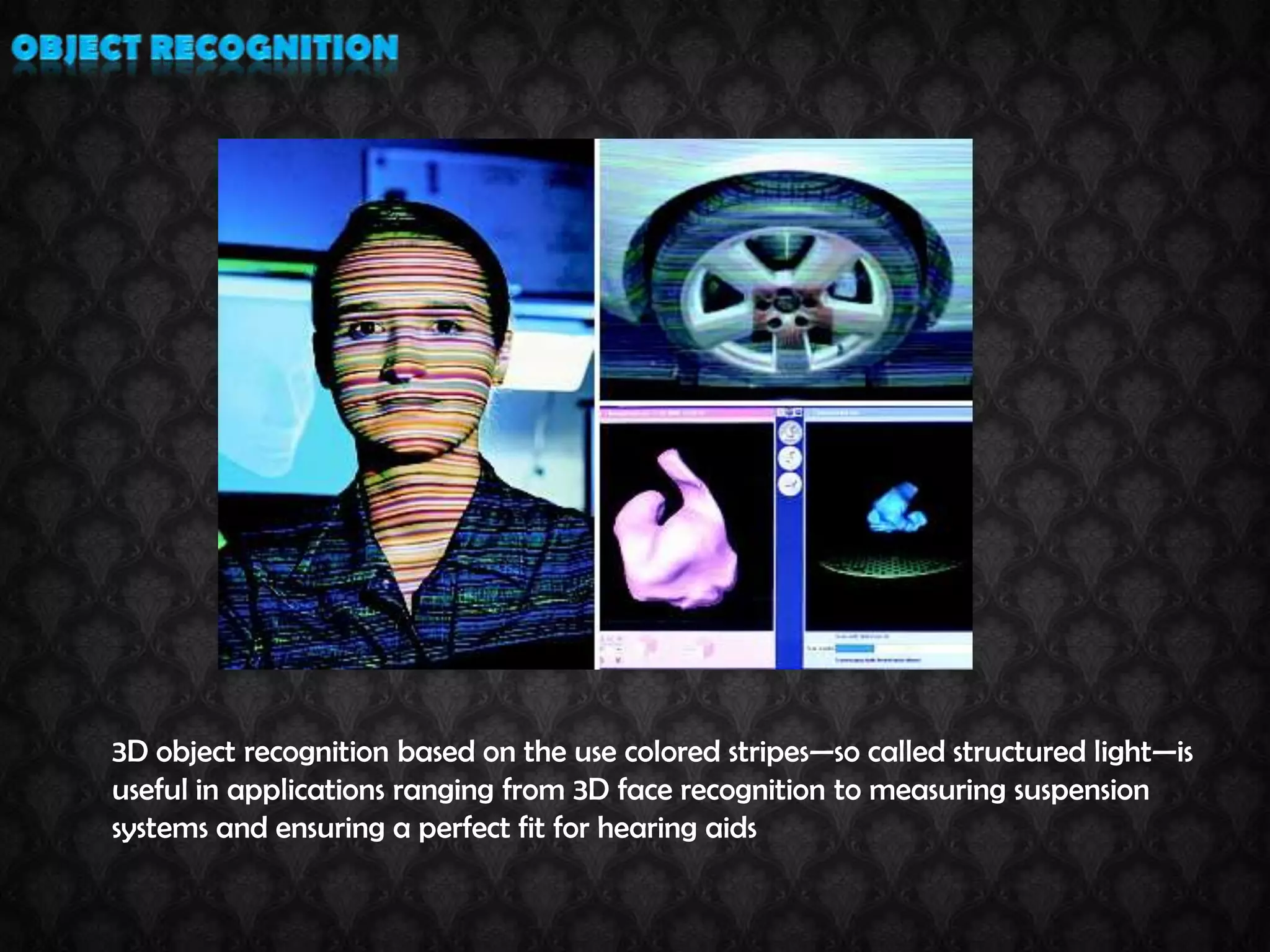
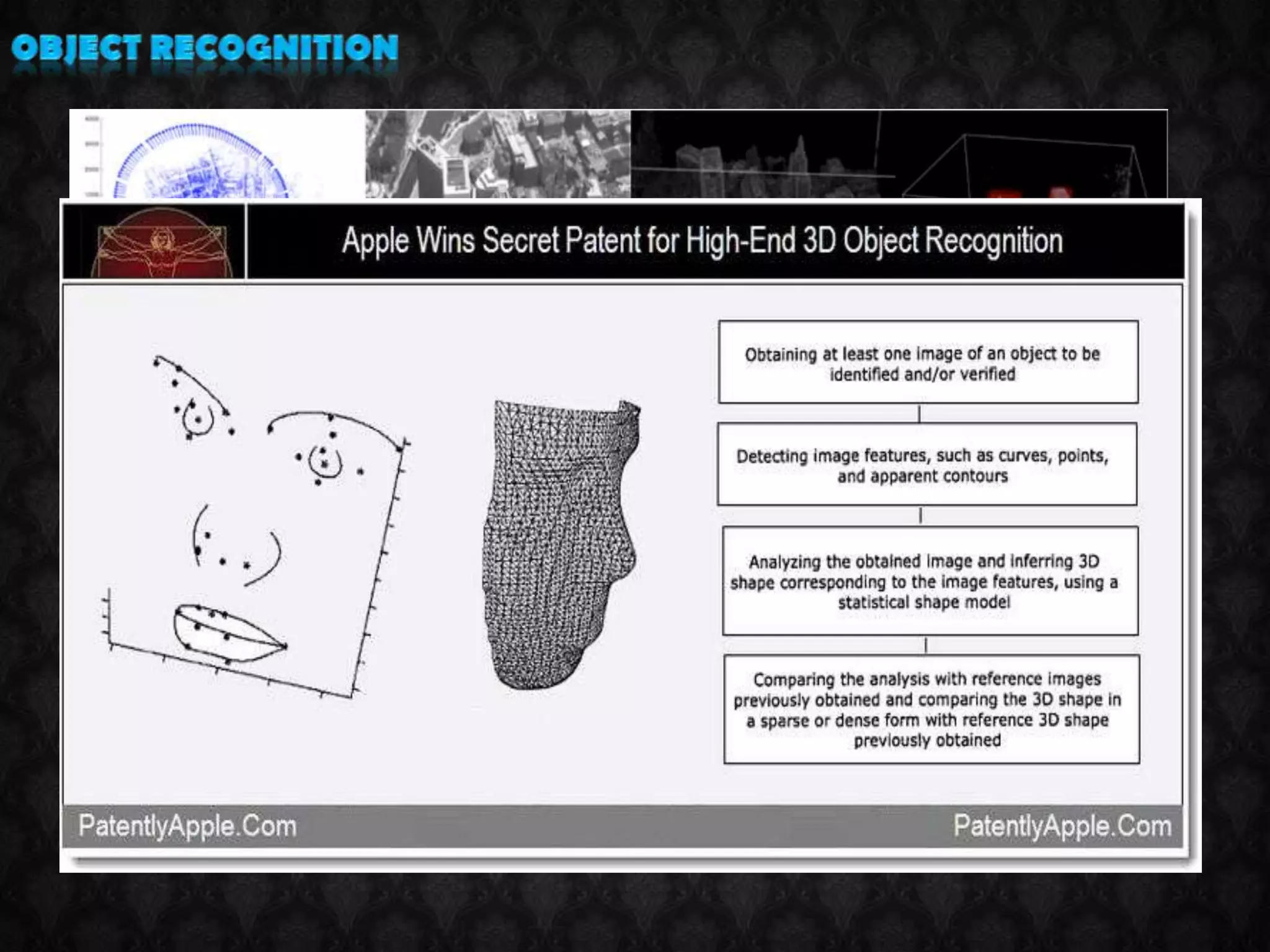
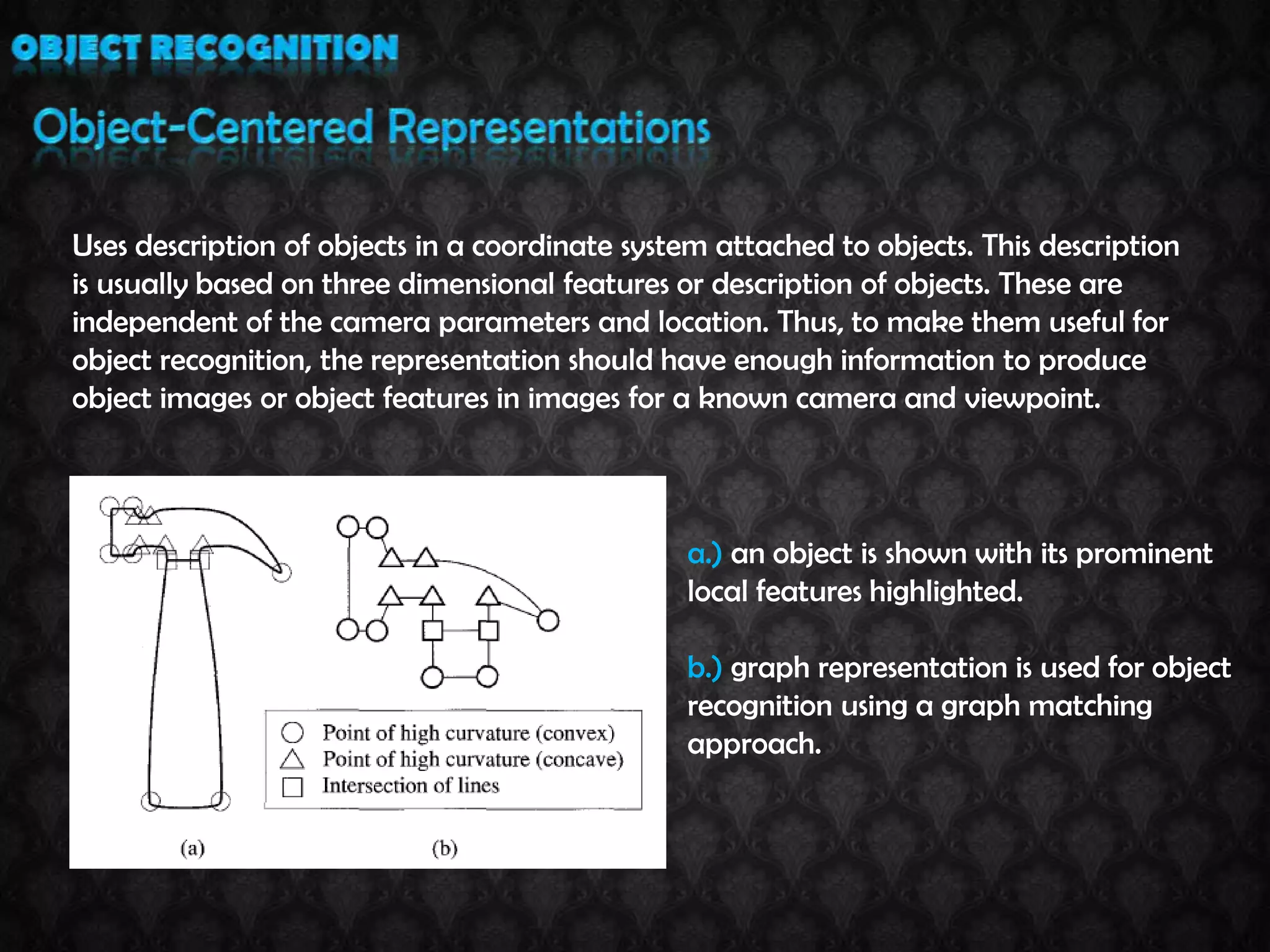
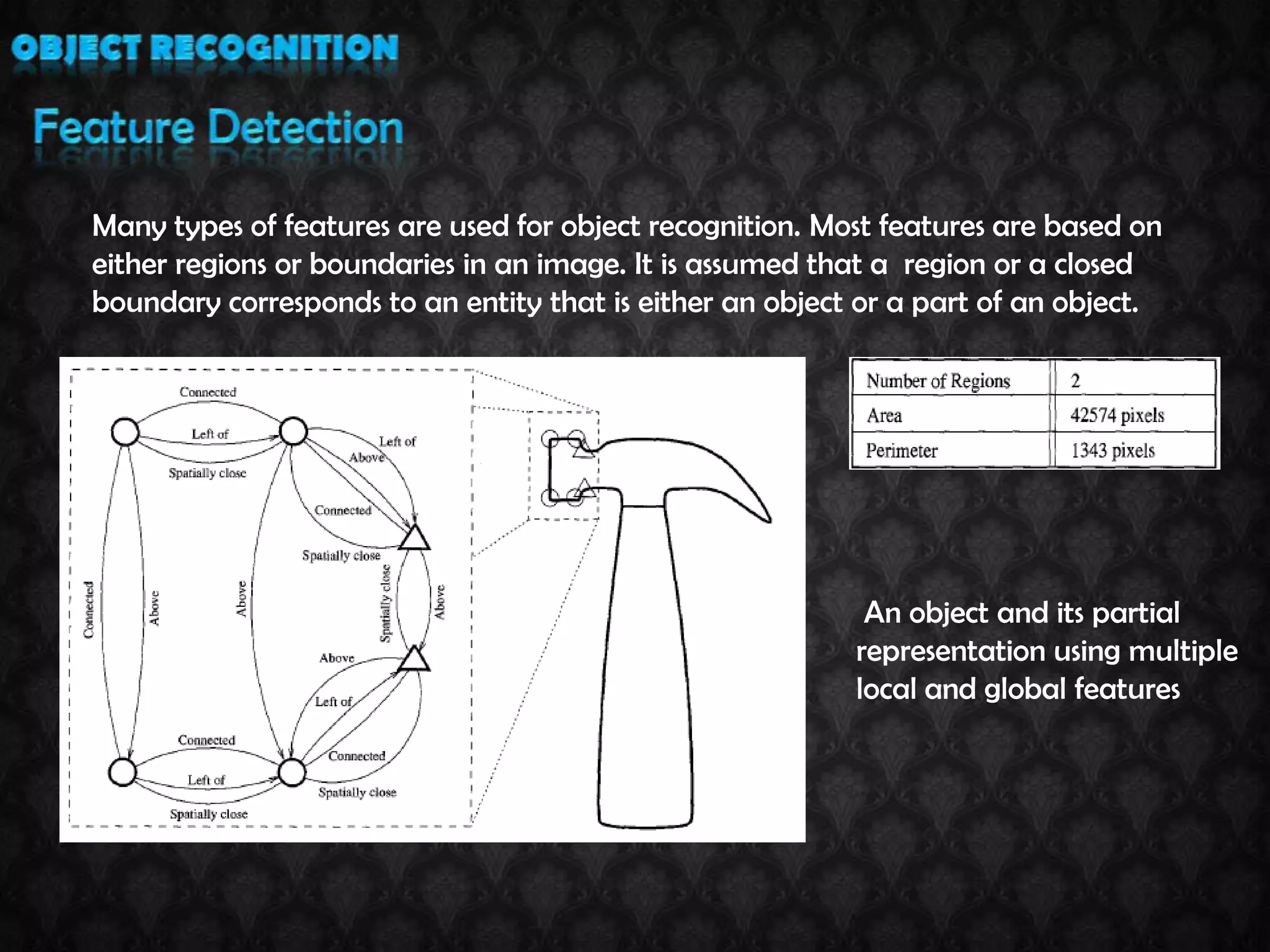
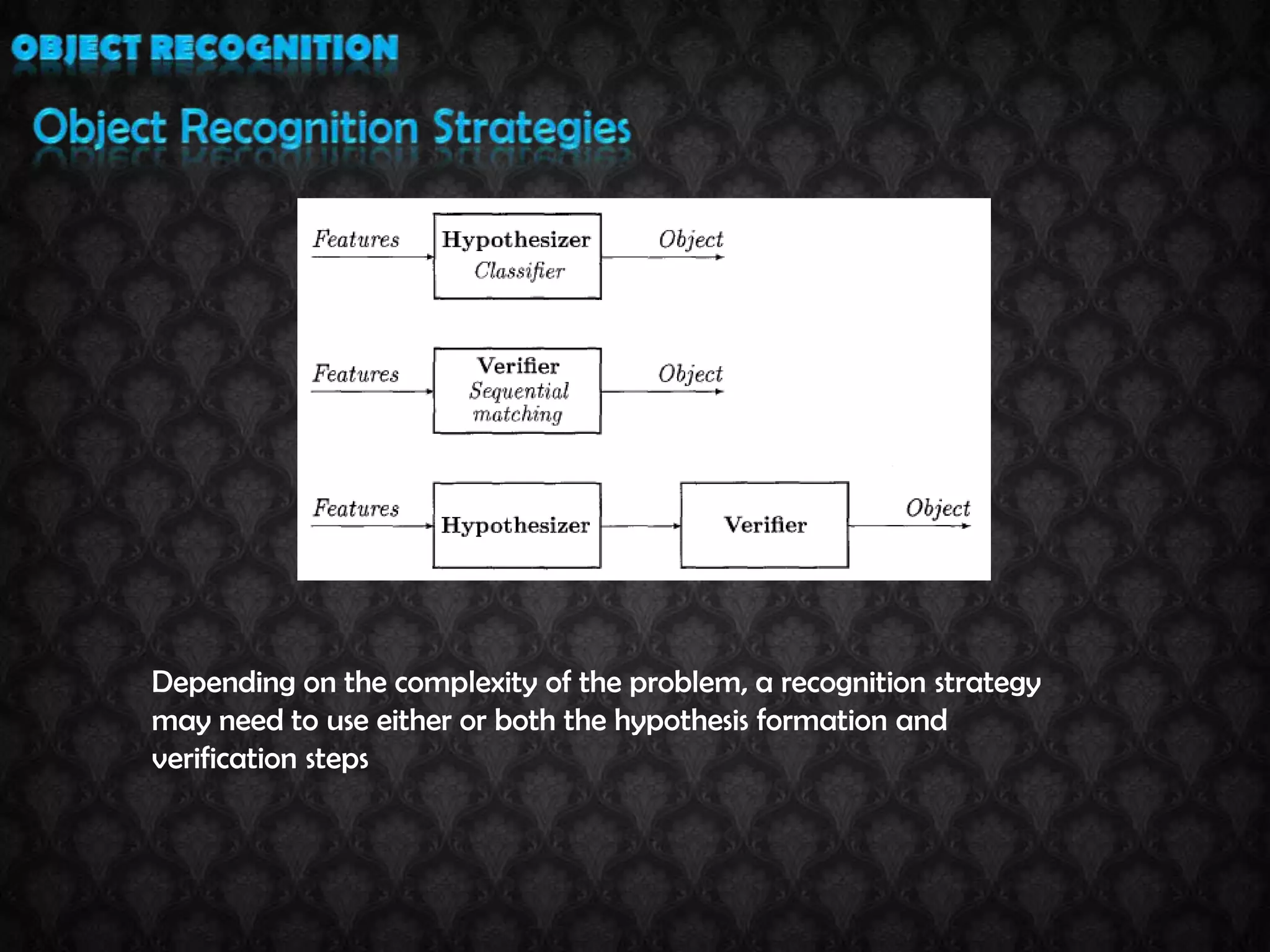
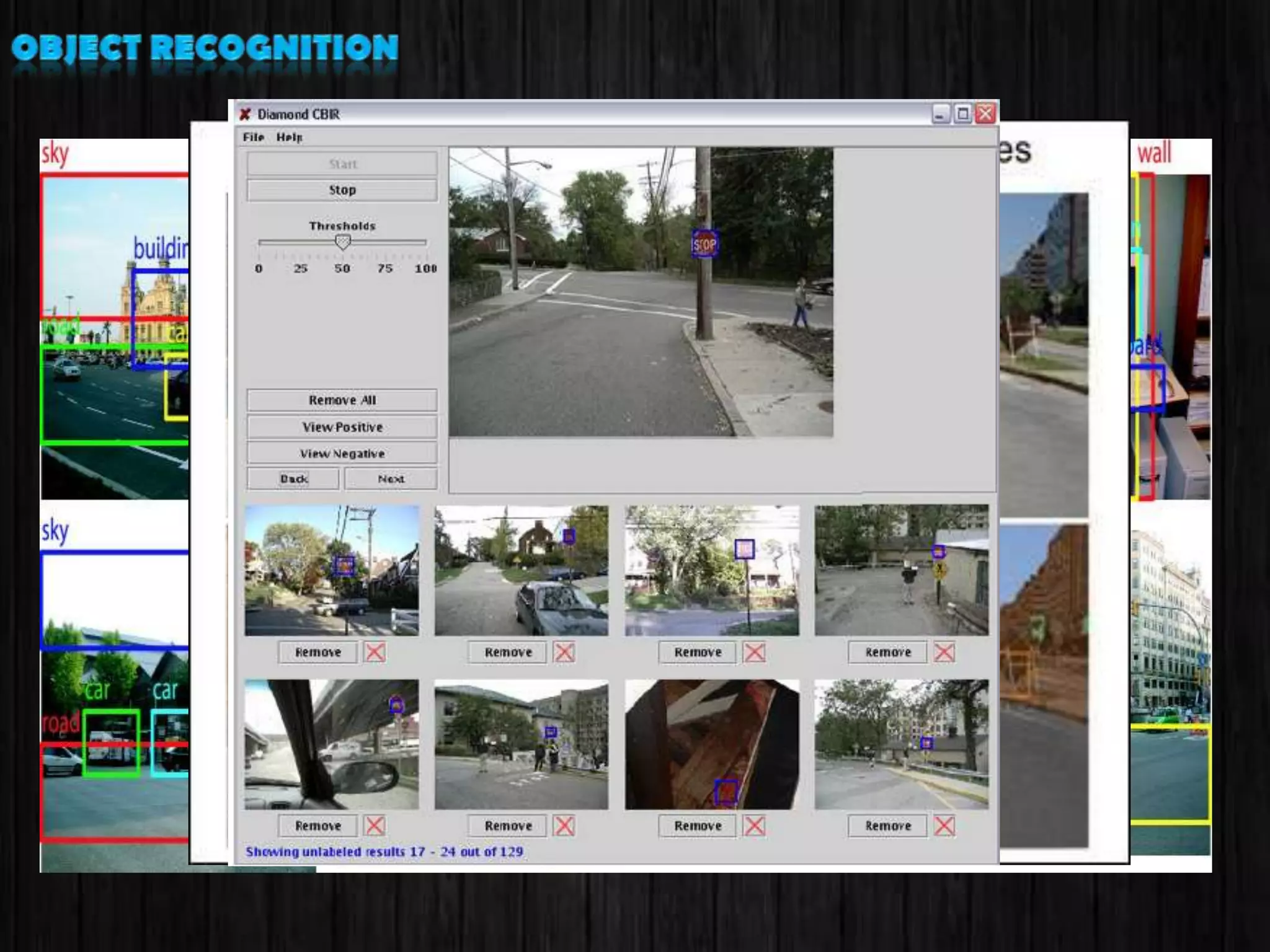
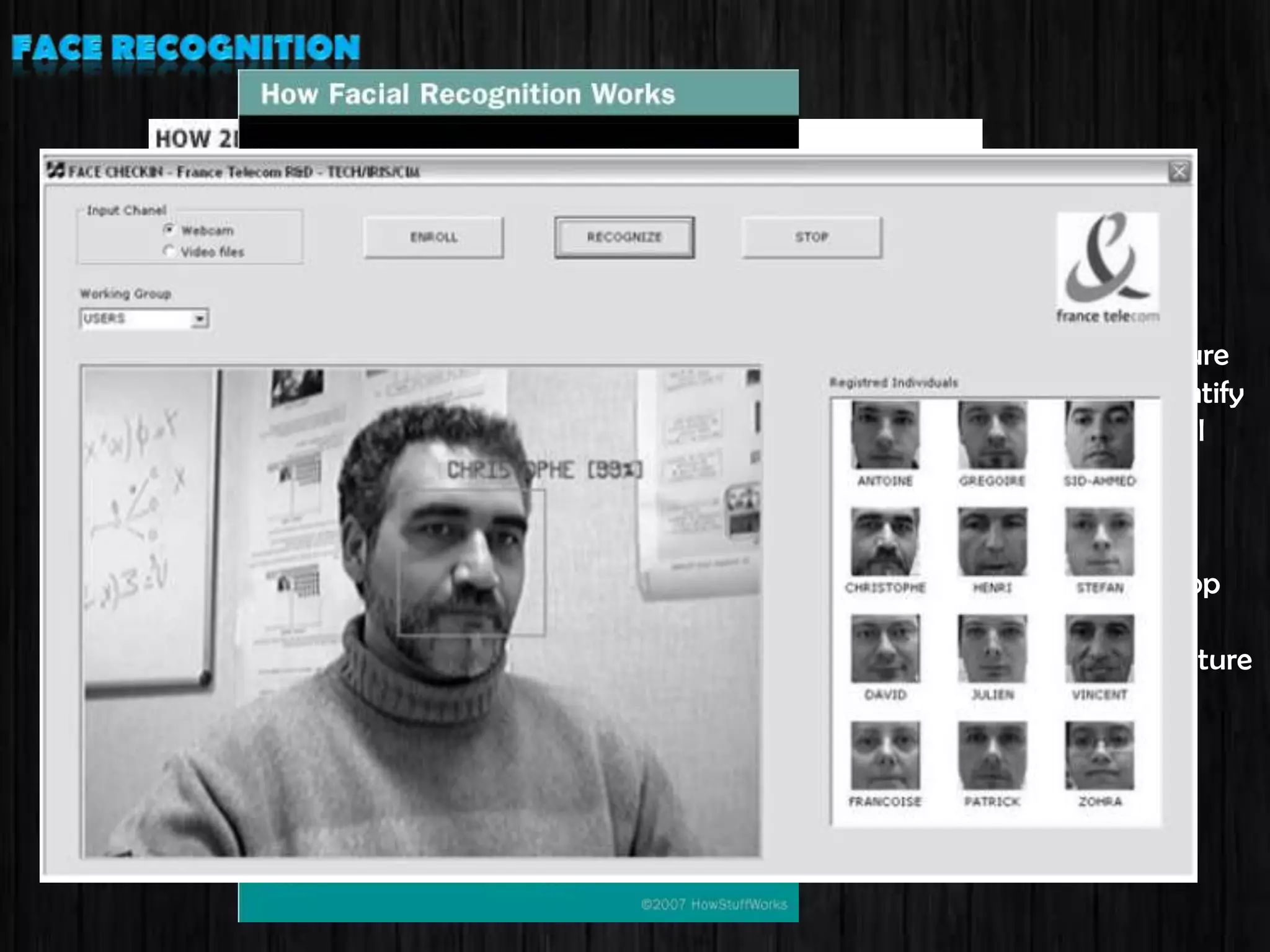
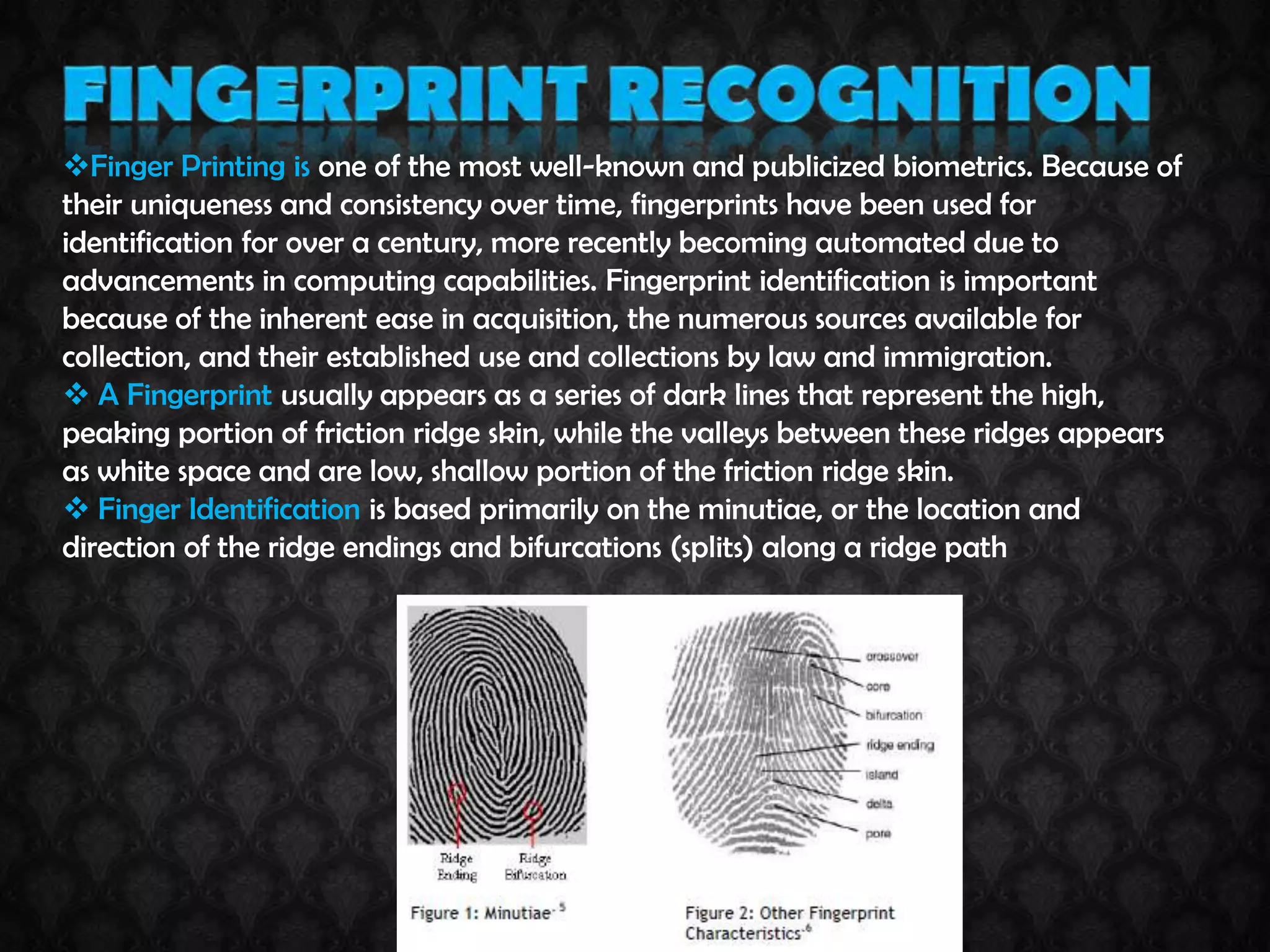

Object recognition in computer vision involves finding objects in images or video. It is challenging due to variations in objects' appearance from different viewpoints, scales, rotations, or partial obstructions. An object recognition system must have four main components: a model database containing object models, a feature detector to identify distinguishing characteristics, a hypothesizer to generate potential object matches, and a hypothesis verifier to confirm the best match using the models. Key considerations for the system include how objects and their features are represented, which features to extract, how to select potential matches, and how to verify the most likely object.


